If you haven't yet, follow us on X (Twitter), Mastodon, or Bluesky to know when we post new articles, and join our Reddit or Subscribe to us on YouTube to check out our content and interact with our awesome community. Thank you for supporting us!
Retroid has shown off colors and screen information for what may end up being the most feature-packed 4:3 entry in the retro handheld market.
Long ago, Retroid announced the Retroid Pocket Mini. It was marketed as featuring a native 4:3 960p OLED display, immediately making it one of the most desirable devices the company had ever released. However, shortly after launch, users discovered that the screen inside the device was not actually a native 960p 4:3 panel. Instead, it was a 1240 x 1080 display that sat much closer to a 10:9 aspect ratio and was eventually reused inside the Retroid Pocket Classic.
The fallout from the fiasco quickly became one of the biggest controversies in Retroid's history. In an attempt to make things right, the company claimed that its CEO had taken out a mortgage against his own home in order to fund the development of the screen that customers were originally promised. Whether dramatic or not, it highlighted just how expensive and difficult custom screen development can be in such a niche market.
As time passed, the company launched a Retroid Pocket Mini V2 screen replacement program that sent customers a new front shell and display assembly. This allowed the device to utilize a true 1280 x 960 resolution rather than being constrained by the original implementation that had been marketed as 960p. It was not a perfect solution, but it was one of the more consumer-friendly responses we have seen from a retro handheld manufacturer.
Other companies, like Anbernic, have since released devices with proper 960p 4:3 displays, but none of them have managed to pair those screens with a highly requested OLED panel. Usually, these devices don't use custom-made screens and instead rely on parts sourced from older smartphones, industrial equipment, or discontinued devices that reached their end of life years earlier. For a market as small as retro handhelds, commissioning a completely new display remains incredibly expensive.
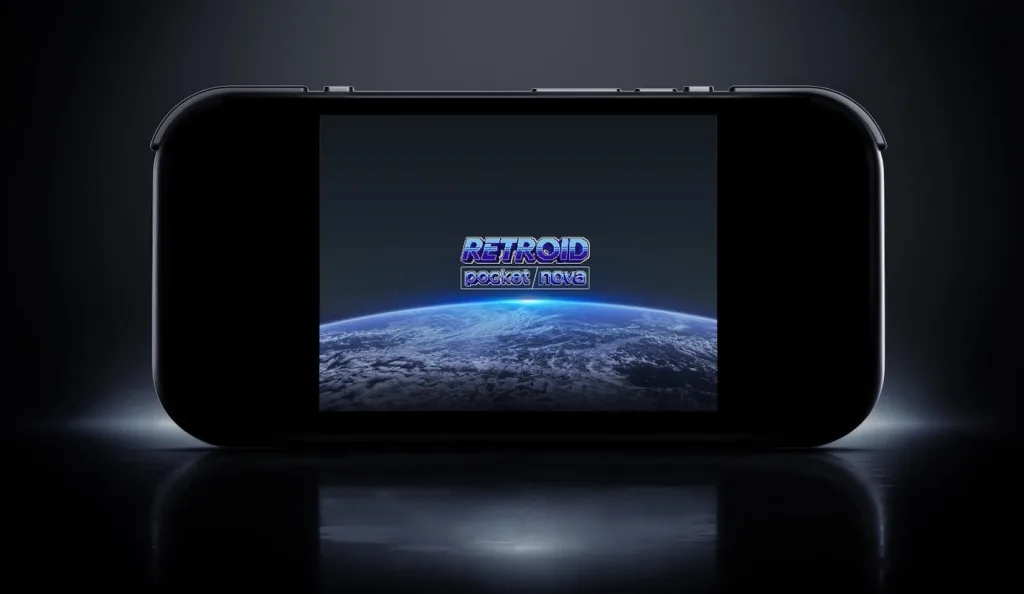
Now, the company is showing off the screen specifications for its newest announced device, the Retroid Pocket Nova. The device is shown to house a 4.5-inch 120Hz AMOLED display paired with a 1280 x 960 panel that should offer direct 2x integer scaling on 480p content and 4x integer scaling on 240p systems. For fans of PlayStation, SNES, Genesis, Neo Geo, and arcade titles, that combination could make for one of the cleanest displays currently available in the entire category.
Retroid has also shown off the color options and the overall build of the device ahead of its launch. The device is going to be released in black, a white 16-bit inspired colorway, a GameCube-inspired purple, and transparent versions of clear white, purple, icy blue, and what the company considers watermelon.
The build of the device harkens back to the Retroid Pocket 3 and 4 with a similar footprint, but with a 4:3 display at its core. Notably, however, the device seems to utilize less premium plastic materials than those found on the current Mini V2 and the Retroid Pocket 5 and 6. That is not necessarily a bad thing. With RAM prices continuing to rise and a custom OLED screen undoubtedly driving up production costs, keeping the final price attainable for consumers is likely a major priority for Retroid.
The company covertly showed off a tweet highlighting its desire for the device to be "open," with the EmulationStation logo front and center. Although there is an Android fork of EmulationStation available, the logo and its association with the Nova in this context reflect a desire for the device to have genuine Linux support as well. Linux handhelds offer a level of ease that is often missing from Android handhelds on initial boot. While Android can provide a great deal of customization through an already established ecosystem of apps, Linux devices are often preferred for their bare-bones, straightforward approach that gets users into their games faster.
Retroid has also shared the chipset family the device will utilize: the QCS8550 family of Snapdragon chips, allowing for performance similar to the Snapdragon 8 Gen 2 found in devices like the AYN Odin 2, Thor, and the Retroid Pocket 6. This should provide more than enough power for the device to breeze through virtually any console that natively supports a 4:3 aspect ratio. Beyond that, it should also leave plenty of overhead for higher-end systems, improved upscaling, and enhanced visual features without compromising performance.
As time goes on, Retroid is putting its foot firmly on the gas ahead of the Pocket Nova's launch. As it stands, the device is shaping up to be one of the most feature-packed and promising releases in the retro handheld scene. A 4:3 OLED display with a 120Hz refresh rate is a far cry from anything currently available on the market.
While multiple companies have offered 960p 4:3 options, none can match the brightness, contrast, and overall image quality that an OLED panel provides. Pair that with Snapdragon 8 Gen 2 class performance and enough power to comfortably handle the entire PlayStation 2 and GameCube libraries, and the Pocket Nova could quickly become one of the best options available for anyone looking for a dedicated 4:3 emulation device. It is an ambitious combination of premium display technology, high-end performance, and a form factor that many retro enthusiasts have been asking for for years.
If you enjoyed this article, check out the rest of the content on SteamDeckHQ! We have a wide variety of game reviews and news that will help your gaming experience. Whether you're looking for news, tips and tutorials, game settings and reviews, or just want to stay up-to-date on the latest trends, we've got you covered!

RECENT NEWS
Categories
Accessories
Anbernic
Android
ASUS ROG Ally
ROG Xbox Ally
Classics on Deck
Community
Cryobyte33
Deals
Deck Mods
Emulation
Events
Featured Post
Game News
Game News
General Game News
HandheldHQ
Hardware
Lenovo
Linux
MagicX
MSI
Nintendo
ONE-NETBOOK
Opinion
Other Reviews
Accessory Reviews
Handheld Reviews
PlayStation
Proton
Retro Handhelds
Anbernic
AYANEO
AYN
GPD
MagicX
MANGMI
Miyoo
Retroid
Rumors
TrimUI
SDHQ
Steam
Steam Controller
Steam Frame
Steam Machine
SteamOS
The Unsupported Report
Uncategorized
Uncategorized
VR
Recent Tips & GUIDES
recent reviews