


If you haven't yet, follow us on X (Twitter), Mastodon, or Bluesky to know when we post new articles, and join our Reddit or Subscribe to us on YouTube to check out our content and interact with our awesome community. Thank you for supporting us!
The entire gaming industry has been reeling from the aftereffects of AI. We’ve been seeing constant rises in prices for a bunch of hardware, and the most recent victim was Valve’s own Steam Deck. A few days ago, they announced that the Deck was back in stock, and pricing has gone up by over $200. It was devastating to see, and the reaction on social media was overwhelming. However, I’ve been seeing a lot of people outright blaming Valve for the price increase, and while I understand their frustration, I think the bigger issue is how poorly Valve handled the situation.
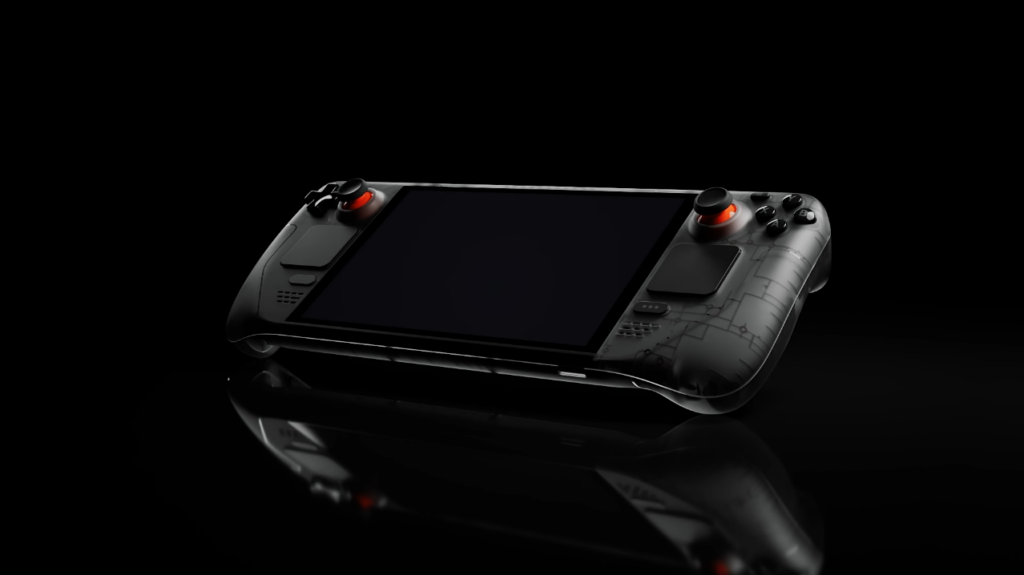
The price increase itself isn't unexpected, and not something Valve can control, but they can control the messaging and timing. The current market climate is awful, and we’ve been seeing price increases for so much tech across the board. The PS5 price has increased by $200, the Switch 2 will be getting a $50 price increase in September, the Xbox Series X has seen over a $100 jump, and PC components are all more expensive than they should be, causing even big companies like Lenovo to have had to raise prices by over $1,000.
This isn’t methodical, and even though these companies control the pricing, they aren’t the ones to primarily blame. AI has been propped up on a pedestal and given priority for the parts that they need, and with their insane demand, they have driven up prices for computer parts, like RAM and SSDs. Because of this, it costs more to make the devices that are being sold. And ultimately, these are companies that need to either break even or make a profit, so if the price of manufacturing goes up, the price of the device has to go up too. It sucks to see, but it is an unfortunate inevitability.
However, all of these companies did something that Valve didn’t do: Warn us before pulling the trigger.
Almost every one of the companies that did some sort of price hike gave warning. They communicated early on that the prices were going to go up and gave people time to prepare or purchase the device before prices went up. PlayStation announced the price increases a week before they took effect; Nintendo announced the price increase months before they are set to be implemented; AYANEO gave a heads up on which devices were going to stop being manufactured; and others like AYN gave warning to put in orders before a certain time for their AYN Thor before the price went up.
Every one of these companies communicated beforehand, giving those who have been waiting to get a device time to make the call. Is it rushed? Absolutely. But it’s better than it coming out of the blue and disappointing people who have been waiting to get the device at the price point it should be at.
In Valve’s case, there was no warning. Just a simple post mentioning that the Steam Deck is back in stock with a major price increase. No heads up, no warning, no explanation of why this happened now. That is where Valve made its biggest mistake. People have been waiting for the Steam Deck to come back in stock to take advantage of the pricing that helped make the Steam Deck such a high value. It had been out of stock for months, and people were getting antsy. There was an explanation for this, but what there wasn’t an explanation for was why they decided to bring the Deck back at all with such a high price out of the blue.
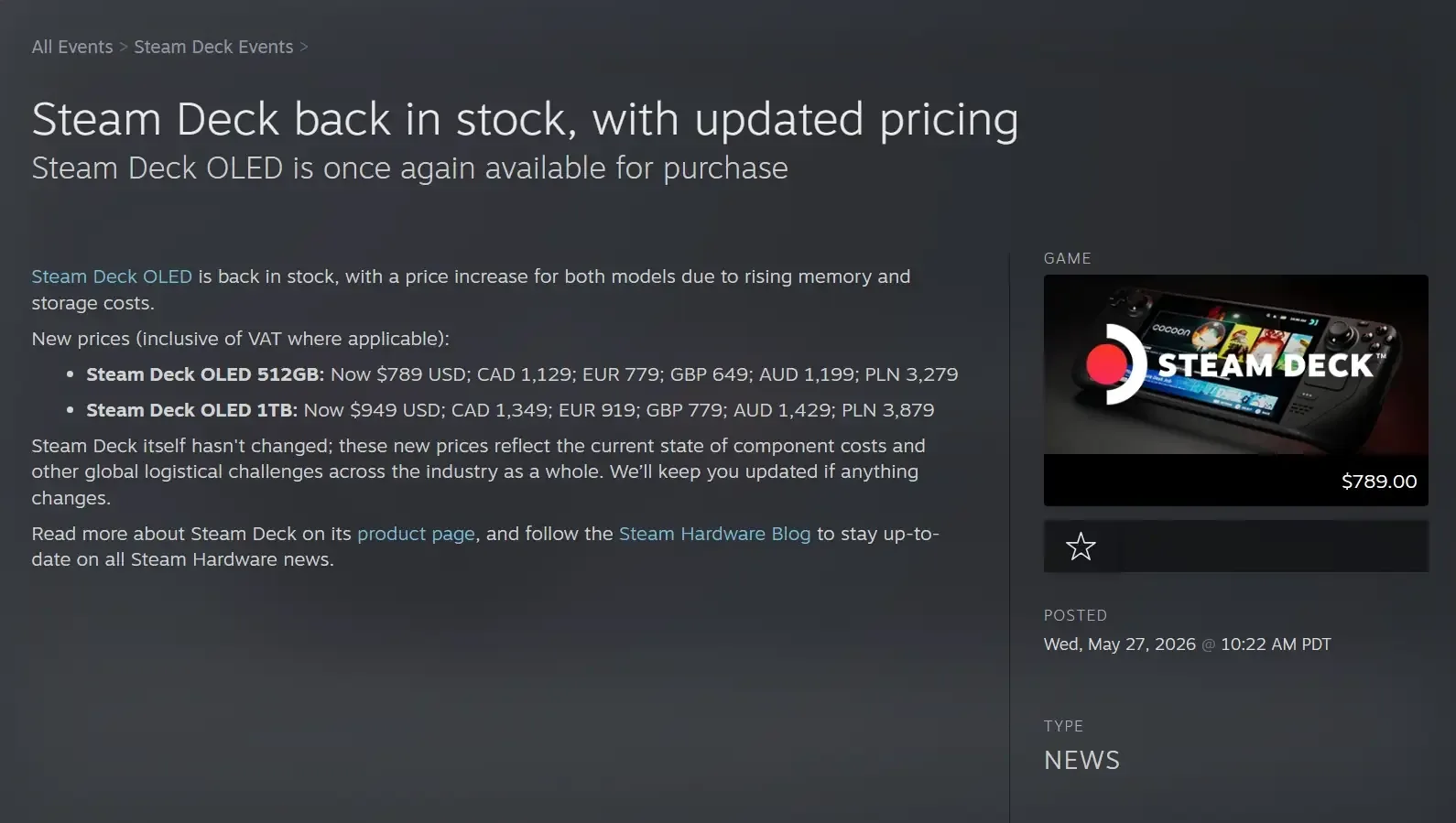
It feels like a slap in the face. Those who have been waiting months to take advantage of a handheld that had a great balance of power and price were left with a brand new price tag that hurt the value of the Steam Deck. The failure of Valve to communicate effectively before this happened is the reason we should be upset with them. The fact that we got no warning or explanation, just a short message saying the device was back in stock with a huge price increase, was not the right way to do this.
In the end, this is a rare miss, and a huge one at that from a company that has regularly put consumers first. Buying any hardware right now is a complete mess, but Valve's lack of warning and general communication around this made the situation worse for not just itself, but for the Steam Deck ecosystem as a whole.
If you enjoyed this article, check out the rest of the content on SteamDeckHQ! We have a wide variety of game reviews and news that will help your gaming experience. Whether you're looking for news, tips and tutorials, game settings and reviews, or just want to stay up-to-date on the latest trends, we've got you covered!

RECENT NEWS
Categories
Accessories
Anbernic
Android
ASUS ROG Ally
ROG Xbox Ally
Classics on Deck
Community
Cryobyte33
Deals
Deck Mods
Emulation
Events
Featured Post
Game News
Game News
General Game News
HandheldHQ
Hardware
Lenovo
Linux
MagicX
MSI
Nintendo
ONE-NETBOOK
Opinion
Other Reviews
Accessory Reviews
Handheld Reviews
PlayStation
Proton
Retro Handhelds
Anbernic
AYANEO
AYN
GPD
MagicX
MANGMI
Miyoo
Retroid
Rumors
TrimUI
SDHQ
Steam
Steam Controller
Steam Frame
Steam Machine
SteamOS
The Unsupported Report
Uncategorized
Uncategorized
VR
Xbox
Recent Tips & GUIDES
recent reviews






The worst thing for me is, I will not be able to afford one when they will release isn't soon and the price will be high as expected. But when we wait and they restock we can maybe expect another price hike. While I understand the situation and I know it's not valves fault I af to agree to what was said before, why is valve not trying to sell the machines with the lowest possible profit, just to avoid any losses. Are they just targeting steam users anyway? Than I understand and theres no need to bind them to their shop because they are already there.
But I can image with the SteamDeck alone many people started to purchase even more games or came back to gaming on a wider scale anyway (like myself) to start purchasing games again.
But at the end I just want them to throw this thing on the market. With every month the whole discussion about potential prices from analysts or maybe leaks start to be really annoying.
Sell it and we will see how it will work out (I'm sure pretty well for valve anyway) but with every month more games with higher demand come to the store and shorten the "effective Livespan" of the steam machine
I would be curious to see how much profit they are making. I remember them discussing how pricing was "painful" in an interview years ago, and if that's still true, I wonder just how much they are making now. I wouldn't be surprised if it's lower than we think.
Valves real problem is that they refuse to do the same thing Microsoft, Nintendo, and Sony do and won't take a loss on an individual console sale.
When you buy an Xbox or Playstation, Microsoft and Sony willingly lose profit to get people to buy their stuff. Valve doesn't. It's why the Steam Machine and next-gen Xbox will do the same things but the Steam Machine will inevitably be hundreds more expensive.