If you haven't yet, follow us on X (Twitter), Mastodon, or Bluesky to know when we post new articles, and join our Reddit or Subscribe to us on YouTube to check out our content and interact with our awesome community. Thank you for supporting us!
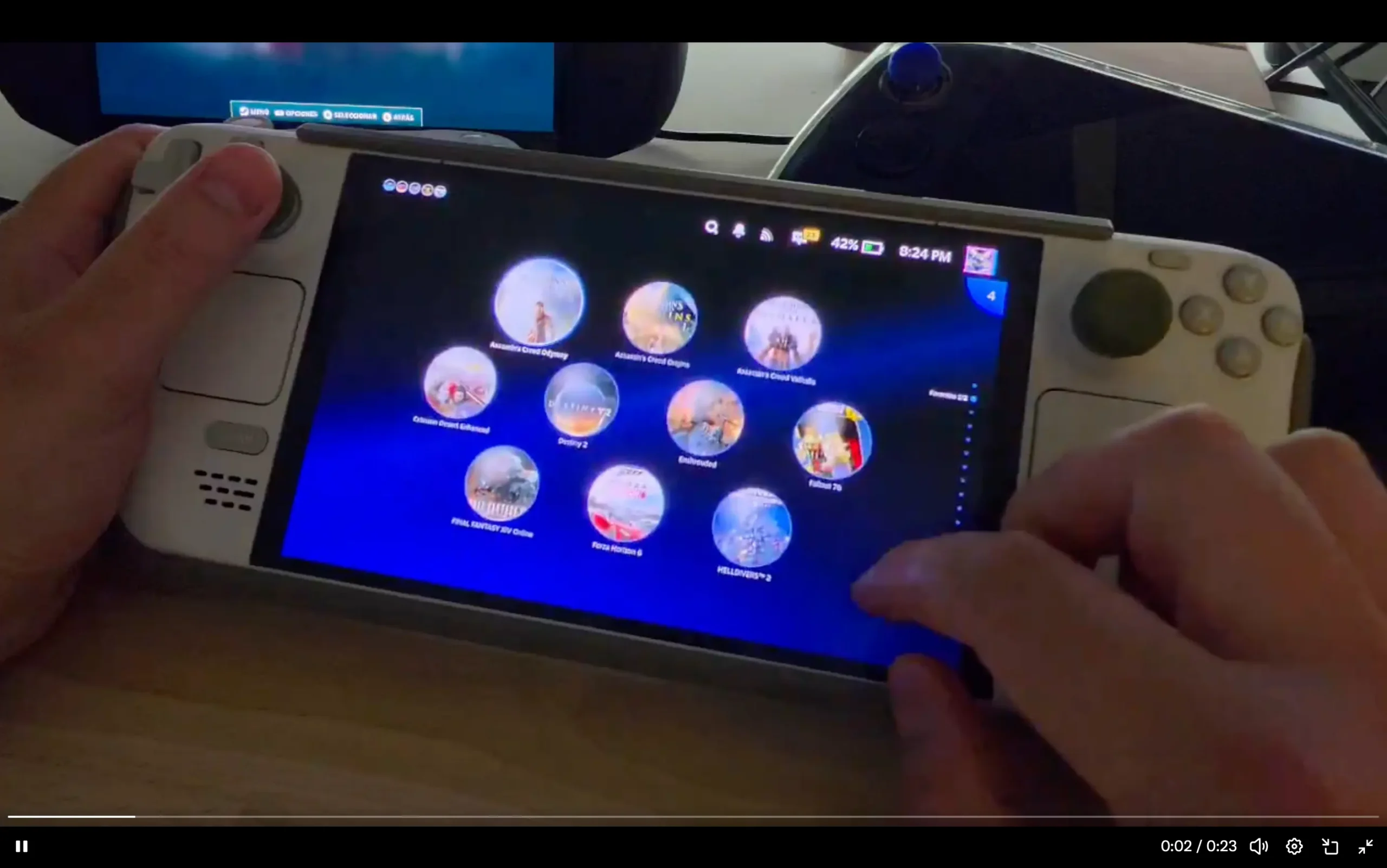
While I may not be the biggest fan, I’m also not going to deny how influential lossless scaling is in the Steam Deck community. In our quest to get the best performance possible on the portable device, a lot of people are trying out frame generation to create artificial frames to make it feel like a game is performing better than it is. The best way to do that right now, using Lossless Scaling, has been made possible by PancakeTAS, who has ported over the frame generation part of the Lossless Scaling program to Linux (LSFG-VK). It’s incredible work, and the work is only continuing with the 2.0.0 release, which came out yesterday.

The new 2.0.0 release has some pretty big changes in it, and they should improve how the frame generation performs. FP16 Acceleration has been added, which should improve performance by 2x to 3x depending on the game. We have tested this a bit ourselves as well, and it does appear to have actually improved. Memory will also now be reused, which reduces the amount of memory it needs by 70%. And we have a new layer that allows us to easily play 32-bit games with Lossless Scaling.
The Vulkan version has actually been downgraded to 1.2 to improve compatibility with more GPUs, while processes can now be identified in different ways to make it easier to set up specific game profiles. There’s also a new tool that allows us to benchmark, validate, and check the health of the Lossless Scaling files. And with the user interface now being Qt6-based, the file size has been brought down to just a few kilobytes instead of the old 70 MB.
Now, these are some incredible improvements, and while we can use them on the Steam Deck, we will have to install them manually. The Decky plugin (Decky LSFG-VK) has not been updated to the new version yet, but the developer is working on it right now. The only way to actually try this out with Decky is the MAKO plugin, but I don’t necessarily recommend using it due to its use of AI code and PancakeTAS speaking directly out against it.
Personally, it’s still not something I would recommend using. Even if it does improve performance, I still feel the input lag when I try to use it. On top of that, if the base framerate is too low, it will still result in drops and stutters. Still, even if I’m not a fan, I have to admit that it’s a fantastic update for an application that does have a use.
If you enjoyed this article, check out the rest of the content on SteamDeckHQ! We have a wide variety of game reviews and news that will help your gaming experience. Whether you're looking for news, tips and tutorials, game settings and reviews, or just want to stay up-to-date on the latest trends, we've got you covered!

RECENT NEWS
Categories
Accessories
Anbernic
Android
ASUS ROG Ally
ROG Xbox Ally
Classics on Deck
Community
Cryobyte33
Deals
Deck Mods
Emulation
Events
Featured Post
Game News
Game News
General Game News
HandheldHQ
Hardware
Lenovo
Linux
MagicX
MSI
Nintendo
ONE-NETBOOK
Opinion
Other Reviews
Accessory Reviews
Handheld Reviews
PlayStation
Proton
Retro Handhelds
Anbernic
AYANEO
AYN
GPD
MagicX
MANGMI
Miyoo
Retroid
Rumors
TrimUI
SDHQ
Steam
Steam Controller
Steam Frame
Steam Machine
SteamOS
The Unsupported Report
Uncategorized
Uncategorized
VR
Xbox
Recent Tips & GUIDES
recent reviews