


まだの方は、X(Twitter)、Mastodon、Blueskyでフォローし、新しい記事が投稿されたらお知らせください。また、Redditに参加したり、YouTubeに登録して、私たちのコンテンツをチェックしたり、素晴らしいコミュニティと交流してください。応援ありがとうございました!
For quite a while, AMD and its APUs have dominated the handheld PC landscape. Whether it be the custom APU for the Steam Deck or the Z2 Extreme in the Xbox Ally X, AMD has been the main APU used to power the most popular handhelds. However, at Computex, Intel announced its new APU line made for handhelds. And from what they’re saying, it looks like it could give AMD some trouble.
The Intel ARC-G3 APUs were announced a few days ago, and have already been announced with three handhelds that are going to be using them. The new MSI Claw, OneXPlayer 3, and Acer Predator Atlas 8 are all planned to be using the new APU. On top of that, the new MSI Claw is already slated to be releasing later this month. And at Computex, they went into the power the APU has, and how it compares to the newest Z2 Extreme from AMD.
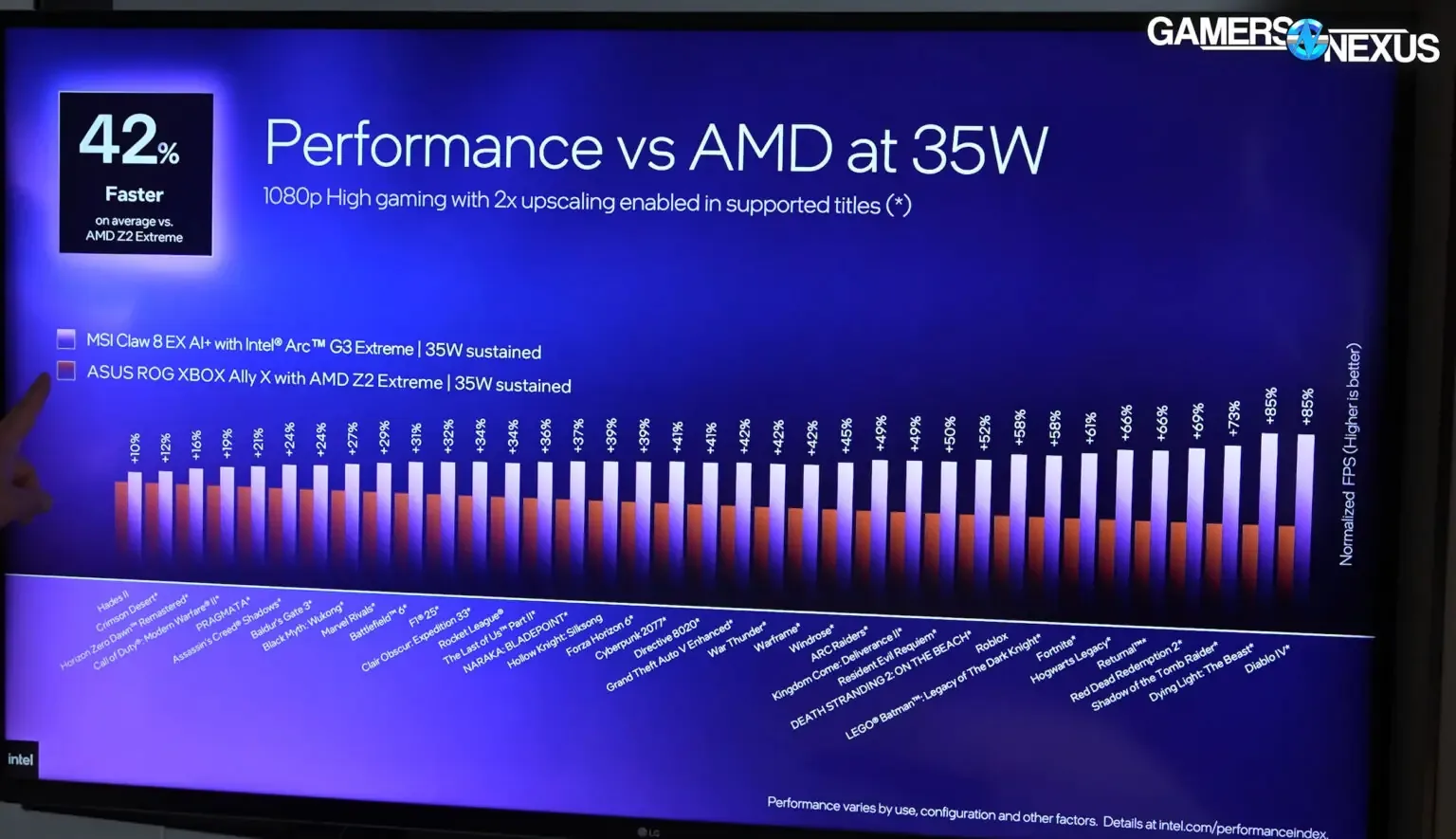
In the comparisons, they noted that on average, their APU is 42% faster than the Z2 Extreme at the same wattage, and is getting around 2x performance per watt at just half the power of the Z2 Extreme. This means that the chips relatively performed the same when the Arc G3 Extreme is at 17W and the Z2 Extreme is at 35W. This bodes extremely well for the Intel chip, since it shows how much more performant it is. This could mean getting similar performance with longer battery life, or pushing performance even higher.
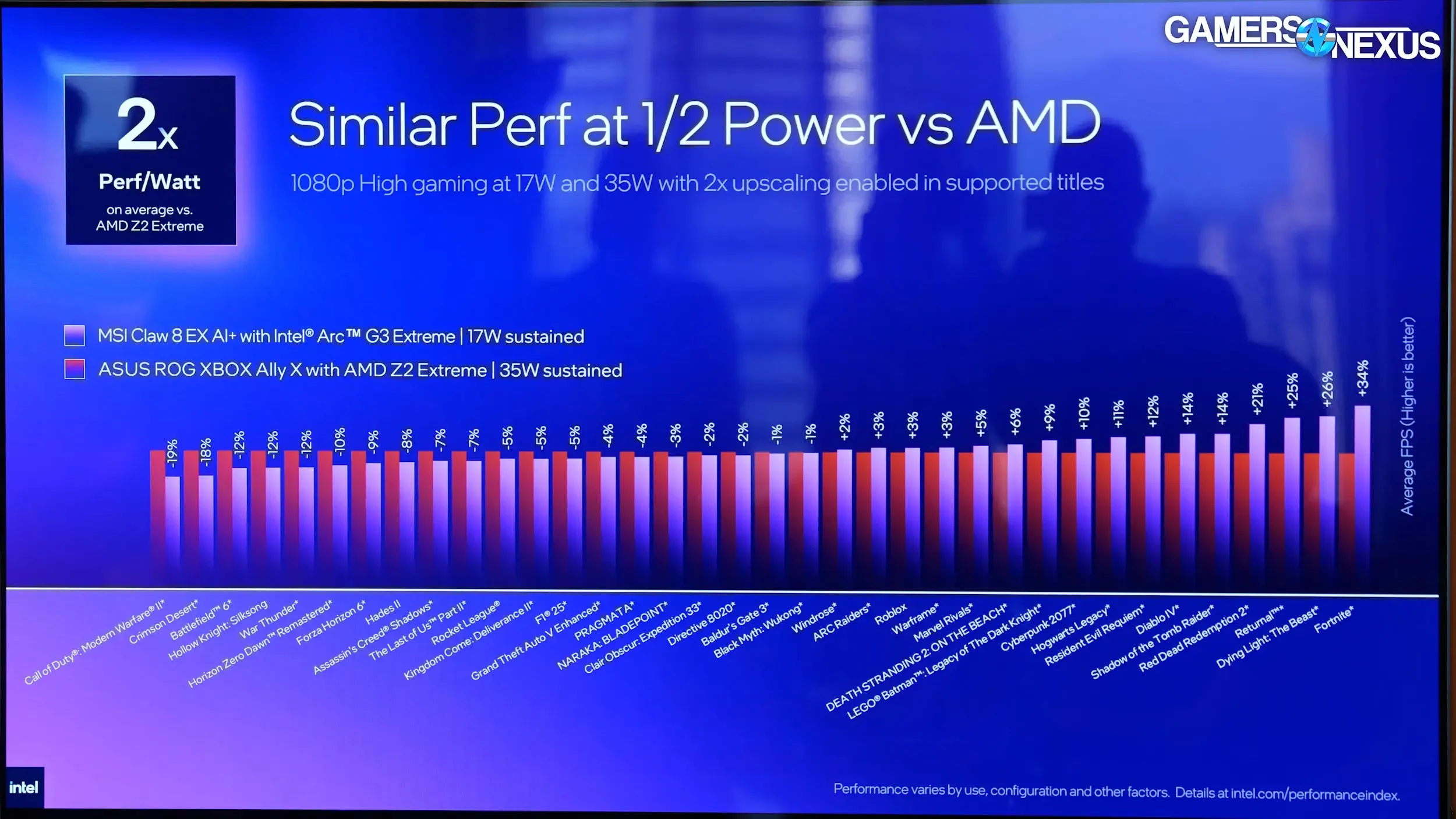
It’s going to be really interesting to see how it holds up in real world trials. These are all based on Intel’s internal testing, but if it’s true, this new chip is going to be a huge leap over the Z2 Extreme, and start putting Intel on the map for handheld APUs.
Source: VideoCardz, GamerNexus
この記事を楽しんでいただけたなら、SteamDeckHQ の他のコンテンツもチェックしてみてください!あなたのゲーム体験に役立つゲームレビューやニュースを幅広く取り揃えています。ニュース、ヒントやチュートリアル、ゲーム設定やレビュー、最新のトレンド情報など、あらゆる情報をお届けします。 カバーしています!

最近のニュース
カテゴリー
Accessories
Anbernic
Android
ASUS ROG Ally
ROG Xbox Ally
Classics on Deck
Community
Cryobyte33
Deals
Deck Mods
Emulation
Events
Featured Post
Game News
Game News
General Game News
HandheldHQ
Hardware
Lenovo
Linux
MagicX
MSI
Nintendo
ONE-NETBOOK
Opinion
Other Reviews
Accessory Reviews
Handheld Reviews
PlayStation
Proton
Retro Handhelds
Anbernic
AYANEO
AYN
GPD
MagicX
MANGMI
Miyoo
Retroid
Rumors
TrimUI
SDHQ
Steam
Steam Controller
Steam Frame
Steam Machine
SteamOS
The Unsupported Report
Uncategorized
Uncategorized
VR
Xbox
最近のヒント&GUIDES
新着レビュー





Competition here is always good and maybe the only thing that can stop this unhinged pricing a little bit or maybe just slow it down.
I personally when thinking about Intel mainly think about bad battery life and high temperature even in portable devices like tablets because especially in versions without active cooling the things got extremely hot and then super slow.
It was always extremely bad in my experience.
But of course those handhelds have active cooling and we do not expect the ultimate battery life from them. I'm not the target group here since I stick with my Steam Deck and especially Linux as an OS for work and play but if the big players can create some sustainable grow with their devices on the hand held market it can create interesting options for all of us.
Competition is never a bad thing, especially when the market is so volatile and expensive right now. It will be interesting to see what Intel's chips can do, and I hope for the best.