


まだの方は まだの方は、X(Twitter)、Mastodon、Blueskyでフォローし、新しい記事が投稿されたらお知らせください。また、Redditに参加したり、YouTubeに登録して、私たちのコンテンツをチェックしたり、素晴らしいコミュニティと交流してください。応援ありがとうございました!
Back in January, we wrote an article about how it might be beneficial for the Steam Deck's successor to skip the RDNA3 generation and leap back into the ring using RDNA4, and with AMD just releasing more details on FSR4 in their latest RDNA4 live stream, that could well be the case.

While FSR3 was largely focused on adding frame generation to the mix, that doesn't necessarily benefit you if you're already running at a low framerate, but FSR4 looks to go back and improve image-upscaling quality by a ton, meaning you can run at lower resolutions while still maintaining decent image quality, which can be a lifesaver on a low-end device like the Steam Deck.
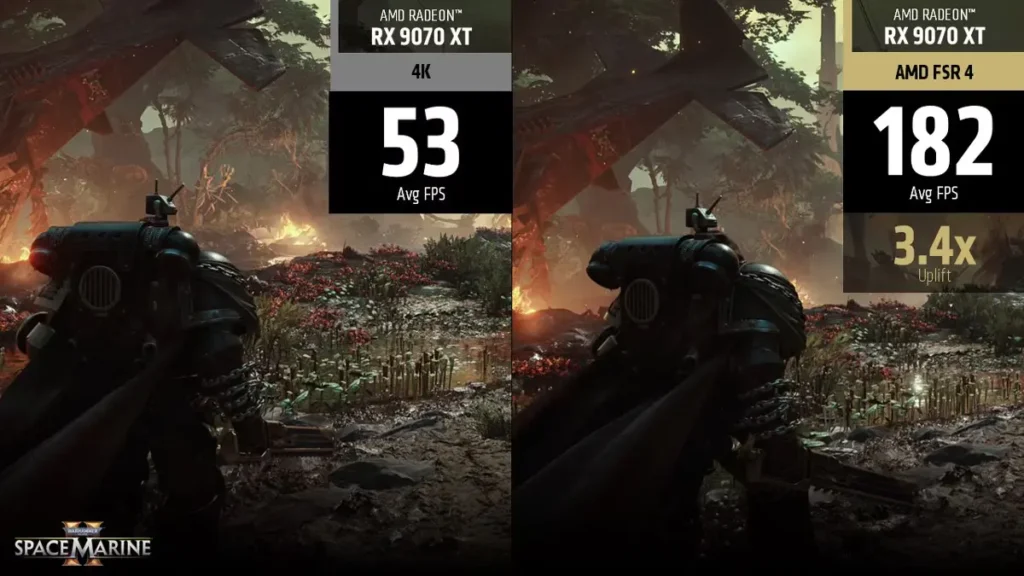
Taking a look at the screenshot below from the live stream showcasing Warhammer 40k: Space Marine II using FSR3.1 Balanced versus FSR4 Performance mode, shows that the FSR4 upscaler is creating a crisper/clearer image than FSR3's while running at a lower base resolution, which should result in more performance and a better image.

AMD claims their new approach with FSR4 will reduce ghosting and noisy effects and even claims that at certain levels, an upscaled FSR4 image can produce more quality/detail than a native 4k image.
So if the Steam Deck 2 does make use of the RDNA4 architecture, gaining the use of FSR4 could definitely extend the life-span and general performance of the device on the games that make use of FSR4.
What do you think? Would it be a good move by Valve to wait and fit RDNA4 architecture in the Steam Deck's successor?
この記事を楽しんでいただけたなら、SteamDeckHQ の他のコンテンツもチェックしてみてください!あなたのゲーム体験に役立つゲームレビューやニュースを幅広く取り揃えています。ニュース、ヒントやチュートリアル、ゲーム設定やレビュー、最新のトレンド情報など、あらゆる情報をお届けします。 カバーしています!

最近のニュース
カテゴリー
Accessories
Anbernic
Android
ASUS ROG Ally
ROG Xbox Ally
Classics on Deck
Community
Cryobyte33
Deals
Deck Mods
Emulation
Events
Featured Post
Game News
Game News
General Game News
HandheldHQ
Hardware
Lenovo
Linux
MagicX
Nintendo
ONE-NETBOOK
Opinion
Other Reviews
Accessory Reviews
Handheld Reviews
PlayStation
Proton
Retro Handhelds
Anbernic
AYANEO
AYN
GPD
MagicX
MANGMI
Miyoo
Retroid
Rumors
TrimUI
SDHQ
Steam
Steam Controller
Steam Machine
SteamOS
The Unsupported Report
Uncategorized
Uncategorized
最近のヒント&GUIDES
新着レビュー




Lossless Scaling plugin is better than nvidia framegen.