
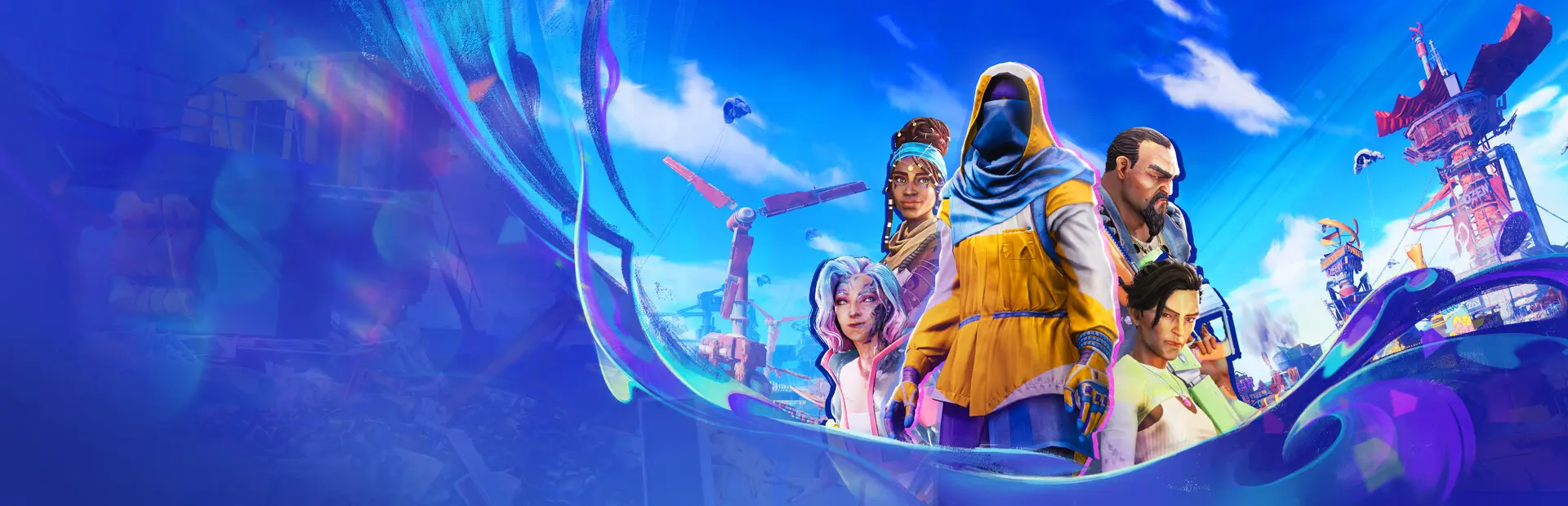


Tides of Tomorrow was provided by THQ Nordic for review. Thank you!
After playing a couple of preview builds for Tides of Tomorrow, I was curious to see how the full game took advantage of its unique narrative storytelling, whereby players follow in the footsteps of those before them, and in turn, get a chance to influence the events of other players who decide to follow their footsteps. I wasn't convinced it was used to full effect in the preview builds, but I couldn't wait to try the full game.
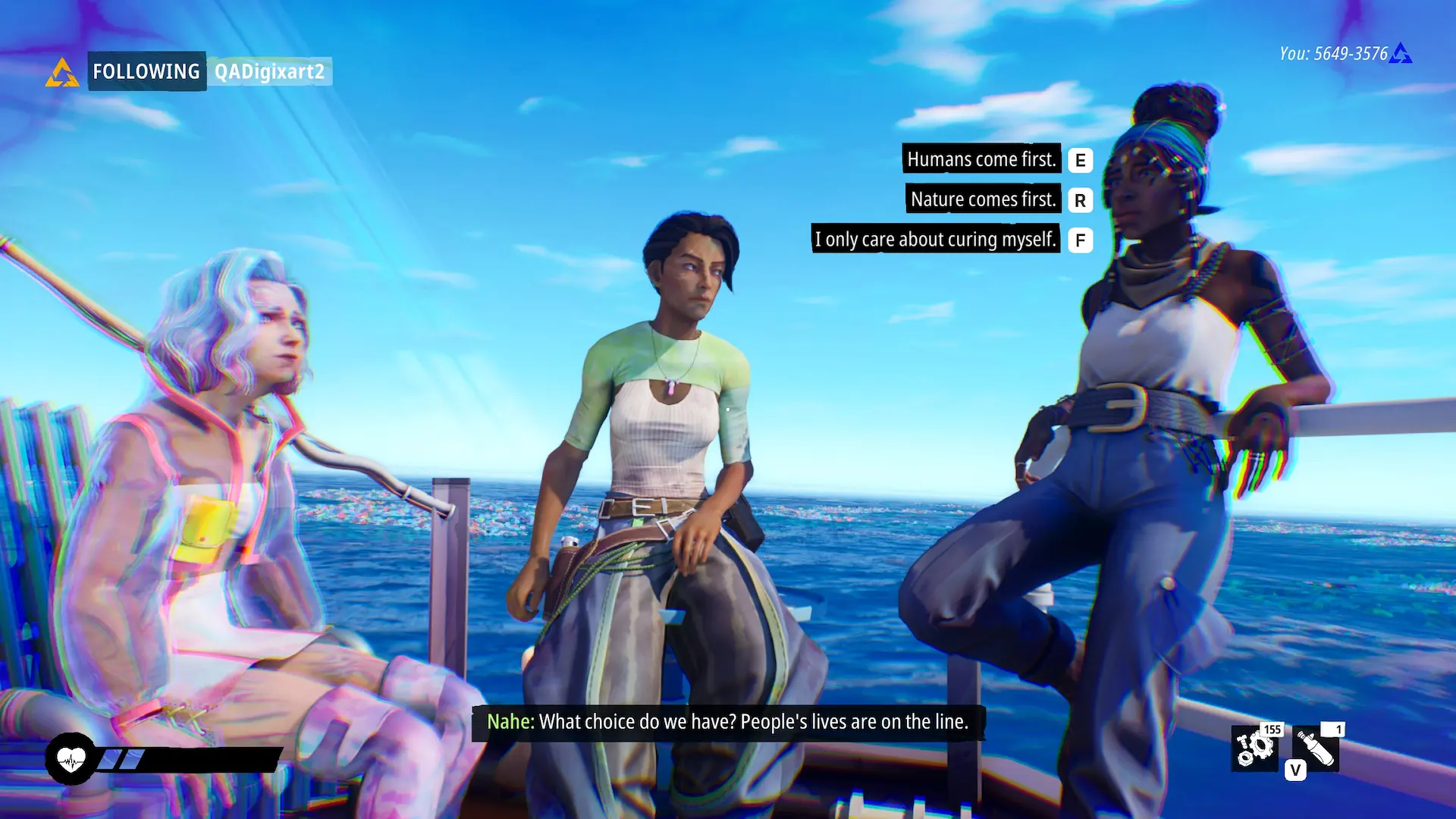
Tides of Tomorrow leans heavily on its narrative, unsurprising given that the developer's last game was Road 96, a very narrative-driven game. Fortunately, the story holds interest throughout and gradually gets you more emotionally involved as we progress. In a world infected with a disease called "Plastemia", where the entire population of the Earth is slowly dying, Ozen is the one medicine that staves off the symptoms and is prized by all the factions in the game. As a "Tidewalker", you are prophesied to find a cure for Plastemia and bring hope to mankind.
The game isn't too long, taking around 6 to 7 hours to finish. It partly depends on how many side missions you take and how many true characters (named ones that affect the story) there are, but keeping the game and characters relatively modest in scope, along with the solid voice acting, helps them really flesh out the story and the personalities of each.
While not political in nature, Tides of Tomorrow does feature an "ethics" system, whereby the choices that you make will push you towards certain ethical leanings, such as favoring nature over mankind or prioritizing yourself over others. The main characters you interact with tend to fall within these categories. For example, Eyla is very pro-nature, and she'll like you more for making choices to protect animals and the planet ahead of mankind. The choices you make affect your relationships, and ultimately, the fate of the world.
Which brings us to the main pull of Tides of Tomorrow, the "Online Story Link". It allows you to follow another player's footsteps, with their previous actions either helping or hindering you. It's a neat system, and it's used to varying effectiveness throughout the game. You get to choose a person to start your adventure with, either from a global list, your friends list, or a specific number/seed to follow. If you do reach an area they haven't played through, the game will switch you to another player to follow.
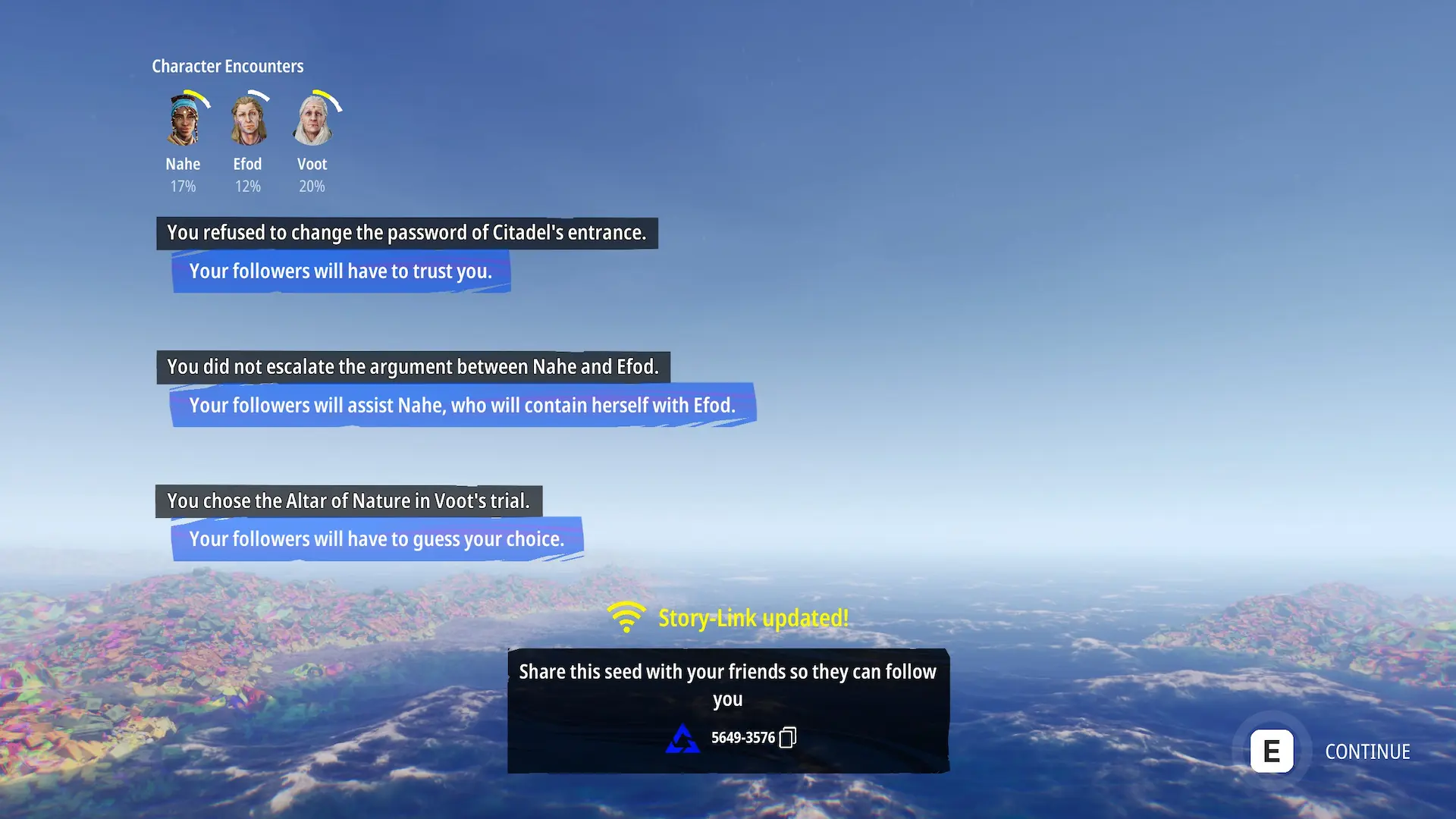
Sometimes, this system works really well. Before you follow a player, you do get a preview of their primary ethics, so you have an idea of whether they have been antagonistic or friendly with NPCs on their playthrough. You'll also get an idea of whether or not they play cooperatively or play for their own survival, which can give you an indication of whether or not they have left resources behind for you.
Don't expect to see the entire game in one playthrough. Tides of Tomorrow is designed to be replayed, with different choices and following different players each time, which can affect the world around you. If you follow a player who annoyed certain NPCs, for example, they will be more confrontational and less helpful in your playthrough, and the opposite if the player you are following was kind and helpful.
Ozen is in limited supply, and it becomes rarer as the game progresses. You will gradually lose health as you progress, so managing your Ozen becomes very important. You can give it away to future Tidewalkers who follow you, you can use it to replenish your health, or you can give it to NPCs for rewards. Following a player who is stingy with their resources can be a tough challenge, whereas following a more "cooperative" player makes your life a lot easier, as they are likely to have left Ozen behind for you, or at least Scrap with which you can buy Ozen.
There are also "visions" left behind by the player's actions. This is where I feel the game under-utilizes a bit. It feels like there are periods of the story that heavily use this feature, and other periods where it's hardly part of the game at all. I definitely had around an hour of playtime (about 15% of the game) when I never used it, and then at a point when I had to use it 5 times in 5 minutes. Sometimes I even forgot it was a part of the game.
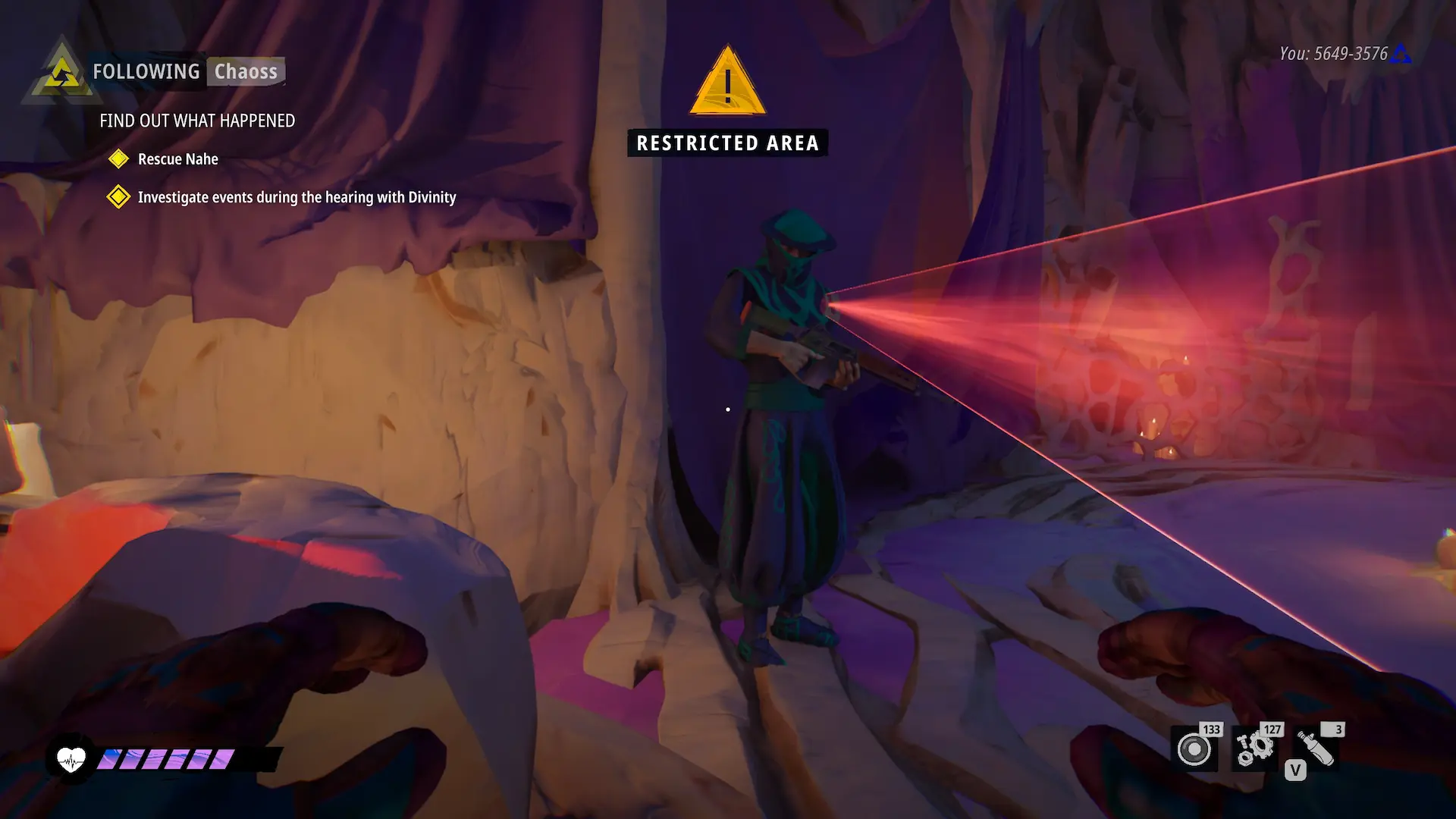
The "gameplay" itself is fairly mundane. Most of the time, you are walking around the game's floating outposts, occasionally doing some platforming and interacting with NPCs. There are some stealth sections, which I wasn't a fan of; the AI has a very limited line of sight, and sometimes movement doesn't respond as you wish. You'll likely get through most of them without being caught once. The only combat in the game is ship-to-ship combat, and that mostly consists of driving around behind a ship while it fires cannons at you that you must avoid, while periodically firing your own cannon back. It's simple, it's easy, and fortunately, it represents a tiny portion of the game.
Tides of Tomorrow is a narrative-first game, and it has a great narrative. The gameplay is on the weaker side; there's not much excitement here. The Online Story Link spices things up and adds some variety, and it does weave into the plot a little, which enhances it, but it takes a little while to find its stride.
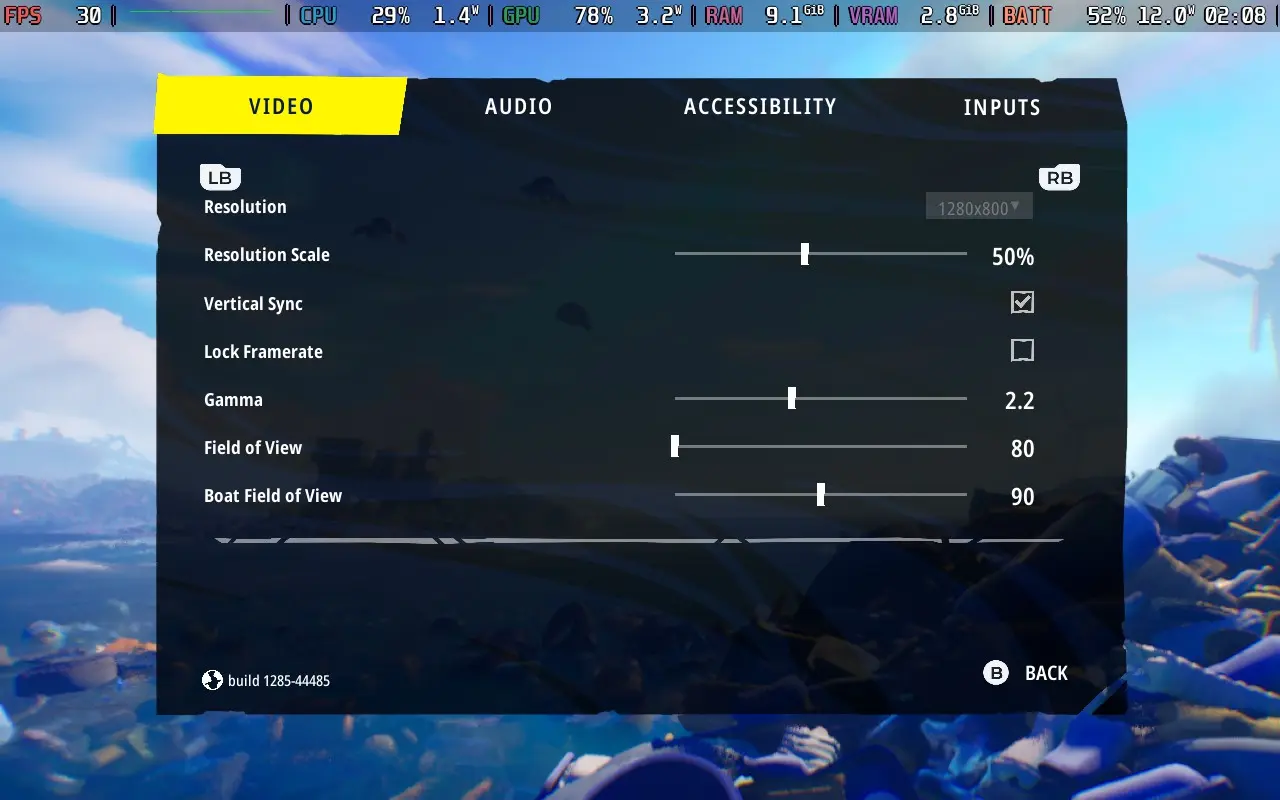
Tides of Tomorrow has great controller support and supports 1280x800 as a resolution, so there are no issues with the basics.
As far as graphical settings are concerned, the game doesn't have many settings to choose from, with the only option available being Resolution Scaling. By default, this is set to 56%, but I lowered it to 50% in my playthrough because it gains a couple of extra FPS, which helps. Lock the framerate to 30 in SteamOS as well.
When it comes to performance on Steam Deck, unfortunately, Tides of Tomorrow is highly variable. Certain areas, crucially the areas that contain the small amount of action that the game has, tend to run at 30 FPS, or at least close to. Crowded areas, such as bars and the market, frequently drop to around 20 FPS, but these tend to be free-roam moments with little action or reaction time required.
The absolute worst-performing moment was an ocean event I encountered during a storm, which caused RAM/VRAM usage to spike and pushed the FPS down to around 12-14. I was able to complete the event, but it was an unpleasant experience, and you may want to skip the "Storm" event if you're playing on a Steam Deck. I had to quit the game and reboot in order to get the RAM usage down again. Generally, though, events on the ocean run well on the Steam Deck, due to the limited characters.
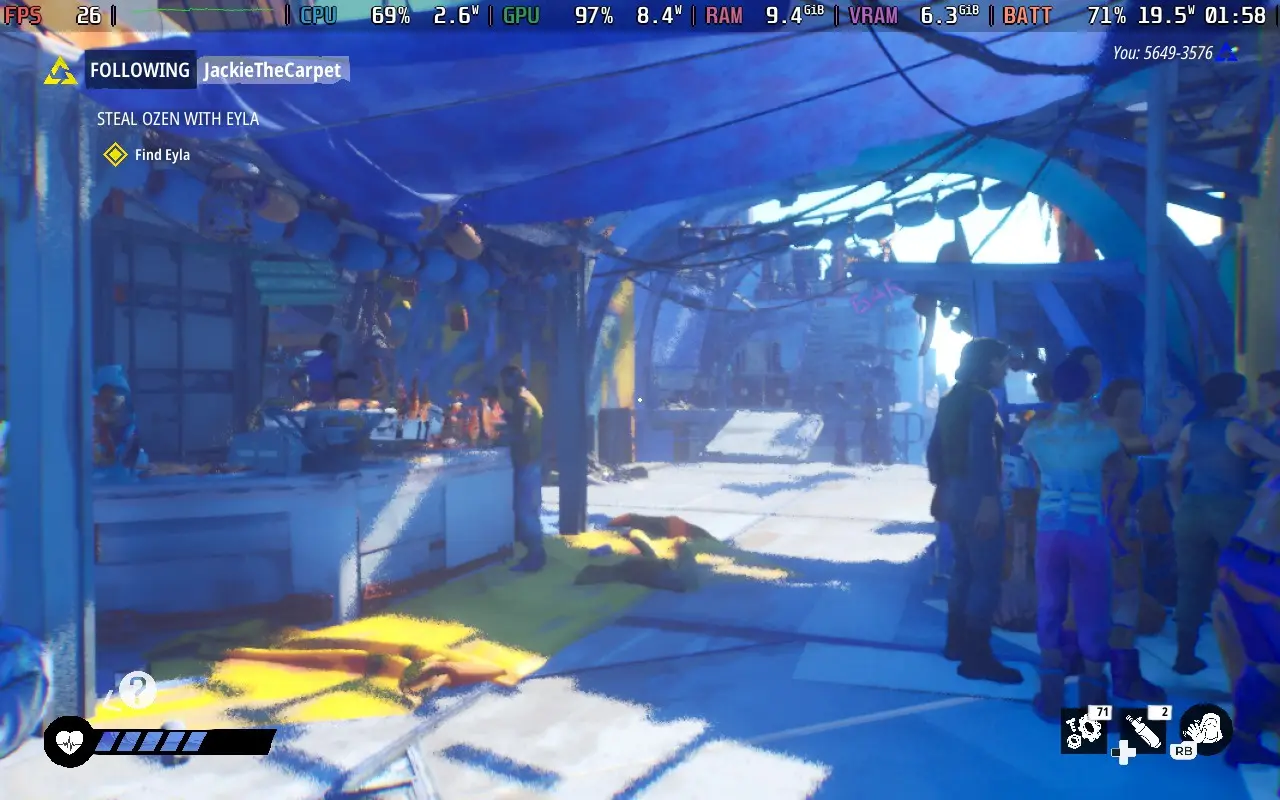
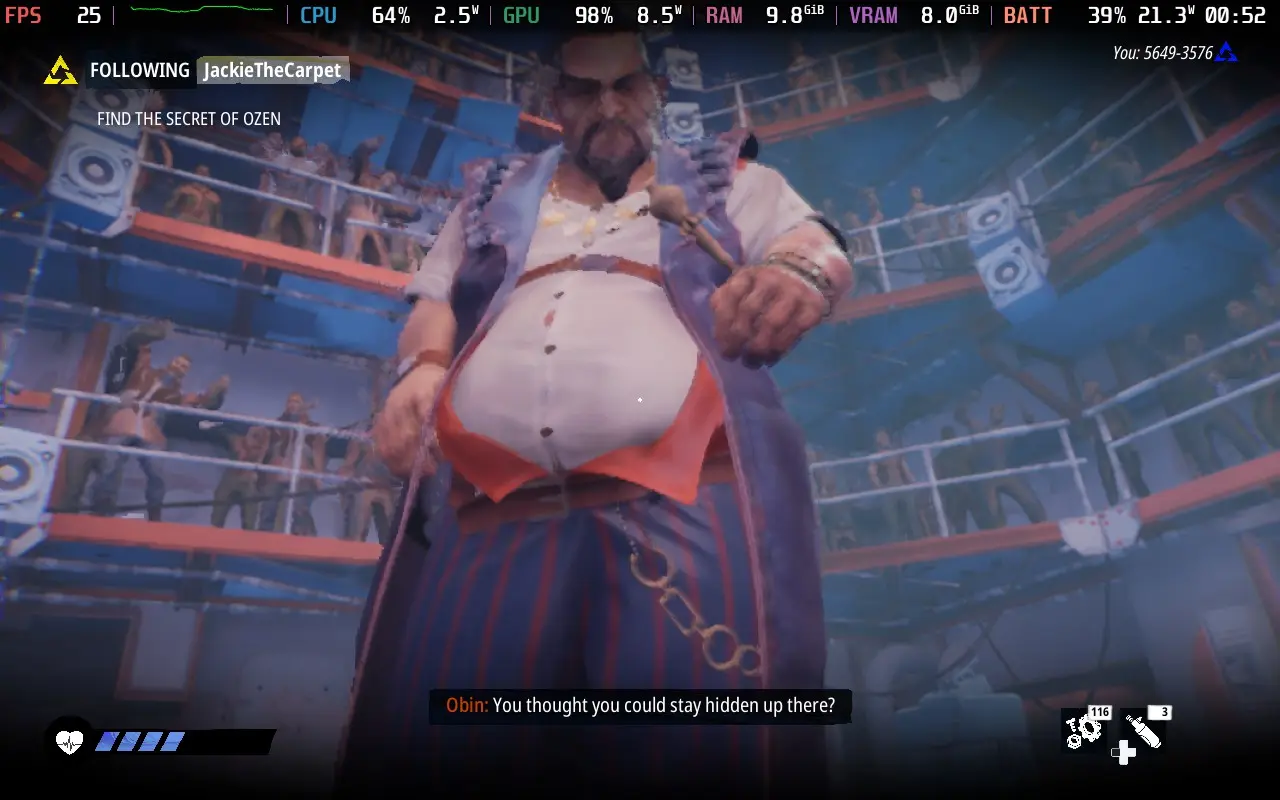
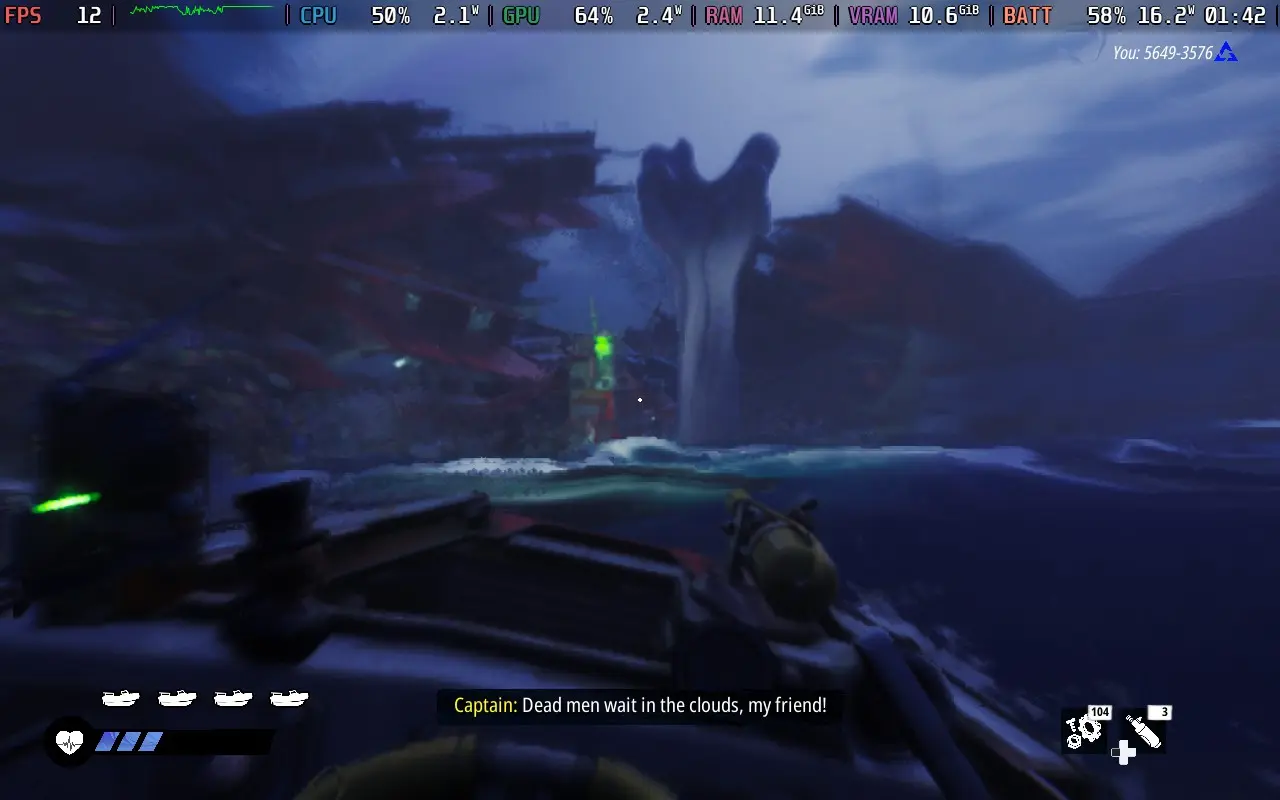
Power draw is on the higher side, being around 17W-20W, with temperatures being around 65 °C. Expect a battery life of about 2.5 hours on a Steam Deck OLED, and around 1.5 hours on a Steam Deck LCD.
Tides of Tomorrow supports subtitles (with adjustable size), as all dialogue is voiced, and it also features color-blind filters. You can also disable camera shake/wobble effects.
Tides of Tomorrow has a strong, intriguing, and ultimately emotional narrative that makes it worth experiencing. The gameplay sections are merely a vehicle to keep the narrative moving, and while they aren't the most engaging, they do their job. And while the Online Story Link system does elevate the gameplay and impact how you approach the game, it can fade into the background. However, the story feels impactful and engaging enough to keep you going despite the setbacks.
Performance on the Steam Deck is, sadly, rather poor, and I would recommend playing the game on a more powerful device. The RAM/VRAM usage gets so high that it borders on crashing, and performance in parts of the game is simply unacceptable.
このレビューはPC版に基づいています。
このレビューをお楽しみいただけたなら、SteamDeckHQ の他のコンテンツもぜひご覧ください!あなたのゲーム体験に役立つゲームレビューやニュースを幅広く取り揃えています。ニュース、ヒントやチュートリアル、ゲーム設定やレビューをお探しの方も、最新のトレンドを知りたい方も、ぜひご利用ください。
Tides of Tomorrow has a strong narrative, which helps you forgive its rather mundane gameplay. The Online Story Link also provides a boost to both narrative and gameplay, although I feel it could have done more.
Performance on the Steam Deck is poor, and the majority of players would find the experience unplayable.