
Pokémon Pokopia was provided by Nintendo for review. Thank you!
For a series that has spent the better part of the last decade trying to reinvent itself in fits and starts, Pokémon Pokopia feels like a moment of clarity. Not because it radically tears up the rulebook or dramatically reimagines what a Pokémon game can be, but because it seems to understand something that recent entries occasionally lost sight of: what makes Pokémon special in the first place. More than anything, Pokémon Pokopia feels like a game built by people who genuinely appreciate the breadth, personality, and legacy of the Pokémon brand. That appreciation seeps into almost every corner of the experience, from its reverent treatment of the creatures themselves to the scale of the world that houses them.
From the opening hours, it becomes clear that Pokopia is not interested in simply iterating on the traditional gym-badge treadmill found in the mainline titles. Instead, it presents a world that feels genuinely expansive, packed with places to explore, Pokémon to discover, and systems that interlock in ways that make the block-based journey feel organic rather than scripted. The game’s scope is enormous, but more importantly, it rarely feels overwhelming. Progress unfolds at a natural pace, encouraging curiosity without demanding strict adherence to a particular path.
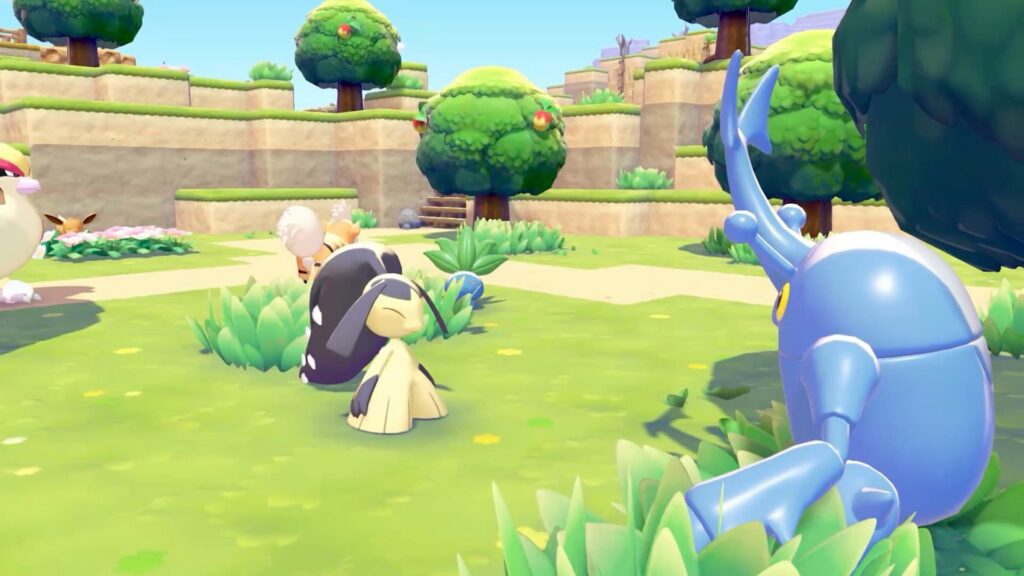
Exploration is the backbone of the experience. The various regions are vast, stretching across dense forests, once-bustling towns, coastal routes, and mountainous areas that feel deliberately crafted rather than procedurally stitched together. Each area feels like it exists for a reason, often accompanied by subtle environmental storytelling or carefully placed encounters that make venturing off the beaten path worthwhile. It’s the kind of world that invites players to wander, not just move from would-be objective marker to would-be objective marker.
A major part of what gives Pokopia its identity is the crafting and building systems that underpin much of the gameplay. Rather than presenting a static world to simply travel through, the game encourages players to shape it themselves. Resources gathered throughout the region can be used to craft tools, create structures, and gradually develop small settlements that evolve over time. The design ethos here will feel immediately familiar to anyone who has spent time with Minecraft or, specifically, Dragon Quest Builders. There’s a similar satisfaction in gathering materials, experimenting with layouts, and watching spaces slowly transform into something personal.
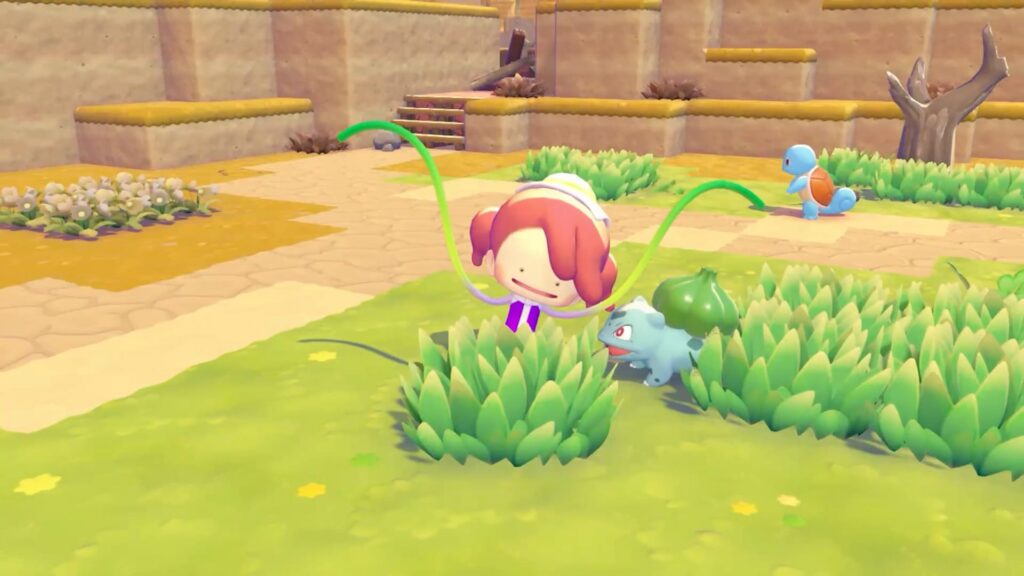
What’s impressive is how naturally these systems slot into the broader Pokémon experience. Crafting never feels bolted on for the sake of trend-chasing; instead, it becomes another way to interact with the world and its creatures. Certain structures and habitats attract particular Pokémon, environments can be shaped to suit different species, and the act of building gradually turns exploration into a collaborative effort between player and Pokémon alike. It gives the entire adventure a creative, almost sandbox-like energy that feels refreshingly different for the series.
What truly elevates Pokopia, however, is the way it treats Pokémon themselves. The creatures aren’t simply collectibles to fill a Pokédex. They feel present in the world in a way that previous games have sometimes struggled to capture. Pokémon interactions feel thoughtful and deliberate, with attention paid to their personalities, behaviours, and environments. Whether it’s seeing groups interact in the wild or discovering how different species inhabit specific regions, the game consistently reminds you that these creatures are meant to feel alive.
The game particularly shines in the sheer amount of content it offers. Pokopia is enormous in scope, and that scale manifests in more than just the map's size. Side activities, regional story threads, Pokémon research tasks, building projects, and optional challenges all contribute to a sense that there’s always something worth doing just beyond the horizon. Importantly, these activities rarely feel like filler. Many of them deepen the player’s connection to the region or offer new perspectives on familiar Pokémon.
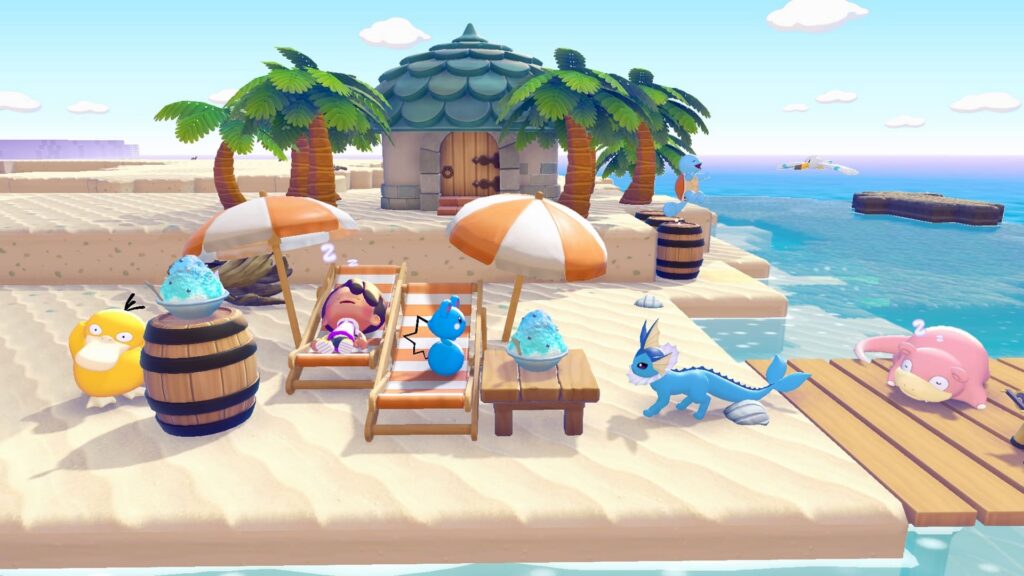
The storytelling also benefits from this broader focus, leaving much more to the imagination through the aforementioned environmental storytelling, and is all the better for it. These moments give the world texture and help reinforce the sense that Pokémon are deeply embedded in the lives of the people who once lived alongside them. It’s a subtle but effective way of strengthening the game’s overall identity.
Visually, Pokopia leans into a colorful, expressive style that complements the series' tone perfectly. It may not push technical boundaries, but it doesn’t need to. The art direction does the heavy lifting, bringing locations and Pokémon to life with warmth and personality. Areas soon feel lively, routes between settlements and POIs feel purposeful, and the world overall carries a sense of charm that fits Pokémon better than photorealism - or even the stylisation of other Pokémon titles, such as Pokémon Legends: Z-A, ever could.
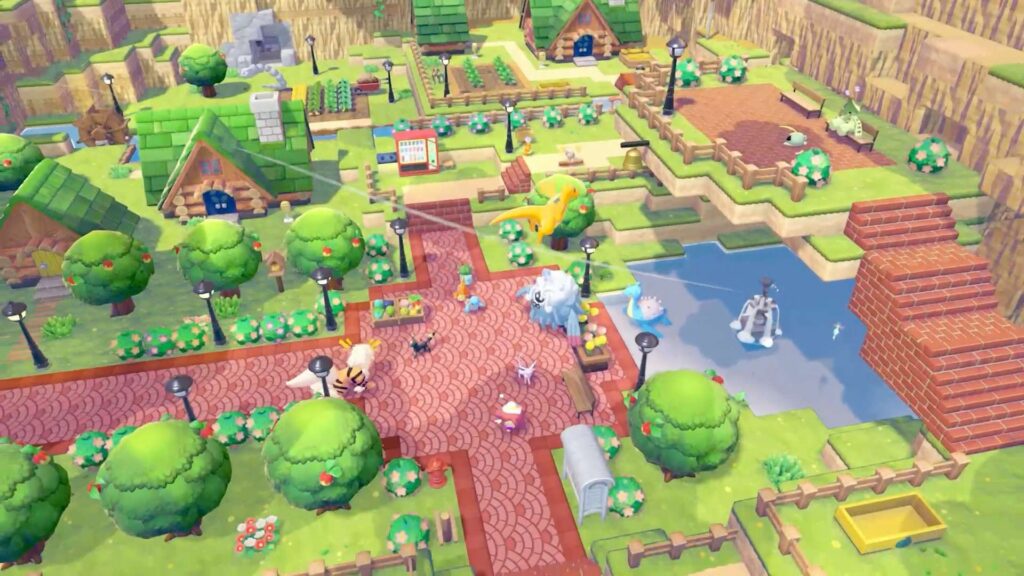
Perhaps the most impressive aspect of Pokopia is how cohesive it all feels. For a game so large, it maintains a clear sense of identity throughout. Every system, every area, and every activity feels like it belongs in this world. That cohesion is something the series has occasionally struggled with when experimenting with new mechanics, but here it feels natural.
Ultimately, Pokémon Pokopia succeeds because it understands Pokémon at a fundamental level. It recognizes that the appeal of the series isn’t just about collecting creatures or filling a Pokédex; it’s about the sense of adventure, discovery, and companionship that comes from exploring a world filled with these iconic monsters. By leaning into that idea and building an enormous, engaging experience around it, Pokopia becomes something special.
It’s hugely enjoyable, impressively ambitious in scale, and perhaps most importantly, it feels like a celebration of Pokémon itself. After years of experimentation and uneven steps forward, Pokémon Pokopia finally feels like a game that understands exactly why people fell in love with the series in the first place, and that understanding makes all the difference.
このレビューはNintendo Switch 2版に基づいています。
このレビューをお楽しみいただけたなら、SteamDeckHQ の他のコンテンツもぜひご覧ください!あなたのゲーム体験に役立つゲームレビューやニュースを幅広く取り揃えています。ニュース、ヒントやチュートリアル、ゲーム設定やレビューをお探しの方も、最新のトレンドを知りたい方も、ぜひご利用ください。
SDHQ's Review Breakdown
Ultimately, Pokémon Pokopia succeeds because it understands Pokémon at a fundamental level. It recognizes that the appeal of the series isn’t just about collecting creatures or filling a Pokédex; it’s about the sense of adventure, discovery, and companionship that comes from exploring a world filled with these iconic monsters. By leaning into that idea and building an enormous, engaging experience around it, Pokopia becomes something special.
It’s hugely enjoyable, impressively ambitious in scale, and perhaps most importantly, it feels like a celebration of Pokémon itself. After years of experimentation and uneven steps forward, Pokémon Pokopia finally feels like a game that understands exactly why people fell in love with the series in the first place — and that understanding makes all the difference.
Score Breakdown




最近のニュース
最近のヒント&GUIDES
recent Nintendo reviews