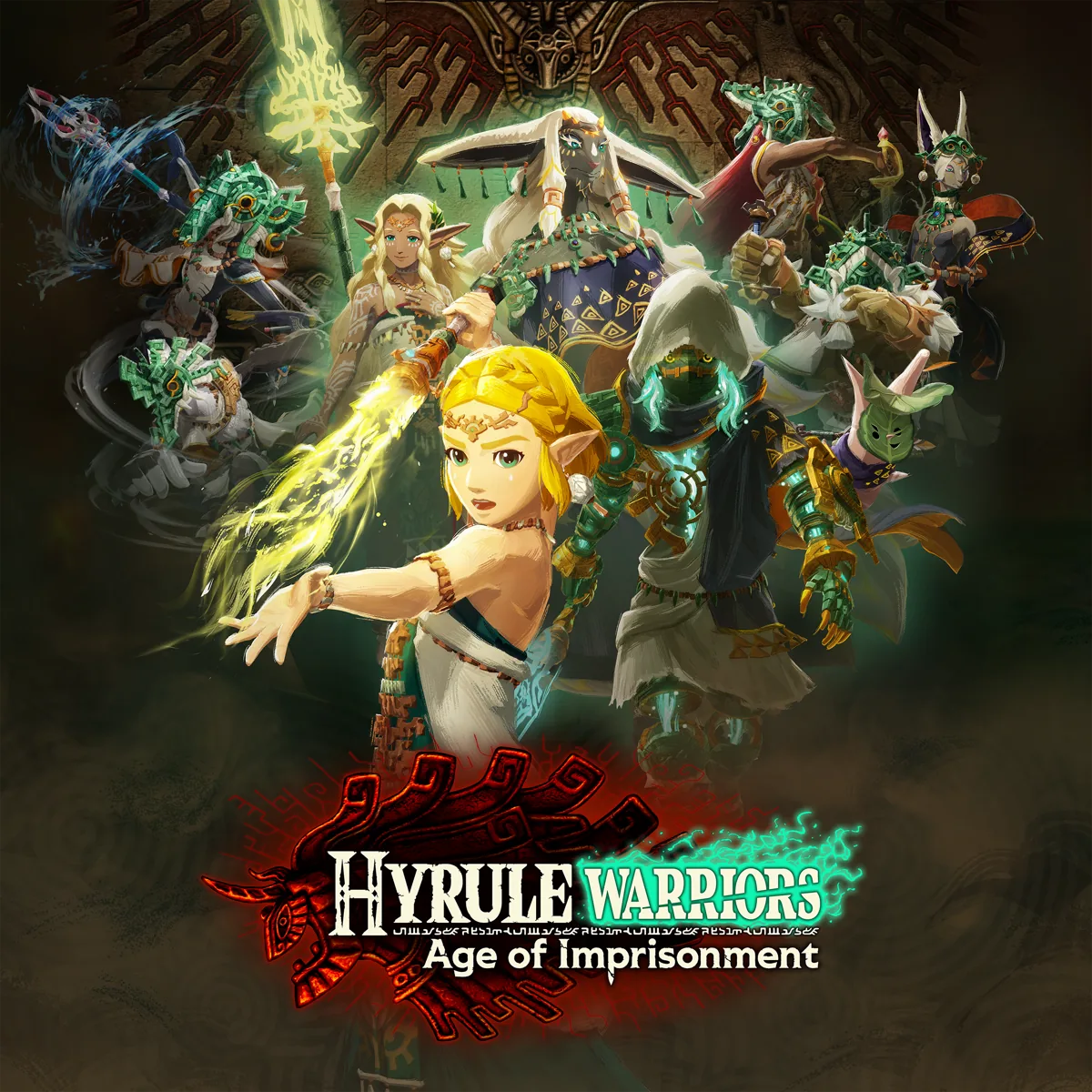
Hyrule Warriors: Age of Imprisonment was provided by Nintendo for review. Thank you!
Few franchises weave lore and legacy together quite like The Legend of Zelda. Every new entry feels like a piece of a sprawling timeline puzzle, adding nuance to the mythos fans have debated for decades. Hyrule Warriors: Age of Imprisonment, developed by Koei Tecmo and published by Nintendo, takes another bold swing at that legacy, setting its sights on the legendary Imprisoning War, an era previously shrouded in mystery. The result is a stunning, action-packed experience that blends the familiar Warriors formula with a heavy dose of Zelda grandeur, though not without some of the same old genre fatigue.
Set long before the events of Tears of the Kingdom, Age of Imprisonment thrusts players into an ancient Hyrule caught in the chaos of war against, you guessed it, Ganondorf. This isn't the usual cycle of "Link saves Zelda and the kingdom"; in fact, Zelda herself takes centre stage this time, leading an army alongside King Rauru and the Sages in an effort to prevent Ganondorf's dominion from ever taking hold.

From the opening moments, it's clear this isn't just another spinoff. The tone is darker, the stakes feel heavier, and the narrative leans into the tragedy and grandeur of ancient Hyrule. Cutscenes are beautifully rendered, voice acting is strong across the board, and the musical score, sweeping orchestral takes on classic Zelda motifs, gives each battle a mythic energy.
That said, the story sometimes struggles with pacing. While the cutscenes and lore connections are thrilling for longtime fans, the mission structure occasionally undercuts the drama. Major revelations are often interspersed with repetitive combat sequences that drag down the campaign's rhythm. Still, for those invested in Zelda's broader mythology, this is one of the richest explorations the series has offered outside of a mainline title.
At its core, Age of Imprisonment remains unmistakably a Warriors game; you'll spend most of your time mowing through hundreds of enemies in expansive battlefields, capturing outposts, and unleashing cinematic special attacks. What keeps it fresh this time are the mechanical refinements and Switch 2 performance boost.

Combat feels faster and more fluid than ever before. Each playable character brings a unique combat rhythm, from Zelda's ethereal Light powers to Rauru's devastating energy-based combos. The new Sync Strike system lets you coordinate tag-team assaults between characters, chaining attacks in stylish, screen-filling bursts of power. Zonai technology also makes its debut, allowing you to mix elemental devices into your combos. Building a temporary flame turret or launching a wind burst to juggle enemies adds tactical flair that was sorely missing from Age of Calamity. When combined with quick character swapping, it makes even familiar battles feel dynamic.
However, the underlying structure remains classic Warriors: capture bases, clear objectives, repeat. Even with all the new mechanics, mission variety struggles to keep up. Enemy commanders change, but objectives rarely evolve beyond "defeat this horde" or "escort this ally." The repetition sets in faster than you might hope, especially during the mid-game chapters.

The transition to the Switch 2 does wonders for the Hyrule Warriors formula. Where Age of Calamity buckled under technical strain, Age of Imprisonment feels remarkably stable. The game targets 60 FPS and maintains it in most scenarios, even when the screen floods with enemies. Texture quality, lighting, and environmental density all see significant improvements, from sun-drenched ruins to haunting subterranean arenas. There's still occasional pop-in, especially with distant troops or effects-heavy sequences in co-op mode, but overall it's the smoothest Warriors experience yet on a Nintendo platform. Split-screen play remains viable, and performance dips are mild rather than game-breaking.
Visually, it's gorgeous. The art direction draws heavily on Tears of the Kingdom, with shimmering Zonai architecture and ethereal particle effects that give the battlefields an otherworldly touch. Each battlefield feels distinct, with lush plains, shattered temples, or molten caverns, helping the repetition of objectives feel slightly more palatable.

Age of Imprisonment shines brightest when its presentation fully commits to Zelda's emotional weight. The soundtrack merges sweeping orchestration with subtle motifs from older games, echoes of Skyward Sword, Ocarina of Time, and Tears of the Kingdom, creating a rich soundscape that rewards long-term fans.
Expect to spend around 18–20 hours clearing the main campaign, with plenty of optional side missions, challenges, and unlockable characters padding out the total runtime. Each hero comes with upgrade paths, weapon fusions, and ability synergies to experiment with, making the grind rewarding for optimisation enthusiasts.

That said, once the main story wraps, there's limited incentive to revisit missions beyond character completion, should that float your proverbial boat. The game's most significant weakness remains its tendency to reuse map layouts and enemy combinations in slightly altered forms. A more robust post-game or alternate campaign path would have elevated its staying power.
Age of Imprisonment doesn't just expand on the Hyrule Warriors blueprint; it finally perfects it. For the first time, this subseries feels like more than a side project; it's an essential part of Zelda's growing mythology. It's both a thrilling return to form and a promise that, even in war, Hyrule's legend will always endure.
Our review is based on the Nintendo Switch 2 version of this game.
If you enjoyed this review, be sure to check out the rest of the content on SteamDeckHQ! We have a wide variety of game reviews and news that are sure to help your gaming experience. Whether you're looking for news, tips and tutorials, game settings and reviews, or just want to stay up-to-date on the latest trends, we've got your back.
SDHQ's Review Breakdown
Age of Imprisonment doesn't just expand on the Hyrule Warriors blueprint; it finally perfects it. For the first time, this subseries feels like more than a side project; it's an essential part of Zelda's growing mythology. It's both a thrilling return to form and a promise that, even in war, Hyrule's legend will always endure.
Score Breakdown





RECENT NEWS
Recent Tips & GUIDES
recent Nintendo reviews