Mangmi Air X was provided by Mangmi for review. Thank you!
Retro handhelds have always been attached to being “great” for emulating specific handhelds. As far back as I can remember, to the old Dingoo A320, these handhelds positioned themselves as better than their big-manufacturer counterparts due to their ease of use and emulation options. While the Dingoo A320 wasn’t great for GBA games that it released alongside, it was great if you primarily wanted to play older NES, SNES, or Game Boy and Game Boy Color games.
In an oddly placed analogy, the TrimUI Smart Pro is somewhat of a similar story to the PSP. While its design and power were some of the closest matches for playing PSP games well, it still fell short of that goal. It was held back by its Allwinner A133P, but its newer upgraded version, the TrimUI Smart Pro S, should offer a bit more power than it was otherwise incapable of receiving. However, it raises a question about the state of retro handhelds with its release so close to the star of this review: the MANGMI Air X.
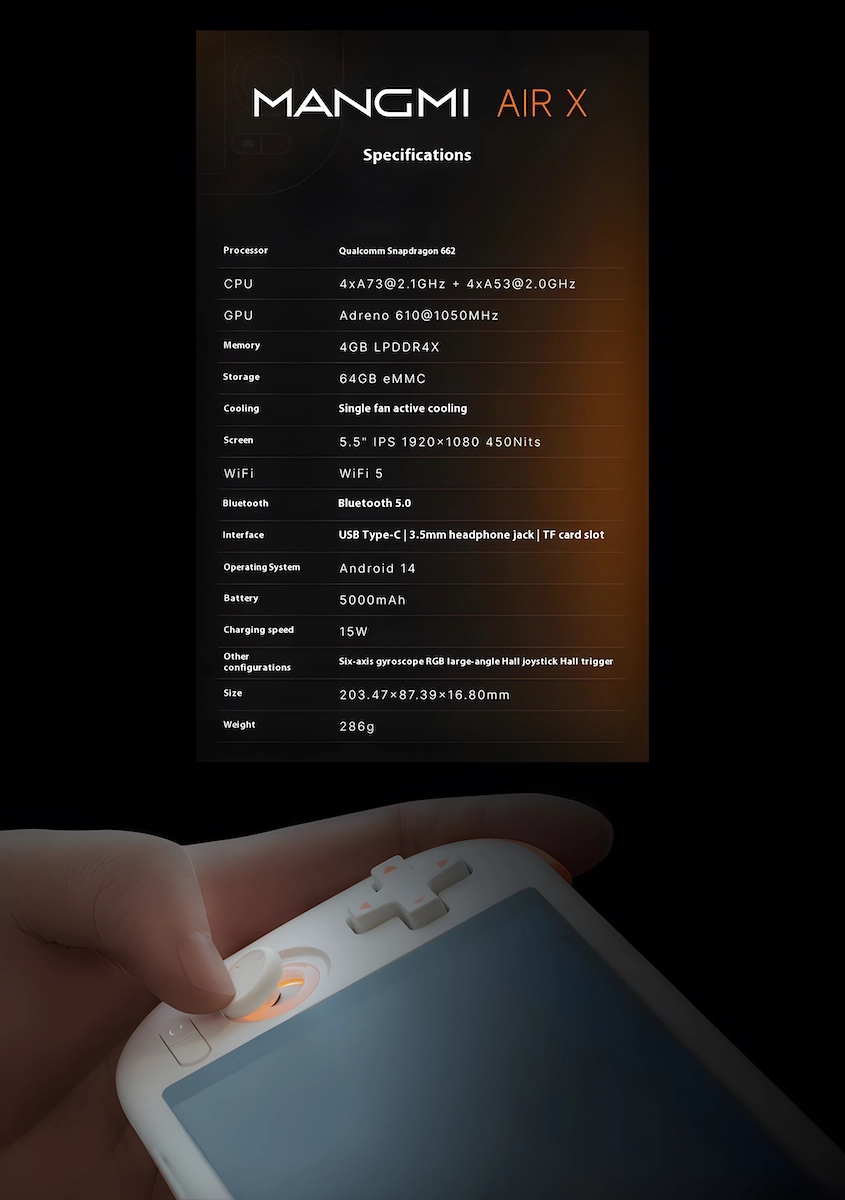
The MANGMI Air X retails for $99.99 USD and has some stellar features at its disposal that make it a leader in its class. At the sub-$100 price point, emulation handhelds rarely ever veer on the side of premium or performant. The only other device that compares even slightly to the Air X in performance, use, and design is the TrimUI Smart Pro. But, spoiler alert, it does nearly everything better and then some. Emulation of key consoles, build quality, button feel, and screen are all improved. All around, the MANGMI Air X is the new king of the sub-$100 arena, and at this price, I’m almost lost for words at how it’s even possible.
MANGMI Air X Specs
Build Quality
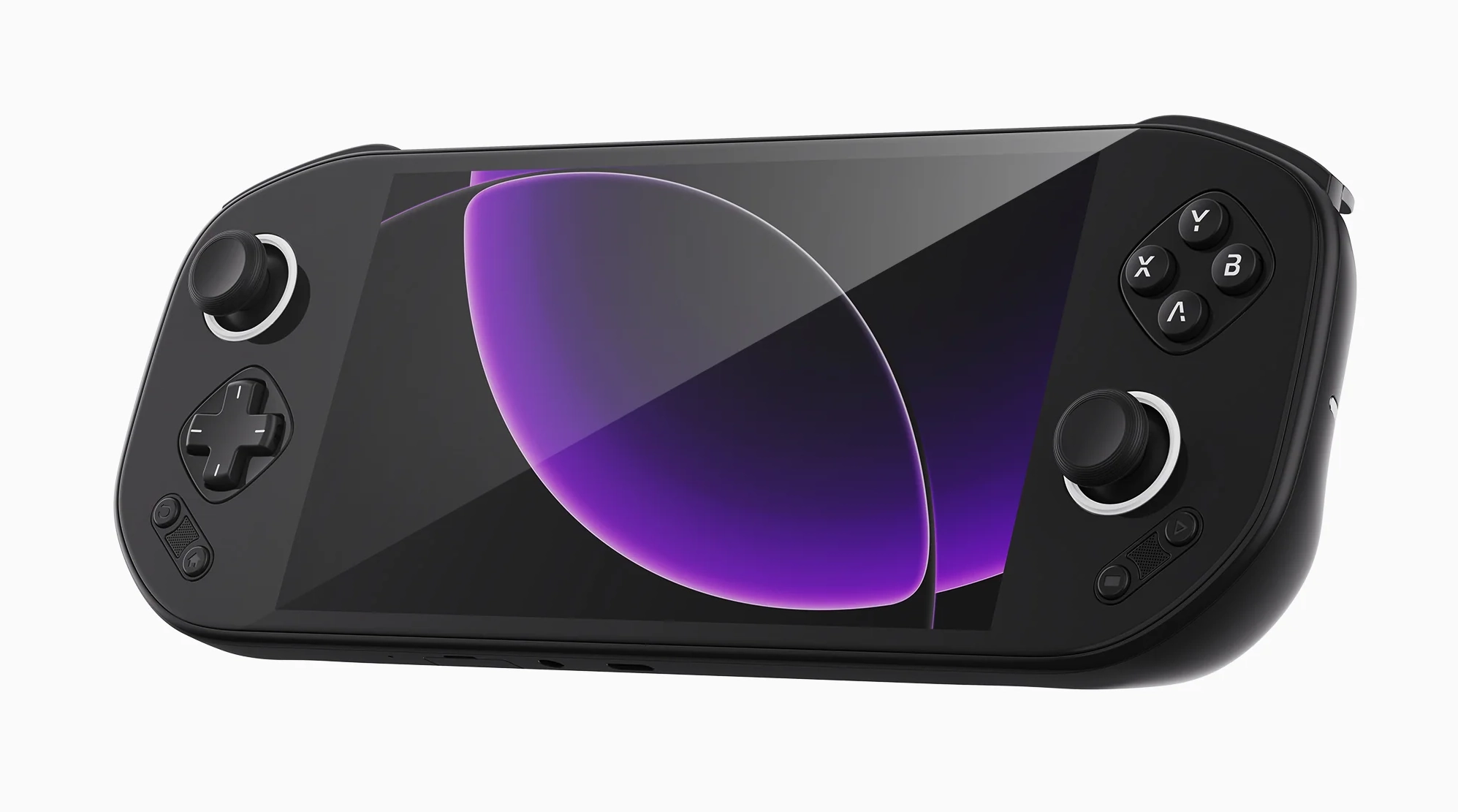
The MANGMI Air X is part of a class of handhelds that emerged within the last three years. Premium, but plastic. Retroid devices have had this same feel on their handhelds since the Retroid Pocket 3, and Anbernic will occasionally venture into this same landscape with their own devices, like the RG Slide. As far as mainstream accessories and consoles go, it largely feels like the same plastic used for Nintendo’s Pro Controllers. It’s smooth, but with heft; compact, but with form-fit ergonomics.
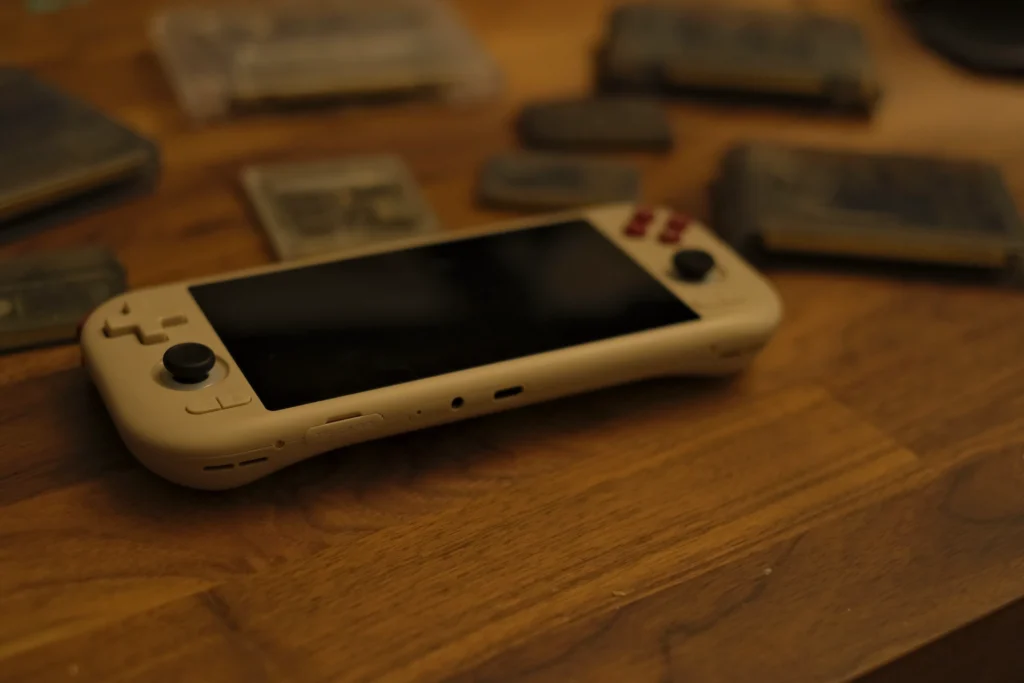
The ergonomics on the handheld are incredibly similar to those of the Retroid Pocket 5 and G2. There are slight humps on the back that are meant to act as small grips so the device doesn’t fall into the all-too-common trend of being completely flat and horrible to hold for longer than 10 minutes. Even the current handheld of the year, the AYN Thor, suffers from this, but MANGMI avoided adding its name to the ever-growing list of companies that find no issue with it.
Buttons & Sticks
The buttons and sticks are one aspect where I can foresee people either loving or hating them. The buttons all have a smooth, shiny texture to them, outside of the back, home, stop, and play buttons that live beneath the symmetrical analog sticks on both sides. Those buttons are clicky — very clicky — and they make a level of noise that I’m not sure even a mechanical keyboard can rival. That said, they aren’t necessarily obnoxious, but they’re worth being aware of. If you find yourself playing in bed next to a loved one often, consider binding another key to the start button.
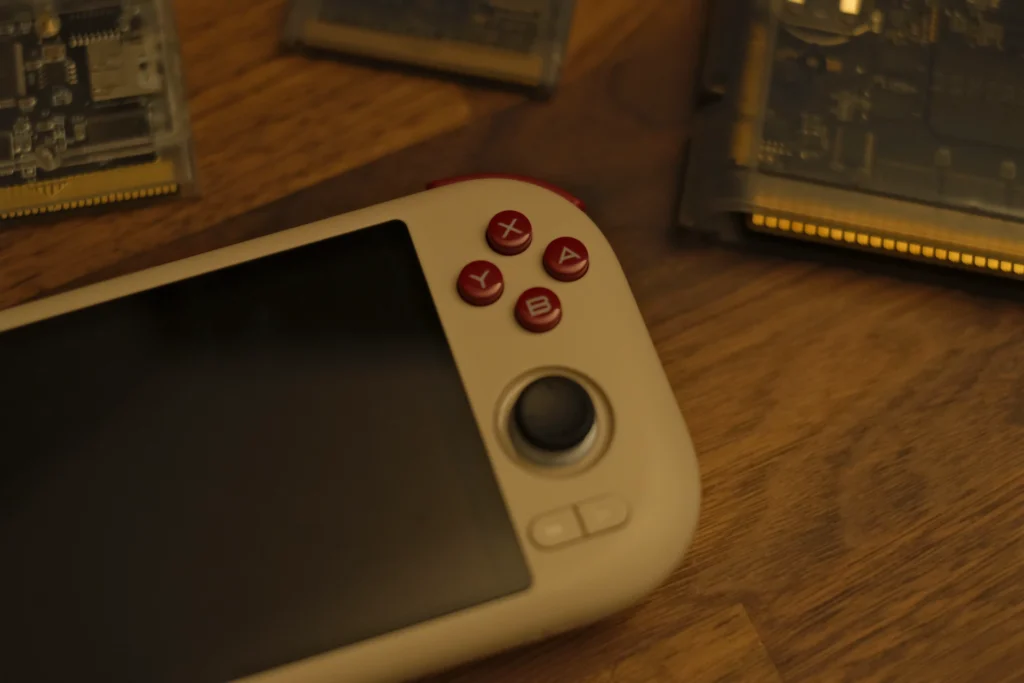
The four action buttons have a tactile feel, but are more in line with what a brand-new DS Lite would feel like, rather than what a Retroid Mini V2 would. They do make noise, but not at an obscene level. They make the same level of noise a button makes. If awards were given for the most appropriate level of noise a button can make, the MANGMI Air X would win in a landslide.
Conversely, the directional pad has a more mushy feel to it. It does pass Retro Game Corp’s fabled Contra test, but the feeling of the buttons overall leaves something to be desired. The community is packed with people fervent on modding their systems any chance they get, so I imagine someone may tackle this eventually, but as it stands as a completely untinkered unit, the d-pad be mushin’.
On a purely subjective level, I hate these analog sticks. Not the analog sticks as they exist on the handheld, but these small, baby-hand thumb sticks that pop on any handheld that needs analog sticks. They’re too small, difficult to maneuver on a retro handheld, and often break the immersion when playing games that require them. It’s unlikely many people will experience this kind of use, but one of the most nostalgic gaming moments I have is playing games like Jak and Daxter at home, or Halo with friends, and neither time did the analog sticks have any speaking roles in the story. Here, their being so small makes them a lead character.
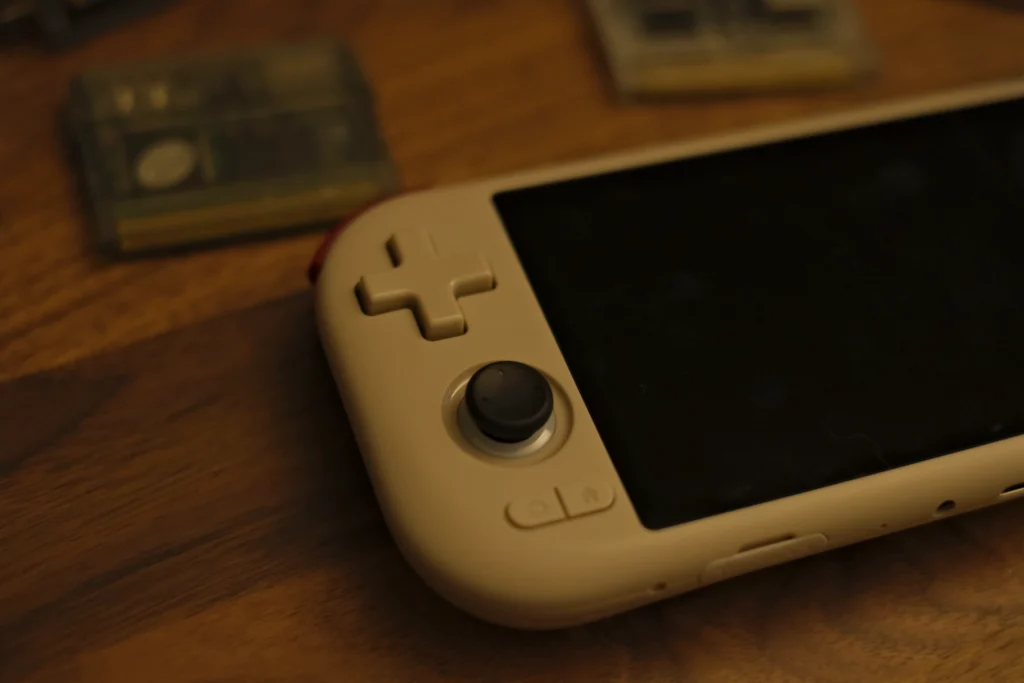
Again, this may be just me. The sticks are needed in some PS1, PS2, and GameCube games for camera movement, and if you get really dicey, you can even play some PSP games with them bound to the action buttons to make camera movement a bit easier. When I got deep into SOCOM Fireteam Bravo through PPSSPP, it didn’t bother me after a while. It felt nostalgic through and through, and that’s the way I like to experience these handhelds, with pure nostalgia. Granted, the PSP itself had one of the worst analog sticks this world has ever seen, so it’s entirely possible my nostalgia for the console is partially expecting a poor nub-like stick when watching the polygons on the screen shoot other polygons.
Screen
This is where things get incredibly interesting, and it’s my favorite thing about this handheld by far.
Just to get this out of the way sooner rather than later, this device does have a noticeable bezel around its screen. It’s not perfectly uniform either; thinner on the top, wider on the sides. For some, bezels are a huge deal, but on this device, they're one of the many trade-offs I see as perfectly fine given its other strengths. Still, bezels are bezels, and for some people, seeing their content offset by black bars on every single view can be distracting or unappealing. I’m not one of those people here.
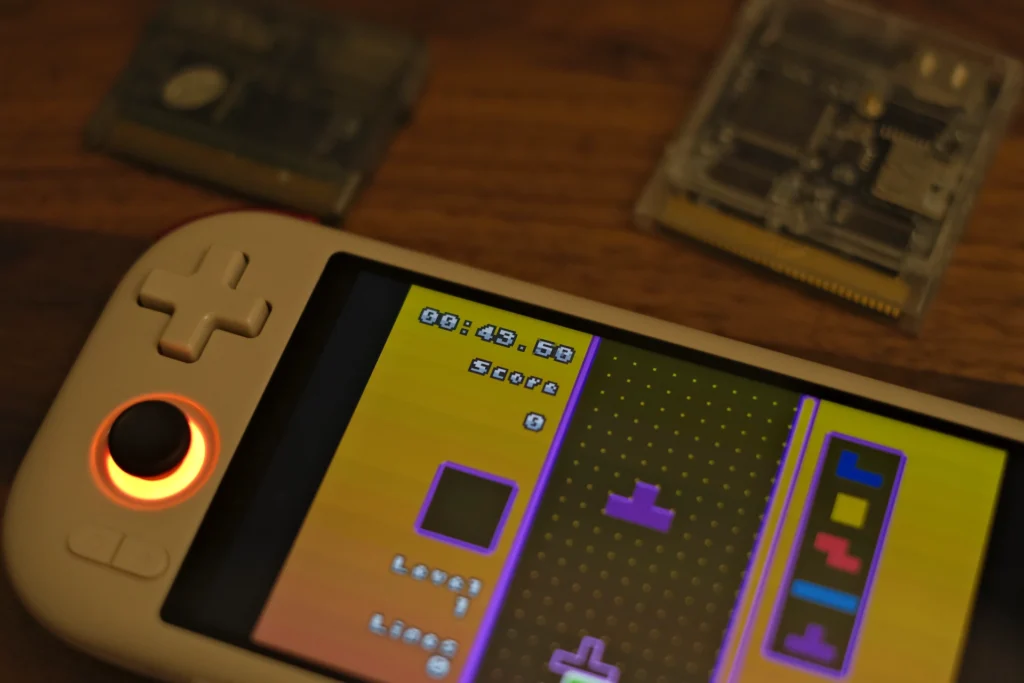
Now, let’s get to the meat. This screen has a 1080p resolution at its native 16:9 aspect ratio with an IPS panel. This screen type is as good as it gets before you breach OLED territory. Better yet, packing 1080p visuals into its 5.5-inch display should, in most cases, make things appear clearer than on a 720p screen or lower. Notably, the MANGMI Air X has the exact same screen specs as the Retroid Pocket 5, except for the OLED. Would OLED have been a nice addition? Sure, but we’re talking about a handheld that is less than $100 USD and is focusing on dominating a lane that for far too long went uncontested.
Android Performance
Like many other retro handhelds before it, mostly in the mid-to-high range, this device comes with Android. This one ships with Android 14, which will mean very little in the use case of a retro handheld. However, when using the device, navigating its menus feels a bit more consolized. This is true for all of these retro handhelds, not specifically just the MANGMI Air X. You can browse apps using the d-pad, select them with the A button, and tweak device-specific settings like the ambient light color (and if you want it on or not), an optional sidebar to show CPU and GPU load, FPS, and adjust performance modes, as well as switching your button layout from Nintendo-like to Xbox-like. These little features are tantamount to the retro handheld experience on Android, and seeing a new company like MANGMI be aware of that and not simply attach a controller to the side of a touchscreen device is something to highlight.
Speaking of touchscreen, the handheld can be worked and navigated all the same if you’d rather just tap away at the glass panel and make sure your fingerprint is on every square inch of its screen. Treat it like a phone if you so desire; I won’t stop you.
エミュレーション
PlayStation Portable
The MANGMI Air X is an interesting handheld overall. It scratches PS2 and GameCube, but its aforementioned 1080p screen means it can get 4x on PSP, and that’s where it shines. And oh does it shine.
PSP emulation is the star on this device. For under $100, you get stellar performance on the entire library and can push 4x scaling easily. Some settings changes can reduce latency if you want to maximize visuals, but otherwise it’s a pretty smooth ride through and through.
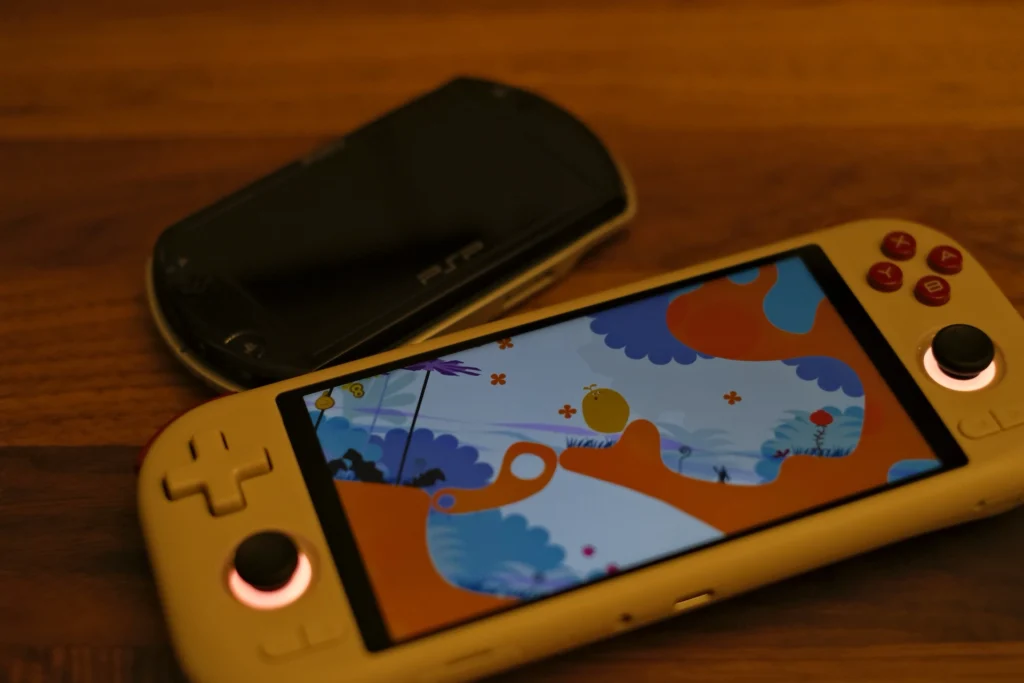
For my testing, I played Loco Roco, Patapon, SOCOM Fireteam Bravo, God of War: Chains of Olympus, Lumines, and Hot Shots Golf: Open Teen 2. All of these games played perfectly fine. Through my testing, I used Patapon and Open Tee 2 to identify any latency-based issues, while the others helped determine what boundaries could be pushed on the handheld. Using default settings and bumping the resolution to 1080p results in incredibly smooth gameplay sessions, both visually and technically. Uping the rendering resolution won't magically make polygons into circles, but it will make things look far clearer and vibrant with fewer jagged edges. The pinnacle of PSP emulation is on this handheld.
GameCube
GameCube is partially great, partially not. The GameCube is Nintendo’s second 3D console, but it lives with graphics and software development that feel like a half-step up. Meaning, while games like Mario Sunshine improve very clearly over Super Mario 64, other games still suffer from polygonal visuals. Like Animal Crossing, which was originally released on the N64 in Japan, it uses similar visual aesthetics in its GameCube re-release.

That said, games that don’t require much power or aren’t too demanding typically run fine. But I wouldn’t buy a MANGMI Air X specifically for GameCube, though it is a nice additional bonus on top if you’re eyeing some classics from the system that aren’t too resource-heavy.
PlayStation 2
PS2 played fine for the most part, but still, the same story as GameCube. Sony does, however, have the benefit of having multiple big releases that aren’t that resource-intensive. For instance, Lunar Silver Star Story looks and plays great on the Air X, but it’s also a pixel-based game.
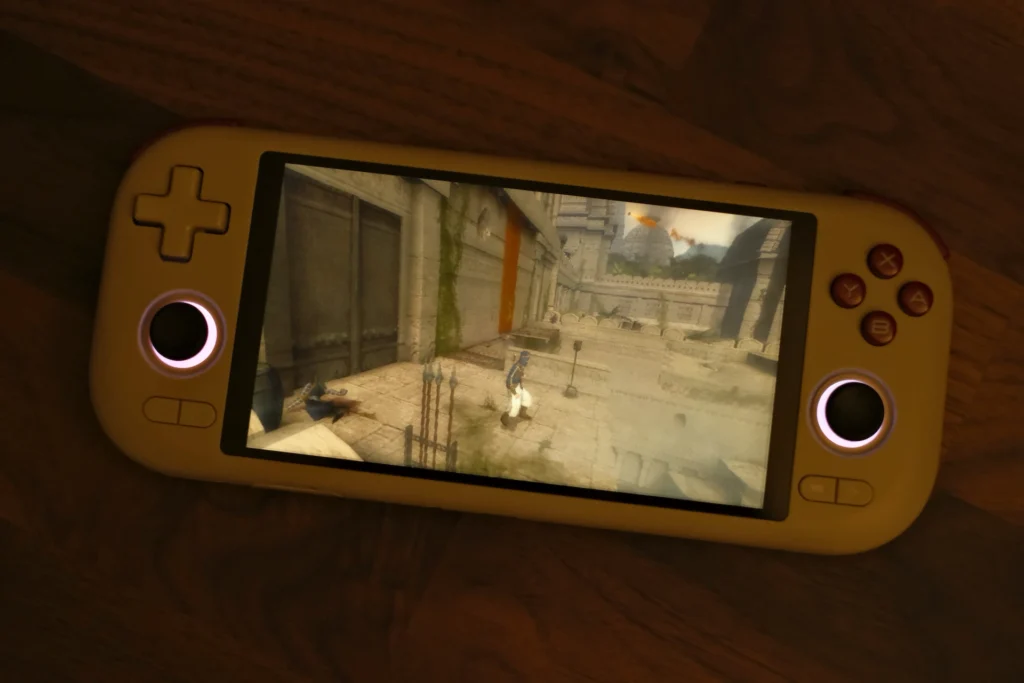
On the other end of the coin, God of War would occasionally hit 60FPS but also routinely drop to nearly 40FPS. However, the three Grand Theft Auto titles, GTA 3, Vice City, and San Andreas, all ran at 60FPS with no noticeable slowdown. The Sony library is packed with some games that feel like Sony flexing their development and hardware prowess, so some games are complete no-goes, while others play perfectly fine.
Sega Saturn
Saturn titles run fairly poorly on this handheld. There are constant and numerous moments of slowdown with some games never reaching higher than 15FPS. Beyond that, audio drops, screeches, and latency create a horrid gameplay experience that is only comparable to trying to play 3DS on this same handheld.
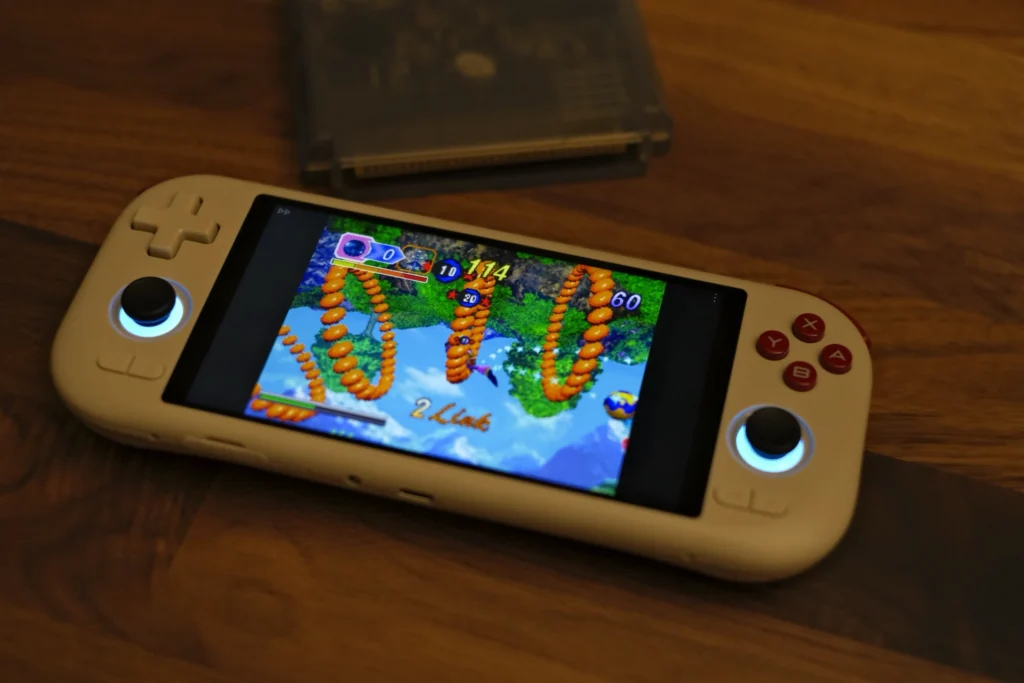
It's worth noting, however, that Saturn emulation is still very much "not good" all around. Devices with twice as much power as the MANGMI Air X struggle to get seamless Saturn playback, so seeing it run here is definitely something, but I would advise anyone looking to play Saturn to not even give this handheld a passing glance. It's not good for Saturn. Not at all.
DS
DS plays totally fine. The way I play DS games is insane, however. I maximize one screen and put it dead center, then, using the sliver of space to the right, I put an incredibly tiny view of the touchscreen. If I need to interact with it at all, I set up a hotkey to swap screens. It works for me, and plays well, but the DS suffers from what I call “an odd resolution.”
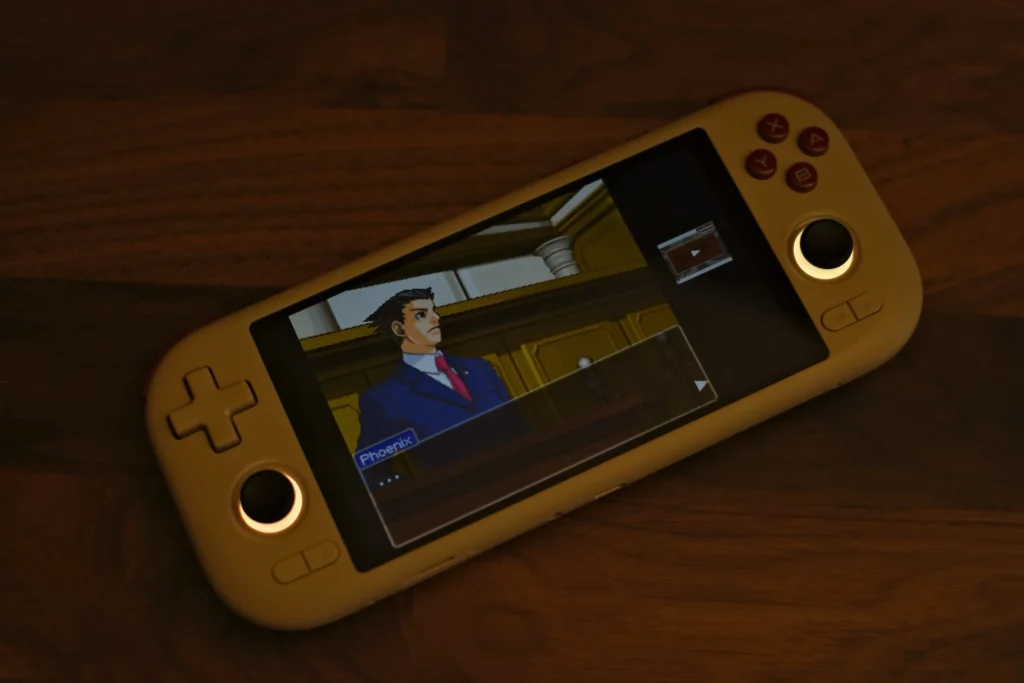
1080p 16:9 screens don’t scale DS games well at all. There’s no integer scaling whatsoever unless you sacrifice pillar and letterboxing by large margins. When it comes to DS, having integer scaling can really help the overall visual appearance of games and their pixel reliance, but when you don’t have integer scaling, you start to see fuzzy, jagged lines everywhere you look.
Note on 3DS: Honestly, don't bother. There's not a lot of wiggle room, even in less demanding games. Frame rate drops to single-digit numbers, audio drops frequently,and switching between screens creates a cumbersome experience. If you're after 3DS emulation, another device would probably be better suited for your needs.
プレイステーション
PS1 plays beautifully on this as well. The dual sticks help support games that originally supported them. While there are more pointed handhelds with 4:3 aspect ratios and direct integer-scaled screens, playing PS1 titles on a horizontal device with dual analog sticks reminded me of playing them on a Vita, but with more bells and whistles under the hood. Some widescreen mods exist, so if those are your bag, the MANGMI Air X might be worth keeping an eye on.

Game Boy Advance
Now we’re talking. The GBA is my favorite handheld ever released. Heavy focus on pixel art, cartridges felt finite and sturdy, and the SP changed the game with its clamshell design, packed with a frontlight (then backlight). That being said, there are other benefits of GBA gameplay on the MANGMI Air X, too.
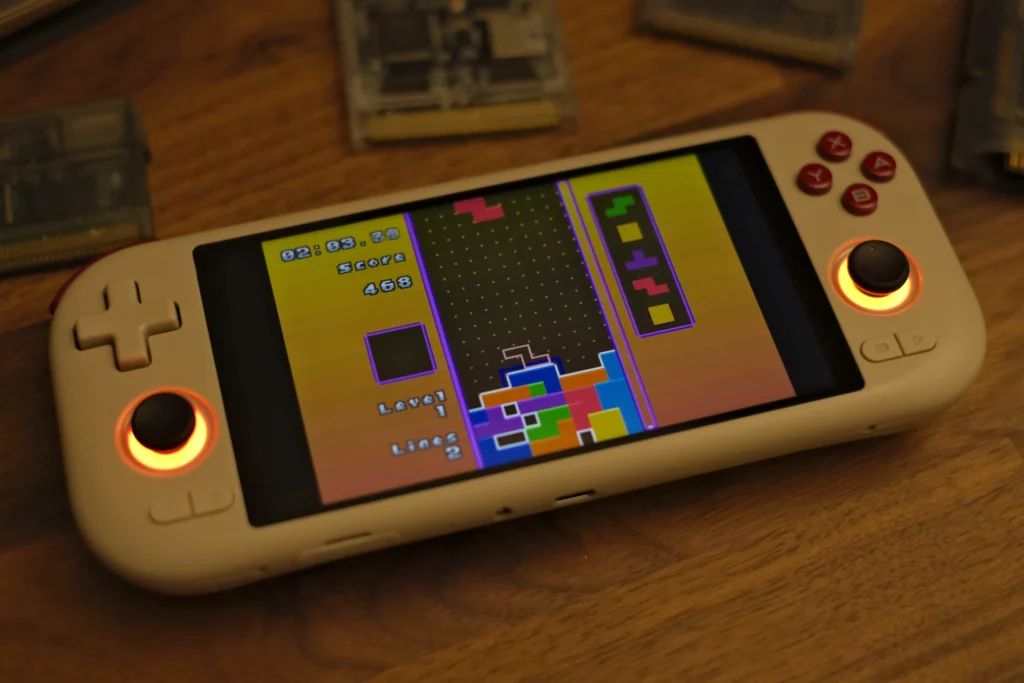
Playing GBA games without integer scaling still looks incredibly nice just on the merits of pushing a 6.75x scale to maximize the space on a 1080p screen, and the pixel density of that 1080p screen is only 5.5 inches. The pair makes GBA games look and play “normally” without suffering from the oddity of pixels looking humongous, like when playing classic Game Boy games at full screen on a modern-day monitor. One pixel is the size of an entire picture. It’s nuts.
But Wait, There's More
The MANGMI Air X has had active community involvement since its launch. On the official Discord, users have been sharing their experiences with Turnip drivers, including which games see performance boosts, which become fully playable, and which still refuse to run no matter what. That kind of engagement is part of what makes MANGMI stand out. They’ve embraced their corner of the retro handheld niche, and when a budget device performs this well, its community usually grows right alongside it.
On top of that, Gamma has released a version of GammaOS Next for the MANGMI Air X on his Patreon. Gamma specializes in streamlined Android builds for lower-end devices, cutting out Google bloat, boosting raw performance, and improving the overall feel of the system compared to its stock setup. Gamma has also been keeping a close eye on the hardware revisions that have rolled out since release. So far, there have been three versions: the original launch units, a revision with a new LCD, and another with both a new LCD and a new digitizer. Each requires its own adjustments for GammaOS Next to work properly. If more revisions appear, you can always reach out to Gamma on the MANGMI Discord to see what his plans are moving forward.
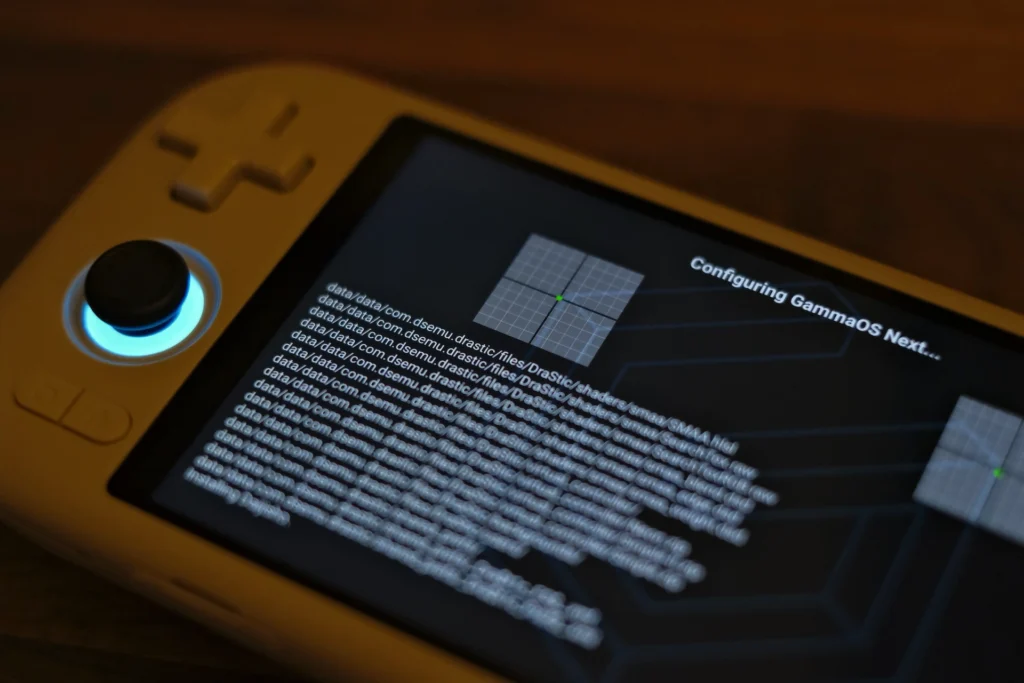
This review focuses mainly on the stock experience, with a few emulators installed and some settings adjusted, but no deeper tinkering beyond that. A handheld should always be judged first on its own merits out of the box, yet the community that grows around it shouldn’t be overlooked. In many cases, that community is what helps a handheld move from great to genuinely amazing.
In the End…
The MANGMI Air X is not the strongest handheld released this year. But what it is, is a device perfectly made for those who love the PSP and want to relive those moments with a device that has a layout very similar to it. We can’t get an XMB on this until something like iiSU fully releases, but what you can do is fire up games from the PSP library and enjoy them like never before for less than $100 USD. While PS2 and GameCube games can sometimes play just fine, it wouldn’t really make sense to buy a device like this specifically for those consoles; it just doesn’t.
While widescreen hacks exist for select titles in both libraries, every single game supports 4:3, and with similar PS2 and GameCube performance coming out of the Unisoc T820, a device like the Anbernic RG476H may be a better pick.
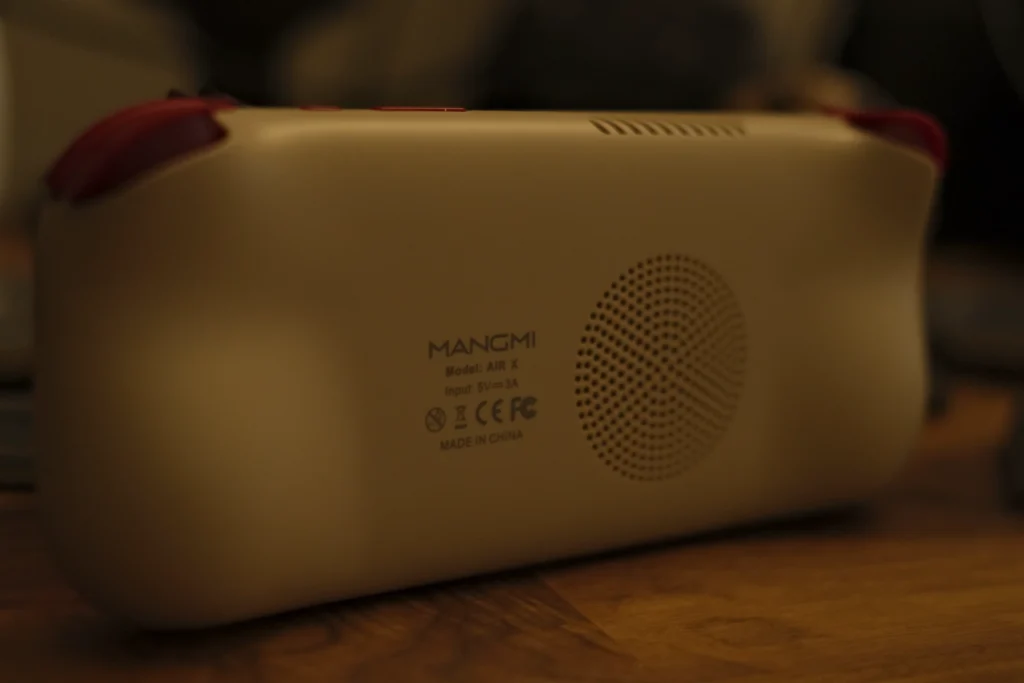
That aside, the device does play all of those same games. If pillarboxing isn’t a big deal for you, a 16:9 device is a perfect place to start your retro journey. While OLED screens highlight and often remove the potential distraction of pillar and letterboxing by completely turning off the pixels in the unused areas, OLED devices are still fairly costly. Much more than that, OLED screens only really benefit from the turnt off pixels when the front of the device is glassy and black. Contract gains aside, the portions unused would still stand out otherwise.
With the MANGMI Air X, this new company has come out with a device that fits surprisingly well at the top of a category that had been overtaken by stronger handhelds. What really sets the Air X apart is how naturally it handles PSP emulation. It uses a familiar horizontal layout, and that design lines up perfectly with what the original PSP design from 2005. With the tech improvements we’ve seen over the years, it feels like we’ve finally reached a point where the PSP experience has been refined in all the right ways, and now we can use that same device to also achieve light PS2 and GameCube emulation. And the best part of it all, it’s available for under $100.
The MANGMI links above are using an affiliate link, which gives us a little back from sales at no extra charge to you. All proceeds go back into SDHQ and its development.
この記事を楽しんでいただけたなら、SteamDeckHQ の他のコンテンツもチェックしてみてください!あなたのゲーム体験に役立つゲームレビューやニュースを幅広く取り揃えています。ニュース、ヒントやチュートリアル、ゲーム設定やレビュー、最新のトレンド情報など、あらゆる情報をお届けします。 カバーしています!

最近のニュース
カテゴリー
Accessories
Anbernic
Android
ASUS ROG Ally
ROG Xbox Ally
Classics on Deck
Community
Cryobyte33
Deals
Deck Mods
Emulation
Events
Featured Post
Game News
Game News
General Game News
HandheldHQ
Hardware
Lenovo
Linux
MagicX
Nintendo
ONE-NETBOOK
Opinion
Other Reviews
Accessory Reviews
Handheld Reviews
PlayStation
Proton
Retro Handhelds
Anbernic
AYANEO
AYN
GPD
MagicX
MANGMI
Retroid
TrimUI
SDHQ
Steam
Steam Machine
SteamOS
The Unsupported Report
Uncategorized
Uncategorized
最近のヒント&GUIDES
新着レビュー