Mixtape doesn’t adhere to what defines a video game in a traditional sense. In fact, it almost ignores the question entirely, and that’s what gives it its own unique identity.
This is a relatively interactive, relatively indie experience published by Annapurna Interactive, a publisher known for its unconventional take on video games from within the industry, such as Stray and People of Note. As someone who enjoys artistry in games and walking sim-esque experiences, I was immediately intrigued the moment the game was announced. After a surprisingly short three-hour binge session, the credits rolled, and I was left with mixed feelings that deserve a thorough unpacking.
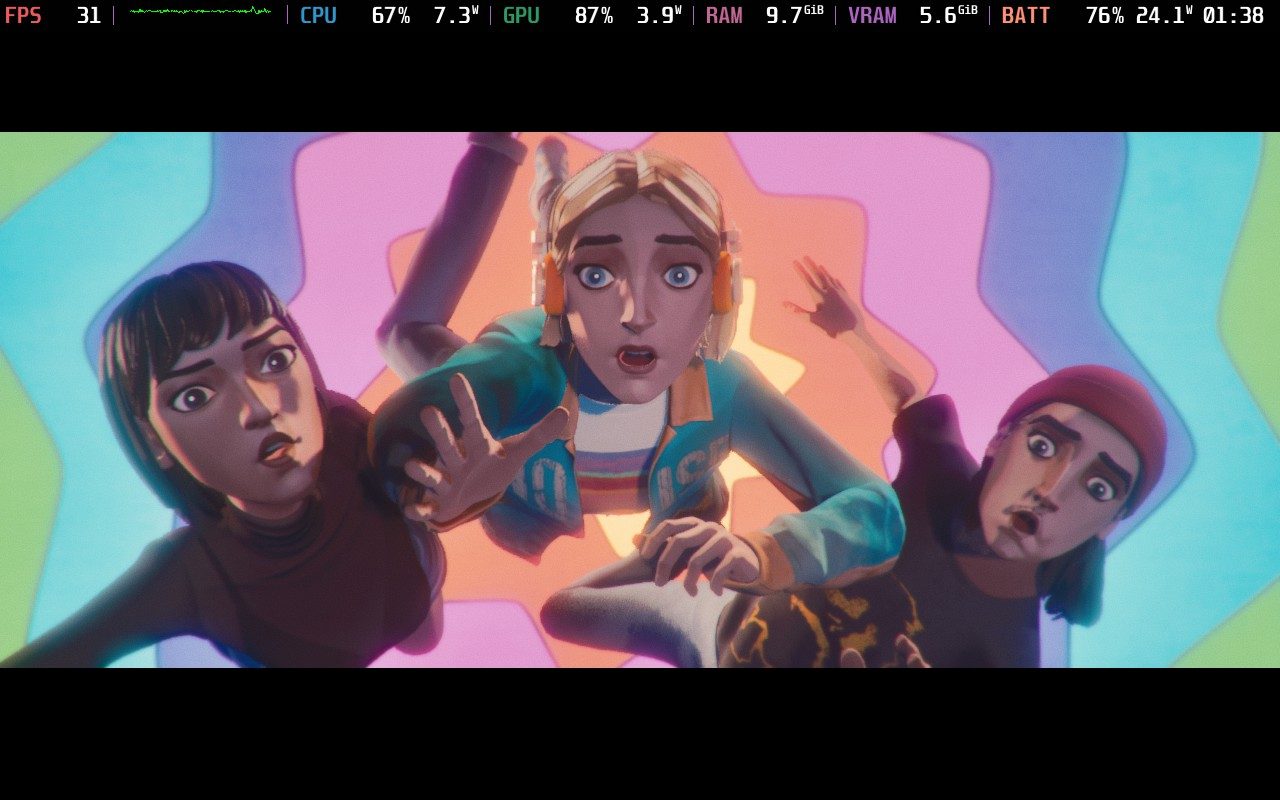
Mixtape is a coming-of-age story centered around three teenagers standing at the edge of adulthood, trying to figure out who they are while slowly drifting apart from the world they grew up in. Set against a backdrop of the 90's rebel culture, the game captures that raw, restless energy of youth where everything feels loud, chaotic, and ironically temporary.
The story structure is uniquely categorized by song tracks, aka a mixtape, as the name suggests. While experiencing the characters' past adventures, they all have corresponding songs that represent the reflective ambiance of the scene or environment. That makes music not just a background element; it is the backbone of its storytelling. Each track defines each scene meticulously, shaping how each memory captures the character's emotion.
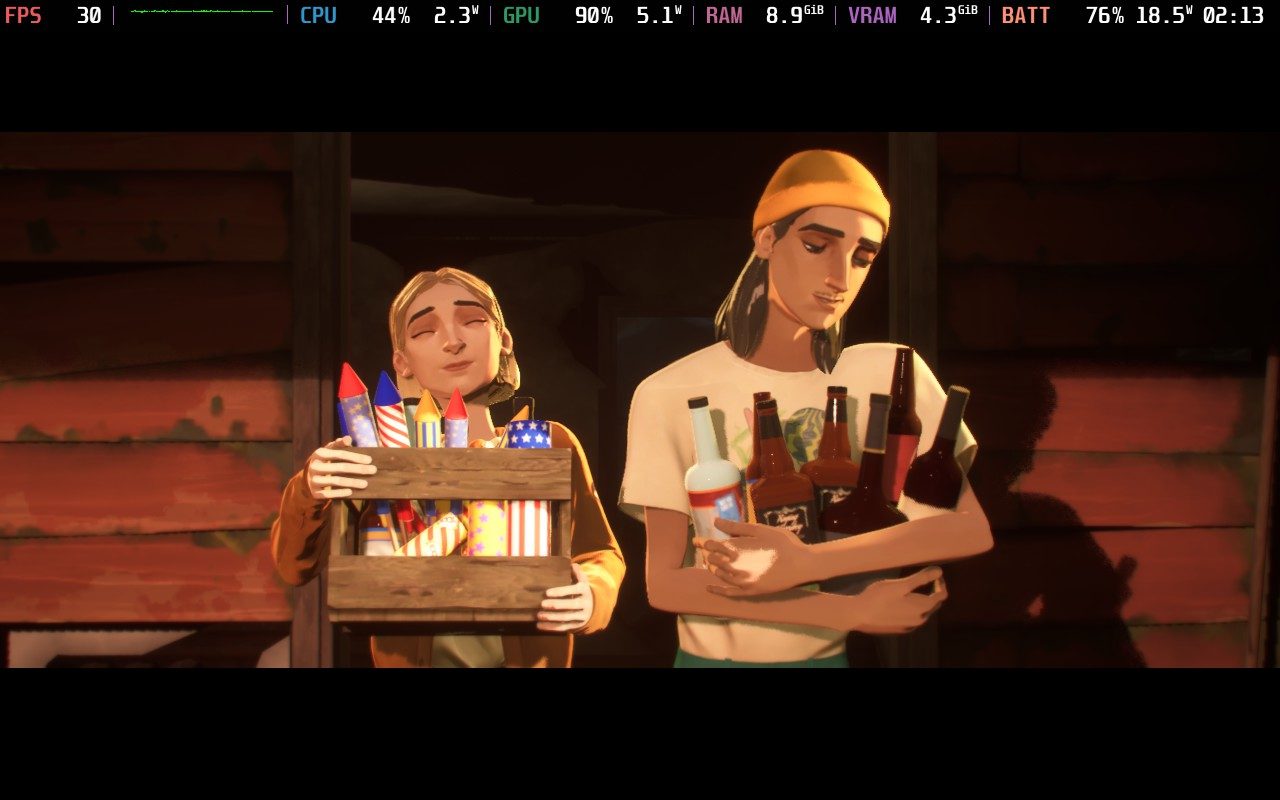
When it comes to these types of narrative-focused, visual novel-like games, story is everything. And honestly, I really liked it. The characters and their issues feel extremely real, and it connects to the player both on a heartbreaking and nostalgic level.
The main character, Stacy Rockford, is grappling with their deeply flawed traits while also capturing common human pitfalls like jealousy, ego, greed, and selfishness. Those reflections allowed me to empathize with her and care for both her and other distinctive characters' narratives.
What I disliked about this was the inconsistent flow of the story. After an emotional scene, a radio-like character introducing the next song, “our next track is this, it was a hit in bla bla,” feels slightly jarring, creating a slight pacing issue that hurts the overall immersion felt by the scene just before it.
After making my way through Mixtape, the story felt extremely short, and all the powerful cutscenes felt rushed and lacking an emotional “punch” that was to be expected. In many ways, it needed a bit more time to build up and properly connect with the characters. That being said, this isn’t a case of bad writing or poor execution. It feels more like a game that simply didn’t give itself enough space and time to fully land its emotional weight and poise. The foundation is strong, but the impact never quite reaches its expected heights.
Nonetheless, I really loved what was accomplished with its narrative direction. Fresh, artistic, and overall like a unique, bittersweet little experience that lingers more than it explodes.
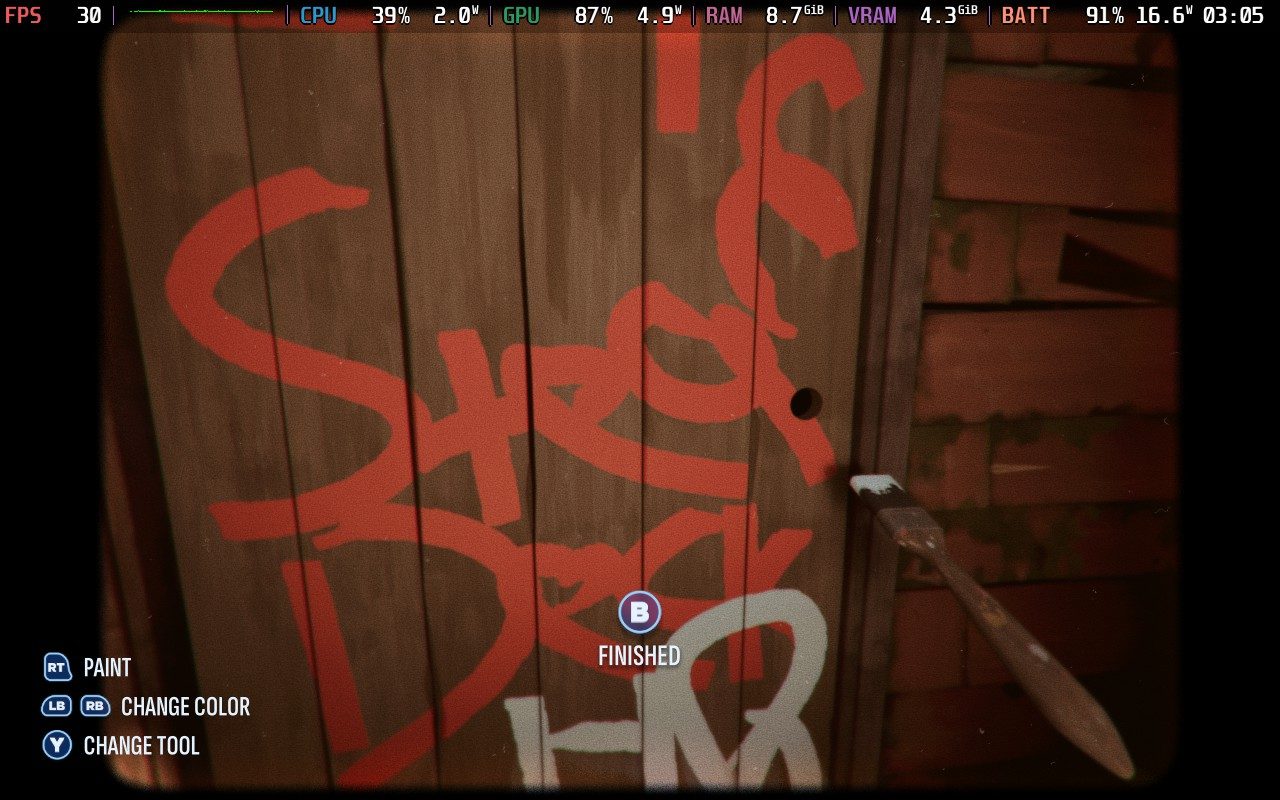
Let's dive into the most controversial and weakest part of the game, the “gameplay” of it all. Honestly, I would say there is barely any gameplay in this game whatsoever. It feels more like a physics showcase demo, or a visual novel with an artistic edge, rather than an actual game.
Every gameplay section consists of either walking or quick time events. You press buttons at a moment's notice, carry objects, take photos, flip the bird, bang your head in-sync with music, perform stylish skating moves, and go through a close-up, slightly disturbing French kiss sequence. Exciting stuff.
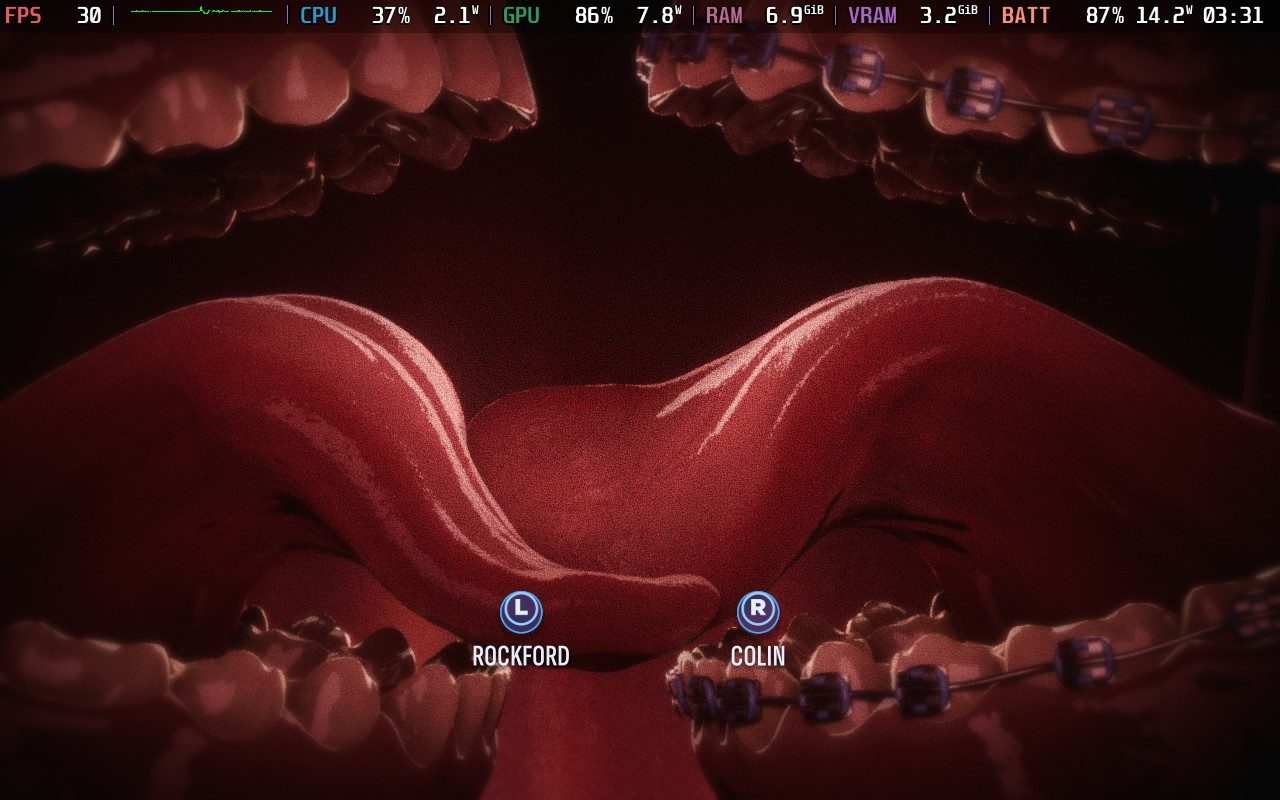
Beethoven & Dinosaur have done an excellent job with what they are trying to achieve. The physics interactions and overall quality are some of the best I’ve ever seen, but it feels lacking as a video game, something I'm meant to interact with.
In most games, I can find a “game” aspect because your choices matter, you can actually fail certain moments, and the player remains engaged. Here, there are no choices whatsoever. You can’t really fail, change, or influence anything. You are essentially watching a movie while occasionally pressing buttons or walking.
These may present themselves as flaws, but in reality, they are design choices meant to force the player to focus on the narrative, music, and a relaxed emotional flow without stress. However, some of these “gameplay” sections feel so long and stretched out that they start to contradict that intention and become extremely boring.
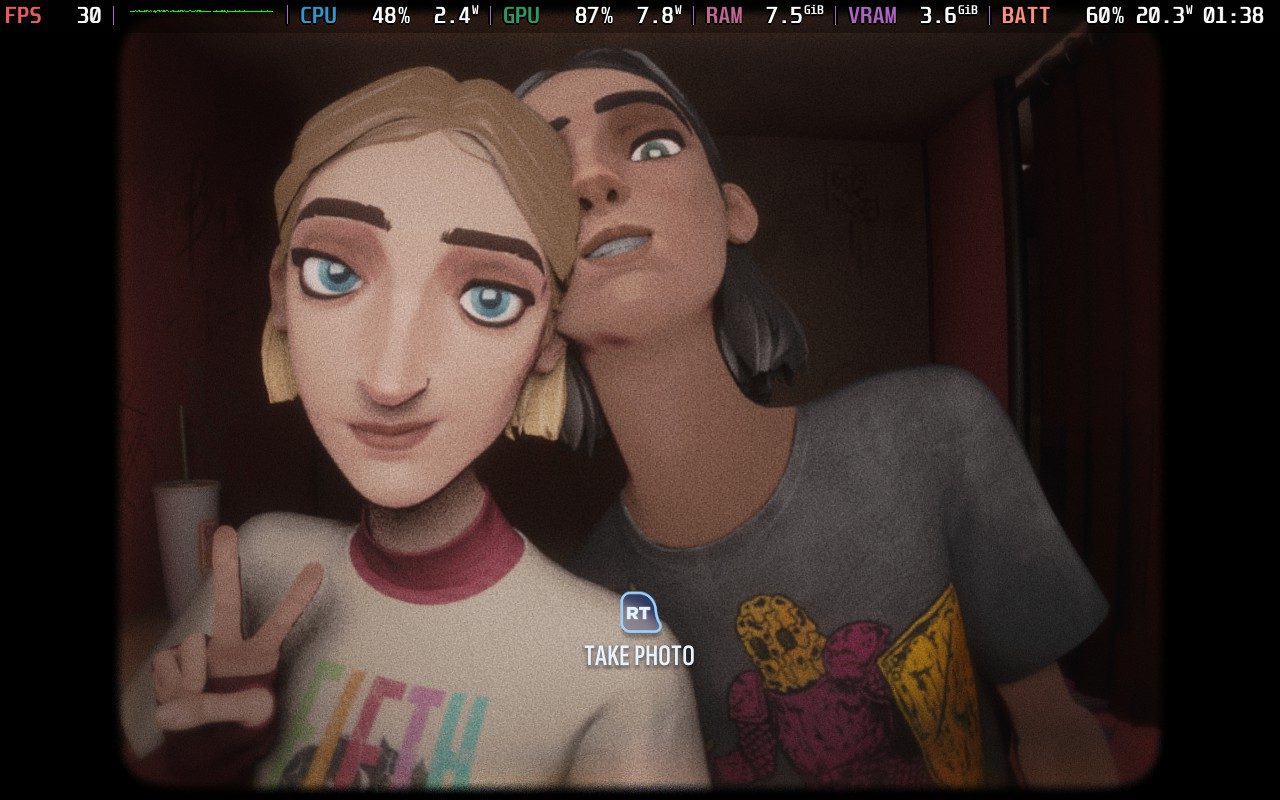
When it comes to graphics and artistic direction, Mixtape is simply breathtaking. It masterfully blends a stylish surreal art style with modern, beautiful lighting and image quality. Incredible lighting and image quality, combined with awesome physics interactions, creates something that looks breathtaking.
Character movement in particular is inspired by stop motion animation such as Corpse Bride or Wallace and Gromit. And when it’s a game based purely on 90s nostalgia, it's hard to imagine any other way. Though I must admit, at first it made the game feel a bit laggy, but you get used to its style pretty quickly.
The greatest part of the visuals, though, is the colors. The game is so beautifully vibrant and colorful during positive narrative moments, and it shifts to darker, grittier tones with more artistic lighting when dramatic events unfold. That way, the game hooks the audience through its artistic direction directly, with little built around it.
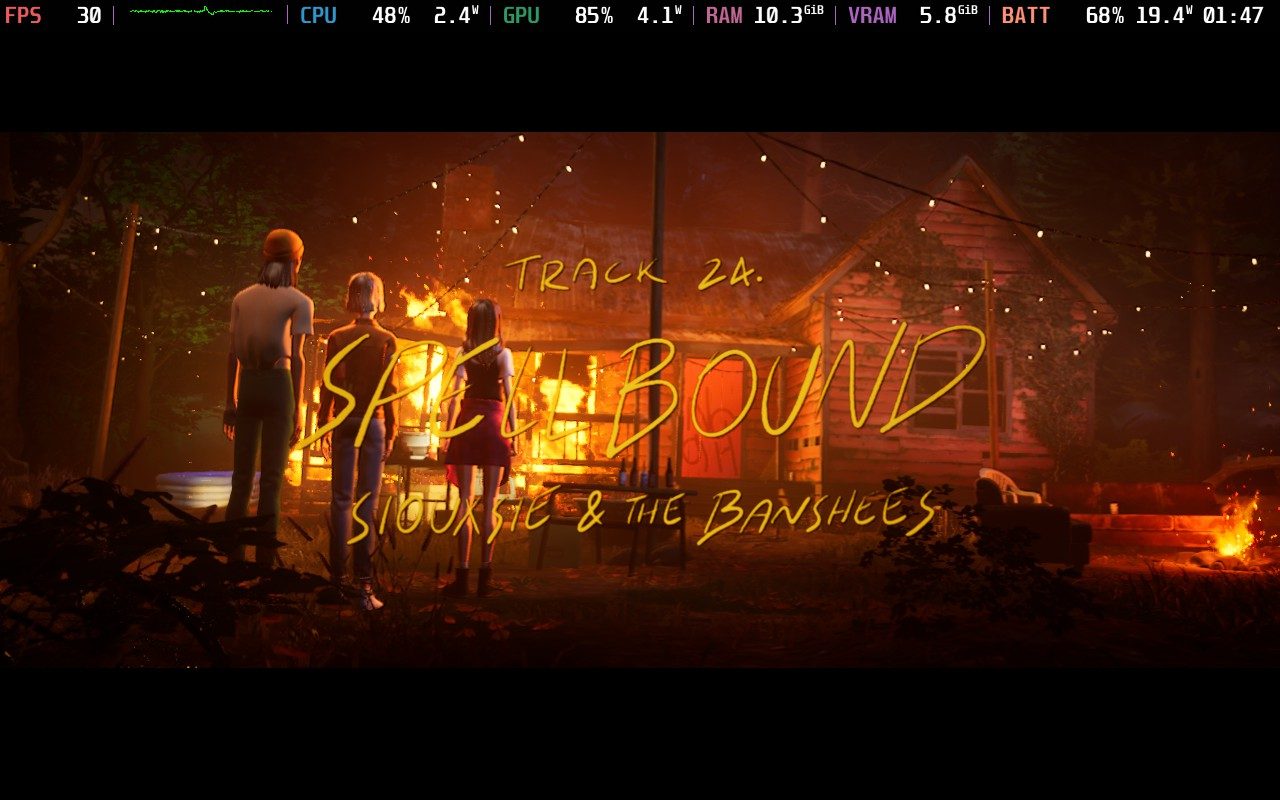
If a game called Mixtape had issues with its sound and music department, it would be catastrophic. Luckily, it truly does it justice.
Both the 25 licensed tracks and the original OST sound amazing in-game. It introduced me, as someone not familiar with the bulk of the music, to tons of bangers that I added to my personal playlist. The sheer quality of the soundtrack is not the only strong point; it’s how perfectly it is matched with the narrative that makes it so special and memorable.
Voice acting and sound effects also work flawlessly. The overall game is really an ear feast, and I highly recommend playing it with headphones to enjoy the full depth of what the game is aiming to deliver.
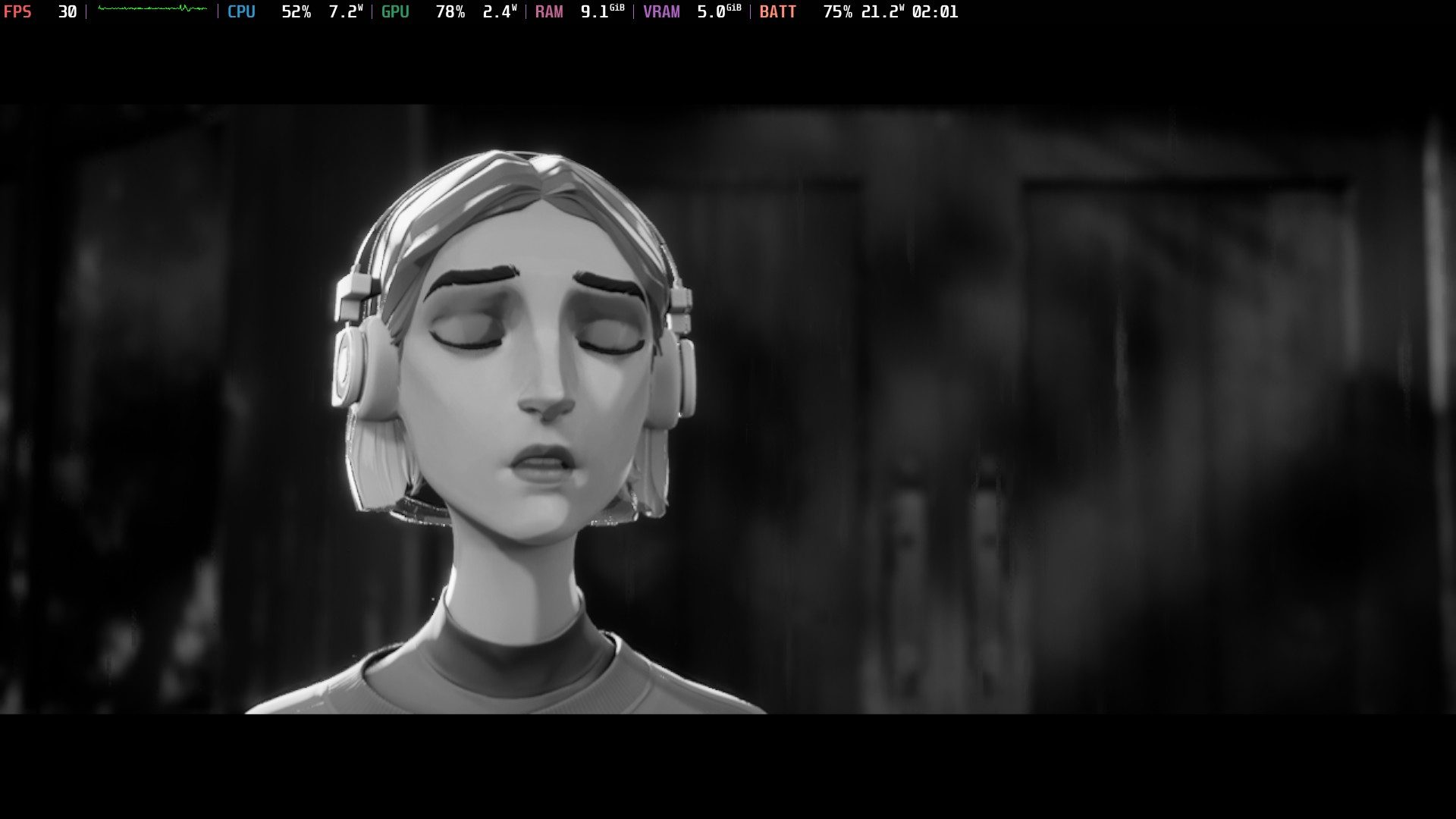
When it comes to indie games, they usually feel right at home on the Steam Deck. Unfortunately, Mixtape uses the Unreal Engine 5, so running the game at 60 FPS with higher settings was never really realistic on a Steam Deck.
Fortunately, the game is a cinematic visual novel-style experience that doesn’t really need 60 FPS to be fully enjoyed. When testing the game on my desktop, the fluid 60 FPS camera movement actually felt a bit out of place because of the game’s stop-motion-inspired character animations. Locking the game to 30 FPS gives it a much more cinematic feel overall.
The game comes with a default Steam Deck Verified preset, and thankfully the settings aren’t locked, so you still have freedom to tweak things if you want. But honestly, I wouldn’t recommend it. Even at the lowest settings, increasing the frame rate results in unstable 40 to 50 FPS gameplay with noticeably worse image quality.
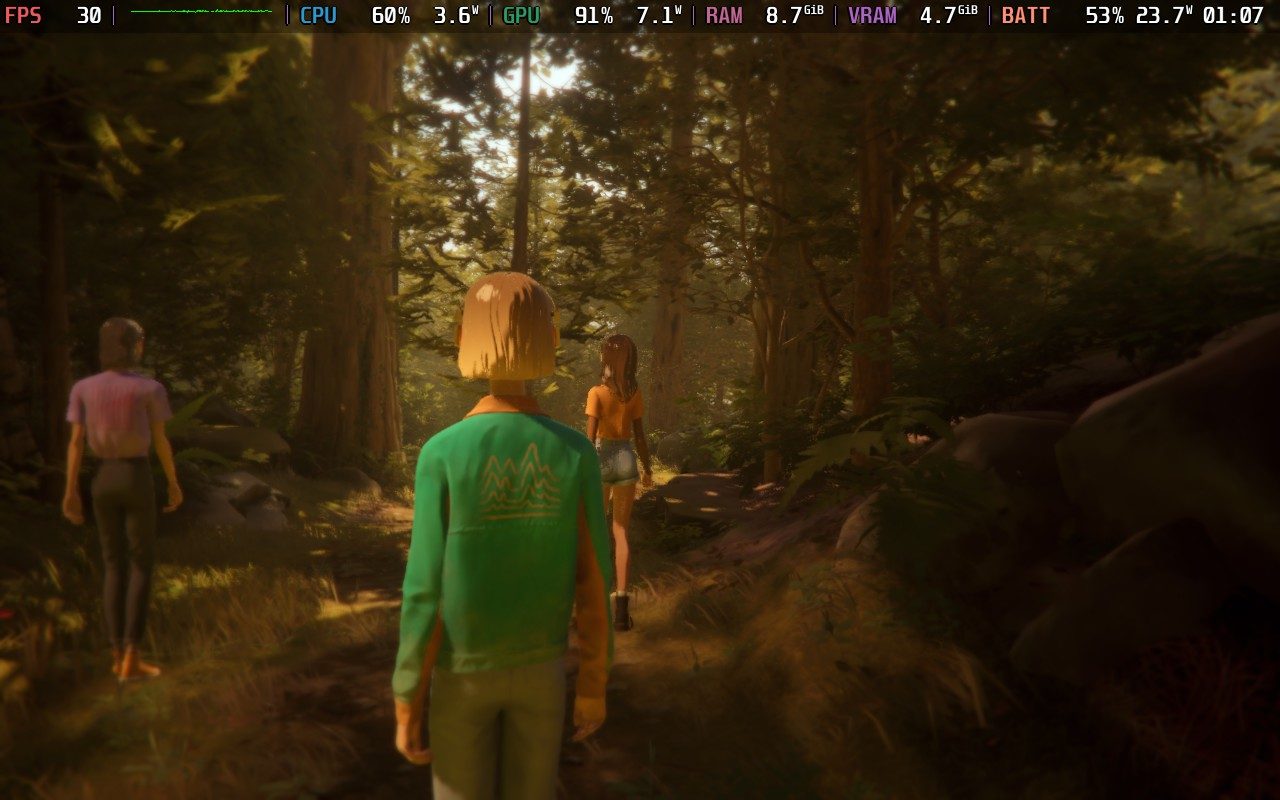
Thankfully, Beethoven & Dinosaur did a really solid job optimizing the default Steam Deck settings. Throughout the entire game, I didn’t experience a single drop below 30 FPS, and visually, Mixtape looks surprisingly gorgeous for an Unreal Engine 5 title running on the Deck.
Of course, compared to desktop or console, some of the more advanced lighting effects lose a bit of their impact. Reflections and sunlight bouncing off characters and environments look significantly better on higher-end hardware, but the Steam Deck version still looks more than acceptable.
Overall, Mixtape was a fantastic out-of-the-box Steam Deck experience.
Honestly, I don’t really see Mixtape as a traditional video game. It feels more like a beautiful little art project that accomplishes exactly what it sets out to do. If you appreciate strong artistic direction and want to experience something that feels like a gorgeous 3-hour interactive movie, you’ll have a fantastic time with Mixtape. But at the same time, it's definitely not going to be everyone’s cup of tea.
It’s slow, heavily cinematic, and far more focused on atmosphere and emotions than gameplay depth. But for the audience it’s trying to reach, Mixtape absolutely succeeds.
このレビューはPC版に基づいています。
このレビューをお楽しみいただけたなら、SteamDeckHQ の他のコンテンツもぜひご覧ください!あなたのゲーム体験に役立つゲームレビューやニュースを幅広く取り揃えています。ニュース、ヒントやチュートリアル、ゲーム設定やレビューをお探しの方も、最新のトレンドを知りたい方も、ぜひご利用ください。
Still Wakes the Deep was provided by Secret Mode for review. Thank you!
このレビューではLCDスチームデッキを使用した。OLEDの詳細は後日掲載します。
Still Wakes the Deep is a challenging game to write a review on. Much like The Chinese Room's earlier releases, Still Wakes the Deep is a walking simulator at heart, with a firm reliance on the game's story to drive it. Therefore, I will try my hardest to minimize spoilers in this review while still giving my opinion on the game. But long story short, Still Wakes the Deep is yet another feather in the cap of The Chinese Room's portfolio.
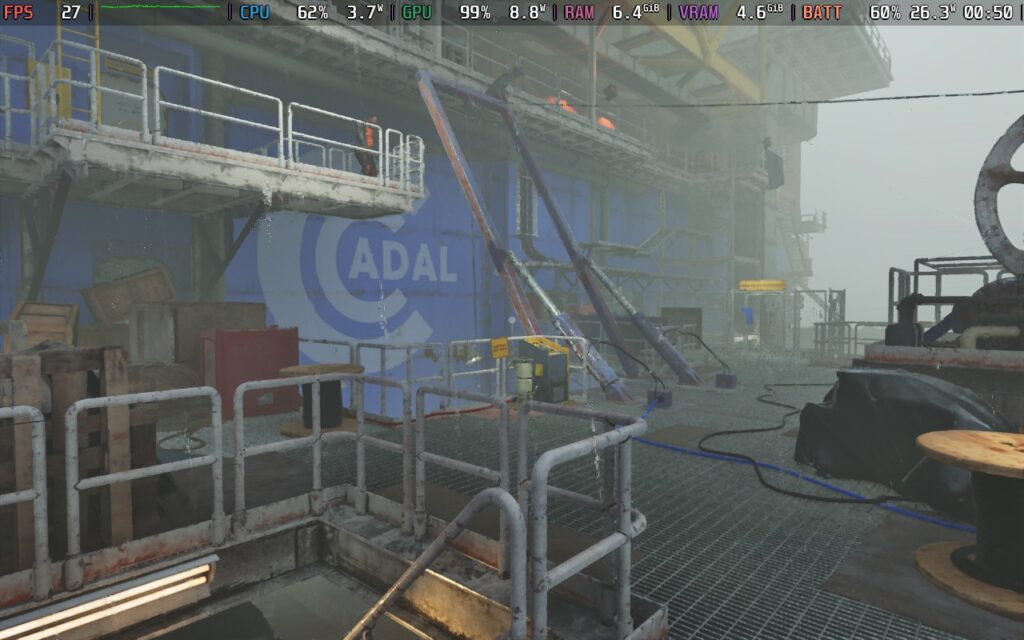
For me, The Chinese Room set their bar high for their games with Everybody's Gone to the Rapture (EGttR). I adored that game, despite my struggling with "horror" games. EGttR bridged the gap between being a little creepy but at the same time being quite beautiful, and the visuals were stunning for the time.
Still Wakes the Deep borrows some pointers from EGttR. It is a visual masterpiece, with a fantastic focus on realism, making screenshots on the highest quality settings fool you into thinking they're real. The voice acting is also another highlight for me, going with Scottish actors instead of the usual British. The voice actors do a good job of bringing their characters to life with their personalities and keeping you immersed in the story and situation, which needless to say, is not a good one.
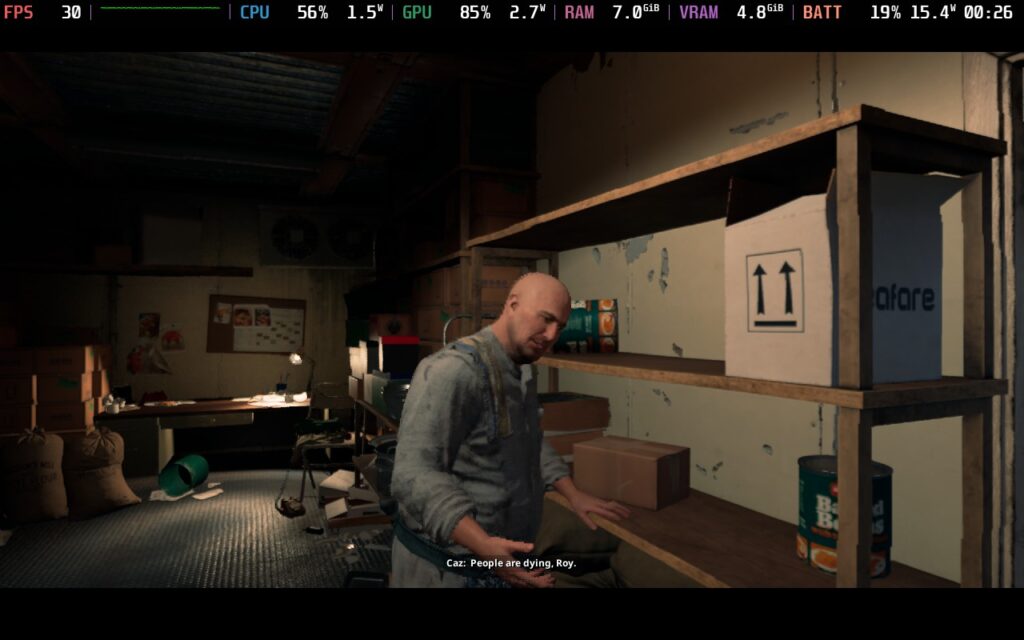
To briefly touch on the story, as I don't want to spoil it, it's your classic "dug too deep" scenario. Caz, our protagonist, is a worker on a North Sea oil rig, which is managed by a rather ruthless character named Rennick. Upon encountering a "blockage" while drilling for oil, Rennick orders that it be pushed through with the drill, unleashing a rather "otherworldly horror," as the game's developers put it. The rest of the story follows Caz and the oil rig crew attempting to survive and escape before it's too late.
You will also gradually learn parts of Caz's backstory, such as why he is on the oil rig and his family situation, giving you an idea of why Caz has to fight to survive.
While EGttR was a sedate adventure, carrying an eerie vibe, but with no real enemies that could harm you, Still Wakes the Deep features enemies and could best be described as a mix of the Amnesia games and EGttR. While parts of it are very much a walking simulator, a fair bit of the game is firmly grounded in stealth, avoiding enemies, and a bit of psychological horror. Although, I wouldn't say the game is quite as creepy as Amnesia. The enemies are obvious, and if you are seen or an enemy gets close, you are pretty much dead. You can take your hands off the controls and just let it happen, which lowers the tension a little.
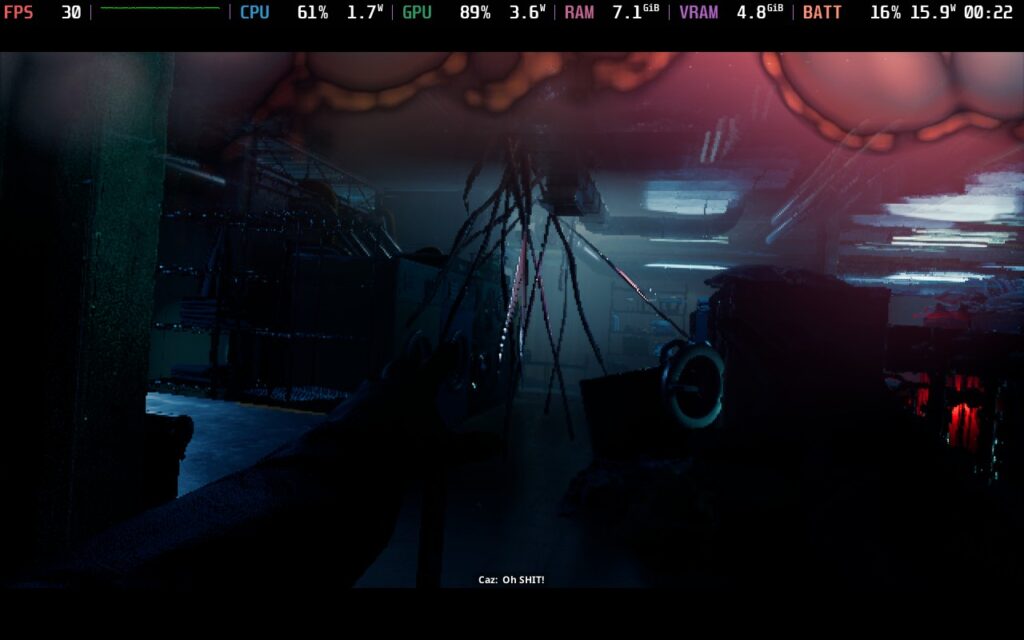
Still Wakes the Deep is a masterclass in storytelling through the video game medium. I expected it from The Chinese Room, but the visuals, combined with the voice acting and that little bit of terrifying horror, really help you to be immersed in this world.
The story is a little out there, but I think the way the characters react to the situation helps it feel much more grounded than it perhaps is. There's no wise-cracking, jokes, or 'light-heartedness' to take you out of the situation. Terrible things are happening, and the crew all act like that's the case. The game also airs on the short side. You will likely be done with the game in about 6 hours, even less if you aren't a chicken and just go for it. You can also ask for a hint on the objective at any time, telling you exactly where you need to go, so you won't get confused over where to head next.
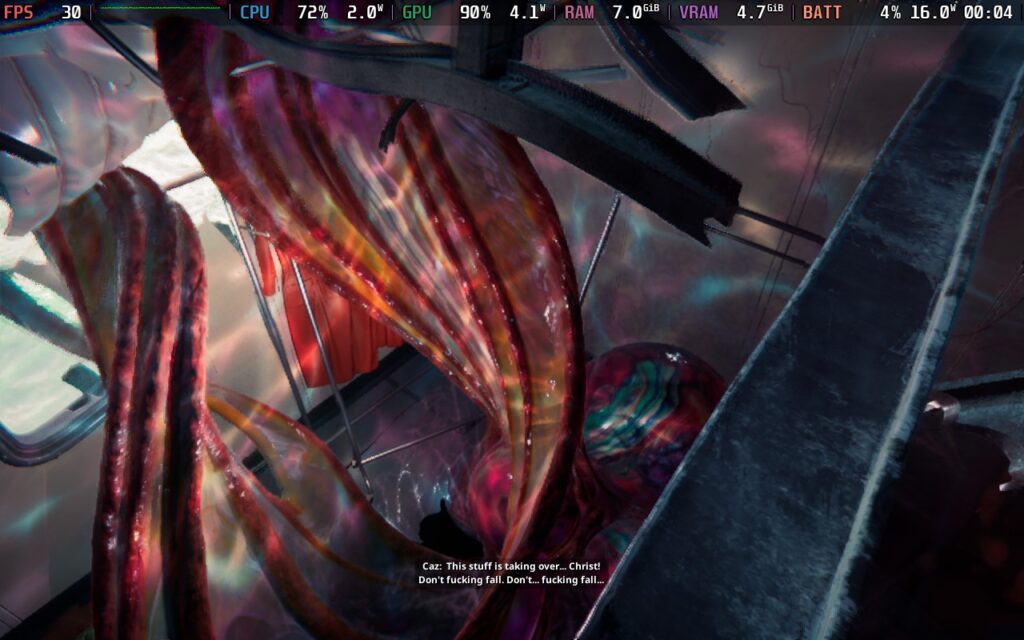
While some argue that the game's price is high for just 6 hours of gameplay, I think it's a fair price for a fairly unique experience. There's no recycled content or gameplay here; it's 6 hours of solid story all the way through, and it's worth a look if this is your kind of game.
Still Wakes the Deep has a nice array of settings to mess with and does support modern upscaling techniques such as FSR3, DLSS, and XeSS. Unfortunately, these settings aren't useful on the Steam Deck, as we have to run at an absolute minimum to get a playable experience.
By default, FSR3 frame generation is used, but as the Steam Deck generally runs the game at sub-30, the input lag it introduces is pretty bad, probably not far off 500ms, so I recommend turning it off and just accepting some frame drops from 30 FPS.
However, the controls on the Steam Deck are perfect, and the interface can be scaled to suit your needs.
In your SteamOS settings, set an FPS Limit of 30 FPS and 60/90Hz and remove any TDP limit.
We'll want to reduce all the graphical settings to their minimum for the most playable experience. I keep FSR3 on Performance, as I found Ultra Performance to add an awful amount of noise to the screen that ruins the quality of the image. I also disable Frame Generation to reduce input lag. Lighting Quality has to be on high, as the only choices are High and Epic and Epic uses Ray Tracing, which we don't want to be enabled.
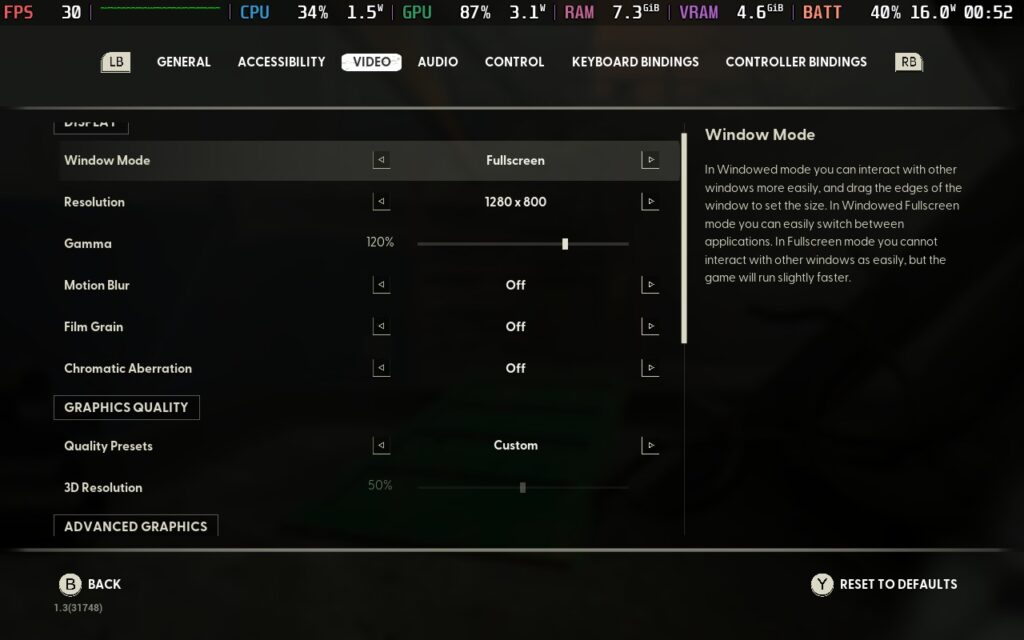
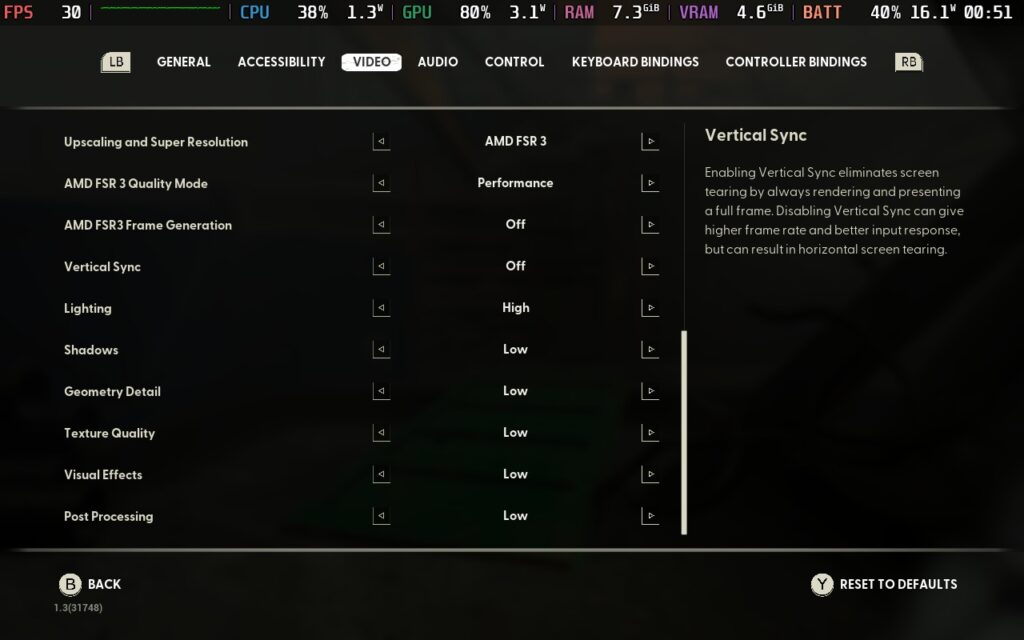
These settings allow portions of the game to run at a smooth 30 FPS with minimal input lag. However, at times, you will see dips as far as the mid-20s. Fortunately, Still Wakes the Deep isn't exactly an "action" game, and these dips shouldn't affect you too much. The game still looks pretty great on these lowest settings on the smaller screen and remains playable.
I did end up giving the game a lower visual rating due to some issues with FSR and how far away this is from the maximum quality, but it still looks quite good on the smaller Deck screen.
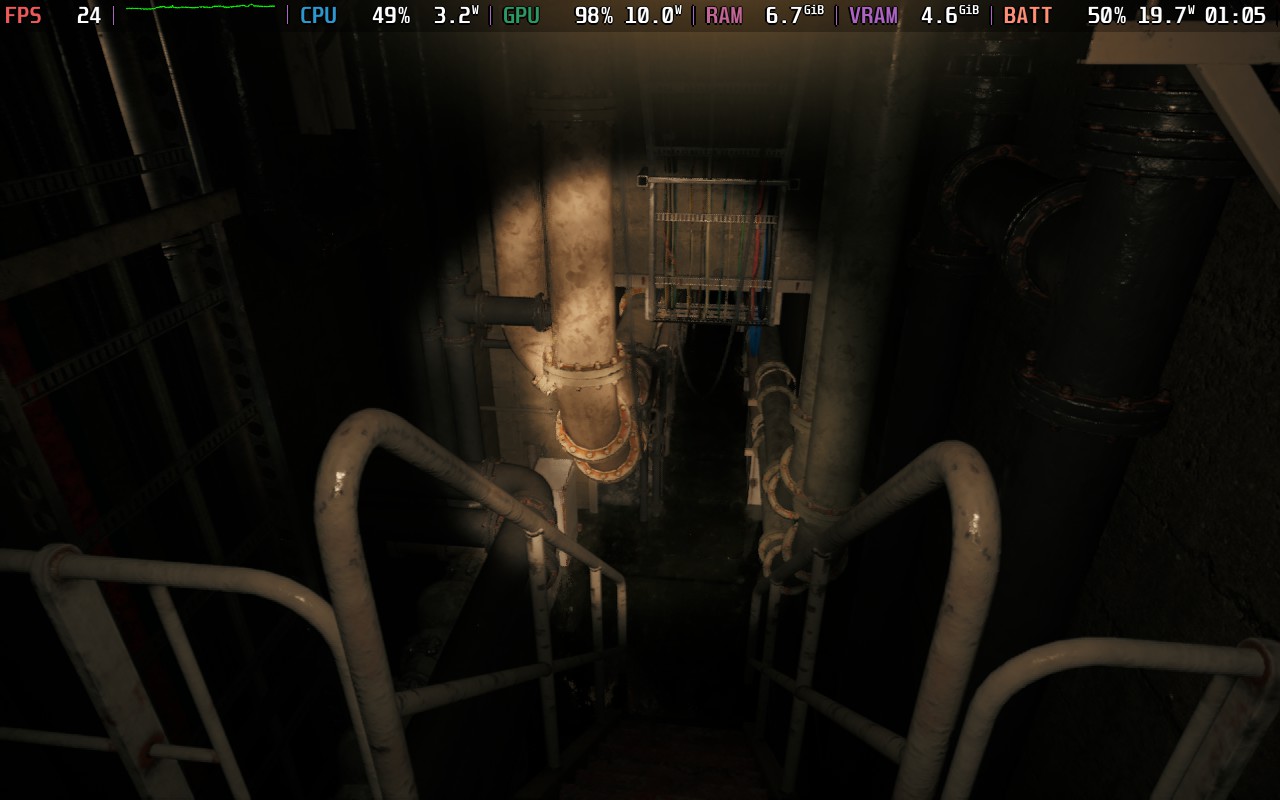
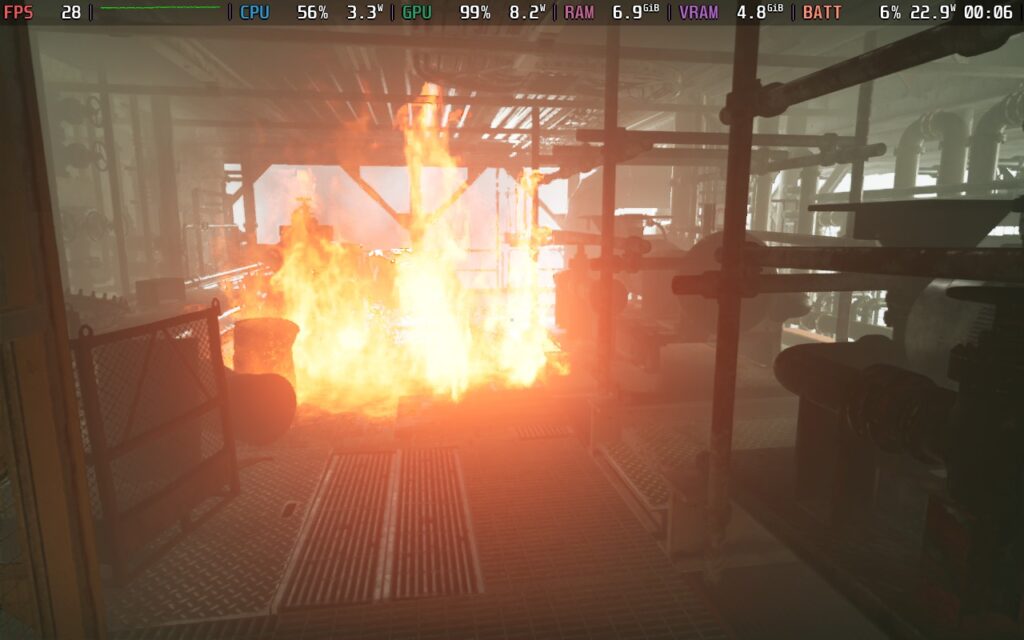

As for power draw, it's a pretty mixed bag depending on the area you're in, ranging from 16W-25W, but I would say it airs more on the 20-25W side of things, especially when you're in the outside portions of the game. So don't expect more than 2 hours of battery life from an LCD Steam Deck and 2.5 hours from an OLED Steam Deck.
Temperatures, like the power draw, vary. In quieter sections, expect around 75C, but outdoors, it can go up to 85C. I noticed 90C several times in loading screens, so expect the fan to kick in loud.
Still Wakes the Deep has quite the suite of accessibility options, you can adjust the size of subtitles, if they have a background to them, and the opacity of said background. You can adjust the interface size by using objective text and markers. Closed Captions are available if you want sound effects to be shown as subtitles. There are colorblind filters, the ability to disable flashing lights, the ability to disable camera shaking, and the option to increase the time before you must react to button prompts.
You can't fault Still Wakes the Deep for being accessible—except for those of us who might be terrified by it!
Still Wakes the Deep is yet another fantastic story The Chinese Room tells. I had high hopes after Everybody's Gone to the Rapture, and although Still Wakes the Deep is another style of game, it retains great storytelling and visuals that immerse you in the game world.
It's a little on the shorter side, but the game is packed with a great tale, voiced lines, and good world crafting. There's no filler here, and I think it's well worth the price if you're after a solid narrative game with some horror elements.
As for performance on the Steam Deck, it's not the best. Holding 30 FPS is impossible without FSR3 Frame Gen, and that introduces significant input lag. Personally, I didn't mind the occasional drops in frame rate, and the controls work perfectly fine. All-in-all, the game is playable, but you might prefer to play on a more powerful device to enjoy the beautiful visuals more and get the most from this experience.
このレビューはPC版に基づいています。
このレビューをお楽しみいただけたなら、SteamDeckHQ の他のコンテンツもぜひご覧ください!あなたのゲーム体験に役立つゲームレビューやニュースを幅広く取り揃えています。ニュース、ヒントやチュートリアル、ゲーム設定やレビューをお探しの方も、最新のトレンドを知りたい方も、ぜひご利用ください。
Thank you to Jimmy Champane from Deck Ready for helping me test late-game scenes for this first look and TheFirstJosh for providing a save game I could test with.
Will you be able to bring this shattered world back together? In Death Stranding, you are Sam Porter Bridges, a delivery man who travels across a post-apocalyptic America to reconnect cities and society. The game features elements of stealth, as well as open-world exploration and a variety of missions to complete as you deliver packages and fend off enemies in this third-person experience.
Death Stranding is directed by Hideo Kojima, and with some of his signature storytelling and world building. The story can feel a bit convoluted at times, but is overall a fantastic experience, which the Director's Cut expands on. With new items, expanded combat, more customization, new missions, new structures, and more, the Director's Cut is the best way to experience this world, but on the Steam Deck, some compromises are needed to enjoy all it has to offer.
With Death Stranding Director's Cut, I had a mix of feelings. First, it started off with excitement as the 30 FPS with XeSS seemed to be holding up under a 17W drain, but as it got a bit more intense, the cracks started to form. They formed so hard that my game crashed about 3-4 times, all with different setting configurations I was testing and in different spots. Turning off all caps was a little bit better, but also drained a significant amount more that I didn't feel justified the slight increase in stability, and that's just regarding the opening areas.
Death Stranding: Director's Cut is a weird egg. The power draw is stagnant and doesn't change much with any graphics setting changes. On top of that, setting everything on the lowest possible settings with FSR 1.0 at performance mode only saved around 1W of drain and when caps were turned off, it still drained really high. I also tried forcing resolution with Steam and while it technically worked, it only decreased the size of the game's window and didn't change any battery drain or temps.
Jimmy from Deck Ready helped test this on his end. In one of the late-game factory scenes, he confirmed that regardless of the settings, there were drops no matter what. From multiple reports, you will start to see this more and more towards the late-game, making it near impossible to play at times with crashes and framerate drops. This kind of performance degradation started becoming a bit more noticeable after the patch that added in XeSS, so I decided to try the game in a pre-updated state to see how much the performance changed.
Before I go into the findings, I was able to go backwards in version by using the Steam console and downloading the corresponding manifest for the game and replacing the game files. I found this using SteamDB and going to the correct game depot. I will post a small guide on how to do this yourself soon because, as I thought, performance can be improved by downgrading Death Stranding: Director's Cut to the previous version. Due to borrowing a save from TheFirstJosh, I also had to hex edit the game's .exe file to bypass any corrupted save checks.
Just for transparency, this is the console command I used in Steam to download the old version of the game, which I then used to replace the files stored in the local area:
download_depot 1850570 1850571 7865482309805580274While more testing needs to be done, I was finding the game to hold framerate much better in the older version, especially at 30 FPS, and at lower battery drain. When riding around on vehicles, I noticed a significant reduction in drops at a similar graphics setting with Ultra Quality on FSR. I did encounter bigger drops when it started raining and the BTs showed up, but switching "Available Video Memory" to Low and changing FSR quality to "Quality" did help bring this back up to 30 (TDP Limit of 9). Overall, more testing needs to be done, but I believe downgrading the version will be the way to go.
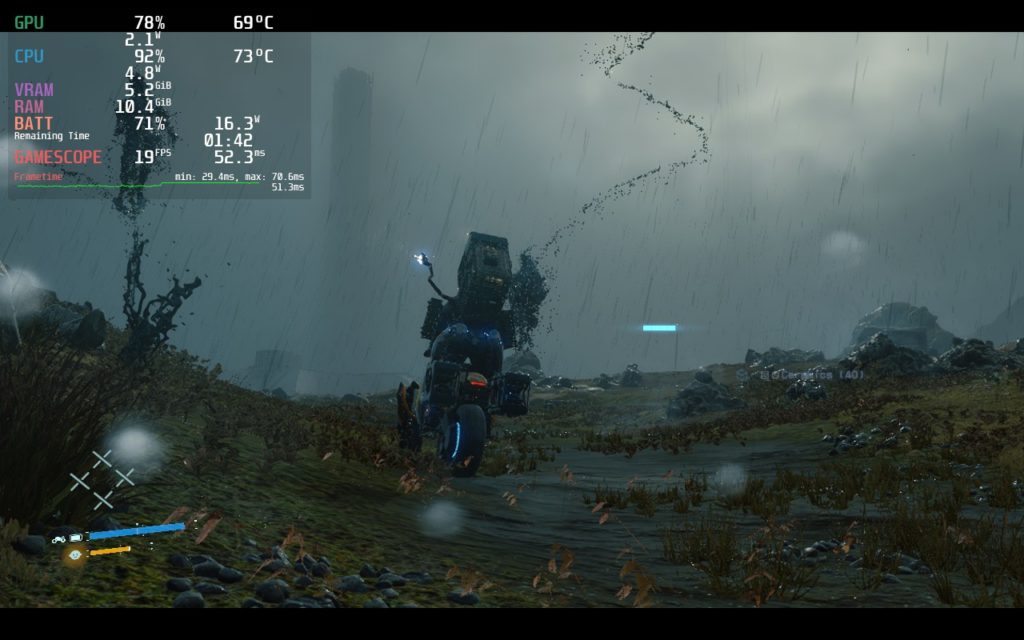
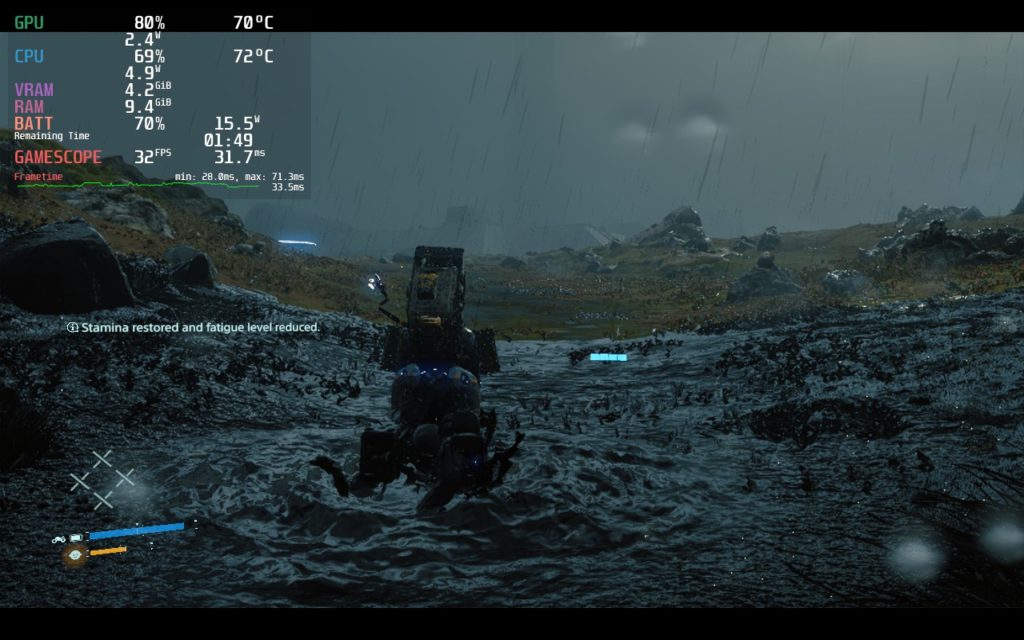
For comparison, I also tried a bit of the original game, which seems to run better than the DC version completely. This makes sense since it is using older graphical tech that isn't as demanding, but since it isn't on sale anymore, it doesn't matter too much.
There is still a lot to test and go over with Death Stranding, but I believe the best way to play this currently is pre-XeSS update. With lower settings, it was able to handle the rain and BTs much better than before and still looked pretty decent with FSR on quality. If you want to just play without the downgrade, be prepared for late-game areas or spots where it is raining and BTs show up as it will slow the game down, possibly leading to crashes. Death Stranding is an awesome game and I highly recommend buying it just because of the content, but enjoying it on the Steam Deck in late game areas will require a bit of finessing.
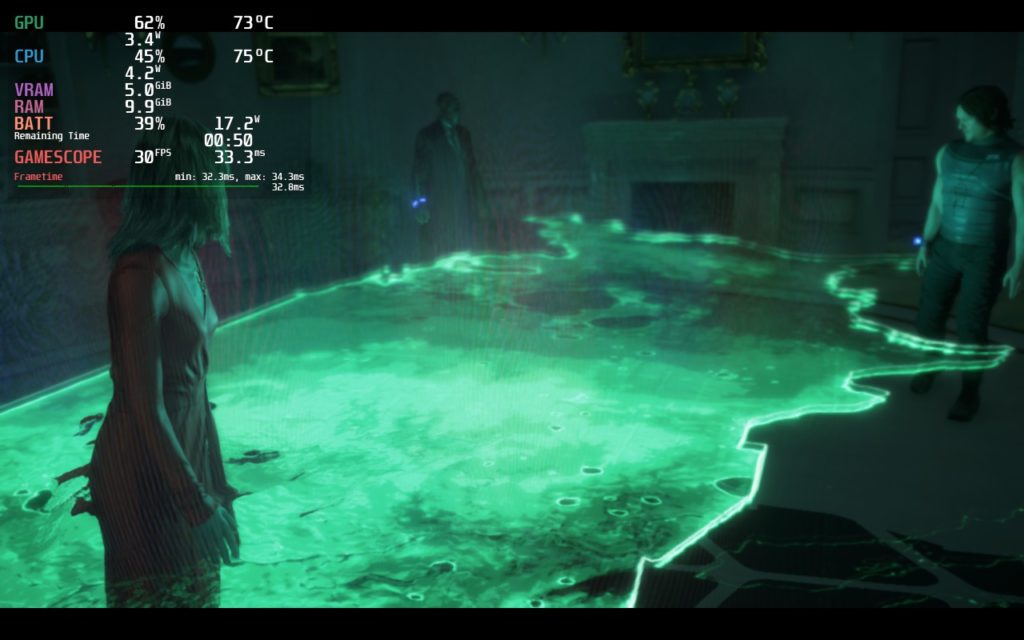
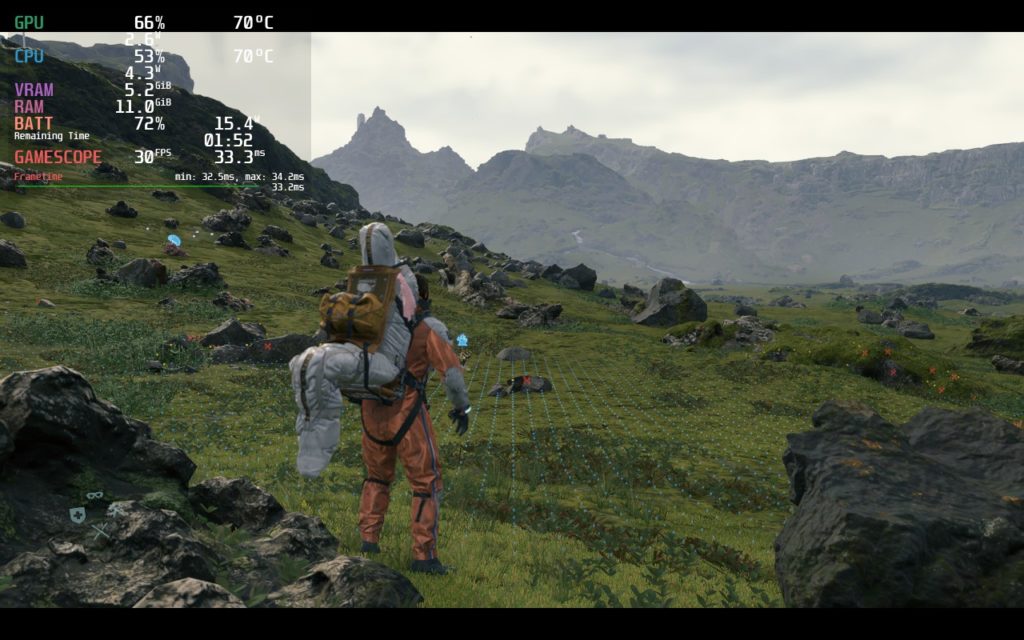
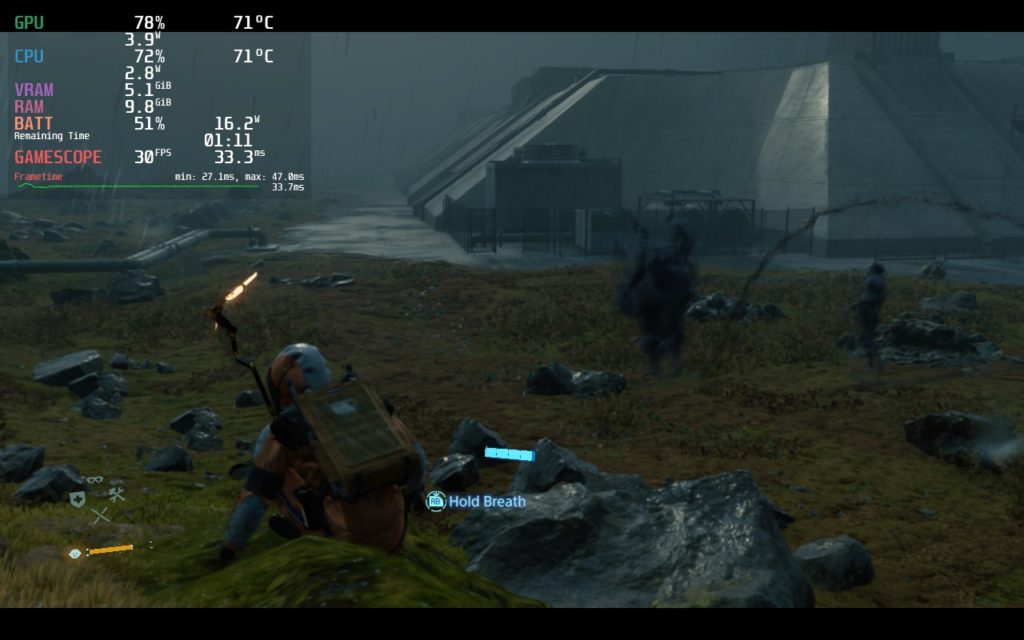
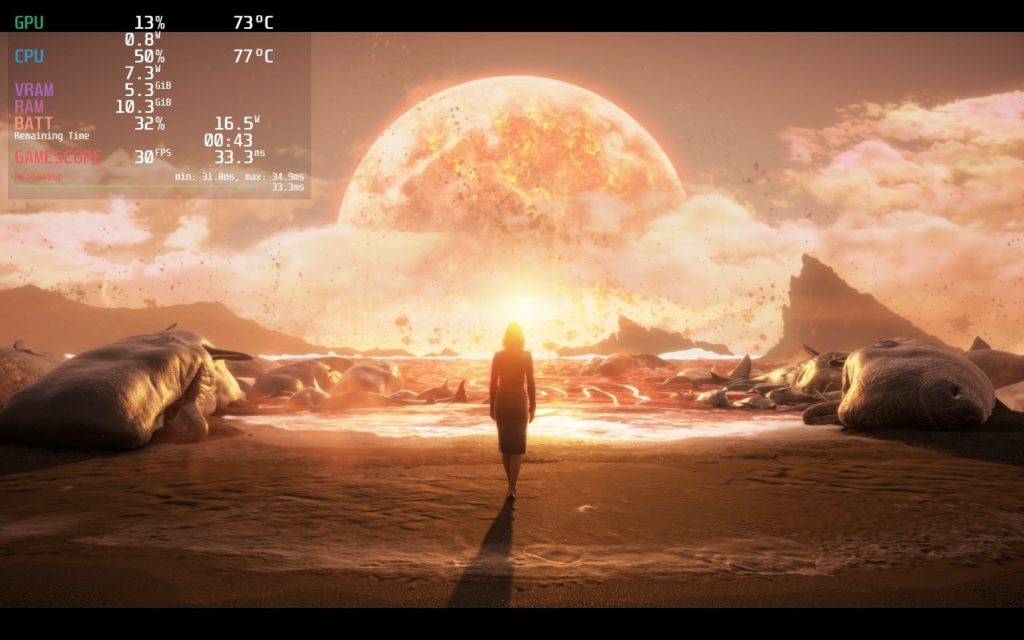
Just some cool shots I got while I was testing:
このレビューはPC版に基づいています。
If you enjoyed this first look, be sure to check out the rest of the content on SteamDeckHQ! We have a wide variety game reviews and news that are sure to help your gaming experience. Whether you're looking for news, tips and tutorials, game settings and reviews, or just want to stay up-to-date on the latest trends, we've got your back
Firewatch is a single-player story game that tells a engrossing tale about a man dealing with overwhelming grief. Without spoiling too much, he takes up a job to watch over a forest to spot fires and, with the help of his sarcastic and unprofessional boss, uncovers a disturbing turn of events that changes everything. The game hits you in the heart real quick and turns into a powerful narrative about pain, guilt, and sorrow. For such a small game, it was a wonderful experience and playing on Steam Deck was a fantastic way to see the story unfold.
Overall, performance on deck was mostly fluid. I went through the entire game using the optimized/recommended settings and didn’t feel much holding me back. At 40 FPS, and using Proton GE 7-19, I was able to play the entire game without any huge slowdowns. I would get framerate drops and some battery usage spikes when running quickly in the forest, but it would quickly bounce back. Firewatch has full controller support and does show Steam Deck icons in-game.
This also means that the official gamepad layout works extremely well for the game and I felt no awkwardness using the controls. The only gripe I have is trying to change the resolution in-game. Doing this with just the deck controller is aggravating and near impossible. The right trackpad is mouse cursor control by default, but there’s no keybind for a left mouse click, which is essential. I just binded the left click to pressing the right trackpad down and it made changing resolutions and navigating some menus easier.
I encountered a couple bugs in my playthrough, but they were more slight nuisances and nothing game-breaking. The biggest bug I found was one time starting up the game and it went to a black screen and stayed there. This was easily fixed just by putting the deck into sleep mode and waking it up right after.
Another little bug includes some minor framerate dips and audio crackling when coming out of sleep mode (which fixed themselves shortly after), but that was all I experienced in my playthrough. In my testing, I was also not able to ideally hit 60 FPS without battery being drained incredibly quick and quality being on the lowest setting. I also noticed, when I was testing the maximum battery build, that it didn’t seem like FSR or Half Rate Shading did anything to affect quality of the game. A little disappointing, but not the end of the world.
Overall, my experience with Firewatch was a positive one. Framerate drops were not very noticeable and any bugs were generally fixed after a couple seconds. Adding the binding for left mouse click to the right trackpad solved my biggest gripe of going through the settings menu for the game. With a verified rating from Valve, which I agree with, this is definitely a great game to add to your deck library.
Need some help understanding how we got to our score? Check out our Guide to Steam Deck HQ.
このレビューはPC版に基づいています。
このレビューをお楽しみいただけたなら、SteamDeckHQ の他のコンテンツもぜひご覧ください!私たちはあなたのゲーム体験に役立つこと間違いなしの様々なゲームレビューやニュースを取り揃えています。ニュース、ヒントやチュートリアル、ゲーム設定やレビューをお探しの方も、最新のトレンドを知りたい方も、ぜひご利用ください!