Gothic 1 Remake was provded by THQ Nordic for review. Thank you!
At the start of 2019, I had yet to play a Gothic game before, but I always knew about the franchise and how influential it was for the larger RPG genre. When a playable teaser was released for a possible remake, I thought it looked promising. All the hype around that teaser made me install the original Gothic, and before long, I fell in love with its world.
Now, 7 years later, it's finally here. After all the waiting, delays, trailers, and previews, the question still remains: did Alkimia Studios deliver a game as impactful and forward-thinking as its original inspiration? Well, after getting lost in the Colony for way too many hours, I think I have some remnant of an answer.
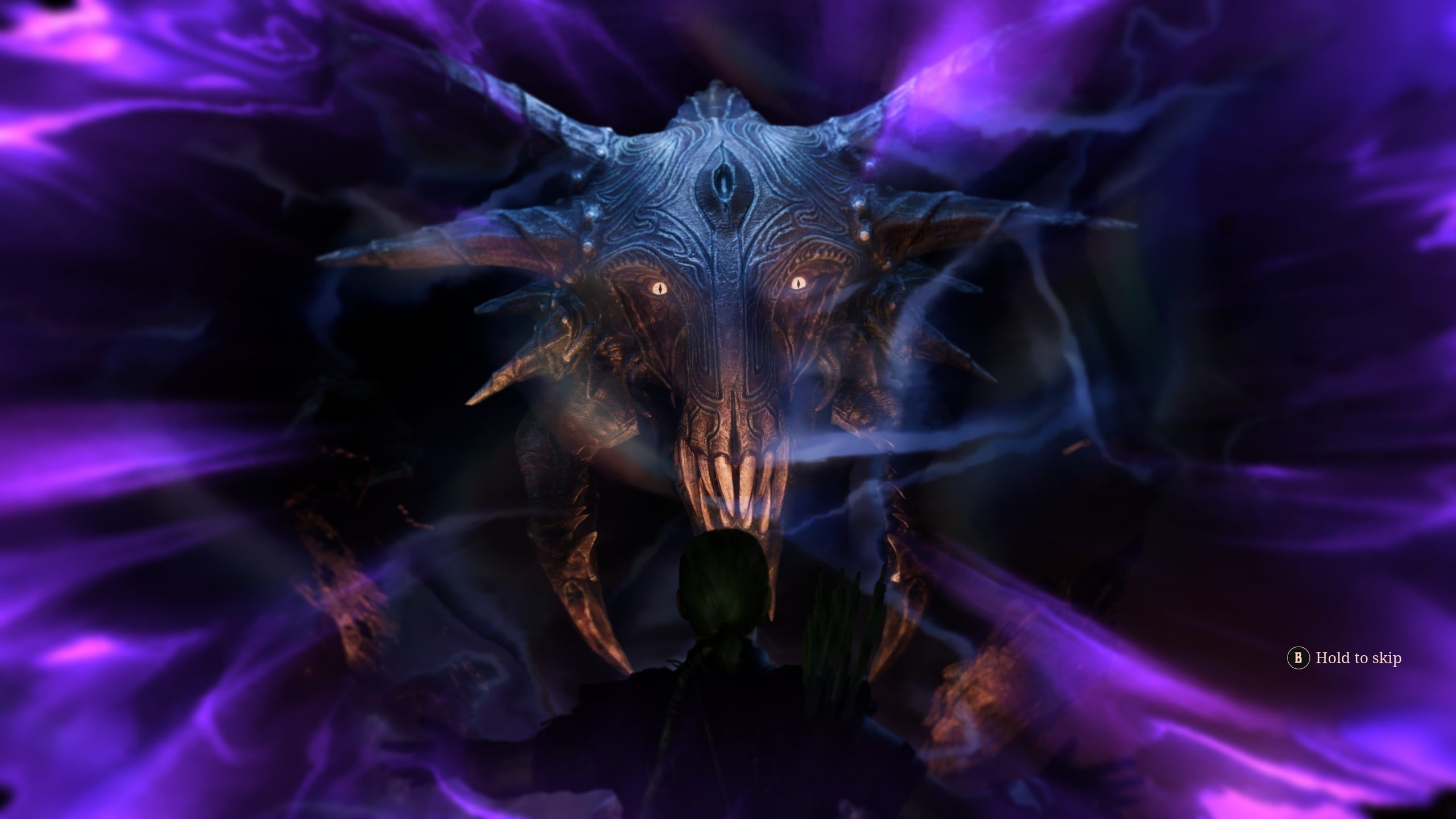
The kingdom of Myrtana was at war and desperately needed magical ore to forge powerful weapons. To keep the mines running, King Rhobar began sending criminals into a massive penal colony where they would spend the rest of their lives mining for ore.
To prevent anyone from escaping, a group of powerful mages created a magical barrier around the colony. However, something went horribly wrong during the ritual. The barrier expanded far beyond its intended size, trapping not only the prisoners, but also the mages themselves, inside. While people could still be thrown into the colony from the outside, nobody could leave.
Years later, the colony has become a lawless world of its own ruin, ruled by rival factions, mercenaries, criminals, and opportunists. And as the game begins, you are thrown into the Barrier with nothing but the clothes on your back, forced to survive in a place where your past no longer holds any weight.
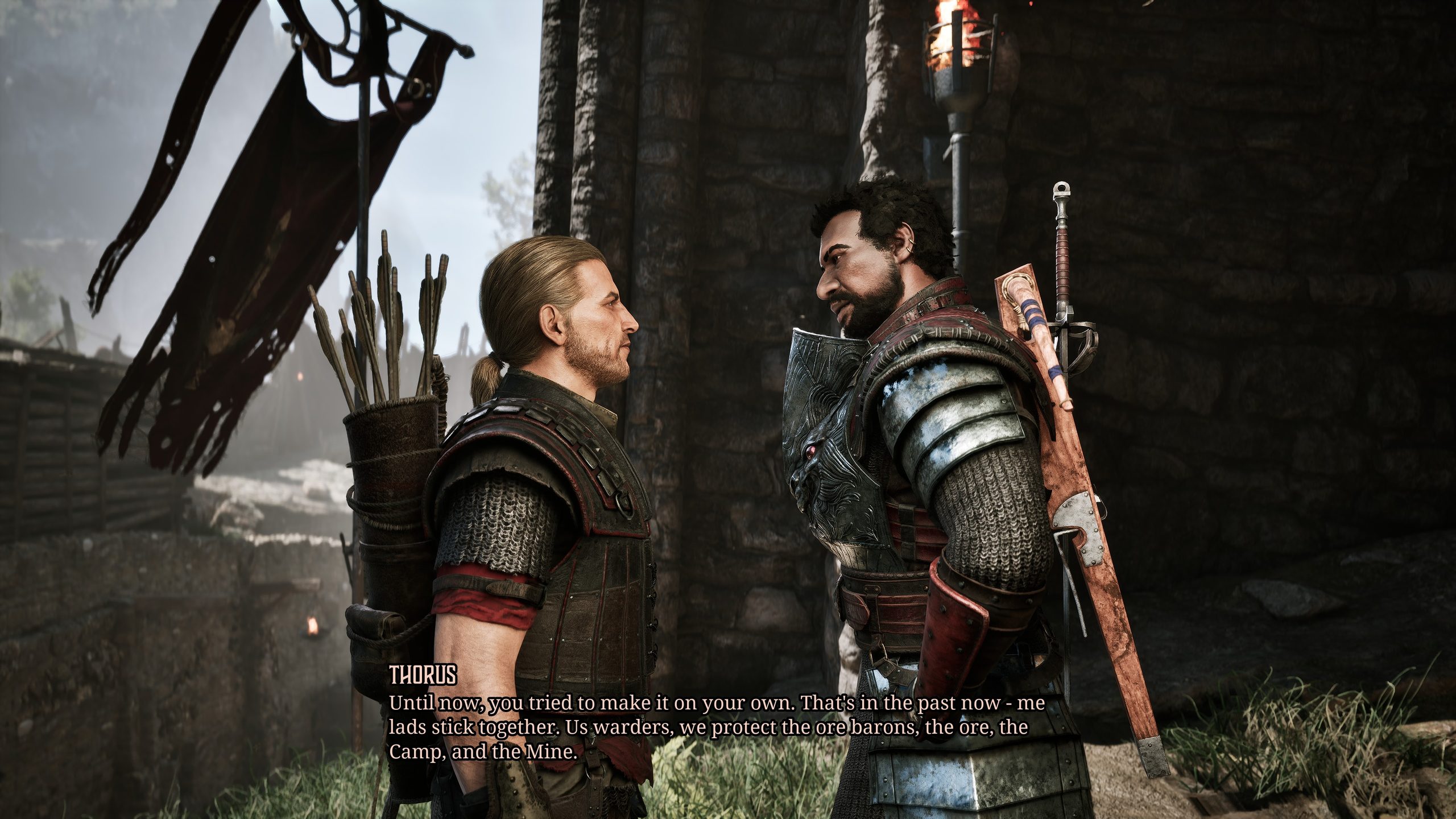
The story structure of Gothic 1 Remake is incredibly well balanced. Instead of offering a linear, cinematic story, similar to games like Elden Ring, it focuses more on exploration, worldbuilding, and general story lore. At the same time, there are still plenty of memorable characters, interesting twists, and engaging story moments throughout the adventure to keep players intrigued.
You are constantly given important choices that can massively affect the story. You make friends, create enemies, pick sides, and come across quests that can be tackled in different ways. All of this creates a genuine "build your own adventure" feeling that we see take a firm stronghold in modern RPG titles.
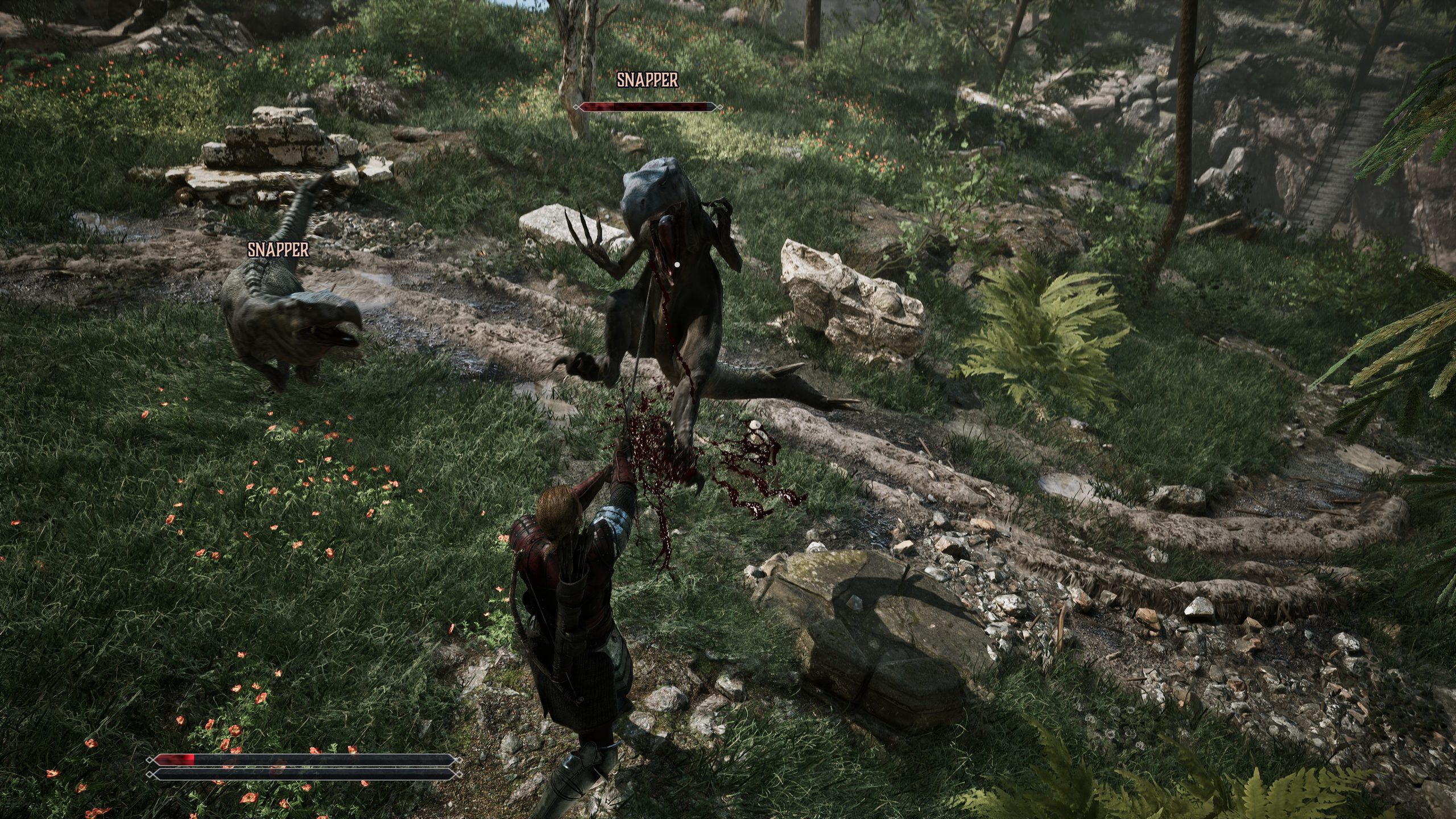
Similar to Kingdom Come: Deliverance and the Mount & Blade series, Gothic follows the classic "zero to hero" formula. You start as a presumed nobody. You don't know how to fight, you have no money, no allies, no reputation, and even the weakest enemies can feel like boss fights because of how slow and inexperienced your character is at the start.
I decided to take the easy route and started my journey as a thief. I spent my time pickpocketing people, lockpicking chests, and making money through dastardly means. Financially, it worked. I became surprisingly rich early on. The problem was that money alone couldn't solve everything. I quickly realized I had neglected Learning Points, which meant I couldn't properly improve my character. I had good armor, good weapons, and a full coin purse, but I barely knew how to use any of it.
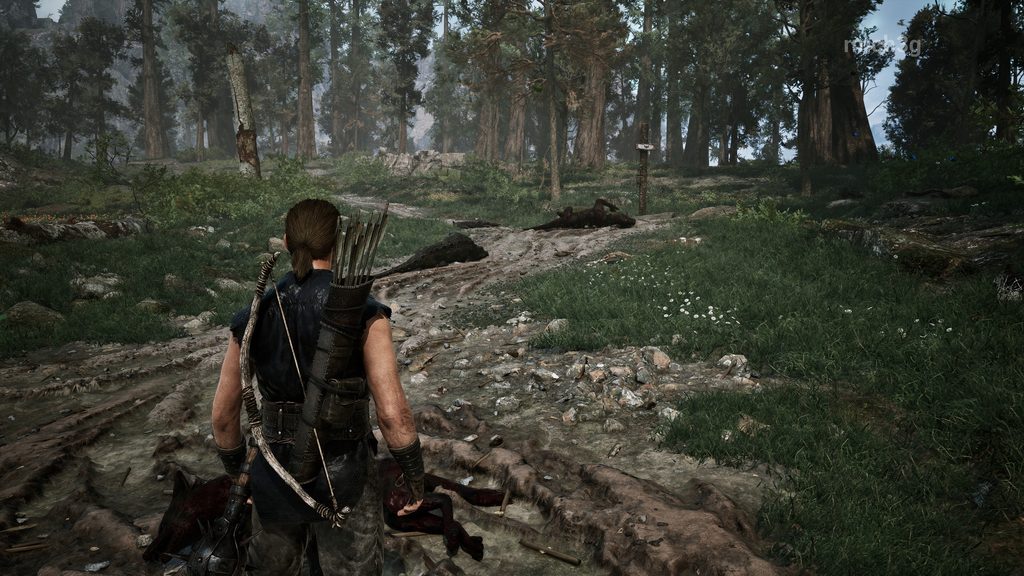
Some quests offered alternative solutions, including bribing people if you had enough gold. I used that option a few times, earned some Learning Points, and started investing in one-handed weapon training. Then I remembered a hunter I had befriended near the beginning of the game told me about skinning animals, collecting trophies, and making a living from hunting. So I tracked him down, learned how to harvest materials from creatures, and decided to continue my journey as a hunter.
The first time I approached a pack of wolves, they completely devastated me. But instead of giving up, I took the necessary time to learn their attack patterns, figure out when to dodge, when to parry, and when to strike. Eventually, it clicked. What started as an impossible encounter became a reliable source of both money and experience.
This was just a small part of my experience trying to find my place in the Colony. The game fundamentally encourages you to explore and adventure into different potential play styles. There are no quest markers telling you exactly where to go, very few tutorials, and the game does almost nothing to hold your hand.
At first, it can feel frustrating and even punishing, but once everything starts to click, the payoff is immensely satisfying. Every victory feels earned, every improvement feels meaningful, and before long, the gameplay loop becomes incredibly addicting.
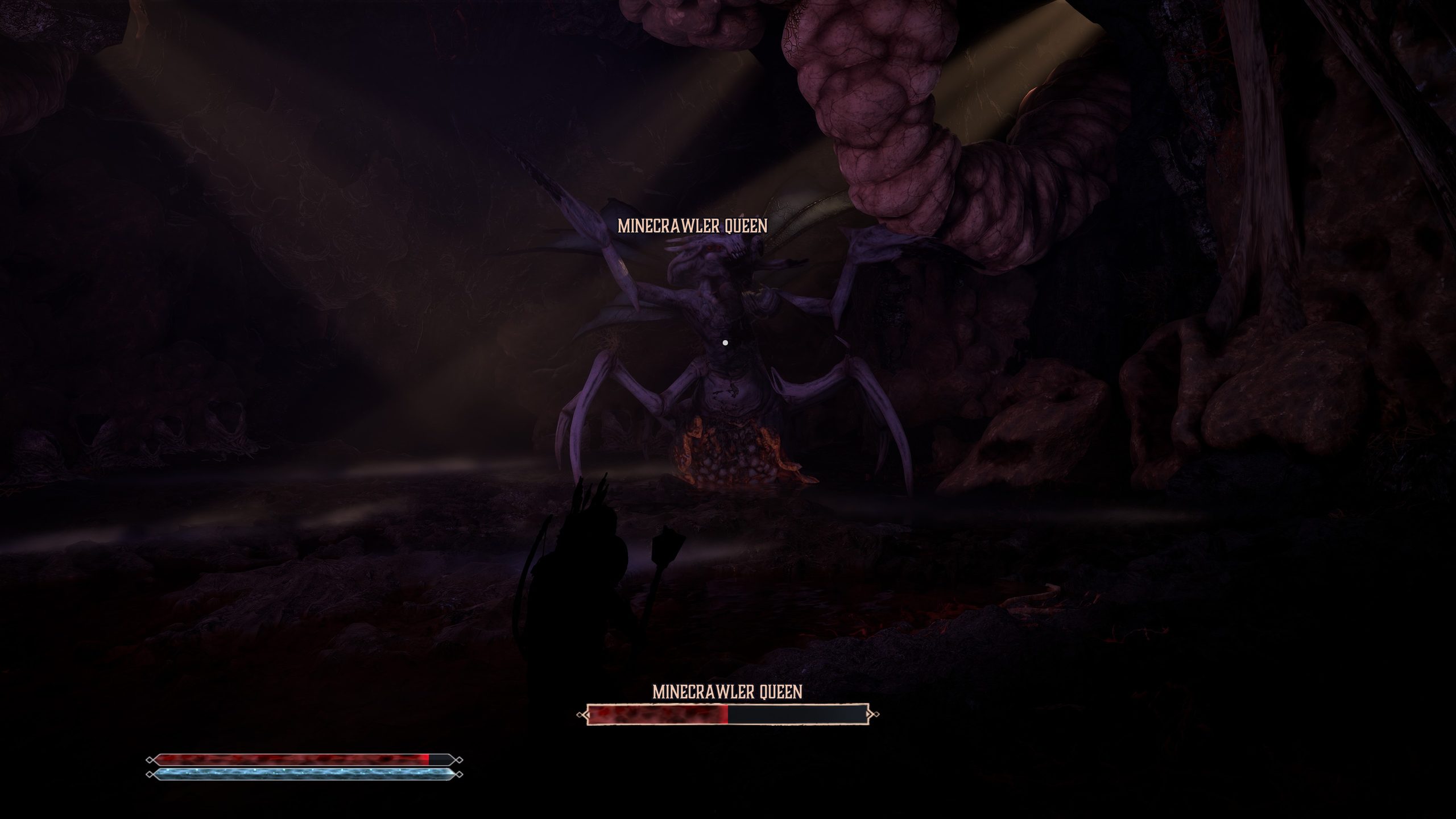
When it comes to combat, you have three options: melee, magic, and ranged. You can focus on one of them or mix them however you want. I want to start with melee combat since that was the most interesting one for me.
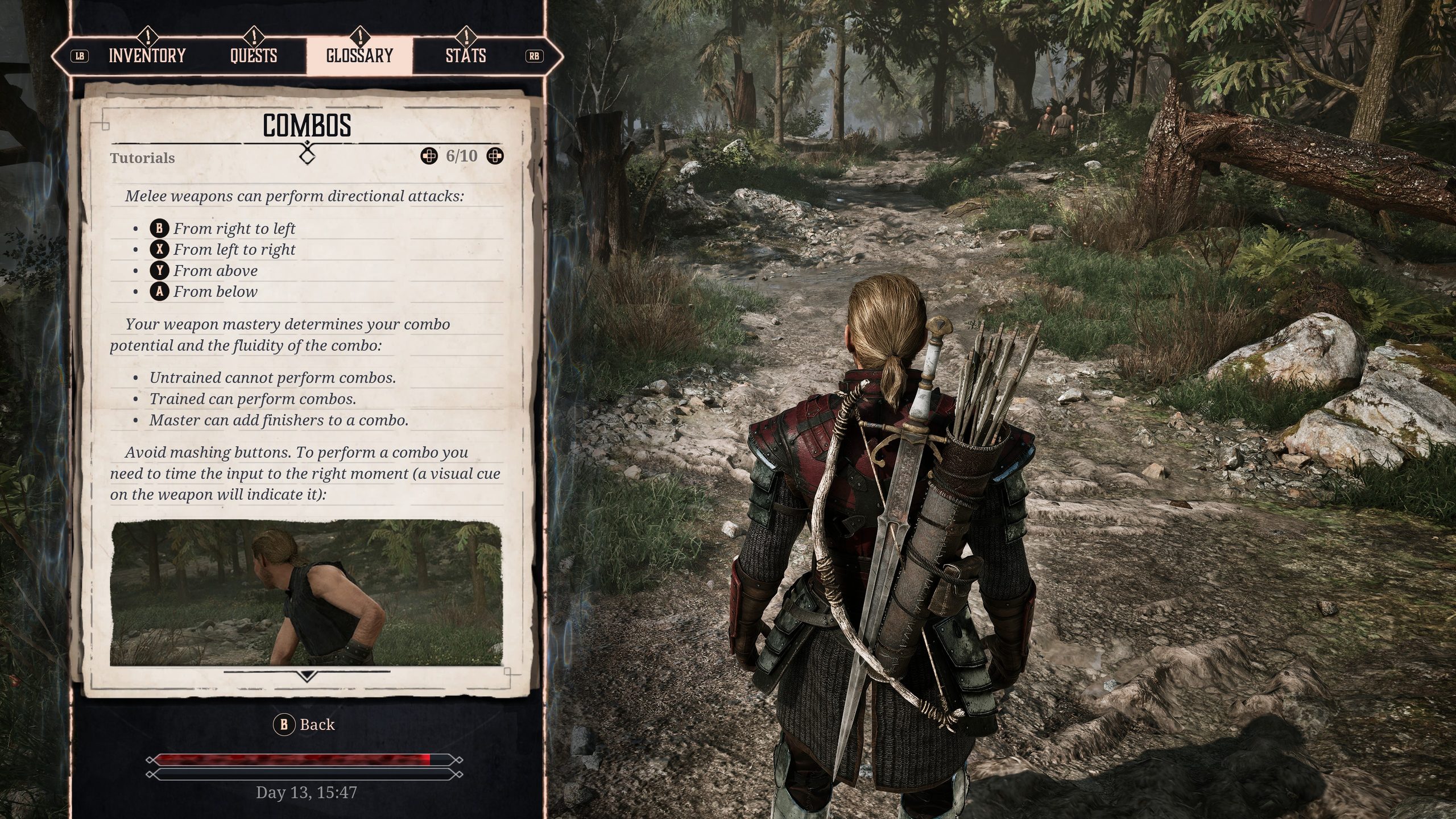
You have four melee attacks that change how your character swings. You can attack from the left, from the right, perform a long-range thrust, or use a heavy overhead attack that can knock enemies down. The coolest part, however, is the combo system.
Once you learn One-Handed or Two-Handed Mastery, your glossary gets updated with combo instructions and combat techniques. By combining these four attacks and timing your button presses correctly, you can chain attacks together and perform finishers.
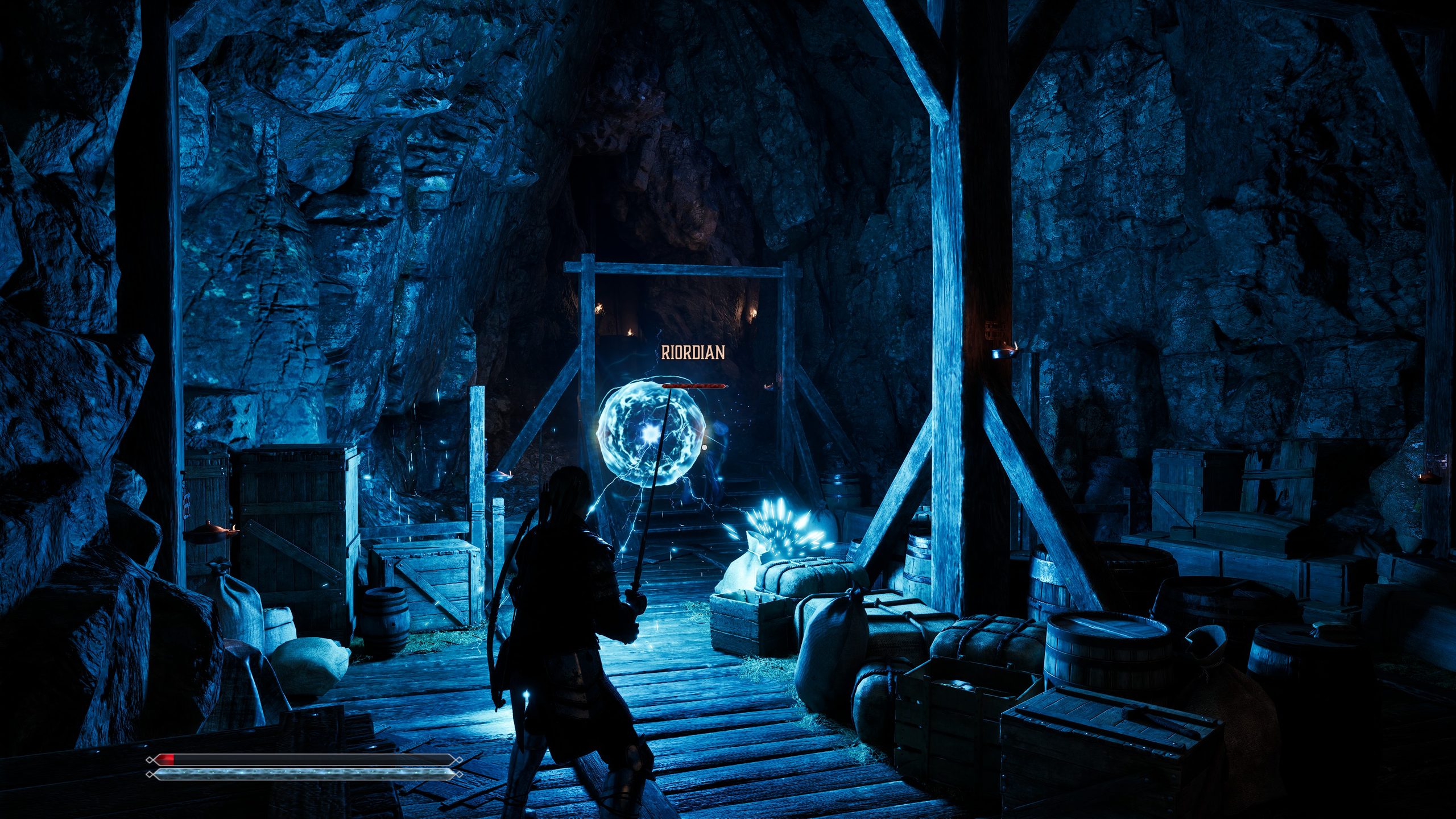
Ranged combat with bows and crossbows is much more straightforward. You can still train and unlock useful upgrades like faster draw speeds, headshots, and other perks, but it is far easier to understand than melee combat. While I haven't fully committed to a mage build yet, magic proves to be impressive as well. Depending on which camp you join, you gain access to different schools of magic, and with enough investment into mana, you can become an absolute powerhouse.
Defense is fairly simple. You can dodge and parry attacks, and investing points into weapon skills unlocks ripostes and counterattacks after successful parries. Acrobatics also gives you the ability to roll. Personally, I wasn't a huge fan of that mechanic since it made some encounters feel a bit too much like a Dark Souls rolling simulator.
Overall, the combat feels incredibly unique for an open-world RPG. Once you start discovering different trainers and skill paths, you have the freedom to specialize in a single playstyle or create a hybrid build that suits you.
The biggest issue I have with Gothic is how old and outdated parts of the game can feel. You could argue that Alkimia wanted to preserve the spirit of the 2001 original, but in some areas I think they played it a little too safe. Earlier, I praised the game for not holding your hand, but there were plenty of moments where I felt they took that philosophy too far. Getting lost and figuring things out on your own can be fun, but spending an hour running around a crowded camp looking for a specific NPC starts feeling less like immersion and more like busywork. Something as simple as displaying NPC names on the map after you've met them would have saved a lot of unnecessary wandering.
Crafting, sneaking, alchemy, and NPC reactions also felt fairly basic. They get the job done, but they never really stood out. Outside of the game's incredible sense of immersion and progression, most of these systems have been done better in other RPGs.
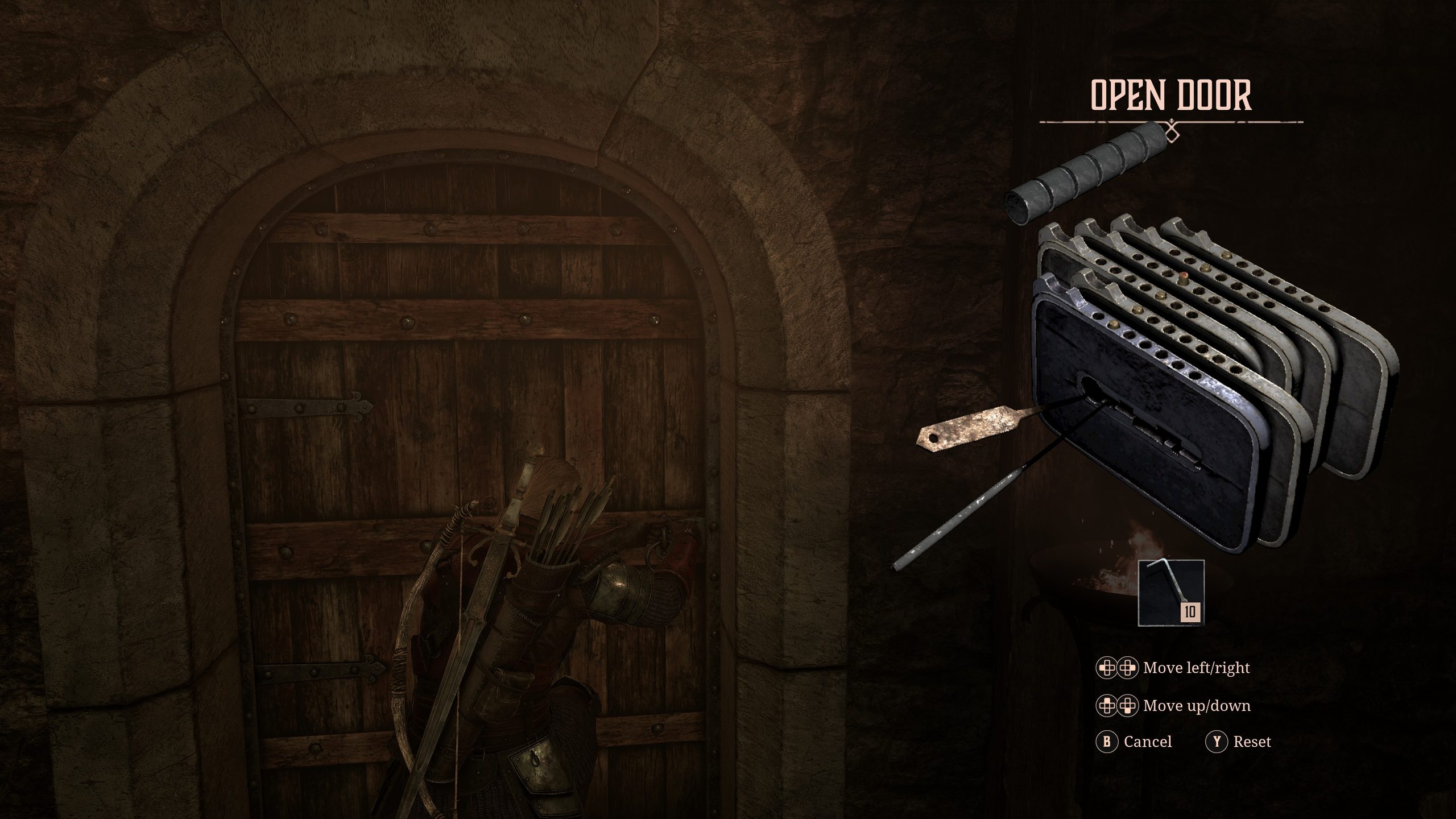
However, lockpicking was one of the most divisive mechanics in my experience. Instead of using a traditional lockpicking system, the game turns it into a fairly complex puzzle. At first I thought it was a creative idea, but the more I interacted with it, the more frustrated I became. The frustration felt by these momentary puzzles left such a bad taste that some play sessions were cut short.
You can invest Learning Points to make lockpicking easier and more forgiving, but Learning Points are incredibly valuable, and being forced to spend them on making a puzzle minigame less frustrating instead of improving my combat, crafting, or character build never felt good.
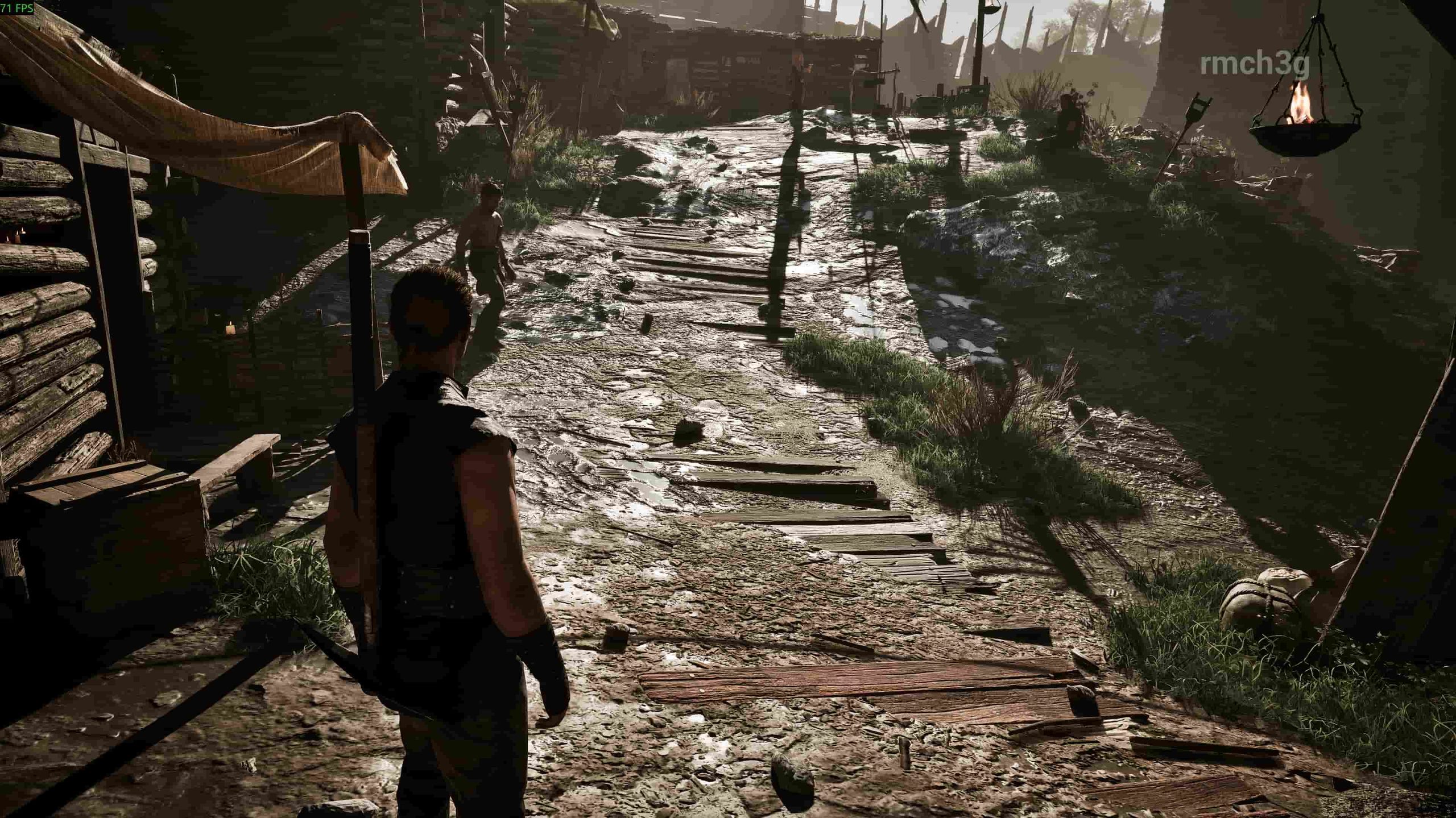
The graphics in Gothic 1 Remake are a bit of a mixed bag. On one hand, the landscapes, atmosphere, lighting, and overall environmental design look absolutely fantastic. The Colony is a beautiful place to explore, and in terms of pure terrain quality, this is easily one of the best-looking worlds I've seen in an RPG.
On the other hand, not everything received the same level of attention. Facial animations are extremely limited, character animations often look stiff and awkward, and interactions with the environment are almost nonexistent. While the world itself looks modern, many of the characters and animations feel like they belong to a much older game.
It feels strange to say this, but visually Gothic 1 Remake sometimes comes across more like a remaster than a full remake visually. In some ways it reminded me of Oblivion Remastered, where the environments received a massive visual upgrade while many of the underlying animations and presentation elements still feel dated.
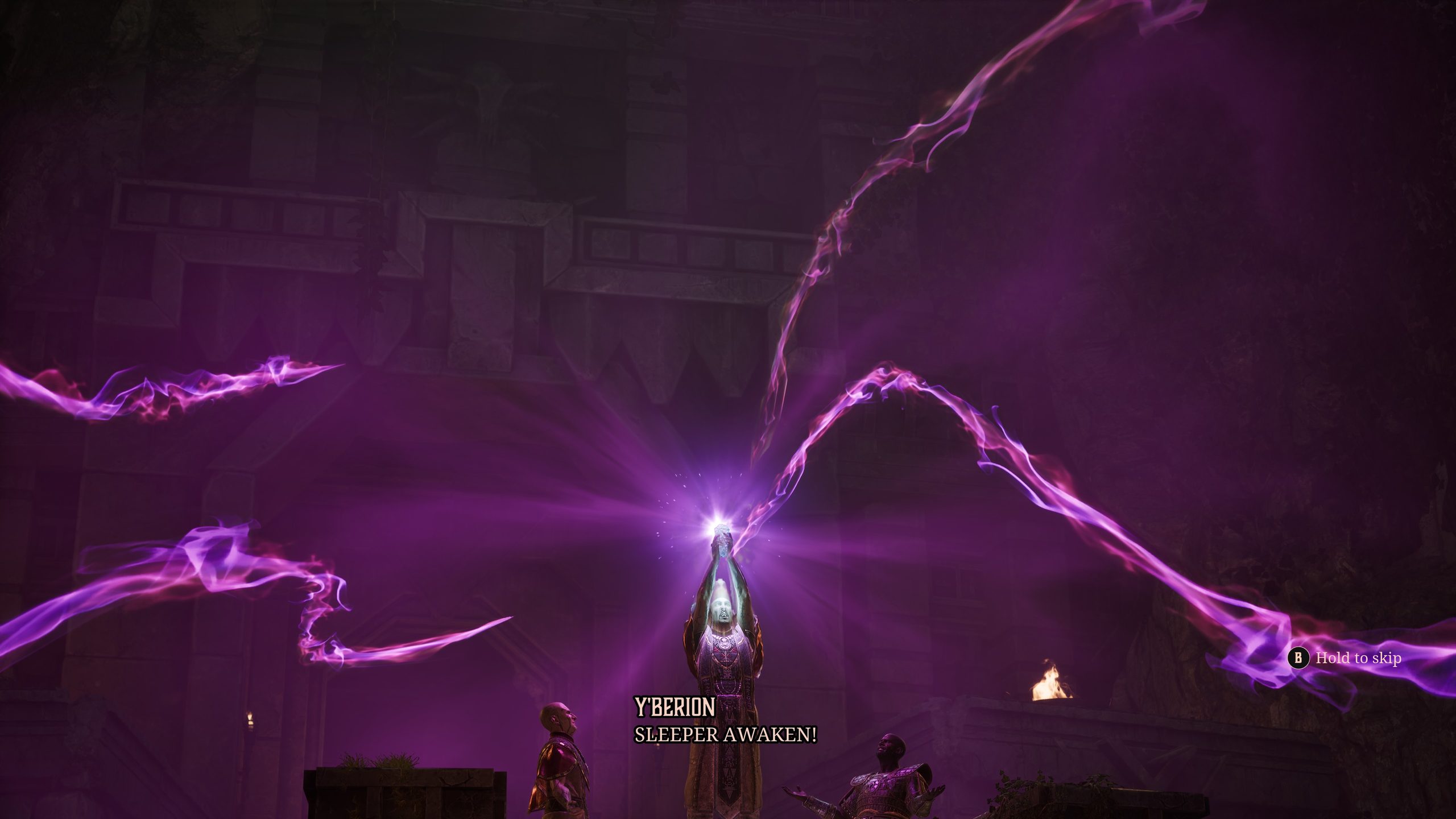
The classic soundtrack of the original game returns with more modern and orchestral arrangements, and the result is fantastic. Whether you're exploring the open world or watching an important story moment unfold, the music does a great job of enhancing the atmosphere without ever becoming distracting.
I didn't have any major issues with the voice acting either. It wasn't particularly memorable, but it was consistently solid throughout the adventure.
The sound design excels by way of the sounds used for sword clashes, parries, enemy noises, and combat effects, all of them sounding satisfying and impactful. Environmental audio stands out as well. Hearing flags wave in the wind, distant wildlife, and the ambient sounds of the Colony adds a surprising amount of realism to the experience. Combined with the strong atmosphere, it helps make the world feel far more alive and immersive.
When I first tried Gothic 1 Remake on Steam Deck before the day-one patch, the experience was completely miserable. Since it was built on Unreal Engine 5, I honestly assumed no amount of patching would be enough to make it run well. The game would regularly stutter down into the 5-15 FPS range and couldn't maintain 30 FPS for any meaningful amount of time. Because of that, I ended up doing most of my review on desktop instead.
After the day 1 patch, however, things improved significantly. I spent quite a bit more time testing it on Deck, and while I still wouldn't consider it playable by my personal standards, most of the severe stuttering and massive frame drops were gone. Exploring the open world and less populated areas now delivers a fairly consistent 30 FPS experience. The problem starts when you enter crowded camps and towns, where performance can still drop into the 20-25 FPS range, along with occasional stutters.
It's a huge improvement compared to the pre-patch version, but I still can't comfortably recommend it for Steam Deck unless you're willing to tolerate sub-30 FPS gameplay in some of the busiest areas of the game.
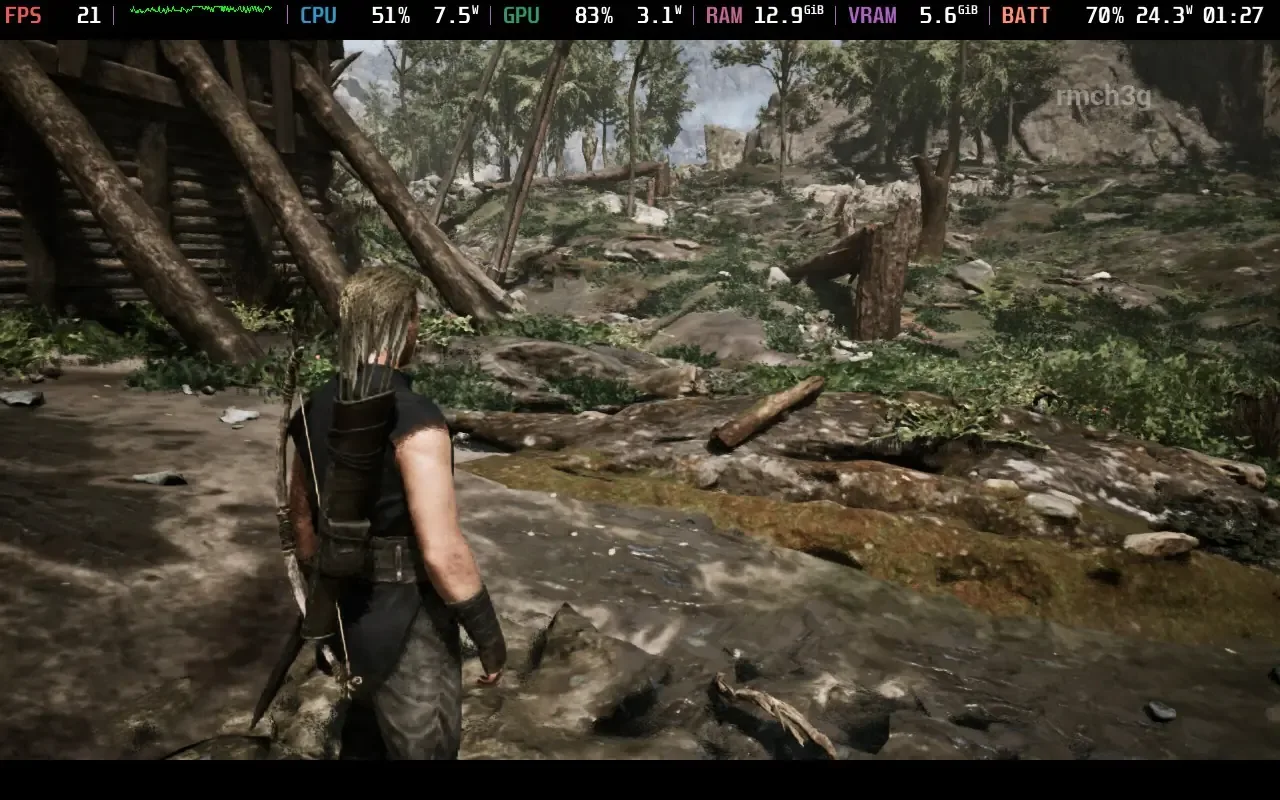
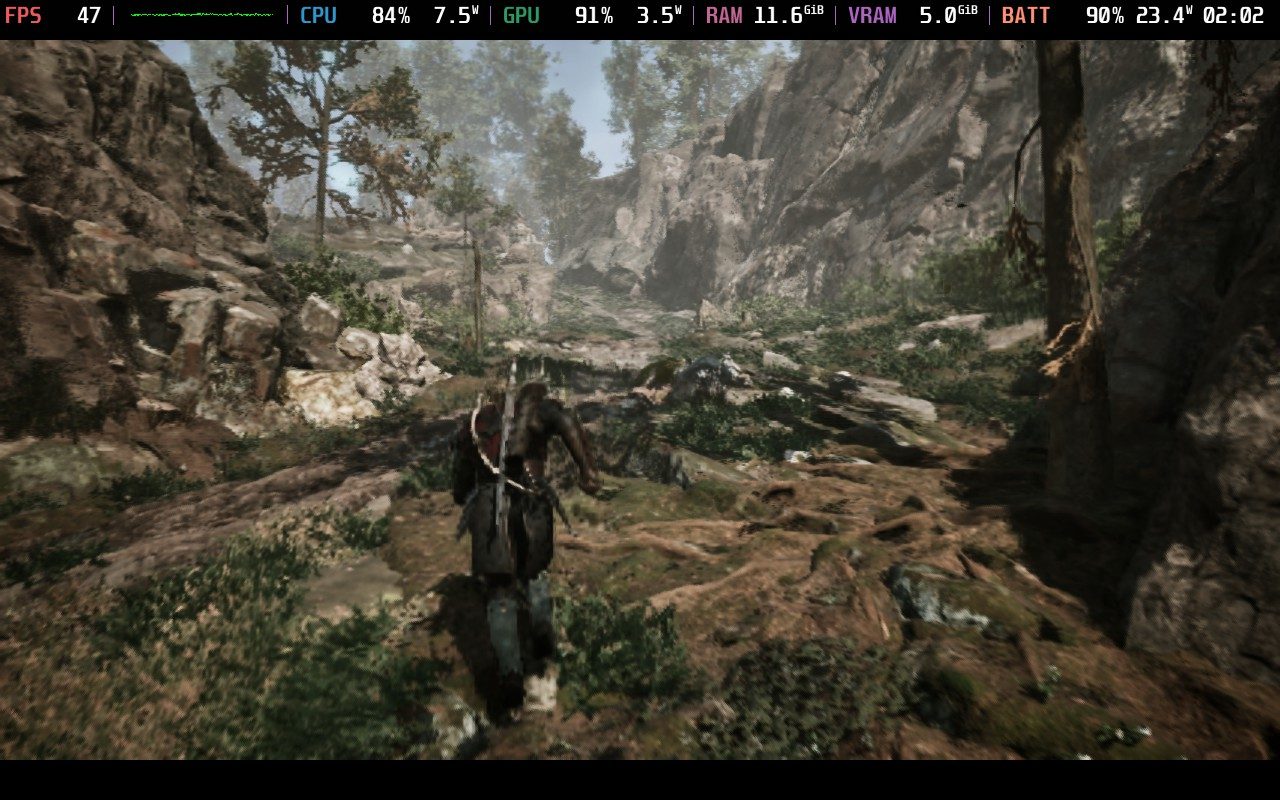
Sadly, all of these results come with every setting pushed to Low and FSR 3.1 set to Ultra Performance. At that point, the visual quality takes a massive hit. The image becomes extremely blurry, hair looks rough, terrain loses a lot of detail, and overall the game simply doesn't look good. In fact, there were moments where I found myself preferring the clarity of the original Gothic over what I was seeing on the Deck.
We also experimented with injecting FSR4 to clean up some of the muddy visuals. While image quality improved, performance took a noticeable hit. Stuttering became more frequent and frame drops were significantly more common, making the overall experience worse.
If you're determined to play Gothic 1 Remake on Steam Deck, I'd recommend using the FSR3.1 Balanced preset instead. The game still won't look great, but it does reduce some of the blurriness. Performance will suffer in crowded camps and towns, but with the in-game frame rate capped at 30 FPS, you can still get a mostly stable experience while exploring the open world.
The current state of the game is best described as "almost playable". The day 1 patch made a huge difference, and the game is no longer the disaster it was during my initial testing. Unfortunately, that's still not enough for me to recommend it. If you have access to a desktop PC, console, or any more powerful hardware, that's absolutely where I would suggest playing Gothic 1 Remake.
Gothic 1 Remake is exactly the kind of RPG I wish we saw more often. It doesn't try to impress you with constant cutscenes or turn you into a hero within the first few hours. Instead, it drops you into a dangerous and punishing world and lets you earn everything yourself. Not every mechanic is great; some systems feel outdated, and there are definitely moments where the game tests your patience. But when everything comes together, the sense of progression and adventure is inescapable.
As for Steam Deck, the game is in a much better state than I initially expected, but I still can't recommend it. The performance is serviceable in some areas, but the visual compromises are simply too severe, and crowded zones continue to struggle. Gothic 1 Remake is a game that deserves to be experienced at its best, and right now, Steam Deck isn't capable of delivering that experience.
この記事を楽しんでいただけたなら、SteamDeckHQ の他のコンテンツもチェックしてみてください!あなたのゲーム体験に役立つゲームレビューやニュースを幅広く取り揃えています。ニュース、ヒントやチュートリアル、ゲーム設定やレビュー、最新のトレンド情報など、あらゆる情報をお届けします。 カバーしています!
Following on from the great LEGO Star Wars: The Skywalker Saga, I had high hopes for LEGO Batman: Legacy of the Dark Knight, and it didn't disappoint. I had a checklist in my mind of things I wanted to see in the new LEGO Batman game, and it checked nearly all of them.
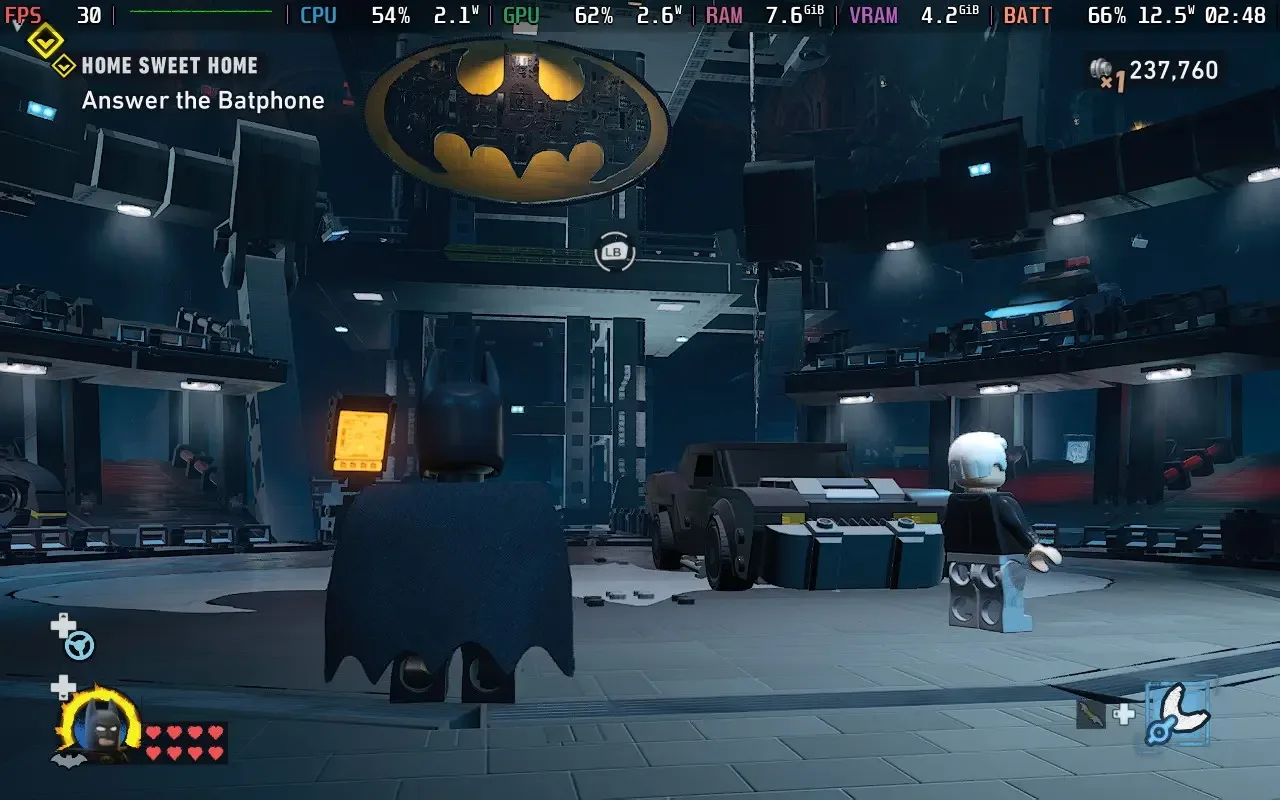
It's always interesting to see how the LEGO games handle the story of the franchise they're taking on. Legacy of the Dark Knight takes some artistic liberties with the retelling of the Dark Knight trilogy. Although the basic plot is largely followed, there are definitely some extras thrown in to pad out the playing time, some lines are kept from the movies, but said by different characters, etc., along with trademark goofs, gags, and references that we've come to expect from LEGO games, and for the most part, they hit the mark to provide a humorous time while still telling the original story.
The limited number of characters available in the Dark Knight trilogy helps to make every character feel unique in the game. Unlike LEGO Star Wars, where there are hundreds of characters separated into "classes" that all do similar things, each character in LEGO Batman has its own set of abilities and combat styles, which make them feel different to play. Batman focuses on stealth gameplay, which works surprisingly well; Catwoman can summon cats to explore vents, and Jim Gordon can use his foam gun to interfere with machinery.
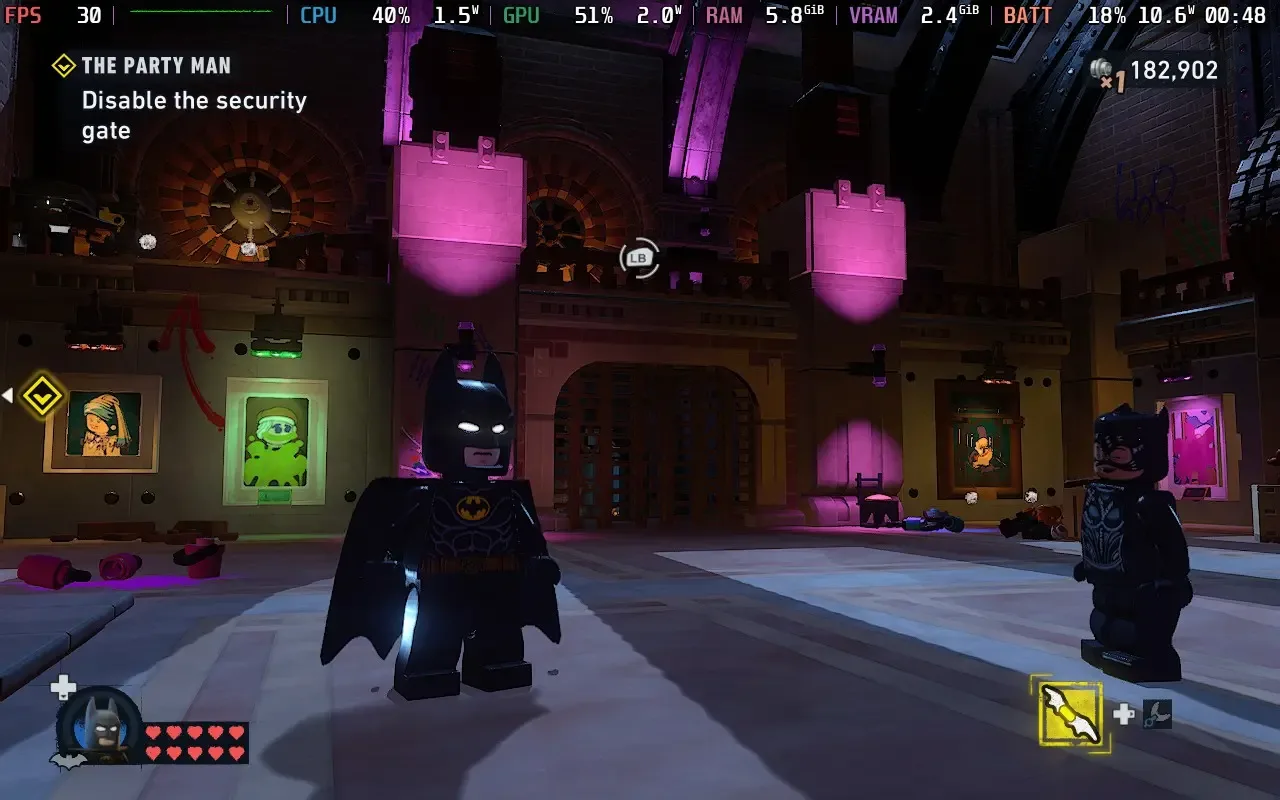
The game's combat is rather basic, as you would expect from a LEGO game, but it's still quite engaging. Beyond mashing the X button to punch the heads off of enemies, you'll also need to keep an eye out for button prompts to counterattack enemies as well as dodge incoming unblockable attacks. It feels like they've taken a couple of cues from Soulslikes, just watered them down to make the game much more accessible.
You also have the addition of a stealth system, which allows you to perform quick takedowns of enemies. If done properly, it can make missions much easier, since being detected can trigger additional enemy spawns. I was worried this wouldn't work well in a LEGO game, but they've done a good job of it here, and it does feel satisfying when you take out a group of criminals without being spotted, very in-keeping with the Batman style.
These changes help to make the combat something more than just button-mashing, and the flow of the combat feels great, with the game auto-locking onto enemies and your character smoothly moving across the screen to land the next punch to the nearest enemy. This avoids the disappointment when a punch doesn't land, and eliminates the need for most of your own movement during fights, allowing us to focus on the action.
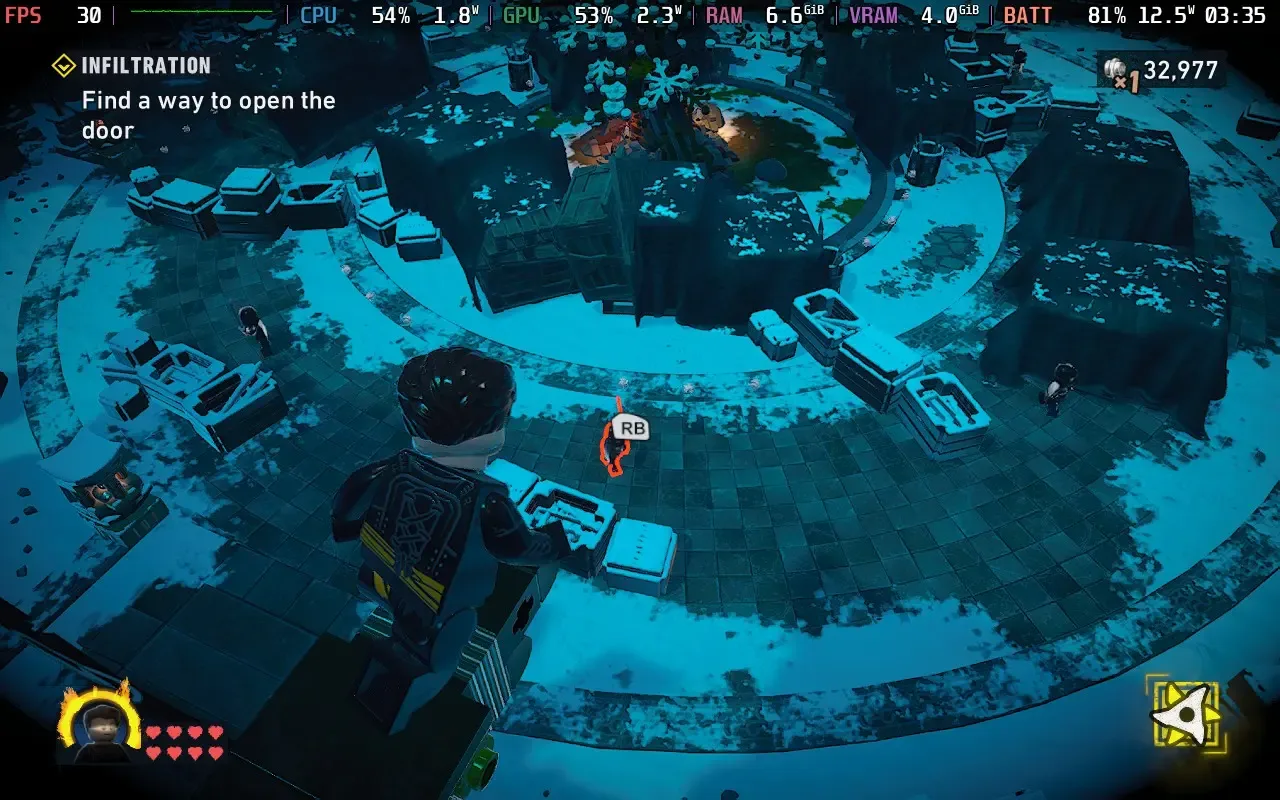
Visually, Legacy of the Dark Knight is quite pleasing. The reflections and rainy streets of Gotham are pulled off surprisingly well for a LEGO title, and the voice acting, while slightly off-kilter compared to the movie's voice actors, captures the general feel of the originals and is decent in its own right.
Being able to explore and drive around Gotham City was a pleasant surprise. I wasn't sure how large the world map would be, given that The Skywalker Saga had many planets with smaller sections, but Gotham City is one sizable map. You'll mostly be gliding or driving around the city to get to your destinations. The driving physics are a little odd, especially certain collision physics that felt very unnatural, but for the most part, it's quite fun to carve a path of destruction on your way to the next mission, or glide along the rooftops to find those sneaky collectibles.
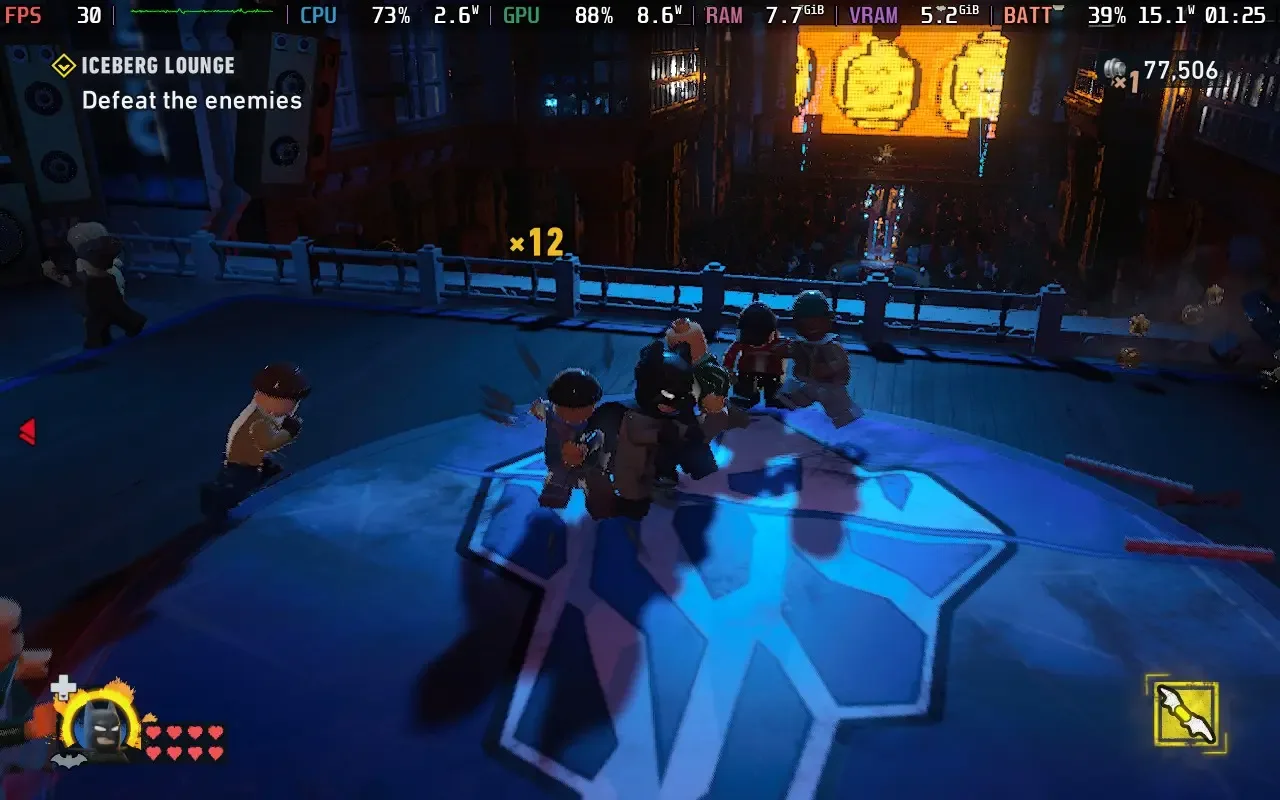
I did try the game briefly in co-op play, which, disappointingly, is still couch co-op only; no online multiplayer here. While it does work well, there are some limitations. The game is permanently split-screen, unlike older shared-screen LEGO titles, which has benefits and drawbacks: it allows for more separation than a shared screen but sacrifices a lot of screen real estate when searching for objects and puzzle solutions.
Vehicles are also oddly limited to only being drivable by the character that owns them, so if you have the Batmobile, for example, only the player playing as Batman can use the vehicle; it seemed like an unnecessary limitation for the game.
I also noticed some issues in this mode. Namely, certain visual elements, such as fog, seemed to display incorrectly on the 2nd player's screen, being too thick or entirely non-existent, and I also encountered an issue where I completely lost control of my character as player 1, requiring a game restart to continue. These issues were not present when playing solo.
LEGO Batman: Legacy of the Dark Knight has great controller support, as you would expect from a LEGO title, and it also supports 16:10 aspect ratios, so we have no black borders around the Steam Deck's display.
Legacy of the Dark Knight defaults to Low settings on the Steam Deck, and we should keep them there, with FSR set to Balanced. I used the SteamOS frame limiter to limit the game to 30 FPS.
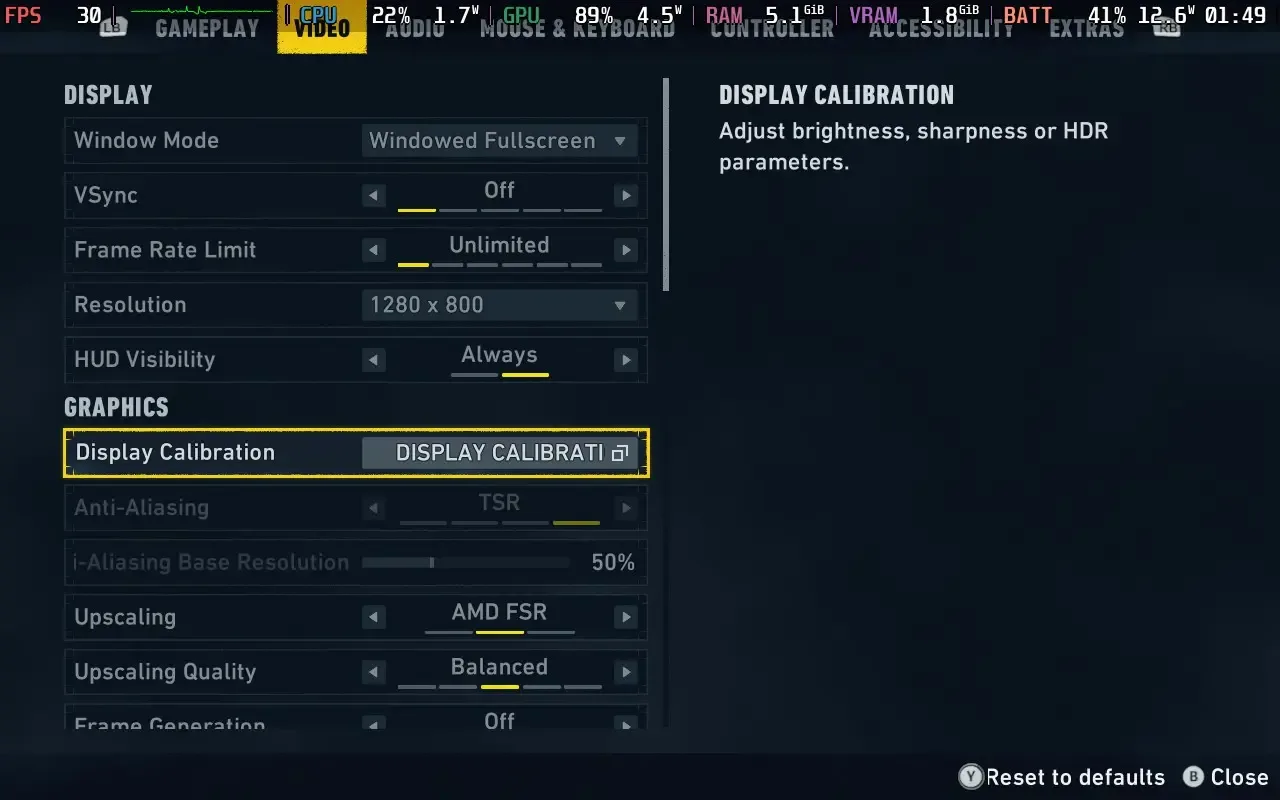
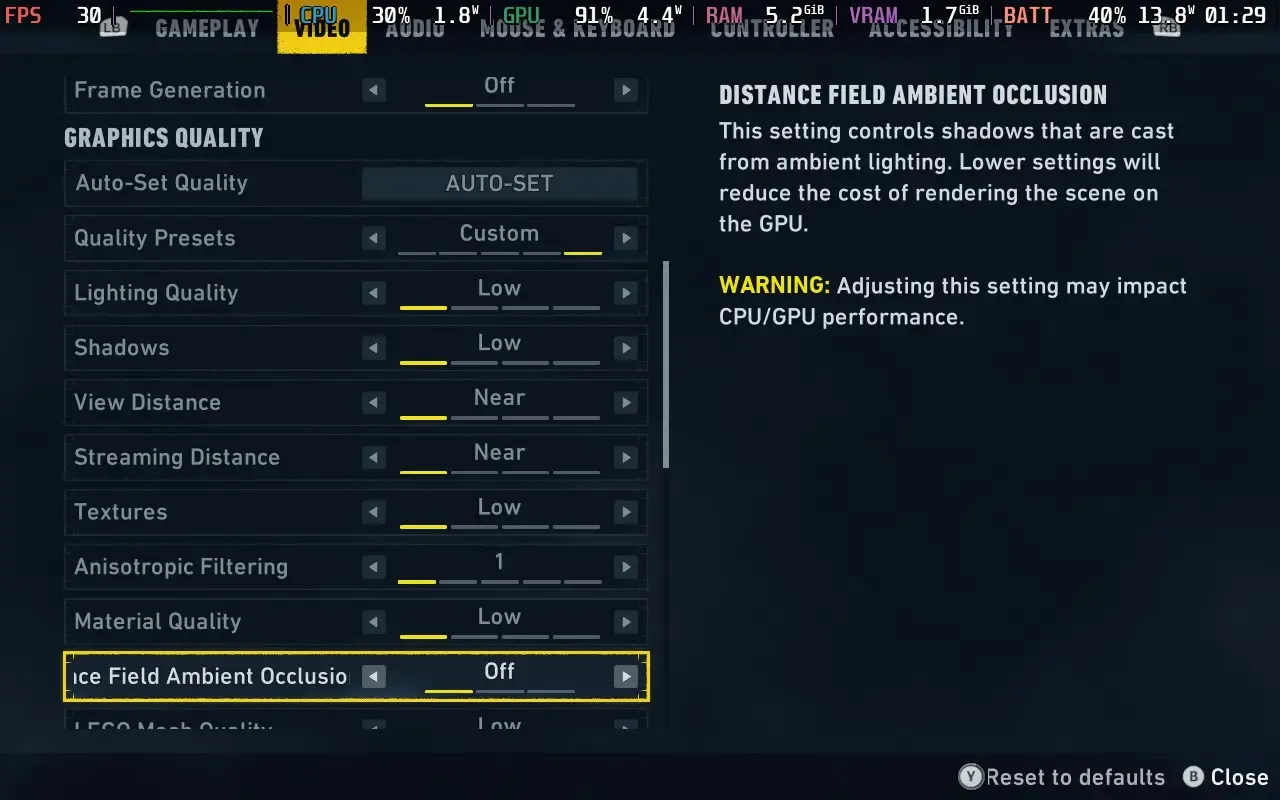
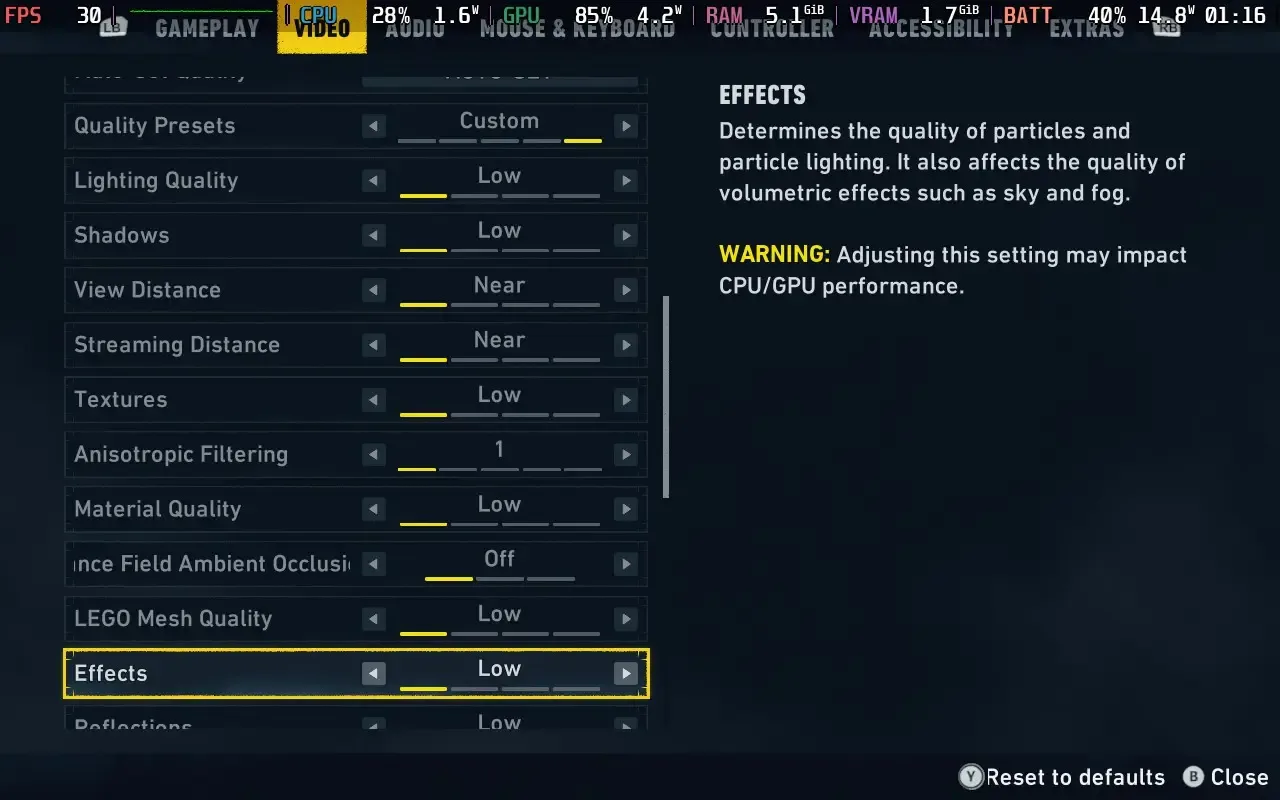
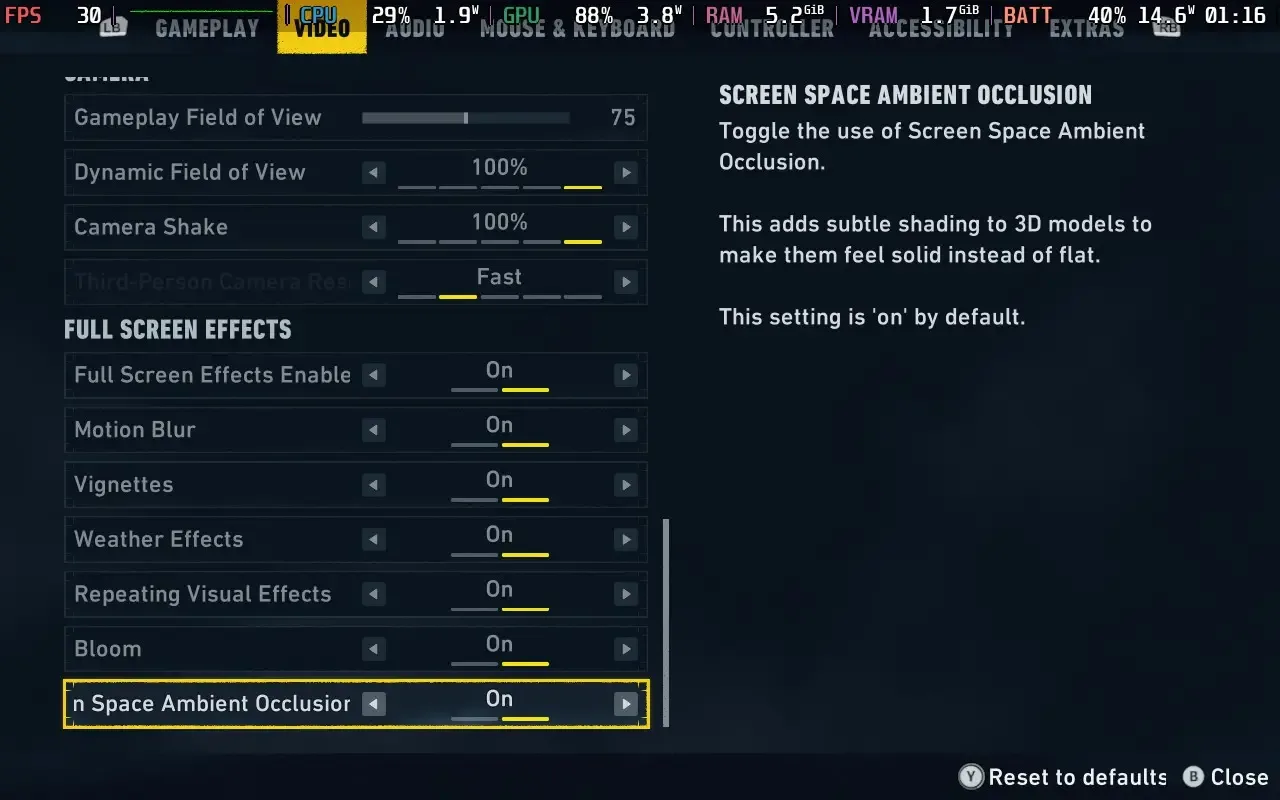
The game largely holds 30 FPS throughout with these settings, even in combat, but do expect the open-world driving portions of the game to dip into the mid-20s. It's still playable, but it may be unpleasant at times.
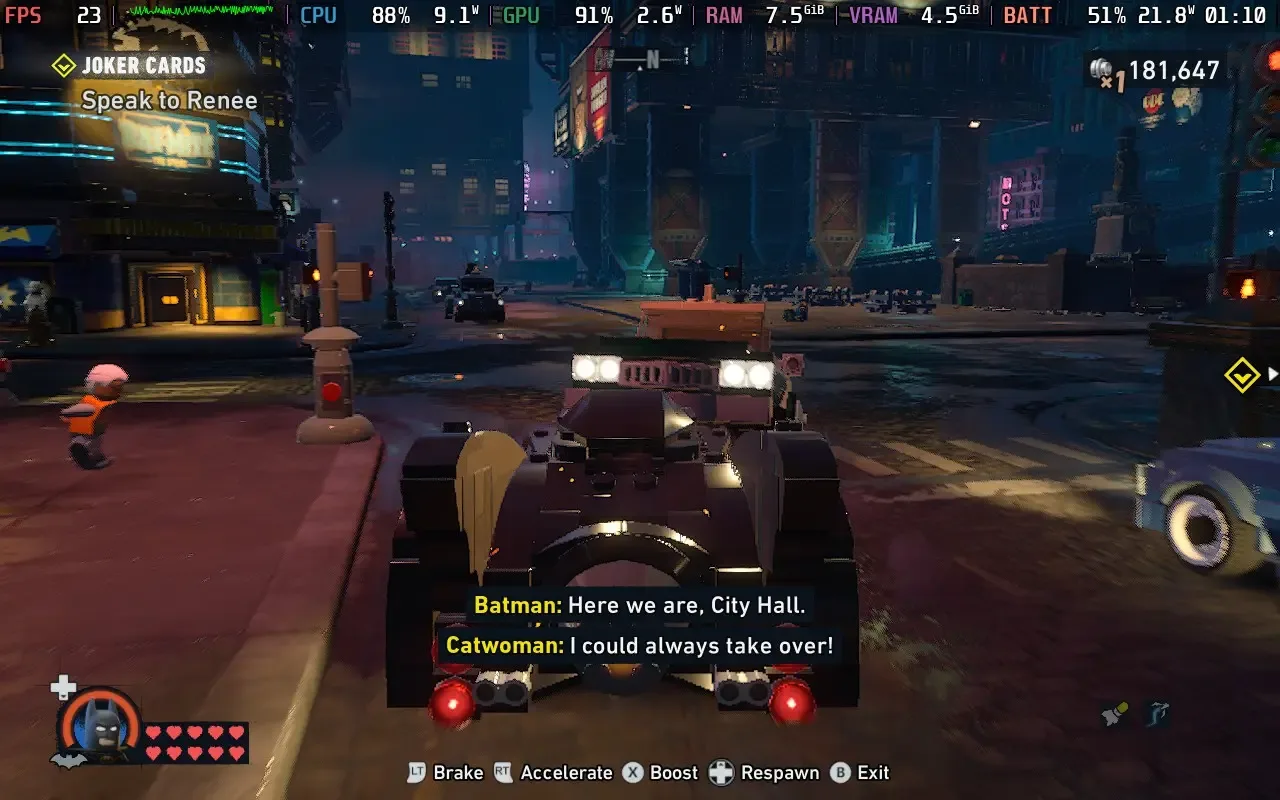
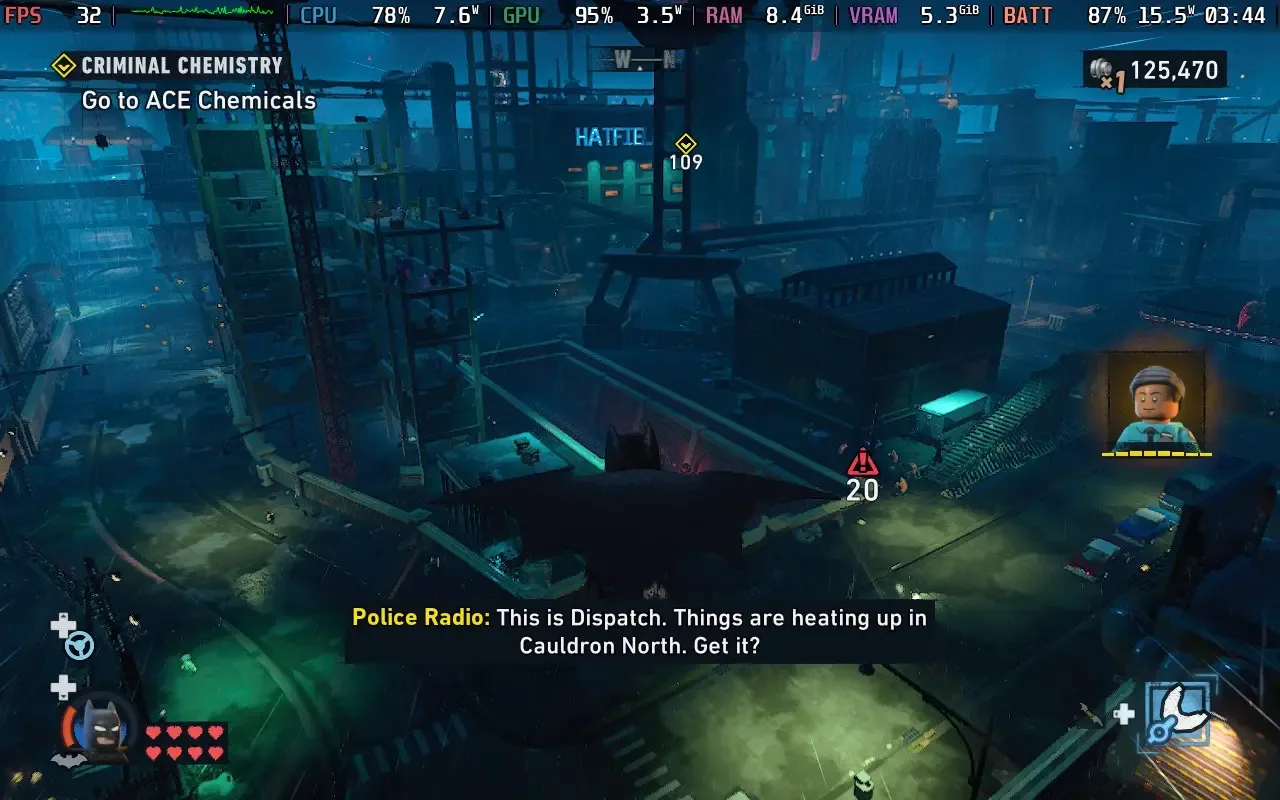
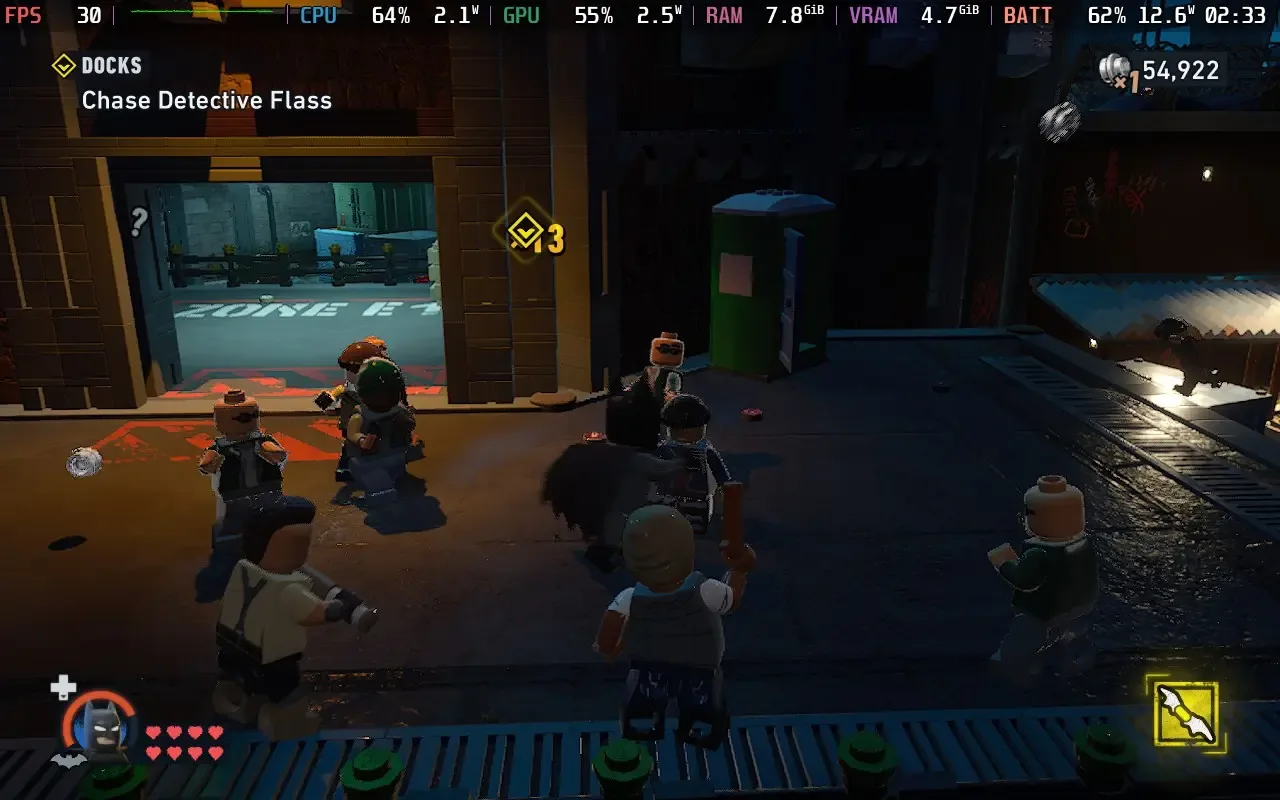
Power draw varies hugely. In indoor areas on foot, expect around 11-15W of drain on the battery; this can leap as high as 18-22W when traversing the city in a vehicle. Expect around 3 hours of battery life from a Steam Deck OLED and around 2 hours from a Steam Deck LCD.
LEGO Batman: Legacy of the Dark Knight allows you to remap controls, adjust the size of text and subtitle text, add closed captions, and lock-on assist.
It also offers options to help with difficulty, such as slowing the game to 50%, not losing studs (currency) on death, and skipping some puzzles and combat.
LEGO Batman: Legacy of the Dark Knight is pretty much what I had hoped for from when I heard the game announced. A humorous retelling of the Dark Knight Trilogy, complete with a sizable recreation of Gotham City filled with collectibles, built-for-fun gameplay, and you can bring a friend along for the ride.
The Steam Deck handles the game quite well for the most part, with an excellent control scheme. Do expect some dips when traversing the city in a vehicle, but by and large, the game remains playable and enjoyable on the handheld.
このレビューはPC版に基づいています。
このレビューをお楽しみいただけたなら、SteamDeckHQ の他のコンテンツもぜひご覧ください!あなたのゲーム体験に役立つゲームレビューやニュースを幅広く取り揃えています。ニュース、ヒントやチュートリアル、ゲーム設定やレビューをお探しの方も、最新のトレンドを知りたい方も、ぜひご利用ください。
Every once in a while, you come across a piece of media that resonates with you for years on end. The emotional impact, countless hours spent absorbing the music, characters, atmosphere; it all comes together to create something uniquely mesmerizing. The kind of experience that makes you silently realize you're deep into one of your favorite games of all time.
Clair Obscur is the very first game from indie studio Sandfall Interactive, and before release, almost nobody expected it to become such a massive hit and dominate award shows the way it has. This small team of 33 passionate French developers delivered something gigantic, and its impact will likely leave a mark on the overall gaming industry for years to come.
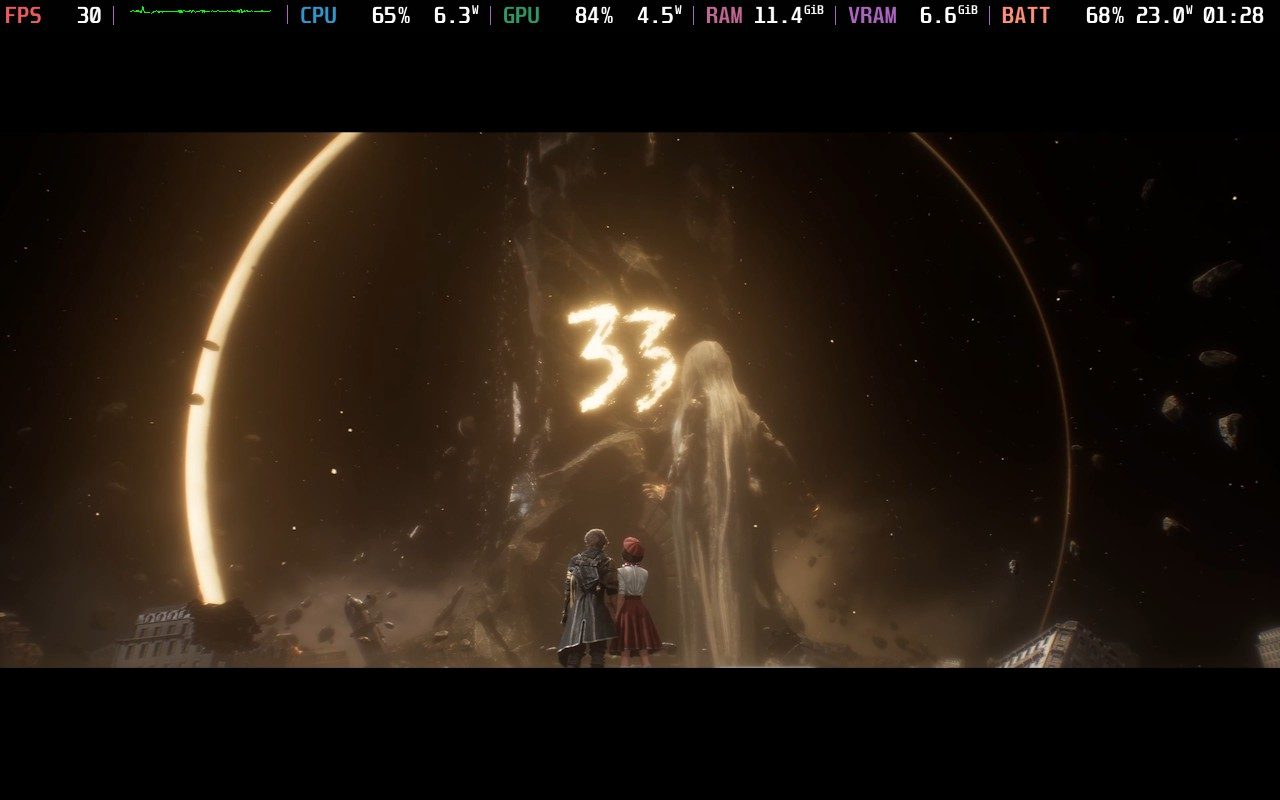
Set in a breathtaking dark fantasy world inspired by the Belle Époque golden age in France, Clair Obscur: Expedition 33 tells the story of a civilization slowly approaching extinction. Every year, a mysterious being known as the Paintress awakens and paints a number upon a massive monolith. Anyone matching that age instantly vanishes without a trace. With the number decreasing year after year, humanity sends an expedition into the unknown each time, hoping to find the Paintress and finally end the cycle. Expedition 33 follows the 67th expedition, a group of people marching toward an almost impossible mission, knowing that their own remaining time is running out. What follows is an emotional and deeply personal journey filled with loss, mystery, and the constant fear of inevitable death.
The story and writing are etched with a level of screenplay and dialogue quality that competes with film classics. Without diving into spoilers, the narrative constantly evolves through multiple emotional and philosophical layers. Much of the experience revolves around mystery, slowly connecting fragmented conversations, hidden meanings, and puzzling dialogue pieces together. That constant feeling of trying to understand the truth behind everything is what made the story so addictive.
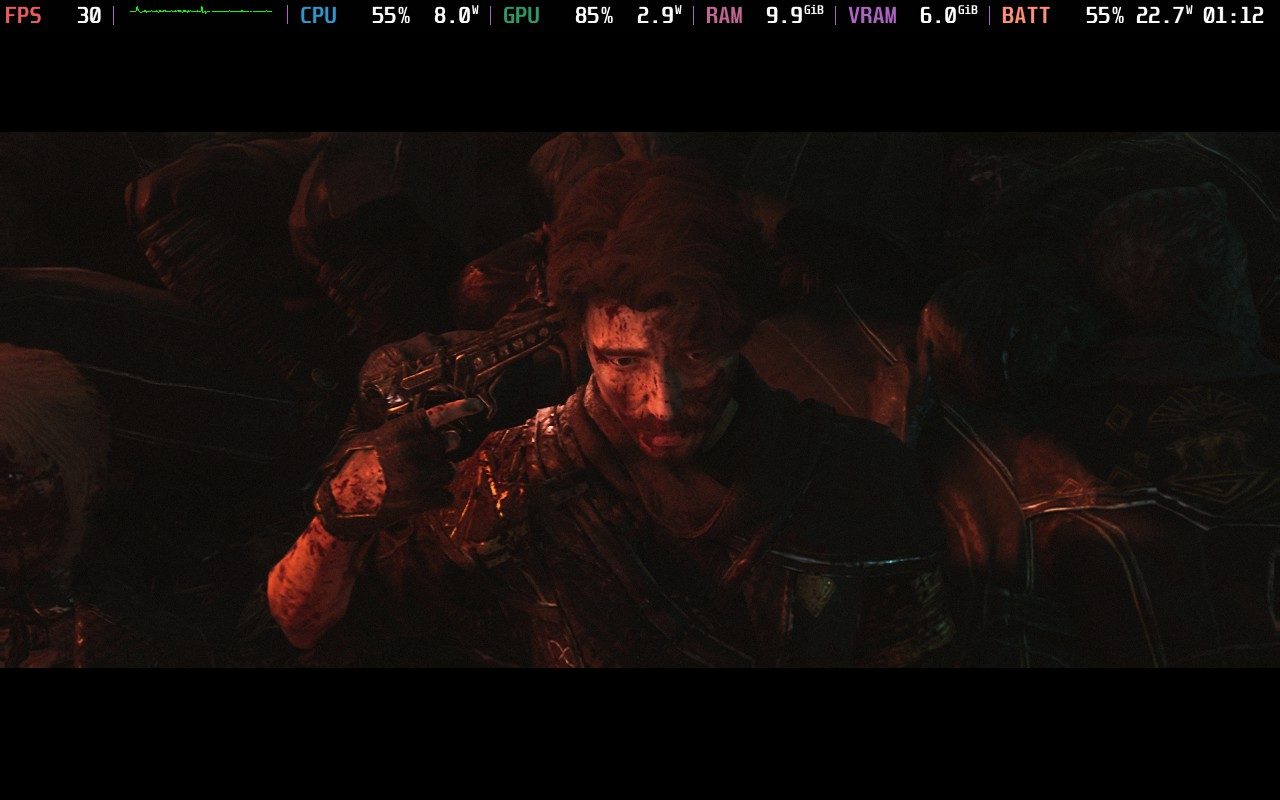
Clair Obscur distinguishes itself from its peers through its characters. From major cast members to side characters you may only speak to once, nearly everyone feels carefully written and memorable. One of the smartest decisions in the script is that no character feels completely devious or maligned. The game masterfully captures the grey areas of humanity, constantly pushing the player to empathize with actions that may be wrong, desperate, or forced by circumstances.
Story and writing are personally the most important aspects of a video game for me. With most games, I usually find myself nitpicking certain flaws or decisions I didn’t fully like. But in Expedition 33’s case, I genuinely struggle to think of anything I would change. The writing quality throughout the experience is nothing short of masterful. It made me cry, laugh, reflect, and constantly kept me emotionally invested from beginning to end. It was a complete rollercoaster of emotions.
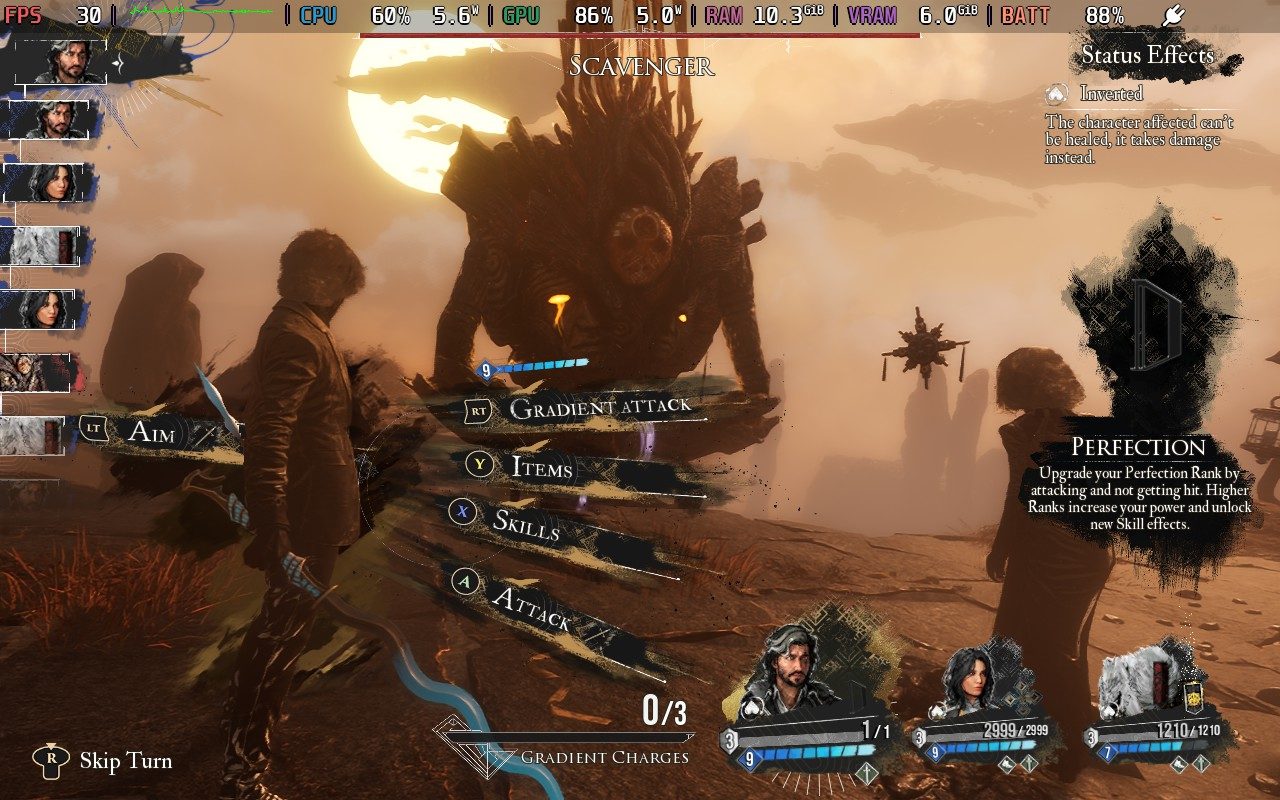
When it comes to gameplay, my favorite way of describing Expedition 33 is “the best of both worlds.” The combat system feels like a near-perfect blend of classic turn-based Final Fantasy combat and the reaction-based defensive mechanics of Souls-like games such as Sekiro: Shadows Die Twice. While adding active reaction mechanics into turn-based games is not an entirely new concept, Expedition 33 is in a class of its own.
At first glance, combat starts like a traditional turn-based RPG. You build a party with different characters, unique strengths, playstyles, and skill combinations, carefully strategizing your way through encounters. However, once enemies begin attacking, the game transforms into something far more interactive. You can dodge, parry, or jump over attacks entirely through player reaction and timing.
Parrying, in particular, becomes one of the most satisfying mechanics in the game. It is extremely difficult to master, but also incredibly rewarding. Every successful parry grants AP, allowing you to build resources even while defending. Perfectly parrying entire enemy combos triggers devastating counterattacks that feel impactful every time. After hundreds of hours of gameplay, landing a full counter never stops being satisfying.
There are a total of six playable characters in the game, and each of them feels both unique and surprisingly deep mechanically. Each character introduces their own gameplay system and combat identity. For example, Lune functions as a mage who utilizes elemental “Stains” to create different effects and empower specific abilities, while Sciel fights using a card-based system that grants buffs, applies debuffs, and shifts her between different combat stances and modes.
The game also includes a character inspired by the classic “Blue Mage” archetype from Final Fantasy, allowing you to collect enemy abilities and use their own attacks against them. The amount of combat variety and combo potential across the cast is nuanced and contributes to the game's overall atmosphere.
On top of the turn-based combat, the game features a Free Aim system that feels like a small third-person shooter mechanic. You can manually target enemy weak points, interrupt attacks, or trigger special interactions during battle. What makes it even more impressive is how deeply this mechanic can be integrated into character builds. You can fully specialize certain characters around Free Aim and essentially turn them into machine gun-style damage weapons that seem to draw inspiration from first-person shooters. The sheer amount of build variety gives the combat system an unforeseen level of replayability and experimentation.
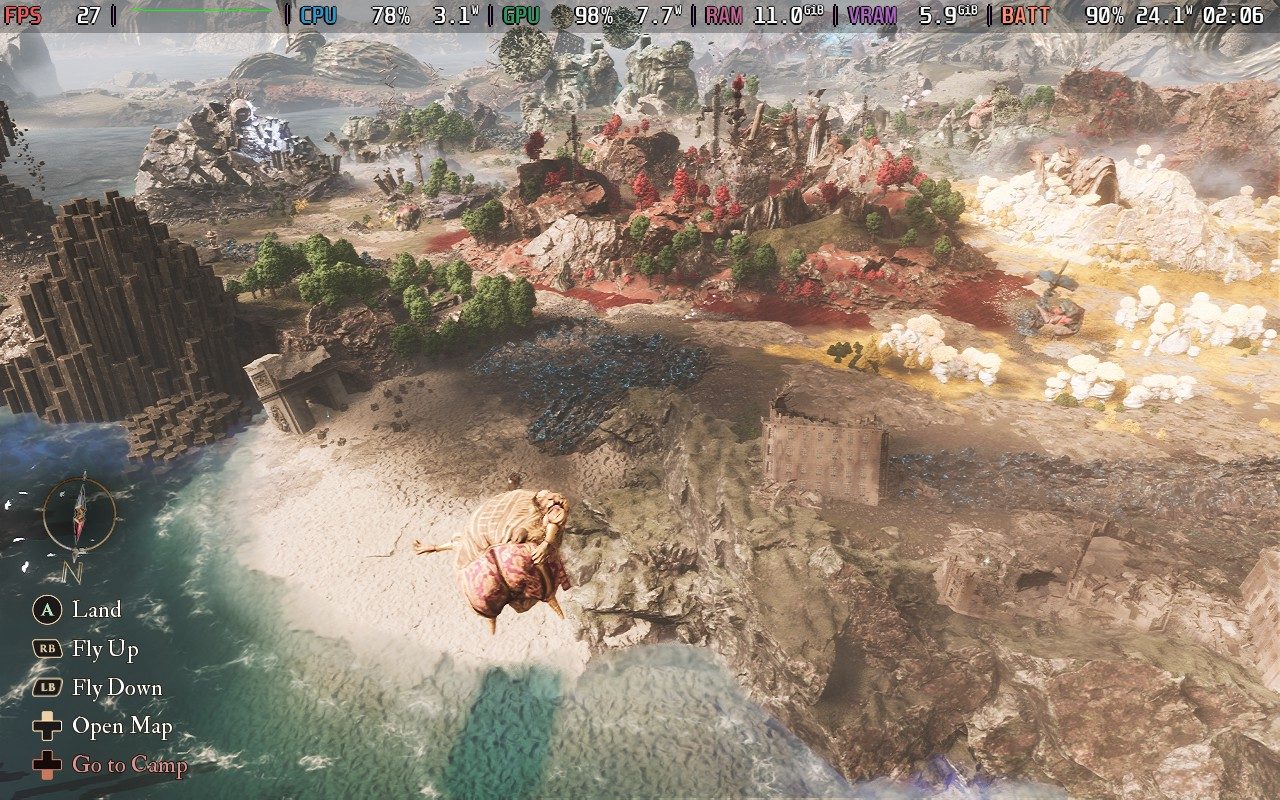
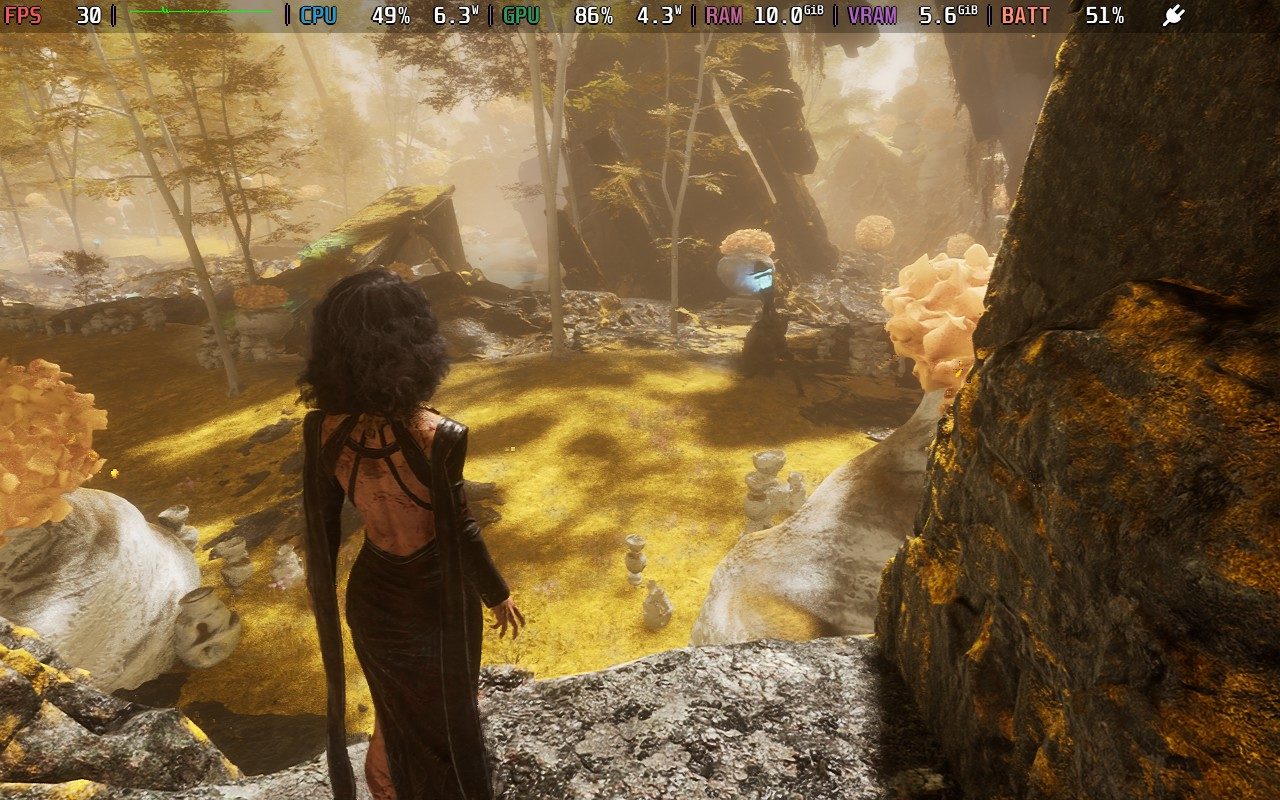
Clair Obscur: Expedition 33 uses a unique world structure that blends open exploration with more focused level design. While there is a large overworld where you can freely travel, fight optional bosses, discover loot, and unlock side activities, the main gameplay loop revolves around the game’s individual locations.
These locations function almost like large dungeon-style areas with semi-open layouts. They are filled with enemies, platforming sections, hidden paths, optional encounters, shortcuts, puzzles, and combat challenges, all of which constantly reward exploration. Each area is mechanically distinct, introducing new enemy combinations, traversal ideas, and gameplay scenarios rather than repeating the same structure over and over.
By avoiding the typical “open world checklist” design, the game becomes more enjoyable. Exploration feels focused and gameplay-driven rather than bloated, keeping a strong pace throughout the entire experience.
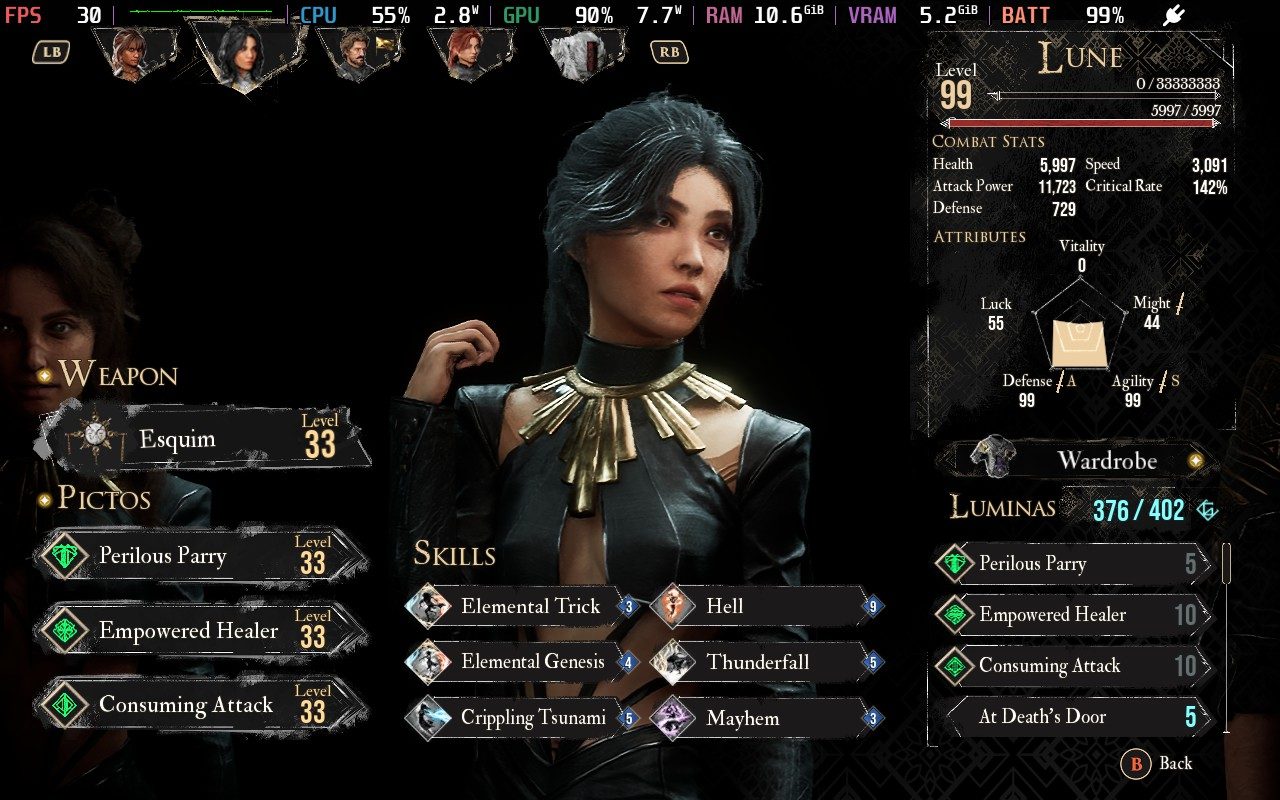
At first glance, character progression looks deceptively simple. You level up your characters, improve stats, unlock new skills, and equip stronger gear, much like you would in a traditional RPG. However, the game's real depth comes from its Picto and Lumina systems.
Pictos are special equipment pieces that not only provide stats but also unique passive abilities that can drastically change your playstyle. The clever part is that after winning four battles with a Picto equipped, its passive ability is permanently unlocked as a “Lumina.” Once unlocked, you can equip that passive separately without needing to keep the original Picto on your character, essentially letting you stack and combine countless different effects together.
Throughout the game, you constantly collect Lumina points that expand your Lumina capacity, allowing for increasingly powerful and creative builds. The feeling of gradually becoming stronger is satisfying, especially because the system constantly rewards experimentation.
There are well over a hundred different Pictos for Luminas in the game, creating an enormous amount of specialized build variety. Even after reaching the level cap for your characters, weapons, and equipment, you can continue farming Lumina points to further improve your builds. This progression system adds a huge amount of replayability, especially for New Game Plus runs where you can experiment with entirely different playstyles and absurdly powerful combinations.
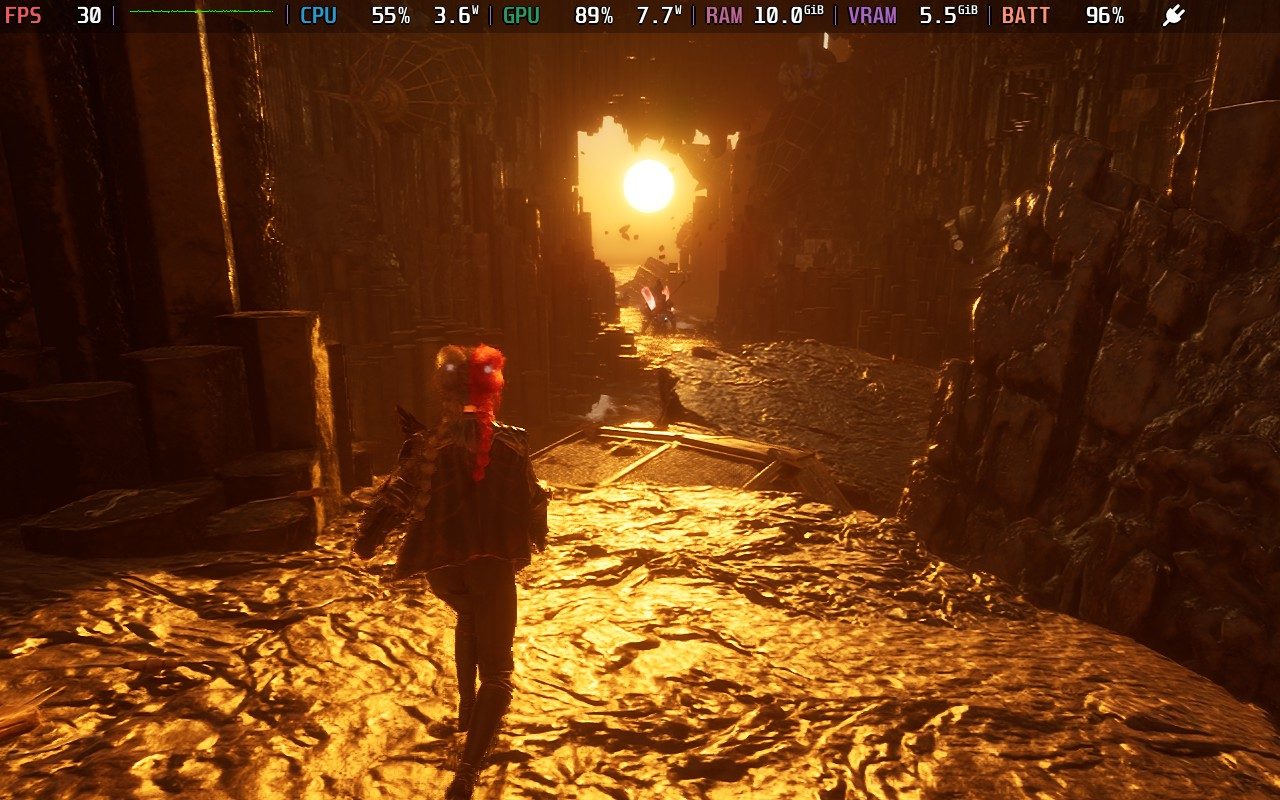
At first glance, the graphical quality in Expedition 33 may seem like a fairly standard Unreal Engine 5 presentation with solid but familiar texture work. What elevates the visuals is the incredible attention to atmosphere, particle effects, lighting, and artistic direction. Nearly every area in the game feels as if it were pulled from a painting, constantly presenting the player with unique visual themes and memorable scenery.
The game makes extremely smart use of cinematic techniques such as depth of field, lighting contrast, fog, and environmental effects to enhance the overall presentation. Rather than forcing realism through an enormous budget, Expedition 33 uses its artistic strengths intelligently, often masking technical limitations in ways that feel almost magical. The result is a game that looks breathtaking despite being developed by a relatively small team.
The cinematic presentation quality is so good that some scenes feel closer to watching a professionally edited, scripted movie than to playing a video game developed by a small team in France. And thanks to the talented motion capture performers and the game’s strong directorial vision, the cinematics become far more emotionally immersive than most RPGs. The facial animations, body language, camera work, and performances all come together brilliantly, making the visual presentation during story moments pull you deeper into the experience and make even simple conversations feel impactful.
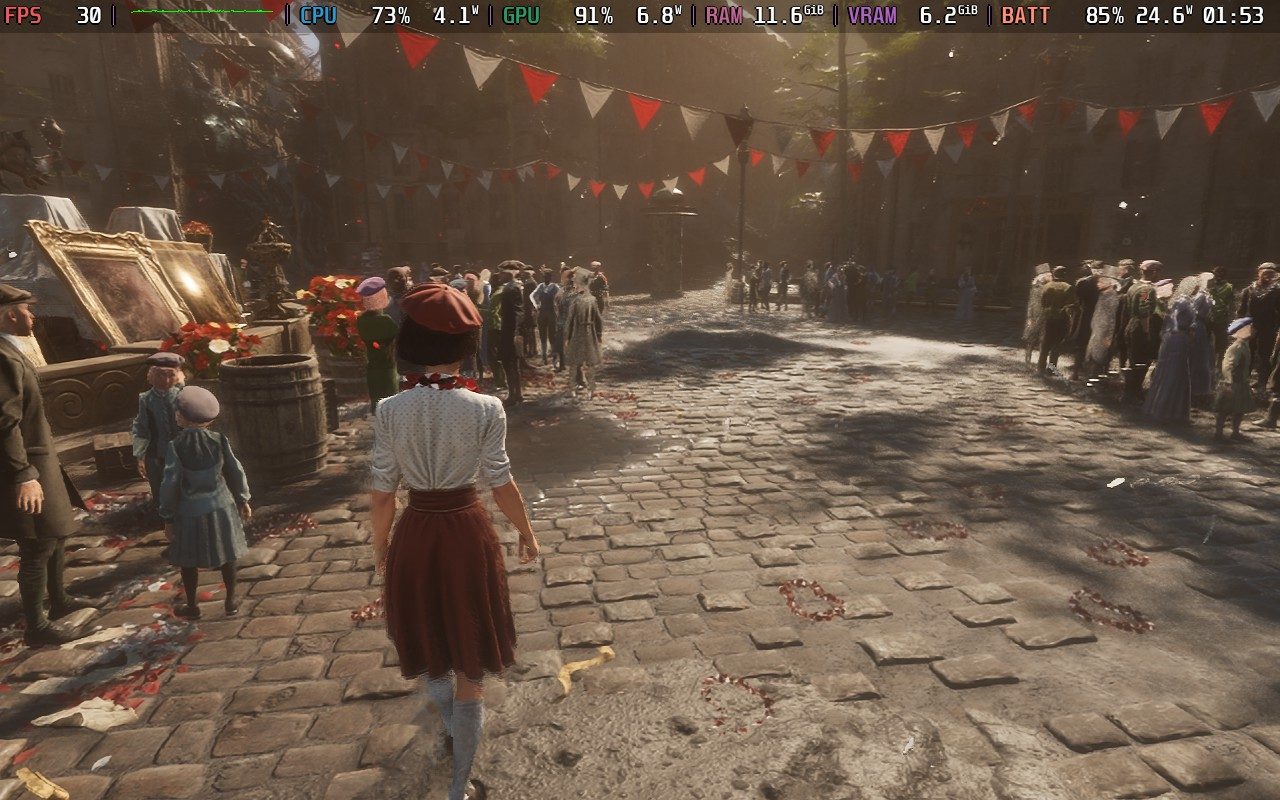
The only noticeable technical issue I found was with the character models. Both important story characters and random NPCs can sometimes look a little too similar facially, making it fairly obvious that many of them share very similar base models underneath their designs.
While this is ultimately a minor complaint, it can occasionally diminish immersion and create unintended confusion during certain scenes. At times, I found myself wondering whether a character was intentionally connected to another, related somehow, or part of a future reveal, simply because some faces looked so similar. It’s one of the few areas where the game’s smaller budget becomes slightly more noticeable.
Also, the aggressive use of depth of field causes some blurriness issues. On hair, it causes an effect that looks a little bit underwhelming. But other than that, the game looks absolutely gorgeous.
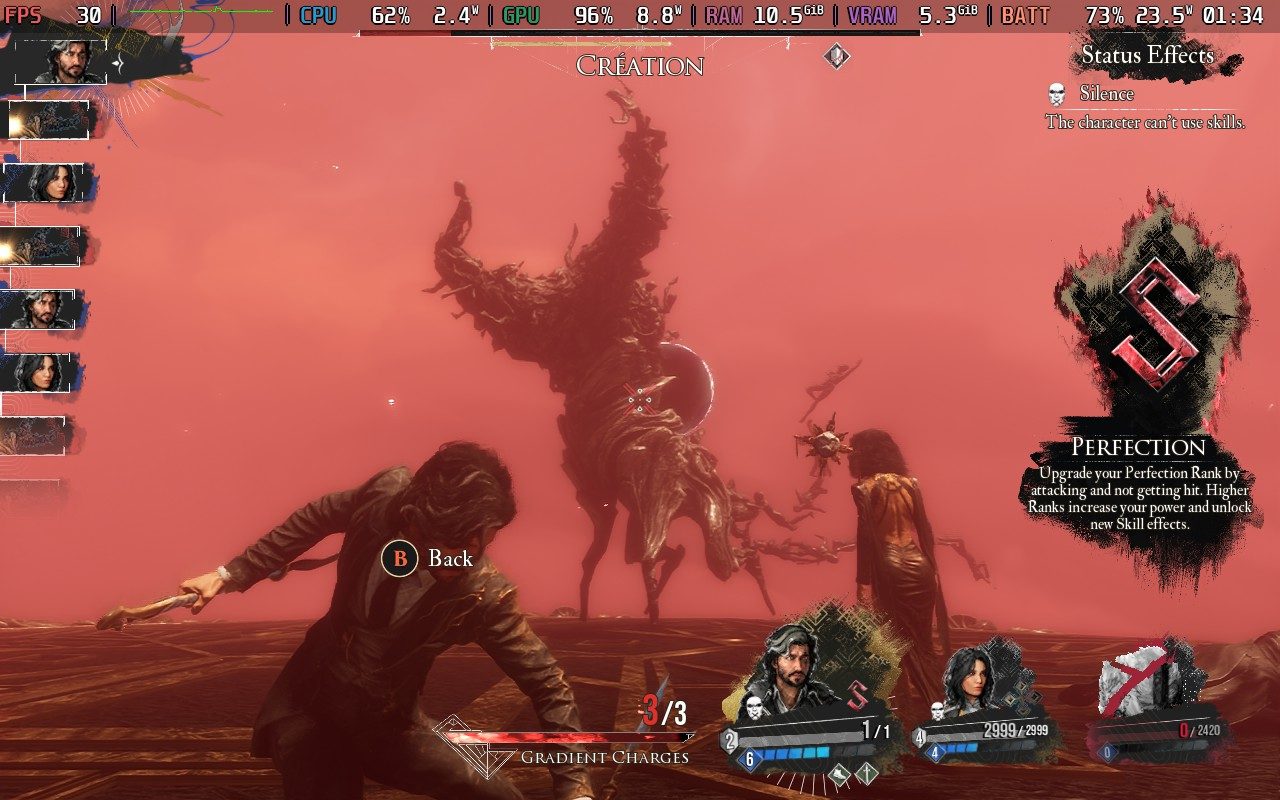
Music... music... music... I seriously don’t even know what to say here. I feel unqualified trying to review Lorien Testard’s work because the soundtrack is simply awe-inducing. With 154 different tracks, this is easily one of the most robust soundtracks I’ve ever heard in a video game.
The differentiation is insane. Some tracks are emotional and melancholic, some are peaceful and atmospheric, while others suddenly turn into intense boss themes that make fights feel ten times more impactful.
What makes it even more special is how memorable everything is. Hours after playing, I still had multiple tracks randomly stuck in my head. The music carries so many emotional scenes and elevates the entire experience constantly. There were moments where I just stopped moving for a minute and listened to the sounds coming through my speakers.
Sound design and voice acting, as presented, are top-tier. The impact and feedback during combat feel incredible, especially when it comes to parries and powerful skills. Every hit, counter, explosion, and attack has this heavy, satisfying feeling to it that makes combat even more addictive.
Voice acting is fantastic across the entire cast as well, with emotional scenes feeling natural and believable instead of overly dramatic or forced. Honestly, the entire sound package, from music to effects to performances, is a work of art.
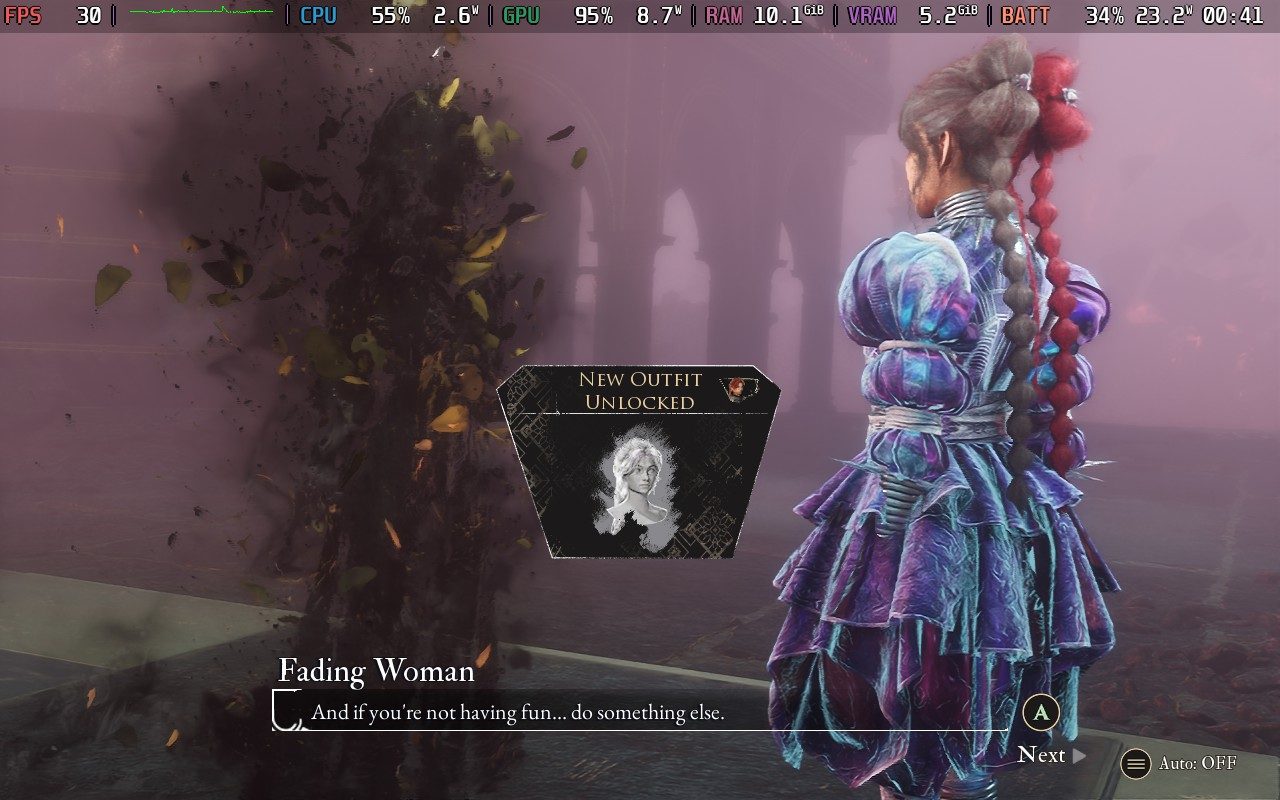
I want to start with a small disclaimer here. If you simply download the game and play it using the default “Verified” settings, you are honestly going to have a pretty terrible experience. Out of the box, the game uses heavily restricted settings that look extremely blurry, suffer from unstable performance, and introduce noticeable input delay due to the uncapped fluctuating frame rate.
By default, the game does not properly allow you to lock the frame rate, meaning performance constantly jumps around between 30 and 50 FPS, depending on the area. In most games, this would already be annoying, but in a reaction and parry-heavy game like Expedition 33, inconsistent frame pacing actively hurts gameplay.
Thankfully, there is an easy workaround. By adding:
SteamDeck=0 %command%
into the Steam launch options, you can bypass the game’s restricted Steam Deck preset and gain full access to the graphics settings menu, including proper frame rate limiting options. This alone massively improves the experience and immediately makes combat feel far more responsive.
The second thing I highly recommend doing is injecting an FSR 4 file. Thankfully, this process is extremely simple and dramatically improves image quality without heavily impacting performance. There are multiple ways of doing it, but the easiest method is downloading the amd_fidelityfx_upscaler_dx12.dll file directly from AMD’s official files and replace the existing one through Desktop Mode.
Once both of these tweaks are applied, the visual difference is shocking. The game transforms from a blurry, unstable mess into one of the sharpest and most visually impressive games available on Steam Deck. Here’s a comparison between the default FSR 3.1 implementation and FSR 4 running on the Performance preset.
Once properly configured, the game manages to hold a surprisingly stable and responsive 30 FPS lock on Steam Deck for the vast majority of the experience. Around 99% of gameplay feels smooth and consistent, which is extremely important for a reaction-heavy combat system like this one.
There are a few exceptions. Some larger open-world sections and certain chaotic 3v3 encounters can occasionally dip into the 24-27 FPS range, but these drops are relatively minor and rarely occur during actual gameplay. Overall, the experience still feels very comfortable and responsive on the Deck.
There is little visual sacrifice made while using lower settings. Even on desktop hardware, the difference between the lowest and highest presets is surprisingly subtle in many areas. Thanks to the game’s creative use of art direction and lighting, Expedition 33 still looks absolutely gorgeous on Steam Deck despite running on the lowest available settings.
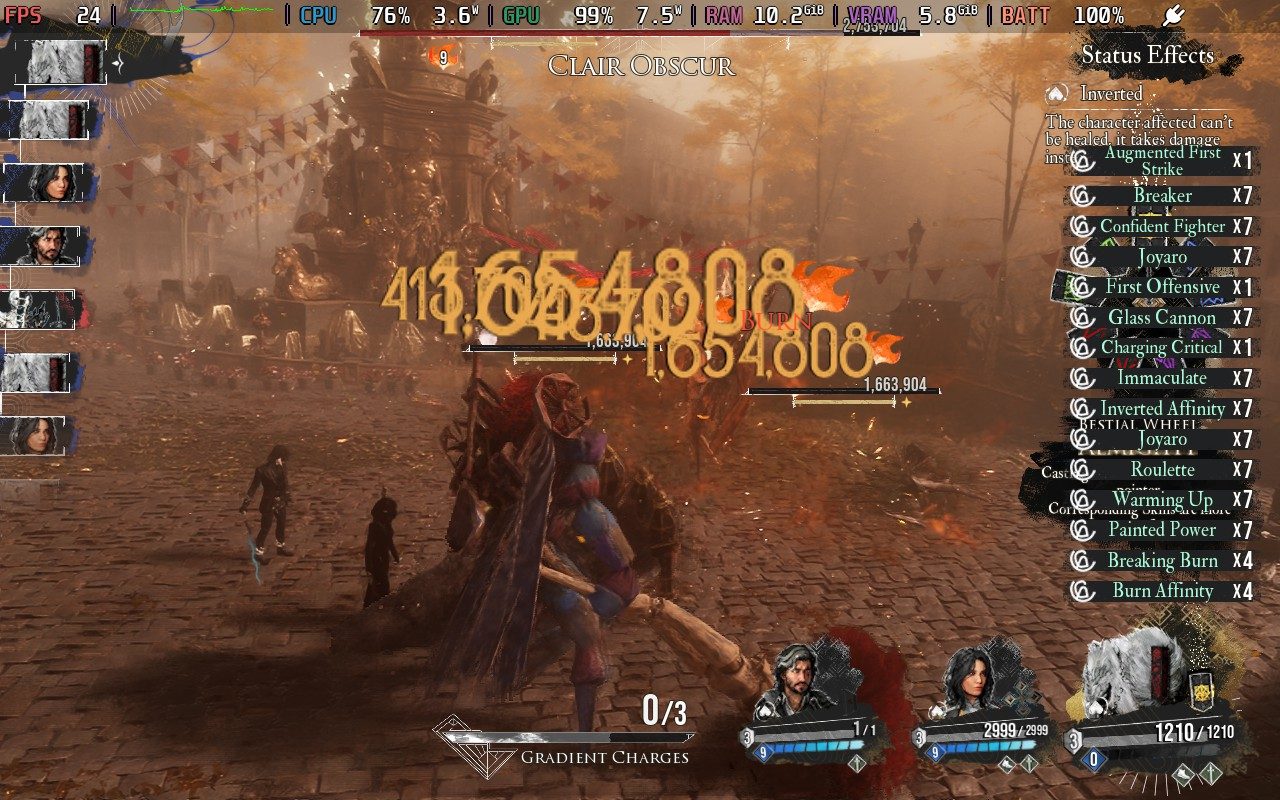
Clair Obscur: Expedition 33 is one of the rare games that reminds me why I fell in love with video games in the first place. Between its masterfully written story, unforgettable characters, addictive combat system, incredible soundtrack, and beautiful artistic vision, this is an experience that will stay with you long after the credits roll.
On Steam Deck, the experience is also far better than the default settings initially suggest. While the out-of-the-box “Verified” profile is disappointing, a few simple tweaks transform the game into a surprisingly stable and visually stunning handheld experience.
It feels surreal that this is the very first game from Sandfall Interactive. If this is what the studio is capable of on their debut title, I cannot wait to see what they create next. Clair Obscur: Expedition 33 is not just one of the best RPGs I’ve played in years. It is probably the best game I've ever played, period.
このレビューはPC版に基づいています。
このレビューをお楽しみいただけたなら、SteamDeckHQ の他のコンテンツもぜひご覧ください!あなたのゲーム体験に役立つゲームレビューやニュースを幅広く取り揃えています。ニュース、ヒントやチュートリアル、ゲーム設定やレビューをお探しの方も、最新のトレンドを知りたい方も、ぜひご利用ください。
Forza Horizon 6 was provided by Xbox Game Studios for review. Thank you!
After an excruciating 5-year wait, the Forza Horizon series is back, and Playground Games has chosen the most anticipated location yet for this adventure: Japan.
With the bright lights of Tokyo, the narrow streets of sleepy villages, twisting mountain roads, and beautiful forests, the world of Forza Horizon 6 is the most varied environment in a Forza Horizon game to date. Slap a massive festival site in the middle of it all, and we're back to racing!
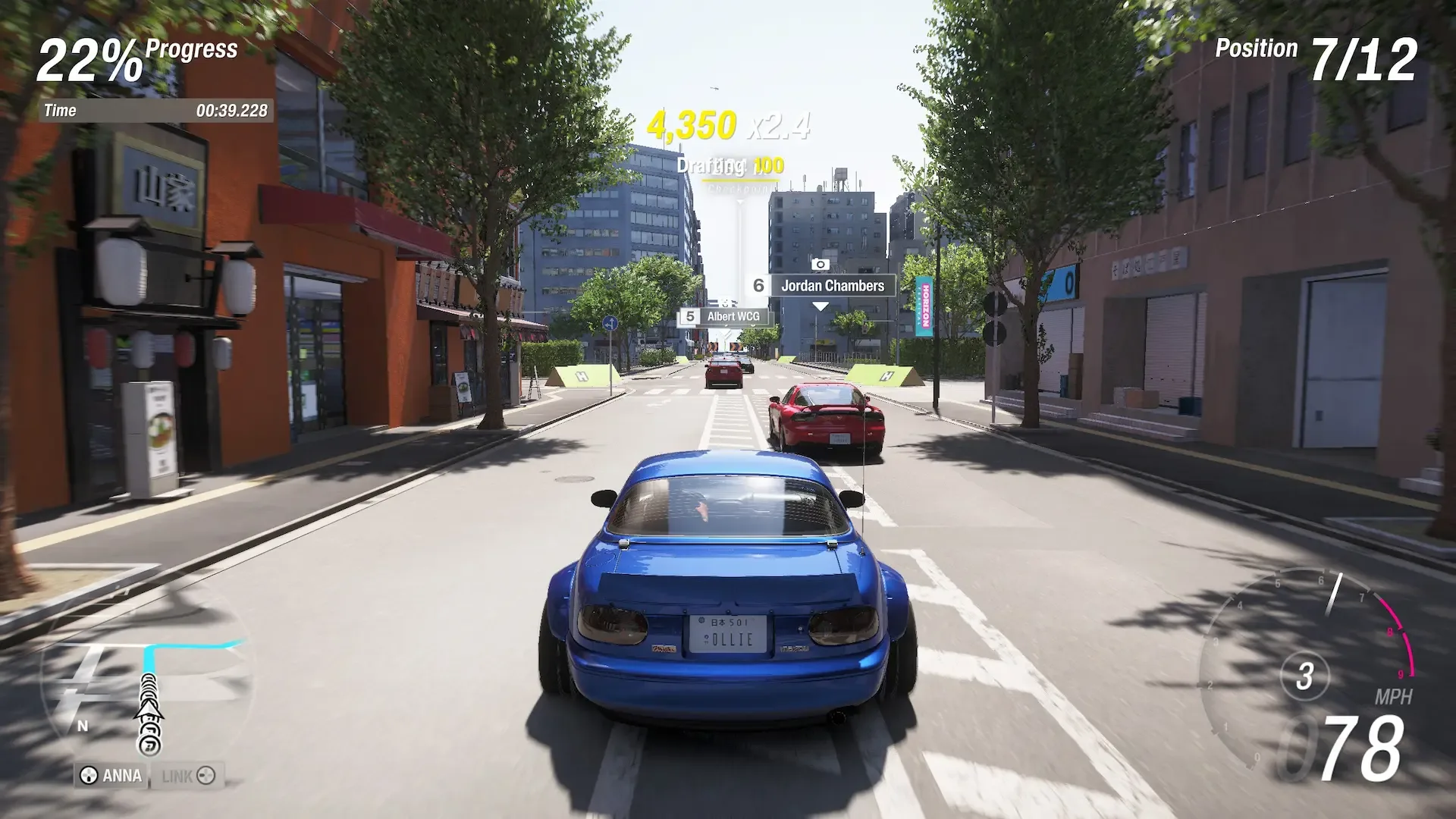
Forza Horizon 6 plays it safe with its gameplay formula. If you've played any of the Forza Horizon games, this will be a familiar format. You have your various race events, such as dirt, road, and cross-country. Then you have your speed traps, drift zones, and danger signs to keep you busy while you explore the map, as well as the ever-popular collectibles, in the form of boards and mascots.
This is all unchanged, aside from a couple of additions and returning features, such as Car Meets, which reappear for the first time since Forza Horizon 3, where you can gather with your lobby and check out other people's rides, and Touge racing, where you'll race on tight mountain roads in a 1V1. Just don't expect anything too new and surprising with what Forza Horizon 6 offers. There is also a neat feature where you can find cars for sale around the map, allowing you to pick up rare bargains, in addition to Barn Finds and "Treasure Cars", which are hidden in the world.
Car physics are likewise unchanged; it embraces the same "simcade" style of previous games, offering a degree of realism while also allowing you to drive through pretty much everything that isn't a building. This is exaggerated even more in Forza Horizon 6, as even trees can now be driven through, which is a good thing, as I'll point out later. Fun is the order of the day here, and the game delivers on that as well as the previous iterations have done.
The "story" is pretty identical to previous entries. You'll gain progress in the form of Wristbands through completing events and challenges. To earn a Wristband, you'll need to unlock and then beat a special event, either a Horizon Rush event, which is a time trial on specially-made tracks, or a "Showcase" event, where you'll race against another type of vehicle, much the same as previous Horizon games, such as a Gundam or, I presume, a C-130 cargo plane.
Exploration is still fun and rewarding, and it's perfect when you just want to drive around in your favorite car without the hassle of racing. The world map I found to be more interesting than the previous foray into Mexico, which never really grabbed me.
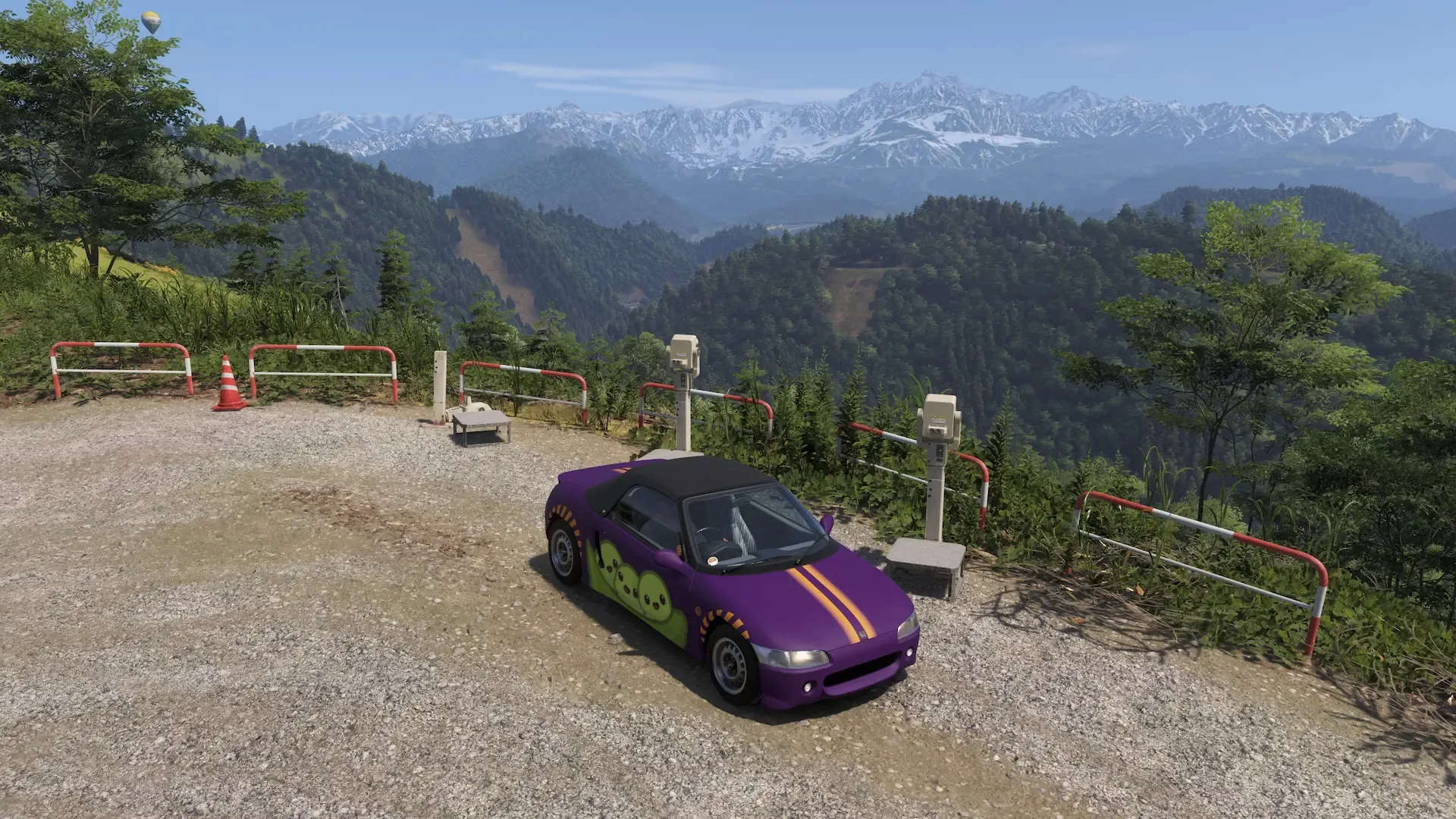
Visually, Forza Horizon 6 impresses in its environment. The density of flora is striking, with plenty of forests and dense undergrowth foliage present; it really helps to bring the depiction of Japan to life. And as I said, it's a good thing we can now drive through any tree, given the sheer volume of them.
The depiction of Tokyo city itself I found to be less enticing. I was looking forward to blasting through a big city, with bright, vibrant neon lights shining on rain-soaked streets, but, to be honest, it all ended up looking a little... flat. Whether it's the cooler temperature grade applied to the screen compared to Forza Horizon 5's Mexico, or the fact that there's often no sunshine in Horizon 6 due to the frequently overcast Japan, the world does sometimes feel a little... bland.
The game excels when you're out in the rural areas, enjoying the forests and quaint villages that line the twisting country and mountain roads, and then up to the ski slopes in the far north for some rallying. The city ends up feeling cold and ironically lifeless by comparison. The neon signs are there, but they don't really "pop", one of the biggest draws of Tokyo, and it feels like they missed a beat depicting it here. Shibuya Crossing is present also, but with low traffic and pedestrian density, it feels... off.
You also have your "estate" in the game, which gives you a big, open space where you can create and design your own custom playground, whether that's a race track, a parkour challenge, or anything else you can think of. You're also able to invite friends over so you can try out what you've made together.
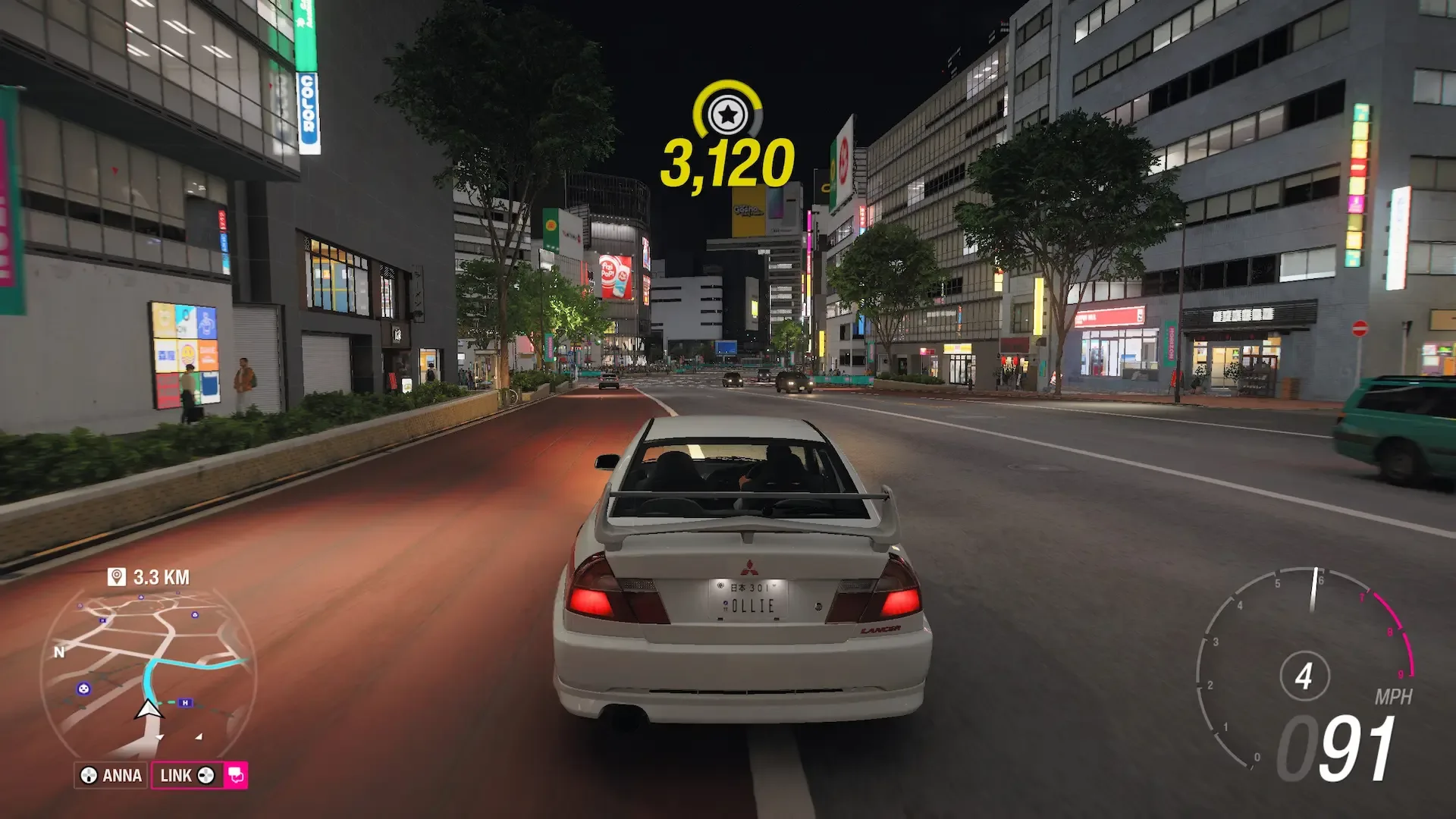
As far as the cars go, there's some improvement, but it is fairly similar to the detail found in Forza Horizon 5, which isn't a bad thing; they still look great. I do wish rain effects were improved in the interior camera, though. They've been the same since Forza Horizon 4, and with Drive Club way back in 2014 showing us how good they can look, it's a shame to see such a basic implementation still.
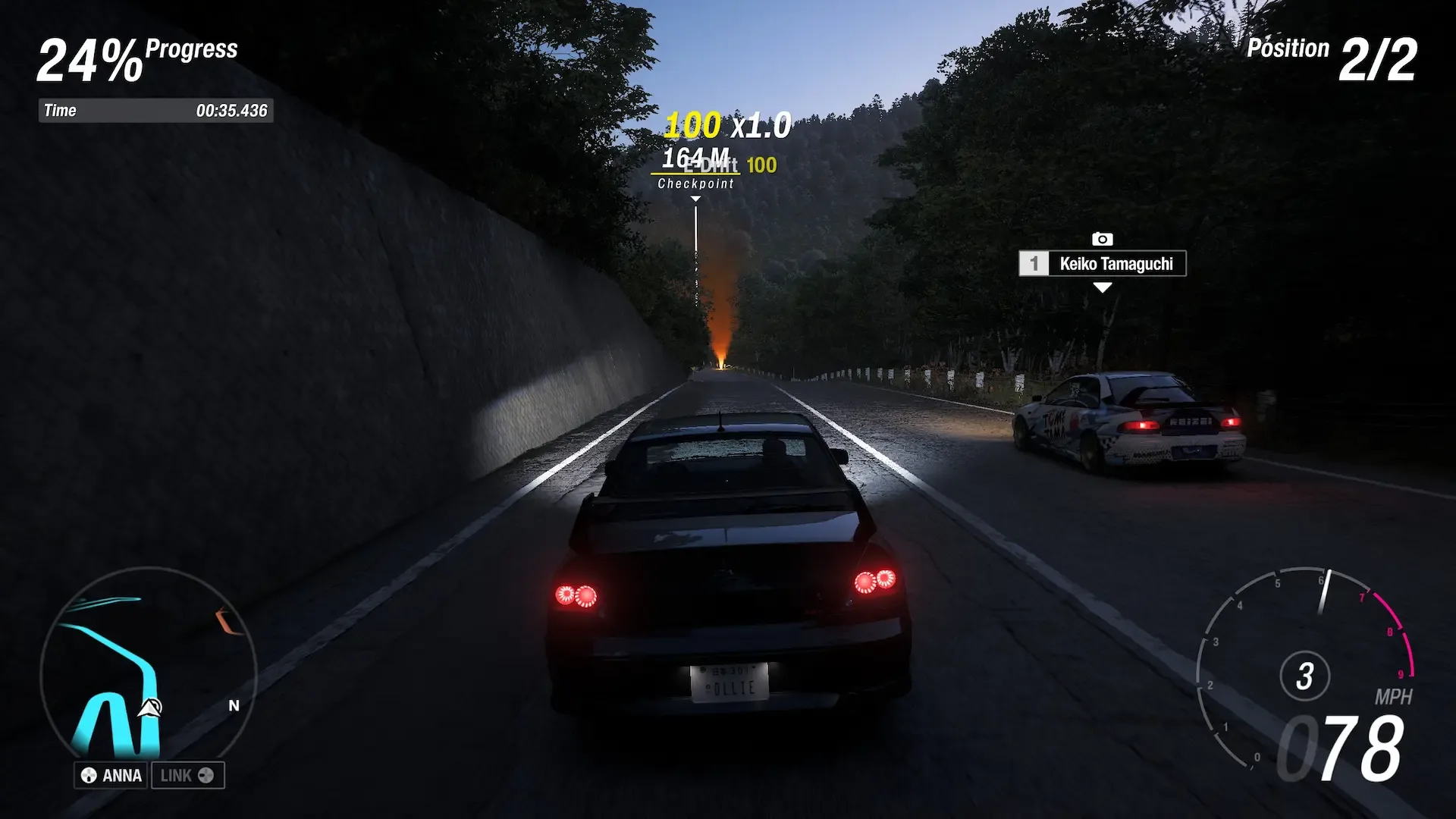
I also encountered some visual disappointments, such as shadows on distant cars not being visible, certain objects not loading in until you were too close, and grass visibly becoming denser just a few meters in front of your vehicle, even on the highest settings. Attention to detail on the interiors of cars was a tad disappointing too, with things like the clocks on vehicles not matching the in-game or real-life clock, something past Forza games have done.
Overall, while there are visual improvements in Forza Horizon 6, it isn't quite up to the standard I was hoping for, especially with last-generation consoles now being ditched entirely. The addition of ray-traced reflections and global illumination is nice, but other areas of the game seem to have been, dare I say, neglected.
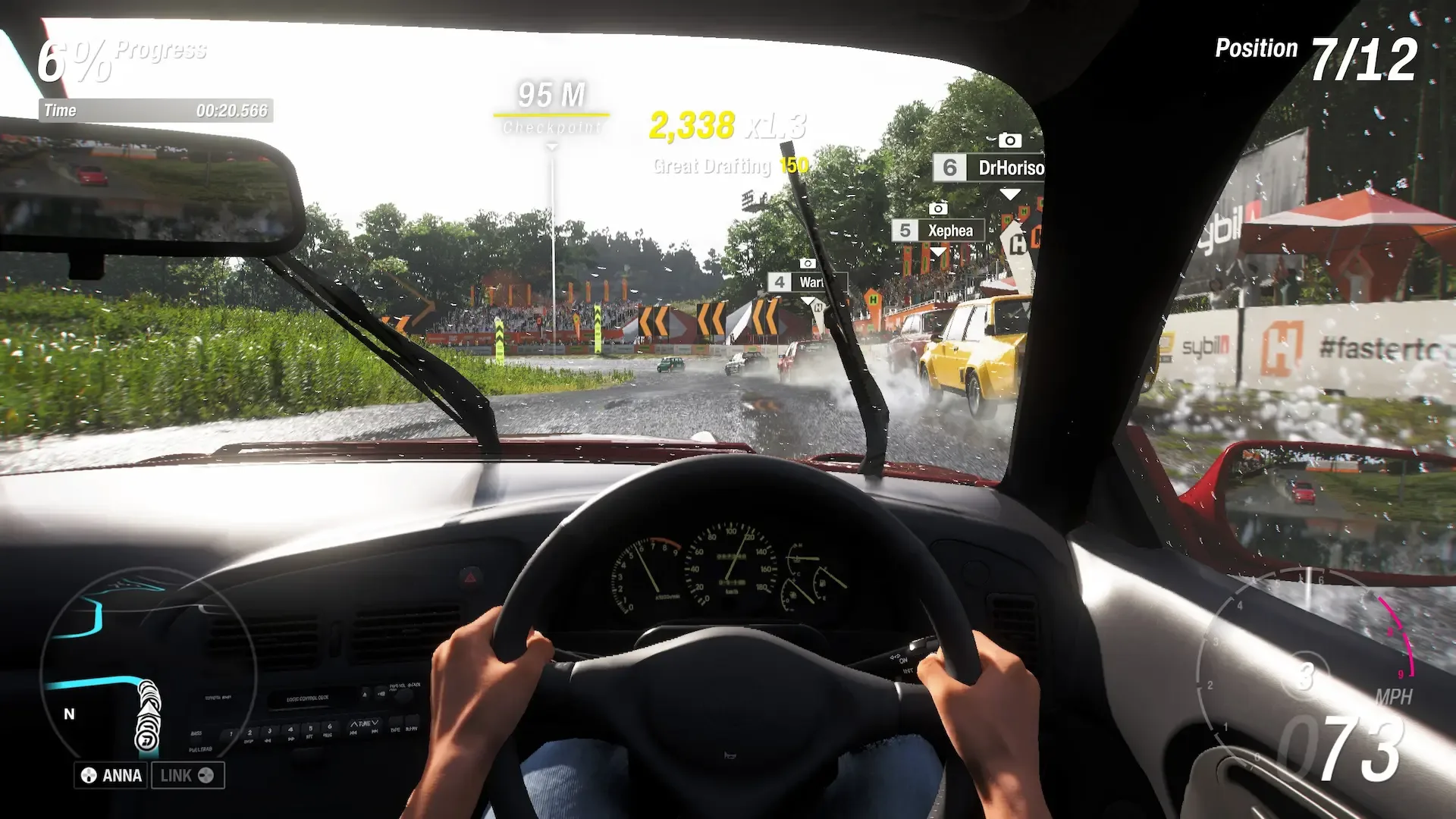
The sounds in the game are fantastic; not only is the soundtrack blood-pumping, but the cars sound more refined than Forza Horizon 5's, with plenty of throaty (and occasionally whiny) JDM engine noises awaiting you. It sounds less artificial than before, especially the car idling noises at the starting line. The audio mixing was slightly off for me by default, and I would definitely lower the music volume a fair bit to fully enjoy the sound of your car.
Forza Horizon 6 also likes to give out cars (and money) like candy. It's been a bugbear of mine in the Forza series for a while, but Forza Horizon 6 continues the tradition of your car collection not really being something to be worked for. Within the first hour, you're plied with free cars. By the time I had over 90 cars, fewer than 10 were purchased. It's one area where the Gran Turismo games excel, and one that Forza has increasingly disregarded. Wheelspins return, and while I do get a thrill out of them, it is one of the main ways you'll be receiving your cars and money, which is a shame in a racing game.
Speaking of cars, while Forza Horizon 6 doesn't really expand the car roster in terms of size, you have around 550 to choose from, it does have a great selection to choose from, especially Japanese cars, where the team has made a special effort to make sure all your favorites are in there. Mitsubishi Eclipse, Toyota SERA, Subaru Legacy, Nissan Silvia, and all the big names like Impreza, Skyline, Lancer, the chances are your dream Japanese car is in the game.
Forza Horizon 6 has been confirmed to run on the Steam Deck since it specifically appeared on the spec sheet for the game, and it's good to see it actually does perform well. However, there are a few changes to make that enhance the experience.
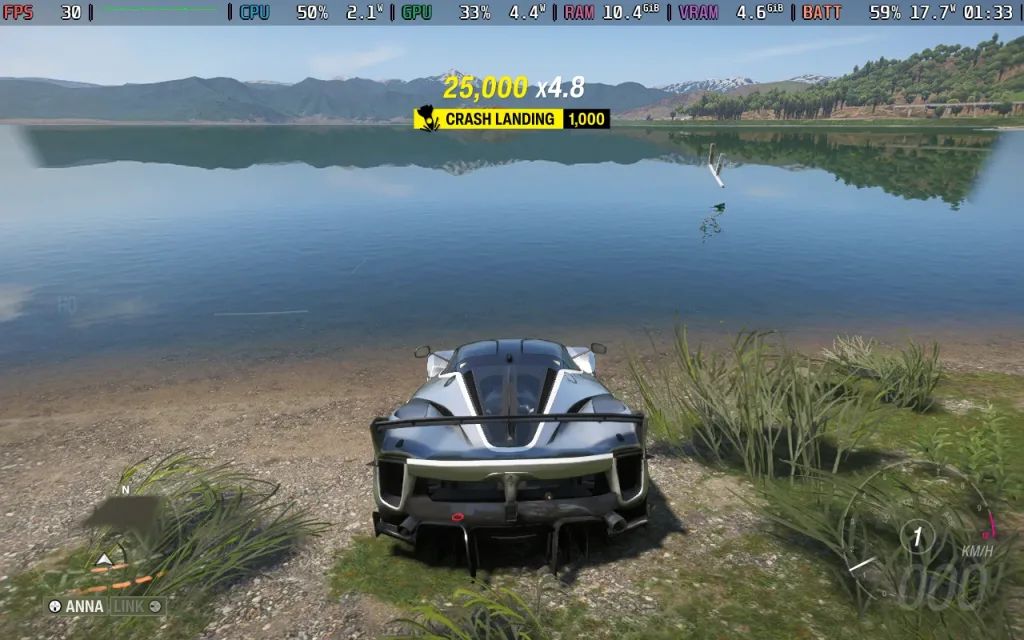
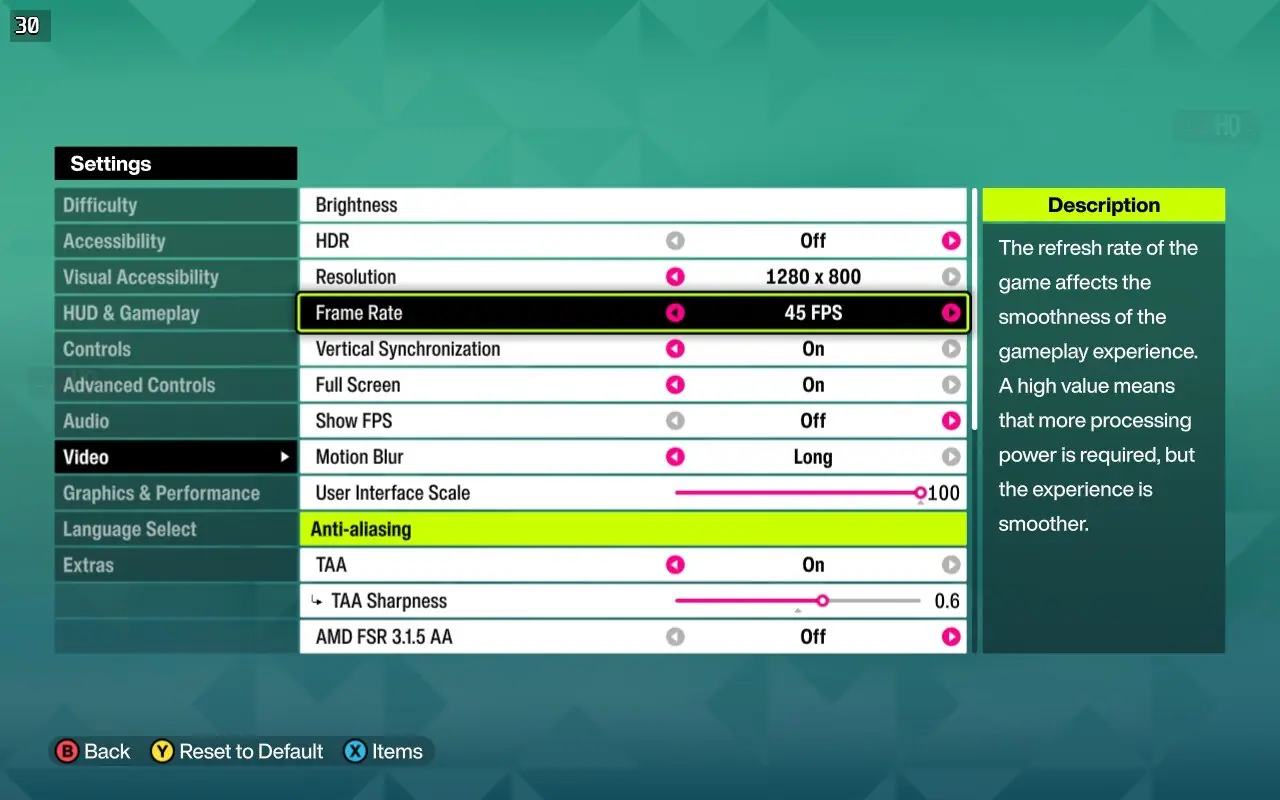
The first is setting the in-game FPS cap to 45fps and using the Steam Deck Quick Access Menu to cap it to 30fps. This is a better cap, though there will be a bit more input lag as you'd expect. The other change is setting the game to 1280x800 resolution if you want to play with the full 16:10 display, but frame times can get a bit worse in the city area.
I noticed the GPU usage wasn't too high, and forcing the Manual GPU Clock to 1600MHz helped here. This does use up more power, but the result is better as far as I'm concerned on the OLED model. Barring this, I also recommend setting Motion Blur to Long instead of Short since the former is recommended for lower frame rates. You can also turn this off based on your liking. I usually turn off motion blur in most games, but I've always liked the Forza Horizon implementation across every game I've played.
The Anti-aliasing option here defaults to TAA, and you can play around with the sharpness level to see how you like it. My preferred setting is 0.6 here. As for HDR, right now, there are no settings to tweak the brightness on the Steam Deck OLED with HDR, so I cannot give you recommended settings for that aspect.
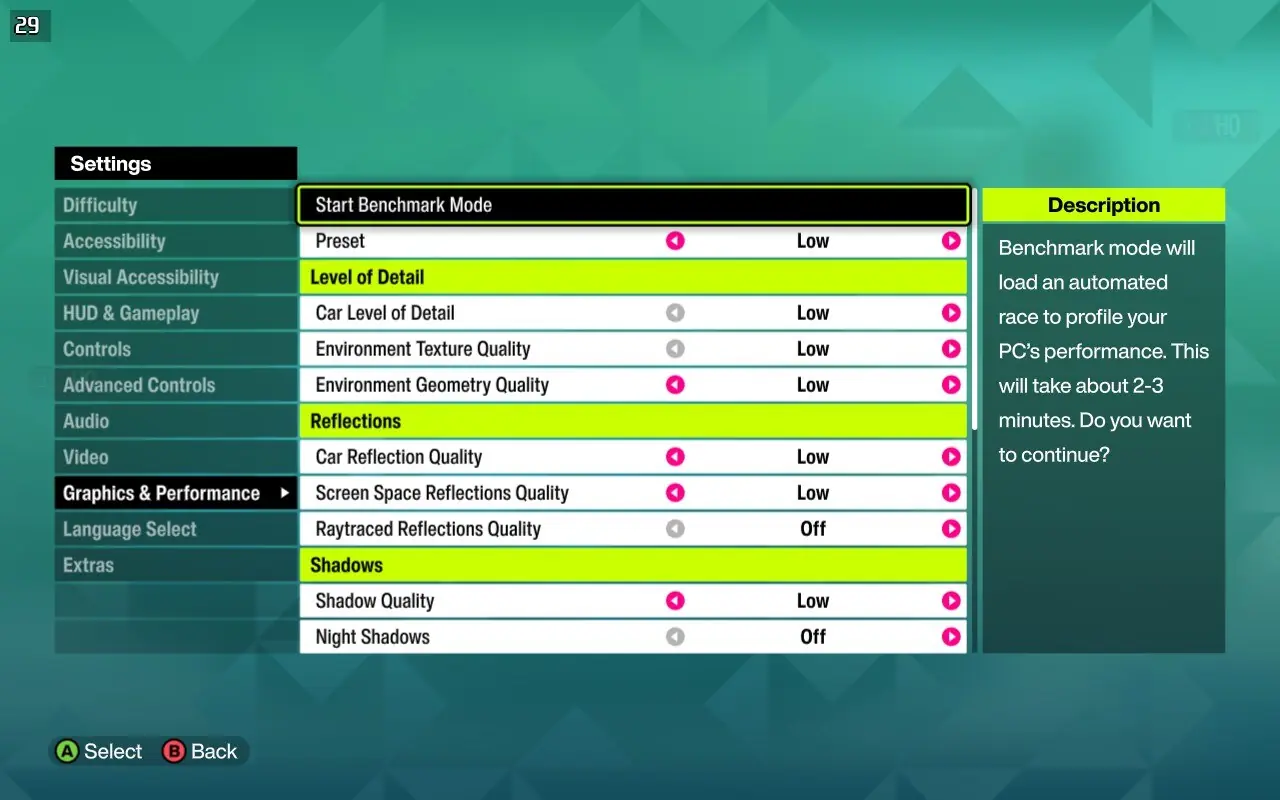
There is a way to turn the settings down below the Low preset to get better performance, and I do not recommend it, as turning off shadows makes the game look awful. I also tried playing at a lower resolution, FSR ultra performance, and the Very Low preset. Even with those settings, you can't get close to a locked 60fps on Steam Deck.
These settings are the perfect blend of getting as stable an experience as possible without degrading the visuals too much. Forza Horizon 6, even on its low preset, is a very good-looking game on the Steam Deck's display. I also tested it out docked via the Steam Deck Docking Station. It doesn't hold up as well as expected with the same settings, and this is where I opted to use my ROG Ally Z1E in turbo mode. I was able to get it to 1080p 30fps on the medium preset, and I found it delivered a good complement to my portable Steam Deck 30fps experience.
The developers have noted that there will be more Steam Deck optimization, and if anything major changes in the future, we will revisit this. Until then, Forza Horizon 6 delivers a very good portable experience on Steam Deck, both online and offline.
Forza Horizon 6 has an absolute plethora of accessibility settings, as we've come to expect from the series. We obviously have the basics like subtitle support, as well as driving assists, but we also have plenty of added extras to make this game playable by as many as possible.
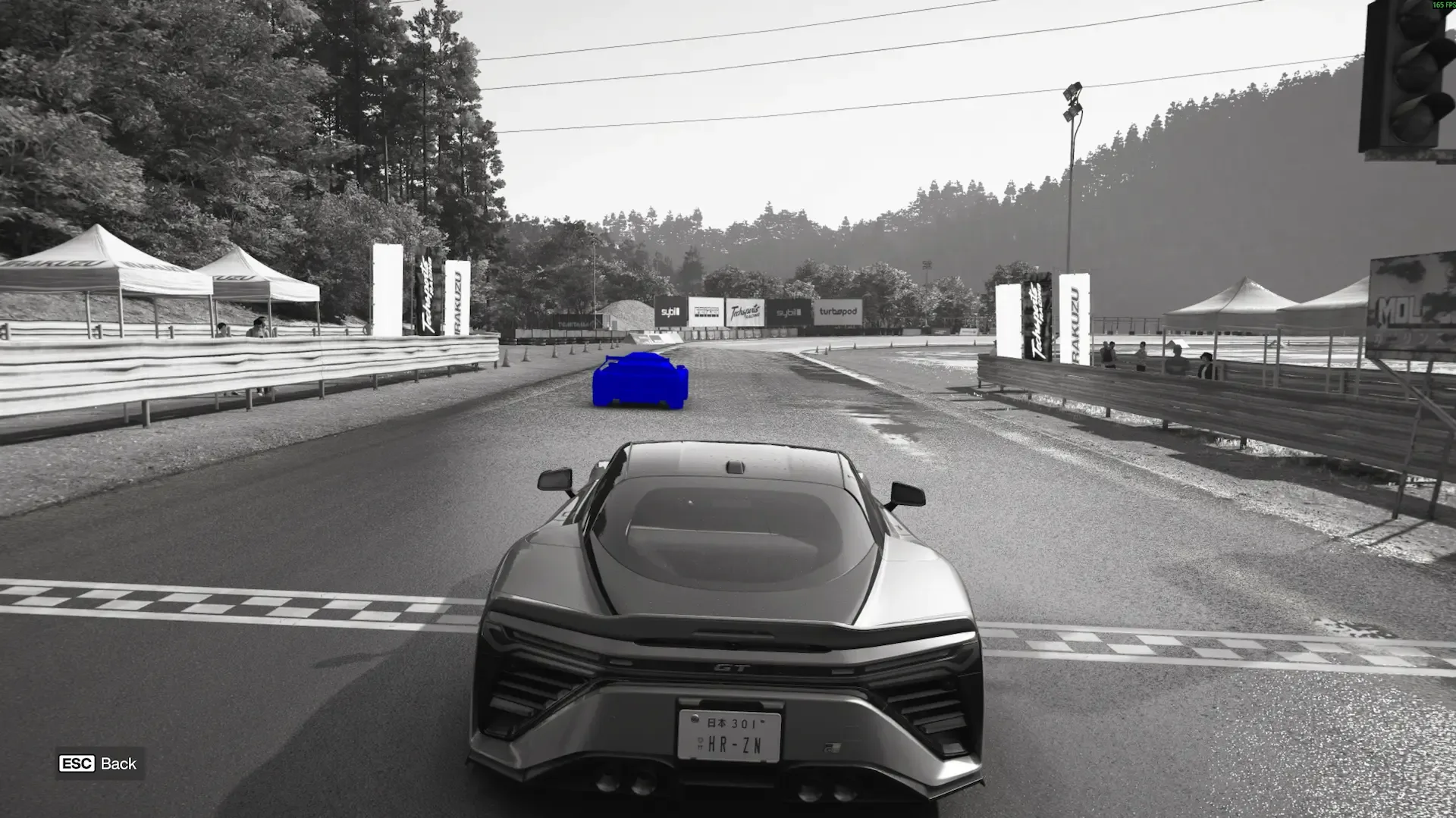
These include a very customizable high contrast mode which lets you assign bright colors to differentiate parts of the world for those with vision impairment, proximity radar with audio cues to alert you to nearby vehicles, the ability to play the game in slow-mo (offline mode only), or allow you to progress even if you don't win the race, as well as audio cues that can read out your current lap, current position, and if you just gained/lost a position.
Forza Horizon 6 plays it safe in almost every aspect. Whether that's a good or a bad thing depends on whether you enjoyed the previous entries in the series, and whether or not you were hoping for something new. The rural areas of the map are a delight, but the city of Tokyo left me feeling disappointed with its relatively bland depiction and empty streets. The cars are still great fun to drive, with a huge showing from Japanese manufacturers this time around, and exploration is as rewarding as ever.
このレビューはPC版に基づいています。
このレビューをお楽しみいただけたなら、SteamDeckHQ の他のコンテンツもぜひご覧ください!あなたのゲーム体験に役立つゲームレビューやニュースを幅広く取り揃えています。ニュース、ヒントやチュートリアル、ゲーム設定やレビューをお探しの方も、最新のトレンドを知りたい方も、ぜひご利用ください。
When Ghost of Tsushima launched in 2020 as a PS4 exclusive, it quickly became one of Sony’s most beloved and successful titles. Players had been craving an open-world samurai experience set in feudal Japan for years, and Sucker Punch delivered exactly that. What’s more interesting is that, compared to other Sony first-party titles, its budget was relatively modest. While it’s still a AAA production, it didn’t rely on massive funding seen in games like The Last of Us: Part II or Horizon: Forbidden West. Instead, Sucker Punch proved that strong artistic direction, a clear vision, and determination can be just as impactful as sheer budget.
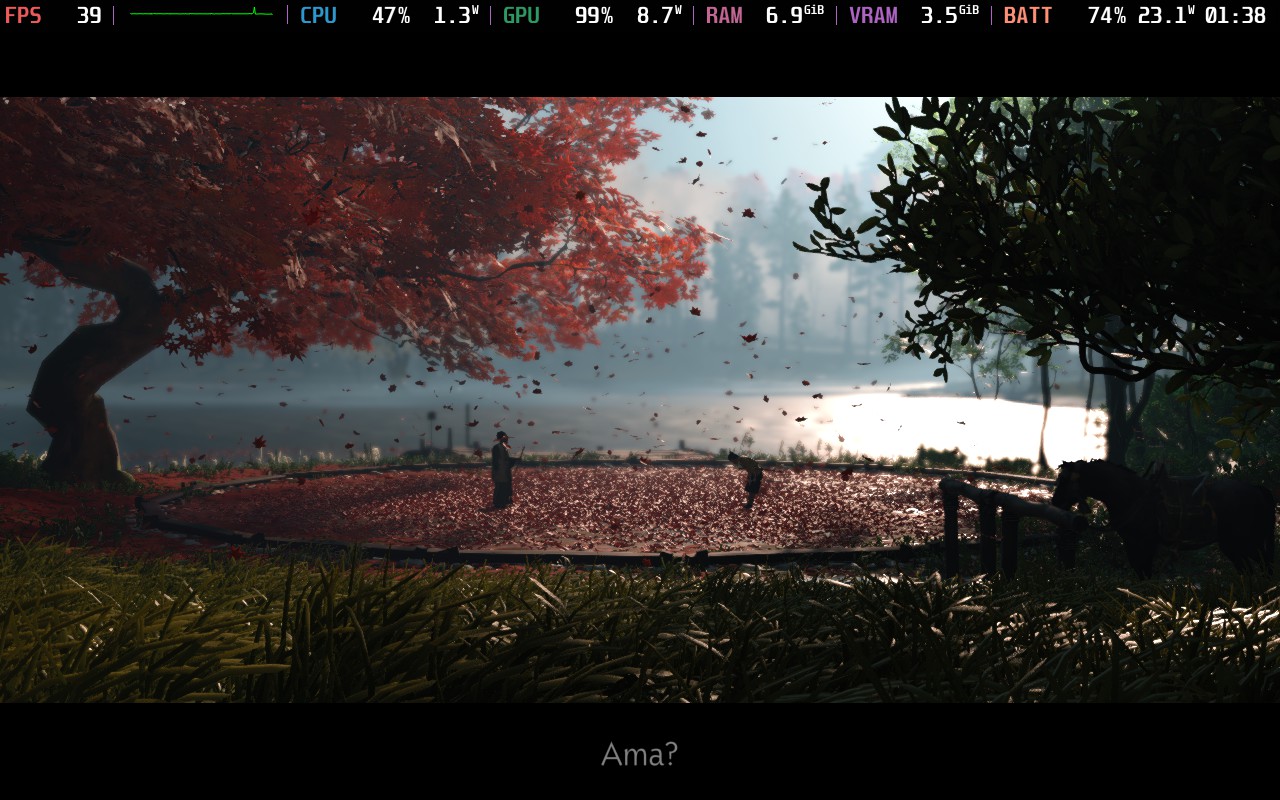
The game follows Jin Sakai, a samurai who loses his father at a young age and is raised by his uncle, Lord Shimura, the leader of Tsushima and a strict believer in the samurai code. The story begins with a large-scale invasion as the Mongol Empire clashes with the samurai of Tsushima. The battle ends in a devastating defeat for the samurai, with most presumed dead and Lord Shimura taken captive.
Jin, however, survives after being rescued by a mysterious woman, becoming one of the few remaining warriors on the island. With all hope seemingly lost, he sets out on a mission to rescue his uncle, forging new alliances and recruiting powerful allies across Tsushima along the way.
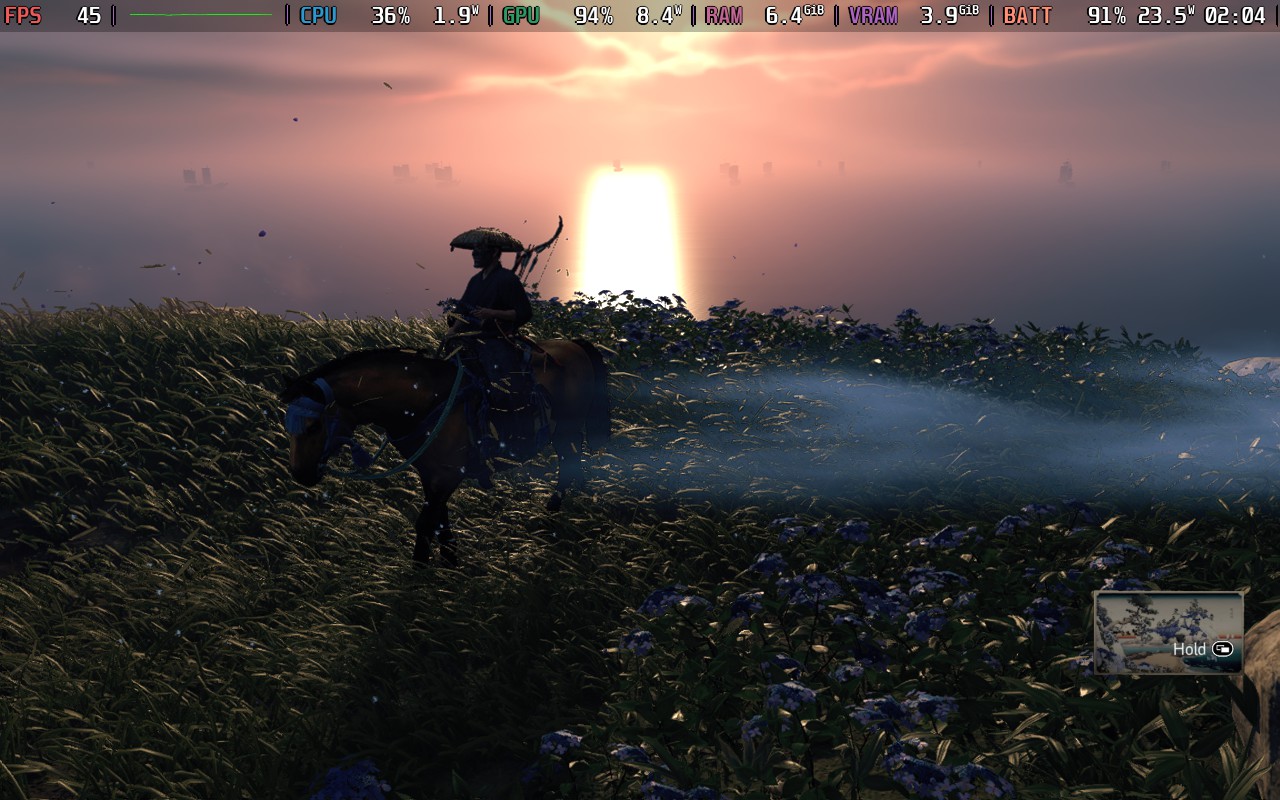
The story starts off strong and highly cinematic. However, it feels as if it deliberately shifts into separate narrative arcs, allowing players to connect with different key characters who share similar goals. While this structural change initially adds to the immersion, it also introduces a major issue: inconsistency. Some storylines are thoroughly engaging and memorable, while others fall into tired cliche territory. At times, certain arcs feel rushed or cut short, preventing them from reaching their full potential.
This issue becomes even more apparent in the side quests. While some offer storytelling that rivals, or even surpasses, the main narrative, others rely on repetitive, uninspired setups like “go kill this” or “they took my brother,” turning them into forgettable chores.
Despite these flaws, the game still delivers several incredibly well-written moments, morally ambiguous themes, and thrilling action sequences. For a historical setting, maintaining this level of narrative engagement is no easy task, yet Sucker Punch manages to shine where it matters most.
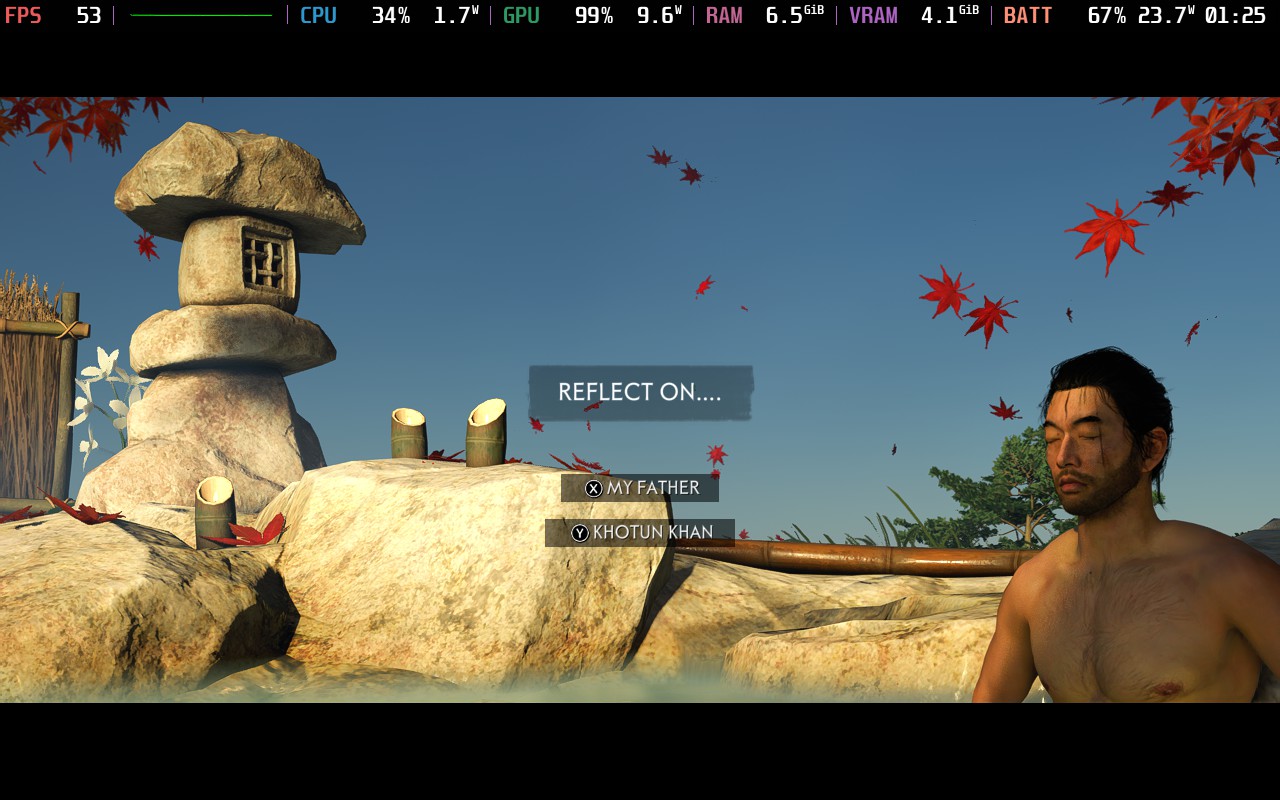
When it comes to gameplay, it's a mixed bag. The game features a vast open world, a beautiful island to fully explore. Yet, it’s full of emptiness and Ubisoft-esque objectives. They managed to make the game feel empty and filled with unnecessary chores and collectibles at the same time.
The game offers a very simplistic upgrade and loot system. You loot components, upgrade your gear. You gain XP to gain new techniques or improve the existing ones. Sadly, to do all these, you have to progress through uninteresting and repetitive side content. At its core, the game does a terrible job at keeping players on track with the main mission while improving their character.
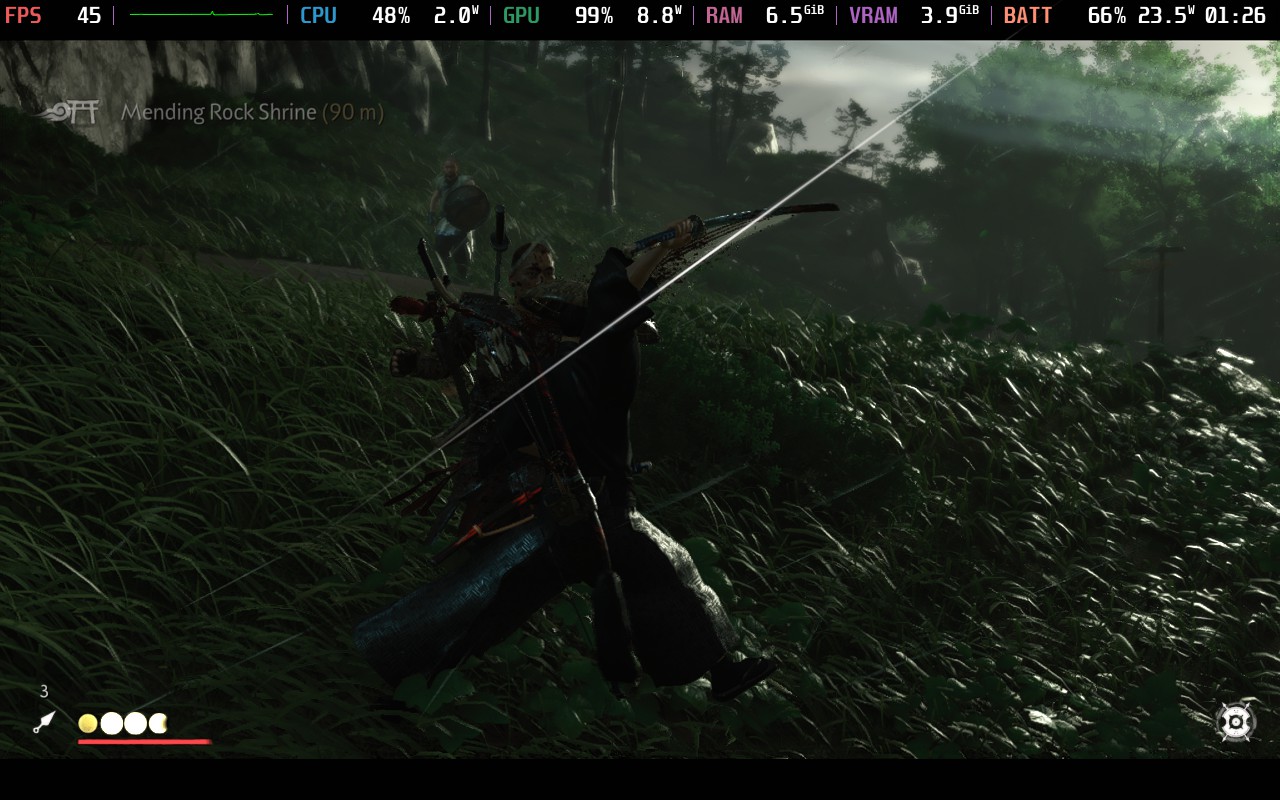
When it comes to combat, Ghost of Tsushima deserves all the praise it gets. It features one of the most satisfying and well-designed combat systems I’ve experienced in an open-world game.
What stands out the most is the variety of mechanics and playstyles, and more importantly, how they are integrated into the game’s overall design. In many open-world games with character customization, players are often pushed into committing to a single build or playstyle. Ghost of Tsushima takes a different approach.
The encounter design constantly encourages you to adapt. You can engage in precise swordplay, take down enemies from a distance with archery, or rely on stealth, and all of them feel essential rather than optional. There are unavoidable duels and ambushes that test your swordsmanship, elevated enemies that demand ranged solutions, and high-stakes scenarios where prisoners' lives force you into stealth. Each situation naturally pushes you toward a different approach.
This constant shift in gameplay keeps combat fresh and prevents it from ever feeling repetitive or forced. More importantly, it all flows seamlessly with the game’s immersion. It’s a complete masterclass in encounter design.
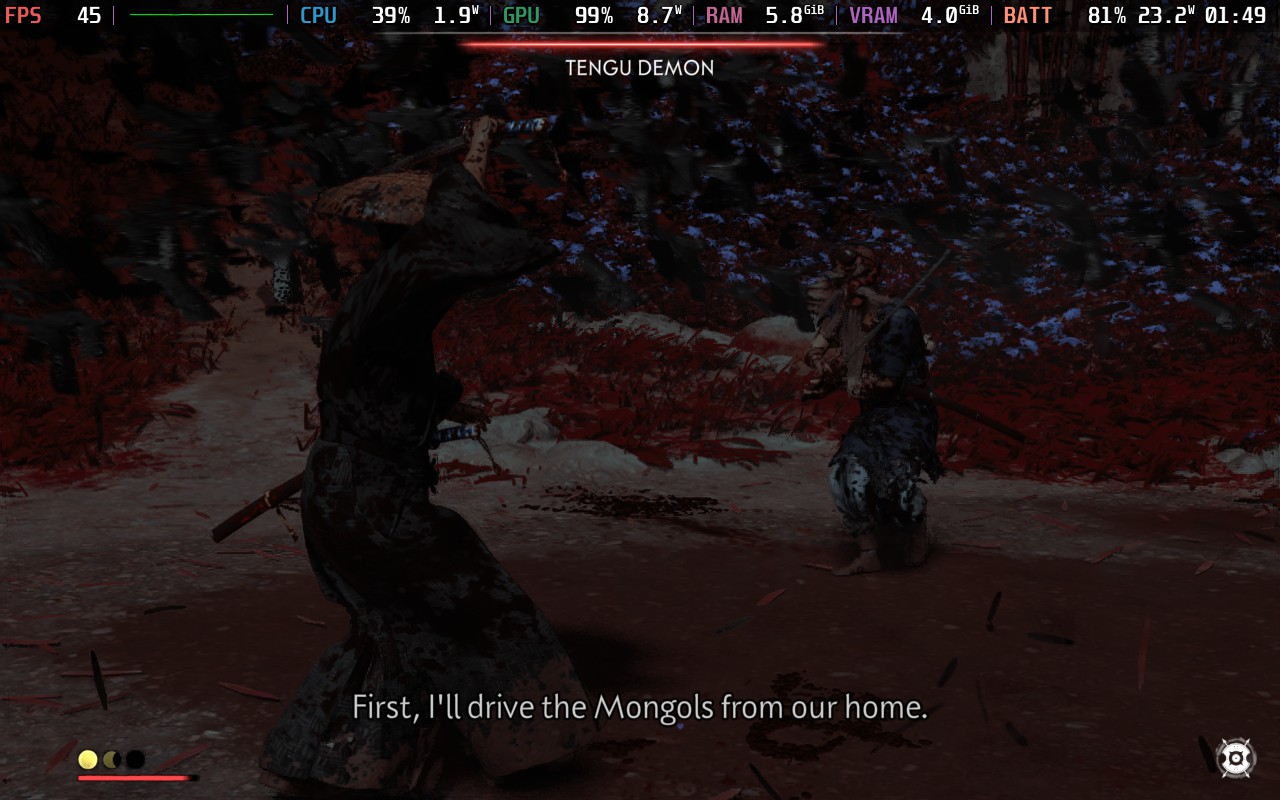
In the early hours of my playthrough, swordplay and the core dodge, hit, and parry mechanics felt flat. However, as the game opens up and you unlock new techniques and stances, combat gradually becomes far more engaging. The introduction of different enemy types, combined with thoughtful encounter design and the important impact of upgrades, elevates the system into something satisfying. Each new tool and ability adds a layer of depth that keeps fights dynamic and rewarding.
I personally leaned heavily into the perfect parry mechanic, building my playstyle around it. On higher difficulties, this approach felt remarkably close to Sekiro, which features one of my personal favorite sword combat systems.
My only real criticism is the lack of impactful sound design. For a samurai-focused experience, the audio feedback, especially during sword clashes and perfect parries, feels underwhelming, and it hinders immersion immensely.
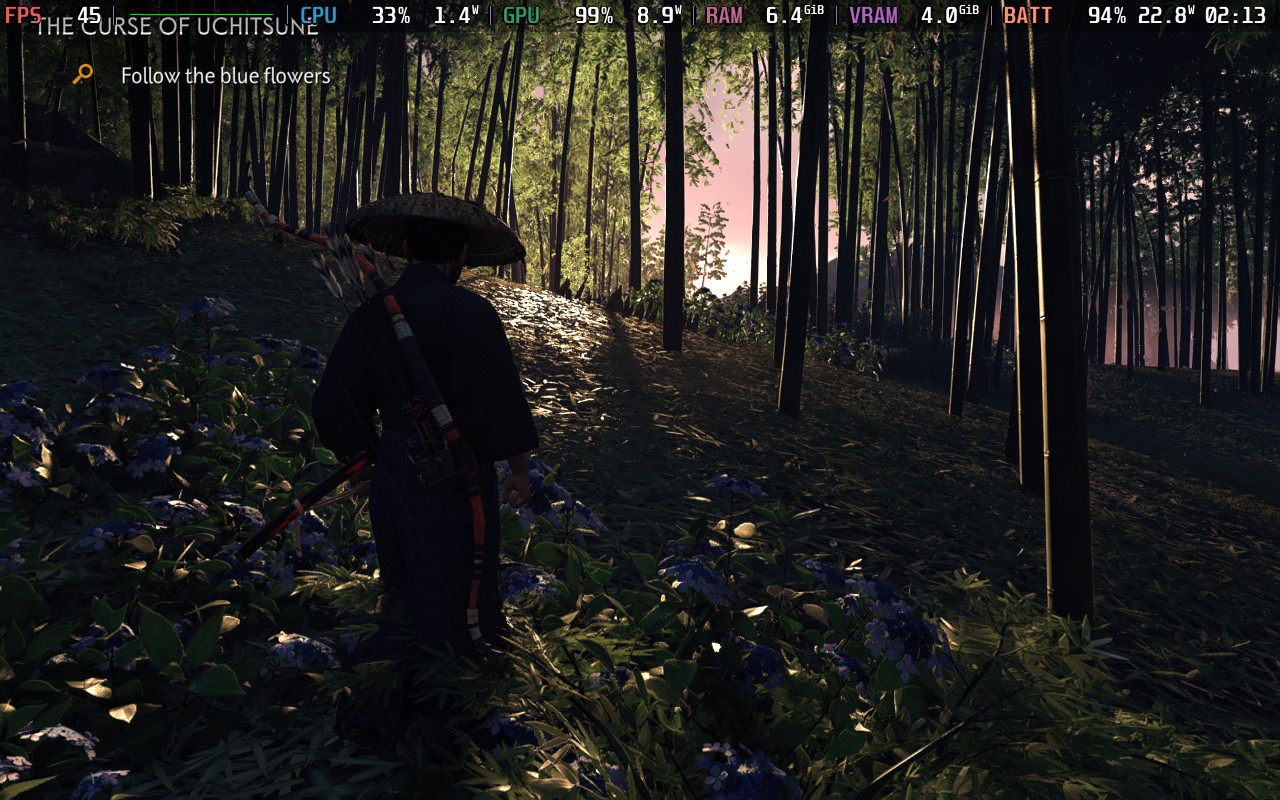
When it comes to raw technical graphical fidelity, the game isn’t particularly impressive on the Steam Deck, which is to be expected, considering it was originally developed for the PS4. However, where it truly excels is in its art direction. The combination of stunning environmental design and masterful use of lighting makes almost every scene feel like it’s pulled straight from a film or a Renaissance painting. Flowing grass fields, vibrant trees, dynamic weather effects, and stylized animations all come together beautifully. These elements elevate the visuals beyond pure technical limitations and give the game a timeless quality.
There are occasional issues, such as stiff or out-of-place facial expressions and lower-quality foliage, rocks, and textures. But overall, these gripes feel like nitpicking, as they rarely detract from the game's immersive qualities.
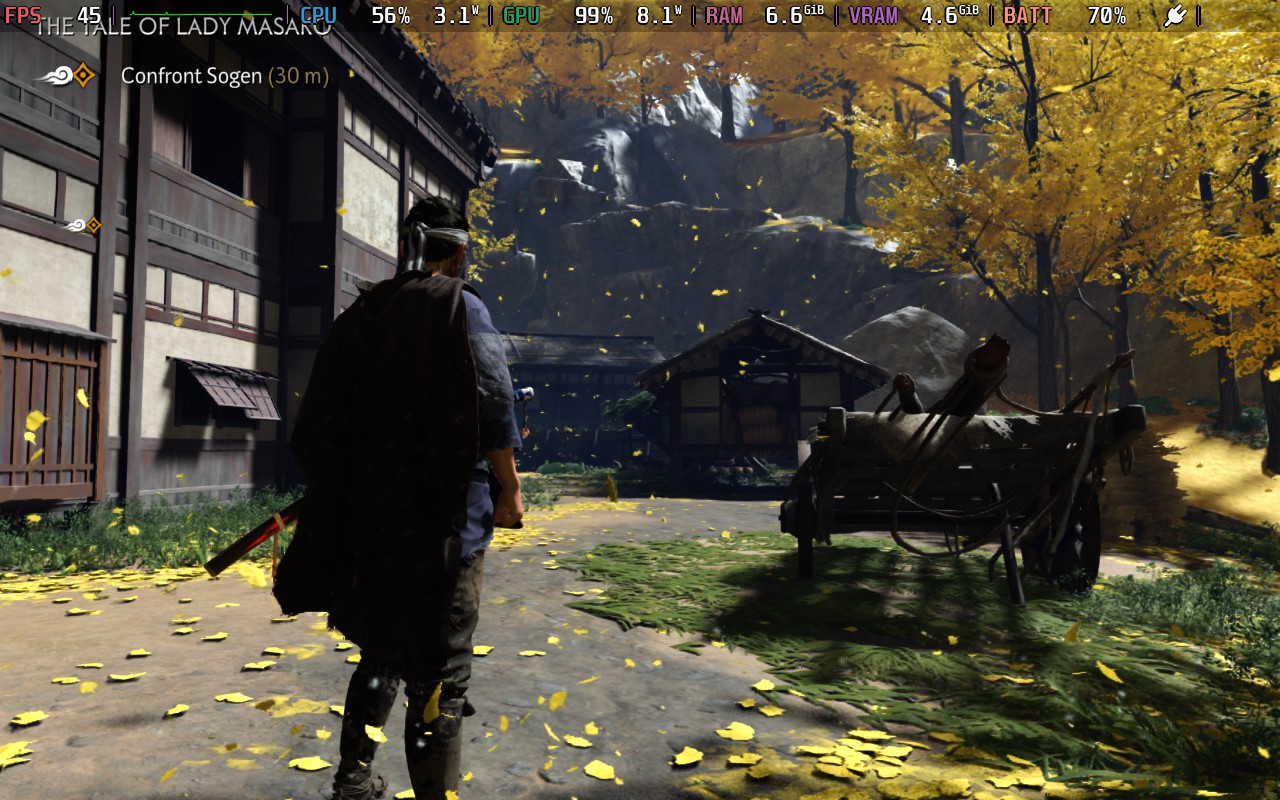
Sound design and music are one of the weakest aspects of the game. It’s surprising to see a title that excels in immersion in so many areas fall short in its audio direction.
From voice acting to environmental sounds, the overall audio experience can feel lacking in impact. As mentioned earlier, even swordplay, one of the game's core elements, often lacks the weight and presence you would expect, which is disappointing for a samurai-focused experience.
The music, while present, rarely leaves a lasting impression. Outside of a few key moments, much of the game feels unusually quiet, especially during exploration. Whether this was an intentional design choice or a limitation of the production, it doesn’t always complement the otherwise rich atmosphere.
That said, it ultimately feels like a missed opportunity. With such a strong visual identity and immersive world, the game deserved a more memorable and impactful audio experience.
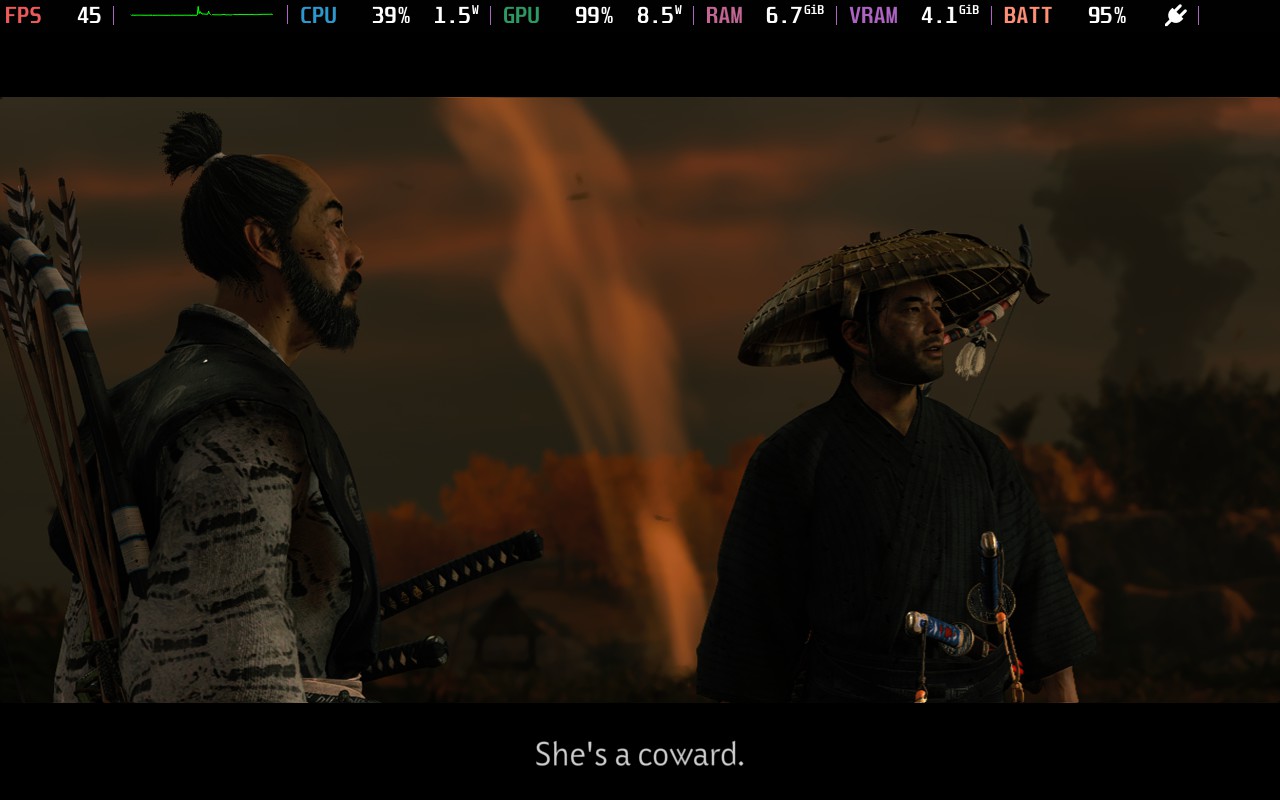
All in all, Ghost of Tsushima runs extremely well on the Steam Deck.
The game includes a built-in Steam Deck preset, but I strongly recommend avoiding it. In my experience, it’s both unstable and visually underwhelming, failing to justify its performance trade-offs. With the default settings, performance fluctuates between 30 and 45 FPS, which feels majorly inconsistent.
With our optimized settings, you can achieve a stable 45 FPS experience with minimal visual compromise. Throughout testing, I encountered no stutters, performance drops, or noticeable input lag. Interestingly, this result was largely made possible by the dynamic resolution upscaler. Ironically, I generally dislike variable resolution or scaling techniques, since they often introduce unwanted blur or general inconsistencies. However, in this case, it delivers a surprisingly clean and stable image.
No matter how much I tweaked the graphical settings alone, I couldn’t achieve a consistent 45 FPS lock. The game would either dip into the high 30s or introduce slight input lag when relying on Steam’s frame limiting instead.
The only issue I could find was HDR. I don’t tend to use HDR in my playthroughs, both personal and professional, so I usually keep it disabled, but this game is unplayably dark without HDR, and I couldn’t find a fix. Even at max brightness, the game looks extremely dark.
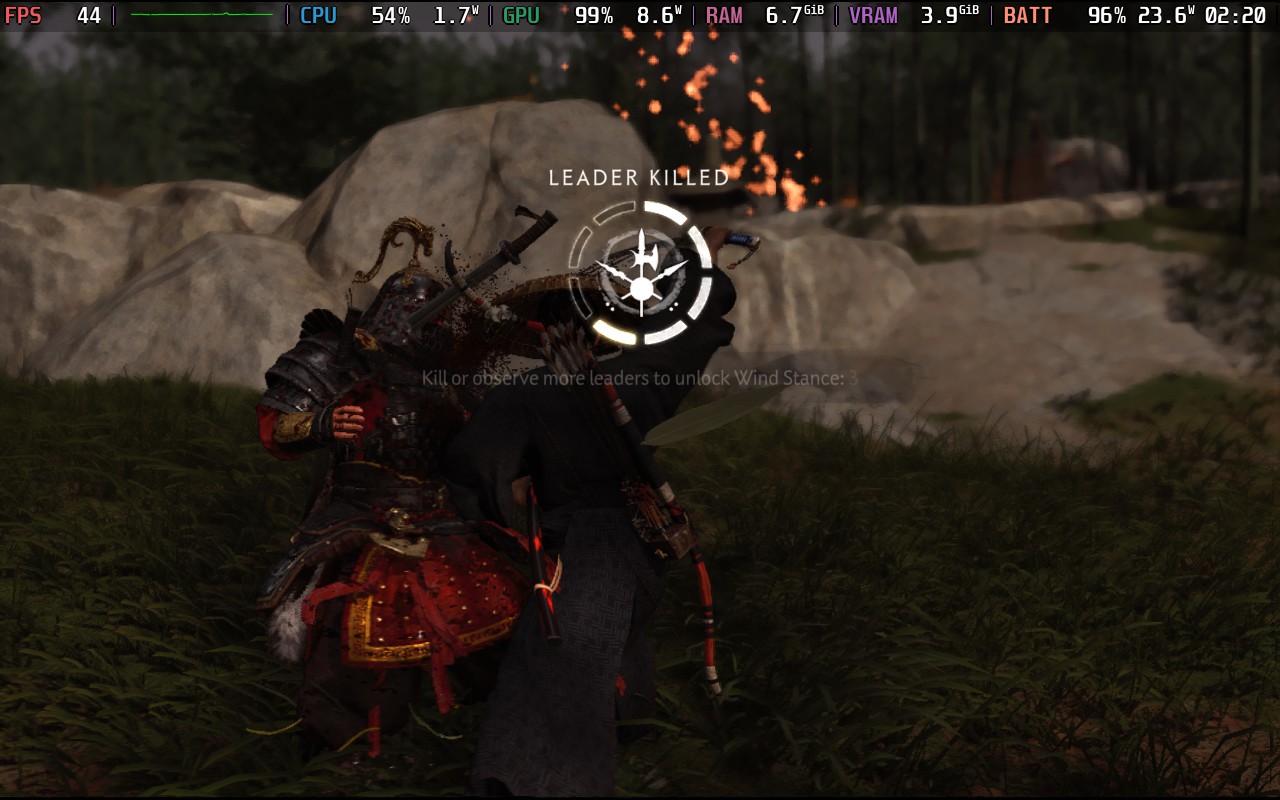
Setting dynamic resolution to target 45 FPS allows the game to intelligently adjust its internal resolution during demanding scenes, maintaining a stable frame rate without introducing any noticeable input lag.
My previous experience with dynamic resolution in Horizon: Forbidden West was far less positive. There, aggressive scaling often resulted in a blurry, almost cloud-like streaming image. In contrast, Ghost of Tsushima handles it remarkably well. I experienced consistent 45 FPS gameplay from start to finish, with no significant visual compromises and surprisingly strong image quality.
For the graphical settings, my goal was to strike a careful balance between performance and visuals. I prioritized options that have a meaningful impact on image quality while minimizing their performance cost. The result is a mix of lower settings where the visual difference is negligible, and higher settings where they truly matter, creating a well-balanced and highly playable experience.
It is possible to achieve a stable-ish 60 FPS experience, but it comes at the cost of significant visual compromises that diminish the game’s standout atmosphere and lighting. On the other hand, a visually impressive 30 FPS setup preserves the game’s beauty but makes the fast-paced, precision-based combat feel less responsive and increasingly frustrating.
Because of this, I strongly recommend playing the game at a locked 45 FPS with our optimized settings, as they offer the best balance between visual fidelity and responsiveness.
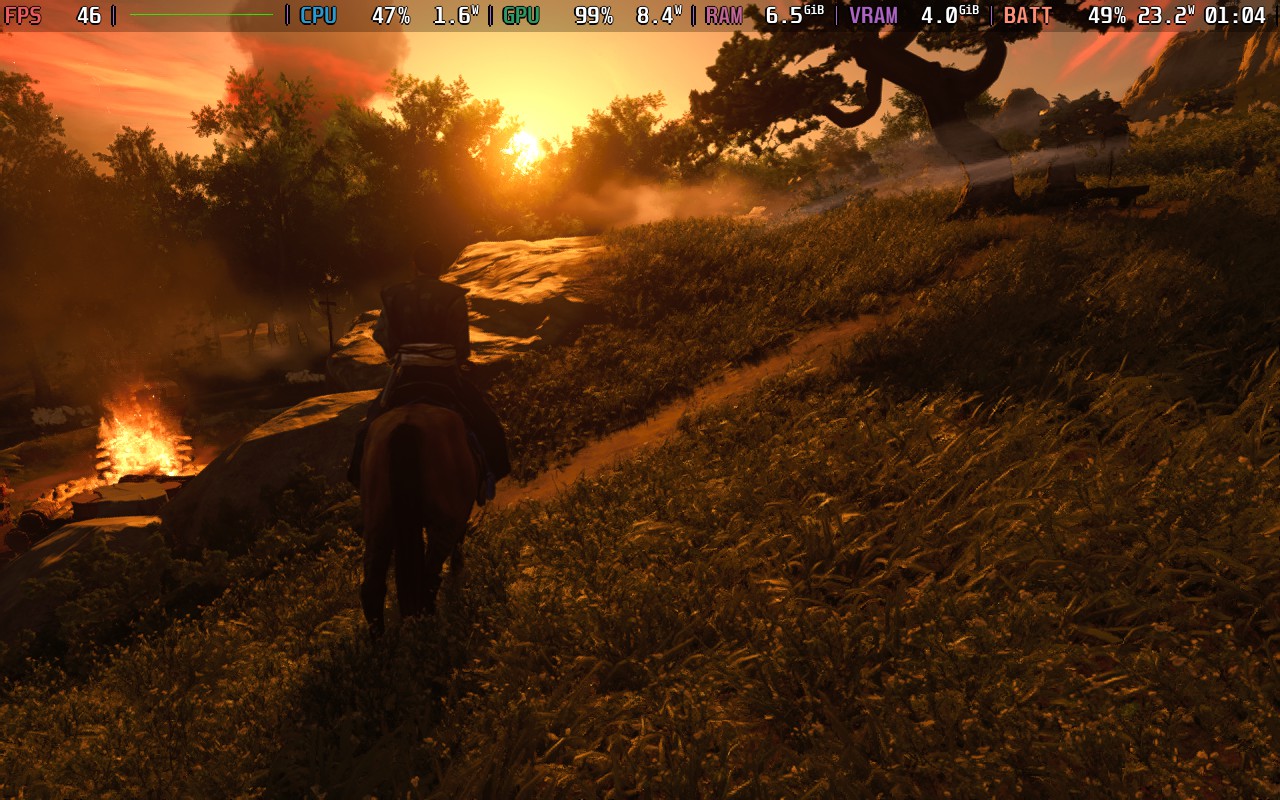
Ghost of Tsushima is a visually stunning experience that excels in combat and art direction, but falls short in areas like repetition, a cliche narratives, and underwhelming sound design. It stands as a contradictory “mixed bag” game, frustrating at times, yet undeniably impressive in what it achieves. Despite its flaws, it successfully delivers on the long-awaited samurai fantasy many players have been craving for years.
Thanks to its origins as a PS4 title and its excellent optimization, the game runs exceptionally well on the Steam Deck. It stands out as a rare AAA experience that not only performs great on the platform but also feels tailor-made for it, making it an easy recommendation for Steam Deck users.
このレビューはPC版に基づいています。
このレビューをお楽しみいただけたなら、SteamDeckHQ の他のコンテンツもぜひご覧ください!あなたのゲーム体験に役立つゲームレビューやニュースを幅広く取り揃えています。ニュース、ヒントやチュートリアル、ゲーム設定やレビューをお探しの方も、最新のトレンドを知りたい方も、ぜひご利用ください。
Outbound was provided by Square Glade Games for review. Thank you!
Roadtrips have a certain appeal, and honestly, I wish more video games featured them as a core narrative. While I am not the biggest fan of driving games due to all my childhood trauma of sucking at Mario Kart, they still have a certain appeal depending on the game design.
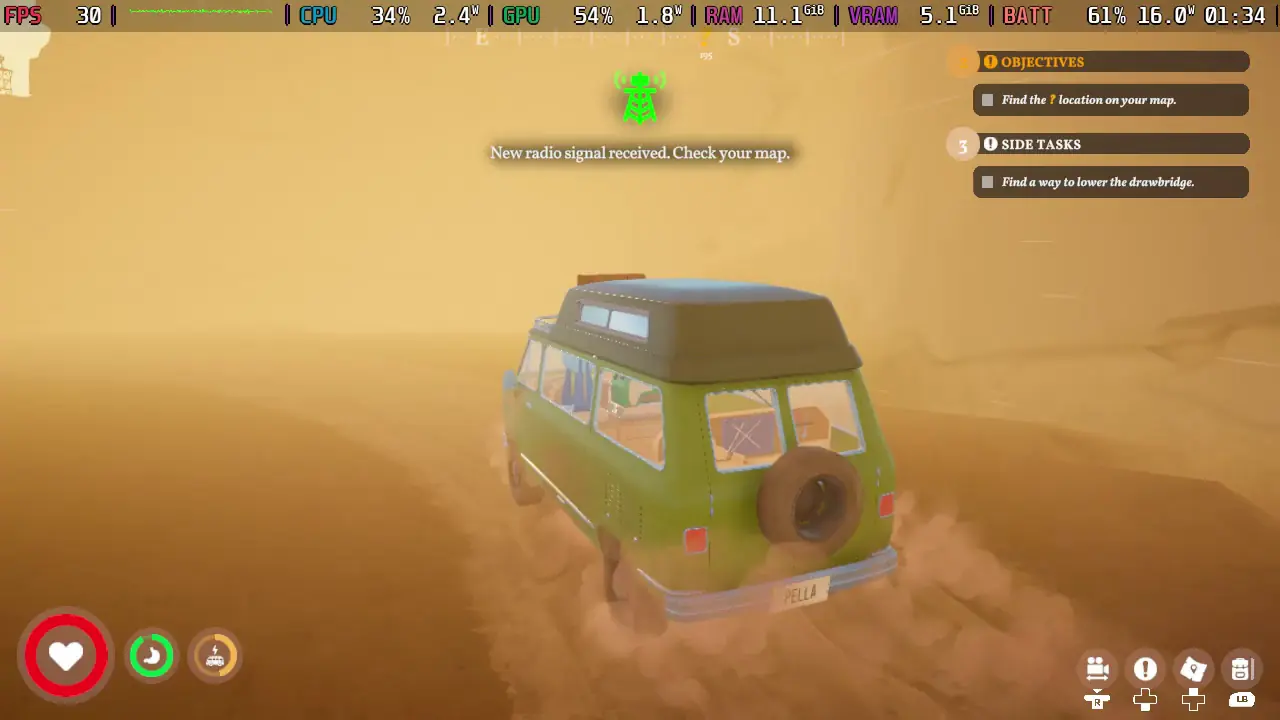
Outbound is a game I’ve been looking forward to for a while, and it is the latest in the cozy driving game genre that is surprisingly big in the market. Pacific Drive, Keep Driving, and Euro Truck Simulator are all games I love, although Pacific Drive is less about wholesome driving and more about surviving an anomaly hellscapes while inside a sentient car. It is like Nightrider on drugs, although it was still one of my favorite games from 2024!
Outbound is developed by indie dev Square Glade Games, and this is their second game after their interesting debut, Above Snakes. Big thanks to them for providing us with review codes, and the greater ambition really shows with this new game. Outbound is a relaxing and impressive experience in both gameplay and design, and it runs pretty well on the Steam Deck, too.
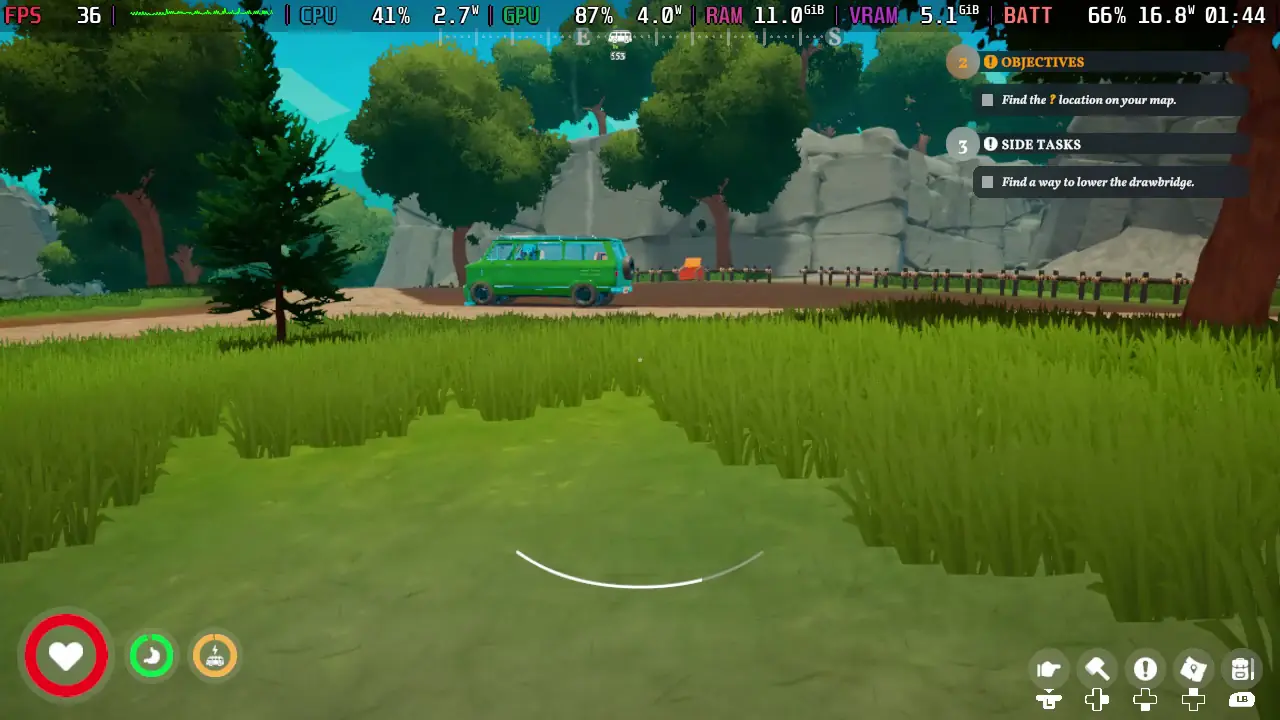
The game blends several simple mechanics together to create a core gameplay loop that somehow makes up more than the sum of its parts. After customizing your character, the goal of the game is to explore the large, open wilderness while surviving and kitting out your RV. That is pretty much the gist of it, mixing exploration, survival, and crafting together into something surprisingly fresh. Now, there are more survival crafting games than there are atoms in the universe, but I love how Outbound keeps its focus. All of these gameplay systems fuel the desire to live in the mountains, with everything moving that state forward.
I have been a growing fan of the cozy game genre for years now, and Outbound is getting close to achieving the perfect balance I have been looking for. You explore the map at your leisure, keeping hunger at bay and managing your mobile home. That doesn’t mean there is no challenge at all, as there are obstacles to navigate, including the mountainous terrain and blockades that must be repaired, such as repairing broken bridges.
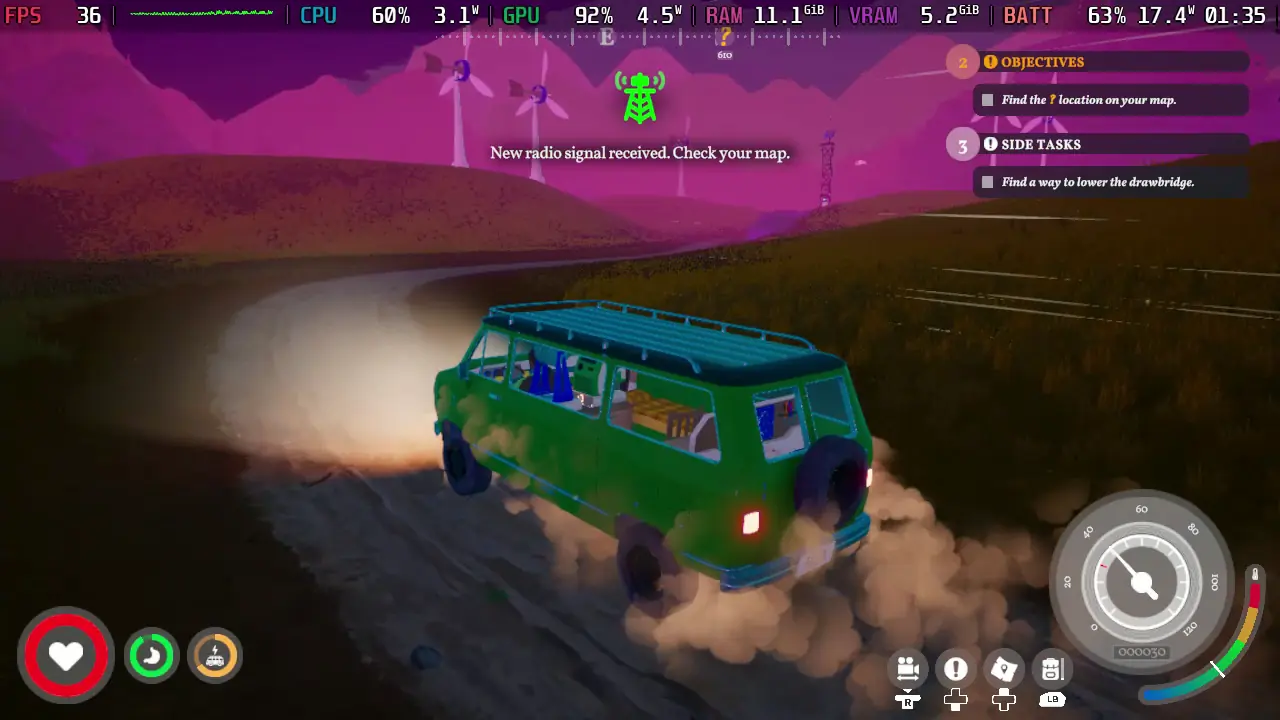
Outbound hasn’t got the common pitfall in these games where things are so relaxing that they sacrifice progression, which is great. Give me something like Hardspace Shipbreaker, where I can die by falling into a furnace or by suffocation, at least with a small risk. By climbing towers and accessing download points across the map, you can get a vision of locations and download blueprints. The latter is randomized to a degree for added replayability, unlocking a ton of things you can build in your mobile home to make your new life easier. It’s a great gameplay loop.
The visuals are rather pleasant to look at, although I didn't expect something like Crimson Desert. The rolling hills, forests, and rivers are enjoyable to explore, and the sound design is also very immersive. Camping by a river while listening to the rushing water and the crackling of a bonfire is just glorious. It is the little things in life I enjoy most, and I think Outbound does a solid job of making things relaxing without boredom. The survival mechanics are fairly light in terms of food and health management, and while you do need to keep an eye on them, they aren’t particularly punishing either.
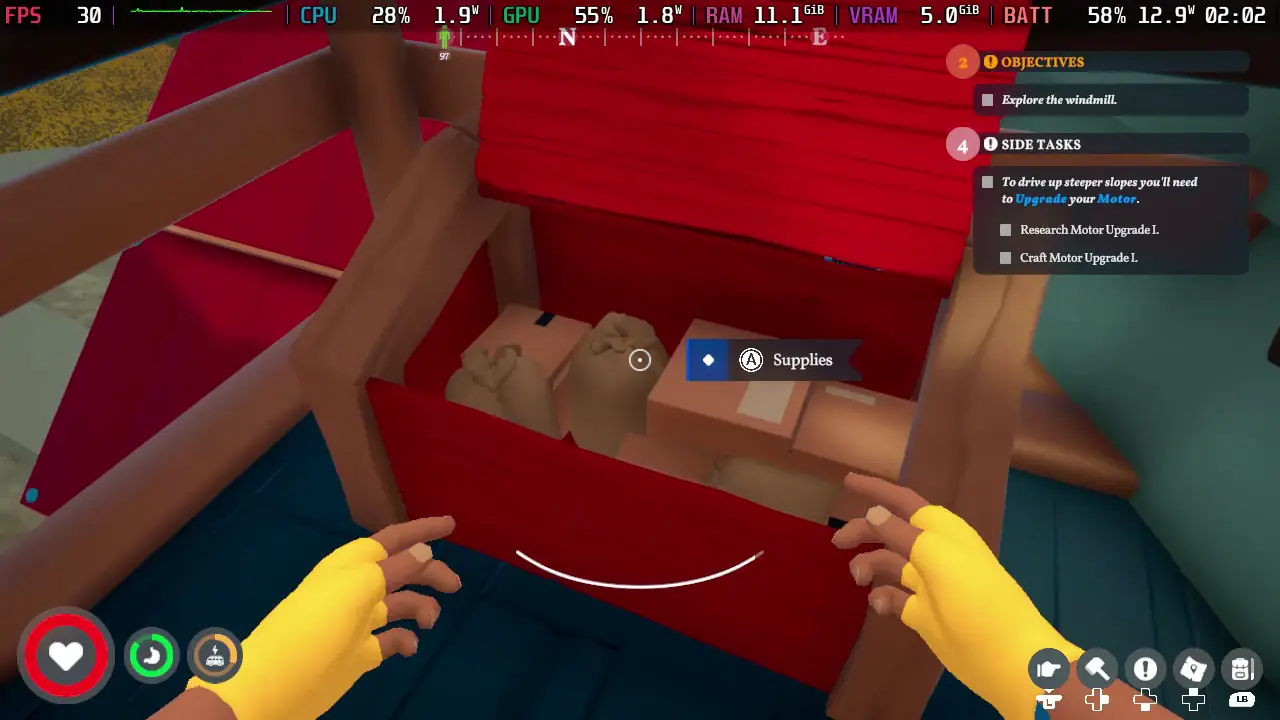
While I enjoy the core gameplay, all this exploration and vibing in the wilderness come with a small cost: narrative. You can make your own character and explore, but I didn’t really get much in the way of a story while playing. That’s not a big issue, to be honest, but it was something I had to note. My guy has a very annoying habit of voicing his internal monologue whenever I do anything even remotely noteworthy. While entertaining the first few times, it got grating the thirtieth time he said ‘A perfect spot to set up camp’, only for me to just drive past the camping site. Fortunately, you can mute the voice narration, which helps.
This is only a minor problem in the grand scheme of things, and I'm a grumpy old man. The casual mix of survival, crafting, and base building while taking that home on the go is a wonderful thing that more games need to do, and the atmosphere in Outbound, combined with the core gameplay, makes for a deeply absorbing experience.
Ahead of its release, we did get more information about Outbound‘s performance on the Steam Deck. Based on the default settings from the developer, it was estimated that it would run between 30 and 40 FPS. This is something I really appreciated, since most developers will just stand by the verified badge they get from Valve and not go into details about how it actually runs on the Deck.
So, I went in with realistic expectations, and their estimates were primarily accurate. With the default settings, which include low settings with a medium level of detail and 100% render scale, it sticks between 30 and 40. I also noticed that when looking in certain areas while walking around or driving, there is some throttling where the framerate could drop down to 22 FPS temporarily. I also tried bringing down the settings to their lowest to see how high we can get the frame rate, and while there are a lot of spots that hit 60 FPS, it fluctuates down to 40 consistently. And with the sacrifices to visuals, I wouldn’t consider it worthwhile.
I also noticed that the shadows on the default setting, which is on low, flicker a little bit. This can be fixed by bringing the shadows up to medium (default), but the throttling appears more often. On top of that, battery drain will go up in most scenarios, causing more drops. So, I would say keeping them at low levels will be the best for playing on the Deck.
For the most stable experience, I recommend keeping everything at the default, but turning the rendering scale down to 90%. This keeps the game looking great without the frame rate fluctuating downwards. This, coupled with a 30 FPS cap, makes it quite playable and enjoyable with solid visuals. This is going to be the most stable way to play while minimizing the number of times the framerate throttles. The battery drain will fluctuate, but generally stays on the higher side, so I wouldn’t expect more than three hours of battery life with the game.
Outbound is available in English, French, German, Italian, Spanish (Spain), Polish, Portuguese (Brazil), Russian, Simplified Chinese, Traditional Chinese, Turkish, Spanish (Latin America), Japanese, Korean, Ukrainian, Dutch, and Indonesian. That is a lot of languages supported, although only English has full audio support for the time being.
Outbound is blessed with a large number of accessibility options. There is full controller support with the ability to change keybinds, v-sync, and anti-aliasing, render scale, and change language. There is a dedicated accessibility page with further options, including the ability to adjust or turn off narration, UI scaling, camera animations, flash effects, and the day/night cycle can also be freely changed.
Overall, this is a great mix of options, although there is a lack of colorblind support in the game for now.
Outbound is the equivalent of sitting in the countryside during late summer, knocking back a cold drink with ice, and relaxing while watching the sunset. This game may have the guts of the usual survival and crafting games that crop up all the time, but Outbound has done a great job avoiding many pitfalls in the genre.
The combination of mobile base building, relaxing atmosphere, and exploration turns Outbound into something much greater than the sum of its parts. I’ve played games with better base building and more engaging exploration, but there is something about taking your home with you wherever you go that appeals to me. The performance can be a little rough at times, and the lack of focus on story is noteworthy, but Outbound is a great experience, whether solo or co-op.
このレビューはPC版に基づいています。
このレビューをお楽しみいただけたなら、SteamDeckHQ の他のコンテンツもぜひご覧ください!あなたのゲーム体験に役立つゲームレビューやニュースを幅広く取り揃えています。ニュース、ヒントやチュートリアル、ゲーム設定やレビューをお探しの方も、最新のトレンドを知りたい方も、ぜひご利用ください。
Bus Bound was provided by Saber Interactive for review. Thank you!
Bus Bound comes to us from stillalive studios, and if that name sounds familiar, it's because they were the developers behind the popular Bus Simulator series, which last received a game back in 2021. With the new Bus Simulator 27 being handed over to a new development team, stillalive worked with Saber Interactive to bring us Bus Bound, the next evolution of bus simulators.
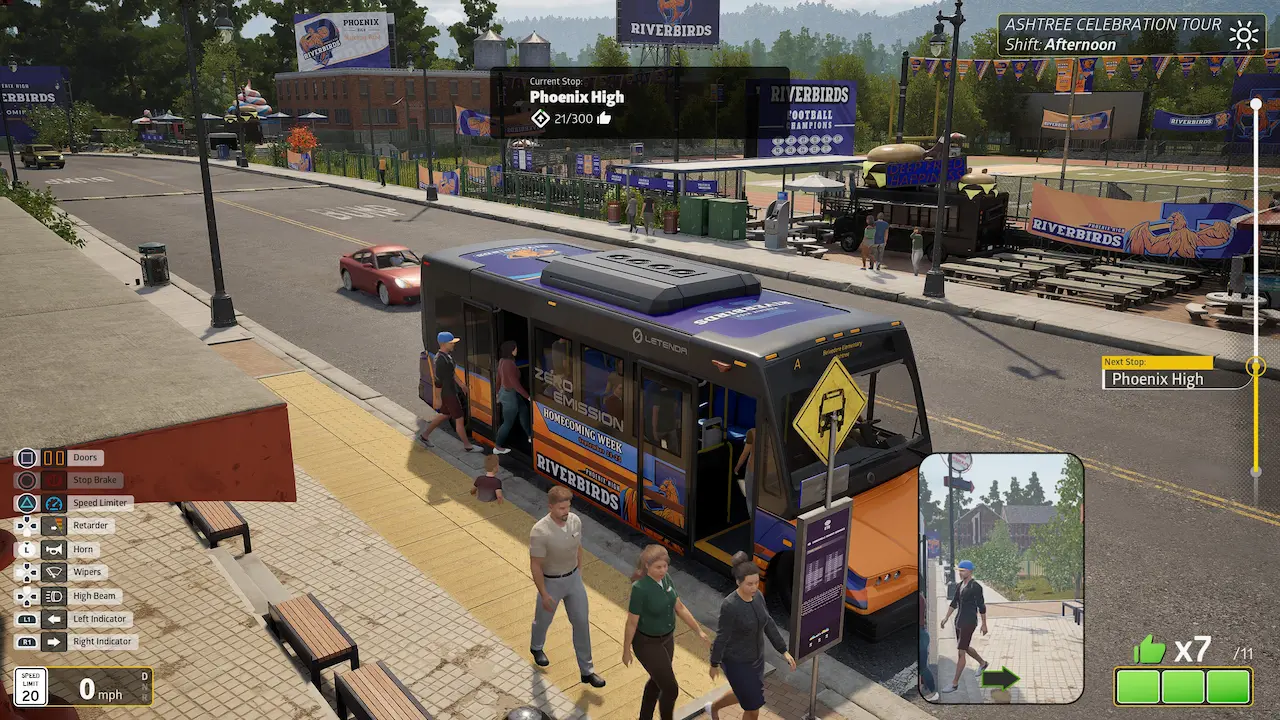
Bus Bound, however, takes a diversion from its predecessors. Instead, it presents a rather Utopian view of public transportation. All public transportation is free in Emmerville, the city where the game takes place. Rather than dealing in money, your service is measured in terms of "likes". Passengers will like your service if you arrive on time, drive safely, and obey the rules of the road.
Because no money is involved, the game's progression is entirely based on this "likes" system, which feels a little silly. You unlock new areas to service and, occasionally, new vehicles to use based on these likes, which is odd but acceptable. What is really strange, however, is that when you serve an area enough and gather enough likes, you can upgrade the area, which causes entire parts of the city to change; new infrastructure, new trees and parks are added, and buildings are updated.
From a purely gameplay perspective, that's pretty neat to have your actions change and update the city in such a way. But in the back of my mind, I'm wondering how a bus route to the neighborhood managed to create such a huge change and encourage the government and businesses to pour substantial money into the area. Maybe I'm thinking too deeply, and perhaps it's right that "Bus Bound" no longer carries the "Simulator" moniker, because in this regard, the game feels very idealistic, rather than having any sort of realism.
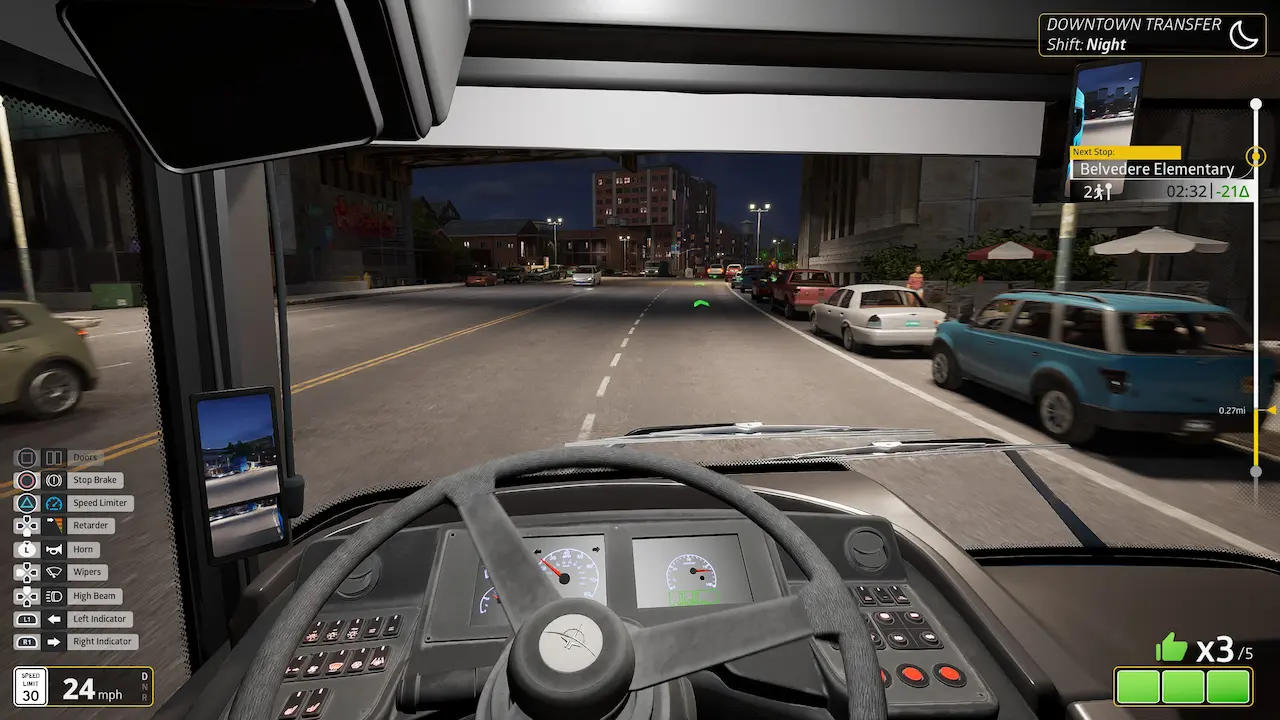
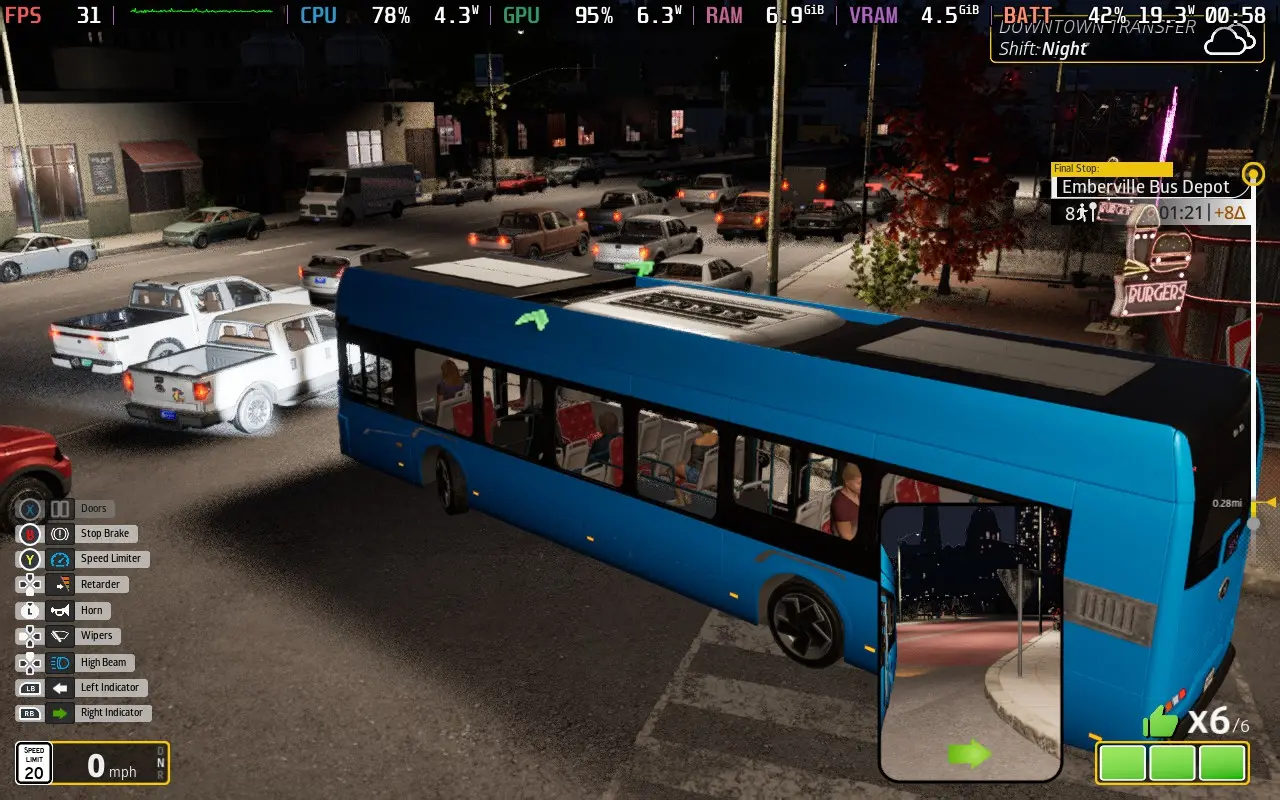
When you're actually driving the buses, we do see the development team's pedigree from their previous Bus Simulator days. The vehicles feel weighty; you need to plan your turns so you don't clip other traffic or roadside infrastructure with the corners of your bus, and you do need to obey traffic laws, such as traffic lights and stop signs, and slow down for speed bumps. I wouldn't say the driving is as involved or detailed as the Euro/American Truck Simulator games, but you do have to plan ahead.
There are also a variety of bus types. Some are smaller, almost minibus-like, holding only 15 or so passengers, making for an easier, more responsive drive. Then you have the mix of Diesel, Hydrogen, and Electric buses. Diesel buses are pretty sluggish, whereas Electric buses have a noticeable difference in how quickly they pull off the mark. It's nice to see the differences in how these buses drive represented in the game.
The AI traffic was an issue for me when I previewed Bus Bound, and I'm glad to say that the traffic behavior has improved, mostly. The AI still seems to struggle at junctions. The game uses the "Right on Red" rule, meaning traffic can still enter a junction on a red light if they are turning right. But AI following this rule shows some disregard for other traffic, often pulling out in front of other road users and causing traffic to stop at junctions, or sometimes giving way to other traffic in junctions, even though they have the right of way, causing needless traffic jams.
Arguably, these issues make the traffic appear more human-like and realistic, but it's a degree of unpredictability that is rare in simulation games and could annoy those who expect everyone to obey traffic laws as written. The developers are clearly aware of this issue, as I had seemingly endless traffic jams, with cars despawning right in front of me so I could continue playing.
Then, there's the management aspect of the game. Bus Bound is all about the betterment of the city, and to do that, you need to make sure your bus service covers all areas. Enter the Line Editor. From here, you can create custom bus routes that you will drive along and make sure that every part of the city is catered to. You'll complete objectives, mostly in the form of receiving enough likes at a specific bus stop, which in turn will unlock new vehicles and new areas to create lines in.
Unfortunately, that is about as deep as Bus Bound goes into management and logistics. I hesitate to call this game a simulator because, aside from the realistic driving physics, it presents a very idealistic worldview, aiming to transform the city into a pedestrianized, public-transport-centric metropolis. It's definitely a feel-good game in that regard, but I'm not sure who the target audience is, as it lacks the depth I would want from a simulator yet presents itself as one.
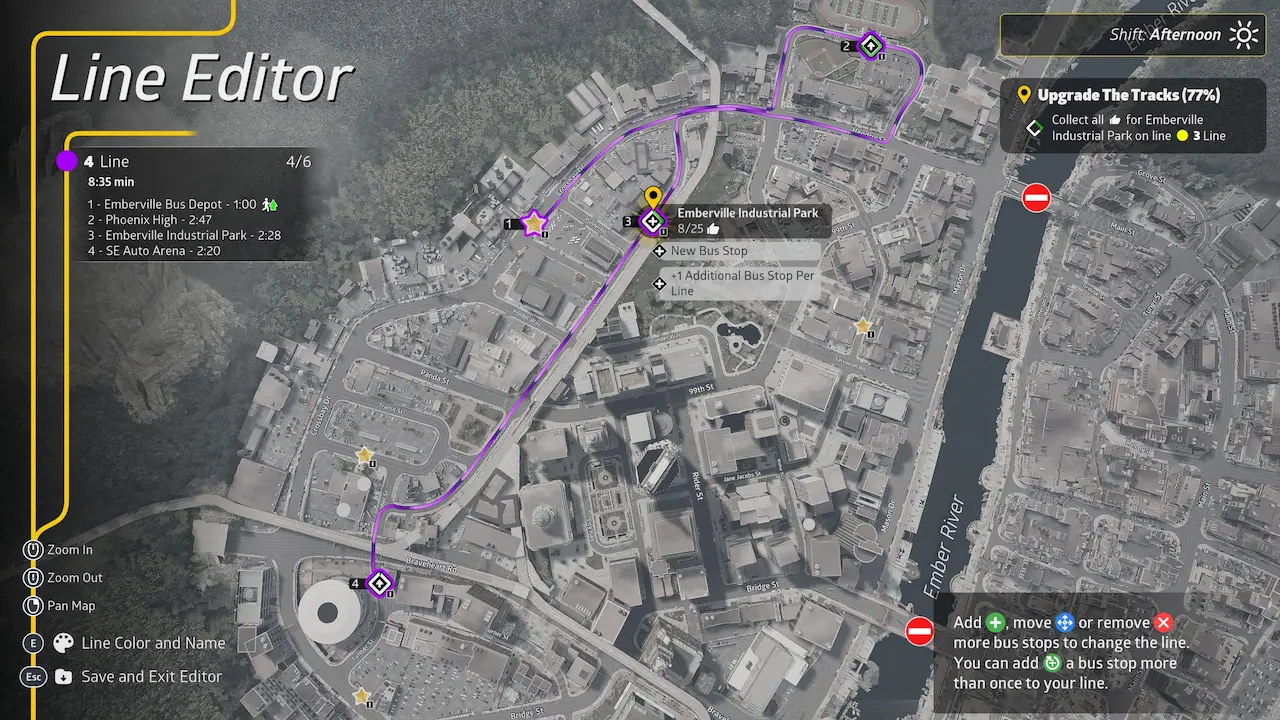
The gameplay loop is "build a line > drive the line until you get enough likes on those bus stops > upgrade the district > repeat these steps in the new district just unlocked". It's repetitive, and as you progress, the objectives become more difficult, meaning you have to repeat a line over and over to complete them, and the lack of management tasks in between makes it more tiresome than it otherwise would be.
The external camera is also awkward at some junctions, with street props/decoration interfering with the camera, pushing it very close to the bus, and making it difficult to see traffic when attempting to pull out.
Bus Bound does feature online co-op play for up to 4 players, which definitely helps break up what could be a somewhat tedious experience. It's worth bearing in mind that only the host will make progress on their save.
As is often the case with these simulators, controllers are well supported, and I would always recommend you use one over a keyboard. Bus Bound also supports 1280x800 as a resolution to take full advantage of the Steam Deck's display.
Bus Bound is quite intensive on both the CPU and GPU, but fortunately it also offers decent visual scalability, so we can get the game to a playable level on the Steam Deck.
Set all your quality settings to their lowest, then disable VSync, set the in-game frame limiter to Unlimited, disable Raytracing, and set upscaling to FSR Performance mode. You'll want to apply a 30 FPS limiter in your SteamOS settings.
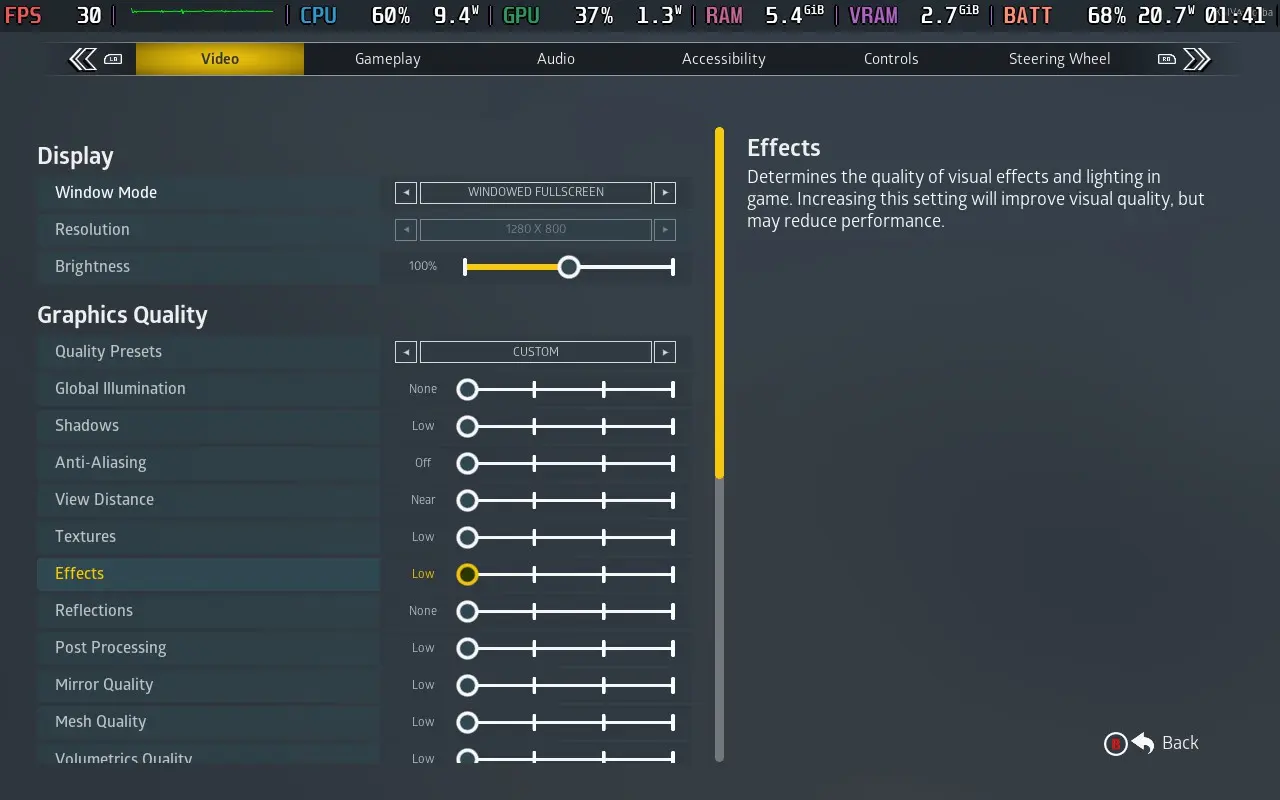
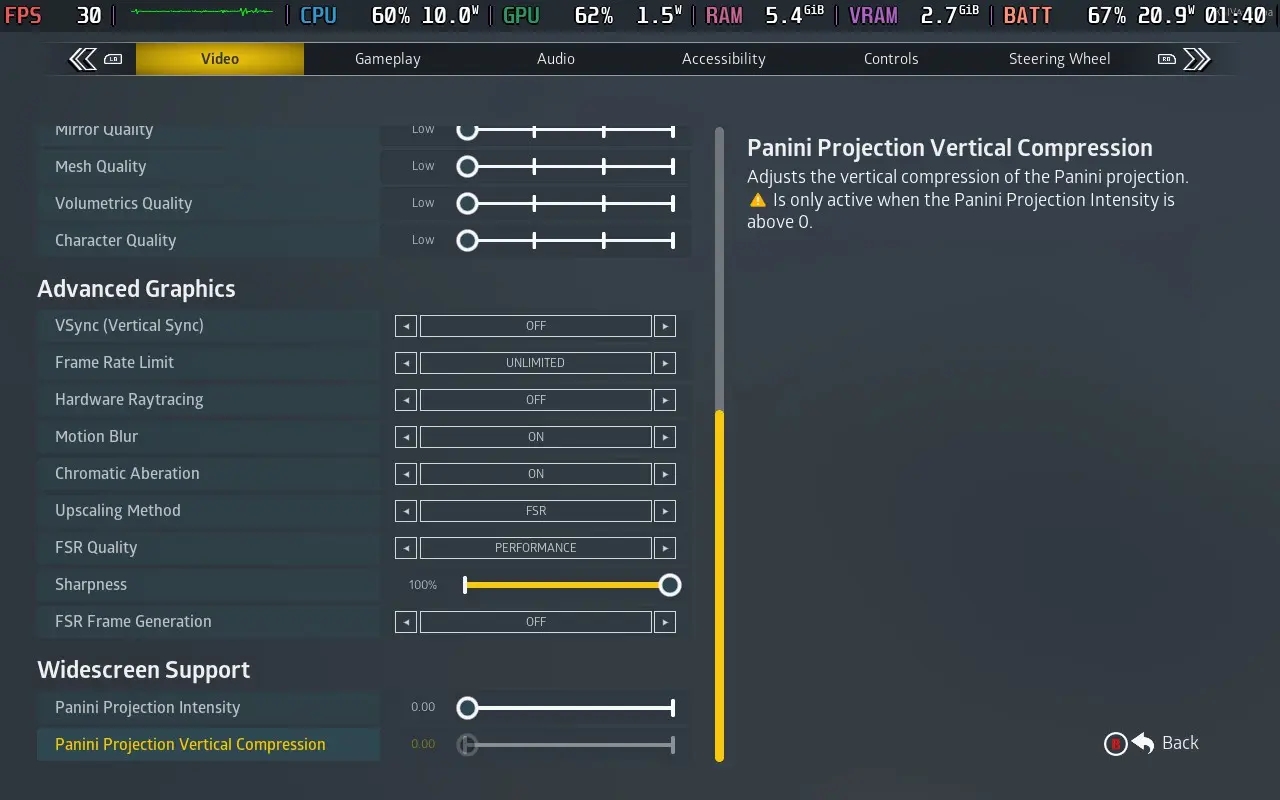
With these settings, most of the game will play at 30 FPS; some intensive areas of the city will drop into the mid-20s. Streets such as Mason Drive, which is several lanes wide with many parked cars, will drop you to 25-27 FPS for almost the entire stretch. For most areas, though, you will be hitting 30 FPS with occasional drops to 28 or 29, definitely playable given the slow-paced nature of driving a bus.
When the framerate got a little stuttery, sometimes the audio would cut out and resume a second or two later. It didn't happen often; I hit a patch every hour or so, but it is distracting when it happens.
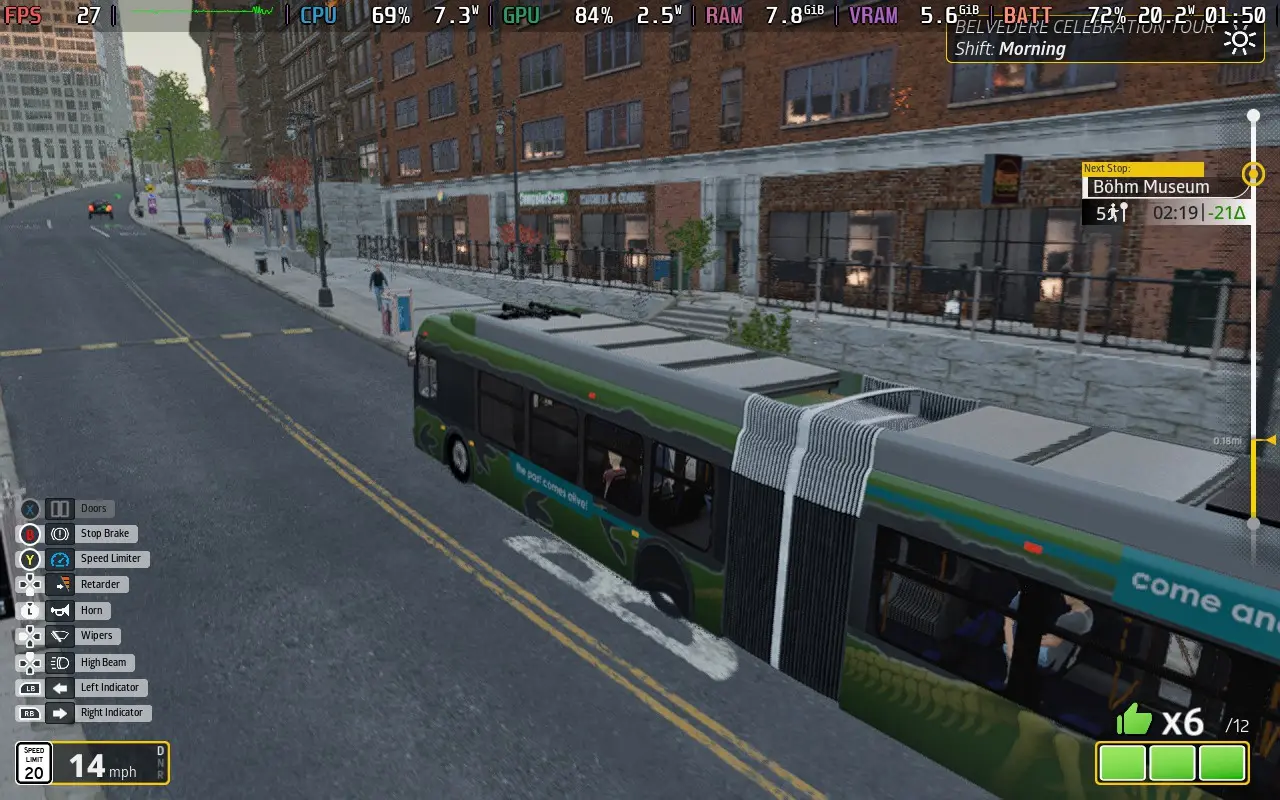
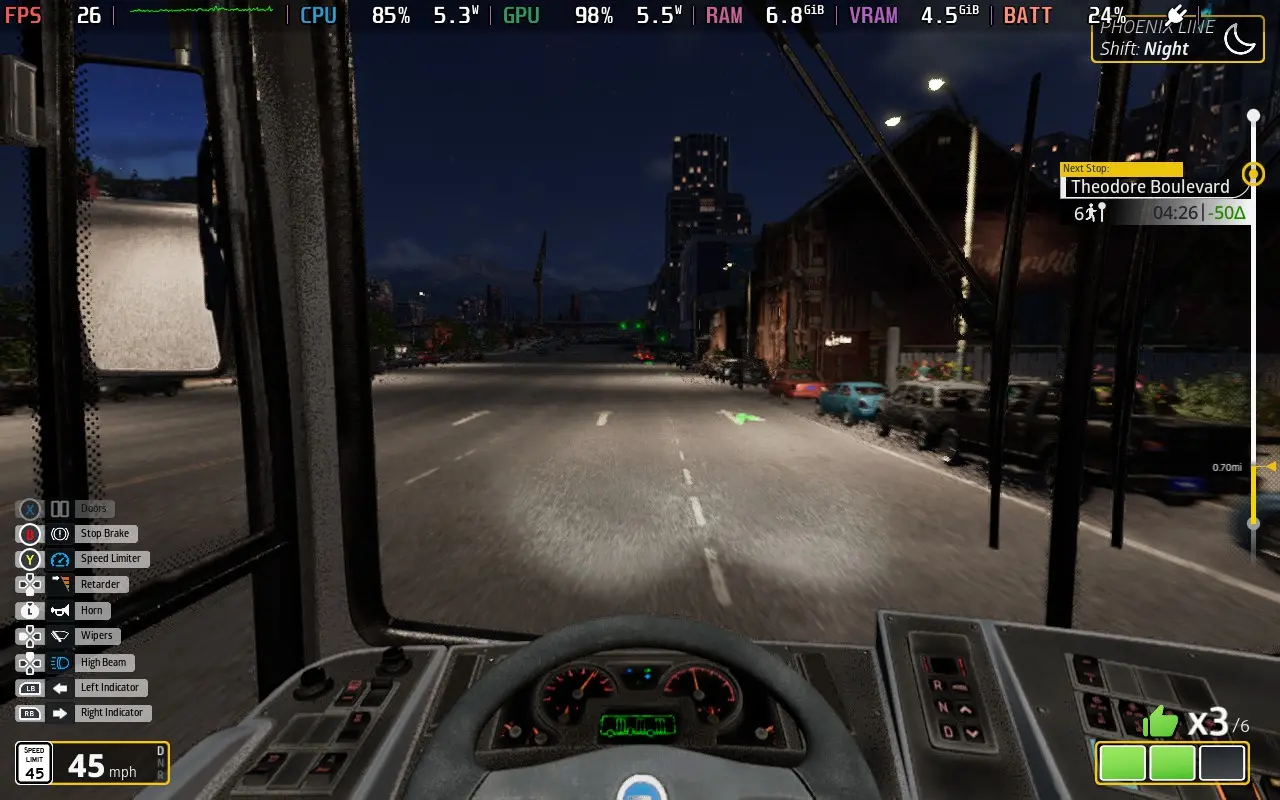
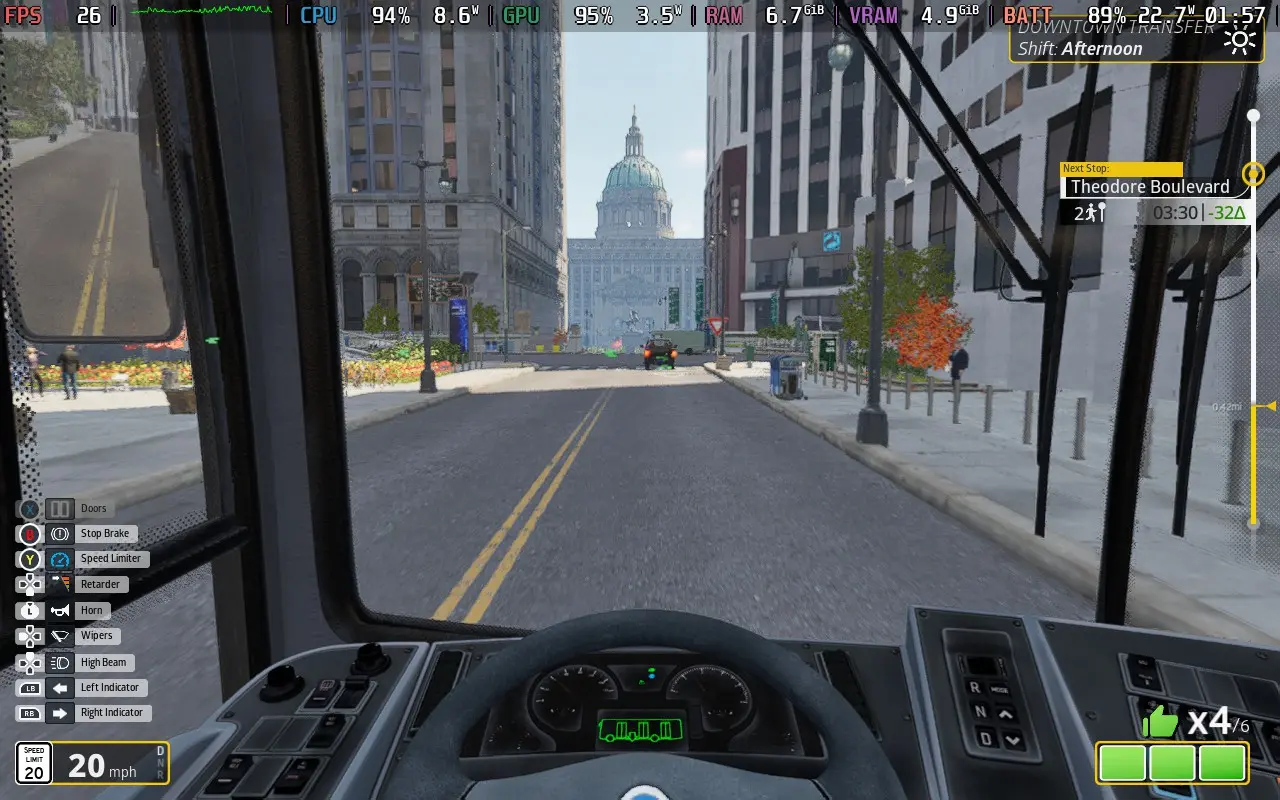
As for the power draw, expect it to be around 17W-22W, depending on where you are in the city, giving you around 2.5 hours of playtime on a Steam Deck OLED, and around 1.5 hours on a Steam Deck LCD. Temperatures were mostly around 65 °C - 70 °C.
Bus Bound features a UI Scale slider, color blind filters, and subtitle size adjustment.
Bus Bound feels like it has a conflicted identity. Presenting us with a somewhat realistic driving simulation, backed up by almost no management or logistics gameplay. Unless you want to drive a familiar path, day in, day out, then Bus Bound isn't the game for you.
Performance on the Steam Deck isn't great, but it's acceptable. If you can forgive the odd frame rate drops here and there, you can play through the game. The controller is a fine way to play driving games, too.
このレビューはPC版に基づいています。
このレビューをお楽しみいただけたなら、SteamDeckHQ の他のコンテンツもぜひご覧ください!あなたのゲーム体験に役立つゲームレビューやニュースを幅広く取り揃えています。ニュース、ヒントやチュートリアル、ゲーム設定やレビューをお探しの方も、最新のトレンドを知りたい方も、ぜひご利用ください。
Airborne Empire was provided by Stray Fawn Publishing for review. Thank you!
When it comes to the city-builder genre, I'm amazed by how one of the oldest video game genres is still finding new ways to present unique challenges and gameplay mechanics. Airborne Empire is one such example, putting players in charge of an airship that is entirely customizable as they embark on a journey to explore the world from above.
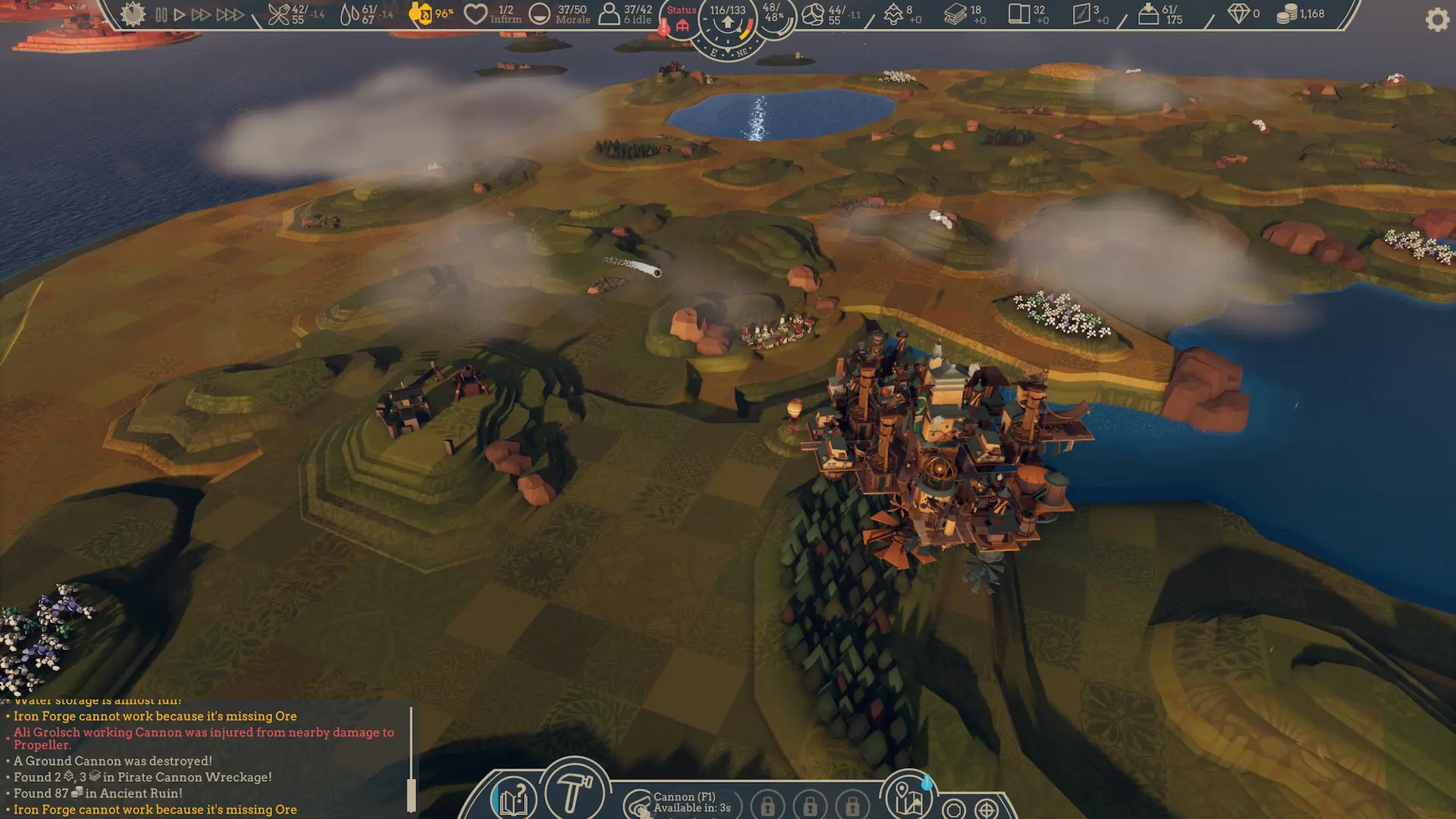
While there are survival elements to Airborne Empire, I wouldn't necessarily bunch this one in with your traditional games in that genre, such as Banished or Frostpunk. Yes, you do have to gather food, water, and fuel for your airship to survive, but the focus is on expanding and improving its capabilities, not just on providing the essentials.
The purpose of the game is to explore new areas and eliminate the pirate threat in that area to prevent the sky pirates from attacking both your airship and the defenseless kingdoms on the ground. While you do this, you'll have to provide for your citizens, research new structures, and complete the odd sidequest for some juicy loot, such as blueprints for new structures.
Airborne Empire's structure puts it at odds with your traditional city-builders. While you can build whatever you want on your airship, the game feels less like an open-ended sandbox and more akin to what the developers sell it as, an RPG. You will largely be doing quests for the kingdoms below, which often involve traveling to somewhere nearby and expending some of your resources to aid them, and there's little reason to do anything but the quests in the game.
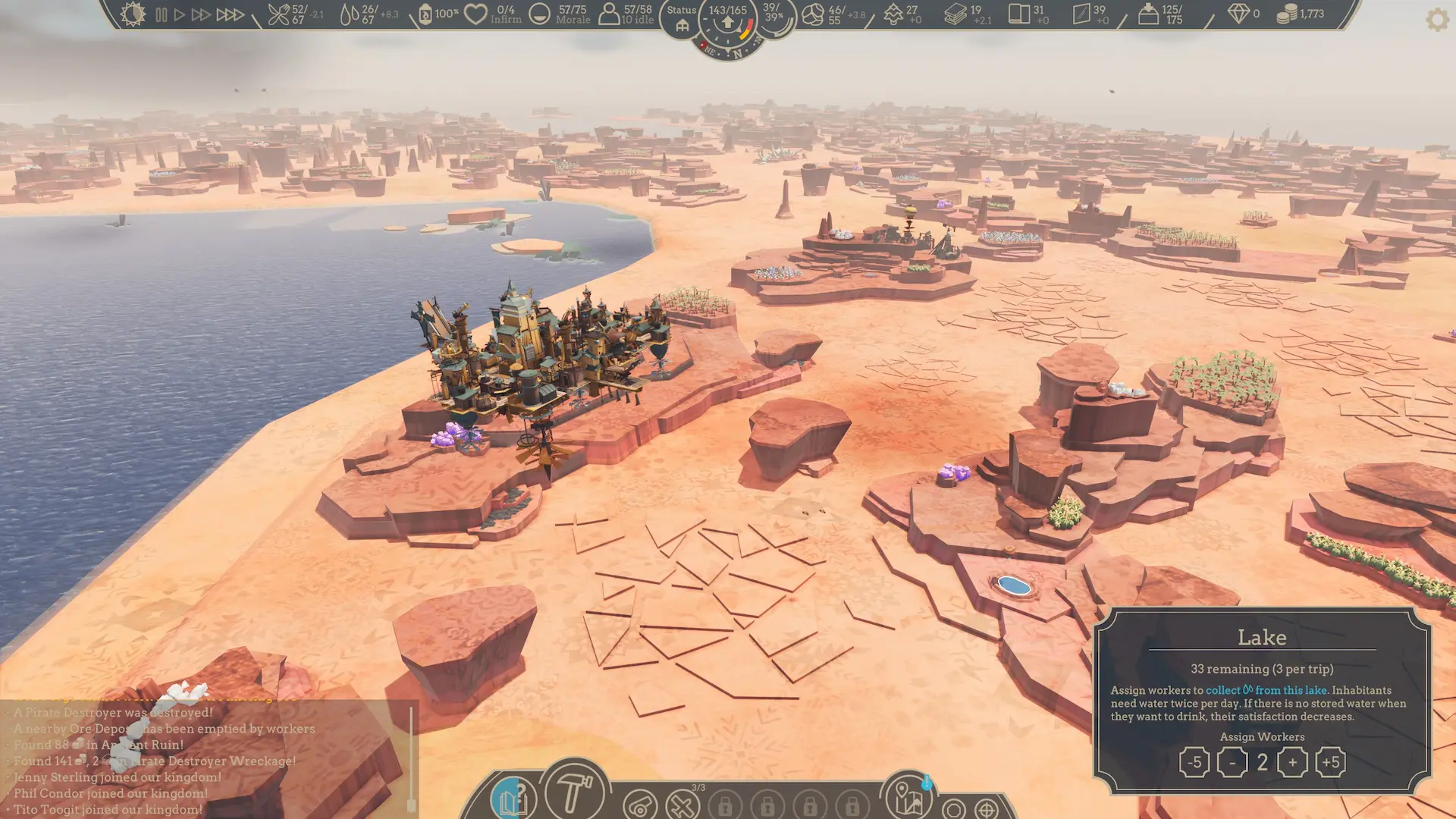
The game is fully open world and quite large, but it does feel as though certain parts of the map serve little purpose. There are only a few resource types in the game, which are fairly abundant pretty much everywhere from the start, and the focus will be on visiting a city, completing its quests, and moving on to the next city. Admittedly, there are some optional side quests that encourage you to explore further, but even then, some parts of the map feel a little superfluous.
Then we move on to the combat in Airborne Empire, which is fairly laid back. Your main defense against the sky pirates will be your Defense Towers and, later on, your own planes. The Defense Towers are pretty place-and-forget structures; assign workers to them, and they will automatically fire at any enemy within range. Then you have manual weapons, like cannons for ground structures and combat planes for other aircraft, which are as simple as selecting them, clicking the enemy you wish to attack, and letting your workers handle it from there. There is little "action" to the combat, but that suits a city-builder like this.
Fulfilling the basic needs of your citizens is a non-issue, and "progress" is made in the form of expanding your arsenal of weapons in order to take down the sky pirate threat pretty early on. As you expand, your citizens will demand more of you, but by that point, I either already had the resources or acquiring them was easy, so I could immediately fulfill their needs.
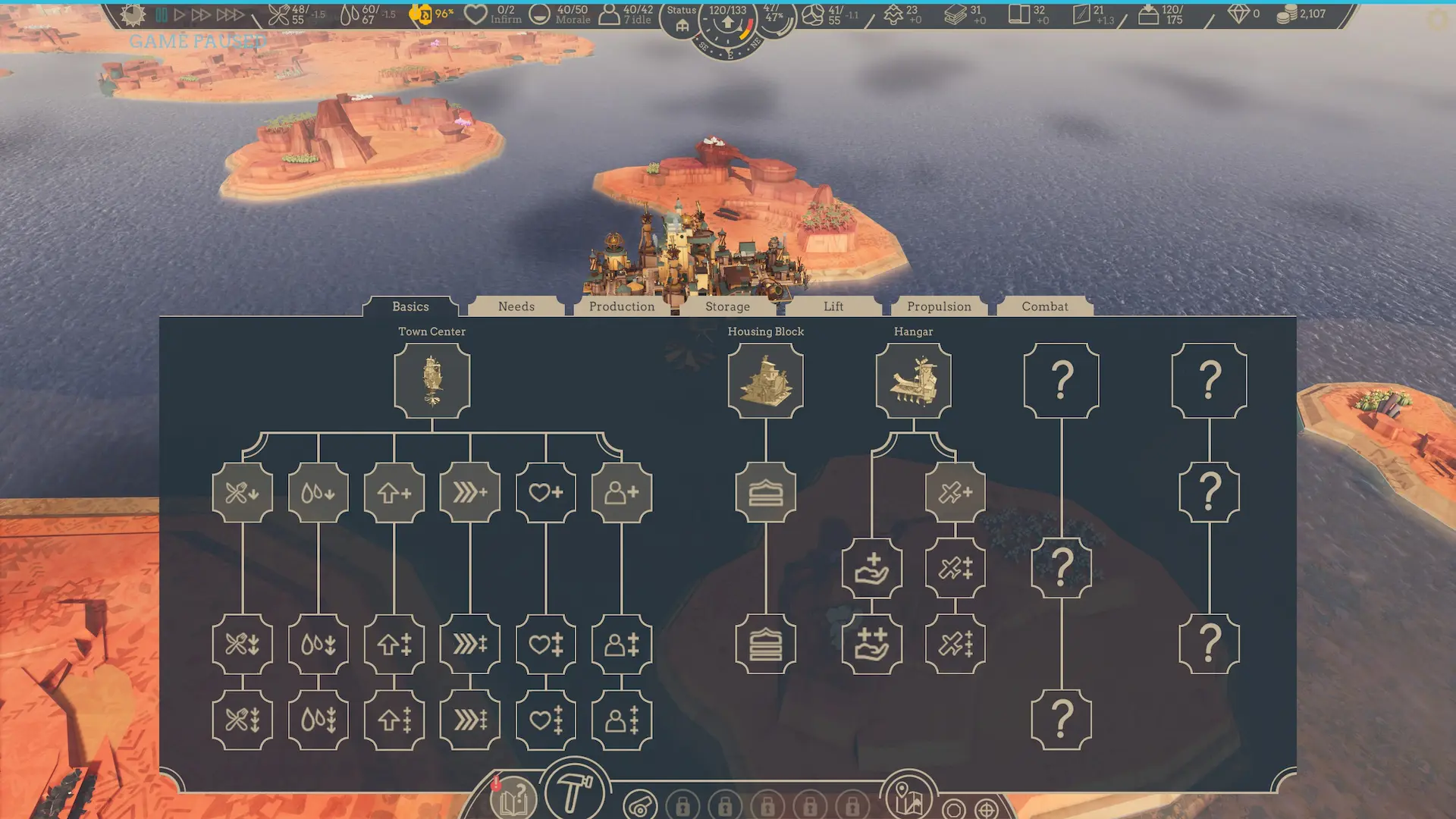
Airborne Empire is an enjoyable time. It's an odd mix of a role-playing adventure mixed with a city-builder, although neither side has too much depth to it. There are quests, but they follow a similar "go here and spend resources, then return" pattern. While I'm sure you could make a pretty airship, my build was rather utilitarian, and there are limited benefits to designing a well-organized and structured base, as area-of-effect buildings aren't really a thing in Airborne Empire. A clinic on one side of your airship will serve the other side, no problem, for example.
As is often the case with strategy games, controls are an issue for Airborne Empire on the Steam Deck. You'll need to use a custom controller layout as the game has no built-in controller support. Fortunately, there are already custom layouts available made by the community, so head into the Steam Input community layouts for the game and pick one that suits your preferred scheme.
Airborne Empire supports 1280x800 as a resolution, but the graphics don't scale well. I would recommend choosing the "Custom" graphics option and setting everything to "Very Low". The "Very Low" preset itself doesn't actually set everything to Very Low, for some reason.
The game exhibits strange behavior, and in certain areas, performance tanks to 20 FPS for seemingly no reason. My only suggestion to mitigate this is to set the GPU clock manually to 1600 MHz, as the Steam Deck doesn't seem to ramp up the GPU to handle this sudden performance hit. With the manual GPU clock, you can mostly hold 30 FPS.
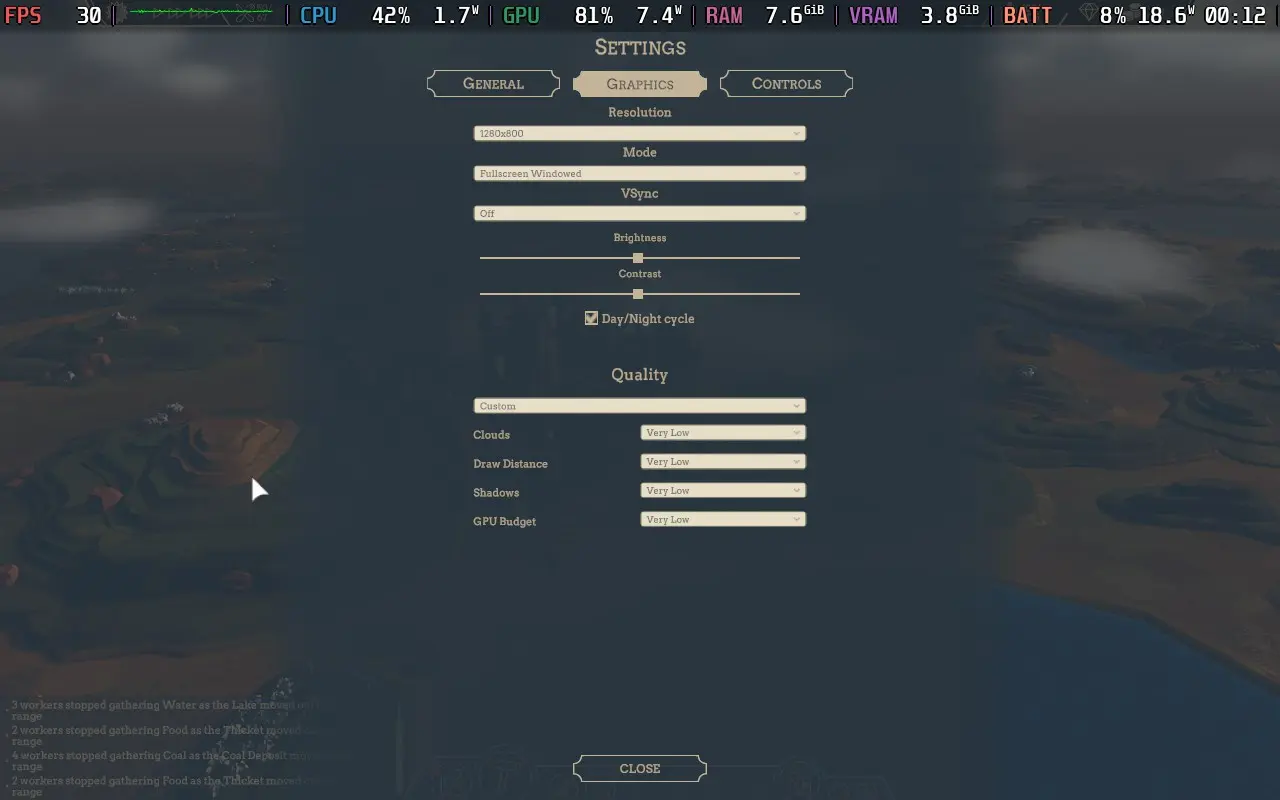
Using the Very Low settings, you can generally expect to play at 30 FPS, but occasionally you will experience drops into the 20s. There is also occasional stutter, usually when rotating the camera to look at new pieces of the world, or when visual effects play for the first time in a while, likely due to loading new assets. As well as the 20 FPS issue described above, but the game is on the cusp of playability, I would say.
If you are very desperate to avoid frame rate drops, you can disable the day/night cycle in the options menu, which does improve performance slightly; you will get drops, but they are less severe, mostly to around 27-28 FPS.
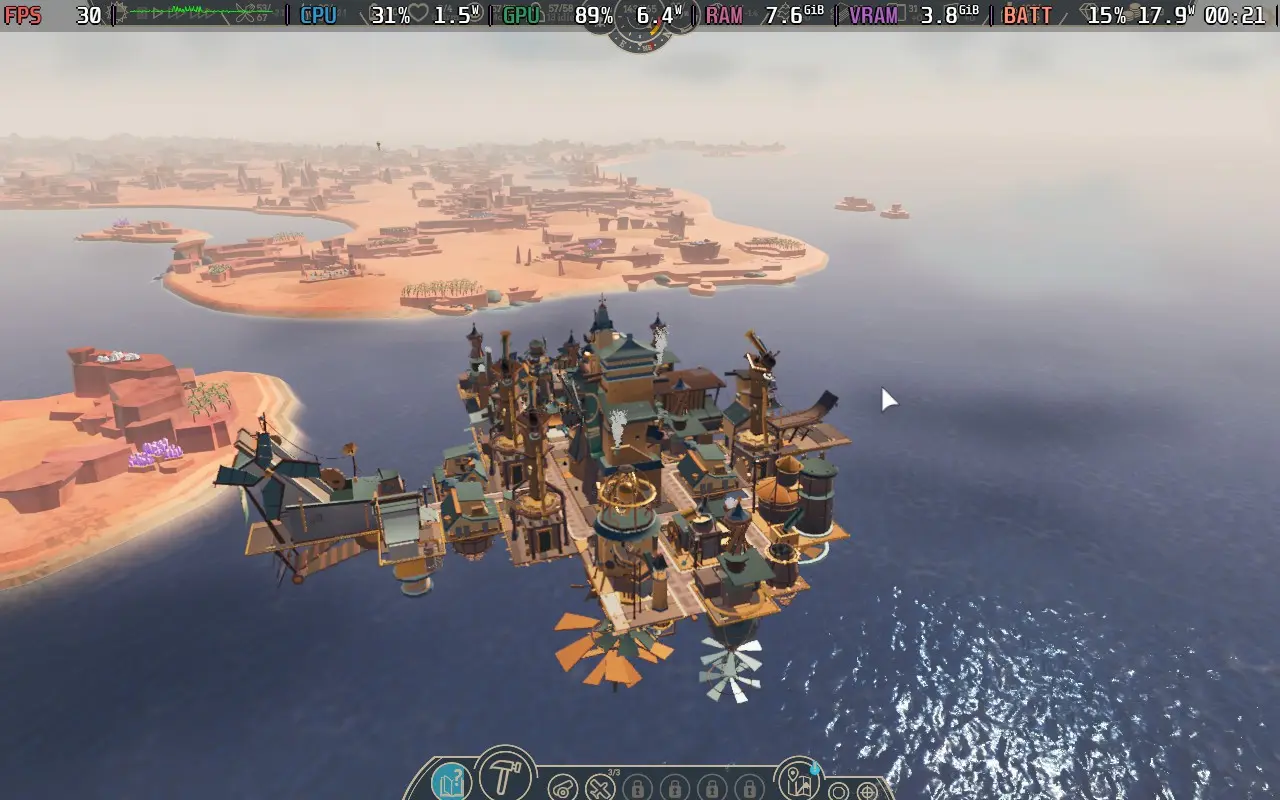
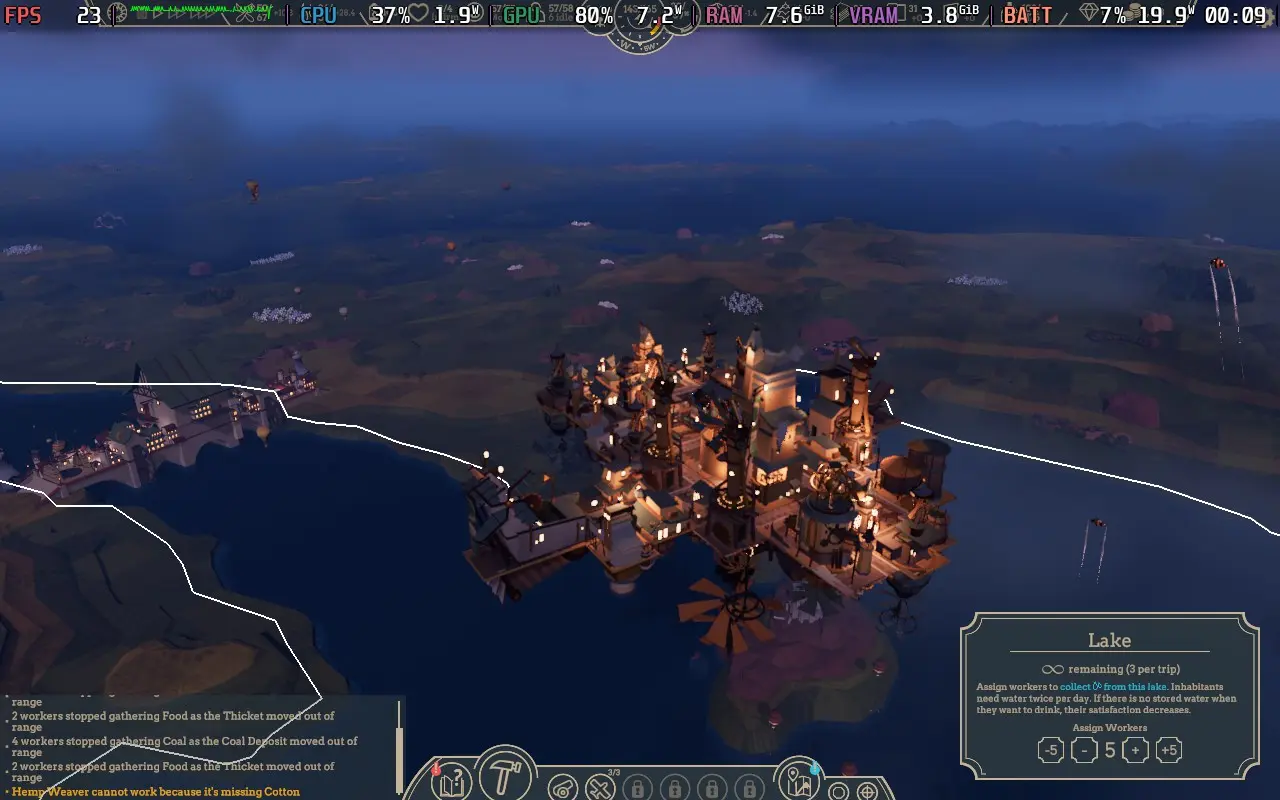
Power draw was around 18W-20W due to the manual GPU clock; without the manual clock, usage is more around 16-18W. Temperatures were around 65-70 °C. Expect battery life to be around 2.5 hours on a Steam Deck OLED and around 1.5 hours on a Steam Deck LCD.
Airborne Empire has little in the way of accessibility. All dialogue is text-based, and you can reduce the effect of sudden light flashes. There is no UI scaling, which can be problematic as certain text is small and somewhat hard to read on the Steam Deck, but it is legible.
Airborne Empire tries to merge a role-playing adventure experience with a city-builder, and while neither area excels at what they do, the game is enjoyable for a playthrough of the Adventure Mode. I can't see myself returning for repeats or trying out the non-story modes, though.
Performance on the Steam Deck is rather poor, though, given the game's slow-paced nature, arguably still playable. Do expect to have to fiddle a little with the controls, though. If possible, Airborne Empire is best enjoyed on a more powerful device than the Steam Deck.
このレビューはPC版に基づいています。
このレビューをお楽しみいただけたなら、SteamDeckHQ の他のコンテンツもぜひご覧ください!あなたのゲーム体験に役立つゲームレビューやニュースを幅広く取り揃えています。ニュース、ヒントやチュートリアル、ゲーム設定やレビューをお探しの方も、最新のトレンドを知りたい方も、ぜひご利用ください。
After almost six years since its first reveal trailer, it's safe to say that Cyberpunk 2077 lives as one of the most anticipated games the industry has ever seen. At the time, it was hard to grasp the idea of CD Projekt RED, the Poland-based development team behind the masterpiece The Witcher 3, one of the defining trademarks of the RPG genre, releasing a brand-new massive RPG set in an entirely different environment. Expectations were sky-high, but sadly, it didn’t live up to them on launch. In fact, it was the exact opposite.
When Cyberpunk 2077 launched, it became one of the biggest disappointments in recent gaming history. Countless game-breaking bugs, underwhelming visuals and animations, horrendous enemy AI, frequent crashes; too many problems to count. I played it on release day, and it felt noticeably unfinished, almost as if it had never been properly play-tested. The situation became so severe that refunds were offered across all game stores regardless of playtime or purchase date.
Still, the gaming industry has seen some incredible comebacks. No Man’s Sky, Fallout 76, and Final Fantasy XIV all launched in rough states, faced massive criticism, and were buried with their disappointment. Yet with enough determination, vision, and relentless support, they proved there was a gem hidden beneath the surface. Polish, and lots of it, is what makes the gem shine.
And Cyberpunk 2077 ultimately endured the same redemption arc after countless hotfixes, the massive 2.0 update in 2023 that fundamentally reworked core systems, and most importantly, showcased a genuine labor of love from the developer. Today, it offers players a smooth, immersive experience in its wild dystopian future, a beautiful and ambitious RPG that finally feels complete.
In Cyberpunk 2077, we control V, a charismatic mercenary with big plans and even bigger dreams. In a city like Night City, dreams are currency. Everyone wants to become a legend, and V is no different. Alongside their partner Jackie, V takes on increasingly dangerous jobs, climbing the ladder in a world ruled by corporations, gangs, and power-hungry elites. Things start small: street deals, fixer contracts, risky gigs. But one job changes everything.
A high-profile heist that promises fame and fortune goes horribly wrong. In the chaos, V ends up with a mysterious biochip implanted in their head. That chip carries the digital personality of Johnny Silverhand, a long-dead rockstar and terrorist with a deep hatred for the corporate world. Johnny isn’t just a voice in V’s head; he’s slowly overwriting V’s mind.
From that point on, the story becomes more personal than political. It’s no longer about becoming a legend; it’s about survival. V is racing against time, trying to find a way to remove the chip before it completely erases who they are. Along the way, they form fragile alliances, dive into Night City’s darkest corners, and question what identity, legacy, and freedom really mean in a world where even your mind can be altered.
At its core, Cyberpunk 2077 isn’t just about dystopian tech or corporate conspiracies. It’s about mortality. About what it means to leave a mark. And about whether becoming a legend is worth losing yourself.
Initially, the game offers three different life paths: Nomad, Corpo, and Street Kid. On paper, this is a very risky design choice. If the differences between them are too small, the whole system feels pointless. Why even pick a background if it changes nothing? But if the differences are too drastic, then you’re basically locking major content behind multiple playthroughs, forcing players to replay the entire game just to see everything.
Thankfully, your chosen life path doesn’t completely rewrite the main story. You won’t feel like you’re playing three entirely separate campaigns. At the same time, it’s far from meaningless. It changes dialogue options, offers unique ways to approach certain situations, unlocks additional context in conversations, and makes some relationships feel more believable depending on your background.
It’s not a Resident Evil 2 situation where you feel like you’re missing half the story if you don’t replay it. But it’s also not a cosmetic choice that exists just for flavor. The balance is smart. Players who want to experience the game once won’t feel punished, and hardcore fans who replay it will still discover new perspectives and subtle differences that enrich the experience.
One of Cyberpunk 2077’s greatest strengths is its characters. Night City doesn’t just feel alive because of its lights and chaos. It feels alive because of the people in it. The game does an exceptional job of writing characters that feel layered, flawed, and human. They have their own motivations, fears, and agendas. They’re not just quest givers standing around waiting for you.
Conversations rarely feel like filler. Dialogue flows naturally, and many choices feel meaningful and personally reflective of the characters and world around you. You can build trust, burn bridges, form genuine bonds, or create lasting resentment. What makes it even stronger is that the game gives you space to care. You spend time with these characters outside of main missions, seeing their vulnerable sides, ambitions, and mistakes. At some point, you realize you’re no longer just completing objectives; you’re making decisions that affect people you’ve grown attached to. You can admire them or hate them, disappoint them, or you make them proud. That emotional involvement makes the bigger story moments hit much harder.
Let’s talk about the gameplay… and yeah, we really need to talk about it. Not because it’s purely amazing or terrible, but because there’s just so much happening at all times. Cyberpunk 2077 feels like a “jack of all trades, master of none” kind of game, at least when it comes to gameplay variety.
You can play it as a full run-and-gun shooter, kick down doors, steal cars, cause chaos GTA style, and just go loud every single mission. Or you can slow things down, plan your approach, put a silencer on your weapon, and move like you’re in a stealth military game. You can barely be seen, barely be heard, and clear entire areas without anyone realizing what happened. And if that’s not your thing, you can lean into hacking and basically play as a cyber-mage, taking down enemies without even pulling the trigger. Or you can go full swordsman, rushing in with blades, parrying attacks, reflecting bullets, and turning every fight into a fast-paced bloodbath.
Then, there’s the RPG side of it. You can completely immerse yourself in your own version of V, shape your build through skills, perks, cyberware, weapons, and loot, and approach situations in ways that genuinely feel different. It’s not just cosmetic customization; your build changes how you think, move, and solve problems.
At times, it almost feels like playing several subgenres at once. Shooter, stealth, action RPG, immersive sim, all blended into one package. But here’s the problem. Every aspect I just talked about has already been done better somewhere else.
The gunplay feels solid, but not groundbreaking. It works, it’s satisfying enough, but it doesn’t have that tight, refined punch you’d expect from a pure shooter. Stealth can be fun, but it’s often too forgiving and a bit shallow compared to games that are fully built around stealth. Melee combat, especially early on, can feel clunky rather than precise and skill-based. And honestly, all of those are understandable because when a single mission can be approached in five or six completely different ways, you can’t realistically expect each of those paths to feel like a fully fleshed-out standalone subgenre.
It would be unrealistic to design a deep military stealth system, a top-tier FPS combat loop, a complex hacking simulator, and a refined melee action game all within the confines of one single game. So no, the combat isn’t bad, it just rarely shines. It’s there to experiment with, to toy around, and to express your build. It serves the role-playing, and that supports the experience, but it doesn’t dominate it.
However, the best parts of this game are found in the world-building and atmosphere. I wouldn’t be exaggerating if I said this is one of the most impressive worlds I’ve ever seen in a video game. From the spectacular visuals to the bold artistic direction, everything feels carefully crafted. But more importantly, it feels alive.
The lightning is genuinely phenomenal. Neon signs reflect off wet streets, shadows stretch across alleyways, and every district carries its own visual identity. The city feels crowded, noisy, and constantly in motion. NPCs aren’t just placed there to fill space; they make the world feel active, unpredictable, and lived-in. When all of this comes together, the futuristic design, the density, the atmosphere, it creates something special. Something that goes beyond just “good graphics.” This is a six-year-old game, yet visually it still competes with major releases in 2026.
The atmosphere is so immersive and mesmerizing that it genuinely changes how you play the game. I’m usually someone who fast-travels everywhere without thinking twice. But in Cyberpunk 2077, I found myself doing the exact opposite. I would drive manually, letting the city unfold before me, or taking the long way on purpose just to experience it. Watching the gorgeously crafted environments and listening to the distant noise of the city turn simple travel into part of the experience.
Despite all the improvements over the years, some visual bugs still pop up from time to time. They’re not game-breaking, but they can momentarily pull you out of the immersion with certain areas that feel a bit repetitive. The overall aesthetic of Night City is strong, but it sometimes leans too heavily on the same visual theme. After dozens of hours, you start noticing familiar layouts and similar environmental patterns.
And then there’s the sound design in public spaces with constant commercials and looping advertisements that can become grating. Hearing the same voices every few minutes starts to wear thin. A bit more variety would have gone a long way in making the city feel even more alive and organic.
Sound design and music are often praised in Cyberpunk 2077. And while I understand the appeal, I personally found parts of it surprisingly generic. The heavy EBM and techno tracks that dominate combat and high-intensity moments are definitely hype-inducing. They fit the on-screen chaos and amplify the action, but beyond that initial energy, they never felt particularly memorable. There wasn’t a single theme that truly stuck in my head after I stopped playing.
I’m not saying the music is bad. It works, especially during combat, and it supports the immersion, but the repetitiveness and the lack of standout identity make it feel somewhat uninspired.
Sound effects also feel a bit inconsistent. Gunshots have weight, but melee combat in particular can sound underwhelming, which makes close-range fights feel less impactful than they should.
On the other hand, the performances and voice acting are exceptional. The delivery of the lines captures the characters' emotional tone perfectly. Keanu Reeves as Johnny Silverhand is arguably one of the strongest casting choices in modern gaming, going a step further to define his character's presence.
Despite everything the game does right, there are areas where it struggles. One of the biggest issues, especially in the early hours, is how overwhelming it can feel. From the start, you’re introduced to life paths, attributes, perk trees, cyberware, weapon stats, crafting systems, quickhacks, and street cred. It throws a lot at you all at once.
At first, it almost feels unnecessarily complex. As if the game expects you to understand a dozen interconnected systems before you’ve even had time to settle into the world. But as you keep playing, you slowly realize it’s not as complicated as it first appears. The systems start making sense. The upgrades become intuitive, and the game opens up instead of suffocating you.
And then there’s the stealth issue. While missions technically allow multiple approaches, the narrative tone often nudges you toward staying quiet. Characters repeatedly suggest avoiding attention, not causing chaos, and keeping things clean. Even though going in loud is always an option mechanically, it sometimes feels like the story subtly discourages it.
From a pure gameplay standpoint, you’re free, but from a roleplay perspective, it can feel like you’re being steered in a certain direction, and that can slightly hurt immersion, especially if your version of V isn’t the sneaky type.
Side quests are also a mixed bag. Some of them are genuinely excellent. They can be funny, unexpectedly emotional, or surprisingly creative. At times, they allow you to get to know certain characters on a deeper level, strengthening your relationship with them in ways the main story alone wouldn’t. These quests feel fluid, well-written, and thoughtfully designed. In many cases, they don’t feel like side content at all, but like essential pieces of the overall narrative.
But when it comes to gigs, my experience was different. At first, they feel exciting with new locations, new objectives, and new contracts to complete. But after a while, the formula becomes noticeable. Go to point A, neutralize or retrieve something, leave the area, and repeat. Individually, they’re fine, but collectively, they start to become extremely repetitive and bloat our map due to the sheer number of them.
After dozens of hours, I found myself doing gigs less because I was curious about the story, and more because I wanted the XP, money, and materials. They slowly shifted from feeling like captivating mercenary contracts in a living city to feeling like a checklist of chores. They’re not poorly designed. They just lack enough variation to stay consistently engaging in the long run.
This isn’t just another expansion thrown on top of an already massive game. Phantom Liberty stands as one of the most fully fledged and complete DLC experiences I’ve ever played. It doesn’t feel like side content; it feels essential to the base game's narrative.
One of the smartest decisions CD Projekt RED made was not placing this expansion after the main game's ending. Instead, Phantom Liberty triggers at a middle point within the main story. It blends naturally into the narrative, without feeling forced or detached. Whether you’re deep into your playthrough or just recently started, the transition feels natural. It doesn’t interrupt the flow; it enhances it.
Dogtown, the new region introduced in the expansion, brings a completely different atmosphere to the table. While Night City is chaotic and flashy, Dogtown feels tense, controlled, and political. The environment is tighter, more oppressive, more focused. It carries a different energy, giving the expansion a flavor that sets it apart from the base game.
But the real gem is the story. Phantom Liberty focuses heavily on political themes, moral ambiguity, and character motivations. The narrative feels more cinematic, linear, and far more intense. The writing is spectacular. The dialogue carries more weight. The choices feel heavier.
In many ways, the storytelling here surpasses even the base game. The characters are more complex, the conflicts feel more grounded, and the emotional stakes hit harder. You’re not just completing missions. You’re navigating loyalties, betrayals, ideologies, and consequences.
I don’t want to go into too much detail about the story here because it deserves to be experienced firsthand. In short, Phantom Liberty is not just a great DLC expansion, but a worthwhile, strong, and plentiful addition to the overall RPG genre.
Even though Cyberpunk is a very demanding game with gorgeous visuals, it runs surprisingly smoothly on the Steam Deck. There is a default “Steam Deck” preset, but I highly recommend not using it. It’s locked at 30 FPS, and it feels way too clunky. It occasionally drops to the low 20s, especially in open-world areas and the Phantom Liberty expansion. Also, the visuals don’t really justify losing frame rate. My recommended preset looks just as gorgeous as the default Deck preset, but manages to lock the game at a solid 40 FPS.
The first thing I tried was giving up on FSR 2.1 scaling and setting it to XeSS. On most games, it works wonders, but here it felt a bit cheap and rough around the edges. Even though it helped with the blurry image, it caused the game to lose immersion and left a bad taste in my mouth. By default, the game uses the Balanced preset for FSR 2.1. Setting it to Quality mode gives perfect sharpness, allowing you to lower the detail settings without much sacrifice.
Setting motion blur to low or off is usually a matter of preference, but with a game running in the low-40s FPS range, I personally think disabling it gives a much better experience. If you like the effect, you can set it to low, like I did, since the previous FSR 2.1 Quality setting already made the game crisp enough. Other settings mostly involved turning some lower-priority options from high to medium, or medium to low. I targeted a perfect 40 FPS even in the most demanding parts of the game, and I mostly achieved it.
In the base game, most of the time it’s going to be a smooth 40 FPS. The only exceptions are when driving cars in vast open-world areas. But those drops are rare enough that they’re hardly noticeable.
The major performance issues lie in Phantom Liberty itself. Even though it’s a DLC, it’s a huge one. It contains the full foundation of the 2.0 update, and the new Dogtown map is a very demanding place to be. In open areas of Dogtown, expecting a solid 40 FPS is unrealistic. It consistently drops into the low 30s and can even dip to 28.
The good news is that during main story quests and indoor sections, it maintains the smooth 40 FPS experience. Especially after playing the game for hours at higher FPS, locking it below 30 would hurt immersion.
It’s still highly playable and looks as gorgeous as ever. The only Deck-specific issue I found was the small HUD and hard-to-read text, but luckily, you can fully adjust it in the Accessibility tab, and I highly recommend doing so.
There is a dedicated accessibility settings tab in the game, and it’s an incredibly detailed and well-thought-out option set. There are a couple of color blind modes, adjustable HUD sizes, and even a center-of-screen dot overlay.
You can also customize subtitles in various ways, including different sizes and colors. There is aim assist for both ranged and melee combat, and it’s highly customizable as well. It’s clear that CD Projekt RED put real effort into making the game accessible for as many players as possible across all platforms and styles.
What once launched as a huge disappointment has now become one of the strongest comeback stories. Cyberpunk 2077 is now an immersive RPG that combines multiple types of gameplay in very solid ways. Its freedom, both in gameplay and in its open world design, is top-tier. No matter the platform you play it on, including the Steam Deck, it remains one of the most gorgeous-looking games available.
The early hours can feel overwhelming, some gigs become repetitive over time, and certain gameplay systems don’t fully shine compared to games that specialize in them. But despite all of that, the incredible atmosphere, engaging storylines, and well-written characters are what make Cyberpunk 2077 such an awesome experience.
このレビューはPC版に基づいています。
このレビューをお楽しみいただけたなら、SteamDeckHQ の他のコンテンツもぜひご覧ください!あなたのゲーム体験に役立つゲームレビューやニュースを幅広く取り揃えています。ニュース、ヒントやチュートリアル、ゲーム設定やレビューをお探しの方も、最新のトレンドを知りたい方も、ぜひご利用ください。
When I first played Death Stranding when it came to PC back in 2020, I really liked Kojima’s bold and unconventional approach to the gaming industry. But even though the story was great and engaging, the gameplay felt too experimental. Now, one year after the initial release of Death Stranding 2, PC players can finally embark with Sam on a new journey filled with even more struggles, more content, and that signature Kojima-esque insanity, improving upon the experimental nature of the first game.
From the moment the game begins, you're thrown into one of gaming's most expansive atmospheres. A massive, mountainous landscape with almost photorealistic graphics, a goosebump-inducing soundtrack, and a strong sense of freedom. The game lets you know that you are about to embark on a journey that is going to be very special and truly one of a kind from minute one. No game has made me feel this excited and blown away right as we get past the main menu.
The story is set shortly after the first game. Sam has connected all of the UCA, saved the world from extinction, and moved on from his past life, now living a simple, quiet life with his former companion, now daughter, Lou, in a shelter near the Mexican border. But as you might expect, not everything goes according to plan, and he is forced back into his old porter life, this time in Mexico and Australia.
While the game’s narrative retains the predecessor’s mysterious, deep tone, it feels more grounded and clearer, thanks to more action-packed cinematics and a less confusing plot. This is a huge improvement, as almost half of the world’s lore in the first game was delivered through holographic, often dull dialogue. Now, you have clearer goals and more engaging conversations. The sense of loneliness that defined the first game is largely gone as well. This time, you have a crew and masterfully written new characters to accompany you.
Kojima’s infamous, unfiltered, awkward yet fun style also remains, but it feels less out of place and more organic this time. These “what the hell is this?” Kojima moments don’t disrupt the overall serious tone of the narrative; instead, they add a unique signature from the master himself.
The only criticism I have is that the overall story structure feels a bit too similar to the first game. Nevertheless, it’s still one of the most engaging scripts I’ve ever experienced in a video game.
I’m just going to say it without any exaggeration: the graphics in Death Stranding 2 are the best I’ve seen so far. Nothing else comes close. The attention to detail, lighting, and facial features is unmatched in the industry. It feels like mind-blowing witchcraft.
We already knew Decima was a powerful, optimized engine, but seeing this level of almost-photorealistic visuals feels genuinely surreal. Thanks to the game’s new day and night cycle, you can fully experience the beautiful sunny environments, gorgeous sunsets, and the insane blue neon chiral lights at night in every scene. The art direction and design team also deserve praise for turning post-apocalyptic Australia into a vast, incredible playground for us to explore every inch of. The motion-capture performances from well-known actors further enhance immersion, making this the most visually stunning game out there.
Much like its predecessor, the soundtrack and sound effects are also incredibly well done. The BT horror area audio design, in particular, has improved so much that it single-handedly turns these sections into a full-on horror experience. It's flawless.

The most radical and pleasantly surprising change in terms of gameplay is the main story design. In the first game, much of the experience embraced the walking-simulator and cargo-delivery style, while action, stealth, and horror mechanics felt like they were sprinkled in just to keep players from getting bored. In Death Stranding 2, it’s the complete opposite. Almost every main order turns into an encounter-driven sequence, while the traditional “delivery style gameplay loop” is mostly optional.
I’m actually one of the few people who enjoyed the delivery struggles, careful planning, and overall porter-style gameplay, but even I prefer the action-packed approach this time. The main reason for that is the new variety of enemies, which was nearly non-existent in the first game.
Instead of the classic “human enemy,” “a BT,” and “a large boss BT,” we now have a whole arsenal of different enemy types. There are countless BT animals, new BT variants such as Watchers that can see you, and dozens of different mech enemies and bosses. It all feels incredibly rich. And each type of enemy requires its own specific approach, tactics, and weapons, so the original “pre-planning” magic is never lost. If anything, it’s amplified in a different way.
There are countless new weapons, fun and useful tools, transports, customization options, and a massive new talent system that are unmatched in the industry. The new day-and-night cycle adds another layer, with different wildlife and stealth possibilities, along with new natural hazards and much more. The gameplay feels truly alive and fun. The game also offers more dialogue options and lots of fun Kojima-esque mini-games. It feels impossible not to get hooked thanks to the incredible amount of improvements and unique content.
One more thing I need to highlight is the boss fights, because they are genuinely exceptional. After the bullet sponge, amateurish encounters of the first game, DS2 takes a sharp U-turn and delivers some of the best-designed boss fights I’ve seen in years. Each one feels closer to an MMO raid boss, with unique mechanics, strategies, and even puzzle-like elements you need to figure out. They all feature clearly readable attack patterns and hidden weaknesses, rewarding observation and adaptation over brute force.
Especially on the new “To the Wilder…” difficulty, you’re pushed to refine your muscle memory and come prepared. Instead of relying on bloated health pools, bosses hit incredibly hard, often taking you down in just two hits. But because every attack is avoidable with proper positioning, timing, and tactics, the challenge feels fair rather than frustrating, making each victory satisfying.
However, the PC version came with some new features that the original release never saw. The best part exclusive to the PC version is the new “To the Wilder…” difficulty option. Unlike other difficulty settings, once you choose it, you can’t change it. Honestly, it feels like the best way to experience the game.
The spike in difficulty mostly affects the more realistic, simulation-focused aspects. Combat and stealth are largely unchanged. This means you’ll lose your balance more easily, your stamina and battery drain much faster, and natural hazards affect you more severely. If you don’t like auto-piloting through even the walking simulator sections and prefer to stay engaged, I highly recommend giving it a try. You won’t regret it.
The online section of the game largely remains unchanged, with the only new addition being the Aid Request system. If you want something to be built or need specific materials, you can place a request sign anywhere on the map, and other players can help you. Other than that, seeing and using other players’ useful structures still feels awesome. Linking your zip lines with those of other players especially amplifies the sense of “connection” to a whole new level. It was an awesome feature, and it still is.
When I first opened the graphics settings for Death Stranding 2, I saw a “Portable” preset and got really excited. But once I applied it and jumped into the game, I was met with a massive disappointment. Even with upscaling set to Ultra Performance, the game struggles to reach 30 FPS outside of cinematics, mostly hovering around 13–22 FPS with heavy compromises. And that’s not even the worst part. I encountered a whopping 40-second freeze, along with a separate crash.
Similar to the first game, it heavily bottlenecks the CPU, and sadly, the Deck just can’t handle it.
Still, the presence of a Portable preset gives me some hope for the future. But even with a stable 30 FPS, I wouldn’t recommend playing this on the Deck. The Portable preset looks terrible, and this is a game that needs to be experienced in full immersion. I’m all for minor visual compromises, but when everything looks like it’s from the PS2 era, that’s simply unacceptable.
I usually hate Frame Generation and never recommend it since it usually creates more issues while fixing FPS. I must admit that turning on XeSS FG makes the game ''somewhat'' playable if you are just building structures, doing side orders, or farming materials. Combat feels awful thanks to the input delay, so stay away from enemy territories.
There are some unofficial workarounds to improve the frames and gameplay, like the Eclipse mod. I tried them all, but they became barely playable, and still not worth the effort and risk. They never perform the miracles we need for fully stable gameplay.
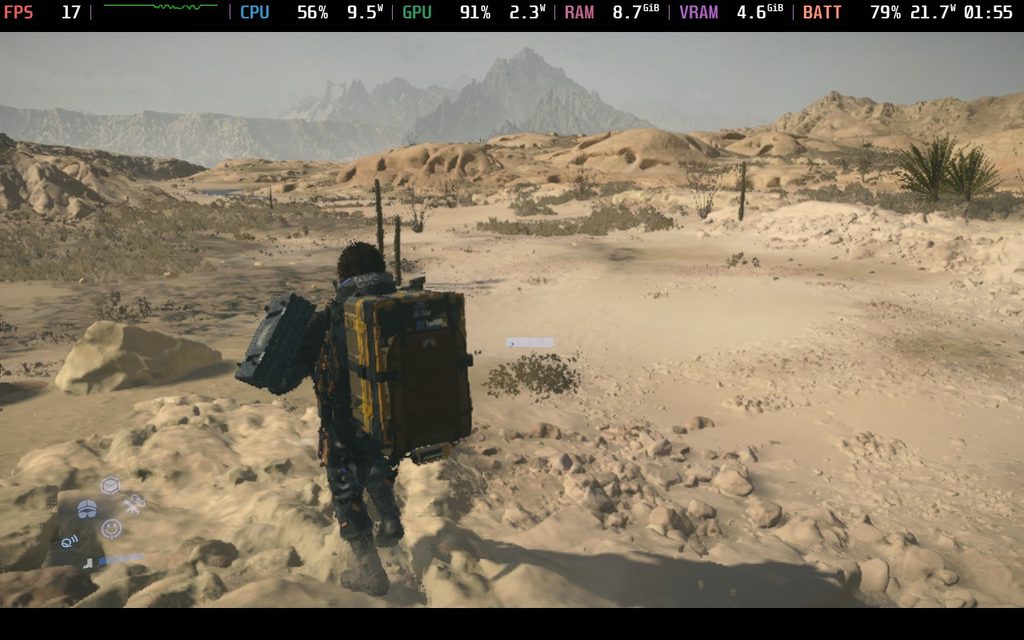
Death Stranding 2 is everything I could have asked for in a sequel and more. Its incredible improvements, combined with insane visual quality and immersion, make it an outstanding experience from start to finish. Even if you were put off by the first game’s gameplay loop, the sequel’s more action-packed approach and more natural, engaging narrative make it feel fresh.
If the “delivery man” aspect of the first game put you off, and you really hated the idea of all the delivering and “walking simulator” elements, that core concept and gameplay loop are still very much here. However, there's a lot more action this time around, and the experience is far more accessible than before, but it still remains a very unique game that simply won’t be for everyone.
Steam Deck users should wait for a couple of patches to see if things improve. It can still be used for simple side orders while you’re away, like I do, but playing the main story with this level of visual flaws and performance issues is something I can’t recommend.
このレビューはPC版に基づいています。
このレビューをお楽しみいただけたなら、SteamDeckHQ の他のコンテンツもぜひご覧ください!あなたのゲーム体験に役立つゲームレビューやニュースを幅広く取り揃えています。ニュース、ヒントやチュートリアル、ゲーム設定やレビューをお探しの方も、最新のトレンドを知りたい方も、ぜひご利用ください。