Every once in a while, you come across a piece of media that resonates with you for years on end. The emotional impact, countless hours spent absorbing the music, characters, atmosphere; it all comes together to create something uniquely mesmerizing. The kind of experience that makes you silently realize you're deep into one of your favorite games of all time.
Clair Obscur is the very first game from indie studio Sandfall Interactive, and before release, almost nobody expected it to become such a massive hit and dominate award shows the way it has. This small team of 33 passionate French developers delivered something gigantic, and its impact will likely leave a mark on the overall gaming industry for years to come.
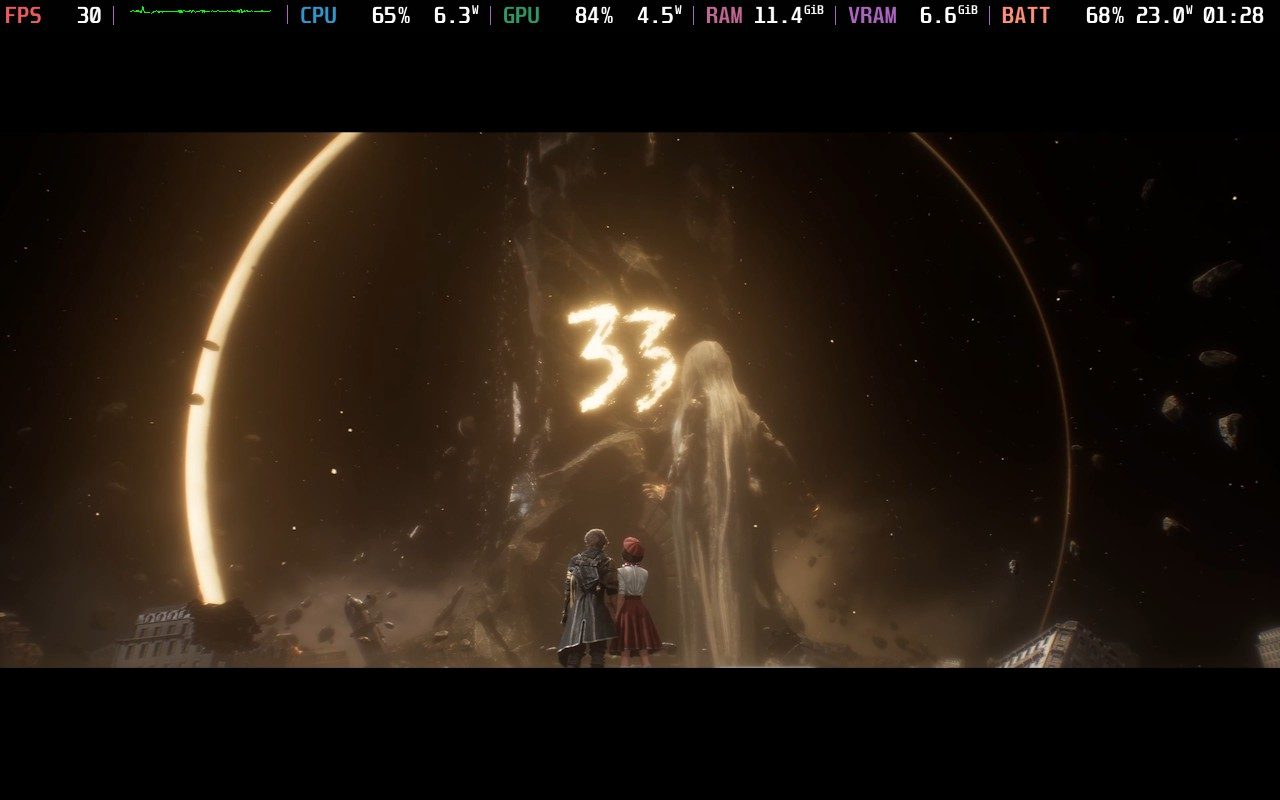
Set in a breathtaking dark fantasy world inspired by the Belle Époque golden age in France, Clair Obscur: Expedition 33 tells the story of a civilization slowly approaching extinction. Every year, a mysterious being known as the Paintress awakens and paints a number upon a massive monolith. Anyone matching that age instantly vanishes without a trace. With the number decreasing year after year, humanity sends an expedition into the unknown each time, hoping to find the Paintress and finally end the cycle. Expedition 33 follows the 67th expedition, a group of people marching toward an almost impossible mission, knowing that their own remaining time is running out. What follows is an emotional and deeply personal journey filled with loss, mystery, and the constant fear of inevitable death.
The story and writing are etched with a level of screenplay and dialogue quality that competes with film classics. Without diving into spoilers, the narrative constantly evolves through multiple emotional and philosophical layers. Much of the experience revolves around mystery, slowly connecting fragmented conversations, hidden meanings, and puzzling dialogue pieces together. That constant feeling of trying to understand the truth behind everything is what made the story so addictive.
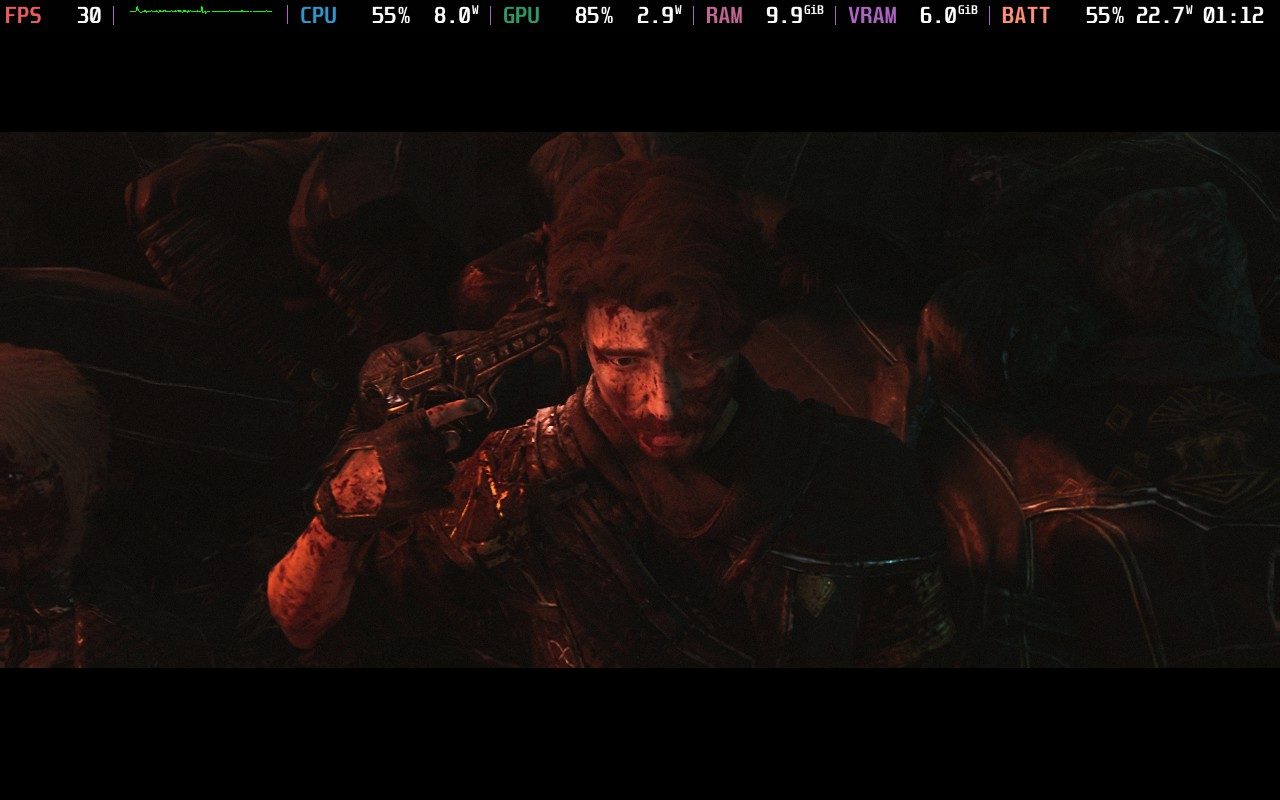
Clair Obscur distinguishes itself from its peers through its characters. From major cast members to side characters you may only speak to once, nearly everyone feels carefully written and memorable. One of the smartest decisions in the script is that no character feels completely devious or maligned. The game masterfully captures the grey areas of humanity, constantly pushing the player to empathize with actions that may be wrong, desperate, or forced by circumstances.
Story and writing are personally the most important aspects of a video game for me. With most games, I usually find myself nitpicking certain flaws or decisions I didn’t fully like. But in Expedition 33’s case, I genuinely struggle to think of anything I would change. The writing quality throughout the experience is nothing short of masterful. It made me cry, laugh, reflect, and constantly kept me emotionally invested from beginning to end. It was a complete rollercoaster of emotions.
When it comes to gameplay, my favorite way of describing Expedition 33 is “the best of both worlds.” The combat system feels like a near-perfect blend of classic turn-based Final Fantasy combat and the reaction-based defensive mechanics of Souls-like games such as Sekiro: Shadows Die Twice. While adding active reaction mechanics into turn-based games is not an entirely new concept, Expedition 33 is in a class of its own.
At first glance, combat starts like a traditional turn-based RPG. You build a party with different characters, unique strengths, playstyles, and skill combinations, carefully strategizing your way through encounters. However, once enemies begin attacking, the game transforms into something far more interactive. You can dodge, parry, or jump over attacks entirely through player reaction and timing.
Parrying, in particular, becomes one of the most satisfying mechanics in the game. It is extremely difficult to master, but also incredibly rewarding. Every successful parry grants AP, allowing you to build resources even while defending. Perfectly parrying entire enemy combos triggers devastating counterattacks that feel impactful every time. After hundreds of hours of gameplay, landing a full counter never stops being satisfying.
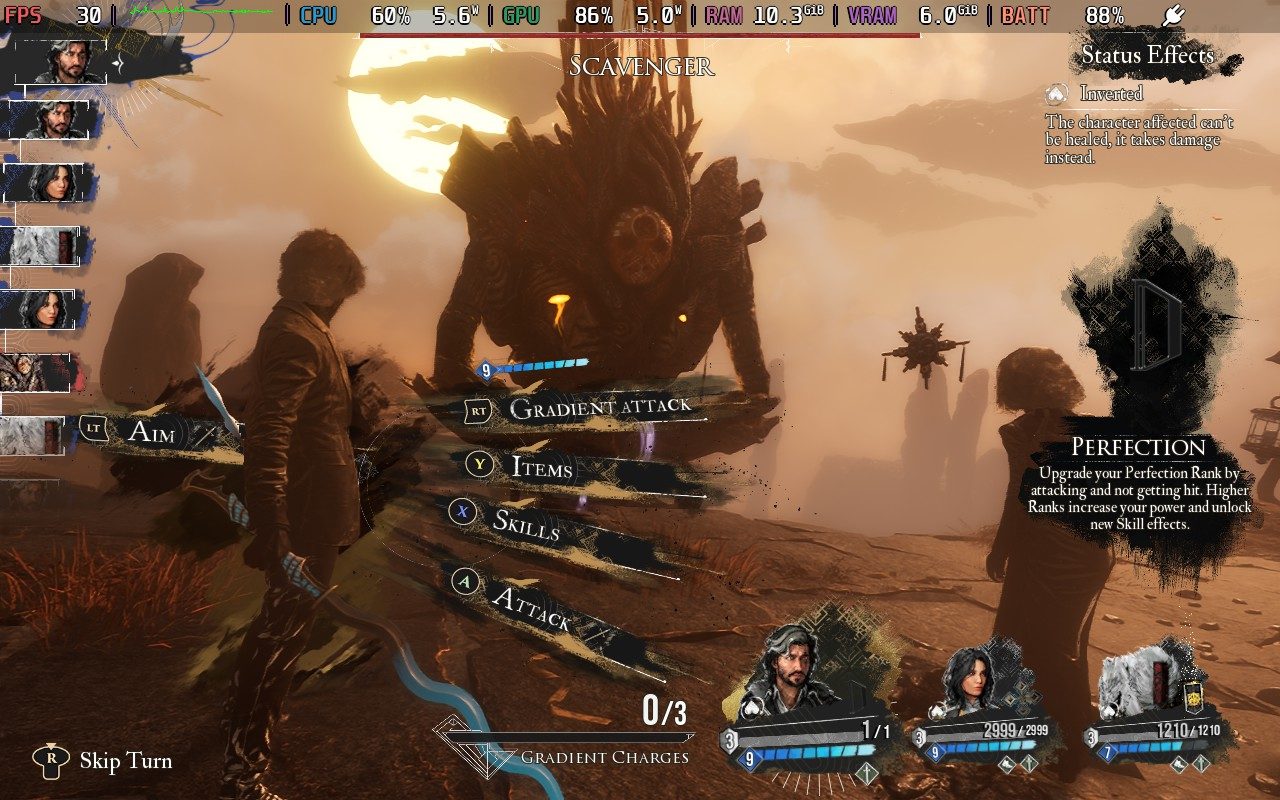
There are a total of six playable characters in the game, and each of them feels both unique and surprisingly deep mechanically. Each character introduces their own gameplay system and combat identity. For example, Lune functions as a mage who utilizes elemental “Stains” to create different effects and empower specific abilities, while Sciel fights using a card-based system that grants buffs, applies debuffs, and shifts her between different combat stances and modes.
The game also includes a character inspired by the classic “Blue Mage” archetype from Final Fantasy, allowing you to collect enemy abilities and use their own attacks against them. The amount of combat variety and combo potential across the cast is nuanced and contributes to the game's overall atmosphere.
On top of the turn-based combat, the game features a Free Aim system that feels like a small third-person shooter mechanic. You can manually target enemy weak points, interrupt attacks, or trigger special interactions during battle. What makes it even more impressive is how deeply this mechanic can be integrated into character builds. You can fully specialize certain characters around Free Aim and essentially turn them into machine gun-style damage weapons that seem to draw inspiration from first-person shooters. The sheer amount of build variety gives the combat system an unforeseen level of replayability and experimentation.
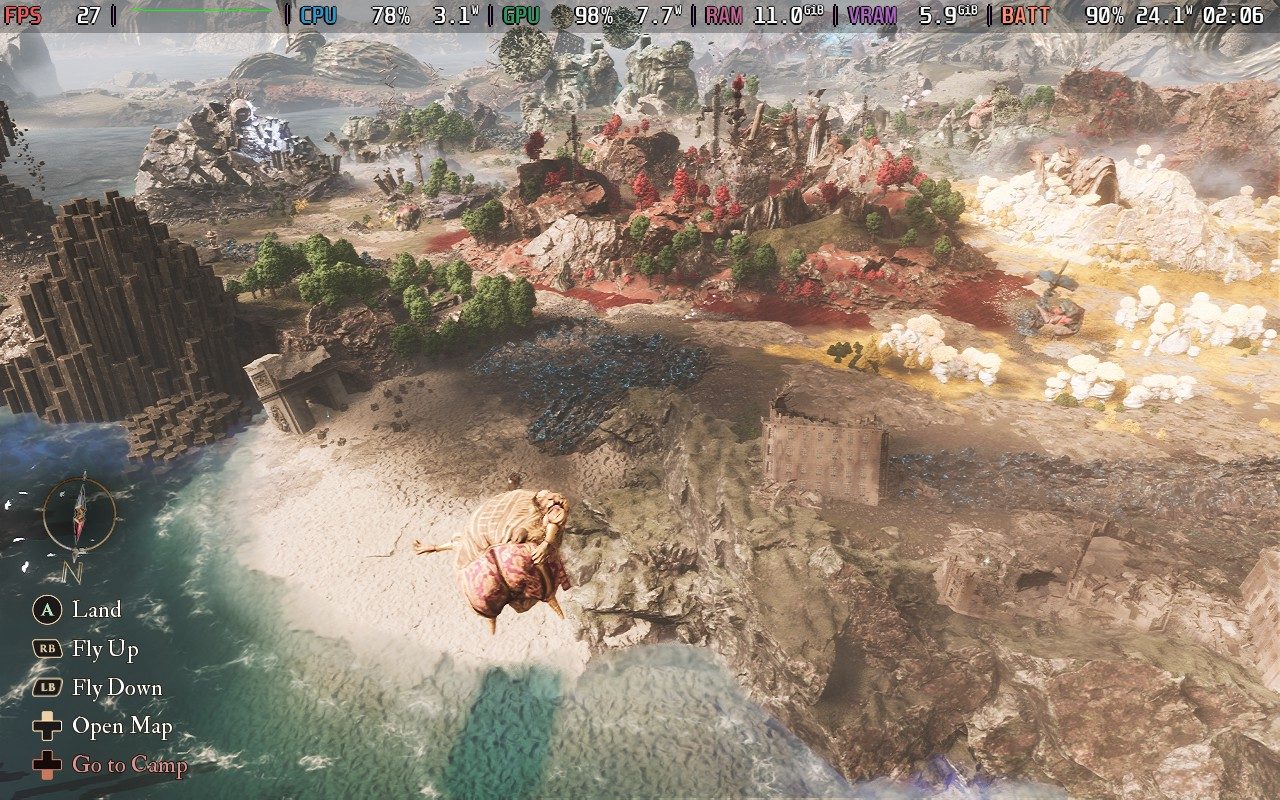
Clair Obscur: Expedition 33 uses a unique world structure that blends open exploration with more focused level design. While there is a large overworld where you can freely travel, fight optional bosses, discover loot, and unlock side activities, the main gameplay loop revolves around the game’s individual locations.
These locations function almost like large dungeon-style areas with semi-open layouts. They are filled with enemies, platforming sections, hidden paths, optional encounters, shortcuts, puzzles, and combat challenges, all of which constantly reward exploration. Each area is mechanically distinct, introducing new enemy combinations, traversal ideas, and gameplay scenarios rather than repeating the same structure over and over.
By avoiding the typical “open world checklist” design, the game becomes more enjoyable. Exploration feels focused and gameplay-driven rather than bloated, keeping a strong pace throughout the entire experience.
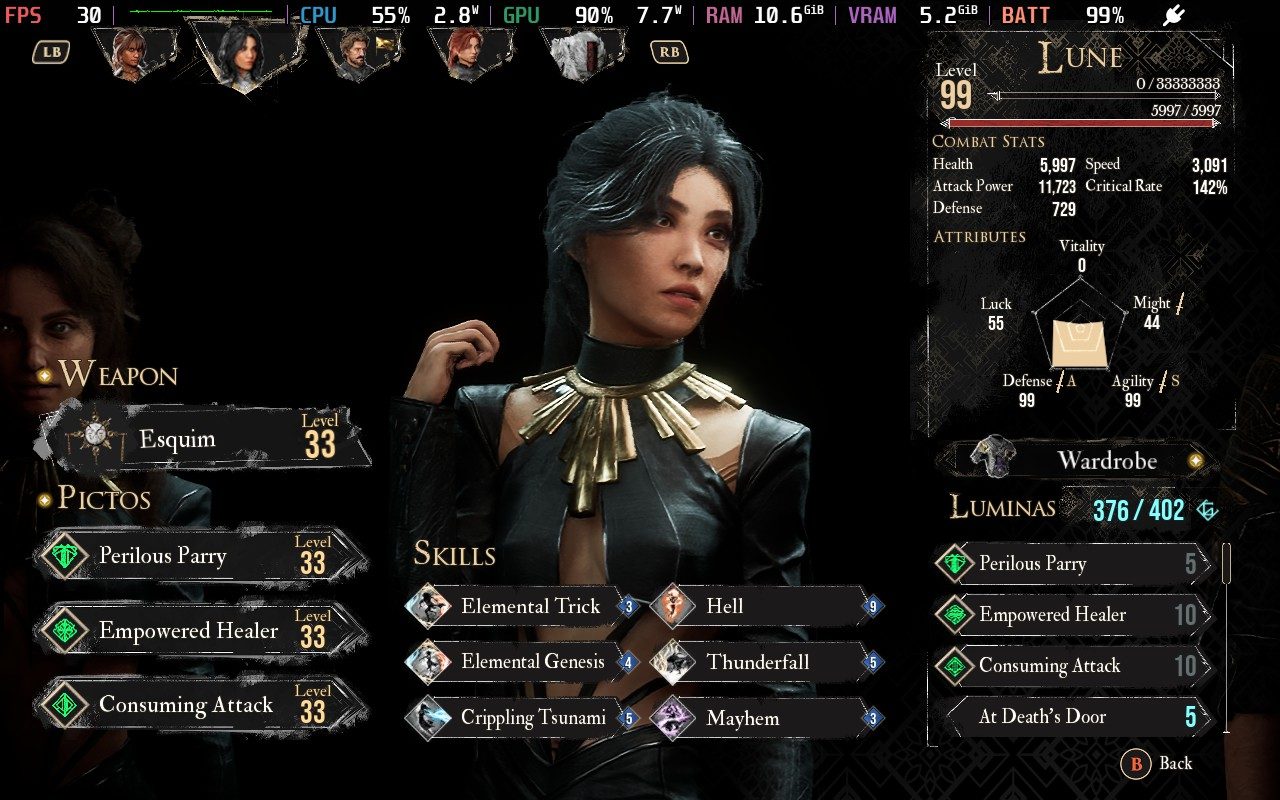
At first glance, character progression looks deceptively simple. You level up your characters, improve stats, unlock new skills, and equip stronger gear, much like you would in a traditional RPG. However, the game's real depth comes from its Picto and Lumina systems.
Pictos are special equipment pieces that not only provide stats but also unique passive abilities that can drastically change your playstyle. The clever part is that after winning four battles with a Picto equipped, its passive ability is permanently unlocked as a “Lumina.” Once unlocked, you can equip that passive separately without needing to keep the original Picto on your character, essentially letting you stack and combine countless different effects together.
Throughout the game, you constantly collect Lumina points that expand your Lumina capacity, allowing for increasingly powerful and creative builds. The feeling of gradually becoming stronger is satisfying, especially because the system constantly rewards experimentation.
There are well over a hundred different Pictos for Luminas in the game, creating an enormous amount of specialized build variety. Even after reaching the level cap for your characters, weapons, and equipment, you can continue farming Lumina points to further improve your builds. This progression system adds a huge amount of replayability, especially for New Game Plus runs where you can experiment with entirely different playstyles and absurdly powerful combinations.
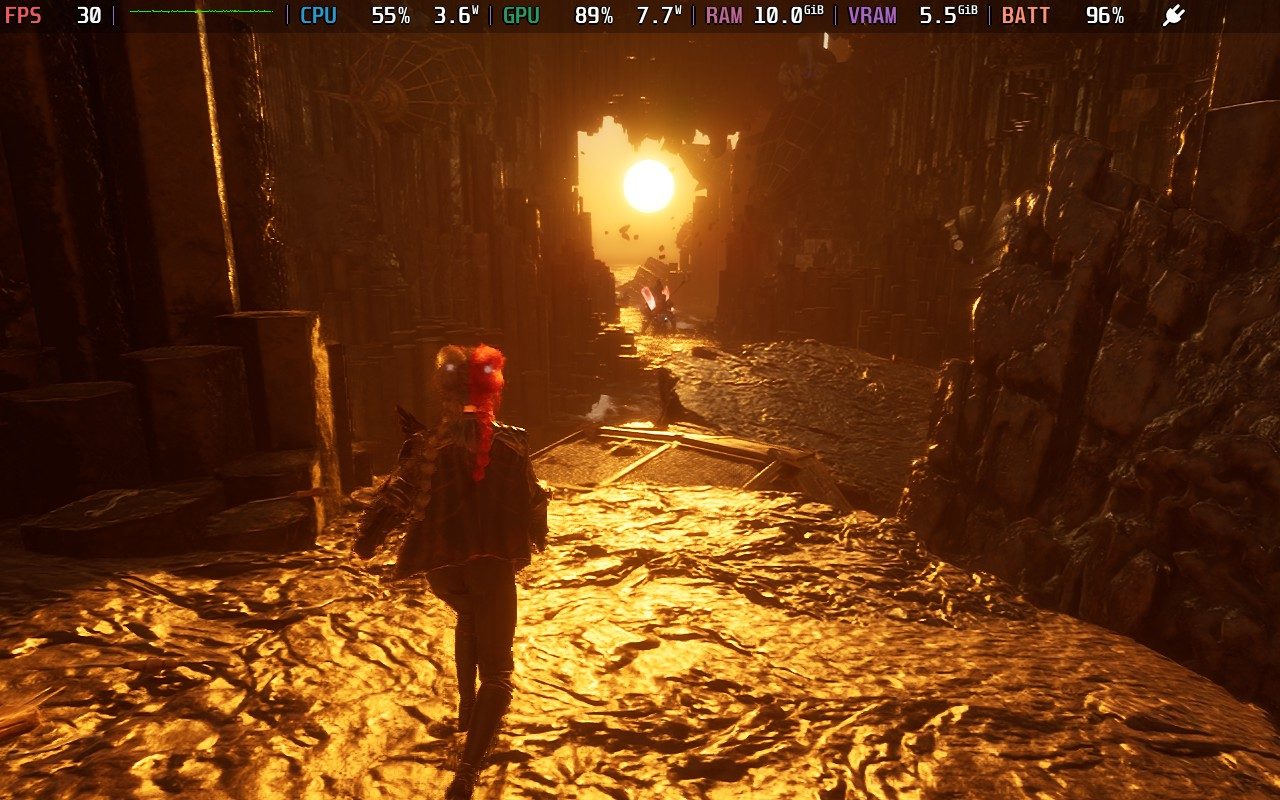
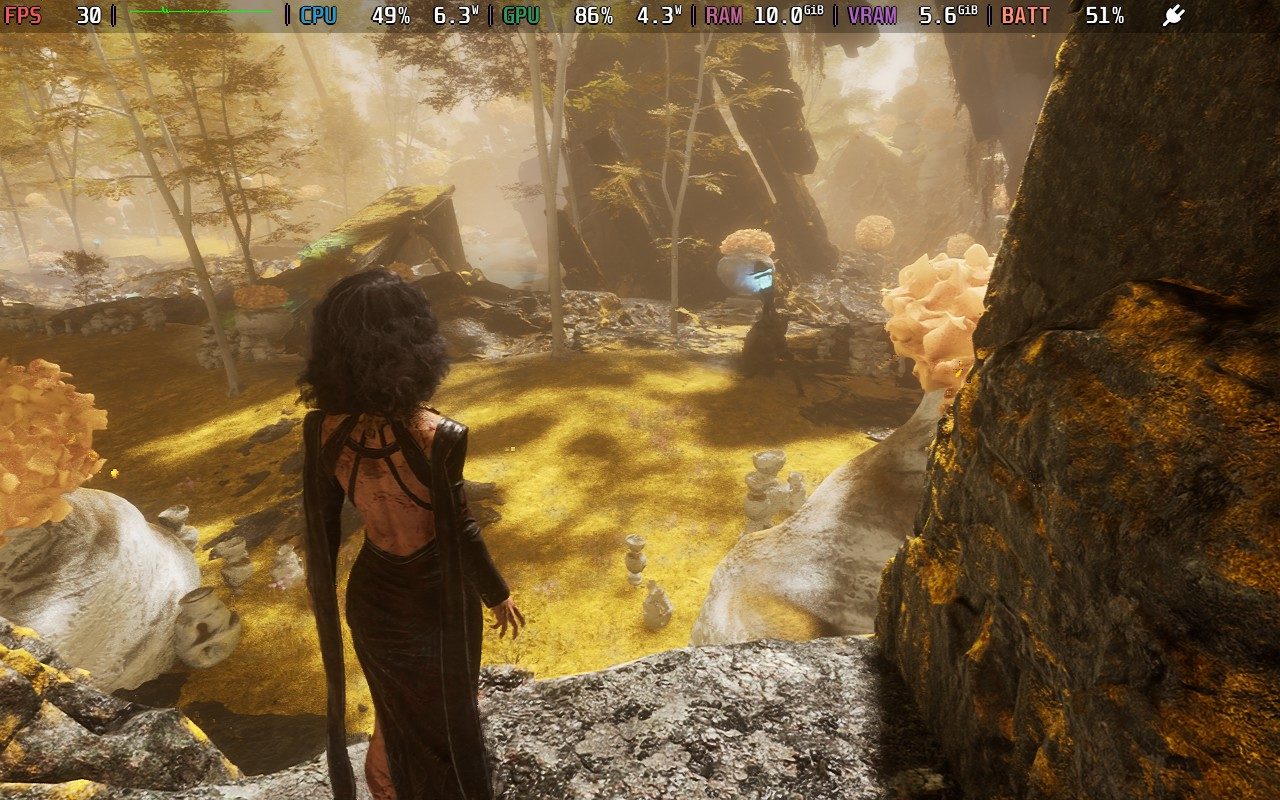
At first glance, the graphical quality in Expedition 33 may seem like a fairly standard Unreal Engine 5 presentation with solid but familiar texture work. What elevates the visuals is the incredible attention to atmosphere, particle effects, lighting, and artistic direction. Nearly every area in the game feels as if it were pulled from a painting, constantly presenting the player with unique visual themes and memorable scenery.
The game makes extremely smart use of cinematic techniques such as depth of field, lighting contrast, fog, and environmental effects to enhance the overall presentation. Rather than forcing realism through an enormous budget, Expedition 33 uses its artistic strengths intelligently, often masking technical limitations in ways that feel almost magical. The result is a game that looks breathtaking despite being developed by a relatively small team.
The cinematic presentation quality is so good that some scenes feel closer to watching a professionally edited, scripted movie than to playing a video game developed by a small team in France. And thanks to the talented motion capture performers and the game’s strong directorial vision, the cinematics become far more emotionally immersive than most RPGs. The facial animations, body language, camera work, and performances all come together brilliantly, making the visual presentation during story moments pull you deeper into the experience and make even simple conversations feel impactful.
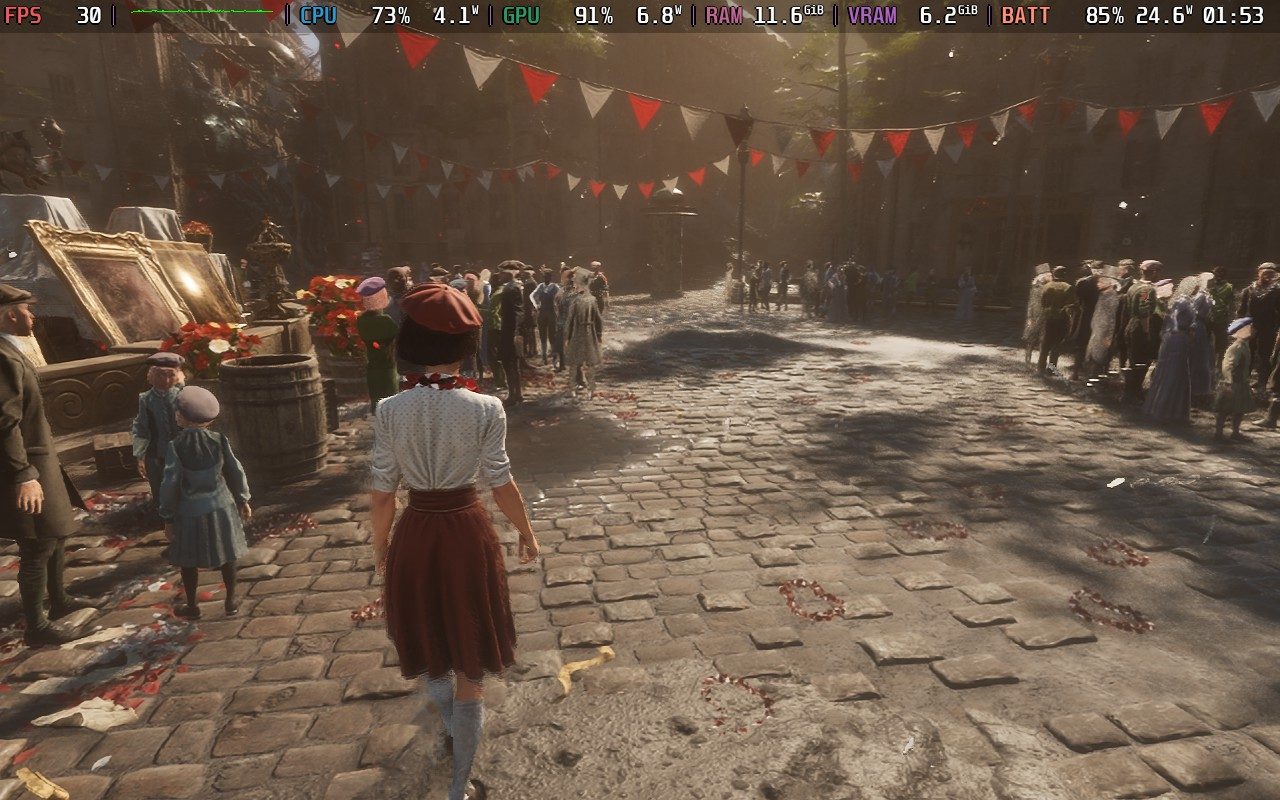
The only noticeable technical issue I found was with the character models. Both important story characters and random NPCs can sometimes look a little too similar facially, making it fairly obvious that many of them share very similar base models underneath their designs.
While this is ultimately a minor complaint, it can occasionally diminish immersion and create unintended confusion during certain scenes. At times, I found myself wondering whether a character was intentionally connected to another, related somehow, or part of a future reveal, simply because some faces looked so similar. It’s one of the few areas where the game’s smaller budget becomes slightly more noticeable.
Also, the aggressive use of depth of field causes some blurriness issues. On hair, it causes an effect that looks a little bit underwhelming. But other than that, the game looks absolutely gorgeous.
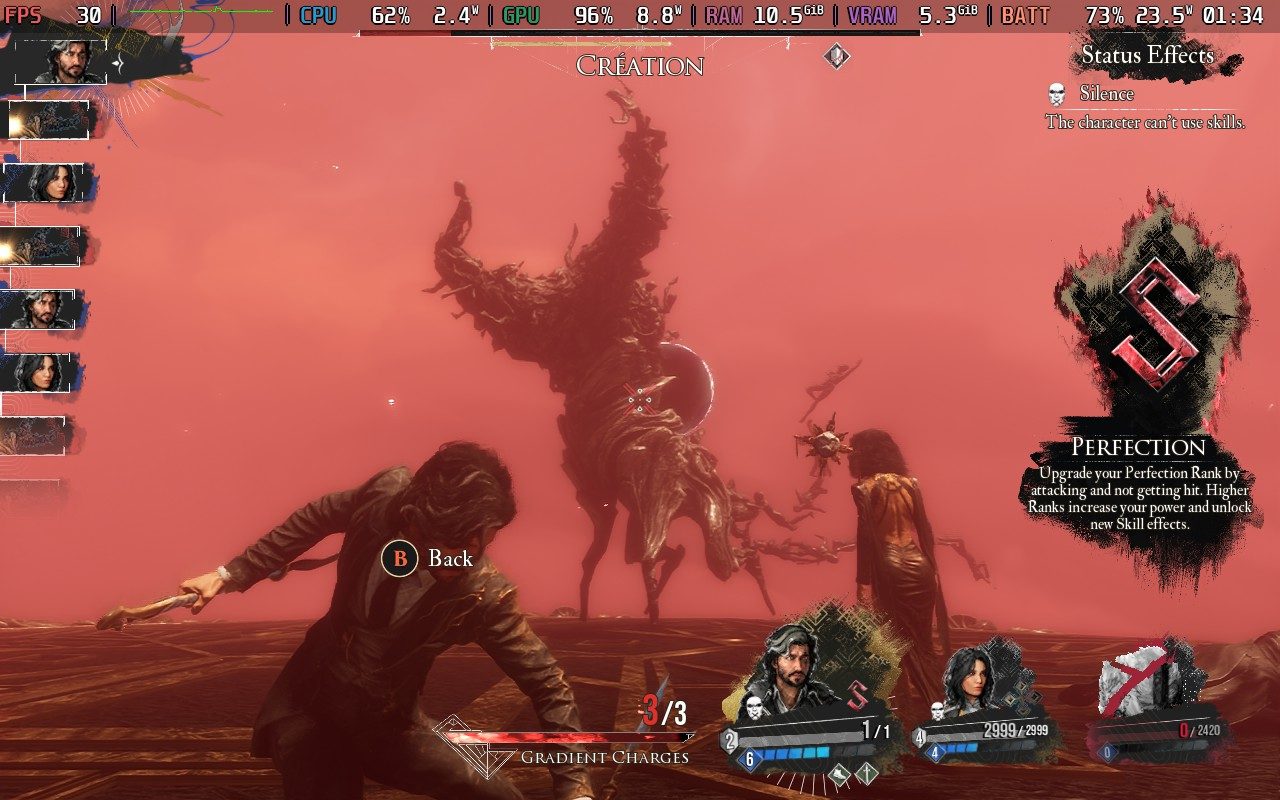
Music... music... music... I seriously don’t even know what to say here. I feel unqualified trying to review Lorien Testard’s work because the soundtrack is simply awe-inducing. With 154 different tracks, this is easily one of the most robust soundtracks I’ve ever heard in a video game.
The differentiation is insane. Some tracks are emotional and melancholic, some are peaceful and atmospheric, while others suddenly turn into intense boss themes that make fights feel ten times more impactful.
What makes it even more special is how memorable everything is. Hours after playing, I still had multiple tracks randomly stuck in my head. The music carries so many emotional scenes and elevates the entire experience constantly. There were moments where I just stopped moving for a minute and listened to the sounds coming through my speakers.
Sound design and voice acting, as presented, are top-tier. The impact and feedback during combat feel incredible, especially when it comes to parries and powerful skills. Every hit, counter, explosion, and attack has this heavy, satisfying feeling to it that makes combat even more addictive.
Voice acting is fantastic across the entire cast as well, with emotional scenes feeling natural and believable instead of overly dramatic or forced. Honestly, the entire sound package, from music to effects to performances, is a work of art.
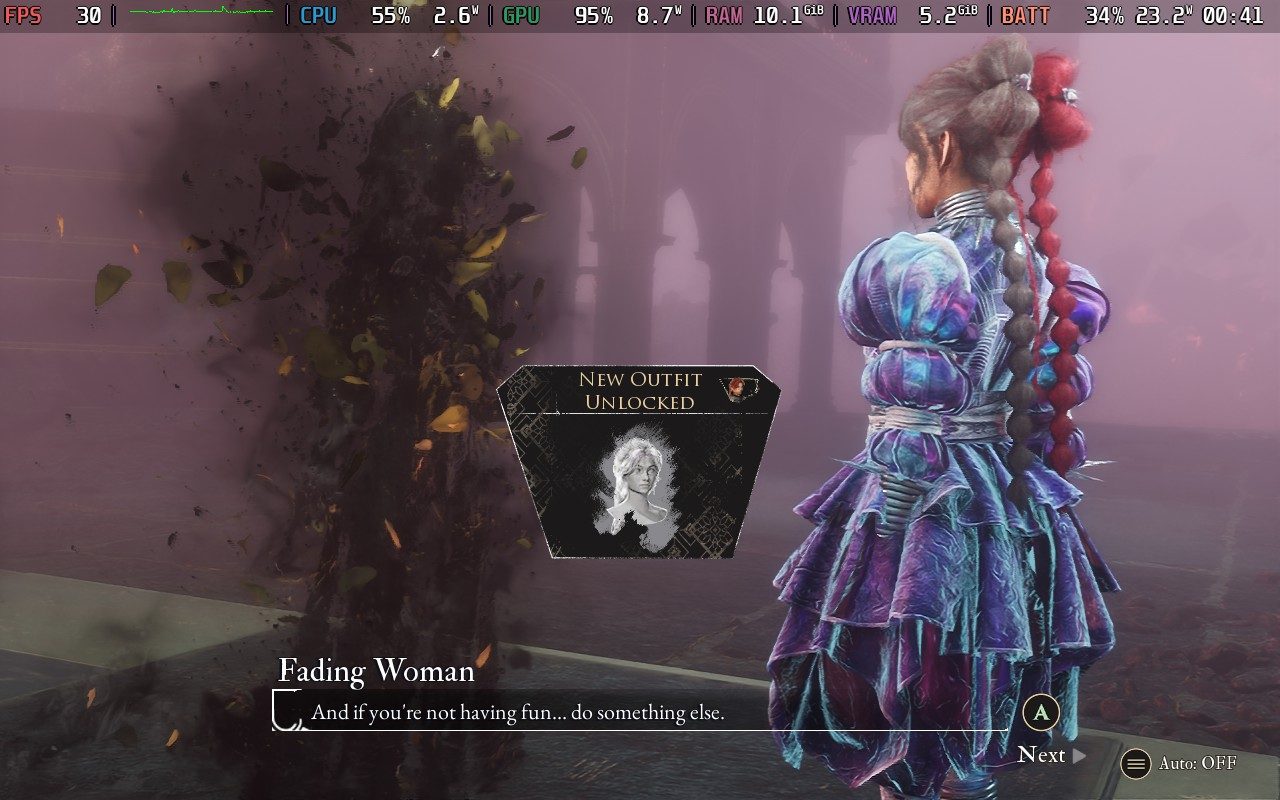
I want to start with a small disclaimer here. If you simply download the game and play it using the default “Verified” settings, you are honestly going to have a pretty terrible experience. Out of the box, the game uses heavily restricted settings that look extremely blurry, suffer from unstable performance, and introduce noticeable input delay due to the uncapped fluctuating frame rate.
By default, the game does not properly allow you to lock the frame rate, meaning performance constantly jumps around between 30 and 50 FPS, depending on the area. In most games, this would already be annoying, but in a reaction and parry-heavy game like Expedition 33, inconsistent frame pacing actively hurts gameplay.
Thankfully, there is an easy workaround. By adding:
SteamDeck=0 %command%
into the Steam launch options, you can bypass the game’s restricted Steam Deck preset and gain full access to the graphics settings menu, including proper frame rate limiting options. This alone massively improves the experience and immediately makes combat feel far more responsive.
The second thing I highly recommend doing is injecting an FSR 4 file. Thankfully, this process is extremely simple and dramatically improves image quality without heavily impacting performance. There are multiple ways of doing it, but the easiest method is downloading the amd_fidelityfx_upscaler_dx12.dll file directly from AMD’s official files and replace the existing one through Desktop Mode.
Once both of these tweaks are applied, the visual difference is shocking. The game transforms from a blurry, unstable mess into one of the sharpest and most visually impressive games available on Steam Deck. Here’s a comparison between the default FSR 3.1 implementation and FSR 4 running on the Performance preset.
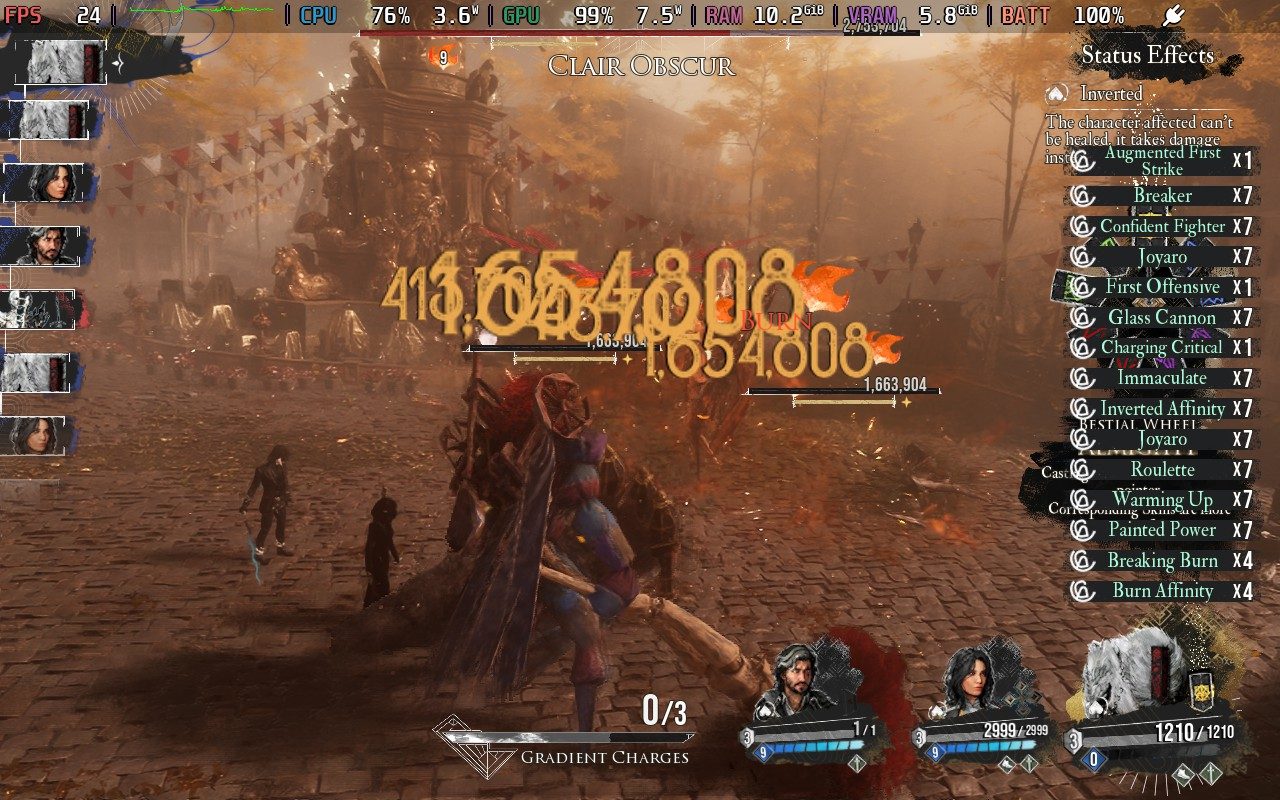
Once properly configured, the game manages to hold a surprisingly stable and responsive 30 FPS lock on Steam Deck for the vast majority of the experience. Around 99% of gameplay feels smooth and consistent, which is extremely important for a reaction-heavy combat system like this one.
There are a few exceptions. Some larger open-world sections and certain chaotic 3v3 encounters can occasionally dip into the 24-27 FPS range, but these drops are relatively minor and rarely occur during actual gameplay. Overall, the experience still feels very comfortable and responsive on the Deck.
There is little visual sacrifice made while using lower settings. Even on desktop hardware, the difference between the lowest and highest presets is surprisingly subtle in many areas. Thanks to the game’s creative use of art direction and lighting, Expedition 33 still looks absolutely gorgeous on Steam Deck despite running on the lowest available settings.
Clair Obscur: Expedition 33 is one of the rare games that reminds me why I fell in love with video games in the first place. Between its masterfully written story, unforgettable characters, addictive combat system, incredible soundtrack, and beautiful artistic vision, this is an experience that will stay with you long after the credits roll.
On Steam Deck, the experience is also far better than the default settings initially suggest. While the out-of-the-box “Verified” profile is disappointing, a few simple tweaks transform the game into a surprisingly stable and visually stunning handheld experience.
It feels surreal that this is the very first game from Sandfall Interactive. If this is what the studio is capable of on their debut title, I cannot wait to see what they create next. Clair Obscur: Expedition 33 is not just one of the best RPGs I’ve played in years. It is probably the best game I've ever played, period.
このレビューはPC版に基づいています。
このレビューをお楽しみいただけたなら、SteamDeckHQ の他のコンテンツもぜひご覧ください!あなたのゲーム体験に役立つゲームレビューやニュースを幅広く取り揃えています。ニュース、ヒントやチュートリアル、ゲーム設定やレビューをお探しの方も、最新のトレンドを知りたい方も、ぜひご利用ください。
Monster Hunter Stories 3 was provided by Capcom for review. Thank you!
Having played previous entries in the Monster Hunter Stories series, I was eager to get my hands on Monster Hunter Stories 3: Twisted Reflection, and I can assure you, if you're a fan of the series, Monster Hunter Stories 3 will not disappoint you.
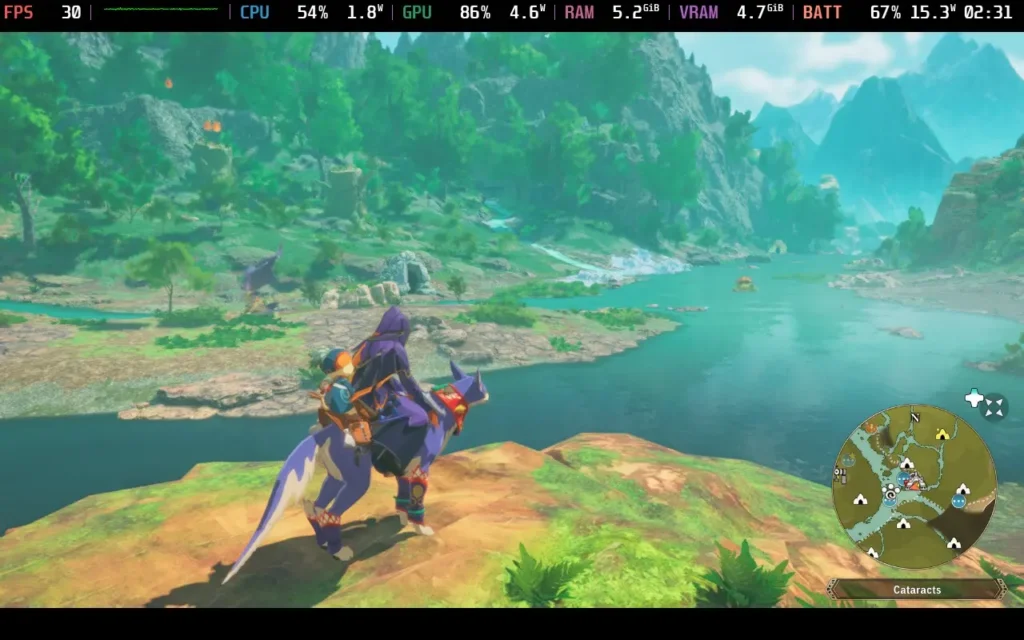
The gameplay itself is largely the same as previous games in the series, with turn-based battles using a rock-paper-scissors formula providing the action, where you have to figure out an enemy's attack patterns and choose the corresponding counter. It works as well as ever, and we still have the opportunity to do synergy attacks with the monsties and whichever party member is in battle with us. It requires some strategic thinking, particularly in the more challenging boss battles you'll come up against.
I also found the difficulty well-balanced, which is crucial, since the game offers no difficulty options. I did have a couple of occasions where I needed to deviate from the main storyline to do side quests in order to gain some levels to fight against a tough monster, but by no means did I ever have to repeatedly farm monsters in order to grind experience. By and large, the game presents itself as challenging rather than brutal.

Beyond the combat, we also have a beautiful open world to explore. It's not quite on the same size as the mainline Monster Hunter games, but it's decent, and there are plenty of short quests, collectibles, and hidden secrets to find in each area you'll visit. On more than one occasion, I just found myself enjoying switching between Monsties in the open world, climbing cliffs, and gliding between platforms in order to see what was awaiting me. More often than not, there was at least some reward for exploring there, even if it was just one of the many Poogies you are tasked with finding.
One very neat feature in Monster Hunter Stories 3 is the new "Habitat Restoration" mechanic. Sometimes, when playing games like these, while you are trying to co-exist with the "monsties" in the Monster Hunter Stories spin-off, you do feel like you might be doing more harm than good, such as when interfering with nests and "stealing" eggs in order to raise your own monsties. Habitat restoration helps offset this by reintegrating endangered species into their native environment. This is more than a feel-good move, as it actually affects gameplay, eventually causing additional monsters to naturally spawn in the area you reintroduced them to, helping the game world to feel more dynamic and alive.
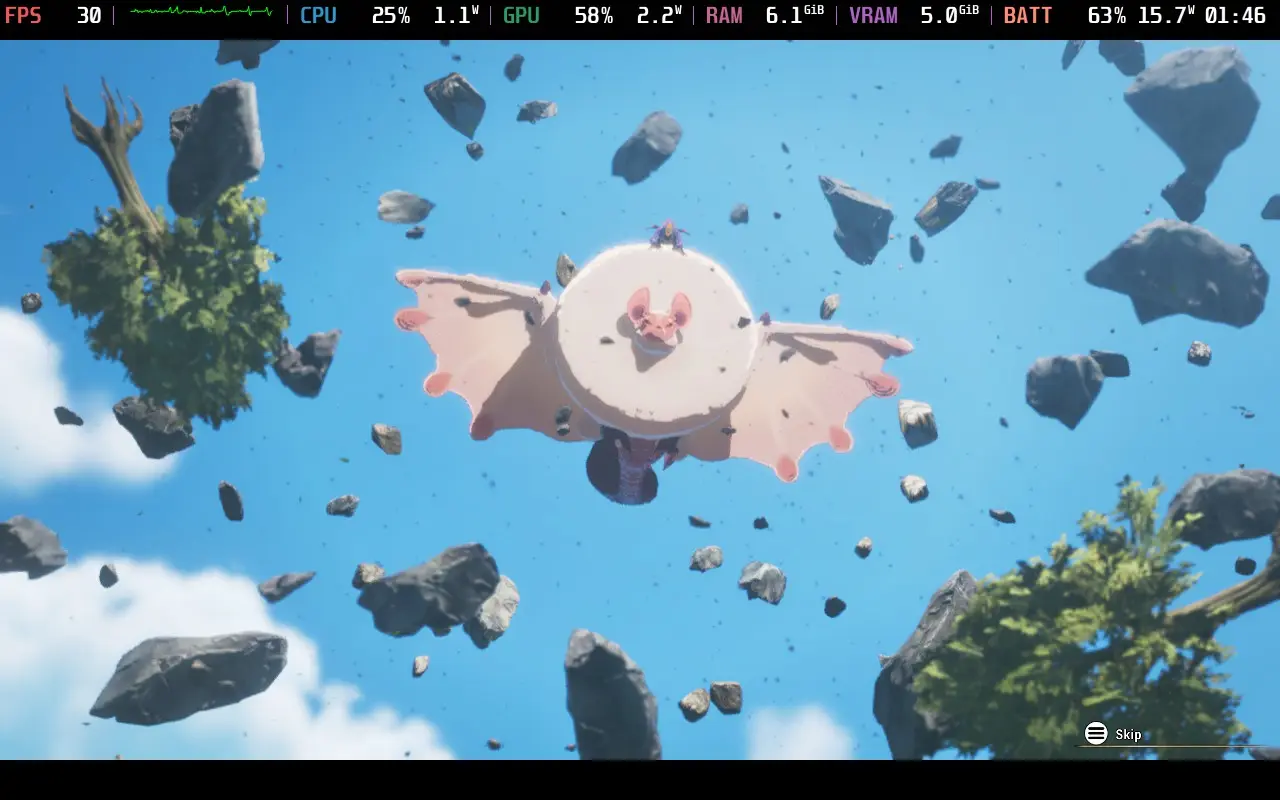
The storyline is a step up from the previous 2 Stories games. The narrative feels on a more epic scale and introduces more serious, darker tones, as adventurers from 2 warring kingdoms team up to find the source of the blight plaguing their nations. I felt myself becoming more emotionally involved with the story than in previous iterations, and you really want to follow this group of adventurers as they rebel against their respective rulers to restore peace to the land. Despite this high-stakes setting, the game still manages to keep things relatively light-hearted in true Monster Hunter Stories fashion.
All of this takes place in a visually appealing world. The Stories series' vibrant art style is back in full force here, creating some beautiful vistas of sun-soaked lakes and forests. While I feel the characters themselves don't look great, the monsters and environments come across really well and are easy to appreciate. The voice acting of the characters is largely on point, including the English dub!
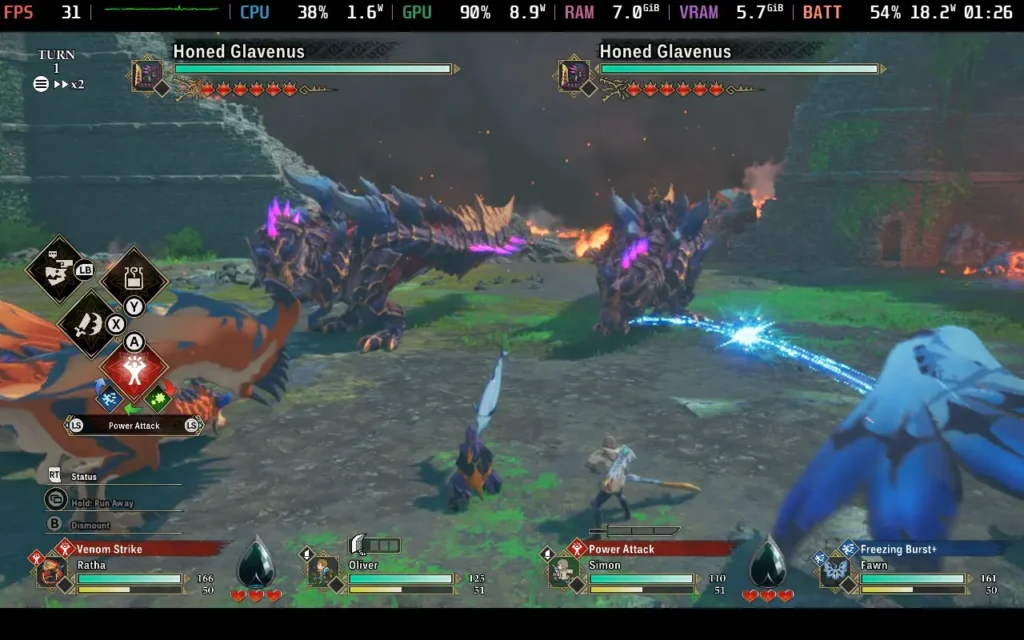
If I were to draw criticism with Monster Hunter Stories 3, I feel as though the game does force you on linear paths occasionally, which can be frustrating. Certain missions require you to play as a solo party member, but that restriction applies even when you're in free roam at that point in the storyline, so any grinding or side quests you do during that time have to be done solo, making them much harder. Starting characters' side stories, too, puts you into an almost "instanced" part of the game, where you can't continue the main storyline or any quests until you finish that side story. It would have been nicer if they were more seamlessly integrated into the game.
I also encountered an infinite-loading-screen bug. Fortunately, the game autosaves frequently, and not much progress was lost. I also wasn't able to reproduce the bug in the same area again.
Monster Hunter Stories 3 runs well on the Steam Deck, but we do have to make some visual compromises.
As far as controls go, everything is perfect; the game is designed for controllers first. We don't get support for the 1280x800 resolution here, so we have to run 1280x720 with black borders along the top and bottom.
Generally speaking, we run the "High" preset for Monster Hunter Stories 3 and then set a 30 FPS limit using the in-game framerate cap. We also enable AMD FSR Upscaling and set it to Balanced.
Here are the full settings I used for my playthrough. Click the images to enlarge them:
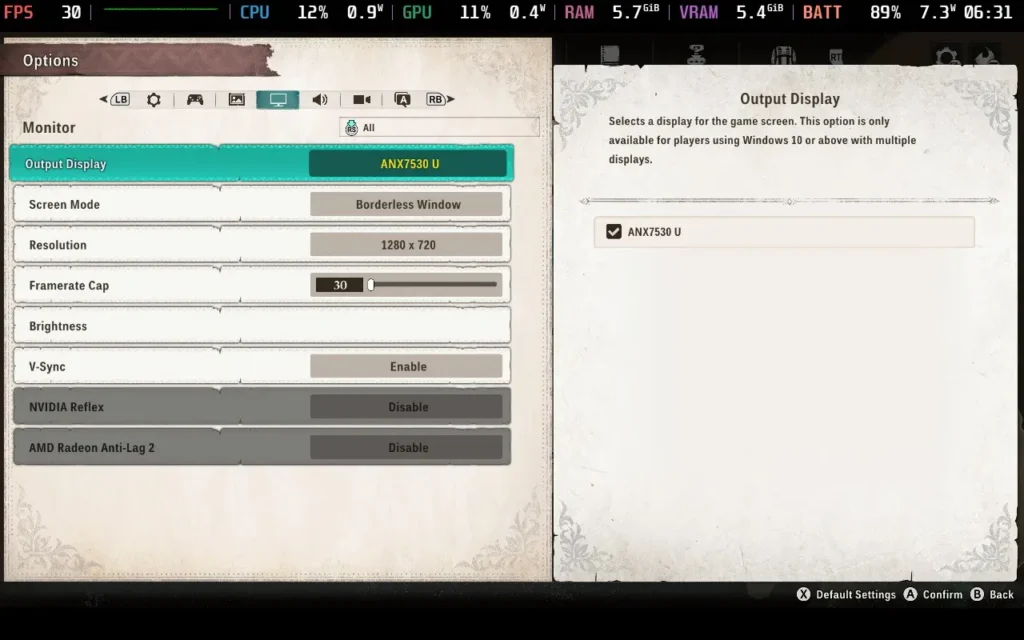
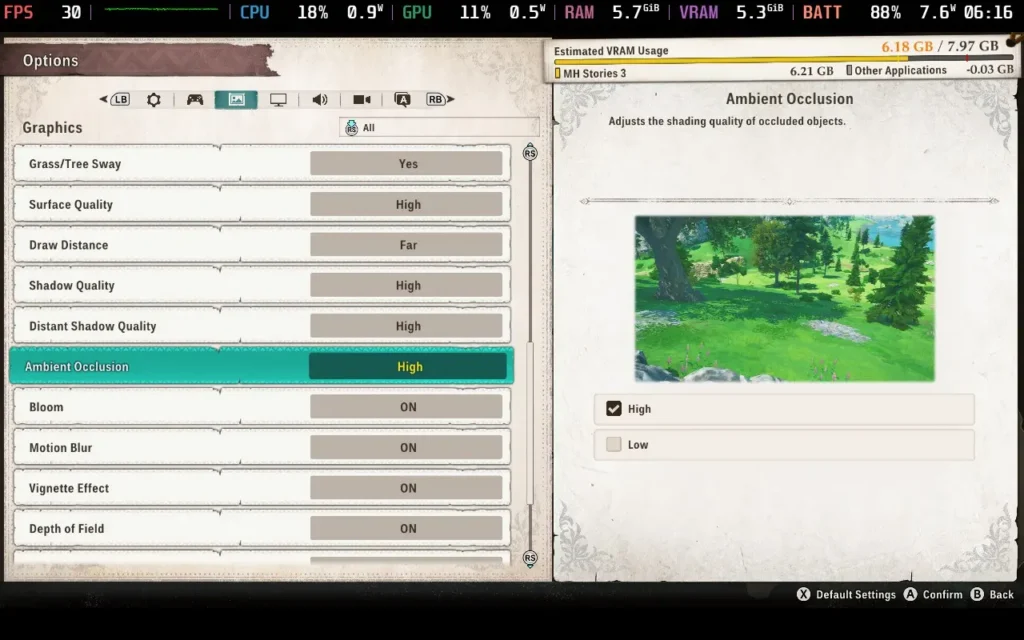
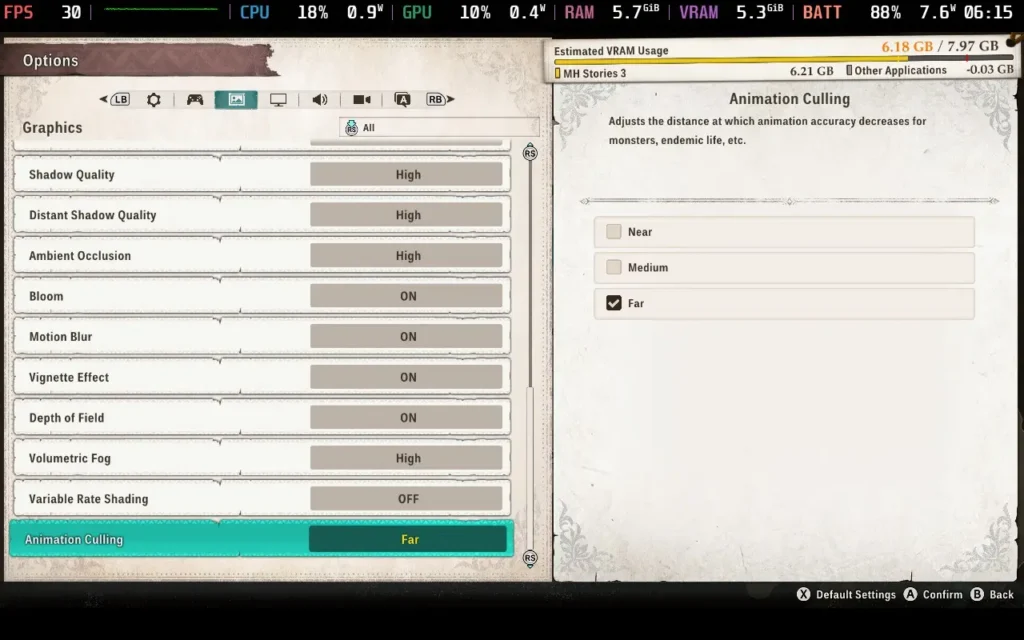
These settings will maintain 30 FPS throughout gameplay, with some stuttering during battle animations and momentary slowdowns in cutscenes when a scene suddenly changes.
Even at the lowest settings with FSR on Balanced, the FPS can drop below 40 on occasion, with the additional stuttering proving irritating for me personally, so I don't recommend lowering the graphics further to try and improve performance. Given the turn-based nature of the game's critical moments, a lower framerate works fine here.
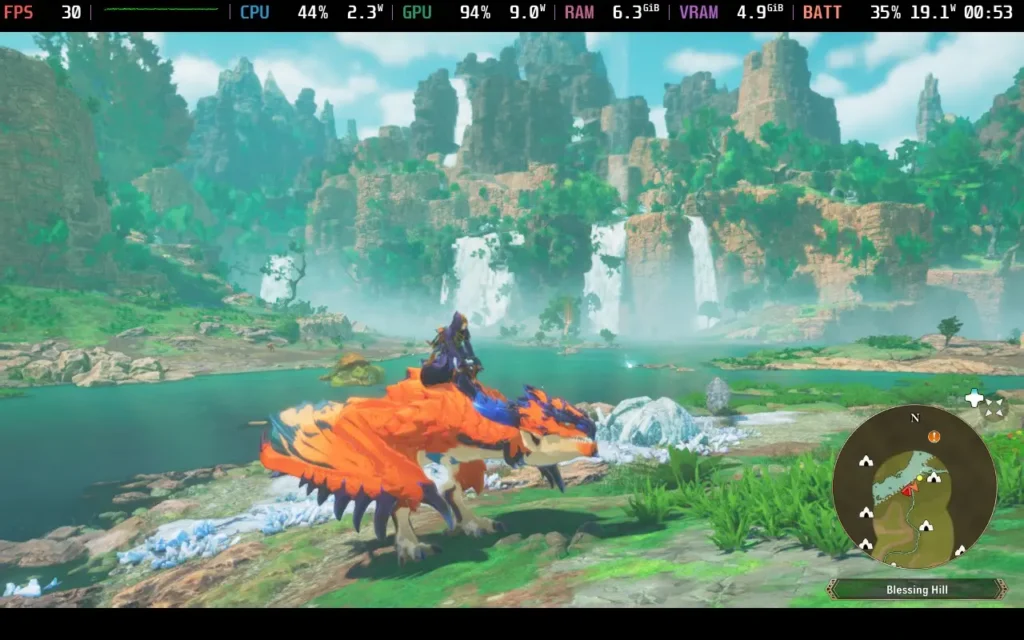
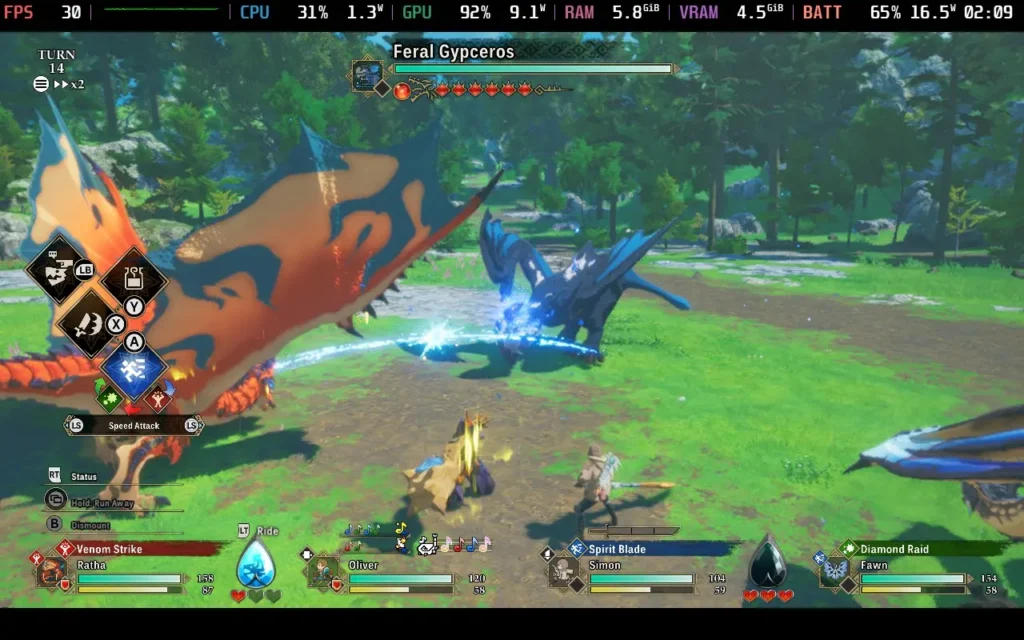
Power draw is around 15W-18W, meaning you should expect about 3 hours of battery life from a Steam Deck OLED and around 2 hours from a Steam Deck LCD. Temperatures were generally around 60-65 °C.
Monster Hunter Stories 3 has some accessibility options. You can enable subtitles for all voiced dialogue, including speaker names, with a background and a larger font if necessary. You can also set the sound to "mono" and disable camera shake.
Monster Hunter Stories 3 keeps the good parts of its predecessors, the solid battle system, the vibrant art style, and the creature collecting, then backs it up with the best storyline in the series yet. This, combined with the new habitat restoration feature and a beautiful new world, makes it my favorite entry into the series yet.
The good news carries through to Steam Deck, where we can get a pretty stable 30 FPS experience with the main compromise being FSR upscaling. It controls well, and the world really pops on the Steam Deck OLED's display.
このレビューはPC版に基づいています。
このレビューをお楽しみいただけたなら、SteamDeckHQ の他のコンテンツもぜひご覧ください!あなたのゲーム体験に役立つゲームレビューやニュースを幅広く取り揃えています。ニュース、ヒントやチュートリアル、ゲーム設定やレビューをお探しの方も、最新のトレンドを知りたい方も、ぜひご利用ください。
Dragon Quest 7 Reimagined was provided by Square Enix for review. Thank you!
When I think of the best JRPG series around right now, Dragon Quest is towards the top. While there haven't been new releases in the series, there have been remakes of older games. It has been great to play through all of them in a new light, with improvements to their visuals, gameplay mechanics, and even some new content here and there. Dragon Quest 7 Reimagined continues this trend in an interesting way, remaking the game from the ground up, and it largely succeeds in creating an enjoyable JRPG experience worth playing through.
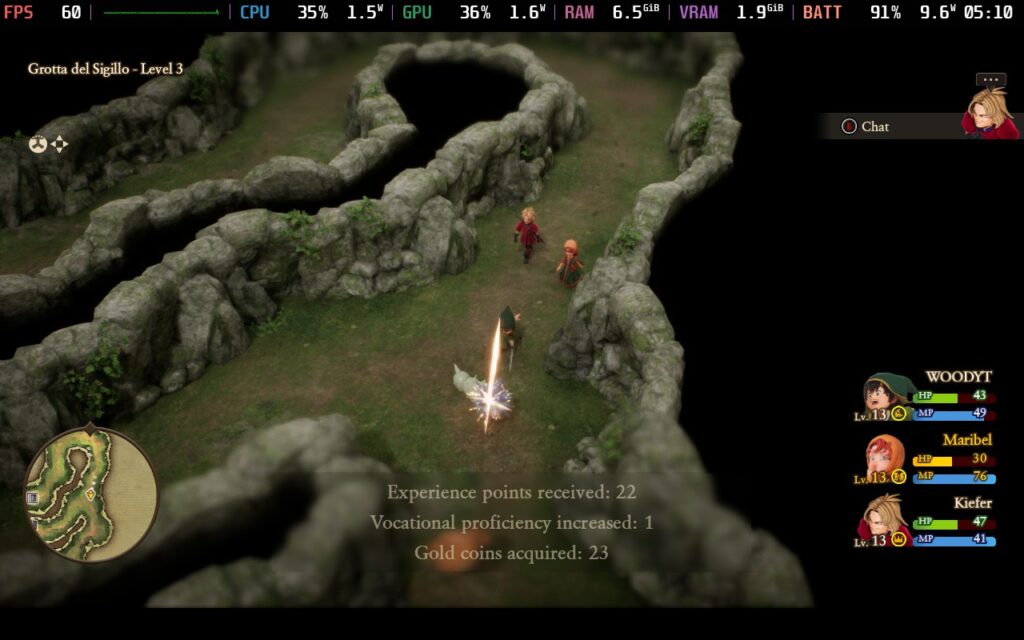
Right off the bat, Dragon Quest 7 Reimagined’s most noticeable difference comes to bat: the visuals. Square Enix decided to take the diorama route for the style instead of the PS1’s 2D sprites or 3DS’ models, and it fits perfectly. The sense of scale and detail illuminate the world, making each set piece fit wonderfully with the landscape. Characters have a great combination of detail and obvious expression, while also keeping the signature style that the late Akita Toriyama is known for. Despite some bland color schemes on some islands, each sight across the world is a joy to behold.
The story has had some big changes to it as well, making it more streamlined, while also cutting out fat that didn’t need to be there. We follow the hero and his childhood friends, Maribel and Prince Kiefer, as they go out on a journey to see what else is out there away from their own island. Throughout their journeys, they will visit the past and bring the islands back after solving their individual problems.
I would consider the story a little on the generic side; it didn't feel as impactful, but it is definitely an improvement over the original. It will still take a while to finish the game, with my playthrough going above 35 hours, but the content is much more interesting and focused on the best elements the game has to offer. I also enjoy the extra personality given to some of the characters, including Maribel and Kiefer, who feel more like actual friends than companions who are just along for the journey.
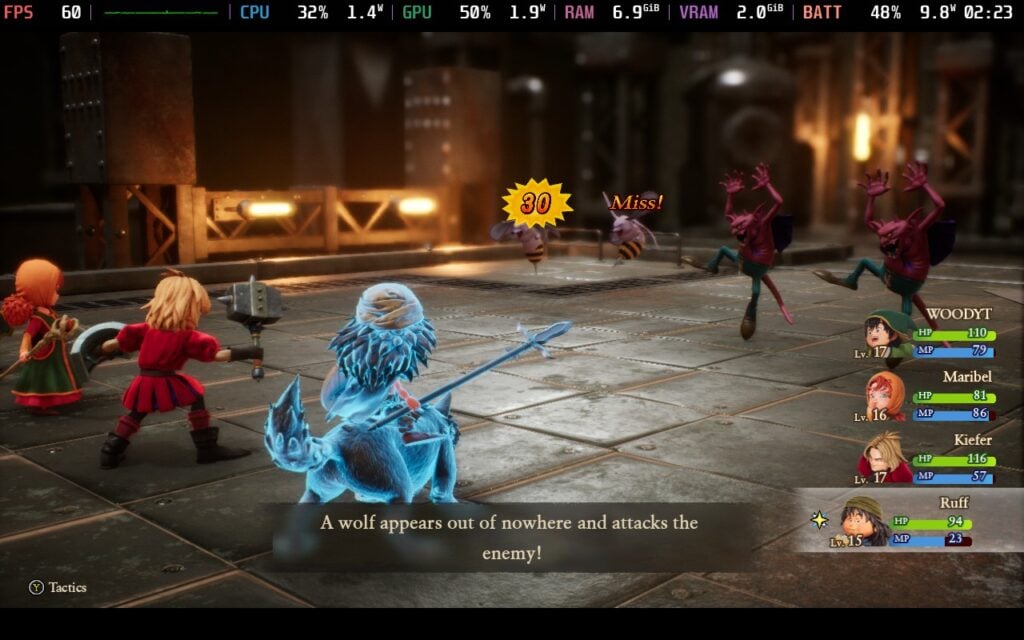
I also love how each island kind of feels like its own little mini adventure. They don't all last long, but they feel varied. On one island, we have to deal with humans that have been turned into animals, and we have to save them, while another is filled with autonomous robots going berserk. It was enough to keep me interested in what I would find next, and it was definitely more of a motivator than the overarching story.
The gameplay itself has seen a lot of overhauls that we have seen in the more recent Dragon Quest games and remakes. The turn-based combat is still familiar, and will see us controlling each of our party members one at a time, attacking with our weapons, using abilities or items, or defending to kill monsters and get experience to level up. The traditional system works as well as it usually does, and I have no qualms with it.
Still, there's some nice depth here. Each character has a vocation that they can rank up 8 times, giving more stats and new abilities as it ranks up. All the Vocations are similar to jobs, and each has its own abilities and stat boosts that come with it. The fact that abilities are tied directly to vocations, along with the equipment system with gear that has secondary elements like extra crit or evasion chance, adds a nice amount of strategy that can help a lot with boss fights and rounding out your team.
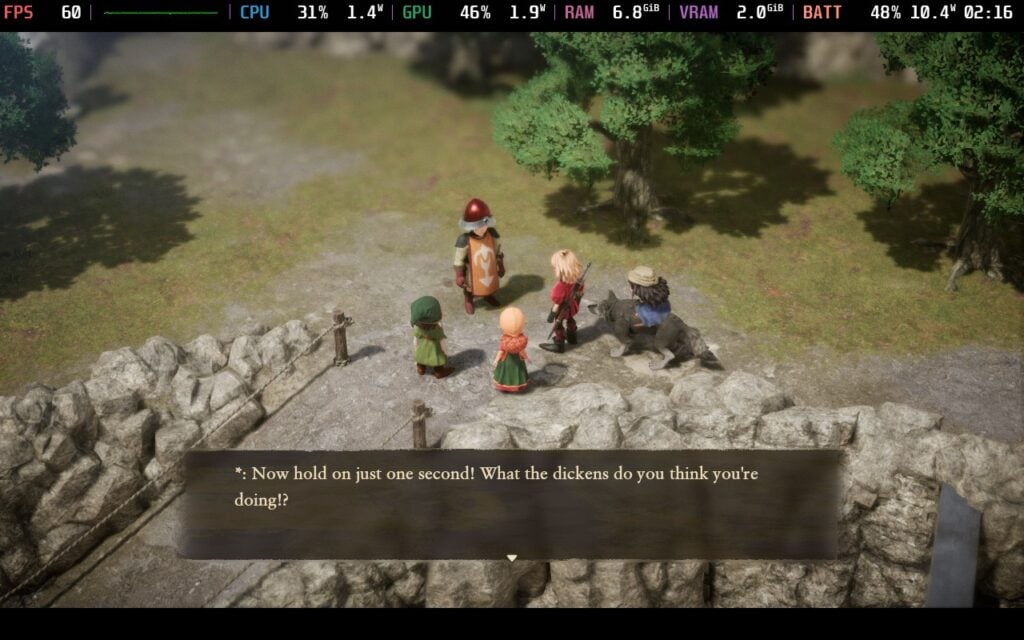
We also have some added accessibility settings to make combat and grinding go quicker. We can adjust the battle speed, go through auto battles, and choose specific tactics for the team to follow. It makes leveling up and getting more gold much easier, and options like this are much appreciated for larger JRPGs where grinding is essential. I also appreciate being able to kill monsters in the overworld immediately if they are significantly weaker than our party.
However, Dragon Quest 7 Reimagined felt significantly easier than other games in the series. I never got a Game Over in my entire playthrough, and I flew through boss fights without much issue. It was a little disappointing. I didn't find myself changing vocations for any reason other than to unlock more complex ones, which made strategic choices for battle feel far less important than they could have been.
I also found it sometimes difficult to find all the puzzle pieces needed to unlock new islands. To travel and unlock new islands, we will need to find fragment pieces to place on their respective pedestals. There are usually markers showing where we need to go next, and sometimes shows us where more fragments are. But some aren't marked, which means going back and forth to the islands to find them. There were a few that felt impossible to find, and I wound up going from island to island just to find one or two fragments.
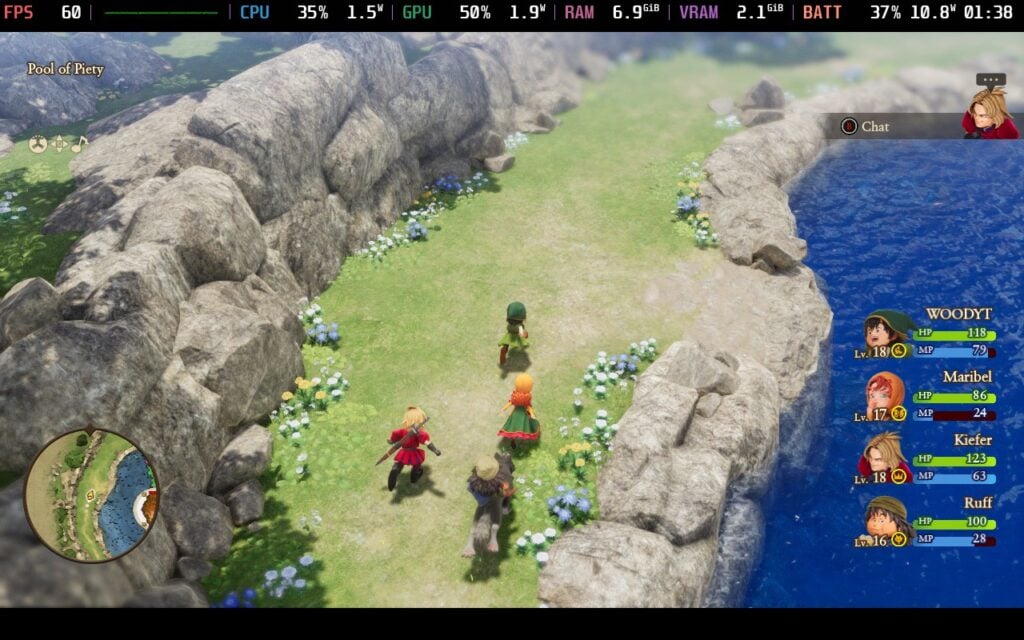
Despite the grievances and the difficulty, this was a fun experience. I had a great time running through the gorgeous, diorama-filled environments and fighting the enemies in flashy combat. Watching as I leveled up and went through the mini-adventures on each island.
Dragon Quest 7 Reimagined is a fantastic experience that is perfect to play on portable devices, and that includes the Steam Deck. I expected good performance already, since it is also releasing on the Switch 2, but there are a couple of changes I would make to make the experience much better.
The game defaults to the lowest settings to optimize for performance primarily, and it makes the game look awful. It's surprising because with one change, we can play Dragon Quest 7 at 60 FPS with near-max settings. By setting everything to max and just changing the rendering resolution down to Medium, we can play at 60 FPS with all the lighting and shadows that make the game pop. Compared with how it looks on the default, it's a night-and-day difference.
And it comes at little cost to performance. For the little change that makes the game look slightly less sharp, we can get a solid 60 FPS throughout the whole game with a very low battery drain of around 8W - 11W. Some of the slight shadows are gone, and there are some spots where it looks a little blurrier, but it still looks fantastic in the end.
I would consider this the best way to enjoy Dragon Quest 7 Reimagined on the Steam Deck. The fantastic visuals, solid 60 FPS, and low battery drain all work together to make this a worthwhile experience on the go.
However, we can play at the highest possible settings with resolution scaling set to high if desired, but it has a compromise. The game won't be able to stick to a stable 60 FPS with the highest settings, but by setting the framerate to 45 FPS, we can get a stable rate throughout the whole game. And, with us using a 90Hz refresh rate, it still feels smooth.

However, battery drain is going to be much higher than the recommended settings. In spots where we are getting 10.5W with the recommended settings, the quality settings will be upwards of 15W - 16W. This isn't exactly what I would call enjoyable, but it's possible and playable.
In the settings, we can change the confirm button, change dash controls, change shortcuts, autoplay event scenes, change camera distance and speed, toggle battle speed, and change brightness. We also have support for Deuteranopia, Protanopia, and Tritanopia color blind support. And we can toggle some accessibility settings to modify the game's difficulty, including damage dealt, experience earned, gold acquired, and monster strength.
このゲームは16:10の解像度をサポートしていないが、クラウドセーブとコントローラーをサポートしている。HDR設定はない。
Dragon Quest 7 Reimagined is a fantastic remake of the original that addresses many of its problems. The story has been streamlined with some great additions to make the other characters stand out more, while the combat has the accessibility settings and adjustments that the most recent games benefit from. It does feel a little too easy at times, which makes the strategic elements of battle feel less necessary, but it never fully detracts from the experience enough to regret playing.
It's also a joy to play on the Steam Deck. After changing the resolution scale to Medium, it will run at 60 FPS with extremely low battery drain, while still getting all the bells and whistles of the high-quality settings. It's a fantastic JRPG for portable play, and could be one of the best this year.
このレビューはPC版に基づいています。
このレビューをお楽しみいただけたなら、SteamDeckHQ の他のコンテンツもぜひご覧ください!あなたのゲーム体験に役立つゲームレビューやニュースを幅広く取り揃えています。ニュース、ヒントやチュートリアル、ゲーム設定やレビューをお探しの方も、最新のトレンドを知りたい方も、ぜひご利用ください。
このゲームはNIS Americaからレビュー用に提供されたものです。ありがとうございました!
Ever since I discovered it, The Legend of Heroes, or Trails series (as I call it), has become one of my favorite JRPGs to play. It spans across multiple games, following memorable characters as they face crises across the continent of Zemuria. It feels like the JRPG version of the Marvel Cinematic Universe (MCU), as past events in older games influence future ones we experience in newer entries, and characters from the past make appearances later on. Now, the next entry in the series, Trails beyond the Horizon, is here, and it continues the story in major ways that kept me hooked right up until the end.
Before I go into the game, I highly recommend playing both Trails Through Daybreak 1 and 2 before this. There are going to be characters and events referenced from the previous two games, so I would consider it imperative to play them. I would even go so far as to say play through all the previous games in the series, since there are references going back to the Trails in the Sky games, but Daybreak 1 and 2 are more necessary.
Trails beyond the Horizon goes into uncharted territory while still keeping its signature style of storytelling. We continue Van Arkride and the Arkride Solution's story after the ominous warning that we came to know from Daybreak 2. Now, he and the team go to investigate what this warning could mean, while figuring out the details of the first manned spaceflight and whether there's anything else happening behind the scenes.
However, instead of just following Van on this adventure, we will be seeing the story play out from two other protagonists as well: Rean Schwartzer and Kevin Graham. All three are on their own journeys that intersect, centered on the space launch, its true meaning, and its implications for the entire continent of Zemuria. It’s a similar-ish structure to how Daybreak 2 handled its story, where Van leads one route, and Swin/Nadia handles another.
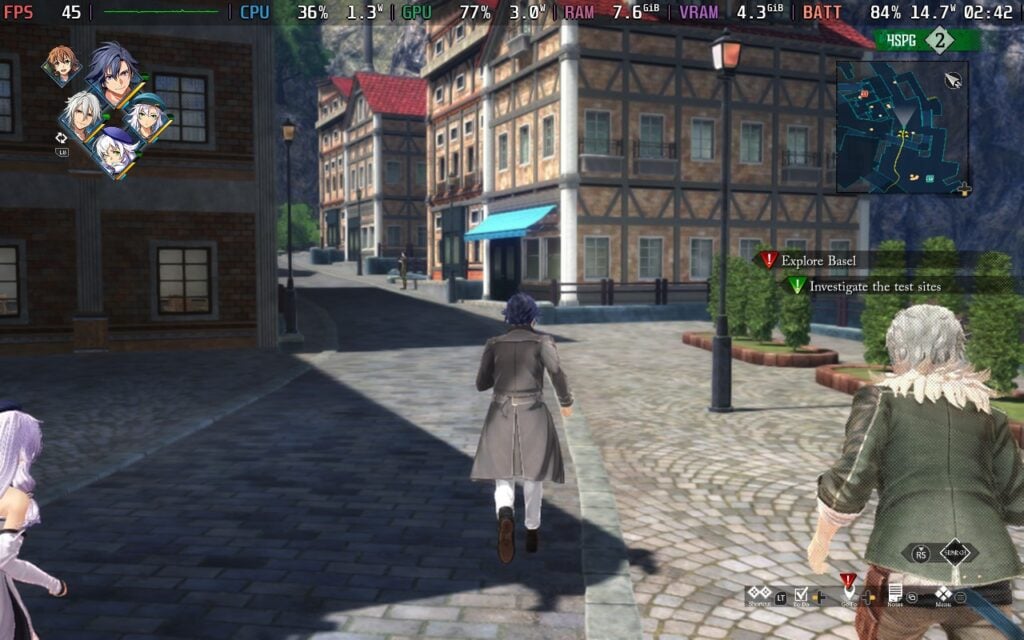
It can seem a little complicated on the surface, managing different routes with a different cast taking the lead, but Trails beyond the Horizon doesn’t falter. Each route has its own charm as we follow Van, Rean, and Kevin on their journeys, all centered on the same objective. I did hope there would be a little more interaction between the protagonists and their respective parties than there actually was, but the times we did have it are interesting.
What still amazes me is how well developer Nihon Falcom balances all of the characters and the story. While each protagonist has their own objective, the revelations that come from their journeys all feed into the bigger picture, inching us closer to the truth. The way it all starts to fit together like puzzle pieces slowly connecting feels so rewarding, with each revelation feeling more exciting than the last. There were moments that left me in awe, especially the ending. I had no idea it would take the direction it did, but the far-reaching implications are clear, with an epic finale that left more questions than answers. I would say Trails beyond the Horizon left more questions than answers in general, more so than Daybreak 1 and 2. I was hoping for more, since there were hints about what could be revealed in this entry, but there weren’t, so I'll have to wait until the next entry to find out (hopefully).
The Trails series has always had a great, colorful cast of unique characters that all feel memorable in one way or another, and balancing them is a feat that Falcom handles well. Trails beyond the Horizon brings in tons of characters, both newly introduced ones and people from previous entries like Kevin and Rean, and balancing their stories and making sure everyone gets their time in the spotlight becomes a tough task. Falcom handles it well with dedicated Connection Events for each character, as well as giving them all some time throughout the story to speak and give their two cents.
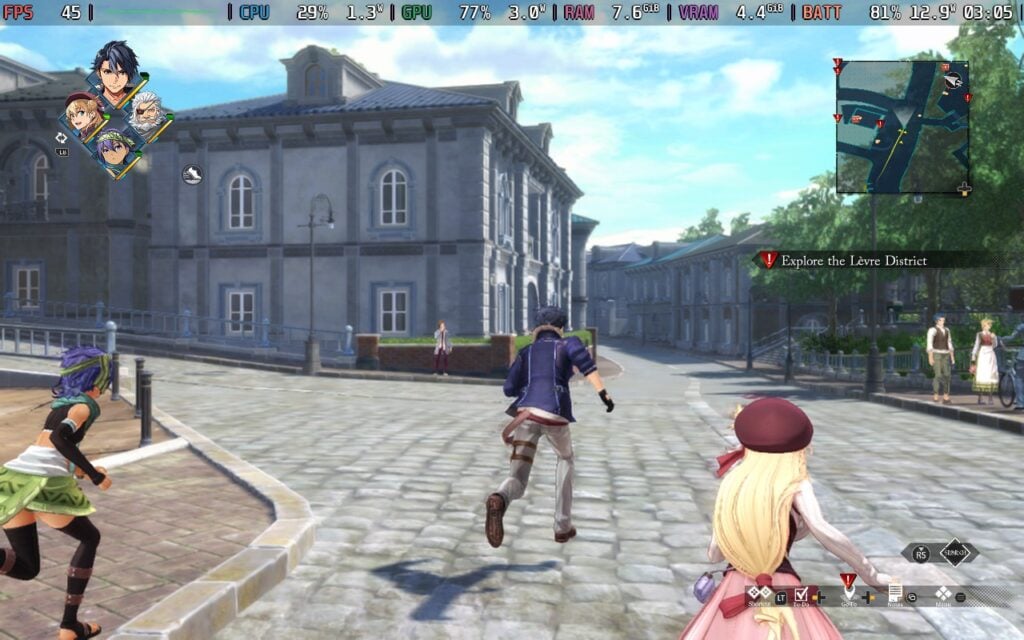
There are some times where it feels almost impossible, and the dialogue comes to a little stall just so everyone in the party can say their sentence or two about what just happened, but I would say these moments are far and few compared to the many other moments that work.
I would say this is another competent story in a series that feels like the MCU of JRPGs. Falcom balances the winding story with a large cast of characters in an enjoyable and ultimately fulfilling way. I do wish I had more answers to the questions that I had, spanning from the two previous games, but the wind-up in revelations leading to the dramatic finale was all worth it.
Gameplay-wise, it’s very similar to the previous two games. Each chapter with each character follows a similar structure. You start off in town, running around and taking on optional side quests (or 4SPGs) while talking to characters to advance the story and buying up items and equipment from shops. Some of these 4SPGs include investigating leads, trailing individuals, talking to people, or deducing what happened. There’s a good chunk of these, which all have their own interesting stories to tell, and contribute to an overall score when the chapter is over, to give you extra bonuses.
Most of these 4SPGs are enjoyable, but I did find some Topic Quests to be a nuisance. These are 4SPGs where you have to find individuals and ask them about specific topics. These aren’t marked on the fast travel list, whereas other main and side quests are, so finding them can be a little difficult. Most main and side quests, including Topic Quests, show up on the minimap, but some monster slaying quests don’t show up on the list or minimap, and I got lost initially when I hadn’t figured it out yet. Once I did, I figured out where to check to look for them, but it does mean going back and forth to the locations I can fast travel to.
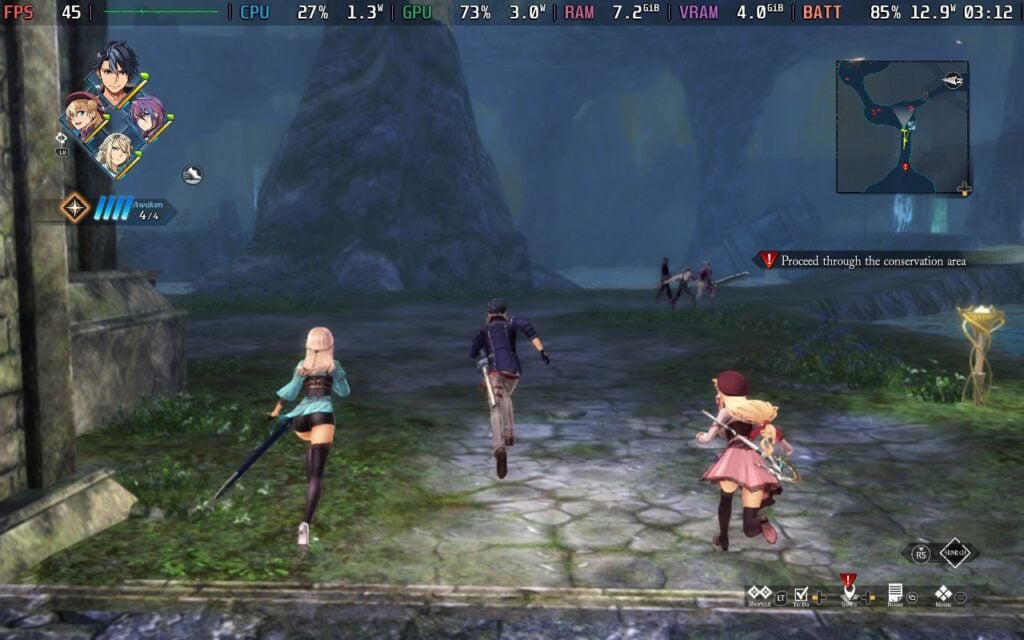
This is also where we can take part in those Connection Events. We usually have enough points to play through every available connection event, minus one, which makes me sad. I wanted to see all of these, as they are filled with humor and background for the character in the spotlight. Thankfully, there's still a way to view connection events that aren’t selected, but I wish we could view them all in the moment. These events also increase our affiliation with each character, which can give them buffs and increased stats.
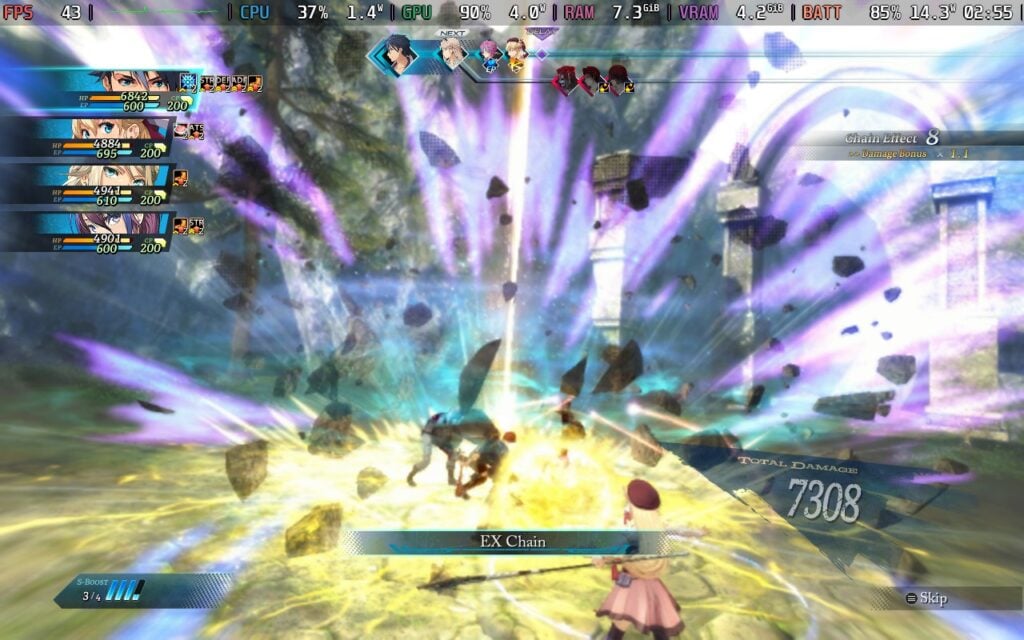
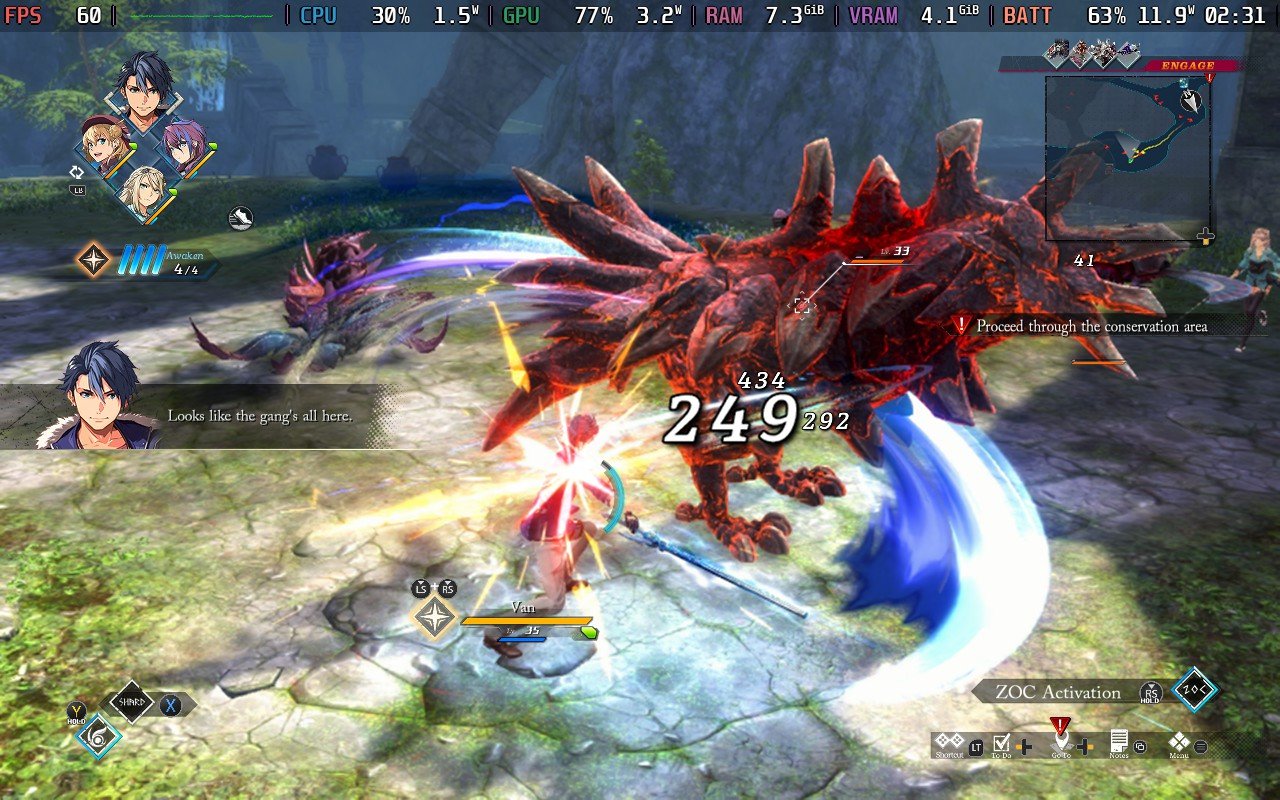
As for combat, it’s almost identical to the previous games, with a few changes. Combat can be either real-time or turn-based, with the biggest fights being turn-based only. In real time, we will have basic combos, dodging, and heavy attacks to cut down the monster’s health while increasing their stun bar. In Trails beyond the Horizon, we can now utilize awakenings and ZOC to help us fight here. Awakenings puts us in an ultra-powerful state to deal heavy damage to the enemy, while ZOC can slow down time and give us a chance to get in some damage before the enemy retaliates. It can help make real-time battles feel easier and blast through them without going into turn-based combat.
For the most part, real-time battles are meant to be switched to turn-based mode. By stunning the enemy in real-time, we can get into the familiar turn-based combat the series is more known for, with some extra damage dealt to the enemies, and making sure we can go first in the turn order. From there, we are free to utilize our attacks, crafts, arts, S-Crafts, and line ourselves up for dual attacks with our team. It's very familiar for those who have played the previous two games, but we do have some nice changes to shake up combat even more.
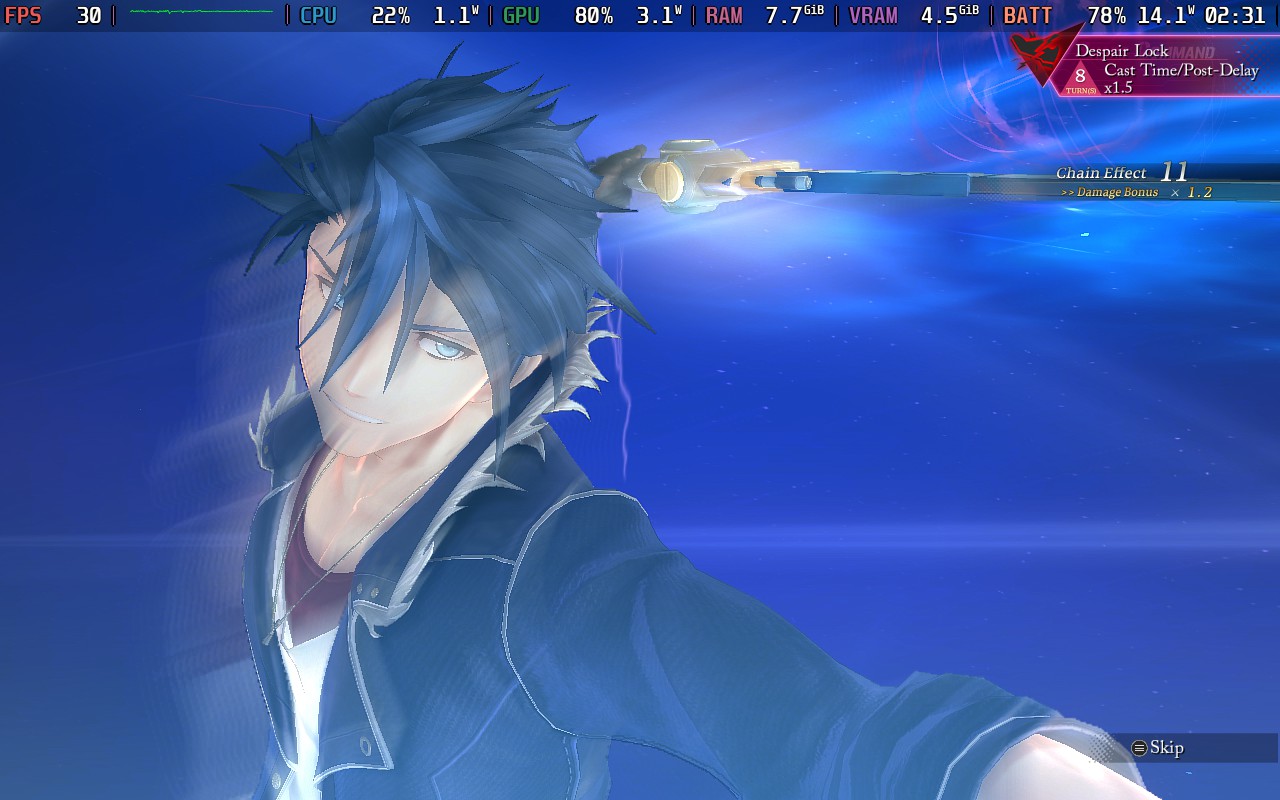
Now, the supporter characters we have with us who aren't on the field can "Blitz", which can bring in support or extra attacks to help take down enemies, ZOC can be initiated with a second boost to grant an extra turn for that character, and Shard Commands to give us some extra buffs and other benefits like reduced damage taken for 6 turns or dealing 1.5x damage for 4 turns. This can add a lot of new ways to tackle enemies, whether it be planning arts to make it happen sooner, maximizing damage by making your strongest character attack multiple times, or using Shard Commands in anticipation of the enemy attack. It will all help and add up to different decisions that need to be made. I also appreciate that entering into turn-based mode while Awakened will keep us in that state for an extra turn, too.
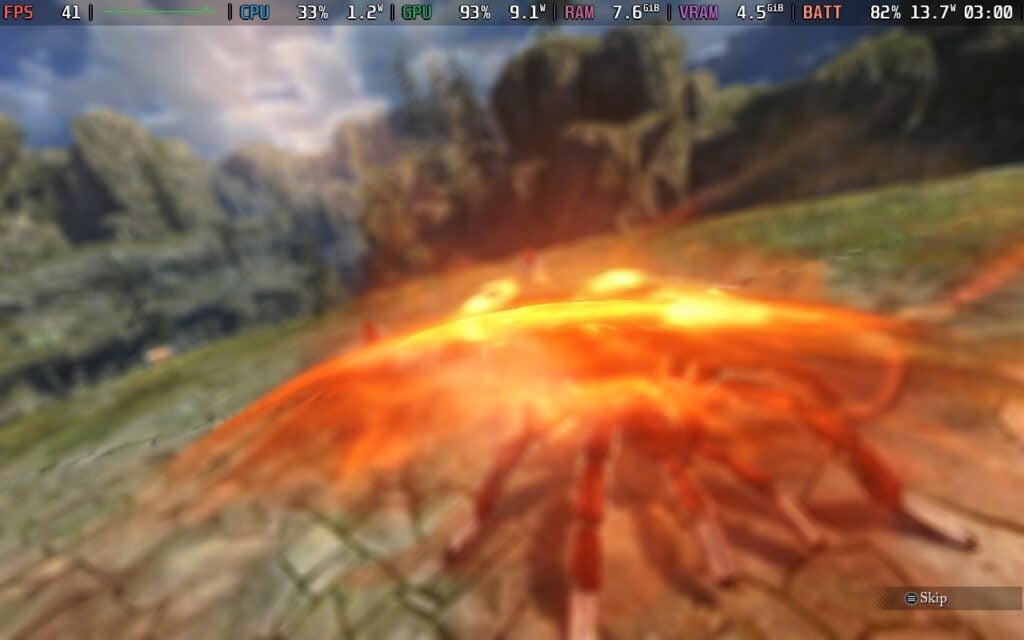
Shard Commands will especially be useful here, since enemies can also make use of ZOC and sometimes even take three turns one after another. We can interrupt this a little by pushing our S-Craft, but if you don't, the enemy will sometimes deal insane damage and kill off two or three of our four-person team in an instant. It can feel a little disheartening when this happens, and forgetting to use a Shard Command to reduce enemy damage to 0.3x or 0.5x is almost immediately punished without a way to come back from it. This does bring up the issue of managing our Boost gauge, since Shard Commands do use some of our gauge, and with the only way to increase it being by using S-Crafts, it can get a little too frustratingly difficult.
Equipment and Orbment use remain largely unchanged from the previous two games, so I got right into the swing of things immediately. We will get new orbments that we can equip to boost our stats or give us passive buffs, while also giving us even more benefits depending on which color orbments we equip. As for equipment, we can find and buy accessories, armor, and footwear. These can all be found in chests around the world or bought from shops using crystals (Orbments) and Mira (armor/equipment).
It all works together to create a worthwhile gameplay loop with enjoyable progression. As with a lot of other JRPGs, there is a lot of grinding involved to level up and get stronger, but the Grim Garten does make it easier. This is an optional, replayable mode where you choose a chamber and explore it in a grid, one square at a time. Some squares will give buffs, some will give currency, and others will bring us to a level to complete objectives and defeat monsters. It's an interesting way to grind, while also getting more equipment, items, and orbments to use. The story did leave a little to be desired, but it was a nice break as well.
The Legend of Heroes: Trails beyond the Horizon is quite playable on the Steam Deck, but I recommend a few tweaks to ensure stability and a little extra battery life. Still, there are multiple ways to play and enjoy the game on the go, and they should meet everyone's preferences for how they want to experience it.
Trails beyond the Horizon is amazing when you play at higher framerates, and that's why the recommended settings are a balance of visuals and a higher framerate. I felt the Performance quality preset was a good start, but I would reduce some settings a little further to make sure it is less demanding on the device.
I recommend setting the framerate to 45 FPS with a 90Hz limit on the OLED Steam Deck, turning down the level-of-detail and character draw distance to low, as well as resolution scale to 90. It's a small change, but it does help with keeping the battery drain down with little change. The game should stick to around 12W - 13W battery drain until the final areas of the game, which will then jump up to 15W average.

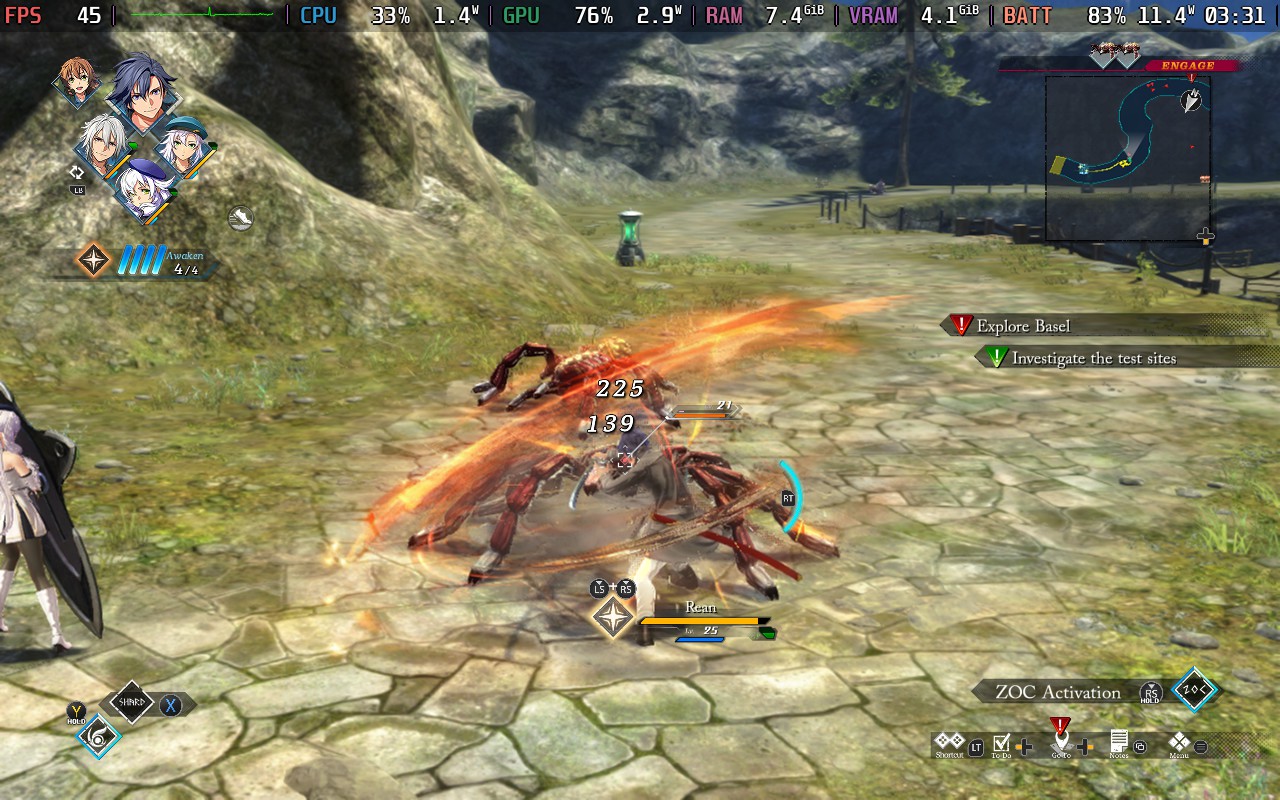
If you want to push the quality, it is definitely possible, but it will require some compromises that I am not a fan of, but it's still possible. By bringing the game to the High quality preset and setting the Shadow Resolution down to "High", we can get 30 FPS throughout the game. It makes the game look fantastic, but the downside is 30 FPS. It just doesn't feel nearly as good as it does at higher framerates, which is disappointing. Thankfully, the recommended settings strike a solid balance of smooth gameplay and decent visuals, but if you really want to push visuals, this will be the best way to do it.
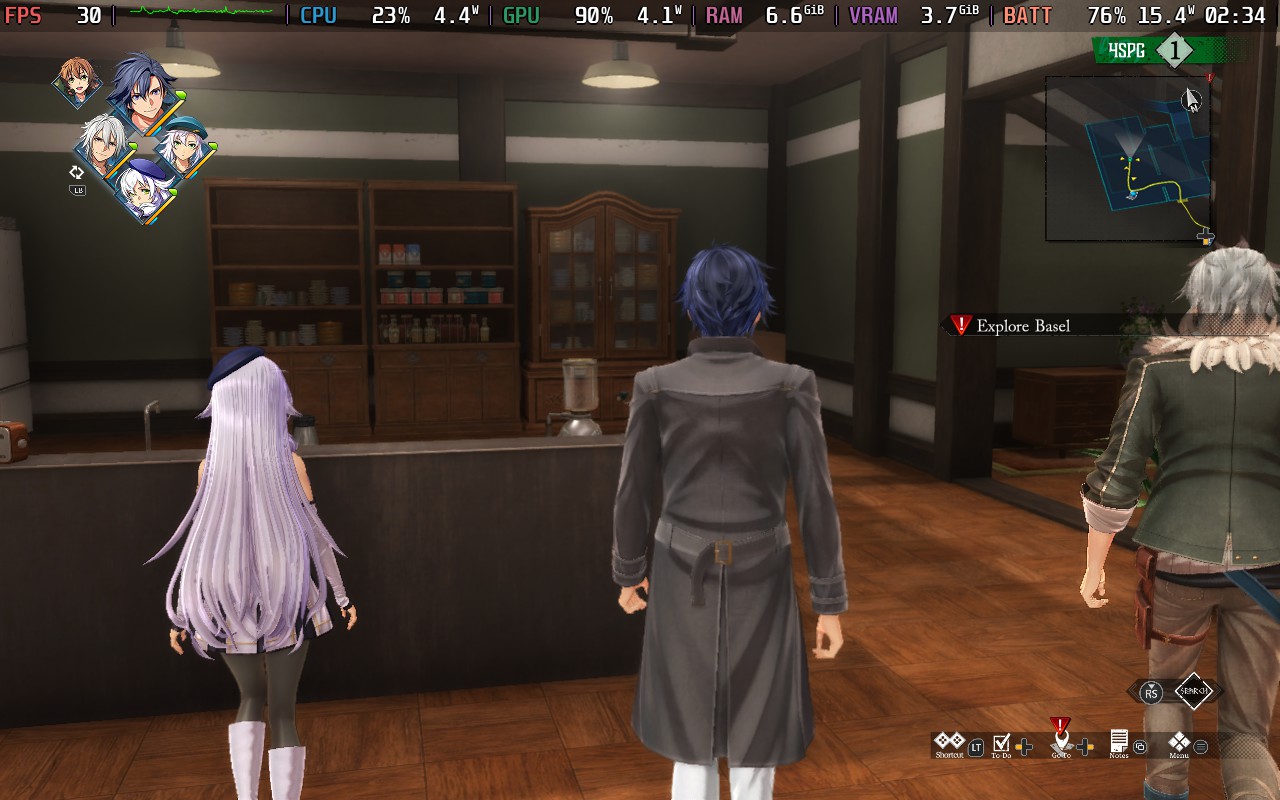
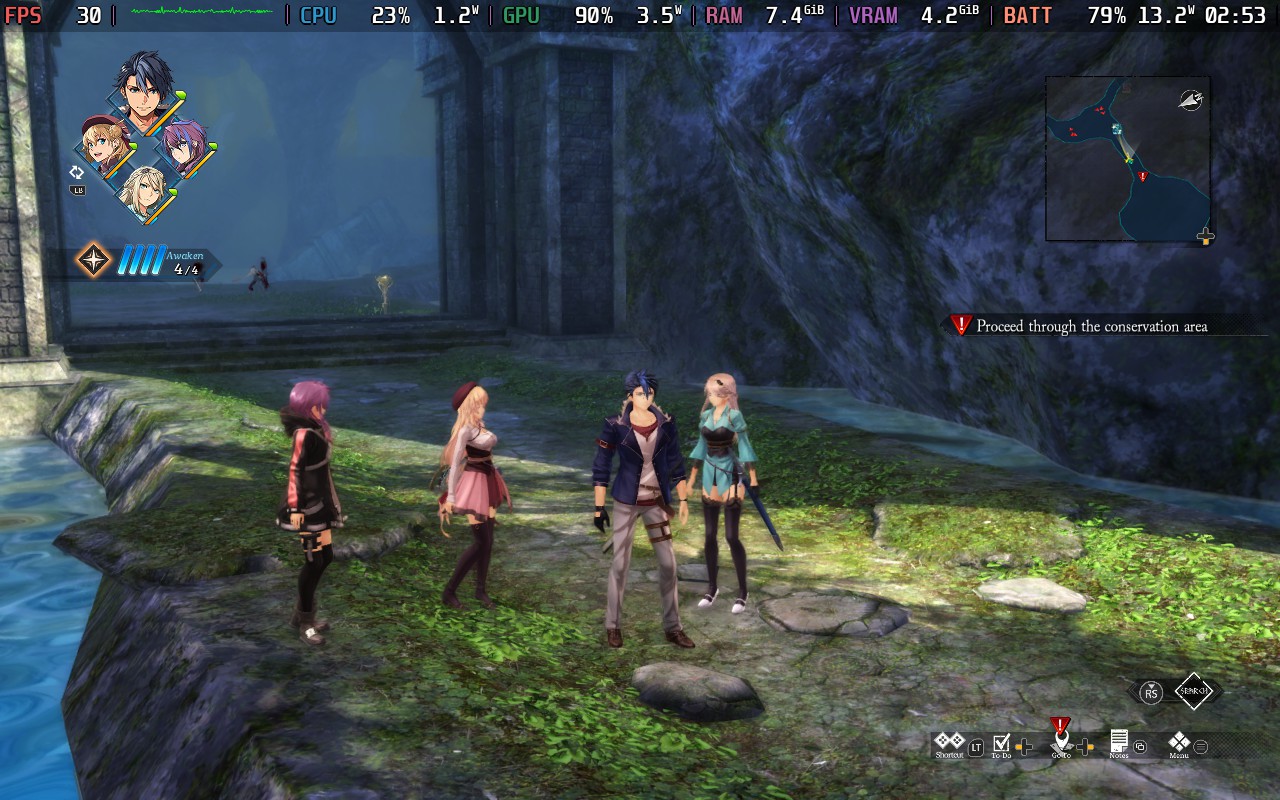
Now, playing through the game at 60 FPS is possible, but it does require a lot of visual compromise. It requires setting almost everything to low and bringing the resolution scale down to 75%. It does make the game look a bit worse and blurry, but it will stick to 60 FPS.
The game can initially run with higher quality settings in the early areas of the game, but since it gets tougher to run later on, we will need some lower settings to make sure the later parts run well. There may also be some drops with S-Crafts and some Arts that are used, but it should go right back up as soon as the move is done.
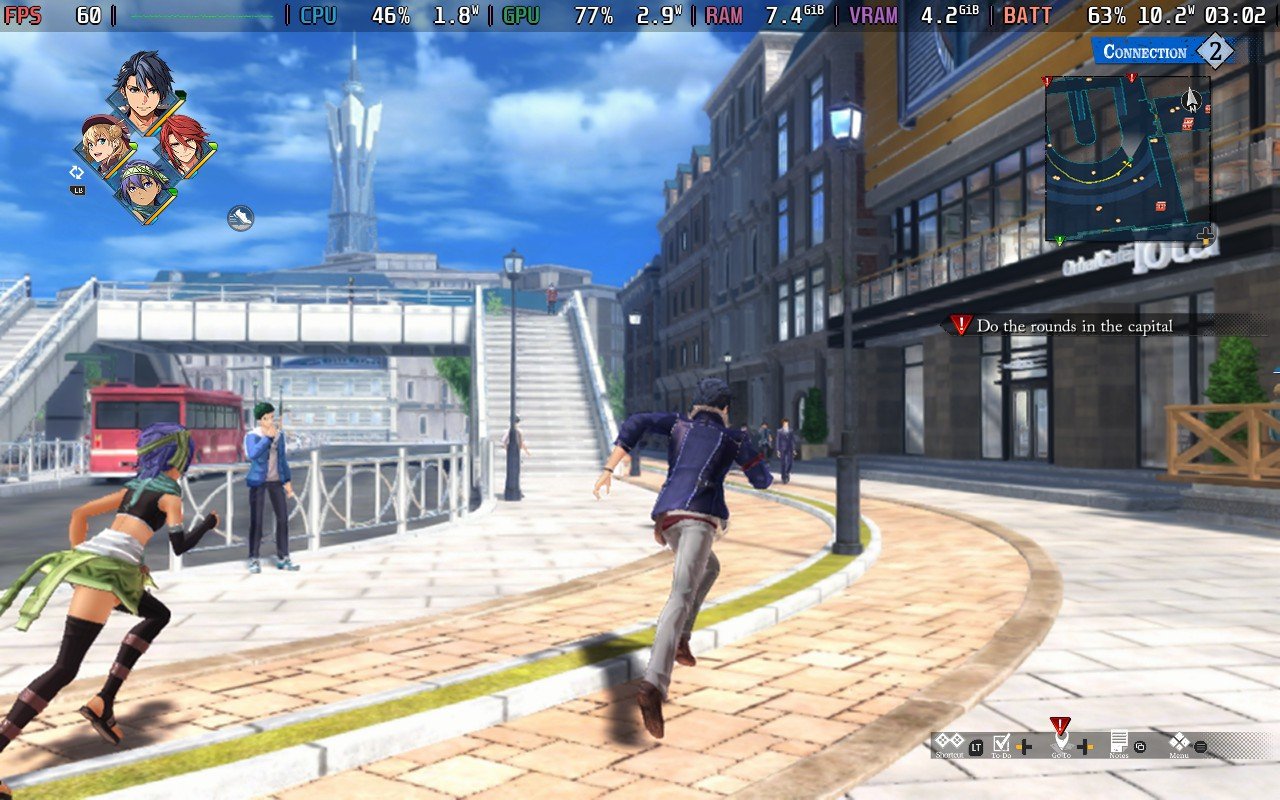
The game does have a good chunk of settings to change. We can increase font size, as well as map text and icon size, auto-advance messages, show loading screen tips, change the high-speed mode, change difficulty, toggle the dash mode, change audio settings, and change camera settings.
The game does support 16:10 resolution, as well as cloud saves and controller support. There are HDR settings, and it does recognize the OLED screen.
The Legend of Heroes: Trails beyond the Horizon is a great next game in the JRPG series and sets the bar high for future entries in the series. The implications of the finale are worth playing through, with an exciting buildup filled with twists and turns I didn't expect. The great gameplay is back as well, adding new elements to real-time and turn-based battles that keep the action going and give more options for strategic opportunities. Bringing all the characters into conversations sometimes feels forced, and combat can be very unfair with one wrong move, but this is ultimately a fantastic experience that has made me extremely excited for the next Trails game.
On top of that, it's a joy to play on the Steam Deck. A combination of settings can get a great balance for smooth gameplay with solid visuals, which is perfect for the long, grindy experience that the game specializes in. Ultimately, it's well worth experiencing on the Steam Deck, and it keeps the Trails series as one that's great to take on the go.
このレビューはPC版に基づいています。
このレビューをお楽しみいただけたなら、SteamDeckHQ の他のコンテンツもぜひご覧ください!あなたのゲーム体験に役立つゲームレビューやニュースを幅広く取り揃えています。ニュース、ヒントやチュートリアル、ゲーム設定やレビューをお探しの方も、最新のトレンドを知りたい方も、ぜひご利用ください。
Octopath Traveler 0 was provided by Square Enix for review. Thank you!
Square Enix is a master of their craft, and it feels like it is continually making the JRPG genre more and more exciting. Years ago, they created the HD-2D art style, which is a wonderful way to showcase 2D games in a gorgeous way. Octopath Traveler showed just how great it can be, and Dragon Quest proved it would be amazing for remakes of very classic JRPGs. Now, we have Octopath Traveler 0, the next entry in the series that started the HD-2D trend, and I fell in love with it. It keeps the core formula of the previous games that worked, while adding some new ideas that ultimately make this entry a worthy successor.
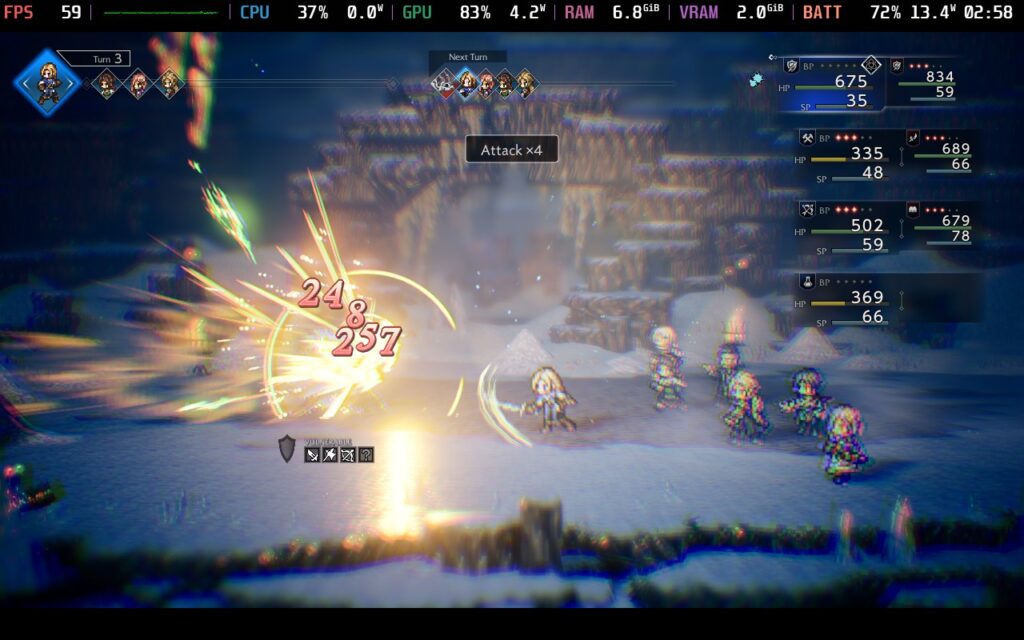
I could go on and on about the visuals, but as I have said many times, I love the HD-2D art style. It finds a way to perfectly balance 3D environments and pixel art, with some gorgeous lighting and shadows that help make the world pop. If I had to be very critical, I do wish there was a little more vibrant color injected into the landscape, but I am still very happy with it.
One of the biggest changes here comes in its story structure. In the previous two games, we followed eight individuals and their stories, whereas in Octopath Traveler 0, it all revolves around our own customizable character. Our hometown of Wishvale is destroyed by evil forces, and we decide to avenge the town and go after the people who caused this, while also rebuilding the home we love.
Ultimately, that makes this a more personal tale, and one I was enjoying through and through. While our silent protagonist can feel a bit like a placeholder, the reasoning for them to go on this epic quest is felt. They watched their entire home fall apart, running away after watching their parents get struck down in front of them, countless friends be killed in cold blood, and essentially waking up to their entire life upended. It's nice to be able to customize our character, how they look, and their starting equipment, but it doesn't replace the character development that could come from a developed personality.
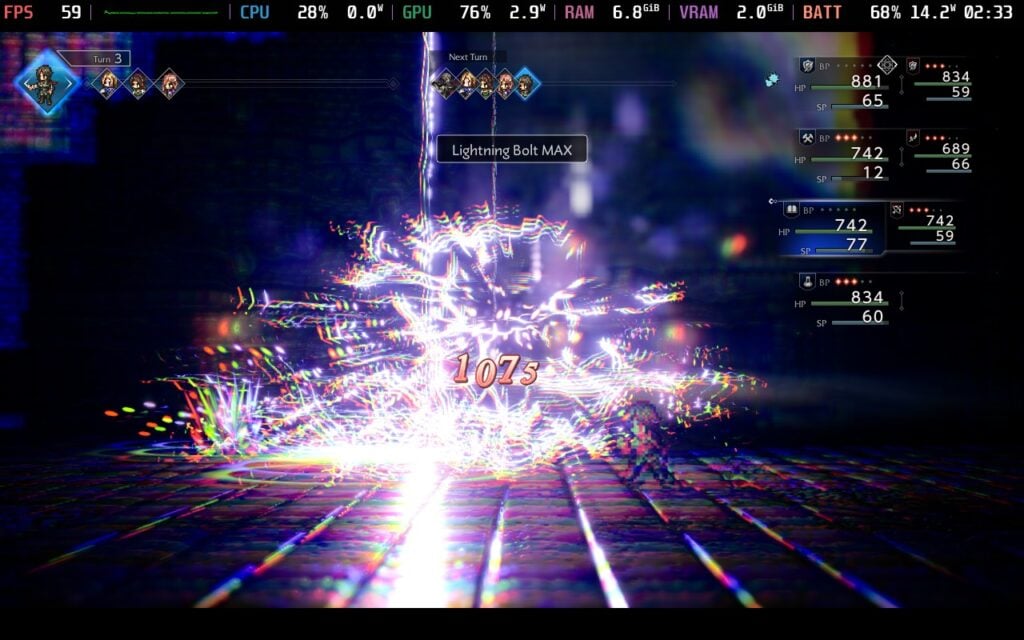
Instead of following eight individuals on their own journeys, we start off with three main questlines that are segmented by each villain we have to take down. These quests feature vile people who are extremely compelling to learn about. They also delve into some heavier topics like torture and murder, which both surprised and delighted me. I love this new take on the story and how heavy stakes can get, and as it continued to unfold even further after finishing those three quests, I only enjoyed it more and more. Octopath Traveler 0 feels like there's always something coming, or something new to discover, and I was hooked the whole time.
However, I did start to miss the character development of previous entries. The past two games focused on eight individuals, and we got to see how they developed from their own personal journeys. In this prequel, we take the reins of a silent protagonist, and while I do see their justifications, I missed the development of established personalities.
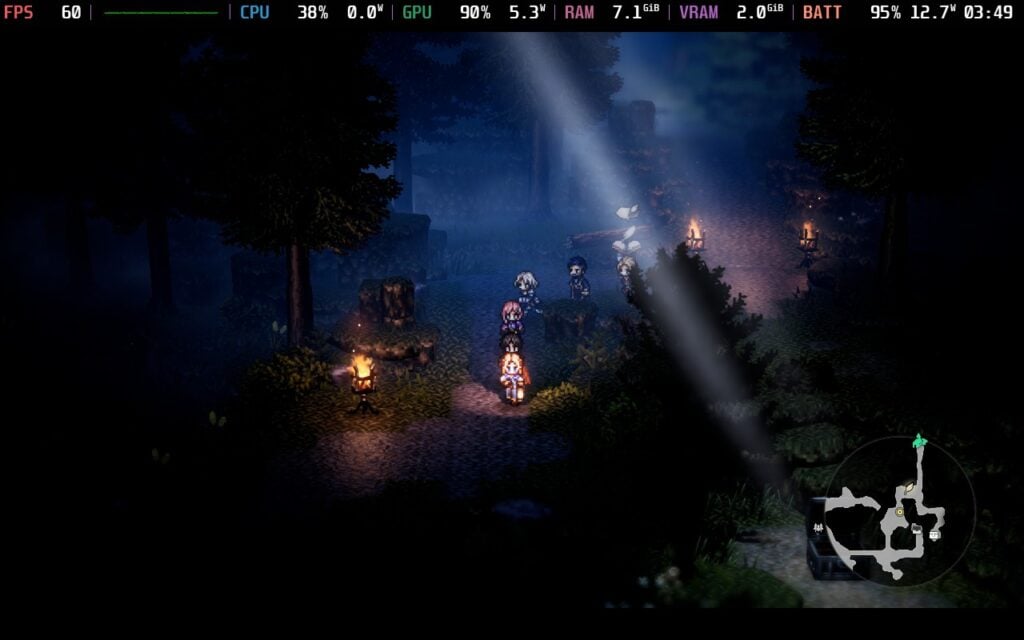
As we travel, we will find people to recruit to our party, and most of them are unique and engaging on their own, but none of them get that same spotlight that I was hoping for. This ultimately made me feel a little dissociated from the people we find, with my motivation to find them rooted solely in finding new companions to fight with me or tend to my town. I am glad the overall story and the characters involved in it are memorable and worth spending time with, but I didn't care much for my actual party.
Octopath Traveler 0's combat, on the other hand, is a great improvement over the previous games. We still have the same systems from the previous games, with each character having two weapons and skills/spells that cater to their jobs, and using them to discover enemies' weaknesses to "break" them to pile on damage. It feels just as strategic as ever, finding the best way to bring enemies into that "break" state so they can be stunned and take extra damage, and using Battle Points (BP) to deal extra attacks or increase skill damage.
Since Octopath doesn't revolve around eight characters like before, we instead have eight party members in each fight. There are four people in the front row and four in the back, which can be swapped out easily to utilize their skills and weapons. The people in the back row are protected and don't take damage, but gain BP just the same as those in the front row. It may seem like one simple change, but having a back row of fighters dramatically changes the fight and can increase the strategy we use in fights.
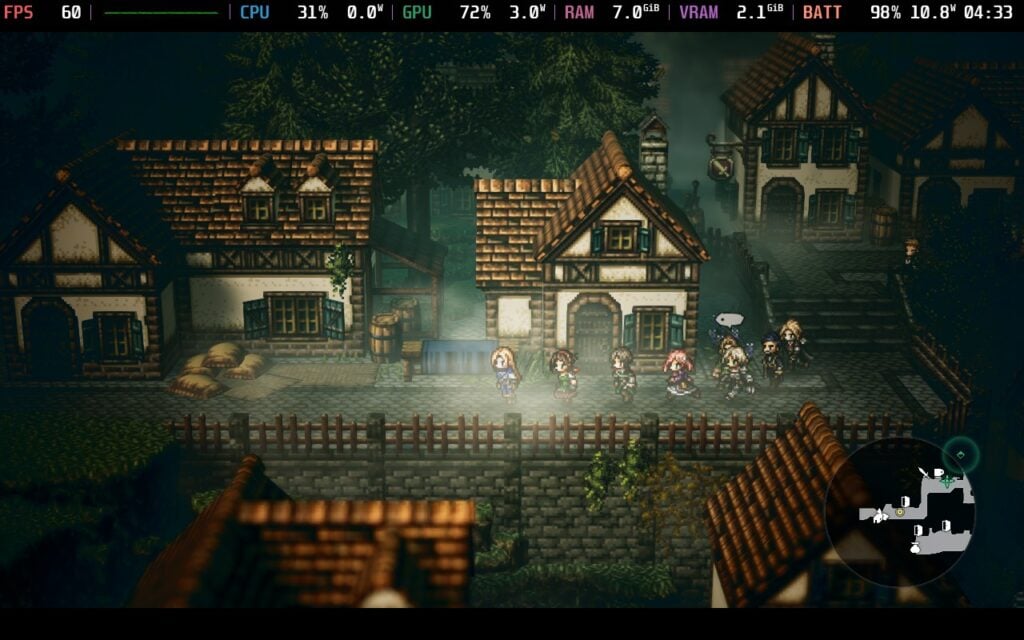
In a way, the way we get new characters and how we utilize and fight with them reminds me of Suikoden. In Suikoden, we find tons of allies throughout the game, bringing them in to fight with us and join our army. Octopath Traveler 0 is similar in that sense, as we can find characters throughout the world or through the mainline quests. Sometimes we will bring them in as part of the larger story, while others will be completely optional side quests. And if we don't put them in our fighting party, they can help manage the town we are rebuilding!
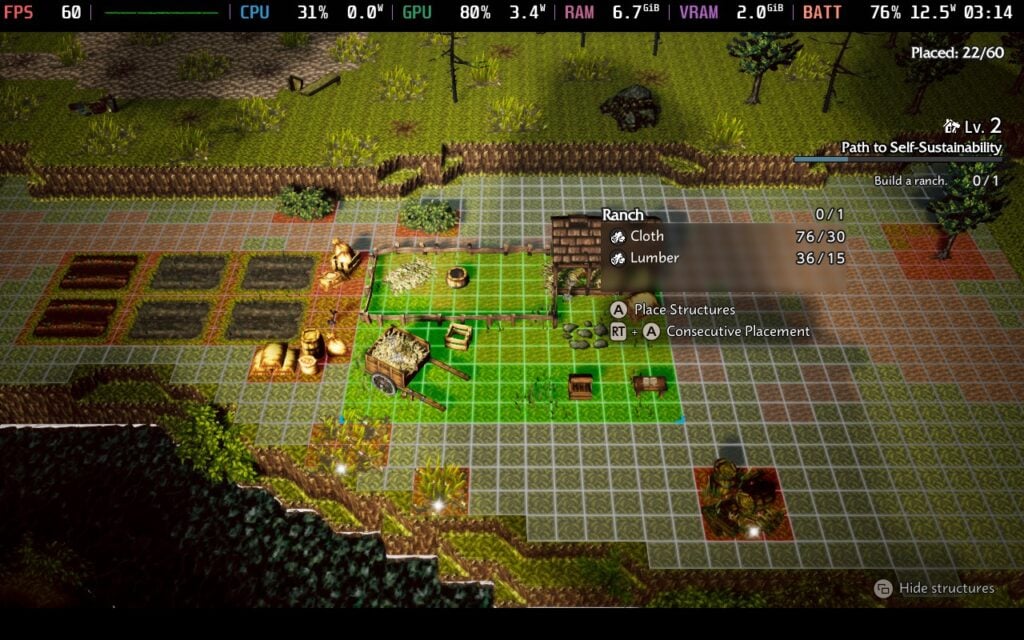
That brings us to town building, which feels a little restricted at first, but is something I ended up enjoying as more options opened up. We will gather resources around the world and use them to build new homes, resource buildings, and decorations on a grid system. It's a nice break from the constant grinding and combat that JRPGs like this are known for, and it does feed us with a steady stream of resources, money, and shops we can buy specialized items from. It's a great reprieve from the regular gameplay that can get a little tiring without taking a moment to catch your breath.
I enjoyed running around the world, filled with some familiar locations that I recognize from previous games, but I was a little disappointed with the simplified Path Actions. In previous games, depending on the character we are controlling, we can use specific actions on other people, whether it be challenging them to fights or buying items from them. Now, instead, each NPC has three Path Actions available to use on them, with one always being inquiring about who they are, and the other two could be different options like recruiting to our town, fighting them to become our helpers, or even asking for some free items.
Without any issue, Octopath Traveler 0 is perfect for the Steam Deck. It runs at a smooth 60 FPS on default settings, while draining under 14W for over 3.5 hours of battery life. It looks and feels great, and there really isn't much more I can say about its performance. It just runs extremely well. Some battles will spike the battery drain up a little more, but ultimately, it will stay at 60 FPS the whole time.
The game defaults to the High quality preset, and while it is possible to move to the Ultra preset and still get 60 FPS, the changes were minimal, and they do increase battery drain. So, I recommend just keeping it on the default High settings. The HD-2D visuals shine on the Steam Deck no matter what, so I didn’t find any reason to add extra stress on battery drain. However, it is possible to play at Ultra, and it will move the battery life to around 2.5-3 hours.
So, with all this in mind, I would just recommend playing right out of the box. We can increase battery life further by reducing the framerate to 30 FPS in-game or bringing down the settings, but it isn't really necessary. It looks and plays great as is, and I can't recommend it enough.
We can change around some settings like text and voice language, message speed, text display, hold time for building removal, vibrations, remembering cursor positions, minimap display, pausing game when inactive, how many party members are displayed when running around, volume sliders, and rebinding keys.
このゲームは16:10の解像度をサポートしていないが、クラウドセーブとコントローラーをサポートしている。HDR設定はない。
Despite some smaller issues here and there, Octopath Traveler 0 is a fantastic JRPG that is a worthy entry in this series. It is missing some of the charm and character development that were present in the previous two games, but it's still a fantastic experience with great combat, a compelling story, a solid town-management system, and a continuation of the wonderful HD-2D visual style that I have fallen in love with. As a JRPG fan, this is going to be a wonderful addition to your ever-growing library.
And with how great the game runs on the Steam Deck, this is definitely a worthy title to add to your portable library as well. A solid 60 FPS on High settings with around 3.5-4 hours of battery is a treat, and I can't recommend this game enough.
このレビューはPC版に基づいています。
このレビューをお楽しみいただけたなら、SteamDeckHQ の他のコンテンツもぜひご覧ください!あなたのゲーム体験に役立つゲームレビューやニュースを幅広く取り揃えています。ニュース、ヒントやチュートリアル、ゲーム設定やレビューをお探しの方も、最新のトレンドを知りたい方も、ぜひご利用ください。
このゲームはスクウェア・エニックスからレビュー用に提供されたものです。ありがとうございました!
When it comes to remaking older titles, Square Enix has set itself apart. Not only do they have some great games to bring back to life, but they also started using a whole new art style to do it. The HD-2D aesthetic was started with Octopath Traveler, and has since been used on multiple other games, culminating with the remake for Dragon Quest (DQ) 3. I loved the game, as I said in my review, and I was blown away by how beautiful it was. I went into Dragon Quest 1 & 2 HD-2D Remake with the same excitement and drive to continue the Erdrick trilogy in the same beautiful setting, and I was not disappointed.
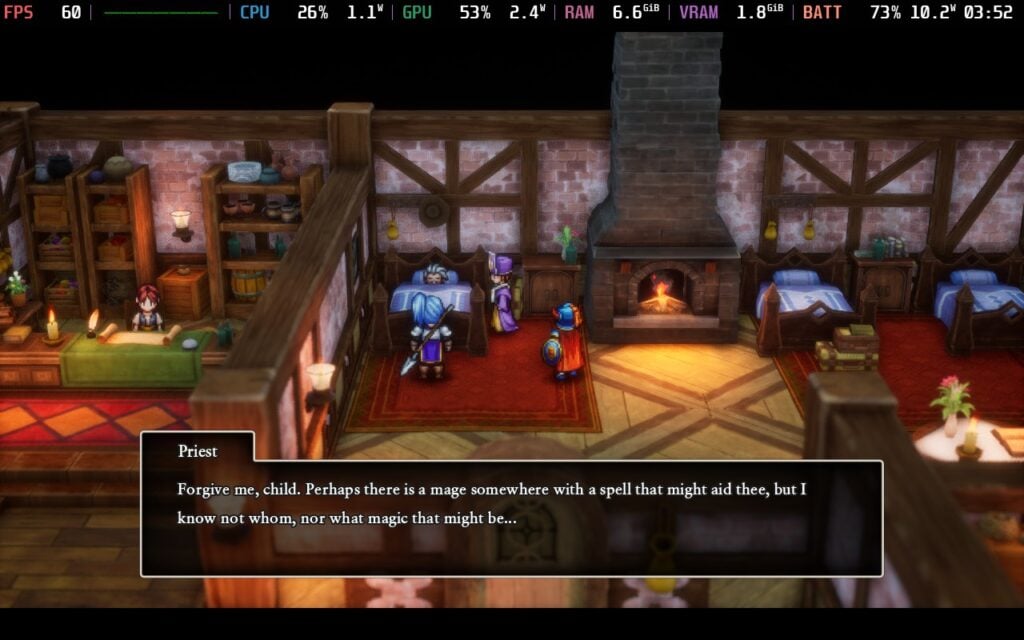
If you have played Dragon Quest 3, then this will be a very familiar experience. The traditional JRPG style that was pioneered back when the original games were released, 1986 and 1987, respectively, still feels as untouched as it possibly could. Square Enix tows the line between reinventing and preservation just as well as they did with DQ3, finding ways to expand the story and streamline gameplay without sacrificing the roots and legacy the games originated from. It feels like an impossible task when it comes to remakes, but thanks to the mechanics in the game and the HD-2D art style, it feels like they achieved it once again.
The game comes with two in one, as the name suggests. We get to play through both Dragon Quest 1 and 2, continuing the Erdrick trilogy that started with 3. And while there are a lot of similarities between the two games, there are a good chunk of differences in how they feel.
In Dragon Quest 1, we follow a lone hero from the Erdrick bloodline on a quest to defeat the Dragonlord. Originally, this was a short story, and was a traditional take on the good vs evil scenario. In the remake, we still have the core of the story, with some wonderful new content that fleshes out the story and some of the characters more. It’s enough to add that those who played before will feel like they are seeing something new, and I appreciate how the content has some relation to the sequel. Our silent protagonist also feels like he has more of a personality, conveyed by his actions throughout the game and the movements/expressions his sprite makes.

As for Dragon Quest 2, this picks up a bit later. Years and years have passed, and Erdrick’s line has continued to be passed down. Now, there are three kingdoms, and you will team up with three of your cousins to, once again, save the world. Our protagonist is all on the silent side, but we are now joined by three party members. While our protagonist is more of a clean slate and stays neutral, that’s more than made up for by the rest of our party. Each of our cousins is brimming with personality and charm, ranging from the prince and princess of Cannock and their camaraderie as siblings to the princess of Moonbroke, who is hell-bent on avenging her decimated kingdom. It was a joy to go through the much longer story with them, to watch as they converse, grow, and get stronger together. And I felt the expanded inclusion of the princess of Cannock felt right at home in the story.
The new content in both of these games makes the entire trilogy feel more connected. It was rewarding to see how the events of Dragon Quest 3 affected DQ1, which in turn affected DQ2. Nothing felt over the top or forced; it was just well placed and fit perfectly like that last puzzle piece completing a 1000-piece puzzle.
Combat in general is similar between the two games, but the structure ends up making them feel wildly different at times. Both games utilize the classic turn-based combat we have come to know and love with JRPGs. Each turn, we choose our action, whether it will be our basic attack, using abilities or spells, or defending. Once we decide, the enemy takes their turn, and we duke it out. Enemies have their own vulnerabilities and strengths, and with some of our abilities and spells carrying an element to them, figuring out the best moves to use will come in handy. With so many RPGs and JRPGs having complex mechanics, it was kind of refreshing to just go back to the basics here.

The biggest aspect that makes combat feel different between the two games is the fighters we have. DQ1 has only one protagonist fighting, forcing us to balance our attacks, healing, and defense to make sure we survive the toughest encounters. On one hand, I am someone who enjoys having one overpowered character, and this feeds into that fantasy, but on the other hand, it makes some fights much harder. For instance, fighting the dragon to save the princess took me so much longer to get through, really only being saved by the armor I had on that nearly nullified fire damage. Being able to replay the fight immediately and the generous autosaves help, but it can still get frustrating.
DQ2 doesn't suffer from this problem as much, due to the party members we have. It can still get difficult from time to time, but it's not nearly as aggravating as the first game. Each of the party members fulfills different roles in the party, with our protagonist being the main damage dealer and the others being closer to mages and healers. It's not as fluid as Dragon Quest 3, where your party can have roles customized more, but I didn't mind the lack of malleability. The team still felt diverse enough to enjoy each fight, and I felt each fight had everything I wanted.
Both of the games largely play like a classic JRPG outside of that. We level up, our stats increase, we get new abilities and spells, find equipment and items to make ourselves more powerful, and travel throughout the Alefgard continent. We can also find Mini Medals throughout the world, which is a new feature that was introduced into the games, and can get us some extra items depending on how many we find.
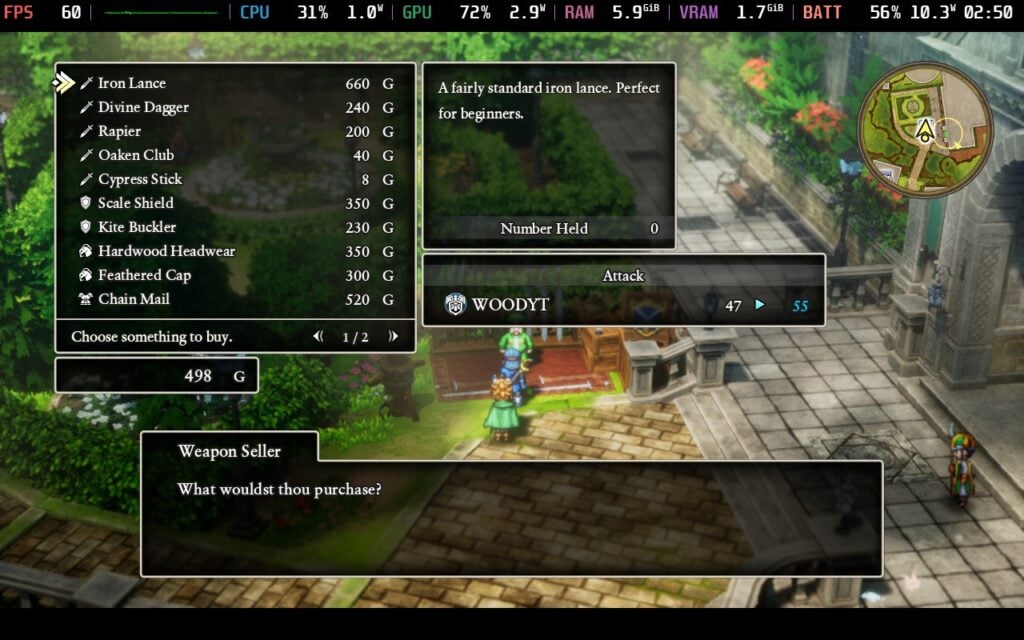
There is also a wealth of new accessibility settings that made their way over from Dragon Quest 3's remake. These include increased battle speeds and showing the next objective location on the map. It's easy to turn these off if you want a more classic experience, but I love having the option. Increasing battle speed was especially useful, and I used it to make the grind more manageable.
Dragon Quest 1 & 2 HD-2D Remake is a gorgeous game, and one I had no worries about running on the Steam Deck. With how great Dragon Quest 3's HD-2D Remake ran, I had little to no worry about this entry, and I was right. After testing both games, I would consider the entirety of both Dragon Quest 1 and 2 to be very similar to Dragon Quest 3 in terms of performance, but my recommendations have changed a little bit.
The game is perfectly playable right out of the box at 60 FPS with the highest settings, and it looks gorgeous to boot. However, there is one change I would make to help with battery life a little bit. With battery drain not being as heavy in as many areas as Dragon Quest 3, I recommend playing at 60 FPS with turning rendering scale down to 2. This is only one notch down, but it doesn't change much visually while saving about 2W-3W of battery drain, and adds around 30 minutes of battery life. It's a small change, but extra battery life with lower temperatures for almost no visual change is nice. The most you may see is some slight extra shimmering on buildings when moving past, but it's not easily noticeable.
That's really all I would change. In Dragon Quest 3, there were more areas with slowdown, and it went below 60, but we can keep it at 60 here with ease. This is much nicer, as it feels like there aren't any slight stutters, and it's completely smooth. It felt necessary at times in DQ3, but here, it doesn't.
For those who want the best quality and framerate, there really aren't any compromises here. Just play right out of the box, with max settings at 60 FPS. I didn't encounter any spots where the framerate would dip, and while there were some that drained a little more than the 13W-15W average, it was still very playable without any issues. This gives us the best of both worlds, quality and framerate, with just a little extra battery drain.
The only reason this isn't the recommended settings is that the tweak for recommended is not noticeable and gives a clear benefit. Otherwise, I would consider this the best way to play.

There are a couple of accessibility settings amongst all of the settings we can turn on. We can change the battle speed, suggested actions, whether the cursor remembers the last used command, change brightness, modify camera distance, toggle the minimap, turn on/off quest help text, toggle an objective marker and whether we can see treasure chest locations and secret spots, change the difficulty and whether we recover HP/MP when leveling up, and choose whether the text display speed is fast or slow.
We can also modify the audio, language, keybindings, and alter the confirm button. Still, there are a lot of aspects we can change for accessibility to tailor our experience, and I love it.
The game doesn't support the 16:10 aspect ratio, but we do have cloud saves and controller support. There are no HDR settings.
Dragon Quest 1 & 2 HD-2D Remake brings the next two games in the Erdrick trilogy back into the limelight in a glorious way. The new content, quality of life improvements, and extra accessibility make diving back into these classics so much more worth it. The gorgeous HD-2D art style keeps the game feeling retro, while still modernizing the look and feel. It keeps the core of the original releases, and despite some spikes in difficulty, it's well worth enjoying.
It's also wonderful to play on the Steam Deck. It doesn't need any changes to enjoy, and while we could make an adjustment to increase battery life with almost no visual change, it's a blast to play, and I can't recommend it enough.
このレビューはPC版に基づいています。
このレビューをお楽しみいただけたなら、SteamDeckHQ の他のコンテンツもぜひご覧ください!あなたのゲーム体験に役立つゲームレビューやニュースを幅広く取り揃えています。ニュース、ヒントやチュートリアル、ゲーム設定やレビューをお探しの方も、最新のトレンドを知りたい方も、ぜひご利用ください。
コーエーテクモより、レビュー用に1部ご提供いただきました。ありがとうございました!
私は非常に長い間JRPGをプレイしており、好きなジャンルのゲームだと思うようになった。キングダムハーツから始まって、ファイナルファンタジー、ドラゴンクエスト、そしてこのジャンルで私が一番好きな2つのシリーズ、テイルズオブと軌跡など、このジャンルのゲームをたくさんプレイするようになった。しかし、あまり語らないが、よくプレイしているシリーズのひとつにアトリエのゲームがある。このシリーズは、今回紹介した他のシリーズよりもJRPGのテイストが強いが、それでも面白い。前作の『ユミアのアトリエ』をプレイして、シリーズの方向性が気に入ったのを覚えている。

しかし、メインラインの最新作『アトリエ・レズリアーナ』では、予想だにしなかった動きがあった:紅の錬金術士と白の守護者』は、実は数歩後退している。ユミア』で導入された新しいアイデアを拡張したり微調整したりする代わりに、シリーズが過去に移行しているように思えたからだ。少し心配しながらゲームに入ったが、感動して帰ってきた。以前は想像もつかなかったことだが、実はこの後退が、このゲームをシリーズ全体の中で最も好きなゲームのひとつにするのに役立っているのだ。
アトリエ リセリアーナ』を手にしてかなり経つが、発売前に急いでレビューを書き上げるのではなく、もっと時間をかけてプレイすることにした。このゲームに惚れ込んでいたので、じっくりと時間をかけて、見るべきものはすべて見て、ストーリーを楽しみたかったのだ。そうすることで、以前よりずっとこの体験を楽しむことができたからだ。
ストーリーは全体的に、他の多くのJRPGゲームよりもずっと小規模なものだが、その分、より高く評価できた。私たちはリアスとスレイドとしてプレイし、ホールファインの町を復興させ、洞窟で発見された謎めいたアトリエの秘密を探る冒険に出ることになる。ガイスト・コアの真相や、数年前にこの町で実際に起こったこと、そしてこの赤い霧の正体に迫りながら。

ほとんどがこの町を中心に展開する小さな物語で、世界全体を巻き込むようなドラマチックなものではなく、もっと焦点を絞った物語があるのは素晴らしいことだ。そのおかげで、リアスとスレイドが持つ町との感情的なつながりがより重く感じられる。特にリアスの結びつきは、仲間に入りたがるやんちゃな姿から、錬金術の才能を活かして他人を幸せにし、町を助ける主役のような存在になるにつれ、強く印象に残る。実質的に錬金術師となった彼女は、アイテムを作り、町にかつての栄光を取り戻すために必要な資金を集める。
アトリエ レスレリアーナ』には、ライザ、ソフィー、トトリ、アイーシャ、エリーなど、過去作のキャラクターも多数登場する。過去作に登場したキャラクターが大役でも脇役でもたくさん出てくるので、ある意味「軌跡」のゲームのような感じもする。これらのキャラクターとの特別な交流やサイドストーリーもあり、彼らとの交流が増えるのはいい感じだ。素晴らしい世界観と興味深い設定、そしてしっかりした声優陣の演技で、私はすっかりハマってしまった。英語の声優も好きだが、日本語の声も非常によく合っていて、違和感がない。
前作の本編と比べると、今作はメカニクスをよりシンプルでわかりやすくしているが、それでも私が期待するような生来の複雑さは健在だ。すべての『アトリエ』ゲームの核となる要素である「合成」は、より身近に楽しめるようになった。拾った材料はそれぞれカテゴリーに分類され、その中から3つか4つ取って最初のアイテムを作る。それが終わると、さらに3つの材料を追加して、ステータスをさらに強化したり、新しい特性を追加したり、得られる量を増やしたりすることができる。

表面的にはとてもシンプルだ。それぞれのカテゴリーで最高の食材を選び、色を合わせてアイテムを可能な限り強力にするだけだ。それぞれの材料には特徴もあり、それをアイテムに加えることができるので、最高の材料と最高の特徴を見つけてマッチさせることがしばらく続くことになる。それでも楽しいし、自分のアイテムがパワーアップしていくのを見るのは大好きだが、レシピのモーフィングと色の変更までは満足できなかった。
特定の材料を使うことで、作っているアイテムを変形させ、より強力なバージョンを作ることができる。これは、最初のアイテムで行ったアップグレードもすべて引き継ぐことになる。そのため、アップグレードしたアイテムを手に入れるために近道をするのではなく、レシピの最初から作り直す方が得策となる。また、各材料の色を変更したり、特定のスロットの材料のカテゴリーを変更したりすることもできるようになります。これは最も強力なアイテムを作るために必要で、合成したいアイテムの品質を最大化するのに役立つ素晴らしい方法です。
それでも、新しいメカニズムにもかかわらず、圧倒されるような感じはない。ゲーム終盤でもメカニックを魅力的に保つためにちょうどいい量の選択肢が追加されており、理解するのに苦労することはなかった。アトリエ・レスレリアーナ』は、私が期待していなかったようなバランスを保っており、これ以上嬉しいことはない。

時間が経てば、手持ちのキャラクターや妖精に応じて、アイテムをさらに強化する新しい仕組みがアンロックされるだろうが、私のお気に入りはアイテムの複製だ。ゲーム後半のアイテムに必要な高度なコンポーネントを作らなければならないのはちょっと面倒ですが、十分なお金さえあれば、すでに合成したアイテムを複製することができます。つまり、お金さえあれば、非常に強力なクラフト部品を複製することができるので、完璧な最終製品を手に入れようとするときに毎回新しいものを作る必要がないのだ。
合成に必要な材料を手に入れる方法は複数ある。各マップのあちこちを回って集めることもできるが、ターン制の戦闘を通じて入手することもできる。ほとんどの『アトリエ』ゲームには、何らかの戦闘やRPGのレベルアップ・システムが搭載されているが、『レスレリアーナ』では合成と同様に、これらも簡略化されている。基本的な攻撃やスキル、アイテムを使いながら、パーティを組んでモンスターと戦う。モンスターを倒すと、経験値、お金、スキルポイントが手に入る。経験値はチームをレベルアップさせ、ステータスを上げてより強力にし、スキルポイントは各人のスキルツリーのノードをアンロックするために特別に使われる。
戦闘で活用できるメカニックのほとんどは気に入っている。敵にはエレメントの弱点があり、それを利用することで、それぞれのスタン・バーをダウンさせて攻撃を阻止したり、追加ダメージを与えたりすることができる。また、ユナイトメーターというものが別にあり、メーターが上昇すると、先にターンを奪った味方が追撃してくる。

追撃は好きだが、ユナイトメーターはあまり好きではない。より強力な攻撃を利用するために、メーターがMAXになることはほとんどない。ボスの場合でも、味方がほとんど死んでからユナイト・メーターを最大にするか、そうなる前に完全に死ぬか、ボスを倒すかのどちらかだ。アイテムを使ったり、一度に3つの異なるスキルを使ったりするために誰かがやってくるようなマルチアクションもあるが、これには充電が必要な独自のメーターがある。このような攻撃をもっと使いたかったが、結局は使えなかった。
しかし、攻撃の時系列に注意を払わなければならないところがいい。ターン制のこのゲームでは、各人や敵が攻撃する順番がある。敵の攻撃を押し返すためにスキルで順番を変更することもできるが、特定のターンにはプラスとマイナスのバフがあるため、さらに注意を払う必要がある。体力が増えたり、攻撃力が上がったり、凍傷で負傷したり、防御力が下がったりと様々だ。敵の攻撃を押し返すだけでなく、それによってプラスになるかマイナスになるかを見極める必要があるのだ。
敵と戦ってお金を得ることもあるが、お金を得る主な方法はショップでアイテムを売ることだ。棚に並べるとボーナスがもらえる9種類のアイテムを選んだら、店を開いて売る。これはとてもいいアイデアだが、もう少し広げてほしかった。とても基本的なことで、楽しむというよりは、やることが雑に感じられる。売るアイテムを自動的に配置するオプションがあるのはありがたいし、追加ボーナスのために店の外観を多少カスタマイズすることもできるが、結局のところ、楽しみではなかった。

それとは別に、サイドクエストに挑戦して、より多くのスキルポイントや食材、お金を手に入れることができ、そのお金で町に投資してパッシブ・バフを与えたり、町のレベルを上げたりすることができる。また、Dimensional Paths(次元の道)に行くこともできる。ボーナスをくれる妖精を見つけることができ、その妖精は店で雇うことができる。この「次元の道」はいい追加要素で、私は実際に気に入っており、何度も通って最高の材料を手に入れたり、新しい妖精を見つけたり、強力なモンスターと戦ったりしている。
アトリエ レスレリアーナ紅の錬金術士と白の守護者』はSteamデッキでプレイするのが楽しい。実際、可能な限り高い設定でプレイしていたことに気づいたのは、ゲームの終盤になってからだったので、ちょっと驚いた。このゲームの動作の良さにはかなり驚かされ、私はこれを簡単なBest on Deckゲームだと思う。
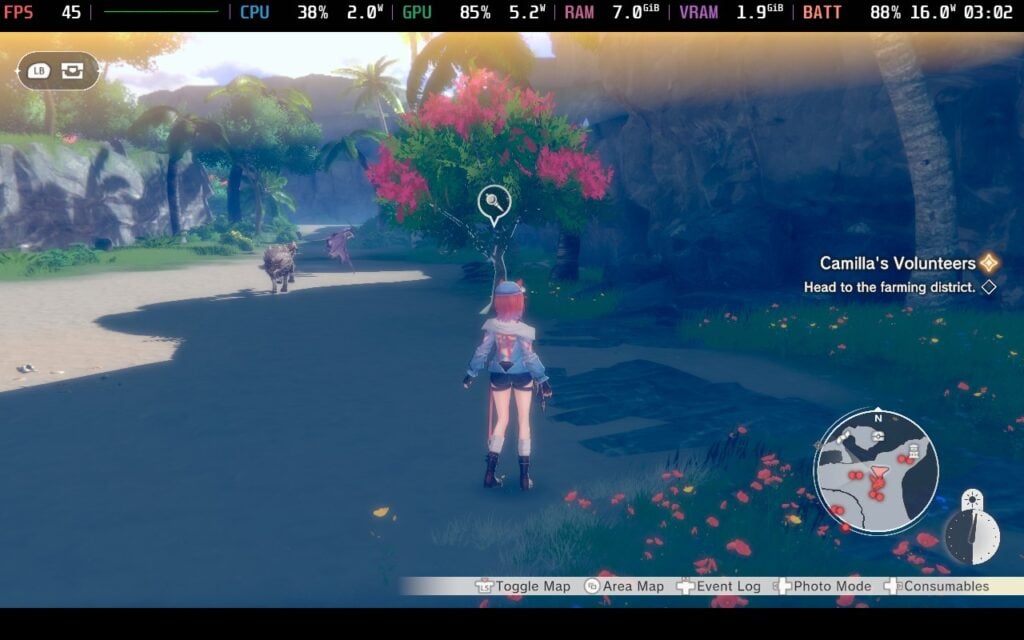
個人的には、最高設定でゲームをプレイし、解像度だけを1280x720に下げ、フレームレート/リフレッシュレートを45FPS/90Hzに設定した。これにより、ゲームは素晴らしいルックとスムーズな操作感を保ち、バッテリーの消耗は平均14W以下に抑えられた。ほとんどの場合60FPSでプレイできるが、45FPSにするとバッテリー駆動時間が1時間ほど延びる。
ボトルネックによってフレームレートが低下する箇所がいくつかあるようだ。最も安定しているのは花びら岬だが、95%のエリアは魅力的に動作する。バッテリーの消耗を抑えて最も安定した体験を望むなら、フレームレートを30 FPSに設定できるが、バッテリーの寿命が45分ほど延びるだけだ。
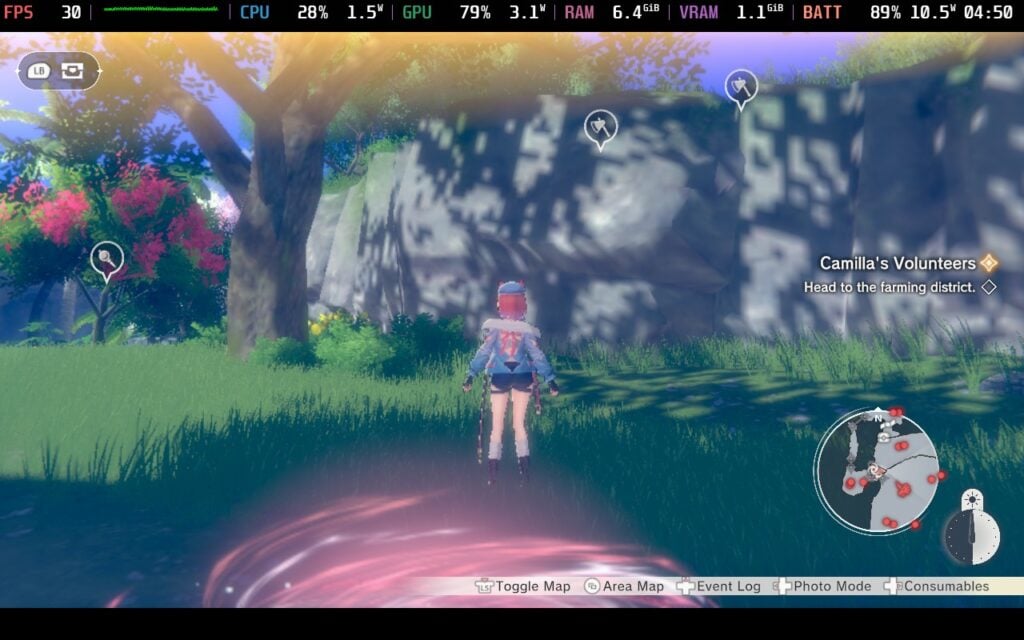
面白いことに、60FPSでプレイしようとすると、思うようにいかない。最低設定でも、ボトルネックになってフレームレートが低下するエリアが増える。このゲームは最高設定で45FPSで動いているのに、まだそういう問題があるのだから。だから結局のところ、最高設定で45FPSでプレイすることをお勧めする。
アクセシビリティタブはないが、カメラコントロールの反転や感度の変更、難易度の変更、オートセーブの切り替え、ミニマップの回転の変更、キーバインドの変更、テキストサイズの拡大、オーディオ設定の増減などができる。また、重度色覚異常、高度色覚異常、およびトリタノピア色覚異常を考慮して、カラーフィルターの設定を変更することもできます。
このゲームは16:10の解像度をサポートしていないが、クラウドセーブとコントローラーをサポートしている。HDR設定はない。
アトリエ・レスレリアーナ紅の錬金術士と白の守護者』はシリーズの次回作として素晴らしい出来だ。このゲームは数歩後退することで前進しており、それが有利に働いている。より親しみやすく分かりやすくなった合成と戦闘は素晴らしく、小規模なストーリーは大量のゲストキャラクターを登場させ、より感情移入しやすくしている。些細な難点はあるにせよ、本作はプレイする価値のある素晴らしいシリーズ作品だ。
このゲームはSteamデッキでプレイするのも楽しい。最高設定で45FPSでプレイでき、ボトルネックになっている部分がいくつかあるにせよ、ゲームの大部分は楽に動くので、見ていて驚きます。
このレビューはPC版に基づいています。
このレビューをお楽しみいただけたなら、SteamDeckHQ の他のコンテンツもぜひご覧ください!あなたのゲーム体験に役立つゲームレビューやニュースを幅広く取り揃えています。ニュース、ヒントやチュートリアル、ゲーム設定やレビューをお探しの方も、最新のトレンドを知りたい方も、ぜひご利用ください。
Digimon Story Time Stranger was provided by Bandai Namco for review. Thank you!
Digimon Story Time Stranger has been long-awaited and highly anticipated. At least by myself! With the last Digimon Story game (Cyber Sleuth) launching way back in 2016 for Western audiences, it's been a hot minute since we've had an entry in the series. But now Digimon Story Time Stranger is here. Was it worth the wait?
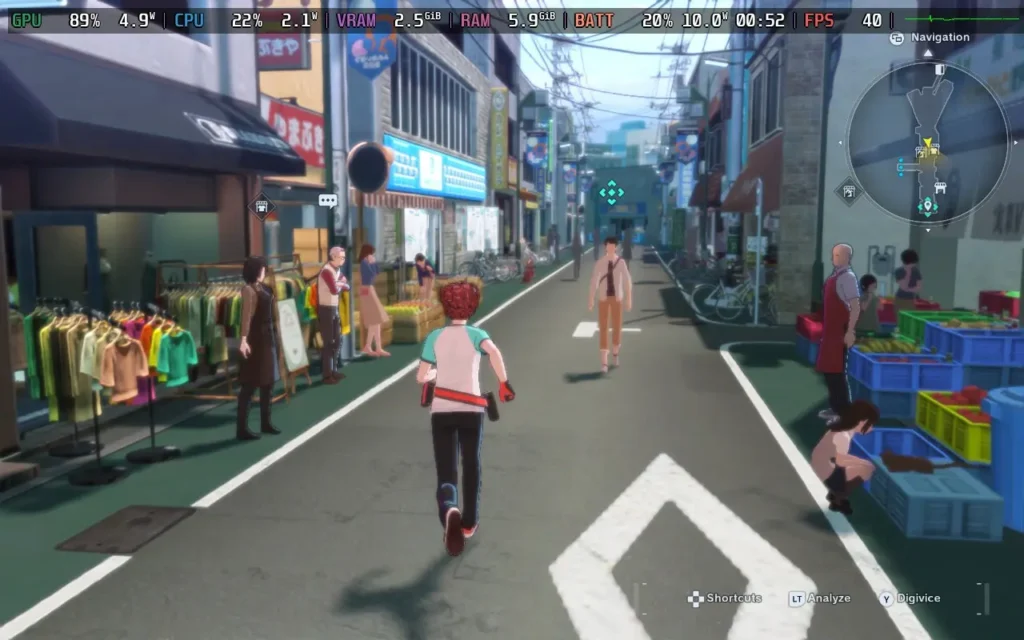
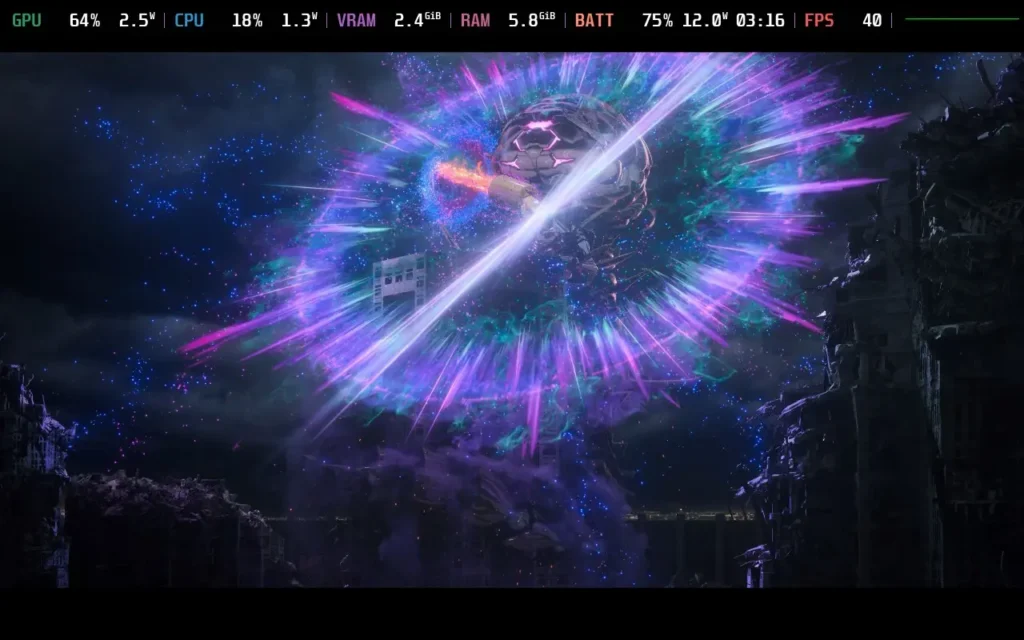
Digimon Story Time Stranger begins with a short prologue, which sets the scene for the game. After a catastrophic event causes global chaos, you are thrown back 8 years into the past. Curiously, as an agent of a secret organization, you still have contact with your handler in the future, and you must work together, along with new friends, both human and Digimon, in order to prevent the same events leading up to the future disaster.
The story is a little on the generic side, but Digimon at least sets the stakes high, and unlike Pokémon, it is prepared to go for a less happy-go-lucky outlook on the world, which really does help when facing world-ending situations. That being said, Digimon Story Time Stranger is still a cheerful and light-hearted time, for the most part. And to my chagrin, we still have a silent protagonist, which I always think hurts story-focused games like this one. There's also no branching narrative. You can ask questions at various points to get additional lore, but usually only one choice advances the narrative.
The combat system should be instantly familiar to players of previous Digimon Story games and JRPG fans in general. While there are a couple of new mechanics, such as gaining "CP" to use Cross Arts periodically in battle, which can give powerful attacks or buffs, the general combat is pretty basic. You have your "types" of attack, which will have different strengths and weaknesses, as well as your basic attack and skills. Nothing revolutionary here, but I wasn't really expecting there to be. Don't fix what isn't broken, I guess?
One thing that is refreshing in this genre, though, is that everything is fast. There's sprinting in the open world, which makes you move at quite a pace, and in battles, you can speed up animations by up to 5x. I know a lot of recent JRPG remasters are putting these quality-of-life features in, but I'm glad to see it here, too. By combining the animation speed-up with the auto-battling feature, non-crucial battles can be started and finished in about 5 seconds, which is great for grinding or when a Digimon that you were trying to avoid still catches you.
To speed things up even more, you can quickly throw your Digimon at another on the open field to do an initial attack, which skips the battle if the Digimon is especially weak compared to yours. These are great quality-of-life features, and for someone like me who hates constant encounters, they help to minimize the annoyance.
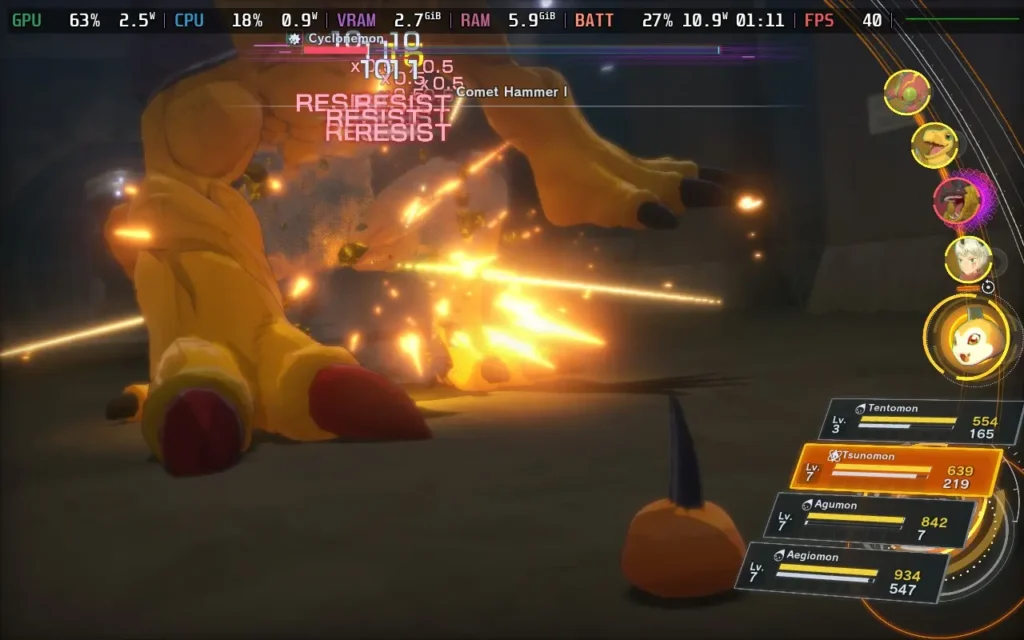
We're also treated to a few difficulty options here, ranging from Story to Hard. Story difficulty pretty much lets you "auto" any battle, except the boss battles, where you may want to take control yourself to choose the most effective attacks. Hard mode is an actual challenge, and you will want to familiarize yourself with your Digimon and their moves in order to win battles.
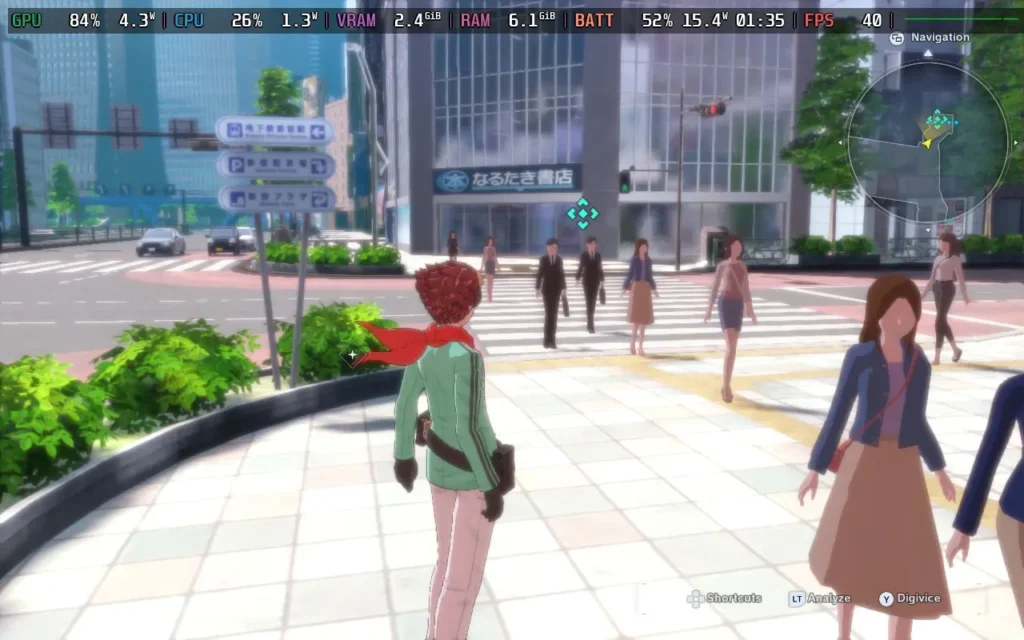
Visually, Digimon Story Time Stranger sticks close to its anime styling; the graphics are not the best I've seen, especially given that the performance of the game doesn't seem to match its somewhat basic visuals, but it does do the job. The environments can get a bit repetitive, though. The developers definitely want to make use of the environments and assets they created. Also, some of the "digital world" dungeons are quite psychedelic in nature, with moving backgrounds and warping textures, which did cause me to feel ill occasionally.
As for the sound, I played with the English dub, and thankfully, the English voices are tolerable. We do still have a silent protagonist, but the characters around you are voiced fairly naturally, and the writing steers away from being cringey. Battle sound effects are quite repetitive, especially if you increase the animation speed; you'll hear the same sound effect play very frequently.
On the other hand, the music is a plus point, with a nice mixture to it, ranging from melancholic to tense, depending on the current vibe of the story, and it really helps to bring some emotion into certain scenes. It's a shame that there's a juxtaposition between the quality of the soundtrack and that of the battle sound effects.
Digimon Story Time Stranger does have great controller support, with it being the recommended way to play the game. It also supports the 16:10 aspect ratio of the Steam Deck, meaning we can play at 1280x800 resolution and have no black borders.
As for performance, it's perfectly adequate, although not as good as I'd hope. We're best off selecting the Medium preset, then bumping the Texture Quality to High, and aiming for a 40 FPS target with the SteamOS frame limiter.
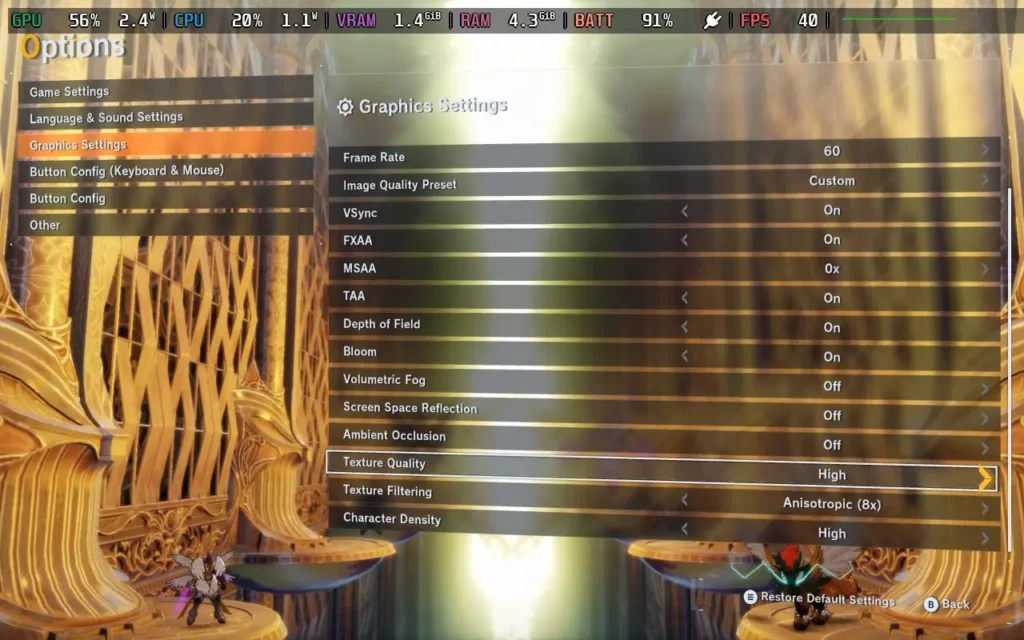
At these settings, the game runs at 40 FPS in the majority of play, but there are occasions, either in very busy urban areas (especially in the Digital World) or areas with dense foliage, where we can see dips towards 30 FPS, and very rarely into the 20s.
You can also lower Character Density to "Low" if you wish, which may provide slight performance boosts in urban areas; you will still get drops, though.
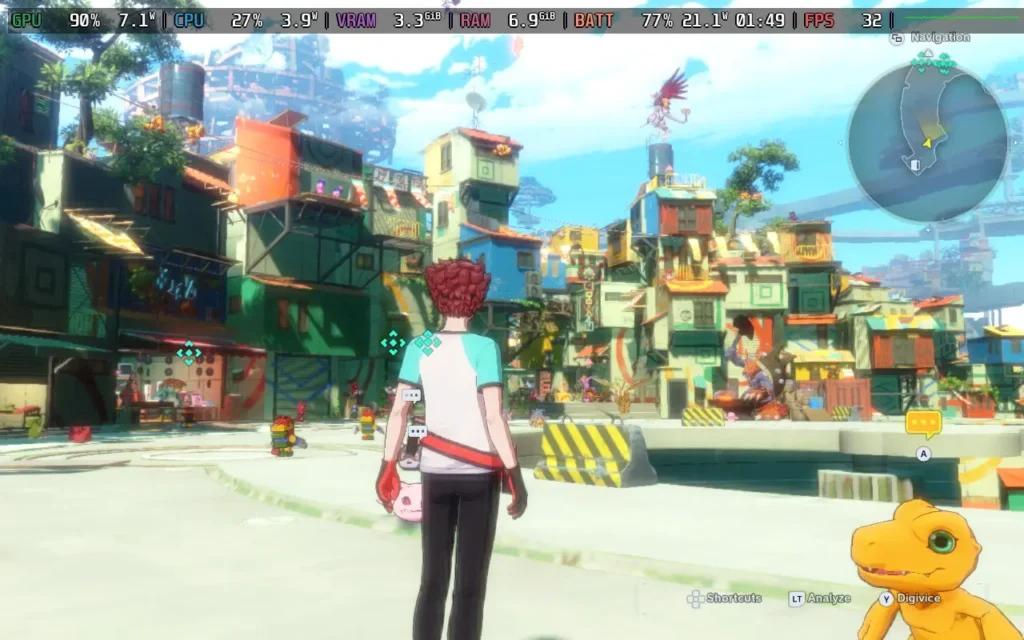
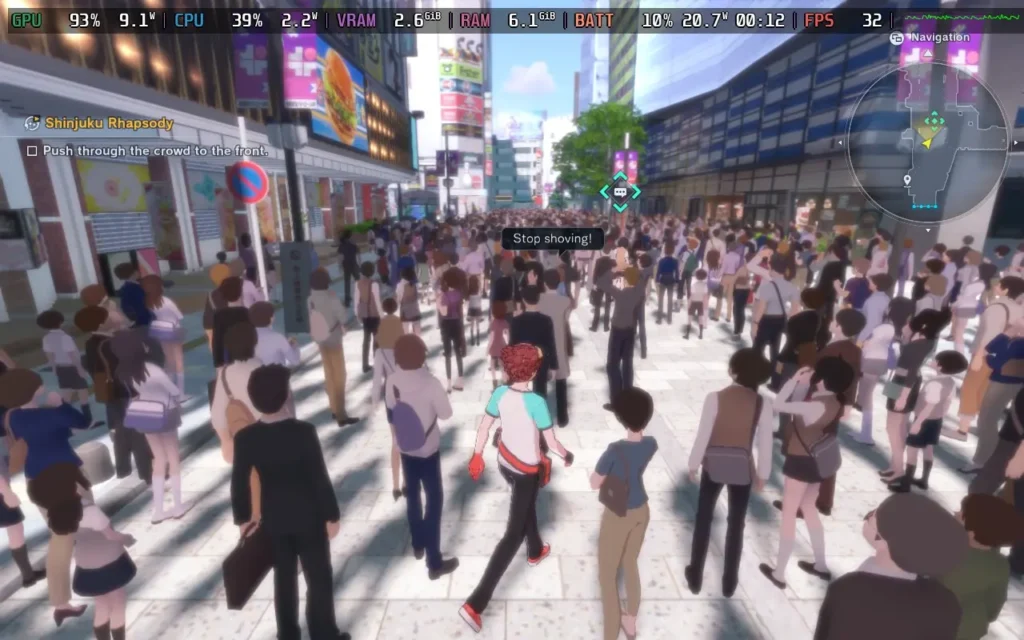
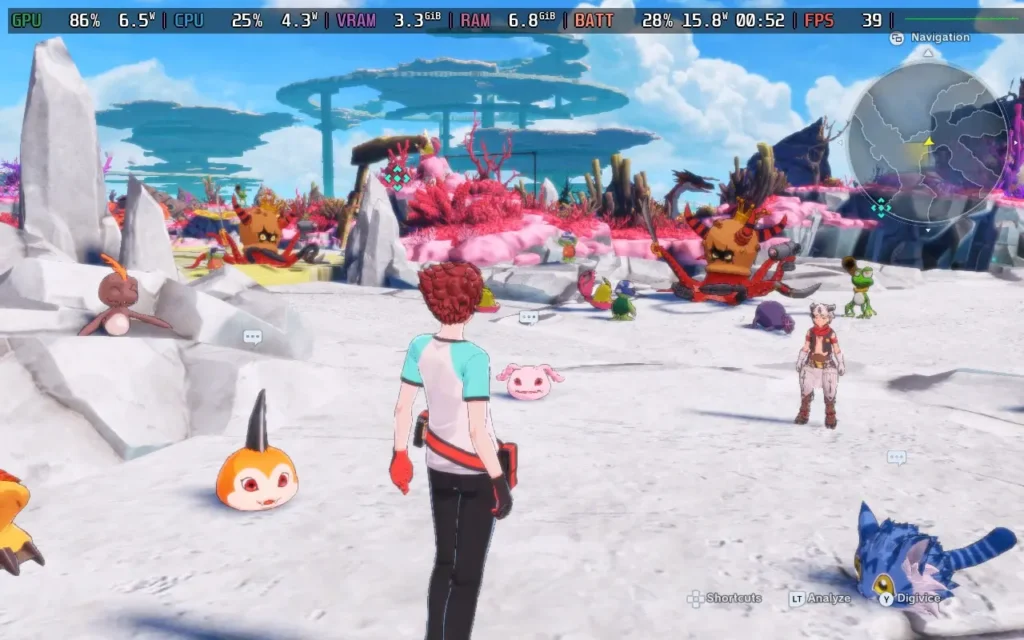
The power draw is usually around 12W-16W, but can spike up to 21W in intensive areas. Temperatures are around 55C-65C, but can reach 70C in intensive areas. You can expect a battery life of around 3-3.5 hours from a Steam Deck OLED and around 2-2.5 hours from a Steam Deck LCD.
Digimon Story Time Stranger does have rebindable keys, as well as all dialogue being subtitled. It also has support for cloud saves. There is a "story" difficulty mode, which makes battles significantly easier. Plus, if you repeatedly fail a battle, you can enable "invincible mode" for that battle, which essentially means you cannot lose.
Digimon Story Time Stranger ties a decent story with solid gameplay, backed up by familiar mechanics, meaning if you were a fan of Digimon Story Cyber Sleuth, you'll be safe with this one; it's more of the same, and that's not a bad thing in my book. If you weren't too keen on previous Digimon games, though, this one won't change your mind.
Performance on Steam Deck isn't as good as I'd hope, given how the game looks visually, but you can still get a smooth and decent-looking experience, plus the good control scheme and 16:10 aspect ratio support are great bonuses.
このレビューはPC版に基づいています。
このレビューをお楽しみいただけたなら、SteamDeckHQ の他のコンテンツもぜひご覧ください!あなたのゲーム体験に役立つゲームレビューやニュースを幅広く取り揃えています。ニュース、ヒントやチュートリアル、ゲーム設定やレビューをお探しの方も、最新のトレンドを知りたい方も、ぜひご利用ください。
このゲームはスクウェア・エニックスからレビュー用に提供されたものです。ありがとうございました!
ファイナルファンタジーの愛好家を自称する私にも、まれにではあるが、目に余る作品がある。ファイナルファンタジーIX」を筆頭に、特に思い入れのあるタイトルもあれば、「ファイナルファンタジーV」のような正直言ってひどい作品など、存在しないことにしたいタイトルもある。
1997年に発売された『ファイナルファンタジータクティクス』もそのひとつで、興味がなかったというよりは、私の思慮不足が原因だった。だから、現代風に改良され、ありがたいことに抑制された強化版をプレイする機会を得たことは、認めたくないほど嬉しいことなのだ。ベン・スターも出演しているしね。
いいえ、私は彼に執着していません。なぜそう思うのですか?
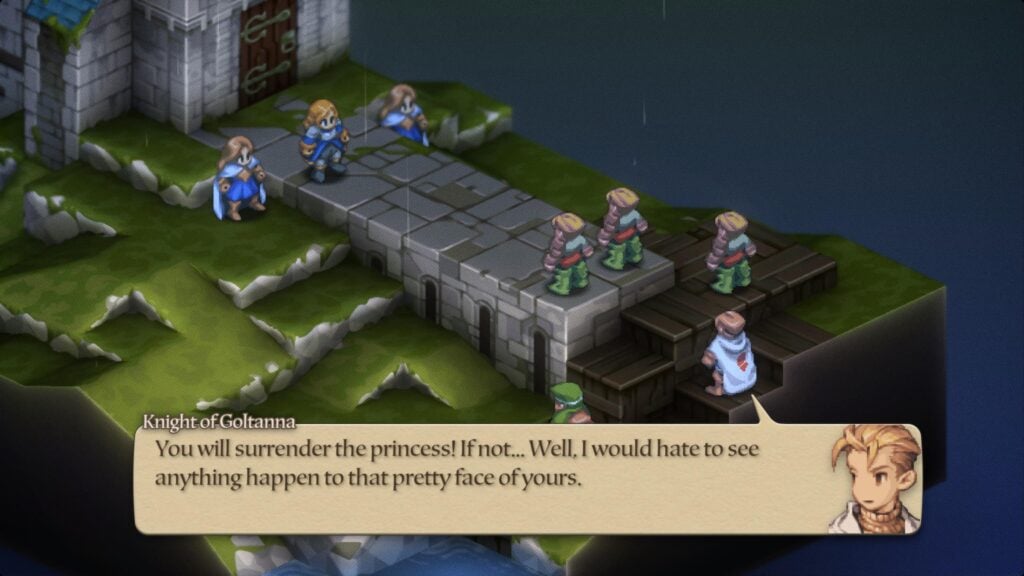
あからさまなファンボーイズムはさておき、このような高い評価を得ているタイトルの再リリースが待ち望まれ、長い間噂されていることを、私は知らないわけではない。伝説的な難易度、特にユニットのレベルアップが不十分な場合、エンカウントによってはそのままリスタートを余儀なくされることについては、確かによく知っている。しかし、それと同じくらい重要なこととして、私はストーリーが伝説に近いものであることも知っている。このような記念碑的な物語が必然的に内包する多くの紆余曲折や、タクティカル・ゲームがうまく成立させれば立派に得られる、挑戦的でありながらやりがいのあるゲームプレイのループなどだ。
28年以上経った今でも、時の試練に耐え、期待に応えている。ファイナルファンタジーXII』や『ヴァグラント・ストーリー』での経験を考えれば当然だが、私はイヴァリースでの時間を存分に楽しんだ。
結局のところ、これは再リリースであり、そのようなブランドには一定の期待が伴う。ゲームプレイの洗練?チェック。声優?もちろん。最新グラフィック?まあ...そんなところだ。吉田明彦の独特なビジョンの影響を受けて入念に作り上げられたオリジナルのアートスタイルは、まさに象徴的だと言っていいだろう。したがって、このようなキャラクターを「現代的な」リメイクが通常伴うような程度にアップデートすることは、無用な危険を冒すことになる。
その代わり、アートスタイルは微妙に更新され、より高性能なマシンとスクリーンに対応したわかりやすいものになっているが、キャラクターやジオラマのほとんどおもちゃのようなプロポーションは最大限に保たれている。さらに、特に環境にはノスタルジックな魅力があり、往年のゲームが駆使していた鋭角的なアングルなどが維持されている。過去20年間、ソーシャルメディアやビデオコンテンツに投稿されたオリジナルの大量の環境しか見たことがなかったため、今あらためてそれらを見るのは本当に楽しいことだった。

初代プレイステーションで『ファイナルファンタジータクティクス』が発売されてから30年近く、タクティカル・ロールプレイングというジャンルは多くの改良が加えられてきた。最も重要なのはUIで、与える可能性のあるダメージや、パーセンテージに基づく攻撃の正確さ、距離など、一目でわかる明確で鋭い情報が特徴だ。ただ漠然と......という時代は終わったのだ。ファイアーエムブレム 閃きの軌跡」は、私がタクティカル・ロールプレイングというジャンルに足を踏み入れた最初の作品だったと思うが、2005年当時、このようなレベルの情報がすぐに手に入るというのは、かつてこれが普通ではなかったことを考えれば、まったくもって当たり前のことだった。
また、最近のインタビューで詳述されているように、コントローラーの標準化も普通ではなかった。この時点でコントローラーのスキームが長年確立されているため、オリジナルと比較すると直感的にプレイできる。それでも、ほとんどの人が評価しないかもしれないが、歓迎すべき追加要素だ。
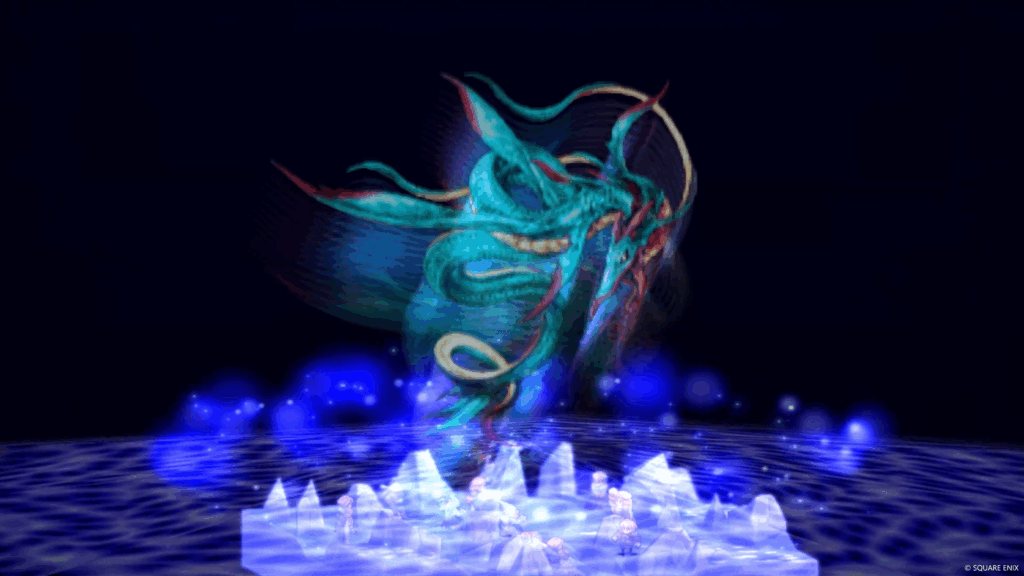
最も重要なのは、『ファイナルファンタジータクティクス -イヴァリース戦記-』に追加されたさまざまな難易度オプションだろう。従者」、「騎士」、「戦術家」の3つの難易度から選べるので、この気の遠くなるような美しく複雑な物語をどのように楽しむか、アプローチにかなりの柔軟性がある。従者」は最も簡単なオプションで、ともすれば気難しくなりがちなこのジャンルを初めてプレイする人に適している。ナイトは最もバランスの取れた体験を提供し、「オリジナルゲームの難易度を微調整し、PS1版より少し簡単になっている」。前述のような難易度の高騰や、かつてオリジナル版が悪名高いものであったアクセスのしにくさを考えれば、この点は高く評価されるに違いない。
最後に、タクティシャンはオリジナルが提供する難易度を楽しむサディストのためのもので、ナイトでさえ私に与えた挑戦を考えると、私自身は絶対に手を出していない。しかし、私の失敗は大目に見てほしい。The Ivalice Chronicles』に追加された数々の要素を挙げたが、特筆すべきは1997年のオリジナル・アドベンチャーが収録されていることだ。
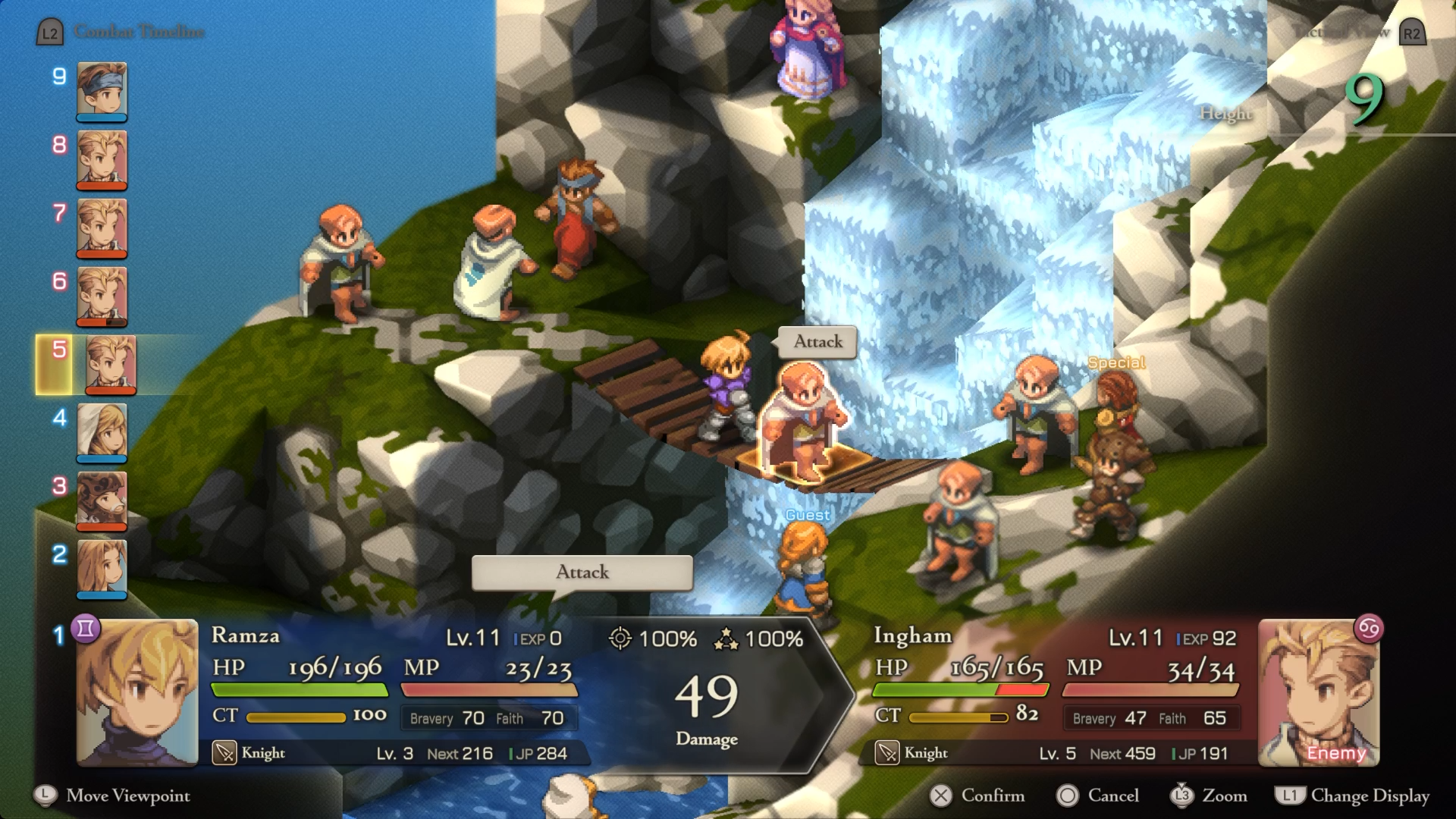

予想通り、『ファイナルファンタジータクティクス -イヴァリース戦記』はSteamデッキで完璧にプレイできる。もともとプレイステーション1で発売されたゲームなので、疑っていたわけではないが、それでも確認できてよかった。このゲームには2つのバージョンが収録されている:ビジュアルとボイスオーバーがアップデートされた新リマスター版と、いくつかのクオリティ・オブ・ライフが改善されたオリジナル版に近いクラシック版だ。
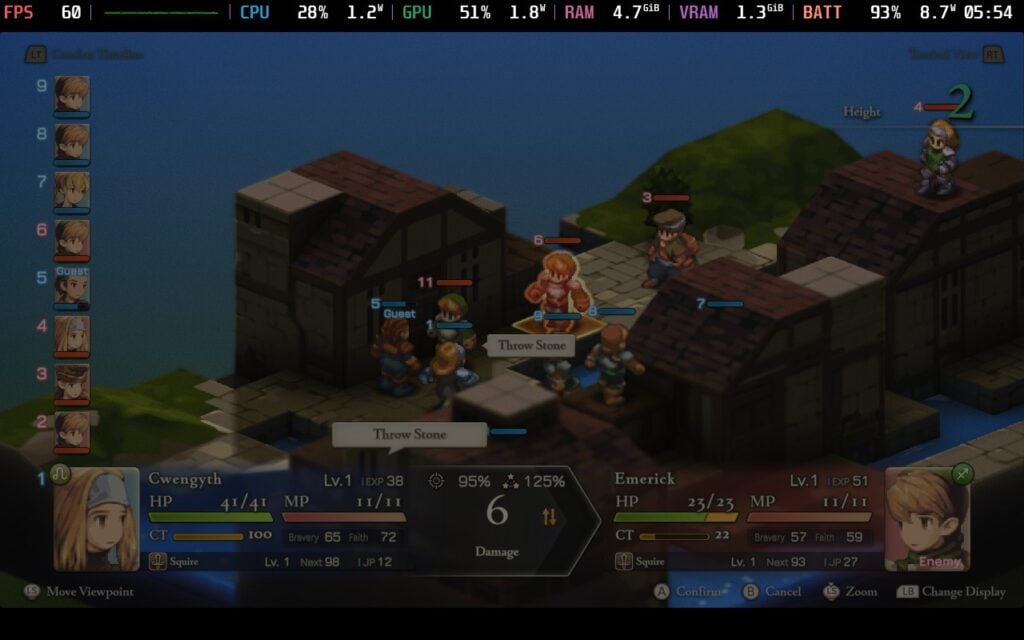
このゲームには2つの異なるバージョンが含まれており、両者には大きなビジュアルの違いがあるため、パフォーマンスにも若干の変化が見られる。リマスター版の平均消費電力は8.5Wで、クラシック版の平均消費電力は6.5W程度だ。つまり、クラシック版でプレイすると、バッテリー駆動時間が1時間延びるが、UI、ビジュアル、声優がアップデートされていない。
また、ゲーム内のテキストが小さいということで「プレイアブル」となっているが、これはクラシック版「ファイナルファンタジータクティクス」に関連していると思われる。リマスター版でもクラシック版でも小さい文字はあまり見当たりませんでしたが、クラシック版のフォントがUIの一部を読みづらくしていると感じました。これまでの経験上、バッジがグレードダウンしているのはそれが原因であり、実際に小さくて読めないからではないと思う。リマスター版をプレイするのであれば、問題はないだろう。
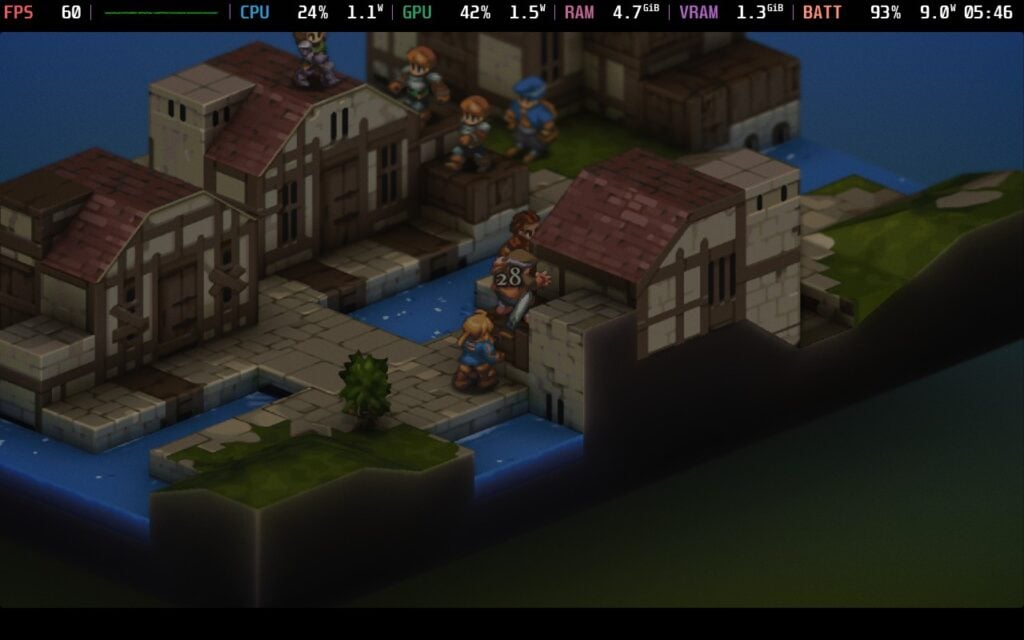
タクティクス・オン・ザ・スチームデッキ』についてこれ以上言うことはない。完璧にフィットしている感じで、これを持ち運んでどこにいてもプレイできるなんて、これ以上の幸せはない。これは携帯ゲームとして、投資を強くお勧めする。
カメラを反転させたり、オーディオのスライダーを変えたり、音声やテキストの言語を変えたりする以外に、設定でできることはあまりない。
このゲームは16:10の解像度をサポートしていないが、クラウドセーブとコントローラーをサポートしている。HDR設定はないが、HDRはサポートしているようだ。ディスプレイモードをボーダレスに変更するとHDRがオンになり、フルスクリーンにするとHDRがオフになる。少し奇妙だが、オプションがあるのはうれしい。
ファイナルファンタジータクティクス -イヴァリース戦記-』は、オリジナルが崇拝される理由を正確に理解し、オリジナルの明確なビジョンを窒息させることなく、その遺産を慎重に構築した稀有な再リリースだ。よりスムーズなUI、柔軟な難易度モード、声優の歓迎すべき輝きなど、追加された要素は、このゲームを真に象徴的なものにした妥協のないハートを尊重しつつも、より親しみやすいものにするのに役立っている。スクウェア・エニックスで最も有名なタクティカルRPGのひとつが、現代に堂々と佇むことができるのは、無骨で敬意に満ちた修復のおかげであり、このようなカルト的名作の復活が、未来を予感させるものであることを願うばかりだ。私のような新参者であれ、戦いに慣れたイバリアンのベテランであれ、これは時の試練に耐えうる名作を体験する決定的な方法だ。
Steamデッキでのプレイも基本的に完璧で、リマスター版でもクラシック版でも、外出先でプレイするのに最適だ。これは素晴らしい買い物であり、全面的にお勧めできる。
本コンテンツのレビューはPS5版に基づいています。Steam Deck パフォーマンスと最適化はPC版でテストしています。
このレビューをお楽しみいただけたなら、SteamDeckHQ の他のコンテンツもぜひご覧ください!あなたのゲーム体験に役立つゲームレビューやニュースを幅広く取り揃えています。ニュース、ヒントやチュートリアル、ゲーム設定やレビューをお探しの方も、最新のトレンドを知りたい方も、ぜひご利用ください。
Daemon X Machina: Titanic Scion was provided by Marvelous/XSEED for review. Thank you!
When I first saw Daemon X Machina release on the Switch in 2019, I was overwhelmingly excited. I was craving a new action mech game, and I have always loved grinding and outfitting to make myself as powerful as possible. However, while I did have fun, it was more restrictive than I thought it would be, especially when it comes to its mission structure. The sequel, Daemon X Machina: Titanic Scion, gets rid of almost all of those restrictions I felt before, giving me the game I was longing for back in the day. It's definitely a big improvement over the first game, and almost all of the issues I had are gone.
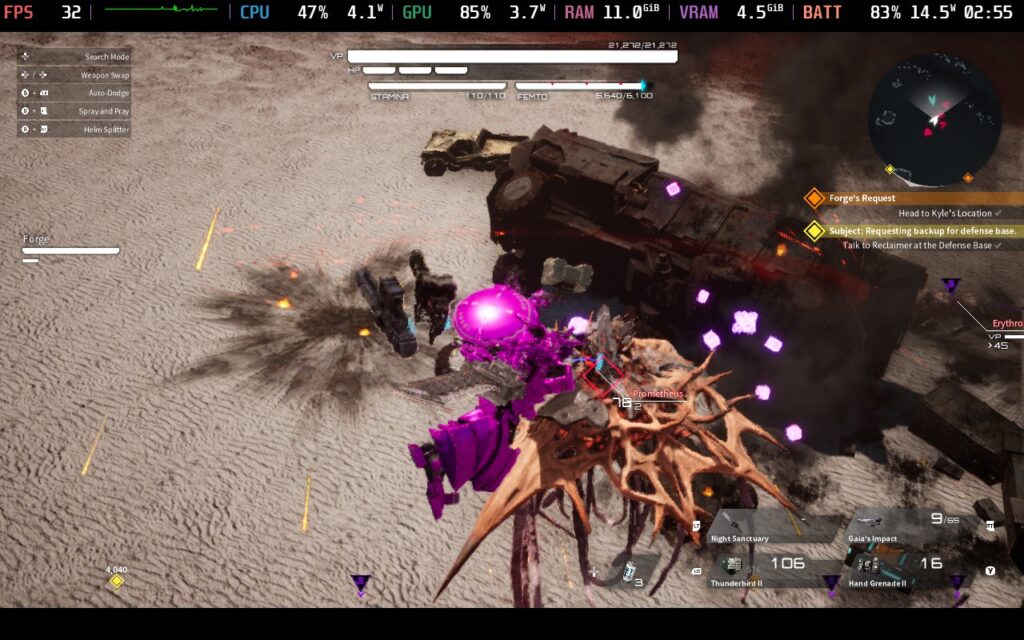
A lot of the areas I wanted to see improved were based around the gameplay and progression, though I did find the story to be improved as well. You play as your customized character, who escapes from his home and ends up joining the humans as they fight back against the Sovereign Axiom after discovering what they were going to do to you. As an Outer, someone who was born with special abilities, we will take a stand against the place we used to call home and end its oppression of humans.
The story didn't really hook me at first and felt very generic, but as it progressed, there were some twists that I found entertaining, and I was sucked back in once I learned more about the lore behind the Outers and what they are doing. It never shakes that familiar feeling and can be very obvious at some pivotal moments, but it's still enjoyable to see play out. The conflict between the Outers and Humans is intriguing, especially after knowing the shared history between them.
Ultimately, no matter how interesting it is, it never shakes the feeling that the story was a second thought that was meant more as a means to an end to justify the fights. At the very least, the story is entertaining, but I do wish it were more impactful overall.

Visually, it’s a striking difference from the first game, opting for more realistic visuals over the cel-shaded anime aesthetic that defined the previous entry. As someone who enjoys cel-shaded visuals, I like the change they made here. The biomes are diverse and have some interesting looks to them. There are definitely some spots that feel similar to others around it, but I found a lot of appeal just flying and looking at my surroundings. It may be a stark difference from the previous entry, but it’s a welcome one.
The large open worlds we can explore are another strength for Daemon X Machina: Titanic Scion. Apart from some similar-looking areas, there are a lot of spots to discover and enemies to find and fight. There are some nice points of interest around to discover, like supply depots to activate, fast-travel points to unlock, huge mini-bosses to take down, and encampments to uncover. It usually revolves around combat and finding rare loot, but it's enjoyable enough regardless.
Combat also feels much better in general, though it still has its moments. We can have four weapons equipped on us at any given time, and extras kept in reserve that we can switch to at a moment’s notice. Utilizing all-directional movement, fights can take place on the ground or in the air, and they feel dynamic and exciting. I would find myself going and seeking out fights to grind and enjoy myself, using my laser sword, minigun, and shoulder rockets to blast through the enemies in front of me. Almost every fight was exhilarating, and I had a blast fighting through larger enemies and bosses.

In the beginning of Daemon X Machina: Titanic Scion, combat can start getting a little monotonous, but this changes as we progress and get new mechanics to play around with. Weapon skills are the first big one. As we play, we can now extract genes to fuse into ourselves, giving us new abilities and skills to either passively buff or actively use with weapons. These skills can spice up combat encounters, unlocking moves like increasing the size of your laser sword and doing a wide slash around you, spinning in a circle and shooting your gun at everyone, and going into a deadly combo. They not only help out in a pinch, but can make fights feel even more exhilarating than they already are.
However, I wish equipping skills were more enjoyable. Each weapon/active skill that is unlocked is equipped to weapon types. So, Laser Swords will only have one skill slot available, while Taichi has its own. It can be a bummer, having two skills that you can’t use with one weapon, since only one can be equipped for each weapon type. You could equip the skills into two different weapon types and just equip them at the same time, but as someone who prefers using a gun and sword, I found myself wishing I could use multiple skills per weapon type.
But I ultimately like the idea behind this system, and it has some cool implications. Since you’re infusing immortal genes into yourself, your character’s appearance will start to change as you continue. Slowly but surely, their skin will change, and new features may pop up. We do have an option to reset our look, but it costs a ton of credits. Still, it’s interesting to see how relying on something so experimental can easily backfire.

On top of that, the gear we find is randomized and can have different stats, as well as attachment slots to augment it further. This starts off pretty mild, with a lot of gear feeling like throwaways with almost no improvements from other gear found, but it gets a lot more intriguing as we progress through the story and start to find more powerful gear, genes, and attachments. We will also find recipes for gear to craft, and with reinforcing, allowing us to further modify weapons, it opens up a lot of variety.
I would say that customization is Daemon X Machina: Titanic Scion's greatest strength. There are tons of options for new weapons and armor to craft, a large amount of new gear to find with randomized elements, and augments and attachments to fine-tune them. There are also extensive customization options for our character and suit of armor to make them look exactly how we want. The number of choices for self-expression in aesthetics and our weapons/gear keeps things fresh.
Other than the main storyline and randomized equipment, there's a wealth of progression and side content to keep us busy. We have a Mercenary Rank and weapon proficiency rank that go up similarly to an RPG leveling system, which gives us new bonuses and buffs for those specific types of weapons. There is also a wealth of side quests to take on, the points of interest I mentioned previously, and a Colosseum to fight others one-on-one to climb the ranks, earning you money and camo. There's also a full-on card game called Overbullet to play. It's simple to learn, but it has some surprising depth to it that I very much enjoyed.

All of this can be done in multiplayer, which is a blast. Getting into epic fights with friends was a ton of fun, and there are some nice little features that come along with it. The one I found most interesting is sharing Key Cards. To enter some facilities in the open world, we need to find and analyze key cards. However, some of these are blank and can have information copied into them. If you are playing with someone, you can share and copy their key card info into yours so you can find this place on your own as well.
Daemon X Machina: Titanic Scion is one of those titles that just feels pretty awesome to play on a handheld. These kinds of open-world JRPGs always hit harder for me on the go, so I was glad that this one is playable. After playing the game on my Steam Deck for our preview coverage, I had an idea of how it would run. And although I played much more of the game, I found that the settings I had chosen before were the best settings overall.
A lot of the game can be played at higher framerates, with much of the world and fights easily hitting 40 FPS on lower settings that are a mix between low and medium quality. However, there are some areas loading in, bosses, and larger fights can drop it below the 40 FPS limit, which can be jarring. On top of that, multiplayer will push the framerate even lower, making it impossible to play at 40 FPS even on the lowest settings. So, I ultimately decided that the settings I chose during the preview period were my favorite.

Because of all those scenarios, especially with multiplayer, I don't recommend pushing the framerate up to 40. It's definitely doable playing alone, though there will still be some drops here and there, but playing with friends will see more crazy drops. The settings I have recommended are also the ones I would say work with 40 FPS when playing alone, so if you want the higher framerate, just change the limiter to 40 FPS instead of 30.
There are different upscalers that are included, but TSR is arguably the best one. FXAA anti-aliasing looks a bit shimmery, even when standing still, and while NVIDIA DLSS can be selected, it looks identical to TSR. So, I recommend using TSR Max in Quality mode with a mix of Medium to Low settings. It ultimately still looks fantastic like this and battery drain is relatively low for up to 5 hours of battery life.
There are some long loading times, and the text size is way too small in some aspects. Any discussions that appear on-screen when flying around or fighting are way too small, as well as details for accepted quests on the right side of the HUD. Looking more closely at the equipment is more legible, but there are still some spots that were tough to read.

There is a dedicated accessibility tab, which has color correction modes for Protanopia, Deuteranopia, and Tritanopia, as well as a toggle for descriptive subtitles. We can also change the camera sensitivity and shake, vibrations, change difficulty, toggle auto-saves, and change audio settings. We can also completely modify the game's HUD to our heart's content, and rebind controls.
このゲームは16:10の解像度をサポートしていないが、クラウドセーブとコントローラーをサポートしている。HDR設定はない。
Daemon X Machina: Titanic Scion is a big improvement over the last game in the series in almost every way. The combat feels much tighter and weighty, the amount of customization gives a lot of options to build, and the open world gave me the freedom I was hoping for. The story isn't as in-depth as I like, but it's still an improvement and doesn't bring down the overall experience. The game is a blast, and I am so happy with the changes they made to the formula.
On top of that, it's very playable on the Steam Deck. I do recommend compromising a little for stability throughout the game, regardless of what you do or if you play with friends, but it doesn't harm the experience overall. 30 FPS with good-looking visuals and under 16W battery drain on average is wonderful, and I would absolutely recommend getting this game for portable play.
このレビューはPC版に基づいています。
このレビューをお楽しみいただけたなら、SteamDeckHQ の他のコンテンツもぜひご覧ください!あなたのゲーム体験に役立つゲームレビューやニュースを幅広く取り揃えています。ニュース、ヒントやチュートリアル、ゲーム設定やレビューをお探しの方も、最新のトレンドを知りたい方も、ぜひご利用ください。