Big Walk was provided by Panic for review. Thank you!
There have been many different co-op games that I have played, and a lot of them are extremely fun. However, it has been a while since I’ve seen one that not only intrigued me, but challenged me in more ways than one. That’s what made me so excited when I first saw Big Walk. Not only did it look like the puzzles required true communication and teamwork, but it also looked like there was no handholding, which requires a lot of strategy in planning. Narrative plate, I can confidently say that it’s quite possibly one of the best co-op games I’ve ever played.
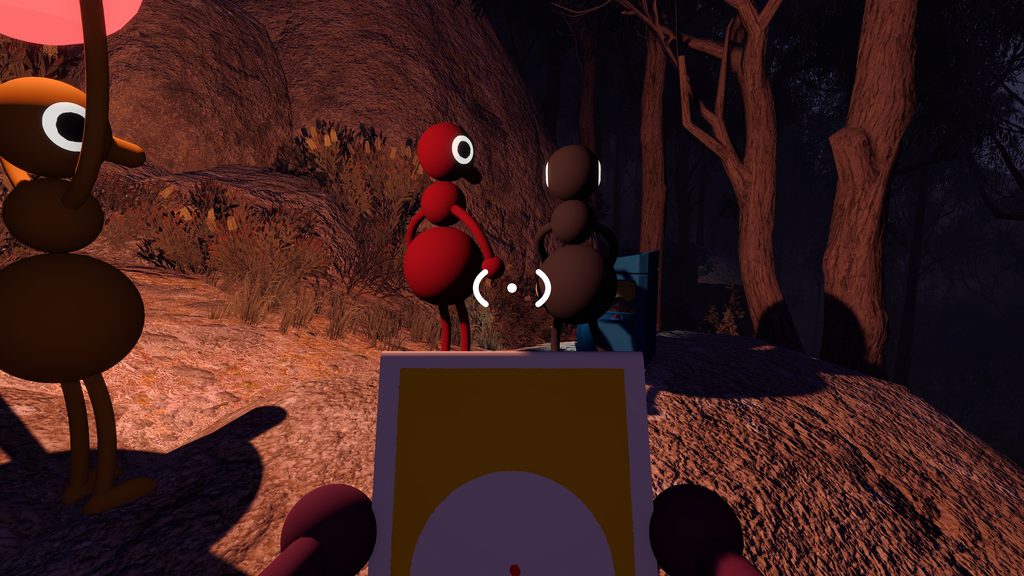
Big Walk is a simple game in its premise, but that simplicity becomes complex as soon as we see what we are up against. You are running around on a giant island, going to different locations to complete puzzles. There’s no fast travel and no handholding; you have to use your wit, memory, and brains to work with friends and figure out the secret behind completing the puzzles. Some may seem easy, some will be challenging, but almost all of them will be fun.
The game is designed from the ground up for co-op, so you will need at least one other person to play. And it makes sense as soon as you start seeing the puzzles themselves. Each one requires some form of coordination and planning, whether it's making hand gestures, having to vocalize directions, or stacking on top of each other. However, despite how different each puzzle is, they all have one thing in common: you will need competent partners.
The variety and strategic thinking are what elevated the experience past other co-op games. It gave me a similar feeling to Portal 2’s co-op when we go to completely new chambers that added in a new element, whether it be goo or light bridges. Instead of just a new element here or there, each puzzle in Big Walk felt like a completely new challenge. We could go from one puzzle where we have to direct someone with a blindfold through when an obstacle course, to another puzzle where we have to come up with a strategy to coordinate which light to turn on through three people, to another where one person has to sit in a chair and can’t hear, and the other others have to figure out why there are six microphones behind them.
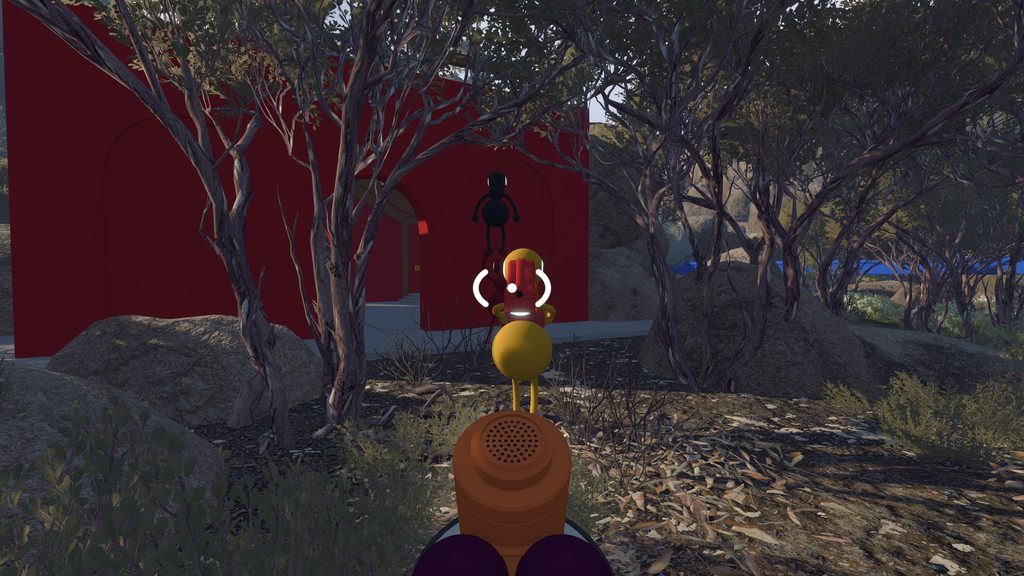
Some of these definitely required some trial and error, but all of them felt rewarding to complete. With each one being so wildly different, we were trained to think outside the box and experiment. I’ve played a lot of puzzle games where there may be 80 puzzles, and they are all split into 10 and have a specific theme to them with a familiar base mechanic. While the mechanics in Big Walk are fundamentally unchanged, every puzzle utilizes them in different ways, while pushing our critical thinking and problem-solving to the limit. And at the end of the day, the joy of seeing the confetti come down when completing it always gives me a sense of satisfaction.
I also wanna praise the sound design and voice communication systems put in place. It’s extremely cool to walk through different landscapes and have our voices change with the proximity chat depending on the area we are in. If we’re in a tunnel, there might be a bit of an echo, or if we are behind the door, our voices might be muffled. This is a game where using the voice chat is essential to the experience, and trying to go around that through Discord or other calls defeats the purpose of what makes the teamwork so essential.
The structure of the game is also quite interesting. You can play with two, three, or four or more people, which is an option you choose as soon as you boot up and host the game. Depending on which option you choose, the puzzles will change to be compatible with that number of people. There are some puzzles that will change themselves to require more people to complete them depending on the options you choose. For example, there was a puzzle where we had to use hand gestures to create a pattern, and in the 4+ mode, it required one person to make the gesture, one person to relay the message, and one person to place the pattern in the correct order. However, when choosing the two-player mode, a random window will appear in between the first and last player to cut out the middleman. And yes, even if you start a game with four people, you can boot into that same save with the two-player option, and the puzzles will change.
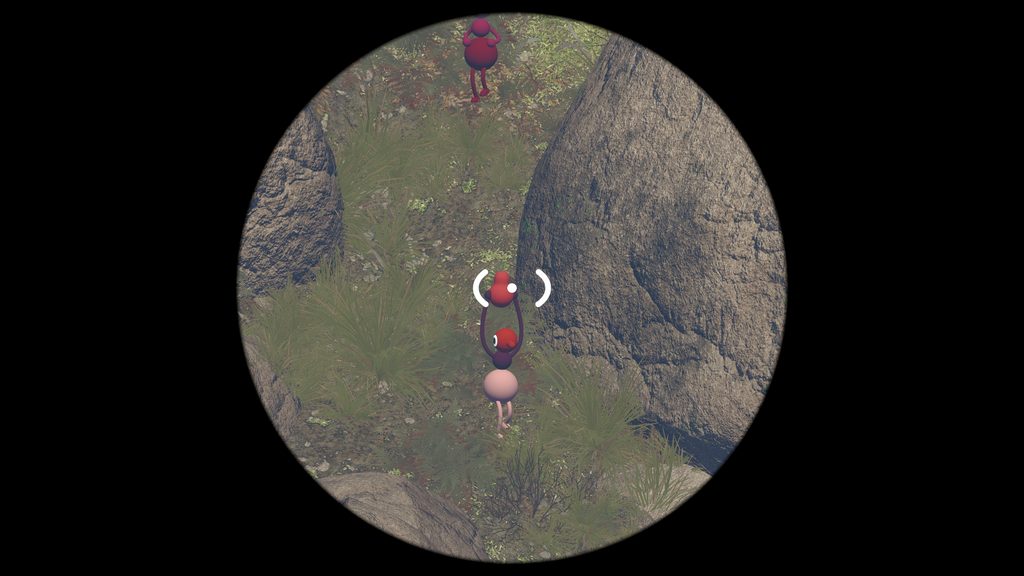
Completing puzzles gives us these gourds, and we have to take these gourds to one of four towers. With each tower needing five gourds, we have to place the ones we have in the tower, then move on to the next one. Once all five are in there, you’ll get a key, which can expand the island and unlock shortcuts to get around quicker.
This leads to what I would consider the weakest part of Big Walk: exploration. I know it’s in the name of the game; you are going on a long walk, but it was also a big drain. I’ll admit, it was very satisfying to use the map and figure out where we were and where we needed to go by using the landmarks and tracking our position. However, apart from that, it just wasn’t as enjoyable.
One of the things I love about the game is the lack of handholding and difficulty for its puzzles, which usually offer little to no clues about how to complete them. That same realistic difficulty is why I dislike the exploration. Getting lost from the pack without a solid plan can completely waste everybody’s time. It can be catastrophic, and if you don’t plan accordingly, it can really disrupt the flow of the game.
That kind of planning is essential, because we can only carry one thing in our hands at a time. So, if you’re going to stick to a group that splits up, it’s imperative that one of you each has a walkie-talkie to coordinate. You could also shoot up a flare at the tower when you reach it to signal the other people, which does the job and we can see it from pretty far, but there are many ways to find each other once you get lost.
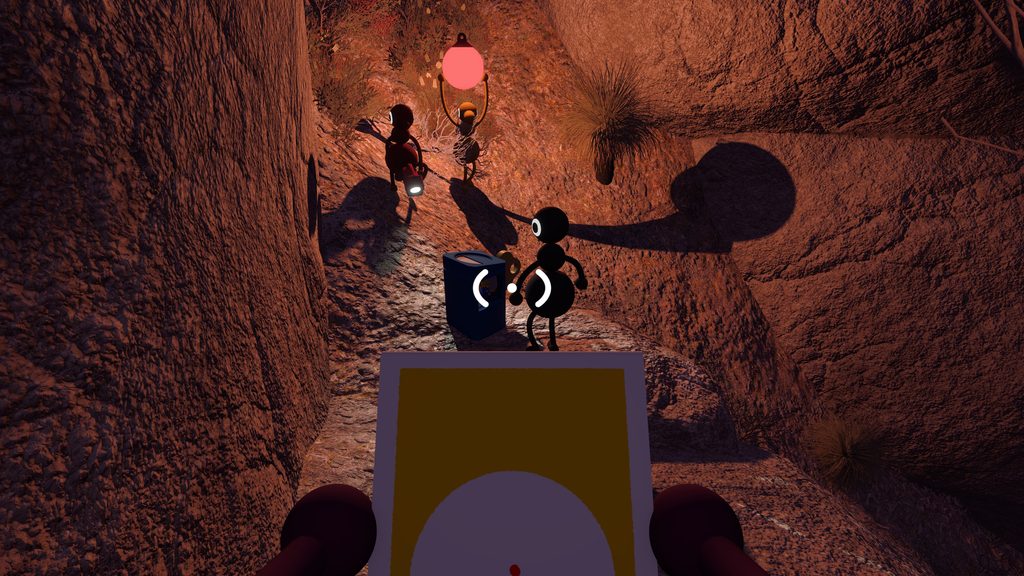
The issue is the amount of time it takes to actually find each other. We walk pretty slow, which means that if there’s a problem and we are notified, we’re going to have to walk back to where the other person is to regroup. Some of this might be absolved if you have the right tools, but that still means the person who is lost or the people who need to find the lost person need to make the trek. Either that or you could meet in the middle, but this still means everybody is going to be walking for some time.
This happened in our experience playing as well. We had a plan to split into two teams of two: one team would tackle a puzzle, while the other would bring the gourd back to the tower. However, one person got lost, and they didn’t have any other way to contact the other person. Despite that, they didn’t have a plan to meet at the tower, so the person with the gourd got to the tower and waited for the other person to show up, but they didn’t. So, he continued the plan and came to the puzzle that we were at. Five minutes after he arrived, a flare shot up at the tower. We tried to signal to the person with a light to show where we were, but he never arrived. This led him to walk around for about 20 minutes to try finding us, and even though we sent someone out to find and bring him, they couldn’t because he was looking for us as well.
Some of the issues can be avoided, like having a much larger group to reduce the time spent going back and forth, but it’s always going to result in someone or some group walking across the island. It’s possible that if the island wasn’t almost completely devoid of color, not counting the puzzles, it could be a more enjoyable walk, but that’s not the case. There are still some beautiful sites to see here and there, but they are few and far between. The majority of the island will be walking through trees and bushes, or getting stuck on rocks when you try to jump over them and impeding progress.
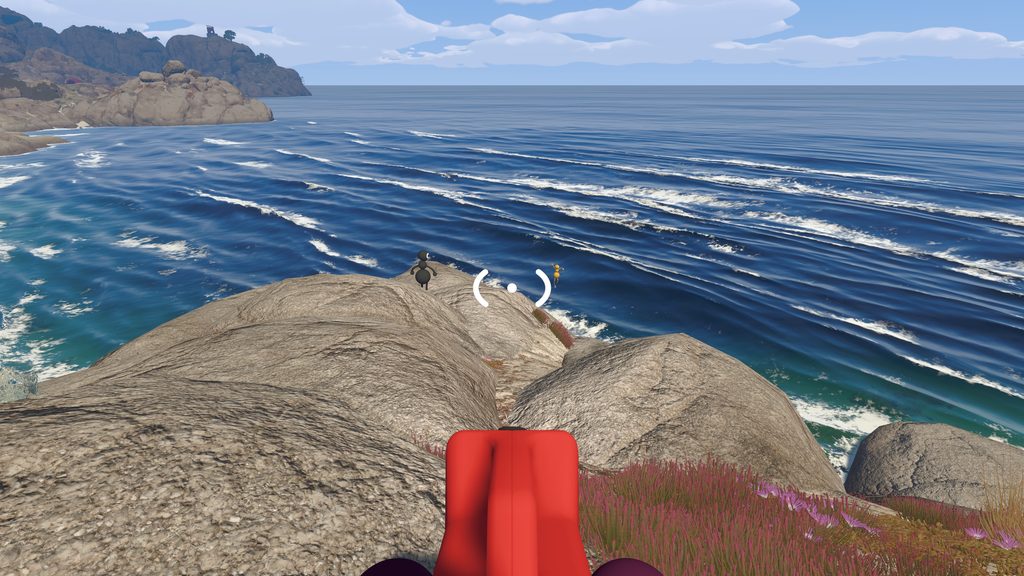
That uneven balance between the amount of time we spend in interesting puzzles and the amount of boring travel time makes it feel like there aren’t enough puzzles to go around. Even the Shortcuts can take a little time to get places; with a slow train and tunnels that take a good chunk of time to run through, you can just take a little too long to get around. Granted, there are some puzzles that are very close to each other, but add in the possibility of getting lost, and it becomes more of an issue. This also extends to when you boot the game again, since your starting point will always be the same. We can unlock shortcuts to get back to where we were a little quicker, but it does require some backtracking that could take some time if you aren’t sure where you’re going.
It’s a little weird to think that the Big Walk is one of the reasons I dislike the game. I love the puzzles, and the difficulty and lack of handholding, but that also contributes to the downtime between the puzzles that I didn’t like. There are some nice viewing spots and Dan’s areas where we can unlock new music to play through a radio we can take, but when we can only carry one item each, that precious space is better used for a walkie-talkie, map, or even a megaphone. A careful plan that everyone follows won’t be subjected to this issue, and I do love the careful planning it takes and the feeling when everyone follows it, but even when everyone falls into a tee, there’s still a lot of walking around that can feel quite draining.
Ahead of its release, Big Walk was given the Steam Deck Verified badge, though I would say this is another one where the badge can be misleading. The game is playable on the Deck, but it needs some modifications to the default graphical configuration to run well.
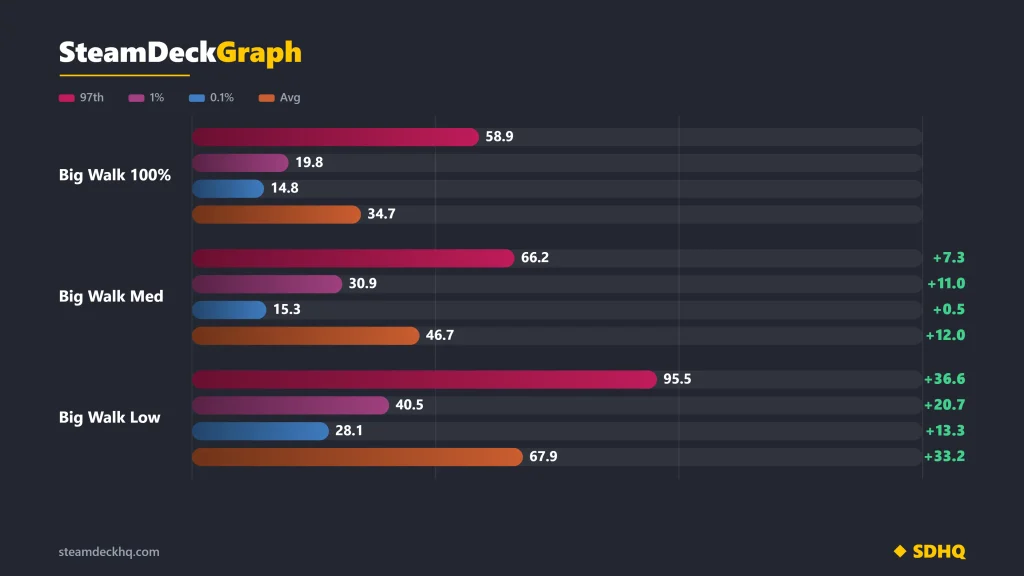
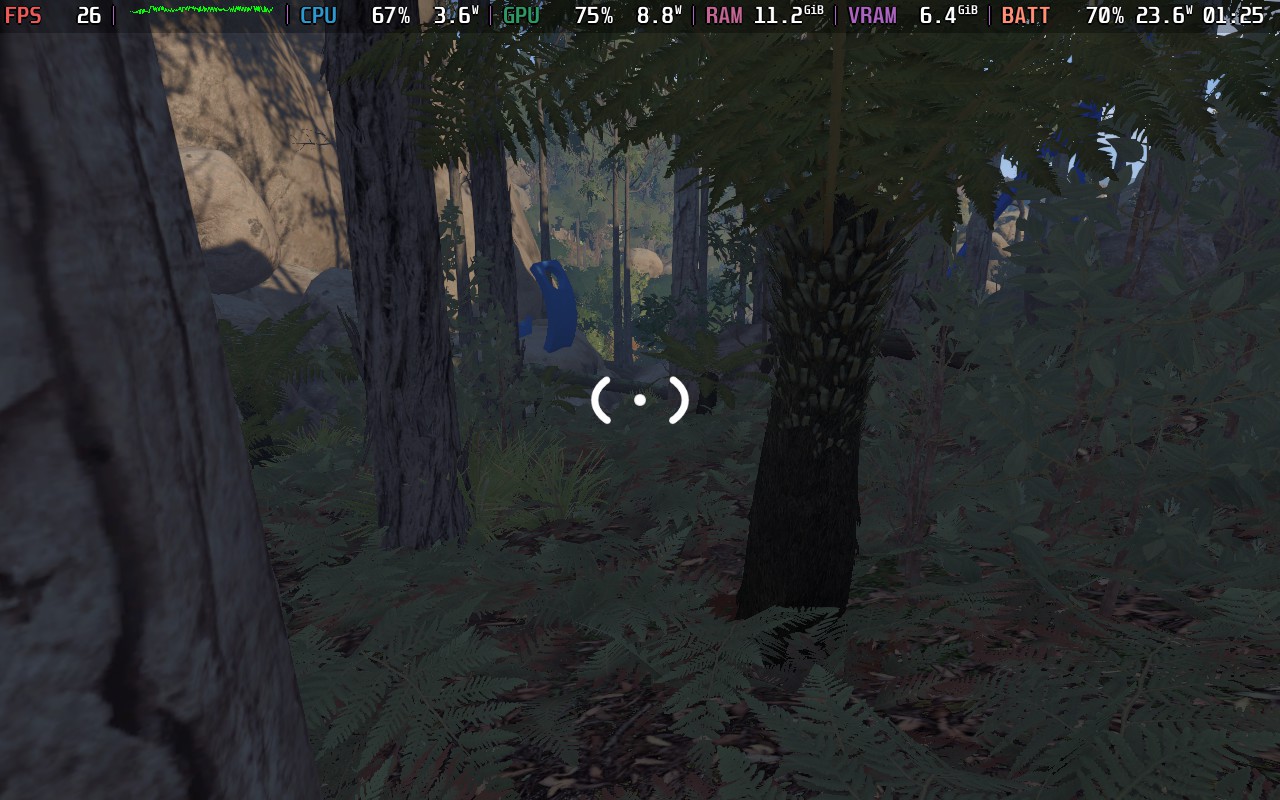
The default settings keep the game on High quality with 100% resolution scaling. The game looks nice like this, but as soon as we’re walking through Forest areas with lots of shadows, the framerate will drop below 30 FPS. It’s relatively fine when standing still, but the drops can be a bit obnoxious, especially as more of your friends join.
So, I have three configurations for playing Big Walk on the Deck: one that focuses on higher quality with shadows, and the other two focus on higher frame rate with lower quality and fewer shadows.
(All framerate comparison testing was performed walking the same path at the same time of day for the same period of time. The framerate was uncapped and captured using the same Steam Deck).
I love Big Walk, but it felt like there was always some compromise on the Steam Deck. We could play at High with great Shadows, but the framerate would drop with more noticeable stuttering. While bringing it down to Medium fixed the stuttering and brought up the framerate, some of the shadows were gone, and the world could look a little ugly. However, the differences between the quality settings and framerates were immediate and drastic:
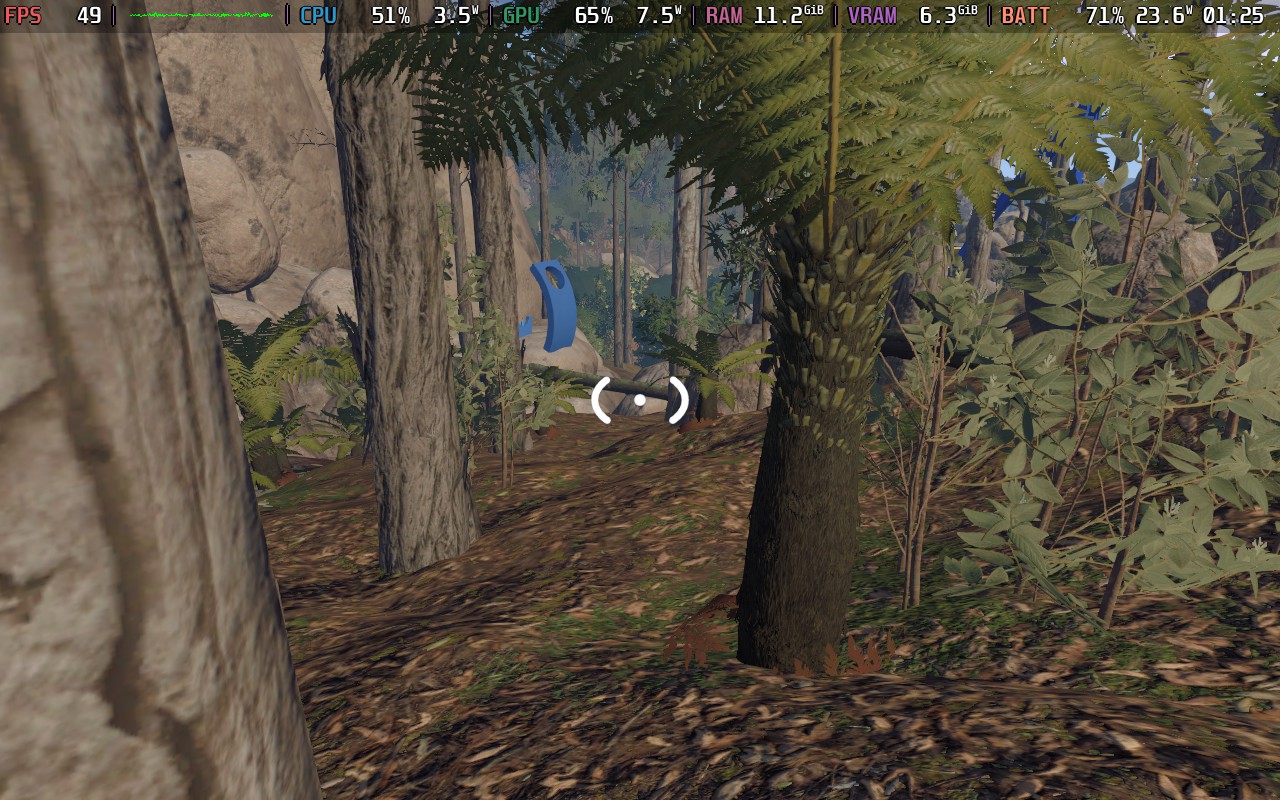
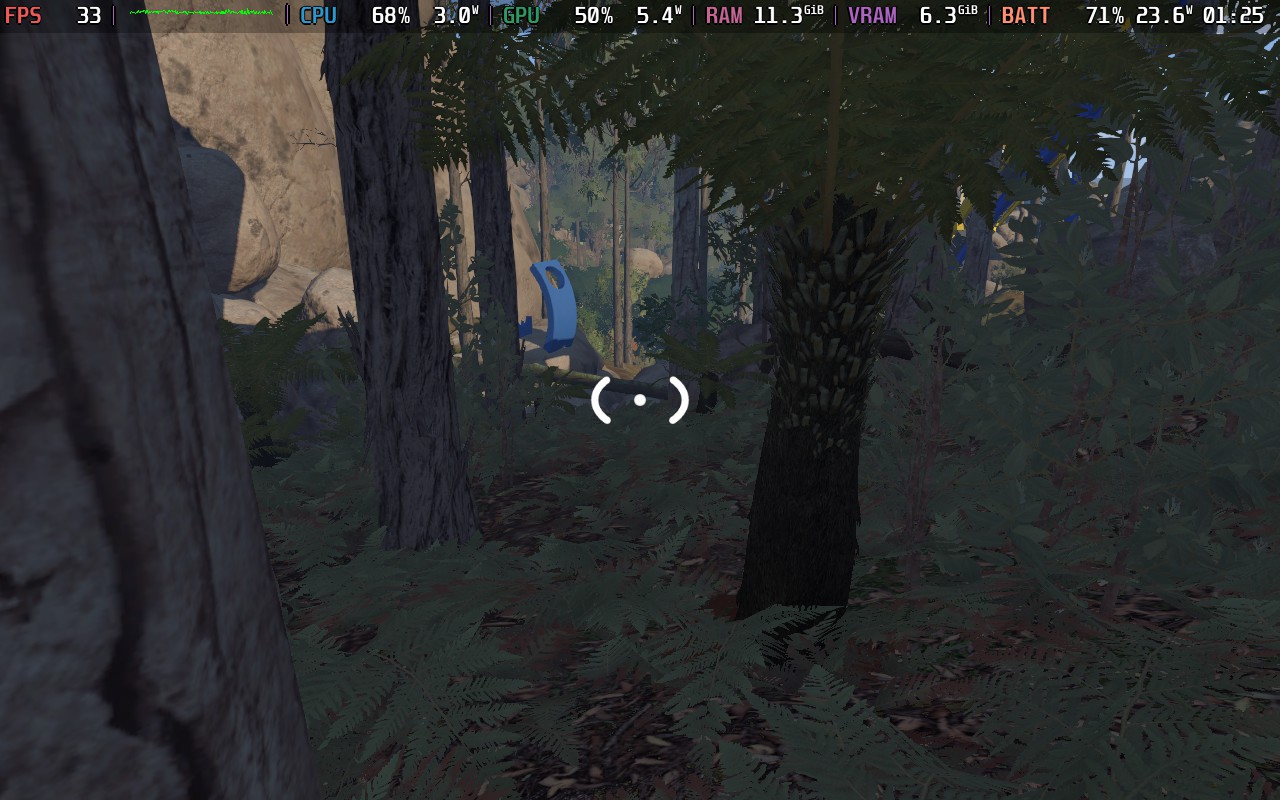
Low vs Medium vs High settings
We do have a render resolution scale that we can move as well, and while it can help, it didn't eliminate the issues. I was hoping sticking to High settings with 80% render resolution would be doable, but I felt those big stutters when walking around and a few areas where the framerate would still dip below 30 FPS. On top of that, a lower rendering scale on High would make those shadows flicker a lot.
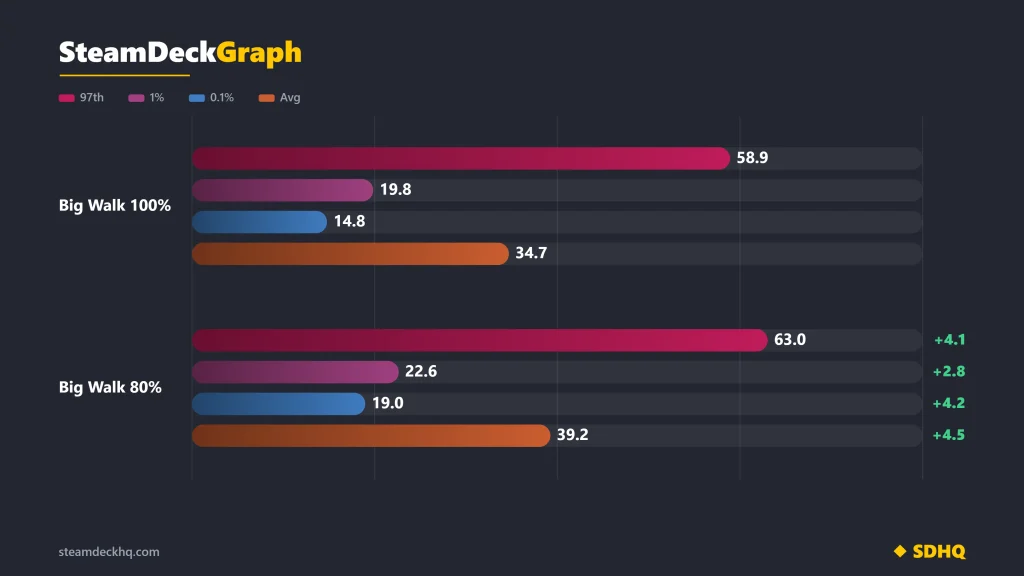
So, this led me to make some tough decisions, but I am ultimately happy with the results.
This was a tough one to choose, but I ultimately went with lower quality and a higher framerate as my preference. By setting the graphical quality to Medium and bringing down the render resolution to 80%, we can get a pretty stable 40 FPS throughout. There is some obvious pop-in when walking around during the day, and some of the shadows are gone, but we can get a smoother framerate that is ultimately more stable than trying to play on High with the same 80% render resolution.
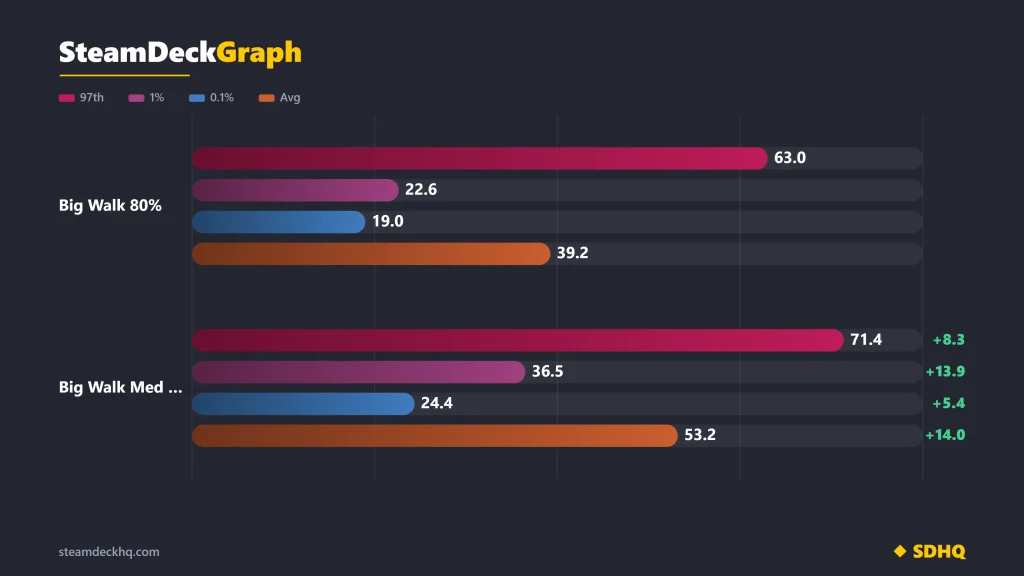
So, while the sacrifices are apparent, the stability and smoother gameplay make up for it. The world still looks pretty nice, especially in the right lighting, and with the shadows being gone, there was no extra flickering that felt overwhelming from the lower rendering scale.
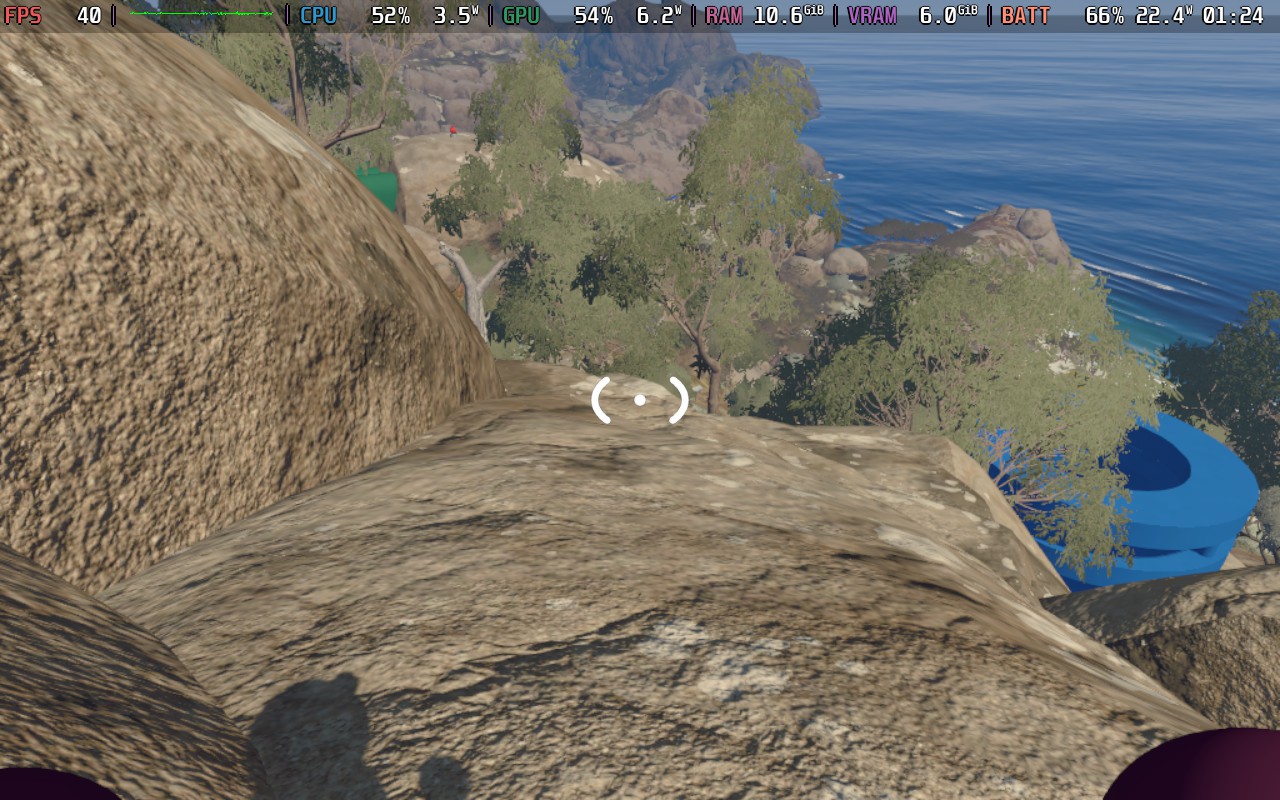
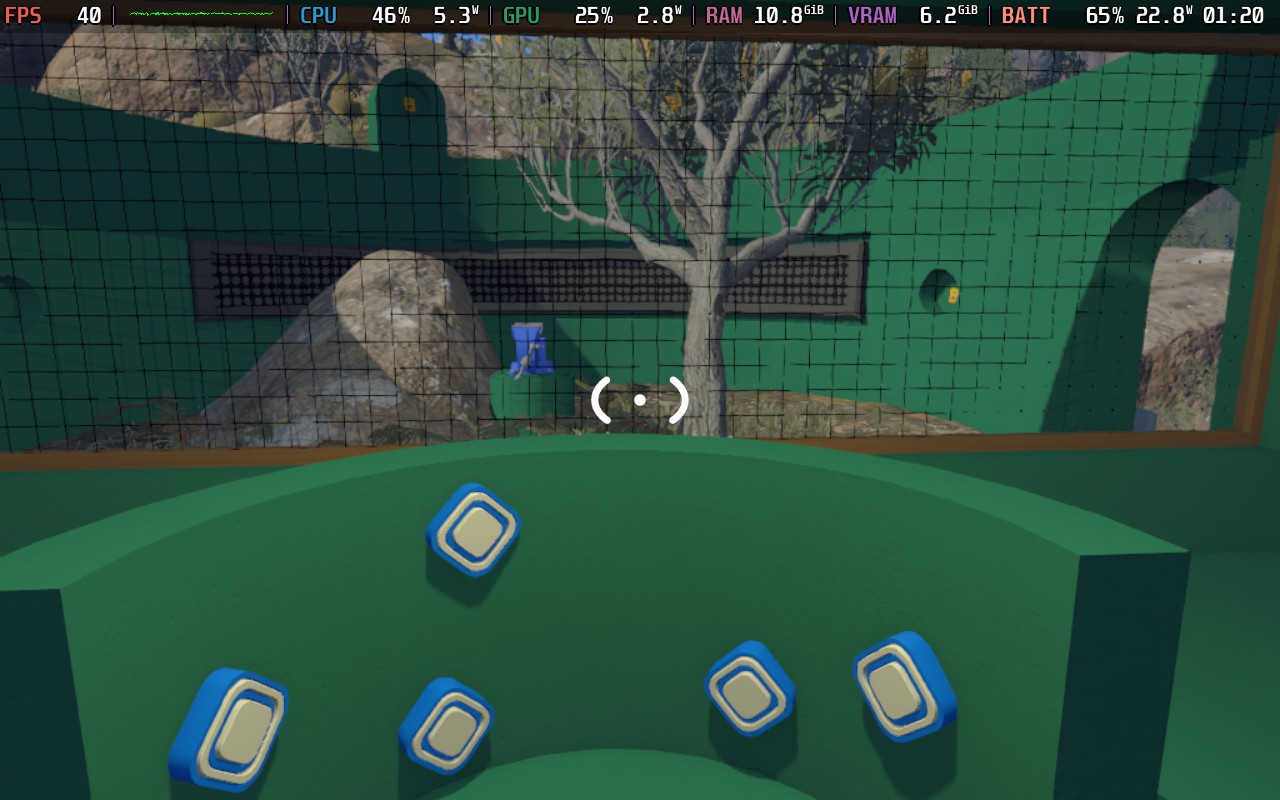
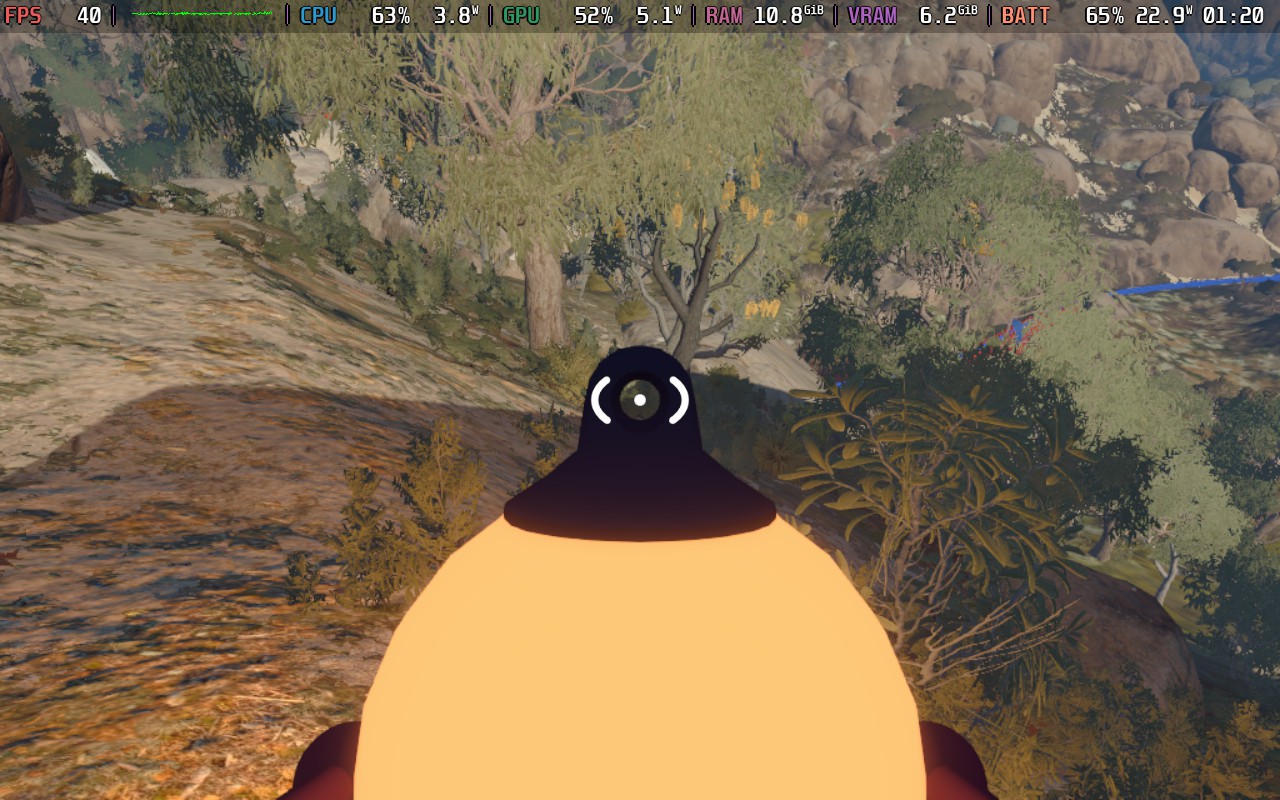
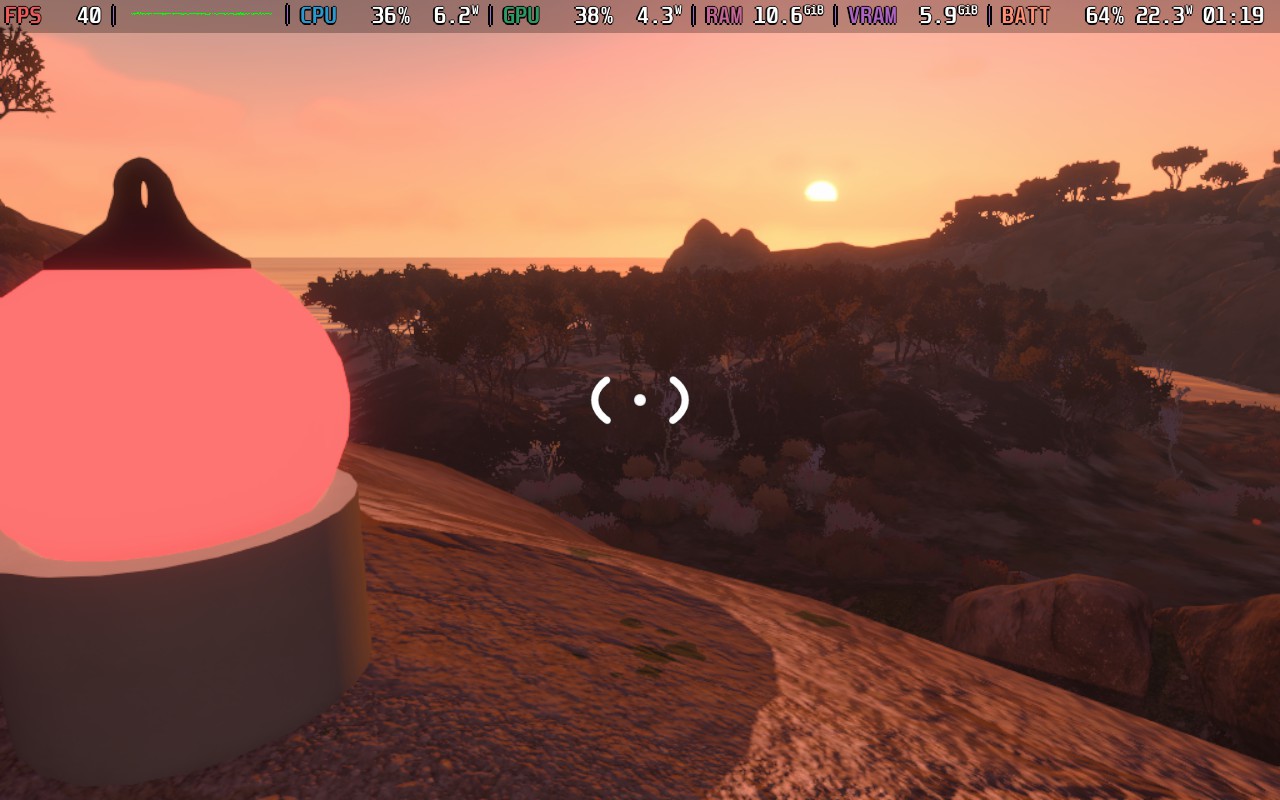
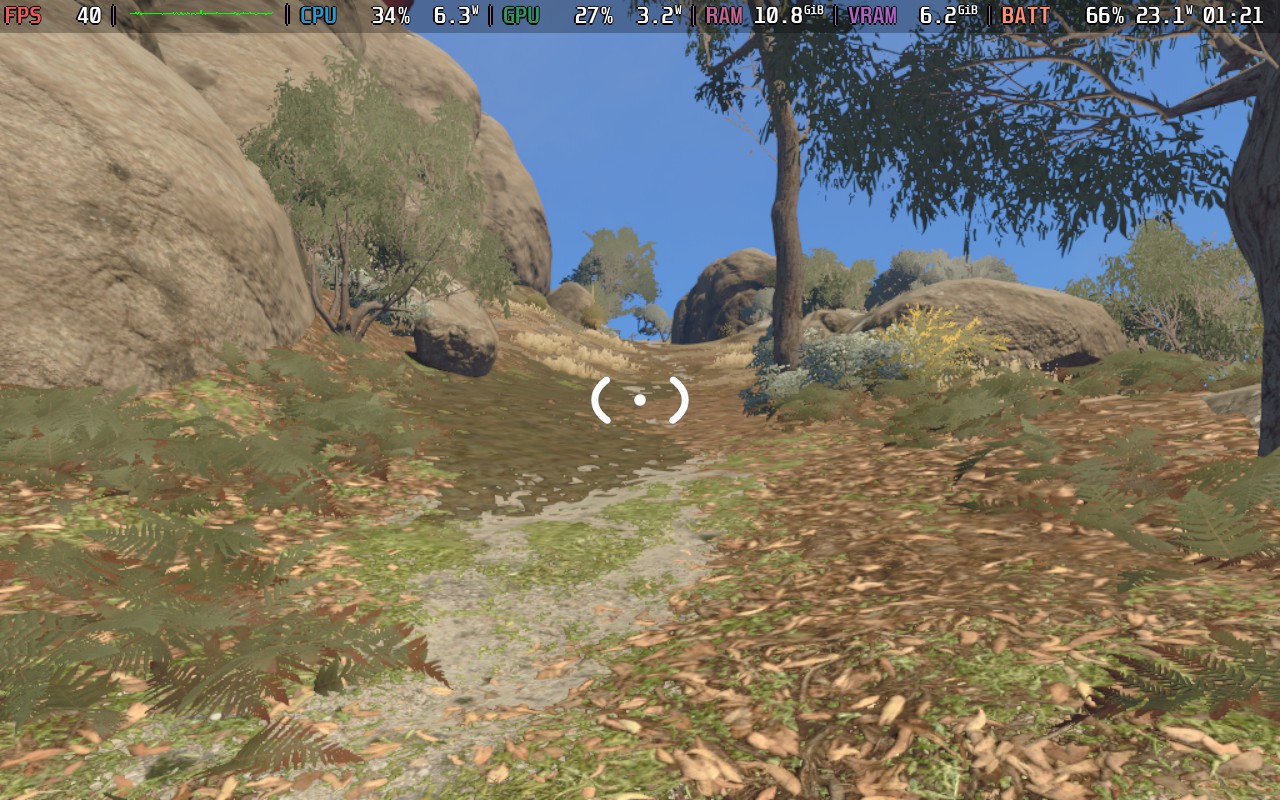
If you really want to push performance, then you can bring the quality settings to Low, while keeping the rendering scale at 100%. Even more shadows will disappear, and the world won't look great, but the framerate increase is massive. So massive that we can comfortably play 90% of the game at 60 FPS. There are still some spots that will drop, especially when you are on top of a tower and looking around or on the Gondola, but it will stick to 60 when walking around and during puzzles. It's the smoothest experience we can get for sure.
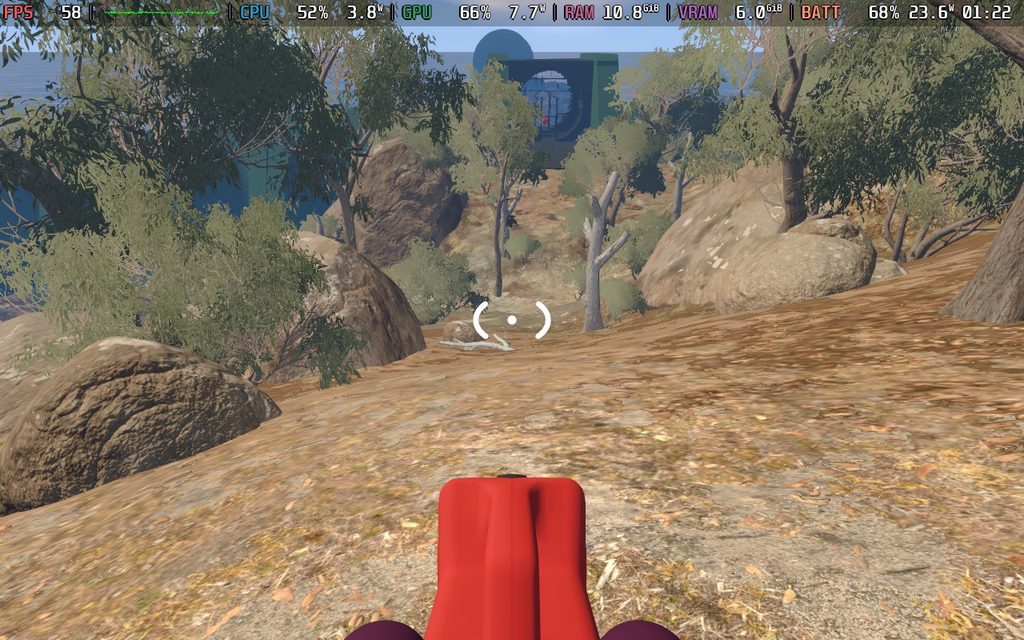
Now, if you want to push the quality to High and play at 30 FPS, you can, but expect some drops and compromises to the rendering scale. You will need to bring it down to 70% for a more solid 30 FPS, but if you don't like the blurriness, 80% will do the job. It's not the greatest way to play, and I disliked the drops and stutters, but it definitely makes the world look better, and I like that.
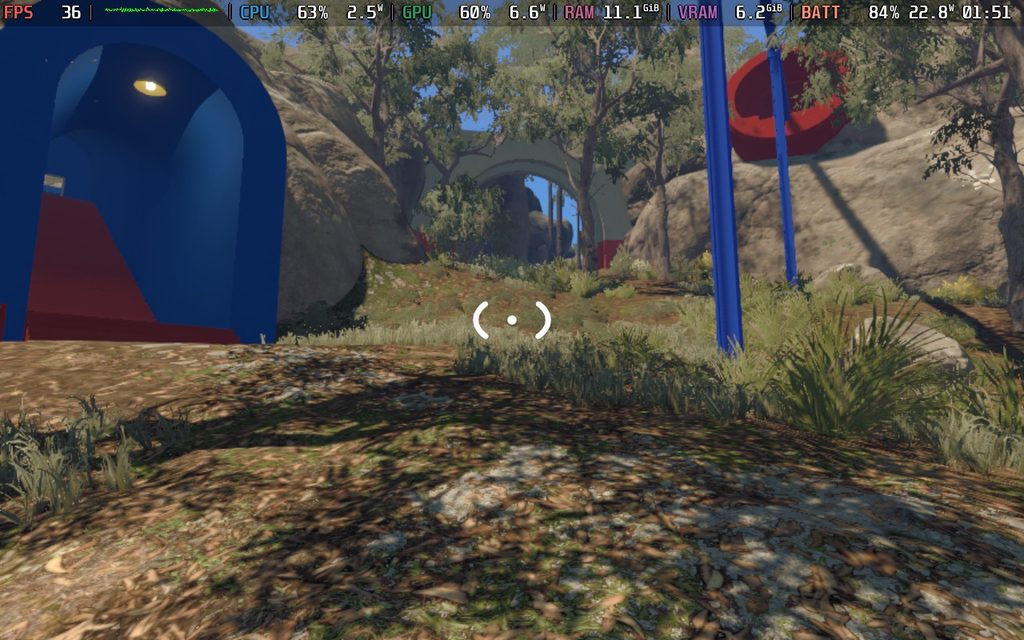
Big Walk is an incredible game that truly hooked me in from the beginning. Each of the puzzles feels unique from each other and requires communication and planning, and completing each one felt so satisfying. The world itself is a little on the bland side, and there is a lot of walking that can get boring, especially towards the end where he needs to go back and forth to find the puzzles that you may not have completed. Still, that doesn’t change just how amazing the experiences are and how great it feels to work together in this way.
While it does need some compromises on the Steam Deck, it can run and work well. The microphone on the Deck is detected, and we can just speak directly into the device, so I consider it very playable.
このレビューはPC版に基づいています。
このレビューをお楽しみいただけたなら、SteamDeckHQ の他のコンテンツもぜひご覧ください!あなたのゲーム体験に役立つゲームレビューやニュースを幅広く取り揃えています。ニュース、ヒントやチュートリアル、ゲーム設定やレビューをお探しの方も、最新のトレンドを知りたい方も、ぜひご利用ください。
Mixtape doesn’t adhere to what defines a video game in a traditional sense. In fact, it almost ignores the question entirely, and that’s what gives it its own unique identity.
This is a relatively interactive, relatively indie experience published by Annapurna Interactive, a publisher known for its unconventional take on video games from within the industry, such as Stray and People of Note. As someone who enjoys artistry in games and walking sim-esque experiences, I was immediately intrigued the moment the game was announced. After a surprisingly short three-hour binge session, the credits rolled, and I was left with mixed feelings that deserve a thorough unpacking.
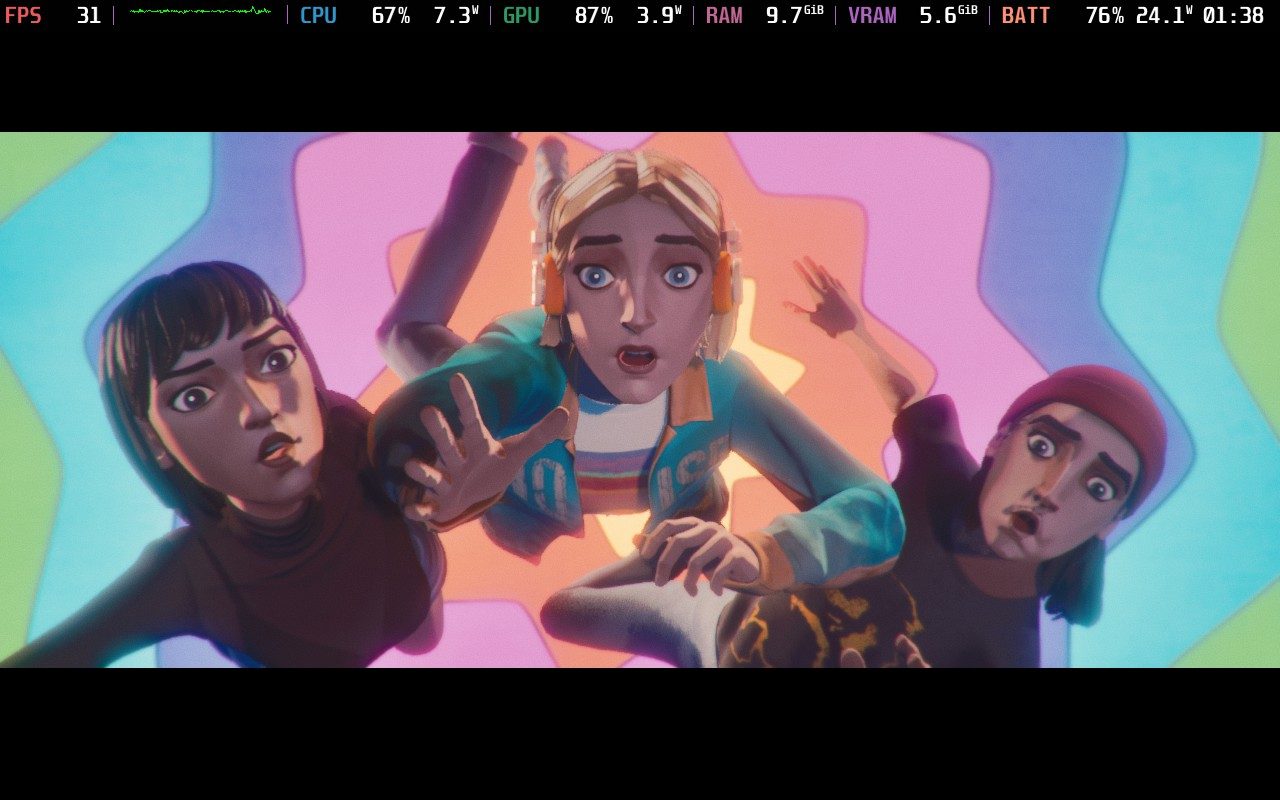
Mixtape is a coming-of-age story centered around three teenagers standing at the edge of adulthood, trying to figure out who they are while slowly drifting apart from the world they grew up in. Set against a backdrop of the 90's rebel culture, the game captures that raw, restless energy of youth where everything feels loud, chaotic, and ironically temporary.
The story structure is uniquely categorized by song tracks, aka a mixtape, as the name suggests. While experiencing the characters' past adventures, they all have corresponding songs that represent the reflective ambiance of the scene or environment. That makes music not just a background element; it is the backbone of its storytelling. Each track defines each scene meticulously, shaping how each memory captures the character's emotion.
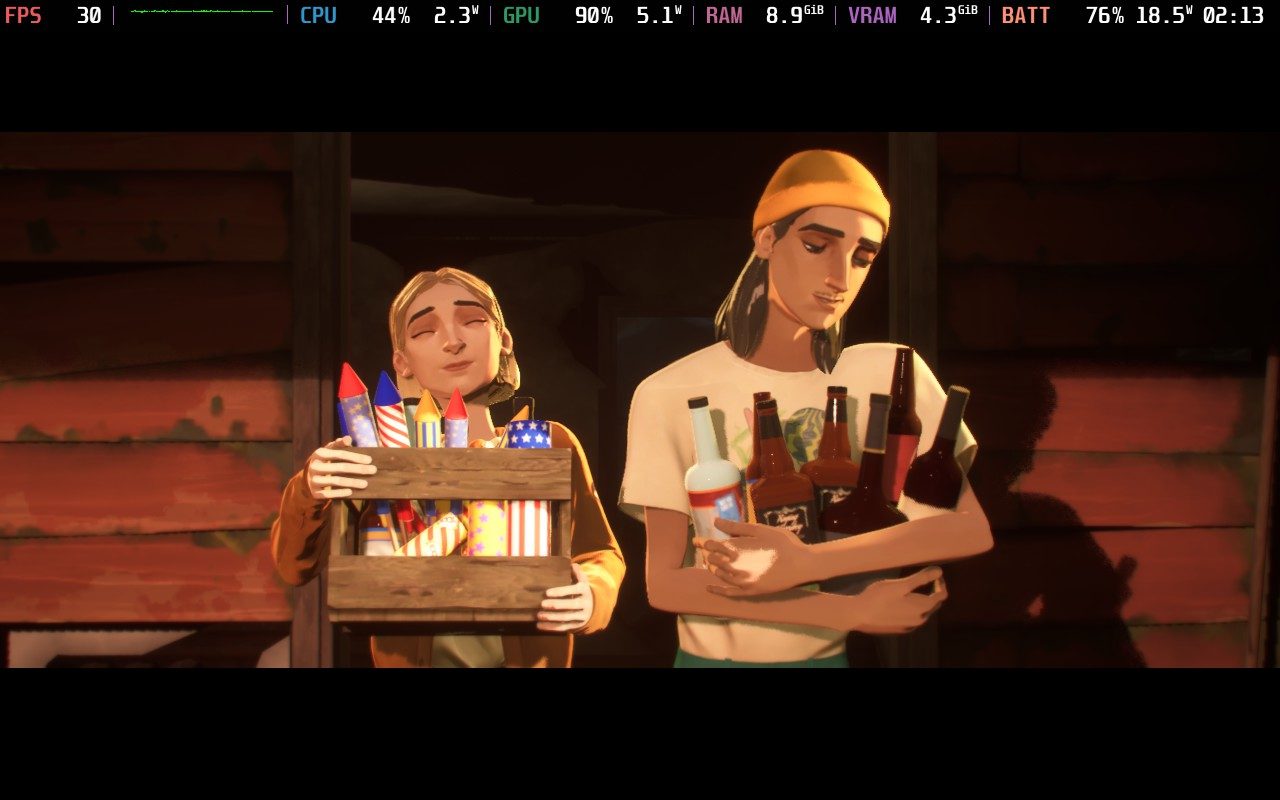
When it comes to these types of narrative-focused, visual novel-like games, story is everything. And honestly, I really liked it. The characters and their issues feel extremely real, and it connects to the player both on a heartbreaking and nostalgic level.
The main character, Stacy Rockford, is grappling with their deeply flawed traits while also capturing common human pitfalls like jealousy, ego, greed, and selfishness. Those reflections allowed me to empathize with her and care for both her and other distinctive characters' narratives.
What I disliked about this was the inconsistent flow of the story. After an emotional scene, a radio-like character introducing the next song, “our next track is this, it was a hit in bla bla,” feels slightly jarring, creating a slight pacing issue that hurts the overall immersion felt by the scene just before it.
After making my way through Mixtape, the story felt extremely short, and all the powerful cutscenes felt rushed and lacking an emotional “punch” that was to be expected. In many ways, it needed a bit more time to build up and properly connect with the characters. That being said, this isn’t a case of bad writing or poor execution. It feels more like a game that simply didn’t give itself enough space and time to fully land its emotional weight and poise. The foundation is strong, but the impact never quite reaches its expected heights.
Nonetheless, I really loved what was accomplished with its narrative direction. Fresh, artistic, and overall like a unique, bittersweet little experience that lingers more than it explodes.
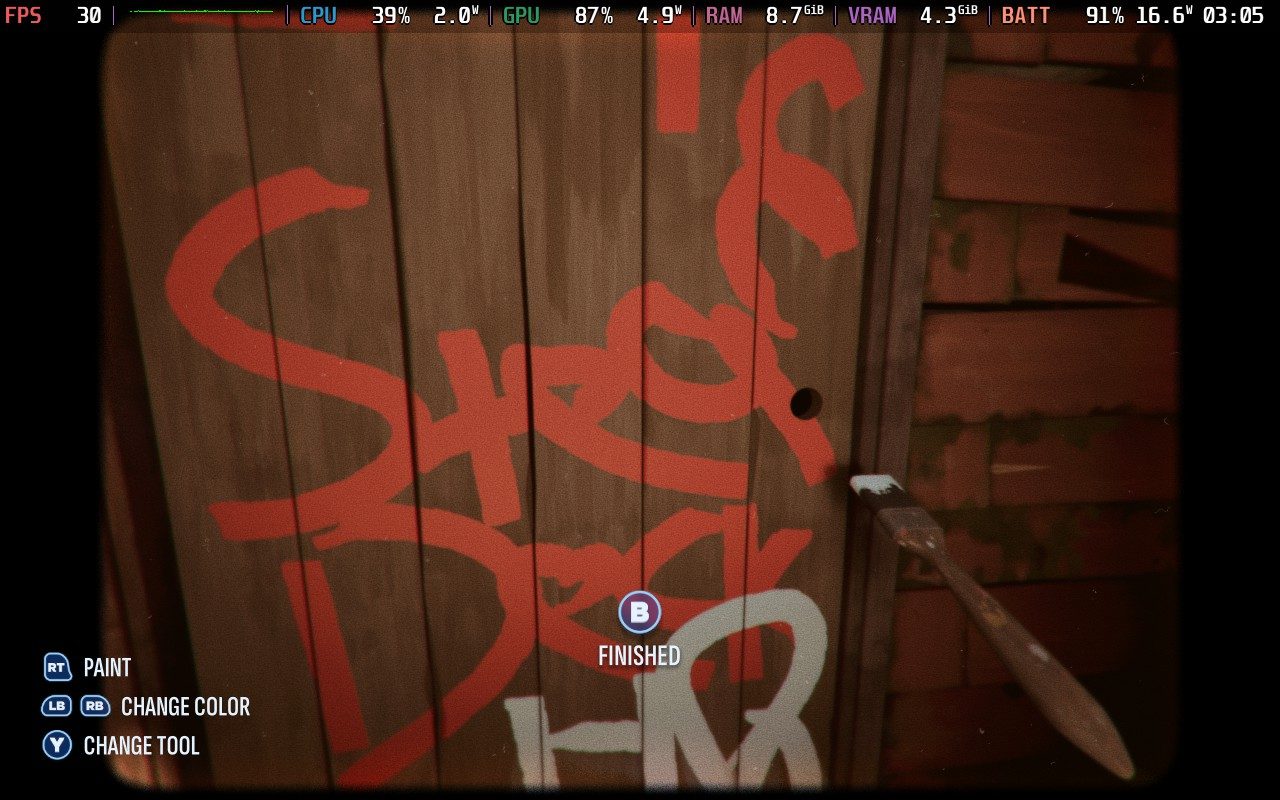
Let's dive into the most controversial and weakest part of the game, the “gameplay” of it all. Honestly, I would say there is barely any gameplay in this game whatsoever. It feels more like a physics showcase demo, or a visual novel with an artistic edge, rather than an actual game.
Every gameplay section consists of either walking or quick time events. You press buttons at a moment's notice, carry objects, take photos, flip the bird, bang your head in-sync with music, perform stylish skating moves, and go through a close-up, slightly disturbing French kiss sequence. Exciting stuff.
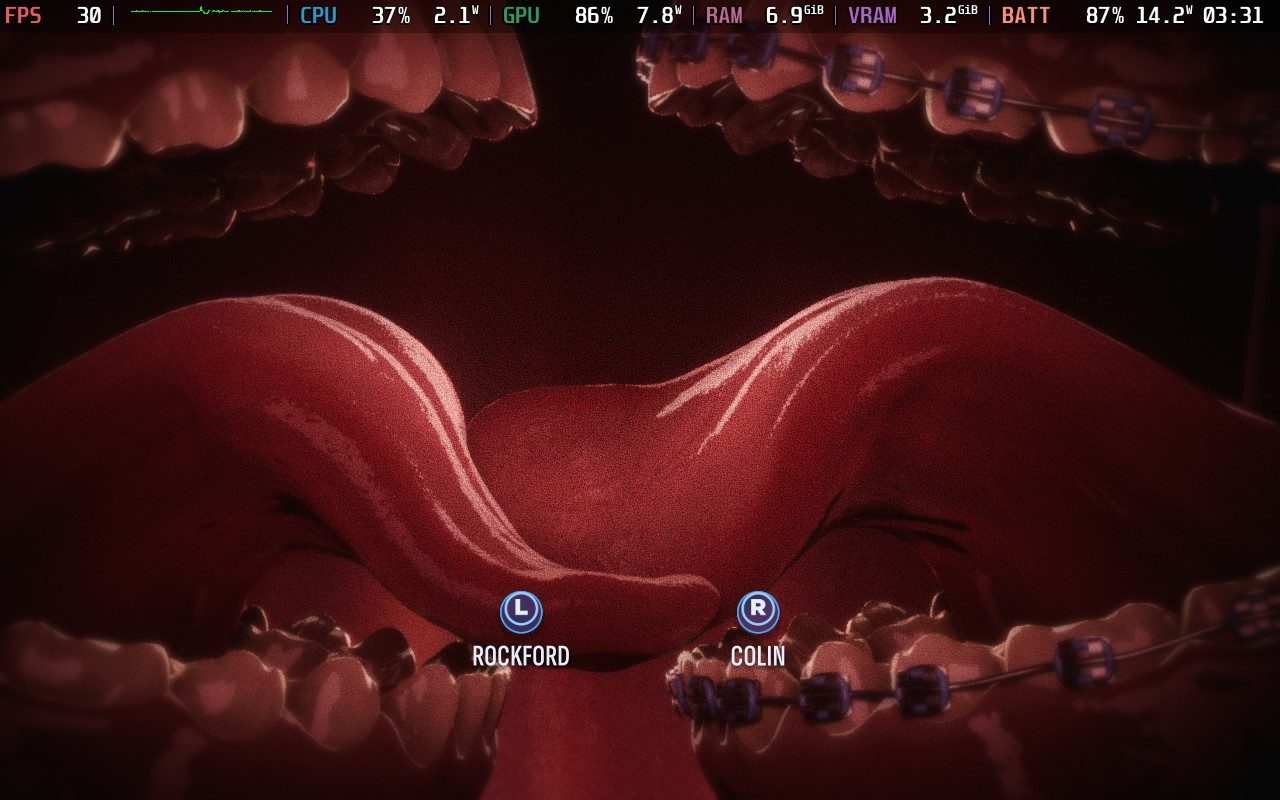
Beethoven & Dinosaur have done an excellent job with what they are trying to achieve. The physics interactions and overall quality are some of the best I’ve ever seen, but it feels lacking as a video game, something I'm meant to interact with.
In most games, I can find a “game” aspect because your choices matter, you can actually fail certain moments, and the player remains engaged. Here, there are no choices whatsoever. You can’t really fail, change, or influence anything. You are essentially watching a movie while occasionally pressing buttons or walking.
These may present themselves as flaws, but in reality, they are design choices meant to force the player to focus on the narrative, music, and a relaxed emotional flow without stress. However, some of these “gameplay” sections feel so long and stretched out that they start to contradict that intention and become extremely boring.
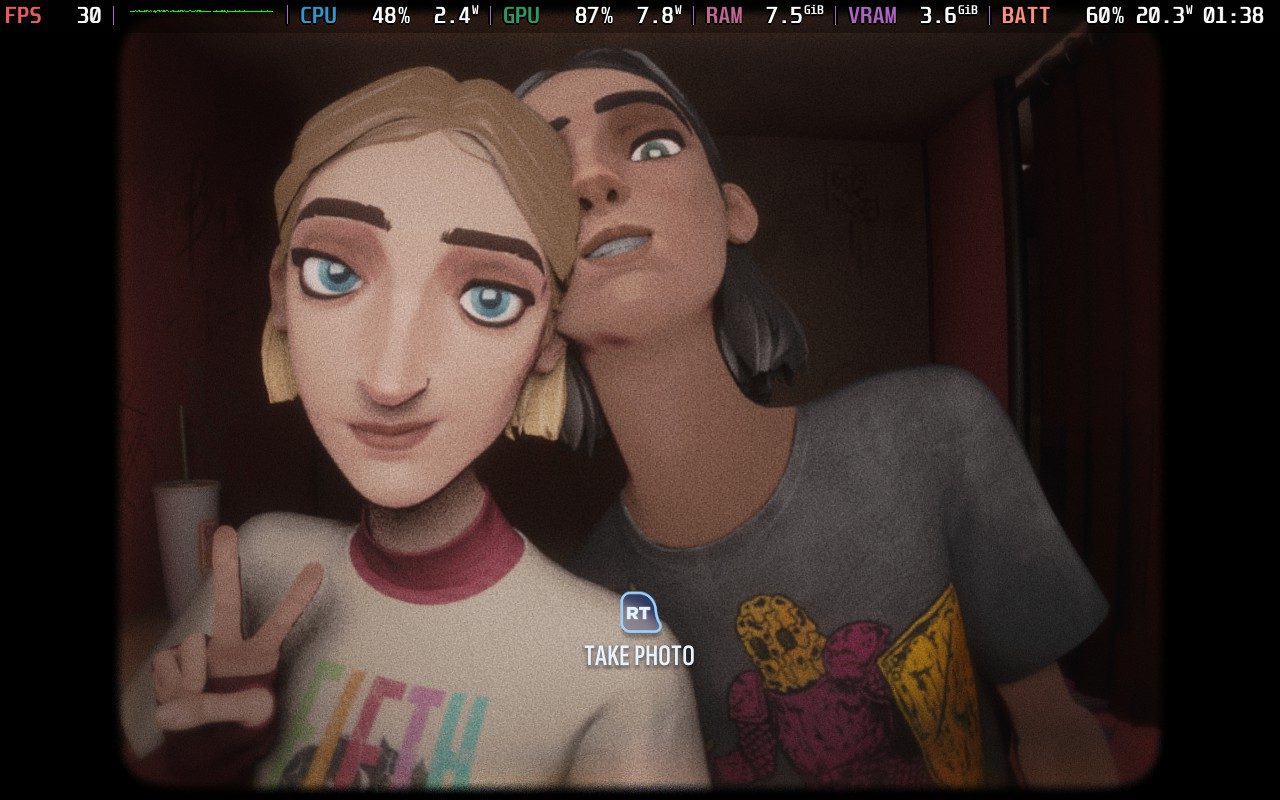
When it comes to graphics and artistic direction, Mixtape is simply breathtaking. It masterfully blends a stylish surreal art style with modern, beautiful lighting and image quality. Incredible lighting and image quality, combined with awesome physics interactions, creates something that looks breathtaking.
Character movement in particular is inspired by stop motion animation such as Corpse Bride or Wallace and Gromit. And when it’s a game based purely on 90s nostalgia, it's hard to imagine any other way. Though I must admit, at first it made the game feel a bit laggy, but you get used to its style pretty quickly.
The greatest part of the visuals, though, is the colors. The game is so beautifully vibrant and colorful during positive narrative moments, and it shifts to darker, grittier tones with more artistic lighting when dramatic events unfold. That way, the game hooks the audience through its artistic direction directly, with little built around it.
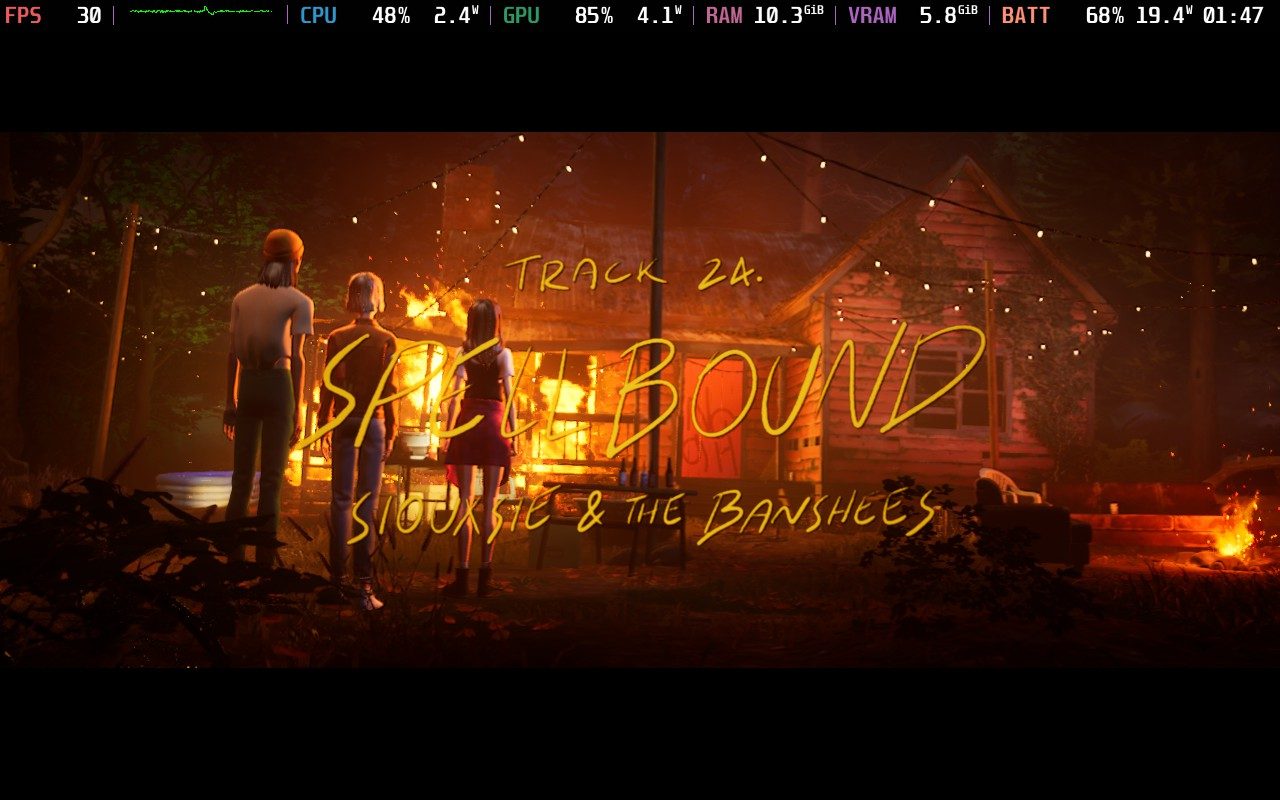
If a game called Mixtape had issues with its sound and music department, it would be catastrophic. Luckily, it truly does it justice.
Both the 25 licensed tracks and the original OST sound amazing in-game. It introduced me, as someone not familiar with the bulk of the music, to tons of bangers that I added to my personal playlist. The sheer quality of the soundtrack is not the only strong point; it’s how perfectly it is matched with the narrative that makes it so special and memorable.
Voice acting and sound effects also work flawlessly. The overall game is really an ear feast, and I highly recommend playing it with headphones to enjoy the full depth of what the game is aiming to deliver.
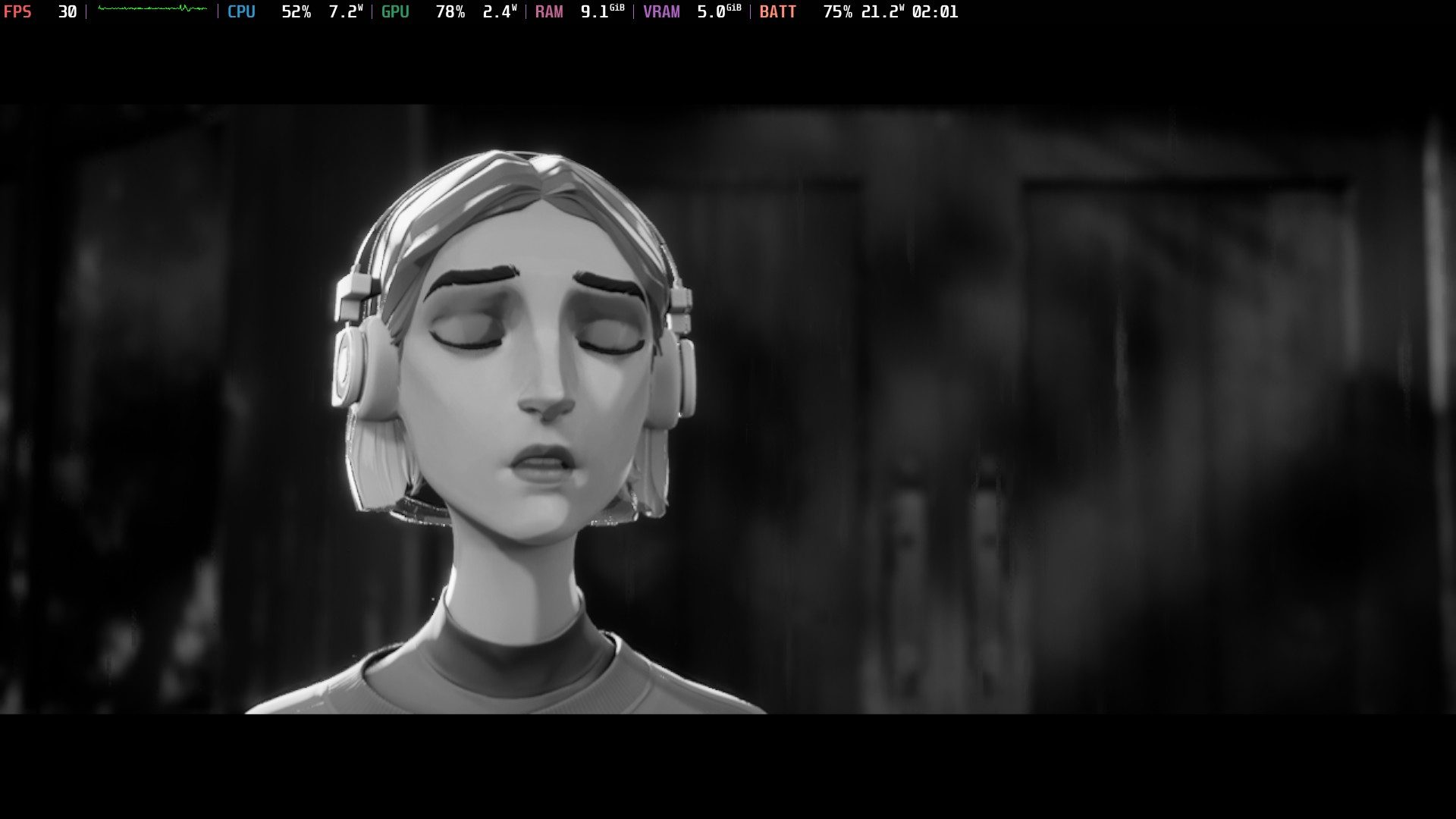
When it comes to indie games, they usually feel right at home on the Steam Deck. Unfortunately, Mixtape uses the Unreal Engine 5, so running the game at 60 FPS with higher settings was never really realistic on a Steam Deck.
Fortunately, the game is a cinematic visual novel-style experience that doesn’t really need 60 FPS to be fully enjoyed. When testing the game on my desktop, the fluid 60 FPS camera movement actually felt a bit out of place because of the game’s stop-motion-inspired character animations. Locking the game to 30 FPS gives it a much more cinematic feel overall.
The game comes with a default Steam Deck Verified preset, and thankfully the settings aren’t locked, so you still have freedom to tweak things if you want. But honestly, I wouldn’t recommend it. Even at the lowest settings, increasing the frame rate results in unstable 40 to 50 FPS gameplay with noticeably worse image quality.
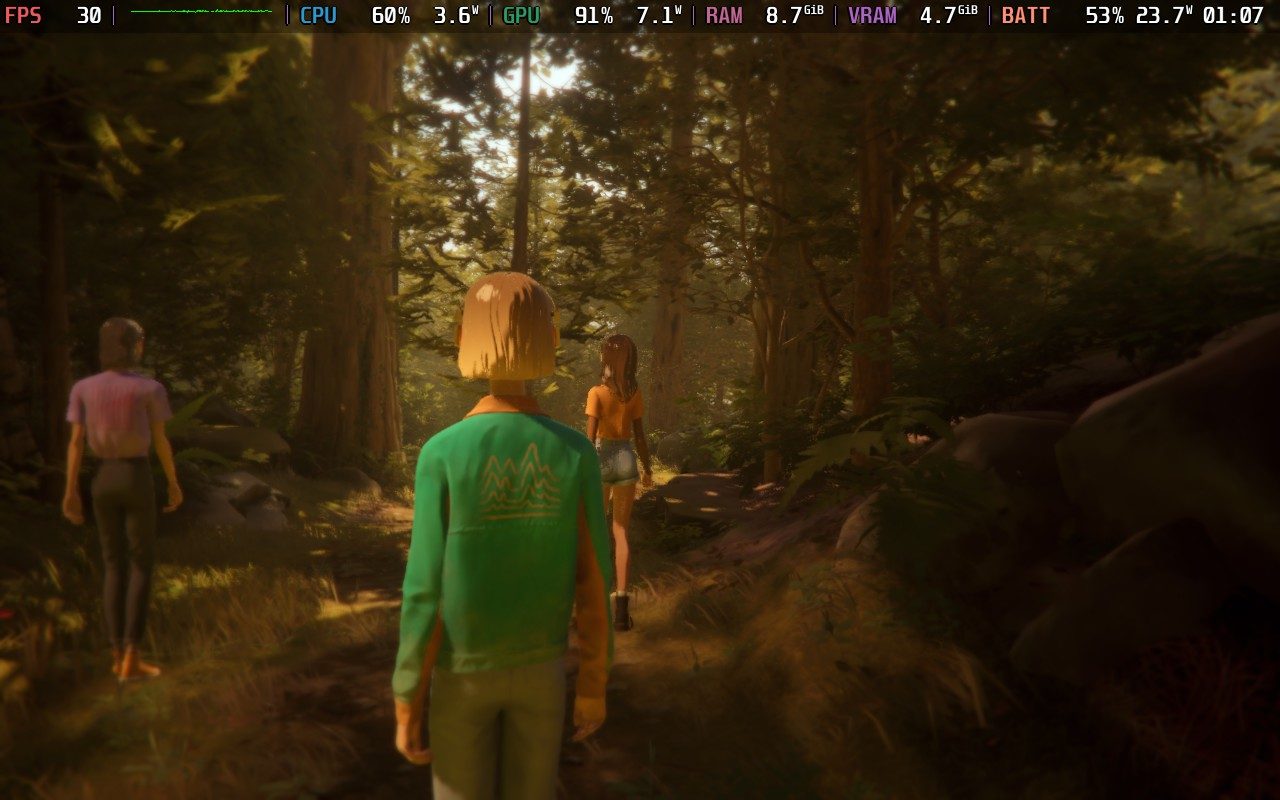
Thankfully, Beethoven & Dinosaur did a really solid job optimizing the default Steam Deck settings. Throughout the entire game, I didn’t experience a single drop below 30 FPS, and visually, Mixtape looks surprisingly gorgeous for an Unreal Engine 5 title running on the Deck.
Of course, compared to desktop or console, some of the more advanced lighting effects lose a bit of their impact. Reflections and sunlight bouncing off characters and environments look significantly better on higher-end hardware, but the Steam Deck version still looks more than acceptable.
Overall, Mixtape was a fantastic out-of-the-box Steam Deck experience.
Honestly, I don’t really see Mixtape as a traditional video game. It feels more like a beautiful little art project that accomplishes exactly what it sets out to do. If you appreciate strong artistic direction and want to experience something that feels like a gorgeous 3-hour interactive movie, you’ll have a fantastic time with Mixtape. But at the same time, it's definitely not going to be everyone’s cup of tea.
It’s slow, heavily cinematic, and far more focused on atmosphere and emotions than gameplay depth. But for the audience it’s trying to reach, Mixtape absolutely succeeds.
このレビューはPC版に基づいています。
このレビューをお楽しみいただけたなら、SteamDeckHQ の他のコンテンツもぜひご覧ください!あなたのゲーム体験に役立つゲームレビューやニュースを幅広く取り揃えています。ニュース、ヒントやチュートリアル、ゲーム設定やレビューをお探しの方も、最新のトレンドを知りたい方も、ぜひご利用ください。
Every once in a while, you come across a piece of media that resonates with you for years on end. The emotional impact, countless hours spent absorbing the music, characters, atmosphere; it all comes together to create something uniquely mesmerizing. The kind of experience that makes you silently realize you're deep into one of your favorite games of all time.
Clair Obscur is the very first game from indie studio Sandfall Interactive, and before release, almost nobody expected it to become such a massive hit and dominate award shows the way it has. This small team of 33 passionate French developers delivered something gigantic, and its impact will likely leave a mark on the overall gaming industry for years to come.
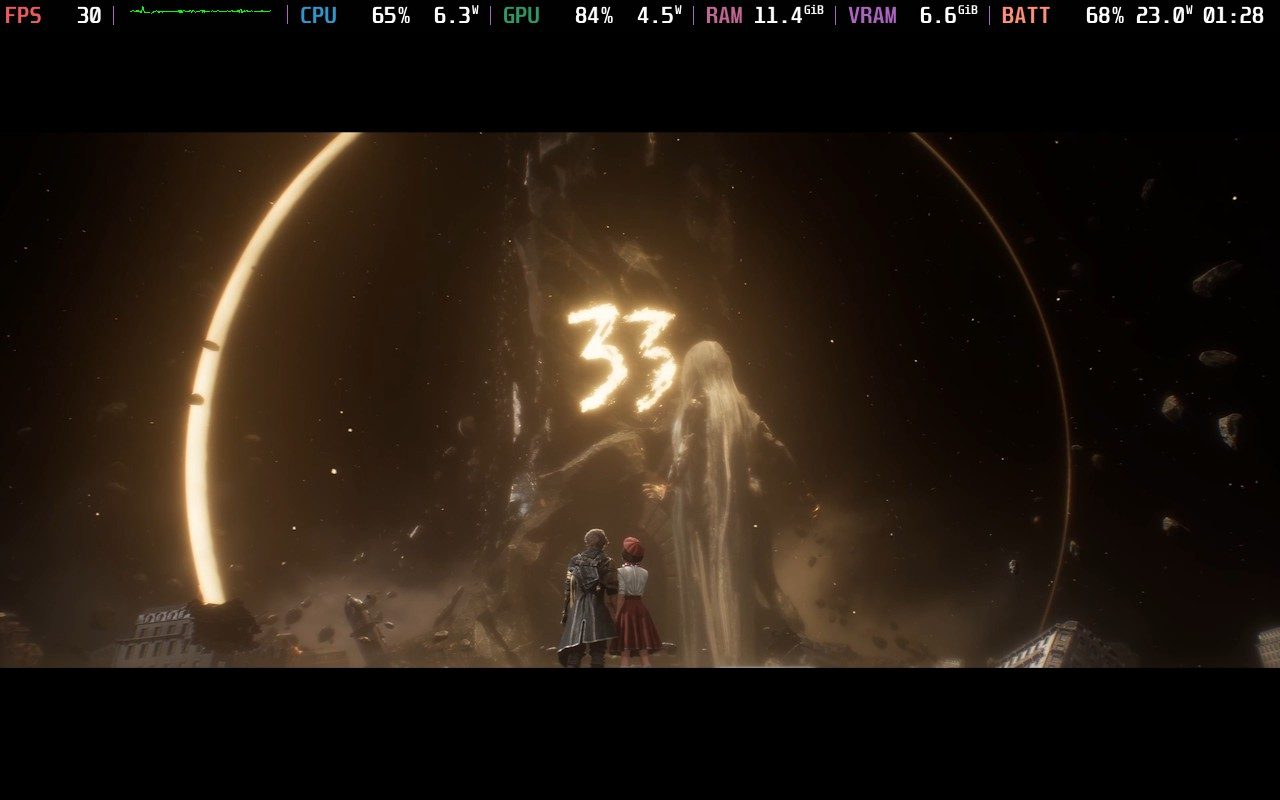
Set in a breathtaking dark fantasy world inspired by the Belle Époque golden age in France, Clair Obscur: Expedition 33 tells the story of a civilization slowly approaching extinction. Every year, a mysterious being known as the Paintress awakens and paints a number upon a massive monolith. Anyone matching that age instantly vanishes without a trace. With the number decreasing year after year, humanity sends an expedition into the unknown each time, hoping to find the Paintress and finally end the cycle. Expedition 33 follows the 67th expedition, a group of people marching toward an almost impossible mission, knowing that their own remaining time is running out. What follows is an emotional and deeply personal journey filled with loss, mystery, and the constant fear of inevitable death.
The story and writing are etched with a level of screenplay and dialogue quality that competes with film classics. Without diving into spoilers, the narrative constantly evolves through multiple emotional and philosophical layers. Much of the experience revolves around mystery, slowly connecting fragmented conversations, hidden meanings, and puzzling dialogue pieces together. That constant feeling of trying to understand the truth behind everything is what made the story so addictive.
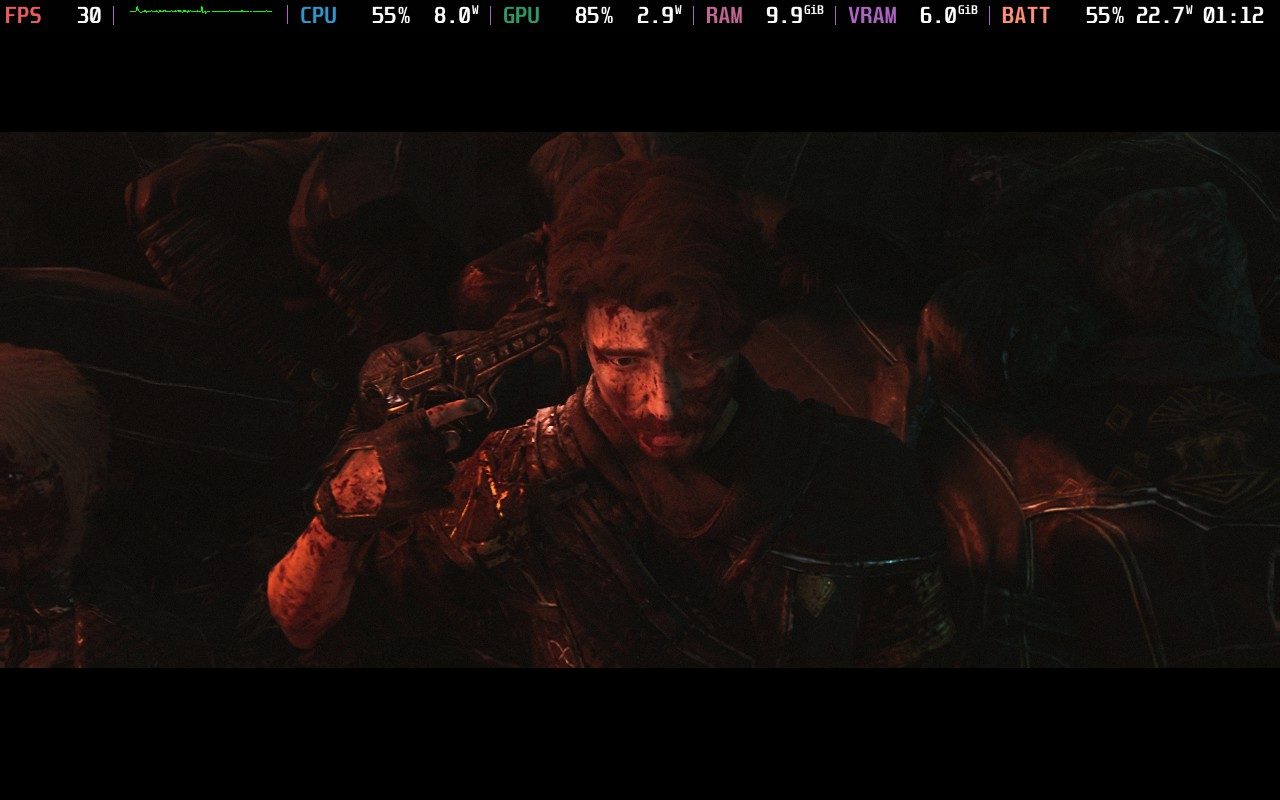
Clair Obscur distinguishes itself from its peers through its characters. From major cast members to side characters you may only speak to once, nearly everyone feels carefully written and memorable. One of the smartest decisions in the script is that no character feels completely devious or maligned. The game masterfully captures the grey areas of humanity, constantly pushing the player to empathize with actions that may be wrong, desperate, or forced by circumstances.
Story and writing are personally the most important aspects of a video game for me. With most games, I usually find myself nitpicking certain flaws or decisions I didn’t fully like. But in Expedition 33’s case, I genuinely struggle to think of anything I would change. The writing quality throughout the experience is nothing short of masterful. It made me cry, laugh, reflect, and constantly kept me emotionally invested from beginning to end. It was a complete rollercoaster of emotions.
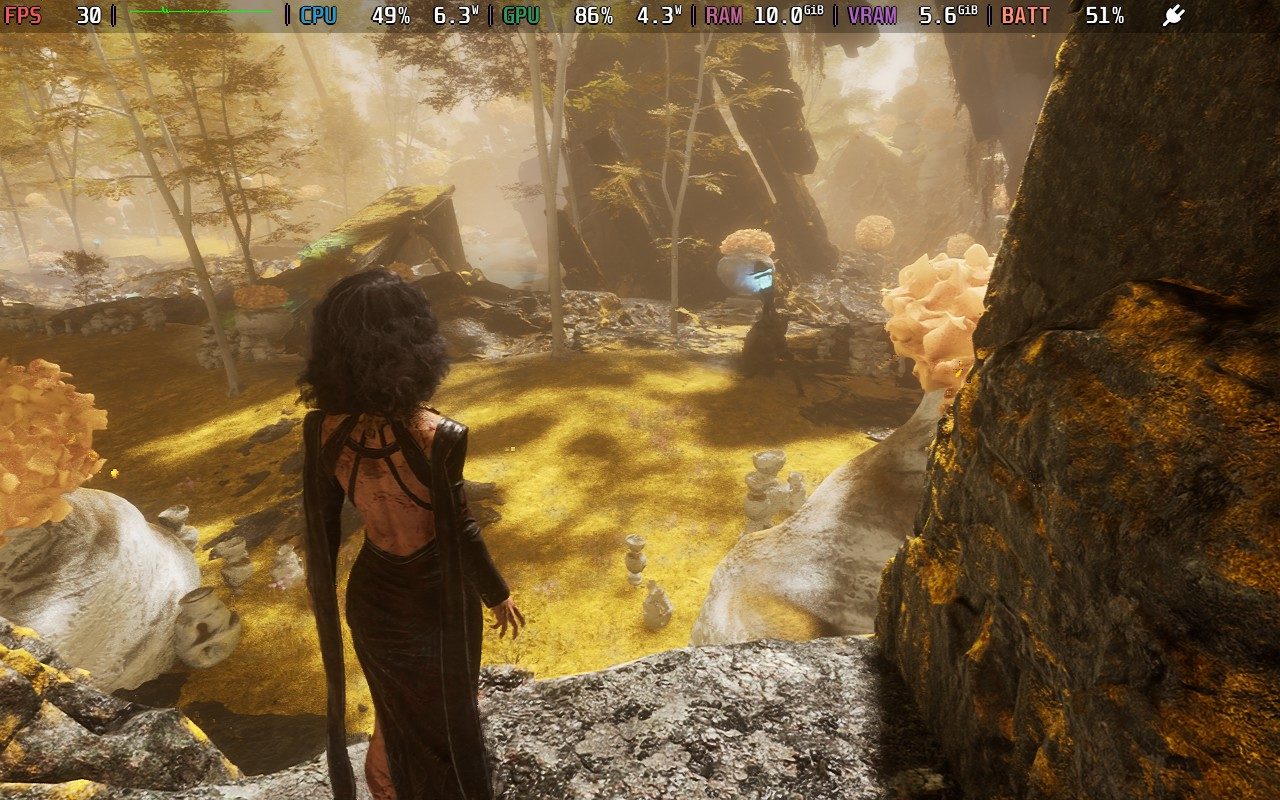
When it comes to gameplay, my favorite way of describing Expedition 33 is “the best of both worlds.” The combat system feels like a near-perfect blend of classic turn-based Final Fantasy combat and the reaction-based defensive mechanics of Souls-like games such as Sekiro: Shadows Die Twice. While adding active reaction mechanics into turn-based games is not an entirely new concept, Expedition 33 is in a class of its own.
At first glance, combat starts like a traditional turn-based RPG. You build a party with different characters, unique strengths, playstyles, and skill combinations, carefully strategizing your way through encounters. However, once enemies begin attacking, the game transforms into something far more interactive. You can dodge, parry, or jump over attacks entirely through player reaction and timing.
Parrying, in particular, becomes one of the most satisfying mechanics in the game. It is extremely difficult to master, but also incredibly rewarding. Every successful parry grants AP, allowing you to build resources even while defending. Perfectly parrying entire enemy combos triggers devastating counterattacks that feel impactful every time. After hundreds of hours of gameplay, landing a full counter never stops being satisfying.
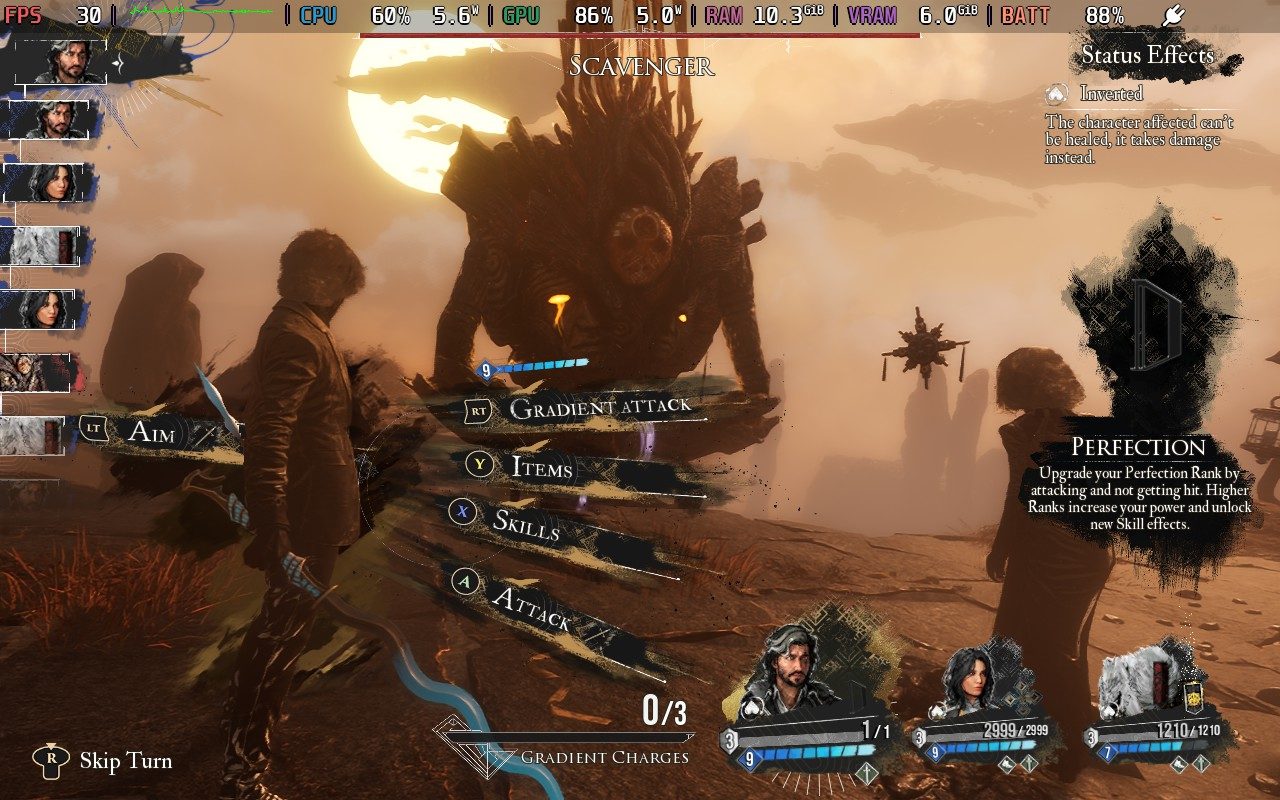
There are a total of six playable characters in the game, and each of them feels both unique and surprisingly deep mechanically. Each character introduces their own gameplay system and combat identity. For example, Lune functions as a mage who utilizes elemental “Stains” to create different effects and empower specific abilities, while Sciel fights using a card-based system that grants buffs, applies debuffs, and shifts her between different combat stances and modes.
The game also includes a character inspired by the classic “Blue Mage” archetype from Final Fantasy, allowing you to collect enemy abilities and use their own attacks against them. The amount of combat variety and combo potential across the cast is nuanced and contributes to the game's overall atmosphere.
On top of the turn-based combat, the game features a Free Aim system that feels like a small third-person shooter mechanic. You can manually target enemy weak points, interrupt attacks, or trigger special interactions during battle. What makes it even more impressive is how deeply this mechanic can be integrated into character builds. You can fully specialize certain characters around Free Aim and essentially turn them into machine gun-style damage weapons that seem to draw inspiration from first-person shooters. The sheer amount of build variety gives the combat system an unforeseen level of replayability and experimentation.
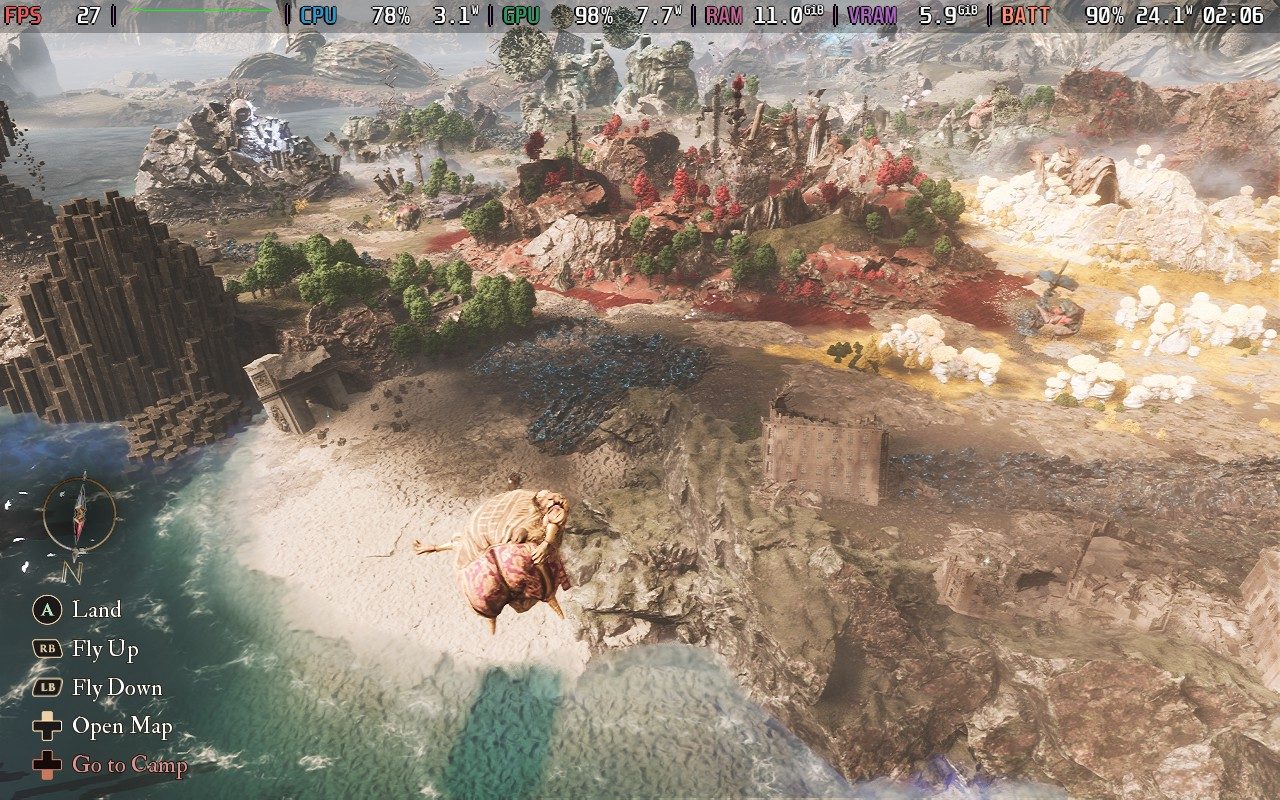
Clair Obscur: Expedition 33 uses a unique world structure that blends open exploration with more focused level design. While there is a large overworld where you can freely travel, fight optional bosses, discover loot, and unlock side activities, the main gameplay loop revolves around the game’s individual locations.
These locations function almost like large dungeon-style areas with semi-open layouts. They are filled with enemies, platforming sections, hidden paths, optional encounters, shortcuts, puzzles, and combat challenges, all of which constantly reward exploration. Each area is mechanically distinct, introducing new enemy combinations, traversal ideas, and gameplay scenarios rather than repeating the same structure over and over.
By avoiding the typical “open world checklist” design, the game becomes more enjoyable. Exploration feels focused and gameplay-driven rather than bloated, keeping a strong pace throughout the entire experience.
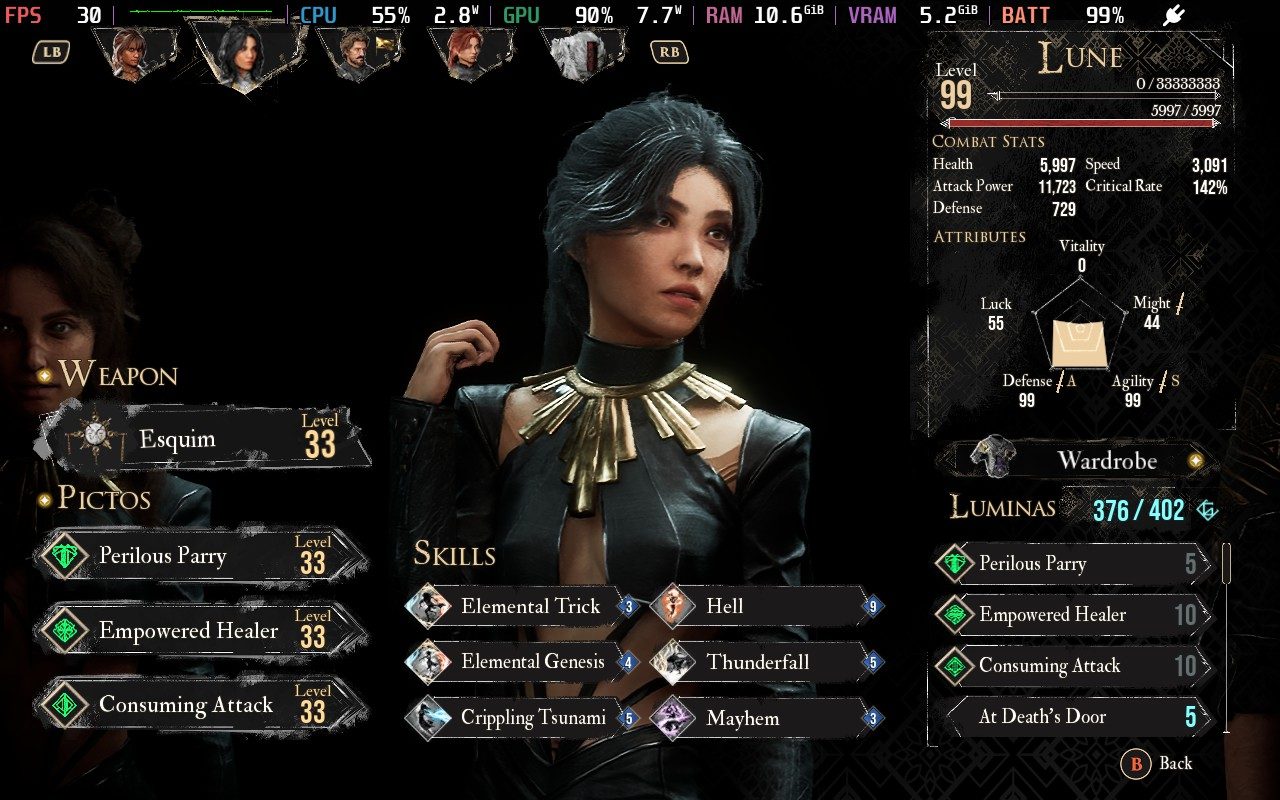
At first glance, character progression looks deceptively simple. You level up your characters, improve stats, unlock new skills, and equip stronger gear, much like you would in a traditional RPG. However, the game's real depth comes from its Picto and Lumina systems.
Pictos are special equipment pieces that not only provide stats but also unique passive abilities that can drastically change your playstyle. The clever part is that after winning four battles with a Picto equipped, its passive ability is permanently unlocked as a “Lumina.” Once unlocked, you can equip that passive separately without needing to keep the original Picto on your character, essentially letting you stack and combine countless different effects together.
Throughout the game, you constantly collect Lumina points that expand your Lumina capacity, allowing for increasingly powerful and creative builds. The feeling of gradually becoming stronger is satisfying, especially because the system constantly rewards experimentation.
There are well over a hundred different Pictos for Luminas in the game, creating an enormous amount of specialized build variety. Even after reaching the level cap for your characters, weapons, and equipment, you can continue farming Lumina points to further improve your builds. This progression system adds a huge amount of replayability, especially for New Game Plus runs where you can experiment with entirely different playstyles and absurdly powerful combinations.
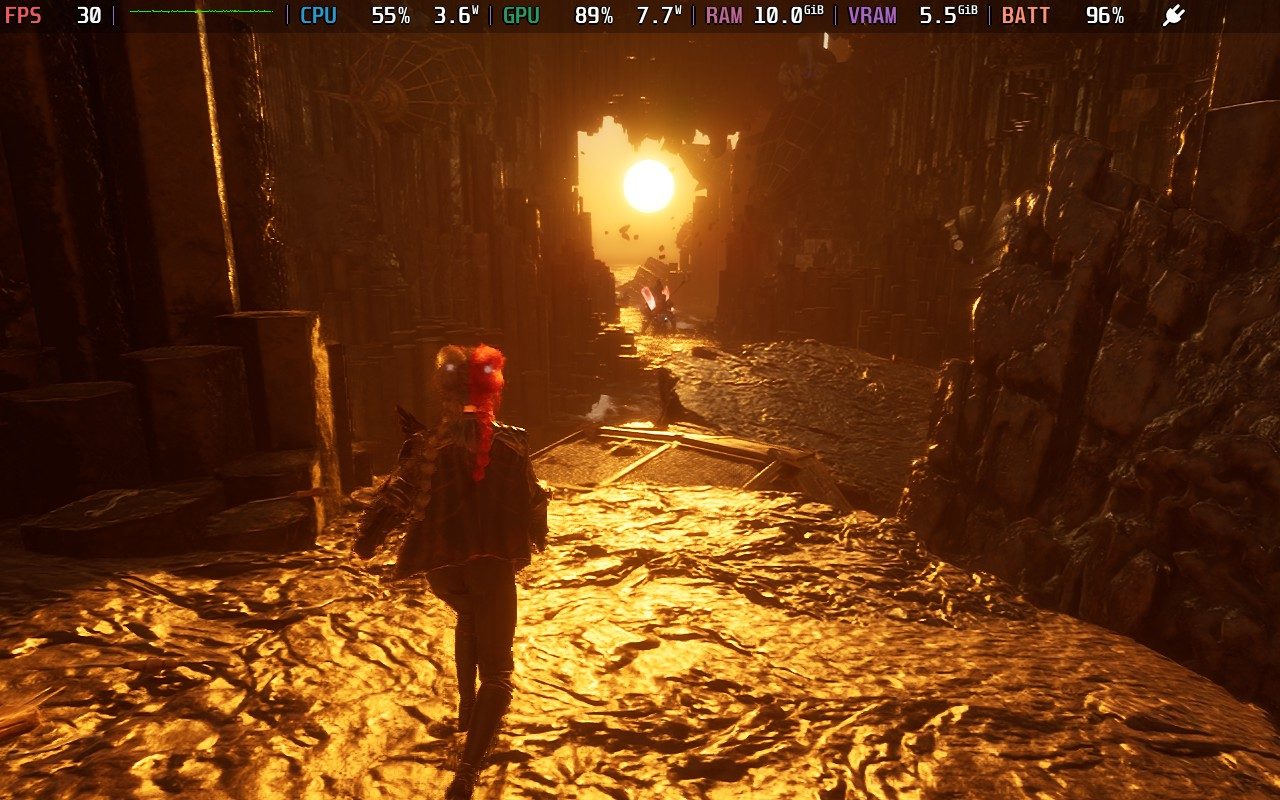
At first glance, the graphical quality in Expedition 33 may seem like a fairly standard Unreal Engine 5 presentation with solid but familiar texture work. What elevates the visuals is the incredible attention to atmosphere, particle effects, lighting, and artistic direction. Nearly every area in the game feels as if it were pulled from a painting, constantly presenting the player with unique visual themes and memorable scenery.
The game makes extremely smart use of cinematic techniques such as depth of field, lighting contrast, fog, and environmental effects to enhance the overall presentation. Rather than forcing realism through an enormous budget, Expedition 33 uses its artistic strengths intelligently, often masking technical limitations in ways that feel almost magical. The result is a game that looks breathtaking despite being developed by a relatively small team.
The cinematic presentation quality is so good that some scenes feel closer to watching a professionally edited, scripted movie than to playing a video game developed by a small team in France. And thanks to the talented motion capture performers and the game’s strong directorial vision, the cinematics become far more emotionally immersive than most RPGs. The facial animations, body language, camera work, and performances all come together brilliantly, making the visual presentation during story moments pull you deeper into the experience and make even simple conversations feel impactful.
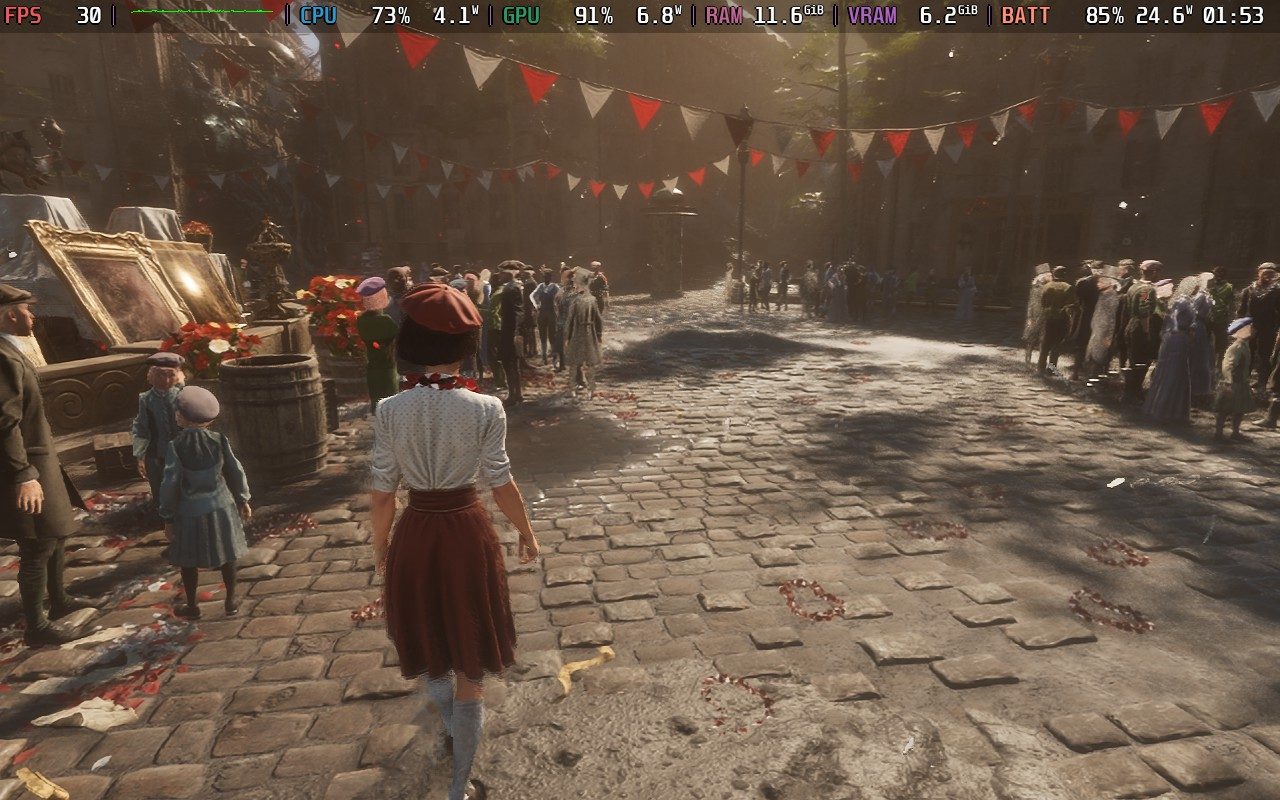
The only noticeable technical issue I found was with the character models. Both important story characters and random NPCs can sometimes look a little too similar facially, making it fairly obvious that many of them share very similar base models underneath their designs.
While this is ultimately a minor complaint, it can occasionally diminish immersion and create unintended confusion during certain scenes. At times, I found myself wondering whether a character was intentionally connected to another, related somehow, or part of a future reveal, simply because some faces looked so similar. It’s one of the few areas where the game’s smaller budget becomes slightly more noticeable.
Also, the aggressive use of depth of field causes some blurriness issues. On hair, it causes an effect that looks a little bit underwhelming. But other than that, the game looks absolutely gorgeous.
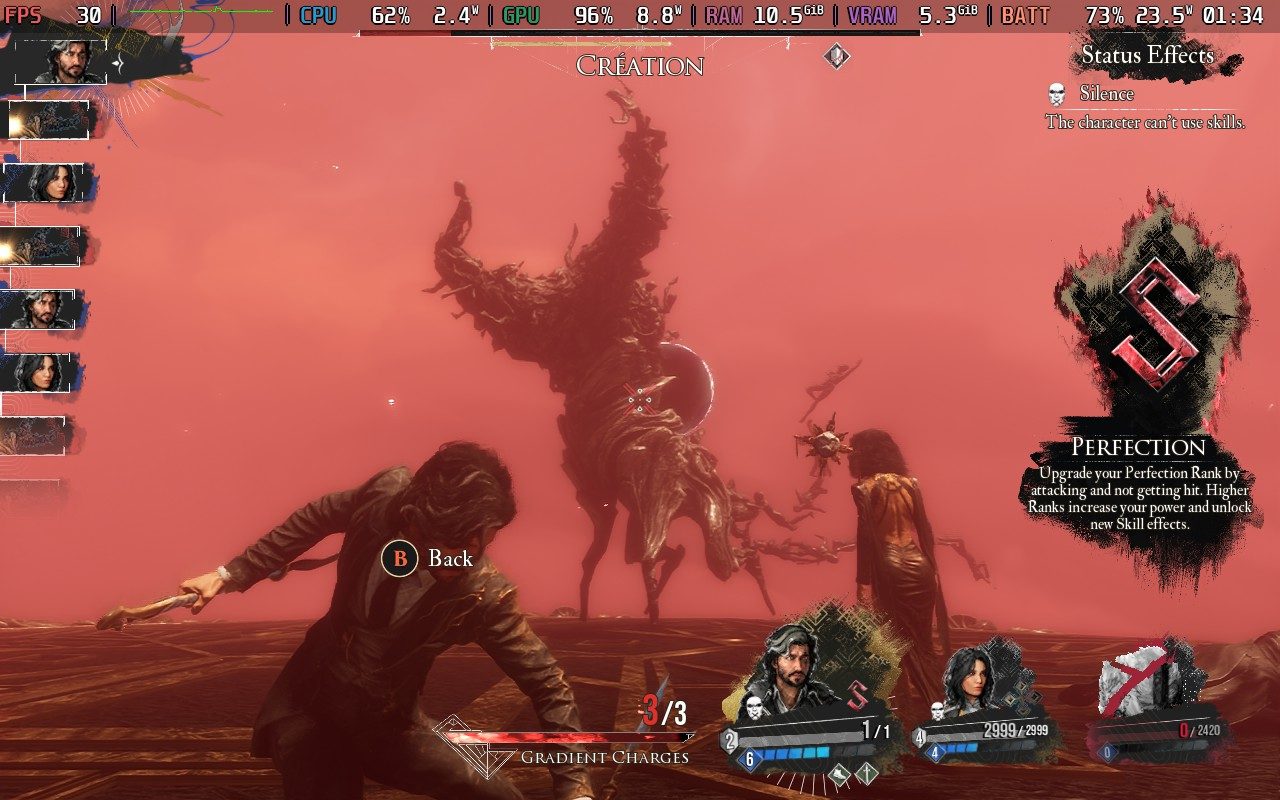
Music... music... music... I seriously don’t even know what to say here. I feel unqualified trying to review Lorien Testard’s work because the soundtrack is simply awe-inducing. With 154 different tracks, this is easily one of the most robust soundtracks I’ve ever heard in a video game.
The differentiation is insane. Some tracks are emotional and melancholic, some are peaceful and atmospheric, while others suddenly turn into intense boss themes that make fights feel ten times more impactful.
What makes it even more special is how memorable everything is. Hours after playing, I still had multiple tracks randomly stuck in my head. The music carries so many emotional scenes and elevates the entire experience constantly. There were moments where I just stopped moving for a minute and listened to the sounds coming through my speakers.
Sound design and voice acting, as presented, are top-tier. The impact and feedback during combat feel incredible, especially when it comes to parries and powerful skills. Every hit, counter, explosion, and attack has this heavy, satisfying feeling to it that makes combat even more addictive.
Voice acting is fantastic across the entire cast as well, with emotional scenes feeling natural and believable instead of overly dramatic or forced. Honestly, the entire sound package, from music to effects to performances, is a work of art.
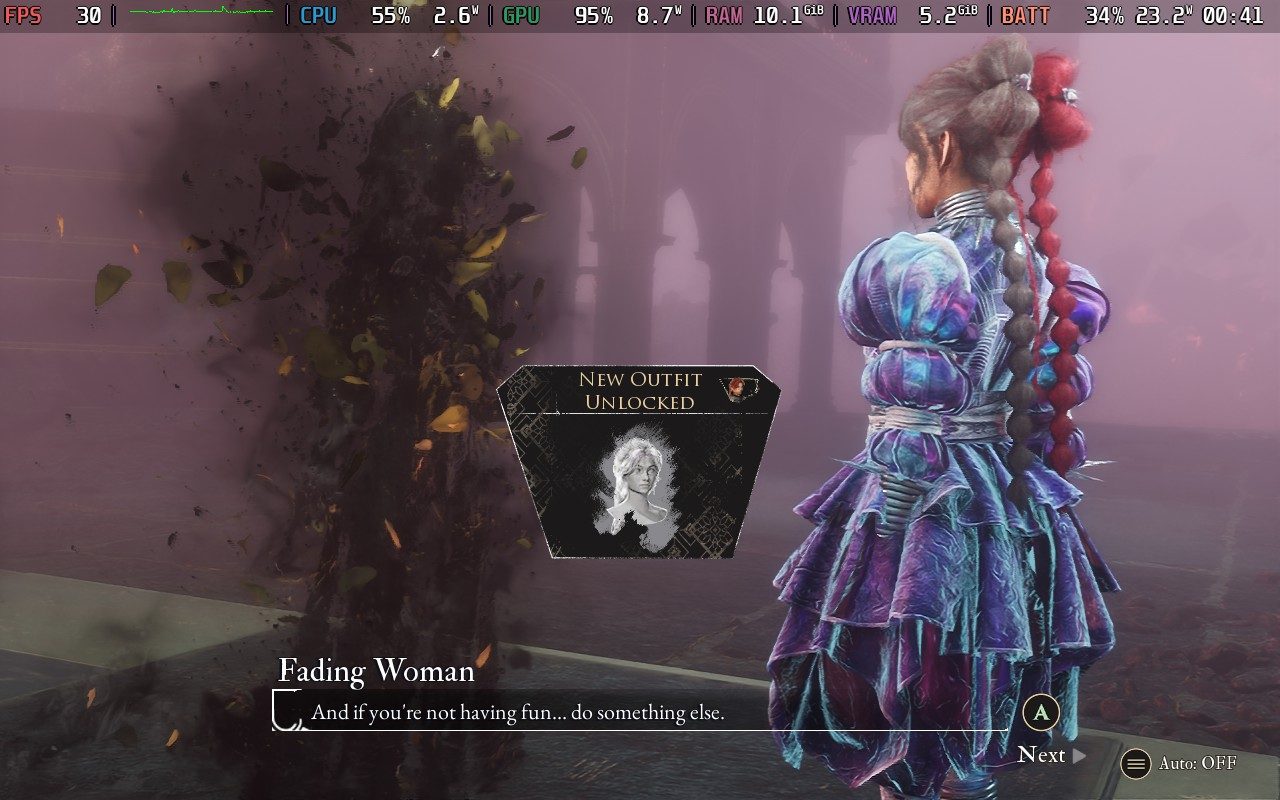
I want to start with a small disclaimer here. If you simply download the game and play it using the default “Verified” settings, you are honestly going to have a pretty terrible experience. Out of the box, the game uses heavily restricted settings that look extremely blurry, suffer from unstable performance, and introduce noticeable input delay due to the uncapped fluctuating frame rate.
By default, the game does not properly allow you to lock the frame rate, meaning performance constantly jumps around between 30 and 50 FPS, depending on the area. In most games, this would already be annoying, but in a reaction and parry-heavy game like Expedition 33, inconsistent frame pacing actively hurts gameplay.
Thankfully, there is an easy workaround. By adding:
SteamDeck=0 %command%
into the Steam launch options, you can bypass the game’s restricted Steam Deck preset and gain full access to the graphics settings menu, including proper frame rate limiting options. This alone massively improves the experience and immediately makes combat feel far more responsive.
The second thing I highly recommend doing is injecting an FSR 4 file. Thankfully, this process is extremely simple and dramatically improves image quality without heavily impacting performance. There are multiple ways of doing it, but the easiest method is downloading the amd_fidelityfx_upscaler_dx12.dll file directly from AMD’s official files and replace the existing one through Desktop Mode.
Once both of these tweaks are applied, the visual difference is shocking. The game transforms from a blurry, unstable mess into one of the sharpest and most visually impressive games available on Steam Deck. Here’s a comparison between the default FSR 3.1 implementation and FSR 4 running on the Performance preset.
Once properly configured, the game manages to hold a surprisingly stable and responsive 30 FPS lock on Steam Deck for the vast majority of the experience. Around 99% of gameplay feels smooth and consistent, which is extremely important for a reaction-heavy combat system like this one.
There are a few exceptions. Some larger open-world sections and certain chaotic 3v3 encounters can occasionally dip into the 24-27 FPS range, but these drops are relatively minor and rarely occur during actual gameplay. Overall, the experience still feels very comfortable and responsive on the Deck.
There is little visual sacrifice made while using lower settings. Even on desktop hardware, the difference between the lowest and highest presets is surprisingly subtle in many areas. Thanks to the game’s creative use of art direction and lighting, Expedition 33 still looks absolutely gorgeous on Steam Deck despite running on the lowest available settings.
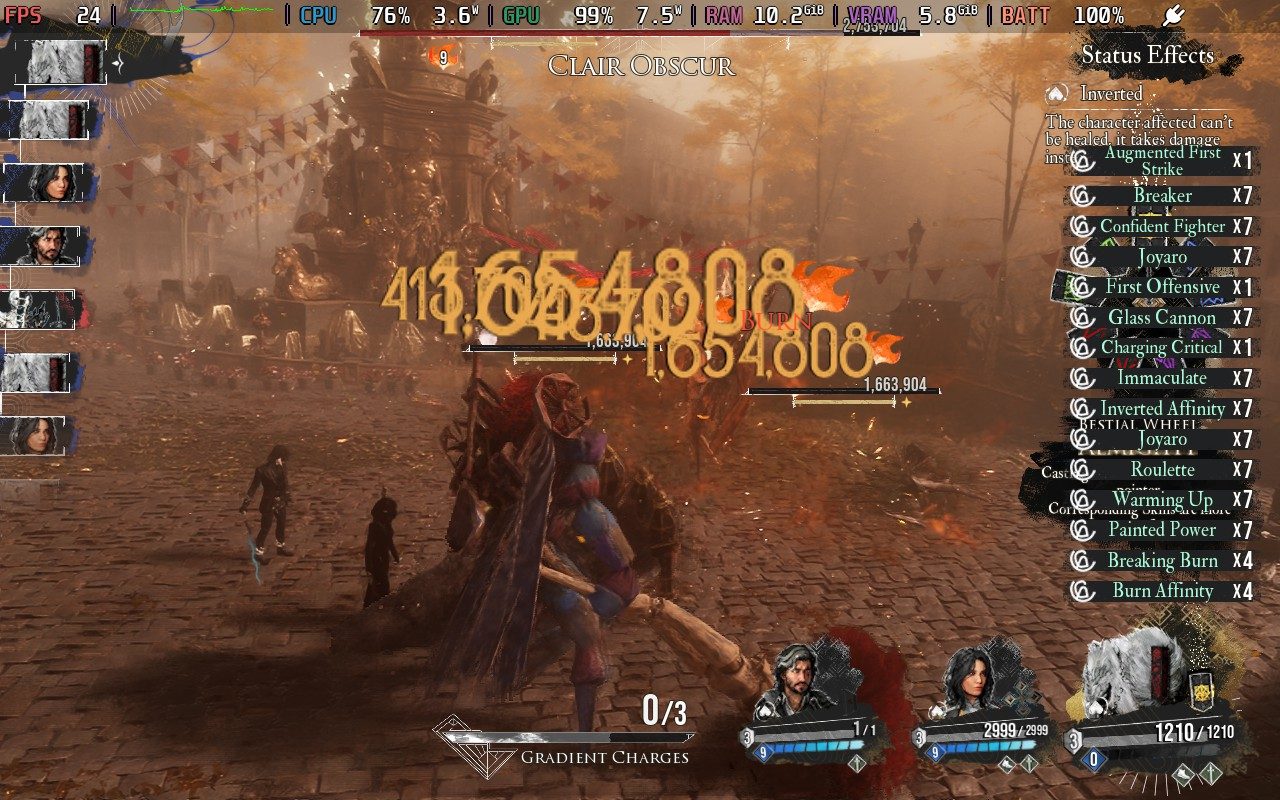
Clair Obscur: Expedition 33 is one of the rare games that reminds me why I fell in love with video games in the first place. Between its masterfully written story, unforgettable characters, addictive combat system, incredible soundtrack, and beautiful artistic vision, this is an experience that will stay with you long after the credits roll.
On Steam Deck, the experience is also far better than the default settings initially suggest. While the out-of-the-box “Verified” profile is disappointing, a few simple tweaks transform the game into a surprisingly stable and visually stunning handheld experience.
It feels surreal that this is the very first game from Sandfall Interactive. If this is what the studio is capable of on their debut title, I cannot wait to see what they create next. Clair Obscur: Expedition 33 is not just one of the best RPGs I’ve played in years. It is probably the best game I've ever played, period.
このレビューはPC版に基づいています。
このレビューをお楽しみいただけたなら、SteamDeckHQ の他のコンテンツもぜひご覧ください!あなたのゲーム体験に役立つゲームレビューやニュースを幅広く取り揃えています。ニュース、ヒントやチュートリアル、ゲーム設定やレビューをお探しの方も、最新のトレンドを知りたい方も、ぜひご利用ください。
Directive 8020 was provided by Supermassive Games for review. Thank you!
I love games with such an immersive story that takes center stage, and developer Supermassive Games has been one of the best at creating those. Even though I’m a baby when it comes to horror, their Dark Pictures Anthology games and Until Dawn still remain some of my favorites. However, with Directive 8020, the team changed a lot. With new gameplay mechanics and going into a sci-fi future, the game stands apart in many different ways, though it doesn’t fire on all cylinders when it should.
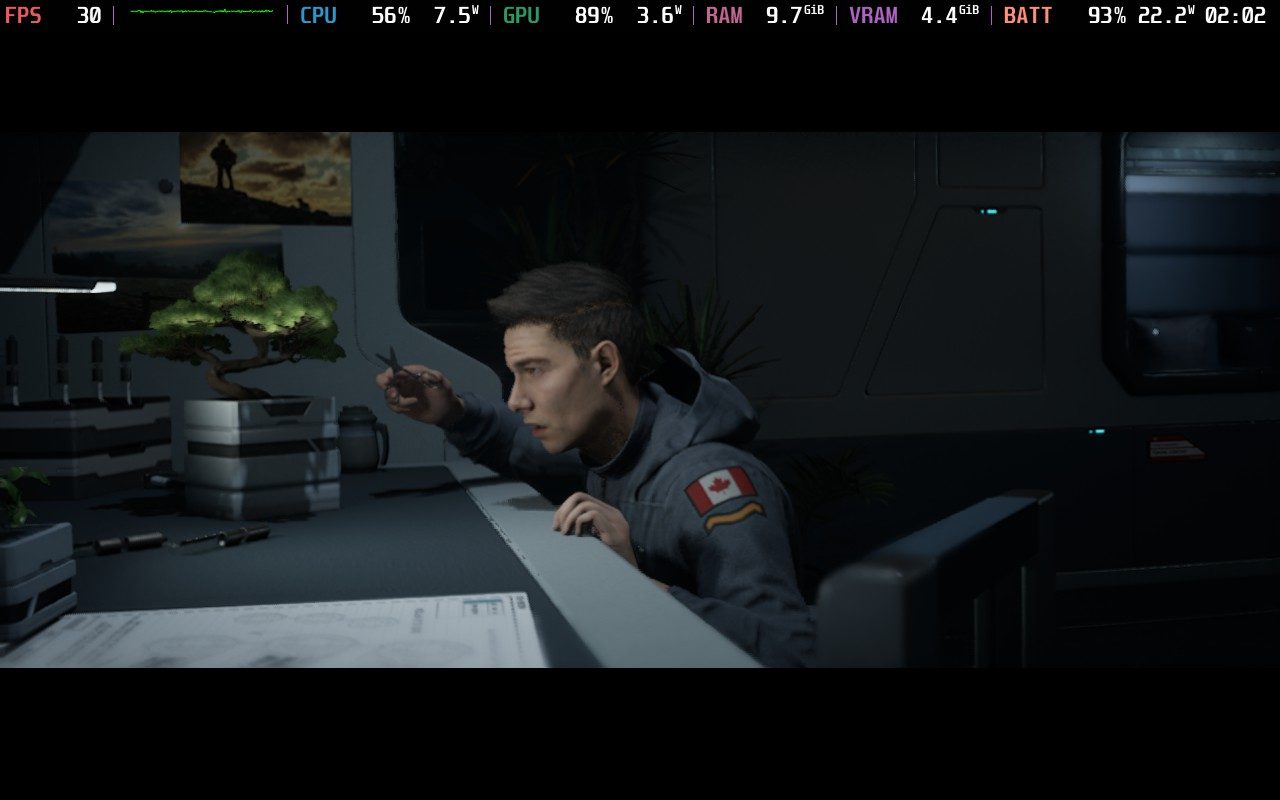
The game follows the crew of the Cassiopiea on a mission to do some tests on a new planet that could house humanity: Tau Ceti f. But before the crew can wake up, tragedy strikes when a meteorite hits the ship that seemingly carries an alien lifeform. It quickly becomes apparent that this lifeform is not friendly, and now the team will need to figure out exactly what they must do to survive.
I don’t want to spoil too much of the story, but if you’ve played Supermassive’s other games, you’ll probably be familiar with how many branches and choices we have that can dictate how the game ends. Still, the story is quite satisfying. I was very happy with the conclusion of my first run, and there were absolutely some surprising twists towards the end. There will definitely be some plot changes that surprise, as I definitely did not see some of them coming. I know I’m being a little vague, but I really don’t want to spoil anything. It’s worth playing through and figuring it out yourself.
One thing I found a little bit odd, though, was the pacing of episodes. I found that episodes 1-4 were quicker and didn’t have a lot happening in them, while the rest of the episodes (5-8) had much more substance and excitement. It felt like a lot was happening towards the second half of the game, and it made those first episodes feel like just introductions to what we would get later on. I can understand episode 1 feeling that way, but I thought it would pick up in episode 2. There are still some interesting revelations and discoveries in those earlier episodes, but they pale in comparison to the later ones.
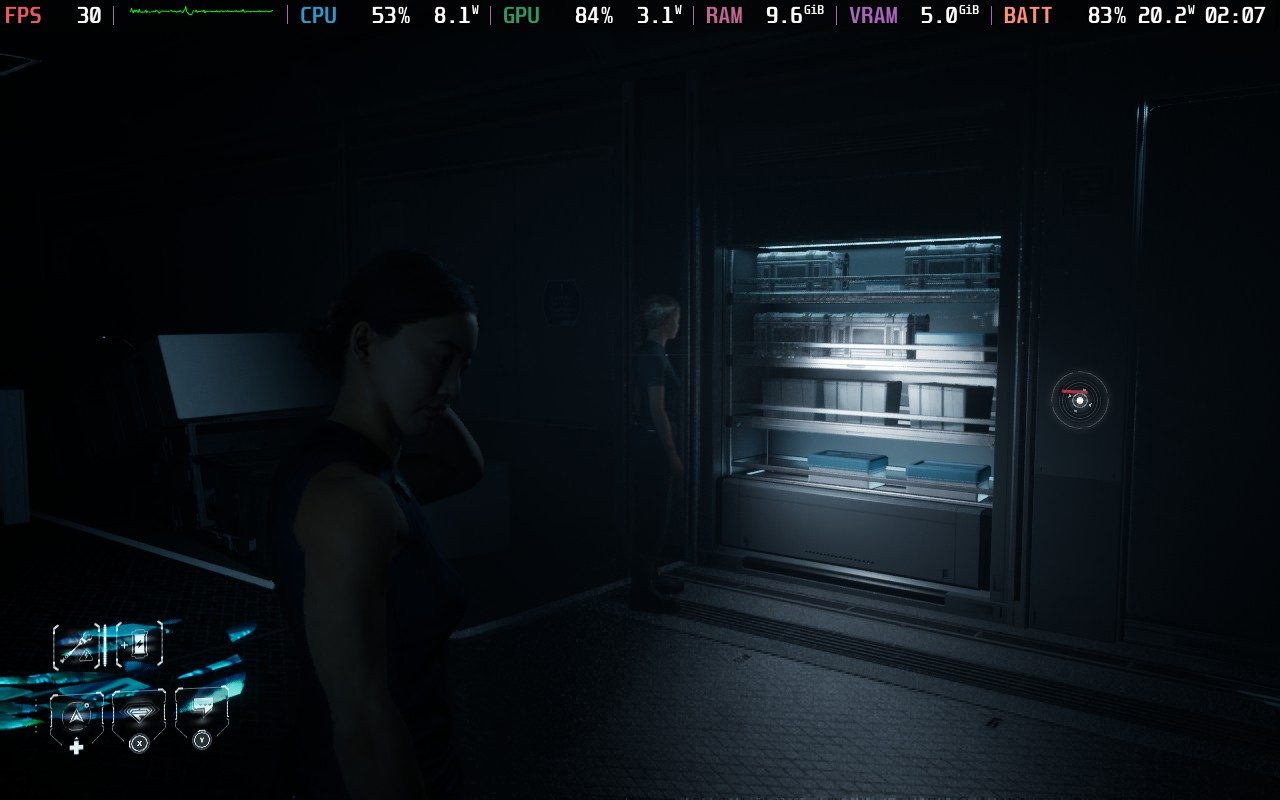
I also wasn’t a huge fan of some of the opening scenes of those earlier episodes, where we would flash forward to the future. They felt like they were just added in to pad out the episode, while they would fit perfectly fine later on when those scenes actually take place in the second half of the game. They did dictate some outcomes later on, but I still felt like they would’ve fit better at a later time.
But as a new addition to the game that isn't seen in Supermassive's previous titles, I really like the Turning Point system. This allows us to go back to earlier points in the game, see what changes we could’ve made, and easily return to those spots. They are laid out like tree branches, making it easy to visualize the pathways that could lead us not only to other story elements, but to other endings of the game.
However, I advise against looking at this until you beat Directive 8020. Throughout my first playthrough, I was testing the system and going back slightly to make changes due to an accidentally failed QTE (Quicktime Event) or a button press. But I noticed that the points on the tree we didn’t unlock give us a hint on how to unlock them. These hints could have spoilers. There was one in particular where I was able to figure out which person was real because of the hints I saw. It took away a little bit of the mystery. I like having the hints there because they tell us what we should be doing to reach that path, but I wish the wording were changed so as not to spoil anything.
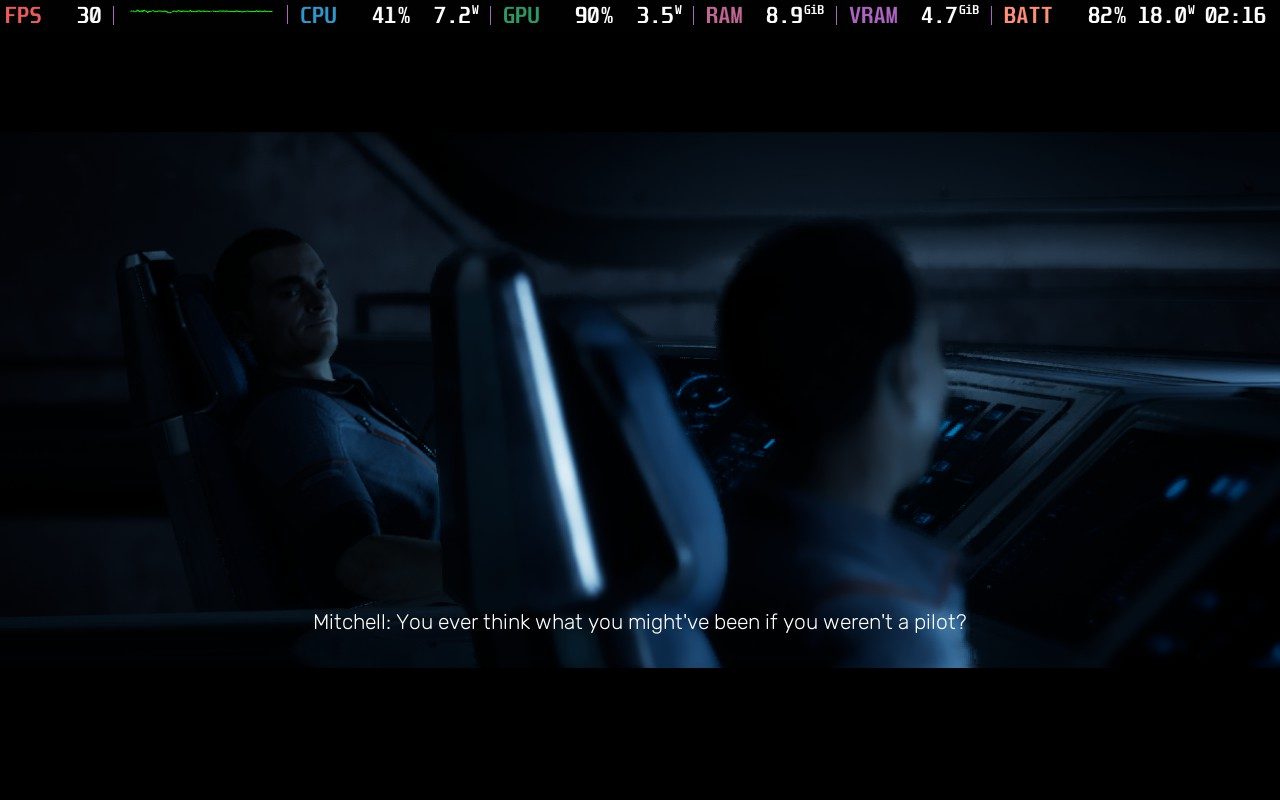
I also wish the system allowed for better jumping around the tree to reach certain pathways more quickly. Even if we go all the way back and make one change in episode 1, we can’t then jump forward into episode two and see how that path would change. It isn’t completely simulated, so you will have to play through the entire game again from that choice to see how the experience would change. This isn’t necessarily a bad thing, since some of these pathways can have huge ripple effects that completely change many scenes later on, but it would’ve been nice to have a quick way to go back and forth to see how that change would’ve affected specific scenes later on without having to play through the whole game again.
For the most part, I would consider the acting and animation great, though I did notice a few lines that felt a little forced or hard to believe. None of it took me too far out of the world, but it was still a little off at times. However, I loved the setting. The team was clearly going for a creepy, atmospheric five that I feel they nailed. Walking through dimly lit corridors, the sounds of clinking, metal and machinery, and the squishy sounds of the alien life form all mixed together in a symphony of horror that kept me on the edge of my seat.
Speaking of which, I would consider Directive 8020 more of a thriller with some horror elements. There were definitely some jump scares, and some later parts of the game genuinely made me wanna take my time to go through it, but the bulk of the game was more interesting than scary.
Another major change introduced in Directive 8020 is the addition of survival-horror stealth mechanics. Instead of just walking around and investigating, there are going to be moments where we have to hide from the monsters trying to find us. The mechanics are sound, so I did find these moments a little on the easy side. There are some tense spots here and there, but with us having a stun baton, it’s very easy to run in the area we need to head to, crouch down, and just wait until the monster recovers so that they don’t immediately come after us again.
These moments weren’t challenging, but it’s hard to deny how cool it was to see how one wrong move could affect the story. Getting caught changes the outcome of the ending, just like how choices will throughout the story, so it becomes more important to focus on making sure you get the desired outcome you want. It’s an interesting thought, but I wasn’t challenged.
Outside of that, there are some puzzle elements, like finding power cores and deciding which spots get electricity and which don’t, but it is ultimately all very simple. The extra gameplay elements felt like and after thought to help immerse us in the interactive story more. This game is an interactive story at its core, so I didn’t expect anything too complex from the gameplay sequences, though some of them felt way too short or forced. I remember going from one cutscene, walking through the hallway for 15 seconds, and then getting another cutscene right after that. That kind of thing happened enough times that I just would’ve preferred one long cutscene. Thankfully, there are larger areas we can walk around to find collectibles that give us more insight into the characters, the mission, and something extra I found quite intriguing.
Ahead of its release, I had the chance to talk to Supermassive Games about running Directive 8020 on the Steam Deck, and they reassured me that this is a game that they want people to be able to play on the go. The performance seems to mimic that for the most part, and I was impressed with what they were able to achieve overall.
With the game on the lowest settings, it will stick to around 30 FPS. It’s important to know that this is a story-driven game with high-quality visuals, and even though shadows can look a little pixelated from upscaling, the quality is still quite high. TSR upscaling on Performance looks great, especially when comparing to FSR upscaling, where there is a lot of shimmering at Balanced and below. FSR quality looks similar to TSR at Performance, but gets worse performance. So, I recommend keeping the upscaling at its default.
Ultimately, I recommend keeping everything at the default with a 30 FPS cap. We can move the quality settings to medium, but it does cost performance later on, resulting in more drops, for minimal visual changes. We will be getting unavoidable drops towards the end of the game, with some gameplay areas and cutscenes getting CPU-bound and pushing the frame right down to the 20s. This is at the default settings, which is already quite low, so there won’t be a ton we can do to avoid that.
And as for the upscaling, even going to FSR on Ultra Performance will still result in major drops throughout the game. There’s no way you can get a consistent 40 FPS, and while I can hit 60 in a few areas, these are far and few. This is a game where the visuals play a big part in the enjoyment of the experience, so I prefer lower framerates with better visuals.
I also tried out frame gen with both the in-game XeSS Frame Generation and Lossless Scaling. XeSS Frame Gen just didn't work for me, and while Lossless Scaling does work and feels ok towards the beginning, the later parts of the game feel awful. And even for the parts that work, there is obvious input lag. It doesn't ruin the game, but it doesn't feel good either, so I just wouldn't recommend it.
Directive 8020 is a solid story-driven thriller that has a few too many pitfalls. I love the story, and it gets significantly better towards the second half, but the first half felt more like a long introduction. The new Turning Point system is a great idea, and it allows easy access to go back and see what we could do differently for another run, which makes it a lot easier to try new pathways. The gameplay itself is a little too simple and easy, but it still has the same emphasis on choices that affect the story. It all works really well, but still falls short in a few key areas.
As for its performance on the Steam Deck, it can do quite well in most areas. The default will be the best way to play, which gives us a good mix of visuals and a decent framerate, but it will get tougher to perform later on. Still, with this type of game, I would consider it competent on the Deck.
このレビューはPC版に基づいています。
このレビューをお楽しみいただけたなら、SteamDeckHQ の他のコンテンツもぜひご覧ください!あなたのゲーム体験に役立つゲームレビューやニュースを幅広く取り揃えています。ニュース、ヒントやチュートリアル、ゲーム設定やレビューをお探しの方も、最新のトレンドを知りたい方も、ぜひご利用ください。
Outbound was provided by Square Glade Games for review. Thank you!
Roadtrips have a certain appeal, and honestly, I wish more video games featured them as a core narrative. While I am not the biggest fan of driving games due to all my childhood trauma of sucking at Mario Kart, they still have a certain appeal depending on the game design.
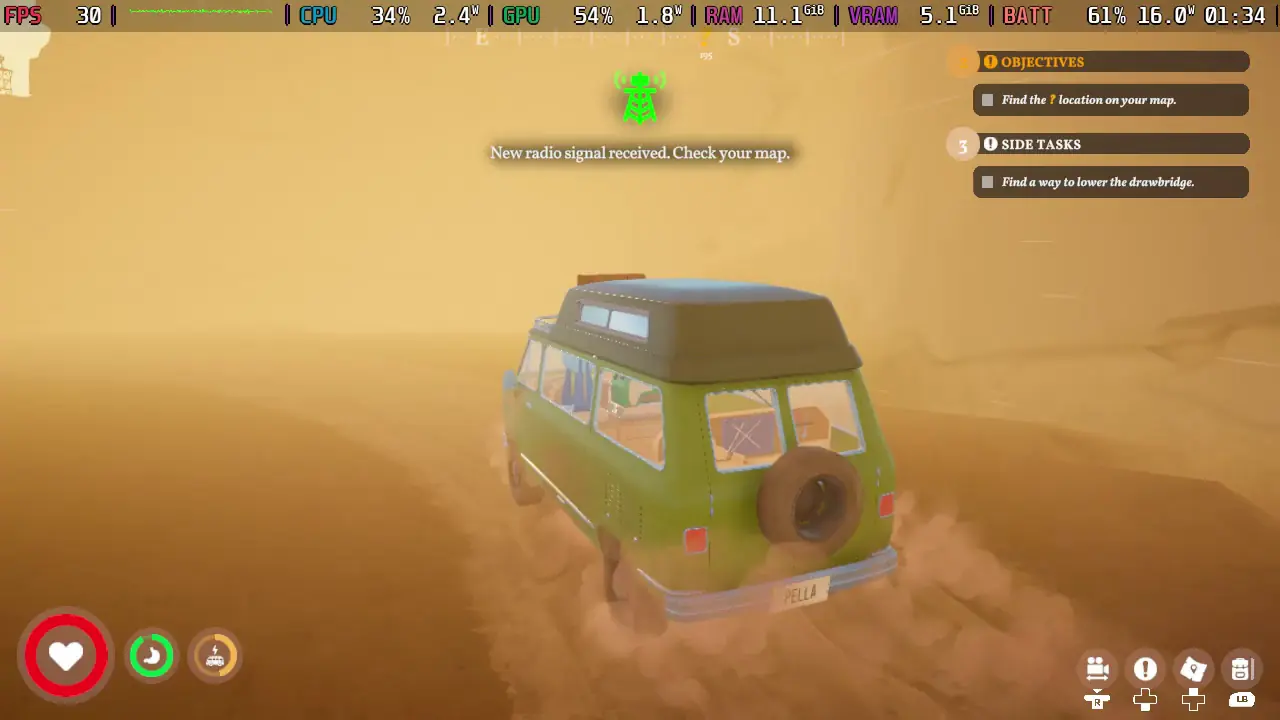
Outbound is a game I’ve been looking forward to for a while, and it is the latest in the cozy driving game genre that is surprisingly big in the market. Pacific Drive, Keep Driving, and Euro Truck Simulator are all games I love, although Pacific Drive is less about wholesome driving and more about surviving an anomaly hellscapes while inside a sentient car. It is like Nightrider on drugs, although it was still one of my favorite games from 2024!
Outbound is developed by indie dev Square Glade Games, and this is their second game after their interesting debut, Above Snakes. Big thanks to them for providing us with review codes, and the greater ambition really shows with this new game. Outbound is a relaxing and impressive experience in both gameplay and design, and it runs pretty well on the Steam Deck, too.
The game blends several simple mechanics together to create a core gameplay loop that somehow makes up more than the sum of its parts. After customizing your character, the goal of the game is to explore the large, open wilderness while surviving and kitting out your RV. That is pretty much the gist of it, mixing exploration, survival, and crafting together into something surprisingly fresh. Now, there are more survival crafting games than there are atoms in the universe, but I love how Outbound keeps its focus. All of these gameplay systems fuel the desire to live in the mountains, with everything moving that state forward.
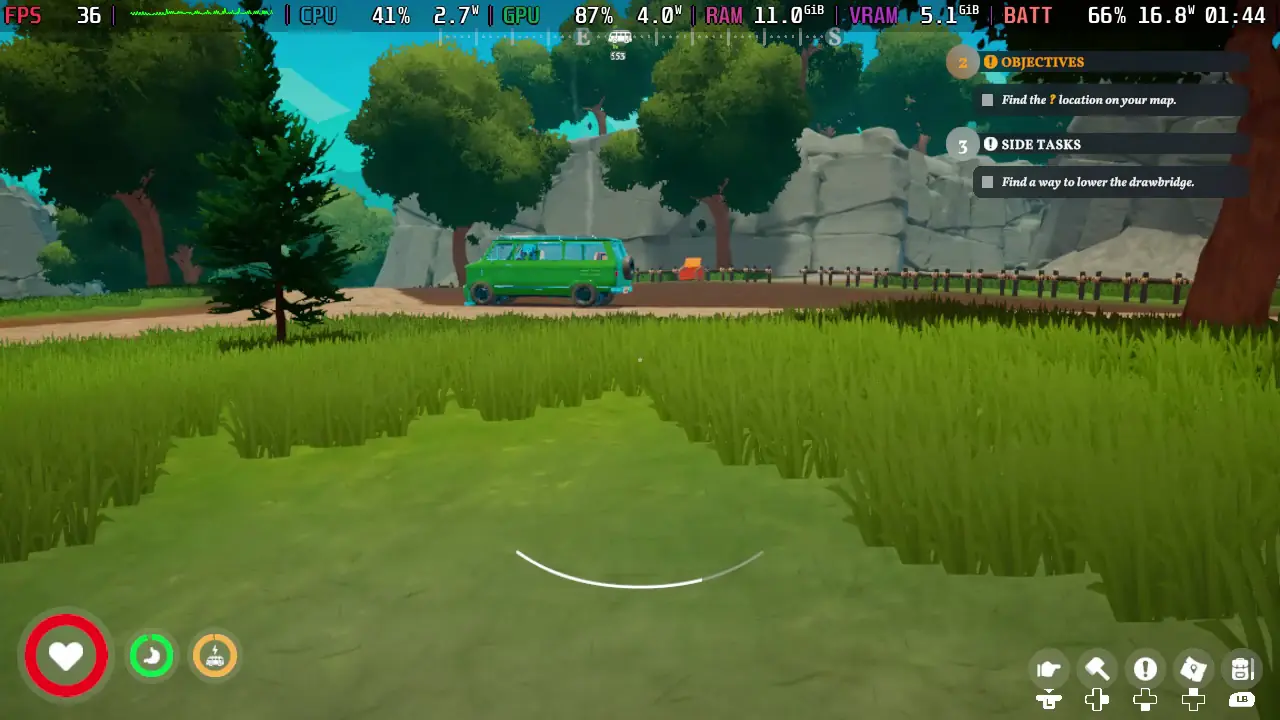
I have been a growing fan of the cozy game genre for years now, and Outbound is getting close to achieving the perfect balance I have been looking for. You explore the map at your leisure, keeping hunger at bay and managing your mobile home. That doesn’t mean there is no challenge at all, as there are obstacles to navigate, including the mountainous terrain and blockades that must be repaired, such as repairing broken bridges.
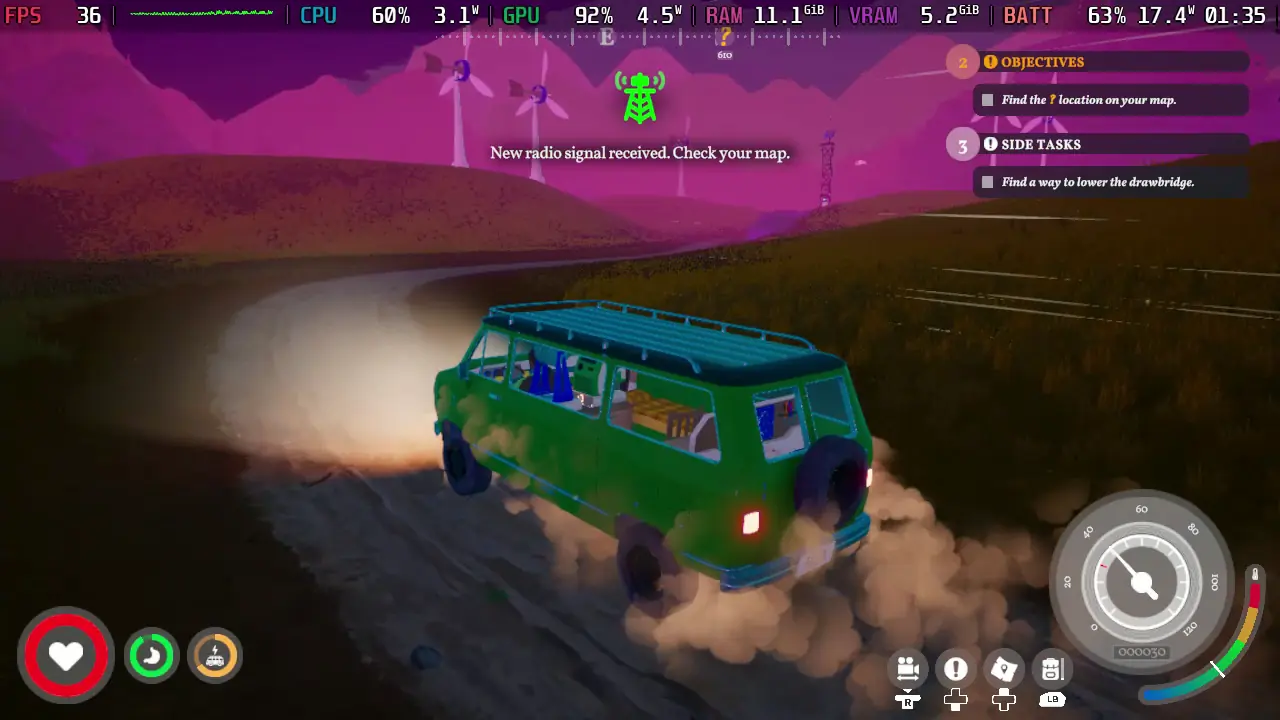
Outbound hasn’t got the common pitfall in these games where things are so relaxing that they sacrifice progression, which is great. Give me something like Hardspace Shipbreaker, where I can die by falling into a furnace or by suffocation, at least with a small risk. By climbing towers and accessing download points across the map, you can get a vision of locations and download blueprints. The latter is randomized to a degree for added replayability, unlocking a ton of things you can build in your mobile home to make your new life easier. It’s a great gameplay loop.
The visuals are rather pleasant to look at, although I didn't expect something like Crimson Desert. The rolling hills, forests, and rivers are enjoyable to explore, and the sound design is also very immersive. Camping by a river while listening to the rushing water and the crackling of a bonfire is just glorious. It is the little things in life I enjoy most, and I think Outbound does a solid job of making things relaxing without boredom. The survival mechanics are fairly light in terms of food and health management, and while you do need to keep an eye on them, they aren’t particularly punishing either.
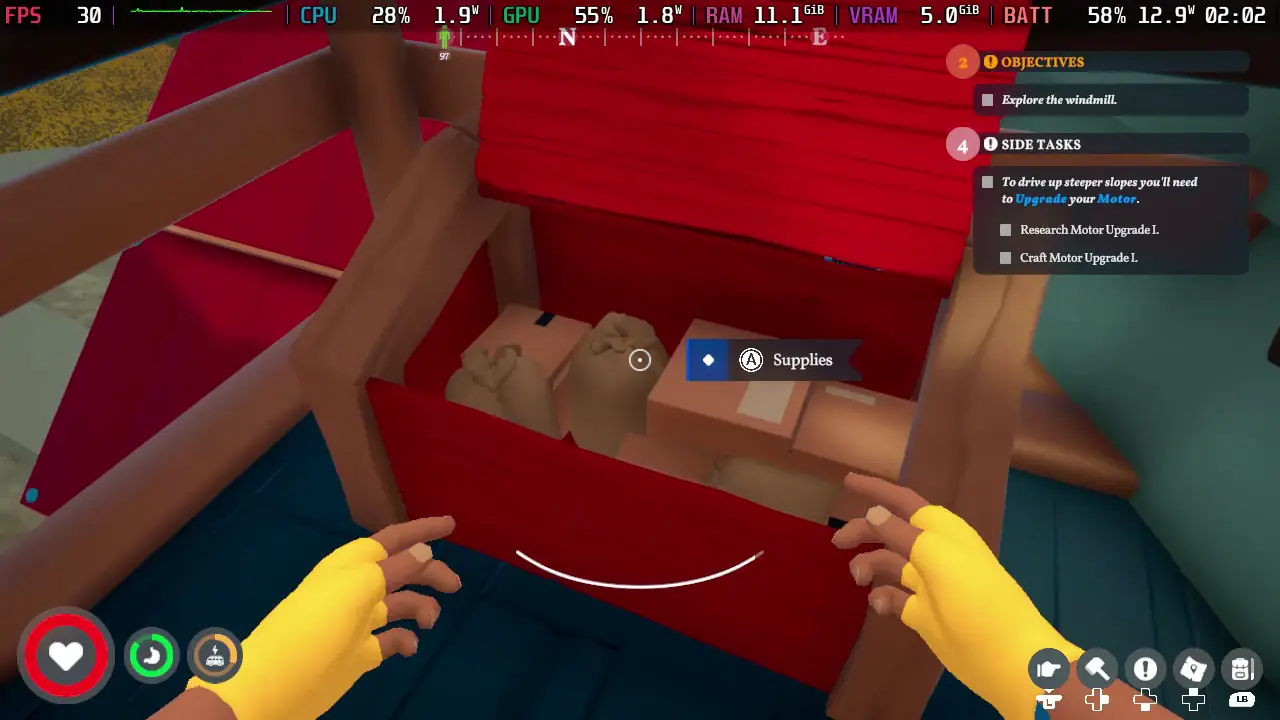
While I enjoy the core gameplay, all this exploration and vibing in the wilderness come with a small cost: narrative. You can make your own character and explore, but I didn’t really get much in the way of a story while playing. That’s not a big issue, to be honest, but it was something I had to note. My guy has a very annoying habit of voicing his internal monologue whenever I do anything even remotely noteworthy. While entertaining the first few times, it got grating the thirtieth time he said ‘A perfect spot to set up camp’, only for me to just drive past the camping site. Fortunately, you can mute the voice narration, which helps.
This is only a minor problem in the grand scheme of things, and I'm a grumpy old man. The casual mix of survival, crafting, and base building while taking that home on the go is a wonderful thing that more games need to do, and the atmosphere in Outbound, combined with the core gameplay, makes for a deeply absorbing experience.
Ahead of its release, we did get more information about Outbound‘s performance on the Steam Deck. Based on the default settings from the developer, it was estimated that it would run between 30 and 40 FPS. This is something I really appreciated, since most developers will just stand by the verified badge they get from Valve and not go into details about how it actually runs on the Deck.
So, I went in with realistic expectations, and their estimates were primarily accurate. With the default settings, which include low settings with a medium level of detail and 100% render scale, it sticks between 30 and 40. I also noticed that when looking in certain areas while walking around or driving, there is some throttling where the framerate could drop down to 22 FPS temporarily. I also tried bringing down the settings to their lowest to see how high we can get the frame rate, and while there are a lot of spots that hit 60 FPS, it fluctuates down to 40 consistently. And with the sacrifices to visuals, I wouldn’t consider it worthwhile.
I also noticed that the shadows on the default setting, which is on low, flicker a little bit. This can be fixed by bringing the shadows up to medium (default), but the throttling appears more often. On top of that, battery drain will go up in most scenarios, causing more drops. So, I would say keeping them at low levels will be the best for playing on the Deck.
For the most stable experience, I recommend keeping everything at the default, but turning the rendering scale down to 90%. This keeps the game looking great without the frame rate fluctuating downwards. This, coupled with a 30 FPS cap, makes it quite playable and enjoyable with solid visuals. This is going to be the most stable way to play while minimizing the number of times the framerate throttles. The battery drain will fluctuate, but generally stays on the higher side, so I wouldn’t expect more than three hours of battery life with the game.
Outbound is available in English, French, German, Italian, Spanish (Spain), Polish, Portuguese (Brazil), Russian, Simplified Chinese, Traditional Chinese, Turkish, Spanish (Latin America), Japanese, Korean, Ukrainian, Dutch, and Indonesian. That is a lot of languages supported, although only English has full audio support for the time being.
Outbound is blessed with a large number of accessibility options. There is full controller support with the ability to change keybinds, v-sync, and anti-aliasing, render scale, and change language. There is a dedicated accessibility page with further options, including the ability to adjust or turn off narration, UI scaling, camera animations, flash effects, and the day/night cycle can also be freely changed.
Overall, this is a great mix of options, although there is a lack of colorblind support in the game for now.
Outbound is the equivalent of sitting in the countryside during late summer, knocking back a cold drink with ice, and relaxing while watching the sunset. This game may have the guts of the usual survival and crafting games that crop up all the time, but Outbound has done a great job avoiding many pitfalls in the genre.
The combination of mobile base building, relaxing atmosphere, and exploration turns Outbound into something much greater than the sum of its parts. I’ve played games with better base building and more engaging exploration, but there is something about taking your home with you wherever you go that appeals to me. The performance can be a little rough at times, and the lack of focus on story is noteworthy, but Outbound is a great experience, whether solo or co-op.
このレビューはPC版に基づいています。
このレビューをお楽しみいただけたなら、SteamDeckHQ の他のコンテンツもぜひご覧ください!あなたのゲーム体験に役立つゲームレビューやニュースを幅広く取り揃えています。ニュース、ヒントやチュートリアル、ゲーム設定やレビューをお探しの方も、最新のトレンドを知りたい方も、ぜひご利用ください。
Tides of Tomorrow was provided by THQ Nordic for review. Thank you!
After playing a couple of preview builds for Tides of Tomorrow, I was curious to see how the full game took advantage of its unique narrative storytelling, whereby players follow in the footsteps of those before them, and in turn, get a chance to influence the events of other players who decide to follow their footsteps. I wasn't convinced it was used to full effect in the preview builds, but I couldn't wait to try the full game.
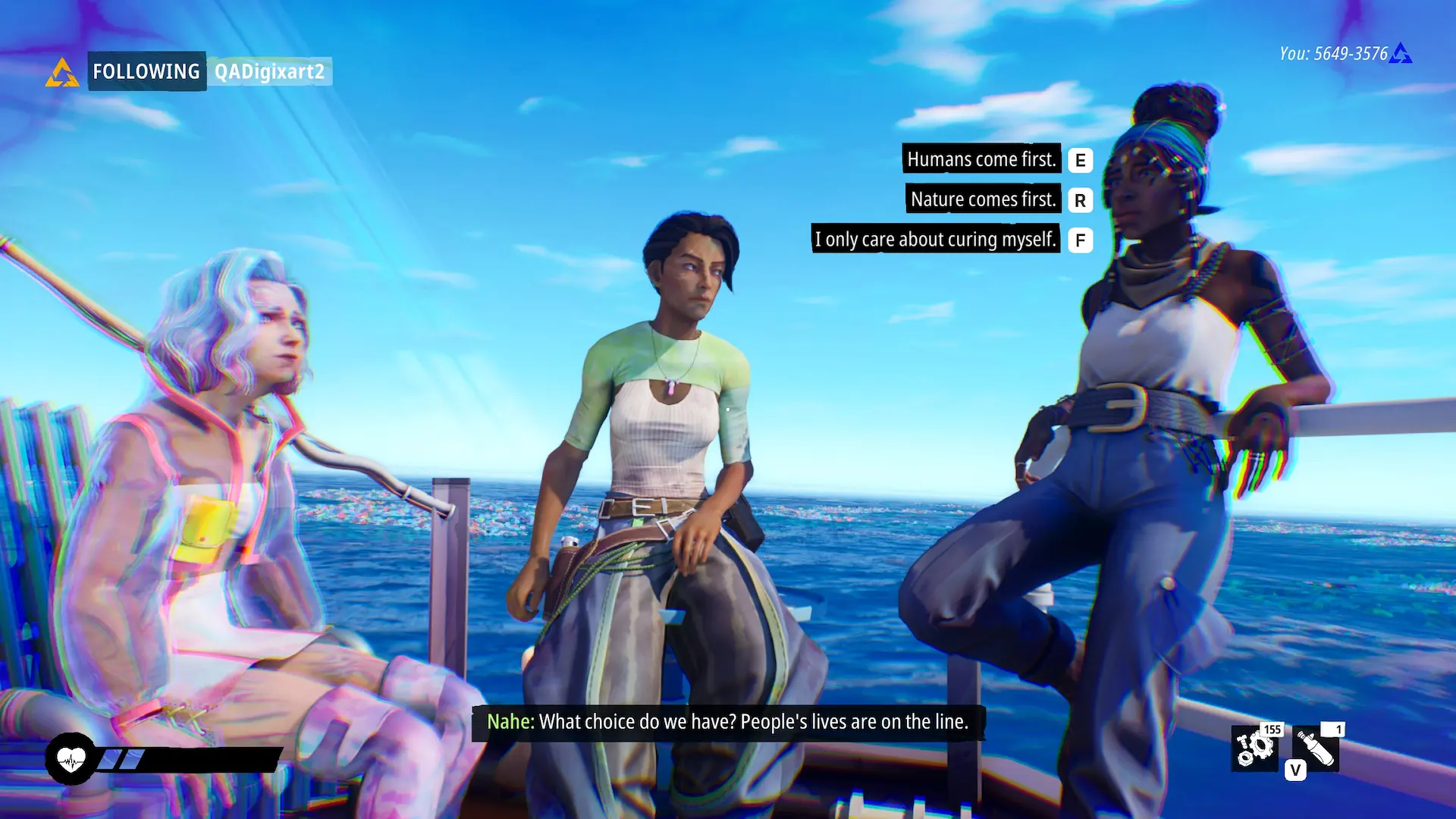
Tides of Tomorrow leans heavily on its narrative, unsurprising given that the developer's last game was Road 96, a very narrative-driven game. Fortunately, the story holds interest throughout and gradually gets you more emotionally involved as we progress. In a world infected with a disease called "Plastemia", where the entire population of the Earth is slowly dying, Ozen is the one medicine that staves off the symptoms and is prized by all the factions in the game. As a "Tidewalker", you are prophesied to find a cure for Plastemia and bring hope to mankind.
The game isn't too long, taking around 6 to 7 hours to finish. It partly depends on how many side missions you take and how many true characters (named ones that affect the story) there are, but keeping the game and characters relatively modest in scope, along with the solid voice acting, helps them really flesh out the story and the personalities of each.
While not political in nature, Tides of Tomorrow does feature an "ethics" system, whereby the choices that you make will push you towards certain ethical leanings, such as favoring nature over mankind or prioritizing yourself over others. The main characters you interact with tend to fall within these categories. For example, Eyla is very pro-nature, and she'll like you more for making choices to protect animals and the planet ahead of mankind. The choices you make affect your relationships, and ultimately, the fate of the world.
Which brings us to the main pull of Tides of Tomorrow, the "Online Story Link". It allows you to follow another player's footsteps, with their previous actions either helping or hindering you. It's a neat system, and it's used to varying effectiveness throughout the game. You get to choose a person to start your adventure with, either from a global list, your friends list, or a specific number/seed to follow. If you do reach an area they haven't played through, the game will switch you to another player to follow.
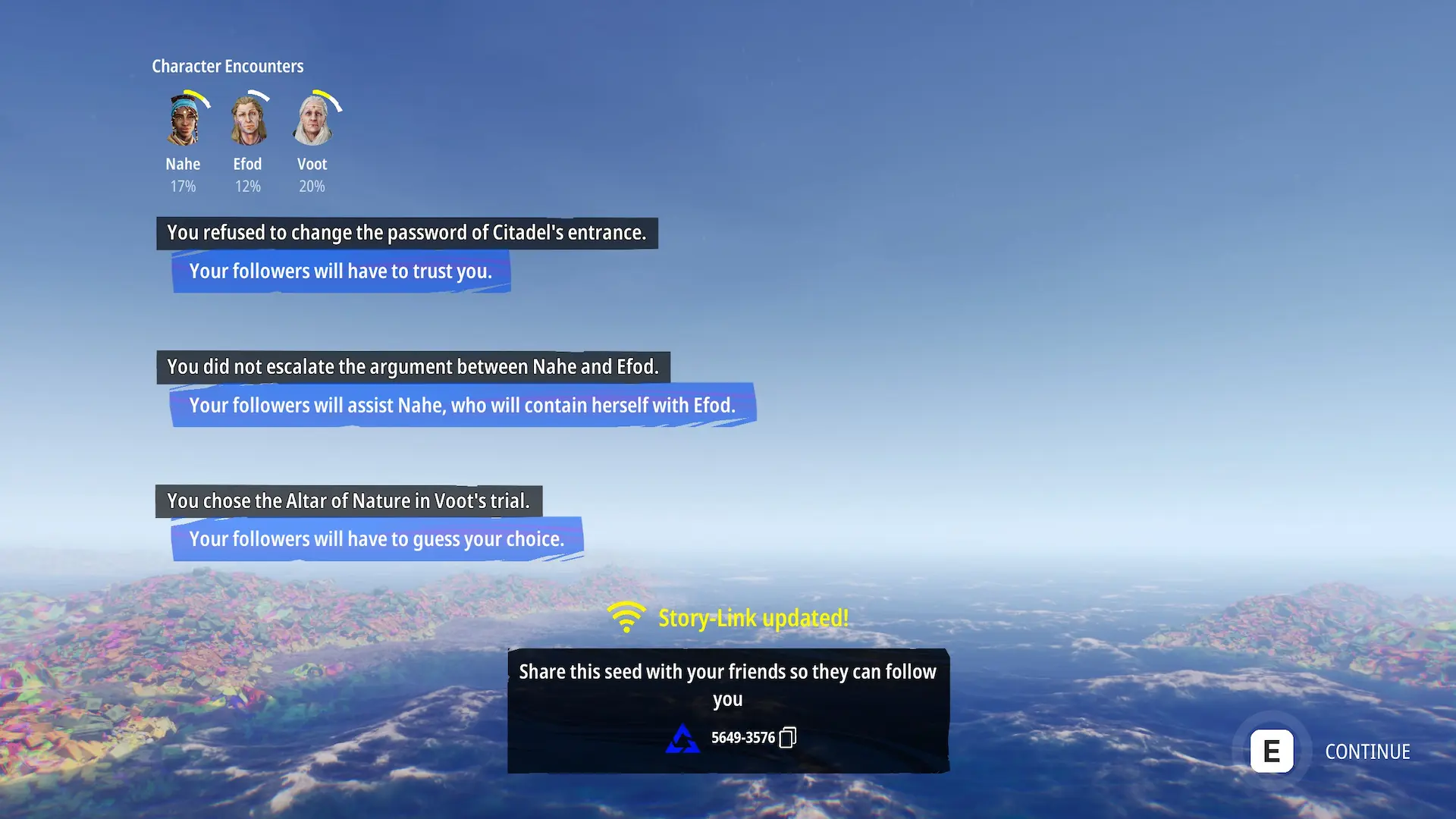
Sometimes, this system works really well. Before you follow a player, you do get a preview of their primary ethics, so you have an idea of whether they have been antagonistic or friendly with NPCs on their playthrough. You'll also get an idea of whether or not they play cooperatively or play for their own survival, which can give you an indication of whether or not they have left resources behind for you.
Don't expect to see the entire game in one playthrough. Tides of Tomorrow is designed to be replayed, with different choices and following different players each time, which can affect the world around you. If you follow a player who annoyed certain NPCs, for example, they will be more confrontational and less helpful in your playthrough, and the opposite if the player you are following was kind and helpful.
Ozen is in limited supply, and it becomes rarer as the game progresses. You will gradually lose health as you progress, so managing your Ozen becomes very important. You can give it away to future Tidewalkers who follow you, you can use it to replenish your health, or you can give it to NPCs for rewards. Following a player who is stingy with their resources can be a tough challenge, whereas following a more "cooperative" player makes your life a lot easier, as they are likely to have left Ozen behind for you, or at least Scrap with which you can buy Ozen.
There are also "visions" left behind by the player's actions. This is where I feel the game under-utilizes a bit. It feels like there are periods of the story that heavily use this feature, and other periods where it's hardly part of the game at all. I definitely had around an hour of playtime (about 15% of the game) when I never used it, and then at a point when I had to use it 5 times in 5 minutes. Sometimes I even forgot it was a part of the game.
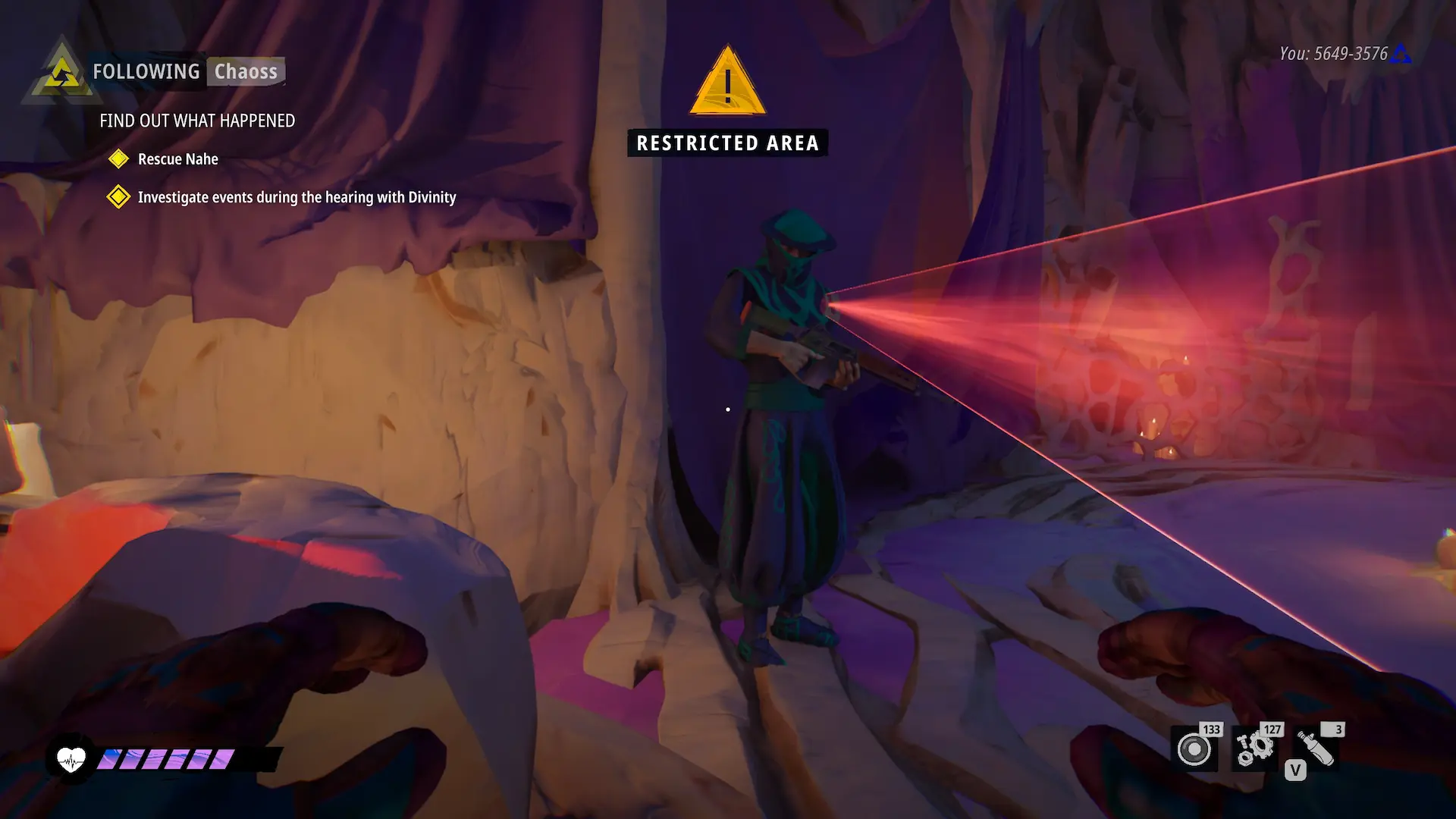
The "gameplay" itself is fairly mundane. Most of the time, you are walking around the game's floating outposts, occasionally doing some platforming and interacting with NPCs. There are some stealth sections, which I wasn't a fan of; the AI has a very limited line of sight, and sometimes movement doesn't respond as you wish. You'll likely get through most of them without being caught once. The only combat in the game is ship-to-ship combat, and that mostly consists of driving around behind a ship while it fires cannons at you that you must avoid, while periodically firing your own cannon back. It's simple, it's easy, and fortunately, it represents a tiny portion of the game.
Tides of Tomorrow is a narrative-first game, and it has a great narrative. The gameplay is on the weaker side; there's not much excitement here. The Online Story Link spices things up and adds some variety, and it does weave into the plot a little, which enhances it, but it takes a little while to find its stride.
Tides of Tomorrow has great controller support and supports 1280x800 as a resolution, so there are no issues with the basics.
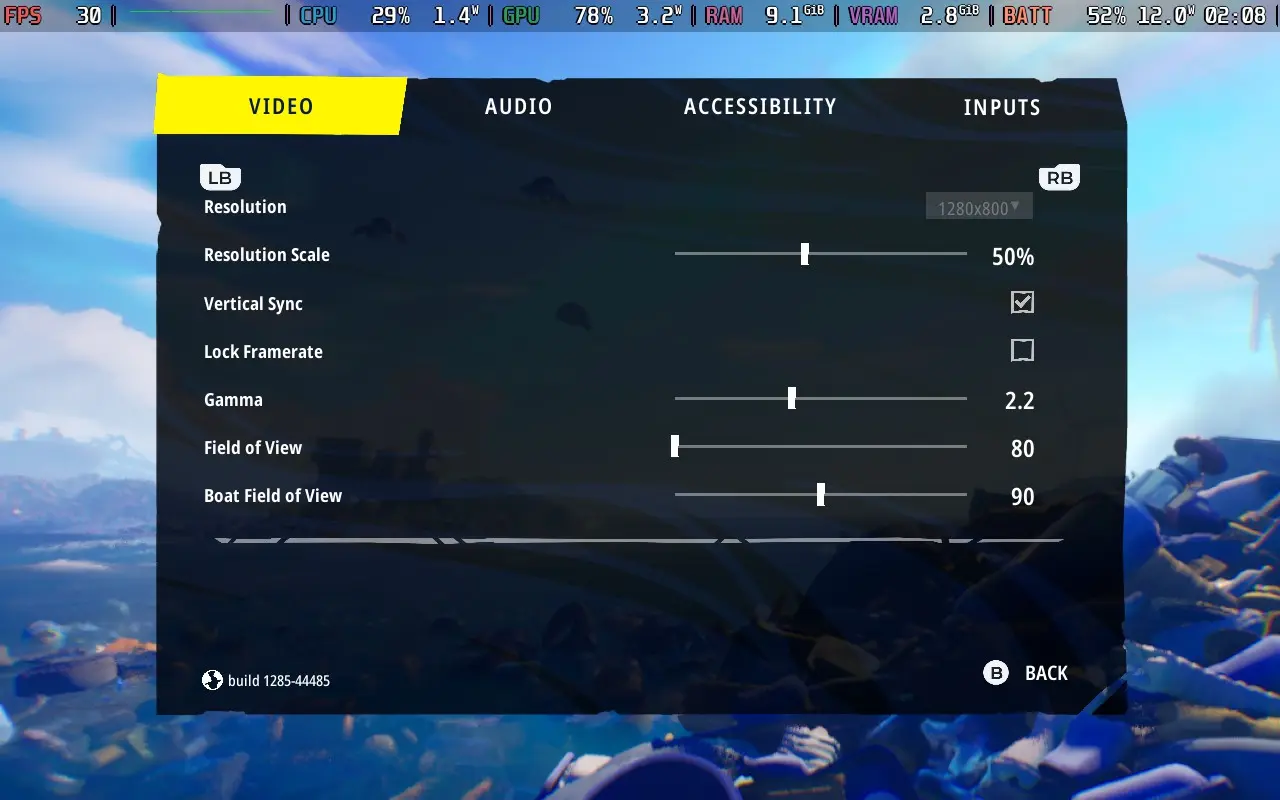
As far as graphical settings are concerned, the game doesn't have many settings to choose from, with the only option available being Resolution Scaling. By default, this is set to 56%, but I lowered it to 50% in my playthrough because it gains a couple of extra FPS, which helps. Lock the framerate to 30 in SteamOS as well.
When it comes to performance on Steam Deck, unfortunately, Tides of Tomorrow is highly variable. Certain areas, crucially the areas that contain the small amount of action that the game has, tend to run at 30 FPS, or at least close to. Crowded areas, such as bars and the market, frequently drop to around 20 FPS, but these tend to be free-roam moments with little action or reaction time required.
The absolute worst-performing moment was an ocean event I encountered during a storm, which caused RAM/VRAM usage to spike and pushed the FPS down to around 12-14. I was able to complete the event, but it was an unpleasant experience, and you may want to skip the "Storm" event if you're playing on a Steam Deck. I had to quit the game and reboot in order to get the RAM usage down again. Generally, though, events on the ocean run well on the Steam Deck, due to the limited characters.
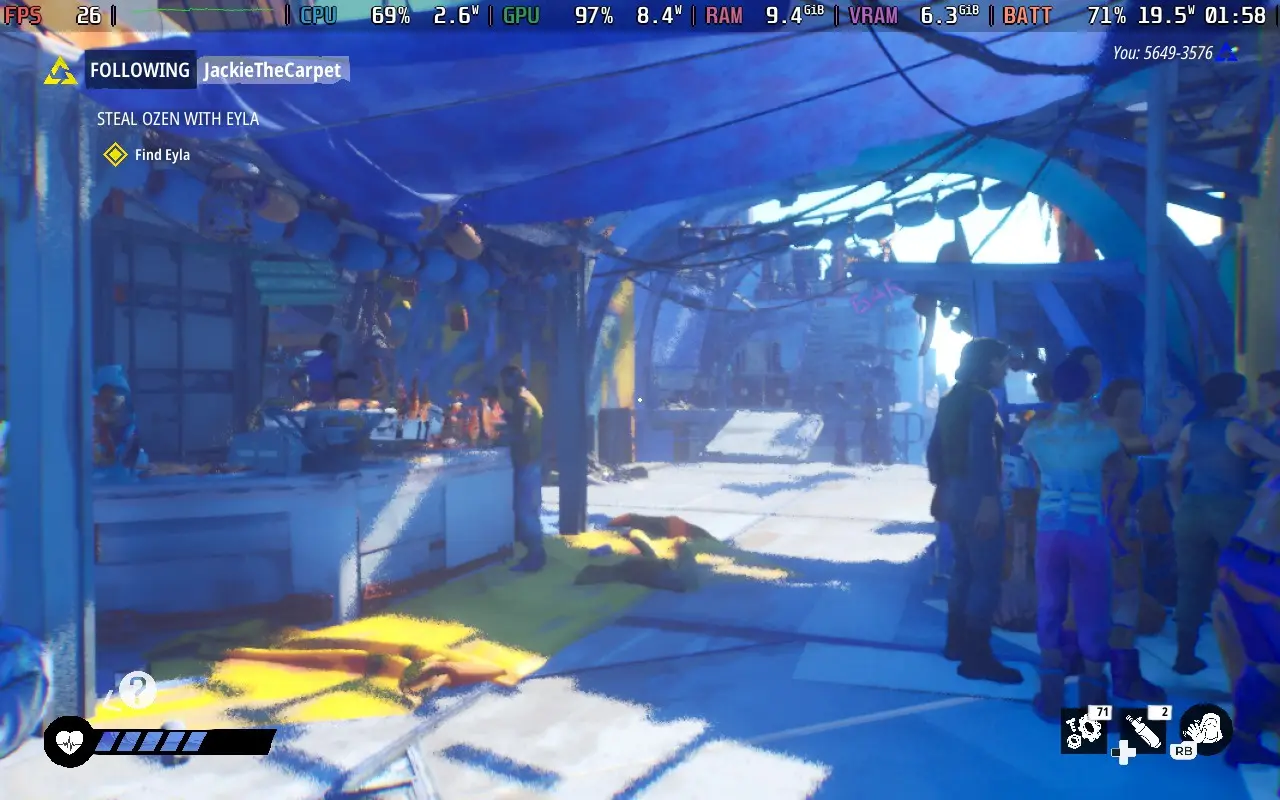
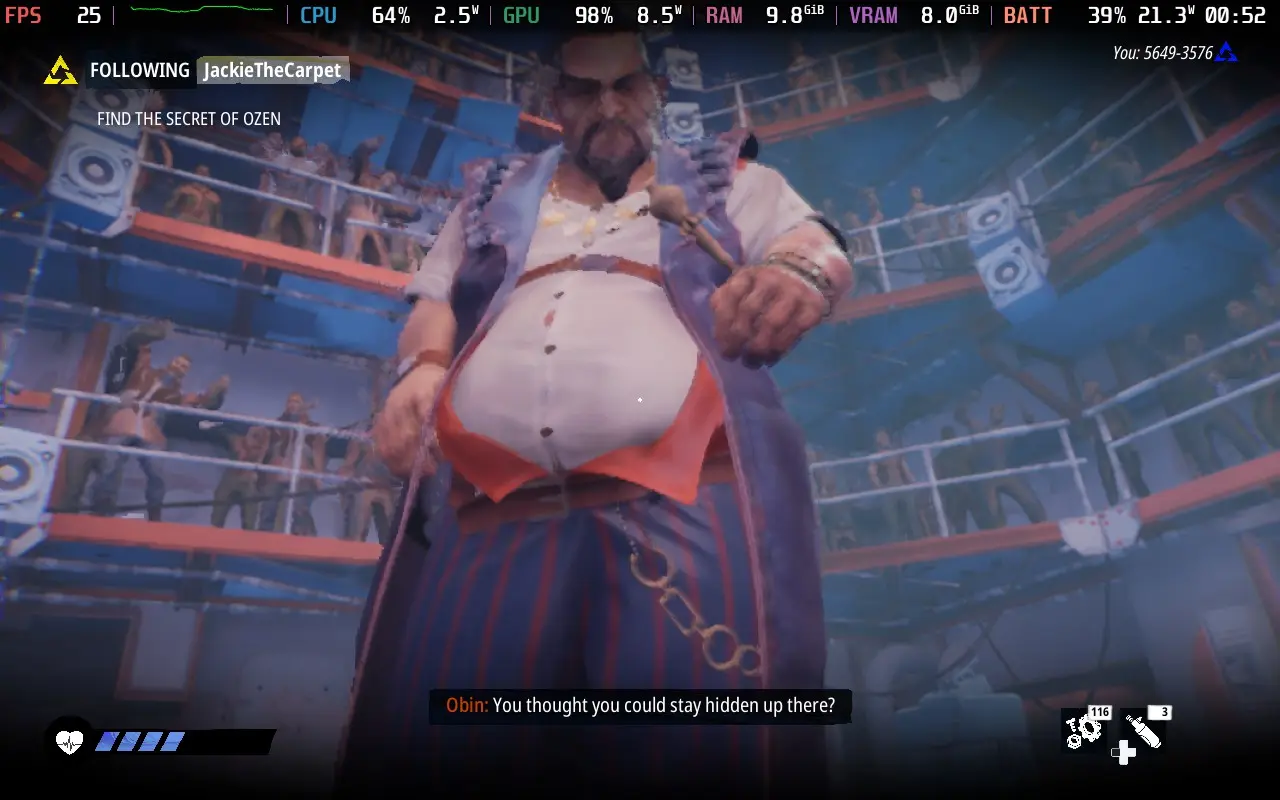
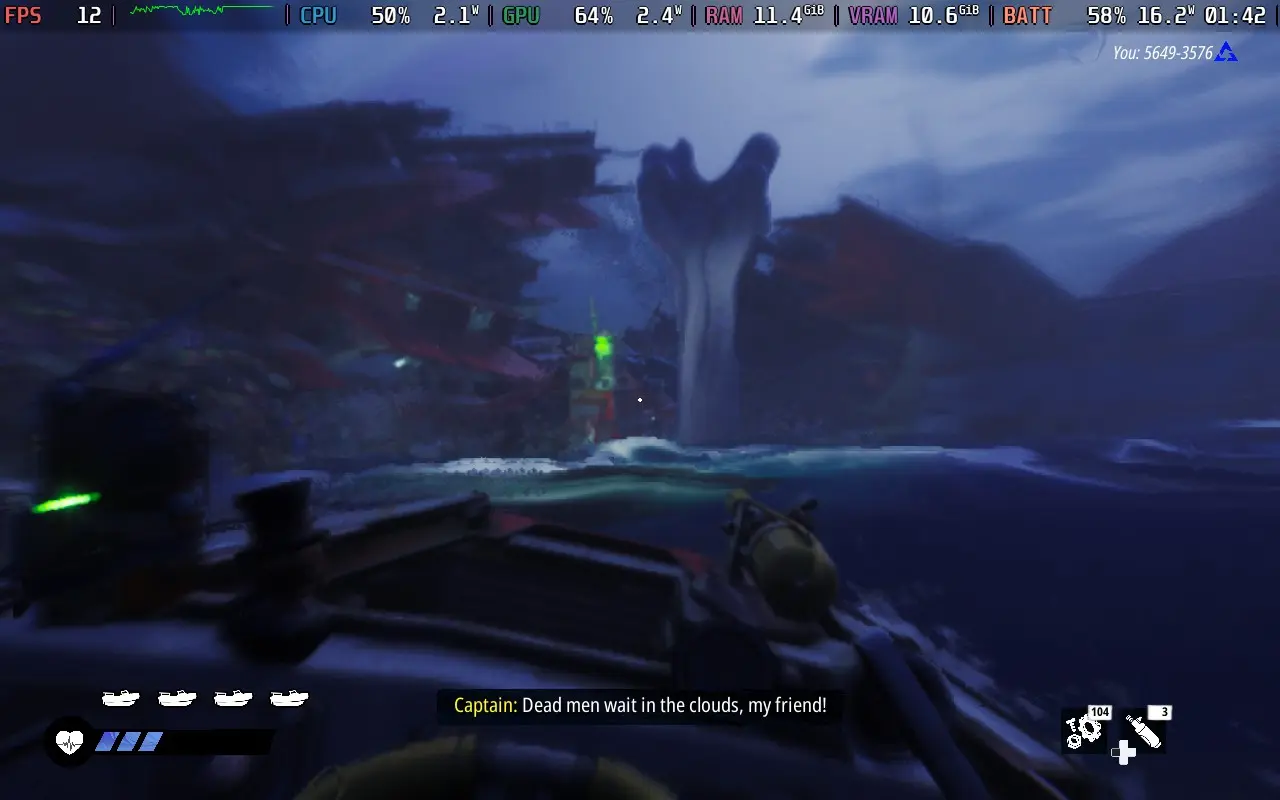
Power draw is on the higher side, being around 17W-20W, with temperatures being around 65 °C. Expect a battery life of about 2.5 hours on a Steam Deck OLED, and around 1.5 hours on a Steam Deck LCD.
Tides of Tomorrow supports subtitles (with adjustable size), as all dialogue is voiced, and it also features color-blind filters. You can also disable camera shake/wobble effects.
Tides of Tomorrow has a strong, intriguing, and ultimately emotional narrative that makes it worth experiencing. The gameplay sections are merely a vehicle to keep the narrative moving, and while they aren't the most engaging, they do their job. And while the Online Story Link system does elevate the gameplay and impact how you approach the game, it can fade into the background. However, the story feels impactful and engaging enough to keep you going despite the setbacks.
Performance on the Steam Deck is, sadly, rather poor, and I would recommend playing the game on a more powerful device. The RAM/VRAM usage gets so high that it borders on crashing, and performance in parts of the game is simply unacceptable.
このレビューはPC版に基づいています。
このレビューをお楽しみいただけたなら、SteamDeckHQ の他のコンテンツもぜひご覧ください!あなたのゲーム体験に役立つゲームレビューやニュースを幅広く取り揃えています。ニュース、ヒントやチュートリアル、ゲーム設定やレビューをお探しの方も、最新のトレンドを知りたい方も、ぜひご利用ください。
When I first played Death Stranding when it came to PC back in 2020, I really liked Kojima’s bold and unconventional approach to the gaming industry. But even though the story was great and engaging, the gameplay felt too experimental. Now, one year after the initial release of Death Stranding 2, PC players can finally embark with Sam on a new journey filled with even more struggles, more content, and that signature Kojima-esque insanity, improving upon the experimental nature of the first game.
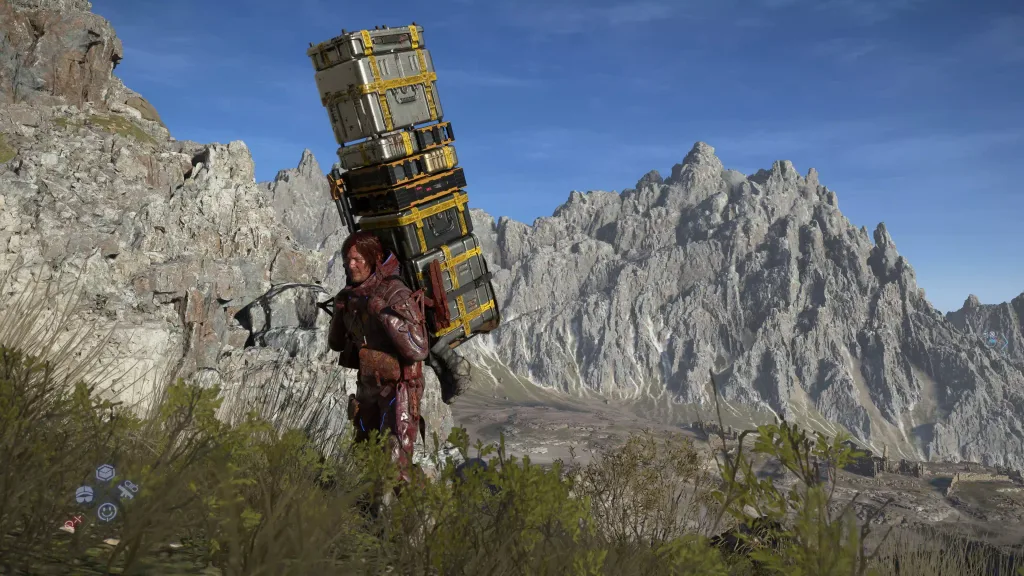
From the moment the game begins, you're thrown into one of gaming's most expansive atmospheres. A massive, mountainous landscape with almost photorealistic graphics, a goosebump-inducing soundtrack, and a strong sense of freedom. The game lets you know that you are about to embark on a journey that is going to be very special and truly one of a kind from minute one. No game has made me feel this excited and blown away right as we get past the main menu.
The story is set shortly after the first game. Sam has connected all of the UCA, saved the world from extinction, and moved on from his past life, now living a simple, quiet life with his former companion, now daughter, Lou, in a shelter near the Mexican border. But as you might expect, not everything goes according to plan, and he is forced back into his old porter life, this time in Mexico and Australia.
While the game’s narrative retains the predecessor’s mysterious, deep tone, it feels more grounded and clearer, thanks to more action-packed cinematics and a less confusing plot. This is a huge improvement, as almost half of the world’s lore in the first game was delivered through holographic, often dull dialogue. Now, you have clearer goals and more engaging conversations. The sense of loneliness that defined the first game is largely gone as well. This time, you have a crew and masterfully written new characters to accompany you.
Kojima’s infamous, unfiltered, awkward yet fun style also remains, but it feels less out of place and more organic this time. These “what the hell is this?” Kojima moments don’t disrupt the overall serious tone of the narrative; instead, they add a unique signature from the master himself.
The only criticism I have is that the overall story structure feels a bit too similar to the first game. Nevertheless, it’s still one of the most engaging scripts I’ve ever experienced in a video game.
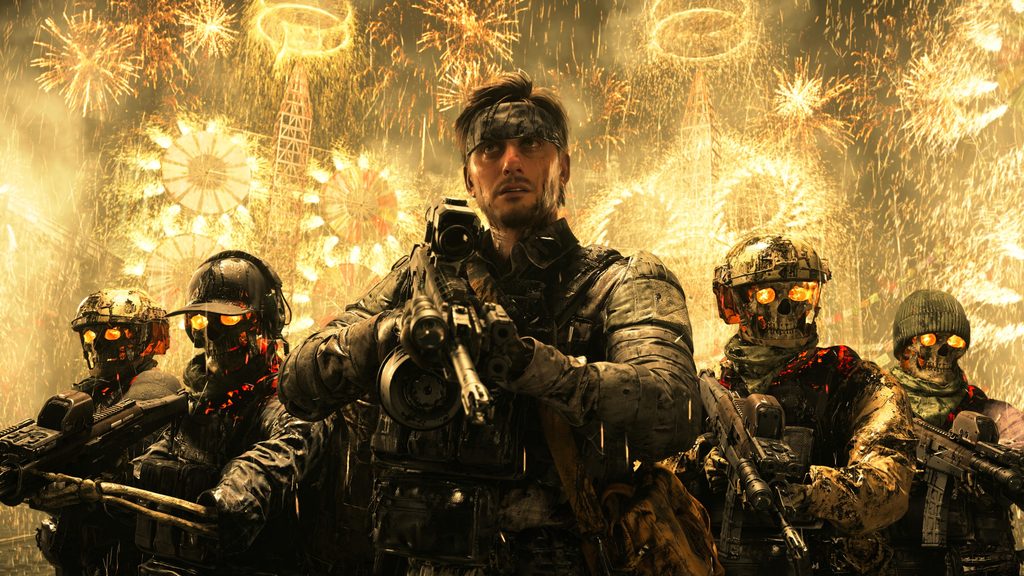
I’m just going to say it without any exaggeration: the graphics in Death Stranding 2 are the best I’ve seen so far. Nothing else comes close. The attention to detail, lighting, and facial features is unmatched in the industry. It feels like mind-blowing witchcraft.
We already knew Decima was a powerful, optimized engine, but seeing this level of almost-photorealistic visuals feels genuinely surreal. Thanks to the game’s new day and night cycle, you can fully experience the beautiful sunny environments, gorgeous sunsets, and the insane blue neon chiral lights at night in every scene. The art direction and design team also deserve praise for turning post-apocalyptic Australia into a vast, incredible playground for us to explore every inch of. The motion-capture performances from well-known actors further enhance immersion, making this the most visually stunning game out there.
Much like its predecessor, the soundtrack and sound effects are also incredibly well done. The BT horror area audio design, in particular, has improved so much that it single-handedly turns these sections into a full-on horror experience. It's flawless.
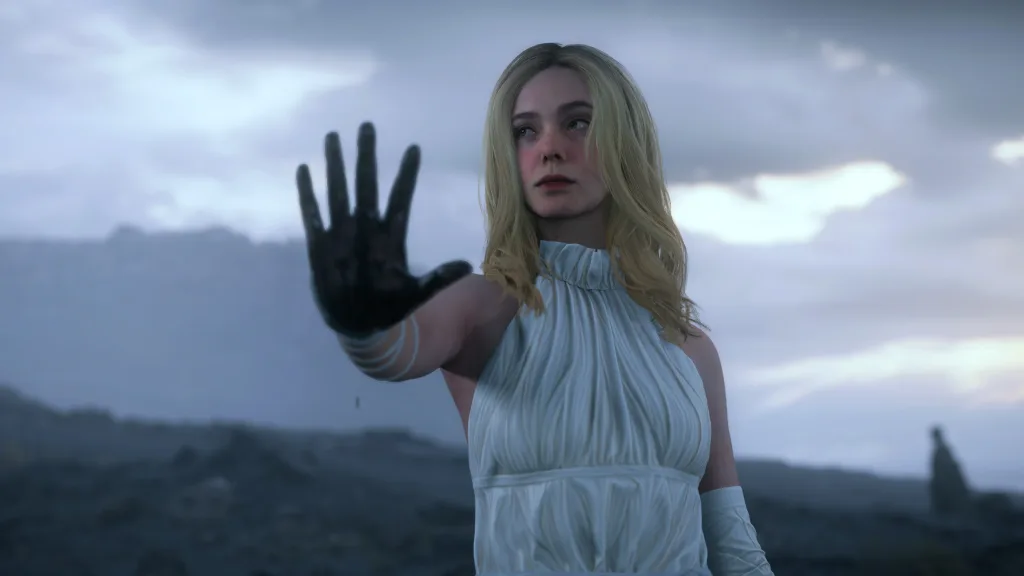
The most radical and pleasantly surprising change in terms of gameplay is the main story design. In the first game, much of the experience embraced the walking-simulator and cargo-delivery style, while action, stealth, and horror mechanics felt like they were sprinkled in just to keep players from getting bored. In Death Stranding 2, it’s the complete opposite. Almost every main order turns into an encounter-driven sequence, while the traditional “delivery style gameplay loop” is mostly optional.
I’m actually one of the few people who enjoyed the delivery struggles, careful planning, and overall porter-style gameplay, but even I prefer the action-packed approach this time. The main reason for that is the new variety of enemies, which was nearly non-existent in the first game.
Instead of the classic “human enemy,” “a BT,” and “a large boss BT,” we now have a whole arsenal of different enemy types. There are countless BT animals, new BT variants such as Watchers that can see you, and dozens of different mech enemies and bosses. It all feels incredibly rich. And each type of enemy requires its own specific approach, tactics, and weapons, so the original “pre-planning” magic is never lost. If anything, it’s amplified in a different way.
There are countless new weapons, fun and useful tools, transports, customization options, and a massive new talent system that are unmatched in the industry. The new day-and-night cycle adds another layer, with different wildlife and stealth possibilities, along with new natural hazards and much more. The gameplay feels truly alive and fun. The game also offers more dialogue options and lots of fun Kojima-esque mini-games. It feels impossible not to get hooked thanks to the incredible amount of improvements and unique content.
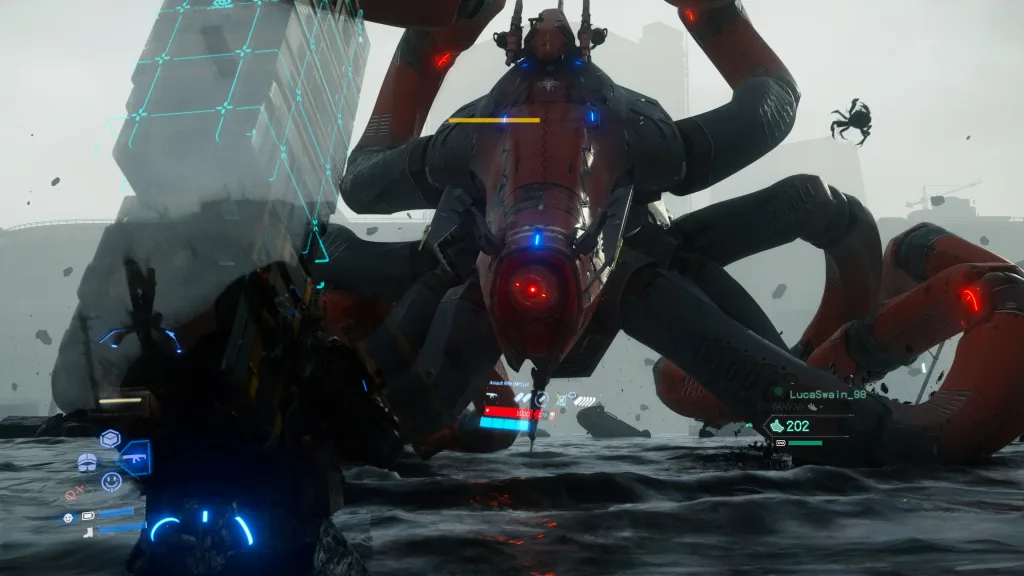
One more thing I need to highlight is the boss fights, because they are genuinely exceptional. After the bullet sponge, amateurish encounters of the first game, DS2 takes a sharp U-turn and delivers some of the best-designed boss fights I’ve seen in years. Each one feels closer to an MMO raid boss, with unique mechanics, strategies, and even puzzle-like elements you need to figure out. They all feature clearly readable attack patterns and hidden weaknesses, rewarding observation and adaptation over brute force.
Especially on the new “To the Wilder…” difficulty, you’re pushed to refine your muscle memory and come prepared. Instead of relying on bloated health pools, bosses hit incredibly hard, often taking you down in just two hits. But because every attack is avoidable with proper positioning, timing, and tactics, the challenge feels fair rather than frustrating, making each victory satisfying.
However, the PC version came with some new features that the original release never saw. The best part exclusive to the PC version is the new “To the Wilder…” difficulty option. Unlike other difficulty settings, once you choose it, you can’t change it. Honestly, it feels like the best way to experience the game.
The spike in difficulty mostly affects the more realistic, simulation-focused aspects. Combat and stealth are largely unchanged. This means you’ll lose your balance more easily, your stamina and battery drain much faster, and natural hazards affect you more severely. If you don’t like auto-piloting through even the walking simulator sections and prefer to stay engaged, I highly recommend giving it a try. You won’t regret it.
The online section of the game largely remains unchanged, with the only new addition being the Aid Request system. If you want something to be built or need specific materials, you can place a request sign anywhere on the map, and other players can help you. Other than that, seeing and using other players’ useful structures still feels awesome. Linking your zip lines with those of other players especially amplifies the sense of “connection” to a whole new level. It was an awesome feature, and it still is.
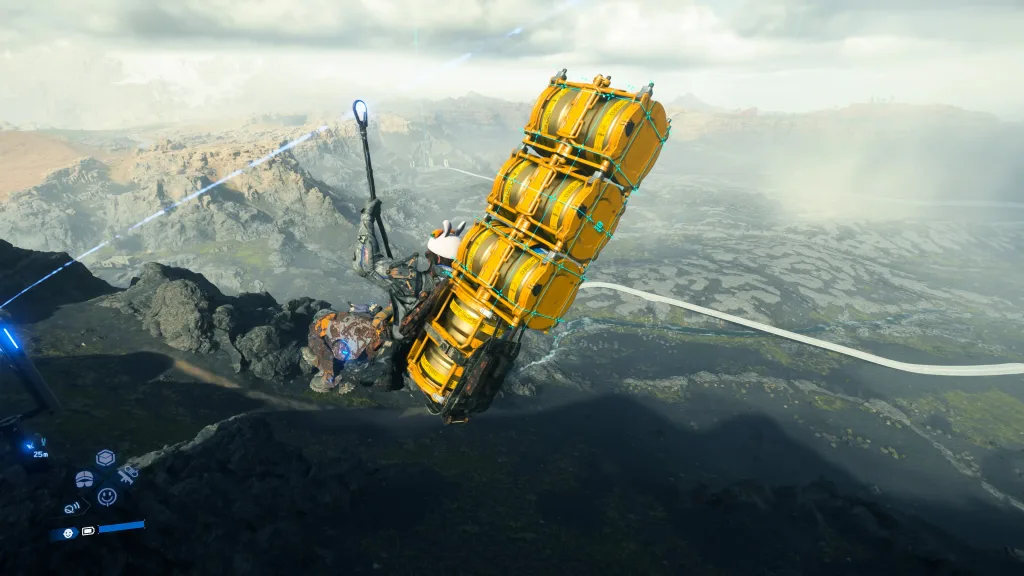
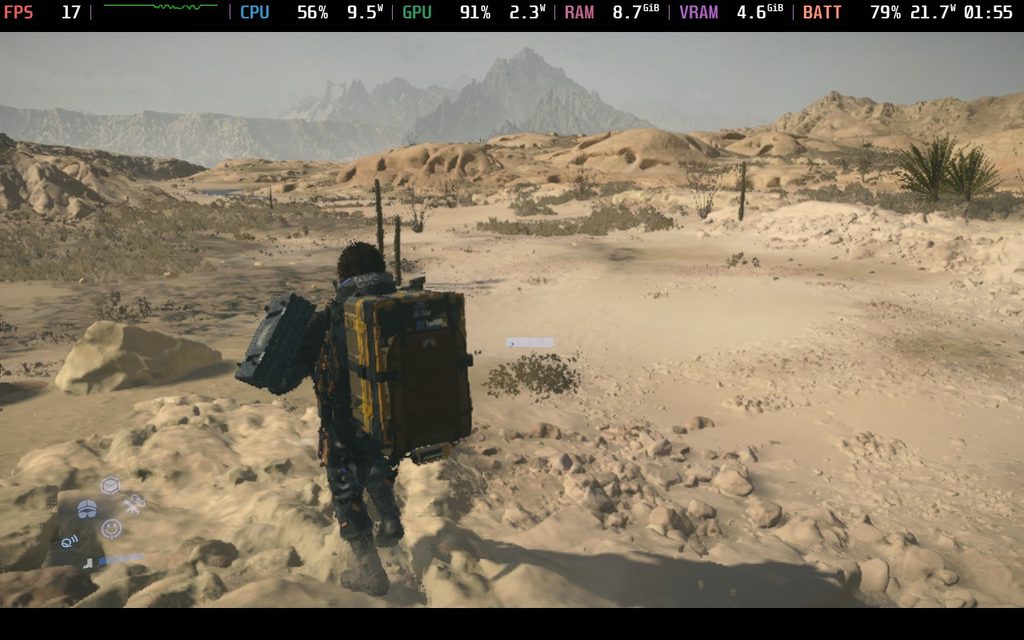
When I first opened the graphics settings for Death Stranding 2, I saw a “Portable” preset and got really excited. But once I applied it and jumped into the game, I was met with a massive disappointment. Even with upscaling set to Ultra Performance, the game struggles to reach 30 FPS outside of cinematics, mostly hovering around 13–22 FPS with heavy compromises. And that’s not even the worst part. I encountered a whopping 40-second freeze, along with a separate crash.
Similar to the first game, it heavily bottlenecks the CPU, and sadly, the Deck just can’t handle it.
Still, the presence of a Portable preset gives me some hope for the future. But even with a stable 30 FPS, I wouldn’t recommend playing this on the Deck. The Portable preset looks terrible, and this is a game that needs to be experienced in full immersion. I’m all for minor visual compromises, but when everything looks like it’s from the PS2 era, that’s simply unacceptable.
I usually hate Frame Generation and never recommend it since it usually creates more issues while fixing FPS. I must admit that turning on XeSS FG makes the game ''somewhat'' playable if you are just building structures, doing side orders, or farming materials. Combat feels awful thanks to the input delay, so stay away from enemy territories.
There are some unofficial workarounds to improve the frames and gameplay, like the Eclipse mod. I tried them all, but they became barely playable, and still not worth the effort and risk. They never perform the miracles we need for fully stable gameplay.
Death Stranding 2 is everything I could have asked for in a sequel and more. Its incredible improvements, combined with insane visual quality and immersion, make it an outstanding experience from start to finish. Even if you were put off by the first game’s gameplay loop, the sequel’s more action-packed approach and more natural, engaging narrative make it feel fresh.
If the “delivery man” aspect of the first game put you off, and you really hated the idea of all the delivering and “walking simulator” elements, that core concept and gameplay loop are still very much here. However, there's a lot more action this time around, and the experience is far more accessible than before, but it still remains a very unique game that simply won’t be for everyone.
Steam Deck users should wait for a couple of patches to see if things improve. It can still be used for simple side orders while you’re away, like I do, but playing the main story with this level of visual flaws and performance issues is something I can’t recommend.
このレビューはPC版に基づいています。
このレビューをお楽しみいただけたなら、SteamDeckHQ の他のコンテンツもぜひご覧ください!あなたのゲーム体験に役立つゲームレビューやニュースを幅広く取り揃えています。ニュース、ヒントやチュートリアル、ゲーム設定やレビューをお探しの方も、最新のトレンドを知りたい方も、ぜひご利用ください。
Reigns: The Witcher was provided by Devolver Digital for review. Thank you!
The Reigns series has been around for quite some time, but I still remember when I first tried it. The gameplay is very simple, swiping cards left and right, but it still finds a way to stay engaging with how we manage our resources. Since its 2016 release, there have been multiple versions of the game, including a collaboration with Game of Thrones, and it still finds a way to keep things interesting despite the similar gameplay style. Now, Reigns is back with a new collaboration with The Witcher, and it quickly become my favorite entry in the Reigns series.
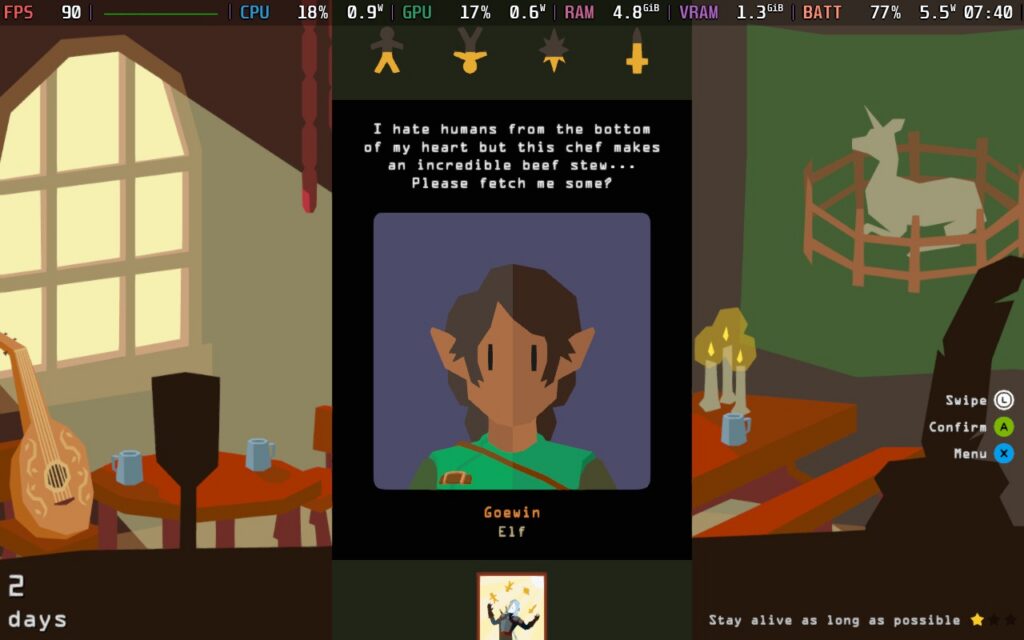
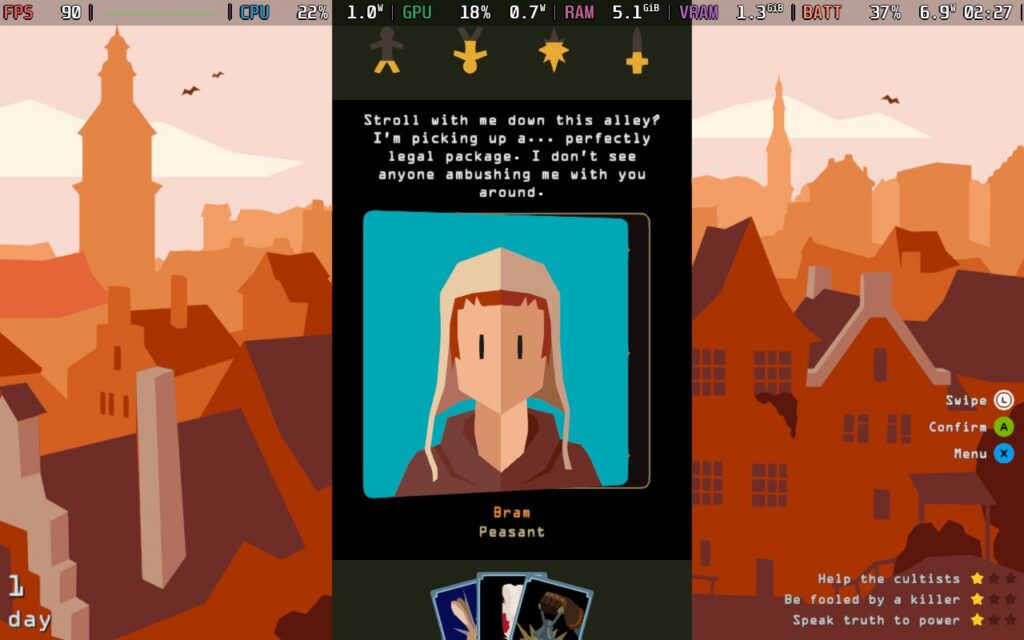
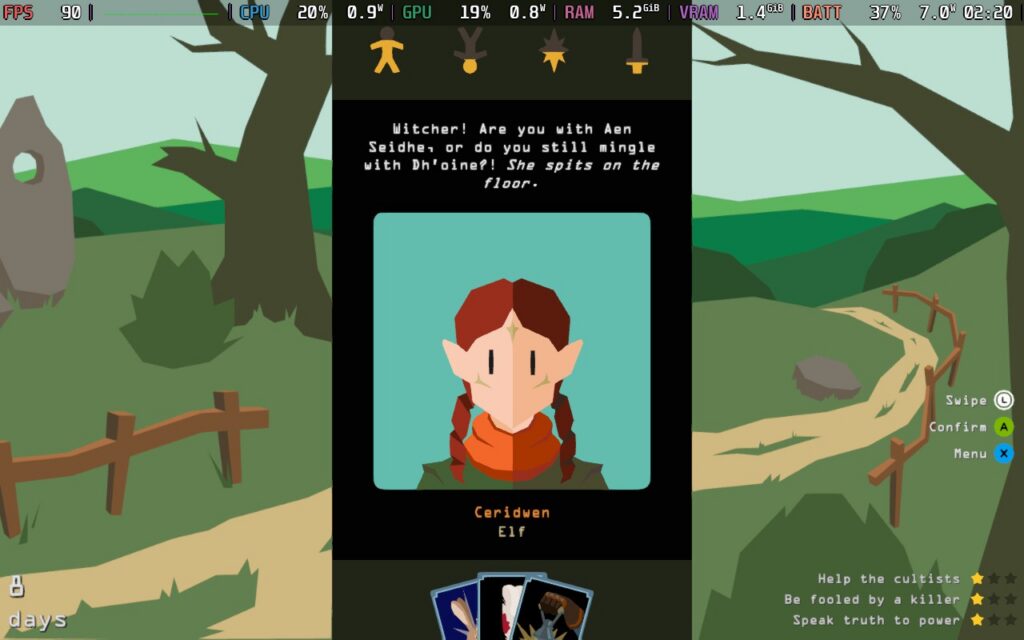
Reigns: The Witcher continues the simple gameplay from the series, though there are some nice additions to spice it up a little. Playing as Geralt, we will make decisions by swiping cards left or right to impact four different resources. We have to balance those resources, not letting them get too high or too low, or it will lead to death.
It's a simple concept, but the reason it works so well is thanks to the dark humor, and in this case, the dedication to the Witcher lore. Developer Nerial has tailored this version of the game wonderfully to match the game's signature style. There are so many hilarious moments to get through, including the ways we could die, and I appreciate how the stories feel like they would fit right into the Witcher universe. It's by far one of the best parts of the game, and as a Witcher fan, it was wonderful to see returning characters.
While I don't mind the main card gameplay, we do have a couple of new mechanics to spice things up. If our sword resource gets too high, we will go into battle with an enemy. Tiles will come down on a grid, and we have to dodge enemy attacks while hitting the tiles that will either attack them back or heal our hearts. I like how different it is compared to the usual gameplay, but it feels more like a chore than a relief. It's slow, relatively easy, and I found myself easily getting confused about where I would end up, which led me to getting hit or missing attack tiles.
However, I like the "quest" system. Each time we go into a new tale, we will get a set of three random quests that kind of dictate how our tale will go. Whether this means appeasing the Sorcerers you encounter, helping squirrels, making trolls smile, or not being able to say no to humans, these quests change how we interact and some of the cards that may come up. It's like adding a slight challenge to the run, and the better we do, the more stars we get, which gives us more points at the end of each run to level up and unlock even more quests.
Leveling up is only one of the ways to get new quests, though. Periodically, we can travel to specific locations and take on requests from the leaders there. We will have to choose three quests that correspond to their requests, and if we do a good job, it can unlock new ones.
Still, even with all the strengths and the wonderful collaboration, I couldn't help but start to find the game a little stale the more I played. This is a perfect game to play for a run or two here and there, but any longer than that, and it starts to feel like we are doing the same thing over and over. It probably doesn't help that I also found myself in a lot of repeated situations, which stopped feeling fresh after a few times. However, for the $5.99 price tag, it's hard not to argue that it's a good deal. It's still great in short bursts in between larger games, but I can't see myself enjoying it for long stretches of time.
Reigns: The Witcher is going to be a perfect experience on the Steam Deck, and I had no worries about it whatsoever. It runs at 90 FPS with 6.5W battery drain, so you will get over 8 hours on the OLED Steam Deck and 6.5 hours on the LCD. It works perfectly with the gamepad, and it’s just a great portable title.
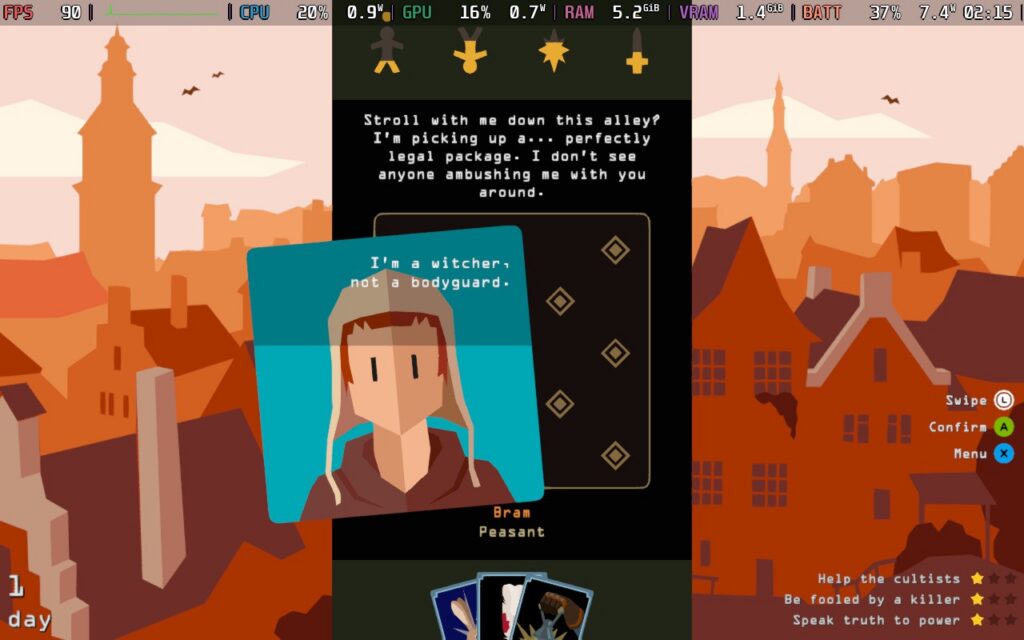
Reigns: The Witcher is another solid entry in the series that fans of the signature gameplay of Reigns and The Witcher lore will enjoy. The dark humor and dedication to the lore are a step above the rest, while the addition of “quests” to guide how you interact with the story is wonderful. However, it still feels a little stale. The new combat feels like a chore to play, and the gameplay itself is an acquired taste. It can also feel a little old after some time, with repeat situations happening frequently, but it can still be fun in short bursts.
It's also great to play on the Steam Deck, easily hitting 90 FPS with extremely low battery drain. I didn't really have any doubts about how it would run, but it's still nice to see how well it performs.
このレビューはPC版に基づいています。
このレビューをお楽しみいただけたなら、SteamDeckHQ の他のコンテンツもぜひご覧ください!あなたのゲーム体験に役立つゲームレビューやニュースを幅広く取り揃えています。ニュース、ヒントやチュートリアル、ゲーム設定やレビューをお探しの方も、最新のトレンドを知りたい方も、ぜひご利用ください。
Planet of Lana 2 was provided by Thunderful Publishing for review. Thank you!
There may be a lot of cinematic, story-driven games out there, but Planet of Lana has always felt unique compared to them. The combination of its gorgeous pastel art style and its visual-heavy storytelling without words has always stood out to me. It felt like an experience that stood above many similar games and had a style that wasn’t matched. Now, the sequel is here. Planet of Lana 2 picks up after the first game, continuing a lot of what it started. Fans of the first game will be very pleased with this one, but even with its fantastic visuals and solid story, outsiders may not feel as fulfilled.
I highly recommend playing the first game, as it provides a lot of context for the characters and environment we’re going to see, but it starts with a decent prologue video that summarizes what happened. Even still, actually playing through the experience helps fuel that connection, and I think that’s a pretty important part as well.
Now, I really like how the story has progressed. New technology has helped the tribes that live on the planet evolve in different ways. However, not all of them want to live in peace. Because of that, we are pushed to travel to new lands and beautiful new environments, which will help us uncover the truth about this planet and the deeper secrets buried within.
It’s difficult to tell a heartfelt story without words. The carefully crafted sentences articulated with emotion can sway audiences, and taking that away ups the challenge level. Still, developer Wishfully tackles it beautifully. I have no idea what anyone is saying throughout the entire game, yet I can still feel the emotion and impact of the events throughout the story. Having that connection established from the previous game helped a lot of the events that transpire feel more weighty. I could feel Lana's pain and sadness, and it never needed to be said.
Despite that, I found the story to be very predictable. It was still very entertaining, and I was carried along by the characters' performances and the eye candy of each environment, but I was never surprised. I won’t go into more detail, as I don’t wanna spoil the story, but I wouldn’t expect a tale that will keep you on your toes trying to guess what happens next. However, don’t let that sway you too much. It’s still enjoyable to play through regardless of how much I expected. And it was worth it because I still felt very connected to the characters.
The gameplay and puzzle-solving elements of the first game also carry over to this one. As we go through each environment, we’re going to have to figure out how to progress by completing a multitude of puzzles. These are all baked into the environment, so it’ll be a lot of platforming, moving objects around to jump on top of, or controlling our partner, Mui, to help in different ways, or even help us control other robots.
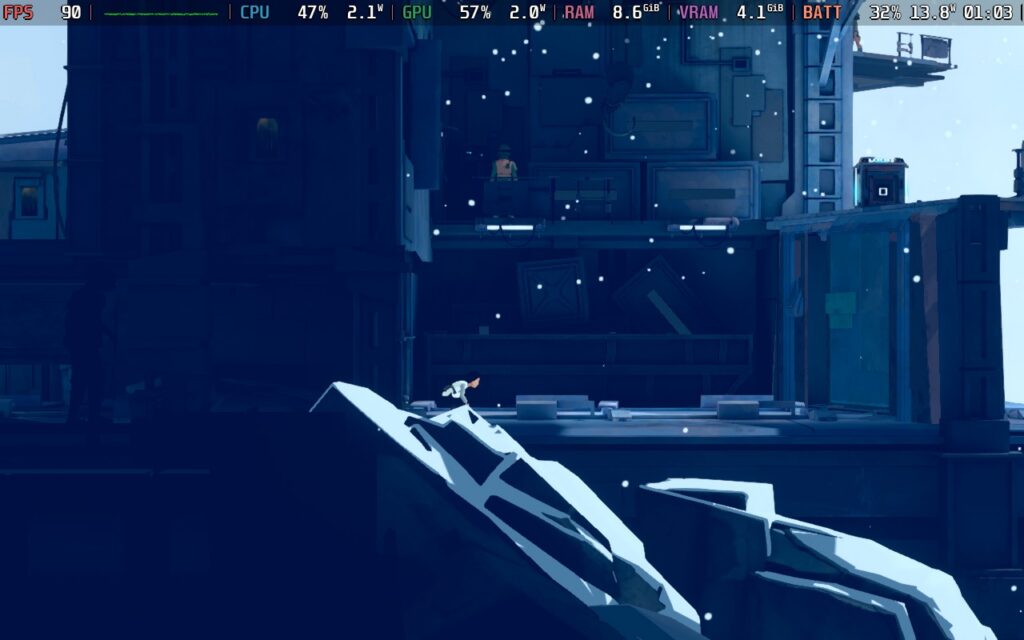
I am a sucker for physics in video games, and Planet of Lana 2 utilizes physics-based puzzles. Just on the grounds, I was having a field day. Watching different objects with different physical properties behave in random ways is so enjoyable to me. A lot of the puzzles had some physics elements, and I enjoyed getting through them.
That being said, it was almost too easy at times. I never felt stumped with any of the puzzles, nor did I ever need to take a moment to think about what my next move would be. On one hand, you could say that it was easy to pick up and master. But on the other hand, I didn’t feel challenged. The puzzles were mechanically different from each other, so it felt like there was a variety of them, but I still felt like I could see right through them.
It’s very similar to the first game, which is why I think it is perfect for those who enjoyed the first game. It has all the elements that made the original great, and the puzzles do feel more involved. However, if you found flaws in that first game, this one isn’t going to magically change your mind. It’s more of the same, which can be both good and bad. As a fan of the first game, I did enjoy Planet of Lana 2. But objectively, there were still enough noticeable flaws in this experience. It will satisfy those who already like the game, but it won’t do enough to bring back those who didn’t.
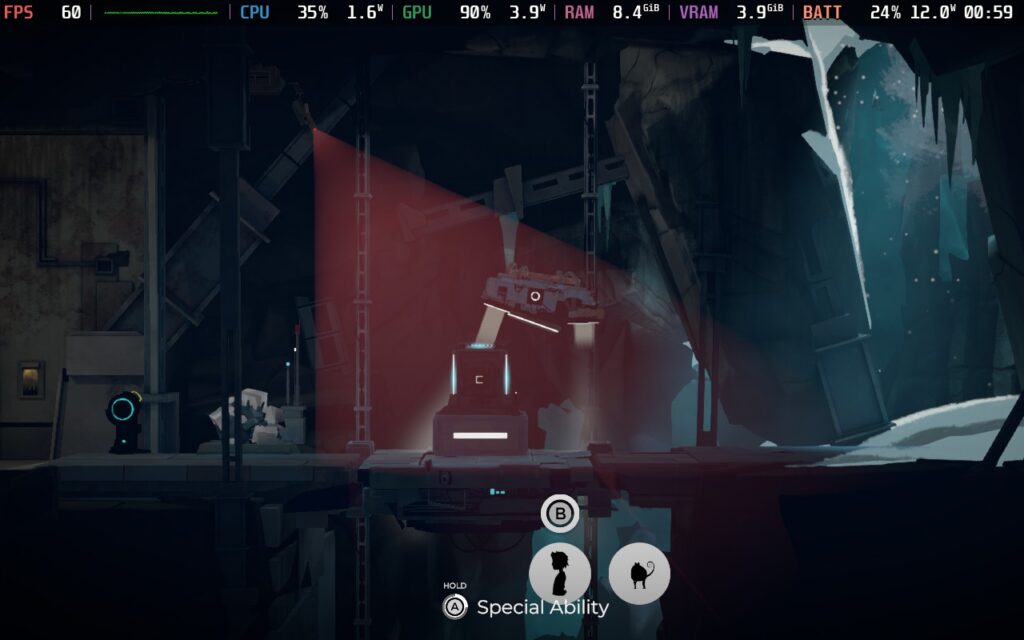
Planet of Lana 2 is a fantastic experience on the Steam Deck and is my favorite way to play the game. For the most part, it can hit 90 FPS, and in most areas, it will stick to it and stay below 14W battery drain. However, there are a chunk of spots that do drop to 60 FPS and can feel a little off, so I recommend just setting the framerate lock to 60. It still feels perfectly smooth, but it brings battery drain down and keeps it as stable as possible.
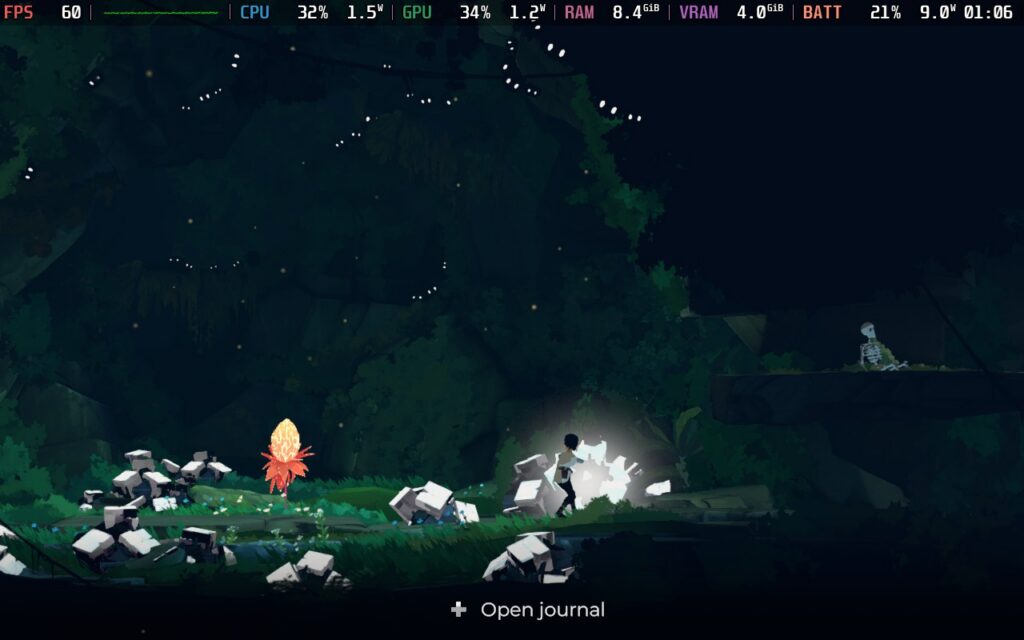
We do have an accessibility tab, where we can change the UI scale, show parts of the gameplay UI, always show the cursor, and lock the cursor during gameplay. We can also change language, controller layout, vibration, brightness, and audio bars.
このゲームは16:10解像度、クラウドセーブ、コントローラーをサポートしている。HDR設定はない。
Planet of Lana 2 is a worthwhile continuation that shows how emotional a beautiful story could be, even without words. The incredible art style remains unchanged from the previous game, and I felt the story held up as a sequel. The puzzles are a little bit on the easy side, but not enough to make it feel unenjoyable. The gameplay is very safe, not straying too far from what defined the original, which is both good and bad. It feels too easy, the story can be predictable, and it’s not going to do enough to win back people who didn’t enjoy the first game. However, if you’re a fan of the first game, you will love this.
And the game is near-flawless on the Steam Deck. It’ll run perfectly at 60 FPS and will be able to stick to high-quality settings. It’s a fantastic experience on the go, and in that sense, I can highly recommend it.
このレビューはPC版に基づいています。
このレビューをお楽しみいただけたなら、SteamDeckHQ の他のコンテンツもぜひご覧ください!あなたのゲーム体験に役立つゲームレビューやニュースを幅広く取り揃えています。ニュース、ヒントやチュートリアル、ゲーム設定やレビューをお探しの方も、最新のトレンドを知りたい方も、ぜひご利用ください。
Arctic Awakening was provided by GoldFire Studios for review. Thank you!
After a supply mission in the Alaskan wilderness goes wrong, Arctic Awakening puts you in the shoes of Kai, who has just survived a plane crash along with his court-mandated therapist drone, Alfie. Now it's up to you to find your crewmate, Donovan, and discover just what brought your plane down in this remote location, and you soon discover that a lot more is going on out here in the wilderness.

The story of Arctic Awakening is the core of the game, and it leans on it heavily, offering little in terms of gameplay or gameplay mechanics. Unfortunately, although the story is quite intriguing, going deep into conspiracy theories and secret government operations that you might have gotten yourself caught up in, it isn't quite able to bear the weight for the length of the game, which is a good 8 hours, give or take a little depending on how quickly you move.
The game centers around the 3 characters mentioned above, with a larger focus on Kai and Alfie. And if you don't connect with the characters, you'll have difficulty getting through the game. Small glimpses into each character's background are given as you play, but it's a slow-burner, and I found myself finding it difficult to care about any of the characters in the game. I cared more about Alfie the drone than I did about either human character, as they both seemed rather dislikable.
Arctic Awakening takes the "Walking Simulator" moniker and runs with it, no pun intended. I don't think I've ever played a game where most gameplay is "hold up on the left thumbstick". The game intersperses this with back-and-forth dialogue between the 3 characters, or voice logs from previous survivors as you walk. Still, it just isn't enough to carry the game; sometimes, you can walk for several minutes with no voices, and I found myself doing other things while holding the analog until I reached a point where something interesting would happen.

More gameplay mechanics would have mitigated this slightly, but there aren't really any. All movement is done with the left analog. Jumping, navigating cliffs, and ledge hanging are all done automatically by the game, requiring no player input.
There are survival mechanics, in the form of food and "sanity", but food is abundant, and it's highly unlikely you will ever be scrounging around to find some food; it's more just a slight nuisance that you have to stop every few minutes and eat some of the many boxes of cereal you found. Sanity can be replenished by sitting at any of the numerous "relaxing cairns" found on the paths, making you play a not very relaxing minigame that requires you to time your button presses. I understand why these mechanics are used, given the "survival" situation, but neither adds to the fun nor intensity of the game.
Adding some sort of inventory limit or weight limit might have actually been beneficial in this case, but as it is, you can store any food you find in your inventory. This leads me to generally have around 30-40 pieces of food at any one time, with only 3 or 4 needed to fill my hunger, which depletes every 20 minutes or so.
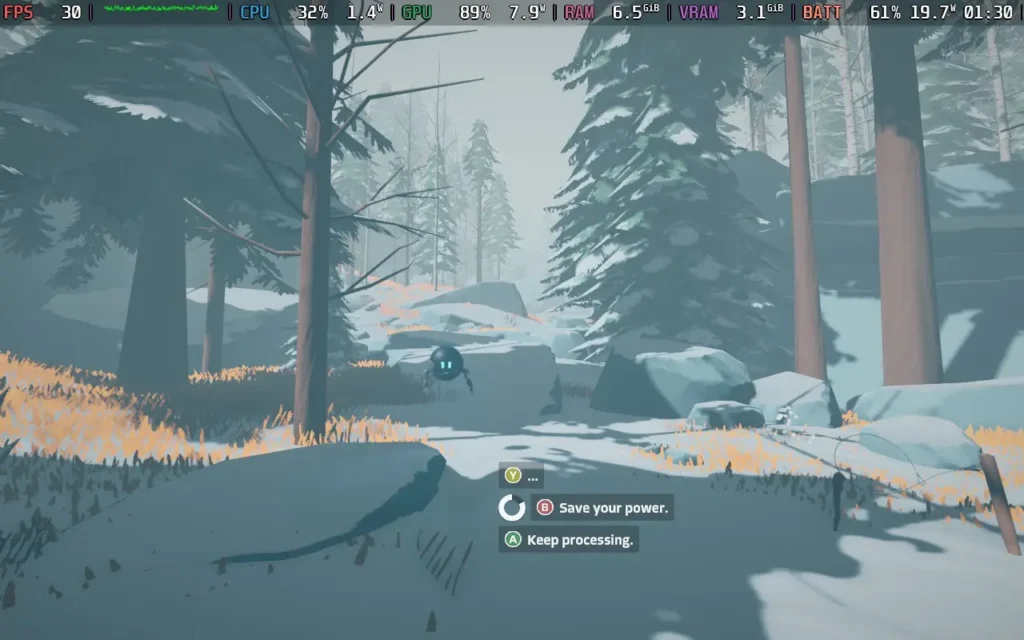
Visually, Arctic Awakening is okay, but again, you are in a frozen wilderness, and there isn't really a whole lot going on. The environment is unchanging, and if you showed me a screenshot of the game, I wouldn't be able to tell you where in the game that screenshot is from, as everything has a very similar look throughout.
The voice acting is at least decent, and not something that I ever found irritating or grating. Besides that, there isn't too much sound in the game, besides a few musical cues, usually signifying the end of a chapter.
I also encountered a bug about four hours into the game that effectively ruined my save file, requiring me to restart from the very beginning of the game in order to play again. I ran into a couple of bugs where interaction or movement became impossible, but restarting usually solved the issue. Unfortunately, this bug didn't disappear despite quitting and reloading or rebooting the game entirely.
Arctic Awakening has controller support, as well as supporting the Steam Deck's native resolution of 1280x800.
However, to get playable performance out of the game, you will need to run on the "Low" graphics settings and cap the frame rate to 30 in-game. I personally removed Bloom and Motion Blur, but that was personal preference.
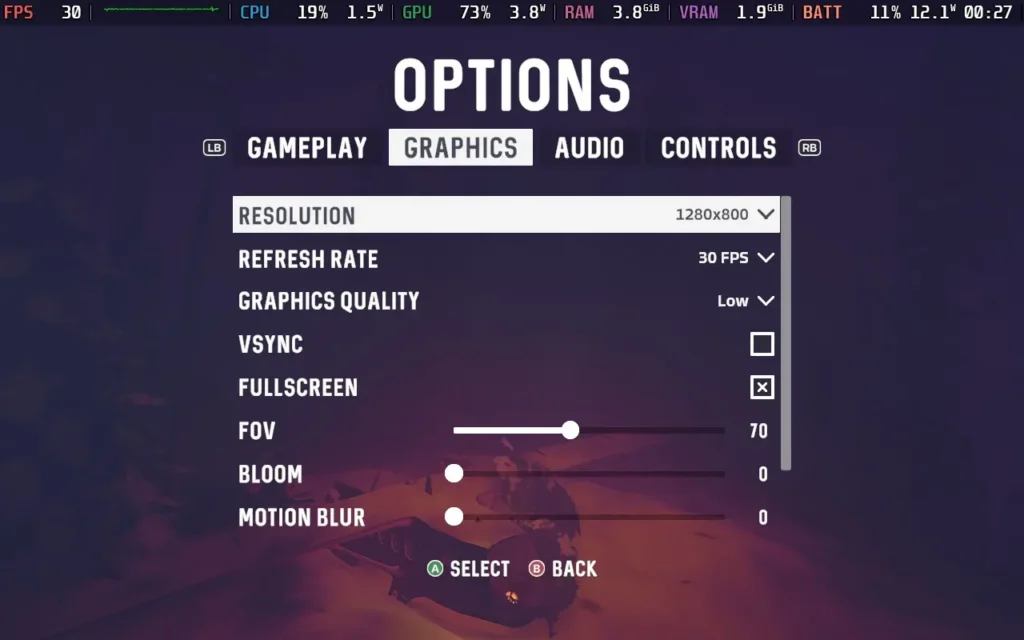
Unfortunately, even with these low settings, the game still struggles to maintain 30 FPS, and we see dips as low as 20 in certain areas, particularly at night with the lighting effects. Given the type of game Arctic Awakening is, it doesn't make the game unplayable, but it can make it feel unpleasant to play.

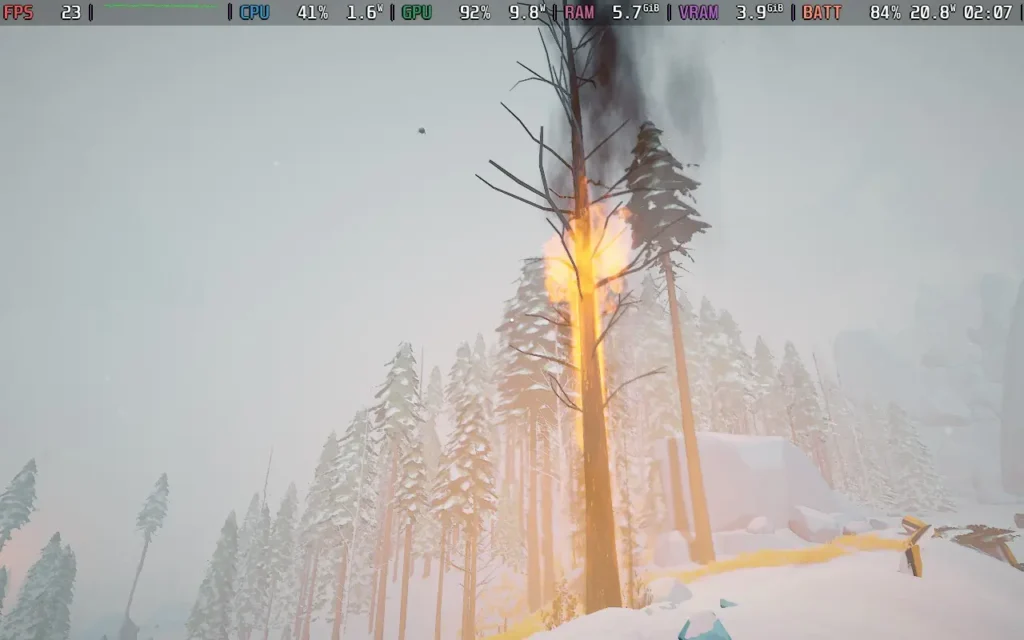

The power draw is also pretty high, mostly around the 17W-21W range, but it can spike as high as 24W. You should expect about 2.5 hours of battery life from a Steam Deck OLED, and around 1.5 hours from a Steam Deck LCD. Temperatures were around 65C-75C
Arctic Awakening has subtitles for voiced dialogue, and you can increase the subtitles' size, making them pretty easy to read on the Steam Deck's display. You can also disable head bobbing for motion sickness and rebind controls.
If you are big into "Walking Simulators" and you like stories about clandestine government operations and conspiracy theories, then you might find Arctic Awakening interesting. However, for me, the characters feel unrelatable, the gameplay is close to non-existent, and the storyline just wasn't enough to keep me interested for 8 hours. The 4-hour progress-destroying bug also soured my mood just a little.
Performance on the Steam Deck isn't great either; despite running the game on low settings, it's not possible to maintain 30 FPS throughout. Fortunately, there is no "action" in the game, so playing at a sub-30 framerate is still playable; you might not enjoy the game as much as you otherwise might.
このレビューはPC版に基づいています。
このレビューをお楽しみいただけたなら、SteamDeckHQ の他のコンテンツもぜひご覧ください!あなたのゲーム体験に役立つゲームレビューやニュースを幅広く取り揃えています。ニュース、ヒントやチュートリアル、ゲーム設定やレビューをお探しの方も、最新のトレンドを知りたい方も、ぜひご利用ください。