




Moss: The Forgotten Relic was provided by Polyarc for review. Thank You!
You may have heard of the Moss series before. It made a pretty big splash in the VR world when it launched back in 2018 for PSVR and PC, possibly because it's one of the few VR experiences that could be classified as a "real" game. Originally launched as 2 separate "Books", Moss: The Forgotten Relic is a non-VR port of the 2 Books into one collection, and while some holdovers from the original VR games remain, it holds up quite well as a traditional title.
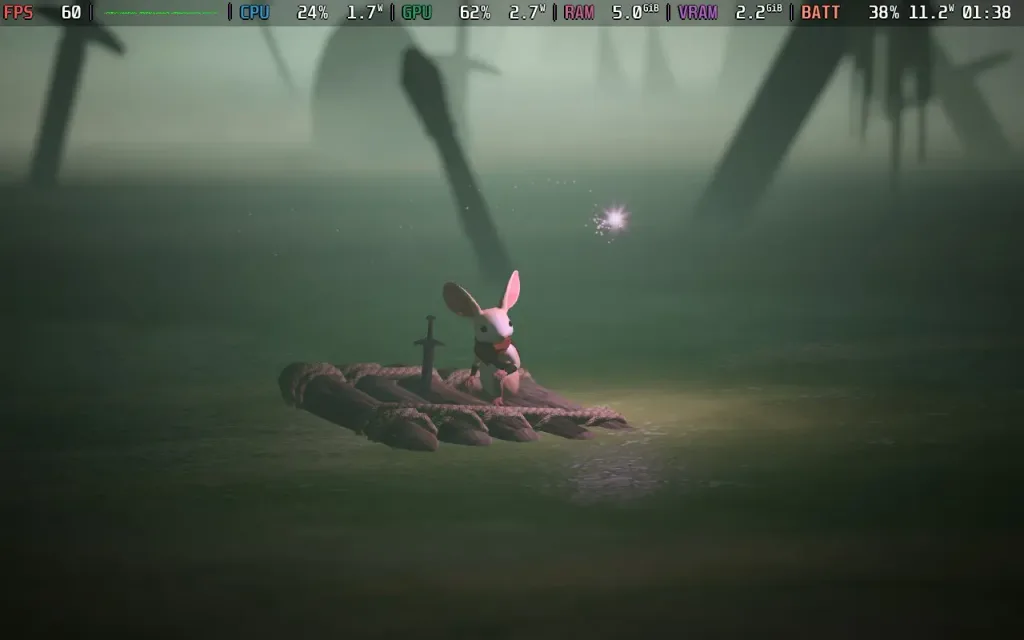
Moss: The Forgotten Relic quickly introduces us to our lovable protagonist, Quill, a small mouse who communicates with the player (known as the Reader) through hand gestures and, apparently, real sign language. In a world that has been taken over by a faction known as the "Arcane", the Reader must guide Quill on her adventure to acquire the 5 "Glass", which will grant her the power to fight against the Arcane and restore balance between the factions of Moss.
While I didn't find myself getting overly attached to Quill, there are a couple of moments that pull on your heartstrings, and overall, the story is a decent one, told mainly through voice-acted storytelling cutscenes in between the different chapters of the game. The voice acting is also pretty decent.
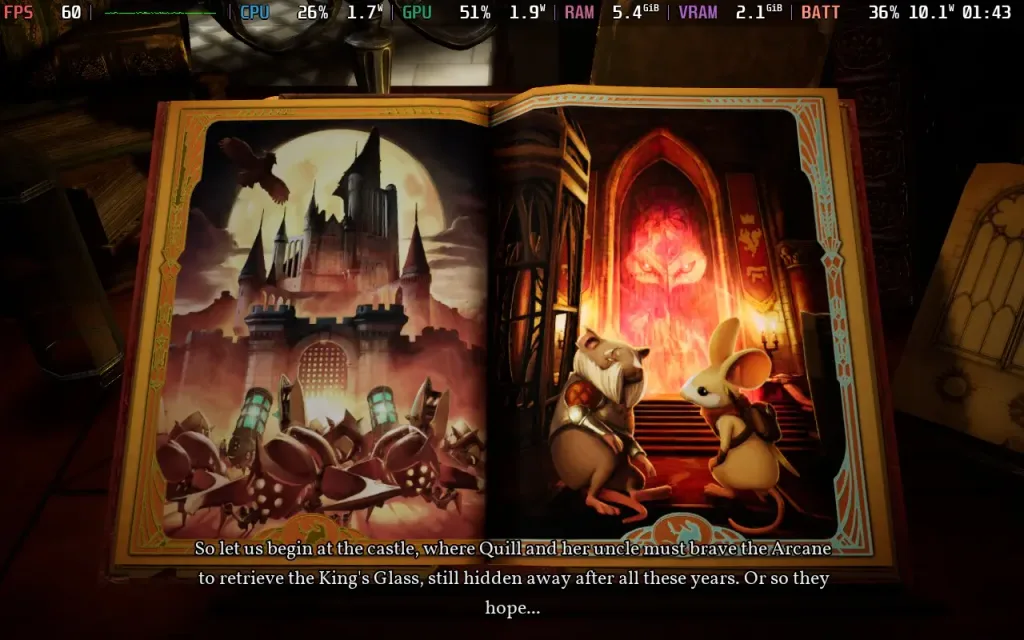
Gameplay in both Book 1 and Book 2 of Moss is very similar, although Book 2 gets a bit more experimental with both its puzzles and combat. Book 1 tends to keep things fairly simple, which definitely helps ease the player in, with the 2 Books combined in this collection.
Combat in the game is very much a means to an end; often, you'll be trapped in an arena where you must defeat the enemies to proceed, usually using your sword and dodging the very predictable enemy attacks. Book 2 expands on the combat by introducing a couple of new mechanics, but the formula remains very similar throughout. It's by no means difficult; even the bosses you face are quite easy. In fact, the game even gives you an option to skip the "forced" combat situations, even bosses.
That's because the main gameplay in Moss lies in its puzzles. Often, these involve you, as the player, using your "Reader" powers to manipulate certain objects in the world of Moss, including enemies. You'll be moving platforms, making enemies attack vulnerable objects to open up new pathways, and using Quill's expanding list of abilities to navigate the world.
The puzzles are on the easier side. I rarely found myself stuck trying to figure them out; this helps cement Moss: The Forgotten Relic as a more casual game. Skippable combat, interesting, yet not complicated puzzles, and gameplay that eases you into each ability mean that the game should be accessible to a large number of players, even those who aren't into puzzling.
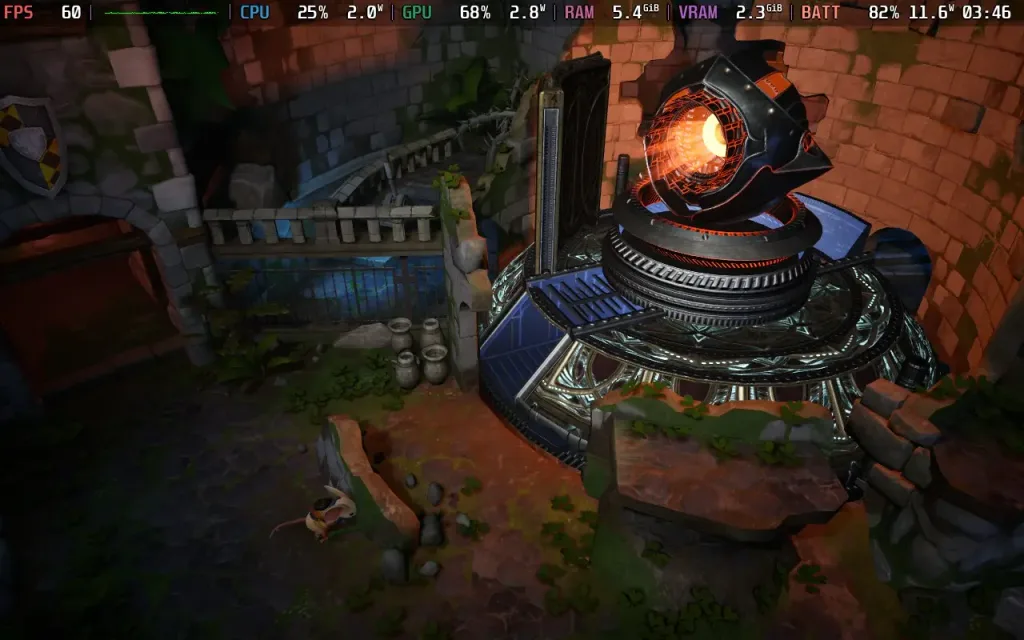
Overall, the game makes the transition from VR well. The graphics are simplistic and could probably have been improved, mostly just a straight transition from the VR game. The playing areas are also fairly small, meaning you will frequently be transitioning between "rooms", but it's not too bad, and it does help to keep things compartmentalized so the puzzles don't get too complex. The controls are also translated well, with the VR "Pointer" mapped to the right analog stick and Quill control to the left. I never found myself getting confused or frustrated with the controls, so you don't have to worry about that.
Moss: The Forgotten Relic is a shorter game. Even with Books 1 and 2 combined, I finished it in about 7 hours, though I didn't go for every collectible. Fortunately, this is reflected in the price, with the game being available for just $19.99. If you've experienced these games in VR, it might be a hard sell to go back to them, but if this is your first foray into the world of Moss, I would say it's definitely worth the price.
Moss: The Forgotten Relic has no graphical settings to adjust other than Depth of Field, which I recommend keeping enabled for cinematic purposes. Controller support is excellent.
I recommend locking the game to 60 FPS. Generally, the game runs at 70-80 FPS, but it can drop into the 50s during the opening sequences of Book 1. I didn't notice frame drops through the rest of the game in either Book 1 or 2, so you can expect a stable 60 FPS experience.
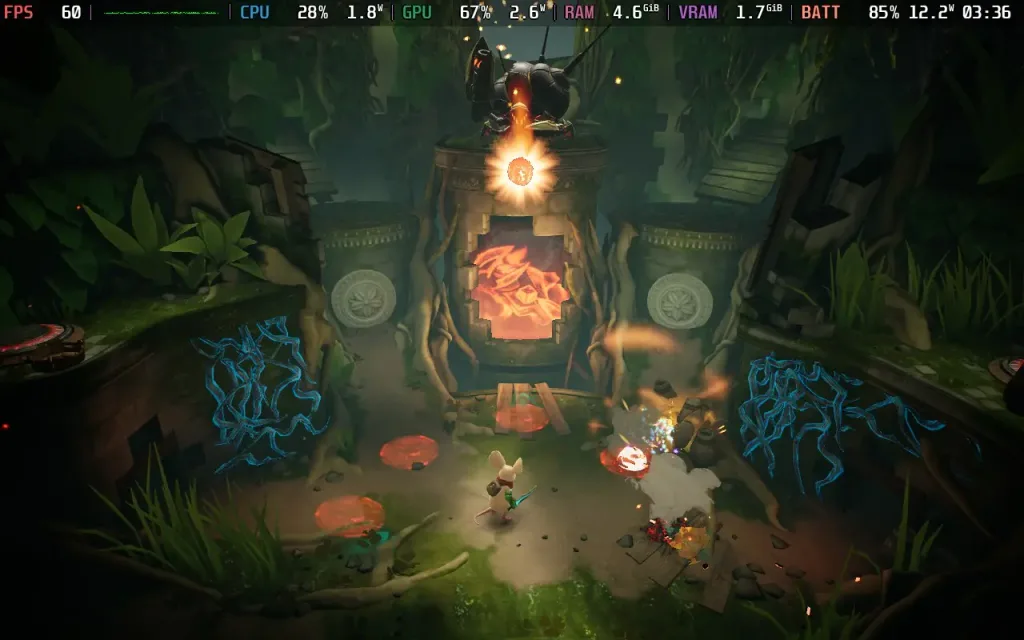
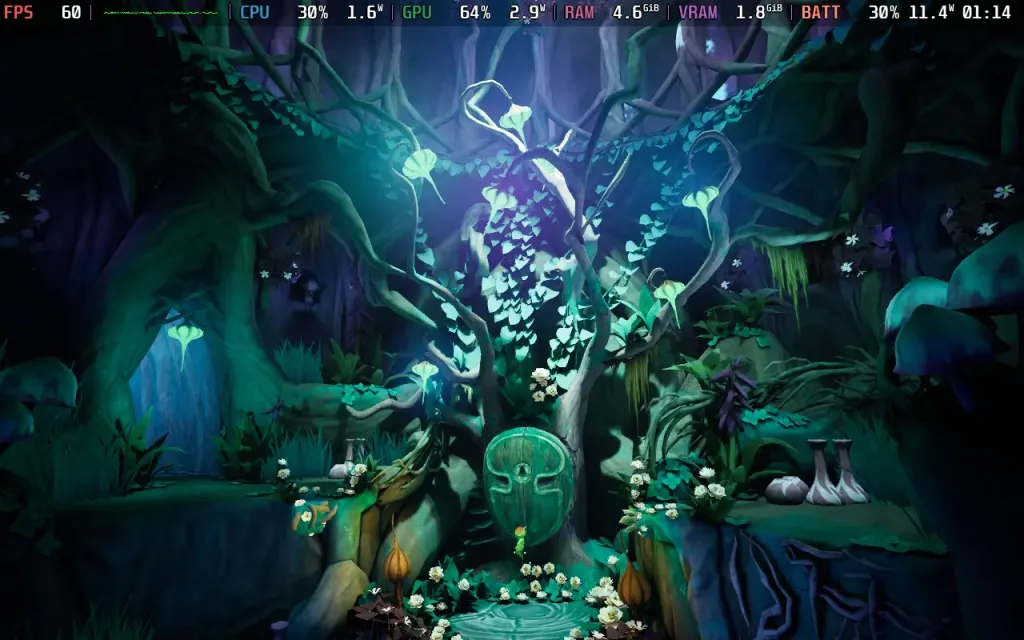
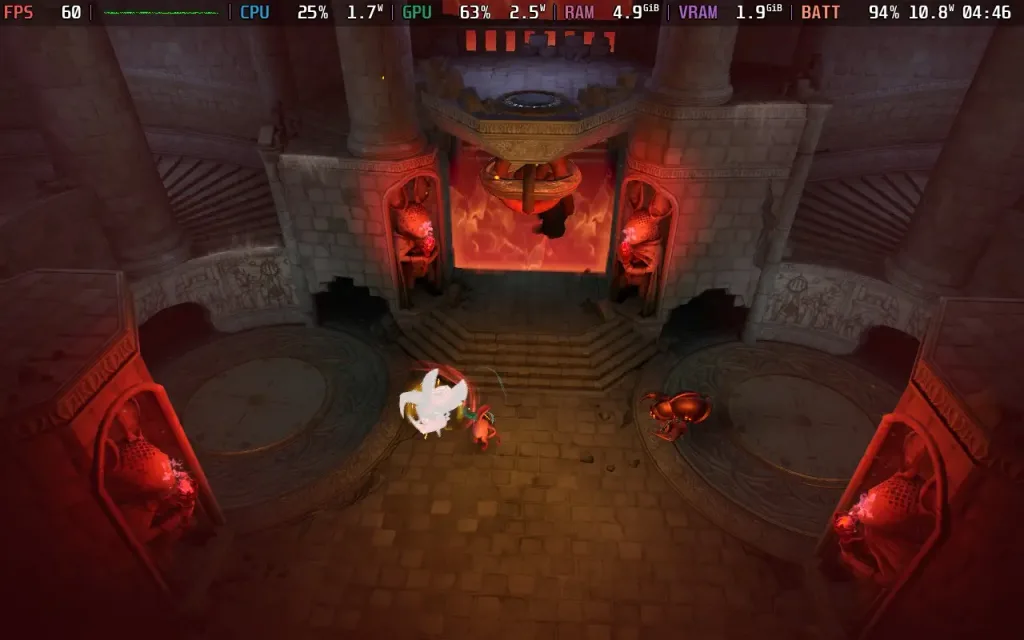
Power draw is rather modest, mostly being in the 10W-12W range, meaning you should expect a battery life of around 4.5 hours on a Steam Deck OLED and 3 hours on a Steam Deck LCD. Temperatures ranged from 55 °C to 60 °C.
Moss: The Forgotten Relic does have support for subtitles, although they disappear if you transition areas during a voiced line, so you may wish to remain stationary until you have read. You also have the option to skip much of the game's combat if you find it difficult.
Moss: The Forgotten Relic is mostly successful in bringing the VR classics to traditional gaming. It has a fairly simplistic approach to both combat and puzzles, but a lovable protagonist, combined with decent storytelling and a reasonable price tag, makes it easy to recommend.
Performance on the Steam Deck is solid. Aside from the opening scenes of Book 1, you should be running at 60 FPS throughout. Controls are well suited to the controller, text is easy to read, and battery life should let you play through good chunks of the game at a time. Because no configuration is required except applying a 60 FPS limit, I'd be happy to give this a Best on Deck award.
このレビューはPC版に基づいています。
このレビューをお楽しみいただけたなら、SteamDeckHQ の他のコンテンツもぜひご覧ください!あなたのゲーム体験に役立つゲームレビューやニュースを幅広く取り揃えています。ニュース、ヒントやチュートリアル、ゲーム設定やレビューをお探しの方も、最新のトレンドを知りたい方も、ぜひご利用ください。
Moss: The Forgotten Relic makes the transition from VR well. Simple, yet interesting puzzles and combat, and great performance on the Steam Deck makes this one I would recommend.





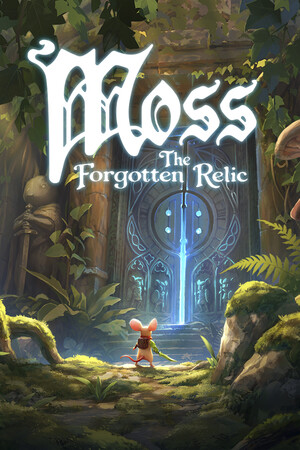

Still have to buy the game for VR. Especially since I connected my "Old" Quest 1 Headset to my SteamMachine.
But damn, Summer here isn't much fun when having a VR Headset pinned to your head 😀