


The game was provided by Koei Tecmo for review. Thank you!
Despite being a big baby, I always tend to find myself playing and enjoying horror games. My favorites are generally ones that lean into psychological horror over jump scares, like Visage and Layers of Fear. However, Fatal Frame 2: Crimson Butterfly Remake has flipped the script. With a balance of atmosphere and jump scares, I found myself enchanted and horrified, as well as frustrated, but I still enjoyed my time with it.
Fatal Frame 2 Remake is…well, a remake of Fatal Frame 2. The game originally released on the PS2 in 2003, and was later remade for the Wii in 2012, making this the second remake of the game. However, the visuals have been massively overhauled, we have a more refined third-person viewpoint, new side stories have been added, some new mechanics, a new ending, and more. There's enough here that even veterans of the original game should find a worthwhile reason to come back.
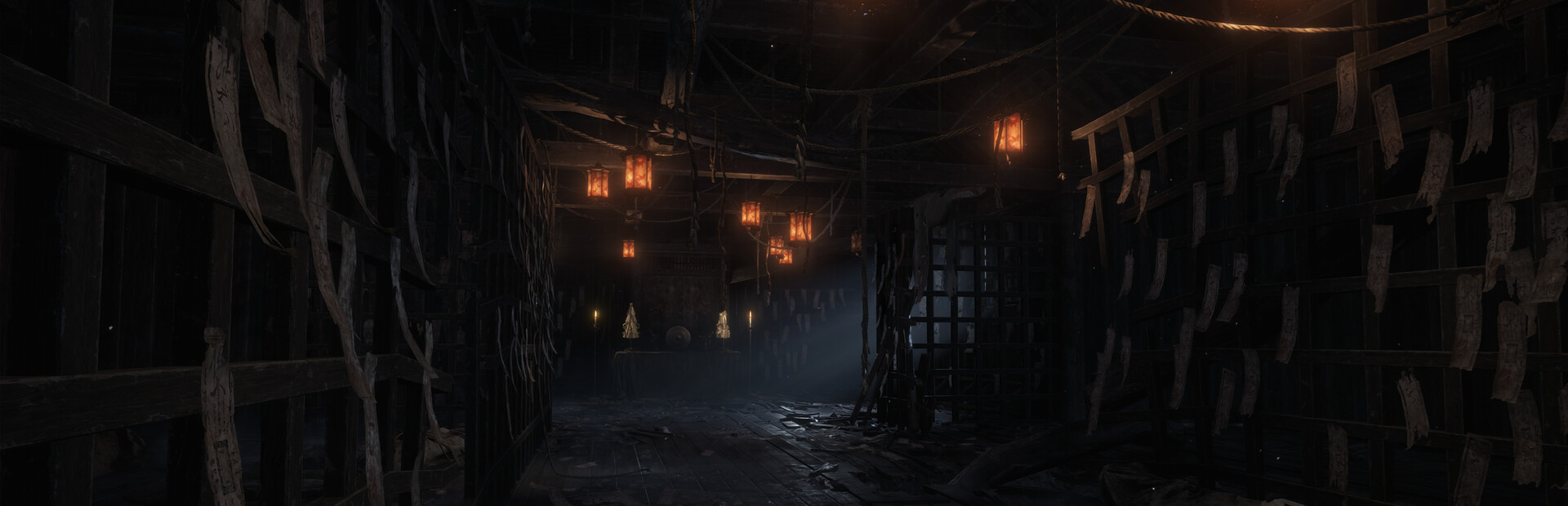
If there’s one thing Fatal Frame 2 Remake nails right off the bat, it’s atmosphere. The gorgeous new visuals mix extremely well with the ambient atmosphere and sounds to make this creepy, ghost-ridden town actually feel haunted. I generally don’t like jump scare horror, generally preferring psychological horror that doesn’t get in your face, but this game uses it in such a unique way that I couldn’t help but enjoy it. Of course, the environment is creepy in its own right, so it’s kind of a combination of both that work in tandem to complete the experience.
This extends to the story as well. You play as Mio, who is almost constantly searching for her twin, Mayu, in Minakami Village, where they stumbled upon. Ultimately, the two of them get caught up in a weird story, filled with wraiths trying to get them, and a ritual that the two of them are slowly being coerced into completing. Armed with the Camera Obscura, a special camera that can capture (an attack) ghosts, Mio will have to find a way out and save her sister. The story hooked me in way more than I expected in the beginning, and it held my attention all the way through thanks to the interesting premise and side stories that gave me some extra insight into other people who have been caught up in this village nightmare.

On top of that, I was interested enough to keep playing and discover the multiple endings in the game. There aren't many games that can convince me to come back and play again, but Fatal Frame 2 did, and it earned my respect.
Now, as much as I enjoyed playing the game, I could not fully enjoy the gameplay. There are some fun moments, especially once you fully get used to using the Camera Obscura, but I regularly found it frustrating. When I used the right film and captured ghosts with all the focal points for maximum damage, it felt great. But, I also regularly missed, or ghosts moved as soon as I snapped a picture, or some would just disappear and reappear inside a wall I was standing next to, and quickly come out and attack me. This got way worse when trying to attack multiple ghosts coming at me at the same time. It was already difficult to manage one, especially without Type-90 film, so adding another was an extra special burden.
Still, when it works, it’s a really cool idea that has its upsides. The camera acts like a gun, allowing us to attack ghosts using different kinds of film we find throughout the world. By lining up our shot, taking into account zoom and focus, we can hit more focal points and maximize our damage. All the film we find has different power and reload speeds, and while you may think high power would be the best, using low power and fast reload speeds (Type-14) regularly became my go-to. We can stun ghosts as they are attacking to stagger them and possibly deal significant damage, so faster reloading meant more chance to stagger.

We will also have to manage both our health and willpower. The willpower acts similarly to the armor in DOOM, where if you have it, ghosts won’t take your health down as much until it’s gone. However, you can also use willpower to use special shots with different effects, which don’t take up any film. It’s very handy when you have to use film that takes forever to reload.
Then, we have different filters, which have their own uses in and out of combat. They all have their own effect on power and reload speeds, and can interact with the world, showing us paths that people have walked in the past or even exposing hidden areas or objects in the village. Picking and choosing the right filter and film for each situation will help immensely, and it’s easy to switch between them to make it happen. I did accidentally switch film a couple of times, which restarts the reload process and leads to my death more than once, so that wasn’t great.
Regardless, there was this uniqueness to the system that compelled me enough to keep coming back. Is the combat frustrating? Absolutely. Has it led to my death more than once, where I felt it was on the unfair side? For sure. But I still wanted to keep coming back and try to get better. Not only that, the camera just adds to the horror.

It was frustrating, obnoxious, and downright rage-inducing in combat, but the Camera Obscura adds so much to the experience that I find it hard not to call it compelling. The horror level felt higher when I was in combat because of the limited view, and I love how it can be used to interact with the world. It’s a very clear love-hate relationship, but no matter how tough it could make my life, it still won me over.
Throughout the village, there will be items to find. These can range from usable items to replenish health or Prayer Beads to upgrade our camera and filters. There’s even a point system that awards you points based on how good your pictures are, and you can redeem them for items or charms that can be equipped for passive bonuses. And if you can find twin dolls throughout the village, the variety of items you can purchase will increase. It would have been nice to find more Prayer Beads earlier on, but the upgrades were worthwhile (for the most part). And using the point system to stock up on items was very helpful.

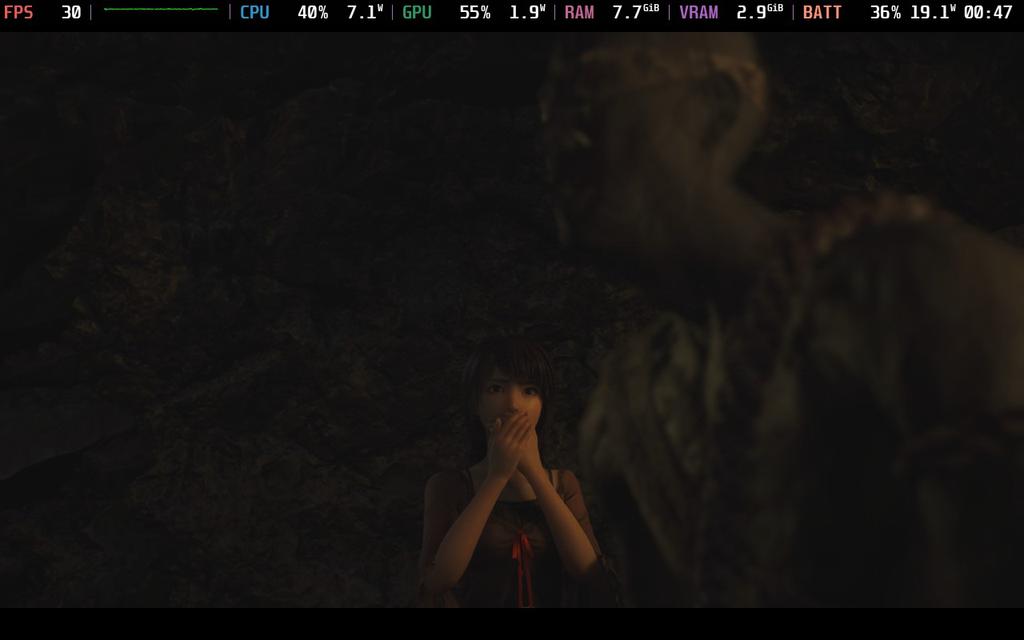
Fatal Frame 2 Remake may be based on a PS2 game, but the enhancements have made it a little bit tough to run on the Steam Deck. The game defaults to standard settings with FSR2 upscaling, but we still won’t be able to get a solid 30 FPS throughout. Almost every cutscene has frame rate drops, sometimes going down to the 15 range. Regular gameplay will largely stick to 30, but there were some drops when running around Minakami Village.
However, we can turn down the settings to help with performance during the gameplay sections. By switching the preset to “Best Performance”, we can get a near-solid 30 FPS when running around the village. There are some sacrifices in visual quality, including some lighting and shadows, and there will be some noticeable pop-in from buildings and foliage, but it will run better. I wouldn’t say it hurts the experience too much, but it is a noticeable change that affects the world and makes it slightly less scary.
However, there will still be drops here and there. Even with the TDP limit gone, there will still be moments where framerate can fluctuate more than I would like. I would consider the game playable, but there are definitely considerations that need to be made in terms of visual quality and stability.
Fatal Frame 2: Crimson Butterfly Remake does so many things right, and even the mechanics that give me nightmares turned out to be high points in my experience. The atmosphere and setting are creepy, and the great use of jump scares, camera angles, and an engaging story heightened the horror I felt deep within. The use of the Camera Obscura to interact with the world is great, and it ups the horror factor more than I expected, but the combat can be extremely frustrating to the point that I had to take breaks. Still, I always felt compelled to come back, and I am glad I did.
I was a little disappointed with the performance on the Steam Deck, and the compromises to visuals necessary for a stable framerate did take away some of the creepiness. Still, with these changes, I would consider it playable and enjoyable, just not to the extent that the game can offer.
このレビューはPC版に基づいています。
このレビューをお楽しみいただけたなら、SteamDeckHQ の他のコンテンツもぜひご覧ください!あなたのゲーム体験に役立つゲームレビューやニュースを幅広く取り揃えています。ニュース、ヒントやチュートリアル、ゲーム設定やレビューをお探しの方も、最新のトレンドを知りたい方も、ぜひご利用ください。
Fatal Frame 2: Crimson Butterfly Remake is a gorgeous, interesting horror game that combines atmosphere and jump scares nicely, but combat and Steam Deck performance can be infuritating.






The original Fatal Frame 2: Crimson Butterfly is my favorite horror game of all time. I've played it countless times on my Xbox and I couldn't wait for the remake... until I played the demo on Steam Deck.
As Sadako mentioned, technically speaking, it is a huge disappointment, though I wouldn't blame the hardware. The engine used for the remake has poor performance even on the PS5 Pro - which makes no sense to me, given that the areas are small, the AI isn't demanding, and you can count the enemies on screen on one hand.
I tried it on the Switch 2 as well, but I wouldn't recommend it there either. Even though the performance is more stable, the textures look washed out and blurry. That low definition completely kills the mood of the game.
I'll wait for a (possible) performance patch and a VERY generous sale. Until then, I'll stick to the original.
Just to say, project zero 2 is still my all favorite most beautiful horror game. It still looks stunning on an emulator.
It there seem to be a few strange changes regarding the "combat" that still kept me away from buying it instantly. I also thought project zero 5 was a joke in every way and especially combat so I'm a bit worried.
Aside from that I'm always impressed how games that look not that impressive and big as others run much worse. RE Requiem just runs beautiful on the deck and from what I see it looks much more beautiful, crisp and detailed than Project Zero 2 why Studios are just not capable of getting their games run in a adequate way