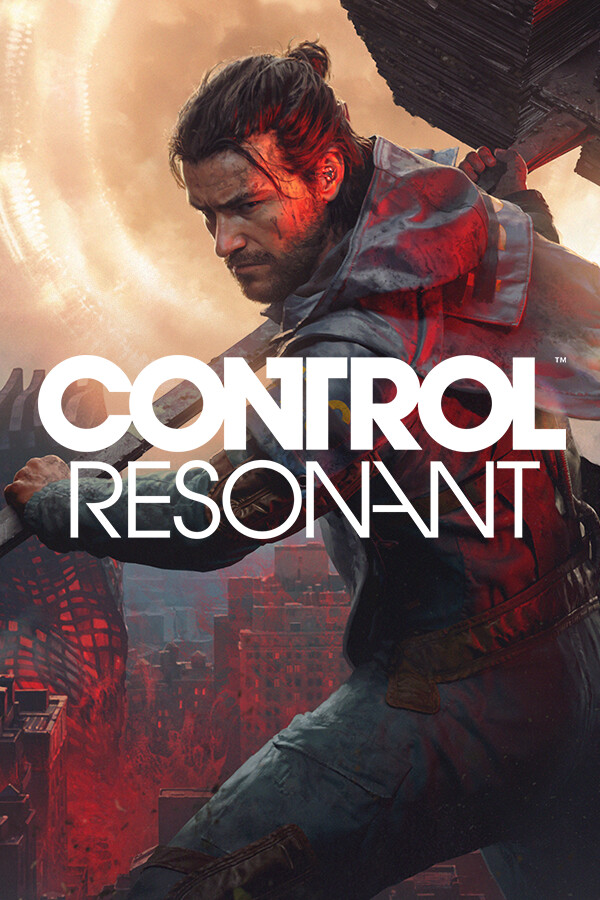




Control Resonant was provided by Remedy Entertainment for review. Thank you!
Control was always one of the few games that I could come back to constantly to play. The crazy, supernatural world mixed with developer Remedy Entertainment’s storytelling and solid combat system created an engaging experience that I loved. So, the sequel to it, Control Resonant, had some pretty big shoes to fill. From what I played at events, I really liked the direction they were heading, but there was still so much more I needed to see. Now that I have, I cannot only say it’s a worthy successor, but a fantastic evolution of the series that takes it in new directions.
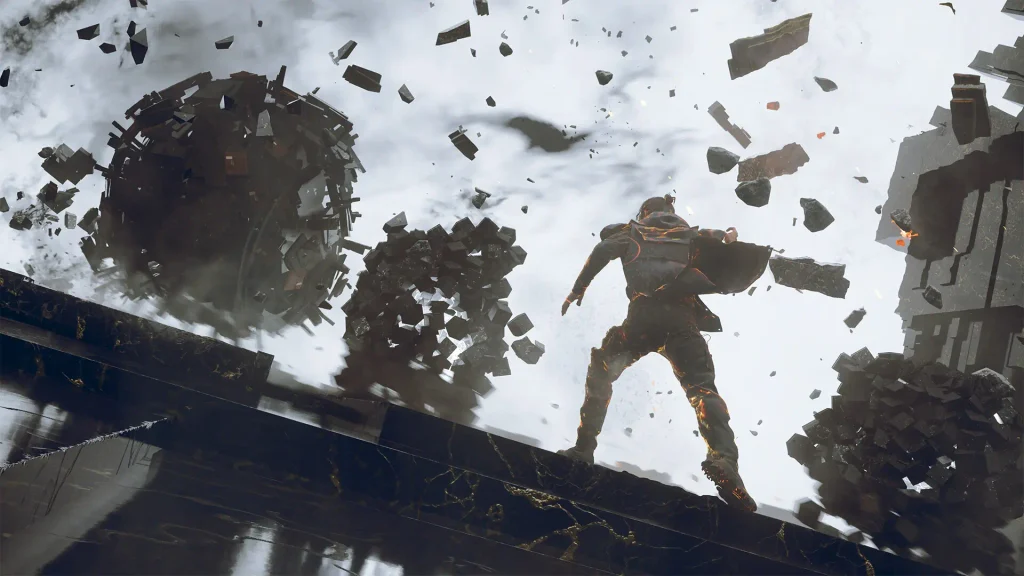
While the story isn’t as strong as Control, it’s still wonderful in its own right and starts to pick up later on. We play as Dylan Faden, the brother of the previous game’s protagonist, Jesse Faden. It has been seven years, and the Hiss have broken out of The Oldest House and are infecting Manhattan. On top of that, the acting director of the FBC, Jesse, is missing. Now, Dylan will have to help out the FBC to contain the Hiss, meet new and returning faces, and come face-to-face with the enemy that once ruined his life.
The overall story is quite interesting, and a big part of that comes from the world. I love how Remedy expresses supernatural events, and we can see them through gravity, anomalies, crazy patterns, and weird designs that all come together and create this dystopian, disfigured world. This pairs nicely with the beautiful art direction, but the story does a lot of heavy lifting to keep things interesting. It was compelling to learn about what was happening, the development of the enemies they are facing, and the resolution.
It did take me a little bit of time to actually get into the story, and a big part of that comes from Dylan. I wasn’t a huge fan of him at first; he seemed like a tool that the FBC could use, as they will. He seemed to have no motivation to live, other than to make up for his past mistakes. It makes sense, but I feel he was too passive. As the story goes on, he starts to grow a backbone and feel more confident that he’s doing the right thing. This evolution of his personality was great, and he ends up becoming a protagonist worth rooting for. This also helps make the secondary main storyline of finding Jesse much more intriguing.
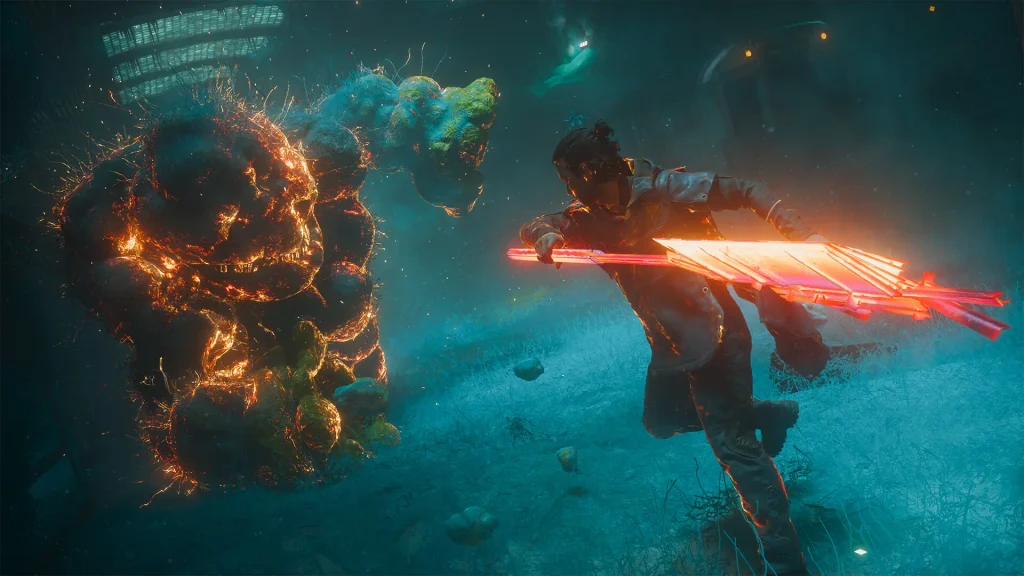
Even though Control Resonant's combat is a little more unconventional than I expected, I adored it and its progression systems. It finds a way to be dynamic and engaging, while also letting its unique systems make each fight feel more endearing than the last.
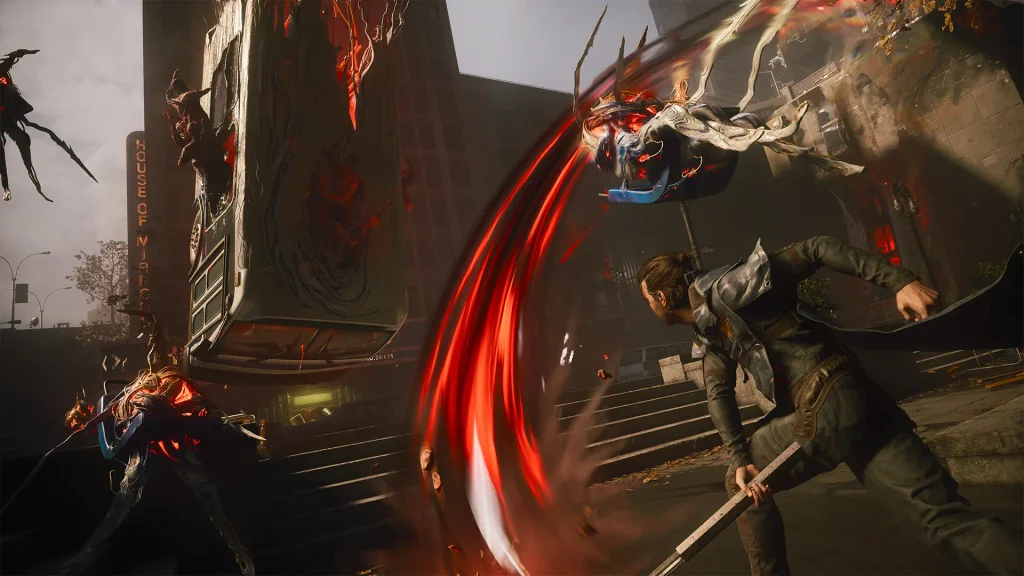
The combat itself is straightforward. We have a basic attack, heavy attack, and multiple abilities to take advantage of. Thanks to Dylan’s supernatural powers, these abilities can range from slamming the ground to using telekinetic powers to fling concrete, or even shooting fireballs at enemies. All of which can be wonderfully chained together, and ultimately feel wonderfully fluid to use. The abilities are especially helpful, considering they can provide debuffs that can be chained together with our other passive buffs that can come together seamlessly.
However, because of the progression system, the goal of combat differs slightly. Instead of just brute-forcing strength to deplete their health, we will have to be a little more careful. Instead of focusing solely on depleting their health, it becomes more useful to start looking at depleting their stun bar. By doing this, we can execute them, and with the right abilities, this can provide a significant boost to our damage. This can be used in tandem with the buffs we get by performing certain actions, like executing enemies, to deal insane damage to defeat the monsters that are inherently stronger than us.
As we keep playing, it slowly starts to feel more strategic. The grunt enemies turn into a tool to activate buffs to take down the big monsters, which are the only ones that give out currency and materials we need to improve our abilities. Not only do the stronger enemies hit harder, but they become much more important to dispose of, while the grunts really are just there to help us dispose of them more quickly. With all the flashy effects going around, it can feel quite chaotic, but I was still able to understand and figure out exactly what I needed to do next to take care of all of the enemies in front of me.
As I mentioned, the progression system is unconventional compared to other larger RPGs, but that adds a lot to the charm of what makes Control Resonant so special. Instead of straight stat boosts from leveling up, we will get Talent Points as we complete objectives across the map. Each section of the map has its own level, and as that goes up, we are able to expand our skill tree and enhance our abilities. These will usually give us ways to get those passive buffs, increase our power in certain scenarios (like when attacking from behind), or enhance specific abilities that we unlock.
Speaking of, the ways to level up the sections of the map can feel a little repetitive at times, and the enjoyment of some of those events is not as great as the others. However, I was still satisfied by the amount of variety in them. I’m also pleased that we aren’t locked into these events to level up our areas. We can fight groups of enemies, find chests of materials, or complete random puzzles to do so. I appreciate that we aren’t forced to complete these “World Events” if we don’t want to.
I also want to take a moment to praise the lack of handholding to progress. A lot of what you’ll find across the map will be found just by exploring. There are a few quests that are handed to you, but the majority of them will come from genuinely exploring the map out of sheer curiosity. There are some relatively obvious areas to investigate, which will house necessary quests to progress in the main quest line, but it felt more rewarding to discover them on my own, instead of being told to investigate certain spots by NPCs. There may be some spots that could be easy to get lost in, but for the most part, it can all be found by just exploring.
To actually make ourselves stronger, we will have to use the currency and materials we get to enhance our attack forms and combo finishers. The more we do so, the more our power is multiplied. We can choose different types of basic, heavy, and combo finishers and upgrade each one, acting as though they are different types of weapons. I felt that there was a good amount of material drops just by regularly playing, so I never felt I was missing too much or that anything felt difficult to unlock.

As for getting new abilities, we will do so by defeating Resonant Entities or finding Faults. Resonant Entities are large bosses that will ultimately give us new combat abilities, while Faults are where we will find new traversal abilities to navigate parts of the map that we wouldn’t have been able to before. Both of them feel appropriately spread out and make logical sense to find by just naturally exploring. The pacing of these felt appropriate and well placed.
I fell in love with Control Resonant, but despite all of my hopes, it is not playable on the Steam Deck. I really thought it would be, considering it not only has a handheld graphical preset, but developer Remedy confirmed publicly that it would be playable on the Deck. However, based on my experience, it’s not going to be enjoyable.
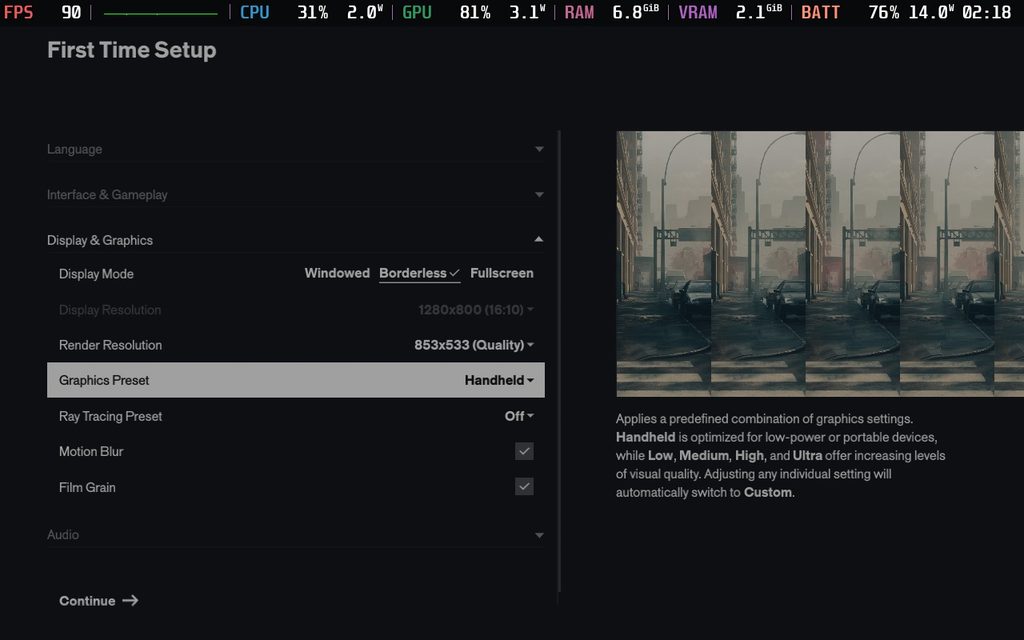
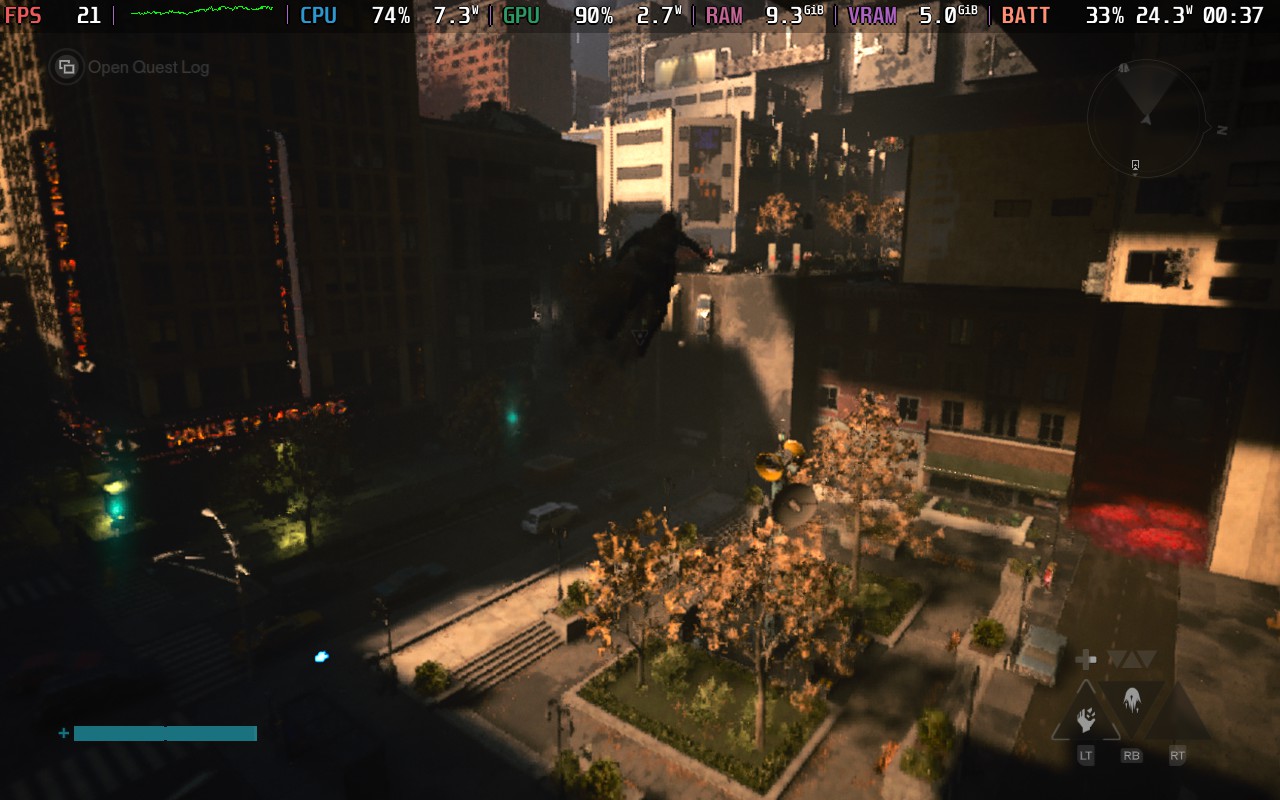
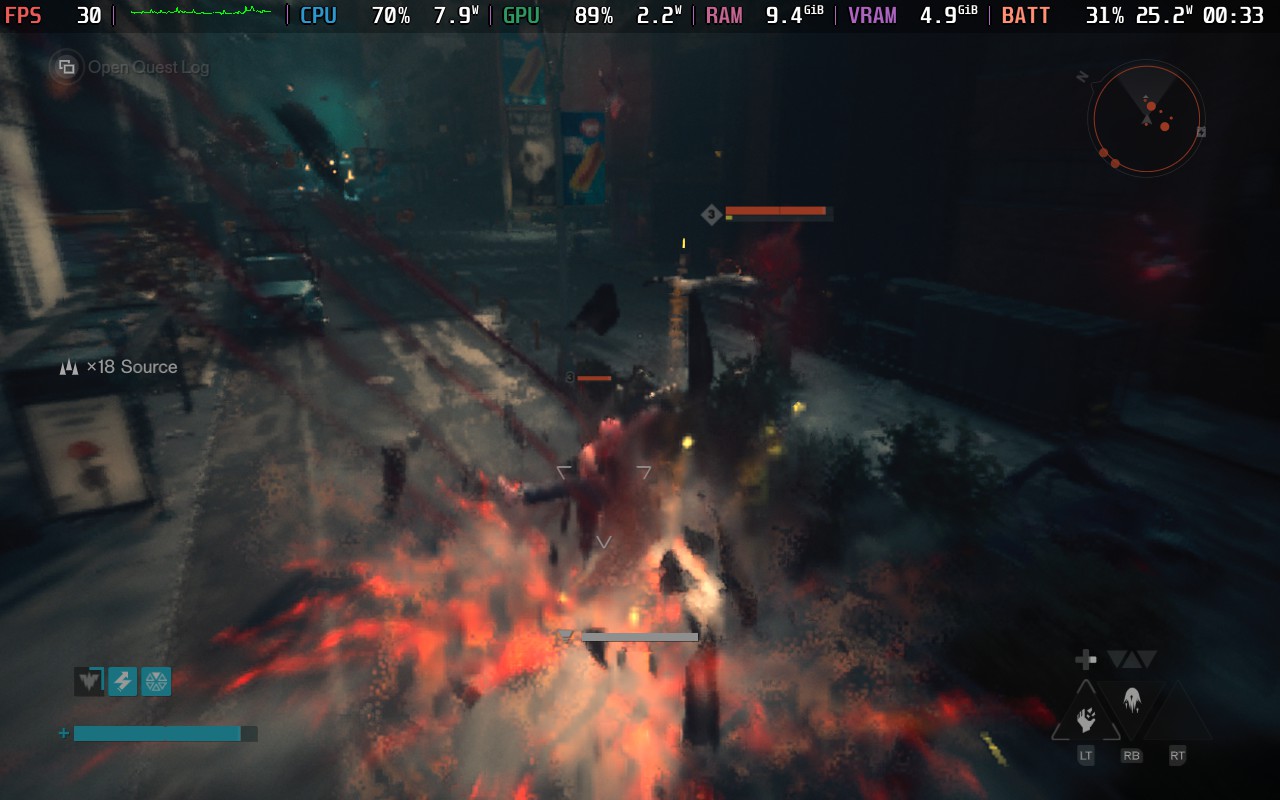
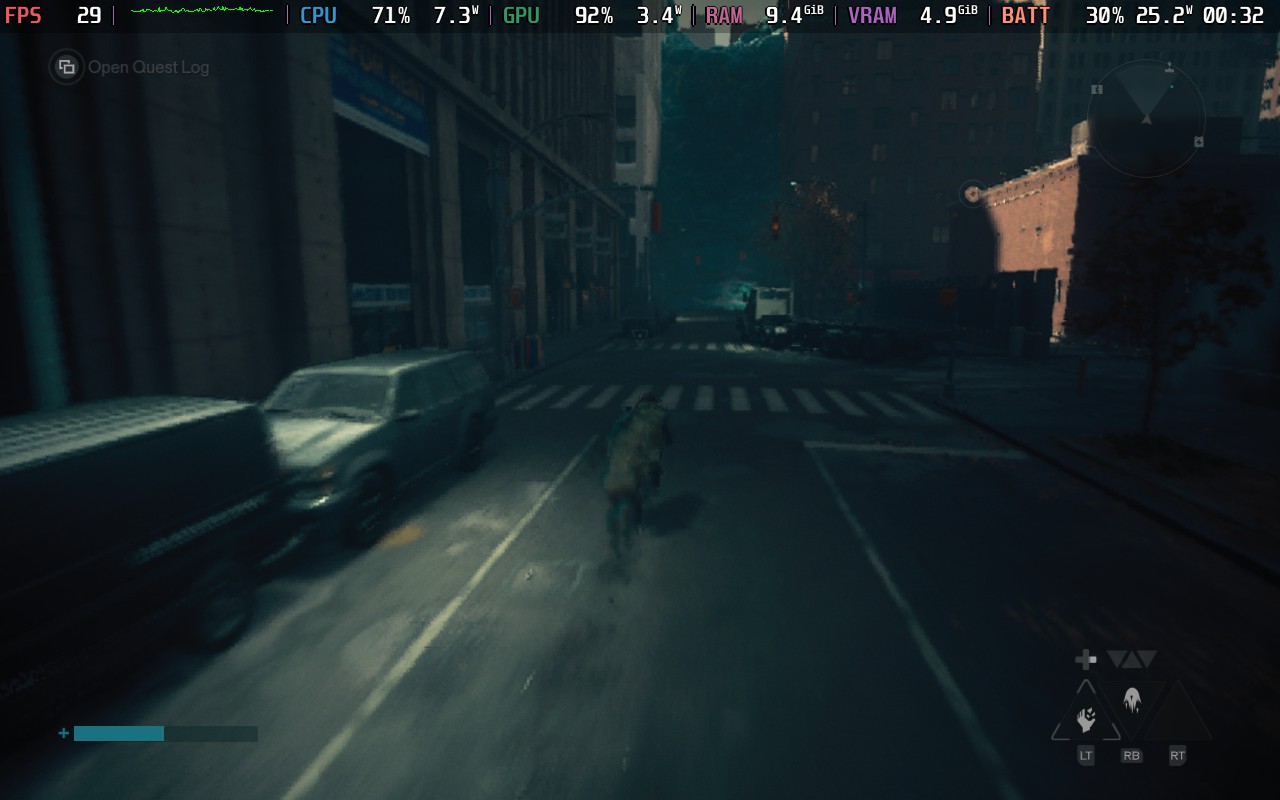
The contained areas run decently, and can hit 30 FPS at this handheld preset. However, as soon as we make our way to the open world, it all goes downhill from there. The game will constantly drop into the 20s, and sometimes even the 10 FPS range when running around the open world. I saw the worst of this in the West Incursion Zone, but it really happened everywhere to different extents.
Even on the lowest possible settings with Ultra Performance upscaling, it would still drop. The CPU usage is significantly higher in these moments, and it will bring down the experience significantly. This seems to be a general issue, since I experienced similar drops, to a lesser extent, on the much more powerful Xbox ROG Ally X. I would consider some spots of the game technically playable, and combat stuck to 30 FPS more than I expected, but I wouldn’t consider it an enjoyable experience all the way through on the Deck.
Control Resonant is a fantastic follow-up to a game I consider a classic. The story is intriguing and gets better as time goes on; the combat is exhilarating; its unconventional nature makes it more rewarding; and the incredible art direction makes it a blast to just run through the world. The minor faults in its early storytelling and “World Events” start to fall to the wayside as the great aspects of the experience take center stage. This is easily a must-have game for anyone who loves Action RPGs.
I do wish she was able to perform better on the Steam Deck, and I regularly found drops due to CPU usage. It’s possible that future patches may make it better, but as of right now, I would avoid playing it fully on the Deck.
Control Resonant is an incredible Action RPG that feels like a worthy successor to its predecessor, but it isn't great to play on the Steam Deck.