Every once in a while, you come across a piece of media that resonates with you for years on end. The emotional impact, countless hours spent absorbing the music, characters, atmosphere; it all comes together to create something uniquely mesmerizing. The kind of experience that makes you silently realize you're deep into one of your favorite games of all time.
Clair Obscur is the very first game from indie studio Sandfall Interactive, and before release, almost nobody expected it to become such a massive hit and dominate award shows the way it has. This small team of 33 passionate French developers delivered something gigantic, and its impact will likely leave a mark on the overall gaming industry for years to come.
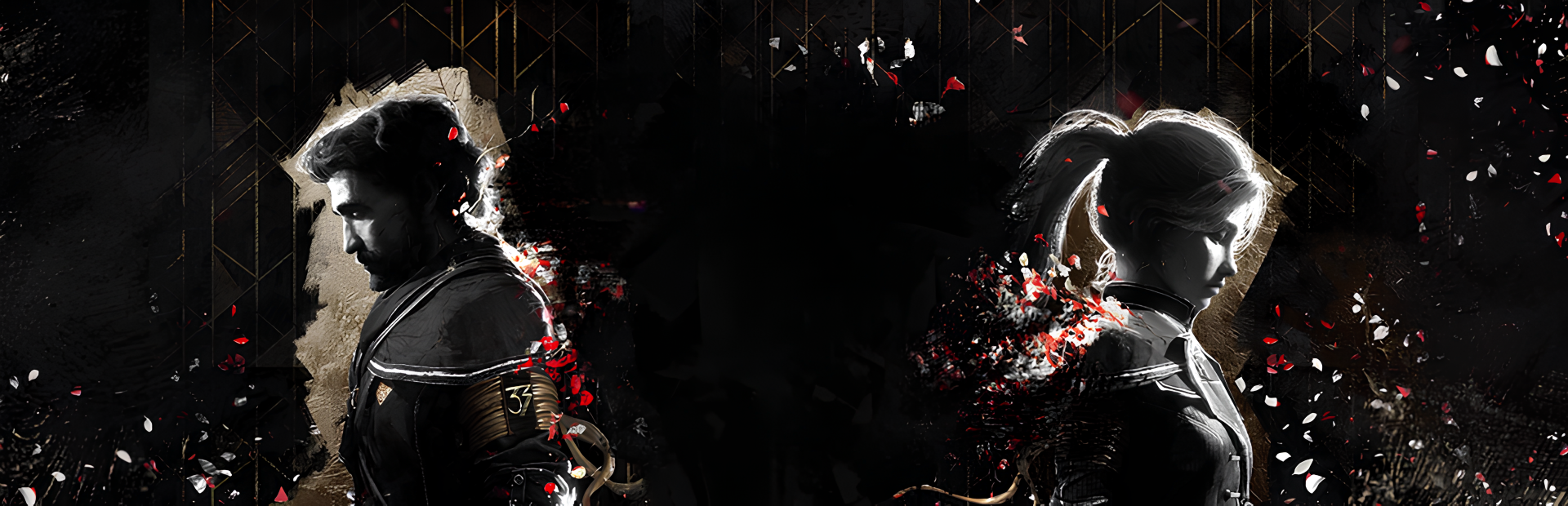
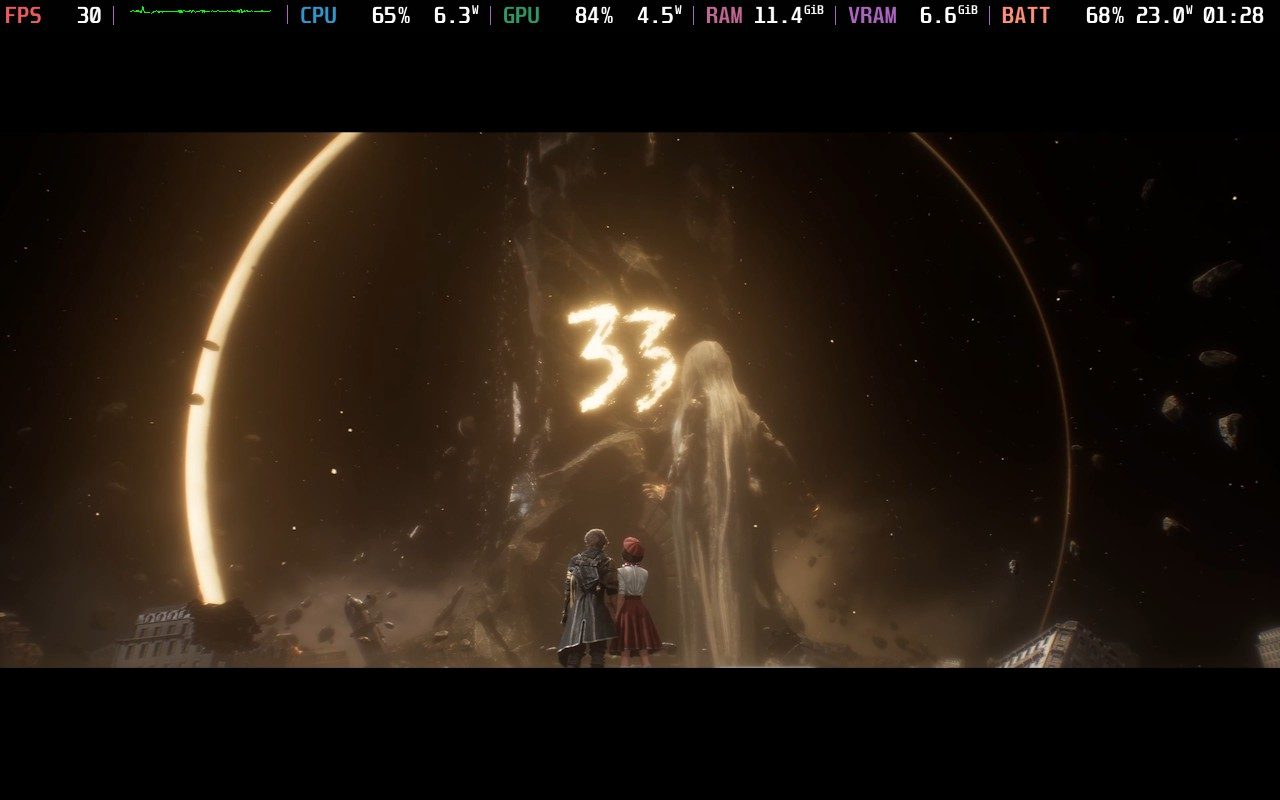
Set in a breathtaking dark fantasy world inspired by the Belle Époque golden age in France, Clair Obscur: Expedition 33 tells the story of a civilization slowly approaching extinction. Every year, a mysterious being known as the Paintress awakens and paints a number upon a massive monolith. Anyone matching that age instantly vanishes without a trace. With the number decreasing year after year, humanity sends an expedition into the unknown each time, hoping to find the Paintress and finally end the cycle. Expedition 33 follows the 67th expedition, a group of people marching toward an almost impossible mission, knowing that their own remaining time is running out. What follows is an emotional and deeply personal journey filled with loss, mystery, and the constant fear of inevitable death.
The story and writing are etched with a level of screenplay and dialogue quality that competes with film classics. Without diving into spoilers, the narrative constantly evolves through multiple emotional and philosophical layers. Much of the experience revolves around mystery, slowly connecting fragmented conversations, hidden meanings, and puzzling dialogue pieces together. That constant feeling of trying to understand the truth behind everything is what made the story so addictive.
Clair Obscur distinguishes itself from its peers through its characters. From major cast members to side characters you may only speak to once, nearly everyone feels carefully written and memorable. One of the smartest decisions in the script is that no character feels completely devious or maligned. The game masterfully captures the grey areas of humanity, constantly pushing the player to empathize with actions that may be wrong, desperate, or forced by circumstances.
Story and writing are personally the most important aspects of a video game for me. With most games, I usually find myself nitpicking certain flaws or decisions I didn’t fully like. But in Expedition 33’s case, I genuinely struggle to think of anything I would change. The writing quality throughout the experience is nothing short of masterful. It made me cry, laugh, reflect, and constantly kept me emotionally invested from beginning to end. It was a complete rollercoaster of emotions.
When it comes to gameplay, my favorite way of describing Expedition 33 is “the best of both worlds.” The combat system feels like a near-perfect blend of classic turn-based Final Fantasy combat and the reaction-based defensive mechanics of Souls-like games such as Sekiro: Shadows Die Twice. While adding active reaction mechanics into turn-based games is not an entirely new concept, Expedition 33 is in a class of its own.
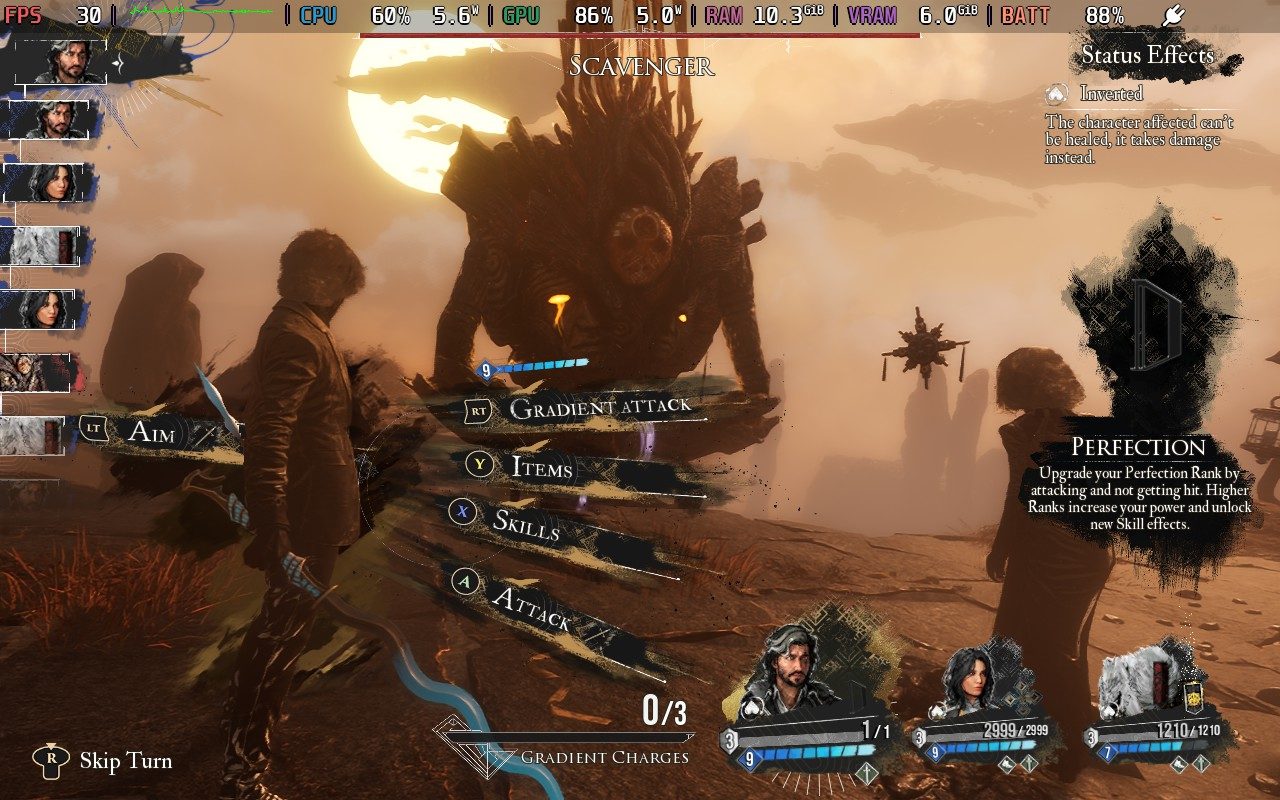
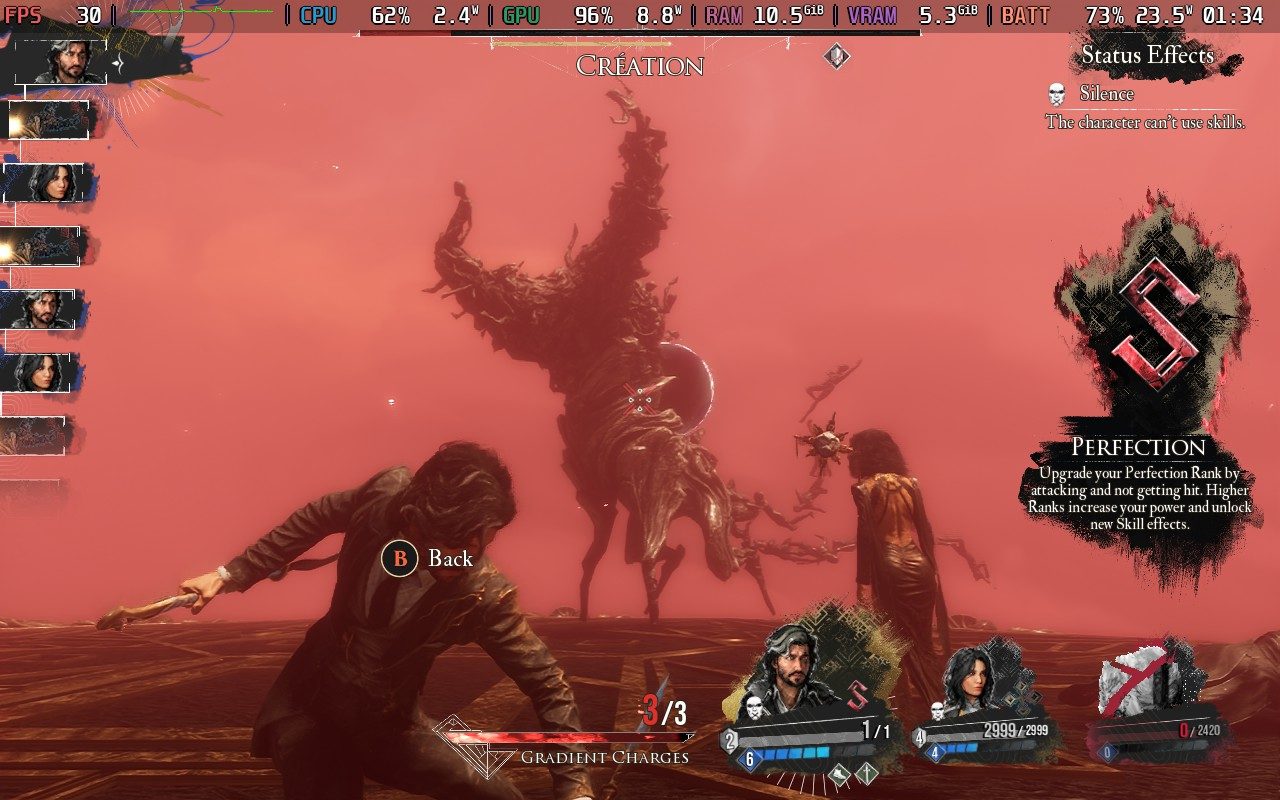
At first glance, combat starts like a traditional turn-based RPG. You build a party with different characters, unique strengths, playstyles, and skill combinations, carefully strategizing your way through encounters. However, once enemies begin attacking, the game transforms into something far more interactive. You can dodge, parry, or jump over attacks entirely through player reaction and timing.
Parrying, in particular, becomes one of the most satisfying mechanics in the game. It is extremely difficult to master, but also incredibly rewarding. Every successful parry grants AP, allowing you to build resources even while defending. Perfectly parrying entire enemy combos triggers devastating counterattacks that feel impactful every time. After hundreds of hours of gameplay, landing a full counter never stops being satisfying.
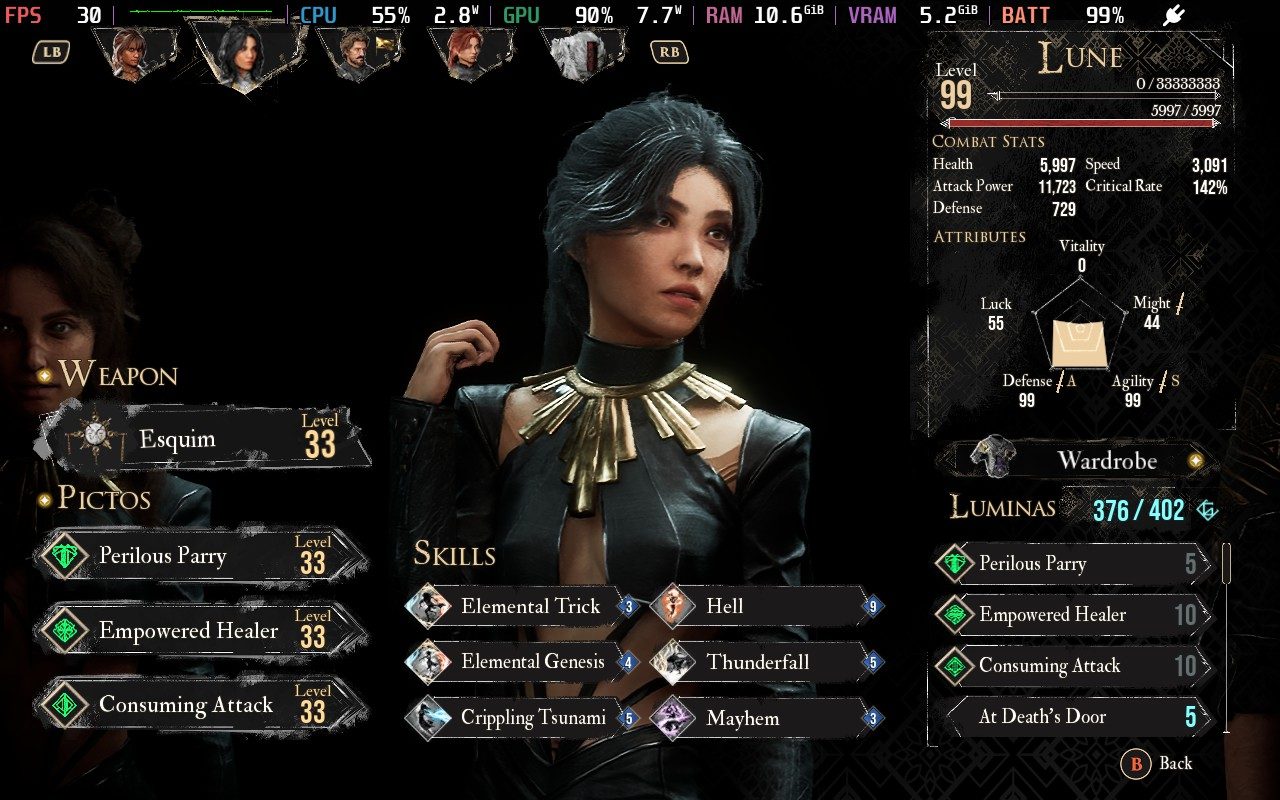
There are a total of six playable characters in the game, and each of them feels both unique and surprisingly deep mechanically. Each character introduces their own gameplay system and combat identity. For example, Lune functions as a mage who utilizes elemental “Stains” to create different effects and empower specific abilities, while Sciel fights using a card-based system that grants buffs, applies debuffs, and shifts her between different combat stances and modes.
The game also includes a character inspired by the classic “Blue Mage” archetype from Final Fantasy, allowing you to collect enemy abilities and use their own attacks against them. The amount of combat variety and combo potential across the cast is nuanced and contributes to the game's overall atmosphere.
On top of the turn-based combat, the game features a Free Aim system that feels like a small third-person shooter mechanic. You can manually target enemy weak points, interrupt attacks, or trigger special interactions during battle. What makes it even more impressive is how deeply this mechanic can be integrated into character builds. You can fully specialize certain characters around Free Aim and essentially turn them into machine gun-style damage weapons that seem to draw inspiration from first-person shooters. The sheer amount of build variety gives the combat system an unforeseen level of replayability and experimentation.
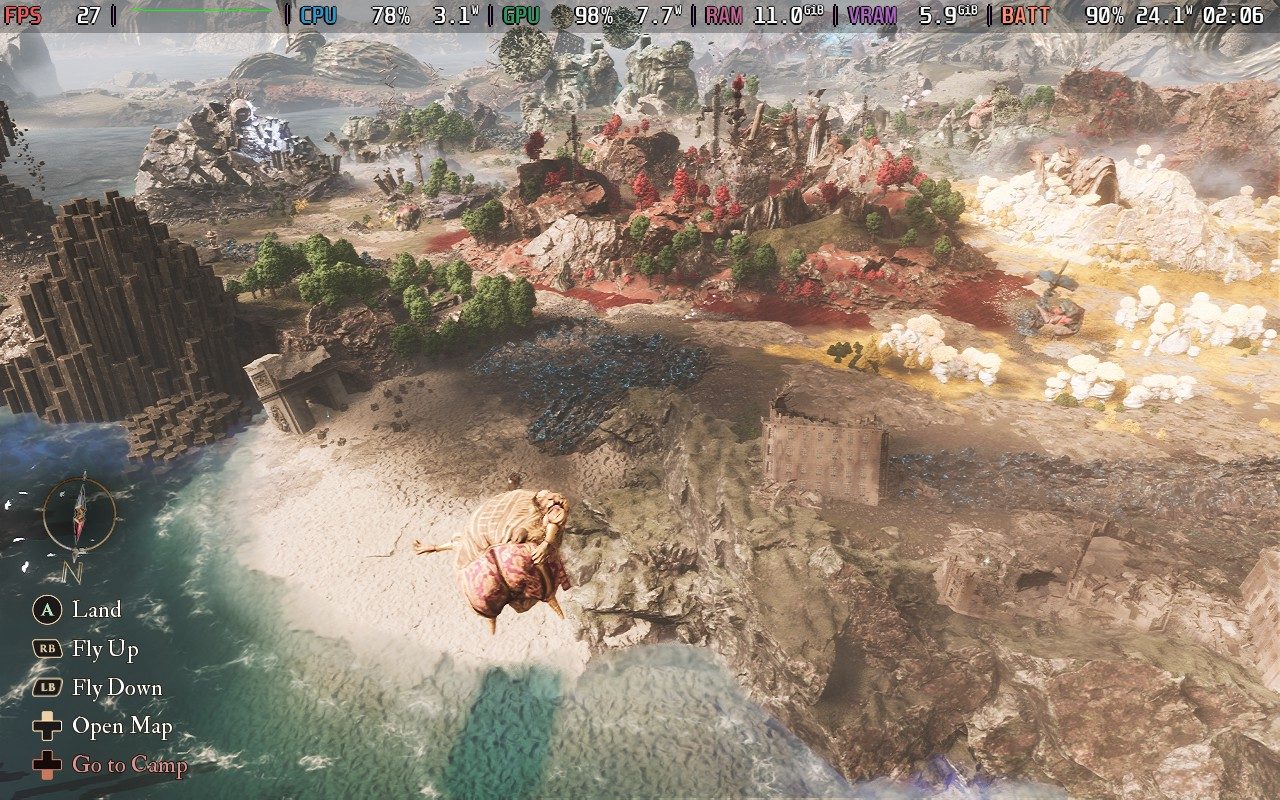
Clair Obscur: Expedition 33 uses a unique world structure that blends open exploration with more focused level design. While there is a large overworld where you can freely travel, fight optional bosses, discover loot, and unlock side activities, the main gameplay loop revolves around the game’s individual locations.
These locations function almost like large dungeon-style areas with semi-open layouts. They are filled with enemies, platforming sections, hidden paths, optional encounters, shortcuts, puzzles, and combat challenges, all of which constantly reward exploration. Each area is mechanically distinct, introducing new enemy combinations, traversal ideas, and gameplay scenarios rather than repeating the same structure over and over.
By avoiding the typical “open world checklist” design, the game becomes more enjoyable. Exploration feels focused and gameplay-driven rather than bloated, keeping a strong pace throughout the entire experience.
At first glance, character progression looks deceptively simple. You level up your characters, improve stats, unlock new skills, and equip stronger gear, much like you would in a traditional RPG. However, the game's real depth comes from its Picto and Lumina systems.
Pictos are special equipment pieces that not only provide stats but also unique passive abilities that can drastically change your playstyle. The clever part is that after winning four battles with a Picto equipped, its passive ability is permanently unlocked as a “Lumina.” Once unlocked, you can equip that passive separately without needing to keep the original Picto on your character, essentially letting you stack and combine countless different effects together.
Throughout the game, you constantly collect Lumina points that expand your Lumina capacity, allowing for increasingly powerful and creative builds. The feeling of gradually becoming stronger is satisfying, especially because the system constantly rewards experimentation.
There are well over a hundred different Pictos for Luminas in the game, creating an enormous amount of specialized build variety. Even after reaching the level cap for your characters, weapons, and equipment, you can continue farming Lumina points to further improve your builds. This progression system adds a huge amount of replayability, especially for New Game Plus runs where you can experiment with entirely different playstyles and absurdly powerful combinations.
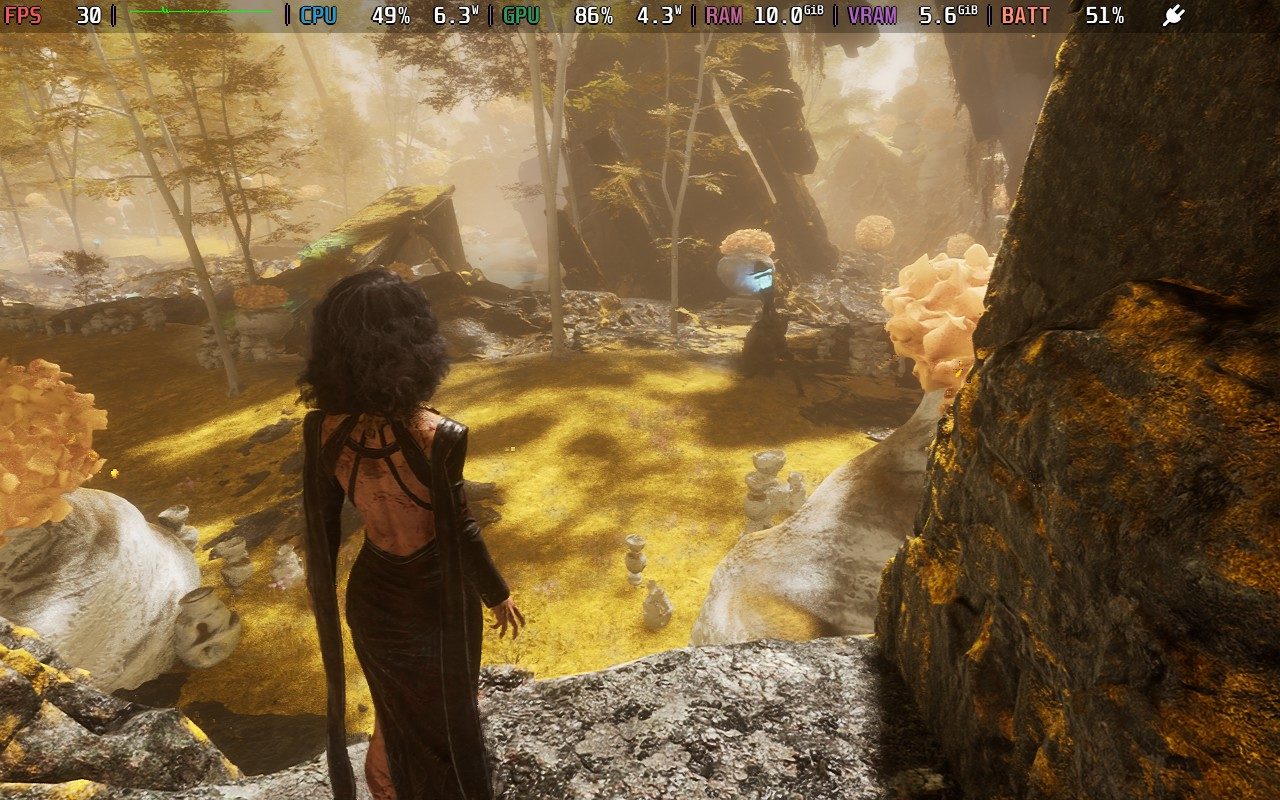
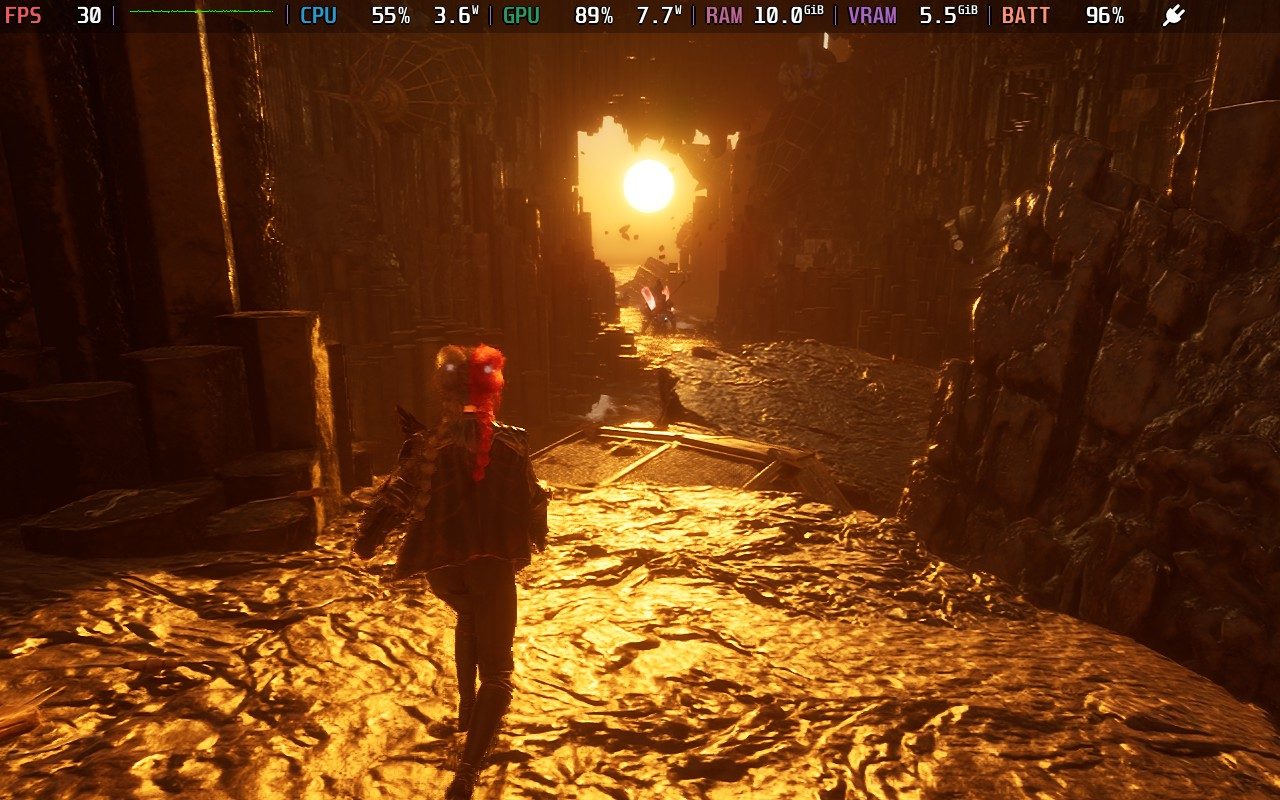
At first glance, the graphical quality in Expedition 33 may seem like a fairly standard Unreal Engine 5 presentation with solid but familiar texture work. What elevates the visuals is the incredible attention to atmosphere, particle effects, lighting, and artistic direction. Nearly every area in the game feels as if it were pulled from a painting, constantly presenting the player with unique visual themes and memorable scenery.
The game makes extremely smart use of cinematic techniques such as depth of field, lighting contrast, fog, and environmental effects to enhance the overall presentation. Rather than forcing realism through an enormous budget, Expedition 33 uses its artistic strengths intelligently, often masking technical limitations in ways that feel almost magical. The result is a game that looks breathtaking despite being developed by a relatively small team.
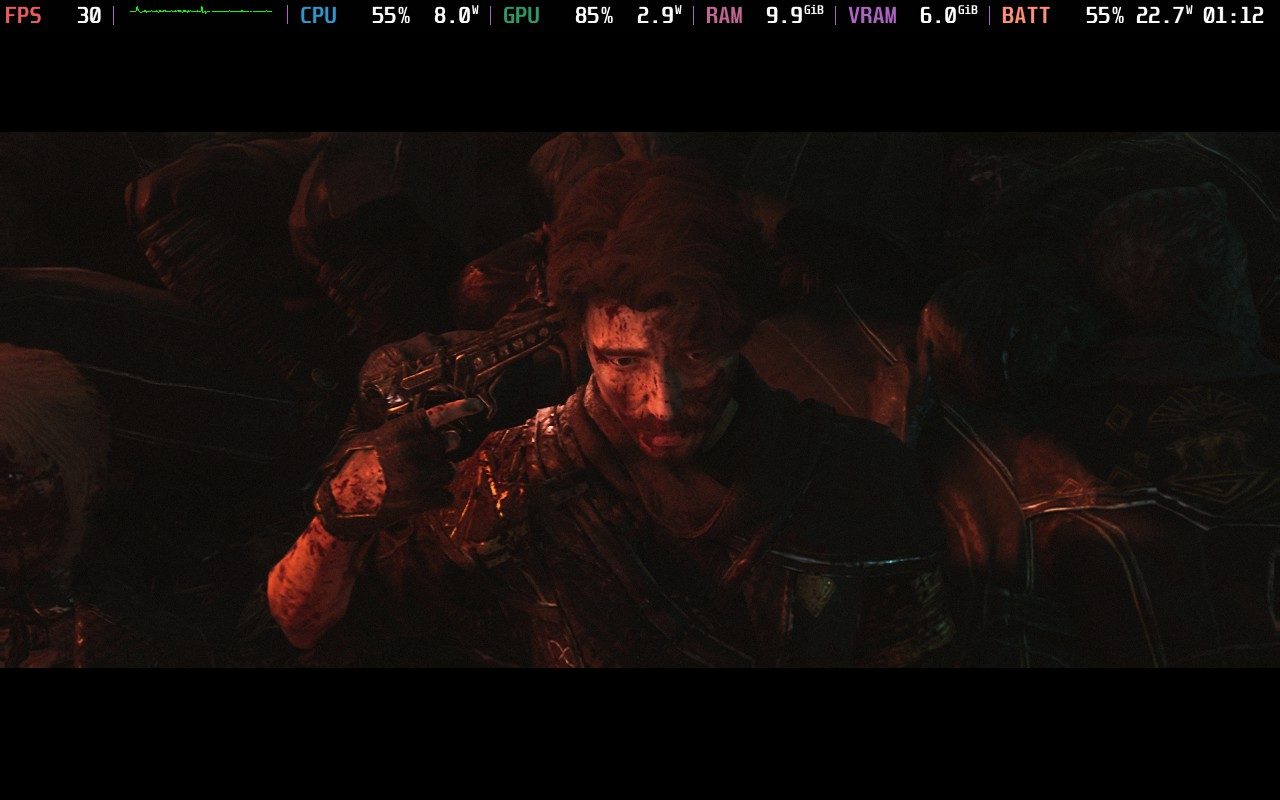
The cinematic presentation quality is so good that some scenes feel closer to watching a professionally edited, scripted movie than to playing a video game developed by a small team in France. And thanks to the talented motion capture performers and the game’s strong directorial vision, the cinematics become far more emotionally immersive than most RPGs. The facial animations, body language, camera work, and performances all come together brilliantly, making the visual presentation during story moments pull you deeper into the experience and make even simple conversations feel impactful.
The only noticeable technical issue I found was with the character models. Both important story characters and random NPCs can sometimes look a little too similar facially, making it fairly obvious that many of them share very similar base models underneath their designs.
While this is ultimately a minor complaint, it can occasionally diminish immersion and create unintended confusion during certain scenes. At times, I found myself wondering whether a character was intentionally connected to another, related somehow, or part of a future reveal, simply because some faces looked so similar. It’s one of the few areas where the game’s smaller budget becomes slightly more noticeable.
Also, the aggressive use of depth of field causes some blurriness issues. On hair, it causes an effect that looks a little bit underwhelming. But other than that, the game looks absolutely gorgeous.
Music... music... music... I seriously don’t even know what to say here. I feel unqualified trying to review Lorien Testard’s work because the soundtrack is simply awe-inducing. With 154 different tracks, this is easily one of the most robust soundtracks I’ve ever heard in a video game.
The differentiation is insane. Some tracks are emotional and melancholic, some are peaceful and atmospheric, while others suddenly turn into intense boss themes that make fights feel ten times more impactful.
What makes it even more special is how memorable everything is. Hours after playing, I still had multiple tracks randomly stuck in my head. The music carries so many emotional scenes and elevates the entire experience constantly. There were moments where I just stopped moving for a minute and listened to the sounds coming through my speakers.
Sound design and voice acting, as presented, are top-tier. The impact and feedback during combat feel incredible, especially when it comes to parries and powerful skills. Every hit, counter, explosion, and attack has this heavy, satisfying feeling to it that makes combat even more addictive.
Voice acting is fantastic across the entire cast as well, with emotional scenes feeling natural and believable instead of overly dramatic or forced. Honestly, the entire sound package, from music to effects to performances, is a work of art.
I want to start with a small disclaimer here. If you simply download the game and play it using the default “Verified” settings, you are honestly going to have a pretty terrible experience. Out of the box, the game uses heavily restricted settings that look extremely blurry, suffer from unstable performance, and introduce noticeable input delay due to the uncapped fluctuating frame rate.
By default, the game does not properly allow you to lock the frame rate, meaning performance constantly jumps around between 30 and 50 FPS, depending on the area. In most games, this would already be annoying, but in a reaction and parry-heavy game like Expedition 33, inconsistent frame pacing actively hurts gameplay.
Thankfully, there is an easy workaround. By adding:
SteamDeck=0 %command%
into the Steam launch options, you can bypass the game’s restricted Steam Deck preset and gain full access to the graphics settings menu, including proper frame rate limiting options. This alone massively improves the experience and immediately makes combat feel far more responsive.
The second thing I highly recommend doing is injecting an FSR 4 file. Thankfully, this process is extremely simple and dramatically improves image quality without heavily impacting performance. There are multiple ways of doing it, but the easiest method is downloading the amd_fidelityfx_upscaler_dx12.dll file directly from AMD’s official files and replace the existing one through Desktop Mode.
Once both of these tweaks are applied, the visual difference is shocking. The game transforms from a blurry, unstable mess into one of the sharpest and most visually impressive games available on Steam Deck. Here’s a comparison between the default FSR 3.1 implementation and FSR 4 running on the Performance preset.
比較する
FSR 3.1
FSR 4
\
FSR 4
FSR 3.1
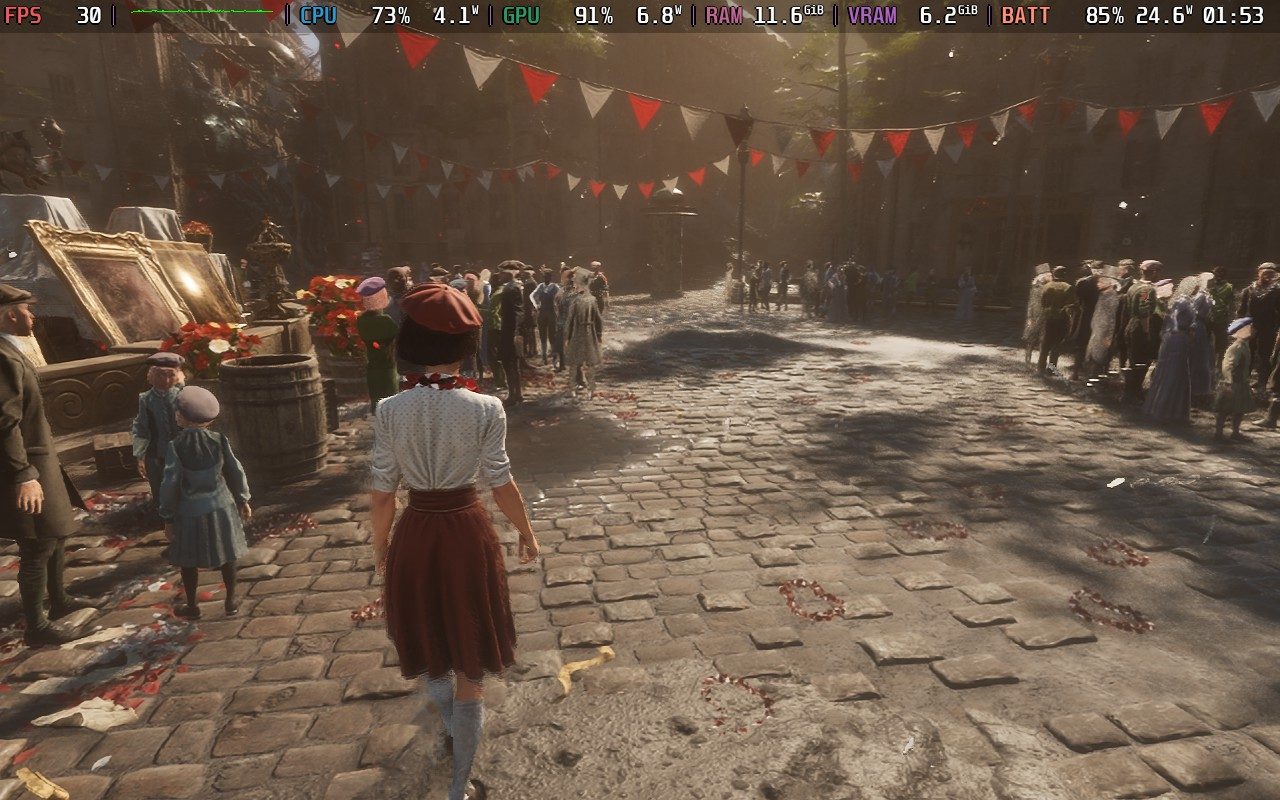
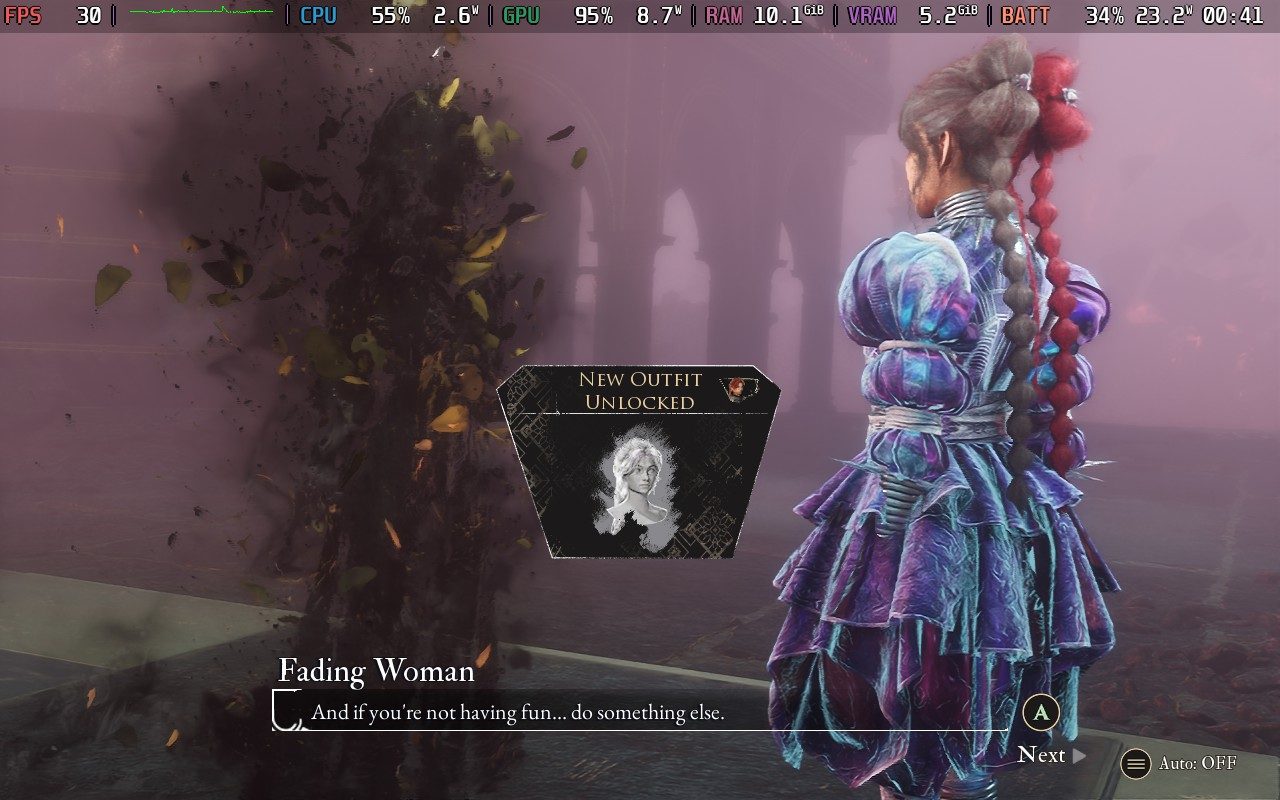
Once properly configured, the game manages to hold a surprisingly stable and responsive 30 FPS lock on Steam Deck for the vast majority of the experience. Around 99% of gameplay feels smooth and consistent, which is extremely important for a reaction-heavy combat system like this one.
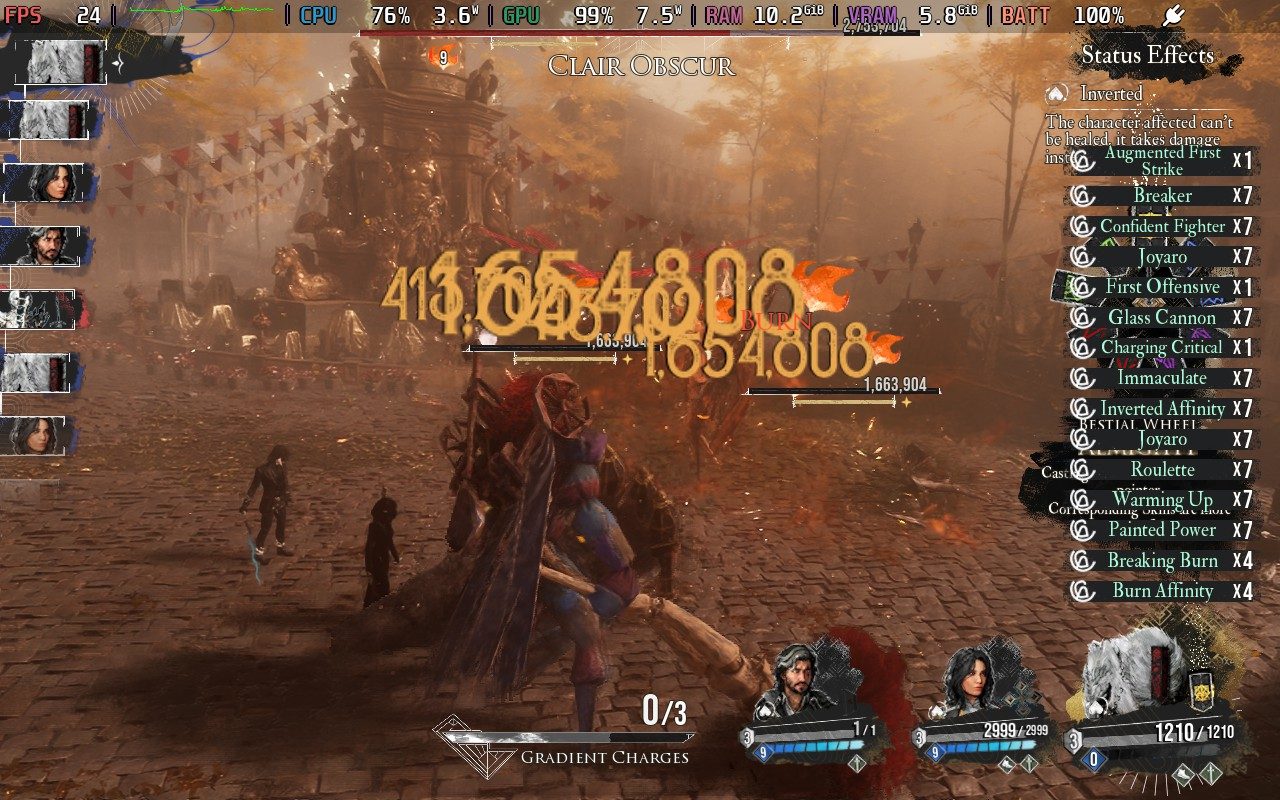
There are a few exceptions. Some larger open-world sections and certain chaotic 3v3 encounters can occasionally dip into the 24-27 FPS range, but these drops are relatively minor and rarely occur during actual gameplay. Overall, the experience still feels very comfortable and responsive on the Deck.
There is little visual sacrifice made while using lower settings. Even on desktop hardware, the difference between the lowest and highest presets is surprisingly subtle in many areas. Thanks to the game’s creative use of art direction and lighting, Expedition 33 still looks absolutely gorgeous on Steam Deck despite running on the lowest available settings.
結論
Clair Obscur: Expedition 33 is one of the rare games that reminds me why I fell in love with video games in the first place. Between its masterfully written story, unforgettable characters, addictive combat system, incredible soundtrack, and beautiful artistic vision, this is an experience that will stay with you long after the credits roll.
On Steam Deck, the experience is also far better than the default settings initially suggest. While the out-of-the-box “Verified” profile is disappointing, a few simple tweaks transform the game into a surprisingly stable and visually stunning handheld experience.
It feels surreal that this is the very first game from Sandfall Interactive. If this is what the studio is capable of on their debut title, I cannot wait to see what they create next. Clair Obscur: Expedition 33 is not just one of the best RPGs I’ve played in years. It is probably the best game I've ever played, period.
Clair Obscur: Expedition 33 is one of the rare games that reminds me why I fell in love with video games in the first place, and it's a great experience on Steam Deck after some tweaks.
Onat has been immersed in gaming since childhood, witnessing the industry evolve across generations of hardware. Over time, his curiosity shifted from simply playing games to understanding how they run. A former competitive fighting game player, he developed a deep appreciation for performance precision, responsiveness, and mechanical depth. Today, he specializes in handheld performance optimization, particularly on the Steam Deck, analyzing frame pacing, power efficiency, and graphics scaling to push portable hardware to its limits.
SteamDeck=0 %command%
FSR4 Injection
Performance Preset
30 FPS In game Lock
Lowest settings
バッテリーの予想使用時間と温度
25W
80C
2-2.5 hours
コミュニティーの評価
0
0
0
0
Let us know what level of playability you consider Clair Obscur: Expedition 33 to be. Help our community determine the viability of playing this game on Steam Deck!









Beyond the updated AMD file, what settings did you end up using? Everything on low? Performance or Quality?
It's in our recommended settings listed there. Lowest settings with performance preset.