CLAWPUNK was provided by Megabit Publishing for review. Thank you!
Clawpunk is one of those games that might be just what you need after a hard day at work. You have little energy to do much but vegetate in front of a TV, and then you remember video games exist. You decide to boot up Clawpunk and spend the night ripping through destructible terrain and slaughtering enemies as a collection of mysterious cat mercenaries.
As I discussed at length during my review of Big Hop, I’m not much of a platformer guy. Clearly, our editor took pity on me for my next game to review, which is why I got to play the madhouse that is Clawpunk. It launched last year in mid-November, and after spending the last two weeks with the game, I’m amazed it hasn’t received more attention. I love hidden gems, and Clawpunk deserves so many more eyes on it. Not only is it a solid roguelike with tons of charm and depth, but it’s a great experience on the Steam Deck.

The first thing that drew me to Clawpunk is how much it lets you vibe. From the moment I booted up the game, this title’s music and aesthetics sucked me right in. The loading cutscene sets the narrative of what to expect. Feral City has fallen under the control of several nasty gangs, and it’s up to you to reclaim the city with a crack team of fearsome kitties through an action-packed series of platforming challenges.
There is a solid tutorial to learn the ropes that’s separate from the main game, and I always appreciate games that have a separate game mode that you can dive into whenever you need a refresher. You’re going to need all the help you can get with Clawpunk because this is a brutal game that’s deeper than it looks.

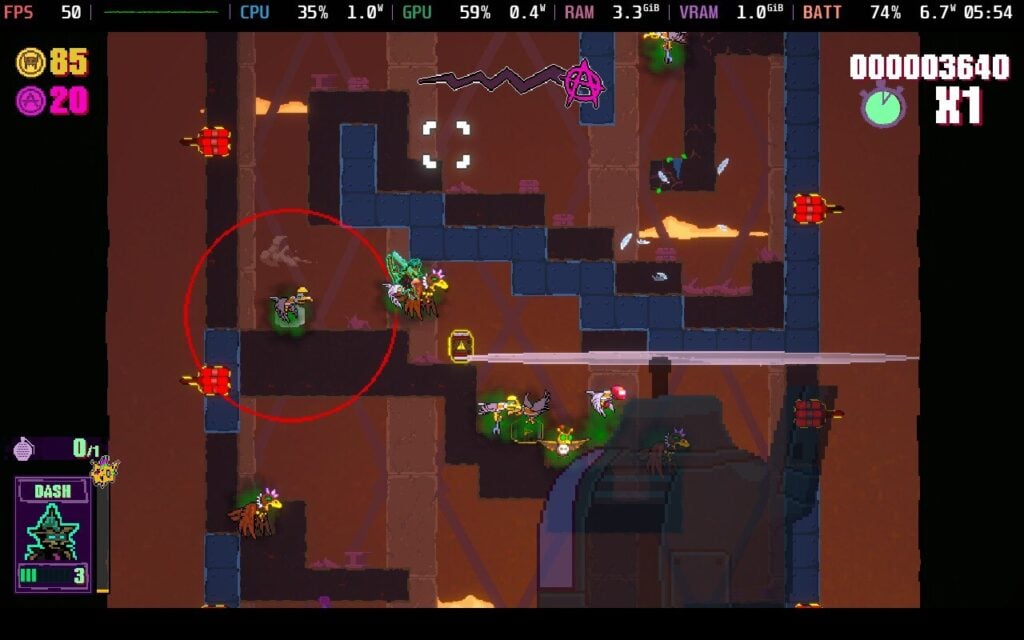
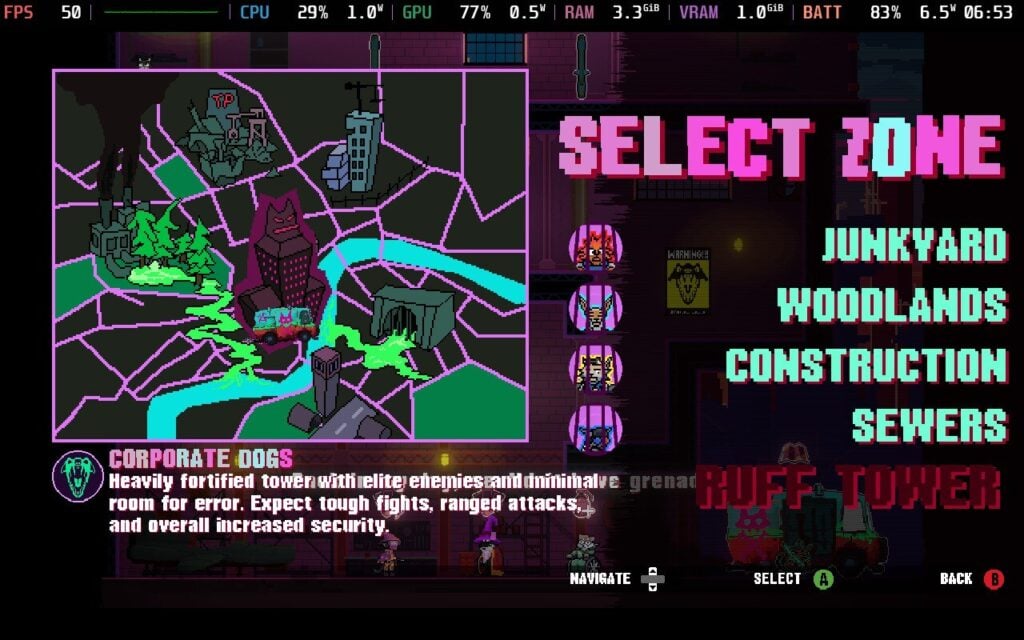
At its core, Clawpunk is a fast-paced hack-and-slash platformer with five worlds with multiple stages in each to navigate. What’s cool is that apart from the last stage, which is only unlockable by completing all previous areas, you can run through the others however you like, and can travel to all four from the beginning. Players start with Dash, an incredibly fast but weak cat with a katana, and unlock perks along with the other eight cats of doom from there. Environments are all destructible, and the goal of each stage is the same: to reach the safehouse at the bottom. It’s an interesting approach to the mission design because while it’s a simple plan in theory, the game throws plenty of curveballs and tools at you to achieve that.
Mortality is rampant, with common enemies and your own army of feline mercenaries possessing squishy bodies. There’s always a ton of threats to navigate from diverse enemies to environmental traps such as dynamite and pools of acid, and you will die often. Clawpunk’s core gameplay is probably its biggest strength, blending great difficulty with an interactivity that really impressed me. The game is extremely punishing, but once you’ve unlocked a couple of extra mercs, things do ease up a little. Your run only ends in defeat when all your unlocked roster dies.
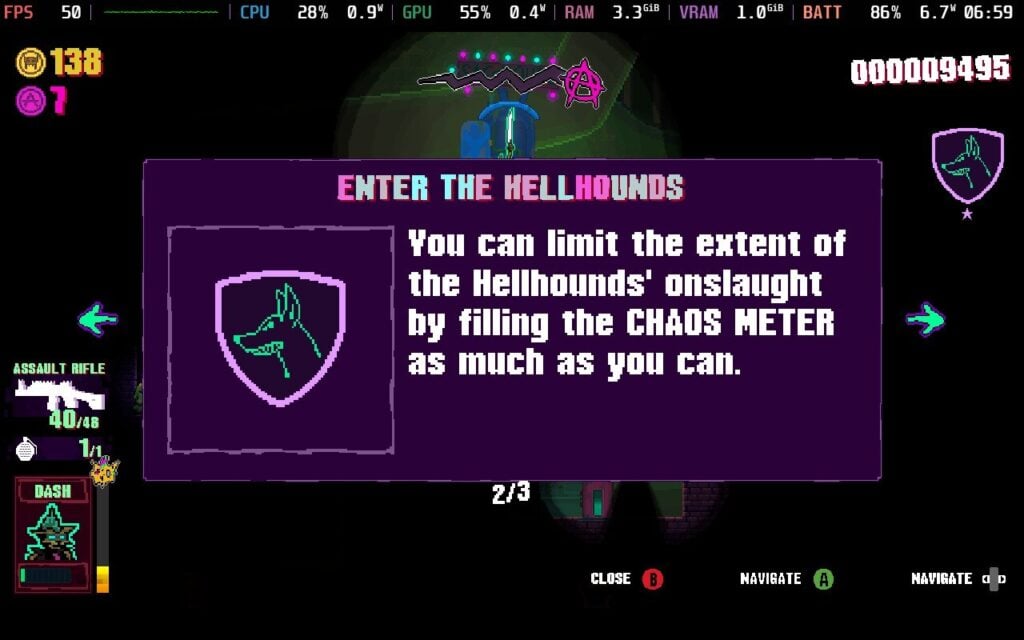
The goal of reaching the safehouse is always there, but the game rewards you for killing as many enemies as possible, rating your competition with a tier system depending on the destruction caused, how much damage you took, and so on. What I also found interesting is the Chaos mechanic. Destroying things and killing enemies all feed this meter, and if you don’t fill it before escaping the stage, your notoriety will increase. It will also increase if you get detected by security cameras.
When this meter goes up enough, the gangs in control of Feral City will send elite troops after you. These things hit even harder than the grunts, so you need to be very careful between balancing chaos and rushing to the finish line. Completing stages is important, but you are sending a message to the gangs as well. It’s an intriguing way of doing things.
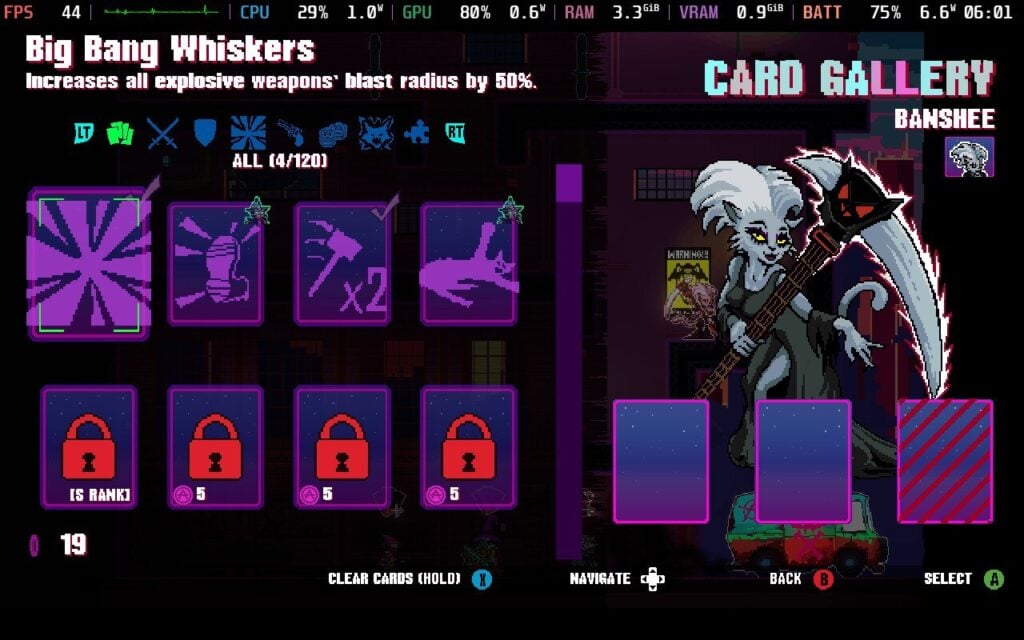
The levels are short and sweet in most cases, but despite that, there are plenty of things to do. Collecting purple coins allows you to upgrade stats and unlock new characters in the Airfield, which serves as the hub between runs. There are some things to do as new characters turn up, and you get to practice the platforming between missions, which is nice. Collectible cards can also be added to characters to unlock a ton of modifiers, which only improves the flexibility.
Between the gorgeous visuals, destruction physics, and fast, brutal gameplay, there’s plenty to like with Clawpunk. I have a couple of gripes with figuring out which character is who. With so much happening on screen, it can be hard working out where my feline avatar actually is. More than once, I lost track of where I was and got killed in the confusion, but this is more of an issue with the smaller characters and isn’t a dealbreaker. The difficulty curve is also pretty steep, more than in other games in the genre, which might cause some players to struggle with it. Despite these minor drawbacks, Clawpunk deserves far more attention than it currently has.
Clawpunk is rated Steam Deck Verified by Valve, and it carries an Unknown rating on ProtonDB. The latter is mainly due to the relative lack of attention the game has received in the endless ocean that is the indie game market, but Clawpunk is an excellent experience on the Steam Deck.
That’s just as well, because there isn’t any room to mess around with settings-wise. No graphical options exist, and there’s no way to really change keybindings either. Fortunately, the controller support is out of the box, and I’ve had no complaints about performance. Font size can be a little tricky to read due to the lack of UI scaling, but this isn’t a game where you have to read that much.
With our options limited, there is only one preset we can really use. With a native resolution, 60hz refresh rate, and default TDP, Clawpunk holds a steady 60FPS even in the heaviest action sequences. The controls are fluid despite having no way to adjust them as well.
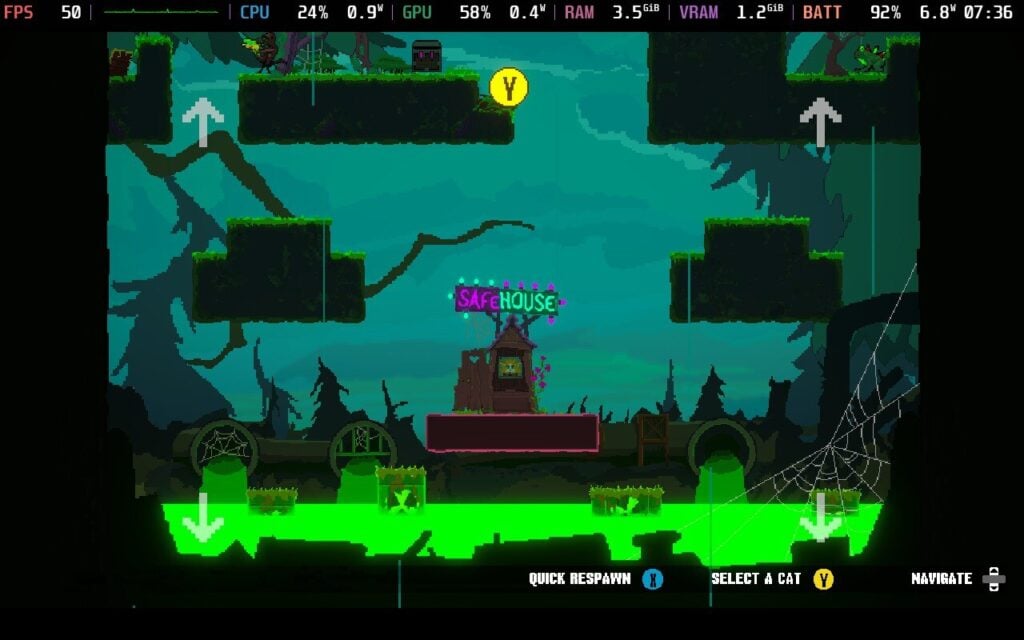
With the full TDP running, Clawpunk still does decently with battery life. Despite the low-end visuals, the full destructive terrain and screen action can make things pretty hectic. I saw an average power draw of 12 watts during these scenes, which will provide around 4 hours on the Steam Deck OLED during combat.
I tried tinkering with the TDP to see if I could improve the battery life, and a 4-watt TDP kept the framerate around 30FPS with a 7-watt average power draw. While this is a big improvement in overall battery life, I still recommend sticking with the native TDP to ensure the smoothest gameplay possible.
Clawpunk is available in English, French, German, Spanish - Spain, Dutch, Japanese, Portuguese, Traditional Chinese, and Simplified Chinese, although only English has full audio.
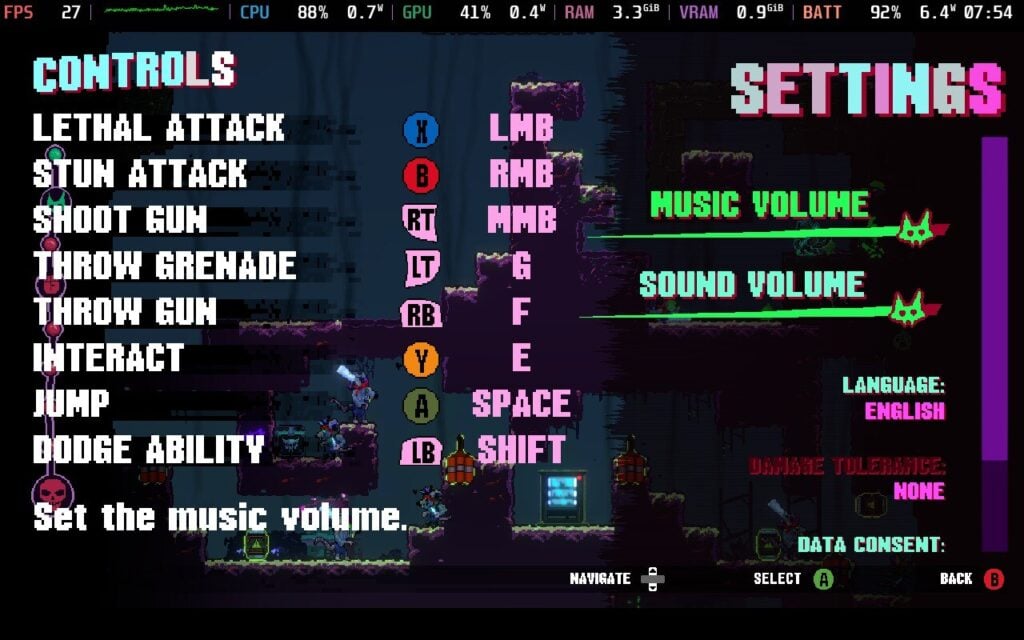
Clawpunk’s biggest problem lies with the lack of accessibility options, unfortunately. There is a lack of colorblind options, no way to change keybinds or button prompts, and a lack of graphical settings that can be adjusted right now. Players can choose to disable data collection, adjust damage tolerance, and change sound volume, but that’s about it.
Sometimes, even good games fall through the cracks due to the sheer number of titles that exist, especially in the indie gaming scene. After playing Clawpunk, I hope more people discover this. It might not do anything wholly new or unique, but it does a great job with almost everything that matters. The addictive gameplay and amount of content kept me invested, and Clawpunk has great character.
The steep difficulty curve and lack of accessibility options might put some players off, but this is a great complement to the Steam Deck library.
Our review is based on the PC version of this game.
If you enjoyed this review, be sure to check out the rest of the content on SteamDeckHQ! We have a wide variety of game reviews and news that are sure to help your gaming experience. Whether you're looking for news, tips and tutorials, game settings and reviews, or just want to stay up-to-date on the latest trends, we've got your back.
Towa and the Guardians of the Sacred Tree was provided by Bandai Namco for review. Thank you!
Not too long ago, I had the pleasure of checking out Towa and the Guardians of the Sacred Tree ahead of its release for a preview, and it captivated me. I loved the visuals, the combat was solid, and the customization options, like swordsmithing, were awesome. With so many roguelikes out there right now, especially ones that take the Hades-style and try to make their own version of it, these games have to really stand out and make an impression. While there are parts of Towa I really like, and it does stand out, the execution of it all makes it a less enjoyable experience than it could be.
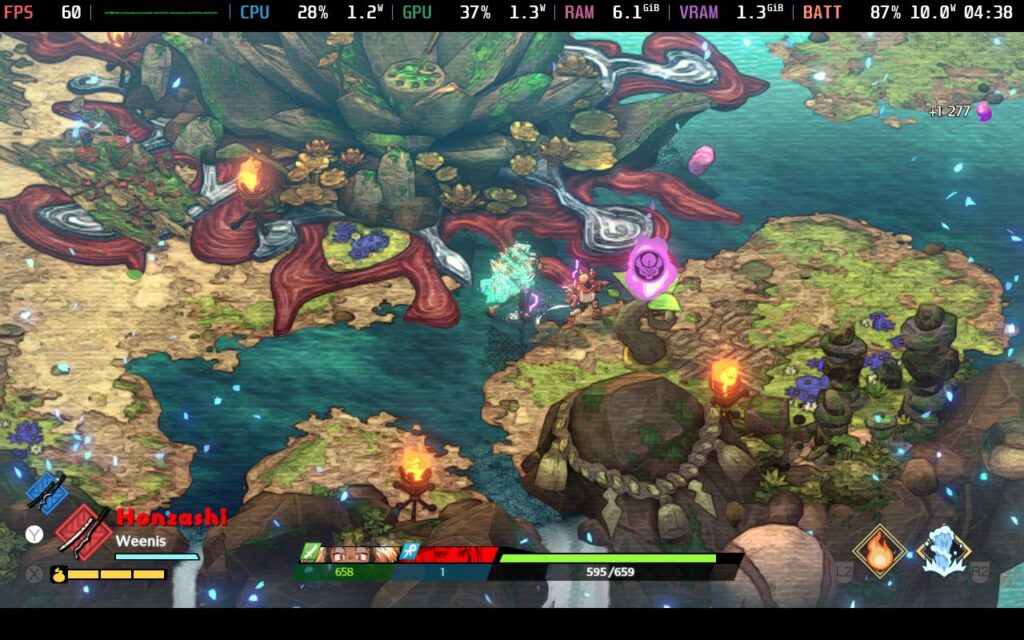
The aspect of Towa that truly stands out immediately is its presentation. Visually, it's gorgeous. I love the vibrant art style and great character designs. The environments are really beautiful as well, with a decent variety throughout the town and the biomes we will encounter. The characters themselves are pretty interesting and the voice acting is great as well. Mix in the fantastic soundtrack, and we have a game where it's just a joy to be in.
The story takes center stage here as well, and while it is interesting, there are some holes that keep me from loving it. You are on a quest to bring peace back to the land, playing as nine fighters, all with varying personalities and movesets, with Towa as their guide. You have to fight against Magatsu and the evil that sprouts, all to restore the timeline and bring your well-deserving heroes home.
The tale aims to be an emotional one, where the bonds between the heroes, Towa, and Shinju Village come center stage. It's intriguing watching it all unfold, and while there are some genuine moments tucked in, it doesn't always hit the mark. There are a lot of conversations between the people and our controllable heroes, to the point where it feels like it can interrupt the gameplay. This is a fast-paced roguelike, so it feels a little off to sit through long conversations when going into runs consistently is the focus.

The emotional moments do hit in the moment, but can feel sullied later on. The gameplay is structured similarly to story chapters, where you move to the next chapter once you complete the run. However, at the end of it, we have to sacrifice one of our heroes. It's sad, and the decision can be tough as we slowly whittle down our options of heroes to keep alive with us. In a way, this feels sullied later on in the story, which I was a little let down by. It also just feels like the heroes don't care as much, seeing that they have to sacrifice their companions. On one hand, they are prepared for it, but on the other, they seem pretty content to just go with the flow.
I do like seeing how the town evolves and changes as the story progresses. It's an interesting idea that I thought was captivating as people we knew and had met previously had grown up or passed away. This made coming back to the village after each chapter and talking to people to see what had changed more enjoyable.
If you have played Hades before, then the gameplay of Towa and the Guardians of the Sacred Tree will come like second nature. You run around and attack enemies, using your assortment of moves, dodging, and upgrades you get in each run to make yourself more powerful and get as far as you can. It's fast-paced, chaotic, and when everything works, it's a ton of fun.
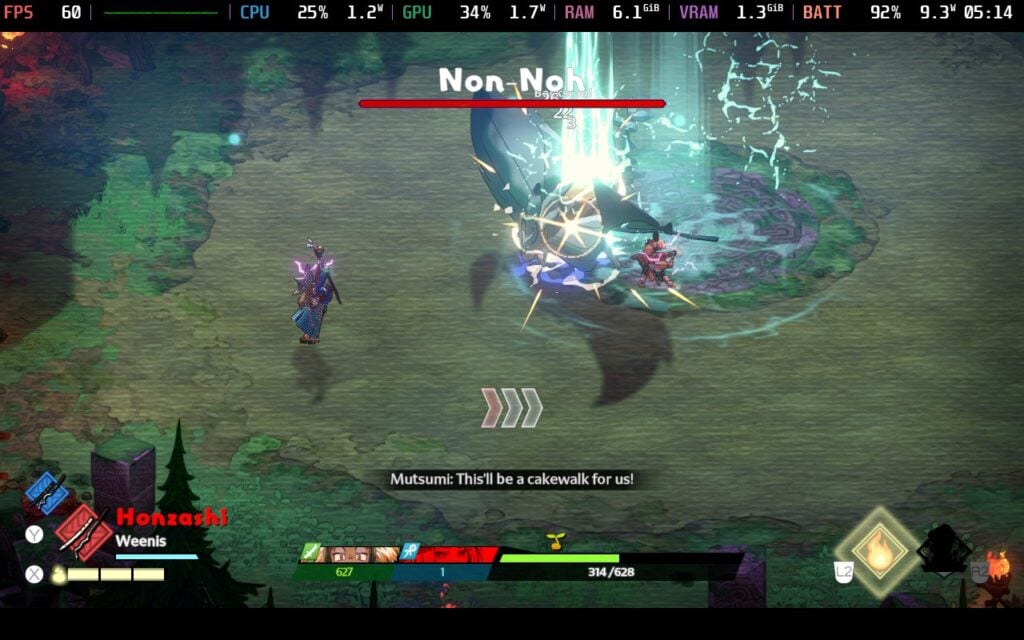
To separate itself from the pack, Towa has you controlling two characters instead of one. You have a primary that you mainly control and attack with, and the other who will cast two different spells to assist you. Each has their own health bar, and you only lose once both characters have lost all their health and die. We also have two swords to manage, with one giving us a basic combo attack and the other being a chargeable Area of Effect attack. They each have durability, so we will have to continuously swap between the two to deal maximum damage.
The more unique in-run progression grew on me the more I played as well. Instead of just flat upgrades, we have an assortment of themed upgrades to modify our run. These are sectioned off by their secondary abilities, usually giving a damage increase while also a modifier, like a gust of whirlwind coming out for extra damage or regaining some health with each hit. There can only be one upgrade like this per type of damage you do, so you can only have one linked to each sword, quick draw, and Fatal Blow attack. This wasn't something I liked at first, but being able to link different modifiers to the different attacks was interesting. There are also some standard upgrades as well, like increased attack speed or reroll attempts, as well as some spots in-game to just heal up, shop, or get temporary buffs.
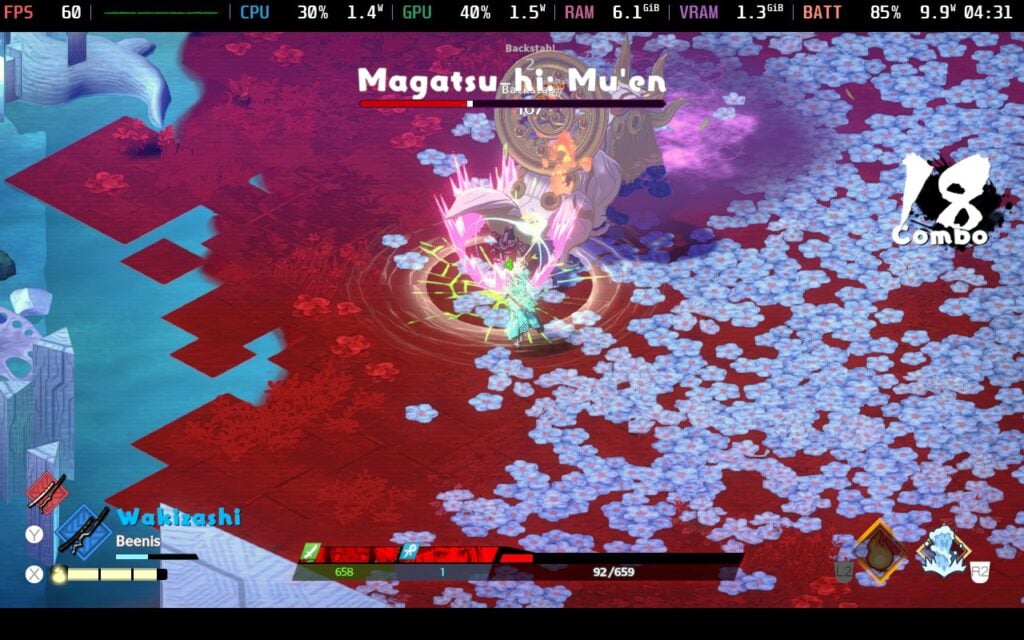
Outside of each run, there are a variety of ways to improve your stats. My favorite of which is creating and forging your own sword. It's a pretty in-depth minigame that allows you to customize your own sword, changing an assortment of stats along with it and how it looks. This is quite possibly my favorite part of the game, and I loved creating some crazy looking swords that I could somewhat see when fighting. There are upgradeable Virtues to help heal more in-run, Jewels to modify what kind of rewards you could get, Skill Points to boost base stats of each person, Inscriptions to further modify health and different attacks, and the ability to construct and upgrade buildings that can affect your runs. While each person has their own skill points, I do appreciate that when we get more points, it applies to all of our fighters instead of just one.
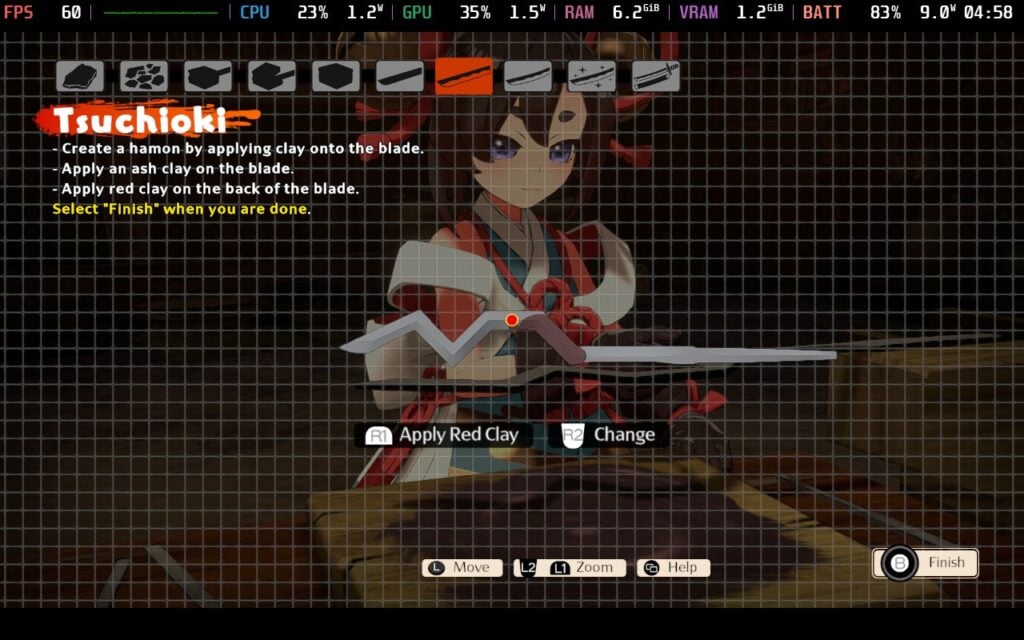
While the combat and its progression systems grew on me, there were a couple of issues that reared their ugly heads just as often. With how frantic combat could be, I found it hard to predict where the enemy would attack, and in the chaos of battle, I would end up being struck. The red outlines of where the enemy would attack blended in with the chaos just too easily, and I would suffer the consequences.
This led directly into the next big issue I had, balancing. Especially in the beginning, it feels like enemies just have too much health and deal too much damage. This is less of a problem with the grunts, but the bosses just felt completely unbalanced. They have a ton of health and deal hundreds of damage, with chained attacks that could just kill in one to two hits. Even with the incremental improvements to health, attack damage, and speed, nothing ever changed the outcome. It took a while with tons of grinding to get to a point where I would be able to defeat the bosses that stopped me in my tracks, and it ultimately made me feel like I was making no progress at all for some time.
It never got to a point for me where I wasn't enjoying combat, but it definitely started to feel repetitive enough to take breaks. I love the mechanics involved with bringing in two people, and there were genuine moments of joy in fights where I was beating down enemies with a smile on my face, but the chaos drowns out enemy attack indicators, and the balance between enemies, bosses, and myself forces more grinding than I would have liked.
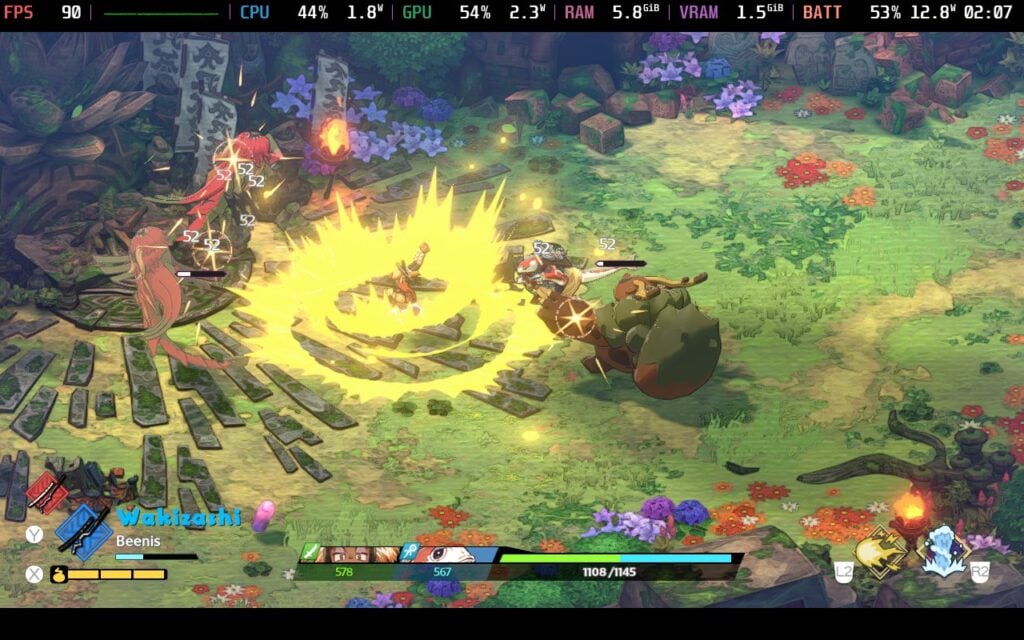
It all comes down to execution. The combat and progression systems are fantastic, and I love the ideas with the story and evolving town, but the execution just doesn't hit. There is some fun to be had here, and I enjoyed going back into the grind, but it was so repetitive that I was exhausted and had to take some breaks. The balancing needs some reworking as well, with some bosses just feeling way too overpowered.
Towa and the Guardians of the Sacred Tree established itself through previews, showing me how well the game can run on the Steam Deck. Developer Brownies Inc. did a fantastic job optimizing the game, and it rightfully deserves that Verified badge.
90 FPS is possible throughout the game, though it can start to drop slightly later on as fights get more hectic. Personally, I went with a 60 FPS lock to keep the smoothness the entire time and stop the battery from draining too high. You could lower some settings to keep 90 FPS if you really want to, but I didn't find it necessary and still enjoyed the game at 60 with some extra battery life.
So, I do recommend just playing at 60. The game looks beautiful on the default settings with a great battery life, draining only around 9W - 10W on average. It's the best of all worlds.
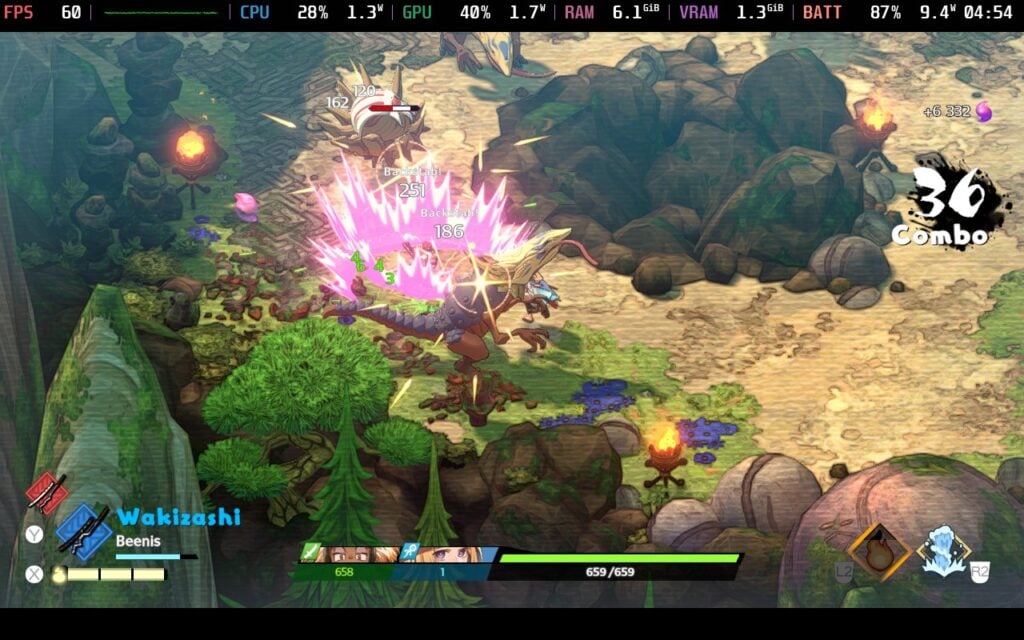
In the game, you can change camera distance and shake, the dialogue auto-playing, controller vibration, difficulty, and audio settings.
The game doesn't support 16:10 resolutions, but it does have cloud saves and controller support. There are no HDR settings.
Towa and the Guardians of the Sacred Tree is a game with fantastic ideas and execution that doesn't do them justice. The combat and progression are unique and have tons of great mechanics, while the presentation keeps it a step above the rest. However, execution hampers it, keeping the game from reaching the full potential it should have. It's not necessarily unplayable, but there are too many smaller problems that can end up being very aggravating.
For those who want to enjoy it on the go, I can happily say it's incredible on the Steam Deck. It looks and performs extremely well, and even at 60 FPS, it's smooth with over 5.5 hours of battery life. It's a great game to play portable, despite the issues it has.
Our review is based on the PC version of this game.
If you enjoyed this review, be sure to check out the rest of the content on SteamDeckHQ! We have a wide variety of game reviews and news that are sure to help your gaming experience. Whether you're looking for news, tips and tutorials, game settings and reviews, or just want to stay up-to-date on the latest trends, we've got your back.
Jotunnslayer: Hordes of Hel was provided by Grindstone for review. Thank you!
Jotunnslayer: Hordes of Hel joins a long list of "survivor-like" games released over the past couple of years, but this one switches up the formula a bit to make things more interesting.
At face value, Jotunnslayer is like any other survivor-like; you are placed into a medium-sized arena, with a top-down perspective, gradually gaining experience as you fight larger and larger waves of enemies to unlock new skills and attacks that are automatically cast until you face the final boss.
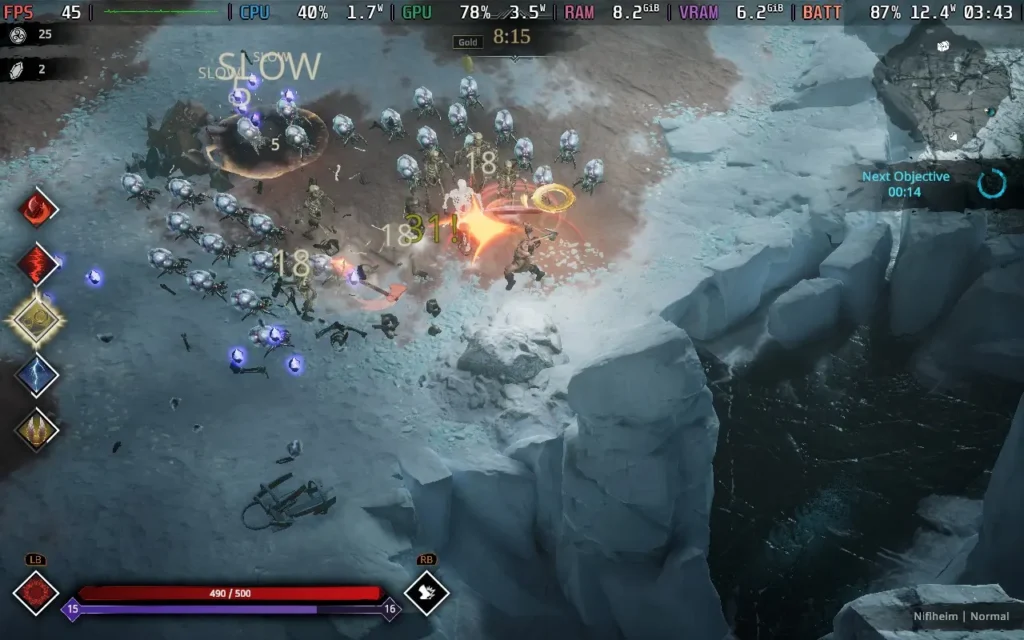
But then, Jotunnslayer deviates. As opposed to just waiting out the timer to beat the level, the timer is actually a time limit. You have objectives that you must complete each level, whether defeating a certain number of enemies in a specific area, solving a basic puzzle, or surviving an intense fight for 60 seconds. These objectives must be beaten, and the final boss summoned before the time limit is up.
This makes it feel more involved than your average survivor-like; you are checking the map to see where you need to be, plus you get a choice of objectives to tackle, some easier than others, but the harder ones offering bigger rewards. In a game genre that's often quite "hands-off", it adds another element to keep us engaged and offers them an additional risk vs. reward choice. I'm a big fan of it, as instead of just wandering the map trying to stay alive, you have the added concern of getting to the objective and completing it in a reasonable amount of time.
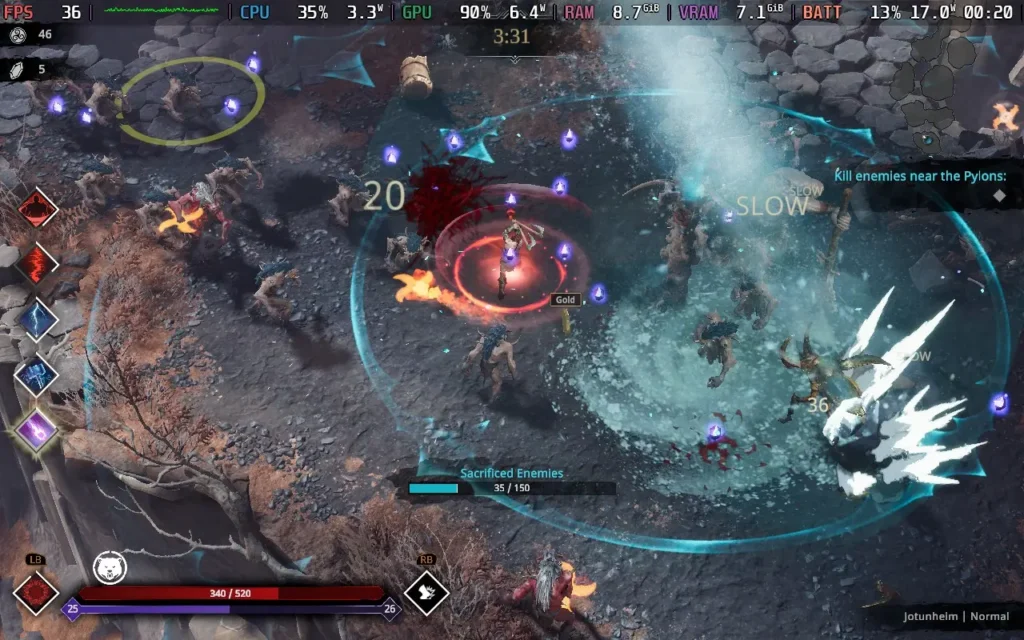
There's a large variety of progression skills to unlock, both permanent ones from the in-game shop and temporary ones you unlock during a run, with different characters and gods to choose from. Class skills are defined by your character/class, which is then backed up by various gods you can unlock and are available to every class.
The mixing and matching classes and gods adds another layer to finding the ideal strategy. You don't get enough levels to maximize the effect of all the gods and your class in each run, so you must decide which will best synergize with your build. I loved Thor's "chain lightning" attacks, as it's really good crowd control from a distance, but it isn't necessarily the best damage dealer.
Opting for skills that improve your movement speed, combined with skills that give the "slow" effect, can also be really effective at keeping yourself safe.
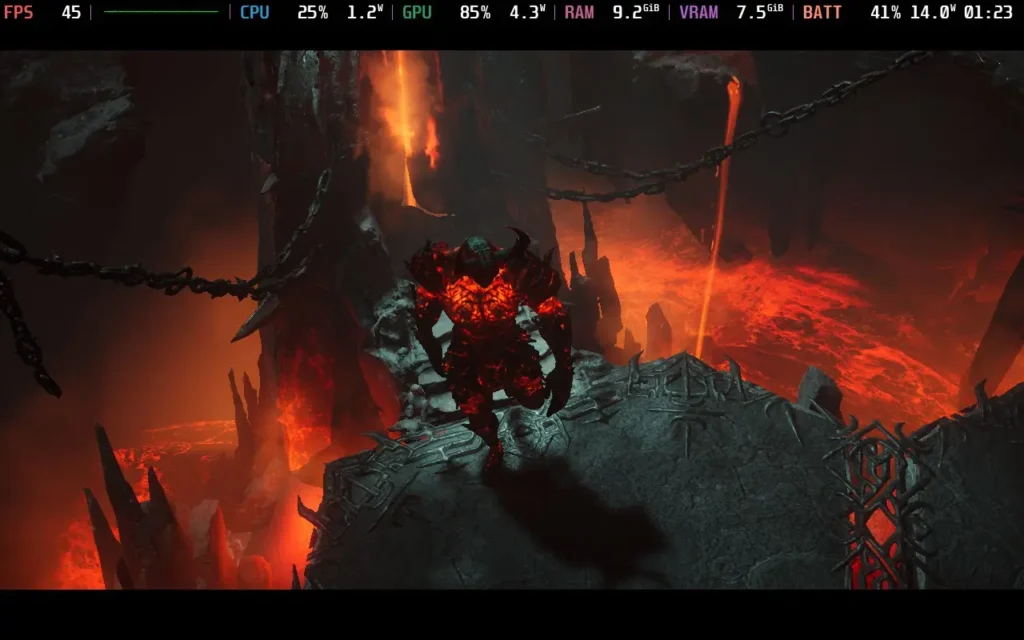
Visually, Jotunnslayer stands above its brethren in the genre; it's very pretty, with nice textures and lighting effects, something not too common in the genre. However, we do lose some of that prettiness when we run it on the Steam Deck. The sounds are satisfying, although it does become a bit of an audio jungle later on in a run when there are dozens of enemies and multiple attacks on screen at once. There is not much we can do about that, though!
There is no real storyline here, aside from a very brief opening cutscene setting the stage for you being chosen to be tested by the gods as to whether or not you can become the "Jotunnslayer". In Norse mythology, Jotunn are various creatures opposed to the Norse gods.
Jotunnslayer has great support for controllers, and I'd recommend playing on a controller even on a desktop PC. It also supports the Steam Deck's native 1280x800 resolution, meaning there are no black borders.
As you might imagine, with a "survivor-like" game, it does get pretty busy as you reach the end of stages, so it's quite intensive on the Steam Deck.
I recommend lowering the settings. I personally lowered Shadows and Ambient Occlusion to "Low," removed Anti-Aliasing, but kept Texture Quality on "High," and used the in-game frame limiter to lock the game to 45 FPS. Early on, it's possible to run at around 60 FPS with Medium settings, but it soon falls apart when many enemies and visual effects are on screen.
I recommend that you do not use FSR upscaling; it genuinely looks quite horrible when in motion in this game.
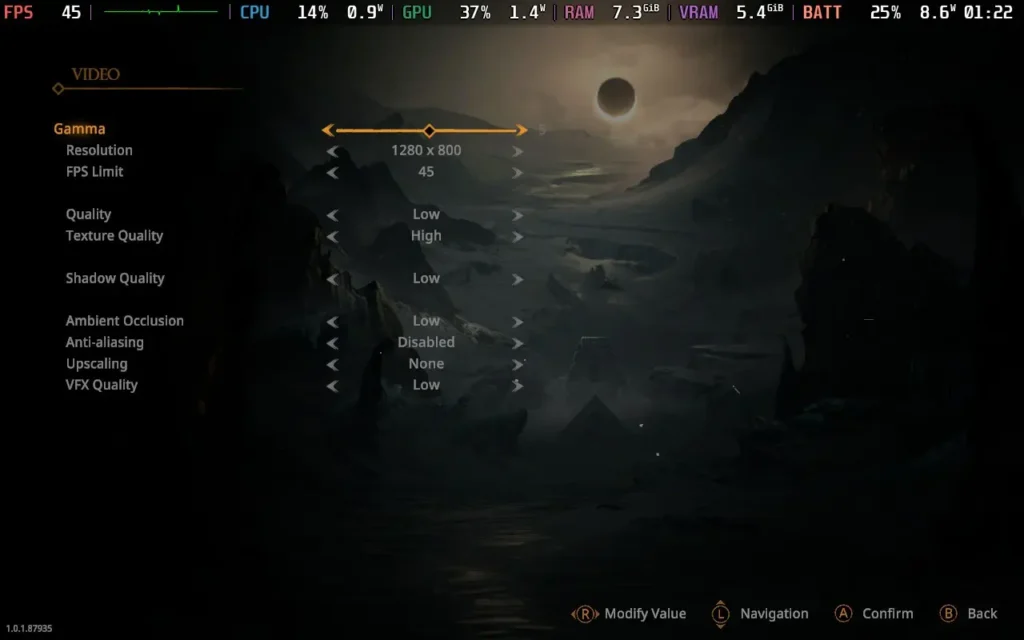
With these settings, the game holds 45 FPS in the early stages. I experienced the occasional stutter, and the game will drop into the 30s during intense scenes near the end of a run, especially boss fights with lots of additional mobs, but by and large, the game does remain pleasant to play and stays above 30 FPS, which is enough for a game of this type.
Even on the bare minimum settings, the frame rate will drop below 45, so we may as well enjoy some Shadows and Ambient Occlusion; hence, I leave them on Low and not Off.


The power draw is often around the 12W-16W range, with some spikes up to 18W, so you can expect the Steam Deck OLED's battery to last around 3.5 hours, and the Steam Deck LCD to last around 2-2.5 hours. Temperatures were around 60 - 70 °C.
Jotunnslayer has a few accessibility options. You can adjust the size of the map and map icons. The game also aims and fires all attacks automatically by default, though you can switch this to manually aiming and attacking for some attacks.
It also has rebindable controls, the ability to change font type, reduce screen shaking, and increase transparency of visual effects if they make it difficult to see.
Jotunnslayer: Hordes of Hel is a survivor-like game that adds some extra layers to the genre. By mixing and matching classes with gods and adding objectives to complete within the time limit, it increases the amount of strategy at play and gives the player something to do other than just "survive," which is a welcome addition in my book. For the inexpensive price, it's a good few hours of fun.
As for Steam Deck performance, Jotunnslayer is perfectly playable. We have to turn visual settings down, but the game still looks good, it controls great, and performance stays at or above 30 FPS throughout play.
Our review is based on the PC version of this game.
If you enjoyed this review, be sure to check out the rest of the content on SteamDeckHQ! We have a wide variety of game reviews and news that are sure to help your gaming experience. Whether you're looking for news, tips and tutorials, game settings and reviews, or just want to stay up-to-date on the latest trends, we've got your back.
Lone Ruin was provided to us by Super Rare Originals for review. Thank you!
Lone Ruin is an action-roguelike game set in an old magical ruin. The game features two different modes to test your mettle: Ruin Run and Survival. Ruin Run is a more traditional experience like Hades, clearing rooms and getting upgrades and gold to buy more upgrades from the shop until you get to the end of the levels (all while faces some bosses in between). Survival is closer to games like Vampire Survivors where you face waves of enemies and you get experience, getting an upgrade of your choice once you level up. With a normal and hard mode, gorgeous visuals, and a plethora of abilities, will you be able to master the ruins and defeat these twisted monstrosities?
Lone Ruin is a game I personally have mixed feelings about, but I overall feel positive about my experience with it! The game itself is a bit lacking in content and once you beat it, it feels like there isn't much to replay. But what it lacks in replayability, it makes up for with its unique graphics and fun gameplay. Some of the combos of spells and weapons can be overpowered, but I generally had a lot of fun playing through Ruin Run and Survival, though I personally enjoyed Survival mode more. Normal is a bit on the easy side too, but Hard feels just right!
On top of all of that, the developer has stated he will be adding more content to increase replayability! For $15, I feel this is a fair price for what you are getting. $10 might be a little more accurate for what is there now, but if more replayability is added, I would easily recommend this at the $15 price point! But no matter the price, this is a game you will be able to enjoy on the Steam Deck.
Due to it being a game that isn't super intensive, Lone Ruin can run flawlessly without needing to change any settings! Without any changes and no limits set, you can expect to get around 10W - 12W average with 60 FPS! There are some instances I have noticed where framerate can drop for a split second, but this didn't affect the gameplay at all.
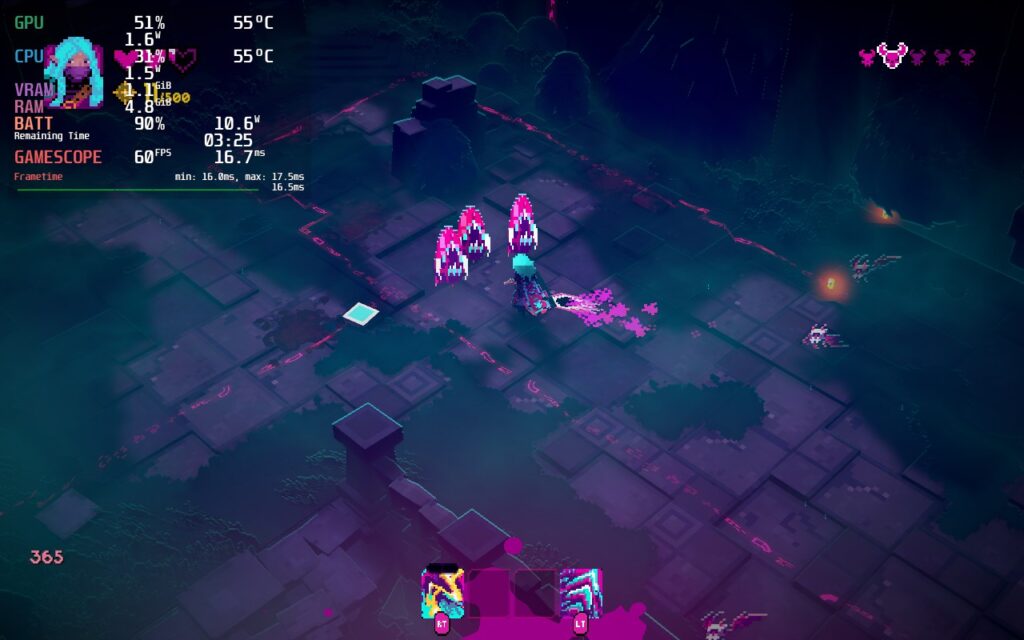
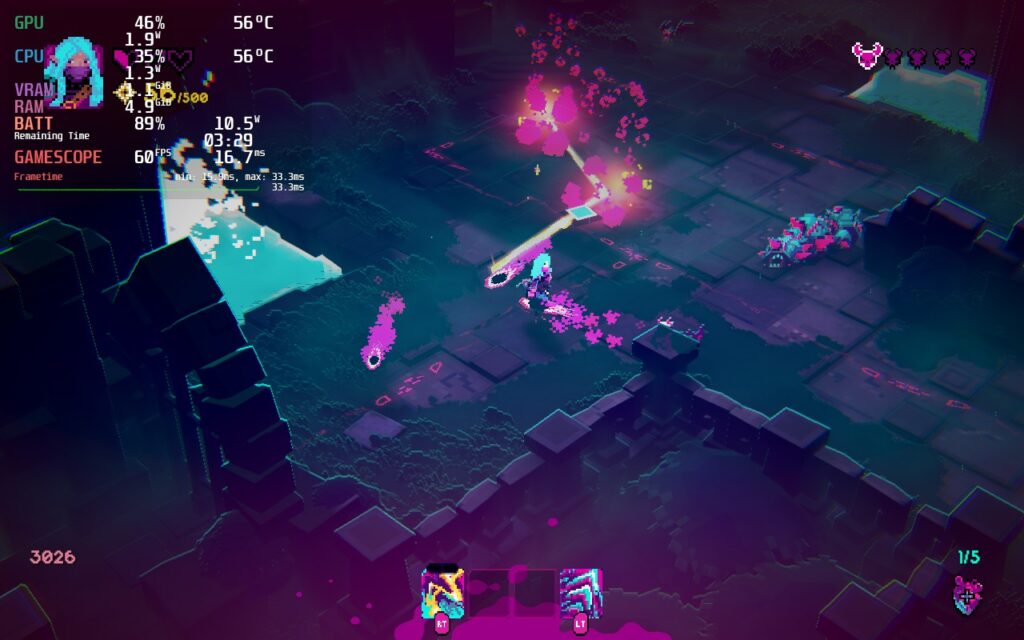
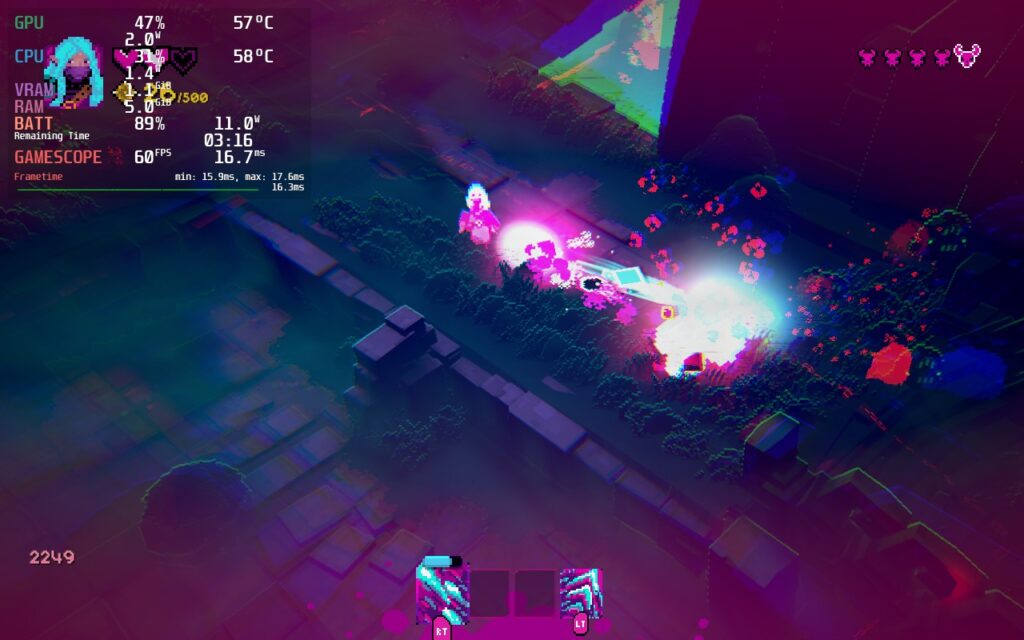
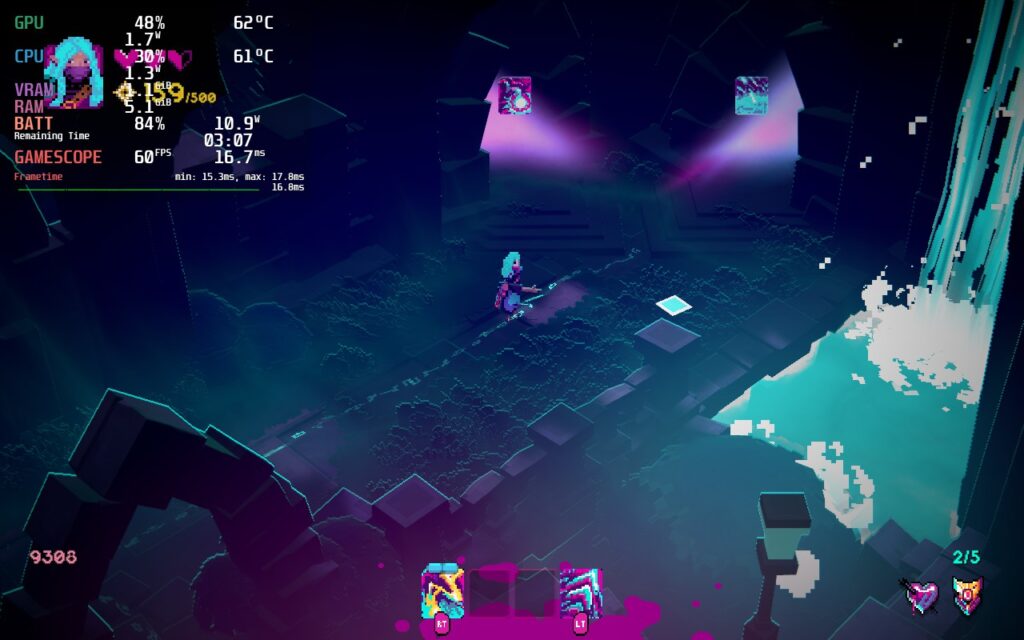
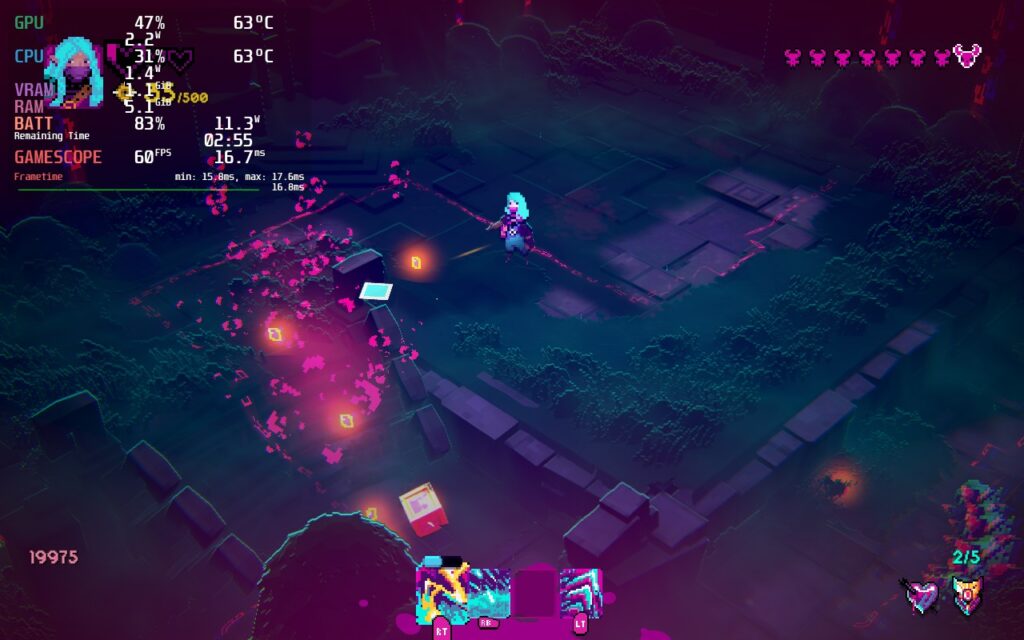
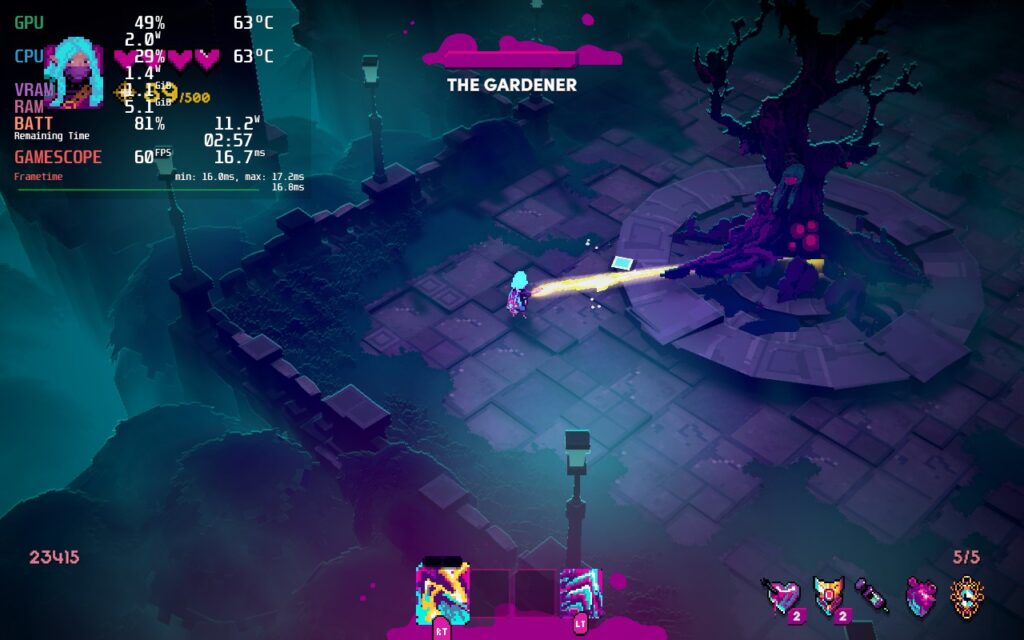
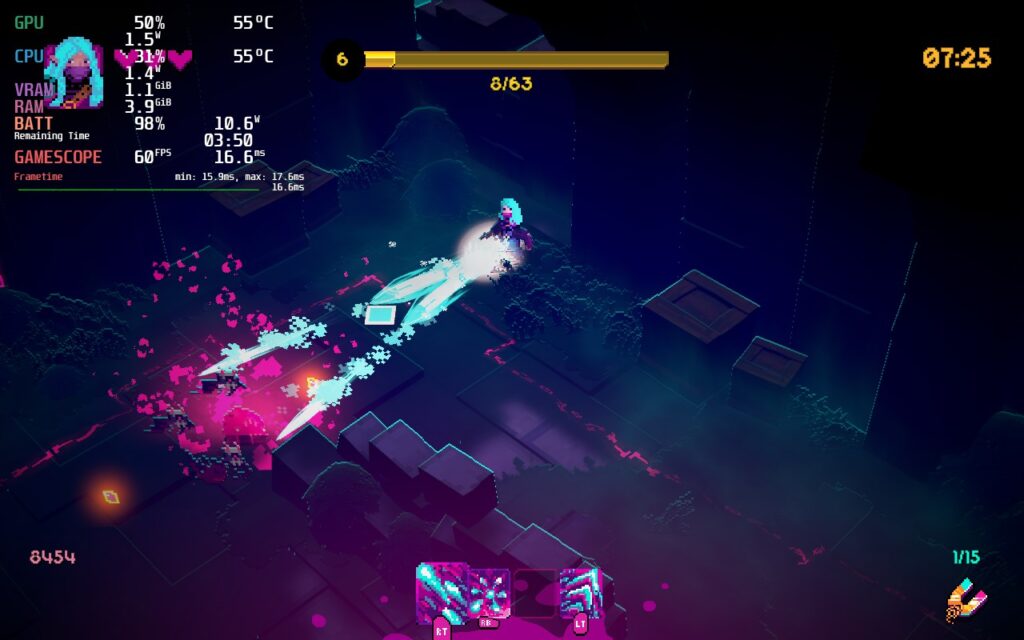
I had no issues with controlling the game using the gamepad and no visual issues. Lone Ruin also supports 1280x800 resolution with the battery lasting around 4 hours!
Lone Ruin has a lot of potential to be a necessity in your libraries if you enjoy roguelike games. The visuals are enchanting and the gameplay is tight and fantastic, but a lack of replayability can be seen as a big shortcoming. I feel it is worth $15, especially if/when the new content is added, but I don't regret the time spent with this one at all! And it is guaranteed to be a great time on the Steam Deck thanks to no changes needed to enjoy! I am happy to give this game our Best on Deck rating!
If you enjoyed this review, be sure to check out the rest of the content on SteamDeckHQ! We have a wide variety game reviews and news that are sure to help your gaming experience. Whether you're looking for news, tips and tutorials, game settings and reviews, or just want to stay up-to-date on the latest trends, we've got your back.