World of Warcraft: Midnight is the second chapter in the new World Soul Saga expansion. Rather than introduce an entirely new storyline, as previous expansions often have, it continues directly after the events of The War Within.
From the moment the story begins, Midnight makes a strong, lasting first impression. It opens with an epic, action-packed prologue before sending players directly into the newly revamped Silvermoon and Quel’thalas. The new Silvermoon is stunning, massive, alive, and finally worthy of the Blood Elves. It more effectively captures the fantasy and identity surrounding the Blood Elves, far better with their newly expanded storyline. After more than 20 years, this sets a new standard for the kind of visual overhaul the game has so rightfully deserved. Extending that same level of care and modernization to other capital cities would be a welcome next step for future expansions.
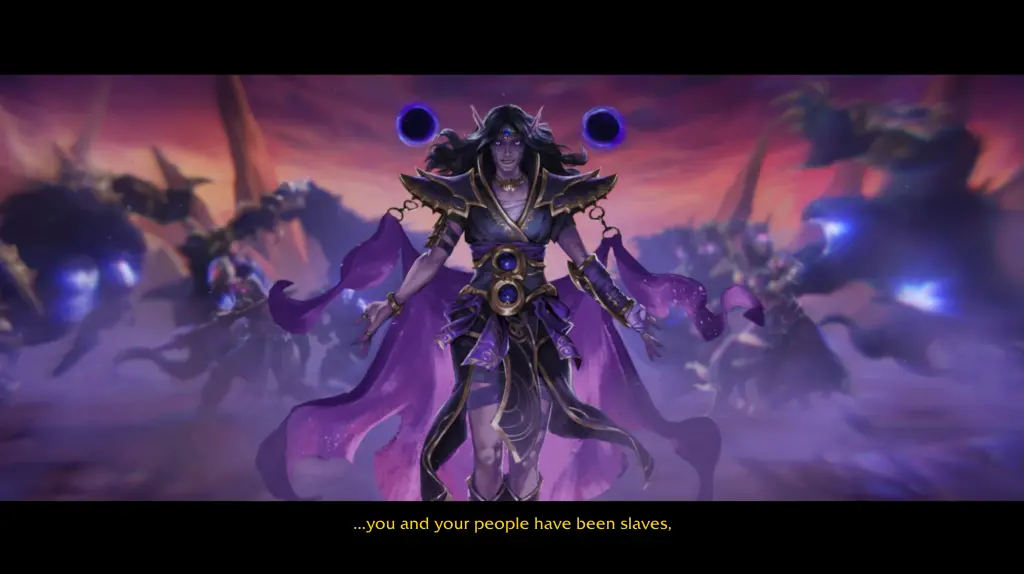
Light vs Void
Much like its predecessor, the central conflict revolves around the struggle between the forces of Light and Void. This new chapter of the expansion takes a slightly more emotional and character-driven approach. Once again, the familiar themes are front and center by setting two thematic narratives. “Too much Light can be just as dangerous,” and “The Void isn’t inherently evil.”
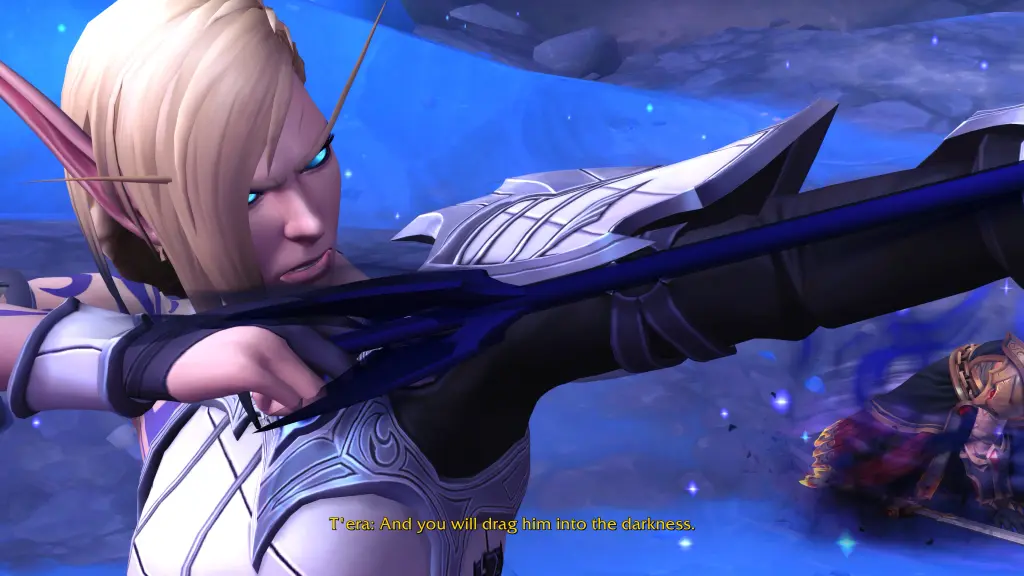
While the story starts strong, the narrative momentum unfortunately fades. After a compelling opening, the story slips into a familiar formula we’ve seen recycled since Shadowlands, filled with melodramatic character conflicts, predictable family drama, and uninspired dialogue. While the themes themselves aren’t the problem, the execution feels tired and dated. At times, the script feels overly safe and painfully cliché, lacking the boldness or ambition that once defined Warcraft’s best moments.
After multiple expansion releases, expectations for Warcraft lore have shifted slightly over the years. The universe has been stretched over two decades, and the story's continual growth is starting to show its age. Instead of feeling like an evolutionary epic, parts of the story feel mechanically assembled and forced rather than passionately and purposefully written. The drastic reduction in pre-rendered cinematics is impossible to ignore. Many of the expansion’s most climactic moments are confined to in-engine cutscenes that are somewhat shrouded by outdated visuals and horrendous animations. In a franchise once known for its breathtaking storytelling through CGI, this shift feels like a step backward rather than a leap forward.
Housing
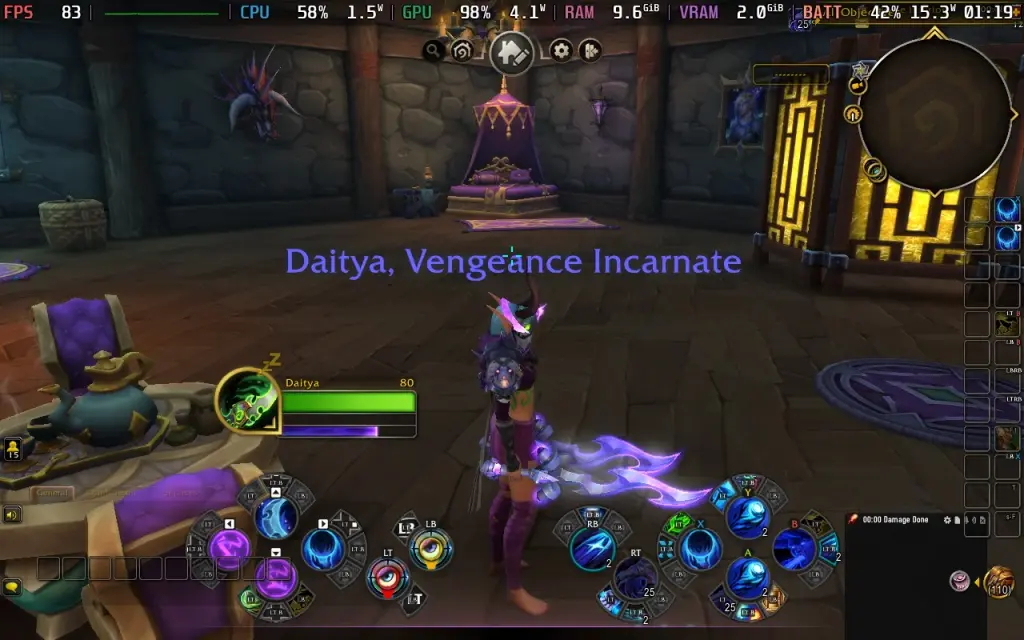
After more than 20 years, Blizzard has finally implemented a robust housing system in World of Warcraft. Traditionally, WoW has built its reputation around being a progression-driven, competitive MMO rather than one centered on casual or social sandbox elements. In typical MMO design, player housing is often associated with casual, socially driven engagement. A dedicated space for creativity, collection, and personal expression. In that sense, this addition feels like a clear pivot in Blizzard’s priorities for World of Warcraft as gaming's underlying meta evolves.
Expecting a system as intricate as Final Fantasy XIV’s housing or as lifestyle-focused as Palia’s on a first play-through would have been unrealistic. Surprisingly, the implementation here is far more detailed and engaging than originally anticipated. There is meaningful progression, a wide variety of decor options, collectible furniture, mini games, and long-term goals for players who enjoy this style of content.
Blizzard also tied many decor items to dungeon boss drops and quest rewards to ensure that housing isn’t isolated from the rest of the game. This design choice keeps players engaged with traditional PvE content while rewarding them with cosmetic progression rewards. In many ways, it integrates more naturally into the World of Warcraft ecosystem than expected.
However, the bigger question remains whether World of Warcraft truly needed housing at all. The game’s identity has long revolved around a competitive endgame system, difficult combat, and structural progression. The social aspect, once organic and community-driven, has diminished over time. Ironically, it was the competitive direction of Warcraft that kept it relevant and thriving for over two decades of steady releases. In some ways, an argument could be made that the high cost of development for housing might have been better spent refining endgame mechanics, class design, or long-term progression systems. While housing is impressively extensive, it still feels like an optional layer rather than a necessary evolution.
Apex Talents and Devourer Demon Hunter
In terms of class identity, Midnight introduces Apex Talents alongside class and specialization adjustments. Although presented as a major new layer of customization, it is surprisingly simple and straightforward.
An Apex Talent grants one additional, highly powerful passive ability that scales automatically as you level. There’s no branching choice, no mechanical transformation, and no meaningful decision-making involved. It simply grows stronger over time. This feels particularly underwhelming when compared to The War Within’s Hero Talent system, which fundamentally altered how certain specs could be played, offering two distinct playstyle paths within the same specialization. Hero Talents encouraged experimentation and gave specs fresh identities. Apex Talents, however, is extremely streamlined.
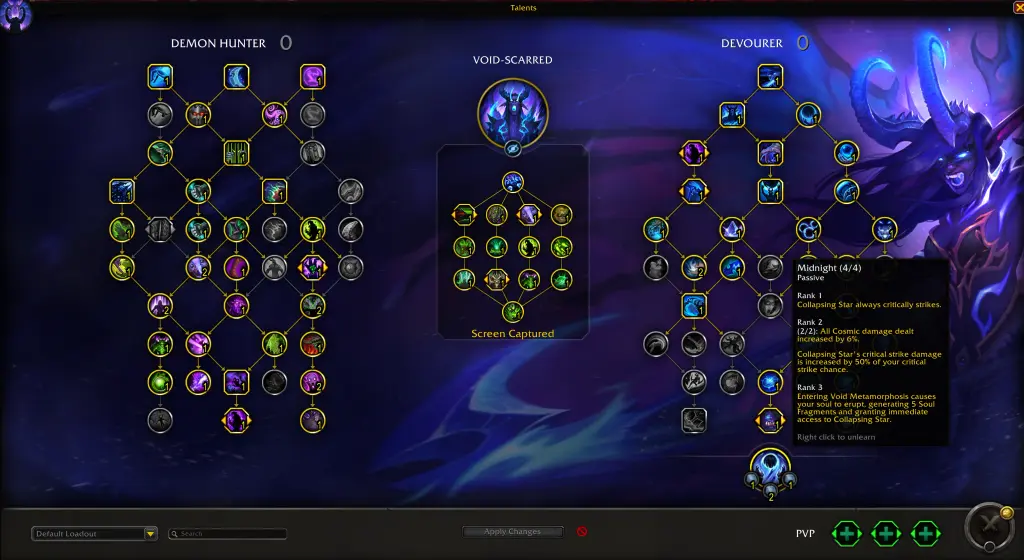
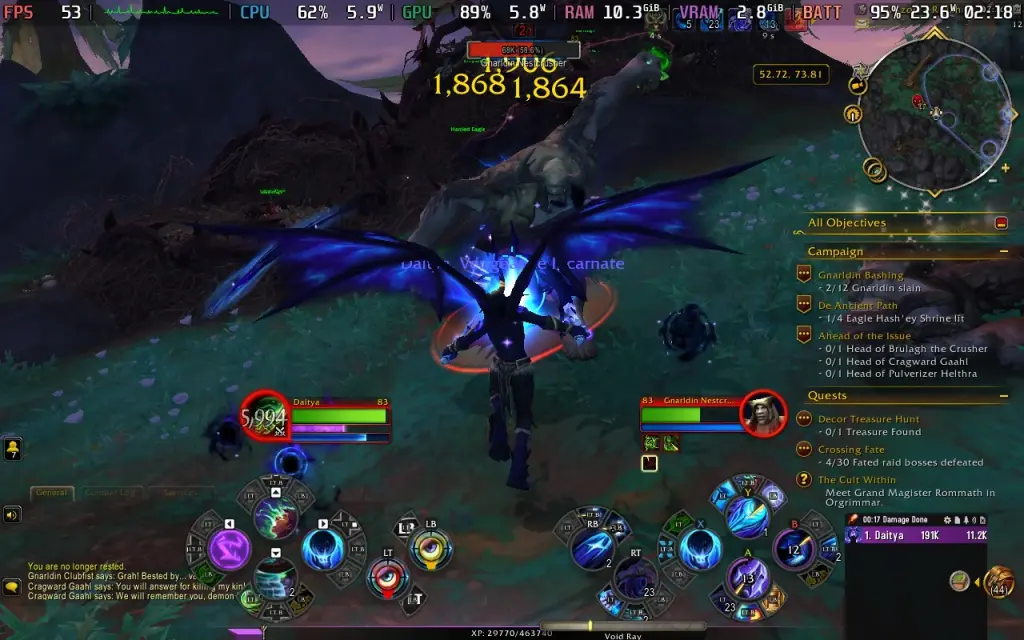
Midnight also introduces a brand-new Demon Hunter specialization, Devourer. Designed to fit the expansion’s Void theme, Devourer shifts Demon Hunter into a caster-heavy archetype focused on channeling and unleashing destructive Void energy. While it sounds bold and refreshing, the execution is deeply disappointing.
The core rotation revolves around a repetitive loop of spamming the Consume ability, gathering Soul Fragments, and spending them on Eye Beam, alongside a basic three-hit melee combo. Mechanically, the spec operates with an extremely limited toolkit, effectively functioning around four core buttons. And it feels shallow and boring. The larger issue, though, lies in its resource design.
Devourer uses a Fury system that drains over time during Void Metamorphosis, forcing players to aggressively manage their Consumes before depletion. It’s meant to create a skill ceiling, but while playing, it adds frustration instead of being rewarding. World of Warcraft’s encounters are filled with movement requirements and crowd control effects. Being forced out of your burst window due to an unavoidable mechanic while your Fury drains feels like punishment rather than skill testing. The spec often feels as if it is fighting against encounter design rather than flowing with it.
After playing through the entirety of Midnight on a Devourer, frustration and boredom became recurring themes. A new specialization is meant to feel empowering and exciting. Instead, Devourer frequently feels restrictive, unsatisfying, and more stressful than rewarding.
Endgame Content & The Prey System
Historically, World of Warcraft has been regarded as the gold standard for dungeon and raid design, and Midnight continues that legacy. The new dungeons are packed with engaging boss mechanics, strong environmental storytelling, and excellent thematic immersion. It remains impressive how consistently Blizzard delivers in this department more than two decades after the initial launch of World of Warcraft.
Delves, introduced in The War Within, also make a valiant return. Players who enjoyed this solo progression system will feel right at home, as it remains a solid alternative for those who prefer structured solo challenges outside of traditional group content.
However, the true standout addition to the endgame this time is the Prey system.
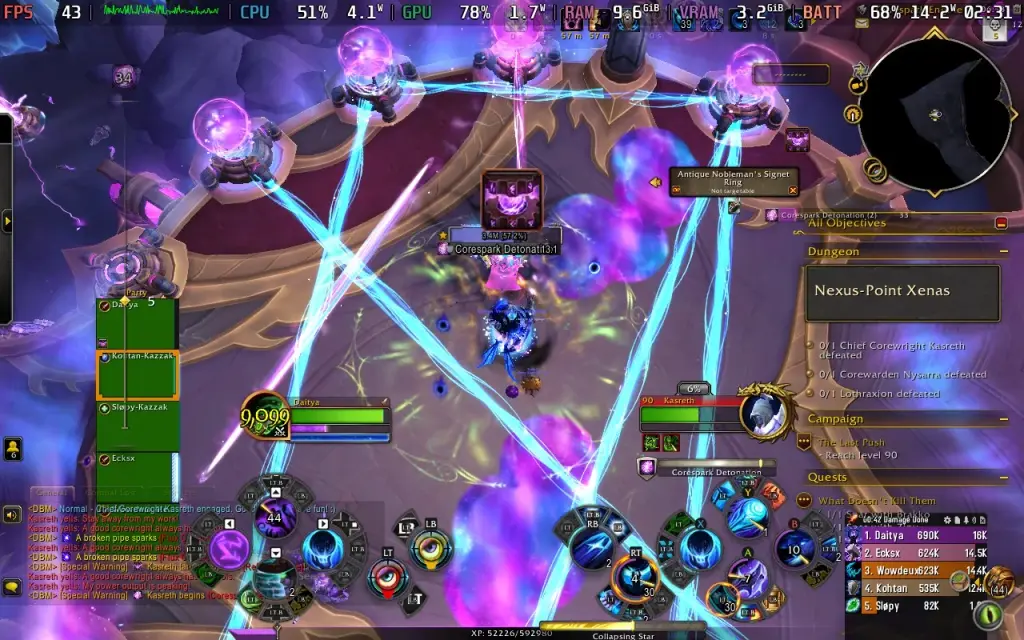
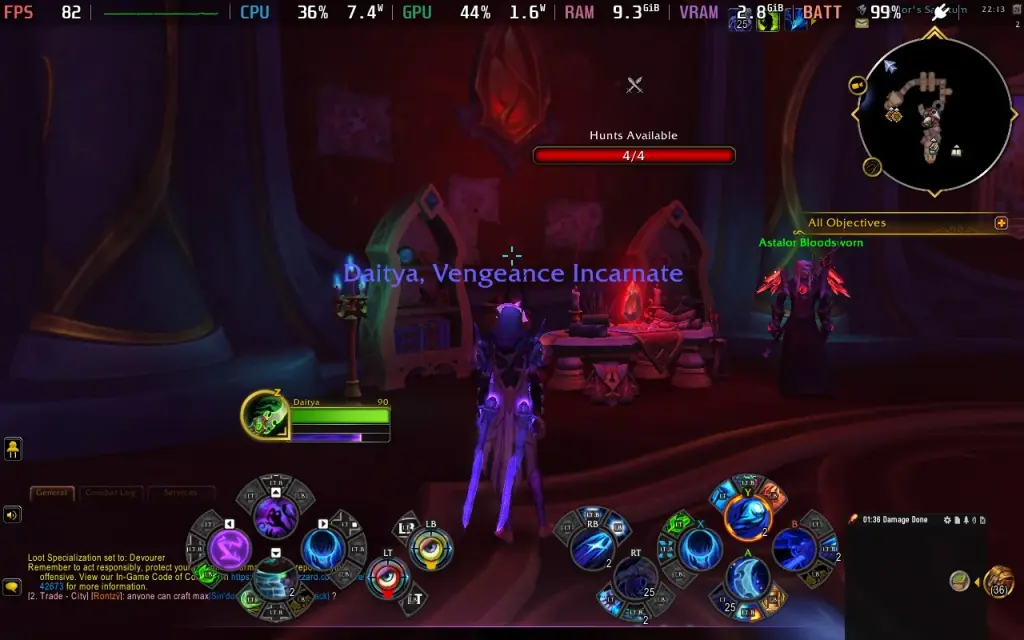
This new system places you in the role of both hunter and hunted. You accept a contract and are assigned to a specific region. where you must complete objectives, dismantle traps, and gather clues that gradually lead you closer to your target. But the twist is that your prey is simultaneously hunting you as well.
At any moment, targets can ambush you during vulnerable moments. In high-intensity scenarios, an unexpected boss encounter can occur and instantly punish players. The anxiety introduced by tracking and being tracked gives the mode a unique identity within World of Warcraft’s endgame ecosystem. Once enough objectives are completed, the hunt ends in a large-scale boss encounter. Successfully defeating your target rewards both meaningful progression upgrades and cosmetic items, making the system feel worthwhile beyond its novelty.
I had a lot of fun with this mode. It’s simple, but it works. It adds pressure and excitement without needless complication. But outside of that one small system, there isn’t much that defines Midnight as its own expansion separate from the others. Strip away the new zones, and it often feels like a continuation of The War Within. There’s no strong expansion identity. No defining mechanic that changes how the game is played moment to moment. No big thematic hook that makes you say, “This is Midnight.”
World of Warcraft isn’t officially available on Steam, but thanks to Proton Experimental, it runs similarly to a native Steam title. There are already plenty of detailed guides explaining the installation process, so for the sake of this review, focus will remain purely on performance and gameplay optimization.
The most important aspect needed for a smooth gameplay experience is an addon called ConsolePort. This addon makes WoW fully playable with a controller. With enough time and muscle memory, you can perform near the same level as keyboard and mouse players.
It doesn’t feel like a third-party addon when utilized with World of Warcraft - it feels like proper, built-in controller support. It’s responsive, highly customizable, and once you get used to it, it’s hard to imagine playing on Deck without it.
Performance
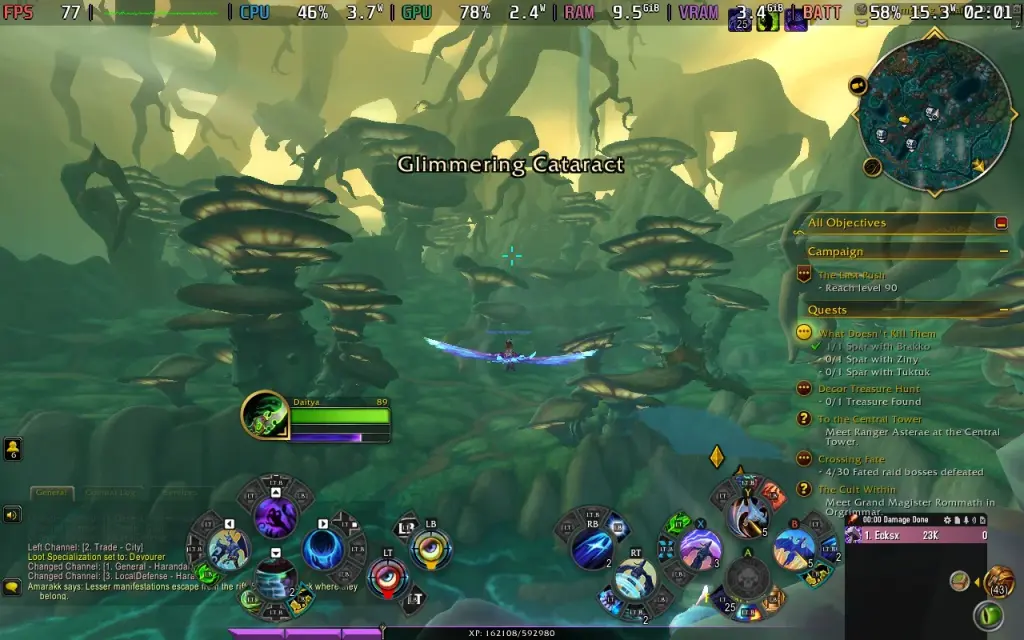
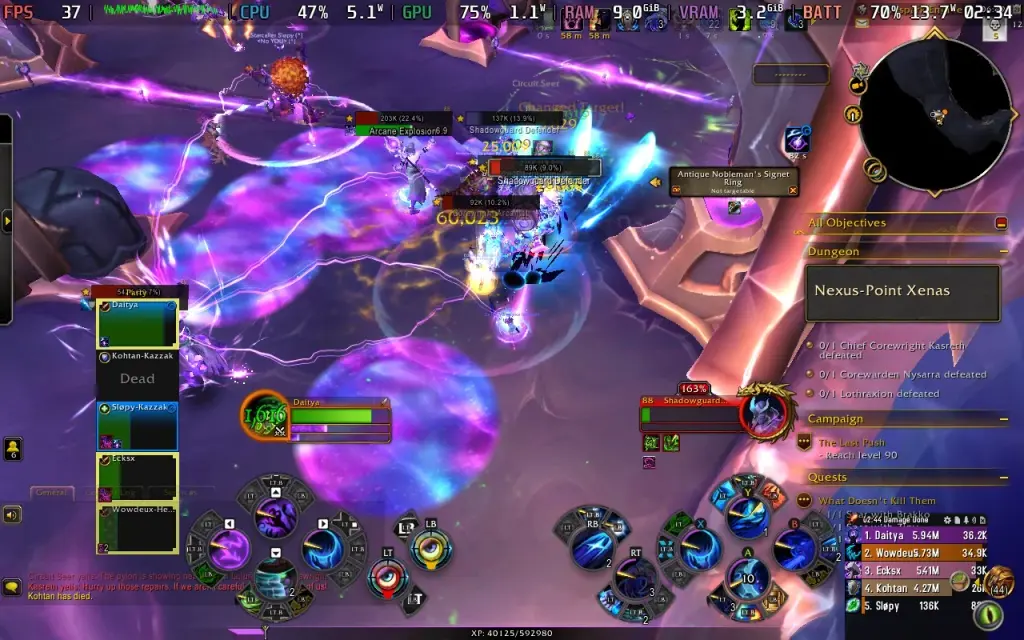
World of Warcraft is notoriously difficult to review from a performance standpoint because of its MMO nature. FPS can vary wildly depending on the zone, number of players on screen, and the type of content you’re doing. You can see anything from 90 FPS down to 20 FPS in extreme cases.
This isn’t a Steam Deck issue. Through tests of the expansion on a high-end PC, the behavior is identical. Even when CPU and GPU usage don’t exceed 50%, FPS drops still happen. It’s simply the result of a 20-year-old engine that has been rewritten and layered over countless times.
Normally, in unstable games, it's recommended to lock the FPS for consistency. But WoW is so situationally unstable that I would advise against capping FPS too aggressively. Most of the time, especially outside crowded cities and large-scale events, the game comfortably runs above 60 FPS on the Deck.
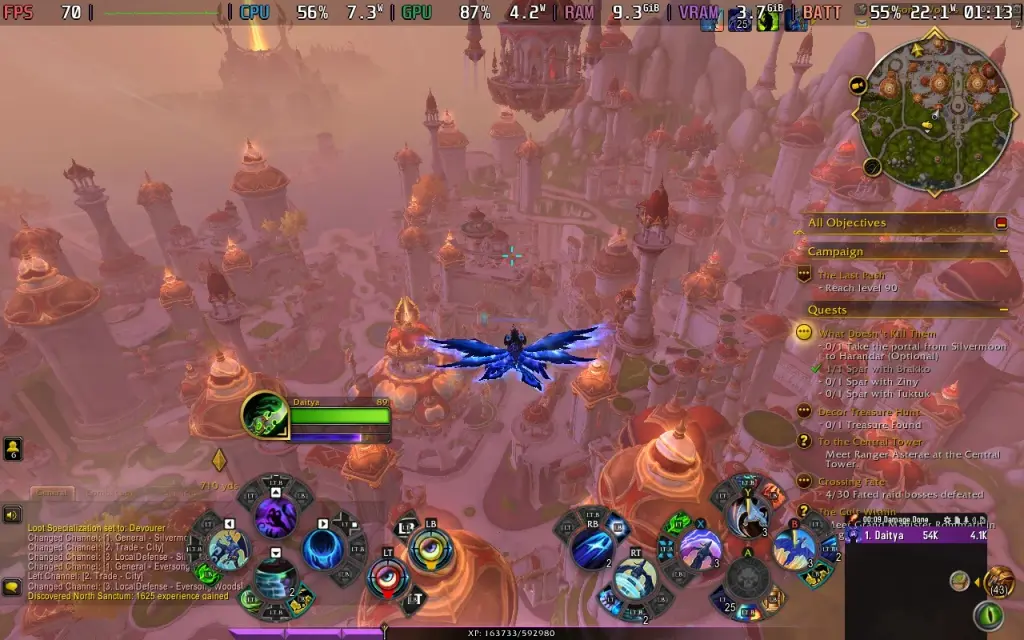
When I’m not running dungeons, raids, or crowded world events, I set the overall graphics slider (1 - 10) to 6. This is a good middle ground between visual clarity and performance, while keeping the experience smooth across most open-world content.
For heavier content, lowering the preset slightly helps stabilize performance during intense scenarios. Especially in dungeons, I keep it steadily set to 1. And while doing high-end mythic content, lowering the resolution scale to 60% helps a lot. Also, try not to install too many addons, as that increases GPU and CPU load, causing even more frequent FPS drops.
One last important thing. Steam’s device settings include a default World of Warcraft performance preset. I would disable it entirely. By default, this preset limits the TDP, which results in unnecessary FPS drops and additional stuttering - especially in crowded areas or during combat-heavy encounters. WoW already struggles with engine-related inconsistencies, so artificially limiting power can potentially make things worse.
To fix this, go into the Steam Deck’s performance settings and uncheck “Use per-game profile.” Let the system run without the preset restrictions, and performance immediately becomes more stable.
Conclusion
World of Warcraft: Midnight feels more like a DLC of The War Within than a brand new expansion. The atmosphere, redesigned Silvermoon, soundtrack, and surprisingly detailed housing system are strong highlights, however. But they aren’t enough to fully compensate for uninspired storytelling, underwhelming class additions, and a noticeable lack of a defining expansion identity.
If you’ve been enjoying The War Within, Midnight expands upon that central idea, especially in terms of dungeons and raids, which remain as WoW’s strongest pillar. For Steam Deck players, the game remains highly playable with the right configuration settings, delivering a smooth and surprisingly comfortable experience for both casual play and endgame content. But if you were hoping for a transformative leap forward, this isn’t it. Midnight isn’t bad, it’s just safe. And for a 20-year-old MMO, safe might not be enough anymore.
World of Warcraft's performance is a hit or miss on the Steam Deck, depending on what you are doing in the game, but even still, it's very playable.
Our review is based on the PC version of this game.
If you enjoyed this review, be sure to check out the rest of the content on SteamDeckHQ! We have a wide variety of game reviews and news that are sure to help your gaming experience. Whether you're looking for news, tips and tutorials, game settings and reviews, or just want to stay up-to-date on the latest trends, we've got your back.
Dune Awakening was provided by Funcom for review. Thank you!
With so many survival games out there and it being one of my favorite genres, I’ve played a lot of Rust, Minecraft, Enshrouded, and recently V Rising. With Dune Awakening, I got to playtest through the start of this year, and I quickly realized how it throws you into a complex world built on decades of sci-fi history, and it's an incredible experience.
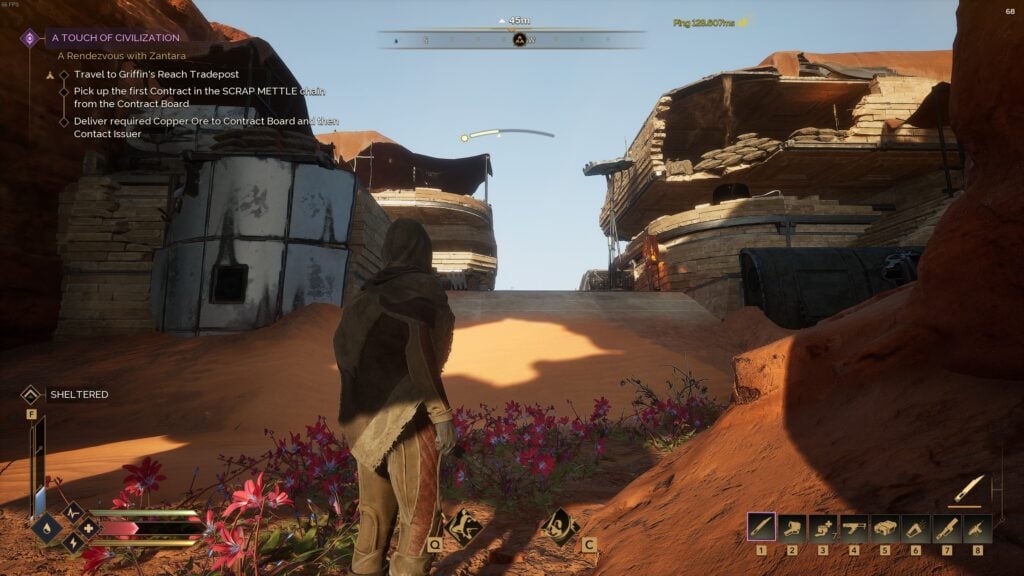
When the game begins, you're hit with names, events, and terminology that won't make much sense unless you've dipped into the books or movies of the Dune franchise, but don't let it discourage you. However, you may feel a little overwhelmed. There is an in-game archive to help, and it is quite in-depth, but don't expect it to hold your hand.
Originally pitched as a survival MMO, the developers have now clarified it's a multiplayer survival game on a massive scale. The game is broken up into servers, so there aren't hundreds/thousands of players on one server, and it relies more on the survival and crafting experience alongside the storyline. In fact, outside of trade posts and social hubs, it's rare to bump into another player. The game also has global chat channels and close proximity chat to interact with other players. You can interact with other players and join them or invite them to your guild, but it isn't a requirement. I think that's not bad, especially for solo players, and you're not punished for playing alone, at least not until the end-game content.
The story turns away from the established Dune lore by featuring a world where Paul Atreides is never born. You are thrust into the role of a Bene Gesserit, an agent tasked with unveiling the Fremen's fate and "awakening the Sleeper." You'll navigate the planet Arrakis, where conflict between House Atreides and House Harkonnen rages, locked in civil war for control of the planet. You’re a prisoner who’s just been dropped into this hostile environment.
The first 10 to 20 hours are spent gathering research resources while tackling the challenges the continued day and night cycle brings. In the Sun, heat is your enemy; spending too much time in the sun rapidly drains your hydration level, which is your main concern regarding survival. At night, you get convoys that hunt life in their drones, and you need to move tactically. However, there are challenges regardless of the time of day, like Sandworms coming out of nowhere to eat you up. So, you must be sure about traversal when moving across longer patches in the desert, sticking to rocky ground when you can.
There is no hunger system in the game; instead, you have to keep your water supply filled. This can be done by gathering dew from certain plants, extracting and purifying the blood of fallen foes, and later by certain structures. Water is used to keep both you alive and extensively for crafting, so you'll always need to keep large amounts of water on hand.

The beginning part of the game is structured into chapters or sections of the map, which are open areas you're meant to explore between these story elements. You use the accumulated knowledge you've gained through exploring these open PvE sections to cross a vast, expansive desert where your understanding of the mechanics is tested. It's always meant to be this heart-pounding experience, and will consistently offer exciting challenges.
Another clever thing is how they introduce PvP. PvP can't just happen anywhere. PvP zones are present in the Deep Desert and mainly offer high-tier rewards, as well as Spice, the most important resource in the world. Dying in PvP can result in losing all your inventory; it's high-risk, high-reward. However, you’re always on the verge of getting raided for Guilds and Bases. Dune Awakening doesn’t go hardcore on this, protects you from griefing, and only allows player damage to your base if you build it in a PvP Zone.
The vast majority of the map in the Basin area is only PvE, but there are sections that you'll find that are enabled for PvP. These are typically things like shipwrecks that you'll find lodged in mountainsides or crashed in open deserts. However, those in the open desert are a bit more dangerous and temporary than the ones on mountains, as they're 100% guaranteed to eventually be swallowed by a worm. So, you're not only fighting against players but against the eventuality of it being completely consumed.
These PvP areas always contain more challenging NPCs to face off against. But at the end of these mini-dungeons, you'll find rarer items like better blueprints for weapons or armor and even materials you can use to craft some of the more complex items in the game. If you aren't prepared for this PvP, you can buy most of the items you can loot in these zones in some of the merchant NPC stores you'll find located throughout the map.
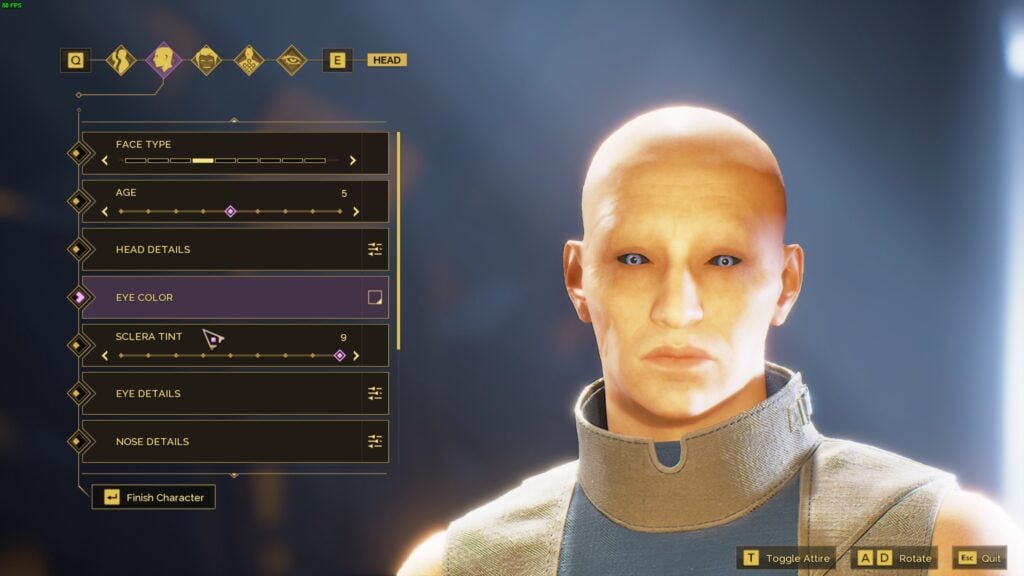
Character creation in Dune Awakening is crucial for shaping your experience on Arrakis. The character creator is extensive, allowing many customization options, including choosing your home planet, caste, and mentor. These selections affect your abilities, dialogue, potential perks, and access, giving you a chance to express yourself and build out the character you want. You can also express yourself in your base design choices and vehicles, which can have minor cosmetic changes, such as their paint scheme.

The crafting and progressing through material tiers aim to progress you towards the final part of the story, the Deep Desert. Essentially, all of the zones you've played through in the Basin (the majority of the map) are in preparation for entering the Deep Desert.
Eventually, along the way, you'll be asked to align with one of two major houses, Harkonnen and House Atreides, which impact your perks, alliances, and unlock the political part of the endgame experience. It also ties into the lore of the alternative timeline, and the houses remain locked in open competition each week. Then player activity across the game feeds into a global score system, determining which faction has control.
Joining a faction is completely optional, but it also means you’re missing out on unique building sets and skins for your gear and vehicles.

The game doesn't rush you. Whether chopping stone, refining metal, or dodging sandworms, the pacing is relaxed enough to go all-in on one area. The combat mechanics have flexibility, and you're not stuck in one class. You begin with a single skill tree, but as you level and explore, you can mix and match abilities from others. That allows you to tailor your play style and try different builds from ranged, melee, swordmaster, poison arrows, and more. Maybe you want a stealthy poison setup with some crowd control thrown in.
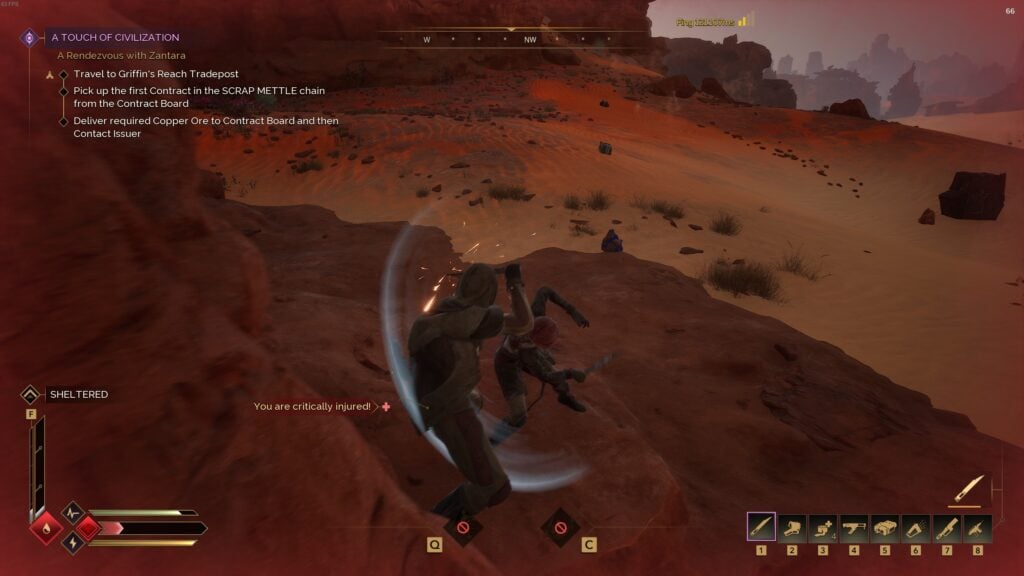
Melee is a big focus in Dune Awakening, but the melee combat feels clunky. Parrying feels delayed, animations are stiff, and enemies often behave oddly during close combat encounters. I tried to give melee more time, but for some enemies with shields where you’re forced to kill them with your knife or sword by deep bleeding, most of the time, it doesn’t seem to work. With the game highlighting duel battles, melee combat feels more like a chore rather than exciting.

Ranged combat, on the other hand, is smoother by comparison and feels more reliable. Sometimes, you are forced into melee because enemies have shields that can only be broken with melee attacks, which brings down some of the excitement of combat. There is a ranged weapon to bypass those barriers you can get, but that's a few hours into the game.
This is a survival game at its core, but it's not one of those punishing, brutal experiences where dying means you lose everything. If you go down, the game gives you a second wind, a chance to revive yourself. You can do it multiple times as long as a certain meter doesn't run out. It takes the edge off the harshness.
Resources are also fairly generous and divided into six tiers, with the rarity improving as you move towards the Deep Desert. Materials respawn quickly; you'll find enough essentials if you keep moving. That helps make building and crafting feel less grindy, at least in the early game. Just remember that, like many survival games, the gameplay loop can feel repetitive after a while.
If you enjoy structured routines and the satisfaction of upgrading and progressing, that might not bother you, but it could start to wear thin if you're looking for non-stop variety. Arrakis is massive, along with the sand, rocks, ruins, and the occasional scavenger camp. It nails the Dune aesthetic, but that comes with a price. The world can feel empty; most buildings you see will be player bases, which won't be enterable.

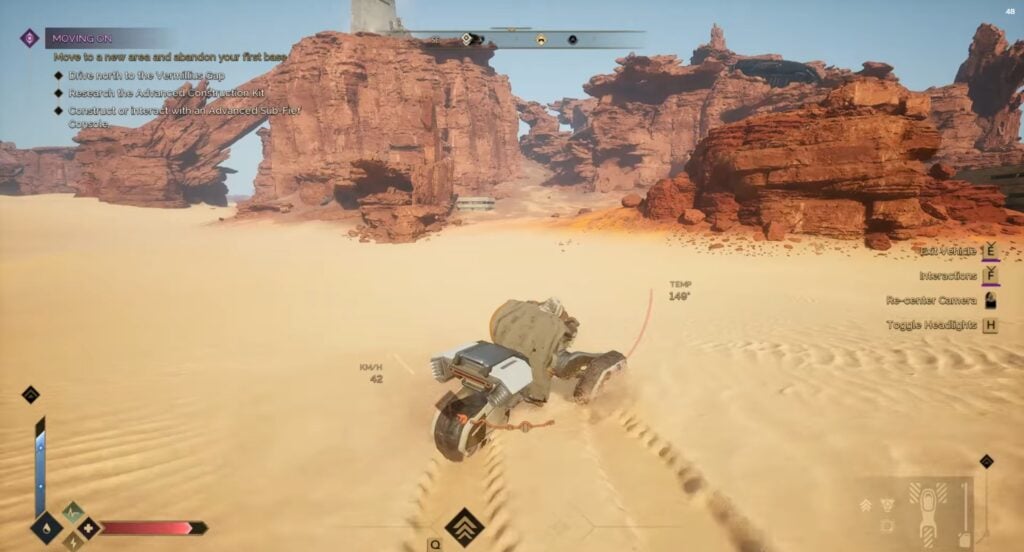
In the early hours, expect to walk a lot. Eventually, you can research and unlock a Sandbike, and that's when exploration opens up more. Until then, trekking across the desert to turn in quests or grab resources can feel like a chore. I had a lot of fun building my base. I like how you can preview what you will be doing before you lay out your structure, giving an idea of what is happening before you commit the resources. The game offers the chance to go ahead and cancel certain builds right in the middle of the preview.
Base building in Dune Awakening is great, and I had a lot of fun building a more open base to store vehicles and putting in tons of mining tech, storage, and crafting devices, such as fabricators. These allow you to craft new equipment and build bigger and better vehicles, such as Ornithopters and Buggys.
Dune Awakening does have good controller support, no doubt in anticipation of its console release in 2026. It also has a huge amount of flexibility in its graphical settings, even a "laptop" mode that massively lowers visual quality to improve performance. I recommend using it if you want to play on the Steam Deck.
Sadly, even with this mode, the Steam Deck struggles to play Dune Awakening. Despite Valve awarding this game a "Playable" rating, I strongly disagree; the game is not playable on the Steam Deck.
As you reach later into the game, with huge player bases containing massive pentashielded hangers for storing their vehicles, expect drops in FPS well below 20, resulting in a poor playing experience.
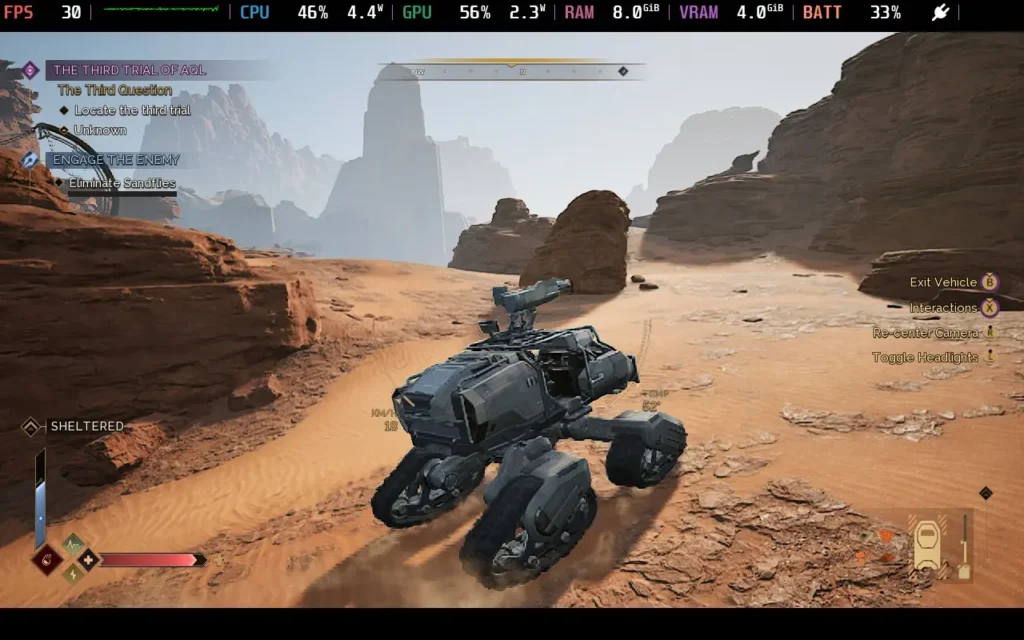


If you're wanting to hop on and do a little base management and organizing, or if you're playing in the early game, you can get by on the Steam Deck, but if you're in a guild base in late-game or just have a large solo base, and especially if you're doing any form of PvP, you will want to stay away on the Steam Deck.
Dune Awakening has some accessibility options, such as disabling camera shaking and allowing buttons such as sprinting to be either held or toggled. You can also adjust the font size to be slightly larger or smaller. Motion blur and gamma can be changed.
The game does have voiced dialogue, all of which is subtitled. It also features in-game voice chat, but there is no speech-to-text feature for those hard of hearing.
Dune Awakening is a highly inspirational Survival MMO. It does great with its building and crafting mechanics. Even for Solo Players, the game offers trading mechanics to help them choose to buy their resources and continue their quest or explore the Deep Desert. And I like this a lot for players who aren’t in it for a hardcore survival experience but like a challenge for high-tier resources.
Quest progress isn't always shared across the party. For example, if you need to grab an item from a research facility, each member must collect it themselves. However, only interaction is required for tasks like building and using a fabricator. So, one person can build it, and everyone else can interact with it to complete the quest. This system is designed to encourage teamwork while keeping some objectives individual. Even with some let downs with melee combat, the good heavily outweighs the bad in almost every other aspect.
As for performance, I ran into a fair few technical issues, including some bugs that required a game restart. I’d get these seriously annoying stutters in some parts of the map. There were also some weird visual artifacts at times, but generally, the visuals are fantastic, and the Dune universe has been smartly integrated into all aspects of the gameplay.
If you enjoyed this article, check out the rest of the content on SteamDeckHQ! We have a wide variety of game reviews and news that will help your gaming experience. Whether you're looking for news, tips and tutorials, game settings and reviews, or just want to stay up-to-date on the latest trends, we've got you covered!