



The game was provided by 11 Bit Studios for review. Thank you!
This is an early access title, so our final thoughts on Moonlighter 2 will most likely change as it develops. This review is based on our thoughts of the initial release of the game
I love simulators, especially ones where we have to manage a shop. Going around and putting furniture where I want, while also setting prices to make as much money as possible, is a blast, but it does get a little stale sometimes. I love it when I also have to get the items I sell, work for them, and bring them back. Moonlighter is perfect for that. We had to go out into dungeons, kill enemies, take their drops, and sell them in our shop. It was tight, enjoyable, and exactly what I was looking for. So, I went into Moonlighter 2: The Endless Vault with high hopes, and for the most part, it lived up to them, but work still needs to be done.
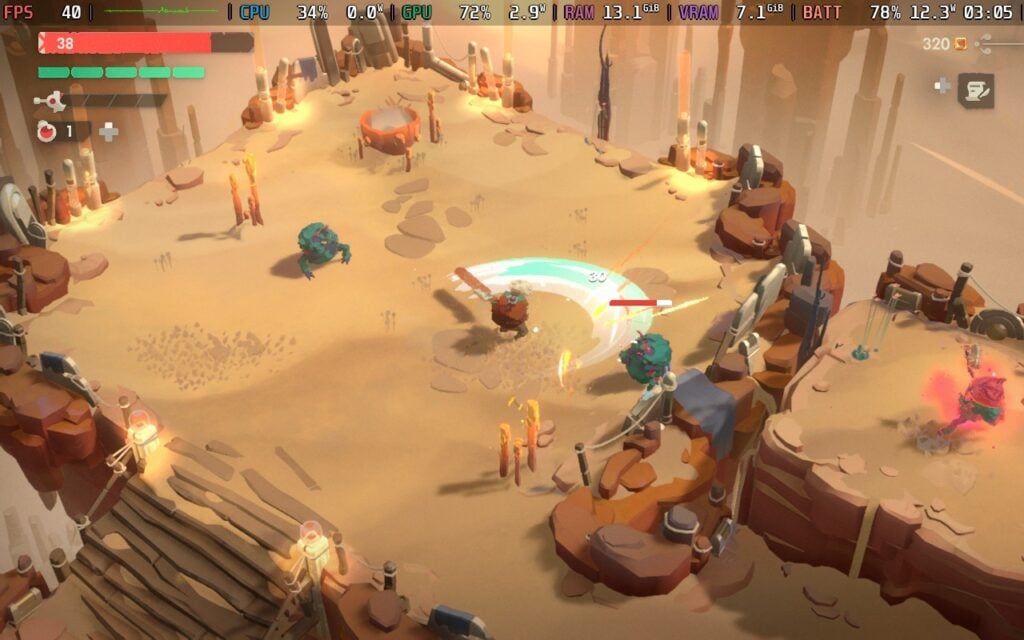
Just like the original game, Moonlighter 2 relies on two different types of gameplay in its loop: Combat and Shopkeeping. Each night, you will head into a biome with one of four weapon types on you. The biomes all have different relics you can pick up to sell later on, and it will be important to choose specific biomes at different times to maximize your profits and get all the new recipes from them.
Unlike the previous game, the structure is very much streamlined and very reminiscent of the usual roguelike layout we see in many other games in the genre, like Slay the Spire. There will be multiple pathways we can take, and we will choose one node on them at a time. The nodes can contain new relics to pick up, passive in-run upgrades, events, elite enemies, minibosses, and different in-run perks, and move you closer to the final boss.
The actual combat in Moonlighter 2 is all in real-time and has some good variety to it. We have our basic attack, special attack, dodge, gun, and backpack to attack with. There are four weapon types to choose from and attack with, each having its own pros and cons. Some even have special features. The large sword I chose has this Monster Hunter-esque sharpness mechanic, where every special attack increases my sharpness meter and increases my damage. All of the weapons have different models too, which all have their own perks, and can be upgraded individually.

It's extremely fun, and I looked forward to every monster and boss I would fight. It was tight and controlled, and doesn't feel too fast or slow. It's a good balance, and each attack felt necessary to use. I felt compelled to use my full arsenal of attacks, instead of just spamming one or two, which I would admittedly do in most games like this. I also love the gun and backpack attack. The gun is super easy to use and gives us a ranged attack and can bring down flying enemies, while the backpack can be used to whack stunned enemies into walls, off the stage, or into others.
The only big issue with combat that can be very jarring is how targeting works. Sometimes, it will just target a random object if you are near it and will attack it instead of the direction you are choosing. It is quite obnoxious and has led to getting hit or killed because I would attack this plant behind me instead of the enemy in front.
The main reason we will be going into dungeons in the first place is to get relics to sell, and this is its own little minigame within the dungeons. Each relic you get has a rarity and quality to it, and there are multiple effects that each relic can have that can affect others. Some may completely destroy others, while others can give them armor and find ways to increase their quality. For example, you can have a relic that can burn others, while also having a relic that will increase its own quality whenever something is burned. If we give some of our relics armor, we can keep burning them and reapplying armor, which can keep bringing up the quality level of the other relics that go up. It's a puzzle in itself, finding the right combinations and making the right decisions to maximize the quality of our relics to make the most money.

I love how intricate the system in Moonlighter 2 is and how it can work to actually increase quality more and more for the items we sell. It was borderline addictive to just find the best combinations and make my rare relics sell for as much as possible.
As for the shopkeeping side of the game, it still has some intricacies and details to it, but it's still relatively simple. We basically just put our relics on different pedestals, set the price for them, and sell them to customers. We will have to find the price and try to get the right balance of pricing, and if we can find it, we will get points that can be used for temporary perks that can boost the profit we bring in. There's also a level of customization we can utilize, like moving around the pedestals or choosing new ones that can provide their own benefits, to further increase our profits.
With the money and items we can pick up in dungeons, we can get stronger, increase our backpack size, get new shopkeeper perks, get new weapons, and upgrade them. There's a good chunk to do and upgrade, making it feel worthwhile to continue the gameplay loop and keep on making money. There is a story as well, and it is interesting so far, though there are more story elements coming throughout early access, so I will hold my thoughts on the story until later.

As for Moonlighter 2 on the Steam Deck, it has changed since the review period. Now, the graphics settings are gone, only giving us an option to change anti-aliasing/upscaling. For the most part, the default graphics look nice, and FSR 3 at Balanced isn't too bad with its blurriness. However, while most of the game does hit 60 FPS, menus will still dip down. For a full, smooth experience, I recommend setting the framerate cap to 40, and if you want better-looking visuals, change the anti-aliasing to FXAA.
This is actually how I preferred the graphics before these changes, even though menus will dip down to the 30s. It just looked a bit nicer with no blurriness and decent battery life. Ultimately, this is how I recommend playing the game, but default settings are good as well.

My opinions on the best settings will most likely change as development progresses and more optimization is added in, so I won't be going into more detail for testing yet. But Moonlighter 2 is playable and enjoyable on the Steam Deck in its current state. You can also bring back the rest of the graphics options by starting the game with the "SteamDeck=0 %command%" launch option.
We can change the language, toggle vibration and difficulty, and toggle whether our melee attacks are redirected based on where our mouse is or where our character is facing. We can also change the screen shake amount, volume, and rebind controls.
The game does support 16:10 resolutions, cloud saves, and controllers. There are no HDR settings.
Moonlighter 2: The Endless Vault is a great follow-up to the original that blends roguelike dungeon crawling and light shopkeeping into one fantastic experience. Despite a few little nuisances, combat is great with some addictive relic mechanics to maximize the quality of items we find to sell in our shop, and I enjoy the roguelike mechanics and progression in both the dungeon crawling and shopkeeping. For an early access release, this is a strong start that I can't wait to see updated as time goes on.
It also runs quite well on the Steam Deck, and while I do wish the graphics options didn't disappear, the game still looks great and can run well. There's not much I can argue about here; it's just a great start to a game that will only get better as time goes on.
Our review is based on the PC version of this game.
If you enjoyed this review, be sure to check out the rest of the content on SteamDeckHQ! We have a wide variety of game reviews and news that are sure to help your gaming experience. Whether you're looking for news, tips and tutorials, game settings and reviews, or just want to stay up-to-date on the latest trends, we've got your back.
Moonlighter 2: The Endless Vault is a fantastic sequel with a lot of promise to its dungeon crawling/shop management formula, and it is quite great on the Steam Deck so far.







I've been playing ML2 for over 17hrs on the Steam Deck and overall it's an amazing game, with some boss fights that feels Zelda in the best possible way.
Technically speaking it doesn't play so well in later dungeons when you're fighting multiple enemies, with dips as lower as 20fps.
I will take a break until they drop some performance fixes so I can truly enjoy the rest of it, as it's meant to be.
That's valid. It's still in early access so I am more loose with my recommendations right now, but they are definitely working on it and I see a lot of promise!