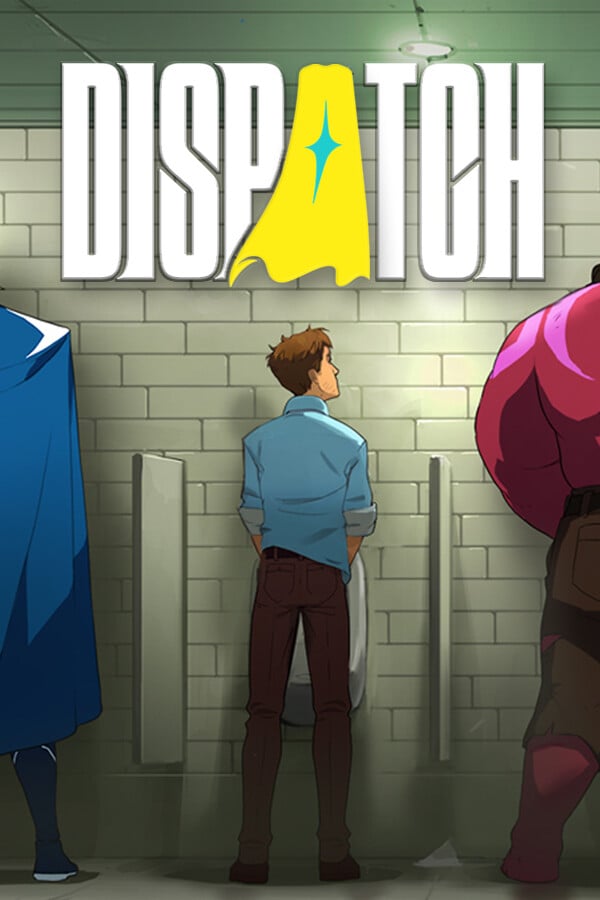

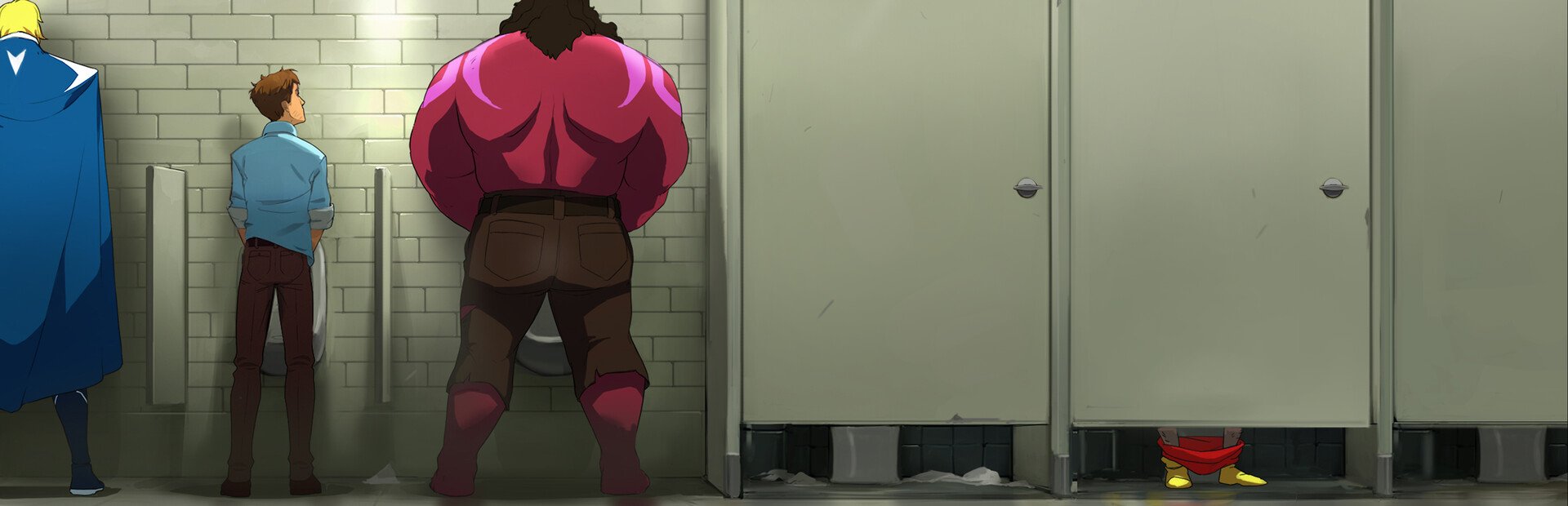

Dispatch was provided by AdHoc Studio for review. Thank you!
Developed by AdHoc Studio, a studio founded by fabled Telltale alumni (including Michael Choung, Nick Herman, Dennis Lenart, and Pierre Shorette, all of which previously played key roles in crafting some of Telltale’s most acclaimed titles), Dispatch puts you in the role of Robert Robertson, a forcefully-retired hero, who now works at the Superhero Dispatch Network, or SDN for short. The job in itself is made harder, however, considering you’re specifically tasked with overseeing the Phoenix Program, an operation in which former villains are to be “rehabilitated” as heroes. As you can expect, this isn’t as smooth sailing as one would like, with clashing personalities, histories, and allegiances all standing in the way of a cohesive team being formed and the primary job, the hero side of things, being done.
After spending several hours with Dispatch, having completed its first two chapters, I’ve already found myself in awe of the world, characters, and the story. It’s rare for a game to grab me this early and as quickly as it managed, but Dispatch does so with a mix of superb storytelling, immersive atmosphere, and an unexpectedly rich management layer that quickly reveals more depth than I had ever anticipated. And I, for one, genuinely cannot wait to see this story through to its conclusion. Then, replay it, albeit with different choices selected. It’s that good.
The narrative is, without question, the standout element here. Dispatch builds tension with remarkable precision, delivering its story through carefully constructed dialogue and dynamic events that constantly challenge your sense of control, giving you flawless levels of freedom to paint the world and story beats you deem fit. At the same time, it’s genuinely hilarious, light-hearted when it needs to be, and at no point feels artificial in the ways that other narrative choice-based games, including some older Telltale experiences, occasionally felt. It’s wholly natural to a fault, and this near-perfect show of artistic force is, thankfully, complemented by the superb voice acting throughout.
With a cast that includes, but not limited to, Aaron Paul (Breaking Bad, Black Mirror, Need for Speed), Laura Bailey (The Last of Us Part II, Critical Role) and Jeffrey Wright (Casino Royale, The Hunger Games, The Batman), the talent behind the original world and story that AdHoc Studio has created is clearly some of the very best. Despite this, the narrative and performances never overshadow one another, or ever seem even slightly off balance, but instead truly deserving of one another, effortlessly in sync.
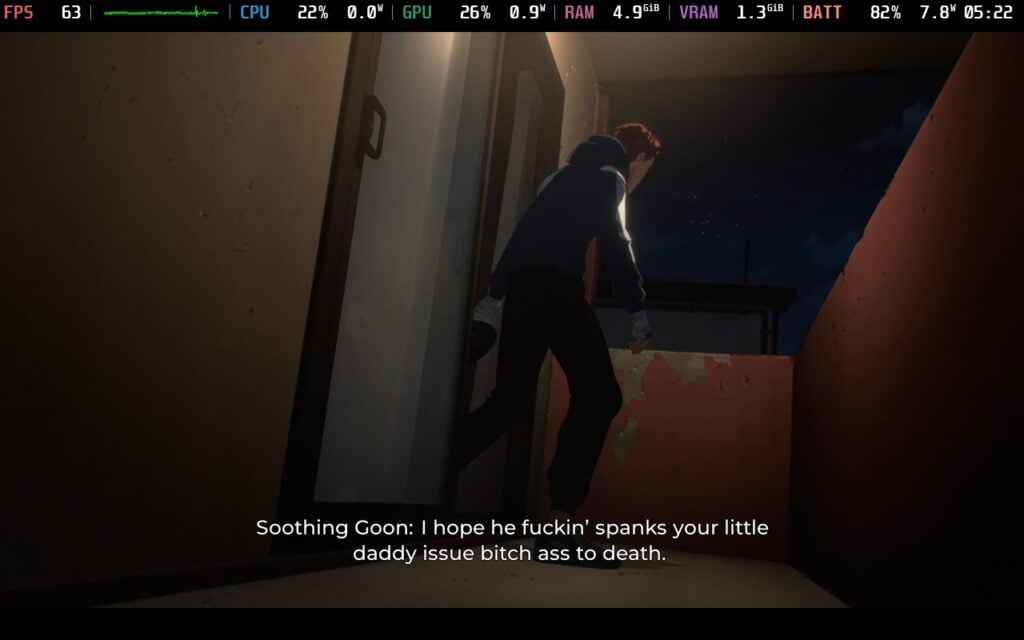
I’m not a creative writer per se, particularly in how I can construct stories from thin air, but whenever I’ve dabbled or envisioned myself as such an expert, I’ve struggled with the start of a story. Managing to construct an engaging and inviting world, introducing each of the themes, the status quo of all the above, and so forth… yeah, I don’t know how some people do it. My constant bewilderment at how this is managed has, then, escalated to such a degree, largely thanks to the opening notes and the entirety of Dispatch's first chapter.
Perfection, no notes, would experience again, 10/10, but too much water, etc, etc. The way in which we are introduced to Robert Robertson, aka Mecha Man, effortlessly invites intrigue as he lies on the floor with blood pouring from his nose, post-off-screen fight, and subsequent interrogation with an unknown foe, and it only managed to continue from there.
Chapter 2 specifically introduces you to the cast of the Phoenix Program, and we quickly learn how this particular program’s participants aren’t just case files to be managed, but deeply flawed, compelling characters whose motivations and morality are far more tangled than they first appear. This steady escalation, the sense that you’re slowly uncovering both the system’s secrets and your own place within it, makes Dispatch such a fascinating experience. It’s especially clear that every conversation and every outcome matters, even if/when the game doesn’t explicitly say so, or undermines a decision with an unexpected retort or glance.
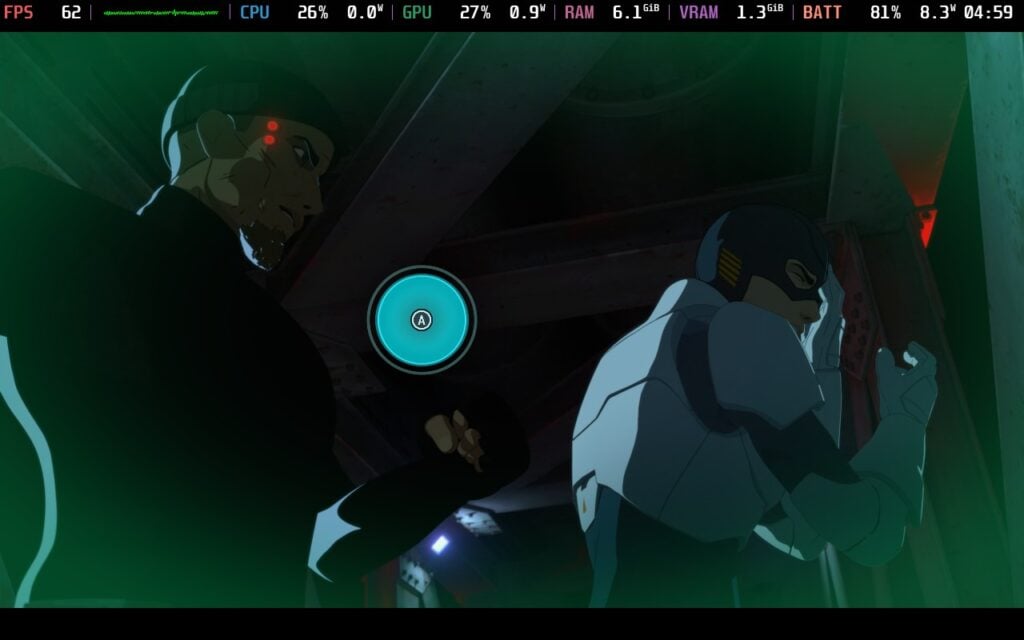
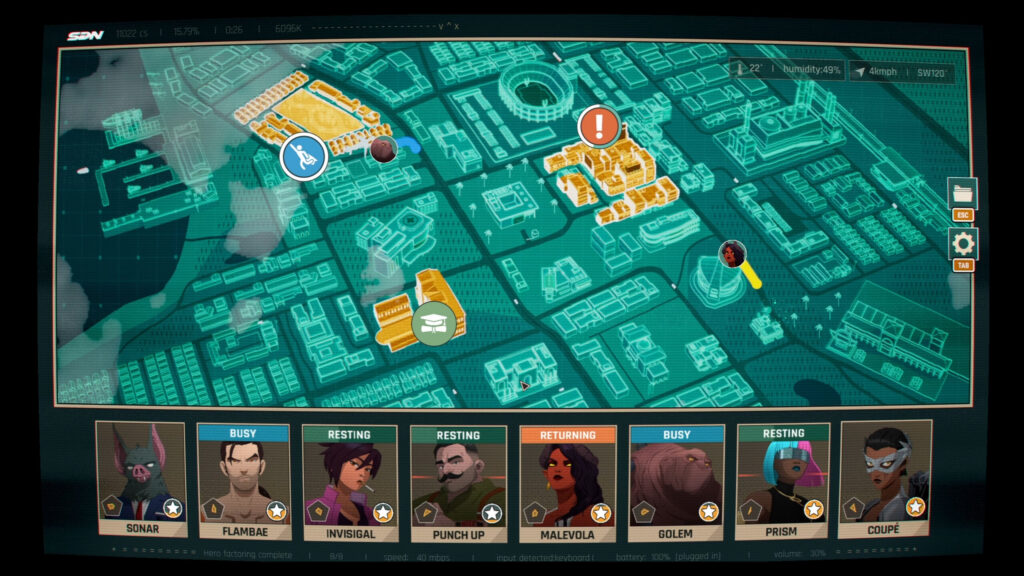
What really elevates Dispatch beyond being “just another narrative game,” though, were it just that, I absolutely would not mind, is the management aspect of the Phoenix Program itself. The systems here might look simple on the surface, manually assigning tasks, reviewing reports, approving or denying requests, but as you progress, they reveal themselves to be deceptively deep. For example, some characters may show specific buffs if placed in a particular slot on a mission, so whilst simple at its core, the potential for further complexity is certainly there.
This combination of gameplay and story feels wonderfully integrated. Rather than feeling like two separate elements stitched together, the management mechanics feed the story, giving your decisions real texture and impact. The sense of responsibility that builds with each passing in-game day is palpable, and at times, genuinely stressful, in the best way possible.

After a strong, if somewhat hesitant, start with Episodes 1 and 2, Dispatch returns this week with Episodes 3 and 4 — and it’s clear that the series has found its rhythm. The story takes a noticeable step forward, raising both the narrative stakes and emotional weight while continuing to lean into its loveably unique blend of workplace comedy and superhero drama.
The writing - naturally - remains a standout element, mixing sharp humour with sincere character development, all focused on the ever-important dynamic between Robert Robertson and his team of reformed villains, which continues to evolve, revealing new shades of vulnerability and loyalty that make their interactions genuinely compelling. The voice performances once again elevate the experience throughout, with the ensemble cast bringing a real sense of personality and charm to each scene.
These episodes also introduce new complications - narratively and gameplay-wise - with the surfacing of possible romance, tension-filled choices that truly feel they may make a difference, and a management system that finally begins to show some heroic (or otherwise) teeth. Assigning heroes to missions and balancing team dynamics now feels a little more strategic and contextualised with the aforementioned narrative, adding a much-needed texture to what was previously a lighter gameplay loop.
That said, some of the earlier criticisms still linger. The management elements, while deepening, can still feel a bit shallow in comparison to the narrative moments, and the episodes’ short runtime means they can play out more like an interactive TV show than a full-fledged game. It’s a format that works — especially given the quick release cadence — but those expecting a broader interactivity, ala Telltale's other titles, may still find it a touch limited.
Even so, Episodes 3 and 4 prove that Dispatch is more than just another episodic experiment. The story is confidently moving toward something bigger, making unexpected, but welcome, choices throughout, and it's one I'm wholeheartedly locked into now. Roll on next week.
Chapters 5 and 6 are where Dispatch really begins to show what kind of game it wants to be. After a slow-burn opening built on tension and atmosphere, this mid-game stretch sharpens the narrative, raises the stakes, and introduces a stronger sense of mechanical purpose. It’s still very much the intimate thriller it started as, but these chapters shift the experience from passively observing strange events to actively managing them.
Chapter 5 continues to lean on the game’s core strengths — atmosphere and escalation — but now there’s more complexity in how you interact with incoming calls. New scenarios force you to juggle multiple interpretations at once, giving the chapter a welcome increase in difficulty. It’s not punishing, but it demands more attentiveness, and the script is confident enough to let you sit with uncertainty.
This is also the point where the story starts tightening its grip. Background details you may have brushed off suddenly feel relevant. There’s a creeping sense that you’re not just responding to emergencies — you’re being pulled into something orchestrated.
If Chapter 5 is about building tension, Chapter 6 releases it — but not in a comforting way. The tone becomes more frantic, and the calls feel more connected to the overarching plot rather than standalone incidents. There’s a standout sequence here that’s easily one of the most memorable moments in the game so far, mixing player agency with narrative dread in a way that feels earned.
Mechanically, the game doesn’t drastically change, but the stakes absolutely do. Small choices feel heavier, and the chapter leans into moral discomfort without being heavy-handed. You start to sense that the protagonist is no longer just reacting — they’re spiralling.
Chapters 5 and 6 are where Dispatch finally clicks. The pacing tightens, the writing becomes sharper, and the gameplay steps into a more confident rhythm. By focusing on emotional tension rather than bombastic twists, the game manages to feel bigger without losing its intimate, claustrophobic core. If the early chapters were about learning the job, these chapters remind you how quickly that job can consume you, and that the stakes are indeed high.
Episodes 7 and 8 serve as the culminating stretch of Dispatch, pushing the tension, narrative threads, and psychological pressure to their limits. As the game reaches its finale, these chapters bring the experience to a close that’s unsettling, tightly constructed, and thematically consistent with everything that came before.
Episode 7 is the final deep breath before the plunge. The familiar rhythm of juggling calls begins to fracture as the narrative becomes more confrontational. Ambiguity is no longer a storytelling tool — it’s a weapon. Calls feel heavier, more interconnected, and more targeted, creating a sense that you’re no longer just fielding emergencies; you’re being dragged into something personal.
The writing is at its sharpest here. Voices on the other end of the line carry a new weight, and the world beyond the dispatch desk feels like it’s collapsing in real time. The result is a chapter that ratchets the tension without losing the grounded, human core that makes the game work.
As the final chapter, Episode 8 doesn’t explode so much as it constricts. The tension tightens, the pacing accelerates, and the protagonist’s fragile grip on control finally snaps. Instead of offering a neat resolution, the game leans hard into emotional and psychological fallout. The calls in this chapter strike the darkest balance yet between narrative relevance and moral discomfort, forcing you to confront the consequences of your decisions — or your perceived inability to control them.
Mechanically, Episode 8 doesn’t reinvent anything, but it doesn’t need to. It uses the systems you’ve learned against you: overlapping calls, urgent ambiguity, and a sense that every choice is both vital and futile. The finale lands not because of spectacle, but because of escalation — an ending that feels inevitable, even if you weren’t ready for it.
As a concluding pair, Episodes 7 and 8 bring Dispatch to a fitting end. The game stays true to its strengths: intimate tension, morally loaded decision-making, and a narrative that spirals inward rather than outward. It’s a finale that favours emotional impact over clear and predictable answers, leaving you sitting in the afterglow of both immediate pleasure at a story well done, and a slight sense of sadness at the journey having come to a deserved end — exactly the ending a game like this thrives on.
If you saw this story through to its conclusion, the final chapters effortlessly deliver precisely what they should: not only closure, but consequences of your time spent with arguably some of the most fleshed out and personable characters seen in a video games in a long, long time.
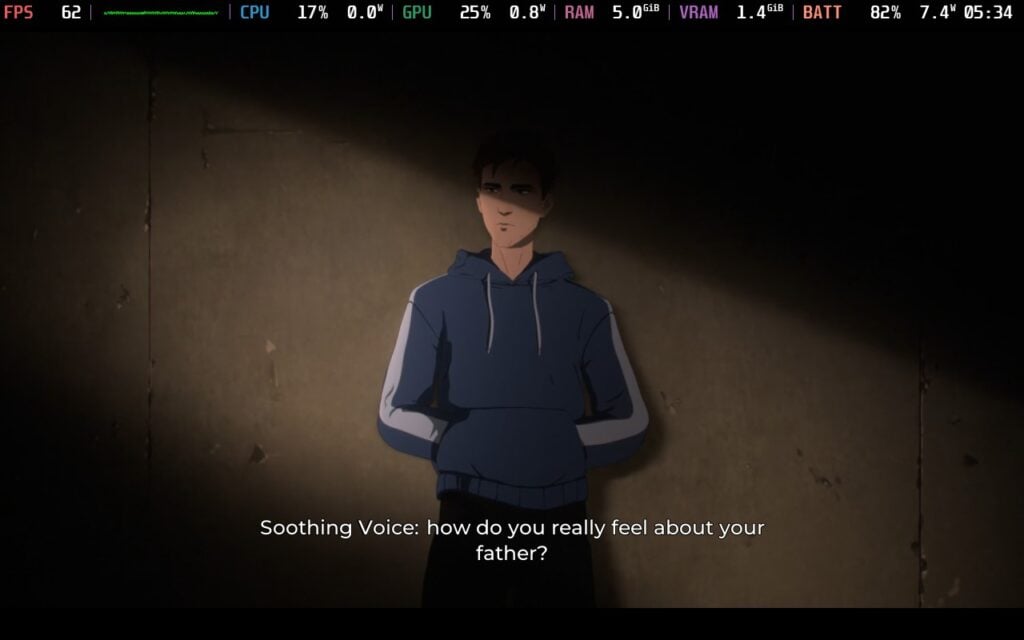
On the Steam Deck, Dispatch runs absolutely perfectly. The interface scales well to the smaller screen, with crisp text and intuitive navigation that never feels cramped, and with equally impressive performance being rock-solid so far, locked to an immaculate 60fps, with quick load times, it feels right at home. Battery usage has been light, too, ranging between 7W - 10W, which makes it ideal for longer, more involved play sessions away from the ever-reliable charger.
No notes, this is a fantastic game to play on the Steam Deck.
There is a specific accessibility tab, which includes support for colorblind modes, intensity, toggling visual warping and additive effects, and changing the text size. We can also change how quick-time events are handled, whether we have unlimited hacking attempts, and some subtitle and background effects. There are sound bars to change, an interesting way to change mouse and keyboard rebinding, and some filters for profanity and visual censorship.
The game doesn't support 16:10 resolutions, but it does have cloud saves and controller support. There are no HDR settings.
Dispatch sticks the landing. Across its eight episodes, it transforms what begins as a quirky, tightly contained dispatching sim into a genuinely gripping narrative about responsibility, identity, and the weight of every choice you make from behind the console. The constant push-and-pull between chaos and control keeps the tension sharp, and the writers never lose sight of the human core beneath the superhero satire.
It also helps that the game runs beautifully on Steam Deck — fast loading, clean UI scaling, and stable performance that lets the writing and voice acting shine without distraction. AdHoc Studio’s blend of Telltale-style storytelling with clever management mechanics makes Dispatch feel fresh, focused, and surprisingly emotional right up to its final moments.
As a whole, this is a confident, compelling debut that proves you don’t need capes or bombast to tell a great superhero story — just good characters, sharp choices, and a headset full of trouble you can’t quite switch off.
Now, bring me Season 2.
Our review is based on the PC version of this game.
If you enjoyed this review, be sure to check out the rest of the content on SteamDeckHQ! We have a wide variety of game reviews and news that are sure to help your gaming experience. Whether you're looking for news, tips and tutorials, game settings and reviews, or just want to stay up-to-date on the latest trends, we've got your back.
Between its confident storytelling, compelling characters, and layered management mechanics, Dispatch shaping up to be not only one of the most intriguing narrative-driven titles I’ve ever played.