
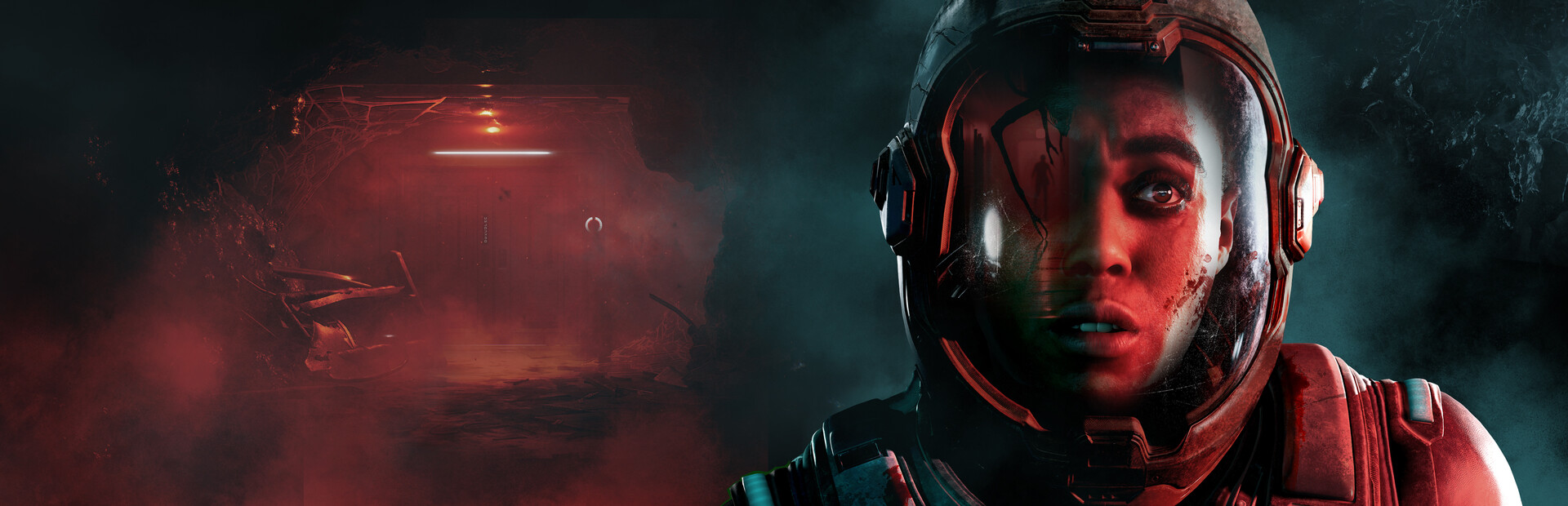



Directive 8020 was provided by Supermassive Games for review. Thank you!
I love games with such an immersive story that takes center stage, and developer Supermassive Games has been one of the best at creating those. Even though I’m a baby when it comes to horror, their Dark Pictures Anthology games and Until Dawn still remain some of my favorites. However, with Directive 8020, the team changed a lot. With new gameplay mechanics and going into a sci-fi future, the game stands apart in many different ways, though it doesn’t fire on all cylinders when it should.
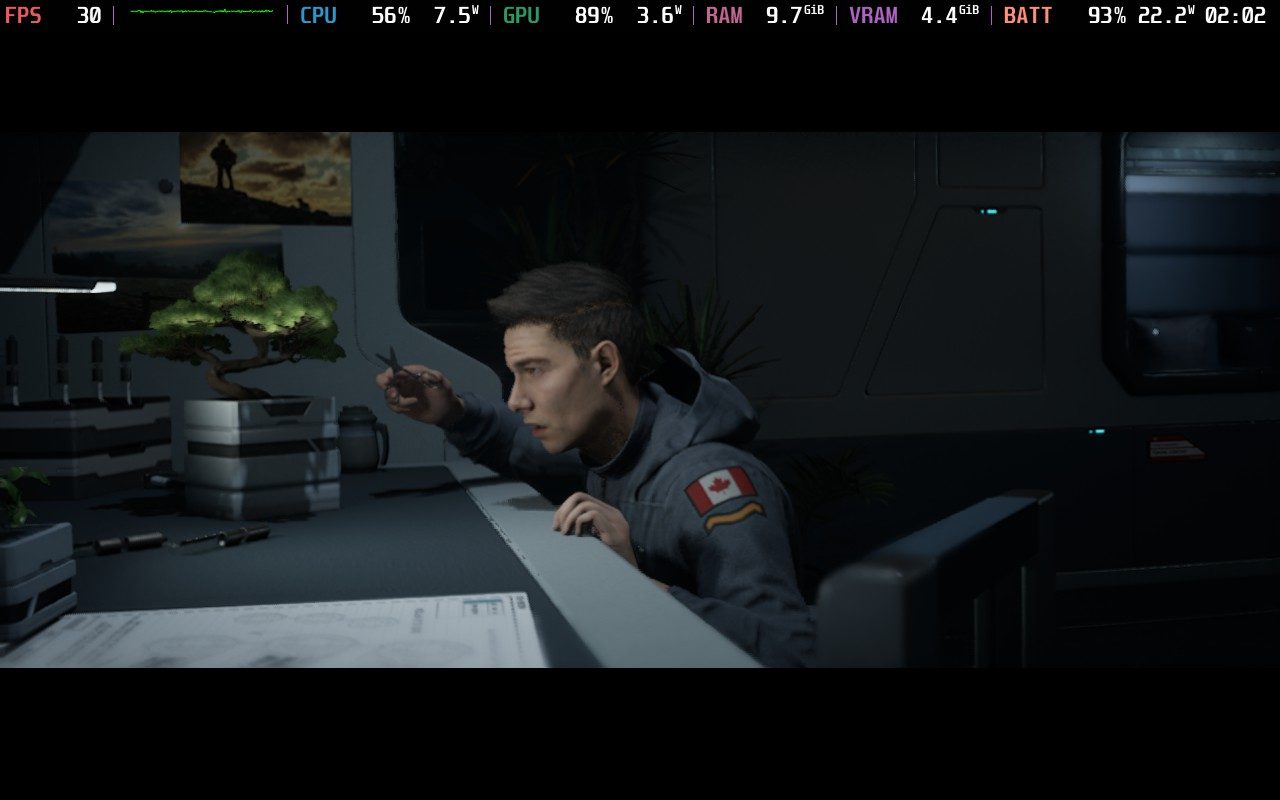
The game follows the crew of the Cassiopiea on a mission to do some tests on a new planet that could house humanity: Tau Ceti f. But before the crew can wake up, tragedy strikes when a meteorite hits the ship that seemingly carries an alien lifeform. It quickly becomes apparent that this lifeform is not friendly, and now the team will need to figure out exactly what they must do to survive.
I don’t want to spoil too much of the story, but if you’ve played Supermassive’s other games, you’ll probably be familiar with how many branches and choices we have that can dictate how the game ends. Still, the story is quite satisfying. I was very happy with the conclusion of my first run, and there were absolutely some surprising twists towards the end. There will definitely be some plot changes that surprise, as I definitely did not see some of them coming. I know I’m being a little vague, but I really don’t want to spoil anything. It’s worth playing through and figuring it out yourself.
One thing I found a little bit odd, though, was the pacing of episodes. I found that episodes 1-4 were quicker and didn’t have a lot happening in them, while the rest of the episodes (5-8) had much more substance and excitement. It felt like a lot was happening towards the second half of the game, and it made those first episodes feel like just introductions to what we would get later on. I can understand episode 1 feeling that way, but I thought it would pick up in episode 2. There are still some interesting revelations and discoveries in those earlier episodes, but they pale in comparison to the later ones.
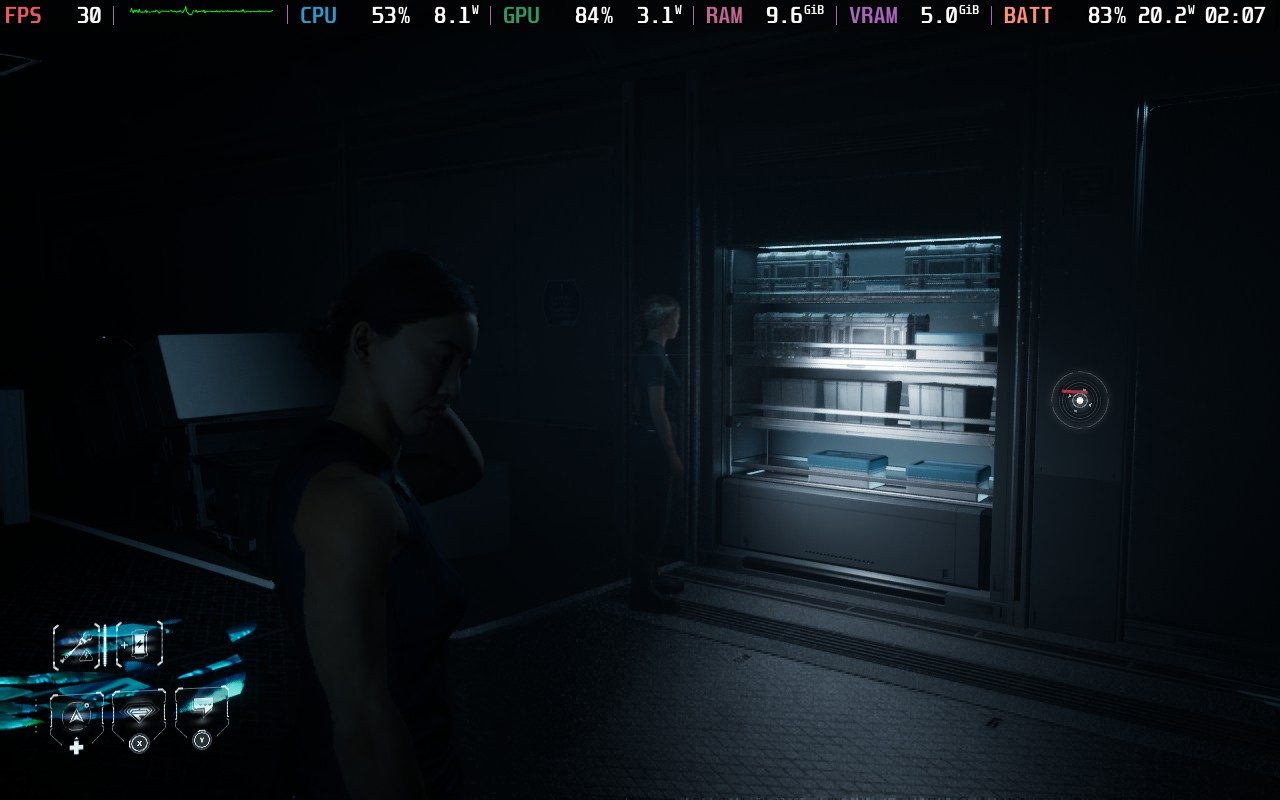
I also wasn’t a huge fan of some of the opening scenes of those earlier episodes, where we would flash forward to the future. They felt like they were just added in to pad out the episode, while they would fit perfectly fine later on when those scenes actually take place in the second half of the game. They did dictate some outcomes later on, but I still felt like they would’ve fit better at a later time.
But as a new addition to the game that isn't seen in Supermassive's previous titles, I really like the Turning Point system. This allows us to go back to earlier points in the game, see what changes we could’ve made, and easily return to those spots. They are laid out like tree branches, making it easy to visualize the pathways that could lead us not only to other story elements, but to other endings of the game.
However, I advise against looking at this until you beat Directive 8020. Throughout my first playthrough, I was testing the system and going back slightly to make changes due to an accidentally failed QTE (Quicktime Event) or a button press. But I noticed that the points on the tree we didn’t unlock give us a hint on how to unlock them. These hints could have spoilers. There was one in particular where I was able to figure out which person was real because of the hints I saw. It took away a little bit of the mystery. I like having the hints there because they tell us what we should be doing to reach that path, but I wish the wording were changed so as not to spoil anything.
I also wish the system allowed for better jumping around the tree to reach certain pathways more quickly. Even if we go all the way back and make one change in episode 1, we can’t then jump forward into episode two and see how that path would change. It isn’t completely simulated, so you will have to play through the entire game again from that choice to see how the experience would change. This isn’t necessarily a bad thing, since some of these pathways can have huge ripple effects that completely change many scenes later on, but it would’ve been nice to have a quick way to go back and forth to see how that change would’ve affected specific scenes later on without having to play through the whole game again.
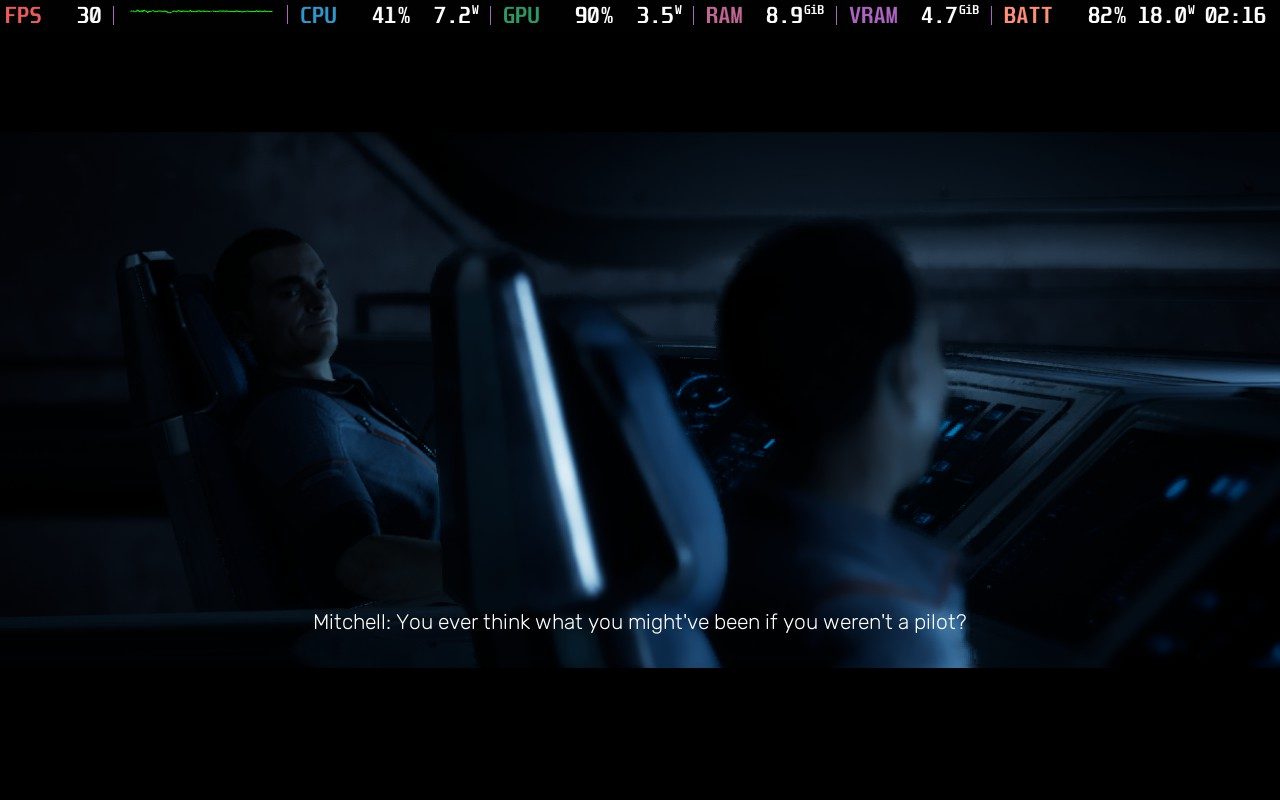
For the most part, I would consider the acting and animation great, though I did notice a few lines that felt a little forced or hard to believe. None of it took me too far out of the world, but it was still a little off at times. However, I loved the setting. The team was clearly going for a creepy, atmospheric five that I feel they nailed. Walking through dimly lit corridors, the sounds of clinking, metal and machinery, and the squishy sounds of the alien life form all mixed together in a symphony of horror that kept me on the edge of my seat.
Speaking of which, I would consider Directive 8020 more of a thriller with some horror elements. There were definitely some jump scares, and some later parts of the game genuinely made me wanna take my time to go through it, but the bulk of the game was more interesting than scary.
Another major change introduced in Directive 8020 is the addition of survival-horror stealth mechanics. Instead of just walking around and investigating, there are going to be moments where we have to hide from the monsters trying to find us. The mechanics are sound, so I did find these moments a little on the easy side. There are some tense spots here and there, but with us having a stun baton, it’s very easy to run in the area we need to head to, crouch down, and just wait until the monster recovers so that they don’t immediately come after us again.
These moments weren’t challenging, but it’s hard to deny how cool it was to see how one wrong move could affect the story. Getting caught changes the outcome of the ending, just like how choices will throughout the story, so it becomes more important to focus on making sure you get the desired outcome you want. It’s an interesting thought, but I wasn’t challenged.
Outside of that, there are some puzzle elements, like finding power cores and deciding which spots get electricity and which don’t, but it is ultimately all very simple. The extra gameplay elements felt like and after thought to help immerse us in the interactive story more. This game is an interactive story at its core, so I didn’t expect anything too complex from the gameplay sequences, though some of them felt way too short or forced. I remember going from one cutscene, walking through the hallway for 15 seconds, and then getting another cutscene right after that. That kind of thing happened enough times that I just would’ve preferred one long cutscene. Thankfully, there are larger areas we can walk around to find collectibles that give us more insight into the characters, the mission, and something extra I found quite intriguing.
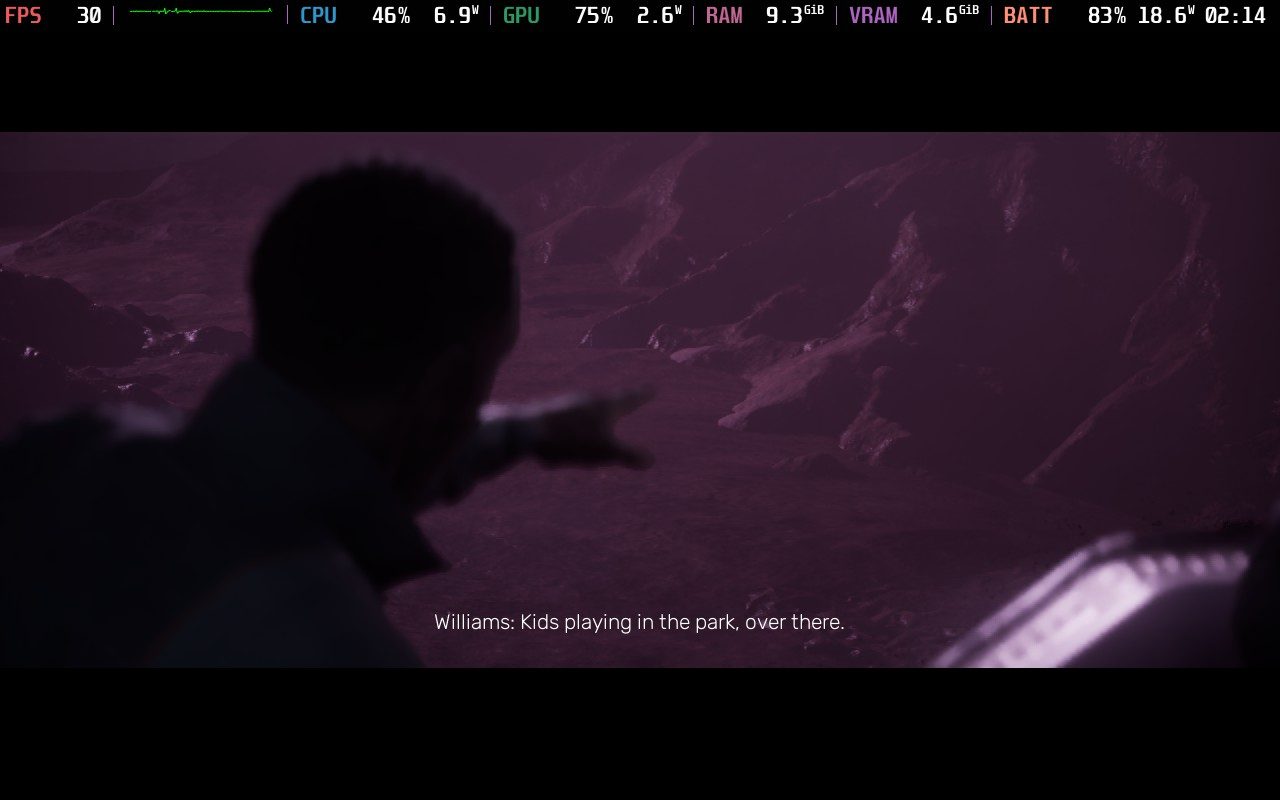
Ahead of its release, I had the chance to talk to Supermassive Games about running Directive 8020 on the Steam Deck, and they reassured me that this is a game that they want people to be able to play on the go. The performance seems to mimic that for the most part, and I was impressed with what they were able to achieve overall.
With the game on the lowest settings, it will stick to around 30 FPS. It’s important to know that this is a story-driven game with high-quality visuals, and even though shadows can look a little pixelated from upscaling, the quality is still quite high. TSR upscaling on Performance looks great, especially when comparing to FSR upscaling, where there is a lot of shimmering at Balanced and below. FSR quality looks similar to TSR at Performance, but gets worse performance. So, I recommend keeping the upscaling at its default.
Ultimately, I recommend keeping everything at the default with a 30 FPS cap. We can move the quality settings to medium, but it does cost performance later on, resulting in more drops, for minimal visual changes. We will be getting unavoidable drops towards the end of the game, with some gameplay areas and cutscenes getting CPU-bound and pushing the frame right down to the 20s. This is at the default settings, which is already quite low, so there won’t be a ton we can do to avoid that.
And as for the upscaling, even going to FSR on Ultra Performance will still result in major drops throughout the game. There’s no way you can get a consistent 40 FPS, and while I can hit 60 in a few areas, these are far and few. This is a game where the visuals play a big part in the enjoyment of the experience, so I prefer lower framerates with better visuals.
I also tried out frame gen with both the in-game XeSS Frame Generation and Lossless Scaling. XeSS Frame Gen just didn't work for me, and while Lossless Scaling does work and feels ok towards the beginning, the later parts of the game feel awful. And even for the parts that work, there is obvious input lag. It doesn't ruin the game, but it doesn't feel good either, so I just wouldn't recommend it.
Directive 8020 is a solid story-driven thriller that has a few too many pitfalls. I love the story, and it gets significantly better towards the second half, but the first half felt more like a long introduction. The new Turning Point system is a great idea, and it allows easy access to go back and see what we could do differently for another run, which makes it a lot easier to try new pathways. The gameplay itself is a little too simple and easy, but it still has the same emphasis on choices that affect the story. It all works really well, but still falls short in a few key areas.
As for its performance on the Steam Deck, it can do quite well in most areas. The default will be the best way to play, which gives us a good mix of visuals and a decent framerate, but it will get tougher to perform later on. Still, with this type of game, I would consider it competent on the Deck.
Our review is based on the PC version of this game.
If you enjoyed this review, be sure to check out the rest of the content on SteamDeckHQ! We have a wide variety of game reviews and news that are sure to help your gaming experience. Whether you're looking for news, tips and tutorials, game settings and reviews, or just want to stay up-to-date on the latest trends, we've got your back.
Directive 8020 is a great story-driven thriller that has a few pitfalls that keep it from its horror greatness, but it is pretty solid on the Steam Deck.




Might want to adjust your article
> some whore elements
outside of that, thank you for your reivew!
Auto correct didn't catch that one at all! Thank you.