Battlestar Galactica: Scattered Hopes was provided by Dotemu for review. Thank you!
I wasn't sure what to expect from Battlestar Galactica: Scattered Hopes. In fact, I hadn't even heard of it until I was offered the chance to review it, but I love the 2004 TV series, so I was interested to see if this game could live up to that standard. And I must say, I was pleasantly surprised.
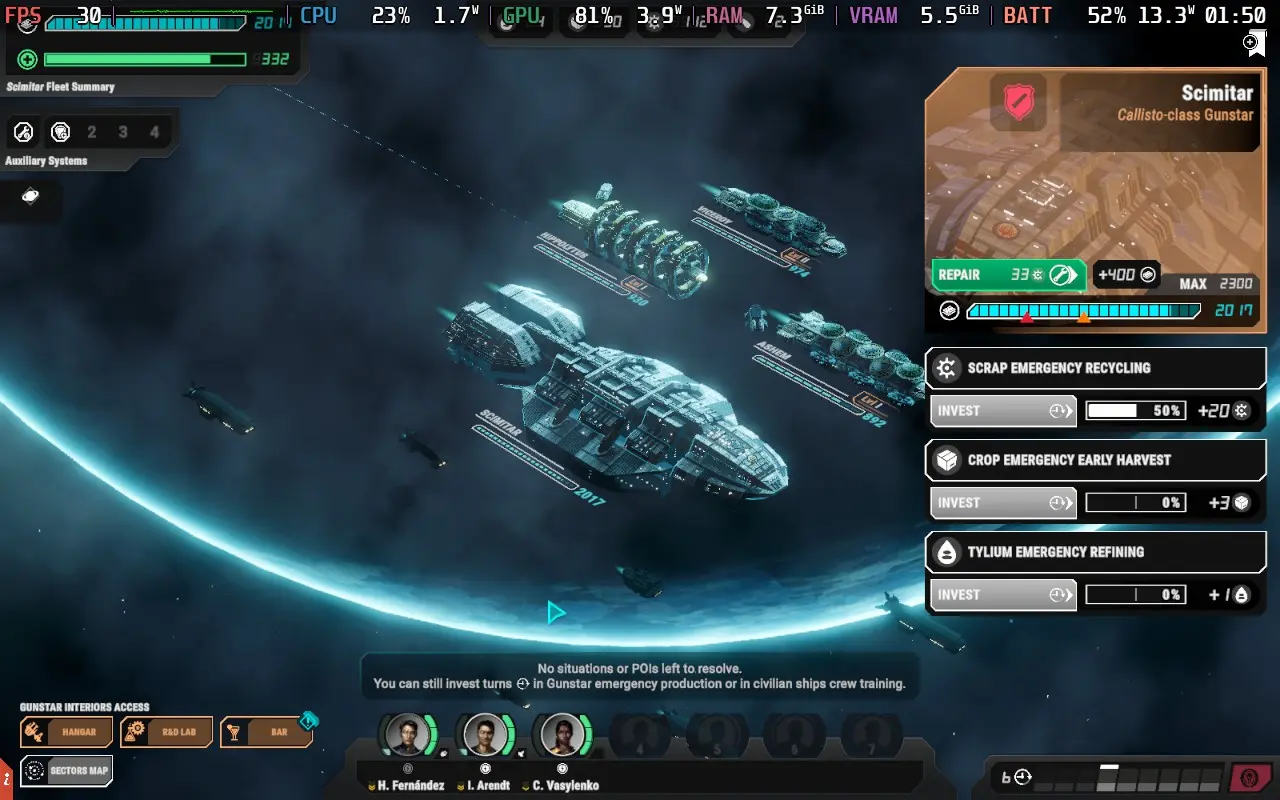
Battlestar Galactica: Scattered Hopes adopts the ever-popular roguelite approach, and given the premise of the Battlestar Galactica franchise, it makes a lot of sense for this game.
As captain of a Gunstar vessel, it's up to you to lead your ship and a convoy of civilian vessels through various procedurally generated sectors in order to meet up with the Battlestar Galactica, all while keeping the peace with the various colonist factions, upgrading your fleet and combat squadrons, and facing the ever-present (and growing) Cylon threat.
When it comes to gameplay, Scattered Hopes is a game of 2 halves. The first is managing your fleet. Here we are faced with opportunities or crises that can either help or hinder progress, as well as Points of Interest, where you can gather resources to keep your fleet alive and colonists happy.
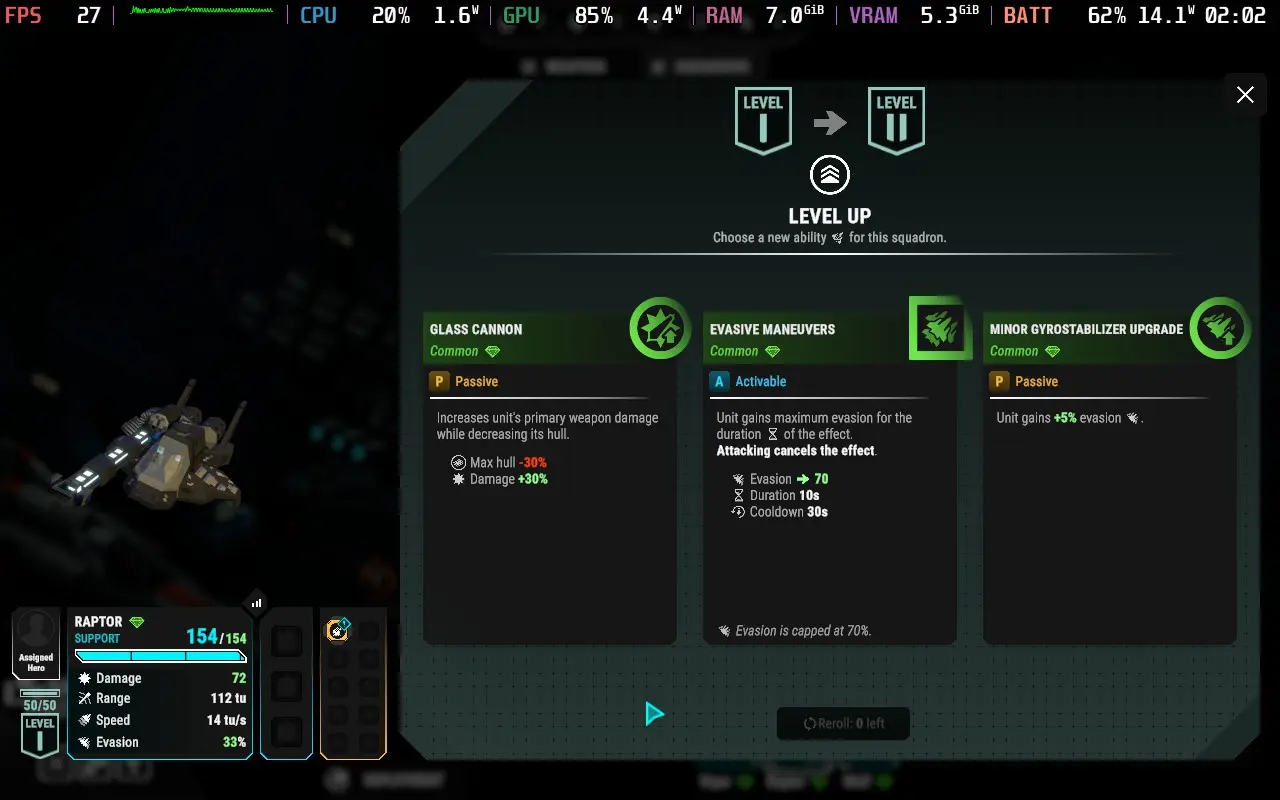
This part of the game is mostly a balancing act. You'll be trying to gauge your relationship to the 3 factions in your crew, make sure you don't run out of resources, and gather as much as possible in order to upgrade your Gunstar and your Squadrons. The Crises, Opportunities, and POIs will all feed into this balancing act. Every choice you make advances time until the next battle (and FTL jump), so while it might seem mundane in nature, there are often times when you have to make a choice about what you want to do with the limited time you have, and Crises usually give you unavoidable negative effects you'll have to contend with.
These factors together ensured that even fleet management never seemed like a boring or tedious part of the game, keeping your mind engaged throughout as you try to figure out which choice is the lesser of two evils.
The other half of the gameplay is the battles themselves. At the end of each sector, you'll face a Cylon fleet that you will have to defend against until your FTL co-ordinates are locked in and you can make your escape. While the battles are real-time, you can pause at any point, and you will be pausing a lot.
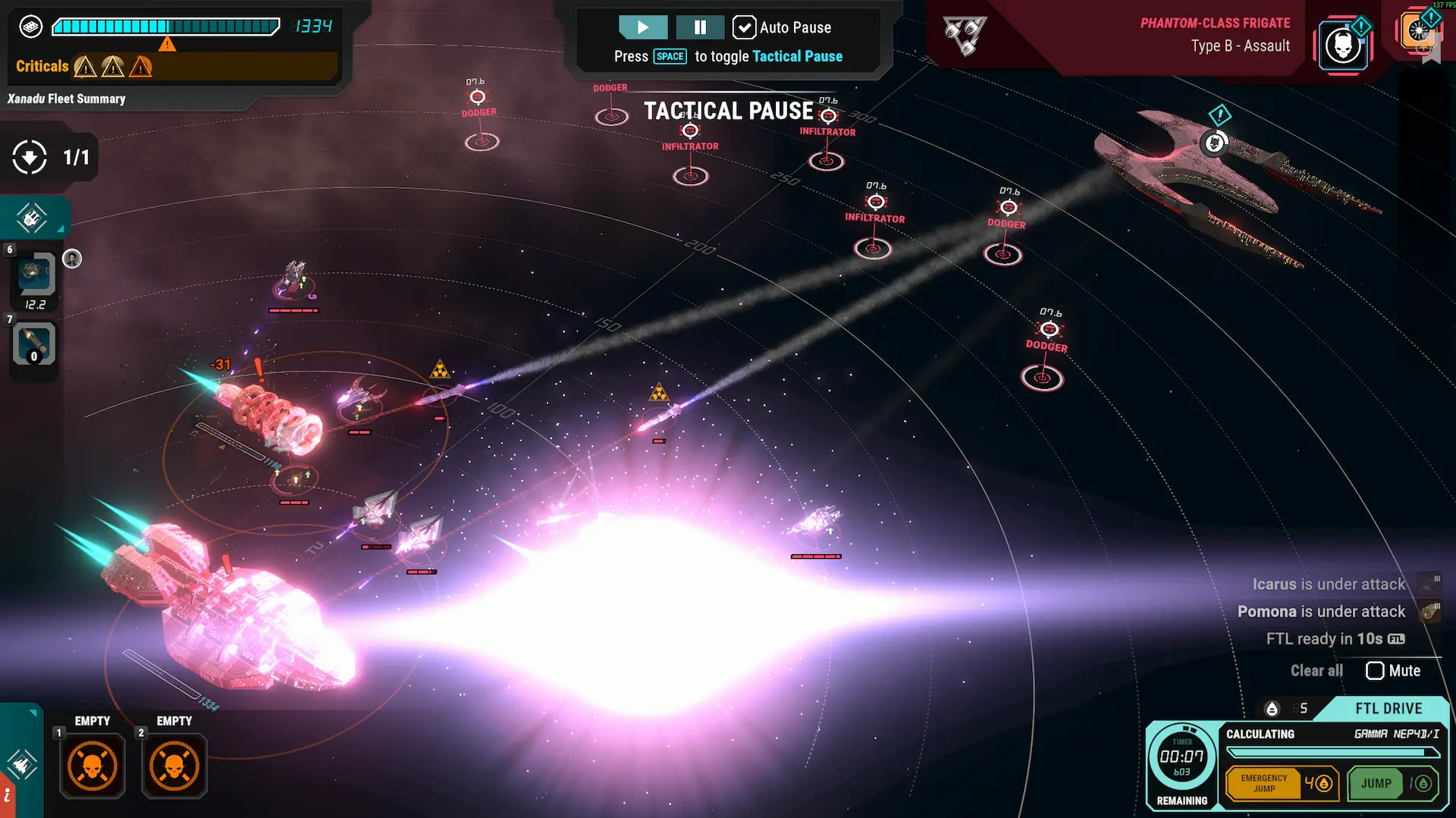
The Cylons come in large numbers, and the game almost feels like a tower defense experience. Ships will warp in on the battlefield and continue towards your fleet, while the enemy ship will fire missiles. Your ships have limited range, so your input will be in the form of constantly repositioning them in order to head off incoming threats. Using the "tactical pause" feature to think and plan your maneuvers is essential to staying alive.
As the countdown towards your FTL jump continues, the enemy fleet grows in numbers to the point where you can't realistically defend against everything. This creates a hectic atmosphere and a certain sense of dread, as you often have to let your fleet take a beating before you can jump to safety, very reminiscent of the TV series.
Once we die, the run is over, and we'll be rewarded with experience points and fate points based on how well we did. Experience points allow us to level up, unlocking more potential items and squadrons to purchase at in-sector shops, while Fate Points can give advantages in future runs.
While the Fate Points do offer some useful benefits, such as more resources to use or the ability to retry a battle if you lose, I found these bonuses to be somewhat moderate compared to other roguelites. Don't expect there to be exponential improvements in power between runs; these are modest upgrades that might give an edge if skill level almost got you through a battle.
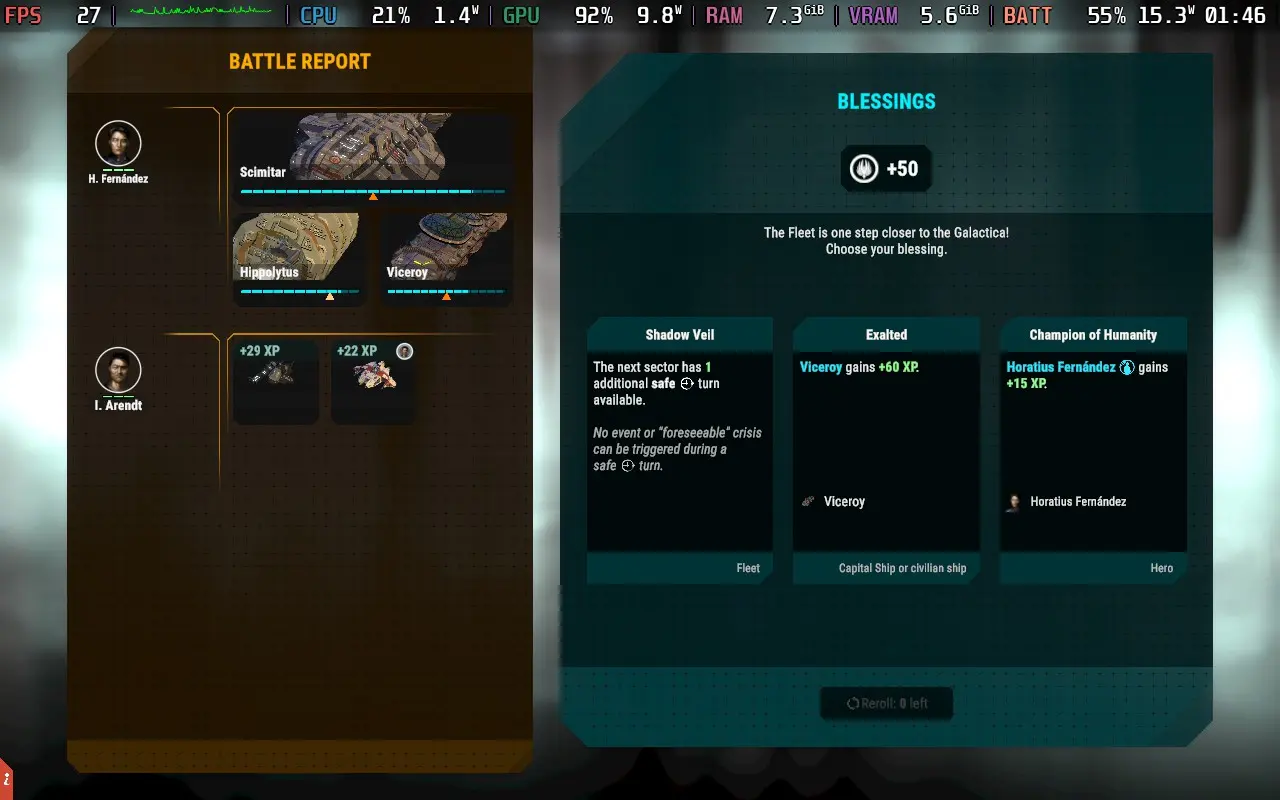
Because of this, improvement in Battlestar Galactica: Scattered Hopes will come as much from your own skills improving as you learn the game, as it will from the progression mechanics giving you advantages. Learning which ships to use where, and the best time to use your vital Gunstar abilities like a flak bombardment or nuclear missile, is crucial. This game won't be for everyone, but as space strategy roguelites go, it's a good one.
To get Battlestar Galactica: Scattered Hopes to boot on the Steam Deck, I had to go into Steam Game Properties and force it to use Proton 10.0-4; otherwise, it would crash back to Steam during the opening logos.
The game has no controller support, so you'll be using a keyboard+mouse controller layout, which the game defaulted to. Fortunately, the game is slower-paced, and using the touchpad is a perfectly fine way to play.
There are no graphical options in the game, regardless of whether you play on the Steam Deck or not. I'd recommend you limit the FPS to 30 using the in-game option. This helps with stability and also improves battery life. You won't be able to maintain 30 the entire time; certain screens do drop into the 20s, but thankfully, these are just dialogue scenes.
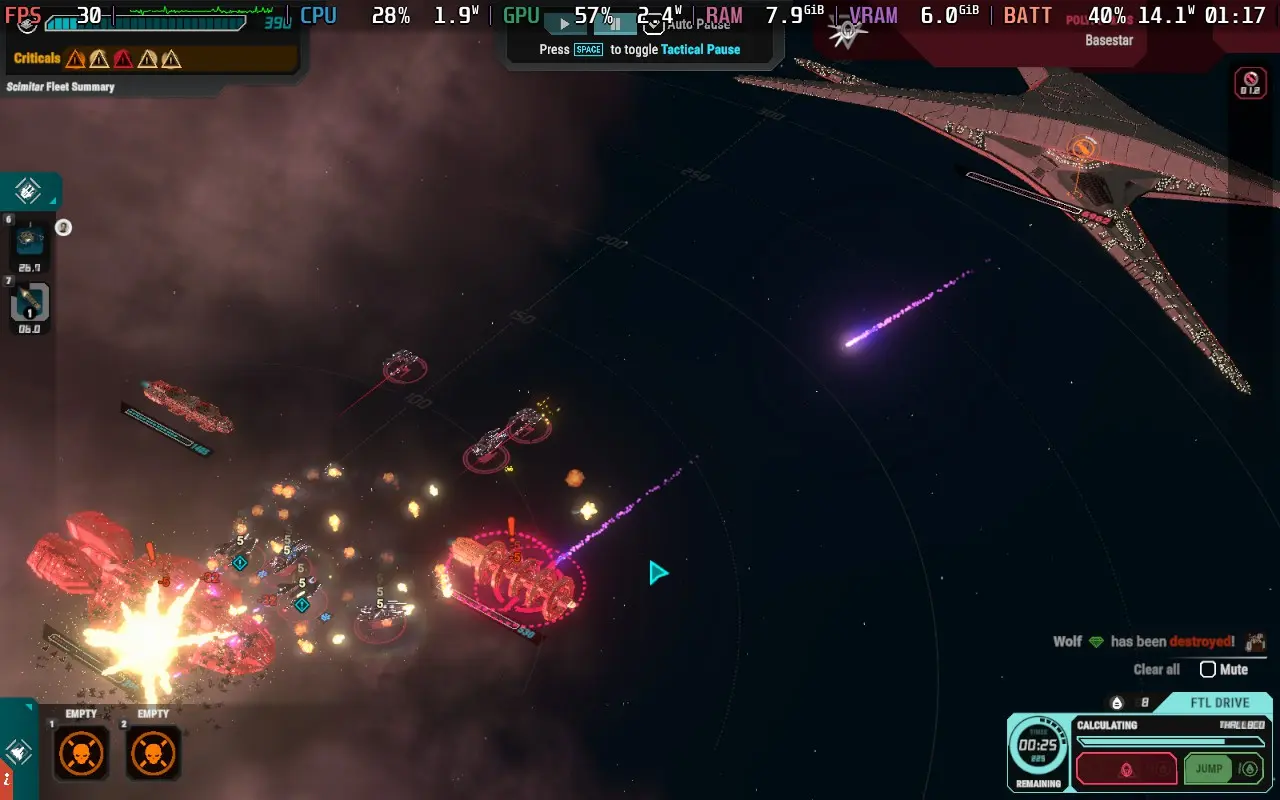
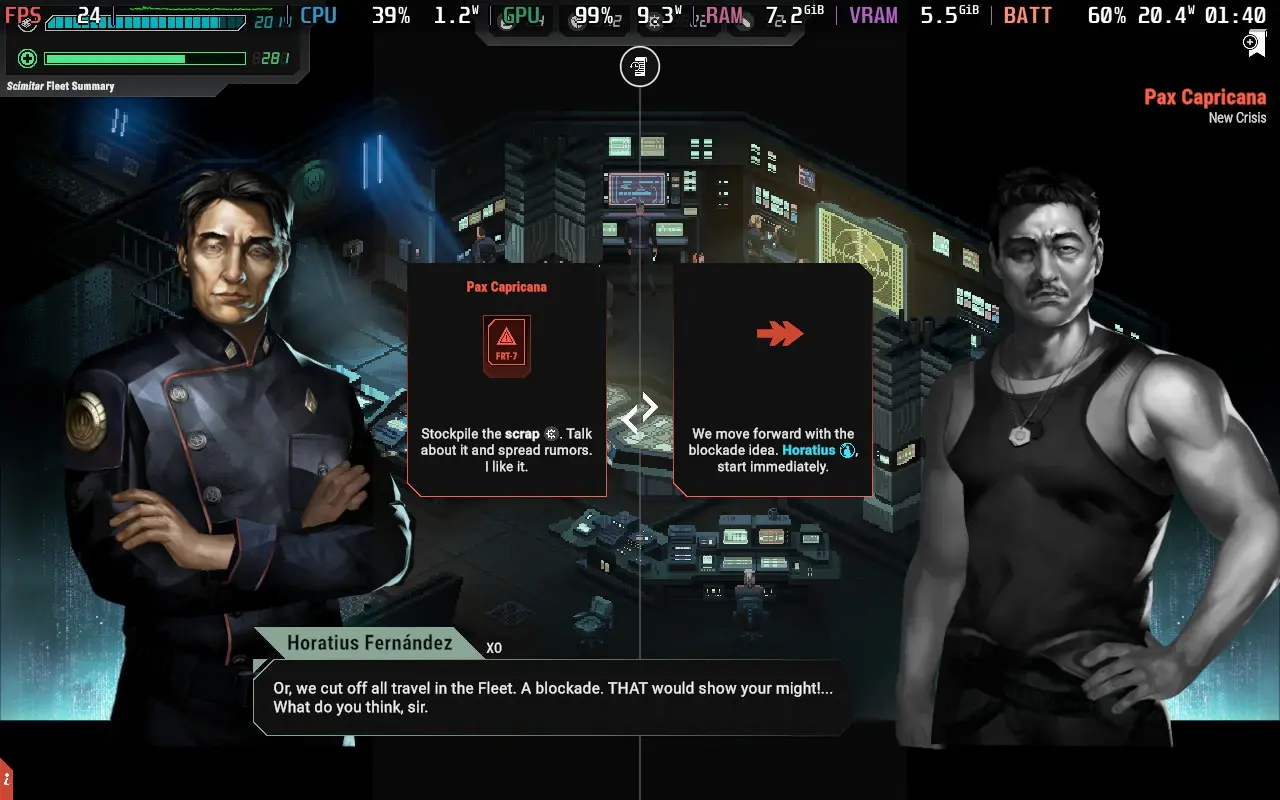
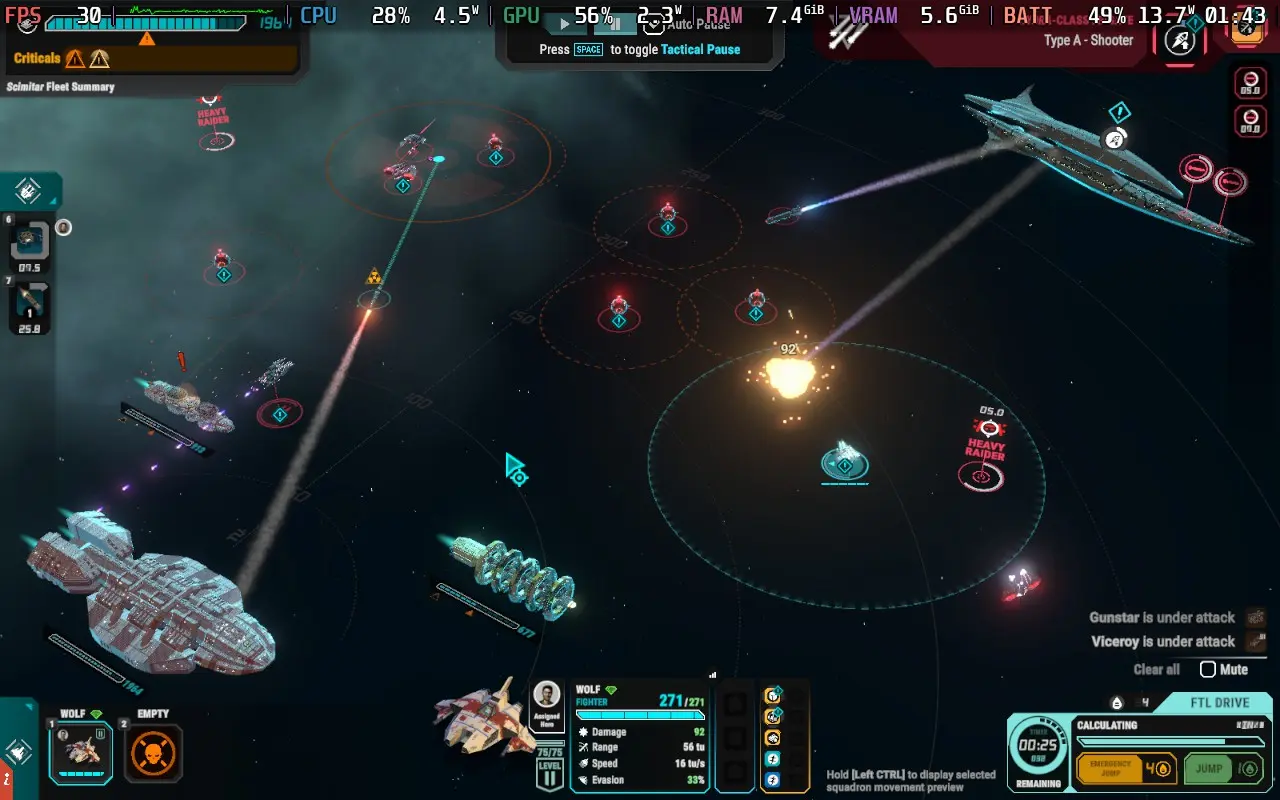
Power draw tends to be around 13W-15W during battles, spiking to 20W during fleet management, which gives us a battery life of around 3 hours on a Steam Deck OLED, and around 2 hours on a Steam Deck LCD. Temperatures were around 60 °C-65 °C.
The UI is rather small on the Steam Deck, and there is no UI scaling either, so be prepared to have some difficult-to-read text to contend with. You may wish to alter the controller layout in Steam Input to add a magnifier.
Some text is hard to read on the Steam Deck's display, and there is no UI scaling option. Screenshake can be disabled.
You can pause the game at any point during a battle to issue orders. There are also customizable difficulty settings and rebindable controls.
While the battle system is somewhat simplistic in nature, the tension created by constant crises, overwhelming enemy odds, and infighting amongst your fleet allows Battlestar Galactica: Scattered Hopes to create a great atmosphere worthy of the Battlestar Galactica name.
Performance on the Steam Deck is acceptable at 30 FPS. While the game has no controller support, almost everything is controlled via the mouse and space bar, which are mapped to the right touchpad and the A button, respectively, making it easy to control.
このレビューはPC版に基づいています。
このレビューをお楽しみいただけたなら、SteamDeckHQ の他のコンテンツもぜひご覧ください!あなたのゲーム体験に役立つゲームレビューやニュースを幅広く取り揃えています。ニュース、ヒントやチュートリアル、ゲーム設定やレビューをお探しの方も、最新のトレンドを知りたい方も、ぜひご利用ください。
Heroes of Might and Magic: Olden Era was provided by Hooded Horse for review. Thank you!
Heroes of Might and Magic: Olden Era is a surprise return to the franchise, and it is a welcome one. While the Heroes franchise had a release in 2015 with Might & Magic Heroes VII, the last mainline title was all the way back in 2006 with Heroes of Might and Magic V. Twenty years is a long time to wait, so I was surprised to see Olden Era’s announcement.
Other studios have tried to live up to this iconic series. Songs of Conquest probably came the closest to reviving the franchise in my eyes, and other titles such as Heroes of Science and Fiction and Songs of Silence are also worth playing. All the same, it is great to see Olden Era come out this year in early access. There is a lot to unpack, and Olden Era does a great job overall.
Heroes of Might and Magic: Olden Era has a decent amount of content and polish in the launch build, including plenty of skirmish maps, a fleshed-out tutorial, the first part of the campaign mode, multiplayer, and a work-in-progress map editor to tinker with. That is plenty to dig into for this Early Access launch, and the first thing I did was jump into the tutorial. It does a great job of teaching players the mechanics, and while Olden Era is not the most complex of strategy games, I recommend people check the tutorials out.
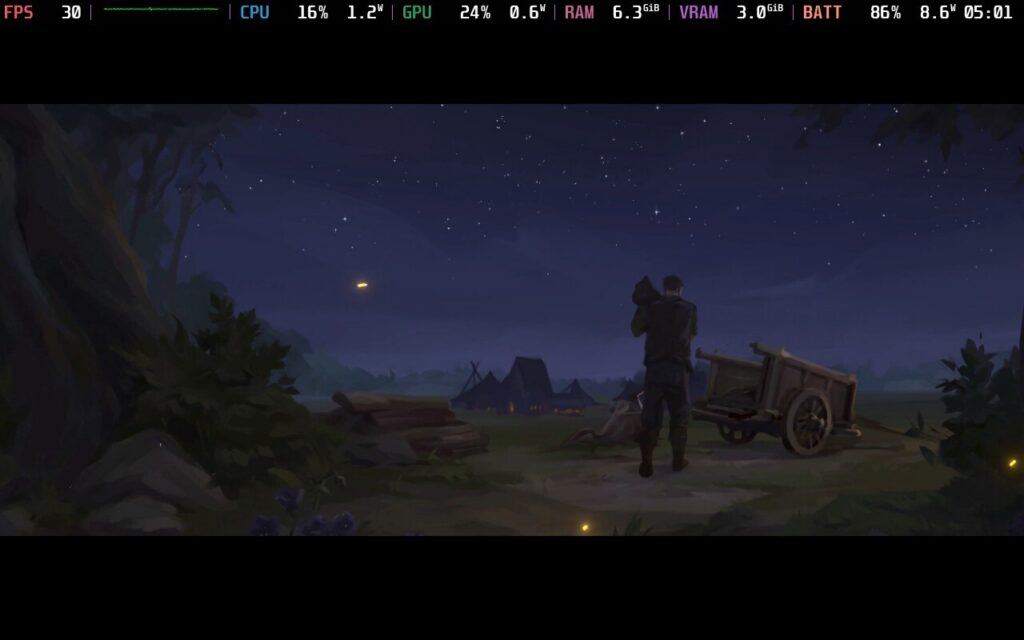
To those unfamiliar with the Might and Magic franchise, the gameplay loop is relatively straightforward. Players take on heroes, exploring an expansive fantasy world, building up armies, and managing cities. Locations provide buffs and resources, with enemy armies roaming the land and defending important places like temples and caves. They get stronger as time passes, so you need a careful balance.
If you wade in too soon, your army might not be strong enough to deal with the bands of monsters, who are typical pests. Wait too long, and the armies might be too powerful to handle. It’s a good way to dynamically change the gameplay of a map, and I quite like how the game approaches this. Usually, heroes have limited movement per turn that can sometimes be replenished by map pickups, but the campaign will have phases where you have free exploration as much as you please, which is fun. Between the settlement management, researching buildings, training armies, and exploration, there is always something to do.
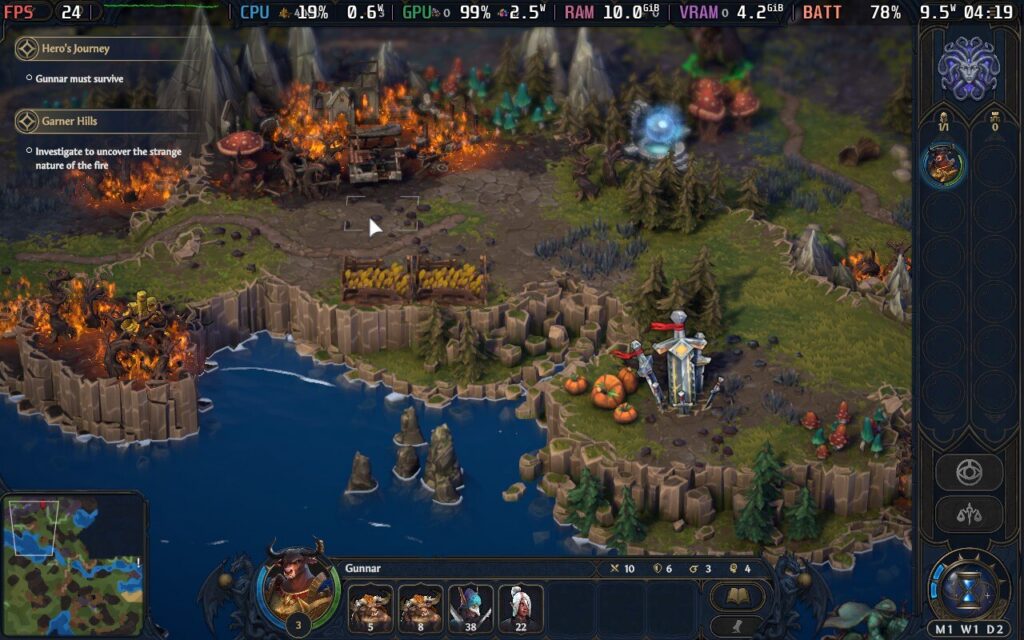
The battles are what one might expect for the genre. They are turn-based on a hex-grid battlefield, where you can move units around and slaughter everything in your path like every healthy-minded person likes to do in their life. Olden Era provides some nice tactical options, including unit abilities, a huge array of spells that can be used offensively or defensively, and your champion hero can also attack units. There is also an autobattle function if you just want to spectate, although I have found the casualty rate will likely be higher than just fighting yourself. This is what happens when I delegate to my lessers. I had to execute so many of my minions for their mistakes.
On the campaign, I was pleasantly surprised by the production quality on this. We only have access to the first portion of this campaign at launch, and I really hope we get more of the story sooner rather than later. While the narrative involves the usual fantasy shenanigans, I rather enjoyed the premise. A mysterious, eternal fire has infected parts of the Olden world, turning people insane and devastating villages. That is a damn cool idea, to be honest.
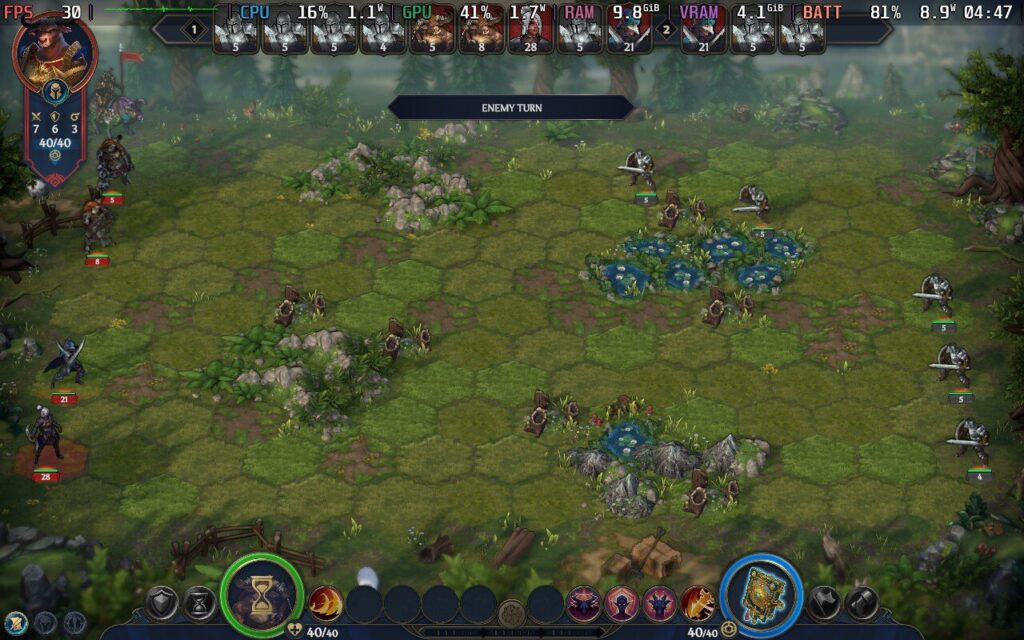
You get to play as a big, minotaur general guy whose queen is a giant dragon, with the job of investigating what is behind the pestilence. While there is no voice acting during missions, we get some great, semi-animated cutscenes with gorgeous art and voice acting then. A lot of care has gone into the campaign so far, and I have found the maps to be the right mix of challenge while allowing for plenty of exploration. I love level design when the landscape itself can be a captivating character, and Olden Era’s map design makes it a delight to play. The visuals and music are great across the board.
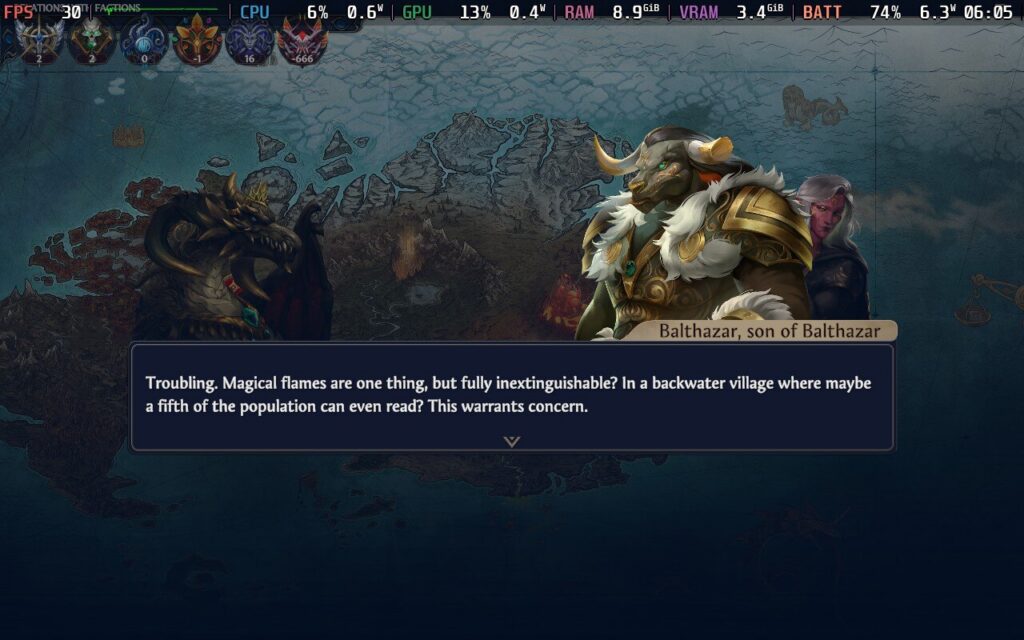
Heroes of Might and Magic: Olden Era is keen to make up for a difficult decade in the series, and the Early Access version of the game impressed me in both its scope and gameplay. I only have two gripes right now besides the usual early access conundrum of playing an unfinished experience, and those are performance and tiny text. While I did not encounter many bugs, Olden Era can be tricky to run well. It might not be Baldur's Gate 3, but there is plenty of environmental eye candy on these maps, and that ate into the Deck’s processing power. This is no dealbreaker, and optimization is in the works, but it is something to consider.
Heroes of Might and Magic: Olden Era has a Playable rating through Valve, while ProtonDB’s rating is Platinum. The main issues listed include small in-game text and requiring the use of a keyboard for some functions. Handheld fans will be happy to hear that, for the most part, Olden Era runs fairly well on the Steam Deck, although there are a few caveats to contend with.
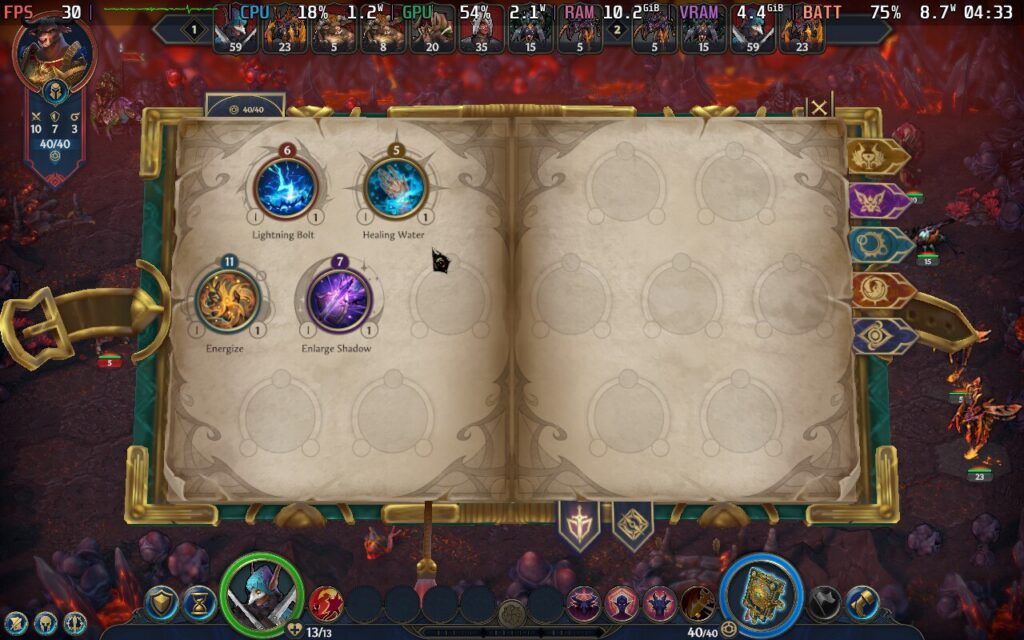
Right now, there is no interface scaling to speak of, so some in-game text is very challenging to read on the Steam Deck. More than once, I had to use the magnifier function to get by, and it was an uncomfortable experience for my old man eyes. Hopefully, UI scaling is high on the developer’s agenda, as it would help a long way. I also recommend manually changing the joystick sensitivity in the Steam Deck’s controller settings to 50%. Right now, there is no option within the game to adjust this, and by default, the controls are a little loose.
Performance-wise, I did not have any major issues, and a Keyboard (WASD) and Mouse profile did everything I needed to have a good time with Olden Era. I did have to use a low graphics preset, however, to deal with all the environmental effects on screen. The game is surprisingly intensive even on modern PC hardware, and is very easy on the eyes. Don’t even try to lower TDP with Olden Era right now, because even with the default TDP, the game struggled to hit 60FPS on low settings, and it ate through the battery. Locking the frame rate to 30FPS/90hz refresh rate was disappointing, but at least the game was stable with the cap.
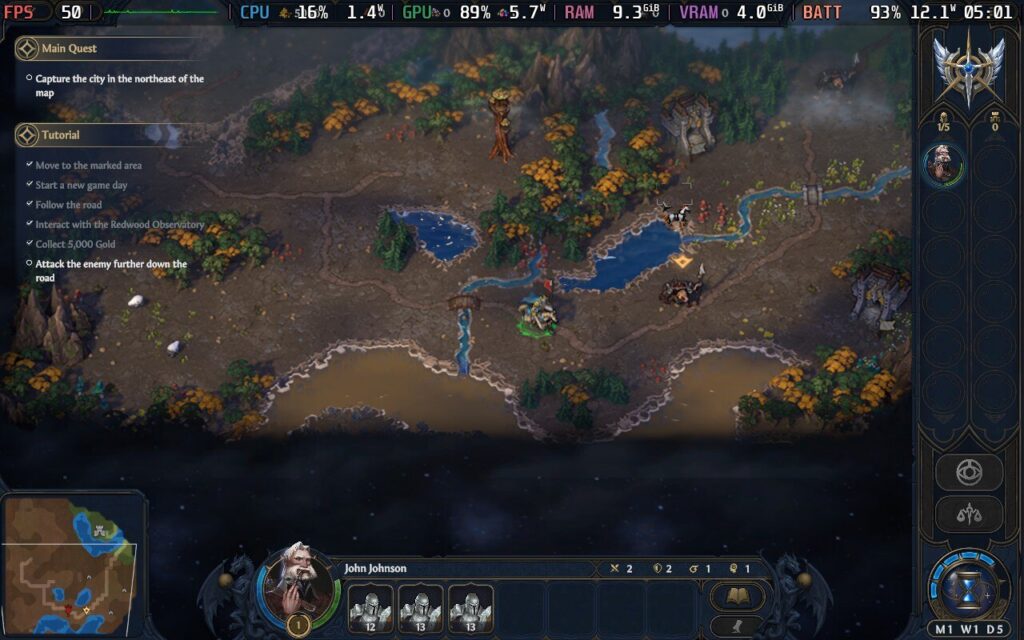
With these settings, I saw around 12 watts on average, which provides around 4 hours of battery life on the Steam Deck OLED. I’m sure that with a few patches, the performance will improve. For now, Olden Era is playable on the Steam Deck with some issues.
Heroes of Might and Magic: Olden Era is available in English, German, French, Spanish, Italian, Polish, Czech, Hungarian, Turkish, Ukrainian, Russian, Brazilian Portuguese, Simplified Chinese, Traditional Chinese, Korean, and Japanese.
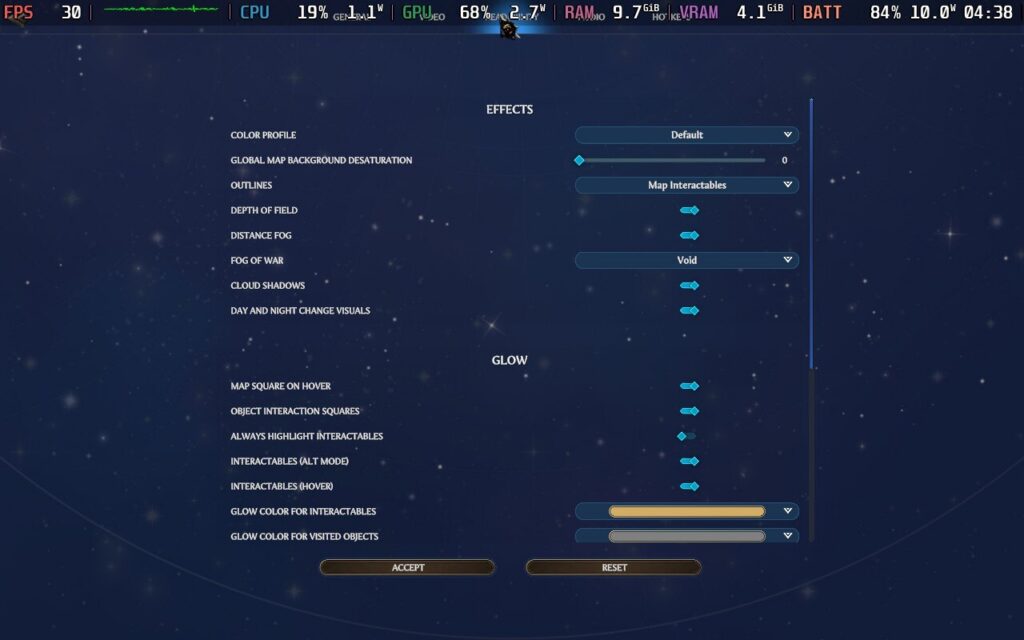
Olden Era is a strange mix of good and bad as accessibility options go. There are a bunch of nice colorblind options like tweaking the colors on screen, Vsync, invert camera, edge scrolling, camera panning speed, and move speed. You can also change keybinds, although no dedicated controller support is in the game at launch, and a decent number of graphical options to tweak.
The lack of mouse scrolling speed can be managed as mentioned, but the small text size and lack of UI scaling were significant hurdles for me on the Steam Deck. This is a dialogue-heavy game with a lot of text and tooltips on screen, and it was challenging to read them properly without getting eye strain. Not everyone will have this issue, and it’s not a dealbreaker, but it is important to note.
I seem to be the go-to guy for the Hooded Horse publisher library of video games here, and Heroes of Might and Magic: Olden Era shows great promise from what I have played. It might be Early Access with a long way to go, but the content and mechanics on offer are plentiful, and fans of the genre will appreciate the core gameplay and the narrative in the campaign. Plenty of skirmish maps, multiplayer, and the map editor at launch offer enough on the buffet table, and so far, I really like how Olden Era is shaping up.
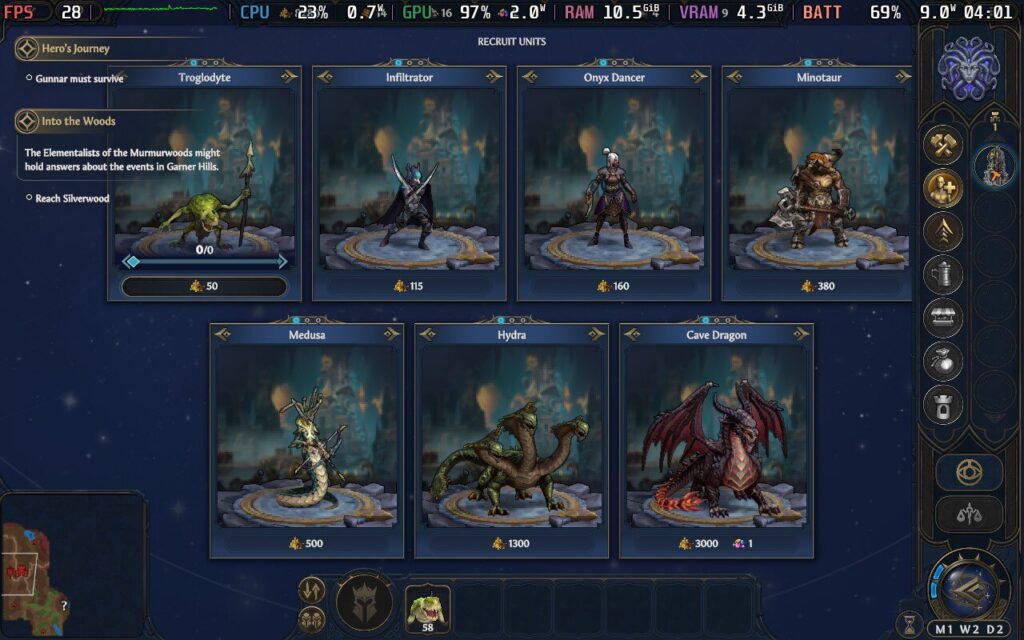
It needs work with optimization, and I want to see gamepad support for certain. The experience on the Steam Deck is a little rough due to the tiny text size and controller issues, but there is plenty of time for fixes to come in.
このレビューはPC版に基づいています。
このレビューをお楽しみいただけたなら、SteamDeckHQ の他のコンテンツもぜひご覧ください!あなたのゲーム体験に役立つゲームレビューやニュースを幅広く取り揃えています。ニュース、ヒントやチュートリアル、ゲーム設定やレビューをお探しの方も、最新のトレンドを知りたい方も、ぜひご利用ください。
Airborne Empire was provided by Stray Fawn Publishing for review. Thank you!
When it comes to the city-builder genre, I'm amazed by how one of the oldest video game genres is still finding new ways to present unique challenges and gameplay mechanics. Airborne Empire is one such example, putting players in charge of an airship that is entirely customizable as they embark on a journey to explore the world from above.
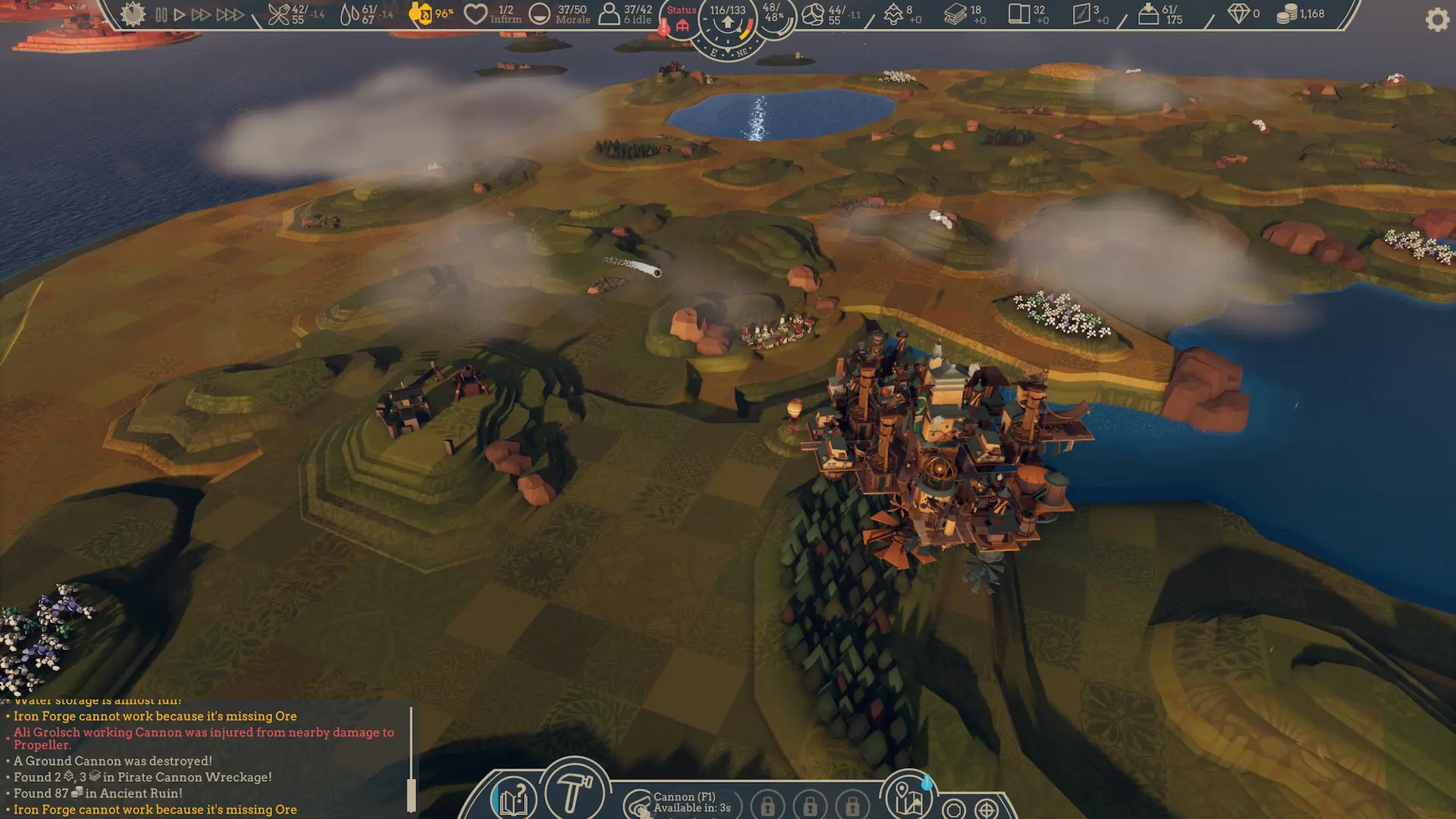
While there are survival elements to Airborne Empire, I wouldn't necessarily bunch this one in with your traditional games in that genre, such as Banished or Frostpunk. Yes, you do have to gather food, water, and fuel for your airship to survive, but the focus is on expanding and improving its capabilities, not just on providing the essentials.
The purpose of the game is to explore new areas and eliminate the pirate threat in that area to prevent the sky pirates from attacking both your airship and the defenseless kingdoms on the ground. While you do this, you'll have to provide for your citizens, research new structures, and complete the odd sidequest for some juicy loot, such as blueprints for new structures.
Airborne Empire's structure puts it at odds with your traditional city-builders. While you can build whatever you want on your airship, the game feels less like an open-ended sandbox and more akin to what the developers sell it as, an RPG. You will largely be doing quests for the kingdoms below, which often involve traveling to somewhere nearby and expending some of your resources to aid them, and there's little reason to do anything but the quests in the game.
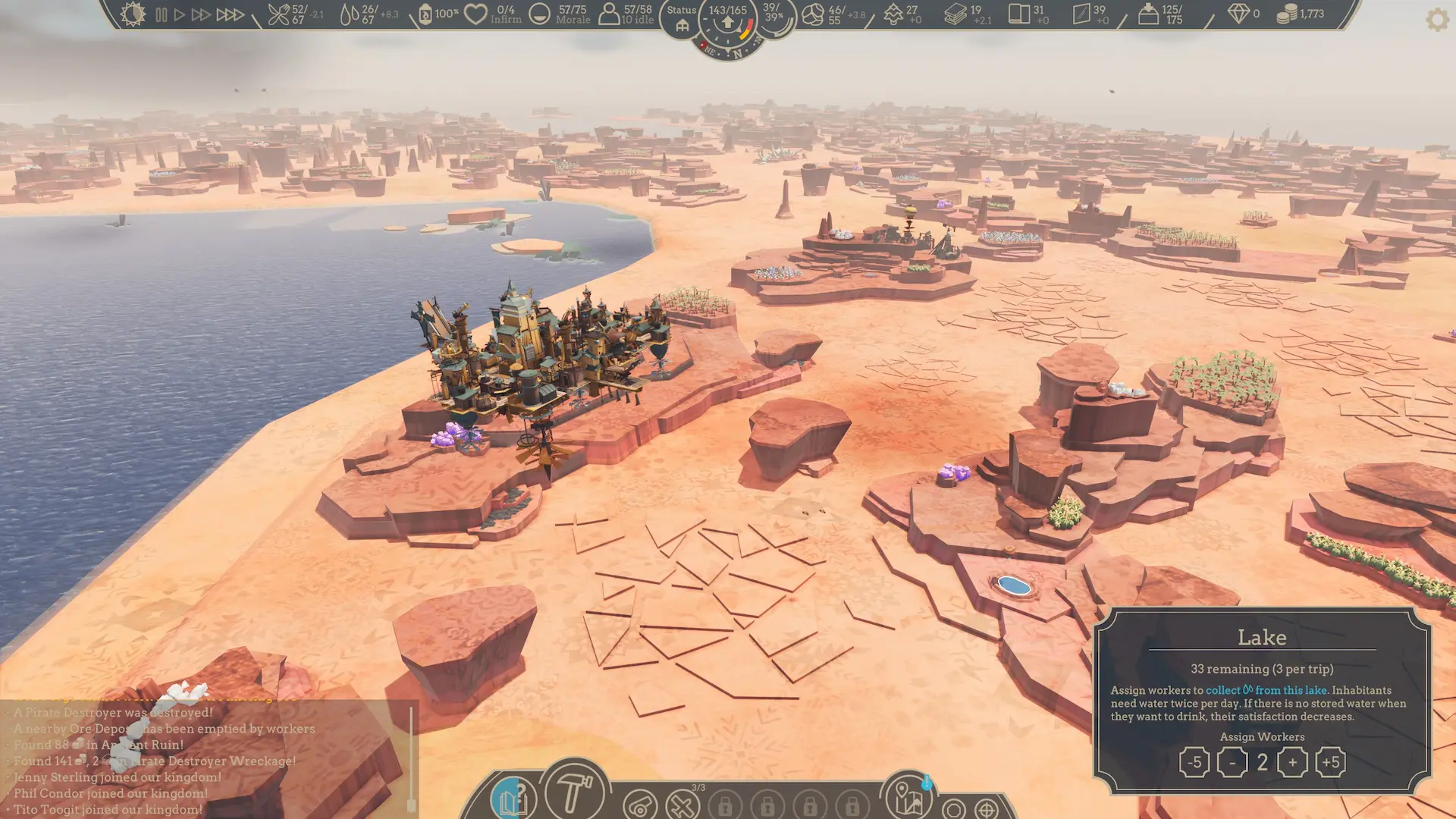
The game is fully open world and quite large, but it does feel as though certain parts of the map serve little purpose. There are only a few resource types in the game, which are fairly abundant pretty much everywhere from the start, and the focus will be on visiting a city, completing its quests, and moving on to the next city. Admittedly, there are some optional side quests that encourage you to explore further, but even then, some parts of the map feel a little superfluous.
Then we move on to the combat in Airborne Empire, which is fairly laid back. Your main defense against the sky pirates will be your Defense Towers and, later on, your own planes. The Defense Towers are pretty place-and-forget structures; assign workers to them, and they will automatically fire at any enemy within range. Then you have manual weapons, like cannons for ground structures and combat planes for other aircraft, which are as simple as selecting them, clicking the enemy you wish to attack, and letting your workers handle it from there. There is little "action" to the combat, but that suits a city-builder like this.
Fulfilling the basic needs of your citizens is a non-issue, and "progress" is made in the form of expanding your arsenal of weapons in order to take down the sky pirate threat pretty early on. As you expand, your citizens will demand more of you, but by that point, I either already had the resources or acquiring them was easy, so I could immediately fulfill their needs.
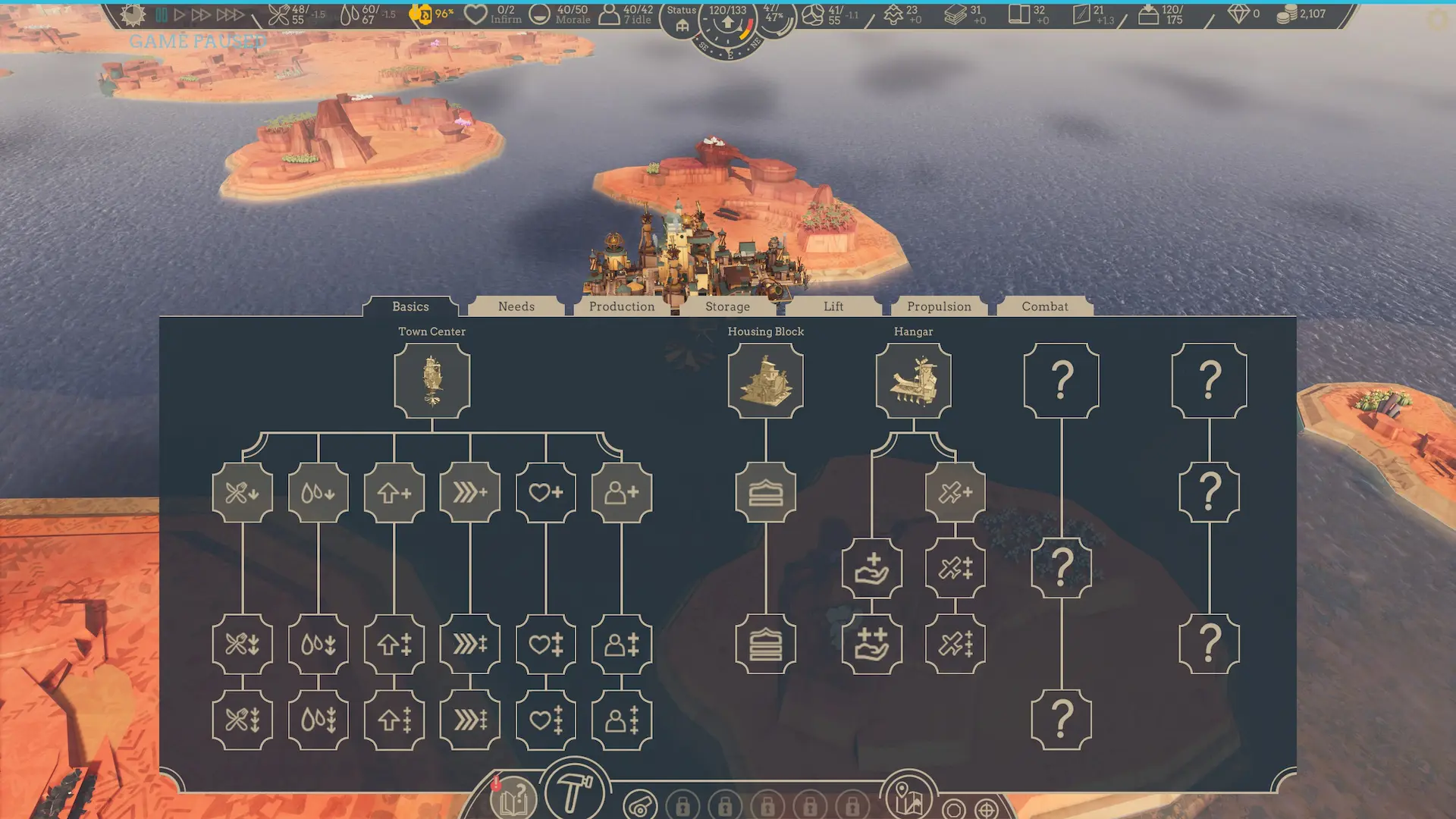
Airborne Empire is an enjoyable time. It's an odd mix of a role-playing adventure mixed with a city-builder, although neither side has too much depth to it. There are quests, but they follow a similar "go here and spend resources, then return" pattern. While I'm sure you could make a pretty airship, my build was rather utilitarian, and there are limited benefits to designing a well-organized and structured base, as area-of-effect buildings aren't really a thing in Airborne Empire. A clinic on one side of your airship will serve the other side, no problem, for example.
As is often the case with strategy games, controls are an issue for Airborne Empire on the Steam Deck. You'll need to use a custom controller layout as the game has no built-in controller support. Fortunately, there are already custom layouts available made by the community, so head into the Steam Input community layouts for the game and pick one that suits your preferred scheme.
Airborne Empire supports 1280x800 as a resolution, but the graphics don't scale well. I would recommend choosing the "Custom" graphics option and setting everything to "Very Low". The "Very Low" preset itself doesn't actually set everything to Very Low, for some reason.
The game exhibits strange behavior, and in certain areas, performance tanks to 20 FPS for seemingly no reason. My only suggestion to mitigate this is to set the GPU clock manually to 1600 MHz, as the Steam Deck doesn't seem to ramp up the GPU to handle this sudden performance hit. With the manual GPU clock, you can mostly hold 30 FPS.
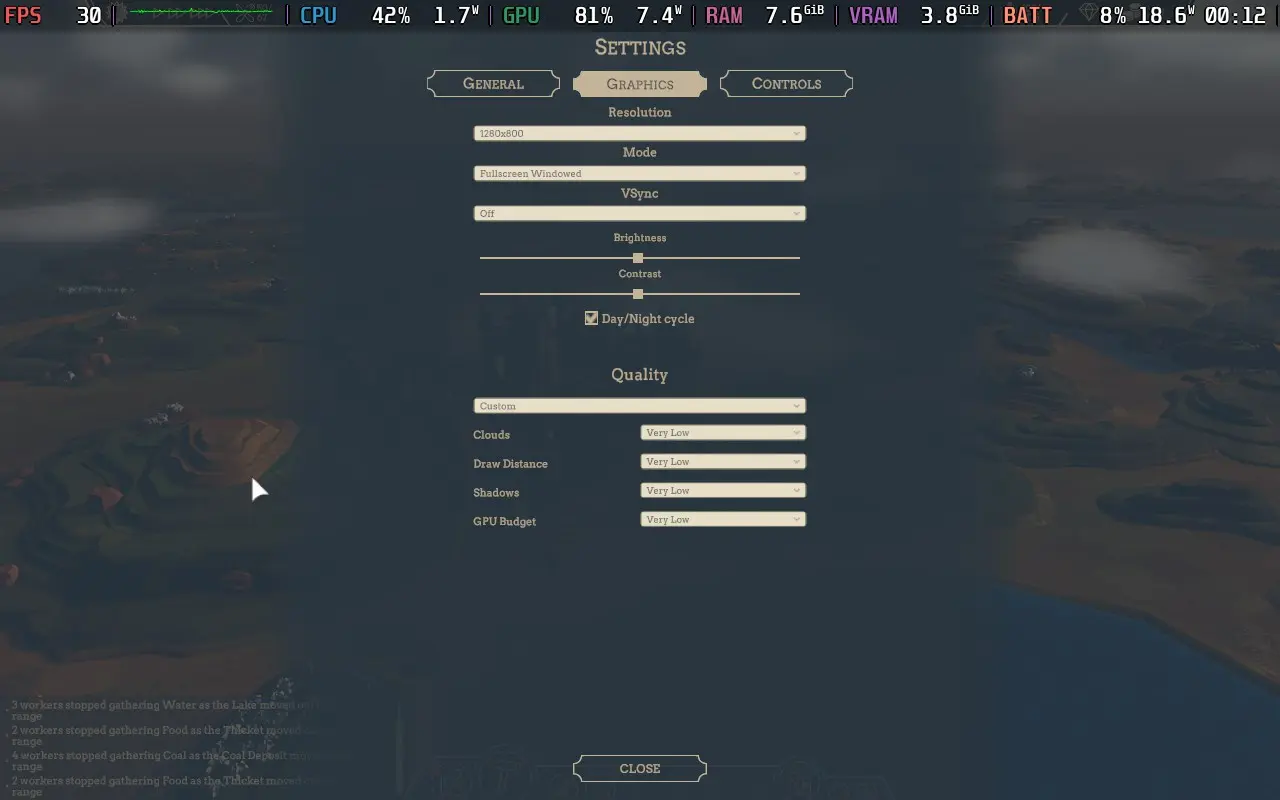
Using the Very Low settings, you can generally expect to play at 30 FPS, but occasionally you will experience drops into the 20s. There is also occasional stutter, usually when rotating the camera to look at new pieces of the world, or when visual effects play for the first time in a while, likely due to loading new assets. As well as the 20 FPS issue described above, but the game is on the cusp of playability, I would say.
If you are very desperate to avoid frame rate drops, you can disable the day/night cycle in the options menu, which does improve performance slightly; you will get drops, but they are less severe, mostly to around 27-28 FPS.
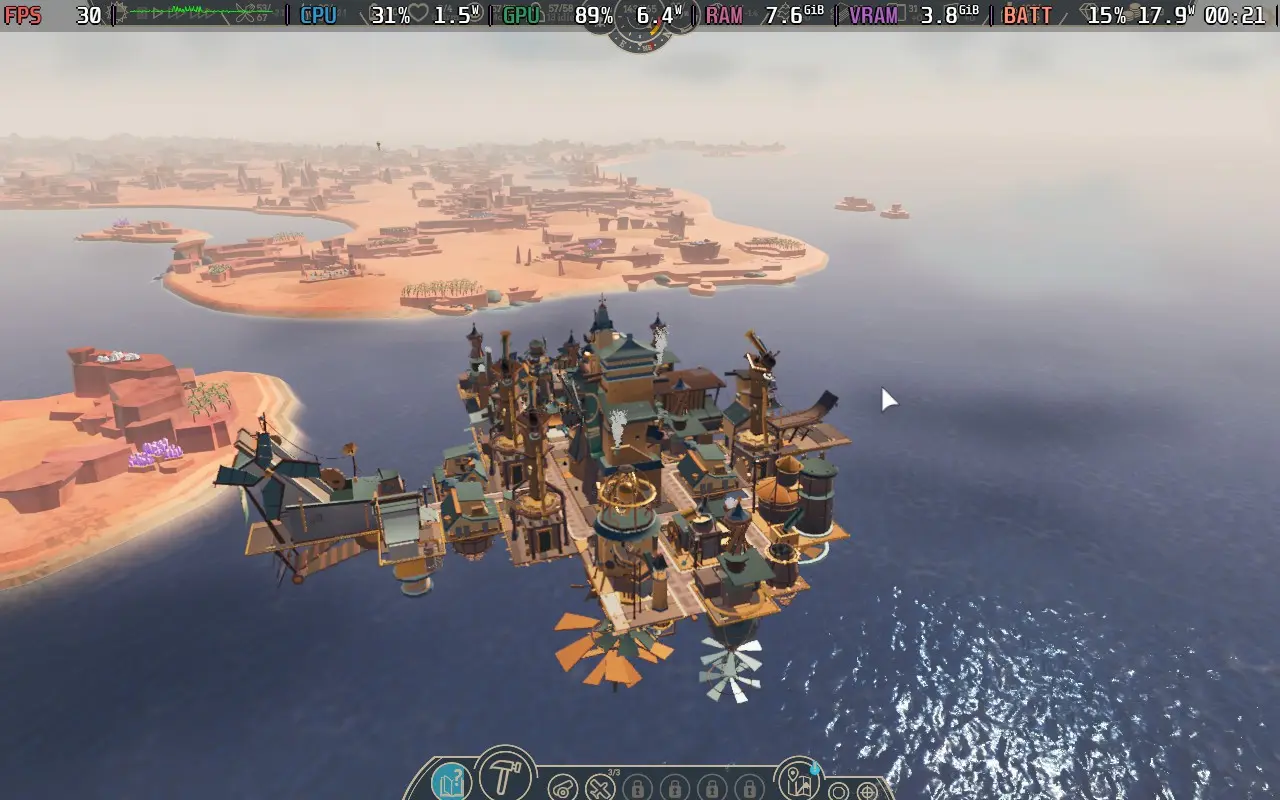
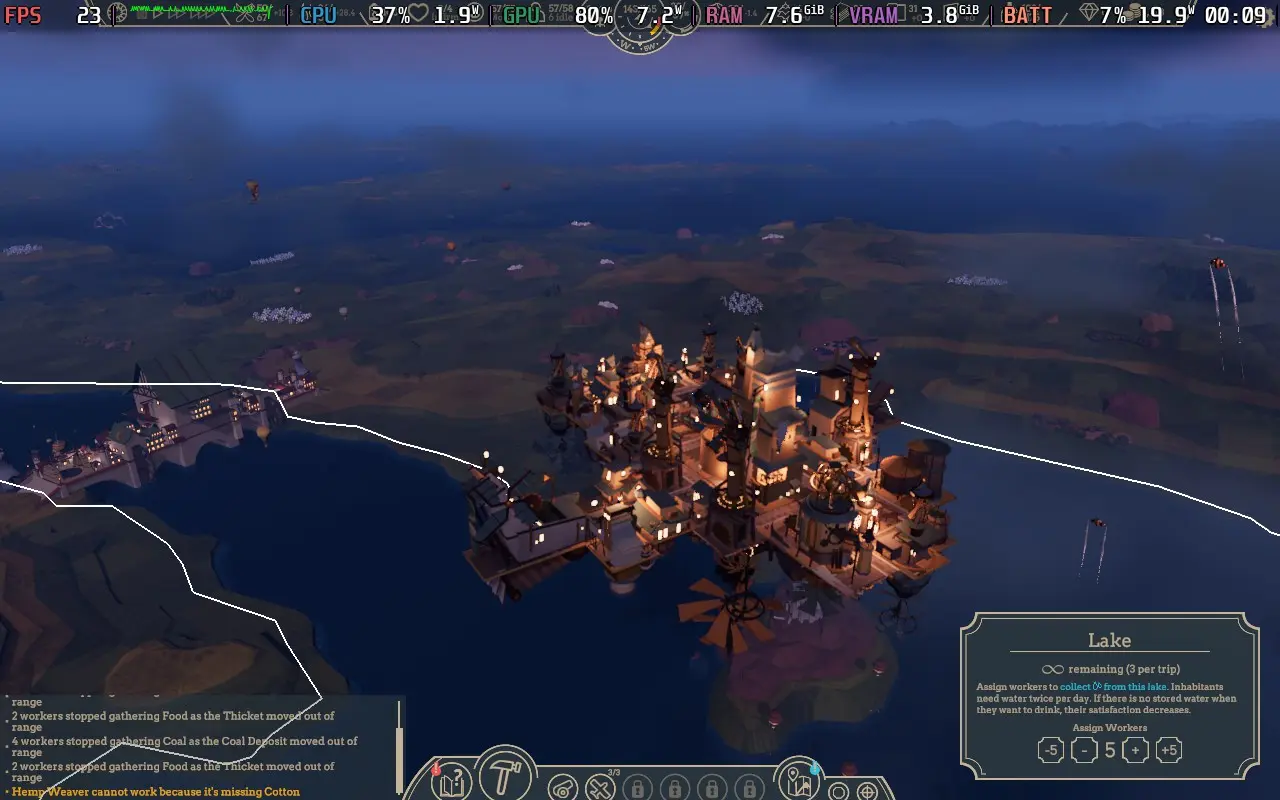
Power draw was around 18W-20W due to the manual GPU clock; without the manual clock, usage is more around 16-18W. Temperatures were around 65-70 °C. Expect battery life to be around 2.5 hours on a Steam Deck OLED and around 1.5 hours on a Steam Deck LCD.
Airborne Empire has little in the way of accessibility. All dialogue is text-based, and you can reduce the effect of sudden light flashes. There is no UI scaling, which can be problematic as certain text is small and somewhat hard to read on the Steam Deck, but it is legible.
Airborne Empire tries to merge a role-playing adventure experience with a city-builder, and while neither area excels at what they do, the game is enjoyable for a playthrough of the Adventure Mode. I can't see myself returning for repeats or trying out the non-story modes, though.
Performance on the Steam Deck is rather poor, though, given the game's slow-paced nature, arguably still playable. Do expect to have to fiddle a little with the controls, though. If possible, Airborne Empire is best enjoyed on a more powerful device than the Steam Deck.
このレビューはPC版に基づいています。
このレビューをお楽しみいただけたなら、SteamDeckHQ の他のコンテンツもぜひご覧ください!あなたのゲーム体験に役立つゲームレビューやニュースを幅広く取り揃えています。ニュース、ヒントやチュートリアル、ゲーム設定やレビューをお探しの方も、最新のトレンドを知りたい方も、ぜひご利用ください。
ALL WILL FALL was provided by tinyBuild for review. Thank you!
After trying out a playtest of ALL WILL FALL over a year ago, I was excited to jump back into it for this review and see what had changed. While the core gameplay (which was good) hasn't changed much, there are plenty of optimizations, quality-of-life features, and a lot of new content.
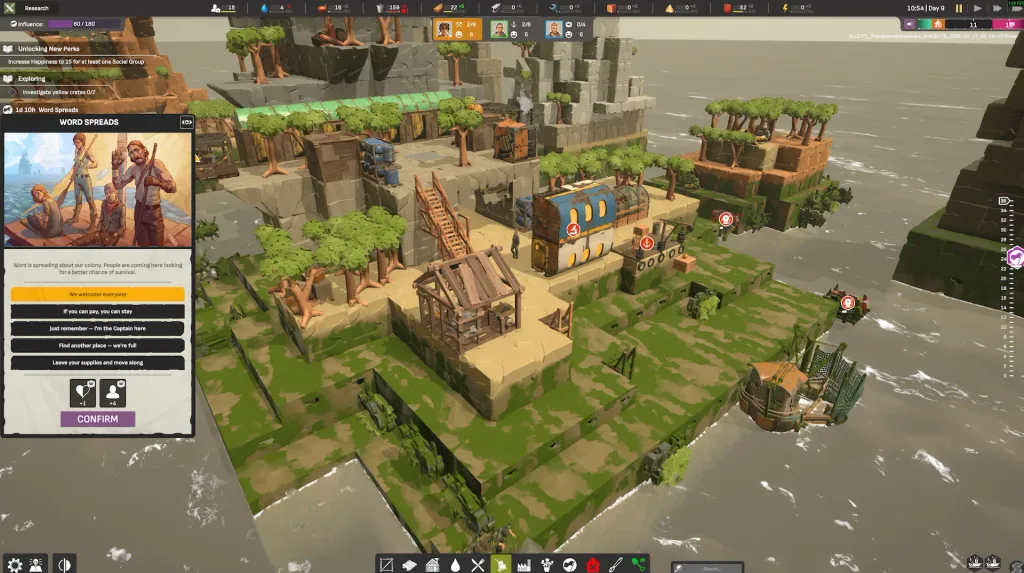
The gameplay of ALL WILL FALL revolves around surviving in a flooded world. Using more permanent structures, such as old skyscrapers and boats, you will construct scaffolding and walkways between them to expand your colony and acquire new resources. It's a pretty unique concept as far as "city-builders" go, and it makes some refreshing changes compared to others.
Rather than focusing on luxuries, ALL WILL FALL places the emphasis on providing essentials. A good chunk of your time will be spent on researching and setting up good water and food production chains. Because of this, there aren't too many resources to concern yourself with, and your citizens' needs are pretty much just food, water, and leisure.
Despite this, the game still feels engaging and challenging. As your colony expands, you need to invest in new research to find new ways of gathering resources, such as fishing and salvaging boats, cranes to lift up debris that floats past your colony, and more advanced ways of demolishing ruins to acquire their resources.
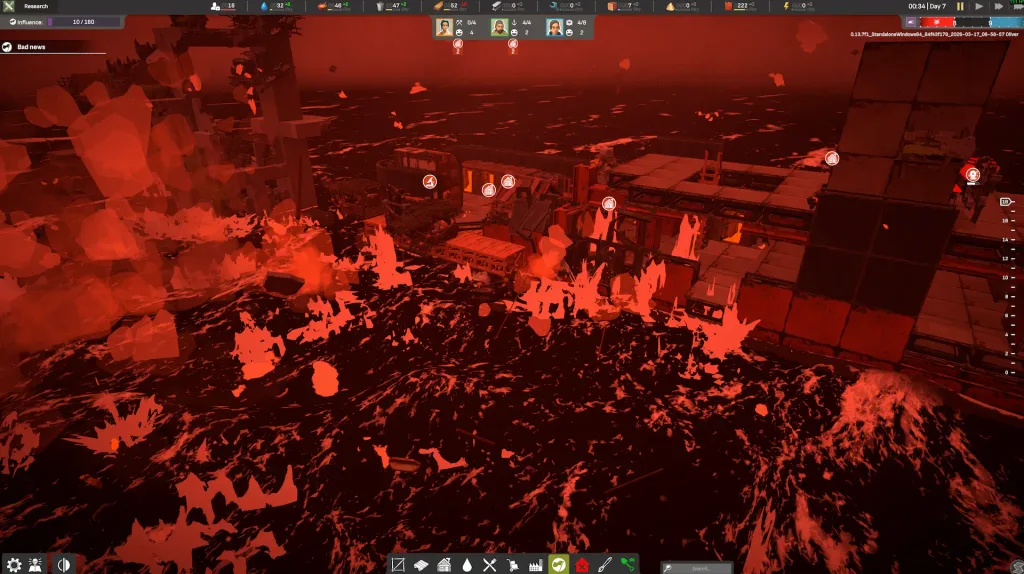
But what really makes ALL WILL FALL stand apart is the dynamic world you live in. Depending on the scenario/mission you're playing, you will have to build around unique challenges. Perhaps the sea level is always falling, maybe it's always rising? You'll have to design your colony so that it can be flexible and move with the changing sea levels, not to mention the natural disasters that can happen, which can entirely annihilate your colony if not built correctly (I lost over an hour's progress to a Hell Rain storm, as seen below).
This, combined with the physics simulation that requires stable structures, makes ALL WILL FALL a challenging experience. This isn't a fire-and-forget game, where you get your basic production in place and forget about it, because almost certainly something will go wrong and you'll be scrambling to find a fix for the situation.
There are also random events in the game, which can throw up interesting scenarios that can help or harm you. The effects of these are usually on the minor side, but they are a welcome sight as they often include a goal or target for you to work toward. Plus, they often give you little rewards for doing well, which helps out a lot.
While there is a "campaign", it's more like 8 fairly distinct scenarios that have unlock conditions that can only be achieved in previous scenarios. They don't necessarily follow on from each other, and all of them are technically available from the start. Game progress comes in the form of researching new buildings and structures in the tech-tree, which resets with each scenario, so you may well find yourself sticking to a preferred scenario instead of trying to work through the "campaign."
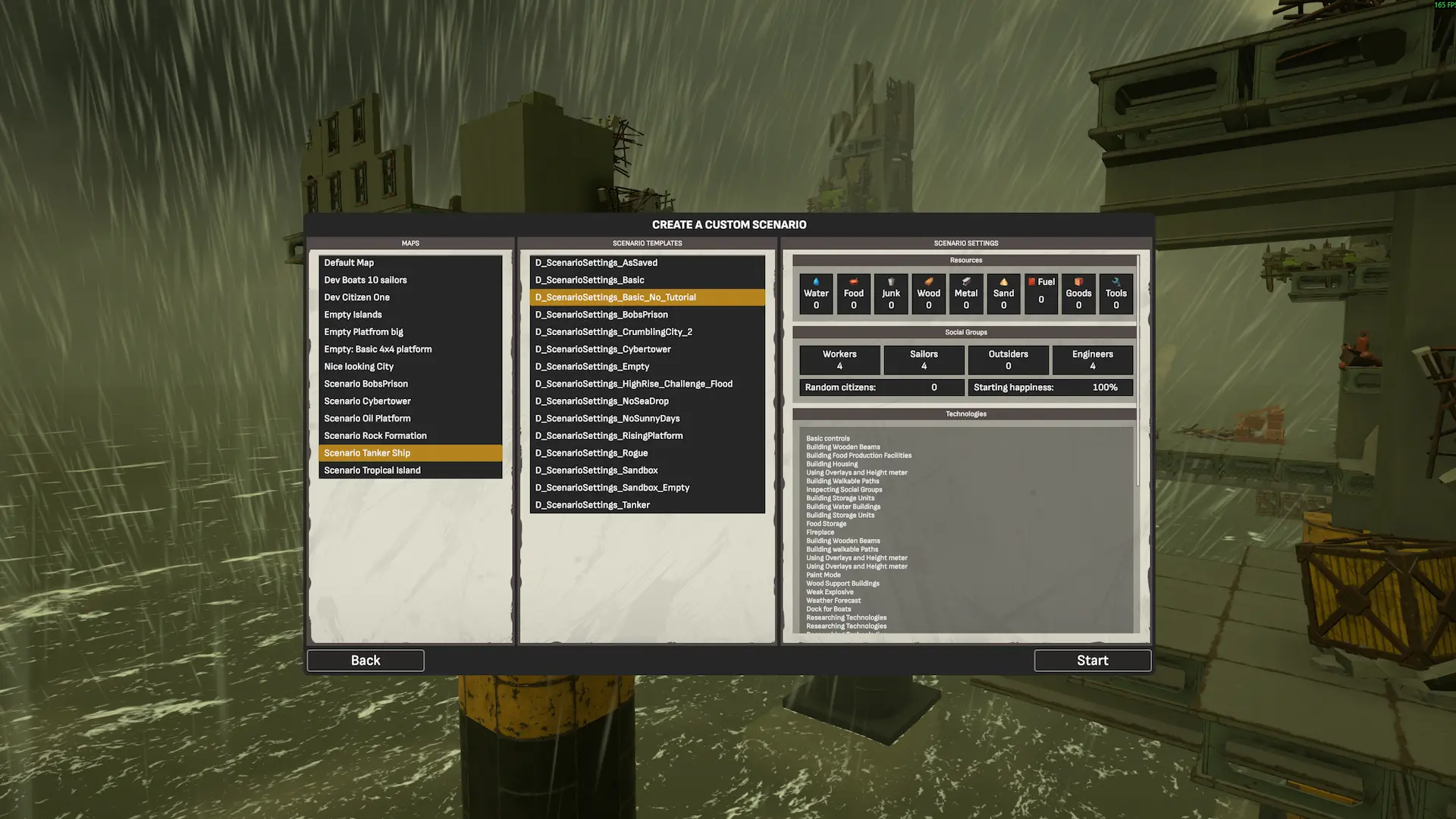
Rather than a typical Sandbox mode, where players are given infinite resources and an easy ride, ALL WILL FALL's Sandbox mode allows you to select a map, as well as a scenario type (such as constantly rising water you must adapt to), and then specify the amount of colonists and resources you start with. There's Steam Workshop support for custom maps, which will definitely help increase the game's replayability. It will be interesting to see what unique and challenging maps the community comes up with.
I don't really have many issues. Yes, sometimes building can be difficult on certain maps due to their verticality, which can add a bit of confusion depending on your viewing angle. And given the fairly limited number of colonists, I would have perhaps liked to have seen more personal traits on each colonist so we could get to know them a little better, a la Rimworld, as opposed to them just being a number. But by and large, this ticks the boxes it sets out to, being a challenging city-builder that presents problems most others fail to.
After playing a playtest of ALL WILL FALL back in January 2025, I was concerned about how the game would perform on the Steam Deck, particularly as that build gave us unplayable performance. I'm pleased to say that plenty of optimization has occurred in the meantime.
Another new addition is support for controllers/gamepads. It was disabled by default for me, but you can go into the game options on the main menu and under the Controls tab, tick "Enable Gamepad". It isn't perfect, at least not in the review build I had, so I would recommend remapping your right touchpad to function as a mouse and clicking the right touchpad as a left click, which makes building much easier. For camera controls, the gamepad support does work well. You can also rebind some controls using the in-game settings menu.
Thanks to the aforementioned optimizations, ALL WILL FALL can hold 40 FPS (with occasional stutters) on the Steam Deck with the right settings. The CPU usage is fairly low, so the performance difference between small and large bases is quite minimal.
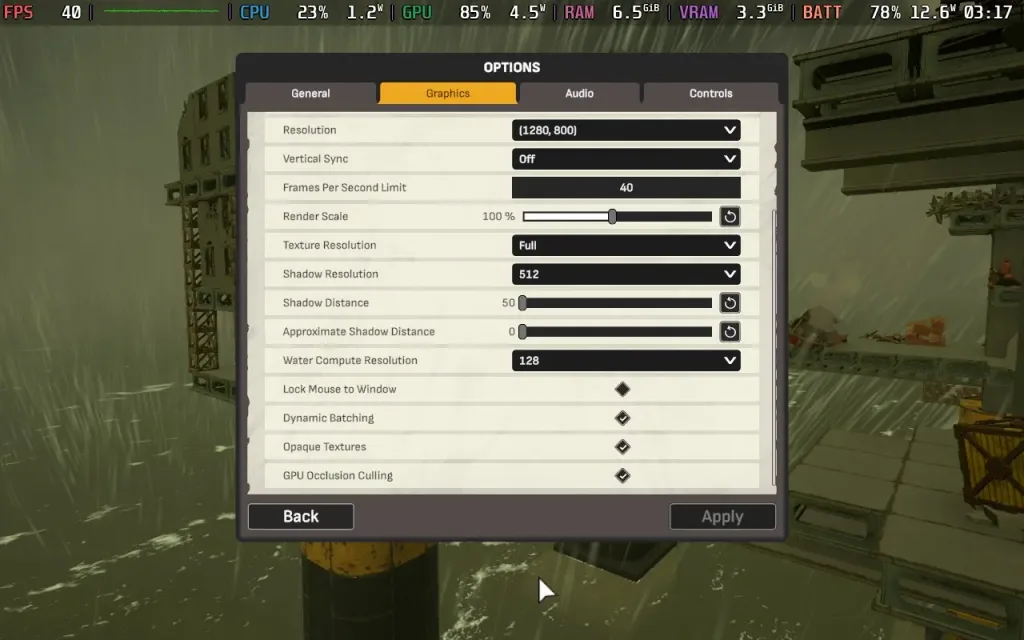
We drop the Shadow Resolution down to 512, which still allows decent-looking shadows on the small Steam Deck screen. The low Shadow Distance doesn't actually affect much, as the game is fairly generous with its shadow distances. Faraway objects lack shadows, but anything close still looks good.
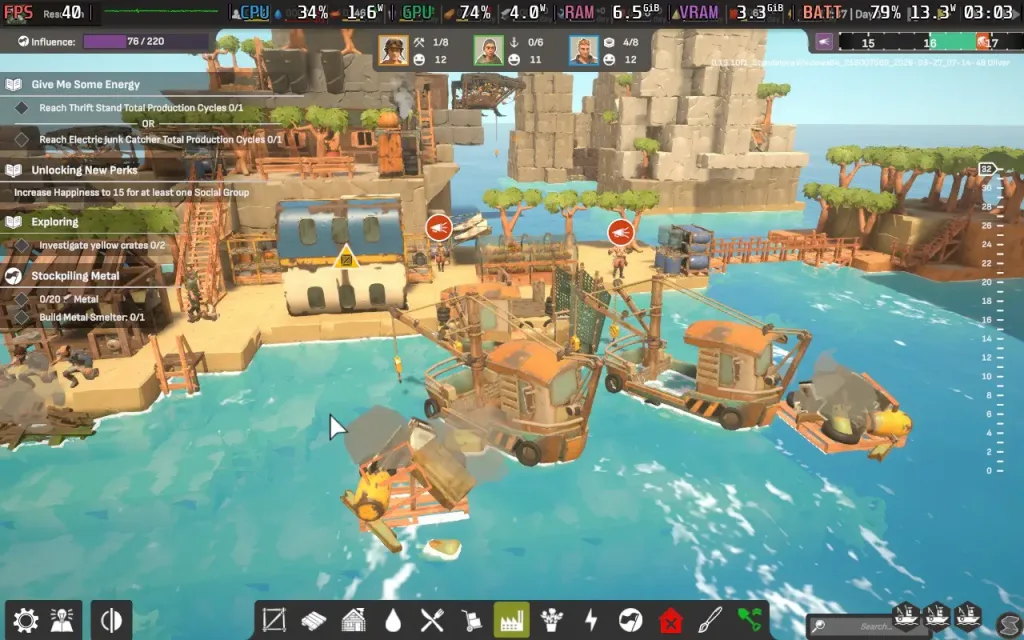
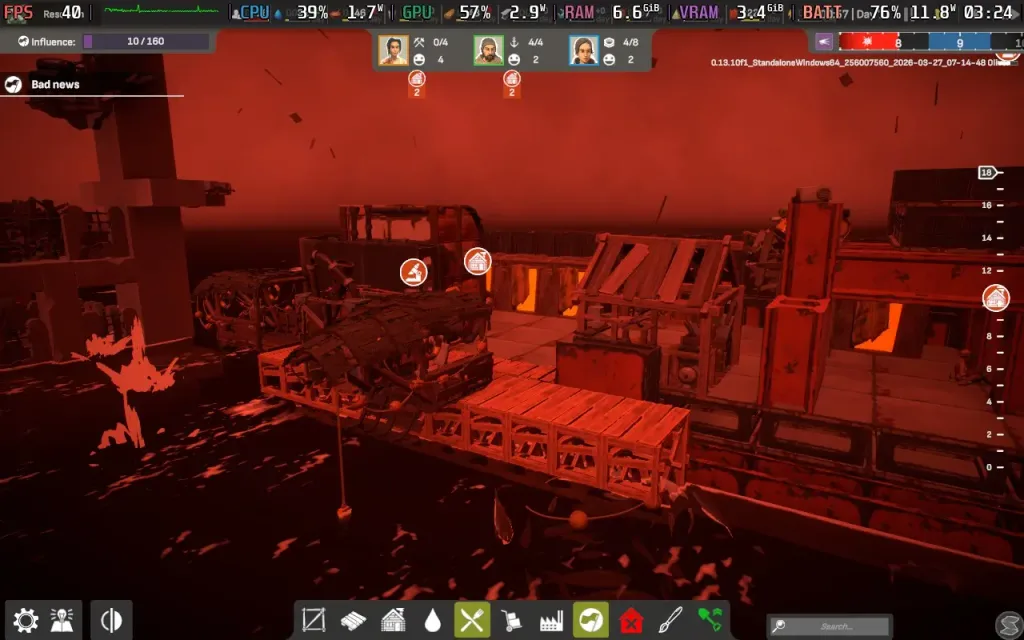
Power draw stays fairly average thanks to generally low-end CPU usage, and was around the 12W-14W range, so you can expect a playtime of about 3.5-4 hours on a Steam Deck OLED, and around 2.5-3 hours on a Steam Deck LCD. The game doesn't push the Steam Deck too hard, so temperatures were around 60 °C.
I would also recommend setting the UI Scale in the Graphics Options to 90%, which gives us the largest possible text size without causing overlap between UI elements. This makes the text and UI elements fairly easy to read.
ALL WILL FALL doesn't have many accessibility options. You can disable screen shake, adjust UI scaling, and rebind controls. All dialogue is also in written form.
ALL WILL FALL puts an interesting twist on the city-builder genre. Whether it's the natural disasters, changing sea levels, or the complaints of your citizens, the game keeps you on your toes, and everything can literally "fall" in moments. A little more personal detail on your colonists wouldn't have gone amiss, however.
Performance on Steam Deck is much improved since the earlier playtests, and I'm happy to say that the game is fully playable on the Deck at 40 FPS with some slight stutters, as long as you modify the controls slightly to your liking.
このレビューはPC版に基づいています。
このレビューをお楽しみいただけたなら、SteamDeckHQ の他のコンテンツもぜひご覧ください!あなたのゲーム体験に役立つゲームレビューやニュースを幅広く取り揃えています。ニュース、ヒントやチュートリアル、ゲーム設定やレビューをお探しの方も、最新のトレンドを知りたい方も、ぜひご利用ください。
MENACE was provided by Hooded Horse for review. Thank you!
I was a massive fan of Battle Brothers by Overhype Studios, and MENACE is their long-awaited next game. They are published by the awesome folks at Hooded Horse, and we were lucky enough to get an early look at the game’s Early Access state before its launch. I seem to be our main point of contact for Hooded Horse titles, and I was delighted to get the chance to try the game firsthand after my experience with the demo last autumn.
Given the game’s early development, it’s important to stress that this is in Early Access and a lot of things need work. I play a lot of Early Access games, and my review philosophy when covering them is reviewing them based on their content and polish as it stands, rather than considering future patches. With this in mind, I’ve been impressed by the depth of MENACES’ gameplay and setting.
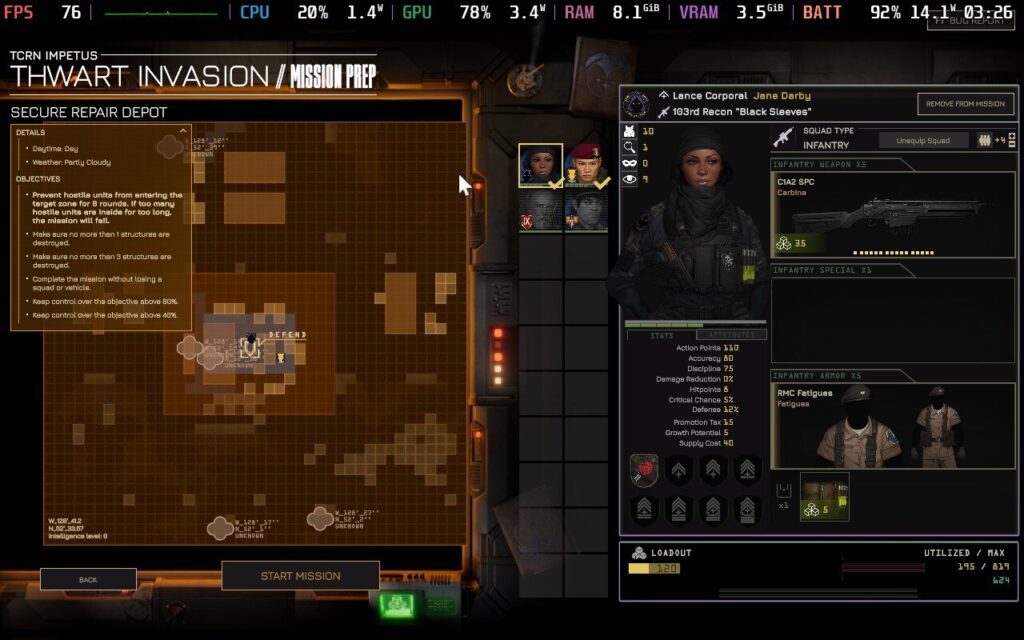
Despite the rough edges, this commercial build for MENACE is pretty comprehensive. While the demo only focused on a vertical slice of the core combat gameplay, the early access version contains plenty of content to dig into.
Players take on the role of a professional military corps dealing with a variety of foes in an interplanetary scope. If you have played Battle Brothers before, it's easy to tell that Overhype Studios has learned many lessons, with much of their ethos is carried over into MENACE. In my preview, I called it ‘sci-fi Battle Brothers writ large’, and that is certainly true! After a short tutorial to learn the basics of combat, the main game kicks off in earnest.
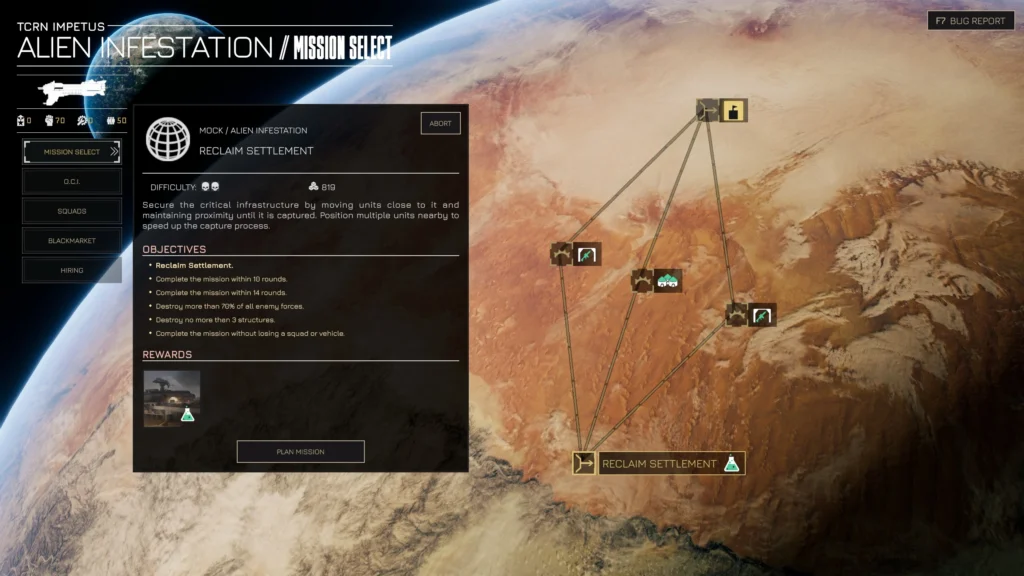
The best way to describe MENACE’s gameplay is to think of it like the XCOM games, balancing base management and punishing combat into a delicious package. Players must build trust with several factions, manage their budding squad of mercenaries, and carry out operations across the Wayback star system. These operations are procedurally generated and come in six types, and each of those consists of a string of missions that have branching paths. I would have preferred more curated story paths, but this is in the works for later updates, and the current mission system is pretty varied with some nice voice acting. The narrative is typical sci-fi corporate intrigue and pirates being assholes, but there’s nothing wrong with that.
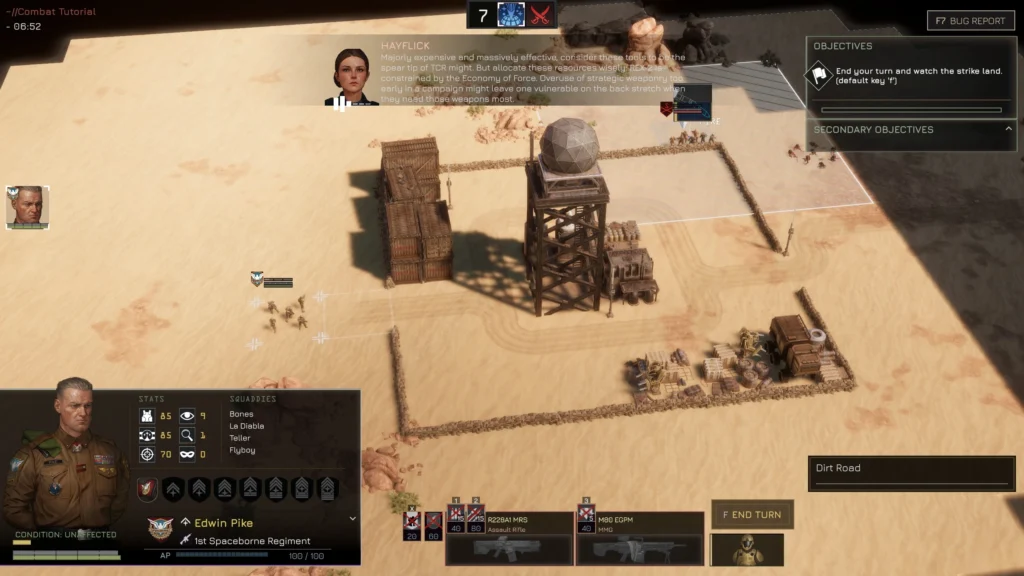
The visuals are pretty nice for a turn-based game like this, especially when you have the specs to jack all the graphics up to full. Combine the great unit models with the destructible terrain and great sound design, and there are great guts in the core gameplay overall.
Gameplay is high-risk, high-reward on both sides. While the game gives a ton of different tools and customization options for the player with high lethality, the same is true for the enemies you will face, and it brings an emphasis on careful tactics. The stakes are high, and while the challenge curve is pretty brutal, I love the attention to detail. With the amount you can tweak your squad in base management and all the different loadouts, there’s a ton of replayability just off this alone.
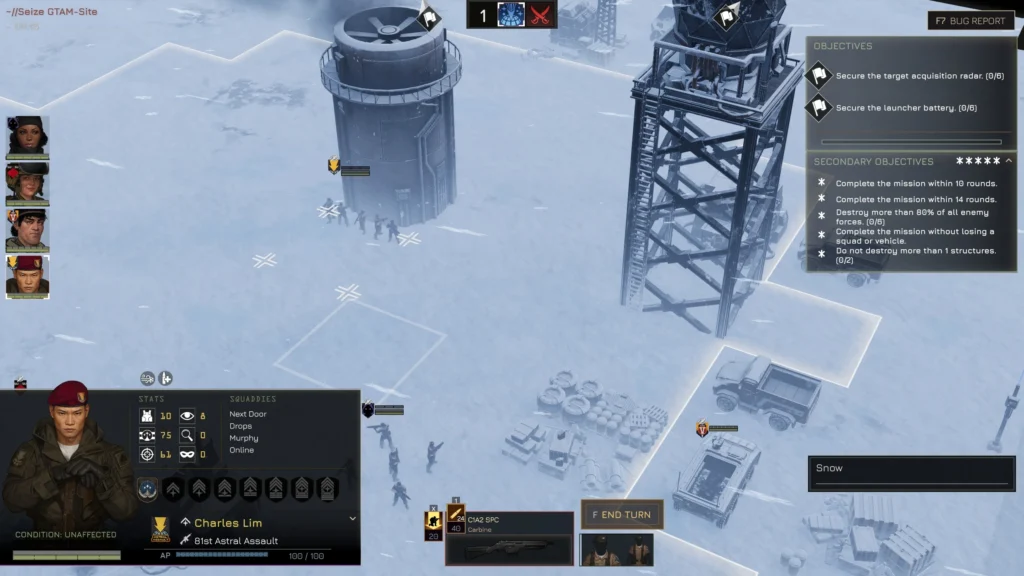
This is a pretty hard game even on the standard difficulty settings, and playthroughs are in for the long haul, too. It’s not quite as complex and lengthy as something like Terra Invicta, but it’s not for the light-hearted. Despite losing many fights, however, I’ve always enjoyed myself. This is backed up by great sound design. When my troops fired upon a group of horrible pirate scum, I revelled in their sounds of pain when the guns went off. I swear I’m a normal person! I was impressed by the sound in the playable demo, but it seems Overhype Studios has made improvements across the board.
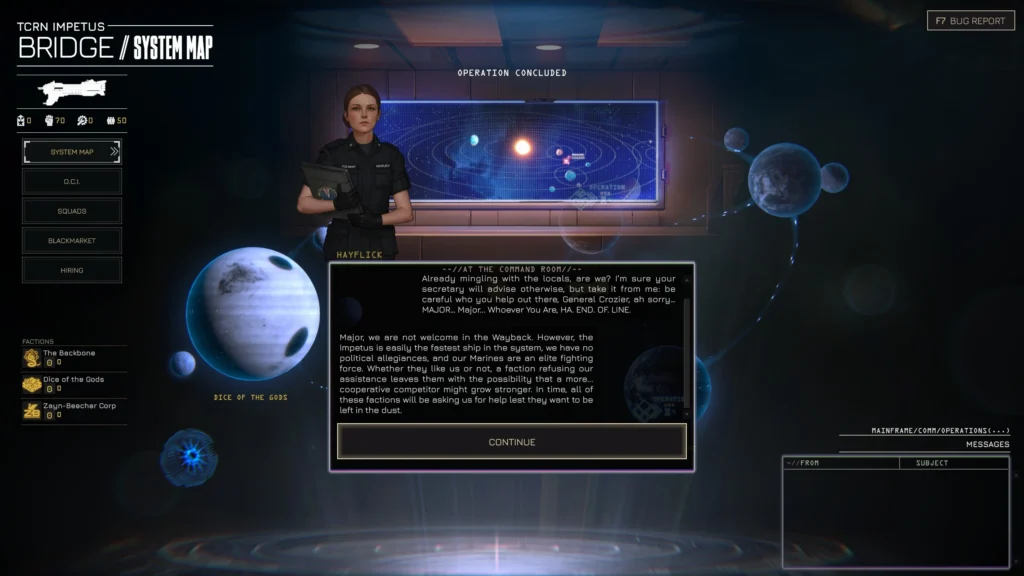
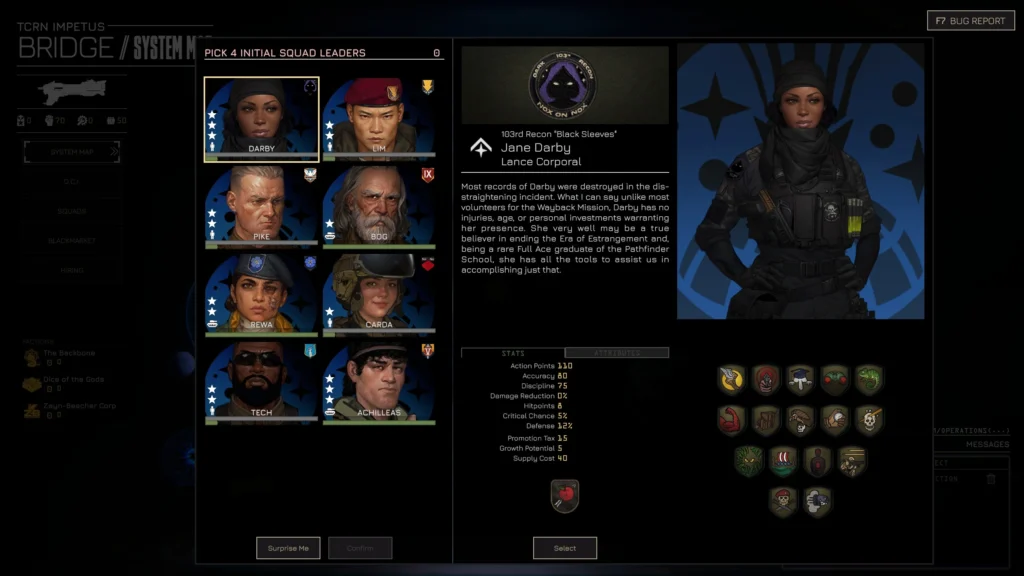
There’s a lot to do with the management. We got a glimpse at the squad loadouts during the demo, and I love games that let me organize my armies of destruction. There are four squad leaders available to you in the beginning, with the opportunity to recruit more through the campaign, depending on which factions you ally with, and there are a bunch of vehicles, weapons, and perks to attach to your team for missions. You can also access the Black market to pick up more equipment through a barter system, as well as upgrade the battle cruiser for additional options in missions.
Speaking of the demo, I do wish they kept the custom battle mode from the beta to mess around with, as I thought it was a great way to introduce players to the mechanics. My main concern right now about MENACE is performance, and you will need a pretty powerful system to play it optimally. It’s important to remember this is an Early Access game, and while there are plenty of graphical options to tweak with DLSS and FSR upscaling, there’s a lot of work to be done on the optimization.
While MENACE doesn’t really do anything new for the genre on both sides of the gameplay loop, it does enough right that I’m finding the game rather absorbing.
MENACE has been given a ‘Playable’ rating by Valve for compatibility on the Steam Deck, while ProtonDB has a Gold rating for the game right now. While the game can certainly be played with the upscaling additions and the Steam Deck’s trackpad controls, it’s important to note that this isn’t the optimal way to play the game.
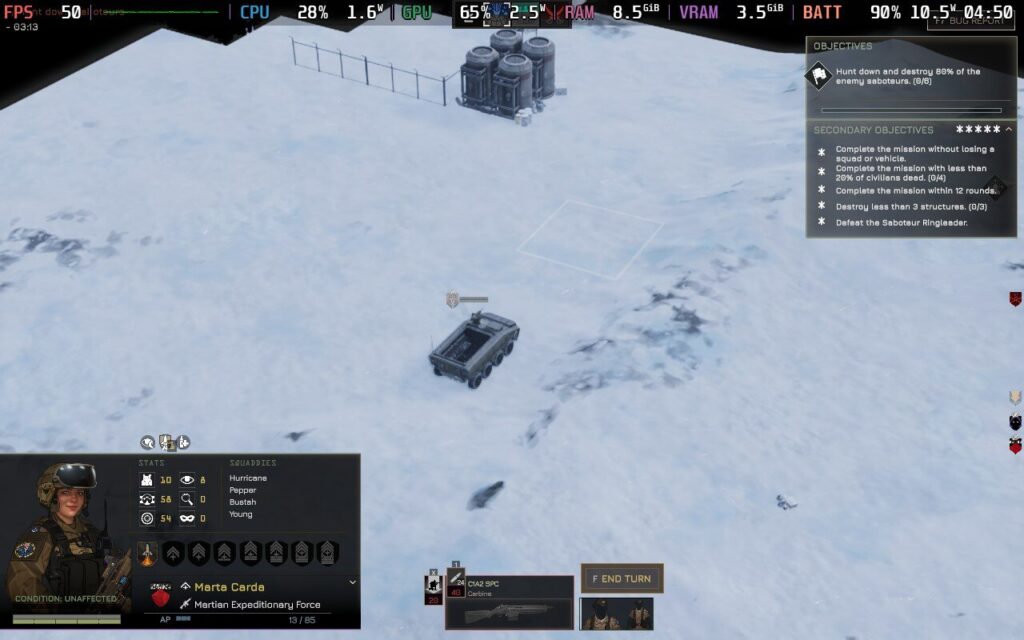
Back when I played MENACE in beta, I found the game nearly unplayable on the Steam Deck. Overhype Studios has brought a large array of options to tweak since, and clearly, they have done some work under the hood these past few months. To my pleasant surprise, the game is more playable now.
To achieve this, I did a medium graphics preset with FSR3 on Performance, with a native resolution, 50hz refresh rate, and an uncapped TDP. With these settings, the game had a fairly stable 50 FPS in most cases, although I still saw frequent frame drops during moments like terrain being destroyed or during gunfire. A default Keyboard and Mouse (WASD) setup allowed me to access all the standard controls as well.
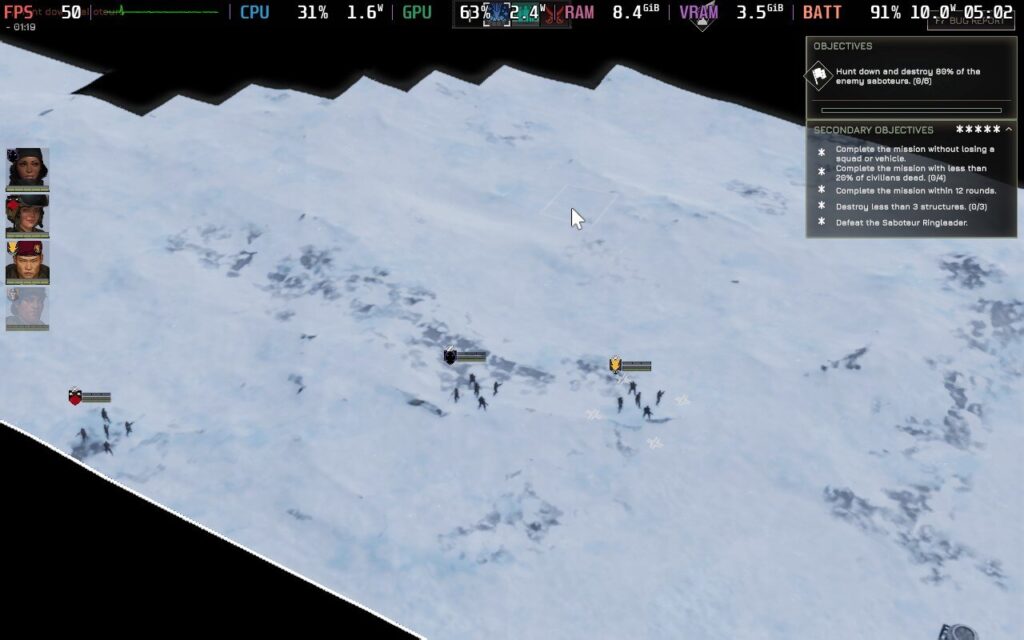
The graphics don't look great like this on the Deck’s 800p screen, but this was the best option I had to make things somewhat playable. Lower settings make the shadows and textures look like someone plunged the console into an uncleaned toilet bowl, and higher settings tanked the framerate. The power draw is fairly high as I expected, though the 50 Hz refresh rate on my Steam Deck OLED brought the average down to 12 watts.
The main problem I found is still the lack of interface scaling, which makes reading text difficult. Until some font scaling is implemented, those who have trouble reading on a small screen will struggle.
MENACE is available in English, French, German, Spanish, Turkish, Polish, Ukrainian, Russian, Simplified Chinese, Traditional Chinese, Brazilian Portuguese, Korean, and Japanese, although only English has voiceovers right now.
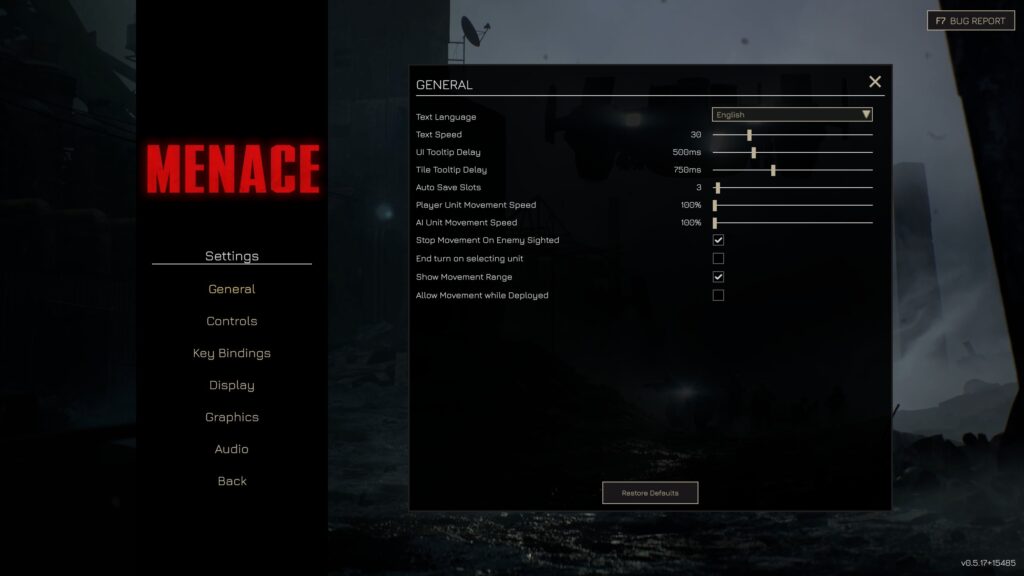
Overhype Studios has included a decent toolset of accessibility options for launch. Plenty of options can be freely adjusted, including text speed, tooltip delay, unit movement speed, and several ways to pause gameplay during enemy action. There are also the usual things like VSync, DLSS, and FSR3 support, framerate capping, and some nice keyboard and mouse tweaks for how you want to control the camera.
There isn’t any colorblind support in the game right now, and there is no controller support.
It is early days yet for MENACE, but I’m already impressed by what's on offer. I’ve probably played better turn-based tactics games in my time, such as Cyber Knights: Flashpoint, and I’ve also played games with better management systems. However, it’s the combination of the two that blends into something truly captivating. The game still needs work, and I would prefer to wait for some interface optimization before I’m comfortable playing it on the Steam Deck long term, but fans of Battle Brothers can expect Overhype Studios to be in this for the long haul.
このレビューはPC版に基づいています。
このレビューをお楽しみいただけたなら、SteamDeckHQ の他のコンテンツもぜひご覧ください!あなたのゲーム体験に役立つゲームレビューやニュースを幅広く取り揃えています。ニュース、ヒントやチュートリアル、ゲーム設定やレビューをお探しの方も、最新のトレンドを知りたい方も、ぜひご利用ください。
Anno 117: Pax Romana was provided by Ubisoft for review. Thank you!
Anno 117: Pax Romana has come at a critical time for Ubisoft, when consumer confidence in the publisher is at an all-time low; it really needs to pull through and deliver the best Anno experience yet. However, Anno 117's familiarity is both good for those coming back to the series and its biggest downfall.
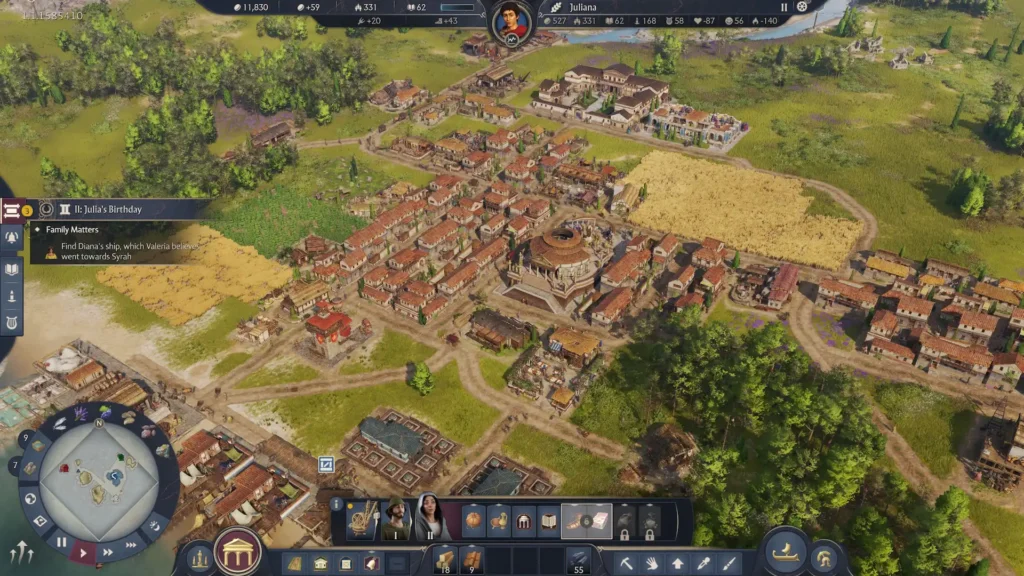
The game gives you 2 very simple options to start a game: either a Campaign game or an Endless one. Regardless of which option you choose, you can then enable multiplayer to bring your friends into the game. Curiously, there's no online matchmaking in Anno 117, so you have to play with those on your friend's list, which will no doubt disappoint some.
I spent most of my time playing through the game's campaign, and I must say, aside from the slightly off-putting voice acting, the campaign is actually quite enjoyable to play through. The characters are somewhat decently written, and it largely feels like a Sandbox game, just with a few cutscenes sprinkled here and there, and frequent events as you progress to keep things fresh and interesting. But by and large, you can play how you want.
Although set in the Roman Empire and Britain during 117 AD, Anno 117 has very little historical accuracy. All of the characters in the game are seemingly fictional, as are the battles and events that occur during the campaign, which feels like a real shame. One of the intriguing parts of historical games like this is seeing a portrayal of historic events. This is, by and large, Ubisoft's own take on the era, filled with people being far more reasonable and understanding than you would expect.
The gameplay of Anno 117 itself is largely unchanged from the Annos of yesteryear. You aim to create a city comprised of various classes, providing food, public services, clothing, and ultimately luxuries as you upgrade your dwellings from lower-class to upper-class residencies. It does this as well as ever, with the resources of each island forcing you to expand and trade with ships to progress beyond the basics. Anno is primarily an economy-management series, and Anno 117 stays true to this philosophy.
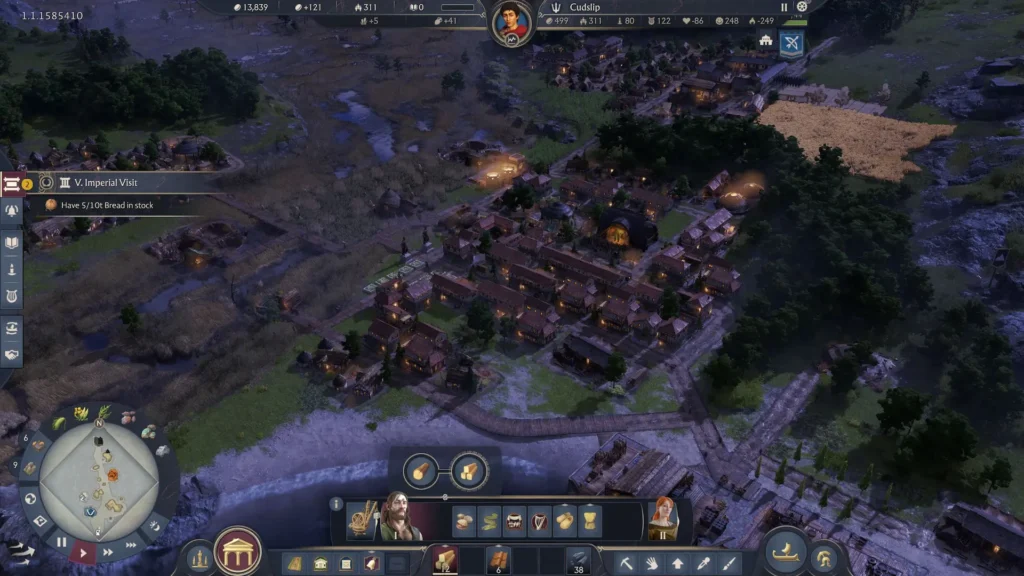
However, that is also the problem with Anno 117: it's very similar to all the Anno games that came before it. And while the new setting has some interesting quirks, namely if you're building in "Albion", there are swamps you have to deal with, it really doesn't change the basic gameplay. I feel like at this stage, Anno needed something new to give it a kickstart, and this game just isn't it. If anything, some longstanding parts of Anno have been made worse.
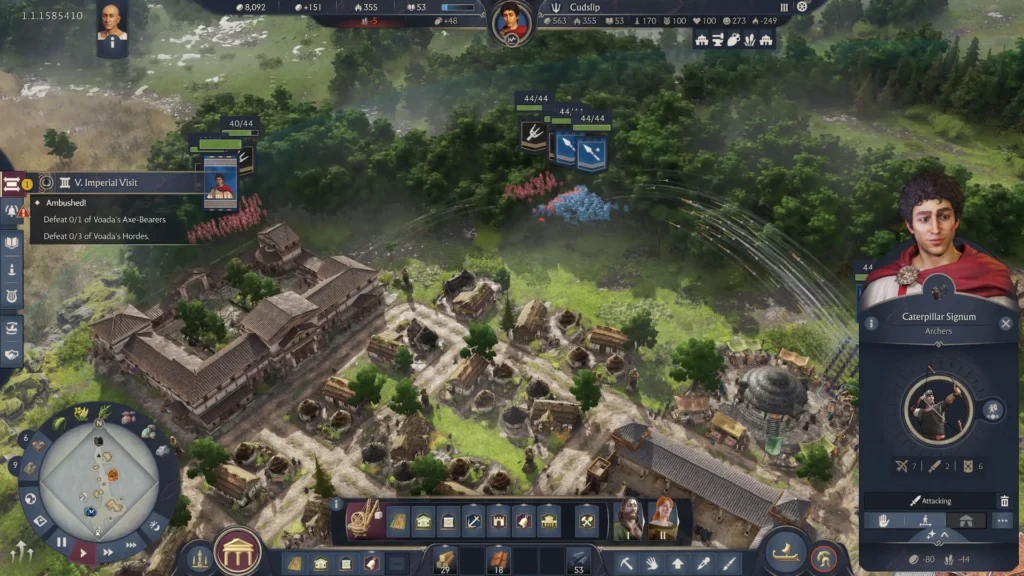
The UI I found to be quite... cumbersome. I'm not quite sure what Ubisoft thought was wrong with the UI in previous Anno games, but Anno 117 has a peculiar combination of horizontal and vertical tabs that, when combined, end up being needlessly confusing. The Anno series had already refined its UI over many iterations, and Anno 117 is trying to take a different direction, but it doesn't work well. Even after a few hours, I was still making constant mistakes when trying to find the correct build menu.
I also experienced some issues with the game. I experienced visual glitches in some cutscenes and visual artifacts on certain buildings, such as the Mud Driers. Audio also overlaps; if you are zoomed in on your city or a ship when a cutscene starts, for example, you will hear the ambient sounds throughout the cutscene, completely overshadowing any voices. This can also happen if you complete quests close together, resulting in overlapping voices. There are little things like that here and there that really let Anno 117 down.
The biggest question Anno 117: Pax Romana leaves me with is, what does this game add to the series? Mostly, I would say it's just the new campaign, and even though it's a good one, it might not be worth that price tag. In terms of gameplay, not much has really changed here. If I had to pick an Anno game to play, I would still choose Anno 1800, thanks to its more straightforward UI, better performance, and, frankly, a time period that lends itself to more interesting gameplay.
Unfortunately, Anno 117: Pax Romana is a bit of a pain to play on the Steam Deck. I had to use Proton Experimental just to get the game to boot. Once it does boot, the game does support 1280x800 as a resolution, so we can avoid the black borders. But, for whatever reason, gamepad support seems to be broken when playing the game on Linux/Proton, meaning the new controller support that Anno 117 enjoys isn't really of much use to us here; we have to use a keyboard layout to play on Steam Deck.
I would also recommend that you choose the "Medium (TV)" UI Scaling option, as it's the largest and makes most of the text in-game easy enough to read, but you might still struggle with some.
As for the actual performance of the game, it's... poor. You'll need to run on Low settings, and I recommend setting the in-game FSR upscaling to "Ultra Performance". You should also lock the game to 30 FPS using the SteamOS frame limiter.
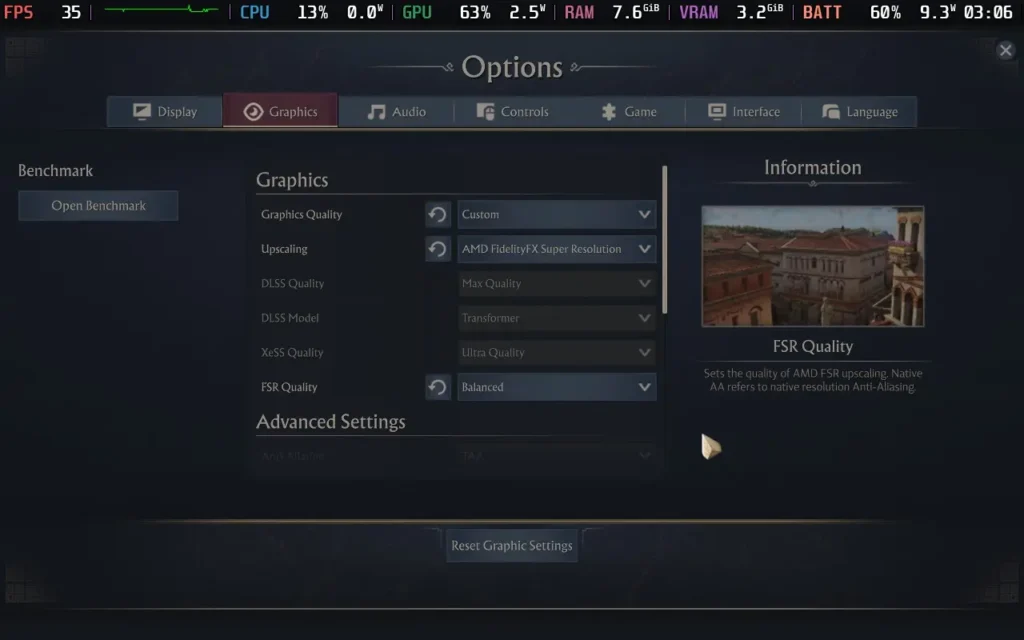

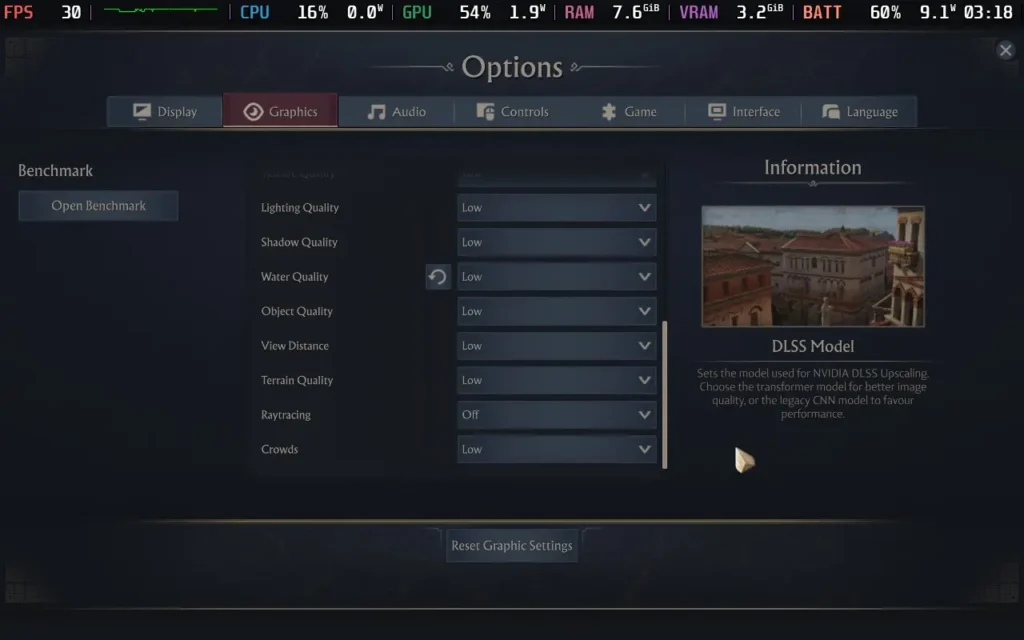
With these settings, a game with a moderately sized city manages to hold 30 FPS, albeit with frequent stutters, but I ran the in-game benchmark, which places you in a much larger city with more going on, and we did start to see some troubles. Stuttering became more frequent, and in very large cities, we saw the FPS drop into the low 20s.
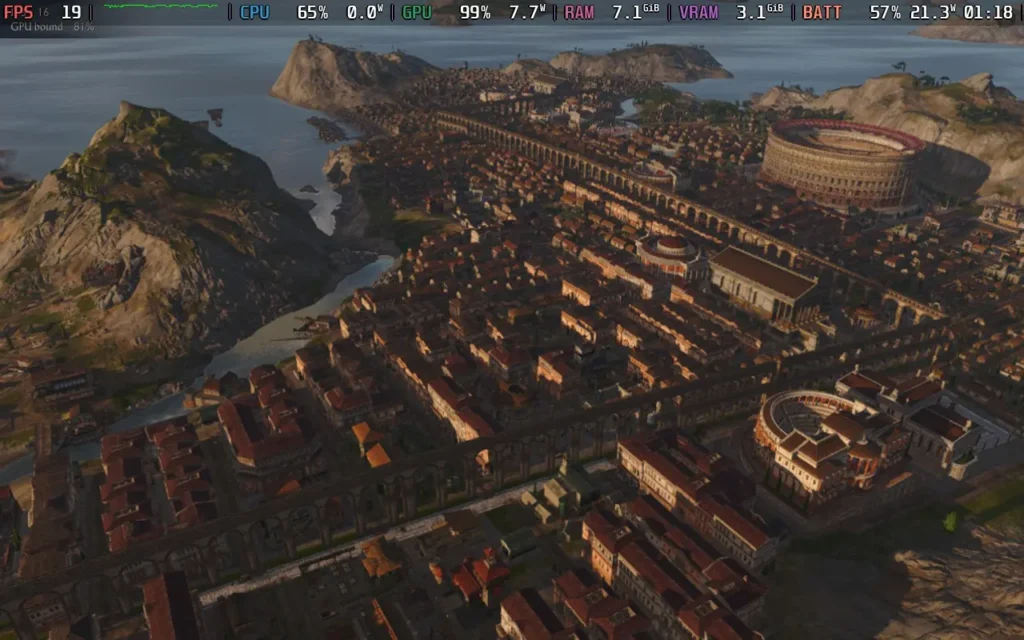
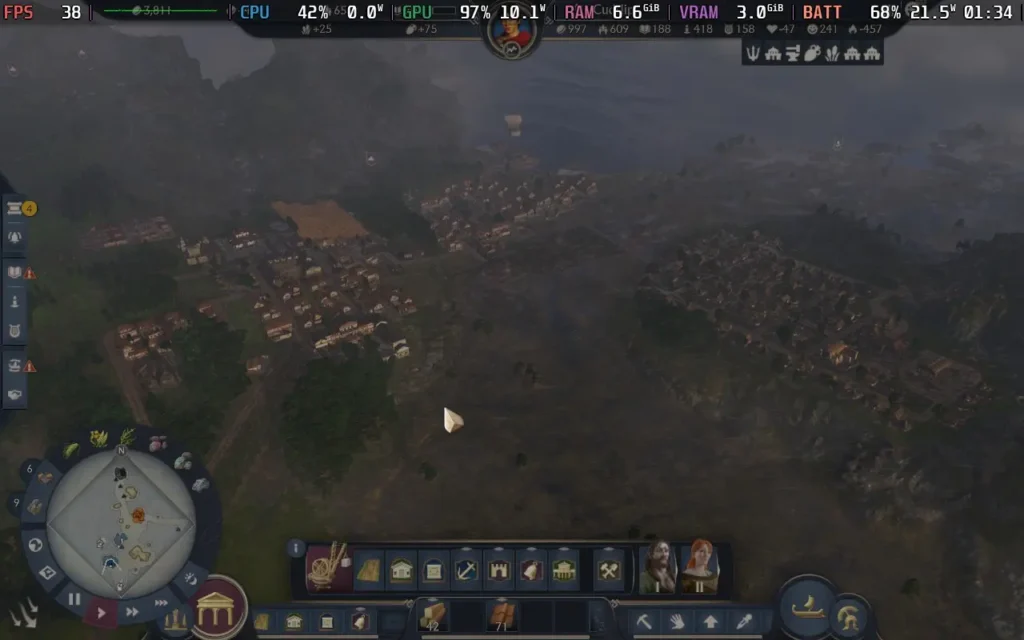
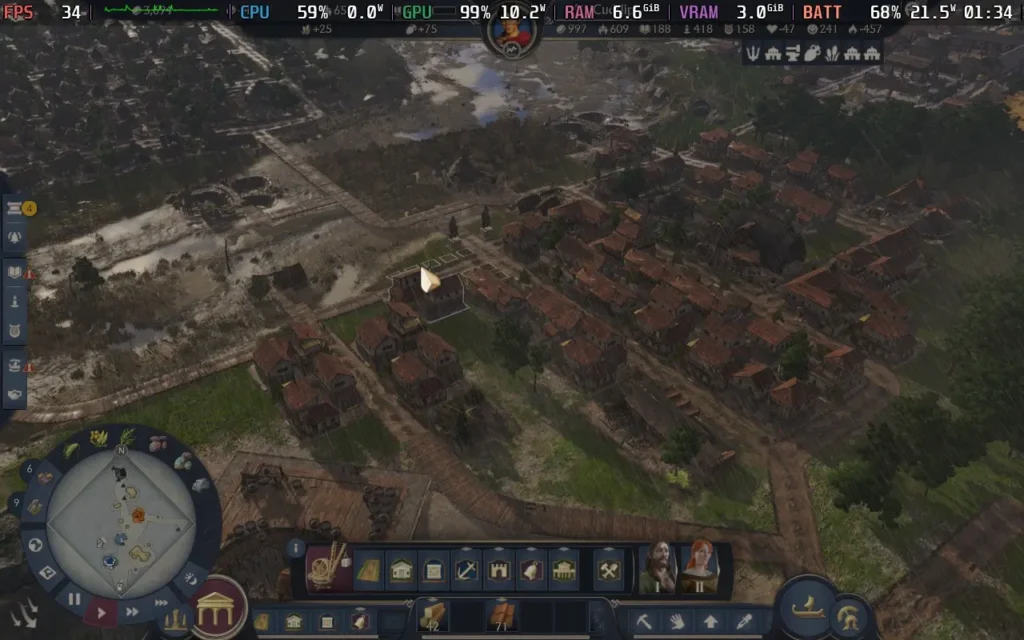
The full benchmark tests on these settings are as follows: FPS Average: 47.7, FPS 5% Lows: 25 (due to frequent stuttering). 80% of the time, we were GPU-bound, not CPU-bound.
Power draw was around 21W-22W, with temperatures being around 70C-75C. Expect around 2 hours of battery life on a Steam Deck OLED and around 80-90 minutes on a Steam Deck LCD.
Anno 117 features colorblind filters for the three main types of color blindness. There is also UI scaling available, as well as the ability to change text to use Sans-Serif fonts instead of Serif ones. Subtitles are available, and you can also adjust notification length to keep notifications readable on-screen for longer (or shorter).
Anno 117 is a competent city builder, but the Roman/British theming doesn't really do it for me, especially when it's all fictional anyway... The game feels like a step down from Anno 1800 in almost every way except graphically. If you're interested in the campaign of Anno 117, I'd say it might be worth a look, but for sandbox/multiplayer gameplay, I'd still say Anno 1800 is king for me.
Anno 117 is technically playable on the Steam Deck, but I'm not sure I would recommend buying the game to play it solely on the Deck. Hopefully, updates to Proton and/or the game will fix controller support, which would help, but the performance is troubling, especially for multiplayer games.
このレビューはPC版に基づいています。
このレビューをお楽しみいただけたなら、SteamDeckHQ の他のコンテンツもぜひご覧ください!あなたのゲーム体験に役立つゲームレビューやニュースを幅広く取り揃えています。ニュース、ヒントやチュートリアル、ゲーム設定やレビューをお探しの方も、最新のトレンドを知りたい方も、ぜひご利用ください。
Jurassic World Evolution 3 was provided by Frontier Developments for review. Thank you!
Jurassic World Evolution is a series that hasn't missed yet, and I'm pleased to say that Jurassic World Evolution 3 is no exception. There's a lot to like about this one, and if you are looking for a management game for the Steam Deck, this should definitely be near the top of your short list.

I'll admit, I haven't played the previous two Jurassic World Evolution games. My last foray into the series was Jurassic Park: Operation Genesis on the original Xbox console, which I adored. Jurassic World Evolution 3 really does feel like...well, an evolution of that game, but improved in every way.
It's always a fear with management games that they will over-complicate things, but Jurassic World Evolution 3 seems like it has a great balance of having enough depth to things like your dinosaurs' needs for their enclosures, as well as your guests needs, but presenting them in a simple way, where you know immediately what the issue is, and the solutions are easily accessible. One example is that when adding foliage to an enclosure, the foliage liked by dinosaurs is marked, so you know what kind of foliage you should be working with.
The campaign mode also does an excellent job of gradually easing you into park management. The first few missions each teach you new gameplay mechanics at a steady pace, so by the time you're left on your own, you should have a good grasp on how to do everything in the game. There are also challenges, which set scenarios for you to beat and offer cosmetic rewards for your parks. You can, of course, play in an open Sandbox mode with customizable settings.
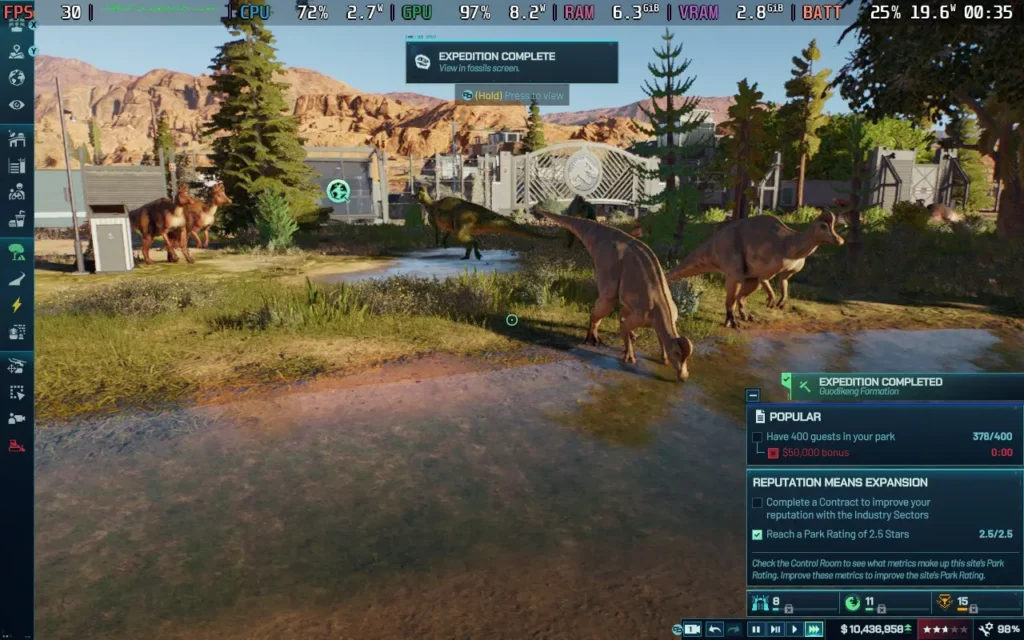
The amount of gameplay mechanics at play here helps you feel like there's always something to do. You can organize expeditions to obtain new fossils, which will let you increase your DNA pool for certain species and learn to breed new dinosaurs or improve existing ones. You can research various technologies, such as new medicines to combat potential ailments your dinosaurs can develop. This is on top of all the regular park management, such as guest attractions and designing your dinosaur enclosures. It prevents the age-old problem in management/strategy games of staring at your screen, unsure of what to do next.
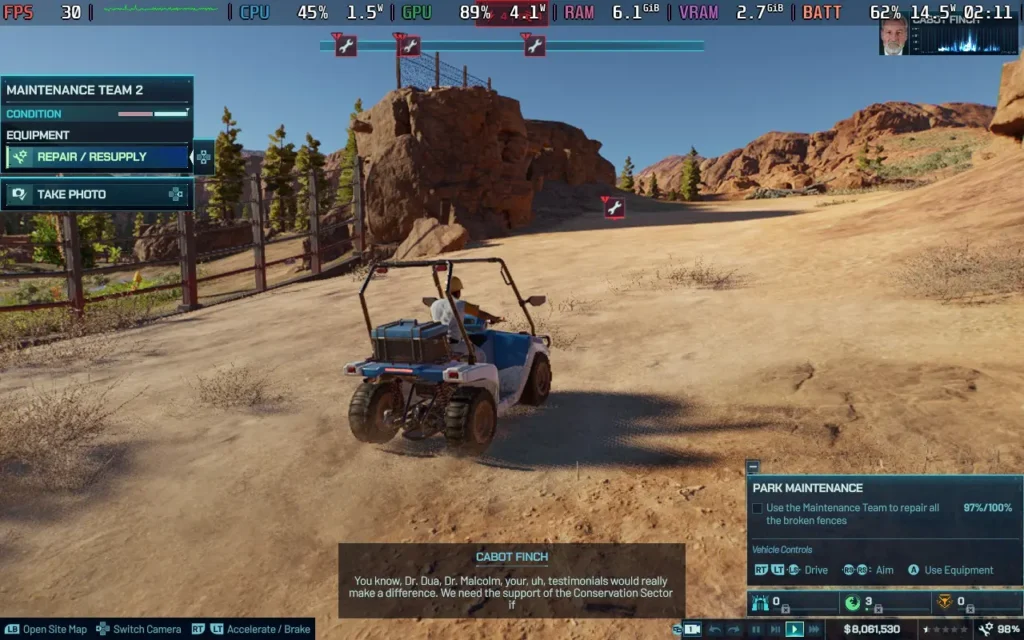
My favorite feature, and one in Jurassic Park: Operation Genesis, is the ability to control the vehicles in the game. While you can assign the AI to manage things like the park ranger, which checks on the welfare of your animals, and the helicopter, which tranquilizes dinosaurs for transportation, you also can drive (and utilize) these vehicles yourself, allowing you to explore and interact with your park and dinosaurs either on foot, in a jeep, or via helicopter. It's such a nice feature, and the game still holds up visually on ground level.
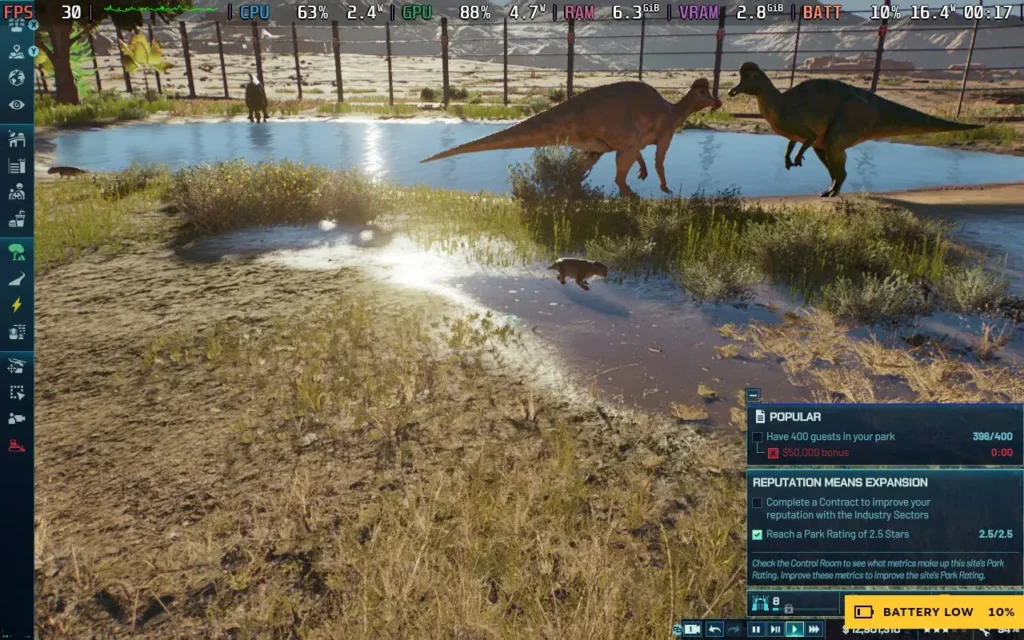
Speaking of visuals, they are also quite nice in the game, with ray-tracing available on devices that support it. The water looks good even without ray-tracing, though. The natural trees are sort of haphazardly clipped inside each other on most maps, and it makes for a weird visual effect, so I was careful not to place trees close together manually. Dinosaurs are animated and portrayed well, even with animations of them playing with each other, which is a really nice addition.
Jurassic World Evolution 3 is quickly becoming my favorite management game of 2025. There are tons of content here to keep you busy, over 85 species of dinosaurs in your park, plenty of different attractions, different game modes, including the highly customizable Sandbox mode. I think they hit it out of the park with this one.
Jurassic World Evolution 3 is a joy to play on the Steam Deck. It has good controller support for both menus and gameplay, it supports 1280x800 as a resolution, and it has a built-in graphics preset for the Steam Deck, which the game defaults to.
I recommend you stick with the developer preset settings and apply a 30 FPS frame rate limit. Using these settings, you can keep the game relatively stable at 30 FPS, even with a bigger park. Flattening the camera when zoomed out to view over large distances can drop framerates into the high 20s, but it's an edge case, and I still found the game entirely playable.
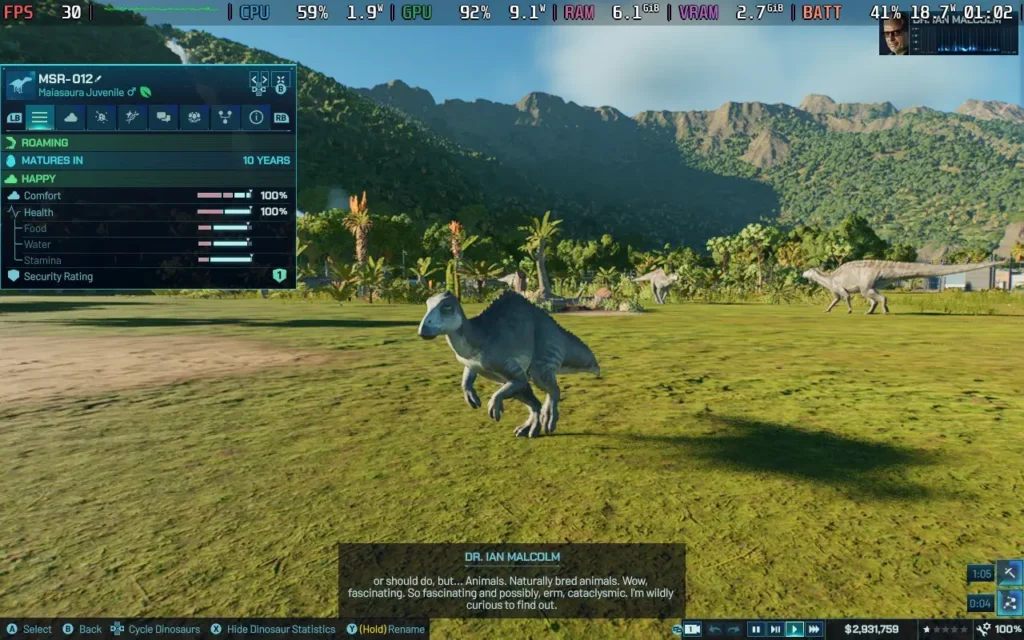
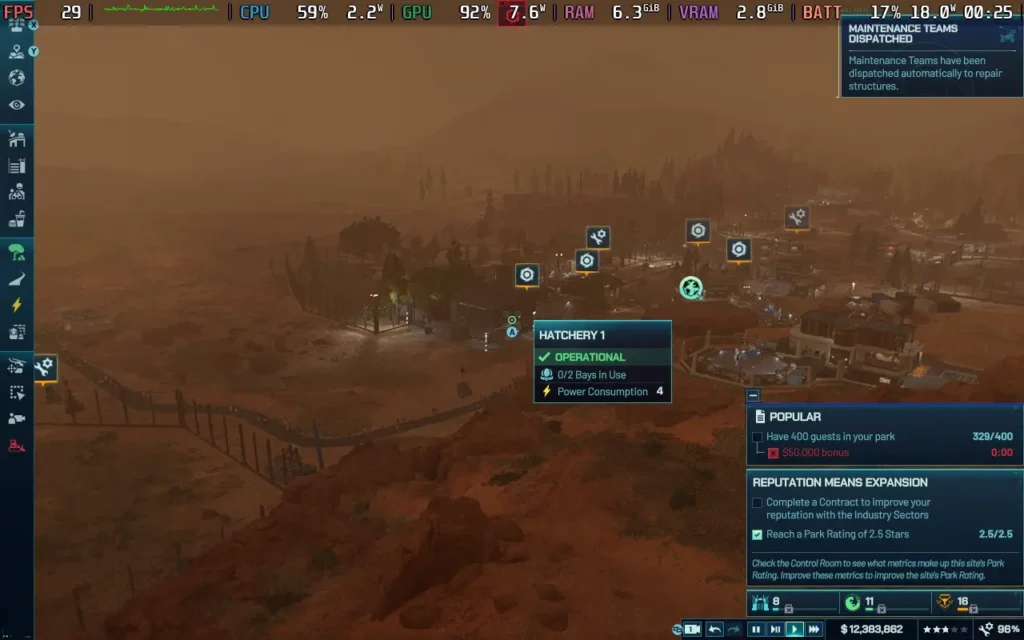
The power draw on these settings was around 14W-19W, and temperatures were around 60C-70C. A Steam Deck OLED can expect to get around 3 hours of battery life, and a Steam Deck LCD can expect around 2 hours.
Jurassic World Evolution 3 has some accessibility options. It can mute all other in-game voices when mission dialogue is spoken and output in Mono audio, so all speakers receive the same sound. It also has subtitles for all spoken dialogue, which can be adjusted in size and have a background to make them more legible.
You can also apply colorblind filters to the UI for the 3 main types of colorblindness and a high contrast mode. Camera shaking can also be disabled.
Jurassic World Evolution 3 feels like it's not far off from the end goal for this kind of game. It has great management tools and UI, and it's easy to understand what's going on. You have extra niceties like exploring your own park and using your own vehicles, and the progression with unlocking new dinosaurs and designing their enclosures is always exciting.
The game also runs surprisingly well on the Steam Deck. The controls have been fine-tuned for gamepads, and it shows. I would have difficulty deciding whether I prefer playing this on a controller or keyboard and mouse. Performance is perfectly playable, being a pretty stable 30 FPS with the occasional dips here and there, but it was good enough for me to play and enjoy the game.
このレビューはPC版に基づいています。
このレビューをお楽しみいただけたなら、SteamDeckHQ の他のコンテンツもぜひご覧ください!あなたのゲーム体験に役立つゲームレビューやニュースを幅広く取り揃えています。ニュース、ヒントやチュートリアル、ゲーム設定やレビューをお探しの方も、最新のトレンドを知りたい方も、ぜひご利用ください。
Plants vs. Zombies:Replanted はエレクトロニック・アーツよりレビュー用に提供されたものです。ありがとうございました!
クラシックなカジュアル戦略ゲームが帰ってきた。Plants vs. Zombies:Replanted』では、コントローラーのサポート、最新のビジュアル、そして嬉しいサプライズなど、オリジナルのゲームを現代の水準に引き上げている。この名作は時の試練に耐えたのだろうか?それを確かめよう。
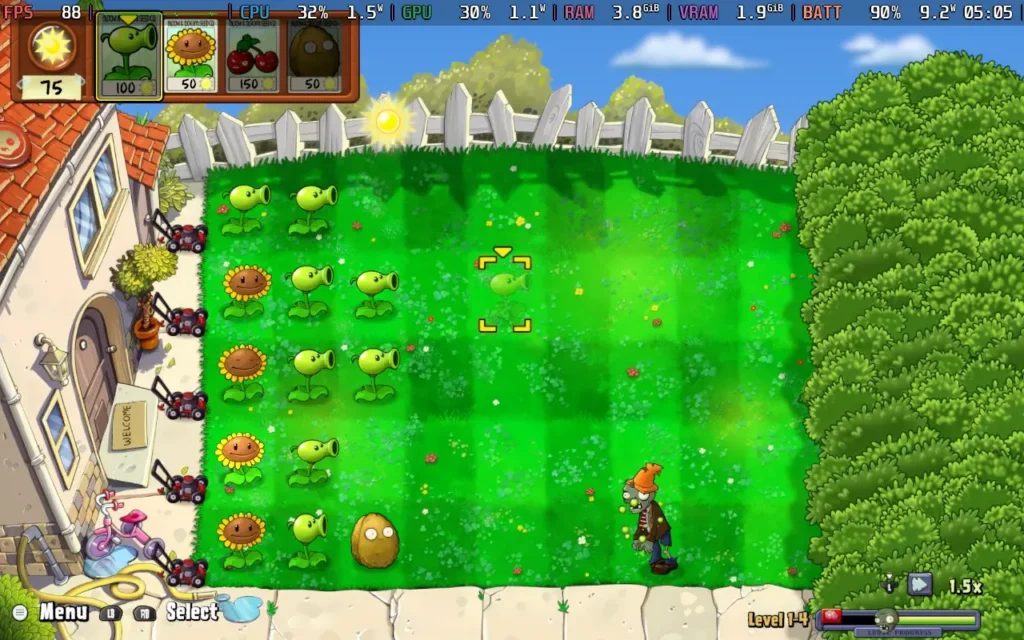
コアとなるゲームプレイに関しては、Plants vs. Zombies:Replanted』はオリジナルの方式を踏襲している。ゲームは相変わらず「レーン防衛」ゲームであり、5つのレーンが与えられ、様々な種類の植物の軍隊で防衛し、生成された太陽の光を賢く使ってゾンビを家から遠ざける。同じ戦略がほとんど毎回通用するという弱点はあるが、うまく機能している。
一度うまくいく戦略を見つけたら、それを繰り返して勝ち続けることができる。開発者は「新しい戦略を見つけるのが楽しい」と言っているが、それは残念なことだ。それは大いに結構なことだが、多くのプレイヤーは勝ち続ける戦略に固執し、同じ、あるいはそれ以上の結果を得るために別の戦略を見つけることに時間を浪費することはないだろう。

このゲームでは、他の種類の植物を大量に導入したり、夜間は資源が制限される昼夜制を導入したり、マップを少し調整したりすることで、状況を少し変えようとしているが、実際には、太陽の光を発生させるキノコのパワーが強すぎるため、夜間レベルの方が楽なことが多かった。マップが変わっただけで、最初の数回は戦略を少し調整する必要がある。私はPlants vs. Zombiesをプレイしたことがないにもかかわらず、このゲームの全レベルを一度も負けることなくクリアした。だから、戦略的な挑戦がしたい人には向かないゲームだ。
ゲームに新たに追加されたハードコアモードでは、ゲーム内のすべてのレベルを死なずに倒さなければならない。単に死なずに全レベルをクリアするだけでなく、植物の種類を制限されながらクリアしなければならないので、ゲームは難しくなっている。難点は、ハードコアモードはすでに全レベルを倒していないとアンロックされないので、「New Game+」モードのようなものだということだ。
これはこのゲームに共通するテーマだ。対人戦や協力プレイのマルチプレイヤーモードでさえ、最初の10レベルほどをクリアしないと使えない。なぜレベル1から利用できないのか、さっぱりわからない。友人とプレイするためにこのゲームを買ったのなら、その友人も参加する前に、隣に座ってあなたがゲームの最初の25%を倒すのを見なければならない。キャンペーン」自体も協力プレイではなく、1回限りの対戦ができるだけなので、一緒に進める機会を逃しているように感じる。

誤解しないでほしい。私はPlants vs. Zombiesを楽しんだ:しかし、いくつかの機能強化は、ほとんどのゲームがパッチで導入するようなものだと感じた。基本的には、ビジュアルの鮮明さのアップグレード、New Game+モード、レベルをプレイするにつれて昼夜が変わるモード、コントローラーのサポートなどだ。
Plants vs. Zombiesのファンなら、このゲームは気に入るだろう。しかし、2009年のオリジナル版で中途半端な反応を示した人なら、Replantedがまだファンでなかった人を引き込むほどの出来かどうかは分からない。プラス面では、Plants vs. Zombies:Replanted」はフルプライスのタイトルとは程遠く、20ドルあれば数時間は楽しめるだろう。
Plants vs. Zombies:Replanted』はSteamデッキでとてもよく動く。コントローラーをサポートしており、非常にうまく動作し、ゲーム中は90FPSで簡単に動作する。また、グラフィックの設定を調整する必要もない。ゲームはデフォルトで1280x800で動作するため、ゲームの周囲に黒い縁取りはない。
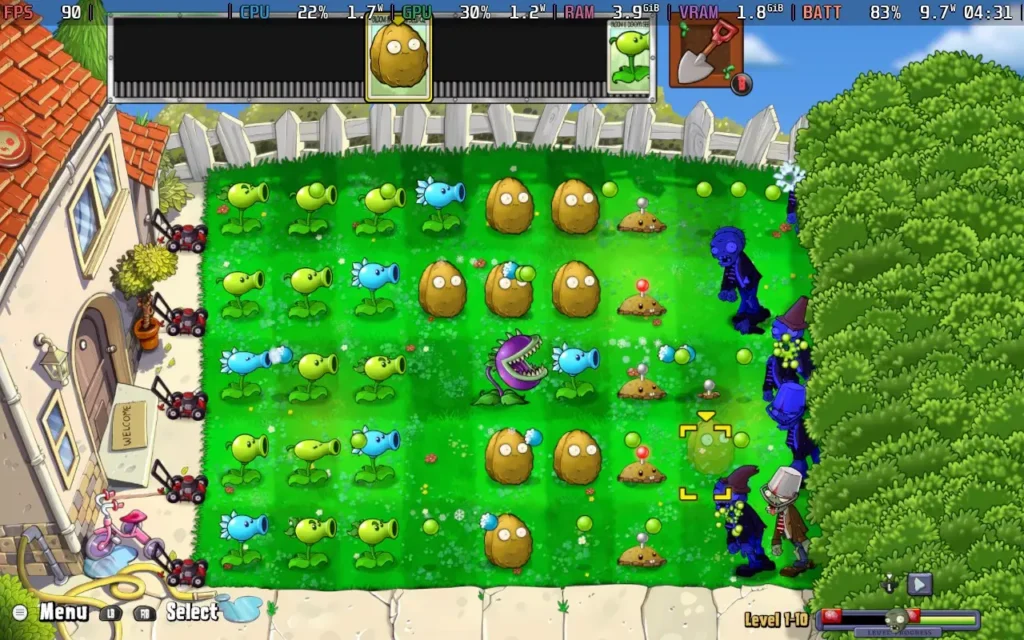


消費電力は9W~11W程度と低く抑えられている。温度は55℃~60℃程度。スチームデッキOLEDで約5時間、スチームデッキLCDで約4時間のバッテリー駆動時間が期待できる。
余談だが、このゲームはリモート・プレイ・トゥギャザーに対応しておらず、Co-op/対人戦モードはローカル専用なので、マルチプレイをするにはSteamデッキをドッキングさせる必要がある。
Plants vs. Zombies:Replanted』にはアクセシビリティがあまりない。カーソルのスピードを調整できる、それだけだ。ゲーム中の会話はすべてテキストベースだ。
Plants vs. Zombies:リプランテッド」は、ゲームに多くのものをもたらすものではないが、ゲームの「決定版」であり、非常にリーズナブルな価格を考えると、すでに「Plants vs. Zombies」ファンでゲームを再プレイしたいのであれば、再び飛び込む価値は間違いなくある。
Plants vs. Zombies:Replanted』はSteamデッキで完璧に動作する。コントローラーをうまくサポートし、1280x800で動作し、90FPSで問題なくプレイできる。間違いなくベスト・オン・デッキ・タイトルだ。
このレビューはPC版に基づいています。
このレビューをお楽しみいただけたなら、SteamDeckHQ の他のコンテンツもぜひご覧ください!あなたのゲーム体験に役立つゲームレビューやニュースを幅広く取り揃えています。ニュース、ヒントやチュートリアル、ゲーム設定やレビューをお探しの方も、最新のトレンドを知りたい方も、ぜひご利用ください。
このゲームはスクウェア・エニックスからレビュー用に提供されたものです。ありがとうございました!
ファイナルファンタジーの愛好家を自称する私にも、まれにではあるが、目に余る作品がある。ファイナルファンタジーIX」を筆頭に、特に思い入れのあるタイトルもあれば、「ファイナルファンタジーV」のような正直言ってひどい作品など、存在しないことにしたいタイトルもある。
1997年に発売された『ファイナルファンタジータクティクス』もそのひとつで、興味がなかったというよりは、私の思慮不足が原因だった。だから、現代風に改良され、ありがたいことに抑制された強化版をプレイする機会を得たことは、認めたくないほど嬉しいことなのだ。ベン・スターも出演しているしね。
いいえ、私は彼に執着していません。なぜそう思うのですか?
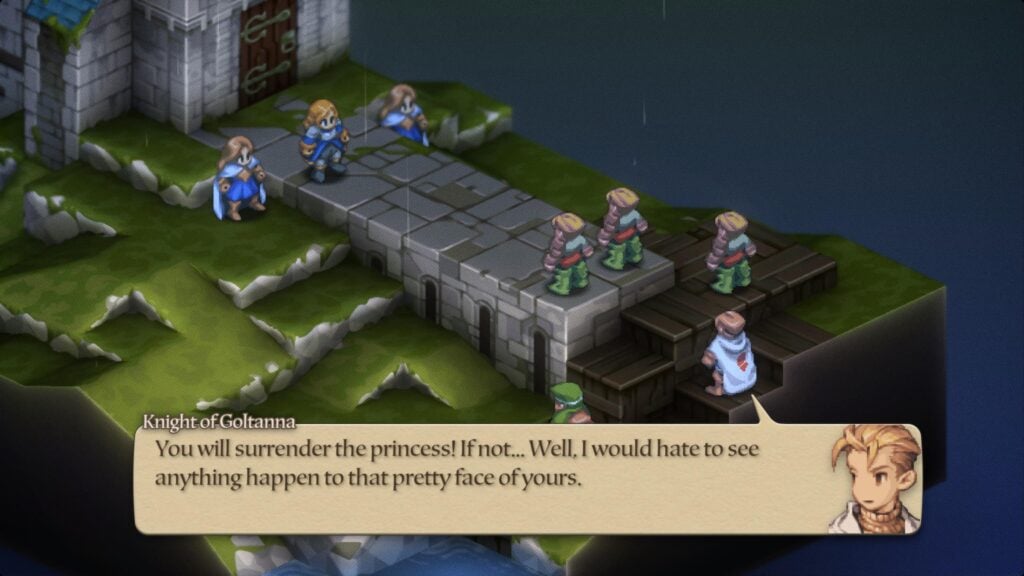
あからさまなファンボーイズムはさておき、このような高い評価を得ているタイトルの再リリースが待ち望まれ、長い間噂されていることを、私は知らないわけではない。伝説的な難易度、特にユニットのレベルアップが不十分な場合、エンカウントによってはそのままリスタートを余儀なくされることについては、確かによく知っている。しかし、それと同じくらい重要なこととして、私はストーリーが伝説に近いものであることも知っている。このような記念碑的な物語が必然的に内包する多くの紆余曲折や、タクティカル・ゲームがうまく成立させれば立派に得られる、挑戦的でありながらやりがいのあるゲームプレイのループなどだ。
28年以上経った今でも、時の試練に耐え、期待に応えている。ファイナルファンタジーXII』や『ヴァグラント・ストーリー』での経験を考えれば当然だが、私はイヴァリースでの時間を存分に楽しんだ。
結局のところ、これは再リリースであり、そのようなブランドには一定の期待が伴う。ゲームプレイの洗練?チェック。声優?もちろん。最新グラフィック?まあ...そんなところだ。吉田明彦の独特なビジョンの影響を受けて入念に作り上げられたオリジナルのアートスタイルは、まさに象徴的だと言っていいだろう。したがって、このようなキャラクターを「現代的な」リメイクが通常伴うような程度にアップデートすることは、無用な危険を冒すことになる。
その代わり、アートスタイルは微妙に更新され、より高性能なマシンとスクリーンに対応したわかりやすいものになっているが、キャラクターやジオラマのほとんどおもちゃのようなプロポーションは最大限に保たれている。さらに、特に環境にはノスタルジックな魅力があり、往年のゲームが駆使していた鋭角的なアングルなどが維持されている。過去20年間、ソーシャルメディアやビデオコンテンツに投稿されたオリジナルの大量の環境しか見たことがなかったため、今あらためてそれらを見るのは本当に楽しいことだった。

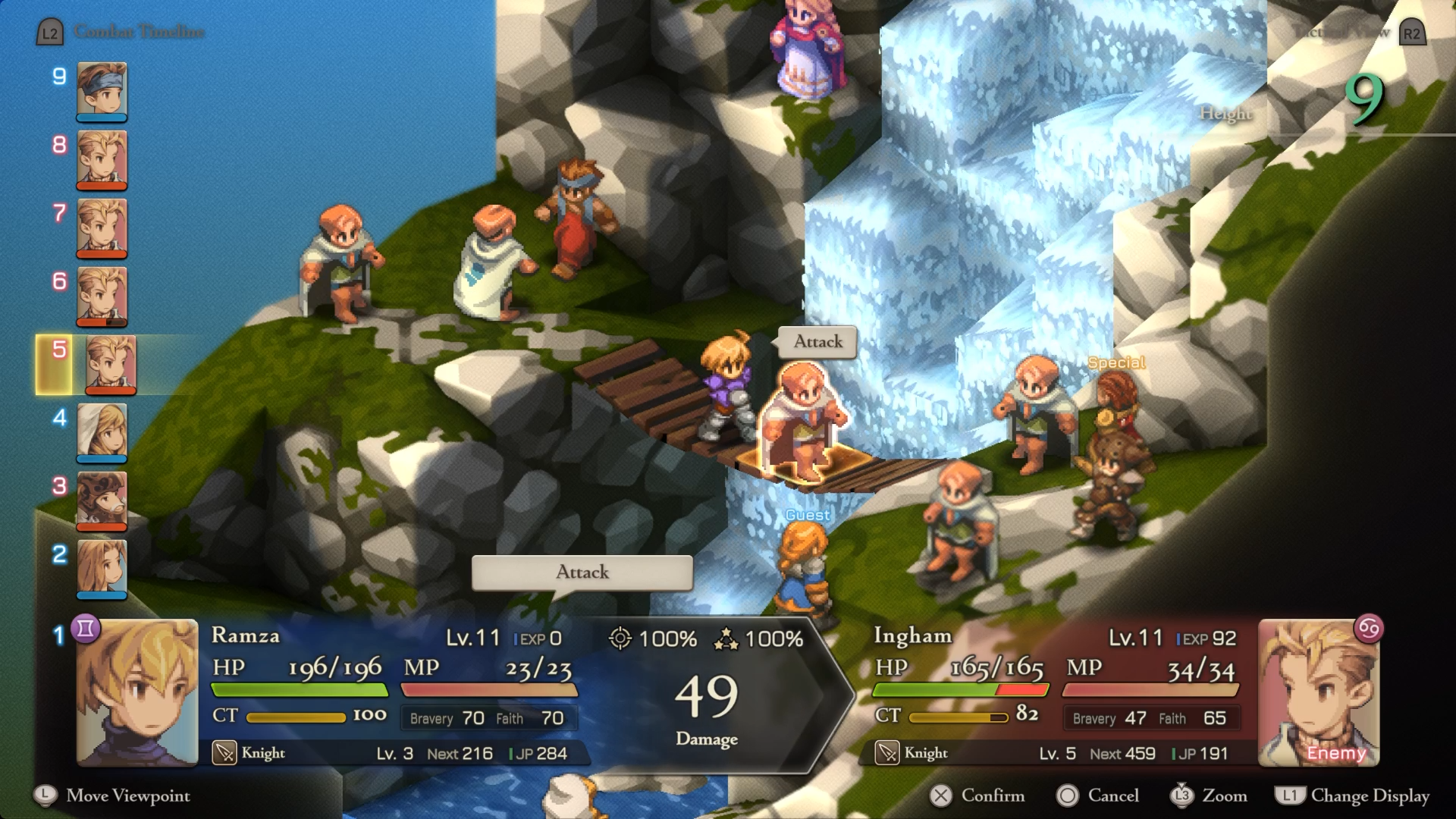
初代プレイステーションで『ファイナルファンタジータクティクス』が発売されてから30年近く、タクティカル・ロールプレイングというジャンルは多くの改良が加えられてきた。最も重要なのはUIで、与える可能性のあるダメージや、パーセンテージに基づく攻撃の正確さ、距離など、一目でわかる明確で鋭い情報が特徴だ。ただ漠然と......という時代は終わったのだ。ファイアーエムブレム 閃きの軌跡」は、私がタクティカル・ロールプレイングというジャンルに足を踏み入れた最初の作品だったと思うが、2005年当時、このようなレベルの情報がすぐに手に入るというのは、かつてこれが普通ではなかったことを考えれば、まったくもって当たり前のことだった。
また、最近のインタビューで詳述されているように、コントローラーの標準化も普通ではなかった。この時点でコントローラーのスキームが長年確立されているため、オリジナルと比較すると直感的にプレイできる。それでも、ほとんどの人が評価しないかもしれないが、歓迎すべき追加要素だ。

最も重要なのは、『ファイナルファンタジータクティクス -イヴァリース戦記-』に追加されたさまざまな難易度オプションだろう。従者」、「騎士」、「戦術家」の3つの難易度から選べるので、この気の遠くなるような美しく複雑な物語をどのように楽しむか、アプローチにかなりの柔軟性がある。従者」は最も簡単なオプションで、ともすれば気難しくなりがちなこのジャンルを初めてプレイする人に適している。ナイトは最もバランスの取れた体験を提供し、「オリジナルゲームの難易度を微調整し、PS1版より少し簡単になっている」。前述のような難易度の高騰や、かつてオリジナル版が悪名高いものであったアクセスのしにくさを考えれば、この点は高く評価されるに違いない。
最後に、タクティシャンはオリジナルが提供する難易度を楽しむサディストのためのもので、ナイトでさえ私に与えた挑戦を考えると、私自身は絶対に手を出していない。しかし、私の失敗は大目に見てほしい。The Ivalice Chronicles』に追加された数々の要素を挙げたが、特筆すべきは1997年のオリジナル・アドベンチャーが収録されていることだ。

予想通り、『ファイナルファンタジータクティクス -イヴァリース戦記』はSteamデッキで完璧にプレイできる。もともとプレイステーション1で発売されたゲームなので、疑っていたわけではないが、それでも確認できてよかった。このゲームには2つのバージョンが収録されている:ビジュアルとボイスオーバーがアップデートされた新リマスター版と、いくつかのクオリティ・オブ・ライフが改善されたオリジナル版に近いクラシック版だ。
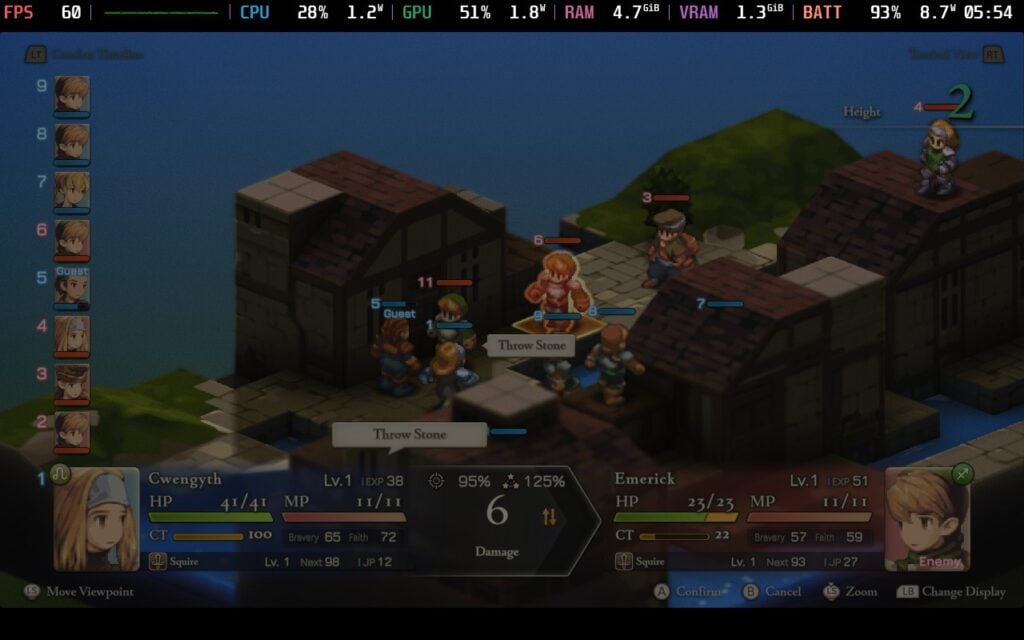
このゲームには2つの異なるバージョンが含まれており、両者には大きなビジュアルの違いがあるため、パフォーマンスにも若干の変化が見られる。リマスター版の平均消費電力は8.5Wで、クラシック版の平均消費電力は6.5W程度だ。つまり、クラシック版でプレイすると、バッテリー駆動時間が1時間延びるが、UI、ビジュアル、声優がアップデートされていない。
また、ゲーム内のテキストが小さいということで「プレイアブル」となっているが、これはクラシック版「ファイナルファンタジータクティクス」に関連していると思われる。リマスター版でもクラシック版でも小さい文字はあまり見当たりませんでしたが、クラシック版のフォントがUIの一部を読みづらくしていると感じました。これまでの経験上、バッジがグレードダウンしているのはそれが原因であり、実際に小さくて読めないからではないと思う。リマスター版をプレイするのであれば、問題はないだろう。
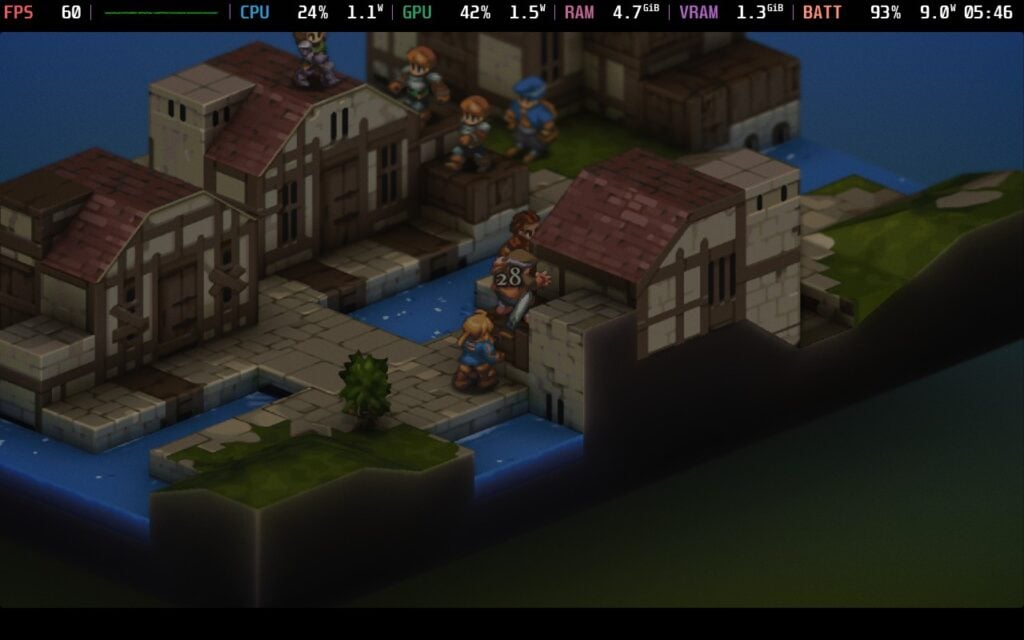
タクティクス・オン・ザ・スチームデッキ』についてこれ以上言うことはない。完璧にフィットしている感じで、これを持ち運んでどこにいてもプレイできるなんて、これ以上の幸せはない。これは携帯ゲームとして、投資を強くお勧めする。
カメラを反転させたり、オーディオのスライダーを変えたり、音声やテキストの言語を変えたりする以外に、設定でできることはあまりない。
このゲームは16:10の解像度をサポートしていないが、クラウドセーブとコントローラーをサポートしている。HDR設定はないが、HDRはサポートしているようだ。ディスプレイモードをボーダレスに変更するとHDRがオンになり、フルスクリーンにするとHDRがオフになる。少し奇妙だが、オプションがあるのはうれしい。
ファイナルファンタジータクティクス -イヴァリース戦記-』は、オリジナルが崇拝される理由を正確に理解し、オリジナルの明確なビジョンを窒息させることなく、その遺産を慎重に構築した稀有な再リリースだ。よりスムーズなUI、柔軟な難易度モード、声優の歓迎すべき輝きなど、追加された要素は、このゲームを真に象徴的なものにした妥協のないハートを尊重しつつも、より親しみやすいものにするのに役立っている。スクウェア・エニックスで最も有名なタクティカルRPGのひとつが、現代に堂々と佇むことができるのは、無骨で敬意に満ちた修復のおかげであり、このようなカルト的名作の復活が、未来を予感させるものであることを願うばかりだ。私のような新参者であれ、戦いに慣れたイバリアンのベテランであれ、これは時の試練に耐えうる名作を体験する決定的な方法だ。
Steamデッキでのプレイも基本的に完璧で、リマスター版でもクラシック版でも、外出先でプレイするのに最適だ。これは素晴らしい買い物であり、全面的にお勧めできる。
本コンテンツのレビューはPS5版に基づいています。Steam Deck パフォーマンスと最適化はPC版でテストしています。
このレビューをお楽しみいただけたなら、SteamDeckHQ の他のコンテンツもぜひご覧ください!あなたのゲーム体験に役立つゲームレビューやニュースを幅広く取り揃えています。ニュース、ヒントやチュートリアル、ゲーム設定やレビューをお探しの方も、最新のトレンドを知りたい方も、ぜひご利用ください。
Endless Legend 2はHooded Horseからレビュー用に提供されたものです。ありがとうございました!
本作はアーリーアクセスタイトルであるため、『エンドレスレジェンド2』に対する最終的な感想は、その開発状況に応じて変わる可能性が高い。このレビューは、このゲームの初期リリースをプレイした感想に基づいています。
若い頃に夢中になったゲームがいくつかあって、友人と遊ぶとなると4Xゲームが好きだった。具体的には、『シドマイヤーズ シヴィライゼーション5』のスコアを彼らと一緒にプレイし、ショショーネ族を率いて古代遺跡まで疾走し、先手を打って遺跡を破壊したものだ。そのおかげでこのジャンルが大好きになり、新しい4Xゲームを探しているうちに、ずっと好きだったゲームに出会った:エンドレス・レジェンドだ。このゲームは、私が夢中になった4Xメカニクスの両方をバランスよく備えていたが、カスタマイズや魅力的なクエストラインによってRPGのテイストを加えていた。
私はこのゲームが大好きだったが、一緒にプレイする人がいなかったので、一人でプレイすることになり、常にそうしていた。エンドレスレジェンド2がもうすぐ発売されるが、どこまでやるのか分からなかった。私は前作が大好きだったので、『シヴィライゼーション6』のような罠にはまり、変化があまり感じられなくなり、プレイする気が失せ、慣れ親しんだメカニックにすぐに戻ってしまうのではないかと心配していた。しかし、何度も対戦した結果、『エンドレス・レジェンド2』はそのような罠に陥らないだけでなく、複雑なアイデアをわかりやすいものに合理化しつつ、戦略的な深みを深めたと感じる。最終的には、アーリーアクセスを離れれば、これまでプレイした4Xゲームの中で一番好きなゲームになる可能性は大いにある。
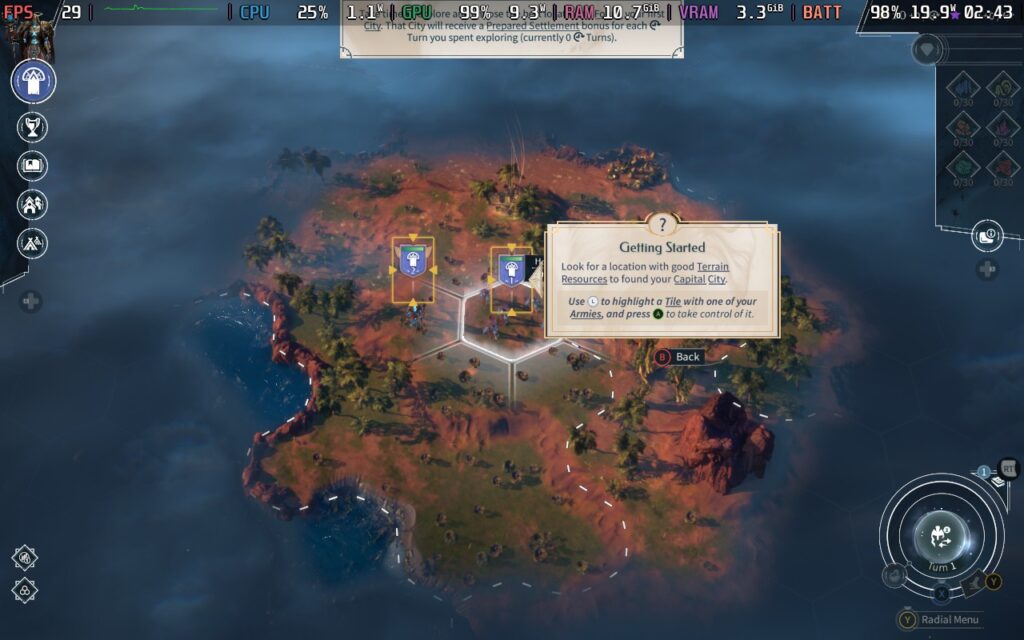
エンドレス・レジェンド1』やそれ以前の4Xゲームをプレイしたことがあれば、大まかなゲームプレイのループはすぐになじみのあるものに感じられるだろう。このゲームは、このジャンルでよく知られる4Xをベースにしている:探検(Explore)、拡大(Expand)、開拓(Exploit)、絶滅(Exterminate)だ。プレイヤーは5つの派閥のうちの1つを支配し、その勢力を拡大し、資源を集め、技術を研究し、帝国を築き上げ、六角形タイルのマップ上で他のプレイヤーを征服する。周囲には戦略的な資源や贅沢な資源、さまざまな種類の資源にブーストを与えるアノマリー、あなたの支配に挑戦してくるマイナーな派閥の家などがたくさんある。
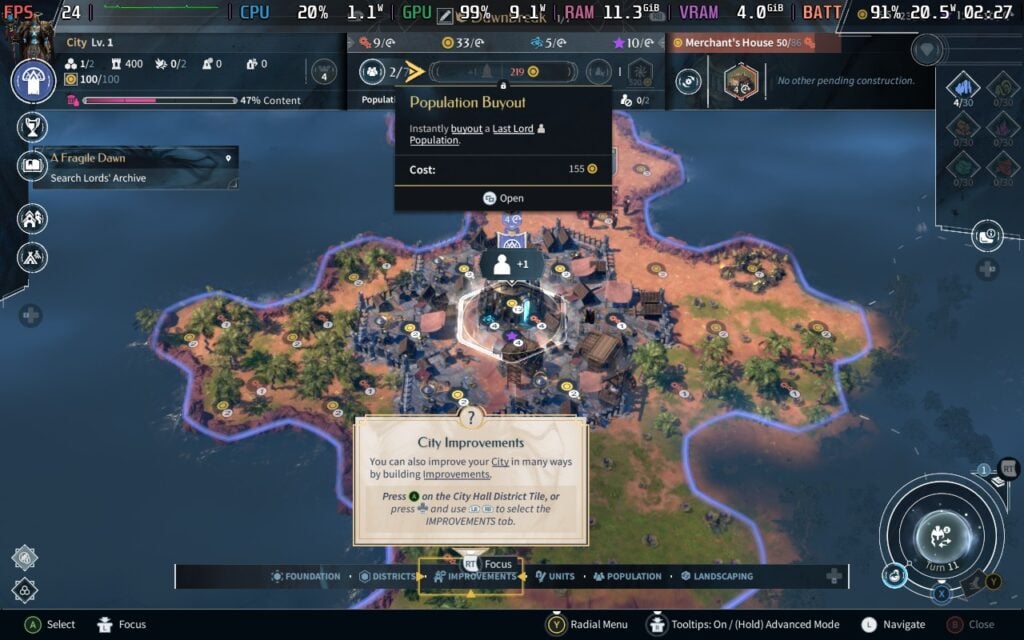
他の4Xゲームと比べると、マップは地域ごとに区切られており、それぞれの地域には1つの都市しか存在できない。都市は6つのタイルに囲まれてスタートするが、資源を使って徐々に拡大し、地域全体をカバーすることができる。各タイルには地区を作ることができ、ダスト(通貨)、プロダクション(より早く建設する)、サイエンス(より早く研究する)、インフルエンス(領土を拡大する)など、成長に必要な主要資源のいずれかを得ることができる。メインとなる都市はすべてを建設する場所であり、都市には一度に1つのものしか建設できないので、必要なものを中心に計画を立てることが重要になる。
研究は、都市を通常の限界以上に押し上げる大きな役割を果たす。最初は新しい地区の建設や、すでに建設された施設の強化がアンロックされるが、時間が進むにつれて、獲得資源をさらに増やすための改良、他派閥との新しい外交方法、パッシブバフや資源獲得、戦士ユニットのアクションや特殊化、さらには獲得資源を別の資源に変えるコンバーターなどが手に入る。一定量のテクノロジーを研究したら、次の "時代 "に進むことができる。幸いなことに、すべてを研究して先に進む必要はないので、自分のプレイスタイルに最も有利なものに集中することができる。
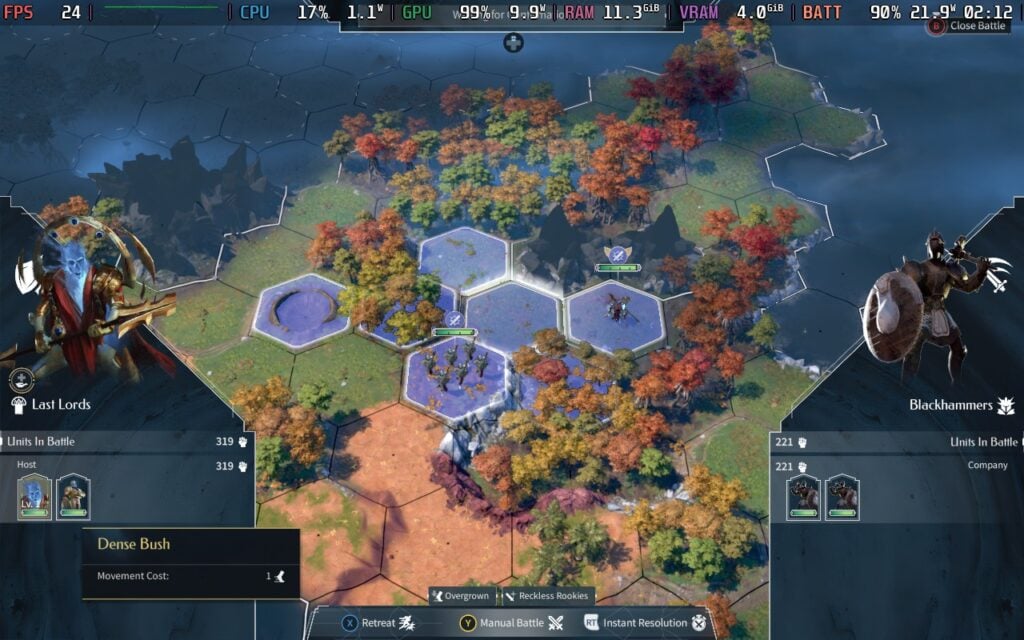
もちろん、どんな4Xゲームでも、育てなければならない軍隊は存在する。都市に地区を作るのと同じように、新しいユニットを作ることができる。ユニットは一度に5~6個まで積み重ねることができ、小派閥や他のプレイヤーを撃破しに行く。小派閥はまだあなたの領地にスポーンしてユニットを送り込んでくることがあるので、早急に排除するのがベストだ。プレイしていくうちに、一般的に何らかの特殊効果を持つより強力なユニットであるヒーローを手に入れたり購入したりできるようになる。ユニットには戦士、弓兵、騎兵などさまざまなジョブがあるので、すべてをバランスよくカバーする軍団を作れば、戦いに大いに役立つだろう。
これらすべてが連動して、試合に勝つための複数の方法を与えてくれる。平和的な路線で他国を寄せ付けないように影響力を得ながら自国を成長させるか、あるいは自分の派閥に属さない周囲にいる人物を総崩れにするか、各メカニックが自分のプレイスタイルを強化するチャンスを与えてくれる。一般的に、これが4Xゲームの感覚であり、私は大好きだ。エンドレスレジェンド2も他のゲームと同じようにこの感覚を保っているが、このゲームを際立たせているのはRPG的な要素だ。
エンドレス・レジェンド2』には、ゲームを一変させる大きなメカニズムがある:タイドフォールだ。前作では雪が降る季節があり、風景を少し変えることができたが、タイドフォールでは完全に新しい土地が登場する。タイドフォールの季節が終わるごとに、新しい派閥、資源、発見すべき場所がある新しい土地が登場する。また、この土地はすでに確立された他の区画とリンクすることもあり、新たな近道や移動手段を作り出すこともできる。つまり、特定の派閥を攻撃したくてもそこへ行く道がない場合、魔法のように裏口の通路が現れる可能性があるのだ。
ユニットは戦闘によってレベルアップし、通常のユニットは能力をアップグレードすることで特化し、より強力になるが、ヒーローはさらにその上を行く。ヒーローには完全なスキルツリーと装備システムがあるので、必要なリーダーに仕立て上げることができる。これは、自分のスキルを補うヒーローに率いられた特殊な軍隊には非常に役立つ。これは前作にもあった機能だが、新しい武器を作れるようになるために新たな資源を研究するのではなく、敵軍を倒しながら手に入れることになる。
これらのヒーローはまた、新しい評議会システムを通じて帝国全体にボーナスを与える。新しいテクノロジーを研究すればするほど、より多くのスロットが開放され、より多くの塵や食料を与えるものから、軍隊を強くするものまで様々です。これは非常に有用で、プレイすることで新たなヒーローを購入し、手に入れることができるため、自分たちの強みを発揮することができる。
このゲームでの勝ち方も少し単純だ。進むにつれて、資源や富で圧倒するか、敵をすべて平定するか、圧倒的な影響力を拡大するか、どのように勝ちたいかの選択を迫られる。目標は表示され、直接的に示されるので、勝つための最善の方法を考えるのは簡単だ。私は圧倒的な富を目指し、各戦略資源を20個ずつ持ち、5ターン保持することを目標とした。私はすでに大量の土地と通貨を持っていたので、新しい資源を手に入れるための拡大はとても簡単だった。
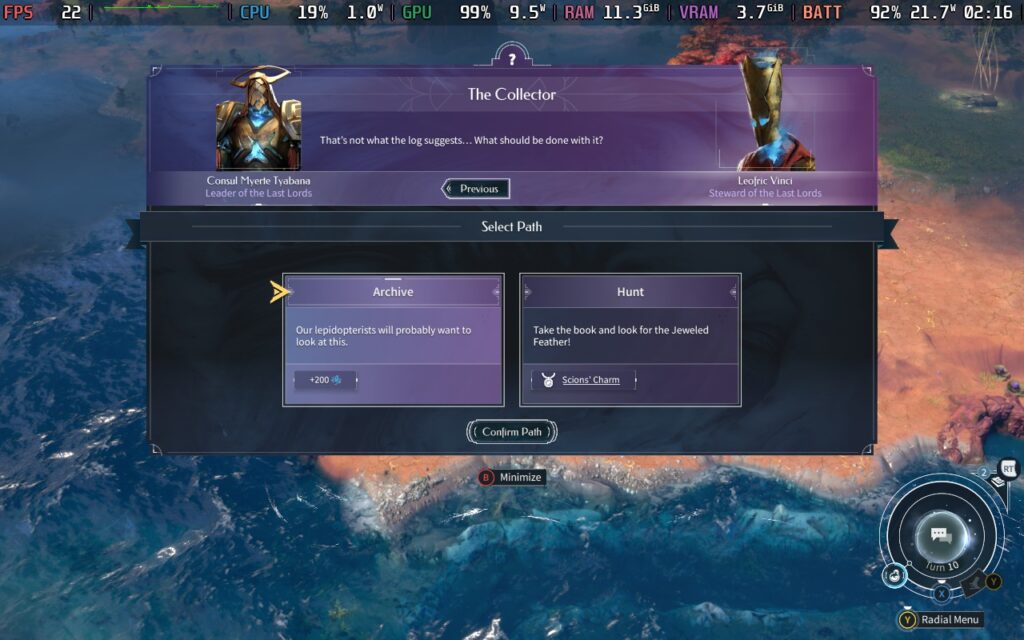
クエスト・システムを活用して、より多くの資源をより簡単に手に入れることができるのも素晴らしい。クエストの多くは場所を調査したり、特定の敵と戦わせたりするもので、それに付随するストーリーもある。しかし、Deedsは私のお気に入りだ。これはゲーム全体のクエストで、クリアすれば他の誰も請求できない大きなボーナスを手に入れることができる。報酬は素晴らしく、全ユニットの移動追加や都市のキャップ追加から、同化スロットの追加や恒久的な人口ボーナスまで多岐にわたる。私はこのボーナスを得るために奔走するのが好きだったし、ボーナスはゲームを大きく変える可能性がある。
自分のプレーに影響を与えるメカニックが本当にたくさんあって、とても気に入っている。エンドレスレジェンドの進化のように感じられ、カスタムユニットの作成が恋しくなったが、方向性は気に入っている。アーリーアクセスということで、派閥のカスタマイズやマルチプレイなど、私が見たいと思う重要な機能がいくつか欠けているが、それらが実現されるのは分かっている。それでも、提供されているものに関しては、とても楽しめた。
Steamデッキで『Endless Legend 2』をプレイするとき、私は心配だった。一般的に4Xゲームはコントローラーに最適化されていないだけでなく、このゲームは早期アクセスゲームであり、一般的にまだ最適化が必要なのだ。しかし、Amplitudeがコントローラー対応だけでなく、Deckでプレイするための準備も整えているようだとは知らなかった。
ゲームを起動するとすぐにゲームパッドのプロンプトが表示され、このゲームが本当にコントローラーをサポートしていることが確認できた。ヒーローズサークルやテクノロジーなど、より重要なメニューがいくつかある放射状のメニューがあり、Dパッドとジョイスティックの組み合わせでほとんどすべてにアクセスできた。私はかなり衝撃を受け、すべてのメニューへのアクセス方法を理解するのに少し時間がかかったが、あまりの簡単さにとても驚いた。
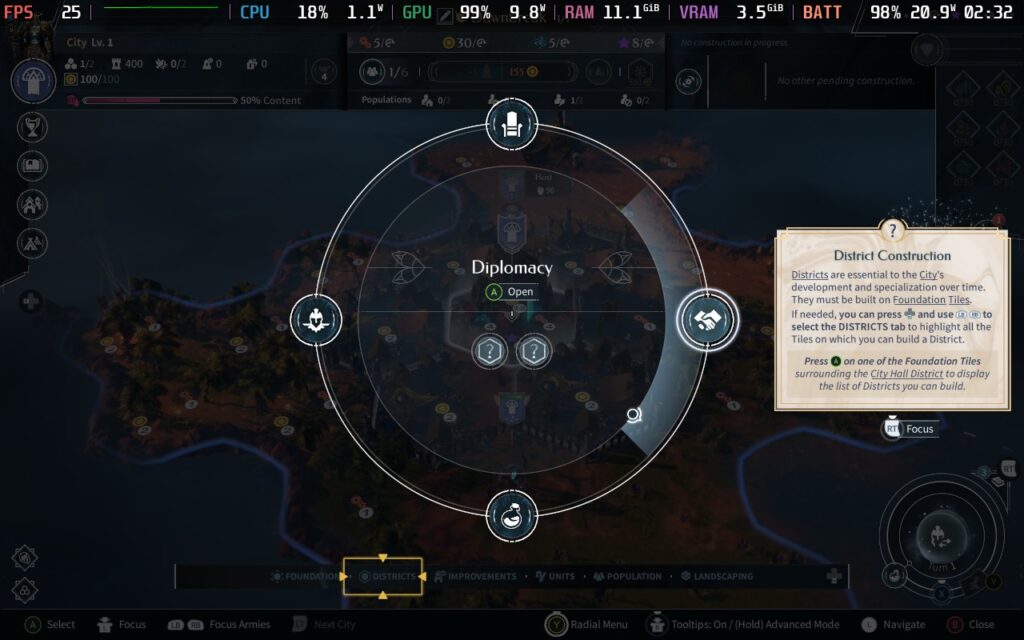
しかし、パフォーマンスはまた別の話だ。ゲームが始まるとすぐに25FPSのロックに見舞われるが、それは帝国を築き、マップの視界を広げる前の話だ。また、私の帝国が144ターン目に記念碑的に拡大したゲームにロードすると、さらに低下する。ズームインでは20FPS前後、ズームアウトでは16~18FPSだった。これはちょっと残酷すぎるし、デッキでのプレイをより難しくしている。
ビデオ設定を弄ろうとしたとき、そこに何もないことに気づいた。そこで、SteamDeck=0 %command%起動オプションを使って、もしかしたらSteam Deck専用ビルドで非表示になっているのかもしれないと調べてみたところ、表示された。このことから、Amplitudeは間違いなくSteam Deck専用のビルドを作っていて、ビデオオプションをロックオフしているのだろうということがわかった。しかし、非Deckビルドの最低画質設定では、144ターン目のセーブでズームアウトして30FPSを得るなど、はるかによく動いた。ただし、ゲームパッドのサポートは実装されていないので、キーボードとマウスを使う必要がある。
どちらを選ぶかは難しかった。ゲームパッドに対応しているのは超いいことだが、追加性能は素晴らしかった。しかし、個人的にはゲームパッド対応にした。性能は劣るかもしれないが、ビジュアルはよりきれいで、全体的にプレイも使用も快適だった。また、文字サイズとUIがデッキの画面にうまく同調していると感じ、これを避けては動けなかった。
このゲームには、字幕の切り替え、色の変更、フォントサイズの変更、左クリックによる移動の順番の変更、ゲーム全体の配色の変更など、いくつかのアクセシビリティ設定があります。また、チュートリアル、バトルフォーカス、オートセーブの最大回数と頻度、パン速度、ボリュームバー、言語やサイズなどのUIを変更するゲームプレイ設定もあります。
ゲームは16:10の解像度をサポートし、クラウドセーブとコントローラーもサポートしている。HDR設定はない。
エンドレスレジェンド2は、私が最も好きな4Xゲームの続編として期待していた通りの作品になった。RPG風のクエストや装備など、前作の良いところを取り入れつつ、4Xの特徴を全体的にスリム化している。タイドフォール・イベントを取り入れたことで、新しい土地を見つけるのがエキサイティングになり、資源がより自然な流れで新たな道が開ける。派閥のカスタマイズやマルチプレイヤーといった重要な機能がいくつか欠けているが、早期アクセスゲームであるため、彼らがそれに取り組んでいるとして、私は失望を保留するつもりだ。
エンドレス・レジェンド2』のSteamデッキでの見た目と操作感の良さには衝撃を受けたし、アンプリチュードは外出先でもプレイできるように取り組んでいるようだ。これは嬉しい。パフォーマンスには若干の工夫が必要だし、ビデオ設定も弄れるようにしてほしかったが、コントローラーのサポートがしっかりしていることには大喜びだ。今のところ、これをデッキでプレイするのは待ったほうがいいかもしれないが、他にプレイする方法がないのであれば、それでも十分に楽しめるだろう。
とはいえ、4XゲームやRPGが好きなら、これは素晴らしい体験だ。アーリーアクセスを通じてどのように発展していくのか楽しみだ。
このレビューはPC版に基づいています。
このレビューをお楽しみいただけたなら、SteamDeckHQ の他のコンテンツもぜひご覧ください!あなたのゲーム体験に役立つゲームレビューやニュースを幅広く取り揃えています。ニュース、ヒントやチュートリアル、ゲーム設定やレビューをお探しの方も、最新のトレンドを知りたい方も、ぜひご利用ください。