Demonschool was provided by Ysbryd Games for review. Thankyou!
Demonschool is a game that completely slipped under my radar. I played the demo during Steam Next Fest a while back and enjoyed myself, but with so many games out, I lost track of it. This incredibly stylish tactical RPG was originally going to launch on September 3, which would have been incredibly unfortunate given that Hollow Knight Silksong came out September 4! Fortunately, the game has been pushed back to November 19, giving myself even more time to play and enjoy it. In general, Demonschool oozes character and has fantastic gameplay to complement it. To add that icing on the cake, it is also nearly perfect on the Steam Deck.
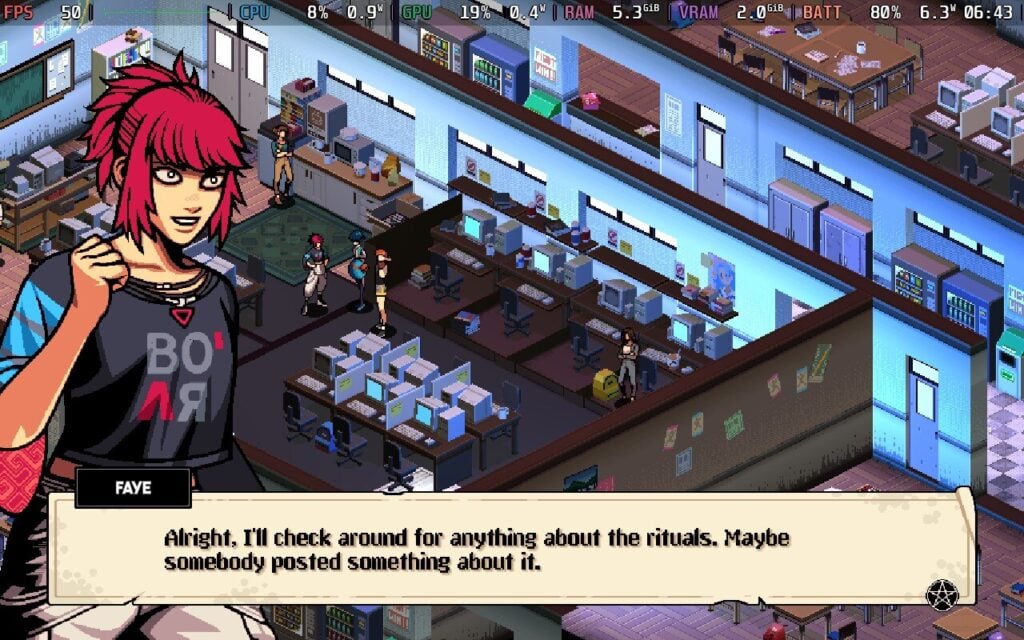
Developed by Necrosoft Games, Demonschool takes on a tasty blend of visual novel and turn-based RPG gameplay, and the premise is fascinating. The game takes place on a university campus teeming with strange things, occult horrors, and a group of bizarre gangsters determined to ruin everyone’s day. Make note of the occult horror part, because an apocalypse is coming, and it is your job to stop it!
Players take on the central role of Faye, a demon-obsessed new student who instantly makes her presence felt on everyone around her. I must commend the developers at Necrosoft Games for the way they have developed the cast. Faye might be one of my favorite characters I’ve played as this year. She is hilarious, without the horrible Marvelization that has plagued the media, always willing to get into a fight, and proactive throughout the story. All this combines nicely, and it has been a refreshing experience.
From the beginning, when on the ship to the university, Faye had me cackling at her attempts to socialize with people who thought she was an oddball, and starting a fight within seconds of arriving. That sounds like a usual first day on campus. She gathers a group of fellow misfits who might find her weird, but her sheer enthusiasm and the growing threat bring them together. The other characters are great too. Destin is as obsessed with fighting as Faye, while Namako and Krute are quieter individuals. As the story progresses, you get to know them all, and the writing is solid all around.
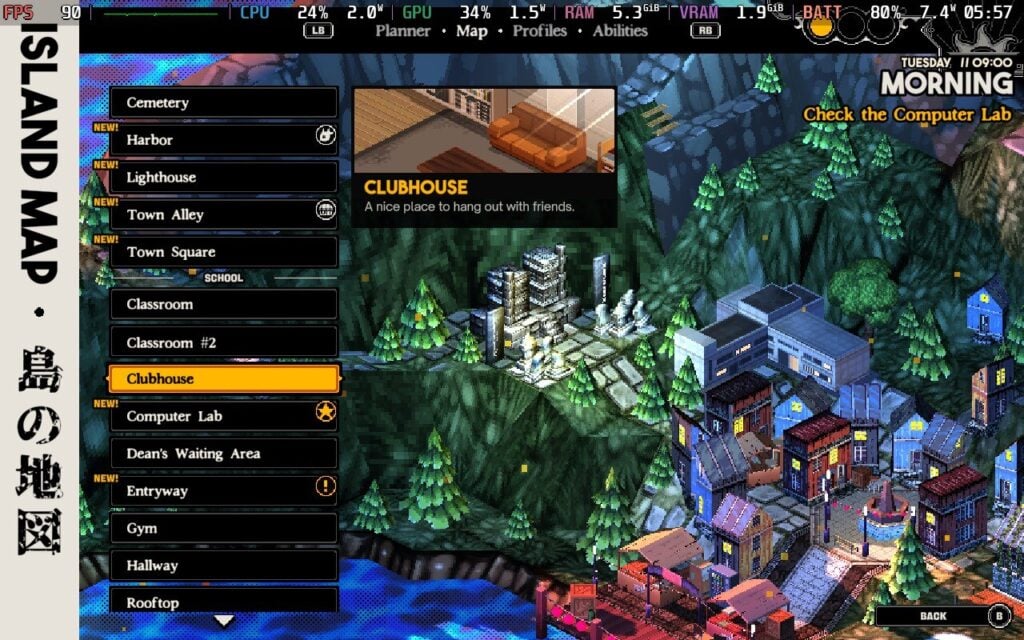
Between missions, you get to explore the hub map that has plenty of locations to rummage around, and while I wish the world had more things to do, it is a great way to showcase Demonschool’s visual design. Everything feels like a stylized Saturday morning cartoon, with the vibrant parts of the campus and people going about their daily lives. The map layout and day/night cycle remind me of the Persona series, although Demonschool handles time management much better.
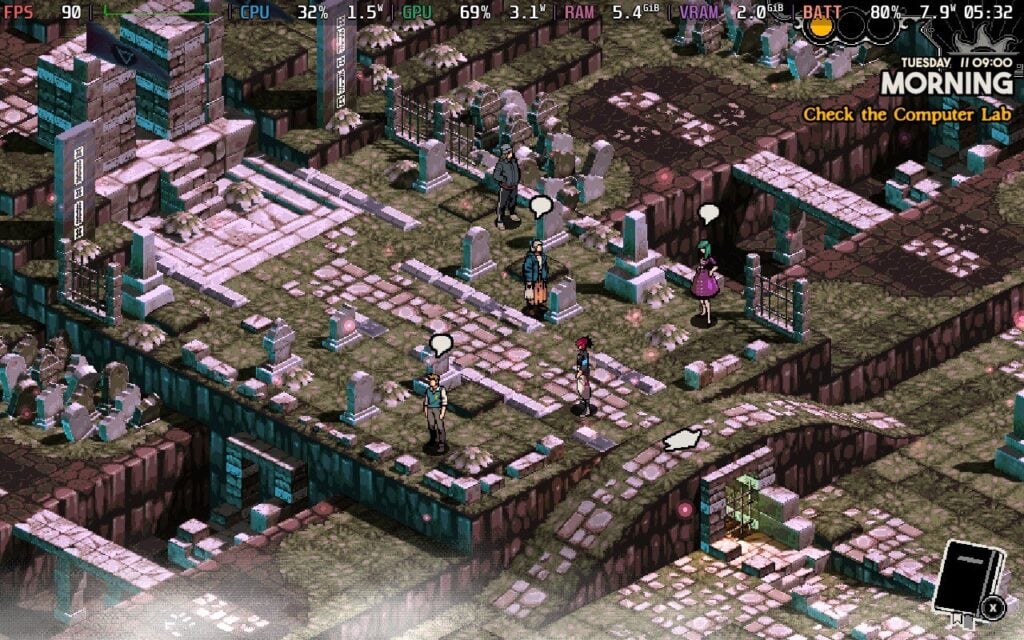
While the world is static, there are still some fun secrets to find. The entire island has a deeply sinister vibe going on with students going missing, local gangs and police working together, and the constant threat of prison hanging over people’s heads. It is a fantastic atmosphere, made even better by the great music. I did find the exploration lacking in some areas, as the spaces are pretty small, but it doesn’t detract from my overall experience. There are even some nice minigames to get involved with.
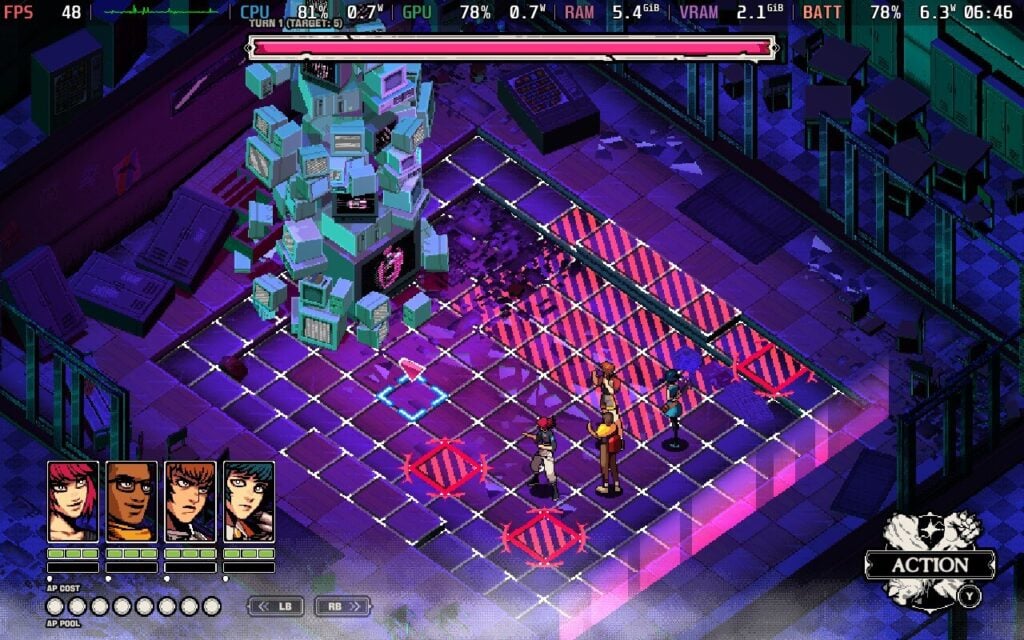
The big draw to Demonschool is the combat. The core of the combat system is simple. Do not let your team die, and do not let demons break the barrier guarding the passage into the real world. You’ll usually have to kill a certain number of enemies to seal the boundary that the demons are using to invade. You get a team of four pretty quickly in the game, and their abilities complement each other well. Faye and Dustin are the heavy hitters of the gang, while Namako and Krute offer support with debuffing enemies, healing your team, and powering their attacks. Even though the latter two can’t damage enemies directly, you can combine attacks with other teammates for additional damage.
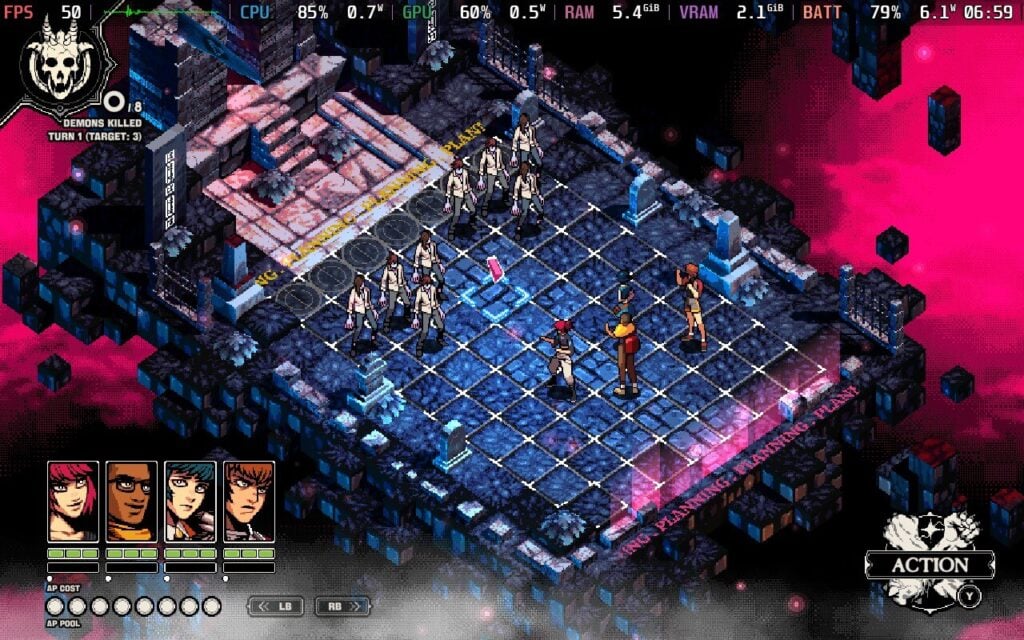
The turn-based combat reminds me of Tactical Breach Wizards with the free turn rewinds, and you can research a bunch of additional tools that add buffs for the characters. The combat is simple, but the extra toolbox provides enough depth to keep things interesting. The enemies have some nice variety, and the boss battles are also creative.
Although the combat is enjoyable, I did encounter some bugs. This was something I was aware of from my prerelease guide, but it was still a little annoying nonetheless. A couple of times, the game forced me to reload a save without any indication of why. Once the game froze after I finished a battle, I had to perform a hard reboot on my Steam Deck. During long conversations and combat sequences you cannot save, so it got frustrating when I had to reload a save and go through the whole dialogue chain again. The developers are working on a patch for this issue before launch, so hopefully, you will not encounter this problem.
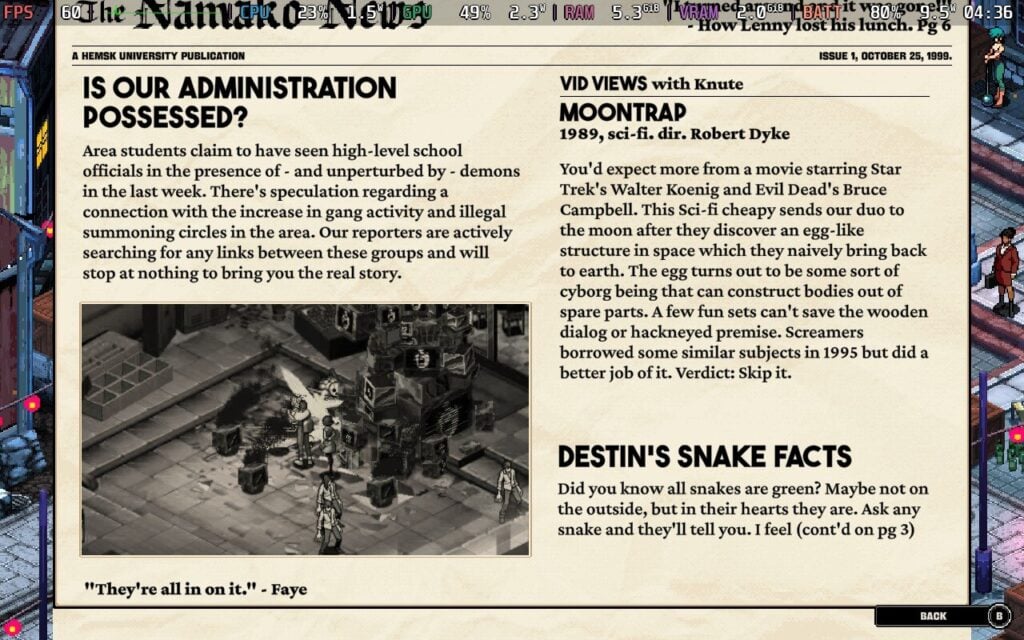
There's a lot to like about Demonschool. The production quality and atmosphere are exceptional, and the turn-based combat offers enough to set the game apart from its competitors. Combine that with excellent writing and fun characters, and we have an awesome little game on our hands!
Demonschool has already been rated Steam Deck Verified by Valve before its launch, and I would consider the badge worthwhile here. While Valve’s track record with verification can be patchy, Steam Deck fans will be happy to know that Demonschool is pretty much perfect on the device.
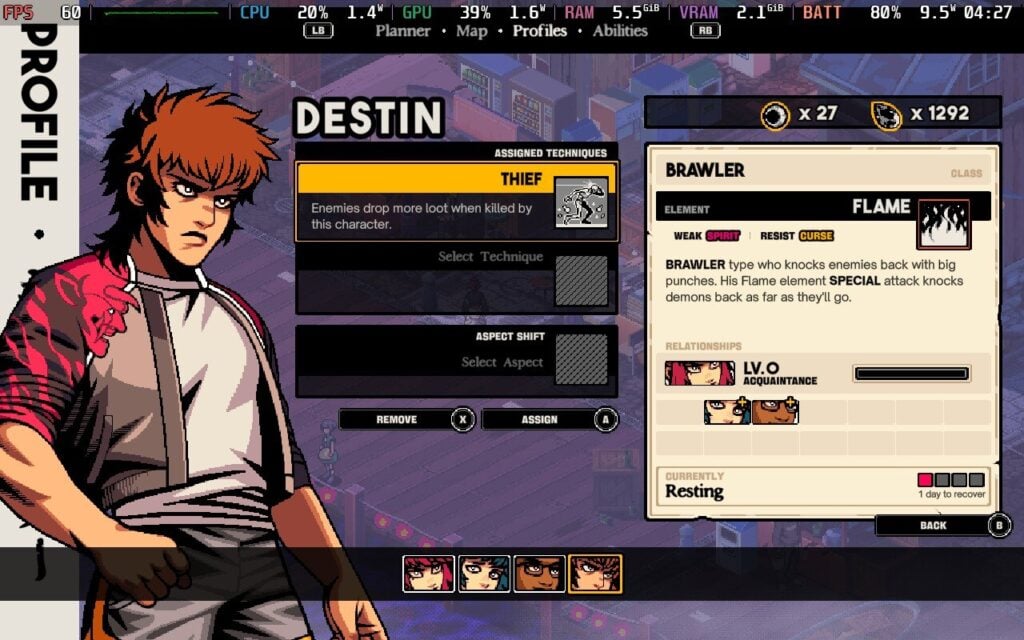
There aren’t many options for us to tweak apart from some shaders and the screen resolution, but with fully controller support available out of the box and Demonschool’s lightweight footprint, I had no problem playing the game on the Steam Deck. The game looks great with its vibrant backgrounds, and the controls feel snappy and responsive. Some of the text size may be a little small in some instances, but none of this felt like an issue for me. Besides the pre-launch bugs I encountered, the experience on the Steam Deck has been positive.
The game is very light on the Steam Deck as well, and even with a full TDP and 60 FPS, you aren’t going to wreck the battery with this game. I saw a power draw of just 11 watts in the worst-case scenario, translating to nearly 5 hours of battery life on the Steam Deck OLED. The game also scales very well on low TDP, and I found that you can almost double the battery life by locking the game to 30 FPS and setting the TDP to 4 watts. For the smoothest experience, however, I recommend just keeping things on stock settings.
Demonschool is currently available in English, Japanese, Simplified Chinese, French, and Spanish (Latin America).
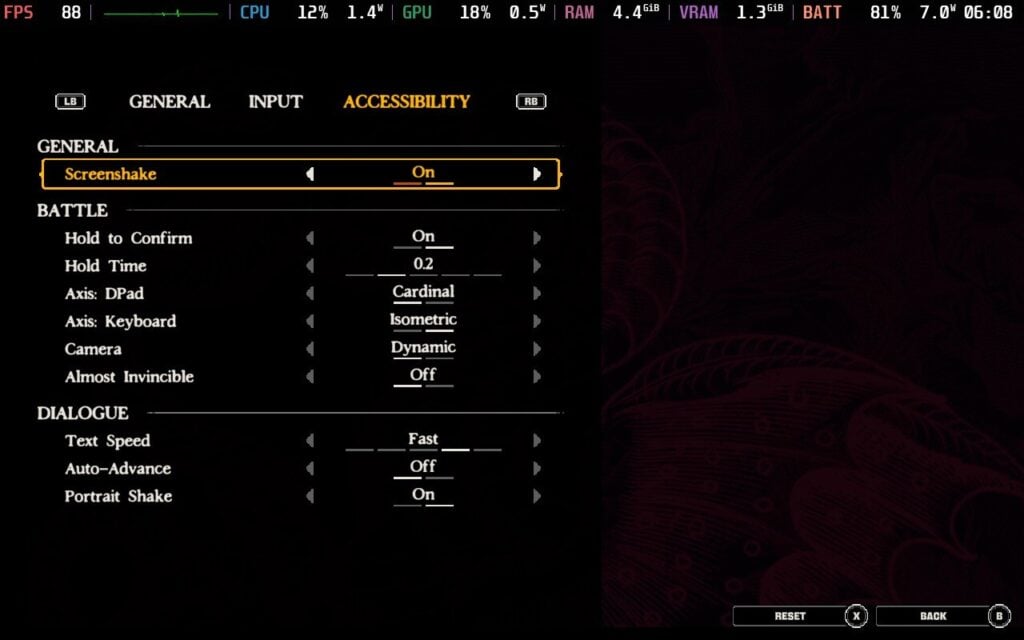
The game offers numerous accessibility options. Players can toggle screenshake, change text speed and autoplay, adjust keyboard and gamepad axis, toggle the camera between dynamic and stationary, toggle portrait shake during combat, and there is an almost invincible gameplay toggle if you're having trouble in combat sections. Overall, this is a fairly comprehensive suite of tools, although I was unable to find a way to change the keybindings.
Demonschool has been a delight to play, and while it launched later than I would have liked, the game has been worth the wait. I wish there were more exploration in the world outside of missions, and the pre-launch bugs I encountered with the review build were a bit frustrating at times. However, the vibrant visual design, combined with solid gameplay, makes Demonschool a stylish turn-based RPG that ticks nearly all my boxes.
このレビューはPC版に基づいています。
このレビューをお楽しみいただけたなら、SteamDeckHQ の他のコンテンツもぜひご覧ください!あなたのゲーム体験に役立つゲームレビューやニュースを幅広く取り揃えています。ニュース、ヒントやチュートリアル、ゲーム設定やレビューをお探しの方も、最新のトレンドを知りたい方も、ぜひご利用ください。
Sacred 2 Remaster was provided by THQ Nordic for review. Thank you!
The Sacred series takes me back. These were an oddball trilogy of fantasy RPG titles very similar to the Diablo franchise, and the first two titles were a lot of fun to play back in the day. We do not talk about Sacred 3’s release in 2014. That is a game, I think, we are better off scrubbing from our memory. The first two games are enjoyable enough romps that favored style over substance, packing big open worlds to explore, some humorous dialogue, and simple combat systems. While they never struck any emotional chords with me, they were enjoyable enough games in a junk food way.
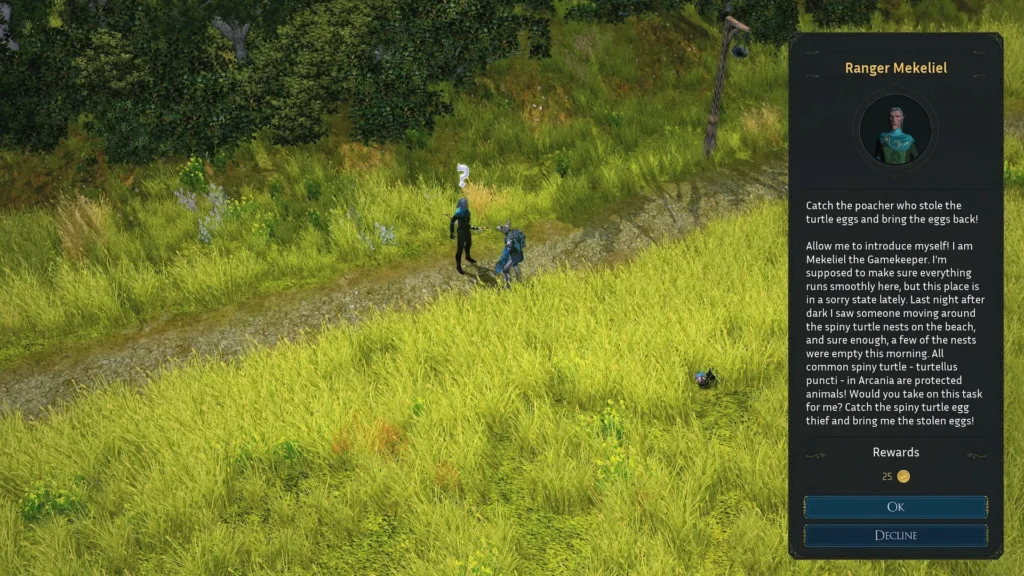
Sacred 2 Remaster is the first revival of the series, so to speak, with THQ Nordic and Sparklingbit behind this one. While the remaster is undoubtedly welcome, it made me wonder why they started with the second game in the series. Why not the first? While a bizarre choice, it was interesting to see how things shape up with this refresh. Ultimately, while I found Sacred 2 Remaster a mixed bag, it's still a welcome return for the series to the 2020s. However, since I haven’t played the Sacred series in so long, please consider this review as a fresh look at the game rather than a comparison.
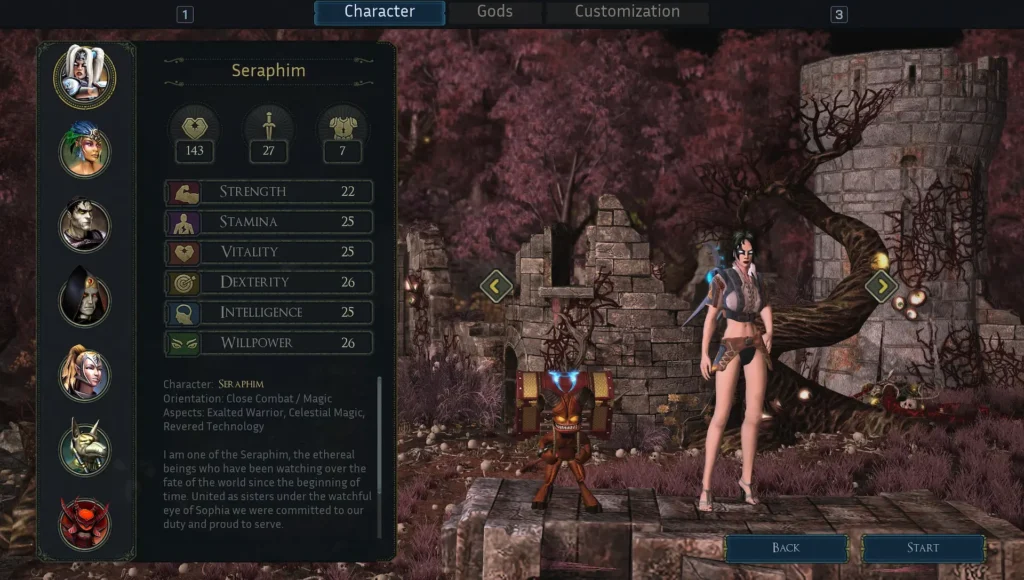
Sacred 2 offers numerous ways to customize your character, and the remaster is designed to bring it into the modern age. Full controller support, a plethora of accessibility and graphical options, and all the original content are the focus of the remaster, along with a slight visual uplift.
It isn’t a massive remaster when all things are said and done, not on the level of games like Age of Mythology: Retold, anyway. The visuals are nice, although I wouldn’t expect a significant upgrade. It’s more of an evolution into the 2010s era, but the environments are nicely detailed, and I love some of the sound design. Listening to the clanking of armored soldiers as they moved and the bustle of a village market helped me become immersed.
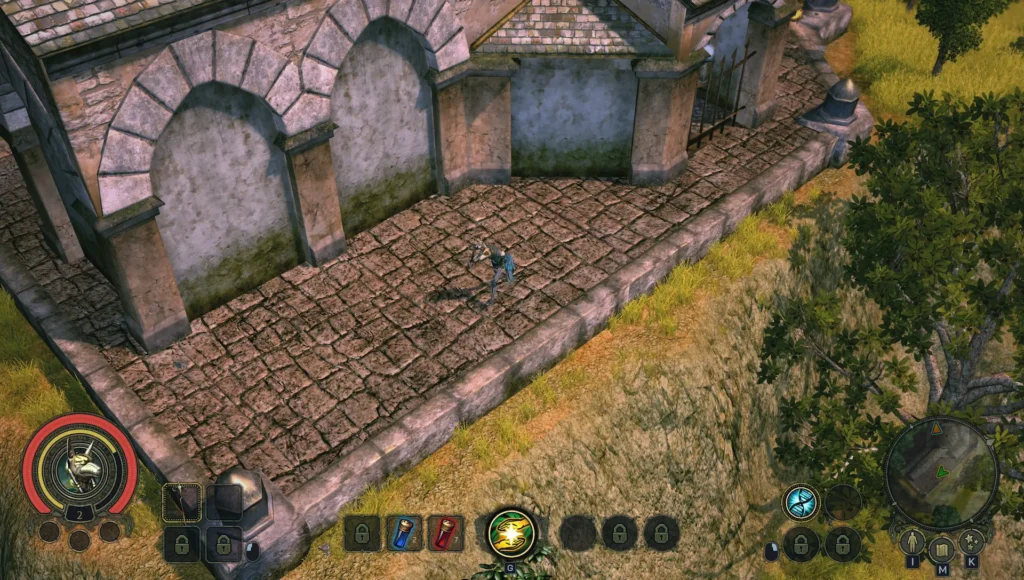
It has been many years since I played a Sacred game, so it took a while to get into things. I chose a metallic Anubis avatar as my character because I liked his sarcastic voice, favoring close combat and blasts from his energy gun. Things took some time to get used to because the mouse was particularly sensitive when using that function for navigation. I started my playthrough at the computer while waiting for it to install on the Deck.
You have to be very specific about what you click on, and I had a habit of accidentally clicking on something just outside an enemy’s hitbox. That got annoying very quickly when my Anubis dude ran towards a pack of bandits or wolves like a kid to a van marked ‘Free Sweets’. Enemies hit pretty hard even without this critical failure of my character to attack enemies back, so I died four times in the first twenty minutes of gameplay.
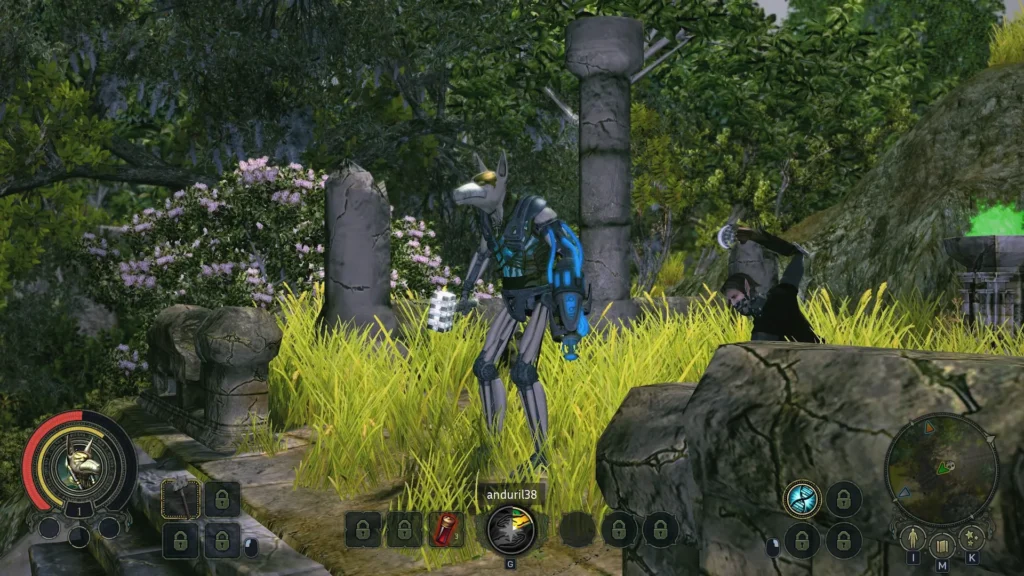
It is a better experience with the new controller support, which is good news for us handheld fans, and I was soon able to get into the swing of things. At its heart, Sacred 2 Remaster plays like a loot and upgrade action RPG. Locations offer quests and NPCS to interact with, with a ton of skills and items to kit out characters. I wouldn’t call much of the story or writing particularly compelling by any stretch, but there’s a certain charm to it, and some parts made me laugh. One of the funniest moments was when I paused the game, only to have my own Sacred embodiment insulting me for not giving it commands.
Sacred 2 is a treasure trove of slapstick moments, with voice acting that leans heavily into the comedic side. It's a rare treat to find an RPG that places as much emphasis on humor as the Sacred series does, and Sacred 2 doesn't disappoint. The game doesn’t take itself too seriously, and it's this charm that keeps you coming back for more.
The remaster includes some nice quality-of-life features, but my favorite addition is the auto-loot option. Being able to press a button and collect all items around you without fiddling with irritating mouse clicks is a godsend. The interface also looks great, with all the necessary information easily accessible and visually appealing.
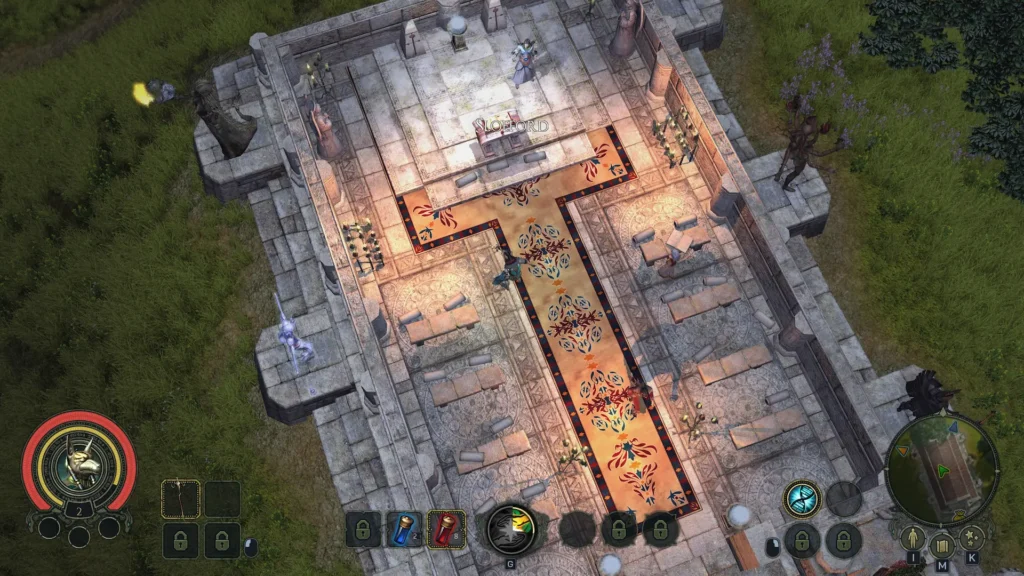
That does lead me to my current feelings on the game, and that is, who is this game for? It’s a strange time to release a remaster of a Sacred match, and the second one in the trilogy at that. Then again, with games frequently receiving remasters and remakes, I am not terribly surprised we got one either. I have had plenty of fun despite having some gripes. The fixed camera became irritating, especially when entering buildings, and NPCs have a habit of walking into walls or standing still, so the AI could probably use a little polish.

Baffling choices aside, this is still Sacred 2 at its core, with a fresh coat of paint. While I encountered a few bugs here and there, this remaster is a solid way to experience Sacred 2 in the modern era.
Sacred 2 gets the basics right on the Steam Deck. It supports controllers well, and it also supports the Steam Deck's native 1280x800 resolution, allowing us to avoid any black borders.
When it comes to performance, it's unfortunately a bit mixed. The GPU handles the game well, so we can run with high graphical settings, which the game defaults to (basically all percentages set to 100%), and it looks nice. However, the Sacred 2 Remaster is pretty heavily dependent on single-thread CPU performance, which isn't the Steam Deck's strong suit.
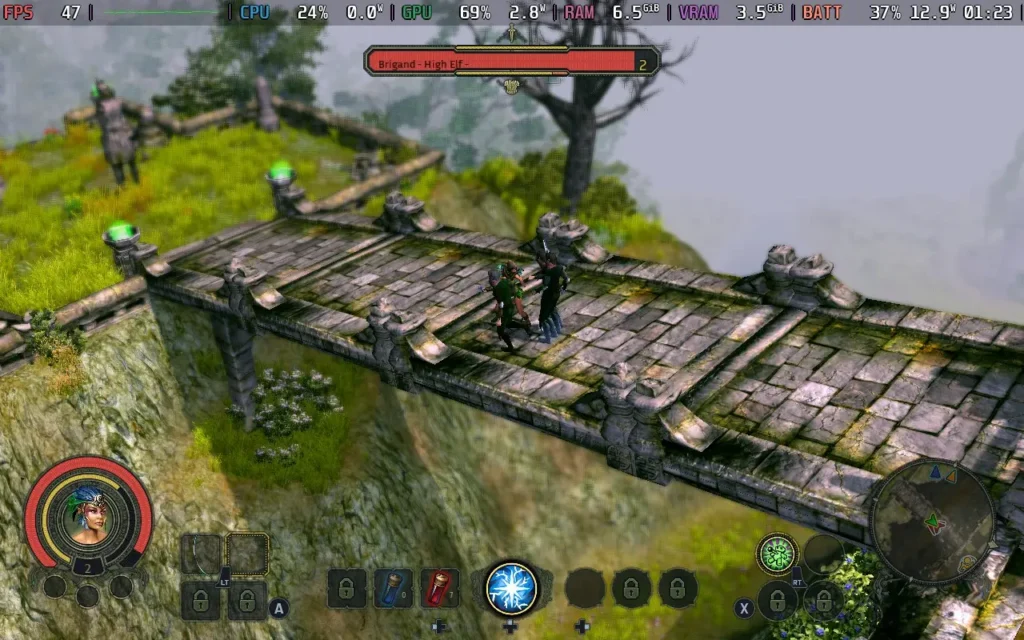
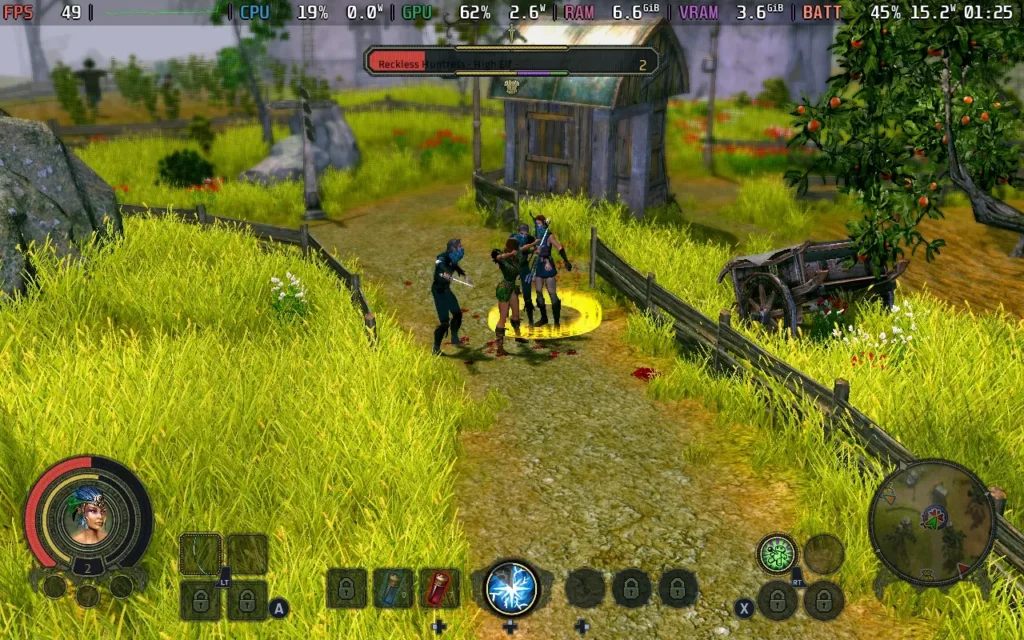
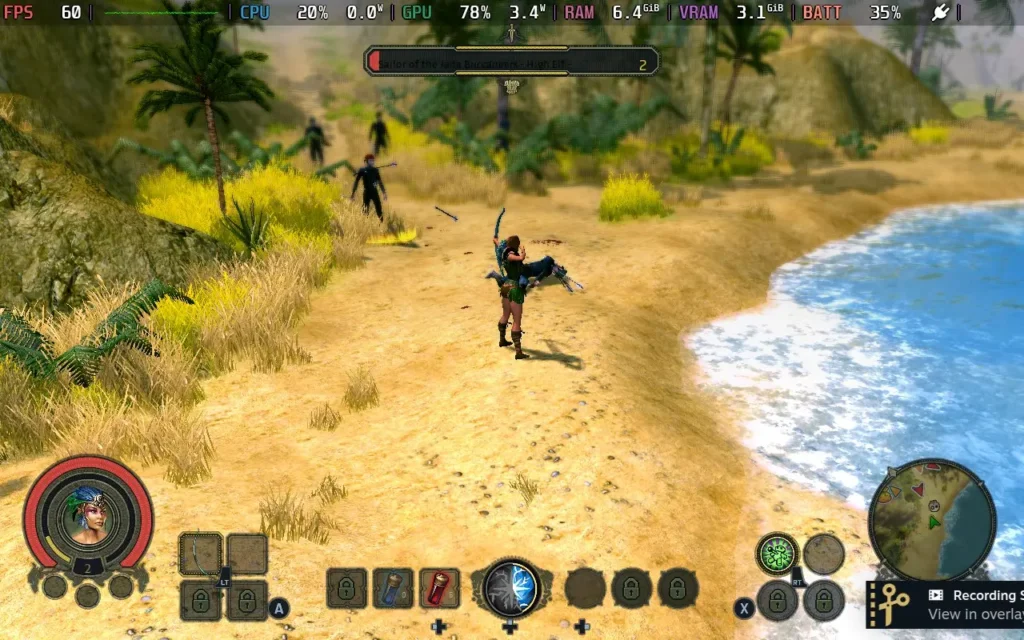
As a result, the game's frame rate can fluctuate significantly between 30 and 60 FPS, particularly when the player character is in motion. I would recommend locking the frame rate to 40 FPS, as that keeps the frame rate locked 90% of the time. However, if drops like these bother you, you'll need to lock it to 30 FPS, I'm afraid.
Power draw is around 13-16W, but can spike on occasion. Expect a battery life of approximately 3.5 hours on a Steam Deck OLED and around 2.5 hours on a Steam Deck LCD.
Sacred 2 Remaster is available in English, French, Italian, German, and Spanish.
Overall, a wide selection of accessibility functions is available. Players can adjust the zoom level and angle, toggle shadows, and freely adjust gamma levels, vignette, and chromatic aberration. Additionally, blur can be toggled. On the gameplay side, all quality-of-life features, including auto-loot, auto-equip, gore, auto-cast, and damage details, can be toggled on or off at will.
Although the game offers numerous options, it lacks some essential features, including Vsync, colorblind support, and UI scaling. You also cannot turn on subtitles for miscellaneous NPC dialogue, although this is a minor nitpick if anything else.
While there are a few missteps in this version, Sacred 2 Remaster is a solid re-imagining of the old classic RPG. The extra gameplay additions and interface overhauls are welcome, and the game still carries the same charm it had from the originals. Provided the folks at Sparklingbit and THQ Nordic work on smoothing out some of the rough edges from this remaster, there should be enough success to consider a return to the one that started it all.
このレビューはPC版に基づいています。
このレビューをお楽しみいただけたなら、SteamDeckHQ の他のコンテンツもぜひご覧ください!あなたのゲーム体験に役立つゲームレビューやニュースを幅広く取り揃えています。ニュース、ヒントやチュートリアル、ゲーム設定やレビューをお探しの方も、最新のトレンドを知りたい方も、ぜひご利用ください。
Absolum was provided by Dotemu for review. Thank you!
Absolum brought me back to childhood, when I played Streets of Rage on the Sega Megadrive when I should have been asleep. Sure, this is a fantasy setting, but the vibes were there from the second I started the game. Developed by Guard Crush Games, Absolum blends the classic beat-em-up gameplay from the olden days with the roguelike indie structure that’s so common in the new age, and the result was something more refreshing than I expected.
Despite my childhood, I never really got into the beat-em-up genre. I moved towards strategy games such as Age of Empires, Empire Earth, and the Total War series. Despite this, Absolum caught my interest as soon as it was announced. The fast-paced gameplay and a fascinating world drew my attention, and Absolum came out of the gates swinging. There is a lot to like with this title, and it is also an excellent experience on the Steam Deck.
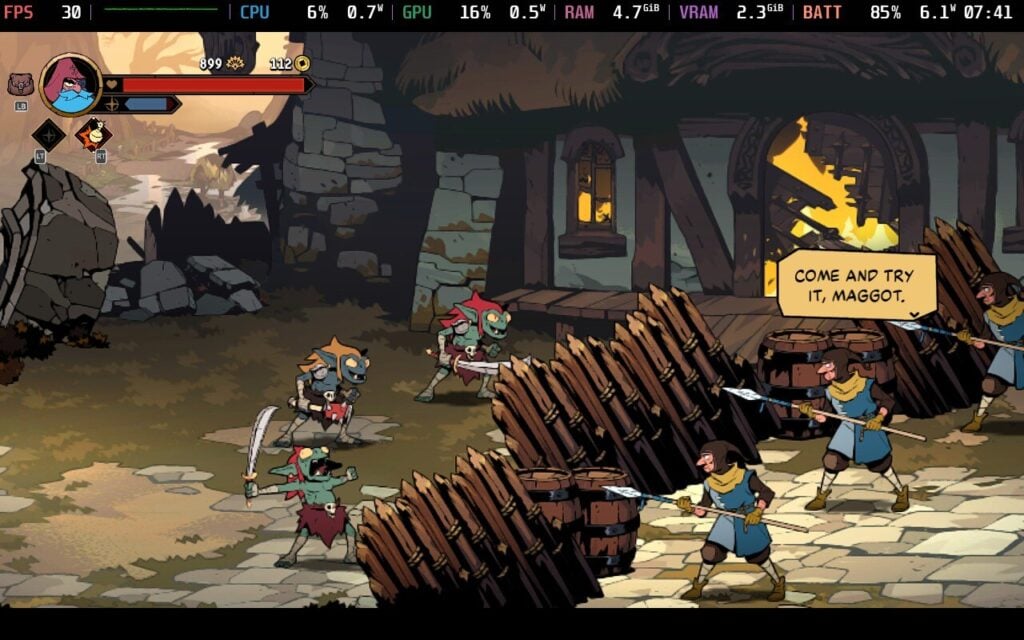
I did run into some weird freezes before the launch, which is why my review is delayed (apologies!). A pre-launch patch fixed the problem. Phew!
Absolum’s visual and narrative presentation hits you from the moment the game begins, and while the story beats don’t do anything unique, the characters and setting more than make up for that. The world of Talmah was shattered by wizards, triggering a magical collapse that enabled the tyrant king Azra to seize power and enslave magical people through his powerful Crimson Order. Pushed to the edge of extinction, the priestess Uchawi recruits a small force of rebels to fight against the regime, hoping to bring magic back to the world. The voice acting is excellent, and I appreciate all the characters' authenticity. Azra might feel like a typical fantasy dark lord, but I liked his portrayal.

Onto the visuals themselves, the battlefields and locations look fantastic. During your journey across Tamlah in the fight against Azra, the graphics show a vibrant range of biomes. Dense forests break out into fights over babbling brooks, and I intervene in battles between goblins and the Crimson Order in ruined settlements. Possessed and broken dwarves haunt the remnants of their undergrown kingdoms, and so on. I even enjoyed the background detail, which shows how much attention has been put into worldbuilding.
Absolum is one of those rare games where you can play solo or co-op without suffering any downsides. This is incredibly hard to do, especially in narrative games, because of how people tend to play multiplayer. It’s just a fact of life.
Moving on to gameplay, this is where Absolum truly shines. I wish more games had mixed beat-em-up with fantasy elements, and Guard Crush Games has done an incredible job with it. The starting two characters have various abilities and weapons that unlock over time with subsequent runs, and combat feels great. I got tons of pleasure from beating the tar out of goblins and the Crimson Order cronies with my burly dwarf. You get to unlock more warriors by encountering them as you progress, and they all bring their own twists.
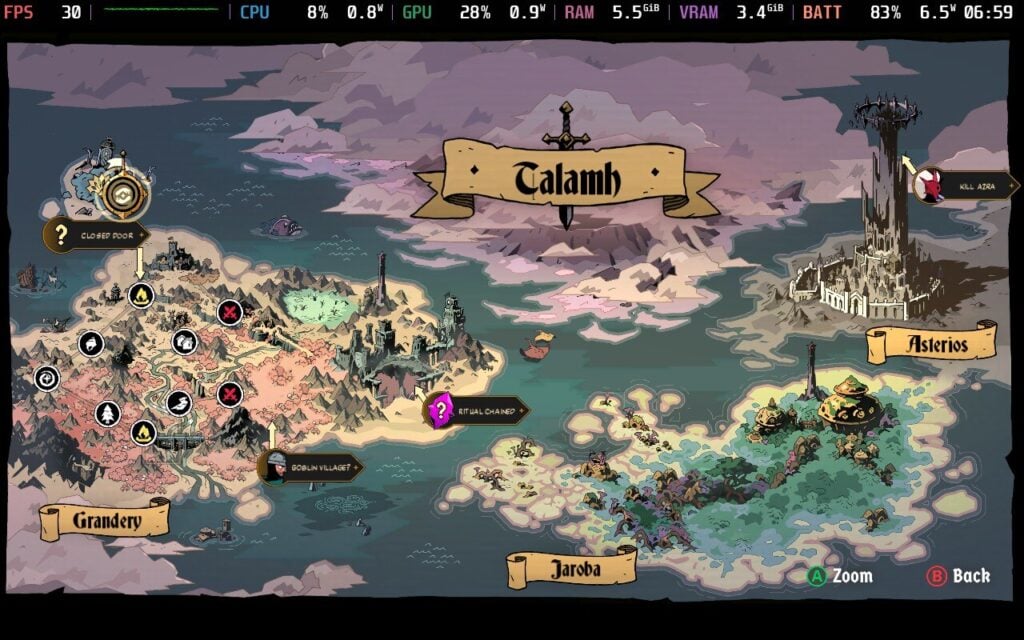
Battlefields are relatively small and linear, but they often have things that stand out. There are a bunch of destructible objects that can be broken down. Some can be weapons against foolish tyrants, while others drop extra resources. Different locations can have other characters to interact with, while others have optional areas that are only accessible with specific keys that you might pick up in various runs.
Everything looks great, and the fast-paced combat flows well, too. Few things satisfied me more than when I threw a goblin into a band of Crimson Order thugs, and the progression abilities unlocked during stages added to the appeal. The challenge is high, especially when you’re overwhelmed by enemies and during boss battles. Still, the accessibility features are stellar, offering custom difficulty sliders to change how much damage you deal and take. This superb little option adds more player choice in how they want to play.

Stylish is the word I thought of most when playing Absolum. Everything feels well-crafted with love and attention, and that shows in the visuals and animations, as well as the gameplay loop. If you enjoy roguelike games and beating the tar out of your enemies, Absolum will be a great fit.
Absolum has the Steam Deck Playable badge from Valve, and ProtonDB gives it a Platinum rating. This is well justified, as the game works really well on handhelds.
The game’s startup loading screen strongly recommends using a controller, indicating that Guard Crush Games designed it with consoles in mind. My testing confirmed that when I was testing the preview build on PC, I encountered those early crashes. While the keyboard is an option, I found the default controller option far superior.
This is good news for us on the Steam Deck, and I cannot find much to fault Absolum's performance-wise. All the controls run great out of the box. The performance is also solid, with the game running at a smooth 60 FPS with default Steam Deck settings, native resolution, and graphics set to medium. This came as a little surprise to me, but it was still lovely to see the performance problems I had pre-launch resolved.

Absolum is relatively power-efficient on the Steam Deck as things go, and despite all the animations on-screen and gorgeous visuals, this was impressive. You will see an average power draw of 12-13 watts during general gameplay without tweaks, with spikes to 15 watts during heavy combat scenes. That should get you at least 3.5 hours of battery life on the Steam Deck OLED. The only slight sore spot for Absolum's experience on the Steam Deck is the lack of font scaling. Some of the text can be small, although I did not have any difficulty reading anything myself.
If you’re like me and fanatical about battery life (it’s like an illness for me, seriously), Absolum scales pretty well with the power efficiency of the Steam Deck. If you’re willing to compromise on frame rate and a little bit of visuals, you can almost double the battery life. I found a 4 Watt TDP limit, Graphics on low, and a 30FPS framerate cap provided the best balance with an average power draw of 7-8 watts. Absolum still looks great even with low graphics settings, especially on the OLED.
Absolum is available in English, French, Italian, German, Spanish (Spain), Japanese, Korean, Portuguese (Brazil), Russian, Simplified Chinese, Traditional Chinese, and Ukrainian.

Absolum comes with a nice array of accessibility features, including Vsync, colorblind modes, motion blur toggles, and an expanded difficulty modifier that lets the player adjust damage dealt to themselves or enemies in either direction. Overall, there’s a lot to like here.
Absolum is, overall, a fantastic package. I was surprised it took so long for someone to craft a beat-em-up roguelike, and Absolum has excellent production quality across the board. The combat is diverse and well-made with punchy visuals, and the worldbuilding is better than it has any right to be. Hades, of course, has set the bar for what rogue-like games can do with narrative, and Absolum does a great job of combining all the different gameplay elements.
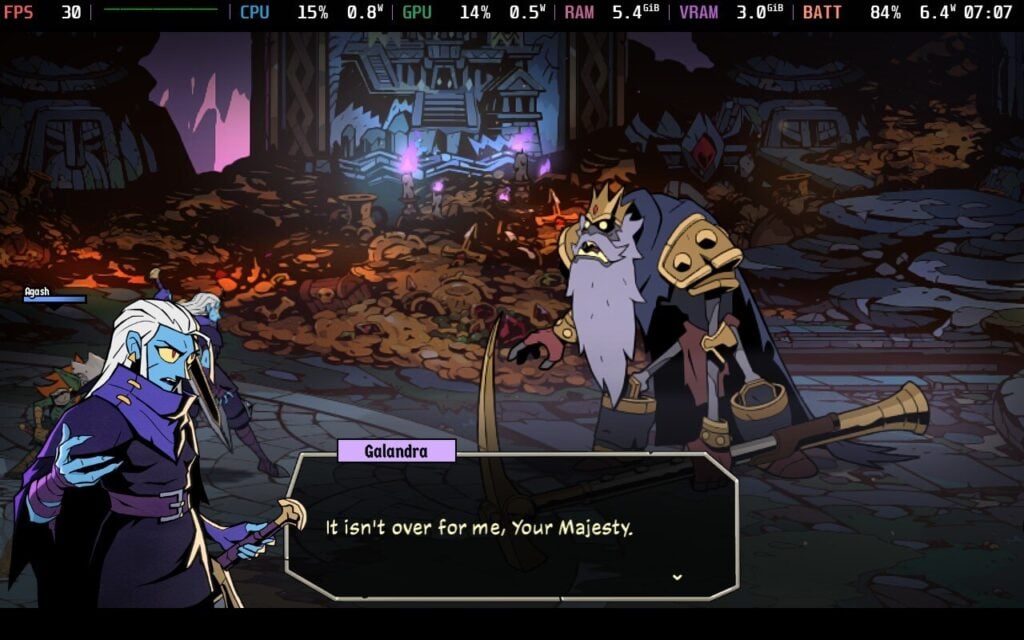
The challenge is up there, and I’d say the difficulty is on the high end, but the damage modifiers give all that control to the player. A near-perfect experience on the Steam Deck is just a juicy bonus. My only real gripe with Absolum is the poor experience without a controller, which is minor compared to everything positive about the game. I strongly recommend it!
このレビューはPC版に基づいています。
このレビューをお楽しみいただけたなら、SteamDeckHQ の他のコンテンツもぜひご覧ください!あなたのゲーム体験に役立つゲームレビューやニュースを幅広く取り揃えています。ニュース、ヒントやチュートリアル、ゲーム設定やレビューをお探しの方も、最新のトレンドを知りたい方も、ぜひご利用ください。
Dungeons & Dragons Neverwinter Nights 2: Enhanced Edition was provided by Aspyr Media for review. Thank you!
Neverwinter Nights is an old D&D classic. It was always a name thrown around when I was young, being touted as the best RPG, with co-op support to boot. We've had Neverwinter Nights Enhanced, now it's time for its 2006 sequel to receive its Enhanced Edition. So, does Neverwinter Nights 2 Enhanced Edition bring the game to 2025 standards?
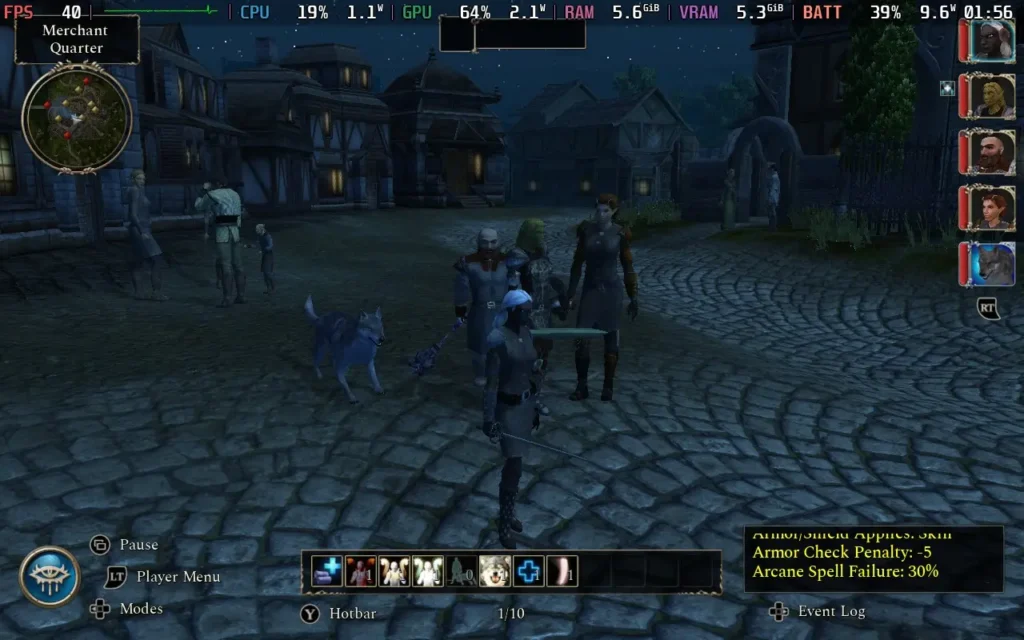
"Enhanced" is the best way to describe this version of the game. We have some mildly improved graphics, although it still does feel like a fantasy RPG from the 00s. At first glance, someone not well-versed in RPGs could mistake this for World of Warcraft Classic. We also have controller support, along with some UI changes, including a reworked UI for those playing on controller instead of keyboard and mouse.
While the visuals are slightly enhanced, many of the core gameplay elements remain untouched. This might be expected, seeing as Neverwinter Nights 2 is based on the D&D 3.5 Ruleset, so any changes to how the game plays would have to be minimal.
That being said, the gameplay is enjoyable when it works. You have many classes, skills, feats, and spells to choose from; there's no end to the builds you could develop in subsequent playthroughs. The game even has that nice CRPG depth in places, where you will get different dialogue depending on your chosen race, for example.
The storyline of the main campaign isn't anything too crazy, largely focusing on the player character being a sort of "chosen one", with intrigue being built as you play as to who your adversaries are and what they want. It's helped by the fact that the game does have a lot of voice acting, especially for a game of its time. While some dialogue is text-based, much is voiced, especially any story-related dialogue.
There are plenty of things to do beyond the main storyline, though. Almost every location you meet will have at least a couple of quests associated with it, and if you are getting tired of blazing through the story, you can easily go to the World Map and head back to previous locations and tidy up all the side quests you've picked up. Plus, there are four campaigns included in the game, besides the main storyline.
There's also no need to gradually traverse back to do quests; you can fast travel anywhere as long as you are at a fast travel point. Perhaps not realistic, but definitely appreciated by me.
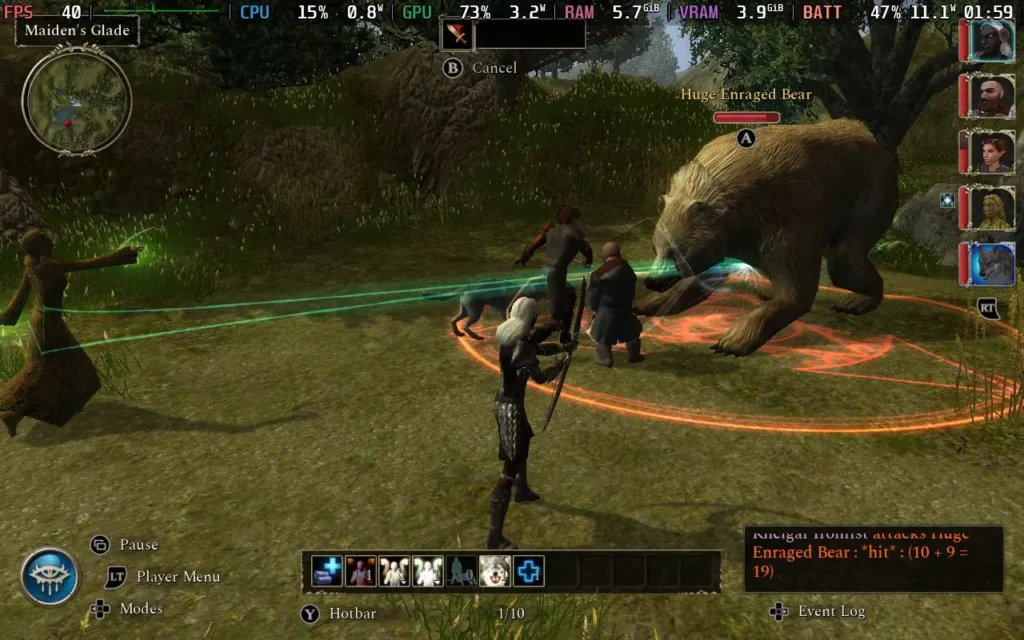
Combat can get a little frenetic, ironically enough. The game isn't turn-based, and instead uses a real-time hybrid system, a bit like the Knights of the Old Republic games. Unfortunately, I found Neverwinter Nights 2 more cumbersome than Knights of the Old Republic. Switching party members requires you to press RT and then scroll down a list to select which one, instead of a quick button press to tab to the next party member, which I feel would be faster and much more conducive to micro-management.
The amount of spells you have available can also be overwhelming, given the real-time nature of the game. You'll likely be pausing frequently during combat if you aren't familiar with the game. Going through the hotbar menus and trying to discern what each spell does (there are no detailed tooltips for your hotbar) can waste valuable time while enemies hammer your party.
The difficulty is a mixed bag, and it probably depends on the class you start with. I began with a Druid, which is usually a more difficult class due to their vulnerability, and I found the game pretty brutal. On the "Normal" difficulty setting, my party wiped several times. Enemies can easily overwhelm you, and if you're a class that isn't very "tanky", you might struggle at first until you get some better skills.
There is an "Easy" difficulty option, which weights the dice rolls in your favor, and if you are finding the game as frustrating as I was, you might want to switch to that. There are also harder difficulties if you are feeling particularly sadistic.
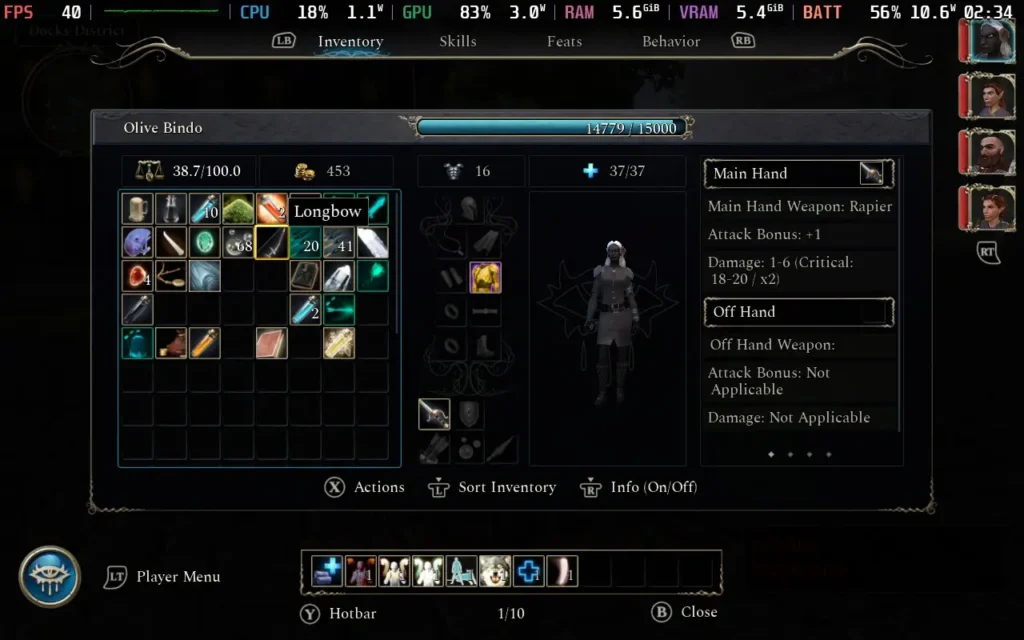
However, I noticed a couple of issues when playing. Collisions seem somewhat temperamental, walking close by certain walls or characters causes your player to sort of "glue" to them, meaning you have to back away to keep moving.
Your AI party members also seem to struggle with pathfinding. When entering a battle, your AI party members seem to aggro onto every enemy in the vicinity, even going so far as opening doors to adjacent rooms to fight new groups of enemies. This makes combat needlessly difficult, and I found myself fighting 15 enemies instead of 5 because my AI party was aggroing every enemy they could find.
Occasionally, they stood by while I was fighting and refused to engage the enemy until I manually took control and ordered them to fight. Unfortunately, these issues happen often enough that they have caused several party wipes for me and greatly impacted my enjoyment of the game.
Speaking of Party Wipes, they're pretty brutal in the game. If you do wipe, you have to restart from your last saved game, and the game only autosaves when you go between points on the world map, so you can lose an absolute ton of progress if you aren't regularly manually saving the game. It's pretty frustrating, to say the least.
Neverwinter Nights 2: Enhanced Edition runs pretty well on the Steam Deck. The controller support is great, which was my main concern, and the game does support the Steam Deck's 1280x800 resolution.
Performance-wise, it's pretty decent, too. We can't quite manage 60 FPS on the highest settings, but we can manage 40 FPS, which is fine for this kind of game. We also get all the graphical niceties, which is how I would recommend you play the game.
If you want to run at a locked 60 FPS with less power draw, you can lower Shadow Options to Medium, which removes dynamic shadows (such as on characters) but uses much less power.
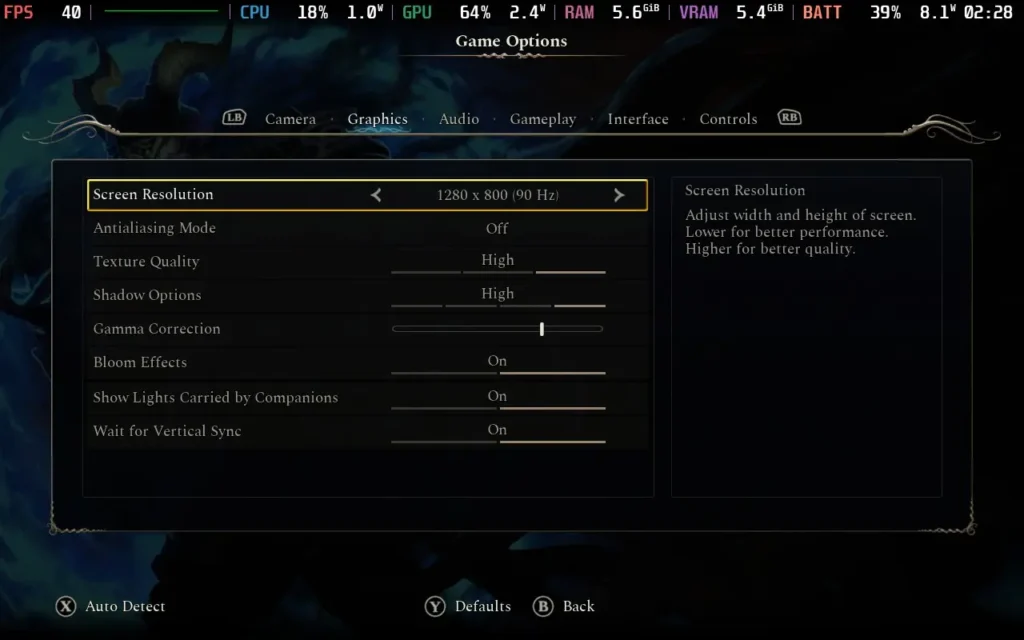
With these settings, the game stayed at a locked 40 FPS throughout most of the game, even during large battles with 15-20 participants and many particle effects. One exception is at certain times of day (sunrise and sunset) in areas with lots of grass. The High Shadow setting, which adds dynamic shadows, does cause some drops into the 30s, but it's a small portion of the game that is affected.
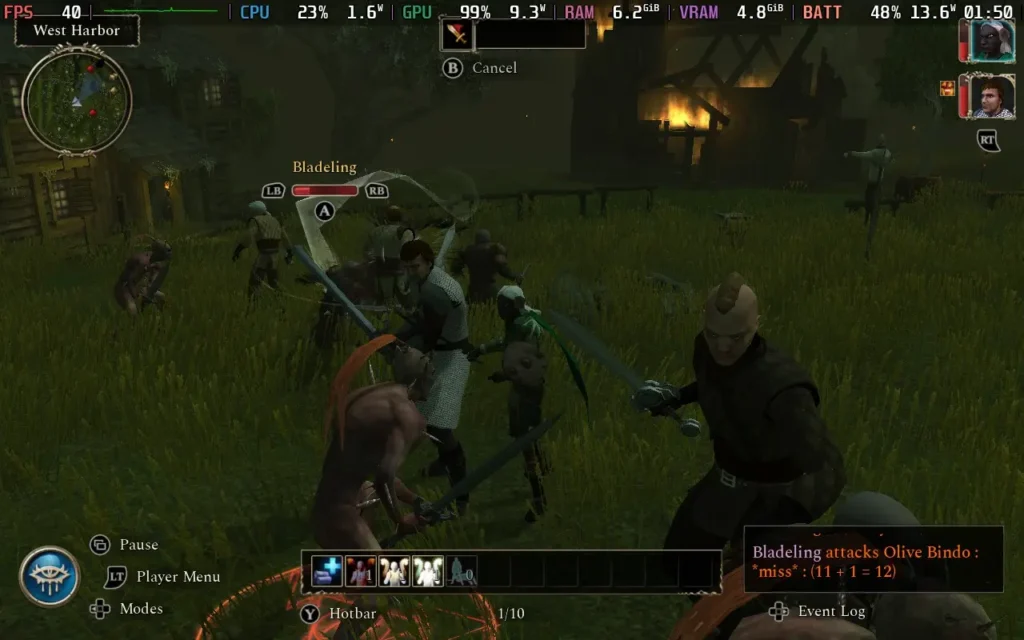
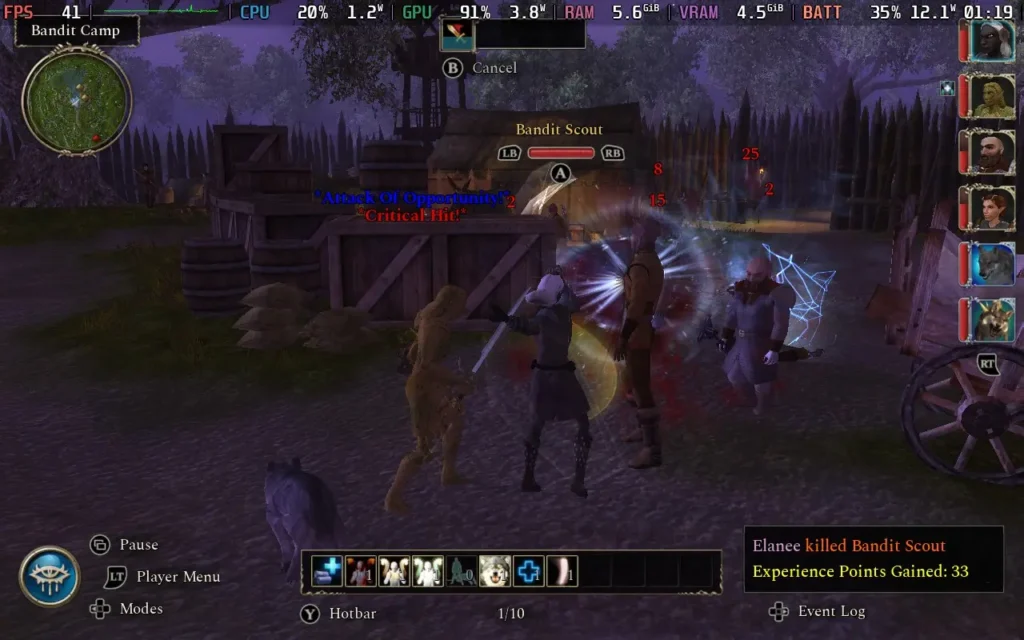
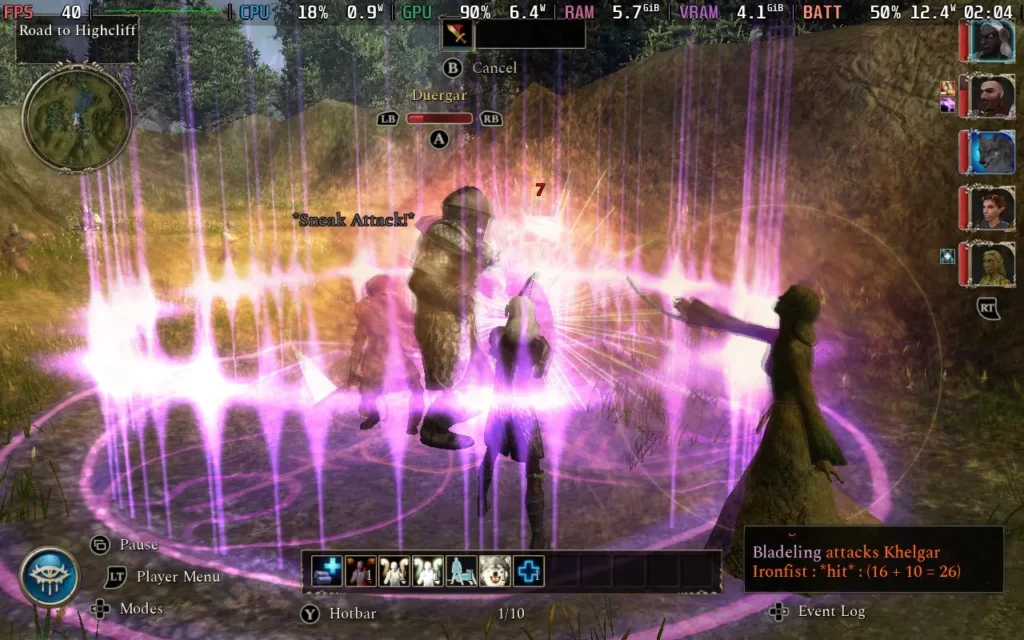
The power draw varies depending on your area and situation, but generally stays around 8-12W, with spikes up to 15 - 16W in busy exterior areas; interiors stay towards the lower end of the range. Temperatures were around 55 - 60 °C. You can expect battery life to last around 4.5 - 5 hours on the Steam Deck OLED and around 3.5 - 4 hours on the Steam Deck LCD model.
Accessibility in Neverwinter Nights 2 Enhanced Edition takes the form of difficulty options and a "Level of Violence" setting, which adjusts the amount of blood shown in combat from none at all to exaggerated. All dialogue is subtitled.
Neverwinter Nights 2 Enhanced Edition certainly improves on some aspects of the game's original version, bringing slightly improved visuals, controller support, and some reworked UI. However, some technical and quality-of-life issues with the game stand out like sore thumbs and really damaged the experience for me. Hopefully, these can be resolved with patches, but now, Neverwinter Nights 2 Enhanced Edition might best be experienced by those nostalgic for the game.
As for Steam Deck performance, it's solid. The game runs and controls well, is perfectly playable from start to finish, and has decent battery life.
このレビューはPC版に基づいています。
このレビューをお楽しみいただけたなら、SteamDeckHQ の他のコンテンツもぜひご覧ください!あなたのゲーム体験に役立つゲームレビューやニュースを幅広く取り揃えています。ニュース、ヒントやチュートリアル、ゲーム設定やレビューをお探しの方も、最新のトレンドを知りたい方も、ぜひご利用ください。
System Shock 2 Remaster was provided by Nightdive Studios for review. Thank you!
Even by today's standards, I would still consider System Shock 2 to be one of the more interesting sci-fi RPGs I have played. The story behind it still intrigues me, and I love the amount of depth and intricacy that went into its gameplay systems. It's pretty amazing to still think of this 25-year-old title as one that could compete with the greats that are being released today, but age has caught up with it, and it isn't the greatest to play. Well, the game is officially getting the Nightdive treatment, and I am so happy to have another reason to play it.

For some background, System Shock 2 was originally released in 1999 and received critical acclaim with very positive reviews. Now, the cult classic action RPG has been given the Nightdive treatment, giving a reason to dive back into it after 25 years. This new remaster includes cross-play co-op multiplayer, additional mod support, better performance with higher framerate support, achievements, optimized controller support, enhanced visuals, and many quality-of-life improvements.
Nightdive Studios is quite dedicated to making sure the game looks and feels like the original, while updating it, and they did a great job here. As I was playing, I was in awe of how gorgeous and detailed everything looked without it feeling like a different game. The updates they added don't take away from the soul of the experience, and that's something I am always worried about with remasters. It is System Shock 2, just with better support and visuals, and a bunch of fixes.
It was a joy to run around the Von Braun starship again, trying to figure out exactly what happened. It turns out that the rogue artificial intelligence SHODAN has taken over the spaceship, and you have to figure out how to stop her. It's an intricate story that I still find endearing and fascinating to play through, even after all of this time.

But the real joy of System Shock 2 comes from its depth and complexity. The game starts out giving you three different career paths, which give bonuses to different stats, helping build out the way you want to play. Whether you want to focus on hacking and repairing, strength and melee/gun damage, or psionic abilities, you can. Each one feels very different from each other, which offers a nice reason to go back and replay the game and see how each approach changes. You are also able to boost your base stats with Cyber Modules to increase your abilities further, as well as gain new Psi powers.
While the game is a FPS-RPG hybrid, it definitely feels closer to an RPG. The detail in how you approach each encounter and situation varies wildly depending on the decisions you make, and how you build out your character and what core attributes you want to focus on. Someone who wants to use psionic abilities, like teleportation and freezing, will tackle enemies coming at you differently than someone who wants to focus on using a gun or melee weapon.
After trying all the options, I felt the Psi (OSA path) was the most enjoyable to use. I like the variety of the powers I could wield and the care I had to take when using them. Powers that cause direct damage could be overcharged, which damages myself, so it was fun to balance attacking and sneaking by enemies to complete the objectives I needed to. I appreciate that I could also change things up with OS upgrades and Cyber Modules upgrades, so I was able to give myself some strength to increase inventory capacity.
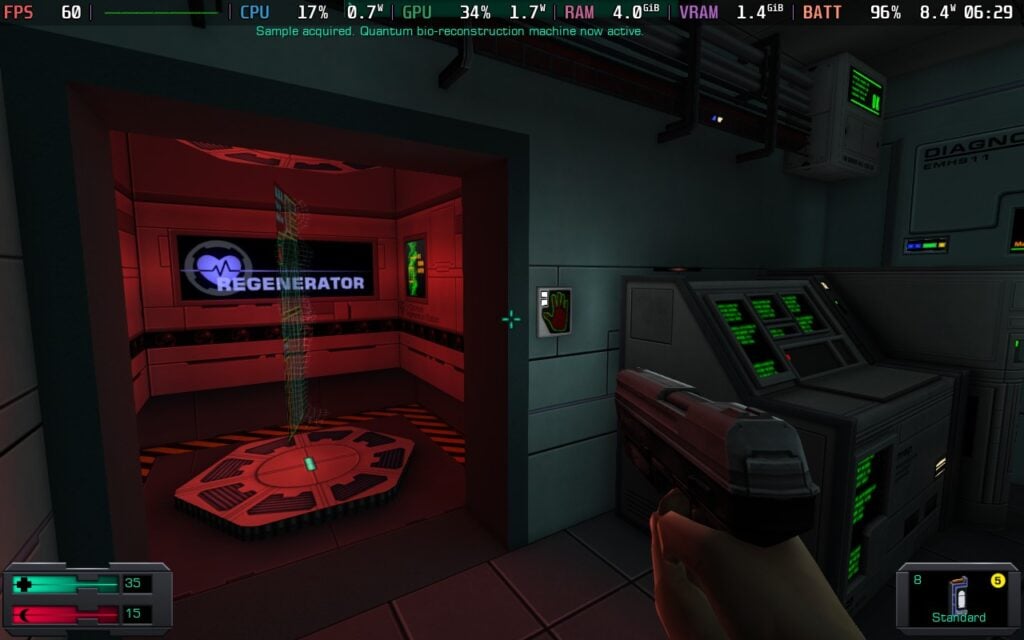
With this being an RPG focus, I wasn't as much of a fan of melee/gun combat. Using weapons directly just felt sluggish, and shooting guns felt rudimentary. I disliked having to use them, and it made me miss the more modern enhancements of this type of combat. Still, I would say this somewhat adds to the charm of this timeless classic, but I wouldn't choose to go this route.
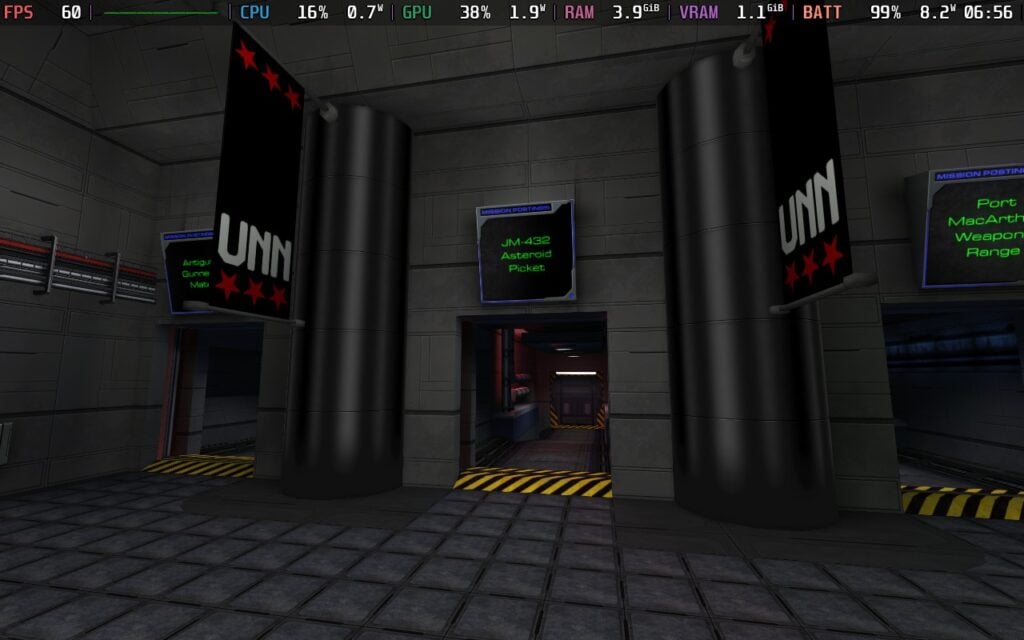
There's also something to be said about the level design for System Shock 2. It definitely feels dated, but it is still engaging and rewarding to explore. Finding hidden items or a recharge station around the corners is exciting, and it makes me want to explore the creepy corridors of the spaceship. I enjoyed taking my time and scoping out the hallways and rooms, seeing who is where and planning on how best to effectively take them down.
I also enjoy the co-op multiplayer as an option, and having mod support out of the box is going to be essential for longevity. I can't wait to see the mods that people will create and the new missions to experience. It should be significantly better than playing the original, so I am excited. It may also be a little bit jarring for newcomers, especially those who were introduced to the series from the System Shock 1 remake. However, the longer you play, the more it will make sense and stick with you.
For the most part, I am happy with the controller support. Everything is accessible with the controller, and I never felt like I couldn't access what I needed to, but it is still a bit obnoxious to utilize. Nightdive's dedication to retaining the quality and feeling of the original works against it here. Accessing my inventory and using items in it felt cumbersome and confusing, and a lot of times it took me twice as long to do what I needed to do. I appreciate a screen with the controls staying up when I am in the inventory, but it just takes too long, and there are too many steps to just equip a gun or use different items.
Having to open the inventory with Select, move over to the item, pressing Y to bring up additional actions, and hit equip just feels like too many steps, and I found myself hitting A instead, which picks up the item to move around in your inventory. I did end up getting more used to it, but it definitely took me a minute.
Still, as I said before, it adds to the charm, and I am very happy this is all very playable on the Steam Deck.
As with almost all of Nightdive Studios games, System Shock 2: 25th Anniversary Remaster's performance on the Steam Deck is near flawless. The team has shown time and time again how talented they are when it comes to optimization and how malleable the KEX Engine can be. The game doesn't struggle at all to hit 90 FPS, and can stick to it with around 13W - 14W battery drain at the maximum. For those with a Steam Deck OLED, it's great, but bringing it down to 60 FPS can keep it around a 10W drain.
This held strong throughout the game without needing to change a thing, so I would say this is a Best on Deck game! I would still recommend going to a 60 FPS cap for the increased battery life without getting rid of the smoothness, but it's the dealer's choice. Regardless of how you choose to play, it's still going to be great.

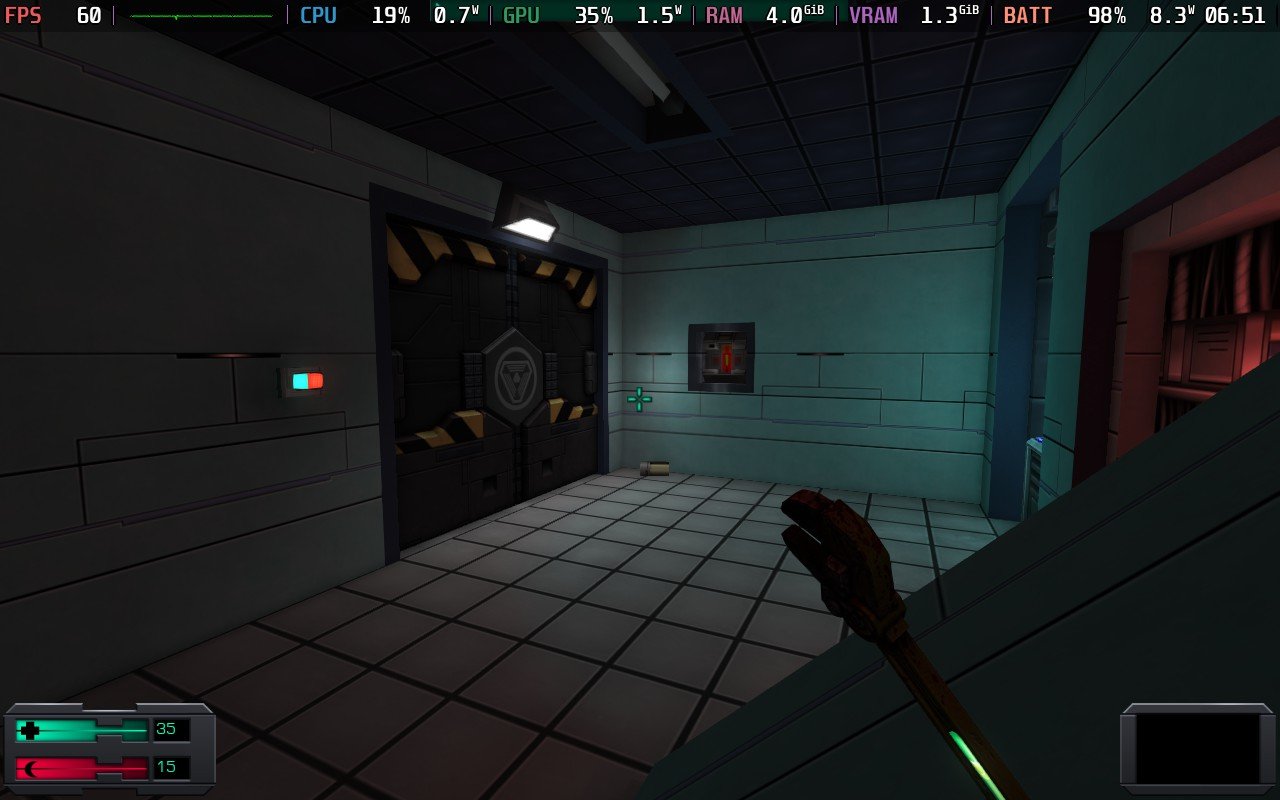

We can change the view and weapon bobbing, difficulty, keybindings, language, camera speed and inversion, sensitivity, the aim scale, and volume bars.
ゲームは16:10の解像度をサポートし、クラウドセーブとコントローラーもサポートしている。HDR設定はない。
System Shock 2: 25th Anniversary Remaster is the definitive way to experience this timeless classic. It was an amazing feeling getting back into the world of System Shock without feeling like it lost any of the charm I had fallen for from the original. The depth of the gameplay systems is wonderful, and although some of the original's faults do peek through, it doesn't change just how great it is to play with all of the improvements Nightdive has added.
On top of that, it's a joy to play on the Steam Deck. It's definitely a Best on Deck game, and I can't help but enjoy playing it on the go. This is a great portable experience, and I can't wait for mods to come out!
このレビューはPC版に基づいています。
このレビューをお楽しみいただけたなら、SteamDeckHQ の他のコンテンツもぜひご覧ください!あなたのゲーム体験に役立つゲームレビューやニュースを幅広く取り揃えています。ニュース、ヒントやチュートリアル、ゲーム設定やレビューをお探しの方も、最新のトレンドを知りたい方も、ぜひご利用ください。
Creature Keeper was provided by Graffiti Games for review. Thank you!
Creature Keeper is one of a growing number of creature collection games that live on Steam, and the comparisons to Pokémon are impossible to ignore in this genre. And how can it not? Pokémon is the biggest entertainment franchise in the world, after all. However, it differentiates itself from its rivals in a multitude of ways, like real-time combat and strong world and character building. While the experience was an enjoyable one, it was marred by some troublesome issues that should hopefully be fixed by release or soon after.
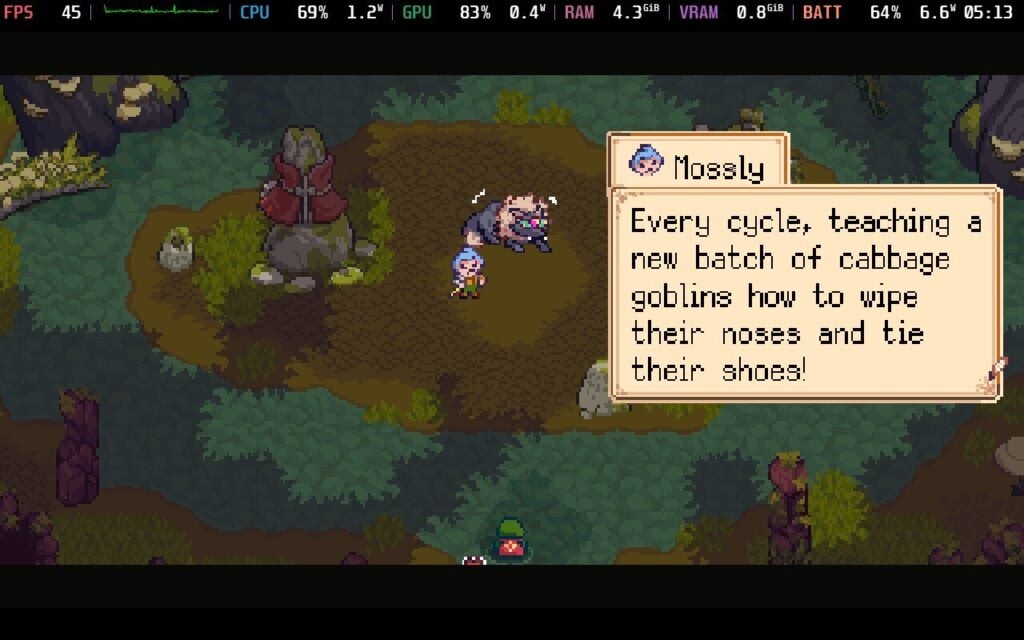
Creature Keeper does not look like much on the surface, but it has a ton of self-awareness and mockery of the fantasy formula that intrigued me. As a Keeper in the fantasy world of monsters and taming, your first day does not start well. The tutors are lazy assholes who make the recruits pick weeds and do not care whether you like that or not. The game's dialogue is generally well-written and doesn't fall into the trap of other comedies. The introduction is hilarious, but the characters don’t feel like they are trying too hard to be funny.
After the hilarious tutorial sequence in which you pick your first critter pal and learn some combat against your childhood friend (and get stung many times by wasps), you set off on your journey. A strange force corrupts monsters, and the guy tutoring you is trying to take over as the village elder. After being given a bizarre pocket universe by an old couple, the game begins in earnest. You are correct if you think Creature Keeper sounds a little bonkers, and it can be a bit challenging to keep track of, but it oozes charm.

While being ‘just pixel art,’ the visual design is striking, with exploration taking on a Metroidvania style that suits the game quite nicely. There is a wide range of creatures to collect and fight, and I was delighted to find a codex in the menu that stores all sorts of information about the creatures. There are still ‘learning’ points you accumulate through encountering them organically through gameplay, which makes them easier to tame and improve their stats.
Unlike many collector titles, Creature Keeper offers a unique monster-taming experience. Instead of battling creatures into submission, you tame them with food, with each monster having specific preferences. This refreshing approach reduces the grind and makes creature taming feel immersive. It's a significant departure from the ‘pound the tar out of everything’ approach, adding depth and strategy to the gameplay.

The combat took me by surprise as well. Usually, in this ‘We have Pokemon at home’ genre, fighting is a turn-based affair, but Creature Keeper bucks this trend with a fast-paced real-time combat system. Your creatures still fight alongside you, but you can swing swords while dodging attacks, healing yourself and your pet by petting them, and doing combo attacks to increase damage. It is a perfect example of keeping things simple, and Creature Keeper is delightful when fighting, albeit slightly chaotic at times.
In the overworld, you can generally avoid combat if desired, except for corrupted creatures that will attack you. Occasionally, progress is locked until you defeat the encounter, but there's time to prepare. Creature Keeper respects the player’s time, and I greatly appreciate that! Remember the little pocket dimension? It is a little hub area to return to from fast travel points and a garden to grow fruits for more taming.
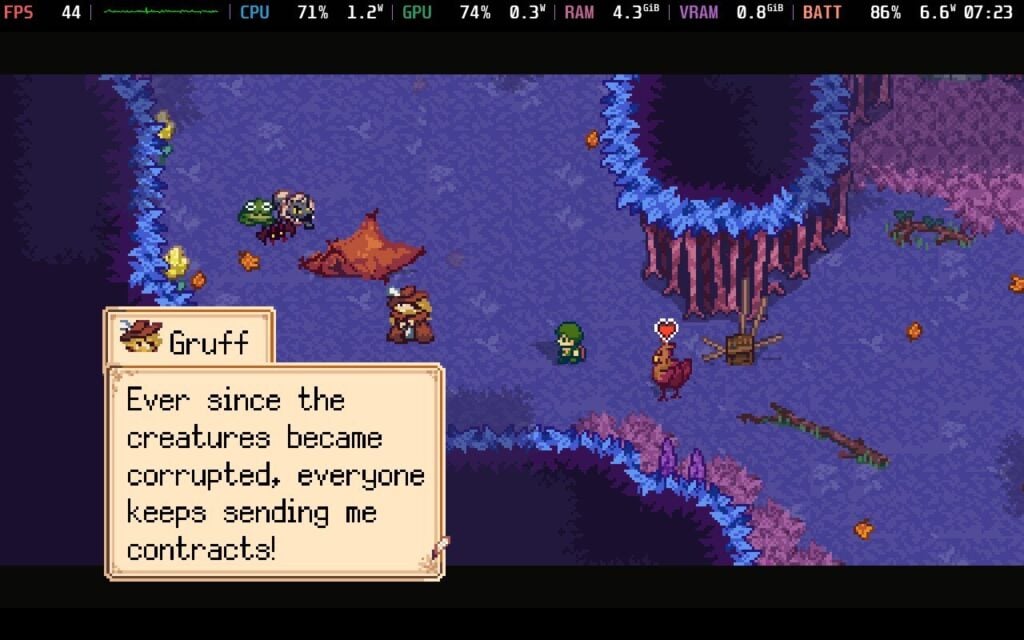
All these things sound great, and the gameplay loop is wonderful. However, I found some issues. While you can access the overworld map through fast travel points, there is no minimap or navigation during gameplay. You have to rely on memory to get through the routes. The hands-off exploration style is not bad, but I sometimes found it confusing where to go next. I ran into my first major problem early on when I had to locate a temple for a quest, and the map layouts looked identical. I preferred a minimap so I could navigate the world better.
Balance also needs some work. Some mandatory boss fights are challenging, such as the dragons, which are very early in the game. Even though I was over-leveled, I kept getting killed, though there was no penalty for defeat.

I also ran into some frustrating bugs. The game froze whenever I activated a fast travel point outside the Pocket Garden. It worked after waiting a couple of minutes, though I had to rebooting twice.
The performance could use some optimization. I saw frequent stutters and frame drops during heavy action scenes, and the settings menu occasionally brought the FPS down to the mid-10s. Sometimes, the taming interface would bug out and be cut off on the screen on my Steam Deck.

Creature Keeper needs some TLC and patches to reach its full potential, but the fundamental game design is on point, and the world will keep you entertained. The game respects your time with the main story while maintaining enough side content to satisfy most players.
Overall, Creature Keeper is a solid enough experience on the Steam Deck, although the lack of options and aforementioned stuttering detract from it.

The fundamentals are all working, and while I couldn’t rebind any controls, the game comes with full controller support.
As usual, I tried two default options. There is no way to tweak graphical settings in Creature Keeper, not even screen resolution, so we are limited in options. With the stock 90Hz refresh rate and a full TDP, Creature Keeper was stable at this setting, although it will dip during combat scenes when a lot is happening on screen. Locking the frame rate to 60/60Hz made things smoother, and there isn’t much point going higher than this from my experience.

The power drain is surprisingly high if you don’t limit the TDP, with power spikes to 17 watts standard. The power draw was much higher than I expected because while Creature Keeper’s visuals are nice, they are nothing groundbreaking. Unfortunately, even with the unlocked TDP, accessing the menu still tanked the framerate.
Despite these issues, Creature Keeper is enjoyable if you need more battery life while playing. Once again, the lack of options hurts us, but a 5-watt TDP, framerate lock to 30FPS, and 90Hz refresh rate resulted in a decently stable experience. You will see more instability in combat, and the menu will slow things to a crawl, so this won’t be optimal for a truly smooth experience.
Of course, the significant advantage of this profile is battery life. I saw an average draw of 8 watts, a substantial gain in battery life. Do not turn on Half rate shading, as this will make the text unreadable.
Creature Keeper is available in English, Spanish - Spain, Portuguese - Brazil, Simplified Chinese, and Japanese, although some languages have not yet been fully implemented.

Creature Keeper is one of those games with the bare minimum accessibility requirements. You can adjust the volume and toggle Vync, but that is it for accessibility options.
While I have been critical of Creature Keeper, I still greatly enjoyed it. Creature Keeper is one of the most well-written ‘comedy’ games I’ve played in a while, and it comes with a refreshing take on the creature collecting genre. Fighting alongside your growing collection of monster pets does not get old, and the dialogue kept me engaged.
Despite this, I come away from Creature Keeper frustrated. All the weird freezes and interface bugs put me off, and the game's lack of handholding is both a strength and a weakness. The game is a decent performer on the Steam Deck, though the lack of accessibility options brings it down. I am glad the developers are aware of and working on the problems.
Creature Keeper will be much easier to recommend with some optimization and bug patches, but it has great atmosphere and solid gameplay, and it will definitely be an enjoyable time down the road.
このレビューはPC版に基づいています。
このレビューをお楽しみいただけたなら、SteamDeckHQ の他のコンテンツもぜひご覧ください!あなたのゲーム体験に役立つゲームレビューやニュースを幅広く取り揃えています。ニュース、ヒントやチュートリアル、ゲーム設定やレビューをお探しの方も、最新のトレンドを知りたい方も、ぜひご利用ください。
Promise Mascot Agency was provided by Kaizen Game Works for review. Thank you!
When I first saw Promise Mascot Agency, I wasn't exactly sure what to think about it. It has an extremely weird premise about running your mascot agency and working with this finger-like mascot to boost your agency to be the best in the business, while also discovering the mystery behind your exile. It had the makings of a quirky story I could fall in love with. And for the most part, I did! It has some quirks here and there, but ultimately, this adventure is worth playing through.

Promise Mascot Agency's story is a bit wild, and it gives me a Like a Dragon/Yakuza-esque feel to it. You play as Michi, a Yakuza known as "The Janitor," who messes up a huge deal and is exiled from his family. Instead of being killed, he is sent to Kaso-Machi to run a Mascot Agency and make the money back that he lost. There, he teams up with a homicidal mascot named Pinky, and together, they will make the agency as profitable as possible to pay back the money you lost and uncover the secret behind the town and the events that led to his exile.
I loved this tale. The main storyline was intriguing and exciting, with twists I didn't consider. I was on the edge of my seat to see what the mayor had done or the secret behind the mines, and the culmination of it all was very fulfilling. However, the fantastic characters raised the plot a couple of notches.
Along your journey, you will meet different people and mascots to work with, and everyone feels like they have a defined, unique personality with motivations that make sense. It was a joy to learn about the town's inhabitants, from Sumire's desire for her mother's old knife set to Sato's love of a specific band. We find out more and more information about them as time progresses, and we find items for them scattered around the world. It's so enjoyable to see what they say next.

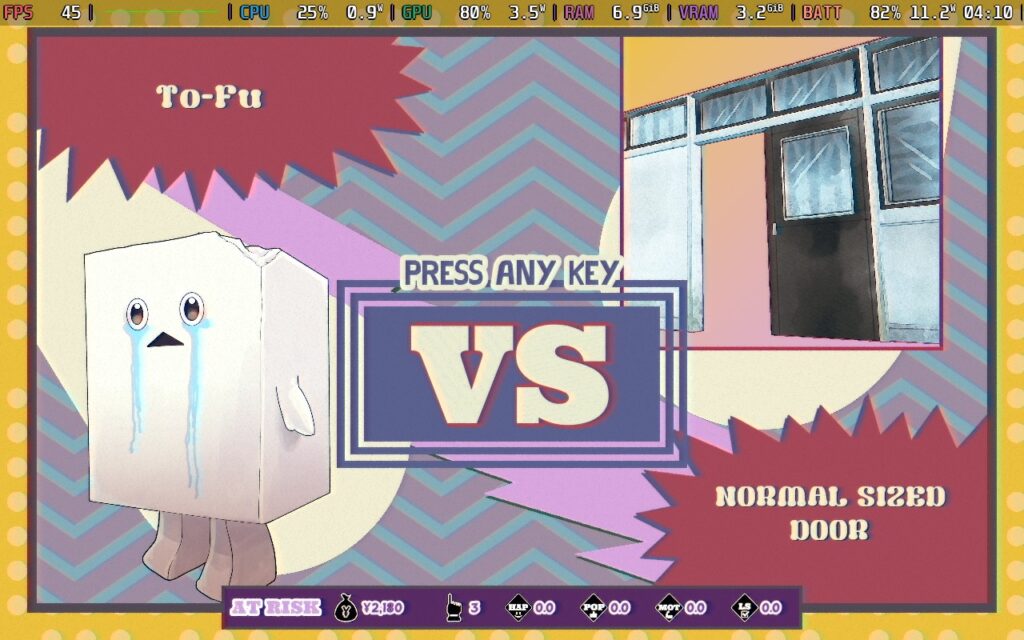
Then, we have the mascots, which are truly a colorful bunch, filled with charm. Pinky, our titular, moderately insane partner, sets the tone for the characters we will encounter. We can recruit 20 different mascots, ranging from a piece of Tofu named To-Fu to a cat in a suit, and all of them have some weird quirk that was just hilarious to discover. To-Fu is always crying and needs confidence, while Trororo, a Yam-covered cat, is obsessed with adult films. You can learn more about them by growing their Life Satisfaction bar and going through a small cutscene each time, but it's worth it. Getting to know the crazy mascots and seeing Pinky discuss how much she dreams about burying a dead body in the woods are easily some of the best moments in Promise Mascot Agency.
She contrasts Michi's more serious, somewhat innocent demeanor, making for some hilarious moments. I couldn't help but laugh whenever Michi had to talk Pinky down from committing serious crimes or make herself sound worse when she needed to earn public favor.
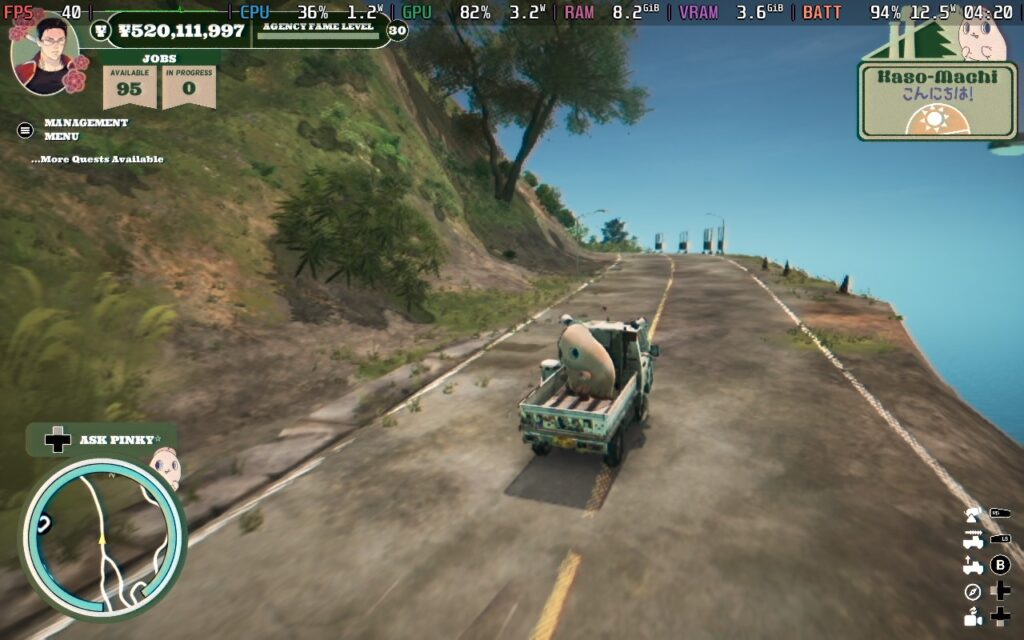
The aesthetic of the game also ended up growing on me. It has an 80s TV-show filter on it to make the game look more retro, while having a good combination of 3D models and 2D paper-styled portraits. It took me a little time to get used to it, since I usually like more vivid, sharper visuals, but it fits the context of the game nicely. I wouldn't say I would prefer this style now, but I feel developer Kaizen Game Works did a good job making it enjoyable.
While the actual gameplay feels great, some issues stopped me from fully enjoying the experience. Promise Mascot Agency is a mix between a business management simulator and an open-world collect-a-thon. On the business side, you will manage your mascots, send them on jobs, and make the bulk of your money. There are multiple ways to make money, like with mascot jobs, subcontractors, and merchandise sales, and utilizing them all effectively will net some big gains. Doing these will increase your fame, unlocking new, more profitable jobs.
I have a love-hate relationship with this system. I like how easy it is to manage all the parts of your business, and matching mascots with a job that provides extra benefits is obvious, but it can feel a bit monotonous as your agency grows. Sending 15+ mascots all out on jobs one at a time felt time-consuming, and making sure they had items to stave off incidents that occur was something I would end up forgetting, too. These incidents are like little minigames of their own, which utilize support hero cards, and while they are hilarious on their own (I love fighting against Normal Sized Doors). The incidents occur when you are roaming around the open world, so it can break up some of the flow when you start taking on 10+ jobs at once, but
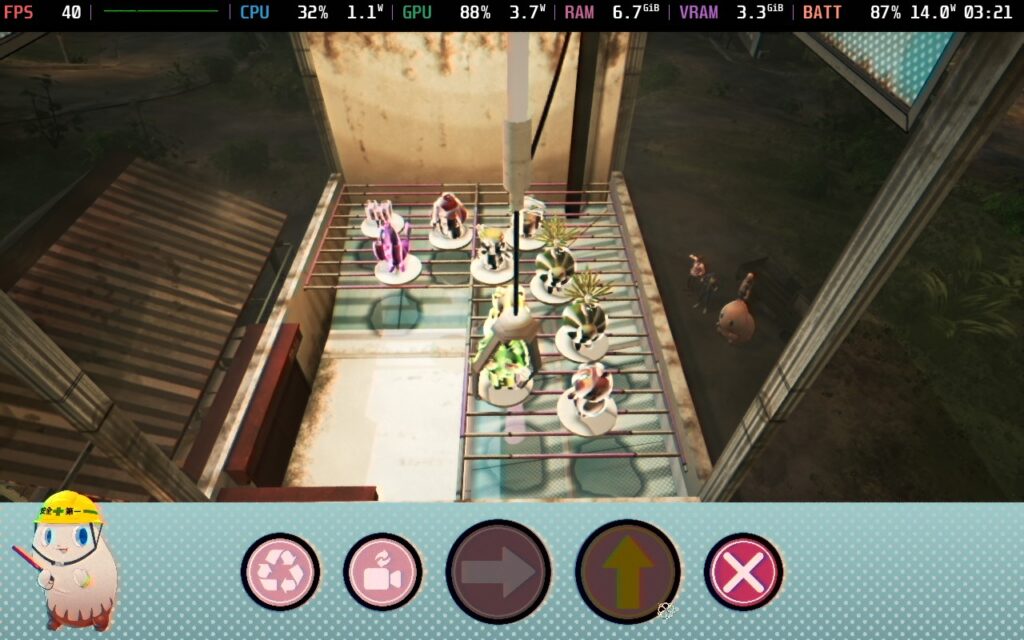
Merchandise is another big money maker, and I liked it a lot. You get more merchandise through a crane game, and then send the merchandise to specific stores that have preferences and can be upgraded for more profits. This became my favorite way to make money, and I could make way more than I expected. Just like assigning jobs, it's a lot of doing the same thing, but I felt better coming back to Merchandise over jobs.
Then, we have the open-world part. You will drive around a solid-sized map to different points on the map to further the story, meet new characters, and find different collectibles spread throughout. There are some side quests to complete, and you can buy new items and upgrade to hero support cards, but for the most part, you will just be finding different items. These can unlock new merchandise, new mascots, upgrades for your truck, clean shrines, and persistent upgrades to get you more money and fans or increase your stamina recharge rate.
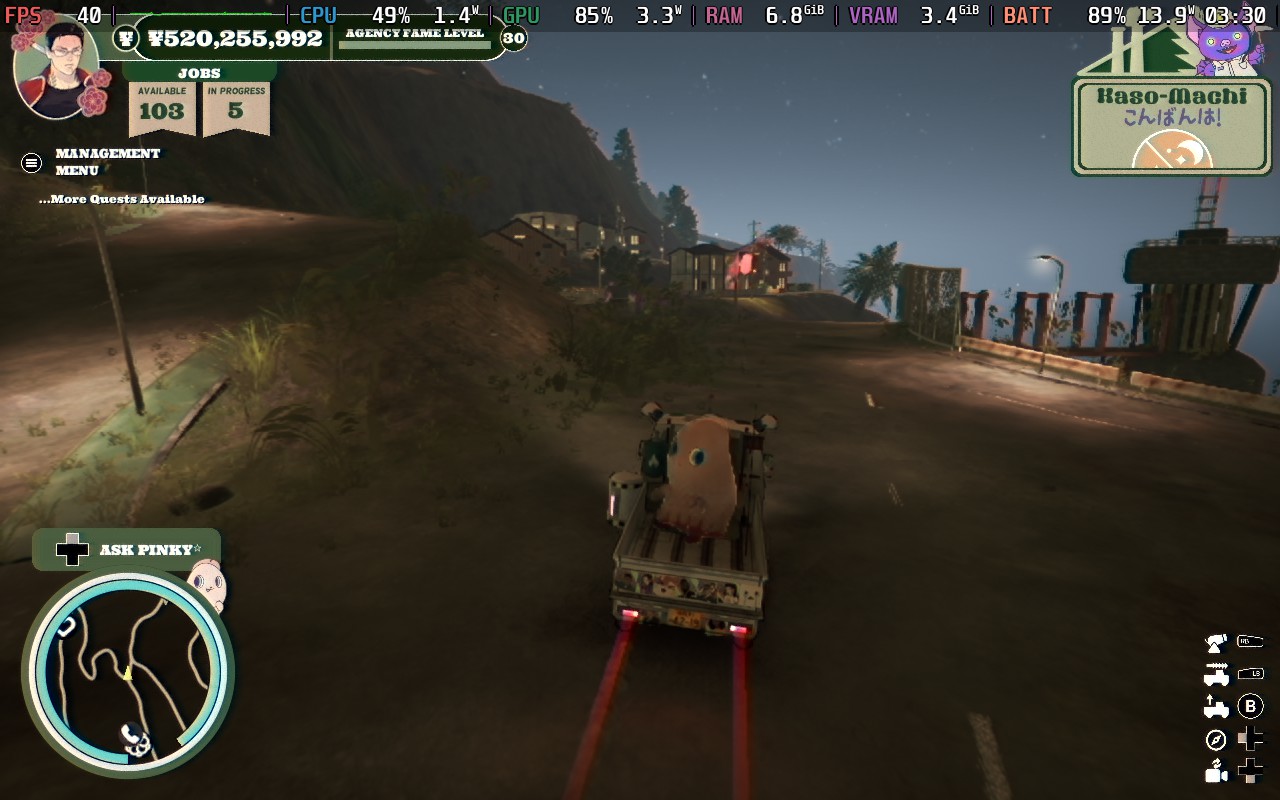
For the most part, it was fun to drive around with the slightly exaggerated driving physics and find these collectibles, clean up tons of trash, and destroy as many signs of the corrupt mayor as possible, but it can also get a bit tiring. Driving around got exhausting trying to get around all of the mountains, and there was a lot of going back and forth that felt like it took so much longer than it should. There is an upgrade that unlocks fast travel, which is nice, but finding these upgrades was hard, and I didn't get to them until towards the end of the game. Getting the launcher upgrade was easily the best and made collecting everything significantly easier, but it wasn't easy to find.
While almost all the collectibles you can find are marked on the map, upgrades weren't, and this made traversing take much more time than I would have liked. Still, it wasn't enough to stop me from enjoying the game, especially on the Steam Deck.
Apart from minor blemishes, playing Promise Mascot Agency on the Steam Deck is great. This feels like the best way to enjoy the game, and I can't imagine playing it any other way. However, I would make a couple of changes to get the most out of the experience and make it look a bit better.
For my time with the game, I wanted to balance smoothness, visuals, and battery life, and I feel like I found it. The game's default settings do a good job with visual quality, but the framerate can fluctuate wildly without a cap, so I made a couple of changes. I recommend turning the SteamOS framerate limiter to 40 FPS/80Hz for the most stable experience. There are some slight stutters here and there when traveling around the map fast, but this limit will curb any drops from more crowded areas.
I would also set Shadows to Ultra and change the upscaler to XeSS on Auto. While there is some minor pop-in from View Distance, it isn't as noticeable worldwide. However, seeing shadows load in as you drive is very prominent, so turning it to Ultra fixes that. As for the upscaler, the game defaults to FSR, which works, but I noticed some heavy blurriness in some instances and in the Merchandise Crane game. XeSS fixes these, and the game still looks great.
These changes should get us an average battery drain of 11W - 14W for 3.5 - 4 hours of battery life with some minor spikes up to 17W depending on how fast you're traveling and loading the world. I also didn't see much difference in performance between the DX12 and DX11 versions of the games, so I recommend just sticking with the default DX12:

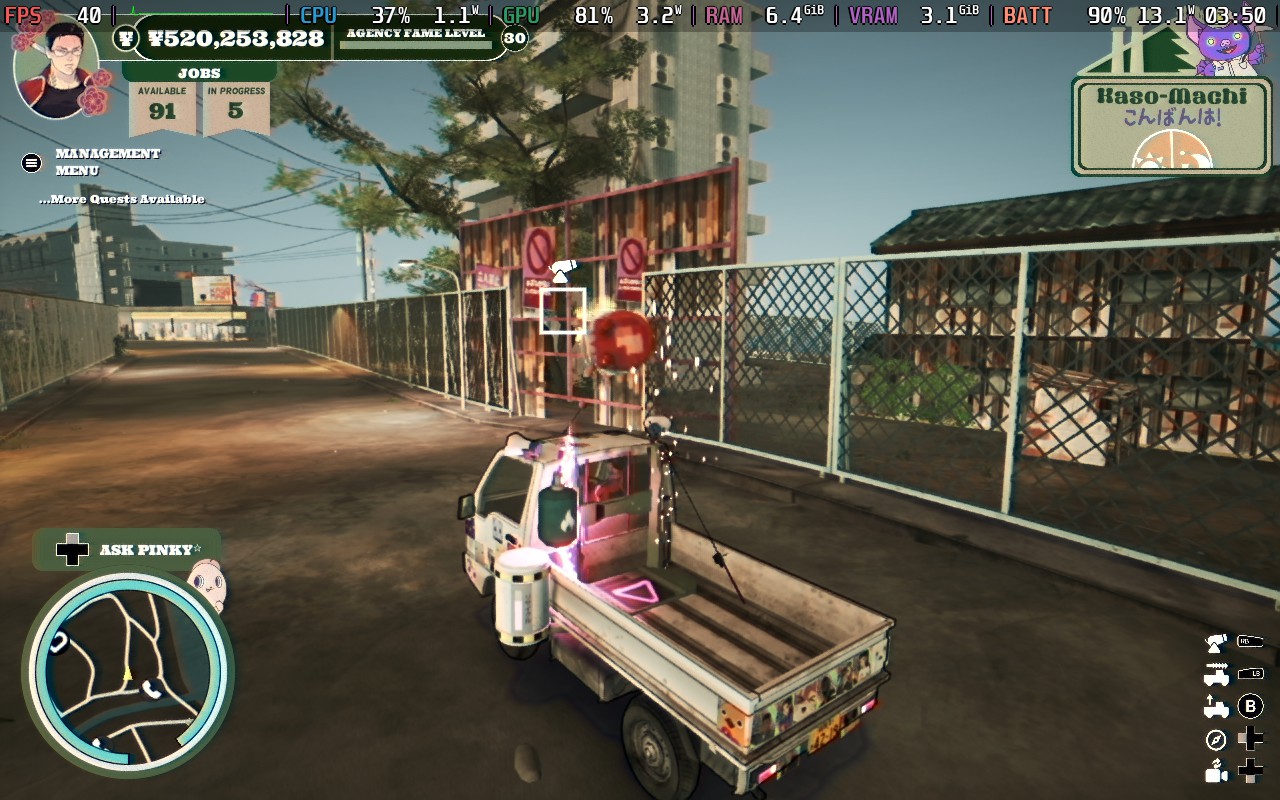
Next, I wanted to see if there would be a comfortable way to play the game without using upscaling and with as high-quality settings as possible. I got it running decently with a mix of high and ultra settings and no upscaling at 30 FPS, but there are some minor caveats. There could still be some drops in crowded cities or when going around the world quickly, but it doesn't feel nearly as smooth as 40 FPS or higher, draining the battery a lot. Still, it looks great and it's nice not having the slight blurriness that comes from upscaling:
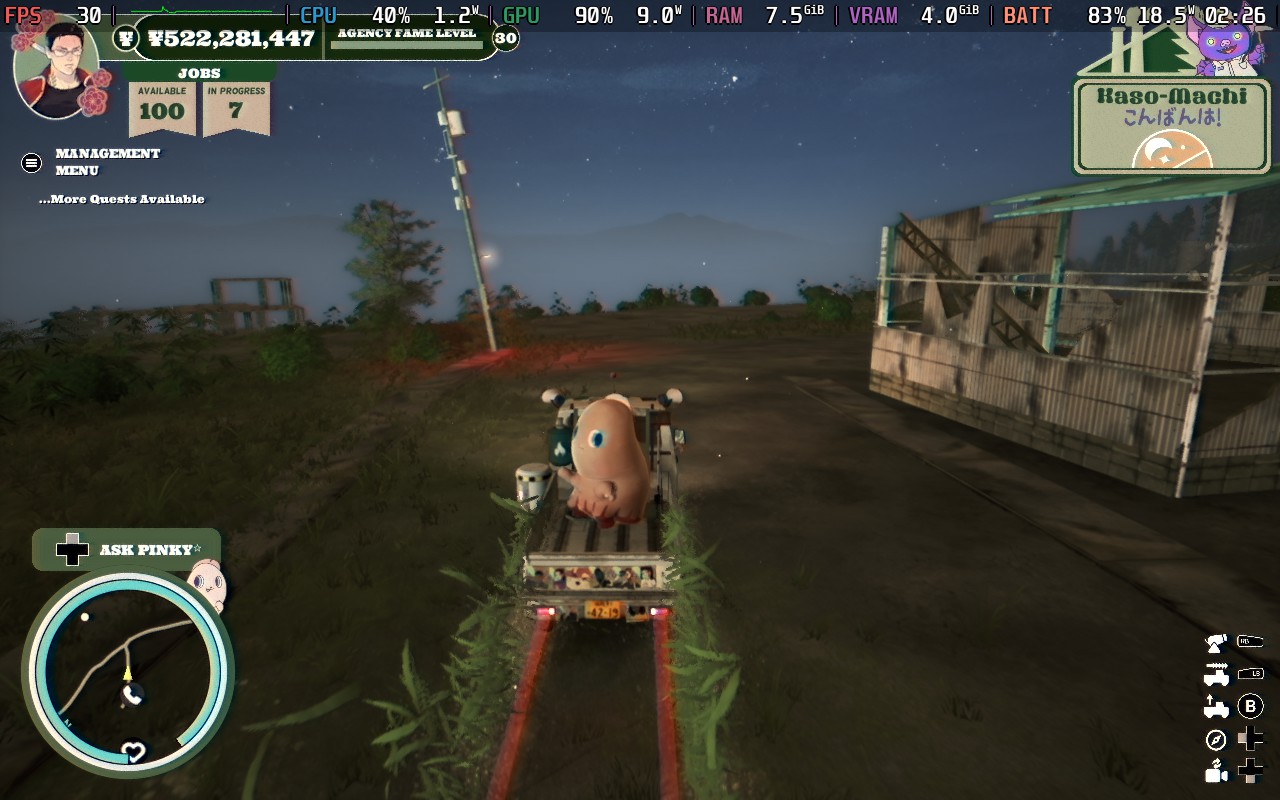
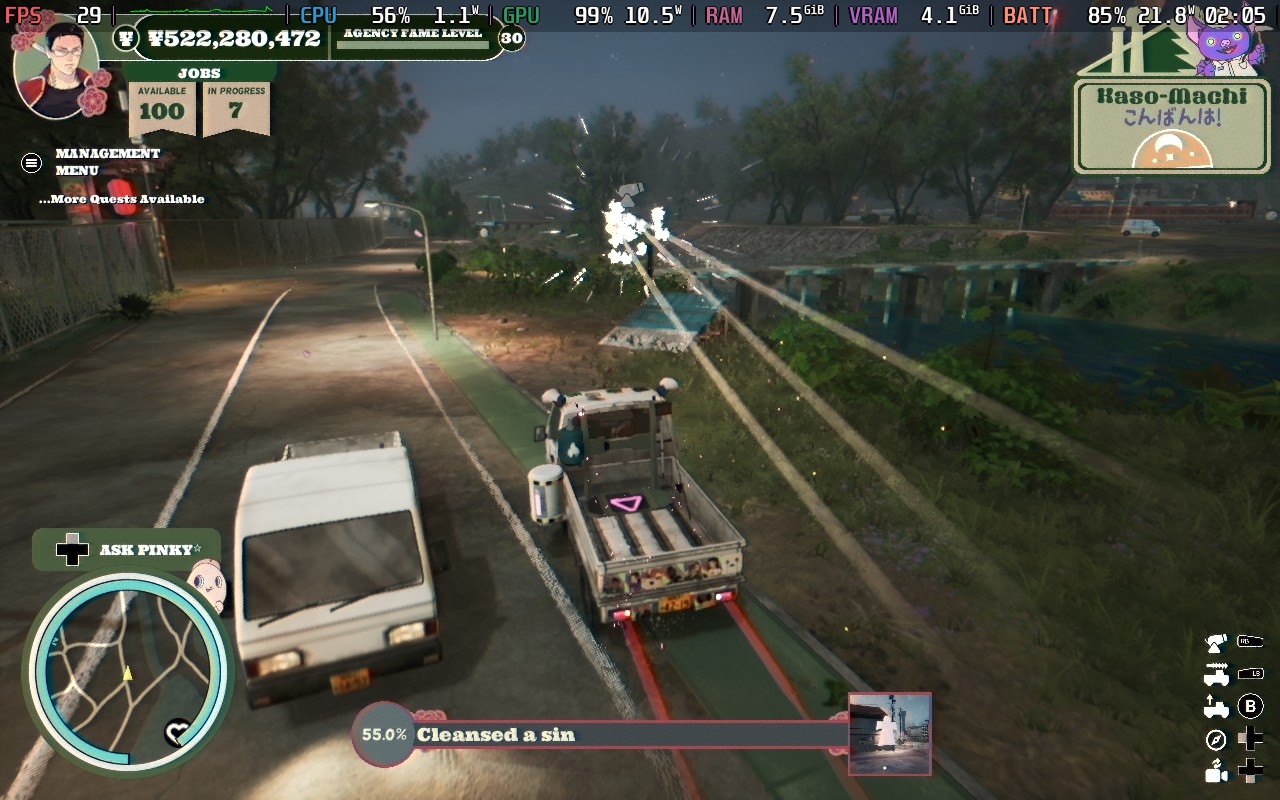
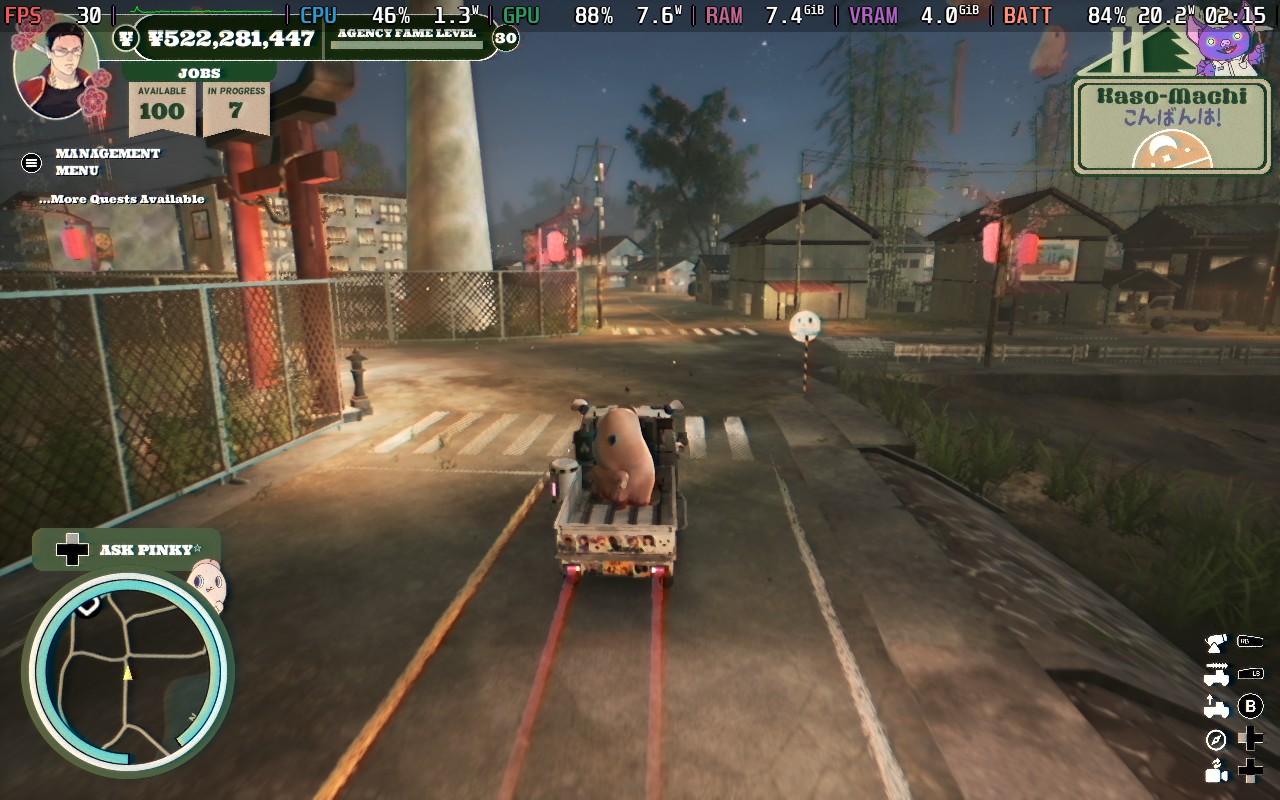
I also wanted to see how high I could comfortably push the framerate. While the lowest settings and XeSS upscaling at Performance can get the framerate to a near 60 FPS, it doesn't look great and has a ton of pop-ins. The compromise here is a medium preset with slightly lower settings in different areas with 50 FPS lock. The game looks significantly better and sticks to 50 FPS 99% of the time, but it does have some minor pop-in and drains the battery fast:
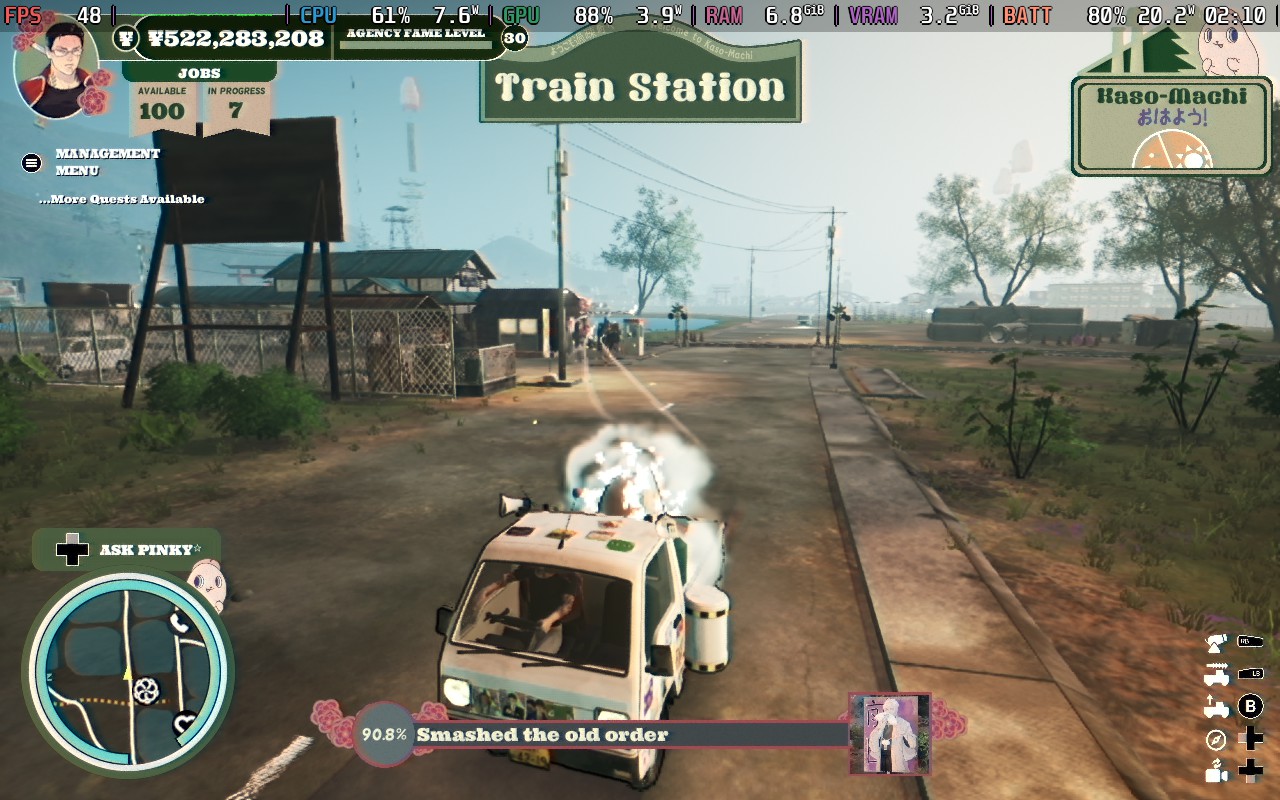
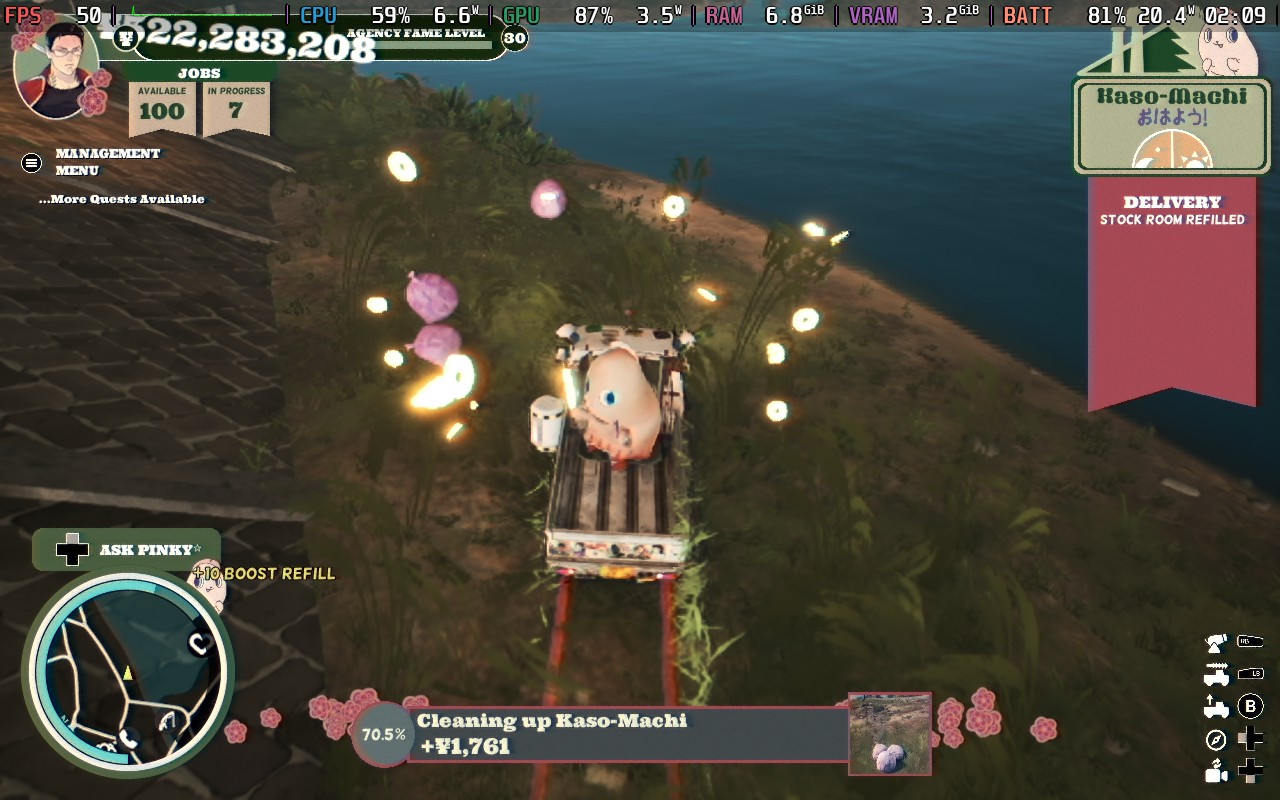
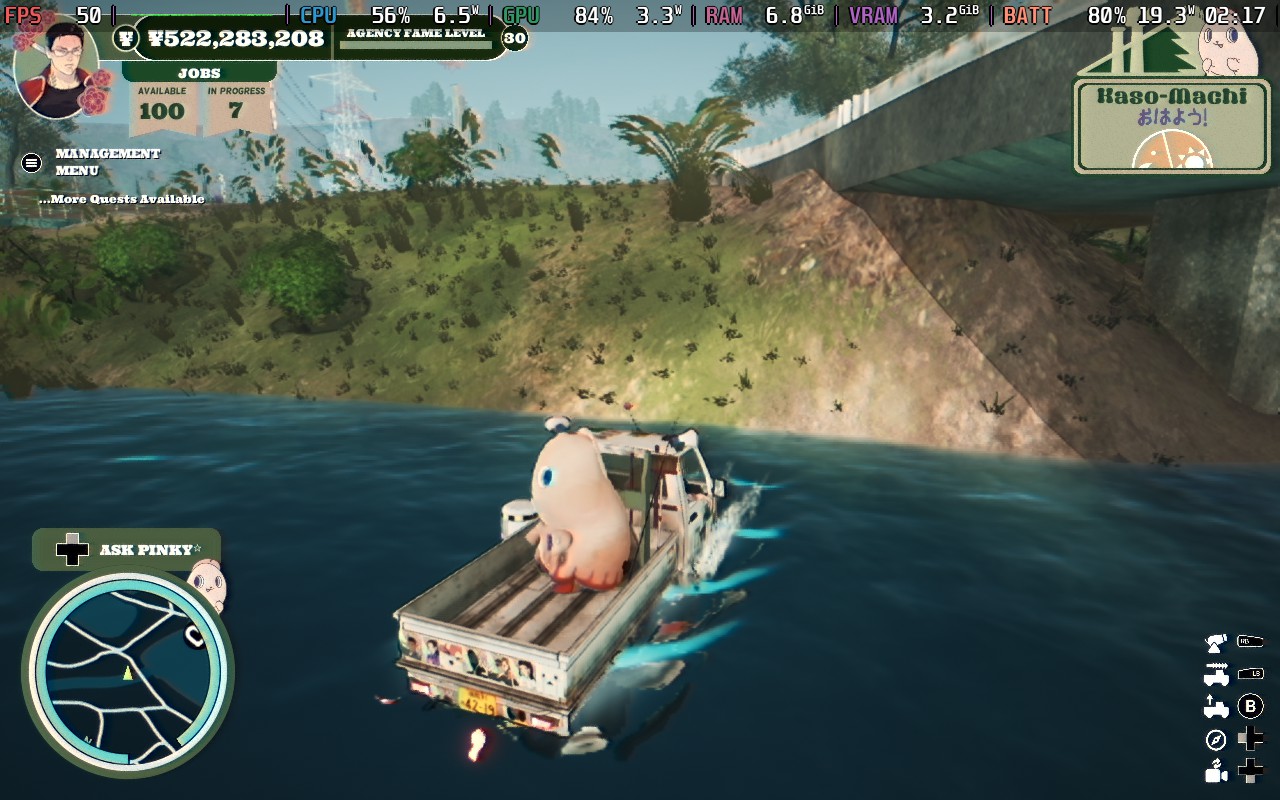
I did play around with the settings to see if I could increase battery life, but the sacrifices were a bit too much for my liking. I could get it to a TDP limit of 8 with minor drops, but it drains in the range that the recommended settings do, so I would say just stick with the recommended settings in this case.
Promise Mascot Agency has incredible accessibility settings to help you enjoy the game. You can change the font style to be more legible, have Open Dyslexic font, change dialogue text speed and animation effects, and enable tap to drive and jump. We can also toggle screenshake, full screen effects, UI animating background and noise overlay, camera recentering, pitch control, and place a dot in the middle of the HUD to avoid motion sickness.
But that's not all! We also have color correction for Deuternaopia, Protanopia, and Tritanopia, scale the color correction, turn on high contrast icons, increase interaction icon size, slow down the animal speed for those you have to chase, turn off traffic, and turn off timers. You can also turn off the Vintage Color Processing to make the game look more modern.
The game supports 16:10 resolutions, as well as controllers and cloud saves. There are no HDR settings.
Promise Mascot Agency is a great game with loads of charm that can feel repetitive the longer you play. The story and characters are fantastic, making the gorgeous town of Kaso-Machi more enjoyable to travel around and discover. The gameplay is enjoyable, and I like the open-world collecting mixed with business management, but it gets a little too repetitive as your agency grows, discouraging me from sending mascots on more jobs. Still, I had a blast playing the game, and it's definitely worth experiencing.
It also runs really well on the Steam Deck, which is a nice touch. It definitely has some wiggle room to enhance the experience, but once done, it's the best way to enjoy the game!
このレビューはPC版に基づいています。
このレビューをお楽しみいただけたなら、SteamDeckHQ の他のコンテンツもぜひご覧ください!あなたのゲーム体験に役立つゲームレビューやニュースを幅広く取り揃えています。ニュース、ヒントやチュートリアル、ゲーム設定やレビューをお探しの方も、最新のトレンドを知りたい方も、ぜひご利用ください。
Dragon Age: The Veilguard was provided by EA for review. Thank you!
To speak of BioWare is to speak of some of the greatest RPGs of all time: Star Wars: Knights of the Old Republic, Mass Effect 2, and Dragon Age: Inquisition. It's also to speak of Mass Effect 3, the epic culmination of Commander Shepherd's grandiose adventures, whereby the narrative direction - specifically more so at the end - caused untold amounts of ire across forums and social media alike. And, finally, it's to speak of Mass Effect: Andromeda and new-IP Anthem, two of the Edmonton-based studio's latest releases, back in 2017 and 2019, respectively. Put plainly, the trust has somewhat dissipated in recent years, and lesser expectations mar any announcement. Enter Dragon Age: The Veilguard, née Dragon Age: Dreadwolf, the long-anticipated follow-up to 2014's aforementioned Dragon Age: Inquisition. Dramaticism aside, the stakes could not be higher - both in Thedas, the world where Dragon Age is set, and for the waning fans back home.

It's imperative to know that the story in The Veilguard takes place 10 years after the revelations at the end of the Trespasser DLC for Inquisition. It was undoubtedly an essential moment in time when Solas, a long-standing ally for the 100-plus hours spent facing what the Breach, a break in the boundary, known as the Veil, between the physical world and the Void, was revealed in the closing moments to be not only a deity but an outright enemy of the player.
Without having experienced that first hand, or even knowing that beforehand, much of The Veilguard's heavier moments will go to waste. Rather, they may do so initially until you find your footing in Thedas as Rook, the player character. With the character creator as impressive and extensive as it is, those first steps into this world in turmoil may take longer than expected.
In a world as rich and inviting as Thedas, it's only natural to have the desire to painstakingly craft your character that will carve their path through the many trials and tribulations that await you, and make no mistake, the tools available are more than capable of getting the job done. An almost overwhelming amount of customisation is here, with arguably some of the best hair ever to grace gaming since the 2013 Tomb Raider reboots or, more recently, Horizon: Forbidden West.
The "standard" assortment of tattoos, body sizes, and whatnot is available, but where The Veilguard is proud to stand out is where it truly matters, regarding inclusivity. Body styles are no longer tied to set pronouns and voices. It's incredible to see such representation, especially in such a high-profile game like this, and it is thankfully just a sliver of the support to come. The narrative also makes sure to be equally inclusive of trans and nonbinary characters, and it feels incredibly genuine and authentic in telling their stories.
Rounding out the character customisation is the standard trio of class tropes being available to choose from - Warrior, Rogue, and Mage - as well as four races: Human, Dwarf, Elf, or Qunari. Lastly, six origin factions determine various influences, conversations, related companions, and, naturally, the ever-important cosmetics much later.
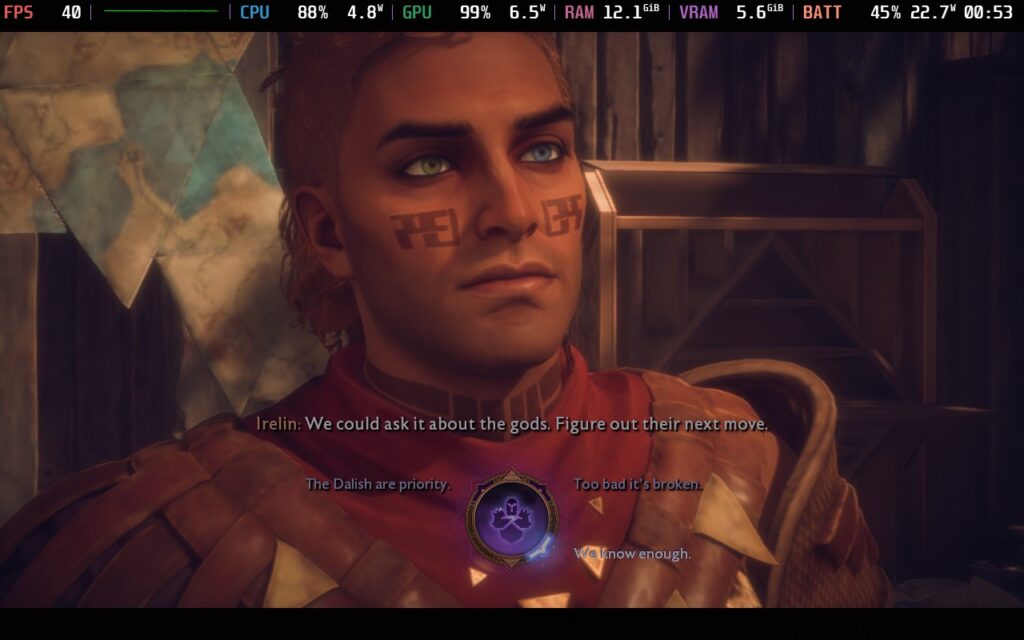
Dragon Age: The Veilguard effortlessly impresses from the moment the campaign starts. The set piece in the opening hour, featuring Solas's attempts to open the previously mentioned Veil and our attempts to stop him, gives one of the better crash courses of RPGs in recent years. With that first set piece being as incredible as it is, it acts as a double-edged sword, where that quality forms a basis for the rest of your adventures. It is not necessarily representative of the stellar narrative, but the quality and consistency of the moment-to-moment writing tend to fluctuate wildly.
As was the case for Inquisition, Solas has some of the most exquisite and impressive lines, delivered beautifully by Gareth David-Lloyd, with gravitas and furthering curiosity unrivalled. Mere moments later, jarring lines grace our ears, with some notable examples being "The gates weren't keeping someone out, it's keeping something in," and the ever-popular "It's quiet... too quiet." While a minor blemish in the grander scheme of things, these otherwise inconsequential moments are far too regular for my liking and do nothing to elicit any response bar a dry, pained chuckle at the sheer gall so blatantly on display.
Thankfully, the gameplay doesn't suffer the same juxtaposing disparities in quality as the writing, and the Level design is a particular high point for the series. The Veilguard focuses on "smaller" instanced areas, smartly moving away from the older entries' open-world design. With such a change being made, it's rare to see an environment devoid of beauty and inspired intricacies in the winding paths and many layers of the ever-changing Crossroads or the moody, rainy city of Minrathous.
Likewise, character design is equally meticulous, from the physical appearance to their individualities. Whilst they start as fully-formed characters, they naturally grow further throughout the main scenario and each eventual tailored side quest. The growth displayed throughout the latter quests is substantial and elevates each character beyond expectations. This expertise is BioWare confidently doing what they do, cranked up to 11, and it's so welcome to see in a genre where caricatured and/or surface-level side characters have become all too commonplace.

Combat has equal levels of personality, although it manages to fumble some of what the individual characters worked tirelessly to achieve in its quest for breadth and an overall unified design principle. Simply put, your companions are left feeling secondary to the encounter. In what can be seen as anything other than an oversimplification of the best parts of Mass Effect and previous Dragon Age titles, the primary emphasis on tactics is sidelined in favor of a more standardized action-focused approach. Unique character skills are somewhat dissipated in their utility when you'll often be firing them off for their priming and chainable abilities, which all characters possess.
Furthermore, your comrades can no longer perish on the battlefield, rendering them mere cannon fodder. Only Rook's health matters, and once they are down, it's game over. The same harmonious relationships forged through dialogue aren't reflected in the synergies found when battling a swathe of fantastical fantasy staples, Lovecraftian monstrosities, and conniving cults, and that's a real shame.
Despite all this, combat remains fluid. It feels like a true 3rd person action romp, parries and all, and very dynamic and challenging. Each of the three class archetypes controls beautifully and has its distinct playstyle, all whilst feeling equally viable across the various combat scenarios you face throughout your 40-hour or so adventure. As is par for the course in Bioware titles, expansive skill trees, both the player character as well as your comrades, allow you to create discernably different builds depending on the path you choose to go down, but the option to select one of three specialisations per class truly brings your Rook into a league of their own.
My favourite throughout my time with the Rogue was the Duelist, initially picked purely for aesthetic and power-fantasy reasons. This specialization focused on nimbly dodging incoming attacks, parrying when a dodge would otherwise fail, and striking at the most opportune moments with dual-wielding blades and looking as dapper as possible. The graceful dance employed by my Duelist would have the chance to be visually gorgeous, too, were it not for the technical limitations imposed by the Steam Deck's hardware.
Dragon Age: The Veilguard is, at its best, a passable and enjoyable experience on Steam's little machine. Out of the box, the frame rate can fluctuate anywhere between the high 20s and low 40s throughout gameplay. Chaotic battles and cutscenes manage to punish the Steam Deck further and force it to the low 20s and even high teens, even with FSR being set at Ultra Performance. This also causes the game to have an unpleasant, almost watercolor aesthetic film over it.

Thankfully, changing the Upsampling method from AMD FSR to Intel XESS and setting it to Performance yields brilliant results compared to the former's output. Likewise, setting the render scale to 80% and the field of view to 90% gives us a few more crucial frames to play with and fundamentally makes the experience run considerably smoother, without having muddied visuals. With these changes, average frame rates are generally within the 35fps - 45fps range, with occasional brief drops sub-30fps. Setting the framerate limit to 30 FPS should keep everything as stable as possible.
It's not to say that any of these changes can make it pleasing to look at by any stretch of the imagination, though. The beauty of Veilguard's distinct visual style is almost lost in translation when played on the Steam Deck, and it does an outright disservice to the magic that BioWare has carefully composed and conducted. Still, stability, above all else, is crucial, and we can achieve such a result with relative ease.
There are next to no changes that can make a noticeable and positive impact on battery life, but with a game that still looks as good as this, it's to be expected. An average 22W draw will drain the OLED model's battery in around 2.5 hours. This could be considered adequate if you're at home or reliably near a charger, but it may not be enough if you're purely on the go.

Thankfully, there's plenty of scope here in Dragon Age: The Veilguard to amend accessibility options. The general portion of the settings contains a camera shake, which is fully adjustable via a slider, color vision deficiency, whether a persistent dot is visible, and an ever-appreciated toggle for disabling UI hold inputs. We can also change the Text Size and Accessibility SFX, which enables "audio cues to provide additional feedback for some visual mechanics", including "incoming attack indicators, target lock-on, and conversation wheels". Similarly, enabling Glint Ping SFX allows spatialised SFX to play at object locations when pressed Up on the D-Pad. Lastly, in the love-it-or-hate-it of modern game visual representations, there is a toggle for whether a Low Health Screen Effect is utilised.
Subtitles are fully customizable, as expected for a game released in 2024. You can tweak Subtitle Visibility, Size, Animation (whether they fade in or out, for example), Color, and Opacity to your heart's content. Lastly, your Steam Deck's vibrations are fully modifiable, with different vibration levels being set across the board or individually for Gameplay-based intensities, Environmental prompts, and Cinematic-focused buzzes. Similarly, the option to enable vibration assist is also present, and it acts as a physical alternative or additive version of the Accessibility SFX audible assist previously mentioned.
It's hard to believe this is the same BioWare many consider to be on the down and out. Dragon Age: The Veilguard is the most confident and masterful display of talent and expertise in their particular craft shown for nigh-on a decade and, with the odd dialogue choice here and there not-withstanding, is as cohesive and coherent as they come. It is everything it sets out to be and so much more: a continuation of the superb ending shown in Dragon Age: Inquisition, a new beginning for the events to come, and, dare I say it, hope for BioWare's future.
このレビューはPC版に基づいています。
このレビューをお楽しみいただけたなら、SteamDeckHQ の他のコンテンツもぜひご覧ください!あなたのゲーム体験に役立つゲームレビューやニュースを幅広く取り揃えています。ニュース、ヒントやチュートリアル、ゲーム設定やレビューをお探しの方も、最新のトレンドを知りたい方も、ぜひご利用ください。
Warhammer 40,000: Rogue Trader was provided by Owlcat Games for review. Thank you!
cRPGs have been making a resurgence these past few years after their heyday back in the late 90s and early 00s, and now it's Warhammer's time to get in on the action. Warhammer 40,000: Rogue Trader brings the legendary franchise to the cRPG genre, and you'll probably be left wondering why it took so long for a game like this to come about! A franchise famed for deep lore seems like the perfect fit for a cRPG, specializing in deep conversations and gameplay mechanics.
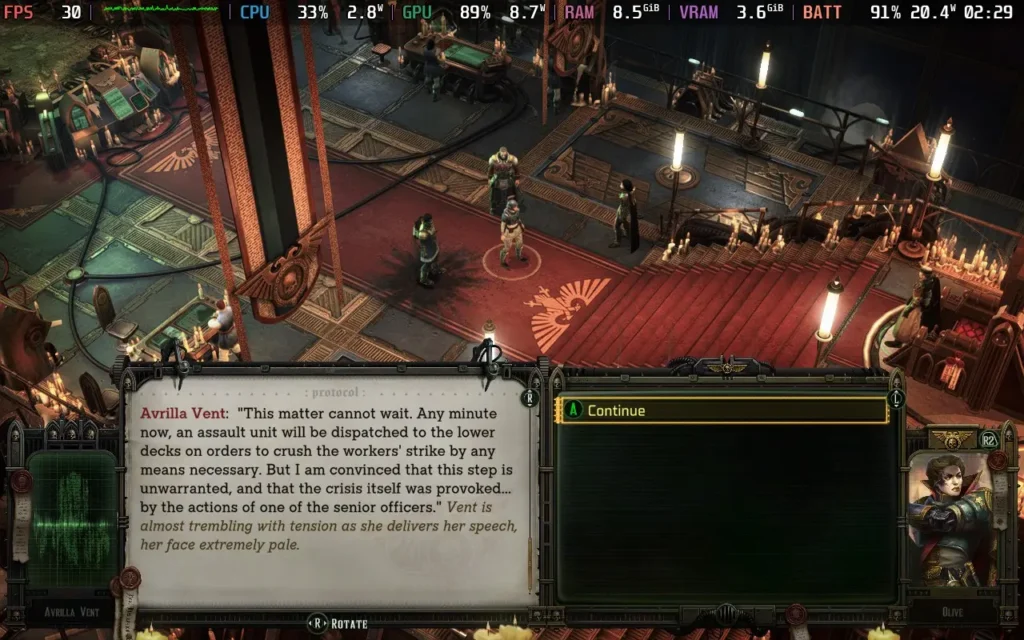
The story of Rogue Trader puts you in the role of... well, a Rogue Trader. After the ship you're on suffers a mutiny and the current Rogue Trader is assassinated, you are placed next in line to inherit the title and the ship. With your new ship and crew at your command, it's up to you to continue to explore the outer reaches of Imperium space and to carry on the legacy of your predecessors. It's a decent story, and the rank of Rogue Trader given to the player character means you have more freedom, rather than sticking strictly to Imperium guidelines.
The Rogue Trader (the player character) will always be in your party, but you can have up to 5 other party members accompany you on your journey, made up of officers from your crew and companions you'll meet along the way. Of course, if you are playing a co-op game, your friends can join you as party members instead.
Throughout your journey, you'll be given plenty of choices on how to handle certain scenarios. Do you want to stick close to the Imperium's strict rules, or would you rather show some leniency and mercy to gain the loyalty of others? They impact the game and how events proceed; if there's an immediate effect, the game will show you what that is. You might expect this from a cRPG, but seeing it used and executed well here is great.
While similar to a cRPG, the game's combat reminded me greatly of XCOM. Weapons have damage ranges that they can do, ranged weapons have a percentage to hit chance, and various environmental objects provide half or full cover from enemy fire. It's a great combat system that works well in this universe where ranged weaponry is common. However, it still has that old XCOM feeling of missing a 90% chance to hit the shot.
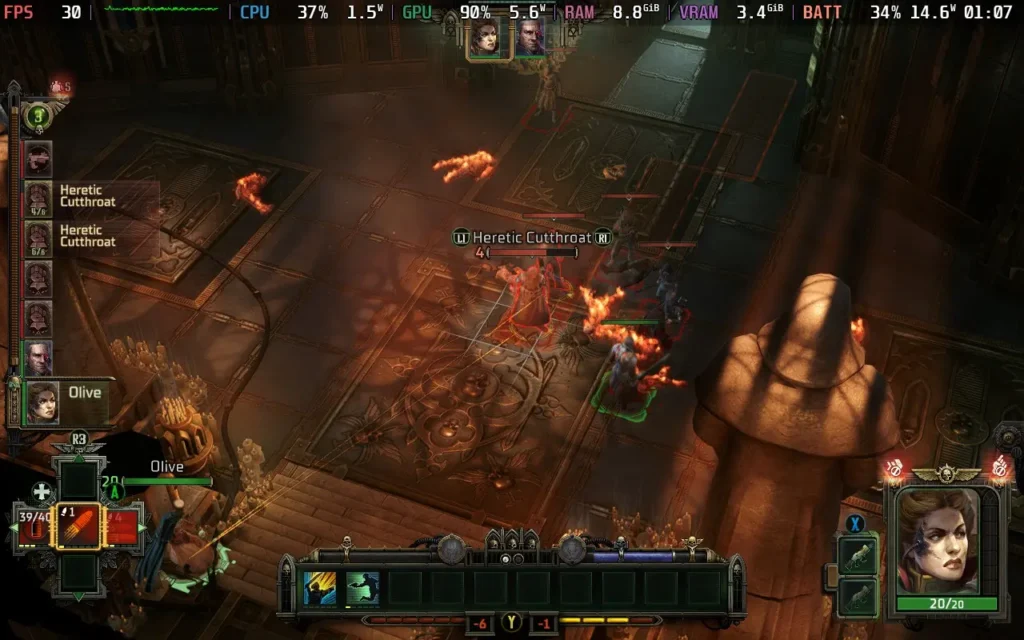
There are still melee classes, and they can function quite well even against ranged opponents thanks to some generous movement speed. It's quite common to be able to run across a third of a battlefield and do a melee strike all in one turn, meaning it's a good idea to keep ranged units back from the action and try and keep your melee units near the front, but ideally still in some cover until they can charge the enemy and do some high damage attacks.
Aside from these straight-up attacks, there are also abilities, which play more into the cRPG side of the game, where you can give your party members buffs or your enemies debuffs. Or just use some action points to unleash a powerful attack on your foes.
Regarding combat difficulty, the game leans toward the harder side. Even with Normal difficulty, you'll still need to think tactfully and plan your moves to win battles, especially when encountering tough bosses. The bosses were a bit of a bugbear for me, though, as they use game mechanics that aren't disclosed beforehand, such as regenerating all their health from environmental objects, resulting in losing if you don't figure out what you need to do immediately. Because of this, the game can feel a tad unfair at these moments, and you may need to "save scum" as it were to beat a boss here and there.
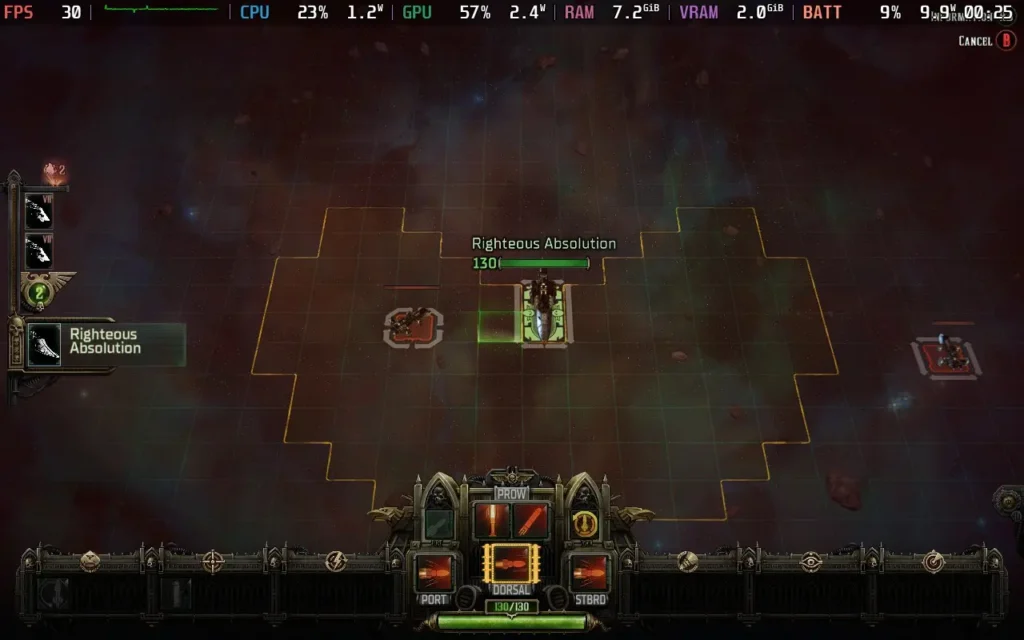
There is also space combat, which is a bit more simplified compared to regular combat, but does have some neat mechanics such as requiring your ship to move in a certain way, meaning you'll want to plan so you can maneuver your ship's shields and weapons to keep yourself safe while keeping enemy ships within your firing arc. It's still turn-based and takes place on a grid, so it's not a big departure, but it is a neat additional take on the combat.
The game's UI can be a little daunting initially, but the menus are quite functional once you've wrapped your head around the UI design. The progress tree for leveling up characters is shown in a circle. While it takes some getting used to, it's a great way to display the information, as once the circle has been filled, you get the chance to prestige into your next class to further your specialization.
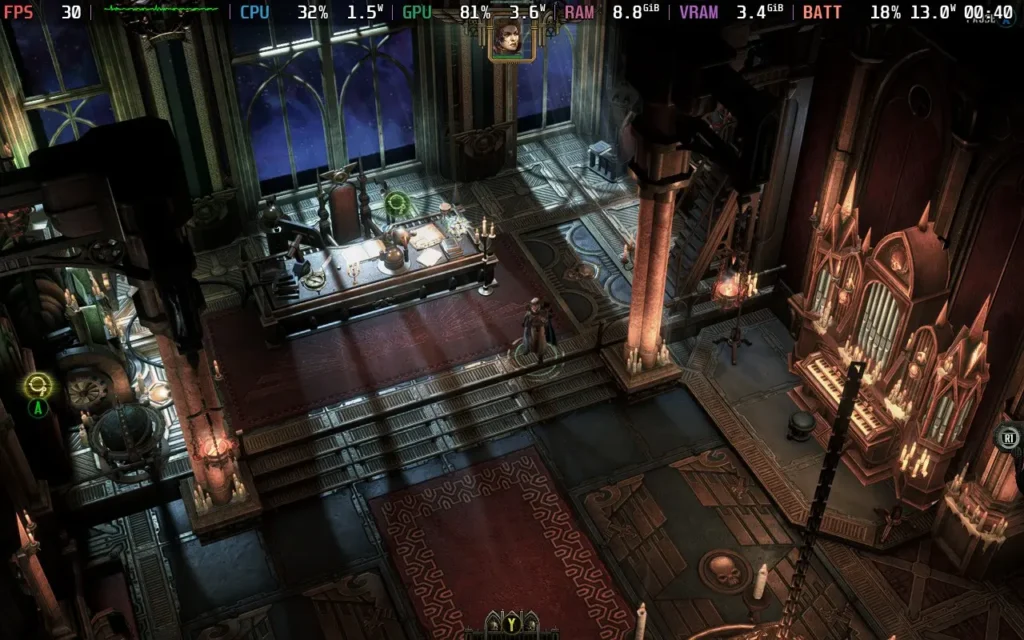
The aesthetic of the Warhammer world is presented well here, with all its intriguing designs on display. Your ship essentially functions like a city in space, with open and luxurious rooms in parts, with the rest of the ship and a great deal of the environment being very utilitarian. Candles light the corridors and are strewn about. It would all look out of place in anything but Warhammer, but Rogue Trader pulls it off to keep a cohesive feeling game and allows you to immerse yourself in the world.
Rogue Trader does, however, lack almost any voice acting and is very text-heavy compared to something like Baldur's Gate 3. So you had better be prepared to do plenty of reading for this one. Fortunately, the font size is large and easy to read, even on a Steam Deck screen.
Warhammer 40,000: Rogue Trader is a solid cRPG. The storyline is interesting, and the game presents the player with choices that actually affect the game. The combat mechanics are solid, requiring proper planning and tactical thinking to succeed, and the game does a great job of making you feel like you are playing a role in the Warhammer universe.
Warhammer 40,000: Rogue Trader leaves a decent first impression on the Steam Deck. It supports the native 1280x800 resolution that the Steam Deck uses, so there are no black borders and great controller support for gameplay and the menus.
The game also has a default graphical setting for the Steam Deck, which appears to target 30 FPS, but you have to make sure you configure your SteamOS settings correctly to hit that target.
Set the SteamOS frame rate limit to 60 and no TDP limit.
The "Steam Deck Preset" chosen by the game seems to largely favor putting the game on Medium settings. However, if you set your SteamOS Frame Limit to 30, it tends to lock the game to 24 FPS in intense scenes, so we need to keep the SteamOS Frame Limit to 60 to get a 30 FPS experience. You can use the in-game frame rate limit to lock the game to 30 FPS and save some additional battery life.
Some environments may drop into the mid-20s at times, which you could fix by dropping one or two settings, like Shadows or Lighting, but I just powered through as 25 FPS is still an ok experience for a turn-based game.


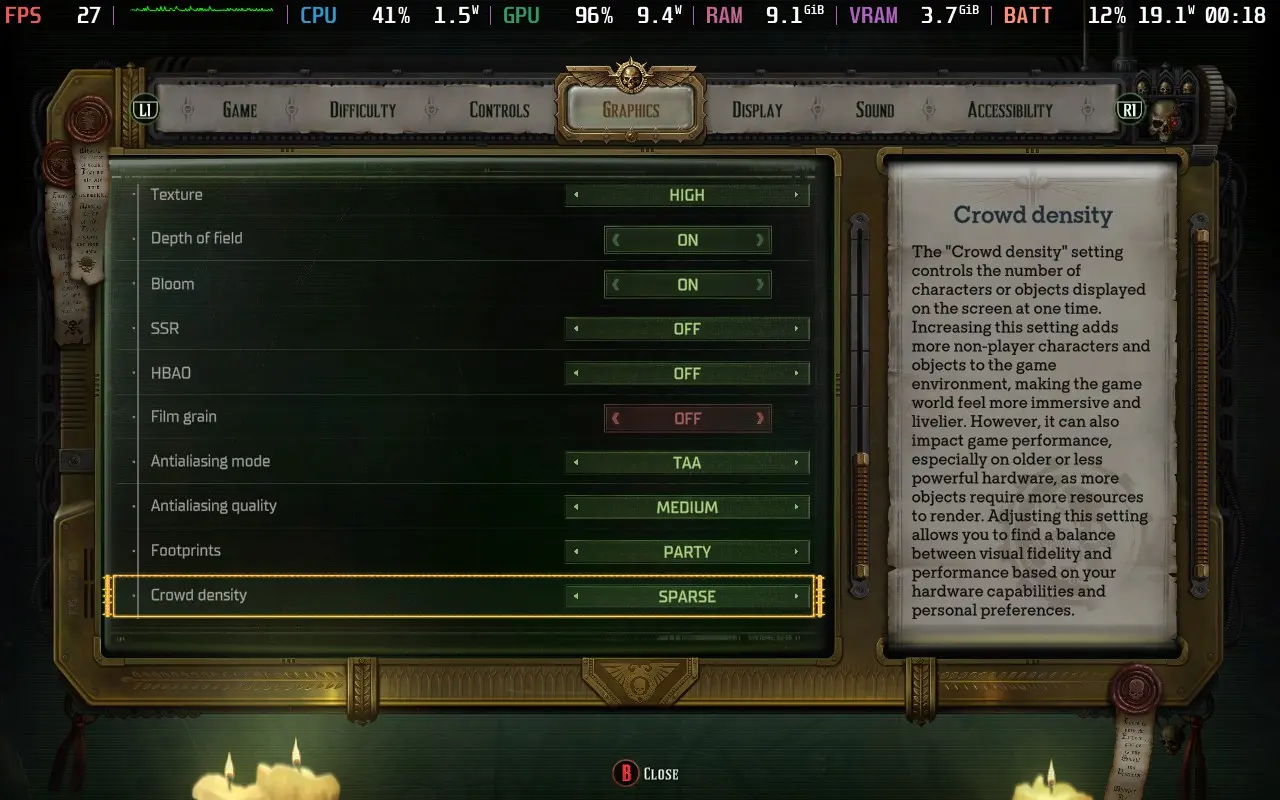
Power draw varies greatly depending on the environment. In quiet areas, it can drop as low as 13W; however, in more intensive areas, it often reaches 19-20W. Temperatures also vary from around 60C-65C to up to 75C, depending on the area.
Because of this, you can expect around 3 hours of battery life from a Steam Deck OLED and around 2 hours from the LCD.


Unfortunately, reaching 60 FPS is impossible on the Steam Deck, so we're stuck with a 30 FPS experience. Fortunately, cRPGs are still perfectly fun to play at 30 FPS, so we can tick Warhammer 40,000: Rogue Trader as a good game to play on the Steam Deck.
Warhammer 40,000: Rogue Trader has many accessibility options, such as the ability to disable blood/gore, auto-pausing when major events happen, and detailed tutorials on each gameplay mechanic.
It also features very adjustable difficulty settings allowing you to change things such as how beneficial cover is and the dodging chance of enemies etc.
There are also filters for those with color blindness.
Warhammer 40,000: Rogue Trader successfully brings the Warhammer universe to the cRPG genre. An intriguing storyline littered with choices for the player to make, coupled with the chance to play through the game with friends and an accomplished combat system that borrows from the playbook of tried and tested tactical strategy games, means that Warhammer 40,000: Rogue Trader is a game to look into for cRPG fans.
As for how the game performs on Steam Deck, Warhammer 40,000: Rogue Trader runs pretty well on the Steam Deck. Its graphical preset holds 30 FPS for the majority of the time, and its good control scheme allows full control of the game without the need for the touchscreen or touchpads.
このレビューはPC版に基づいています。
このレビューをお楽しみいただけたなら、SteamDeckHQ の他のコンテンツもぜひご覧ください!あなたのゲーム体験に役立つゲームレビューやニュースを幅広く取り揃えています。ニュース、ヒントやチュートリアル、ゲーム設定やレビューをお探しの方も、最新のトレンドを知りたい方も、ぜひご利用ください。
Drova: Forsaken Kin was provided by Deck13 for review. Thank you!
This review was created using an LCD Steam Deck. OLED testing will be carried out at a later date.
Drova: Forsaken Kin might be my most surprising game of 2024. Before diving into a dark, gothic-inspired RPG with little hand-holding and a love letter to classic RPGs, I didn't know what to expect. That always makes me nervous, as games like this often have many challenges to overcome. Nostalgia is a hell of a drug, after all, and that comes with expectations that can be impossible to manage.
However, you can breathe easily tonight because Drova: Forsaken Kin is brilliant. It might be my Game of the Year. If that is not tempting enough, Drova is a great experience on the Steam Deck. Developers Just2D have put massive effort into their game, and their passion shows in every corner.
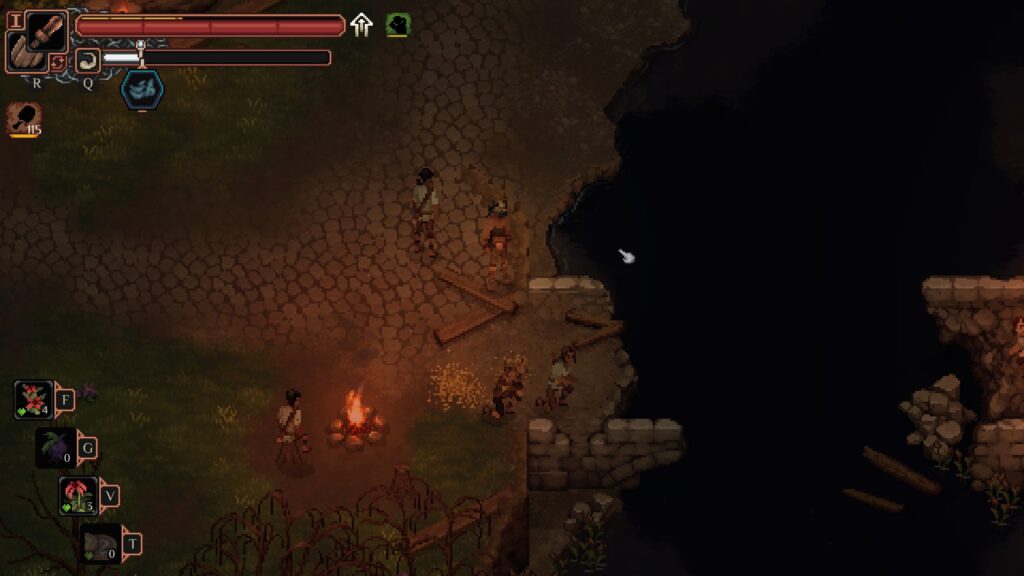
Drova: Forsaken Kin is an experimental RPG, and it can take a little while to get used to it. You start with nothing in a large, dangerous world, and everything will kill you if you aren’t prepared. Set in a world heavily inspired by Celtic mythology, Drova reminds me most of the Gothic and Risen series but without many of my annoyances with those games. It feels like a modern version of these games that are challenging for their core game design rather than frustrating controls. When all those pieces come together, the result is something spectacular.
This does not mean that Drova lacks frustrating moments. Sure, I got killed more times than I can count, but most of my deaths were my fault. Rushing into a swamp filled with frog demons with nothing but a stick is a terrible idea. While the combat is not the best, the progression feels great. The ‘zero to hero’ philosophy is in full effect here, and turning my broken, weak figure into a growing menace to nature that commands respect is engaging.
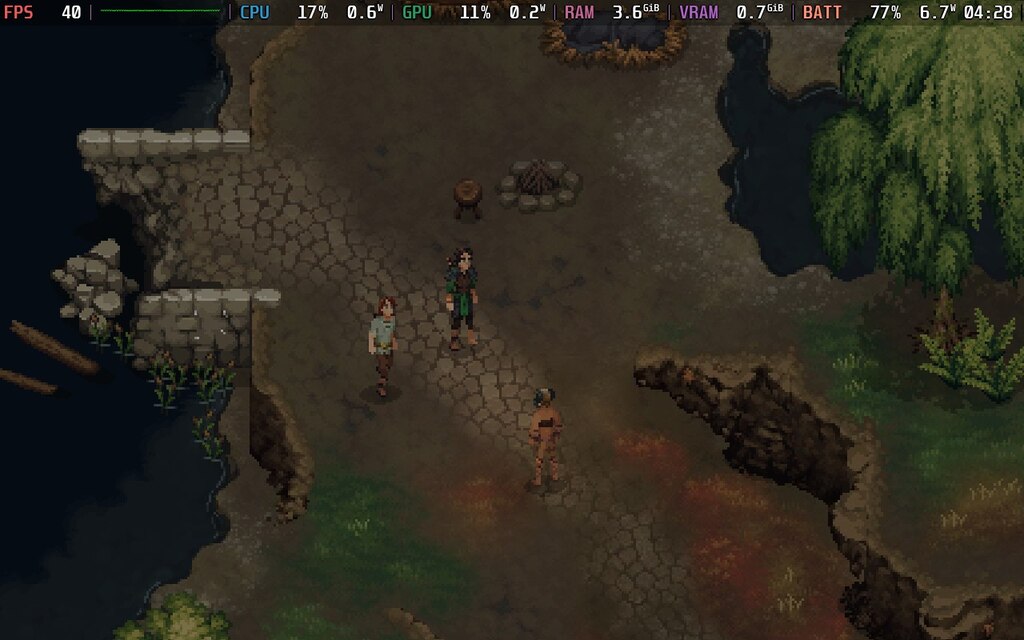
The story premise is pretty cool. Upon entering a new realm, and after my companion dies to crazy spirits, it is my job to uncover the answers behind this mysterious, dangerous world. Society has discovered the power of a dead empire, allowing them to capture the spirits that control nature. However, the anger of the remaining spirits has divided mankind into two warring factions.
Everyone you meet has ambitions and a reason for existing. They don’t just let you into their favorite club because you smell of ‘Main Character Syndrome.’ Respect has to be earned. They don’t know who you are, so until you prove yourself, you aren’t worth much to them.
Drova: Forsaken Kin’s world design might be the best I’ve seen, especially with exploration. You don't know anyone in this world, and characters are not named unless they decide you are worthy of their name. There is no fast travel, and locations/places of interest can be marked with ink, which you must buy from vendors.
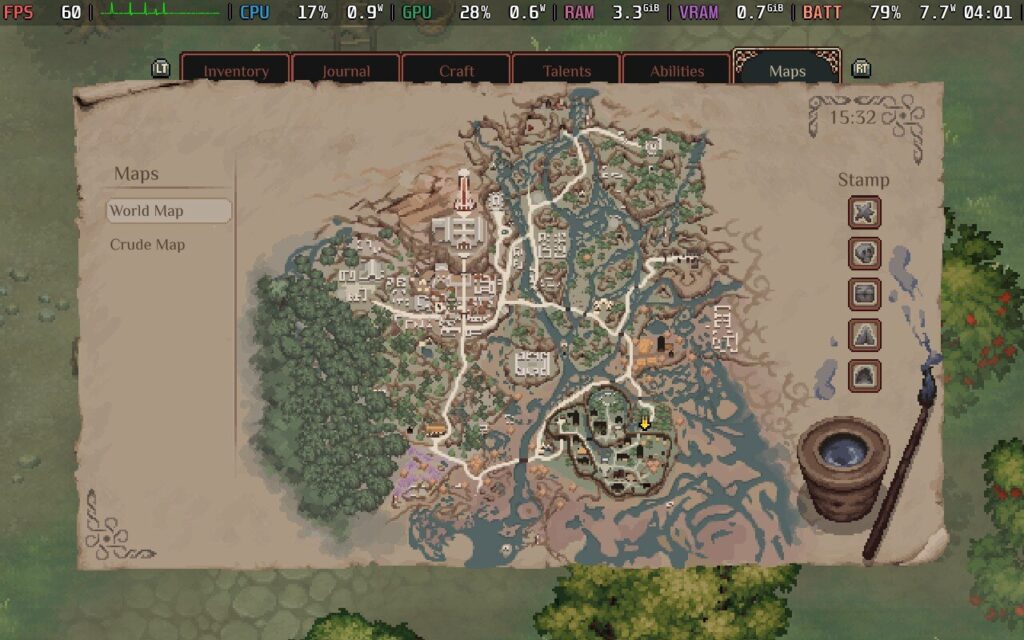
Cartographers will sell you their professional maps if needed, and navigating the world always feels rewarding. The map is not particularly large, but it doesn't need to be. Too many open worlds mistake width over depth, but Drova bucks this trend. People will follow their routines as taverns come to life. You can also pet cats and dogs, so the best part of life is present.
I appreciate how much thought they have put into making the challenge organic rather than shoving health sponge enemies down my throat. People might get nervous seeing the ‘Soulslike’ tag on the Steam page, but that is only to emphasize timing and picking your fights carefully. Most of the time, you can muscle through fights without being punished. This isn’t Dark Souls, don’t worry! Some enemies are powerful, but the open-ended world gives you the freedom to return to it later.
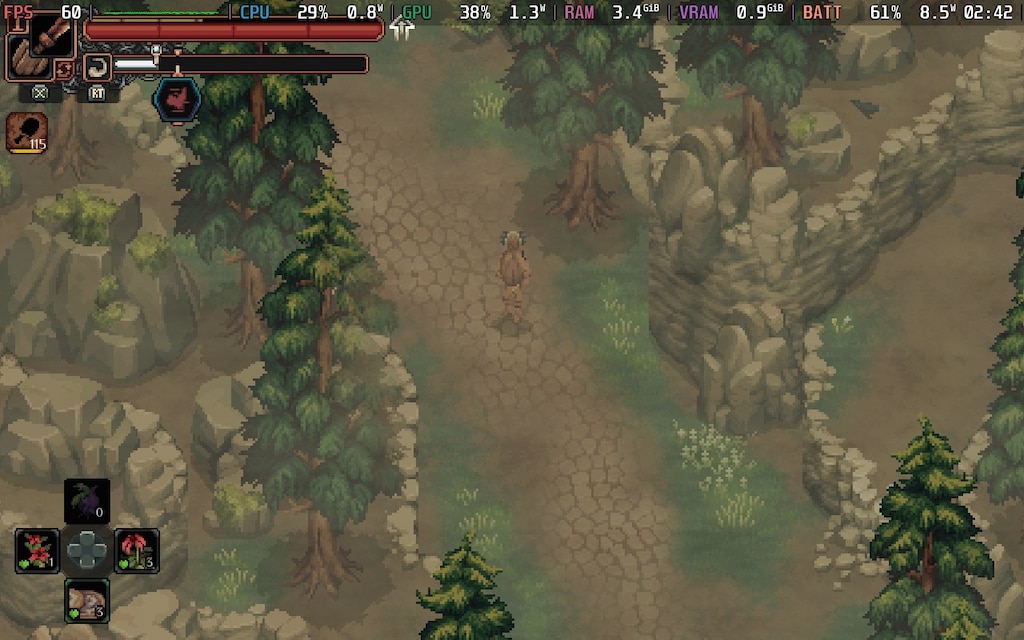
Even the leveling system is immersive. Rather than picking perks and abilities in a skill tree, Drova engages the player in seeking out mentors to learn their tricks of the trade. Some mentors will do it for free, and some require hard-earned gold. When I learned to extract important materials from dead animals, the game gave me great dialogue as my mentor taught me how, which is wonderful for world-building.
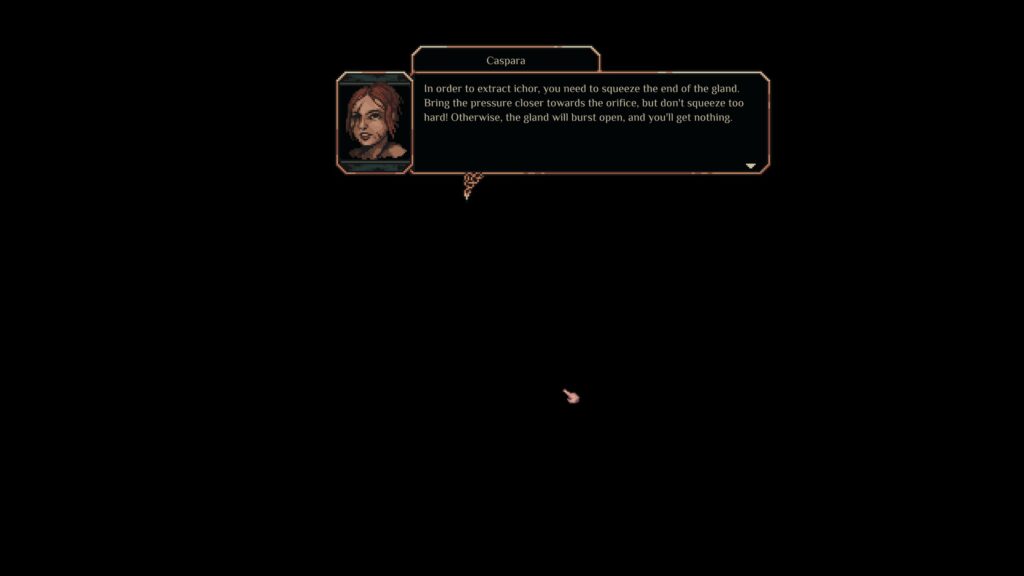
One of my favorite moments in Drova was getting drunk with a random lass in a tavern. There she was, being all flirty and promising a great night. Because my character is lonely, he was happy to go along. The twist was coming a mile away, but it made me laugh as she led me into the nearby woods. To my lack of surprise and amusement, I was knocked out by goons and dragged to a huge, underground labor camp! What followed was a few hours of great storytelling, and that is just part of why I’m so drawn in.
It’s a mark of a good game when I’m racking my brain for things I’m not fond of. I can imagine that some players might not love the lack of handholding the game provides, and while I enjoy the combat, it is a little clunky at times. More than once, I lost a fight because I dodged an attack too late, though that is my fault more than an issue with the game. You can change several difficulty settings at any time, so if you’re dying too quickly or want to focus on the story and world, you can adjust the challenge whenever you wish.
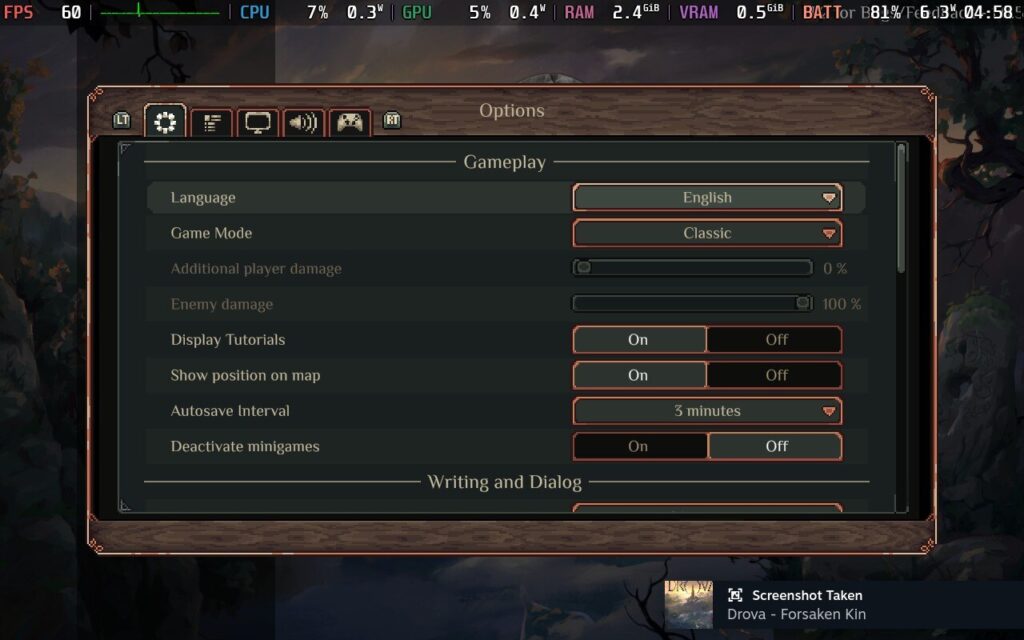
I have tried to keep this as spoiler-free as possible because I believe Drova: Forsaken Kin is one of those games that you’re better off experiencing blind. Above everything, the developer oozes competence and a love for creating great games. A roadmap of additional features was announced recently, adding even more to the game, all for no extra cost. Drova: Forsaken Kin is gaining more attention across the industry for good reason. It is a captivating and refreshing RPG with a great world to explore. For $24.99, you will struggle to find a game as good as this for the price.
According to Valve, Drova: Forsaken Kin has an Unknown status rating and a Native rating through ProtonDB. While the visuals and environmental effects pack a surprising punch, the performance on the Steam Deck is great all around. However, I have made some interesting observations over the past few weeks.
Drova has come out of the gates swinging, bringing an almost complete experience out of the box. It works very well without any adjustments to TDP, refresh rate, or locking frames. Despite the somewhat dated visuals, it looks gorgeous with the diverse biomes and character animations, and I found it a solid 60FPS across the board. While there is much text to read, I had no problems making it out on the Steam Deck’s screen. The game is blessed with accessibility options, including a font scaler. It should automatically be set to Large font size; if not, it is an easy click away.
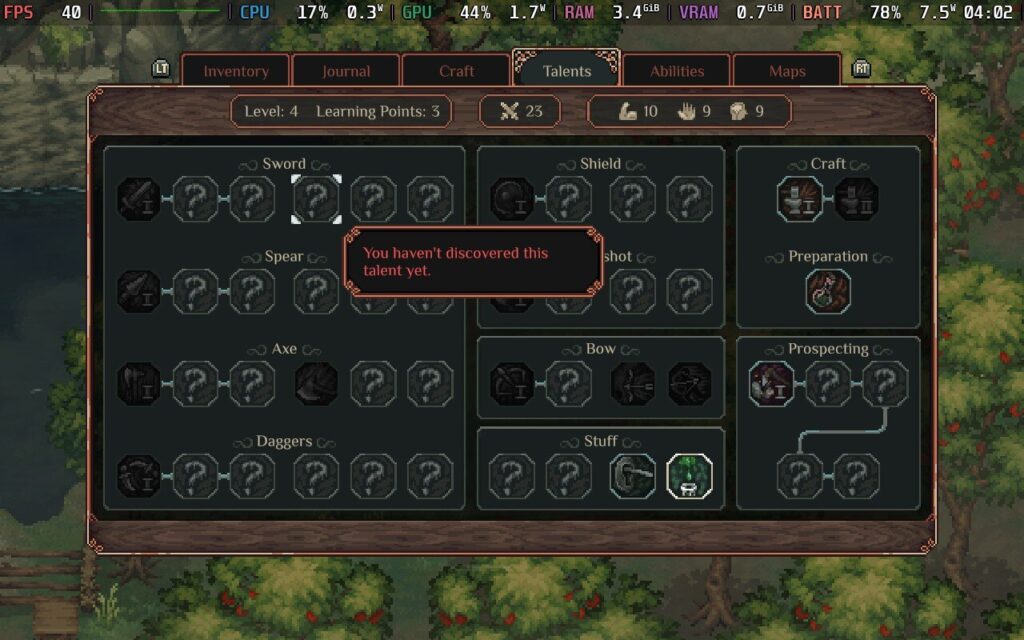
The default control scheme works great, although I saw a small bug when using investigation mode. This feature allows players to study interesting locations or uncover footprints like Witcher 3’s senses. It is an awesome mechanic, but I found that I was unable to move the cursor around and investigate properly with the controller. While the mode functioned, it was stuck vertically to where my character was. It is a bizarre issue, but control rebinds are in the game thanks to a recent patch, so it is an easy fix.
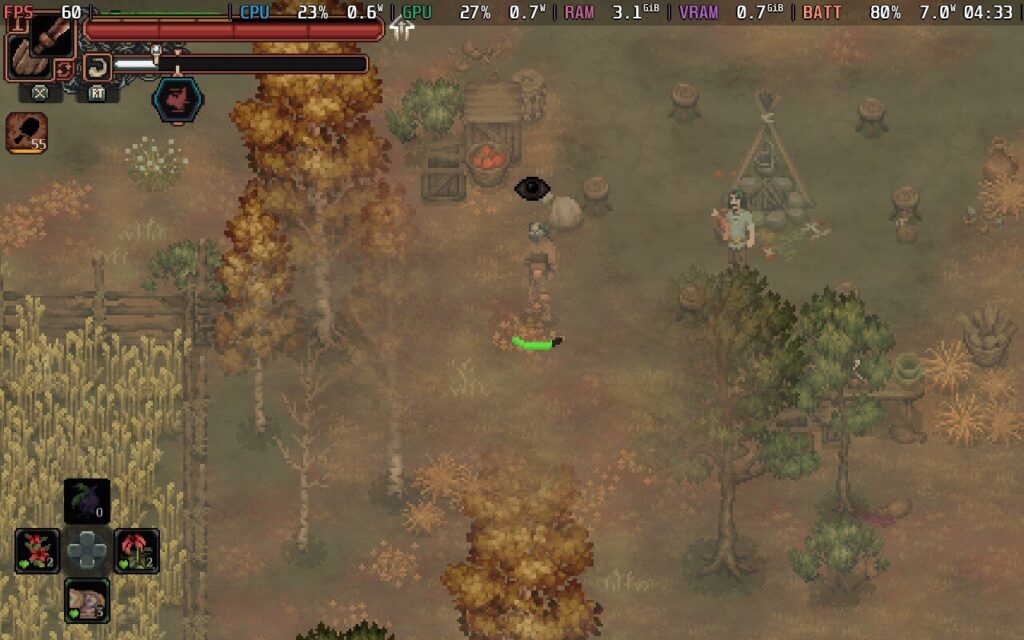
There aren’t many graphical settings you can tweak in Drova: Forsaken Kin, but this is a well-optimized experience. I recommend turning off the autosave function or setting it every 30 minutes. The game will stutter and freeze for a few seconds while saving, which is most noticeable when it autosaves. For a smoother experience, I left the toggle off. It has plenty of manual save slots, including quick saving, so turning the autosave off should not be a problem.
The Steam Deck can handle Drova: Forsaken Kin and chews through even the most demanding scenes on stock settings (Unlocked TDP, 60hz Refresh Rate, 60FPS lock). We are limited in how much we can change within the settings. Apart from a few minor drops during a loading screen and the aforementioned saving freeze, this is smooth sailing. The only graphical options of note are toggling dust particles and the screen resolution, neither of which made much difference to the framerate or battery. I turned off dust particles while keeping the resolution native, but leaving it on makes little difference if you like the former.
The power drain has been like a rollercoaster ride. Between the different updates, I have experienced a bizarre range of power draws that are nearly impossible to put down. Ultimately, we must stick to the newest update that most people are on, 3.6.19, which drained at around 10 - 14 Watts. This translates into about three and a half hours of gameplay on the LCD Steam Deck. This is still a decent time and comes with no significant drawbacks. For those who want to get as much battery juice out of their Steam Deck, Drova: Forsaken Kin is still fairly playable at low TDPs.
Before the 3.6.19 update, Drova: Forsaken Kin scaled well, even at a 3-watt TDP. While the frame dips were more common during intense fighting scenes, it maintained a fairly stable 30FPS with half rate shader turned off, the frame rate capped to 30 in-game, and the refresh rate locked to 40hz. With the new updates, that is no longer an option, as it dropped to 15FPS on average. While this was irritating, turning the TDP to 4 brought the performance back up to what it was previously. However, the power draw stabilizes between 8 and 9 watts on average.
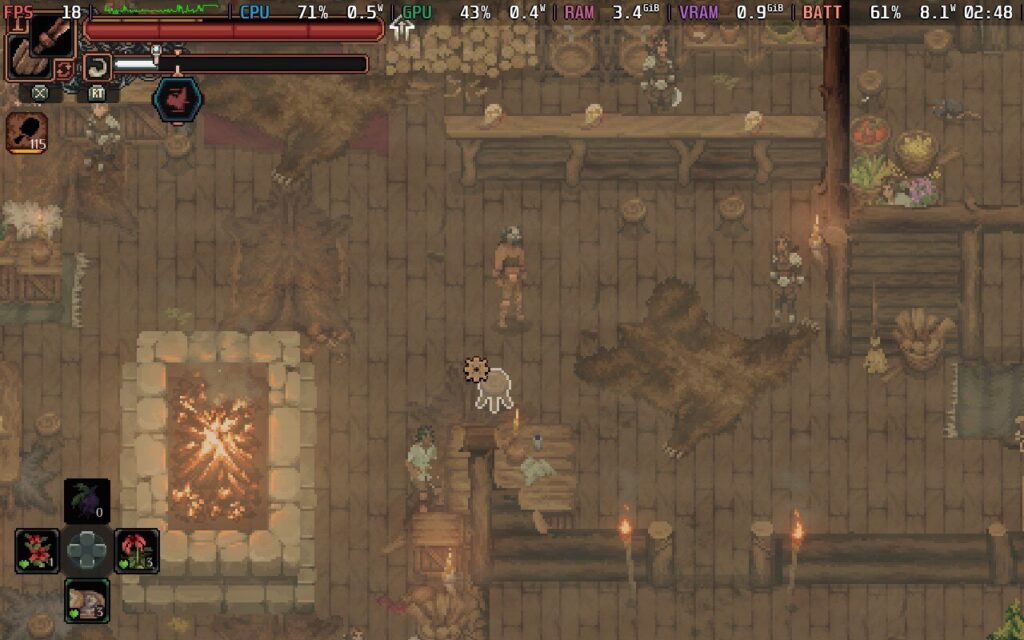
This brings the average battery life to around 5 hours on a single charge, which is a moderate bump in longevity while sacrificing some stability.
Drova: Forsaken Kin is available in English, French, and German. It has impressive accessibility features, although it lacks colorblind support.
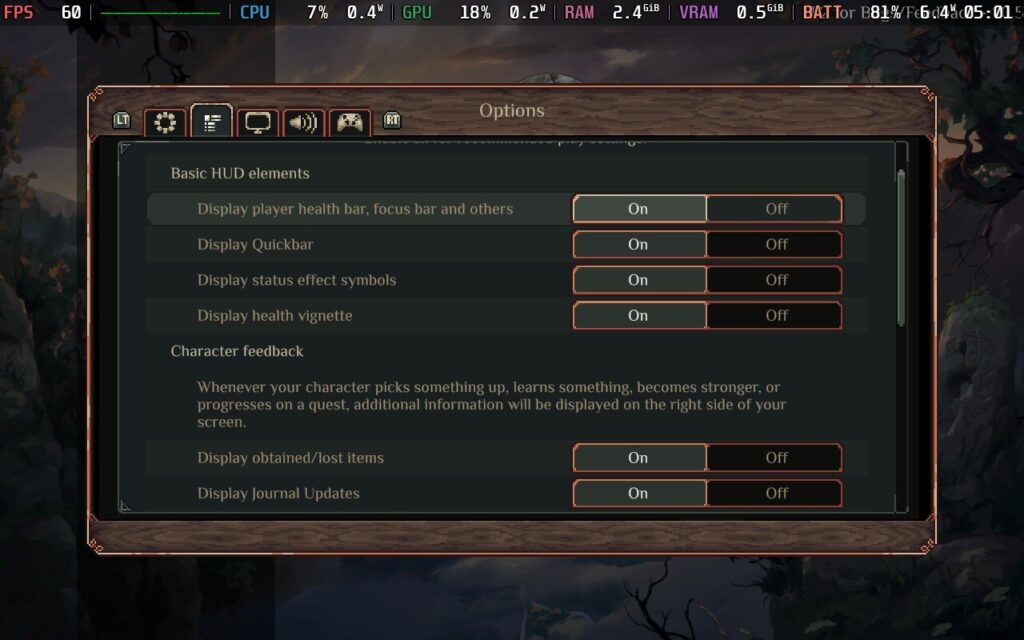
For gameplay, players can change the difficulty, toggle tutorials, deactivate minigames with mechanics such as fishing and mining, change the text display speed, auto-assign items to the quick bar, equip ammunition automatically, and draw their weapon automatically. For the interface, players can freely turn off HUD elements on the screen and toggle character notifications when they act, such as picking up an item or gaining a level.
Organic and honest is how I would describe Drova: Forsaken Kin. It combines the best parts of what made me fall in love with RPGs into a brilliant package. Great worldbuilding and lore, challenging combat without feeling like it's mocking the player for trying, and surprisingly gorgeous visuals blend in wonderfully.
This is an absolute bargain for the quality, even at full price.
このレビューはPC版に基づいています。
この記事を楽しんでいただけたなら、SteamDeckHQ の他のコンテンツもチェックしてみてください!あなたのゲーム体験に役立つゲームレビューやニュースを幅広く取り揃えています。ニュース、ヒントやチュートリアル、ゲーム設定やレビュー、最新のトレンド情報など、あらゆる情報をお届けします。 カバーしています!