

Screamer was provided by Milestone S.r.l. for review. Thank you!
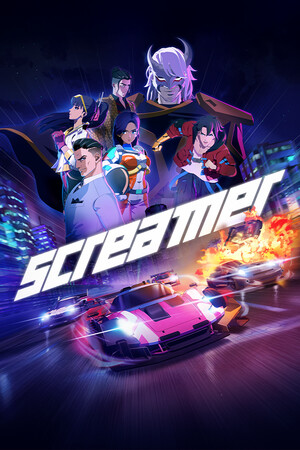
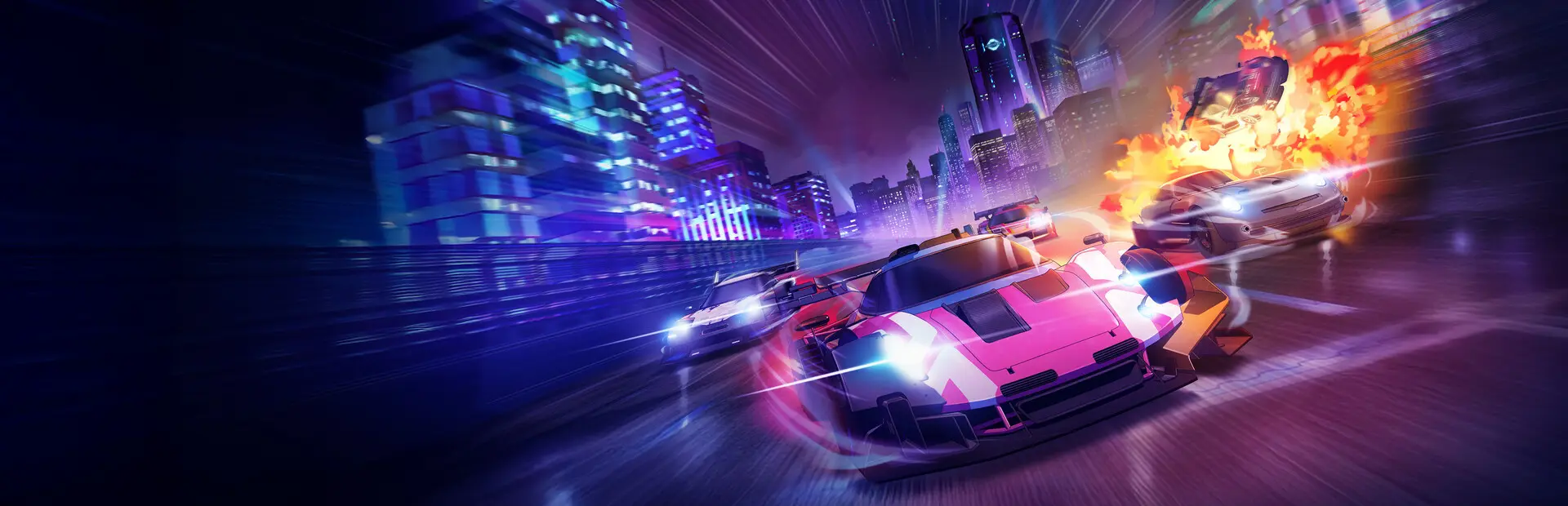
Having played the original Screamer series back in the 1990s, I was curious when I heard about this new "Screamer" title coming from the team at Milestone. It doesn't take much to realize, however, that this game is Screamer in name only and bears almost no resemblance to the original franchise. Instead, this new title opts for a futuristic world, blending the styles of a realistic environment and anime-styled characters, with plenty of neon-lit streets, flashy cars, and even flashier technology.
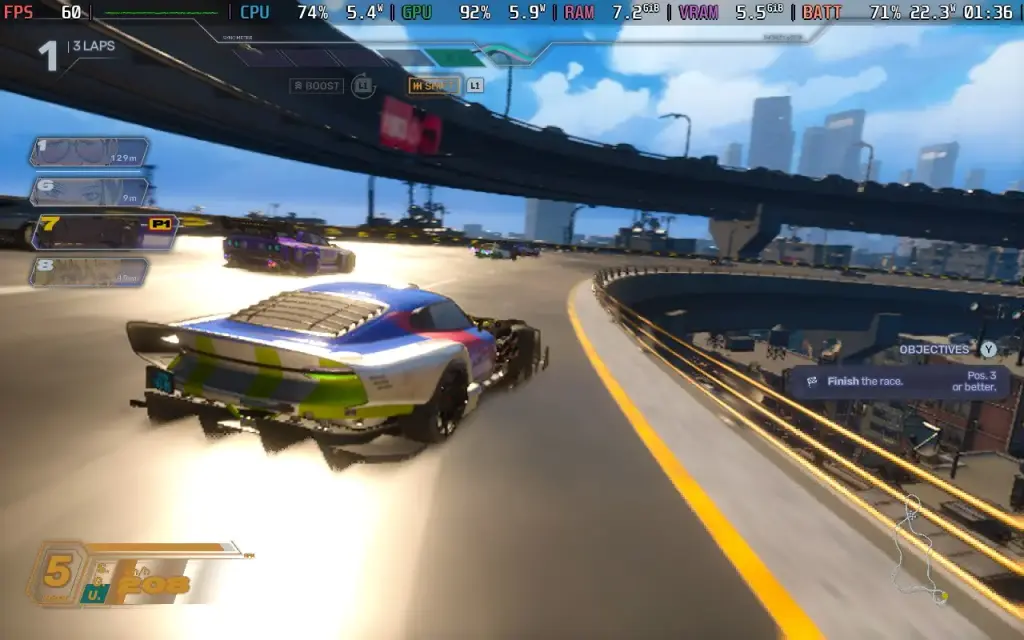
Screamer's "Tournament Mode" follows the story of 5 teams, each of which has entered the "Screamer Tournament", a street-racing tournament organized by a mysterious host, for their own personal reasons, ranging from revenge to financial burdens to fame. This campaign is the main mode of the game, but there's also arcade races for fun, split-screen, online multiplayer, and time trials with leaderboards.
It plays almost like a narrative-first game, unusual for a racing game. The story is told with fully voiced dialogue, with pretty much every race flanked by conversations, and sometimes you're treated to a nicely animated cutscene. This really helps flesh out the characters more than expected, exploring the motivations behind each participant and their relationships, with many of the characters taking part linked in some way by a web of connections. While I didn't find myself getting too attached, I did root for certain individuals to come out on top.
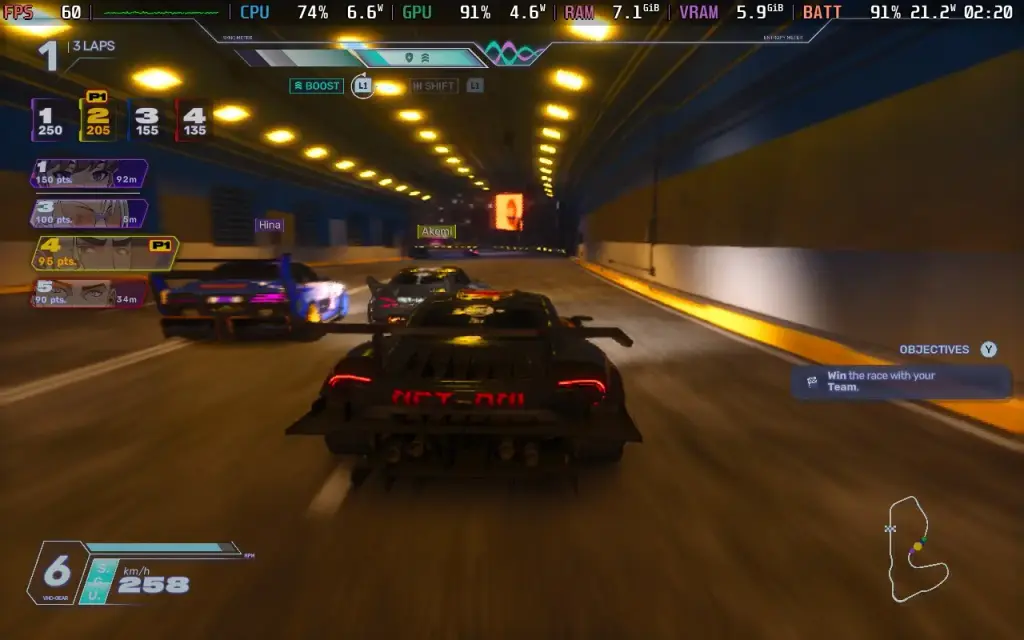
One thing that immediately hits you with Screamer is the unique driving mechanics at play. Some games may have one or two gimmicks up their sleeves to make them stand out, but Screamer appears to have taken inspiration from a wide variety of games, while adding some of its own flair.
The cars feel weighty, making it difficult to take corners without using drift mechanics to throw them around at high speed. Drifting uses the twin-stick system seen in games like Intertial Drift, where the left stick steers the car, and the right stick controls your drift. I'm not a big fan of its implementation here, but it is easier to control than Intertial Drift, and as I played through Screamer's campaign, I found myself enjoying it more and more as a way to keep the player on their toes.
While the game does have automatic gears, you'll still get rewarded with a speed boost for manually shifting gears. Personally, I don't mind it, but automatic gear shifting feels more natural for arcade racers like this.
And then there's boosting. By spending time at high speeds and shifting up precisely, you'll earn Sync Points, which are essentially your boost. To maximize use, you'll need to hold down the shift button and release it to increase speed. Using boost will also increase a secondary bar, which you can use to shield yourself or attack other drivers to temporarily disable them with the R1 button.
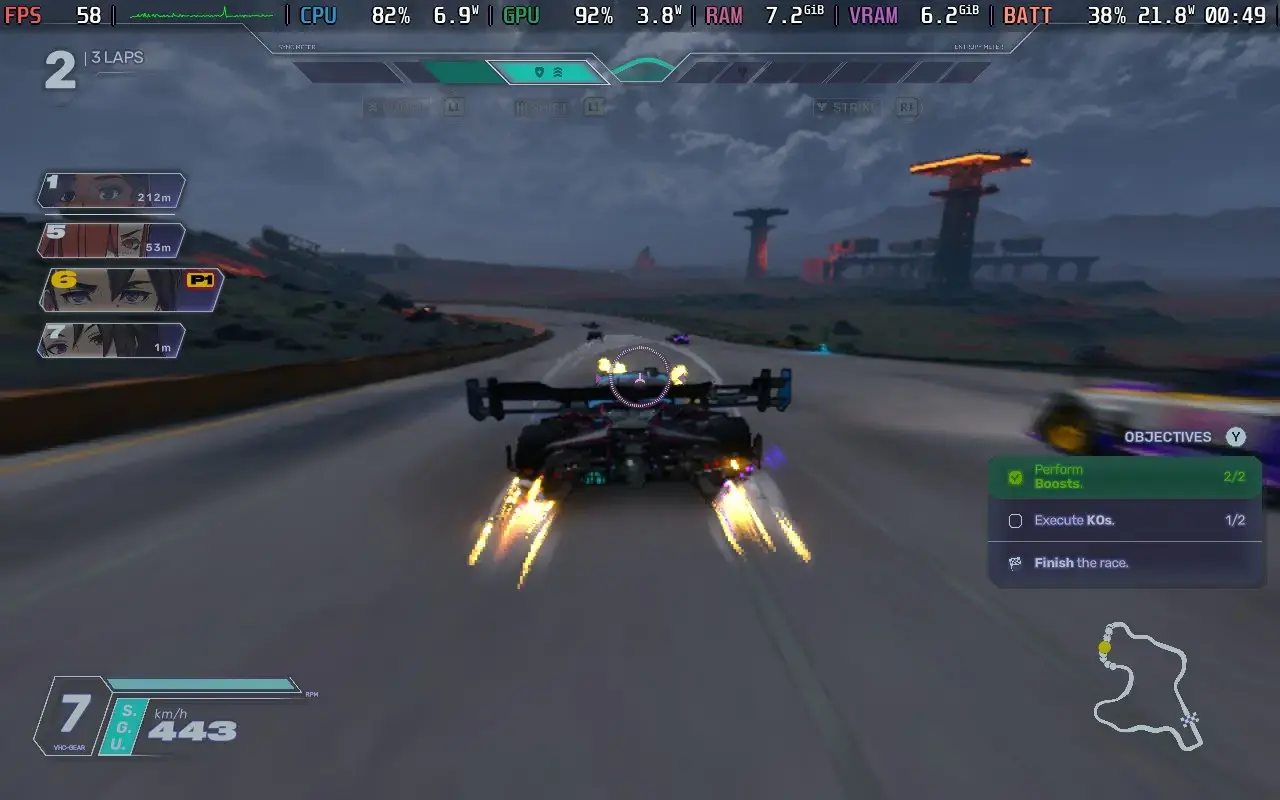
This might sound overwhelming, but the game introduces these mechanics gradually over several races. In fact, the attack mechanic isn't even mentioned until you're quite far into Tournament mode, and once you get the feel for the controls and throw in the excellent heart-pounding selection of music, it makes Screamer a very engaging game to play.
You aren't just holding the accelerator and driving around a circuit; you're constantly balancing the steering and drifting sticks to hold good lines through corners, planning when you can next use your boost on a good straight, and keeping the rev counter in your peripheral vision to hit that shift up button when it turns golden, and later, lining up your car to strike your opponent's. This is some good, hectic, arcade racing.
That's not to say it's all sunshine and neon rainbows, though. There were a couple of annoyances for me during my time with the game.
For some races, it isn't even necessary to place well; you just have to drive for the sake of driving. It's strange, but some races have very arbitrary win conditions, such as boosting a certain number of times while drifting or colliding with opponents, which defeats the purpose of racing.
When it comes to these extra objectives, it doesn't matter if you win or lose the race; if you didn't boost while drifting the required times or collide enough with your opponents, you're failing the mission. I feel like such objectives should at least be optional, with players receiving a bonus for completing them. However, there is no distinction between objectives; all must be fulfilled in the race in order to progress the storyline.
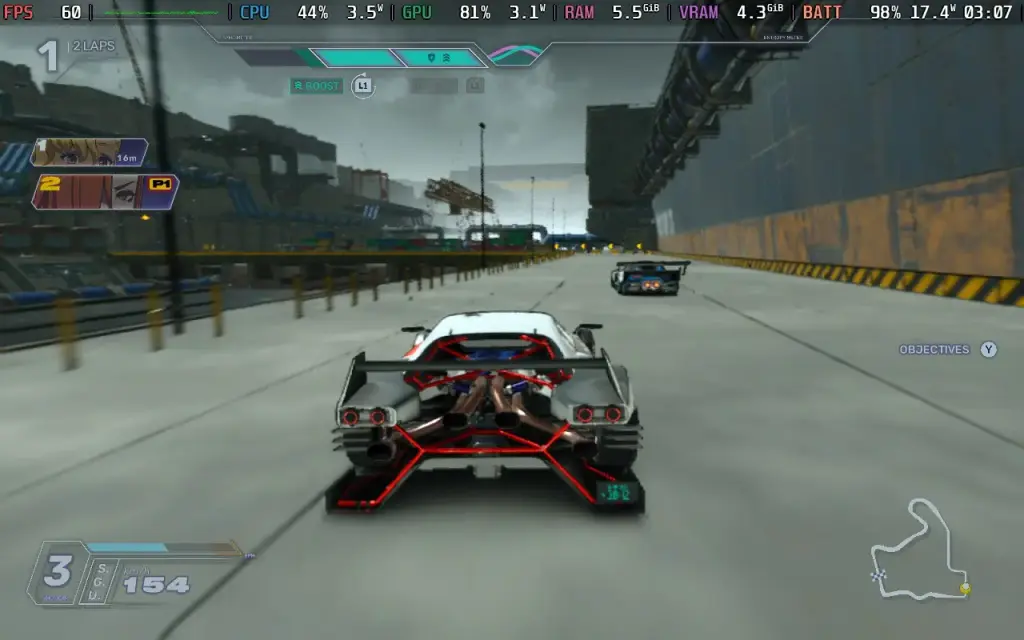
Then there's the balance of the cars and track layouts. Visually, the tracks are great, and even the designs are quite interesting. The problem is that the track layout, or should I say the corners, often doesn't match how the cars drive. As I said before, the cars in Screamer are weighty and hard to turn without drifting; it's often preferable to hit a wall at a corner rather than brake for it, and that happens quite a lot.
Depending on your car, some corners feel almost impossible to navigate without significant braking, which is fine; I expect to have to brake in a racing game, except the AI cars in the race seem to take these corners with no issue. Some cars behave as though they are driving on ice or are literally bricks with wheels, and it's just not a fun experience to drive them. I dreaded certain missions where I was forced to use those cars, especially as other cars in the game feel great to drive and don't have these issues.
Screamer gets off to a pretty good start on the Steam Deck. The game does run at 1280x800 by default, filling the Steam Deck's display.
I encountered an issue where cutscenes would appear entirely black, requiring the player to skip them to continue. The review build I was using was set to use Proton 9 and did not work with Proton 10, so I recommend you force the game to use Proton GE 9-27, which allows the cutscenes to play.
As for settings, I set the game to the Low preset, which sets everything to its lowest, then switched the Scaling Type to FSR 4 and set the Scaling Mode to Quality. I also used the in-game framerate cap to limit the game to 60 FPS.
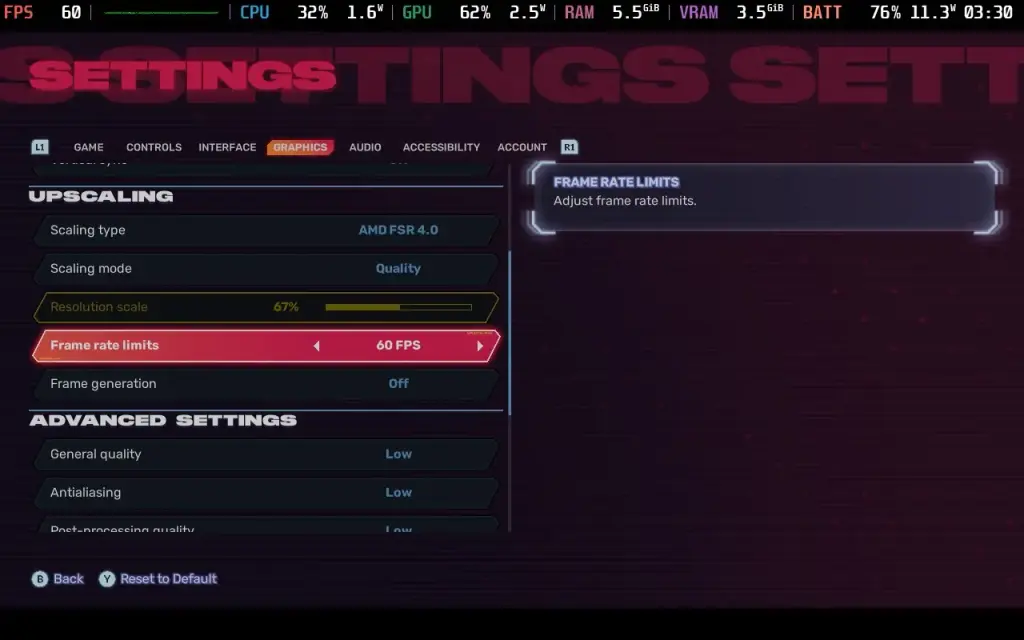
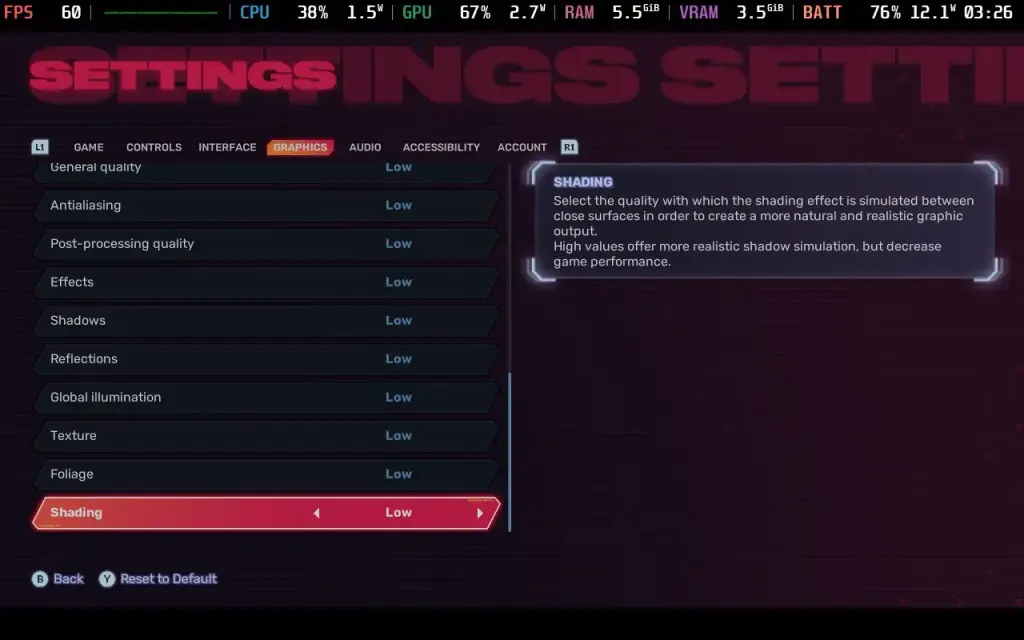
When it comes to performance, Screamer pretty much maintains 60 FPS throughout, except on some tracks where the game stutters for the first few seconds of a race. It soon sorts itself out, and I presume this is because the game occasionally uses large amounts of VRAM and has to offload assets to slower RAM.
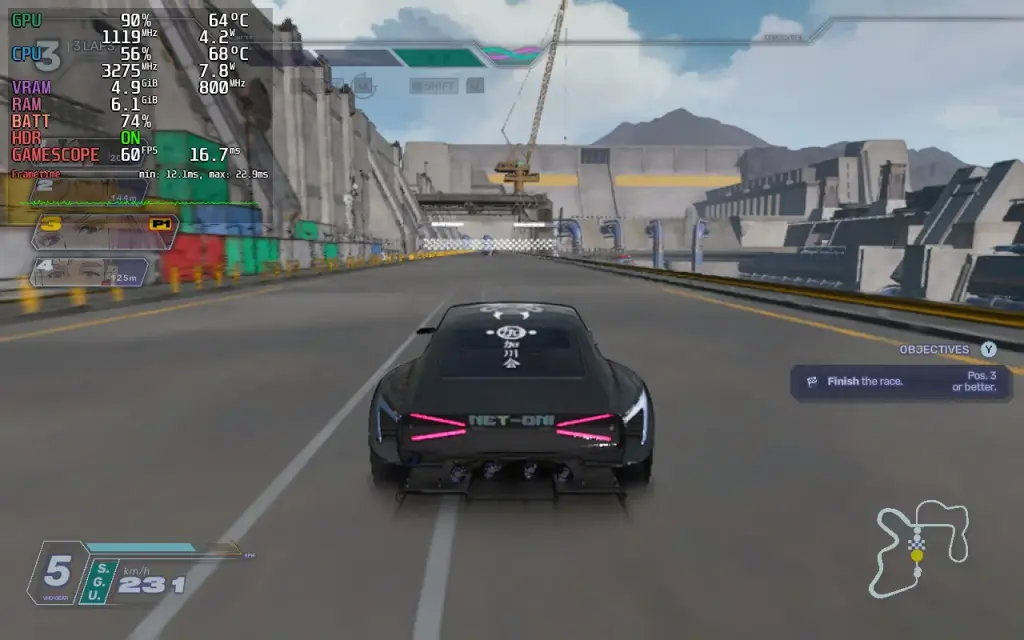
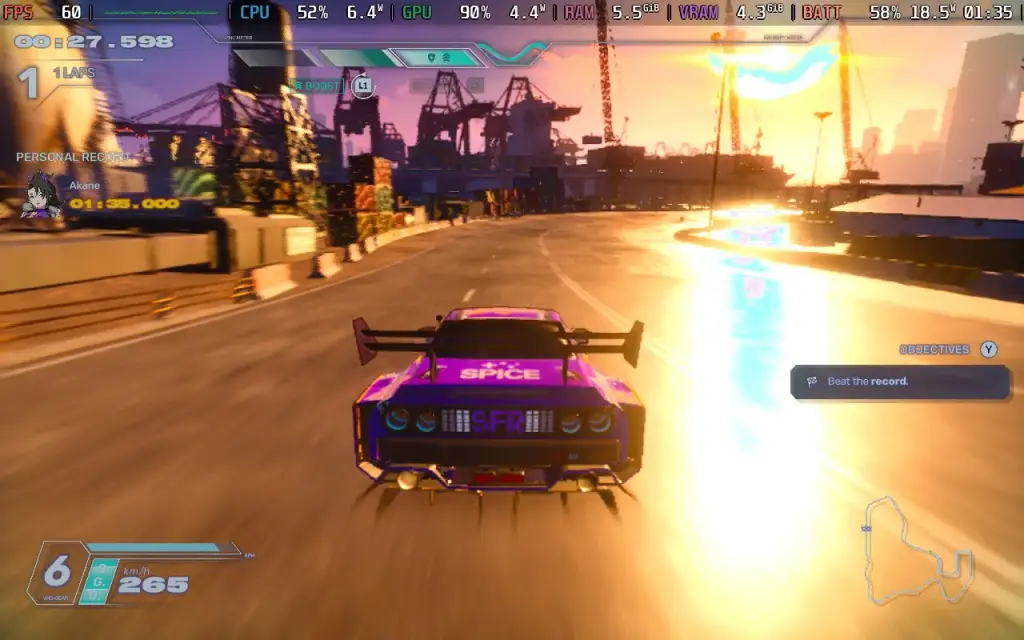
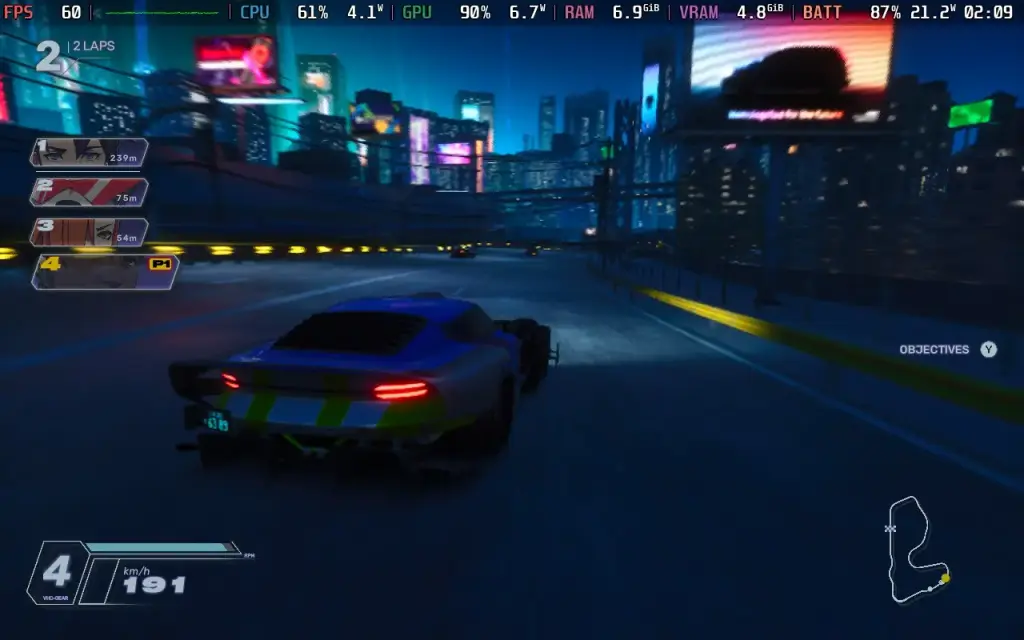
Power draw is stable around 21W-22W while racing, meaning Steam Deck OLED users can expect around 2.5 hours of playtime, Steam Deck LCD users around 1.5 hours. Temperatures were around 60C-65C.
Screamer has driving aids, such as auto-accelerate, as well as braking, steering, and drift assistance, to make controlling the car easier. You can also play the game in slow-motion in offline game modes to give yourself more reaction time. There is a one-handed mode, which enables additional assists and moves all controls to either the left or right side of the Steam Deck. There is a colorblindness filter option as well as subtitle settings, such as font size.
Screamer combines a variety of unique driving mechanics to create an engaging driving experience. Backed up by an electrifying soundtrack and some flashy visuals, Screamer should be on any arcade racing fan's wishlist. There are some curious design choices regarding car balancing and objectives in the story mode that can frustrate some missions, but by and large, Screamer is a positive experience.
Performance on Steam Deck is better than expected, and as long as you keep the settings on low, you can enjoy a (mostly) smooth 60 FPS experience here.
このレビューはPC版に基づいています。
このレビューをお楽しみいただけたなら、SteamDeckHQ の他のコンテンツもぜひご覧ください!あなたのゲーム体験に役立つゲームレビューやニュースを幅広く取り揃えています。ニュース、ヒントやチュートリアル、ゲーム設定やレビューをお探しの方も、最新のトレンドを知りたい方も、ぜひご利用ください。
Screamer's unique driving mechanics and pumping soundtrack create an engaging driving experience. Despite some odd design choices, Screamer is a positive experience on the Steam Deck.