




ReStory was provided by tinyBuild for review. Thank you!
I have played many simulation games in my day, but one of the first that really hooked me was PC Building Simulator. There was something about taking orders, putting PCs together piece by piece, and cleaning them that just felt so enjoyable. Not many games have reached the highs that I felt when putting a PC together, but no other game has come close quite like ReStory. The way it touches on nostalgia, combined with its visuals, creates a repairing simulation experience that I found myself enjoying and continually returning to.
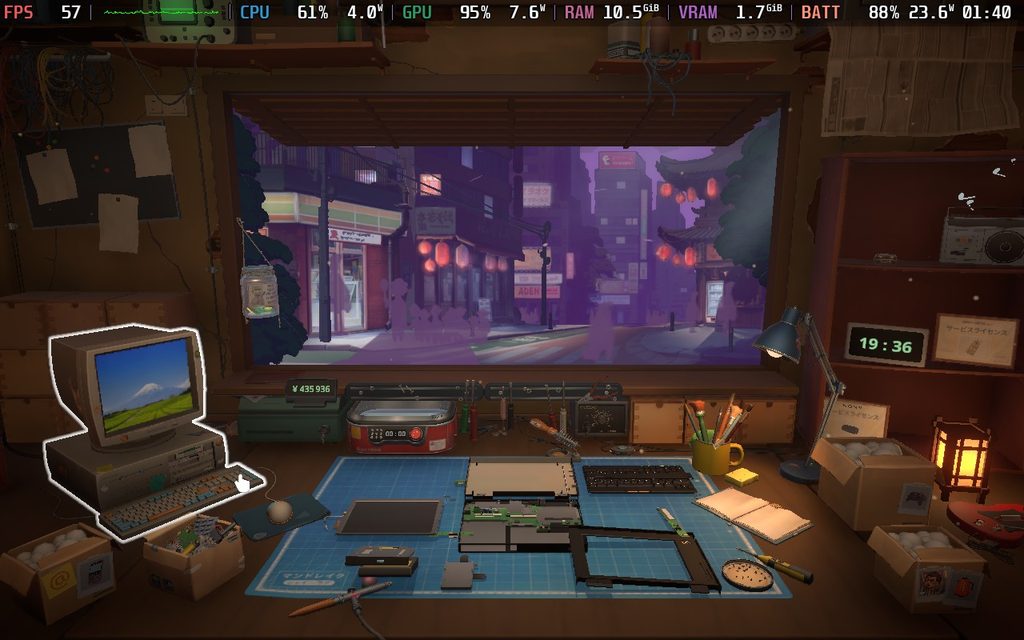
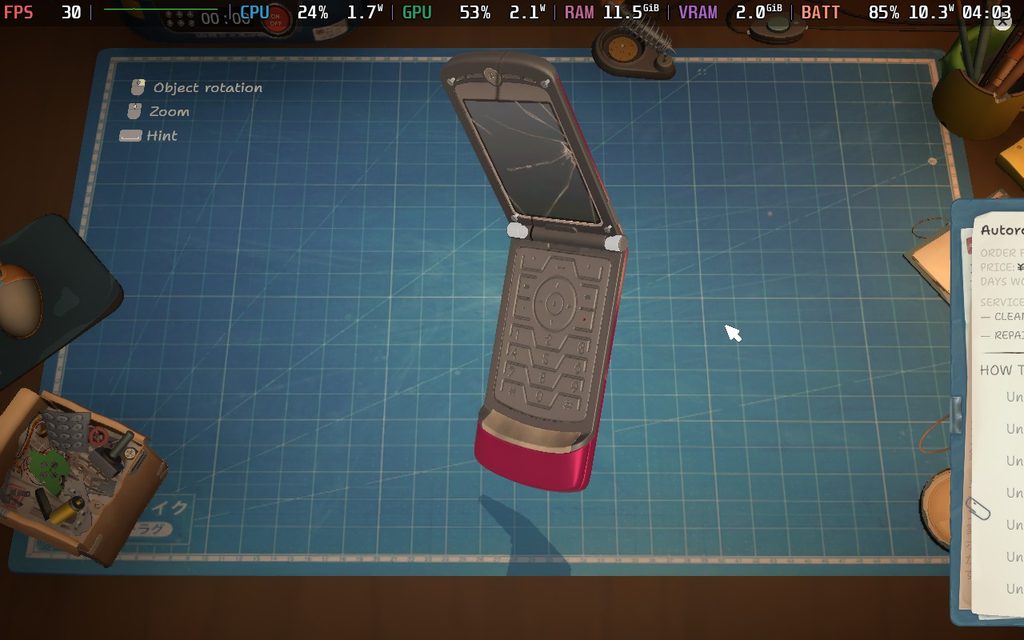
Unlike other similar games, ReStory charts its own path by evoking nostalgia in a gorgeous-looking package. We opened up our repair shop smack in the middle of Japan during the mid-2000s. Because of that, we will be operating on devices that my generation and older grew up with. This includes the PSP, PS1, Xbox, DS, Motorola Flip Phones, BlackBerrys, and even genuine ATARI consoles. Most of these have different names and slightly different looks, so they don’t step on the toes of the IP holders, but the ATARI devices are licensed and genuine.
This is quite possibly the biggest reason why I fell in love with the game. Here I was, taking apart a knockoff PSP, unscrewing its UMD drive, cleaning it, and putting it back together. There’s something so satisfying about working with these devices that are iconic and meaningful to my upbringing. Even if I was continually working on the same type of device for jobs, that satisfaction didn’t fade. I actually felt accomplished as I memorized which parts go where and optimized my workflow to take it apart and put it back together as quickly as possible.
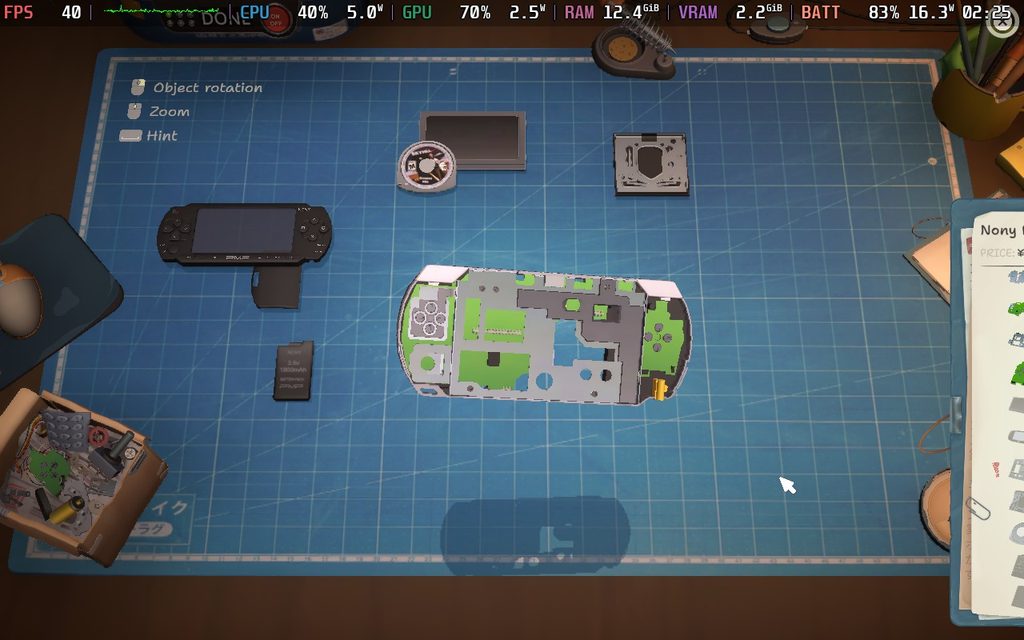
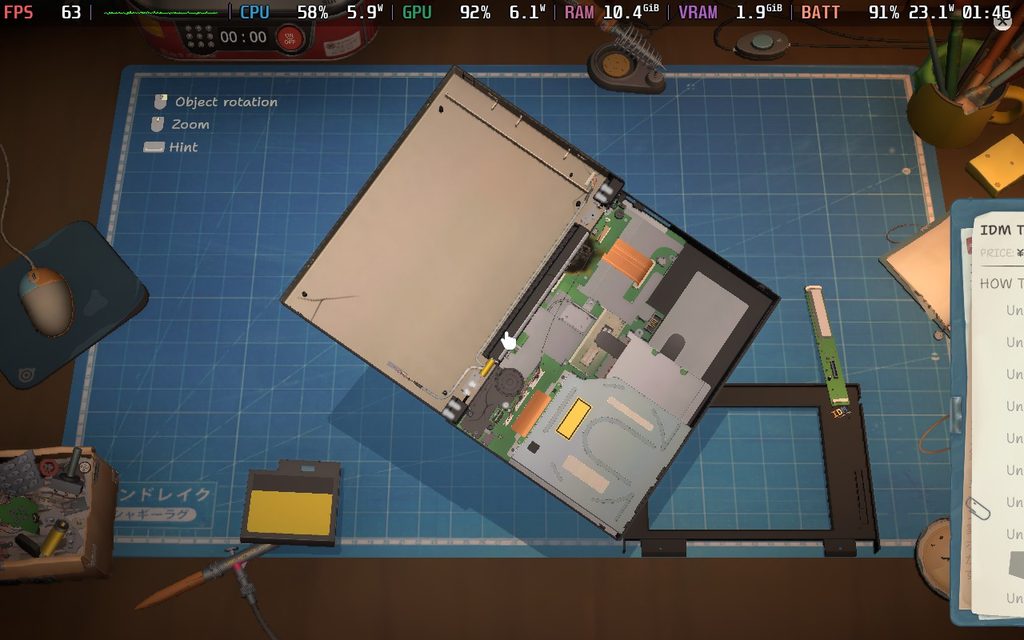
There’s a solid variety of products to work with. As much as I love video games and classic phones, it was cool to start working with flashlights, walkie-talkies, kettles, and even robot dogs. It has a nice variety that really shines in the game's opening hours. We start off with a couple of phones, then work our way through the other products we can fix. This then expands to painting, hacking, upgrading, and soldering, which does spice up the gameplay a bit. And thanks to the visuals, it’s very satisfying to take them apart, clean them, and see their inner workings.
However, even with the new products and mechanics, I still found it a little monotonous. I understand that’s the point of these types of games, since we are working with the same products and constantly repairing them, but I found myself getting into a cycle of making more money that didn’t really change. When I was looking to get more expensive licenses or upgrades, I found myself working on the same few devices that would get me the most money. I found almost no motivation to go back to the older devices because they only made me 20,000-30,000 yen, whereas I could find a few others that would give me 80,000-90,000. I also almost never checked online orders, since repairing and selling devices became much more profitable.
I’ll admit, there is something very satisfying about buying broken products and scalping them for pieces until I have enough to put together a full product and sell it, but that takes time. There’s also a neat competition mode, which I do like because it’s fast-paced, but I also found little motivation because it didn’t make nearly as much money. No matter what was thrown at me, I almost always found myself in the same cycle of picking 2-3 devices to focus on to repair and sell on the market to make money.
Luckily, the cast of characters and setting are quite possibly the most redeeming qualities of the game. Games like this don’t usually have an overarching story, or at least one that isn’t notable. ReStory is different. The storyline isn’t the most original, but it was still enjoyable with an interesting lineup of customers to meet and choices that do change aspects of the story. It wasn’t long before I found myself starting to fall in love with the househusband yakuza and Yui.
I always find myself excited to see who was going to appear next, even when I got lost regarding what was happening to the town. While there were definitely some moments where I understood what was happening, it would start to become a little difficult to follow. I started to get confused about which characters were related to each other, who was staying with whom, and what I was fighting for. I also ended up pissing off a rival repair company, but I was tasked with repairing products for them, so I was a little confused. It was enjoyable when it all clicked, but there were definitely moments when I was not sure exactly what was going on.
As for playing ReStory on the Steam Deck, there are a few mixed feelings I have. It’s definitely playable, and with recent updates, I’ve started to enjoy it a bit more. However, there are still some compromises and issues that remain, so I could see a good chunk of these being fixed with future updates.
My biggest woe is controller support. When I was reviewing the game, it didn’t have controller support yet, so I got used to the keyboard and mouse control scheme. It was janky and hard to control at times, but it worked. After a few updates, controller support was added, though it isn’t as clean as I would’ve liked.
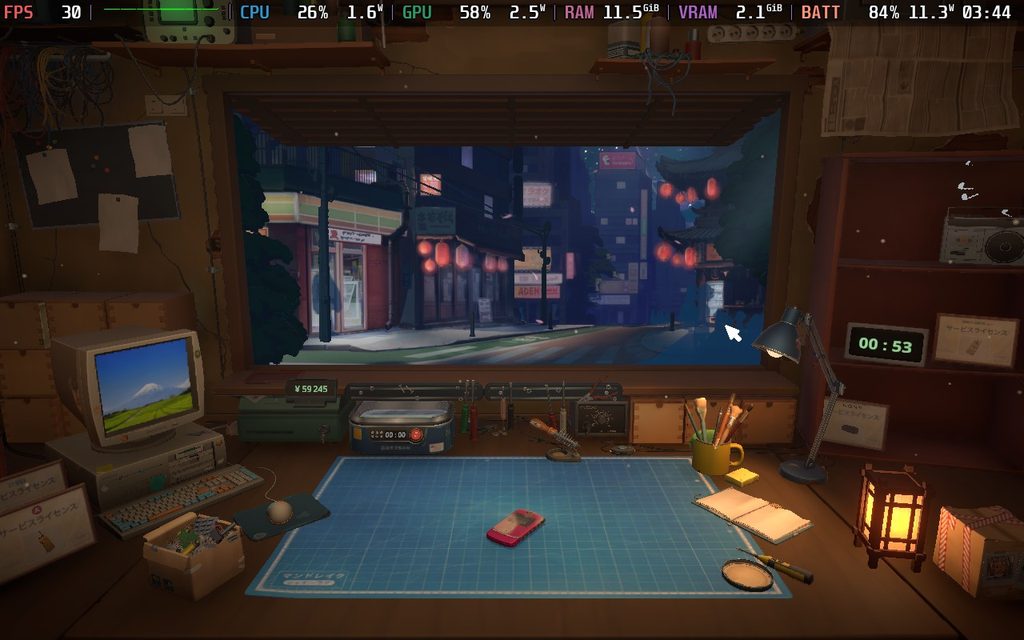
While moving the cursor and rotating the device is more precise and streamlined, it can still feel like a chore to move around. Looking to the left and right of our desk requires us to move our cursor all the way to the left or right of the screen, and on the default settings, it moves way too slowly. It’s great for making fine-tuned adjustments when repairing devices, but I wish the cursor moved faster when we aren’t repairing. There are also some minor adjustments that could’ve made navigation easier, like using the shoulder buttons to switch tabs when we’re using the computer or shortcuts to pick up certain tools for repair. These adjustments could make using the gamepad much easier and make the entire entirety of the UI more accessible.
As for performance, it’s playable, but it has some very odd issues. For instance, no matter what the setting, battery drain will rise. There are either CPU or GPU spikes from just standing still, and they happen at weird times. If we aren’t capping the framerate, the GPU will spike. If we are capping the framerate, the CPU will spike. This can happen whether we use the in-game framerate cap or through SteamOS.
The only way to get around this is to also set a TDP limit, but there may be some drops here and there. Still, for a game like this, it’s better than trying to play at 30 FPS on low settings and still get a whopping 23W battery drain.
This was a weird game to optimize for, and I expected to have multiple recommended groups of settings for this. However, the behavior is so odd that I couldn’t justify playing it any other way. Setting the game to Low without any FPS cap will ultimately be the best way to play. There is no frame time instability, while the game regularly sticks to 60 FPS, with some minor dips to 57 or 58. Yes, the battery drain will be massive, but at least it will be smooth, stable, and look ok.
We could set the graphical quality up to Medium and still get above 30 FPS, but I didn’t find the best improvement from Low to be worth playing below 60. High can fluctuate even more, and again, not massive improvements over the smoother edges of some devices and props in our workshop.
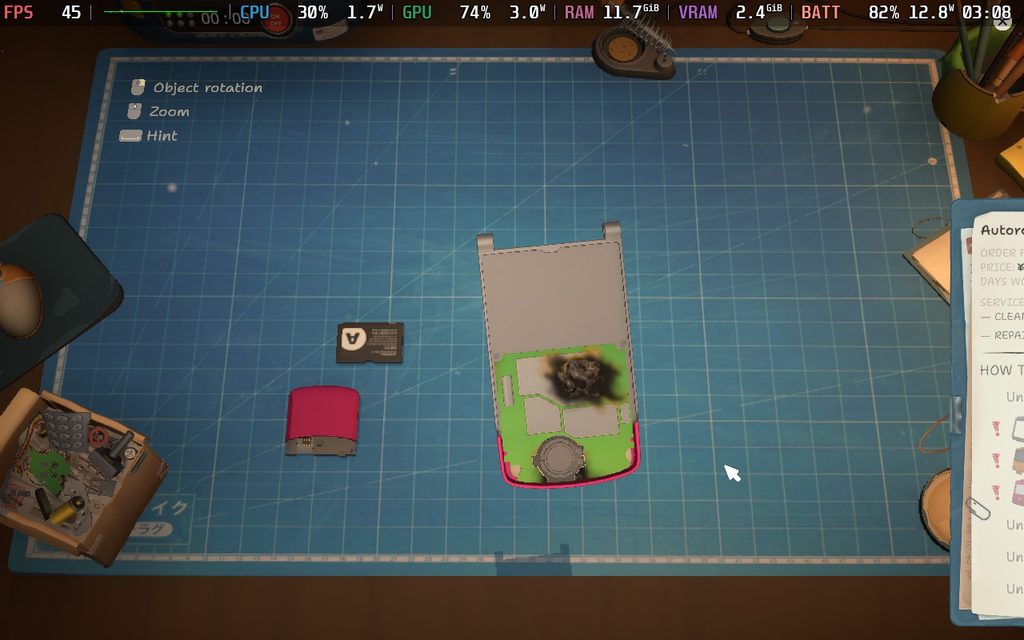
I expected better performance for a game like this, but it was disappointing how many odd drops there were.
The game does support cloud saves, but it carries over the settings as well. This means that if we try to play the game on a desktop PC after playing on Deck, the resolution will still be 1280x800 and the graphical quality will be on Low.
ReStory is an enjoyable electronics repair simulator that excels at setting and nostalgia-inducing products to repair. It was so fulfilling being able to work on old devices I've come up with, like PSPs, DS, BlackBerrys, and Atari consoles, and the mid-2000s Japan setting really sets the mood nicely. The cast of characters is great, and the story is decent when it isn’t confusing, but it’s very easy to fall into a repetitive cycle that shuts out a lot of the variety that comes from all the devices we can work on. It’s not necessarily bad, and there can still be some enjoyment, but I never felt compelled to utilize all of the features the game offers and just focus on the few products that make me the most money.
Performance on the Steam Deck was also disappointing. I expected more flexibility with the less-detailed visuals and static workshop, but I was met with CPU/GPU spikes and frame time issues. It’s still playable, but it will require a compromise on battery life and visual quality.
このレビューはPC版に基づいています。
このレビューをお楽しみいただけたなら、SteamDeckHQ の他のコンテンツもぜひご覧ください!あなたのゲーム体験に役立つゲームレビューやニュースを幅広く取り揃えています。ニュース、ヒントやチュートリアル、ゲーム設定やレビューをお探しの方も、最新のトレンドを知りたい方も、ぜひご利用ください。
ReStory: Chill Electronics Repairs is a solid repair simulator that banks on nostalgia and an interesting cast of characters to carry it, and it's a bit odd on the Steam Deck.