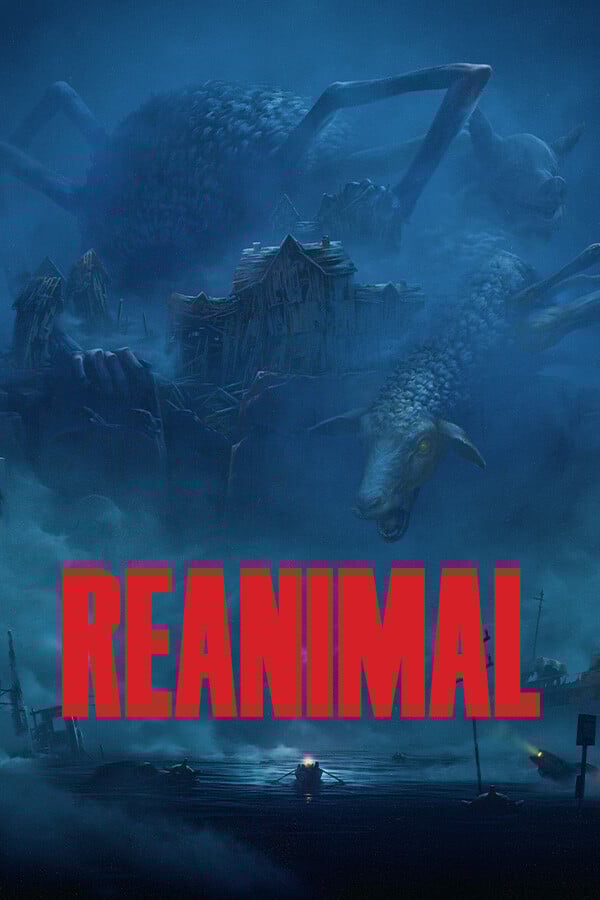



REANIMAL was provided by THQ Nordic for review. Thank you!
I remember way back in the day when I first played Little Nightmares. I was captivated by the gorgeous, surreal world with larger-than-life proportions, portraying some of our deepest fears in glorious, creepy ways. While the developers were replaced for Little Nightmares 3, the original developers, Tarsier Studios, went ahead with their own vision for the evolution of their horror series they created. Now, their game, REANIMAL, is here, and it shows that Tarsier hasn't lost their step one bit, and they ultimately created one of my favorite atmospheric experiences I have played this year.
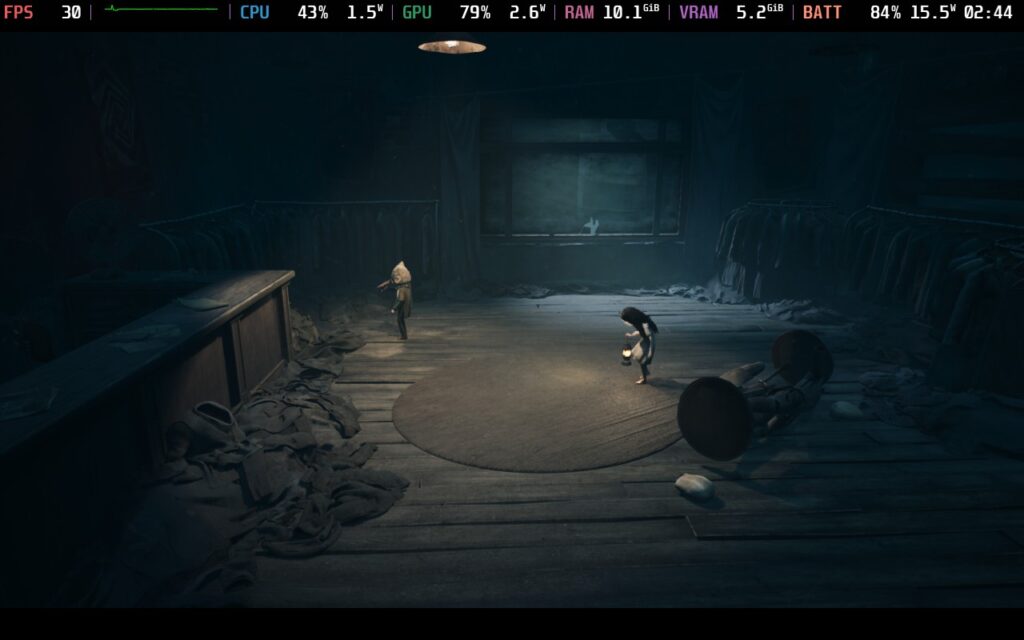
REANIMAL's setting goes in a very different direction than what they have done before. With Little Nightmares, we were running around in a surreal world where everything was much larger than normal, and everything felt off. With this game, we get a more life-like world where the proportions of the environment are more in line with realistic standards, relying more on the deteriorating world and horrifying monsters that lurk around.
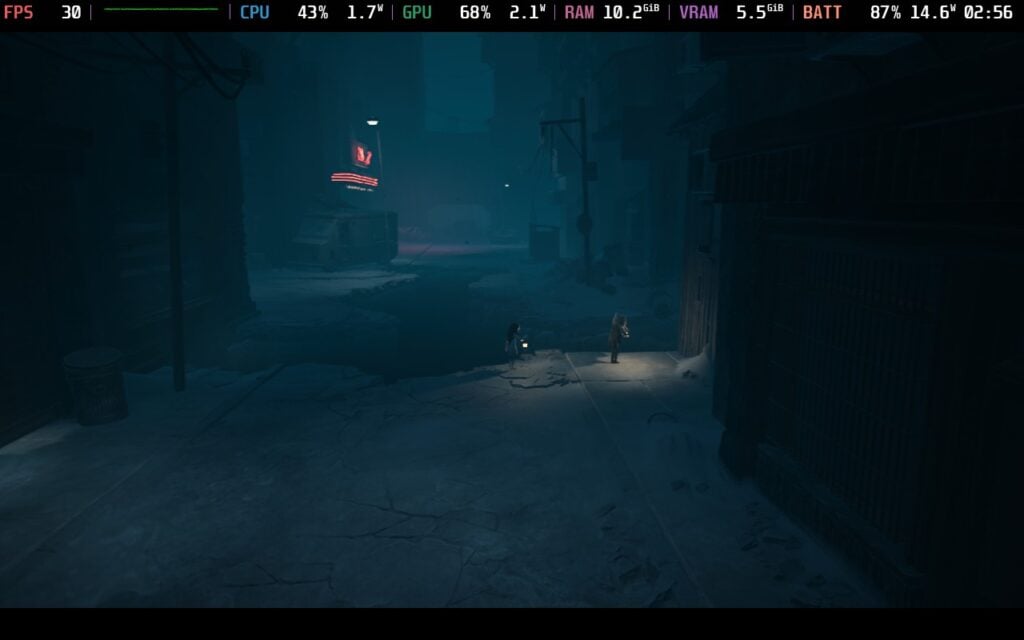
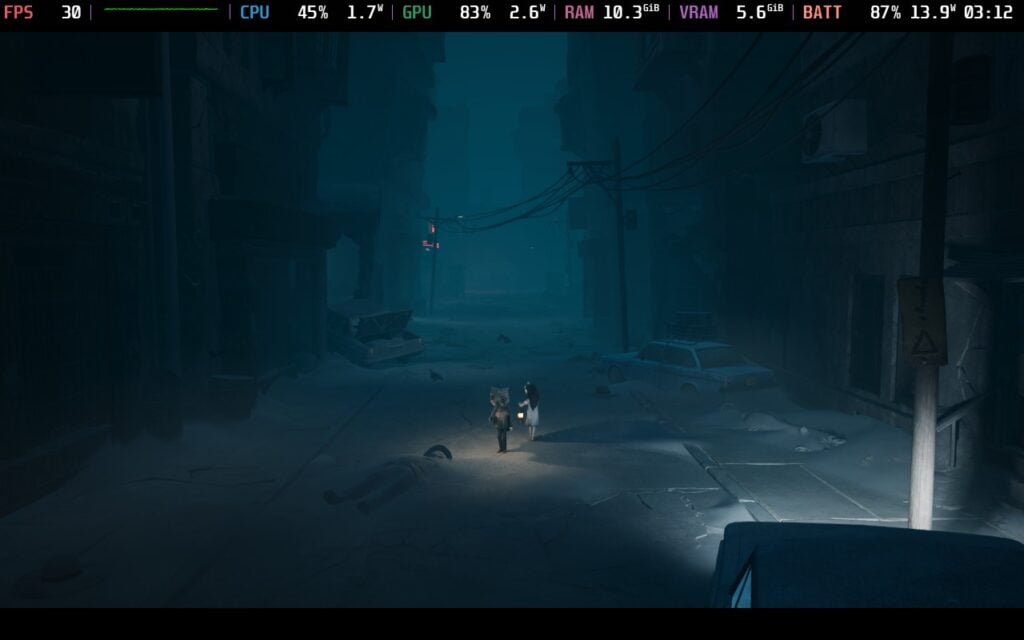
I love this change, and I can say with certainty that this is where REANIMAL shines brightest. The haunting world and atmosphere, coupled with the design of the characters and mutilated humanoids that try to capture you, elevate the experience wonderfully. The world, filled with crumbling cities, sprawling forests, and neon-lit cinemas, is one we have to navigate slowly, which lets the carefully crafted surroundings shine.
There were certain camera angles that just felt near-perfect, giving this haunting cinematic vibe. The way the camera perfectly pans backwards as we are moving our mine cart into the mine, getting the trees around slightly illuminated with the deep dark cave engulfing us, gave me chills. Add in the dim lighting that comes from our characters, and it becomes a spectacle on the eyes that is hard to look away from, no matter how much I want to.
The story, while short, gives off a similarly haunting vibe, though it didn't captivate me as much as I had hoped it would. We play as siblings who go back to their hell to rescue their friends who previously weren't able to escape with them. We will have to rely on each other to survive the horrors of the island, save our friends, and hopefully survive to make it off the island once again.
While the ending wasn't what I expected, and didn't give me the resolution I hoped for, the journey to get there was interesting. I wouldn't say the story is one to write home about, but it upped the creepiness factor as I made my way throughout the island to discover what was actually going on. It was equally unnerving, with the feeling of malice seeping through every inch of whatever we had to do.
The gameplay is very similar to Little Nightmares as well, which helps drive home how much of a spiritual successor this is. We will run around locations, trying to keep moving forward by completing puzzles and avoiding monsters. There will be a lot of interaction with the world, whether it be tools like crowbars to open doors or picking up objects to throw and break windows, or crouching behind objects or under tables to avoid lurkers trying to capture us.
However, the world is more open, with a larger emphasis on decent-sized 3D planes instead of smaller 2.5D-like sections, which feels unlike Little Nightmares. This lends itself nicely to some of the chasing sequences, or leading to one of my favorite moments early game, when we are driving a car and have to escape from the slithering man. It also helps the world feel more cohesive. In Little Nightmares, each area felt like going from one stage after another, but for the most part, I feel like I am going from one connected area to another in REANIMAL.
I expected the game to feel a lot like Tarsier's previous games, and while I still did enjoy it, I couldn't help but find myself wanting something more. In most cases, it feels like Tarsier played it very safe to what they know, and I wish they had gone a little further. It's not that REANIMAL is bad, and it is a great horror game, but I wanted to see something that stands out more.
When it comes to REANIMAL on the Steam Deck, it is playable, but it's a little difficult to find the best settings. It reacts oddly when changing them, especially when it comes to turning on and off Nanite. I had encountered issues where I had turned it on, then turned it off by changing the overall quality setting. I had to set Nanite to "On" to actually turn it off. However, I would say it's still doable, and we can improve it without many sacrifices.
The other oddity I found is when limiting the framerate. Without any limiter, some scenes will run at 35 FPS max with 23W battery drain at our recommended settings, but with a 30 FPS limit, it will bring the drain down to 12W. Such a drastic change in battery life for the framerate difference is odd to me, so it must be putting a cap on another issue to make the battery drain go down so much. Still, for a game like this, I think a 30 FPS cap is more than okay.
No matter what the settings are, though, there will be some drops when loading in new models or scenes. These can happen quite frequently, and there will be some stutters and slowdowns for about 2-3 seconds each time. It's not the end of the world, but it does happen frequently enough to be mentioned.
REANIMAL is a beautiful game, and horror games like this tend to be best when they look as good as they can. So, with my recommended settings, I wanted to push visuals as much as I could while balancing battery life.
Through my testing, I found that Post Processing is the biggest resource sucker. It does make sense why, there are some big changes in visual quality in some scenes that make them look darker and more atmospheric, but it can cause a lot of drops. However, by turning it down to Low, we can basically put every other setting on Medium or High, we can even turn Nanite on, and it won't drain as much. It's pretty crazy to see such a change all come from Post Processing, but for a stable framerate, we will need to keep it on Low.
Even when setting Post Processing to Medium and everything else to Low, it will suck the Deck's resources more than any other setting, so I would say keeping it to Low is going to be best for the Deck. But with the 30 FPS cap, we can get around 3.5-4 hours of gameplay at a stable framerate, which is great.


There are also some settings we can change, including language, subtitles, vibration, and audio settings. However, that's about it, as there isn't any dedicated accessibility tab.
このゲームは16:10の解像度をサポートしていないが、クラウドセーブとコントローラーをサポートしている。HDR設定はない。
REANIMAL is a fantastic horror game from the Little Nightmare veterans. The atmosphere and world are wonderfully crafted with a disturbing story and creepy characters. The gameplay differences help it stand out, though it still feels a little too close to home in some cases, but that doesn't detract from how great an experience the game is as a whole. This is a horror game worth adding to your library, especially if you are a fan of Little Nightmares.
And while it's weird on the Steam Deck, it's still very playable and enjoyable. We do have to sacrifice the Post Processing, which adds to the game's atmosphere, but it isn't the end of the world. We can put almost everything else on "High", get a stable 30 FPS, and survive the horrors with a good-looking experience on the go.
このレビューはPC版に基づいています。
このレビューをお楽しみいただけたなら、SteamDeckHQ の他のコンテンツもぜひご覧ください!あなたのゲーム体験に役立つゲームレビューやニュースを幅広く取り揃えています。ニュース、ヒントやチュートリアル、ゲーム設定やレビューをお探しの方も、最新のトレンドを知りたい方も、ぜひご利用ください。
REANIMAL is a fantastic horror game from the minds behind Little Nightmares, and it's quite great to play on the Steam Deck with a couple of changes.

強制的な互換性はない
Upscale Method: FSR
Upscale Quality: Quality
テクスチャークオリティ:高
Shadow Quality: High
Effects: Medium
後処理:低い
アンビエント・オクルージョンミディアム
ブルームミディアム
Depth of Field: High
Nanite: Off