



15W - 19W

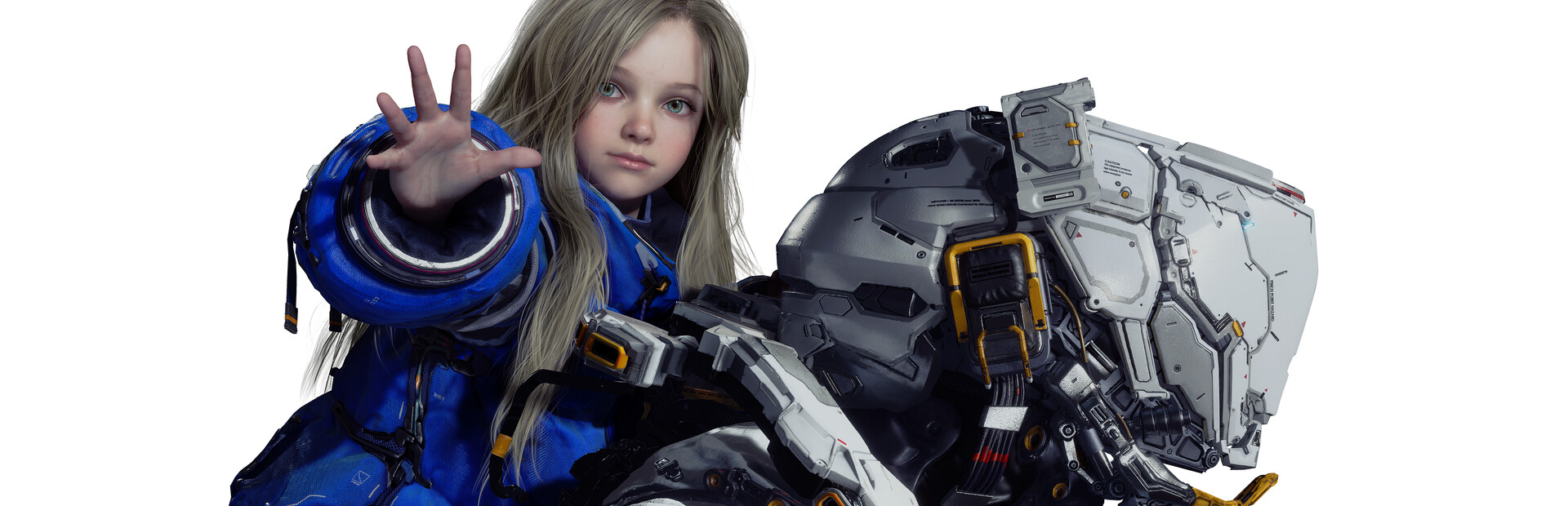


PRAGMATA was provided by Capcom for review. Thank you!
While I understand it, I feel like most big studios tend to play it safe with their releases. We see a lot of similar styles of games with similar gameplay mechanics that are normal for their genre. It’s not necessarily bad, because these are tried and true mechanics at work and make the games fun. However, I love seeing the studios try something new, and that’s exactly what Capcom has done with PRAGMATA. The structure and style are not abnormal, but the gameplay takes a different turn than what I have seen before. And ultimately, Capcom has created a perfect blend of puzzle and action that keeps the game engaging, and this might be my favorite game. I’ve played so far this year.
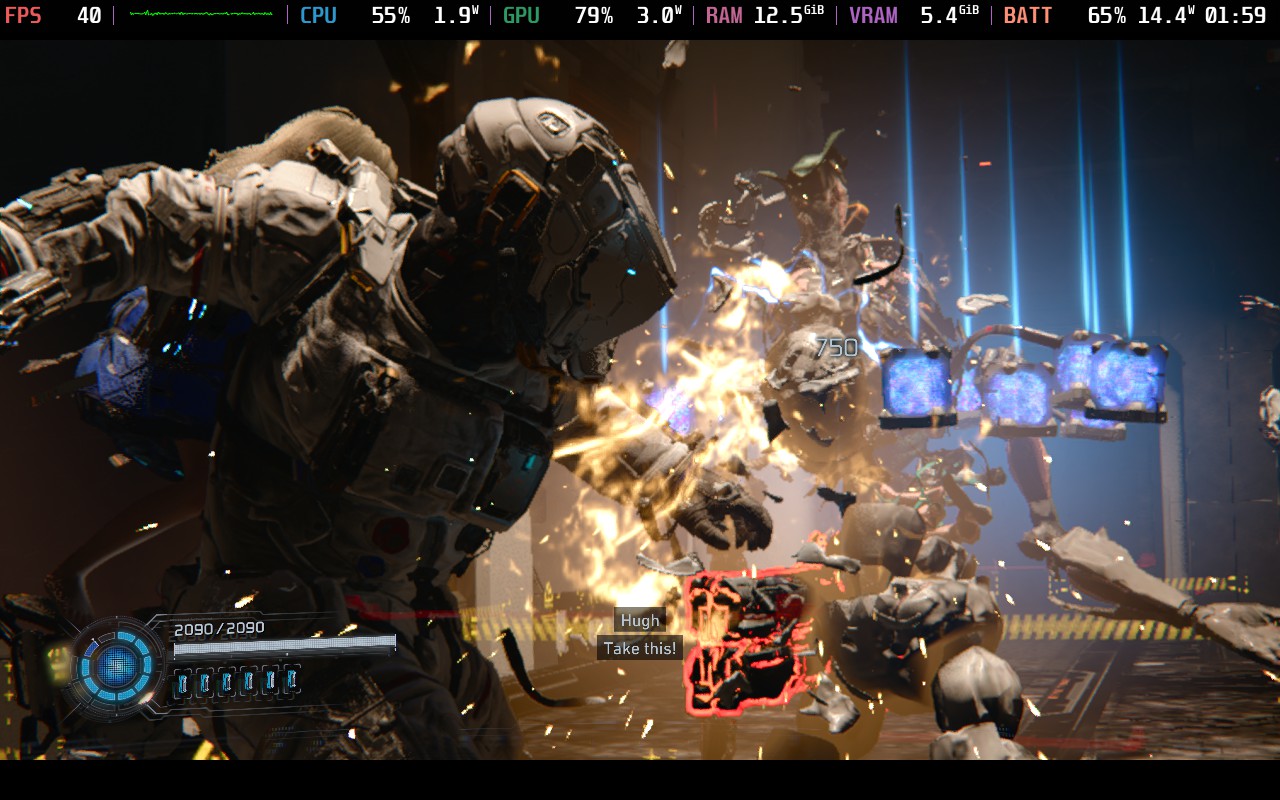
While PRAGMATA starts off in a predictable way, it diverges into a path that I did not expect as we continue playing. We enter the moon base as Hugh, who is part of a team to figure out what’s wrong with this corporate-made base. However, things quickly deteriorate as the entirety of our crew is killed, and Hugh is the only survivor. Ultimately, he will find Diana, a robot called a PRAGMATA, and they will work together to stop the rogue AI and get home.
I really thought this was going to be a similar-ish story to a lot of other games that do this, focusing on a crazy AI that is hell-bent on destroying humanity. But there is a lot more to it. I don’t want to spoil anything, but it becomes a surprising, emotional tale, where the dynamic between Hugh and Diana is what I came to fall in love with. The way they interact with each other, and the conversations that they have, are both enjoyable and hilarious, with Hugh warming up as a guardian and Diana fully embracing her childlike behavior. There are some legitimately hilarious conversations they have, but no matter the topic, it all feels fluid. None of their interactions or conversations felt forced, and they all felt like real conversations a parent and child would have.
Even though the story is a little bit on the shorter side, it had a good amount of surprises and emotion to it. I actually cried at the ending, with the development of the duo protagonists hitting hard. I also found the documents and reports that we could find throughout the levels actually very useful and provided a lot of details to parts of the story that may not be covered by skipping them.
I’ll admit, when I first saw PRAGMATA’s gameplay, I was a little worried. However, playing it at Summer Game Fest last year alleviated most of my worries. And with the full game, I got to see the combat with all the bells and whistles, and I fell in love with it.
The expertly combined real-time hacking puzzles and fast-paced action just feel better, and better the more I play with it. Generally, the combat loop will consist of hacking to open up the robot’s weak points, which we will then use our assortment of guns to shoot at it. If we don’t do this, our guns will barely do any damage, so it’s imperative to continually pay attention and hack to open them up. The swapping back and forth between hacking and shooting is wonderfully engaging, and it never got old the entire game.
Part of what makes it work so well is the movement when hacking. You don’t have to stand still to complete these puzzles; you can move around, dodge, and even use thrusters to fly in the air while you hack. They kept me on my toes and made each fight feel more dynamic. And even if we lose sight of our enemy, as long as we don’t get hit, our previous progress through the hacking puzzle remains. Successfully completing hacks also feeds into our Overdrive gauge, which is a giant attack that will hack every enemy around automatically and stun them, making them open to our shots.
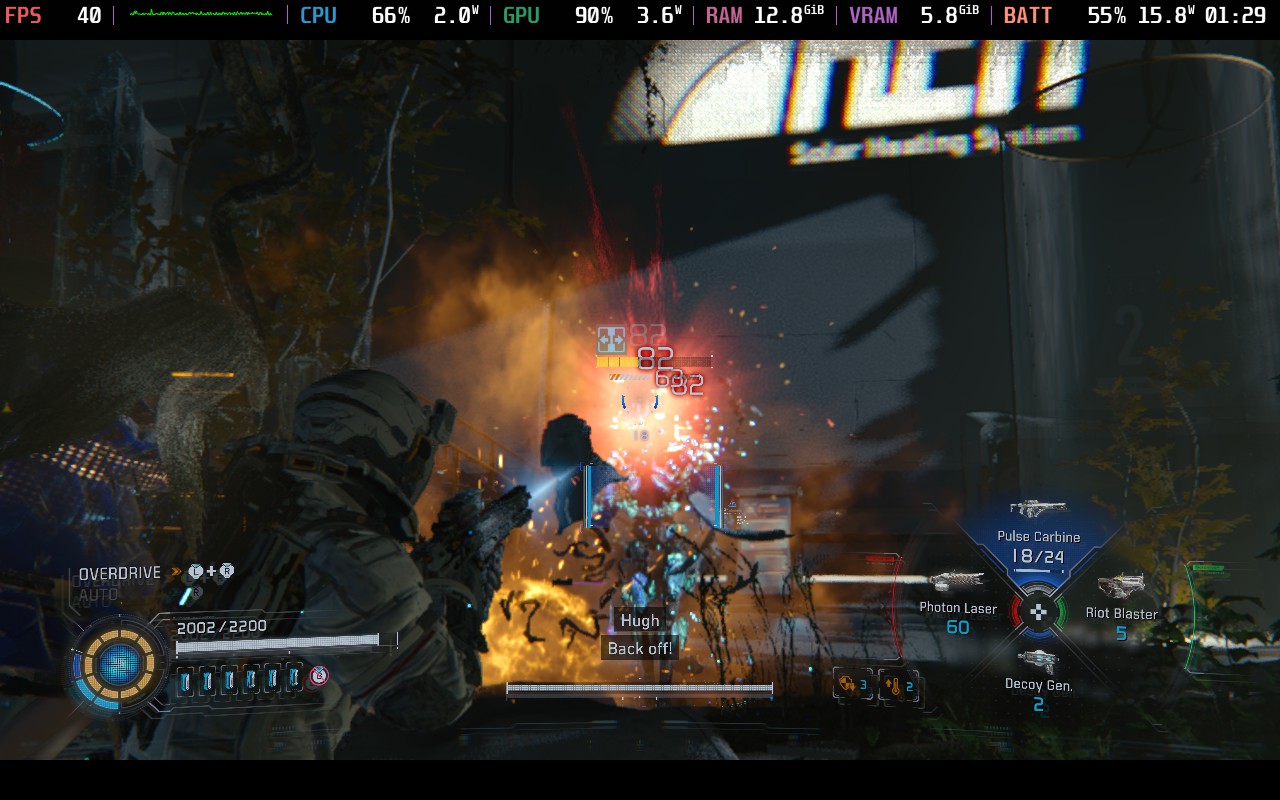
On top of that, we can find hacking nodes that will appear on our puzzle. We have a limited number of them, similar to how temporary weapons work, and we can choose whether or not to use them when completing the hack. If we do, they will usually inflict some sort of debuff, like decreasing their defense or stunning them temporarily, or give us buffs, like healing some of our health. These will be dropped on the ground, and we can pick up and choose which ones to equip at will.
And then we have our arsenal. This was another point where I worried a bit, since we really only have one permanent gun, but I actually really liked the way. These temporary guns were implemented. Other than our main gun, we will be able to pick up three other types of guns to have in our loadout: one for dealing serious damage, one for tactical advantages, and one for defensive capabilities. Each one of these guns has limited ammo, and we will need to find new guns to replace them. Thankfully, there are so many of them to pick up, and with each one feeling balanced, I never felt overpowered or lacking in power.
If I had one criticism for PRAGMATA's combat, it’s that I sometimes found the slow recharge of ammo in my main gun a little too slow. With it being a permanent weapon, I relied on it a lot, but it has a slow recharge, which gets in the way. I understand that it’s there to encourage switching weapons and consistently cycling through the temporary guns, but there would be times I wanted to save them, and that means running around or dodging to recharge my ammo. It’s nice that we don’t have to try managing ammo for our main weapon, but the recharge is a little bit slower than I’d like.
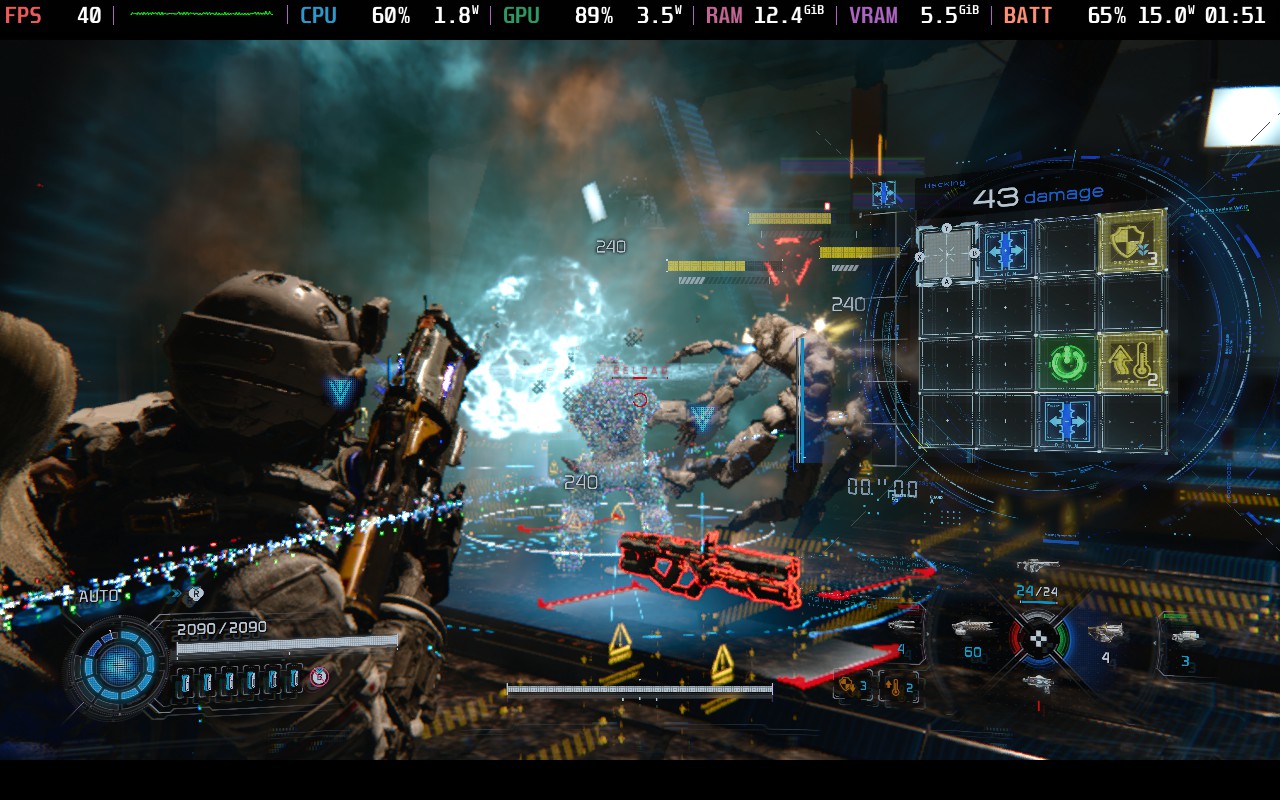
But overall, the system feels fantastic. The dynamic swapping between hacking and shooting, being able to move freely, and the addition of hacking notes and temporary guns to give us an edge are just great. It encourages continually watching around and getting out of the usual comfort zone of what we may be used to or prefer. I look forward to every fight I get to participate in, and the nice variety of enemies just made an overall exciting experience feel even better.
Then there’s the progression, which is simple and to the point. There are only three components that we can upgrade for survival ability: suit, integrity, our permanent weapon, and hacking power. These use their own dedicated currency, which we will pick up, and it does feel impactful. Upgrade the suit integrity gives us more health and defense, upgrading. Our main weapon increases damage, ammo capacity, and hacking power, which increases how much damage it does and how long the enemy will stay vulnerable.
However, we can also upgrade our temporary weapons, hacking nodes, and even get new/upgrade abilities. By using the much more common blue currency, Lunafilament, we can upgrade our arsenal and expand our move set further, which can help a lot. Some of the abilities we can get are essential, like being able to use our thruster to get back up if we are knocked down and being able to scan the environment to see weak points on robots.
By upgrading these, we also unlocked them to add to our loadout. In between each of the levels, we will heal up and relax at the Shelter. Not only is this where we upgrade ourselves, but we will also be able to take on training missions for extra upgrade materials, unlock extras and cosmetics via bingo cards, and equip our loadout before heading to the next map. This is also where we will equip mods we find, which can further augment our capabilities. It could be something as simple as extra damage when fighting enemies closer up, or increasing how much of the Overdrive gauge we gain when successfully completing hacks. There are tons of these to find, and we can upgrade how many we have equipped at any given time to further fine-tune our playstyle.
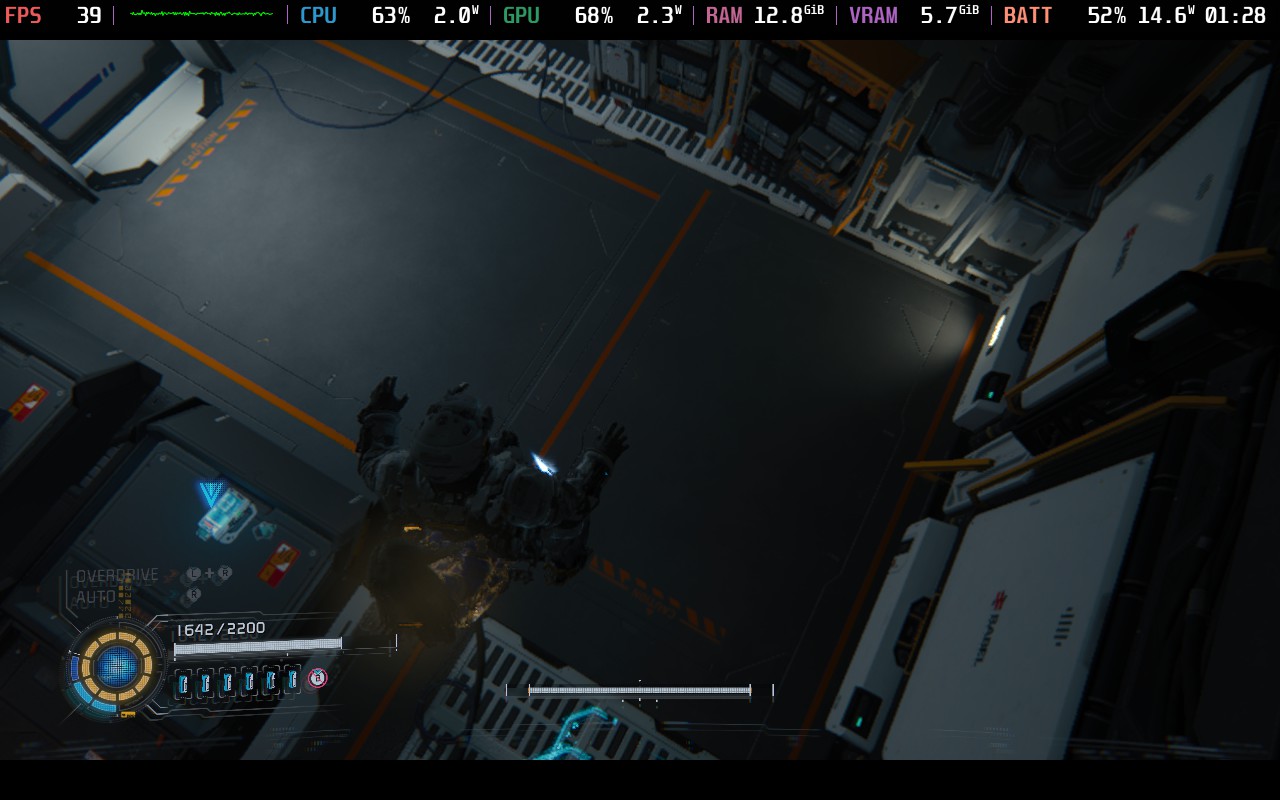
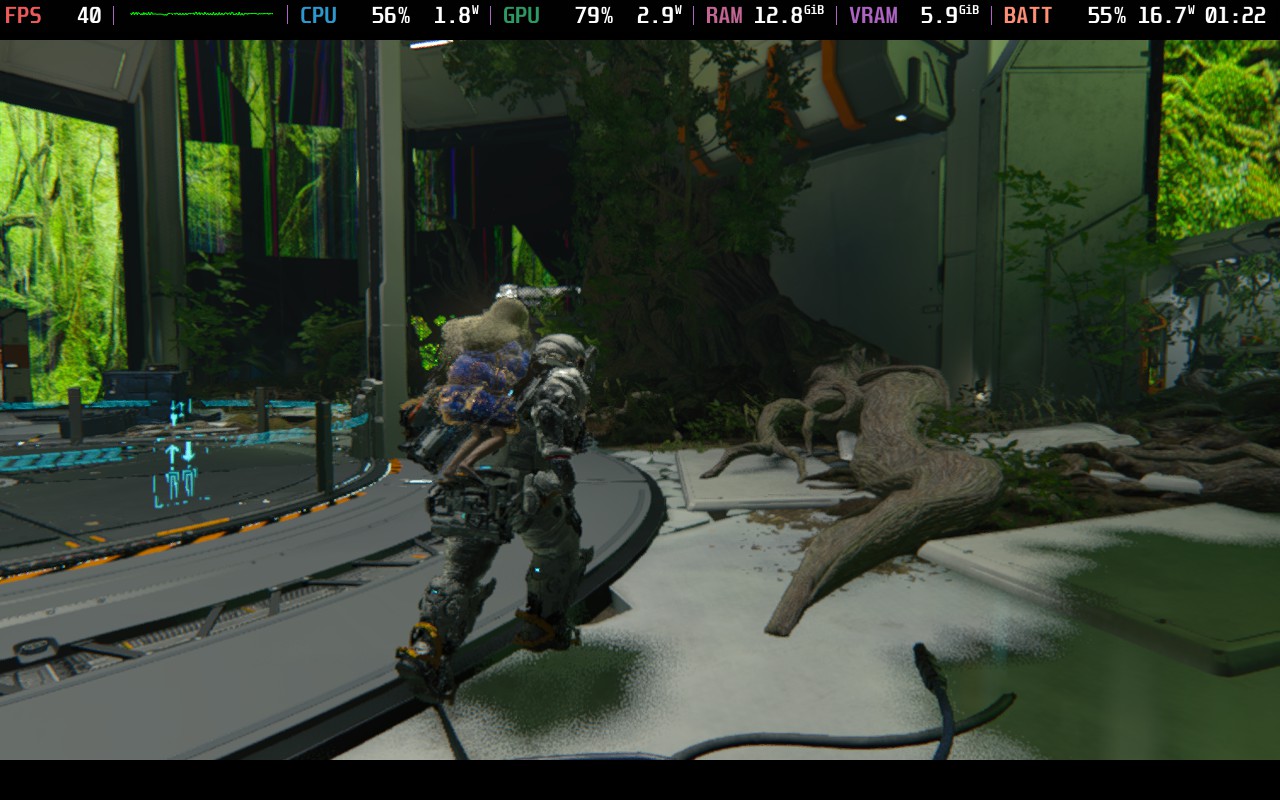
I also want to praise the structure of the game itself. I like that we have individual levels that are a decent size, rather than one giant open-world map. Each level feels unique and has a great design, and I like that we can go back to past levels at will. In the first few levels, we went from a neon-filled recreation of New York to a terrarium with overgrown greenery to walking on the moon’s surface, and it’s just so cool seeing the differences. All the levels also have an assortment of secrets and goodies to find. The amount of each of these is listed in the menu, which is a nice way to keep track of making sure we’ve collected everything, and I felt that every single item to pick up has a worthwhile purpose. I found myself going back and getting these items not just because I wanted to, but because I felt they had real value that made taking the time to go back and find them worth it.
PRAGMATA’s default settings basically bring it to the lowest possible, with the only setting, not at the lowest, being the upscaling quality. However, because this is the RE Engine, the game still looks fantastic. There are a few noticeable issues here and there, like shadow quality in close-up cutscenes, but it does look good when actually running around and fighting. But there are some ways to improve the experience, and it’ll make it much more enjoyable to play.
I also want to quickly mention that the default Proton layer causes a D3D error, so we will have to force Proton Experimental to get the game to run without issues. Proton GE should work as well, but Experimental works all the same. There are also going to be some unavoidable drops here and there, no matter the settings, but it doesn't detract from the gameplay 99% of the time.
At these lowest settings, the game still looks good, but the upscaler is the big problem. The game defaults to FSR 1, which makes the game look extremely shimmery. Even with the upscaling quality on balanced, it still doesn’t look great. This completely changes by making the upscale FSR 3 instead. 95% of that shimmering is gone, and we get a much clearer-looking image.
The one downside is framerate. Because of FSR 3, the game will drain a little bit more power, which brings the framerate down. So, I recommend locking the game to 40 FPS. Granted, even with FSR 1 upscaling and the lowest possible settings, we won’t be getting over 45 FPS throughout the whole game. There are spots where we can hit 60 and above, but as soon as we get to open areas, it will dip. And this happens enough that we can’t just shrug it off.
Because of that, I preferred a clear-looking image with a stable 40 FPS, instead of a shimmery image at 45. I would also say we can keep the upscaling quality at balanced, since I didn’t see huge improvements changing it up or down. I also tried turning upscaling off completely, which makes the game look extremely sharp, even with anti-aliasing on. So, FSR 3 was my favorite to use.
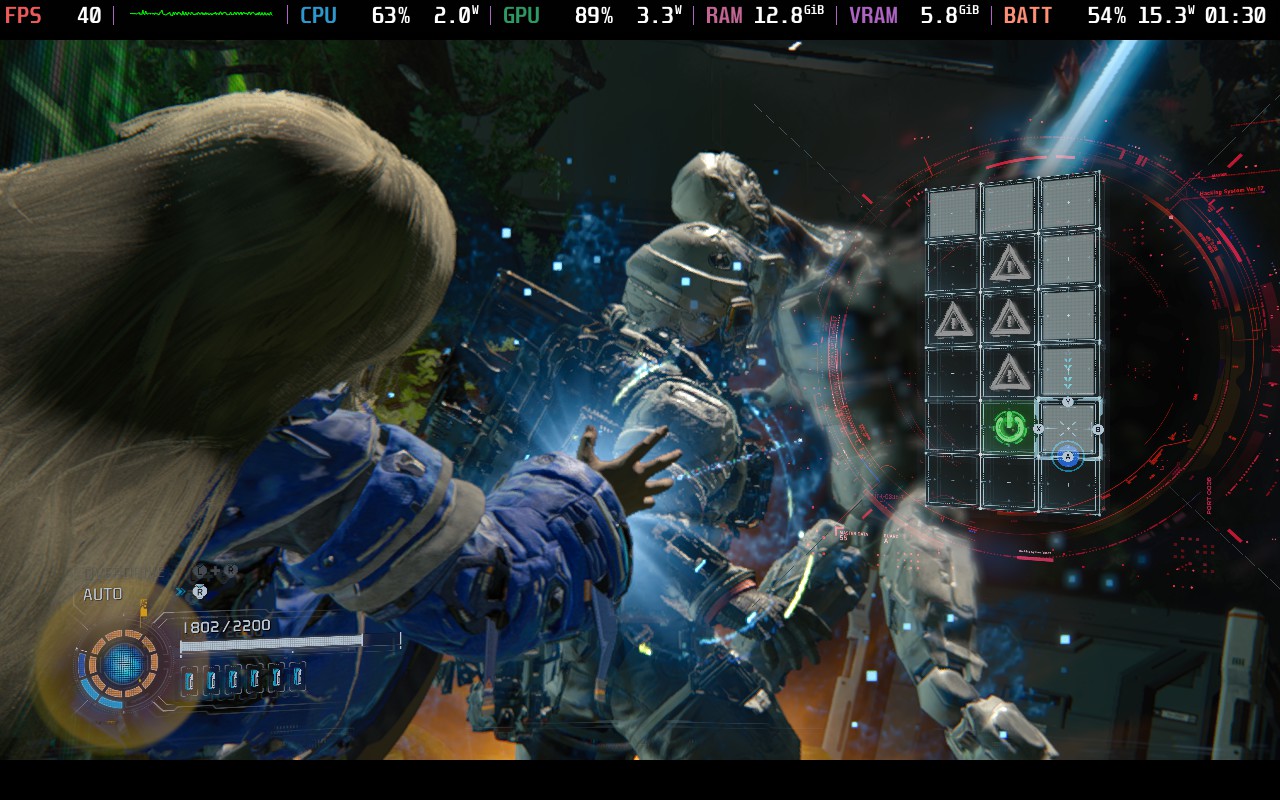
Because of these more open areas, the battery drain will fluctuate, so I recommend not turning on any TDP limit. Most of the game will stick between 14W - 18W, but to account for those open areas, I recommend no limit.
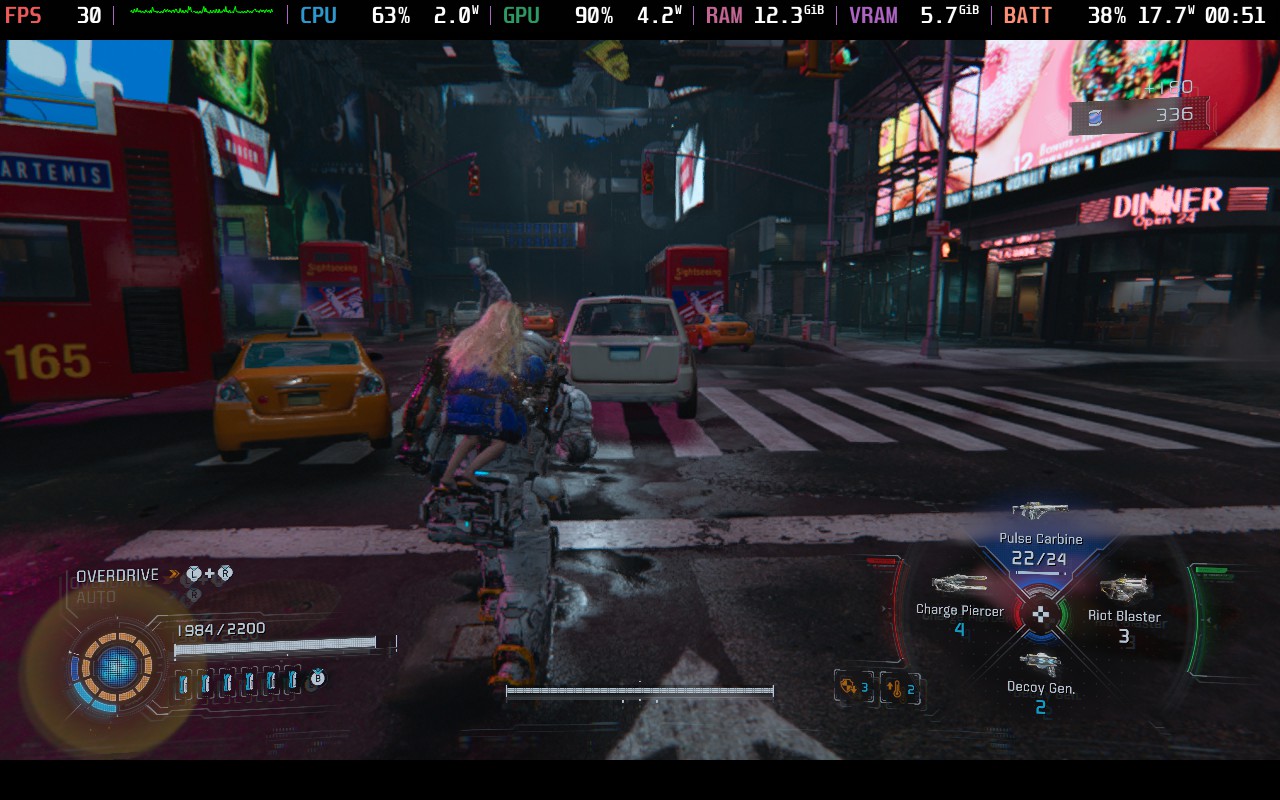
Now, if you want to play the game with higher visual quality, it’s possible, but it comes at a cost. There were some essentials that I wanted to make sure looked better, including making sure hair quality went up, shadows looked more like their objects, Volumetric Lighting was turned on, and effects looked a bit better. Coupled with the upscaling brought up to Quality, the game shows some big differences in quality.
However, we will need to set a 30 FPS limit here. The open areas are not able to handle the extra load at a higher framerate, and it will drain high as well. But the game looks great, and once you get used to 30 FPS, it’s a good way to play.
Personally, I preferred having the higher framerate in combat, but it wasn’t bad after I got used to the lower FPS. But with similar battery life, and with the visuals still looking great with the higher framerate, I decided to keep my recommended settings with the higher framerate.
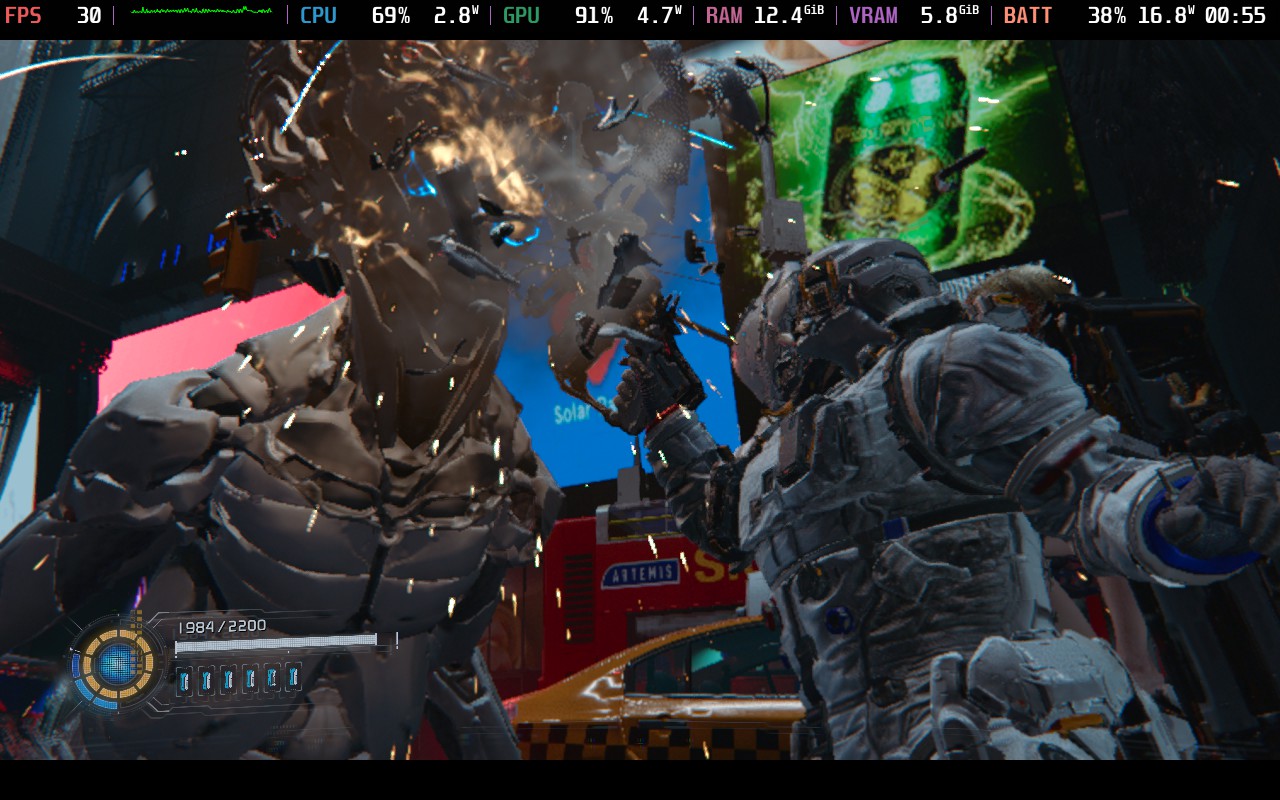
One issue I did notice is that whenever we talk to Cabin, visuals can jitter in conversations. Capping the frame rate fixes this entirely, but if you play uncapped, you’ll most likely notice this problem. Otherwise, the game is great to play on the Deck.
I don't give out perfect scores lightly, and I mulled over this for some time, but there was almost no part of PRAGMATA I disliked. The story had emotional weight and surprised me with its twists, and the combination of puzzle and action in real-time made fights engaging, and the temporary weapons continually made combat feel dynamic. The simple progression was enjoyable, and I felt that every single collectible I could find held meaning that made me more powerful. This is a must-have game. I even went back in to 100% it, which is not something I tend to do, and it's a testament to how much I enjoyed playing.
And even though there are some compromises, the game is wonderful on the Steam Deck. I had such a blast playing through on the go, even if I couldn’t hit 60 FPS. Thankfully, the RE Engine pulls its weight and keeps the game looking fantastic and optimized.
このレビューはPC版に基づいています。
このレビューをお楽しみいただけたなら、SteamDeckHQ の他のコンテンツもぜひご覧ください!あなたのゲーム体験に役立つゲームレビューやニュースを幅広く取り揃えています。ニュース、ヒントやチュートリアル、ゲーム設定やレビューをお探しの方も、最新のトレンドを知りたい方も、ぜひご利用ください。
PRAGMATA is an incredible experience all around with a great story, dynamic and engaging combat, and some fantastic Steam Deck performance.

制限
30
リフレッシュ・レート
90
HRS
ノー
TDPリミット
いいえ
スケーリング・フィルター
リニア
GPUクロック
無効
Proton Experimental
Global Illumination Quality: Low
Upscaling: FSR 3
FidelityFX Super Resolution 3: Quality
Frame Generation: Off
Hair Quality: Medium
Texture Quality: Lowest
Texture Filtering: Medium
Mesh Quality: Low
Shadow Quality: Medium
Shadow Cache: On
Contact Shadows: Off
Effects Quality: Medium
Video Quality: Full HD
Ambient Occlusion: Off
Volumetric Lighting: Lowest
Bloom: Off
Screen Space Reflections: On
15W - 19W
68C - 75C
2時間半~3時間