

20W - 24W




People of Note was provided by Annapurna Interactive for review. Thank you!
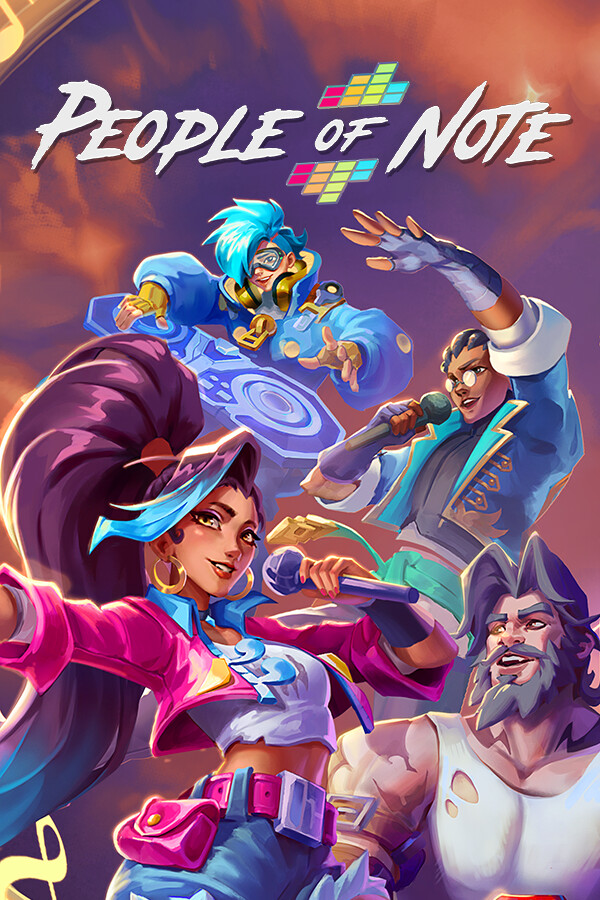
At its core, People of Note is what I would call an RPG musical, and there aren’t too many of these around. The entire game is structured around music of all different genres. Towns are structured after them, mechanics are interlaced with terminology, and even the attacks are all utilizing rhythm-based inputs to make them more powerful. In a way, the game itself feels like a love letter to how powerful and meaningful music is, and it’s just great to experience.
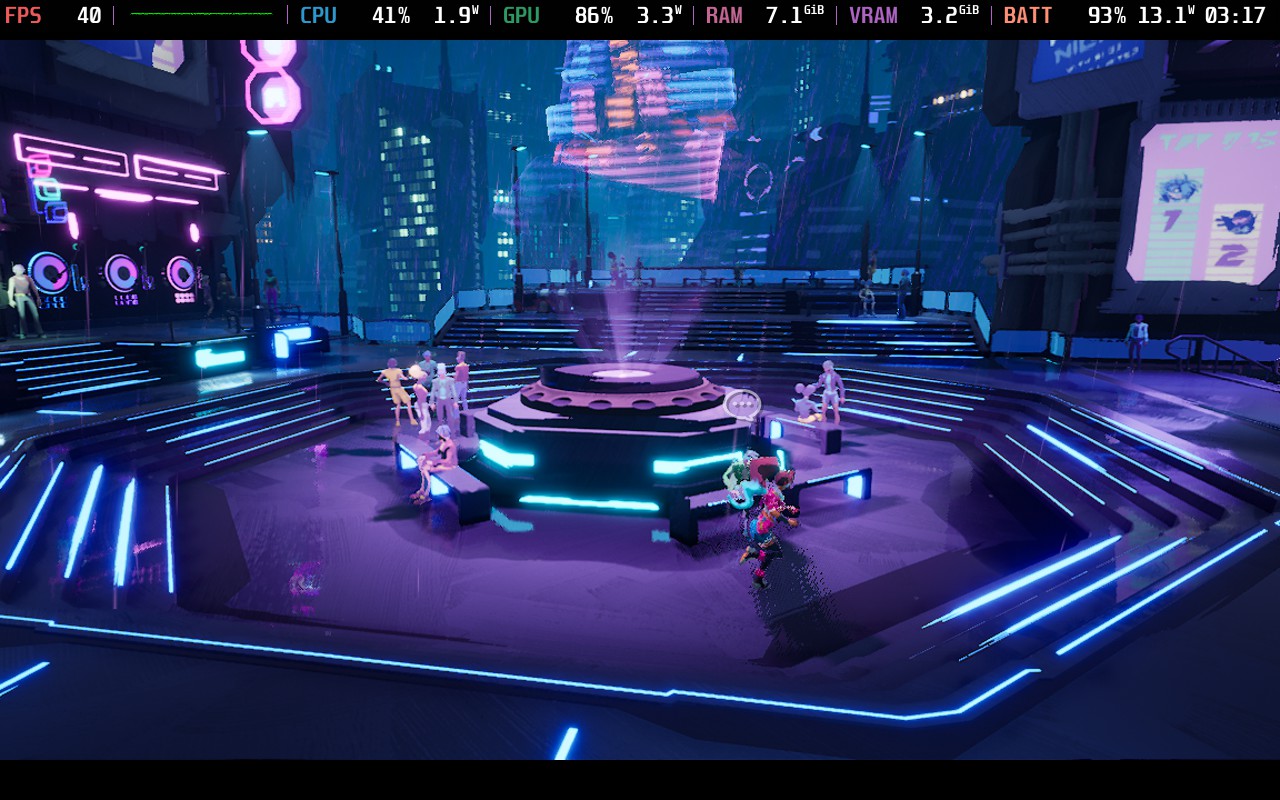
Every town in this game is based on entirely different genres. Chordia is all about pop, Durandis is all rock and roll, Lumina is futuristic EDM, and even some of the dungeons, like Lilting Green, reek of instrumental folk music. On top of that, each place has different districts that are modeled after sub genres, like Chrordia having a KPop section and Durandis having a Punk area. It’s so interesting. Seeing how each of these cities is modeled after different types of music, it all feels like they represent the genres and sub-genres well.
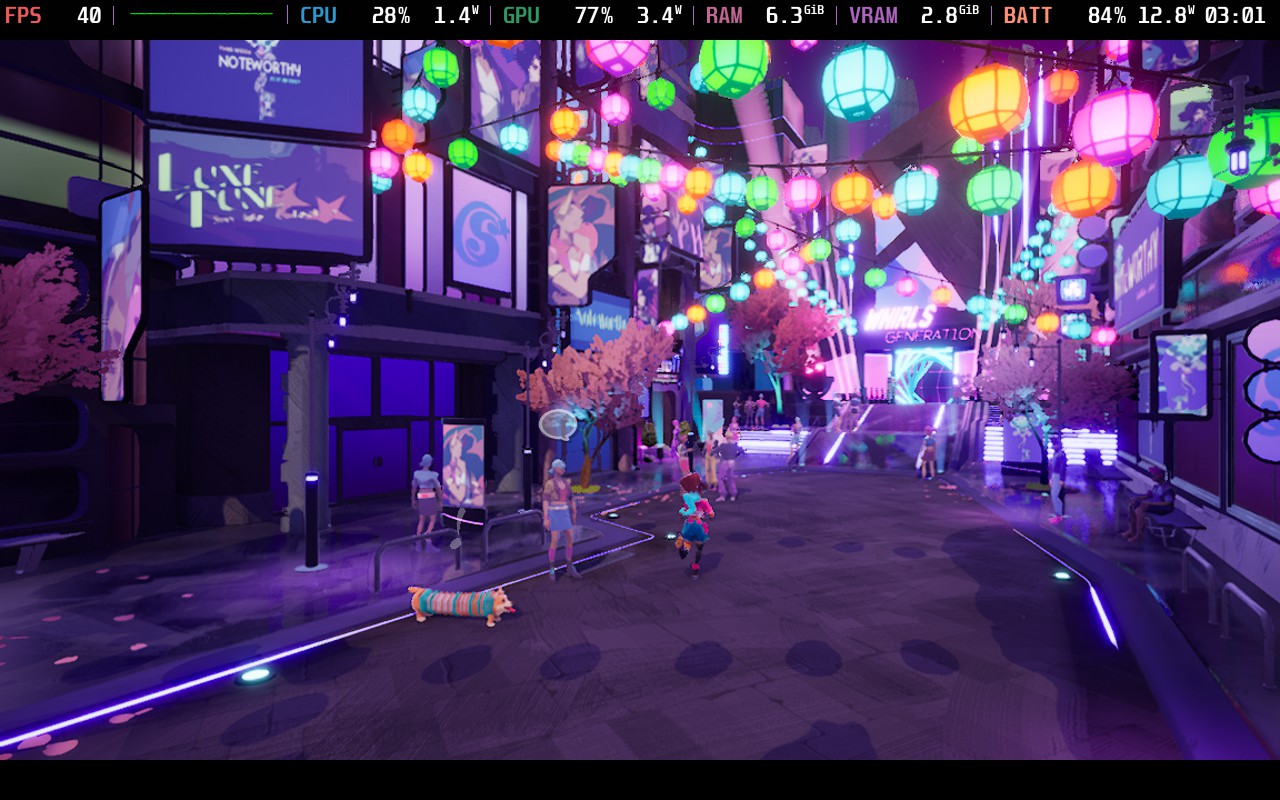
And then there’s the music, which is easily the best part of this game. Every single soundtrack and beat that place is intoxicating, fitting the genre perfectly. Just traveling around and listening to the music pouring through the speakers was a treat, and the musical numbers were wonderful.
However, I would say my favorite part is how music is in battles. Throughout each battle, music will shift and benefit specific genres over others temporarily. During this time, the battle music will actually change to fit that genre. For example, if we are fighting in the Lilting Greens, we will normally have the folk instrumental. But depending on which genre is highlighted for that turn, it could have a rock or pop swing to it. This happens throughout the game, no matter where we’re fighting, and it’s so hard not to feel pumped up while listening.
As for the story, we follow Cadence, who wants to enter the Noteworthy contest and be recognized for her music. Unfortunately, it seems like the odds are stacked against her, so she has to leave town and create a new, unique sound to wow the audience. She decides to leave her Homestead and explore outside, finding artists from other genres to create a unique blend that is outside the norm. Ultimately, she will find others, but she will also be thrust into working with her team to save Note.
Well, I did enjoy the story, and how music is integrated into it, but none of it felt new. People of Note is a perfect example of an entertaining story that doesn’t really shock. It’s fun, and I love the implications when it comes to music, but most times, I just feel indifferent about the twists or revelations.
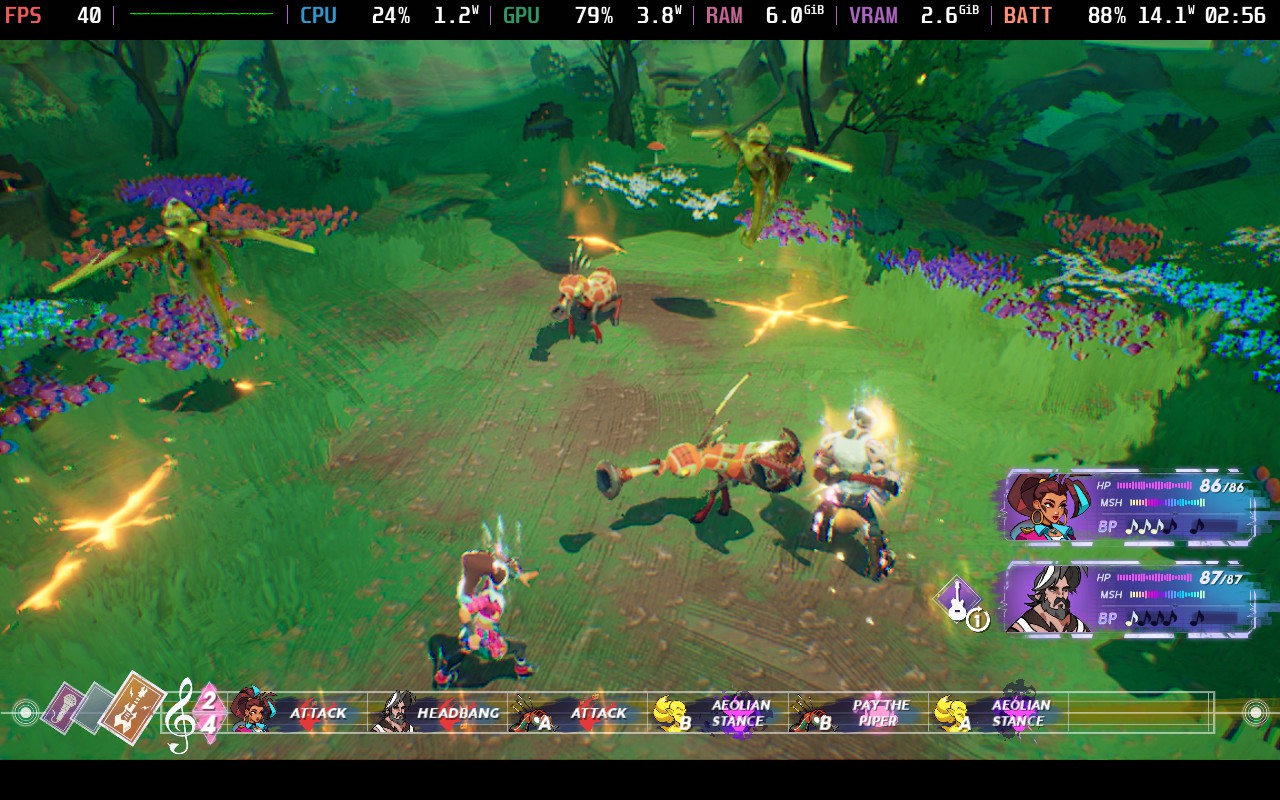
Compared to other RPGs, combat and progression are on the simpler side, but it wasn’t bad. We will end up with four teammates, each having their own basic attack and abilities we can equip. On top of that, we have mash-ups, which are essentially ultimate attacks with other members. Each attack and ability, except for mash-ups, has a rhythm input mechanic to deal extra damage, and we can rest to recuperate our BP, which is used for abilities.
Generally, this is pretty basic and easy to understand. Most fights will be about attacking and using abilities until our health goes down low, and then we heal. There are some fights that require some thinking to maximize our damage or deal with multiple enemies, but I never felt overwhelmed by any combat situation. It was interesting to plan out my attack to coincide with the highlighted music genre of the turn so I could deal extra damage, but I was never worried that I would lose the fight.
Despite some battles requiring a little more thought, I felt it was too easy. I never felt challenged in combat, and I include some of the bigger bosses I would fight. Even if there are multiple enemies, which did take a little more time, I wasn’t necessarily worried I would lose. It was still fun, which is a plus, but I wish I had been pushed out of my comfort zone more.
Progression generally feels as simple as combat, though I do like some of the mechanics they implemented. We equip new abilities from songstones, which can be customized and upgraded using AP. AP can be used for upgrading, but we can always downgrade and get our AP back without consequence. It was nice not to feel that pressure to choose a permanent upgrade and experiment with what abilities it should have. There is a good chunk of different types of songstones, ranging from attack abilities to healing or buffing abilities, and they can all be upgraded to some degree.
And as for equipment, we have three slots each: one for clothing, one for an instrument, and the other for an accessory. These will directly affect our stats, and we will find newer and better equipment as we continue playing.
Still, despite the simplistic combat mechanics, I love People of Note's dungeons. There will be some enemies roaming around as we’re walking, but they are few and far between. However, we can still grind as much as we want. Instead of random encounters, we can trigger fights with the press of a button. Making it completely optional is fantastic, as it gives us the ability to choose how many fights we actually want to take on. Most RPGs like this would have bunches of random encounters throughout each dungeon, which can be quite annoying, so I’m glad this gives us a way to fight as much as we want on our own terms.
On top of that, each dungeon has its own special currency that we get when completing fights. We can find a shopkeeper in the dungeon who will sell us special equipment and songstones using that currency. We do still have the normal currency that we can use at shops in towns to buy items, but this is a neat way to get some extras while we are grinding. It’s a nice extra war that encourages grinding, but doesn’t make it feel like we have to. People of Note handles this side of dungeon crawling perfectly, and it made me want to keep grinding, despite not feeling forced to.
However, the dungeons generally all felt like they had the same structure. We run around, solve some environmental puzzles, and then fight one big boss before the chapter ends. The puzzles themselves are different, but it felt predictable as to what would happen. The sentiment is the same as the story itself.
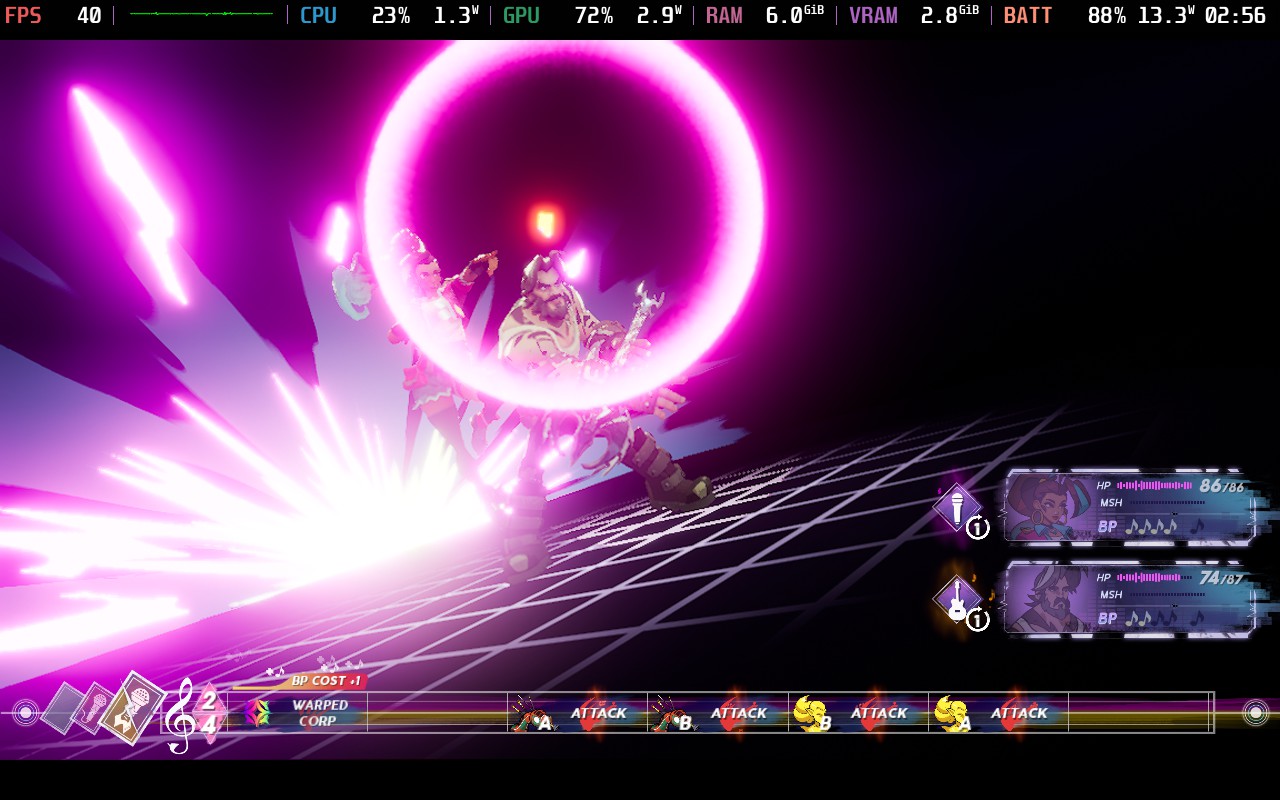
As for People of Note’s performance on the Steam Deck, it’s solid for the most part. The game defaults to the Ultra preset with a 100% resolution scale, which I could consider playable. The game, like this, doesn’t need a super high frame rate, so as long as you’re fine setting it to 30 FPS, it will be playable in almost every area. However, there are some changes we can make to get a better experience across the board.
When playing, I prefer to find a balance between visual quality and framerate. I don’t think 60 FPS is necessary for a game like this, and even the rhythm sections were not impacted by lower framerates. So, by turning down shadows to medium, bringing the resolution scale to 90%, and setting the framerate to 40, the game felt smooth, stable, looked great, and had solid battery life. Turning down the shadows will have the most impactful change to the visual quality, but I wouldn’t say it changed how the world looks too much.
There are still gonna be some areas where there are drops, like when going into the club in Lumina or in some conversations, but it will largely stick to 40. I feel the balance is near perfect, so I have no problem playing this way. It still feels very smooth, and with every setting other than shadows on Ultra, the world still looks stylized and beautiful.
Some later fights may also be a little tough, but it should hold strong for the most part. Because of this, I would keep the TDP limit unlocked. Some fights may drain a little more than others, but running around and general gameplay will not be draining as much.
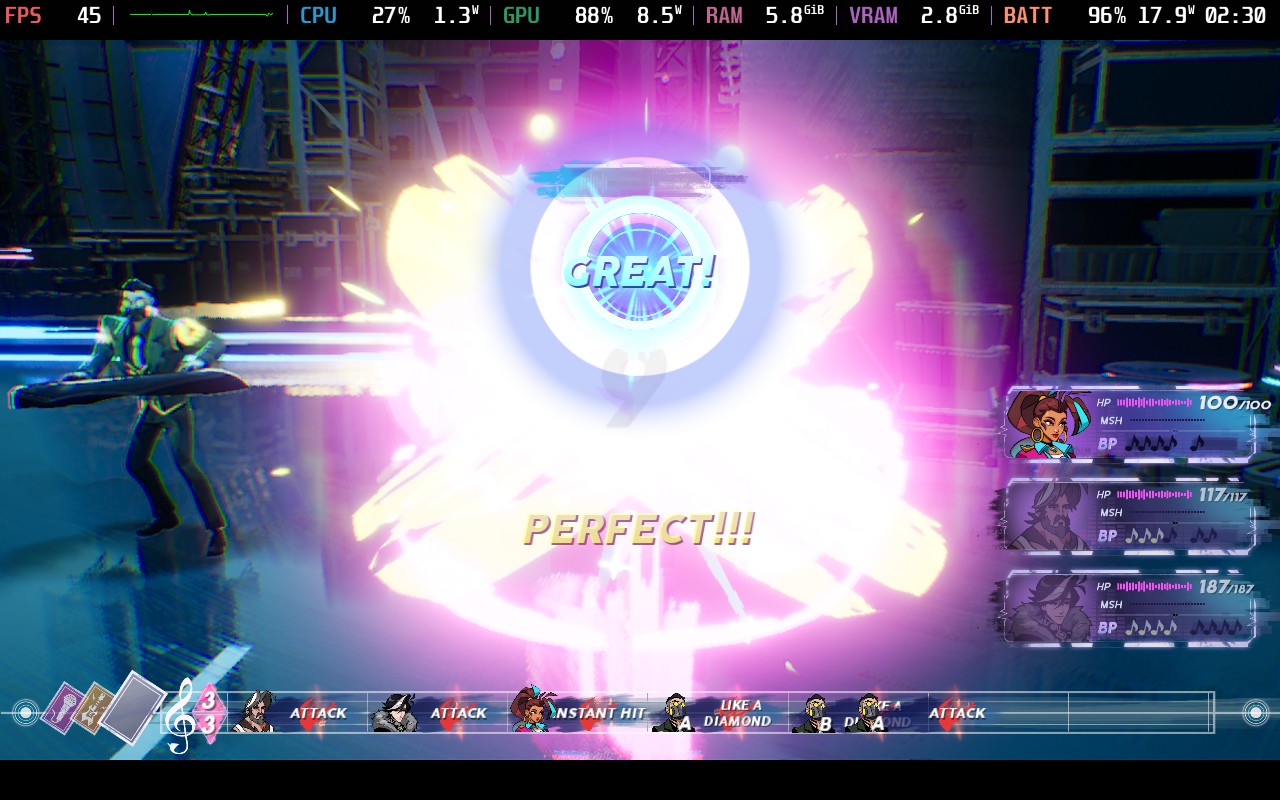
As I mentioned before, the game defaults to the Ultra preset with 100% resolution scale, so if you want the best quality, stick to this and a 30 FPS cap. I would expect a few areas to drop below, like the club in Lumina, but it should largely stick to 30 without much issue.
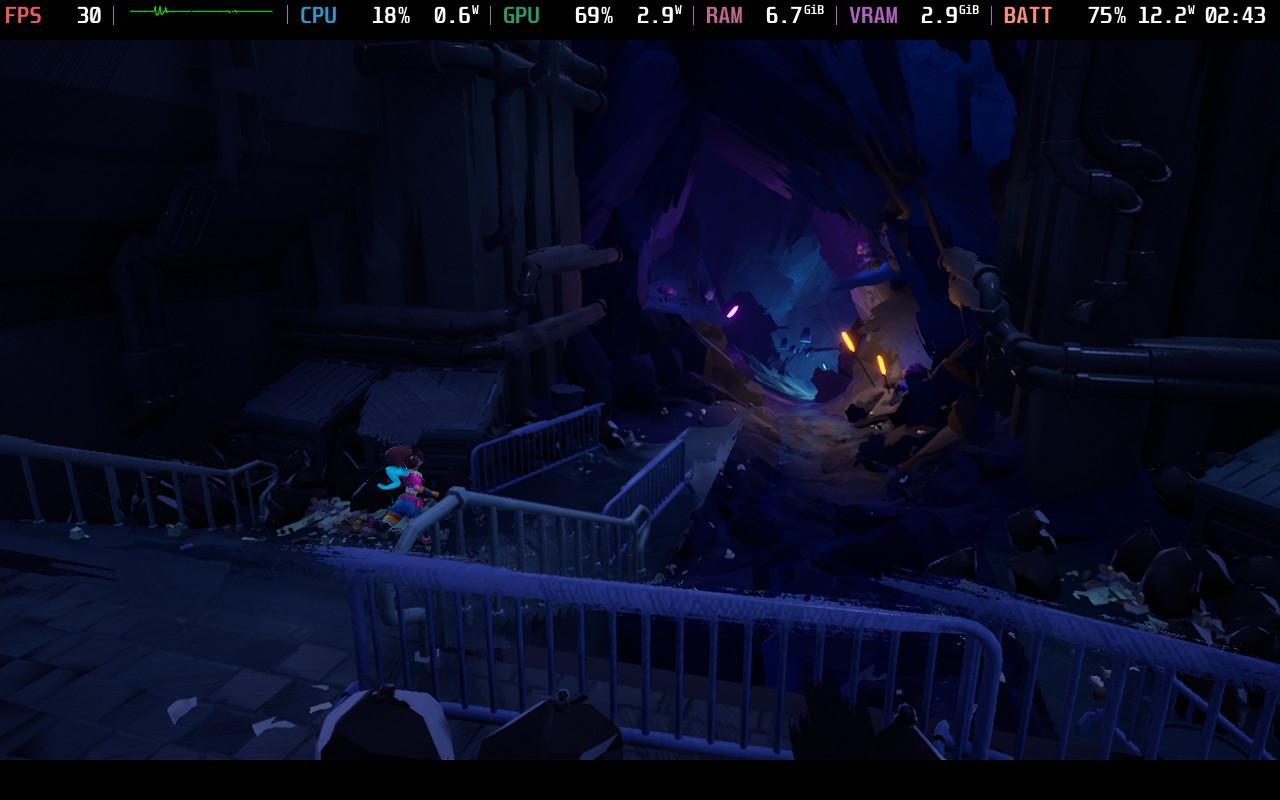
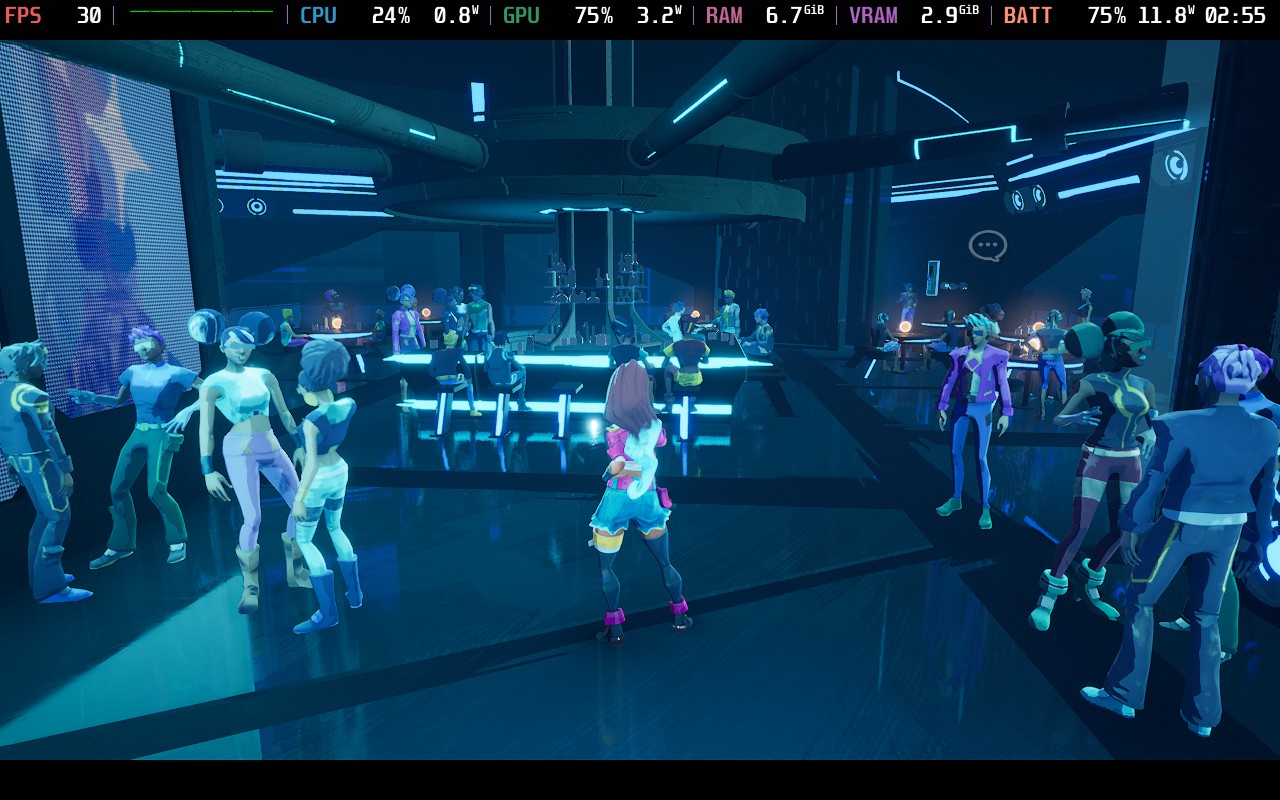
We can play through most of the game at 60 FPS, with some slight drops here and there in super crowded areas and battles, but it will cost some extra settings. By bringing the resolution scale to 80%, while bringing down most settings to medium with some on high, we can get a decent-looking game playable at 60 FPS.
The battery drain will remain on the high side, and some of the lighting or effects may feel a little off, but the trade-offs weren’t that bad compared to the smoothness that I was feeling. I would’ve definitely preferred playing like this if the balance of visuals and frame rate in my recommended settings weren’t so good.
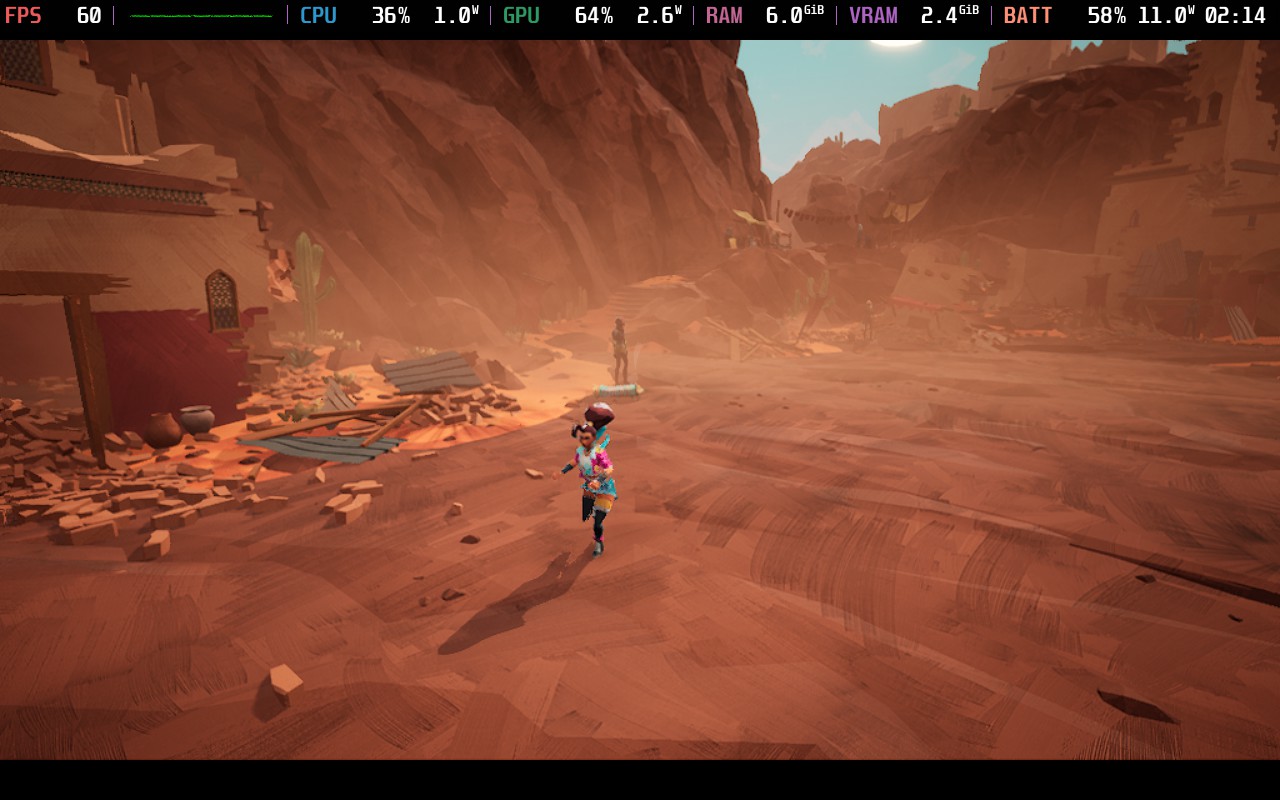
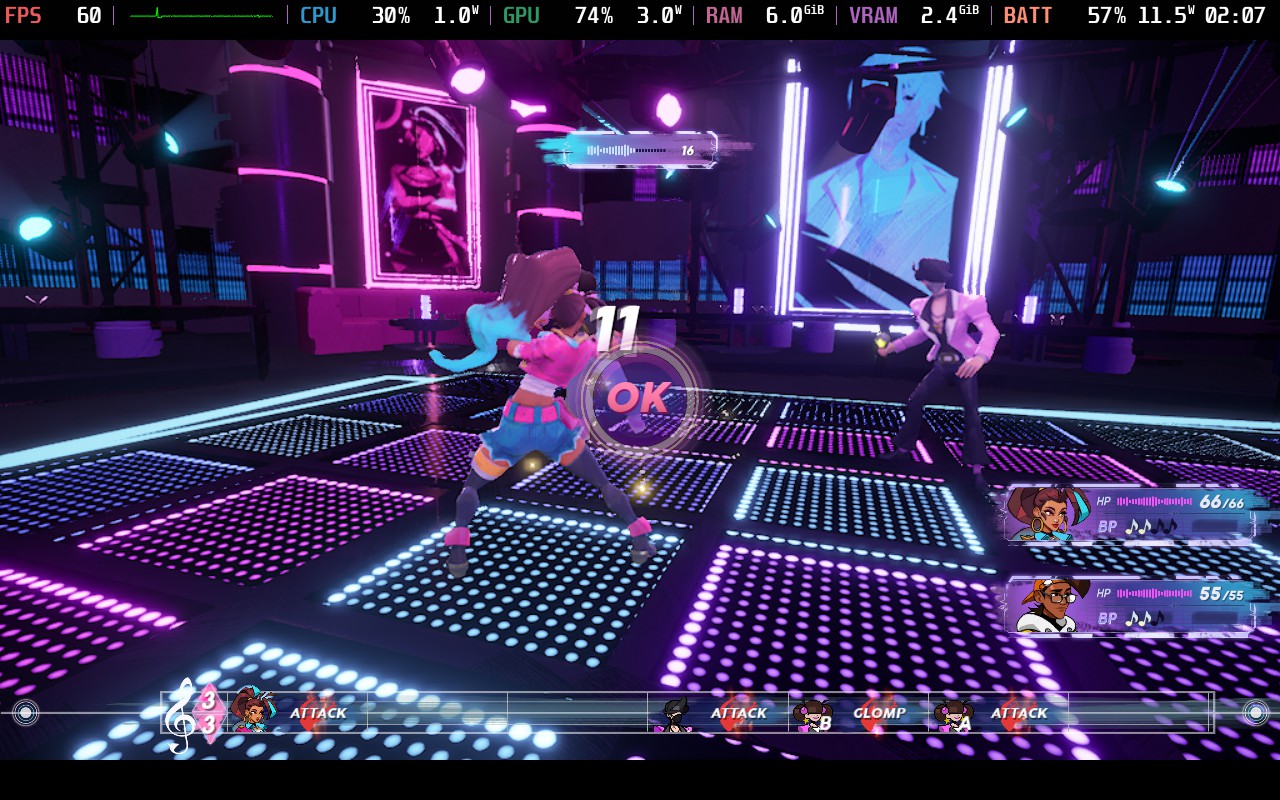
There is a dedicated accessibility tab that allows us to turn off the rhythm timing, enlarge the UI, add musical subtitles, and toggle a subtitle background. We can also change the language, toggle vibration, autoplay cutscenes, change text speed, change keybindings, and increase or decrease the volume.
The game doesn't support 16:10 resolutions, but it does have cloud saves and great controller support. There are no HDR settings.
People of Note is a solid RPG with a fantastic concept that sounds incredible. The variety of locations and the obvious musical influence across the entirety of the game are amazing, and it includes the music and how it switches throughout the mechanics. The actual RPG mechanics are basic, and I found it to be a little easy, but I was still a lot of fun to play through, and especially a lot of fun to listen to.
It also runs quite well on the Steam Deck, being able to strike a balance between good-looking visuals and smooth framerate. It’s a great game to play on the go, and one I recommend adding to your portable library.
このレビューはPC版に基づいています。
このレビューをお楽しみいただけたなら、SteamDeckHQ の他のコンテンツもぜひご覧ください!あなたのゲーム体験に役立つゲームレビューやニュースを幅広く取り揃えています。ニュース、ヒントやチュートリアル、ゲーム設定やレビューをお探しの方も、最新のトレンドを知りたい方も、ぜひご利用ください。
People of Note is a solid RPG with an incredible soundtrack, world, and it's quite playable on the Steam Deck.

制限
30
リフレッシュ・レート
90
HRS
ノー
TDPリミット
いいえ
スケーリング・フィルター
リニア
GPUクロック
無効
強制的な互換性はない
変更は必要ない!
20W - 24W
75C - 80C
~2.5時間
制限
60
リフレッシュ・レート
60
HRS
ノー
TDPリミット
いいえ
スケーリング・フィルター
リニア
GPUクロック
無効
強制的な互換性はない
Resolution Scale: 80%
Effects Quality: Medium
Foliage Quality: Medium
Post Process Quality: Medium
Shadow Quality: Medium
Texture Quality: High
18W - 23W
74C - 80C
2時間半~3時間