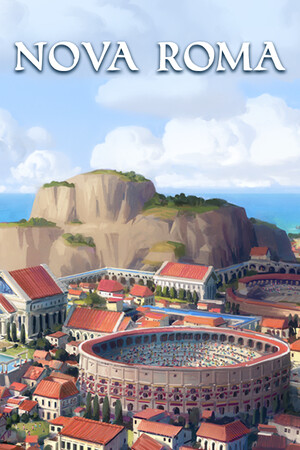


Nova Roma was provided by Hooded Horse for review. Thankyou!
Nova Roma is what I like from my city-builders. I get to develop my grand Roman empire from scratch while making sure the citizens do what I tell them to prevent the gods from massacring them. I’ve always liked games where you can use godly influences to lord over a population, but that is probably because I have a god complex. Ahem. Moving on! Developed by Lion Shield, the same folks who made the excellent Kingdoms and Castles, Nova Roma feels like their previous title writ large, with some great atmosphere to boot. Although it is still in development, I couldn’t help but get excited about this one.
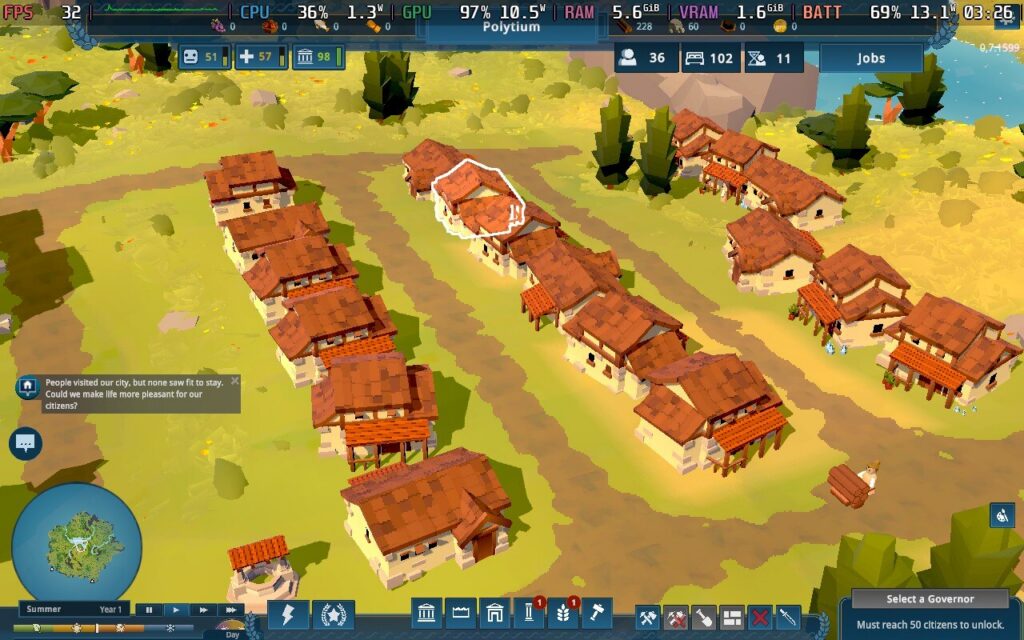
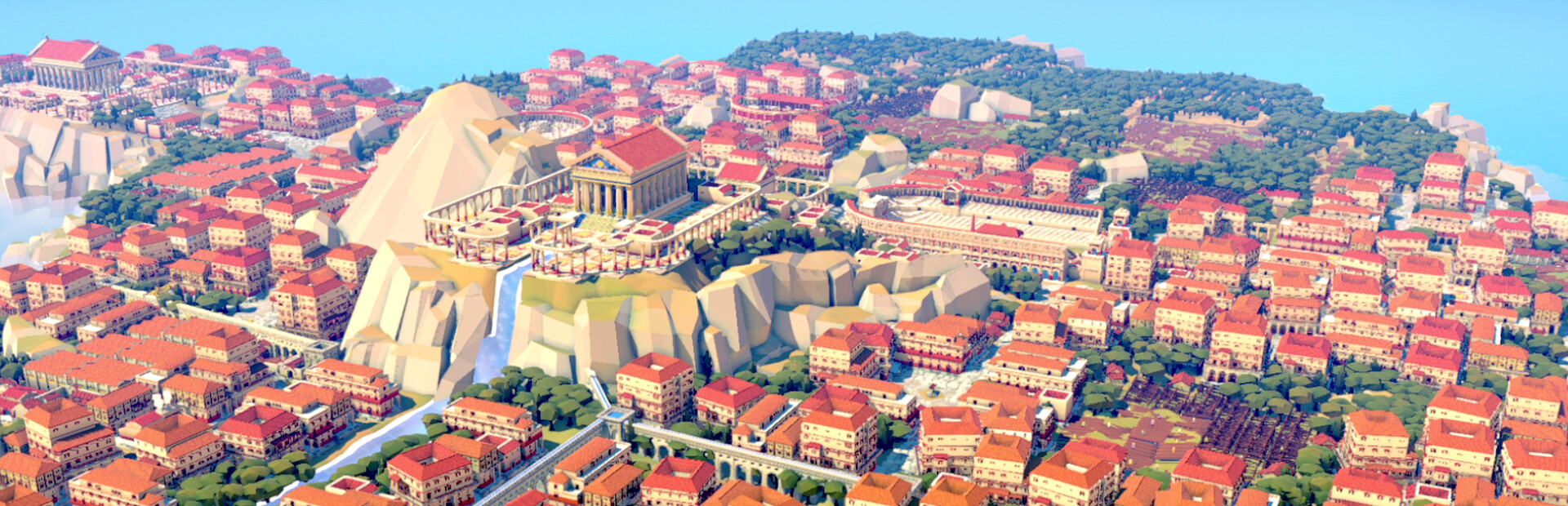
Nova Roma takes the foot off the gas pedal when it comes to difficulty, focusing instead on a gentler, sandbox experience that rewards creativity when planning a city. If you have played Kingdoms and Castles before, the aesthetic in the game is very similar to Lion Shield’s first title. The visuals remind me a little of playing with Play-Doh when I was a kid, with little stick people living out their lives.
It is a different contrast to what I’ve seen from other citybuilders on the market, such as the recently released Timberborn, Heart of the Machine, Whiskerwood, and Farthest Frontier, but this is what Lion Shield is good at. Sometimes it’s nice to play a cozier city builder, although that doesn’t mean Nova Roma will pet your head and bring you snacks.
Nova Roma’s current Early Access content is said to be content-complete, with both a sandbox and story mode in the game from launch. All the core mechanics are already in place, with additional content and polishing to come during the Early Access development. As I like to remind people when I write reviews of Early Access titles, this is for the current product, as it is available to everyone, without taking anything into account, such as future updates. Roadmaps and patches are always part of modern gaming, especially for games in Early Access, but things can and will go wrong. I like being transparent about this because it’s easier to determine whether a game is worth playing now than in a hypothetical better state. Promises are all well and good, but results matter most.
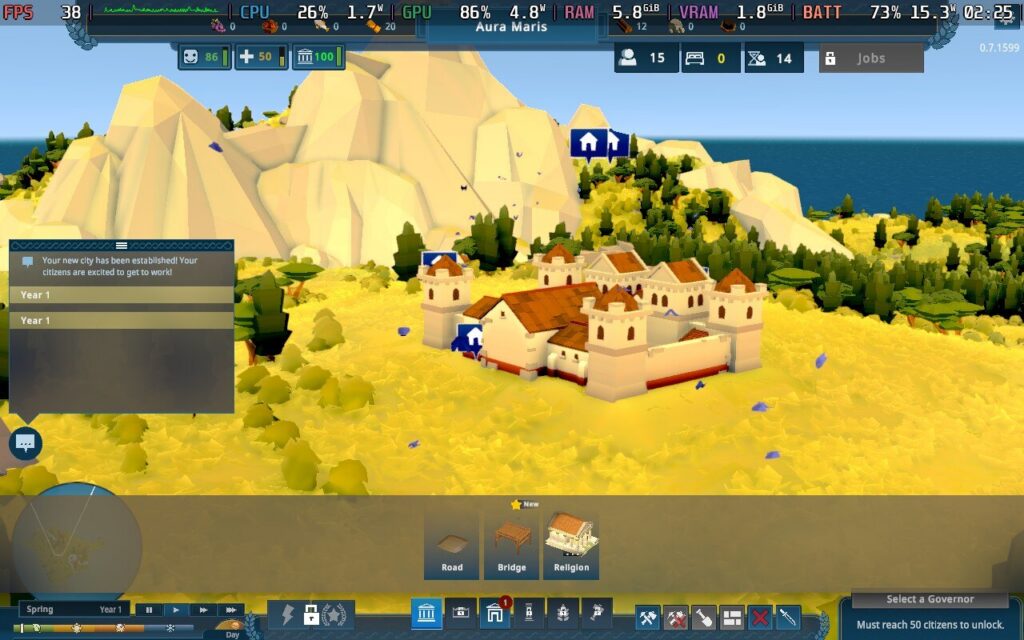
Regardless, I think Nova Roma does a couple of things really well: the core gameplay and the atmosphere. The city-building mechanics are surprisingly deep, with full control over where to place buildings. I have always preferred this free-building system because it allows for creativity rather than plopping down sites exactly where the game tells you to, and I get to build the Roman city of my dreams! That is the long-term plan in the normal mode, as it takes a while to get going. The core is simple. The Roman Empire is in deep decline, and you decide to break away and rebuild.
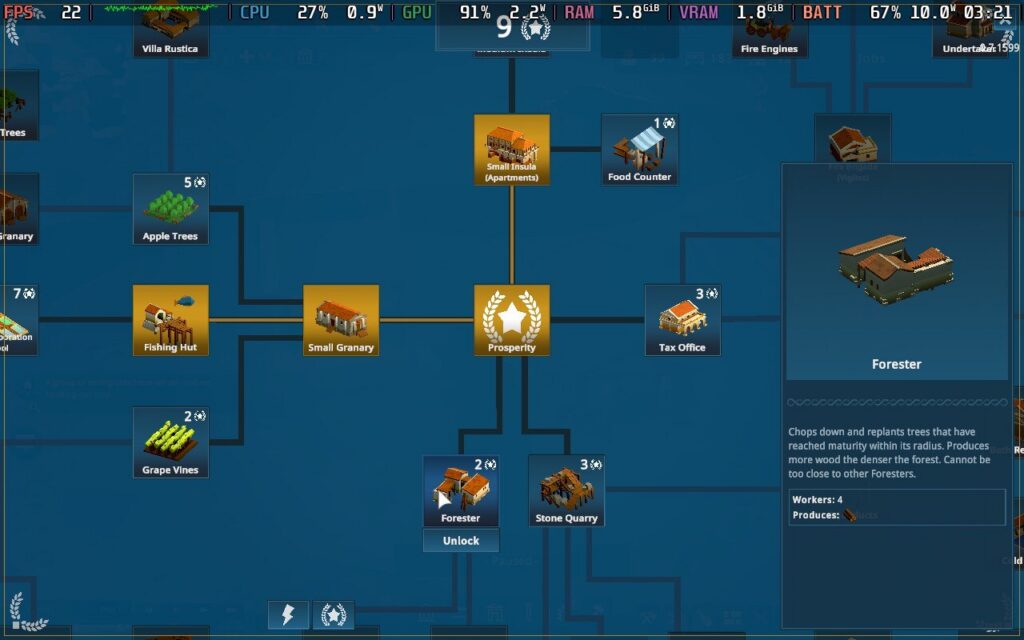
The usual survival mechanics in citybuilders involve keeping your citizens happy and providing them with food, water, and housing so they don’t freeze to death in winter. Dead villagers might make decent kindling, but they do a poor job tending to crops. There’s a ton of different buildings to add to your Roman metropolis, with more to unlock through research.
I also enjoy how research points are unlocked, which brings us to the way Nova Roma differs from other games in the genre. While developing your city, you must build temples to the gods while picking a deity to cater to. There are five available in the game at launch, with others to come later, and each comes with its perks and downsides. A temple is tied to a single deity, although you can have multiple temples of the same god and vice versa, which is cool for freedom.
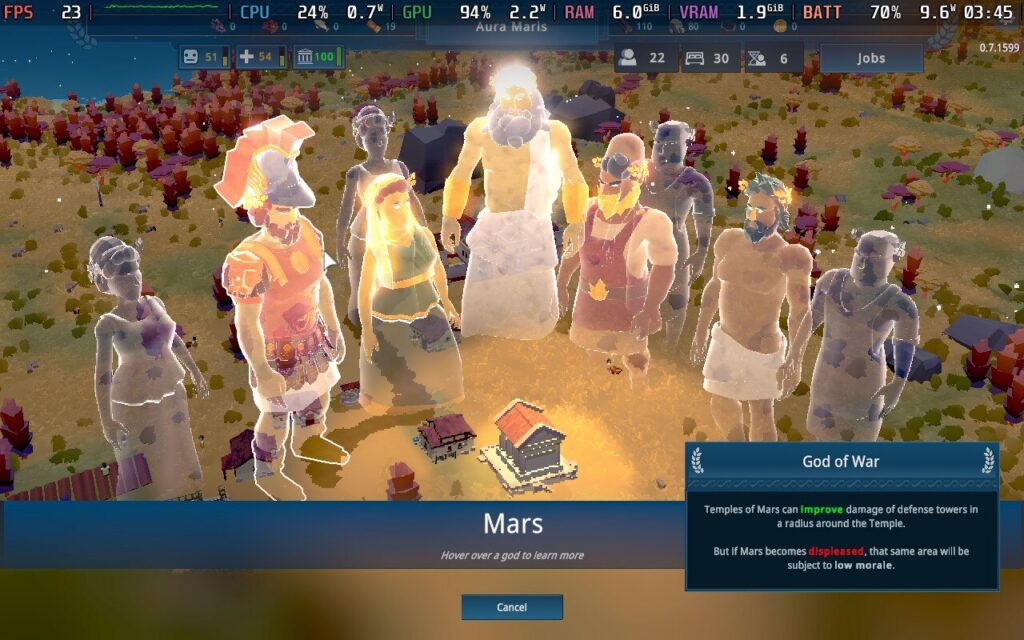
These bonuses include things such as improving happiness and crop fertility, but these gods are prickly and are needier than kittens. Fail to meet their demands in the form of quests, and they make their displeasure felt through divine lightning strikes and fires. It certainly adds a spice to the traditional city-building model, and while the godly missions aren’t anything special, they add a good reason for progression.
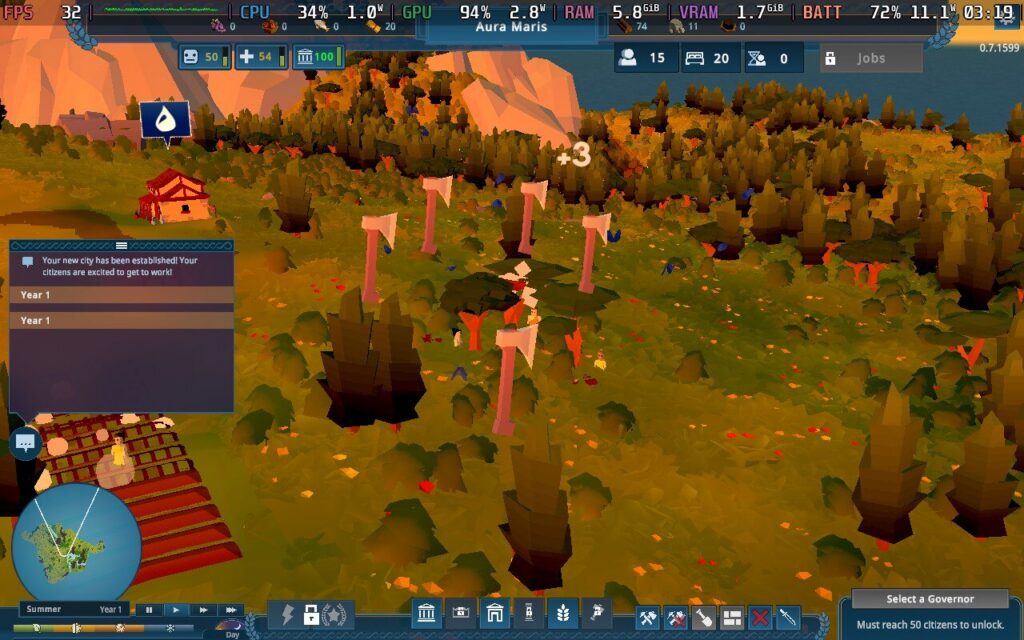
The water physics and how they impact gameplay are also one of the most impressive systems I have seen in a city builder. Rivers dynamically wind through landscapes, and floods devastate communities with some awesome physics. It reminds me of From Dust from the early 2010’s, which embodied god games like Black and White by manipulating water and land to progress. You need to build your economy and infrastructure around the rivers and sea to survive, and it adds a ton of strategic depth to the game.
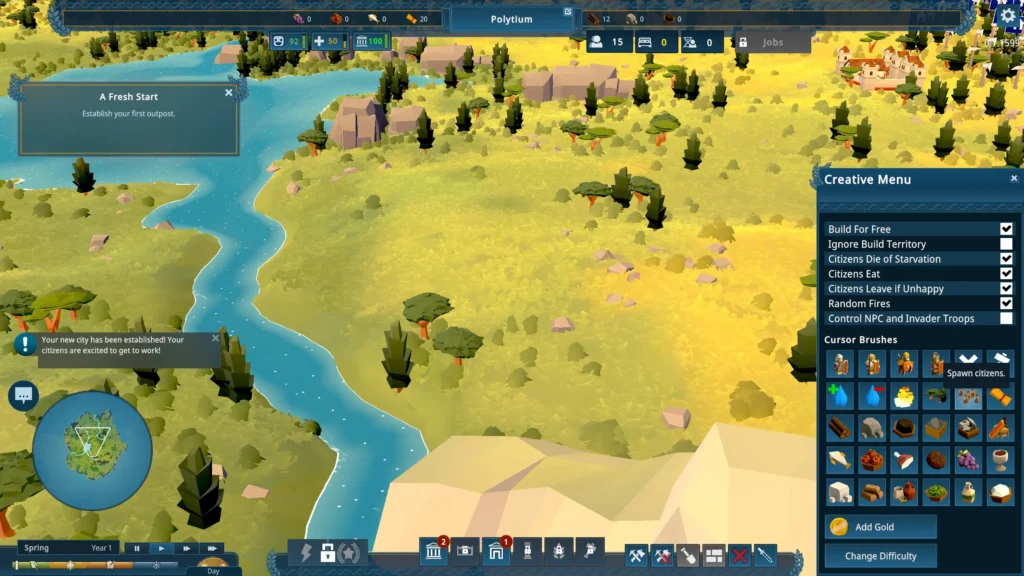
Creative mode is also in the game if you fancy building without the stress of catering to annoying godlike beings for the glory of Rome, with plenty of modifiers to adjust while you play. It’s nice when citybuilders give me the option for sandbox as well as a standard playstyle, as I have grown to appreciate progression systems in these games. You can spawn citizens and resources, enable free build,
The guts of Nova Roma are solid, and I’m a big fan of the core gameplay. It’s like sinking into a deep, warm bath with the cute graphics, and just like Kingdoms and Castles, it is just enjoyable to build a town. Balancing appeasing the gods while juggling the development of your budding empire has a nice mix of challenges that is sorely needed, and for a game early in development, there is a lot to like. My only real concern right now is the middling performance. I saw plenty of frame drops on PC despite the modest system requirements, and I had a couple of crashes here and there. These should be easy fixes with some patches, but it’s something to consider.
Nova Roma has been given a Playable rating by Valve before the launch, while ProtonDB has a Platinum rating due to the generous demo that has been around for several weeks.
On paper, this is most certainly true, and you can play it on the Steam Deck with a tolerable experience. In practice, I found things more compromised. That doesn’t make the game unplayable, as it does play nicely with the Steam Deck’s trackpads, but I wasn’t able to get even 50FPS on average. There is definitely some work with optimization that needs to happen, and we don’t get many options to work with. That seems to have been a trend with my last few reviews on here!
With this in mind, I just kept all the graphical settings turned on with a 30FPS framerate cap to make things as consistent as possible. There is not much point in fiddling with the TDP ratings before the devs get the chance to make some performance updates. Performance and the default control scheme are solid enough, and I had no issues going about my omniscient city-building business.
I would not expect much with battery life like this, of course, as Nova Roma sucks up power like a vacuum cleaner. Average power draw was around 15 watts, and sometimes it spiked as high as 20 watts, although capping the refresh rate to 50Hz on the Steam Deck OLED helps a little. Regardless, I got around 3 hours of battery life on average.
The game is available in English, German, French, Spanish, Portuguese, Italian, Polish, Czech, Hungarian, Turkish, Ukrainian, Russian, Brazilian Portuguese, Simplified Chinese, Traditional Chinese, Korean, and Japanese.
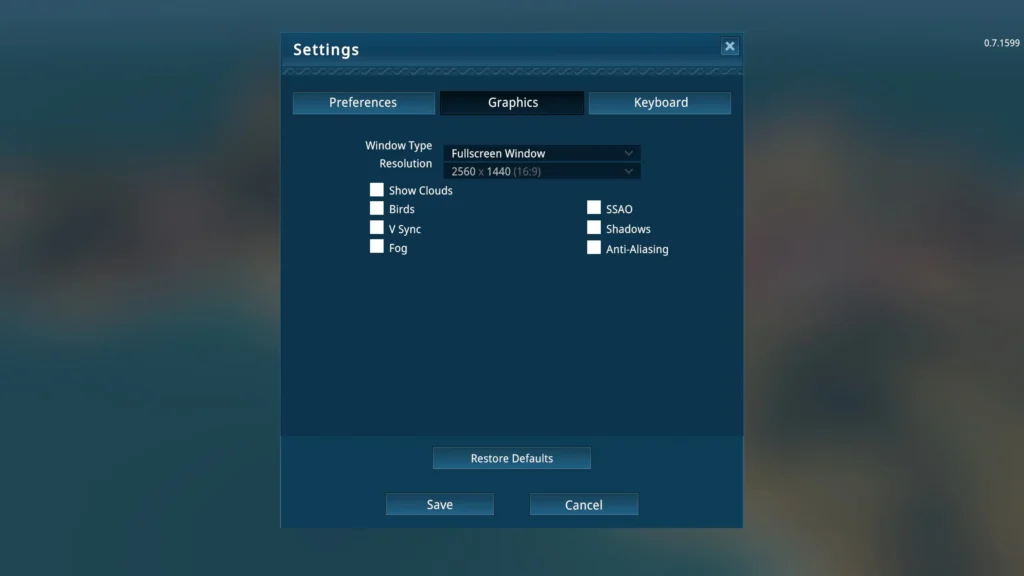
While the game lacks some important options, such as colorblind support and dedicated controller support, it does have some things, including Vsync, UI scaling, invert camera, edge scrolling, camera panning speed, and move speed. Not being able to change texture settings is unfortunate, but you can toggle shadows, clouds, birds, and anti-aliasing.
Nova Roma is in a good place, and Lion Shield has clearly learned a lot from developing Kingdoms and Castles over the years. The blend of Roman architecture, appeasing the Roman gods, and mechanics makes for an excellent experience. It may lack the insane depth of games such as Farthest Frontier and Heart of the Machine, but there is a great foundation so far.
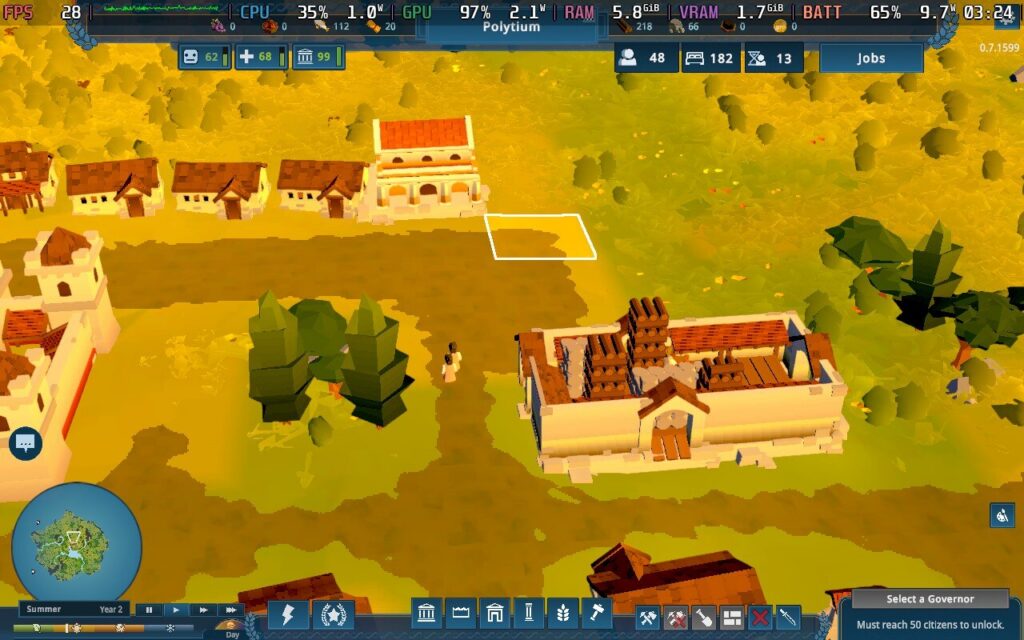
There’s work to be done regarding performance, and the Steam Deck experience, while playable, needs some optimization passes before I’m confident recommending it solely for the Deck. Nova Roma is great fun, and I’m excited to see how Lion Shield progresses their next game.
このレビューはPC版に基づいています。
このレビューをお楽しみいただけたなら、SteamDeckHQ の他のコンテンツもぜひご覧ください!あなたのゲーム体験に役立つゲームレビューやニュースを幅広く取り揃えています。ニュース、ヒントやチュートリアル、ゲーム設定やレビューをお探しの方も、最新のトレンドを知りたい方も、ぜひご利用ください。
Nova Roma's impressive mix of city-building mechanics, water physics and charming atmosphere will win over many fans of the genre, although it is a harder recommend for the Steam Deck right now.