

Bus Bound was provided by Saber Interactive for review. Thank you!
Bus Bound comes to us from stillalive studios, and if that name sounds familiar, it's because they were the developers behind the popular Bus Simulator series, which last received a game back in 2021. With the new Bus Simulator 27 being handed over to a new development team, stillalive worked with Saber Interactive to bring us Bus Bound, the next evolution of bus simulators.
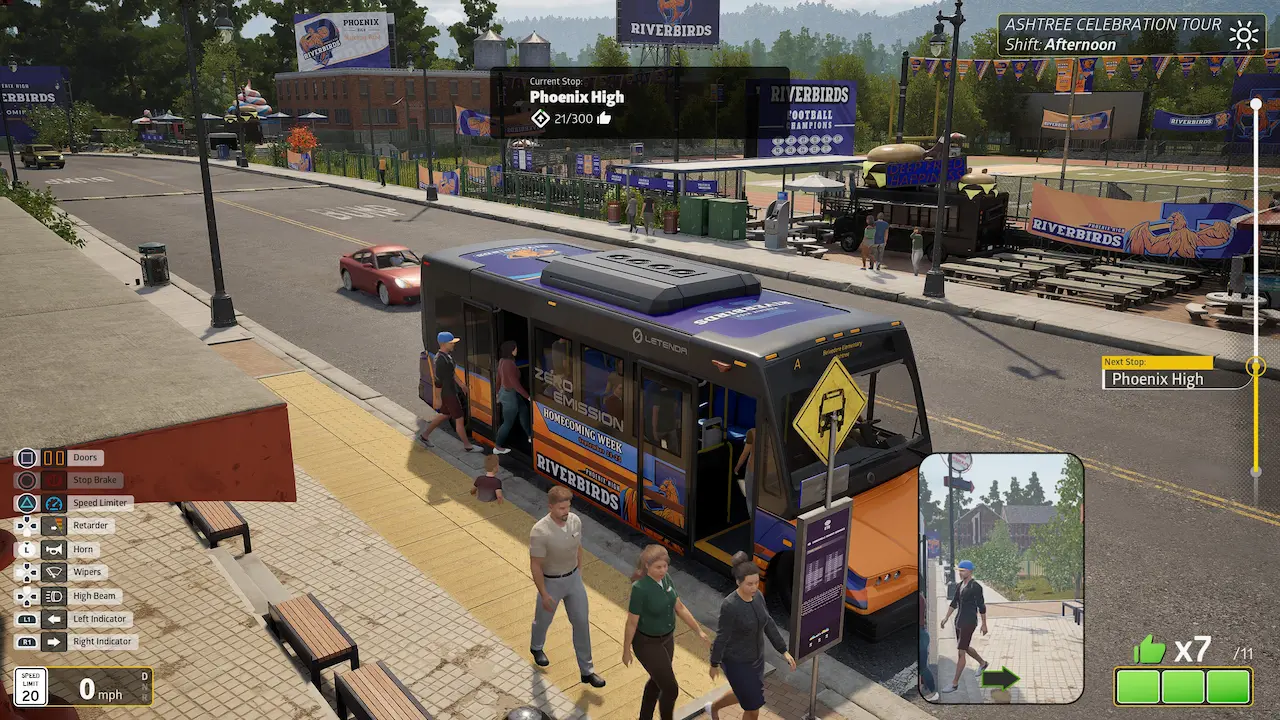
Bus Bound, however, takes a diversion from its predecessors. Instead, it presents a rather Utopian view of public transportation. All public transportation is free in Emmerville, the city where the game takes place. Rather than dealing in money, your service is measured in terms of "likes". Passengers will like your service if you arrive on time, drive safely, and obey the rules of the road.
Because no money is involved, the game's progression is entirely based on this "likes" system, which feels a little silly. You unlock new areas to service and, occasionally, new vehicles to use based on these likes, which is odd but acceptable. What is really strange, however, is that when you serve an area enough and gather enough likes, you can upgrade the area, which causes entire parts of the city to change; new infrastructure, new trees and parks are added, and buildings are updated.
From a purely gameplay perspective, that's pretty neat to have your actions change and update the city in such a way. But in the back of my mind, I'm wondering how a bus route to the neighborhood managed to create such a huge change and encourage the government and businesses to pour substantial money into the area. Maybe I'm thinking too deeply, and perhaps it's right that "Bus Bound" no longer carries the "Simulator" moniker, because in this regard, the game feels very idealistic, rather than having any sort of realism.
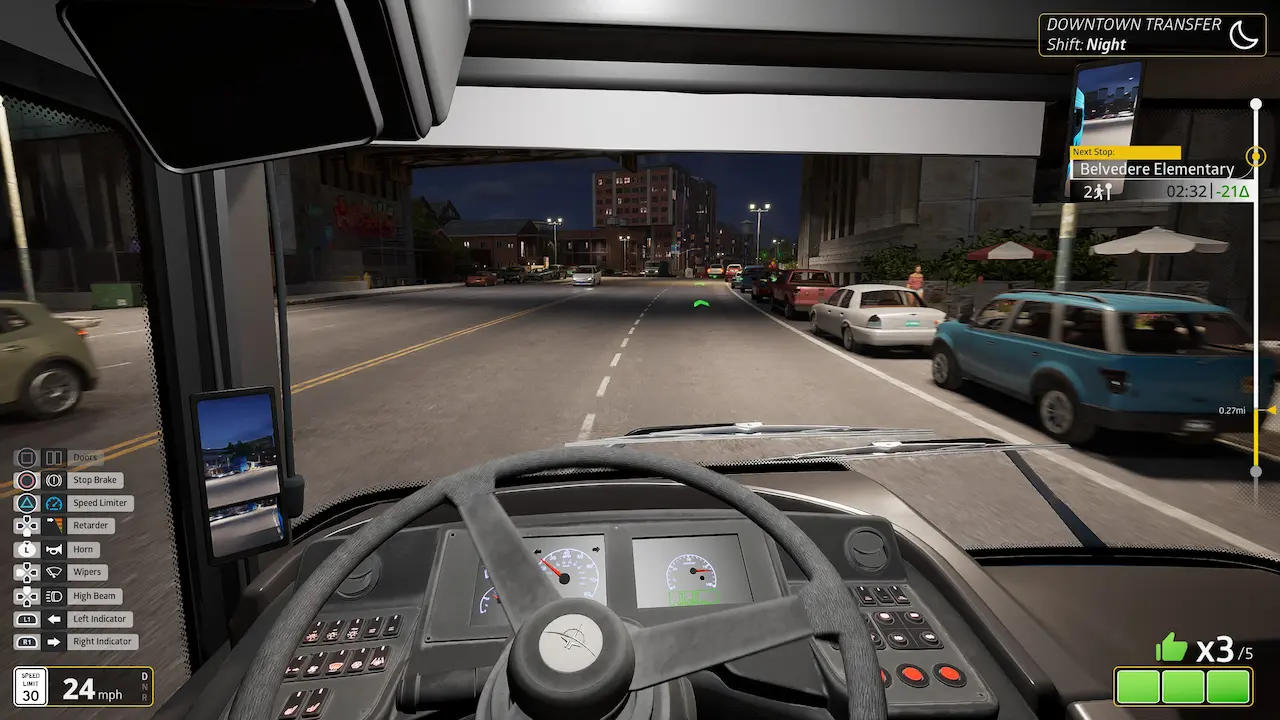
When you're actually driving the buses, we do see the development team's pedigree from their previous Bus Simulator days. The vehicles feel weighty; you need to plan your turns so you don't clip other traffic or roadside infrastructure with the corners of your bus, and you do need to obey traffic laws, such as traffic lights and stop signs, and slow down for speed bumps. I wouldn't say the driving is as involved or detailed as the Euro/American Truck Simulator games, but you do have to plan ahead.
There are also a variety of bus types. Some are smaller, almost minibus-like, holding only 15 or so passengers, making for an easier, more responsive drive. Then you have the mix of Diesel, Hydrogen, and Electric buses. Diesel buses are pretty sluggish, whereas Electric buses have a noticeable difference in how quickly they pull off the mark. It's nice to see the differences in how these buses drive represented in the game.
The AI traffic was an issue for me when I previewed Bus Bound, and I'm glad to say that the traffic behavior has improved, mostly. The AI still seems to struggle at junctions. The game uses the "Right on Red" rule, meaning traffic can still enter a junction on a red light if they are turning right. But AI following this rule shows some disregard for other traffic, often pulling out in front of other road users and causing traffic to stop at junctions, or sometimes giving way to other traffic in junctions, even though they have the right of way, causing needless traffic jams.
Arguably, these issues make the traffic appear more human-like and realistic, but it's a degree of unpredictability that is rare in simulation games and could annoy those who expect everyone to obey traffic laws as written. The developers are clearly aware of this issue, as I had seemingly endless traffic jams, with cars despawning right in front of me so I could continue playing.
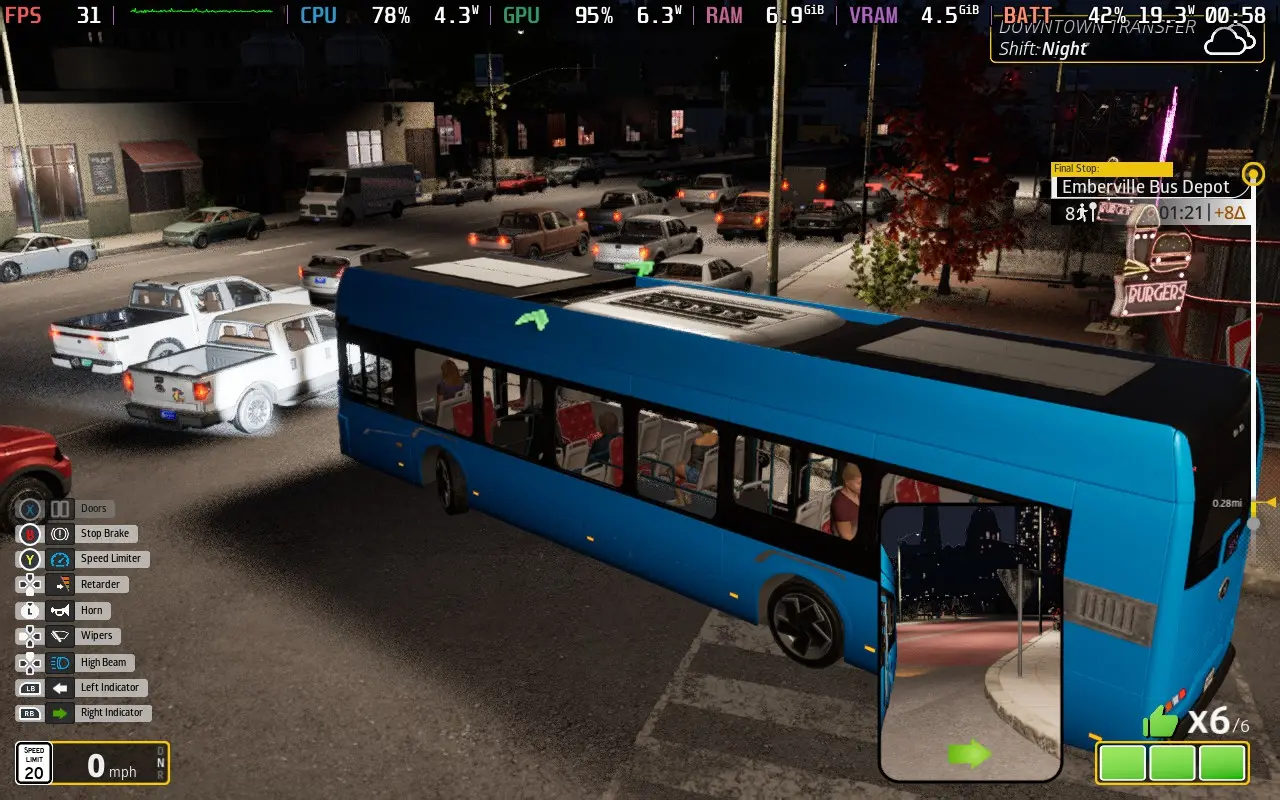
Then, there's the management aspect of the game. Bus Bound is all about the betterment of the city, and to do that, you need to make sure your bus service covers all areas. Enter the Line Editor. From here, you can create custom bus routes that you will drive along and make sure that every part of the city is catered to. You'll complete objectives, mostly in the form of receiving enough likes at a specific bus stop, which in turn will unlock new vehicles and new areas to create lines in.
Unfortunately, that is about as deep as Bus Bound goes into management and logistics. I hesitate to call this game a simulator because, aside from the realistic driving physics, it presents a very idealistic worldview, aiming to transform the city into a pedestrianized, public-transport-centric metropolis. It's definitely a feel-good game in that regard, but I'm not sure who the target audience is, as it lacks the depth I would want from a simulator yet presents itself as one.
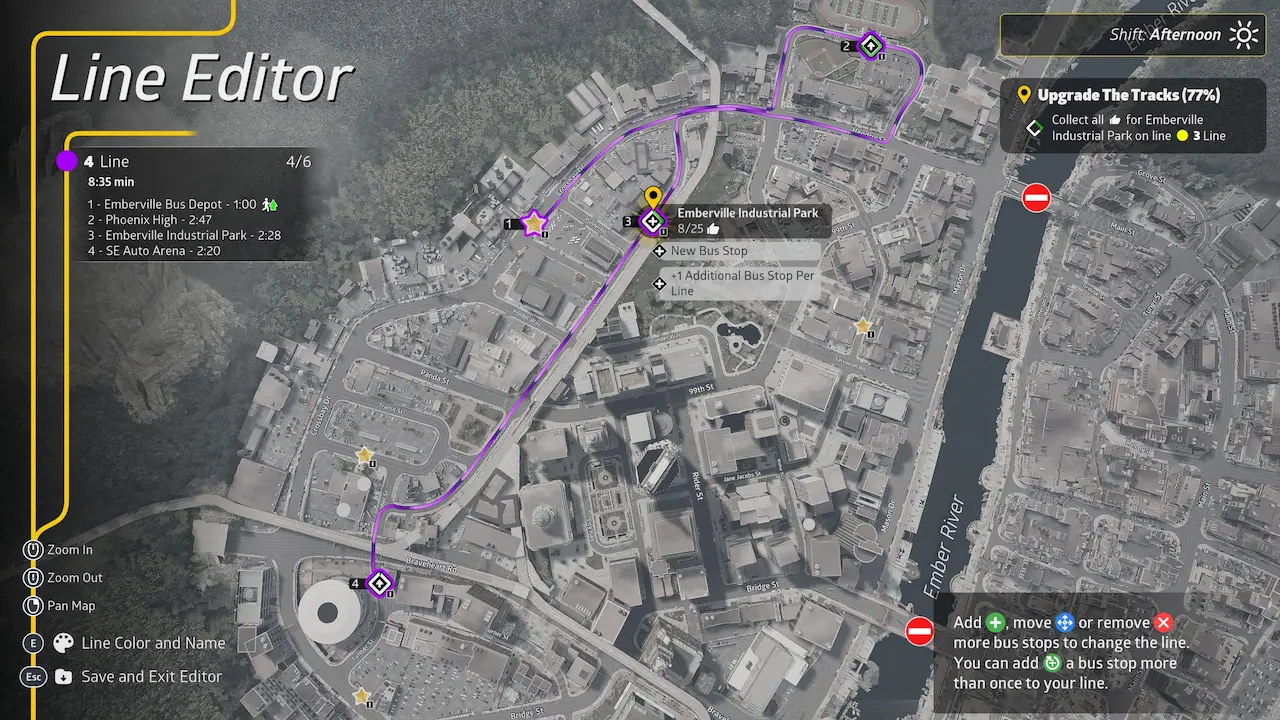
The gameplay loop is "build a line > drive the line until you get enough likes on those bus stops > upgrade the district > repeat these steps in the new district just unlocked". It's repetitive, and as you progress, the objectives become more difficult, meaning you have to repeat a line over and over to complete them, and the lack of management tasks in between makes it more tiresome than it otherwise would be.
The external camera is also awkward at some junctions, with street props/decoration interfering with the camera, pushing it very close to the bus, and making it difficult to see traffic when attempting to pull out.
Bus Bound does feature online co-op play for up to 4 players, which definitely helps break up what could be a somewhat tedious experience. It's worth bearing in mind that only the host will make progress on their save.
As is often the case with these simulators, controllers are well supported, and I would always recommend you use one over a keyboard. Bus Bound also supports 1280x800 as a resolution to take full advantage of the Steam Deck's display.
Bus Bound is quite intensive on both the CPU and GPU, but fortunately it also offers decent visual scalability, so we can get the game to a playable level on the Steam Deck.
Set all your quality settings to their lowest, then disable VSync, set the in-game frame limiter to Unlimited, disable Raytracing, and set upscaling to FSR Performance mode. You'll want to apply a 30 FPS limiter in your SteamOS settings.
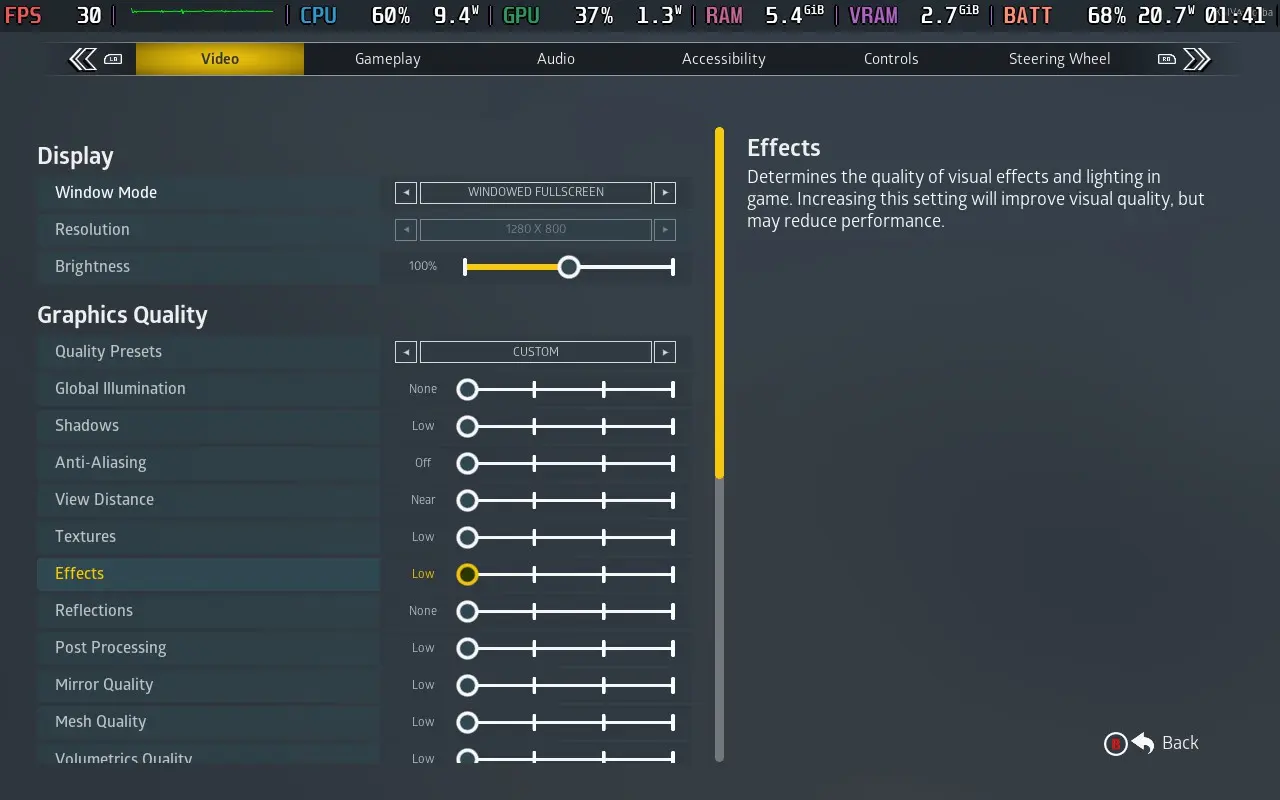
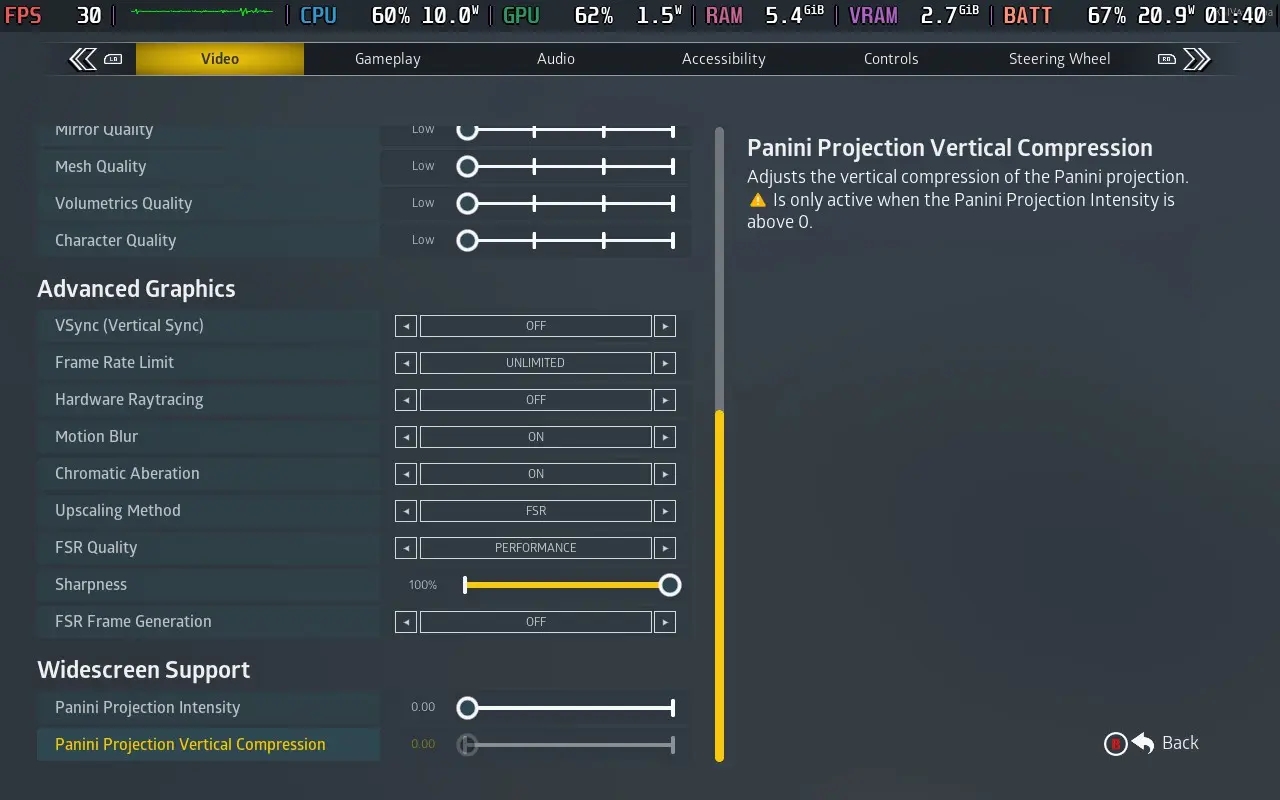
With these settings, most of the game will play at 30 FPS; some intensive areas of the city will drop into the mid-20s. Streets such as Mason Drive, which is several lanes wide with many parked cars, will drop you to 25-27 FPS for almost the entire stretch. For most areas, though, you will be hitting 30 FPS with occasional drops to 28 or 29, definitely playable given the slow-paced nature of driving a bus.
When the framerate got a little stuttery, sometimes the audio would cut out and resume a second or two later. It didn't happen often; I hit a patch every hour or so, but it is distracting when it happens.
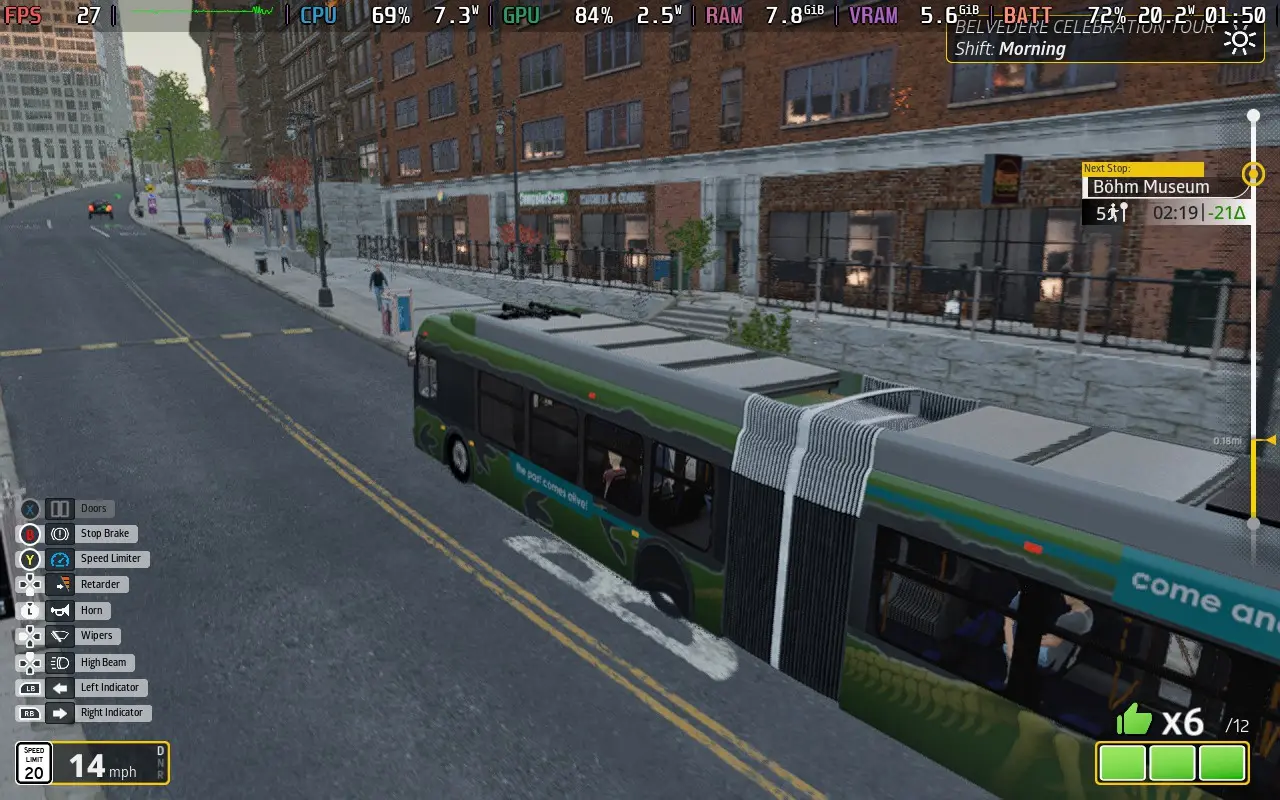
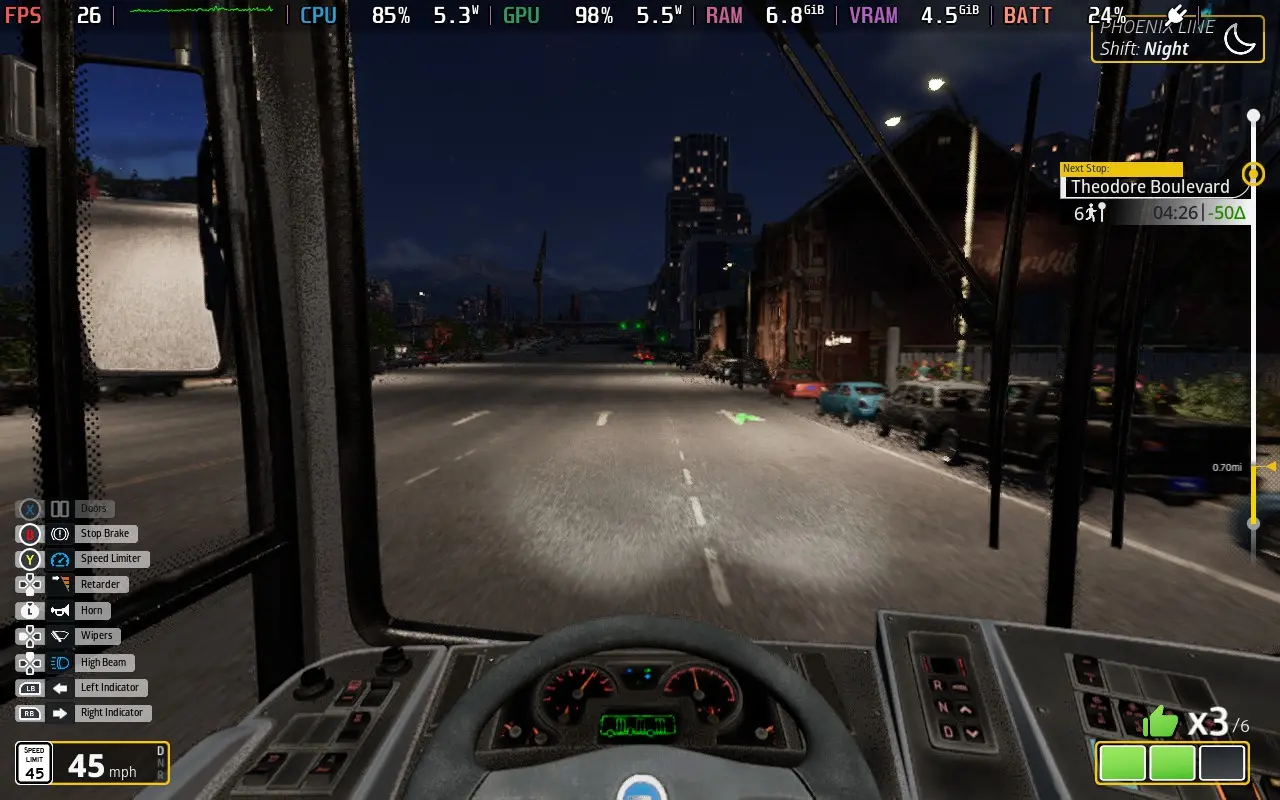
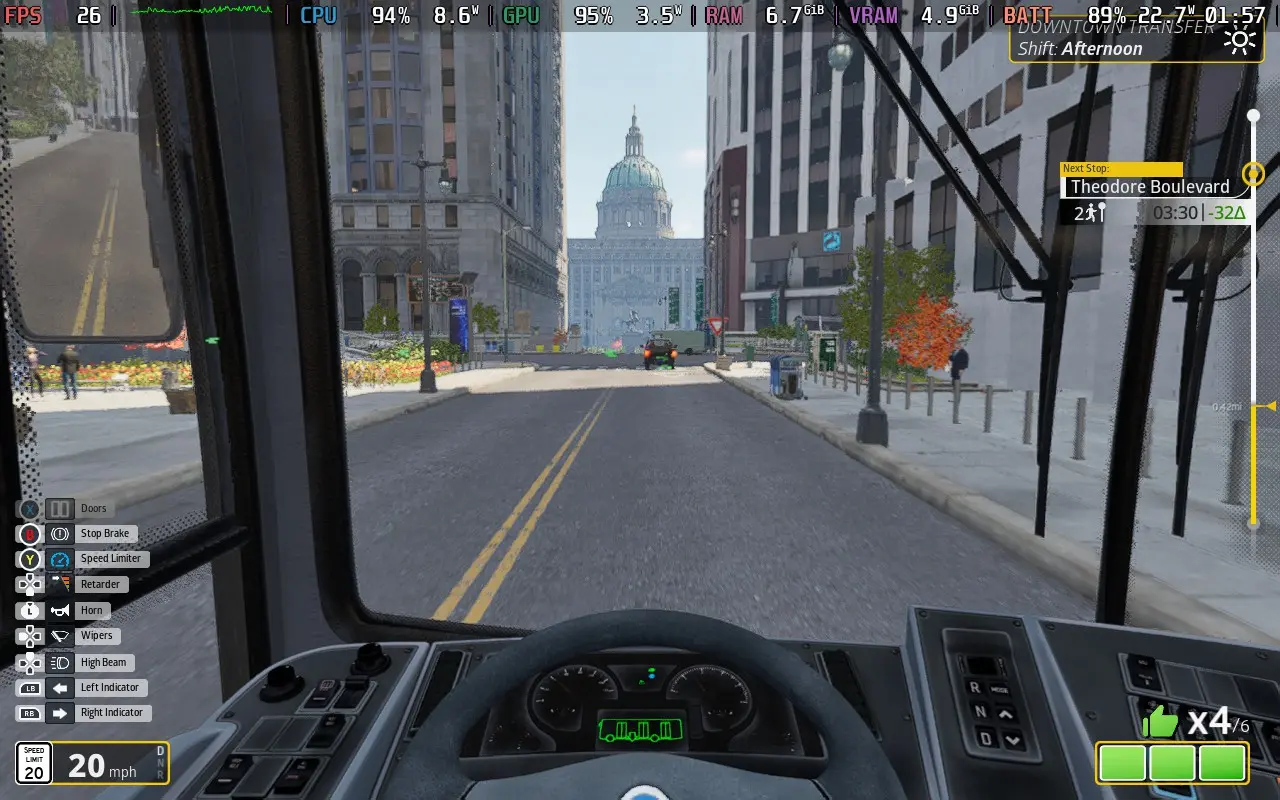
As for the power draw, expect it to be around 17W-22W, depending on where you are in the city, giving you around 2.5 hours of playtime on a Steam Deck OLED, and around 1.5 hours on a Steam Deck LCD. Temperatures were mostly around 65 °C - 70 °C.
Bus Bound features a UI Scale slider, color blind filters, and subtitle size adjustment.
Bus Bound feels like it has a conflicted identity. Presenting us with a somewhat realistic driving simulation, backed up by almost no management or logistics gameplay. Unless you want to drive a familiar path, day in, day out, then Bus Bound isn't the game for you.
Performance on the Steam Deck isn't great, but it's acceptable. If you can forgive the odd frame rate drops here and there, you can play through the game. The controller is a fine way to play driving games, too.
このレビューはPC版に基づいています。
このレビューをお楽しみいただけたなら、SteamDeckHQ の他のコンテンツもぜひご覧ください!あなたのゲーム体験に役立つゲームレビューやニュースを幅広く取り揃えています。ニュース、ヒントやチュートリアル、ゲーム設定やレビューをお探しの方も、最新のトレンドを知りたい方も、ぜひご利用ください。
Bus Bound presents us with a rather shallow look at running a bus company. Focusing more on driving from Point A to Point B rather than any real logistics and management challenges. Performance on the Steam Deck isn't great, but is in the realm of playability.