

18W - 23W



Big Walk was provided by Panic for review. Thank you!
There have been many different co-op games that I have played, and a lot of them are extremely fun. However, it has been a while since I’ve seen one that not only intrigued me, but challenged me in more ways than one. That’s what made me so excited when I first saw Big Walk. Not only did it look like the puzzles required true communication and teamwork, but it also looked like there was no handholding, which requires a lot of strategy in planning. Narrative plate, I can confidently say that it’s quite possibly one of the best co-op games I’ve ever played.
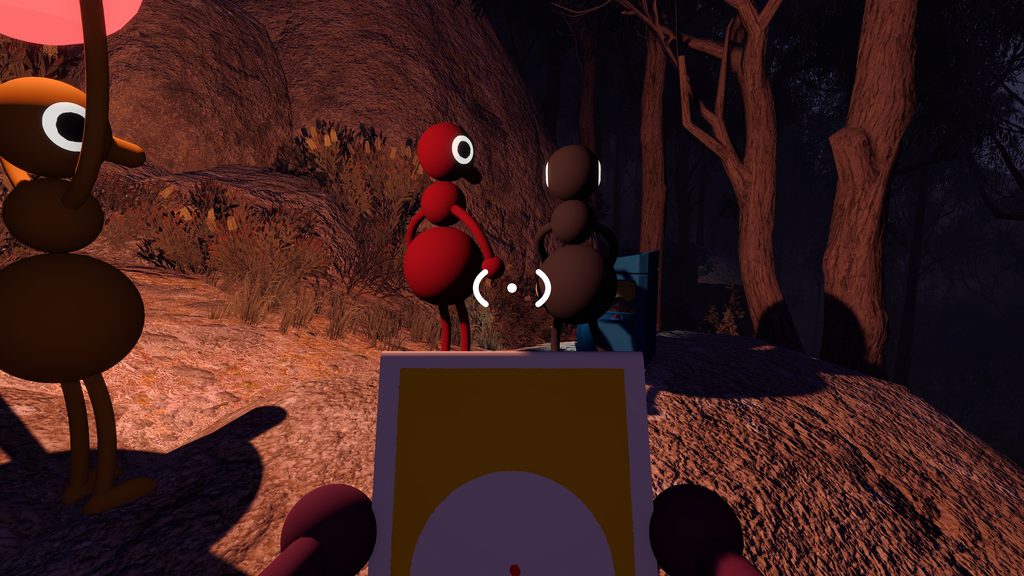
Big Walk is a simple game in its premise, but that simplicity becomes complex as soon as we see what we are up against. You are running around on a giant island, going to different locations to complete puzzles. There’s no fast travel and no handholding; you have to use your wit, memory, and brains to work with friends and figure out the secret behind completing the puzzles. Some may seem easy, some will be challenging, but almost all of them will be fun.
The game is designed from the ground up for co-op, so you will need at least one other person to play. And it makes sense as soon as you start seeing the puzzles themselves. Each one requires some form of coordination and planning, whether it's making hand gestures, having to vocalize directions, or stacking on top of each other. However, despite how different each puzzle is, they all have one thing in common: you will need competent partners.
The variety and strategic thinking are what elevated the experience past other co-op games. It gave me a similar feeling to Portal 2’s co-op when we go to completely new chambers that added in a new element, whether it be goo or light bridges. Instead of just a new element here or there, each puzzle in Big Walk felt like a completely new challenge. We could go from one puzzle where we have to direct someone with a blindfold through when an obstacle course, to another puzzle where we have to come up with a strategy to coordinate which light to turn on through three people, to another where one person has to sit in a chair and can’t hear, and the other others have to figure out why there are six microphones behind them.
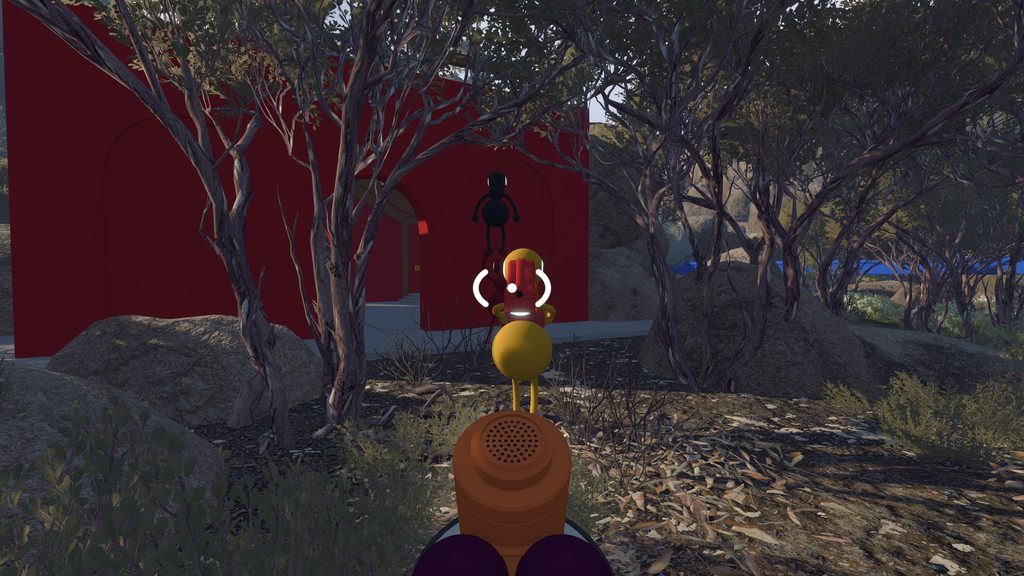
Some of these definitely required some trial and error, but all of them felt rewarding to complete. With each one being so wildly different, we were trained to think outside the box and experiment. I’ve played a lot of puzzle games where there may be 80 puzzles, and they are all split into 10 and have a specific theme to them with a familiar base mechanic. While the mechanics in Big Walk are fundamentally unchanged, every puzzle utilizes them in different ways, while pushing our critical thinking and problem-solving to the limit. And at the end of the day, the joy of seeing the confetti come down when completing it always gives me a sense of satisfaction.
I also wanna praise the sound design and voice communication systems put in place. It’s extremely cool to walk through different landscapes and have our voices change with the proximity chat depending on the area we are in. If we’re in a tunnel, there might be a bit of an echo, or if we are behind the door, our voices might be muffled. This is a game where using the voice chat is essential to the experience, and trying to go around that through Discord or other calls defeats the purpose of what makes the teamwork so essential.
The structure of the game is also quite interesting. You can play with two, three, or four or more people, which is an option you choose as soon as you boot up and host the game. Depending on which option you choose, the puzzles will change to be compatible with that number of people. There are some puzzles that will change themselves to require more people to complete them depending on the options you choose. For example, there was a puzzle where we had to use hand gestures to create a pattern, and in the 4+ mode, it required one person to make the gesture, one person to relay the message, and one person to place the pattern in the correct order. However, when choosing the two-player mode, a random window will appear in between the first and last player to cut out the middleman. And yes, even if you start a game with four people, you can boot into that same save with the two-player option, and the puzzles will change.
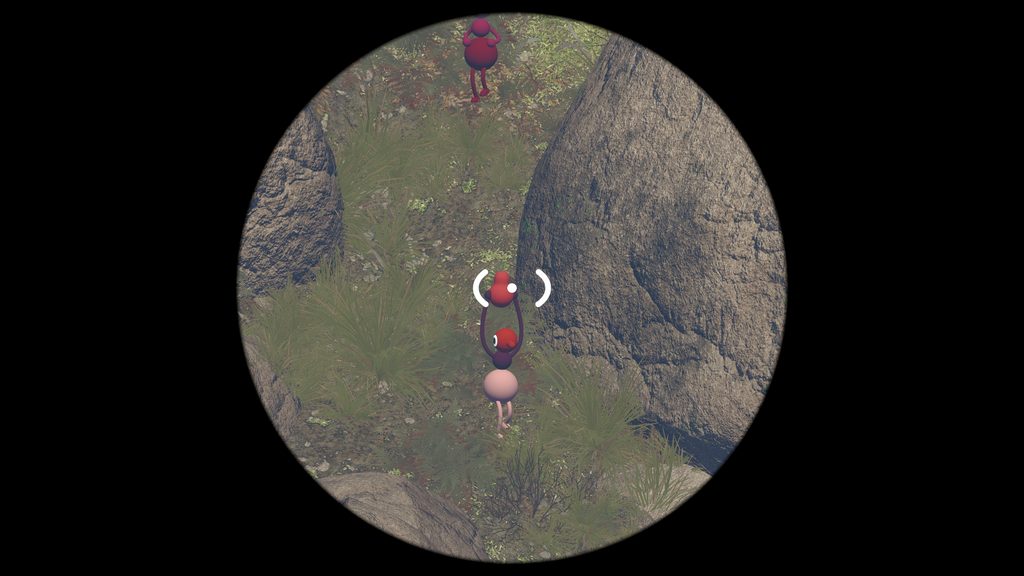
Completing puzzles gives us these gourds, and we have to take these gourds to one of four towers. With each tower needing five gourds, we have to place the ones we have in the tower, then move on to the next one. Once all five are in there, you’ll get a key, which can expand the island and unlock shortcuts to get around quicker.
This leads to what I would consider the weakest part of Big Walk: exploration. I know it’s in the name of the game; you are going on a long walk, but it was also a big drain. I’ll admit, it was very satisfying to use the map and figure out where we were and where we needed to go by using the landmarks and tracking our position. However, apart from that, it just wasn’t as enjoyable.
One of the things I love about the game is the lack of handholding and difficulty for its puzzles, which usually offer little to no clues about how to complete them. That same realistic difficulty is why I dislike the exploration. Getting lost from the pack without a solid plan can completely waste everybody’s time. It can be catastrophic, and if you don’t plan accordingly, it can really disrupt the flow of the game.
That kind of planning is essential, because we can only carry one thing in our hands at a time. So, if you’re going to stick to a group that splits up, it’s imperative that one of you each has a walkie-talkie to coordinate. You could also shoot up a flare at the tower when you reach it to signal the other people, which does the job and we can see it from pretty far, but there are many ways to find each other once you get lost.
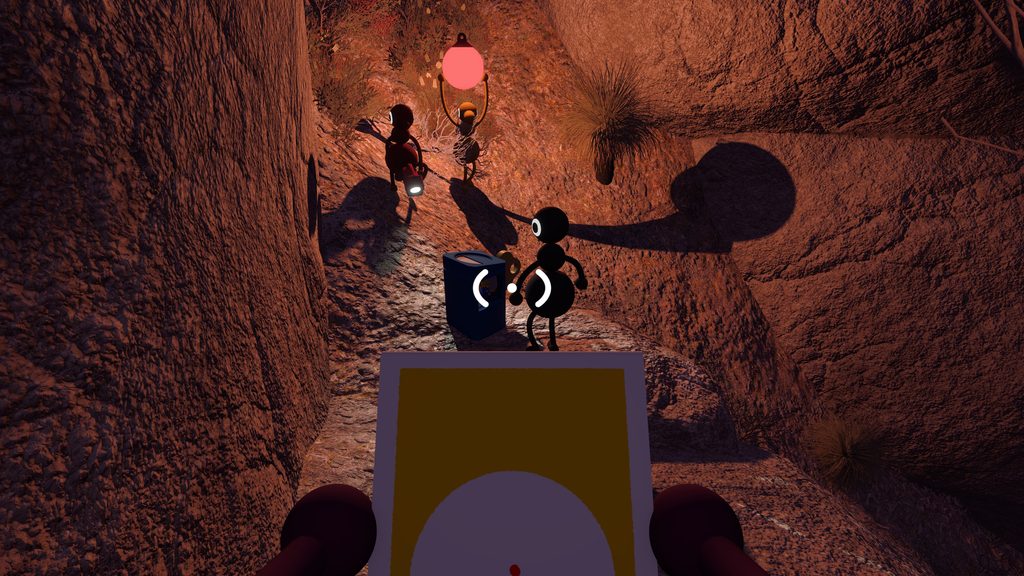
The issue is the amount of time it takes to actually find each other. We walk pretty slow, which means that if there’s a problem and we are notified, we’re going to have to walk back to where the other person is to regroup. Some of this might be absolved if you have the right tools, but that still means the person who is lost or the people who need to find the lost person need to make the trek. Either that or you could meet in the middle, but this still means everybody is going to be walking for some time.
This happened in our experience playing as well. We had a plan to split into two teams of two: one team would tackle a puzzle, while the other would bring the gourd back to the tower. However, one person got lost, and they didn’t have any other way to contact the other person. Despite that, they didn’t have a plan to meet at the tower, so the person with the gourd got to the tower and waited for the other person to show up, but they didn’t. So, he continued the plan and came to the puzzle that we were at. Five minutes after he arrived, a flare shot up at the tower. We tried to signal to the person with a light to show where we were, but he never arrived. This led him to walk around for about 20 minutes to try finding us, and even though we sent someone out to find and bring him, they couldn’t because he was looking for us as well.
Some of the issues can be avoided, like having a much larger group to reduce the time spent going back and forth, but it’s always going to result in someone or some group walking across the island. It’s possible that if the island wasn’t almost completely devoid of color, not counting the puzzles, it could be a more enjoyable walk, but that’s not the case. There are still some beautiful sites to see here and there, but they are few and far between. The majority of the island will be walking through trees and bushes, or getting stuck on rocks when you try to jump over them and impeding progress.
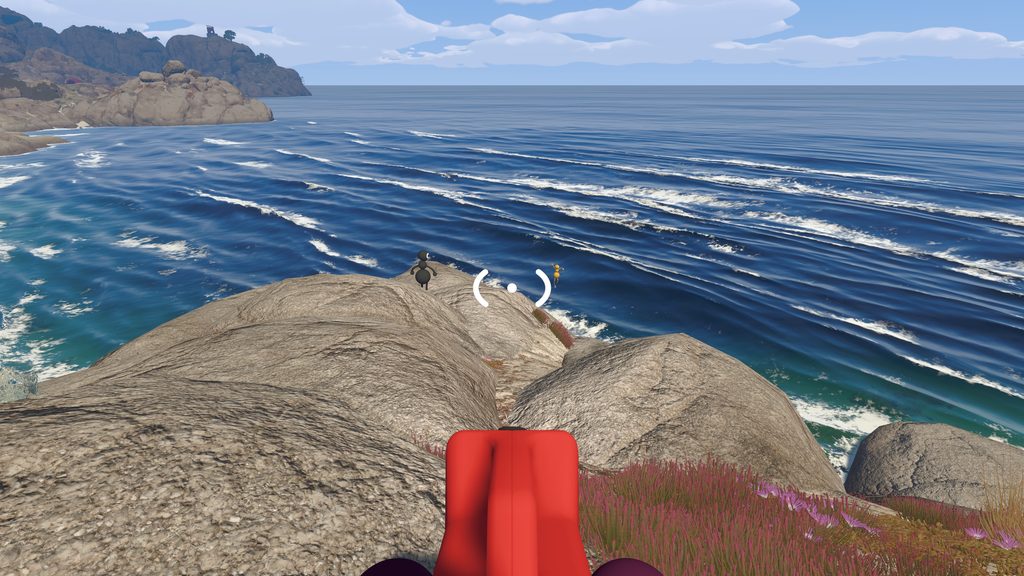
That uneven balance between the amount of time we spend in interesting puzzles and the amount of boring travel time makes it feel like there aren’t enough puzzles to go around. Even the Shortcuts can take a little time to get places; with a slow train and tunnels that take a good chunk of time to run through, you can just take a little too long to get around. Granted, there are some puzzles that are very close to each other, but add in the possibility of getting lost, and it becomes more of an issue. This also extends to when you boot the game again, since your starting point will always be the same. We can unlock shortcuts to get back to where we were a little quicker, but it does require some backtracking that could take some time if you aren’t sure where you’re going.
It’s a little weird to think that the Big Walk is one of the reasons I dislike the game. I love the puzzles, and the difficulty and lack of handholding, but that also contributes to the downtime between the puzzles that I didn’t like. There are some nice viewing spots and Dan’s areas where we can unlock new music to play through a radio we can take, but when we can only carry one item each, that precious space is better used for a walkie-talkie, map, or even a megaphone. A careful plan that everyone follows won’t be subjected to this issue, and I do love the careful planning it takes and the feeling when everyone follows it, but even when everyone falls into a tee, there’s still a lot of walking around that can feel quite draining.
Ahead of its release, Big Walk was given the Steam Deck Verified badge, though I would say this is another one where the badge can be misleading. The game is playable on the Deck, but it needs some modifications to the default graphical configuration to run well.
The default settings keep the game on High quality with 100% resolution scaling. The game looks nice like this, but as soon as we’re walking through Forest areas with lots of shadows, the framerate will drop below 30 FPS. It’s relatively fine when standing still, but the drops can be a bit obnoxious, especially as more of your friends join.
So, I have three configurations for playing Big Walk on the Deck: one that focuses on higher quality with shadows, and the other two focus on higher frame rate with lower quality and fewer shadows.
(All framerate comparison testing was performed walking the same path at the same time of day for the same period of time. The framerate was uncapped and captured using the same Steam Deck).
I love Big Walk, but it felt like there was always some compromise on the Steam Deck. We could play at High with great Shadows, but the framerate would drop with more noticeable stuttering. While bringing it down to Medium fixed the stuttering and brought up the framerate, some of the shadows were gone, and the world could look a little ugly. However, the differences between the quality settings and framerates were immediate and drastic:
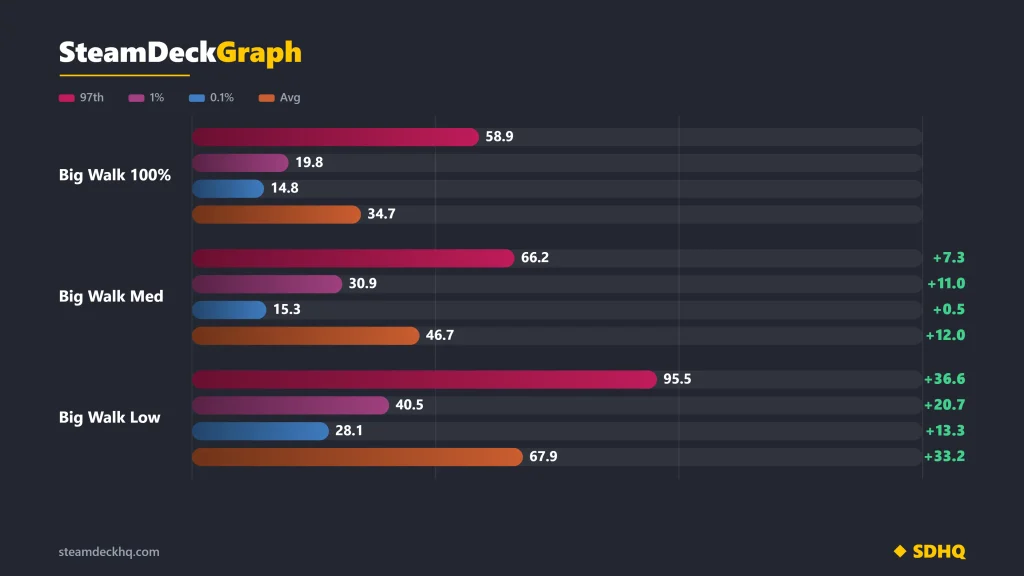
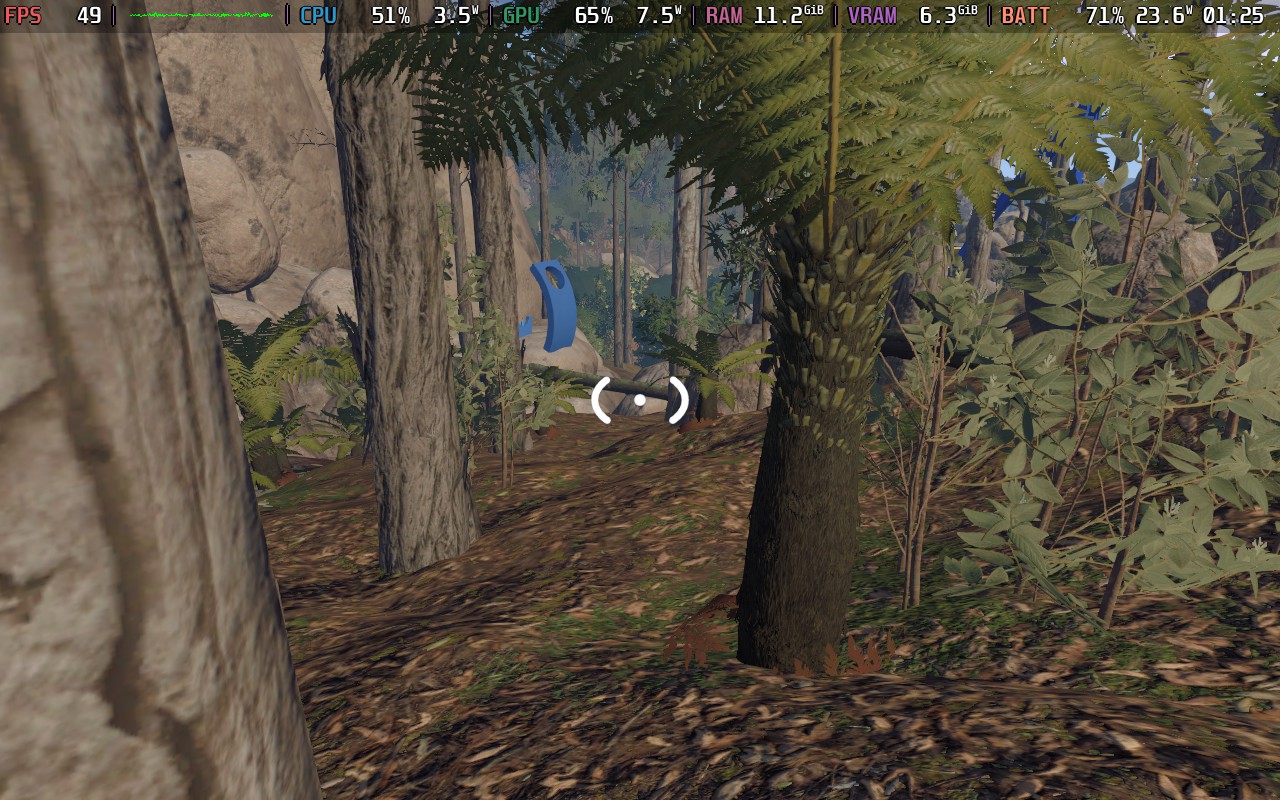
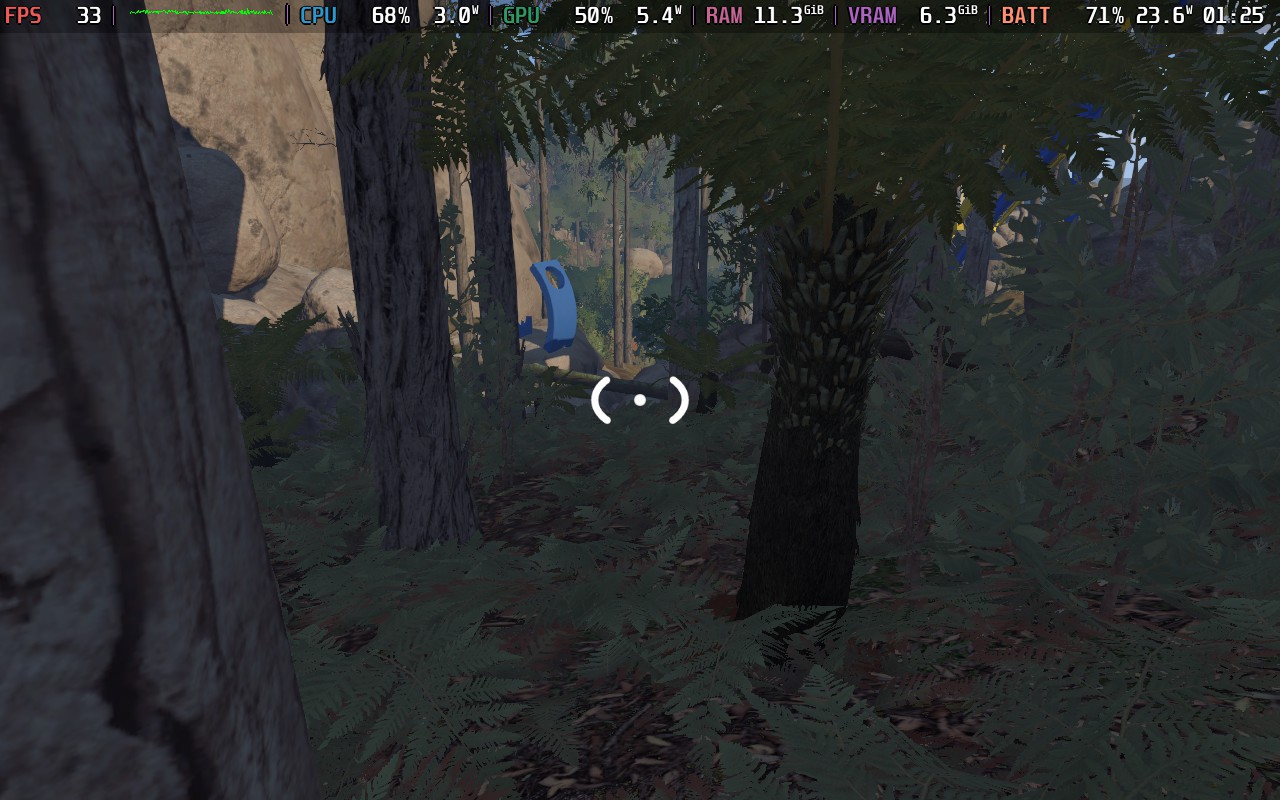
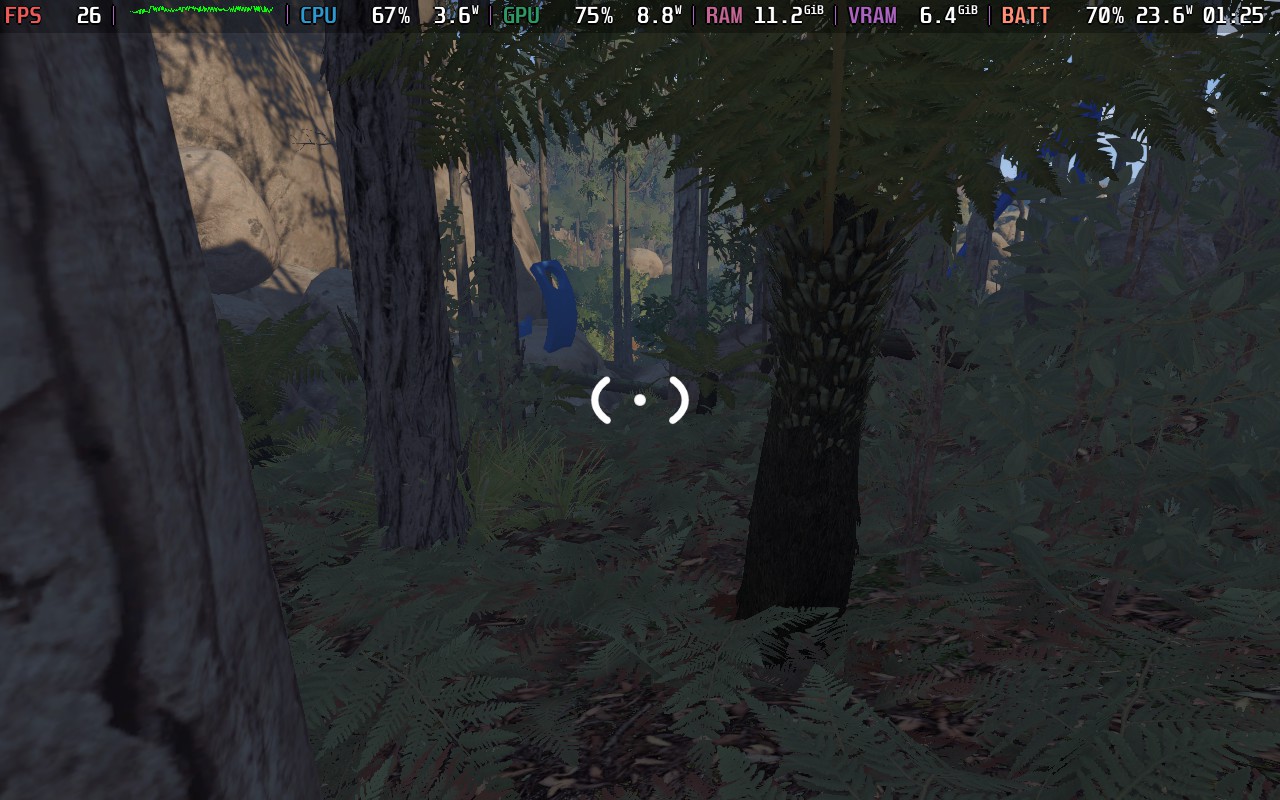
Low vs Medium vs High settings
We do have a render resolution scale that we can move as well, and while it can help, it didn't eliminate the issues. I was hoping sticking to High settings with 80% render resolution would be doable, but I felt those big stutters when walking around and a few areas where the framerate would still dip below 30 FPS. On top of that, a lower rendering scale on High would make those shadows flicker a lot.
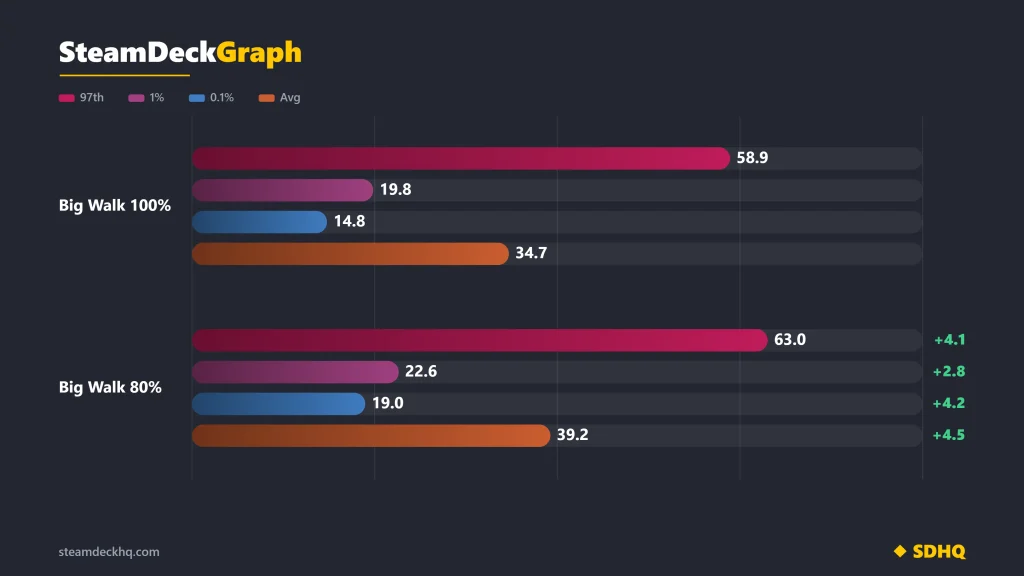
So, this led me to make some tough decisions, but I am ultimately happy with the results.
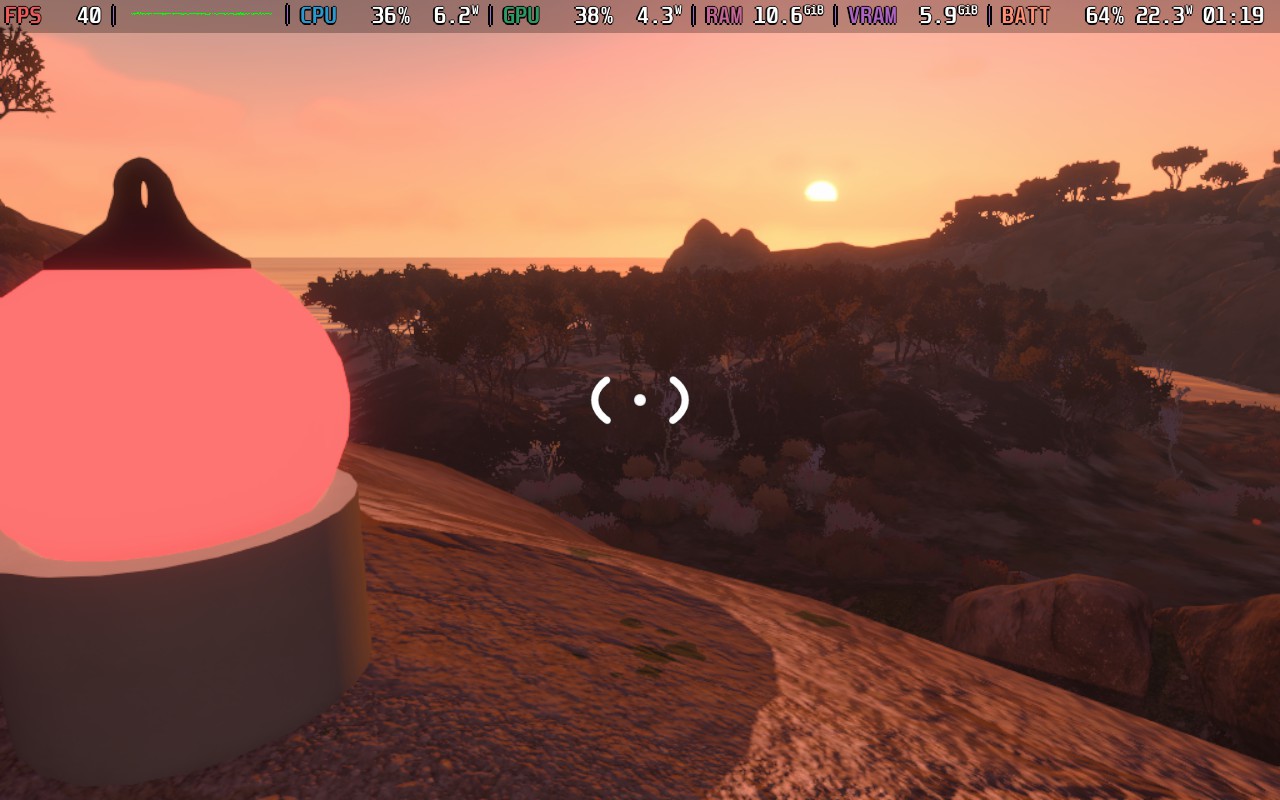
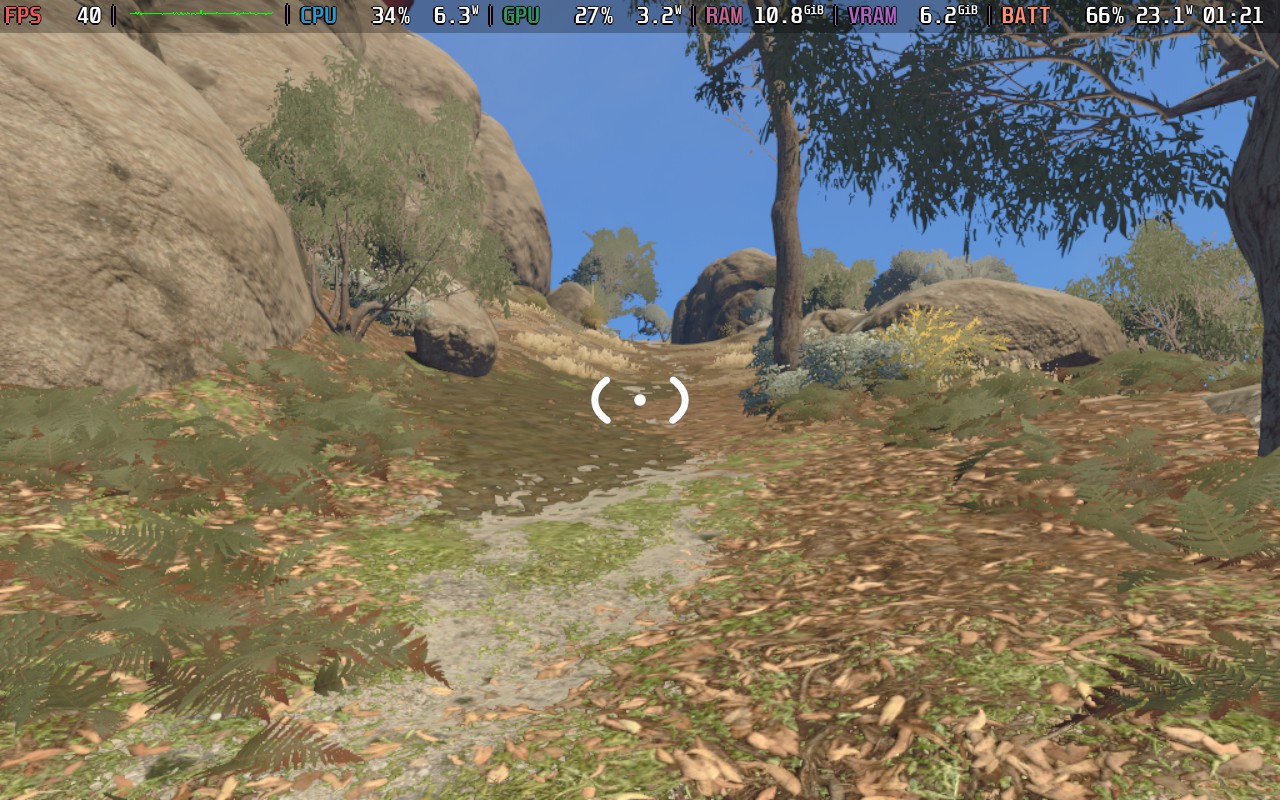
This was a tough one to choose, but I ultimately went with lower quality and a higher framerate as my preference. By setting the graphical quality to Medium and bringing down the render resolution to 80%, we can get a pretty stable 40 FPS throughout. There is some obvious pop-in when walking around during the day, and some of the shadows are gone, but we can get a smoother framerate that is ultimately more stable than trying to play on High with the same 80% render resolution.
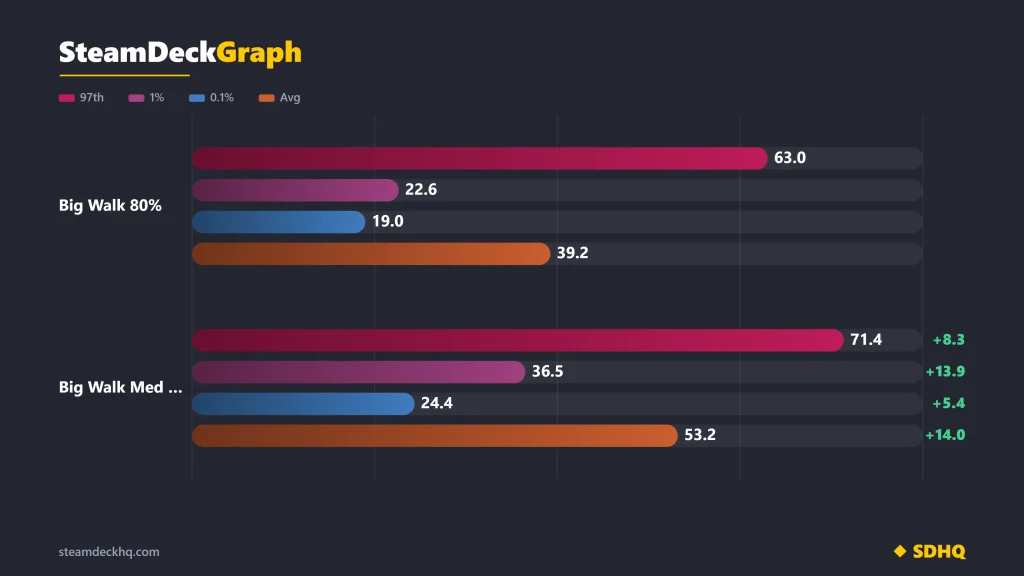
So, while the sacrifices are apparent, the stability and smoother gameplay make up for it. The world still looks pretty nice, especially in the right lighting, and with the shadows being gone, there was no extra flickering that felt overwhelming from the lower rendering scale.
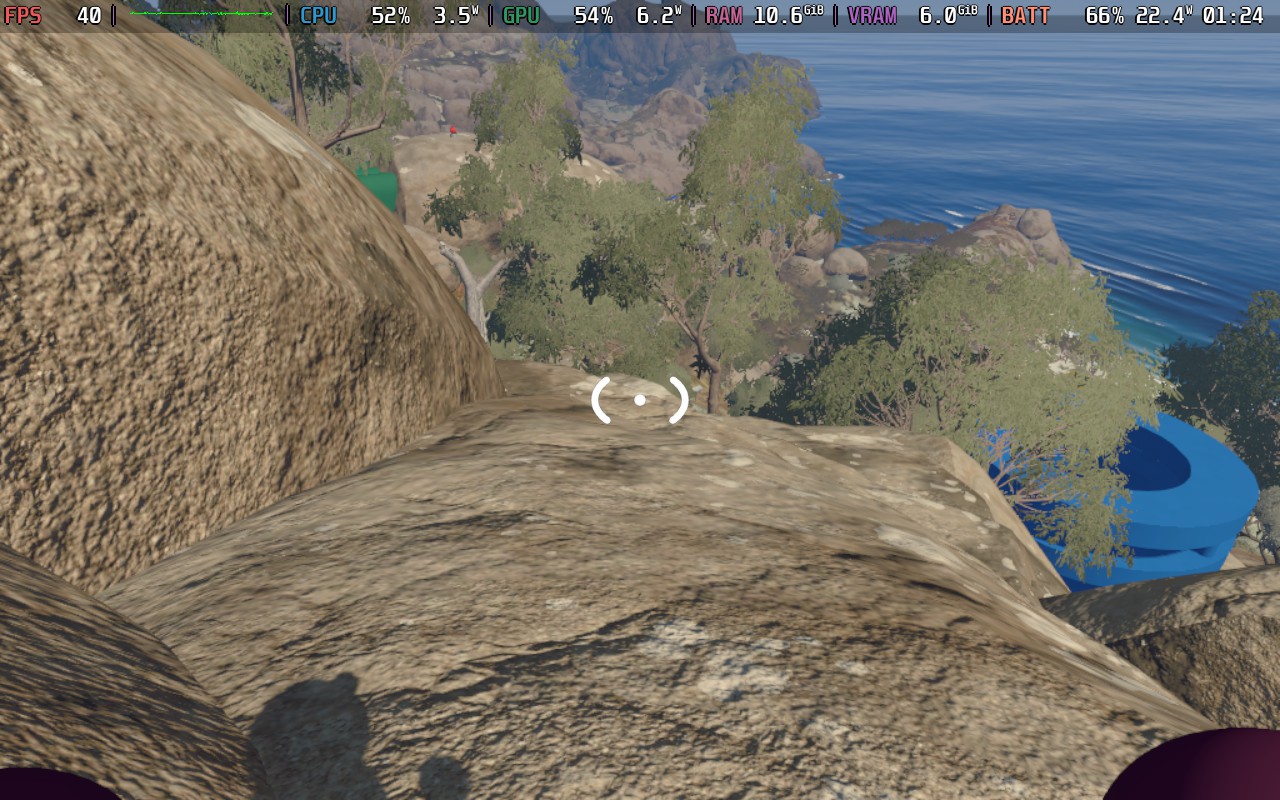
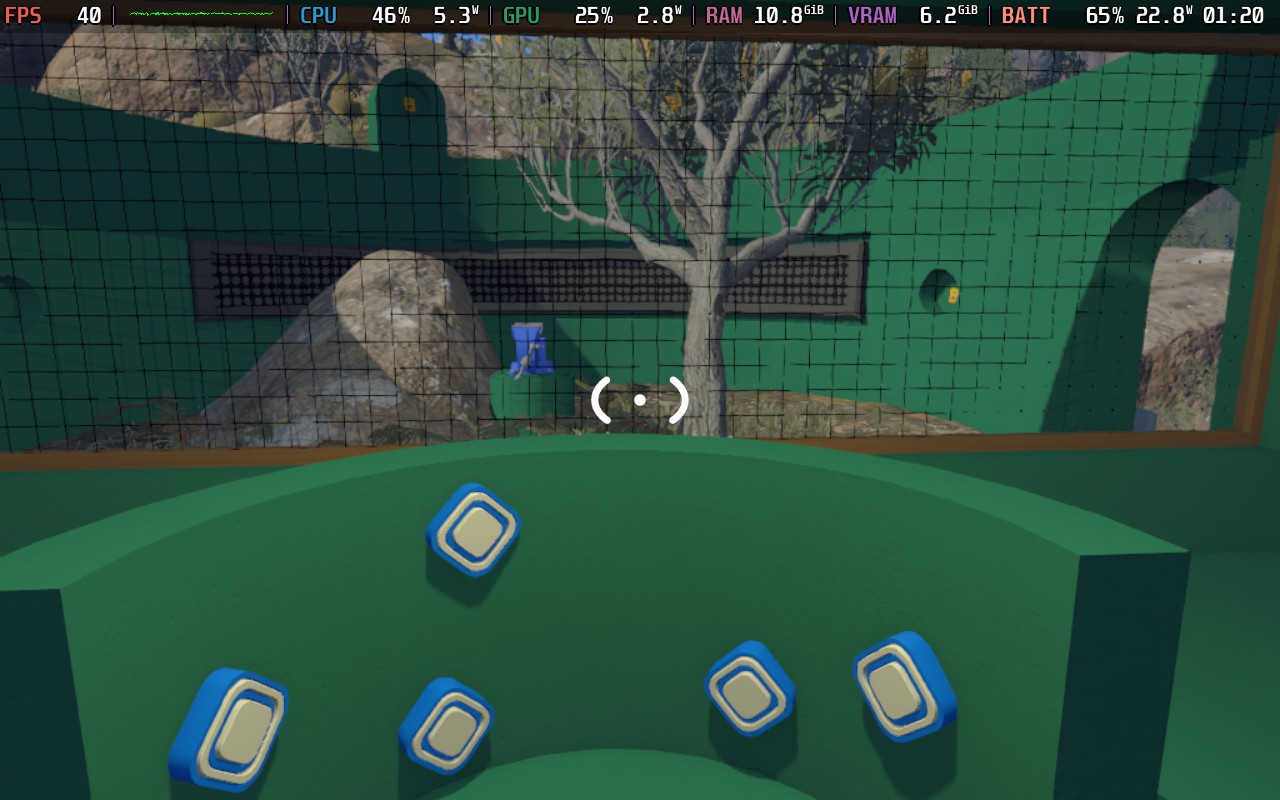
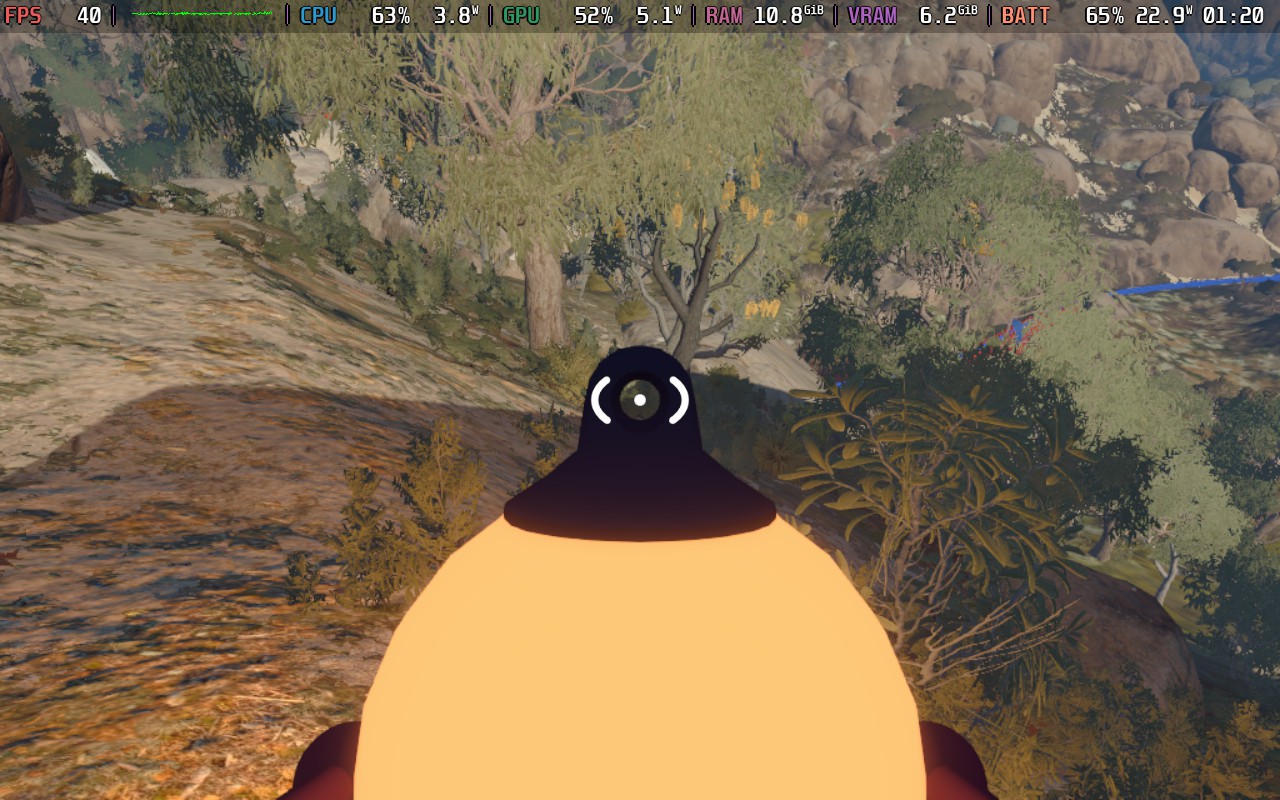
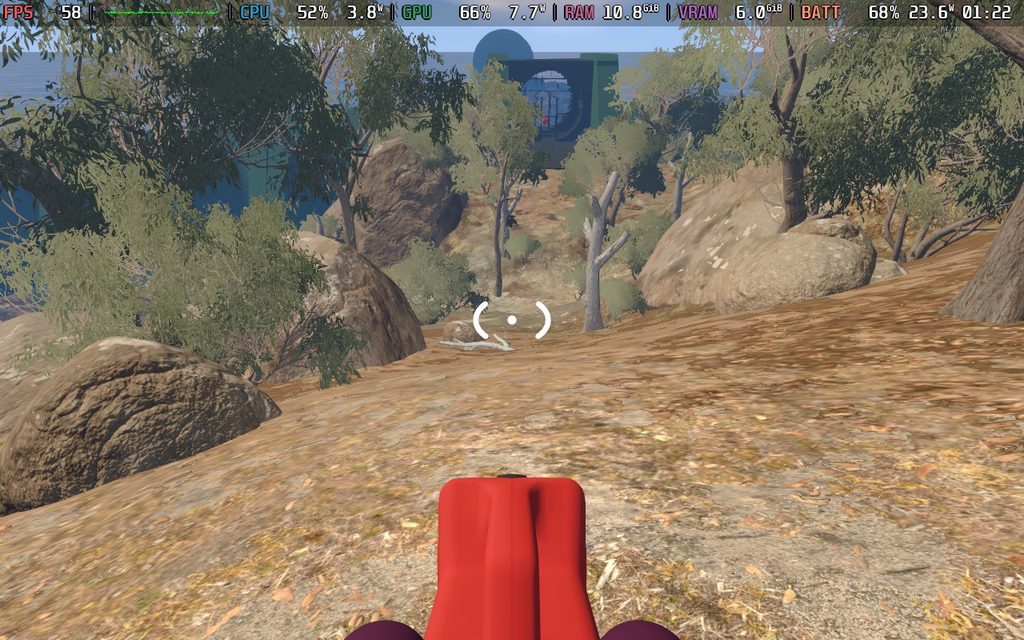
If you really want to push performance, then you can bring the quality settings to Low, while keeping the rendering scale at 100%. Even more shadows will disappear, and the world won't look great, but the framerate increase is massive. So massive that we can comfortably play 90% of the game at 60 FPS. There are still some spots that will drop, especially when you are on top of a tower and looking around or on the Gondola, but it will stick to 60 when walking around and during puzzles. It's the smoothest experience we can get for sure.
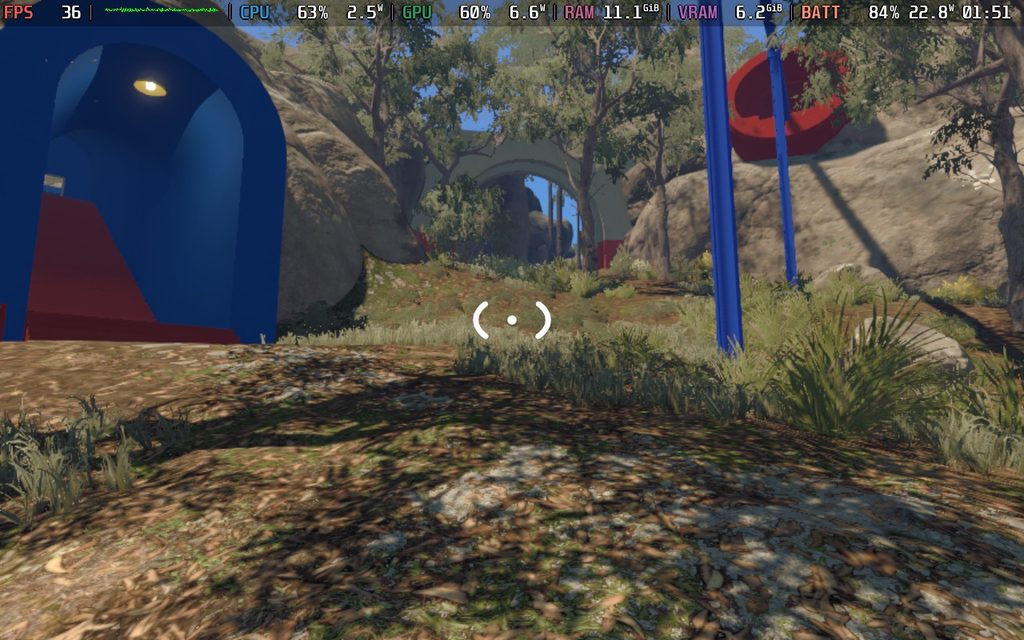
Now, if you want to push the quality to High and play at 30 FPS, you can, but expect some drops and compromises to the rendering scale. You will need to bring it down to 70% for a more solid 30 FPS, but if you don't like the blurriness, 80% will do the job. It's not the greatest way to play, and I disliked the drops and stutters, but it definitely makes the world look better, and I like that.
Big Walk is an incredible game that truly hooked me in from the beginning. Each of the puzzles feels unique from each other and requires communication and planning, and completing each one felt so satisfying. The world itself is a little on the bland side, and there is a lot of walking that can get boring, especially towards the end where he needs to go back and forth to find the puzzles that you may not have completed. Still, that doesn’t change just how amazing the experiences are and how great it feels to work together in this way.
While it does need some compromises on the Steam Deck, it can run and work well. The microphone on the Deck is detected, and we can just speak directly into the device, so I consider it very playable.
このレビューはPC版に基づいています。
このレビューをお楽しみいただけたなら、SteamDeckHQ の他のコンテンツもぜひご覧ください!あなたのゲーム体験に役立つゲームレビューやニュースを幅広く取り揃えています。ニュース、ヒントやチュートリアル、ゲーム設定やレビューをお探しの方も、最新のトレンドを知りたい方も、ぜひご利用ください。
Big Walk is one of the best co-op games I have ever played, with a lot of reliance on communication and strategy to make it through the puzzles, and it's quite playable on the Steam Deck.

制限
60
リフレッシュ・レート
60
HRS
ノー
TDPリミット
いいえ
スケーリング・フィルター
リニア
GPUクロック
無効
強制的な互換性はない
Quality: Low
Rendering Scale: 100%
18W - 23W
75C - 80C
~2.5時間
制限
30
リフレッシュ・レート
90
HRS
ノー
TDPリミット
いいえ
スケーリング・フィルター
リニア
GPUクロック
無効
強制的な互換性はない
Quality: High
Rendering Scale: 70%
18W - 23W
75C - 80C
~2.5時間