007 First Light was provided by IO Interactive for review. Thank you!
When I was a kid, I remember playing the original Max Payne and completely falling in love with it. Years later, in high school, I spent countless hours playing the Uncharted series without ever getting bored, having the time of my life from beginning to end. Unfortunately, linear story-driven action games have become extremely rare these days. Most players now expect massive open worlds, hundreds of hours of side content, and bloated gameplay systems. And while I absolutely love some of those games and often find them more immersive overall, sometimes all you really need is a nonstop cinematic action experience that grabs you instantly and refuses to let go.
It seems IO Interactive felt the same way. Taking a huge risk, the studio behind Hitman secured the legendary James Bond license and attempted to create something truly special. I’ll admit that after watching the trailers and gameplay previews for months, I expected nothing more than a gimmicky mix of Hitman and Uncharted. I thought it would end up being a decent but forgettable action game.
I couldn’t have been more wrong.
007 First Light is an absolute blast from start to finish, hooking the player immediately and never loosening its grip for a single moment.
When it comes to James Bond movies, we almost always see the legendary spy at the peak of his career. Experienced, confident, charming, and always in control. The smart one-liners, absurd yet iconic gadgets, and cocky, flirtatious attitude are all there by default. 007 First Light completely changes that formula. Instead of presenting us with the perfected version of Bond, the game focuses on a young and inexperienced version of the character, making the story far more personal and character-driven. We don’t just watch Bond save the world; we grow alongside him.
We open in a military setting where Bond is not yet a spy, but simply an Air Force soldier caught in a disastrous ambush behind enemy lines. As we desperately try to survive and escape, an MI6 agent suddenly reaches our comms and begins guiding us through the chaos. From there, events unfold in a surprisingly compelling way, leading MI6 to consider Bond as a potential candidate for the newly forming 00 program.
What follows is one of the most refreshing parts of the story. Instead of instantly turning Bond into a superhuman agent, the game takes its time. We undergo rigorous training, meet new allies, slowly adapt to this dangerous new world, and begin to appreciate the opportunity and purpose MI6 gives us. It makes Bond feel human, vulnerable, and far easier to empathize with than the untouchable version we are used to seeing on screen.
The overall story structure is packed with superb action, mystery, betrayals, humor, and genuine emotional weight. Honestly, I never expected to feel this strongly attached to the narrative of a Bond game. Some players may find the opening hours surprisingly slow, but for me, that slower pacing was where the game excelled. It gives you time to fully immerse yourself in Bond’s world, understand the people around him, and slowly connect with the character on a deeper level. That is easily one of its greatest strengths.
That said, I do think the story starts feeling slightly rushed toward the finale. It almost feels too short by the time everything begins escalating, and I definitely would have loved a few more hours to flesh out certain moments and relationships further.
Another small disappointment was the lack of a truly iconic Bond villain. While the antagonists work well enough for the type of origin story the script is trying to tell, don’t expect a larger-than-life mastermind on the level of classic Bond movies. It feels intentional and understandable, but it still leaves a slight disappointment by the end.
007 First Light has a very unique gameplay identity of its own. In the Hitman games, stealth and methodical exploration are the absolute core of the experience. First Light borrows many of those elements, but never fully commits to becoming a stealth sandbox itself. Instead, it feels like IO Interactive carefully sprinkled the DNA of Hitman in without allowing it to become an actual Hitman game.
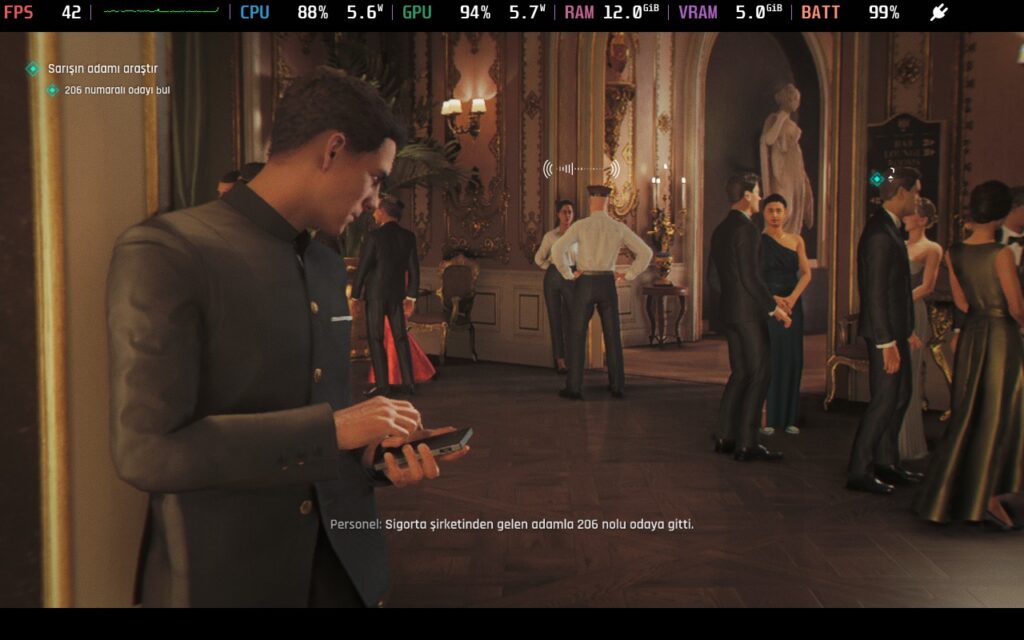
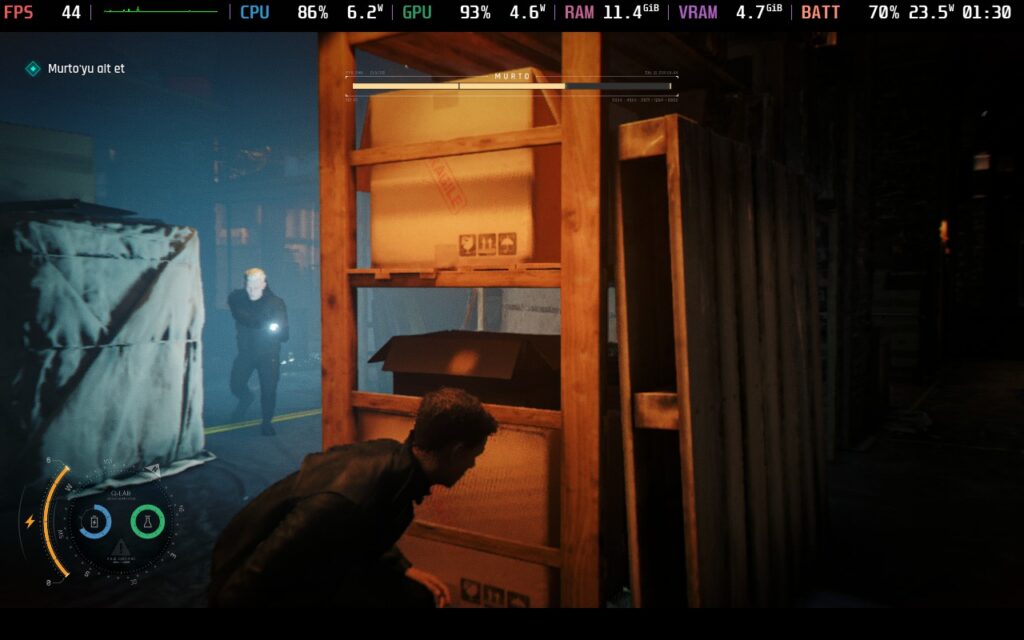
During missions, we can take multiple approaches to the same objective. For example, you might infiltrate a VIP area disguised as a waiter, sneak through ventilation systems, use one of your limited gadgets to poison a guard and create an opening, brute force your way inside through combat, or simply bluff and manipulate your way forward with clever dialogue choices.
The rewarding feeling of exploring each mission area and discovering alternative solutions creates a genuine sense of freedom that very few cinematic action games manage to achieve. Even though the experience remains largely story-driven and linear, the missions themselves consistently make the player feel creative and in control.
In both combat and optional stealth scenarios, Bond relies on two core resources. Gadget parts and the instinct bar. Gadget parts are used for a wide variety of actions such as stunning enemies, hacking environmental systems, lowering bridges, unlocking shortcuts, disarming opponents, and much more. These tools are incredibly powerful, but also extremely limited, forcing players to think carefully before using them recklessly.
That limitation creates a surprisingly satisfying layer of decision-making throughout the game. Instead of mindlessly relying on gadgets in every encounter, players constantly have to decide whether a situation is truly worth spending resources on. This keeps both combat and stealth scenarios fresh, tense, and far less repetitive than they otherwise would have been.
The instinct bar serves as another brilliant mechanic, essentially acting as a limited get-out-of-jail-free card during stealth sections. It allows Bond to bluff and manipulate suspicious enemies into believing he is not trespassing, while also helping isolate targets from crowded groups by cleverly luring them away. In gunfights, instinct can also slow down time, allowing Bond to land precise shots in classic cinematic fashion.
Together, these mechanics perfectly capture what makes James Bond feel different from a typical action hero. You are not simply overpowering enemies through brute force, but surviving through intelligence, improvisation, and resourcefulness. It genuinely makes you feel like a smart and adaptable spy rather than just another shooter protagonist, and honestly, I found it absolutely incredible.
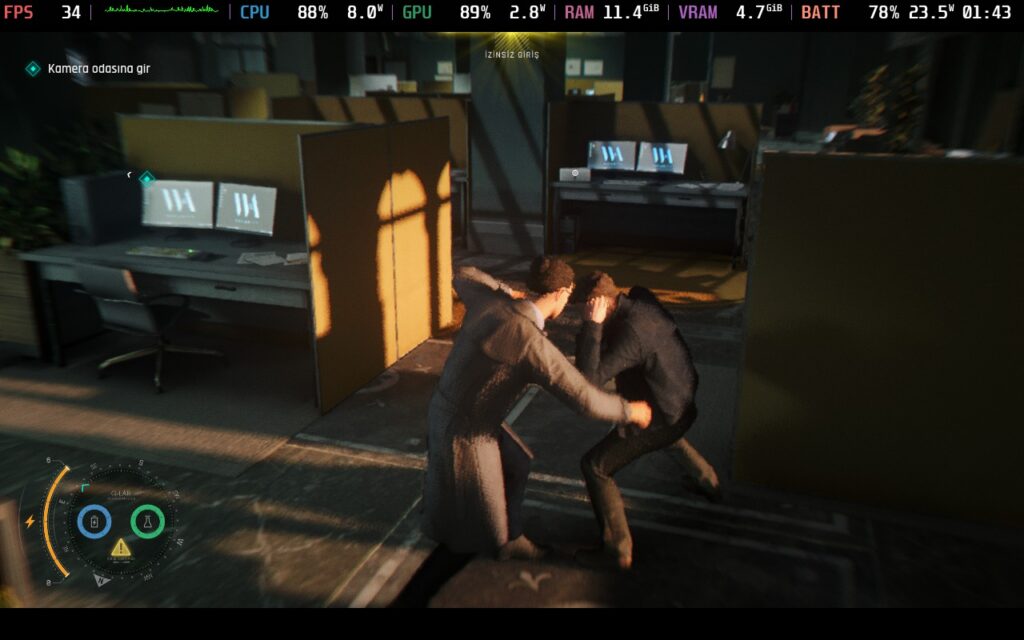
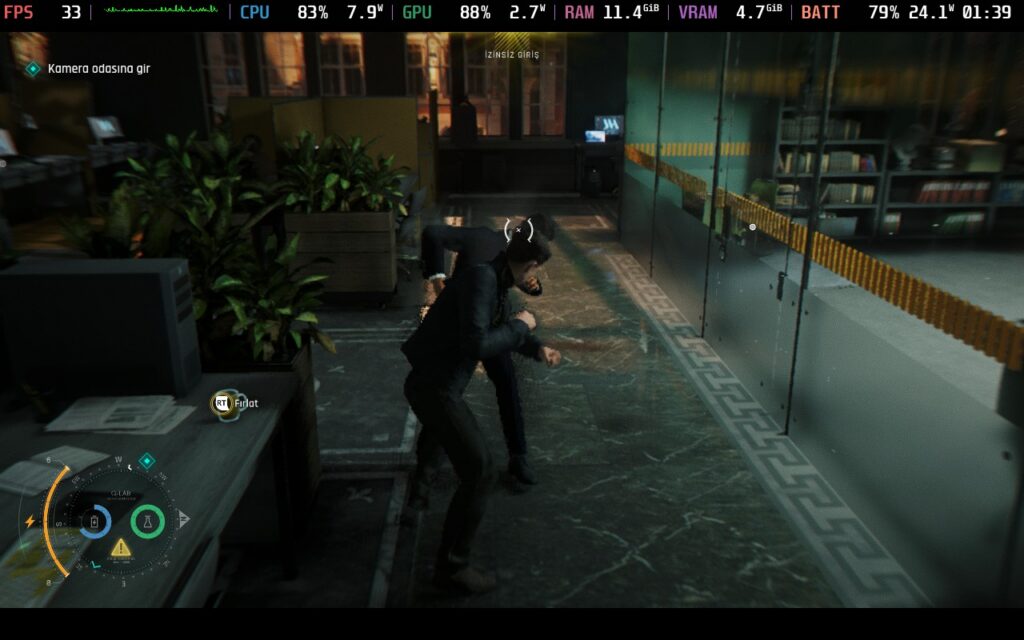
The melee combat in 007 First Light will immediately feel familiar to anyone who has played the Batman Arkham games. Most encounters revolve around parrying, dodging, and counterattacking enemies in rhythmic hand-to-hand fights. To the game’s credit, it introduces a few unique touches, such as throwing objects at enemies, slamming them into breakable machinery or environmental hazards to deal heavy damage, and chaining together flashy cinematic takedowns.
That said, while the melee combat is definitely fun, I also found it to be one of the weaker parts of the overall experience. A lot of these encounters feel more like “last resort” situations after a stealth attempt goes wrong, rather than a fully fledged combat system meant to stand on its own. Because melee is not the primary focus for 007, that becomes somewhat understandable, but even then, many fights ended up feeling a little clunky, overly familiar, and lacking a strong identity of their own.
Gunfights, however, are a completely different story.
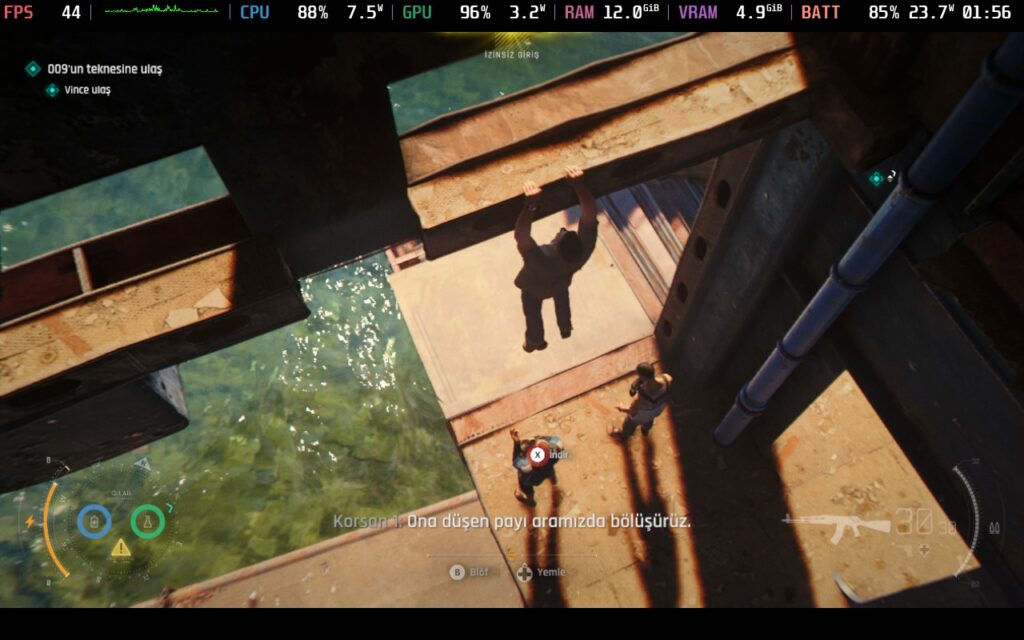
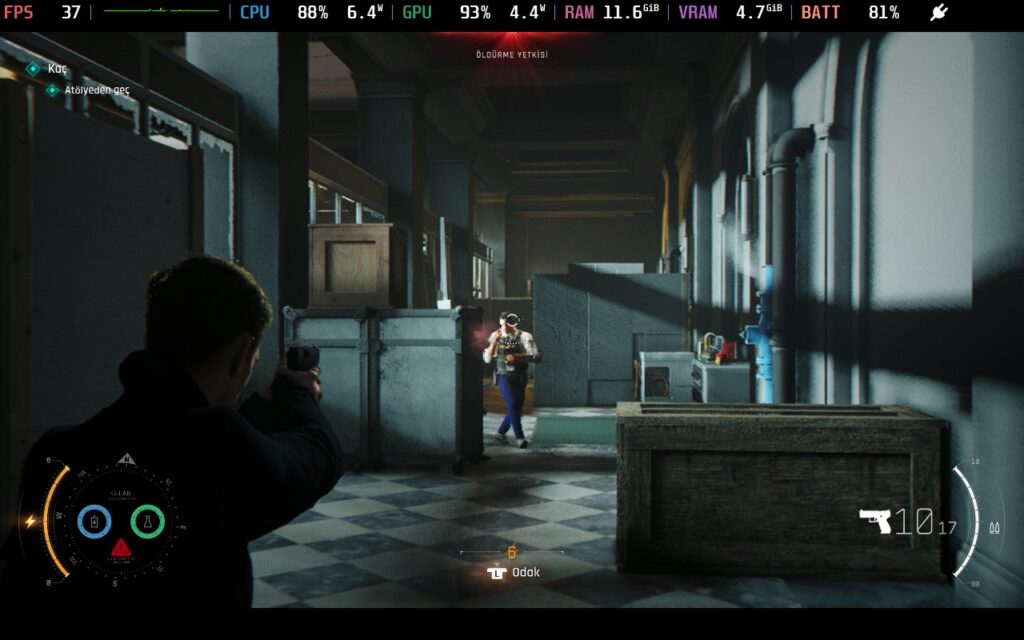
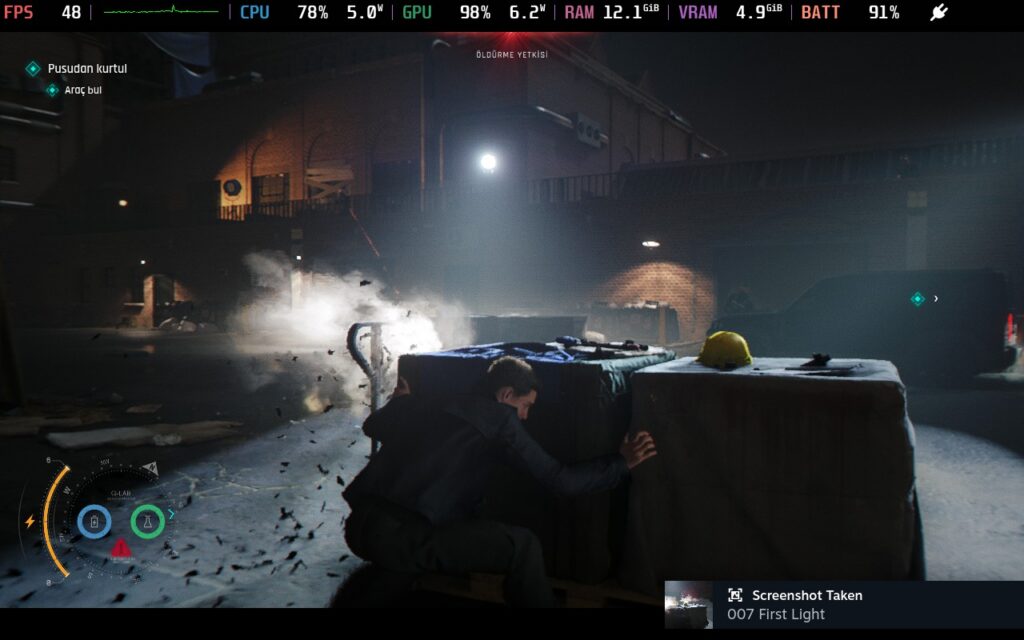
The shooting mechanics are incredible. As I mentioned earlier, carefully managing your gadgets already adds a huge amount of tension and strategy to every firefight, but the game goes even further by constantly forcing players out of their comfort zone. You cannot simply sit behind cover forever and slowly clear rooms, because nearly every piece of cover in the environment is destructible, and enemies throw grenades at you as if there is no tomorrow. On top of that, ammunition is fairly limited, so you always need to stay mobile, aware of your surroundings, and ready to improvise.
One small example can perfectly summarize why the gunplay feels so satisfying. When you run out of ammo, you can throw your empty weapon directly at an enemy to stun them, rush forward during the chaos, perform a melee finisher, grab their weapon, and quickly reposition into another piece of cover before continuing the fight. Moments like these make the combat feel dynamic, cinematic, and constantly engaging.
These little details add an enormous amount of immersion to the gunfights and prevent them from ever becoming repetitive. Honestly, this is some of the most enjoyable and creative third-person shooter gameplay I’ve experienced in a very long time.
Visually, from a purely technical standpoint, I found 007 First Light to be solid and perfectly acceptable for 2026 standards, but not necessarily groundbreaking. The image quality and lighting effects are undeniably impressive, yet they are the kind of visuals we have already seen executed even better in some other modern AAA titles. Where the game truly stands out is not raw graphical technology, but its artistic direction and overall presentation.
The mission environments are incredibly detailed and atmospheric, constantly feeling alive and believable. Large locations are filled with hundreds of NPCs who all look surprisingly distinct, move naturally, and interact with the world in ways that rarely feel robotic or repetitive. Combined with the clever use of cinematic camera work, seamless transitions, and subtle visual effects, the overall presentation creates an impressive level of immersion throughout the experience.
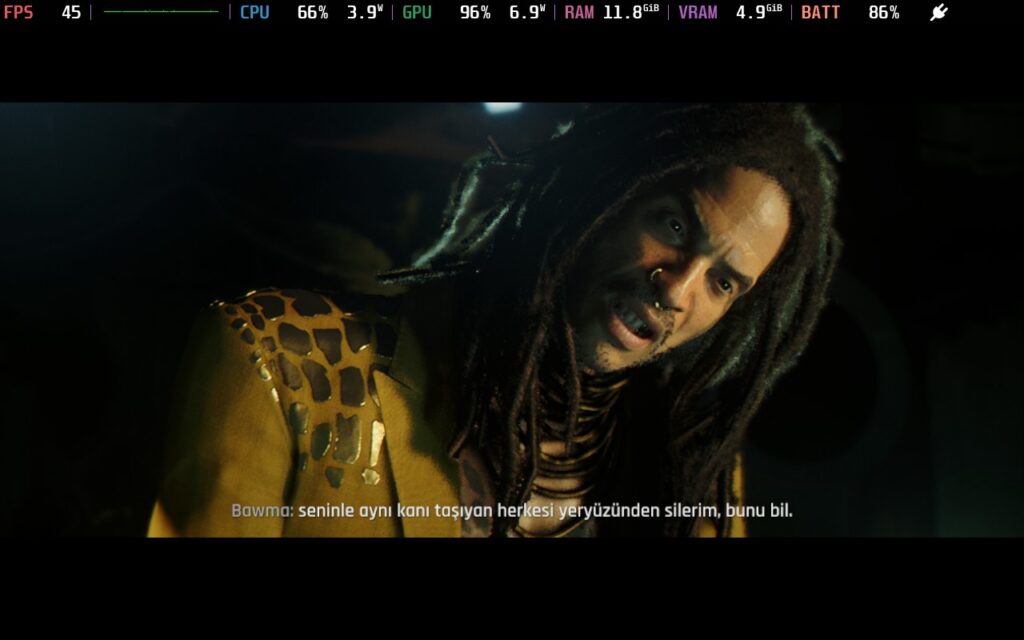
I did notice a few weaker areas visually. Facial animations can occasionally feel stiff in certain conversations, and the quality of hair rendering is not always on par with the rest of the presentation. Still, outside of those minor shortcomings, it remains consistently gorgeous and visually immersive from start to finish.
Since the 1960s, music has always been one of the defining aspects of James Bond. From the iconic main themes to the unforgettable movie opening sequences, the franchise’s soundtracks have consistently played a huge role in shaping its identity and atmosphere. Thankfully, 007 First Light understands that formula perfectly and delivers one of the strongest audio presentations I have experienced in a Bond media project.
The opening sequence alone is an absolute work of art. Featuring a stunning performance by Lana Del Rey, the intro instantly captures that classic Bond feeling while still sounding fresh and modern. Honestly, I would go so far as to say it is one of the most memorable and impressive musical pieces ever created for Bond media.
The rest of the soundtrack also does an excellent job balancing traditional Bond-style themes with fantastic new arrangements. Throughout the entire game, the music constantly reinforces the feeling that you are playing a true James Bond experience. Even during quieter moments, the soundtrack subtly elevates the atmosphere and adds a massive amount of immersion to every scene.
The audio design shines outside of the music as well. Strong performances from the cast bring a wealth of personality and emotion to the story, while the sound effects deliver an impactful punch to both gunfights and melee combat. Weapons sound loud and realistic, punches feel heavy, and environmental destruction carries satisfying weight.
Combined together, the soundtrack, voice acting, and sound design create an absolutely phenomenal audio experience. In many ways, the game feels like a love letter to everything that has made James Bond sound iconic for decades.
007 First Light - Steam Deck Performance
When a new AAA title launches in 2026, we Steam Deck users usually start praying for a semi-decent experience. But every now and then, developers optimize their games so well that we end up asking ourselves, “How does this run so great?” Thankfully, IO Interactive has done a surprisingly solid job optimizing 007 First Light for the handheld, even if the experience is not without some frustrating technical flaws.
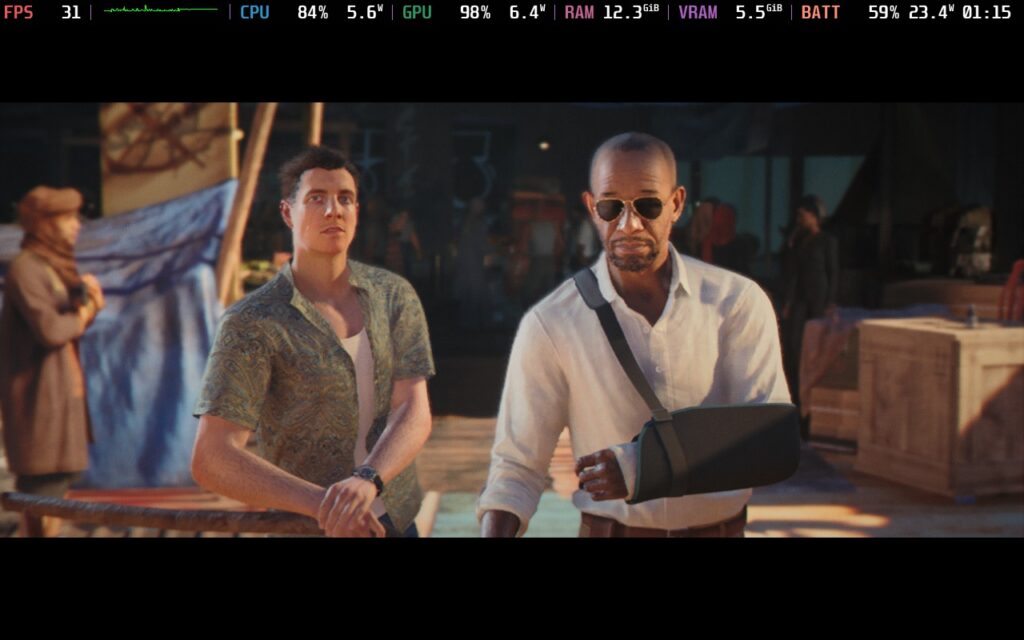
When we first booted 007 up, every single setting was pushed to the absolute lowest possible values, with FSR also set to Performance mode by default. Naturally, that made us very nervous at first. But once gameplay actually started, the game immediately surprised me with frame rates hovering between 50-70 FPS in lighter areas, and most of our concerns quickly faded away.
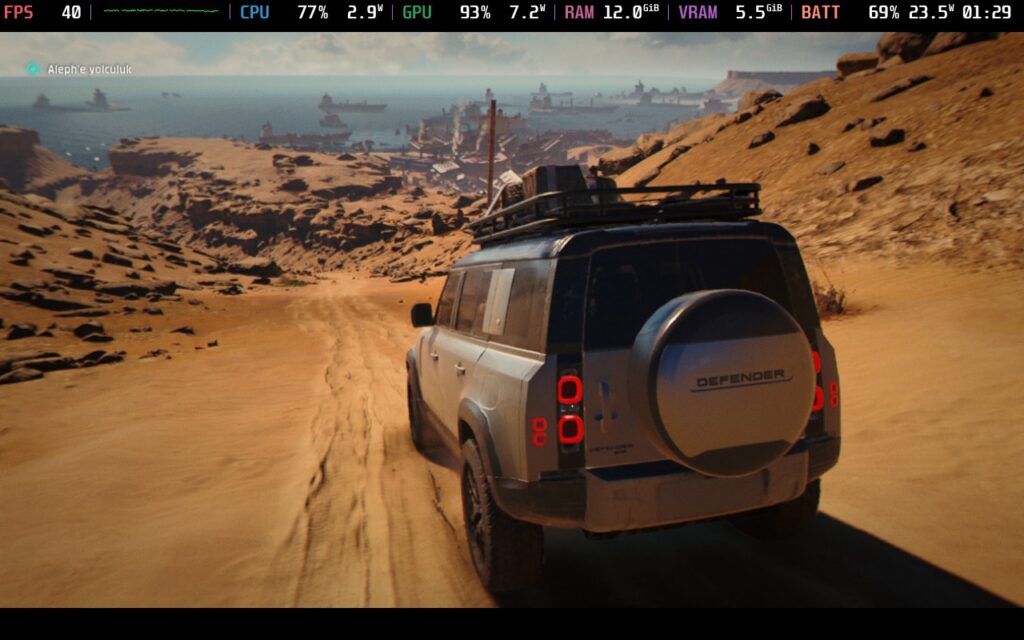
However, after spending much more time with the full game, it became clear that the overall stability is far less consistent than those first impressions suggested. Performance varies wildly depending on the area. Some missions and indoor sections can run incredibly smoothly at near-60 FPS, while heavier environments can suddenly drop into the mid 30s. The Africa region, in particular, is a performance nightmare on Steam Deck, with heavy NPC density and large open environments causing major frame-rate instability, dropping to 22-24 FPS.
Outside those demanding sections, though, the game generally hovers around 40-50 FPS, which is still fairly impressive given the visual complexity and scale.
Unfortunately, one of the biggest technical problems comes from the in-game framerate cap system, which doesn't function properly. Even when selecting the 30 FPS option through the v-sync settings, the game often ignores the cap entirely and fluctuates into the low-to-mid 40s on its own. Because of this, achieving a truly stable locked frame rate through the in-game options becomes nearly impossible.
I also experimented with raising several settings, including switching the upscaler to Quality mode and increasing most options to Medium while keeping textures on High. Performance then dropped into the 32-40 FPS range. Still, despite the performance hit, the experience remained visually impressive for a handheld experience and never turned into a completely blurry mess outside of a few demanding effects.
Shadow quality and hair rendering are especially performance-heavy settings and can drastically impact frame rate, but aside from those, the visual presentation is surprisingly good on the Steam Deck.
Interestingly enough, I ended up finding a strange workaround that provided the smoothest overall experience. Instead of using the Steam Deck’s built-in FPS limiter, disabling frame limiting entirely while only setting the display refresh rate to 45Hz somehow resulted in noticeably more stable frame pacing and smoother gameplay. I honestly cannot fully explain why it works better this way, but compared to using either the in-game cap or the Steam Deck limiter, the experience felt significantly cleaner and more responsive.
At the end of the day, while 007 First Light is definitely not a perfectly stable Steam Deck experience, it is still surprisingly playable and visually impressive for such a demanding modern AAA title. With some tweaking and realistic expectations, it can absolutely provide an enjoyable handheld Bond experience. For right now, focusing on mostly medium settings with Volumetric Fog on Low and FSR on Balanced is going to be the best way to enjoy the game.
結論
At the end of the day, 007 First Light is easily one of the best Bond experiences I’ve had in years. IO Interactive perfectly understood what makes James Bond special and combined cinematic storytelling, clever mission design, fantastic gunfights, strong music, and immersive spy mechanics into something that truly feels worthy of the legendary IP.
Despite taking clear inspiration from games like Max Payne, Hitman, and Uncharted, the game still manages to build its own identity instead of feeling like a cheap imitation. Sure, it has some flaws. The melee combat can feel a little clunky, and the ending feels somewhat rushed, but none of those issues stopped me from having an absolute blast from start to finish.
As for Steam Deck, while performance stability can sometimes be rough and certain areas push the hardware very hard, 007 is still surprisingly playable and visually impressive for such a demanding AAA title. With some tweaking and realistic expectations, it delivers a genuinely enjoyable handheld Bond experience that feels great to play on the go.
007 First Light is easily one of the best Bond experiences in the gaming world, combining cinematic storyteling, great gunfights, incredible music, and solid Steam Deck performance into one package.
Onat has been immersed in gaming since childhood, witnessing the industry evolve across generations of hardware. Over time, his curiosity shifted from simply playing games to understanding how they run. A former competitive fighting game player, he developed a deep appreciation for performance precision, responsiveness, and mechanical depth. Today, he specializes in handheld performance optimization, particularly on the Steam Deck, analyzing frame pacing, power efficiency, and graphics scaling to push portable hardware to its limits.
Volumetric Fog: Low
Everything Else: Medium
Sliders are all OFF
バッテリーの予想使用時間と温度
25W
75-80c
2-2.5 hours
コミュニティーの評価
0
0
0
0
Let us know what level of playability you consider 007 First Light to be. Help our community determine the viability of playing this game on Steam Deck!