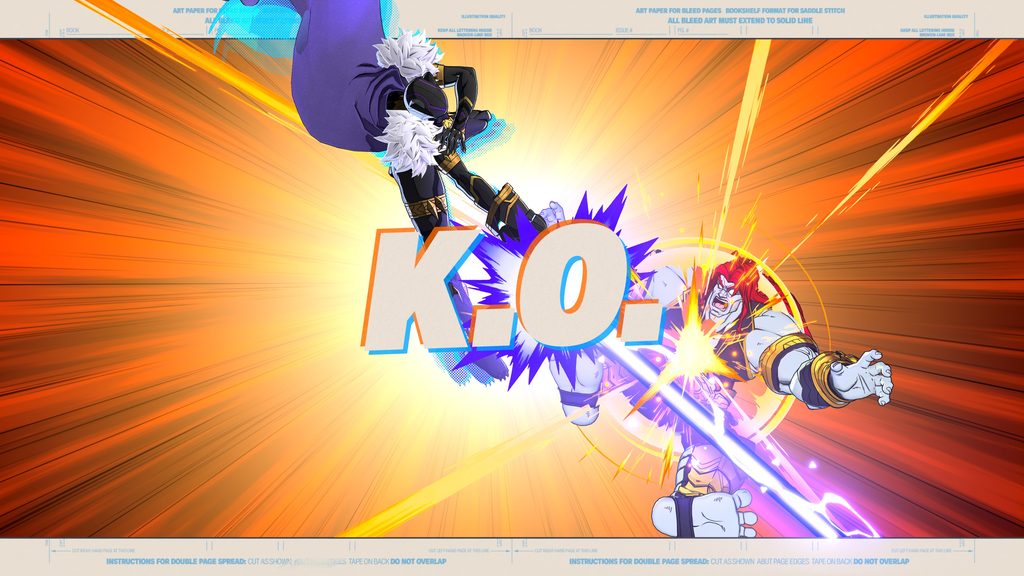
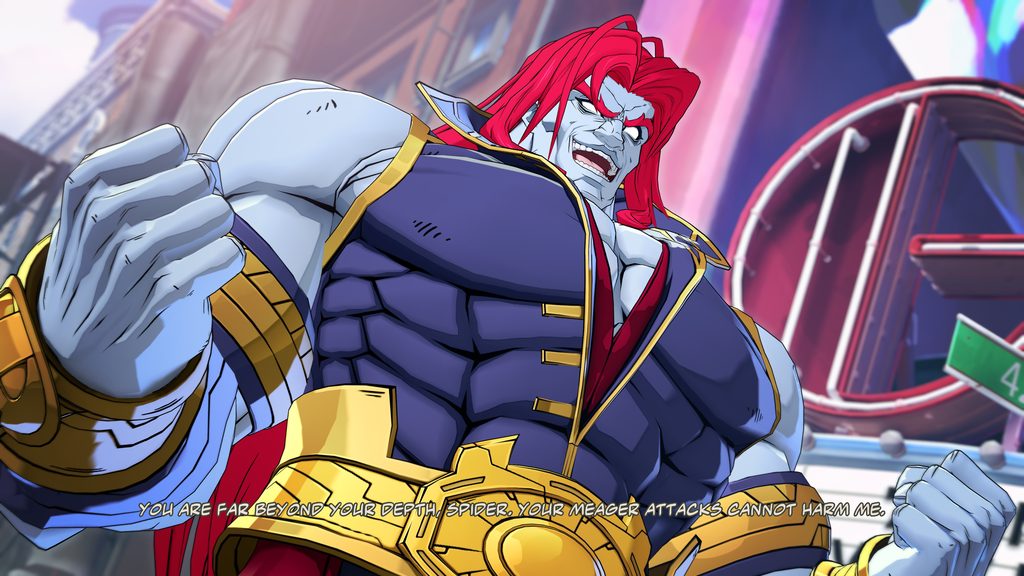
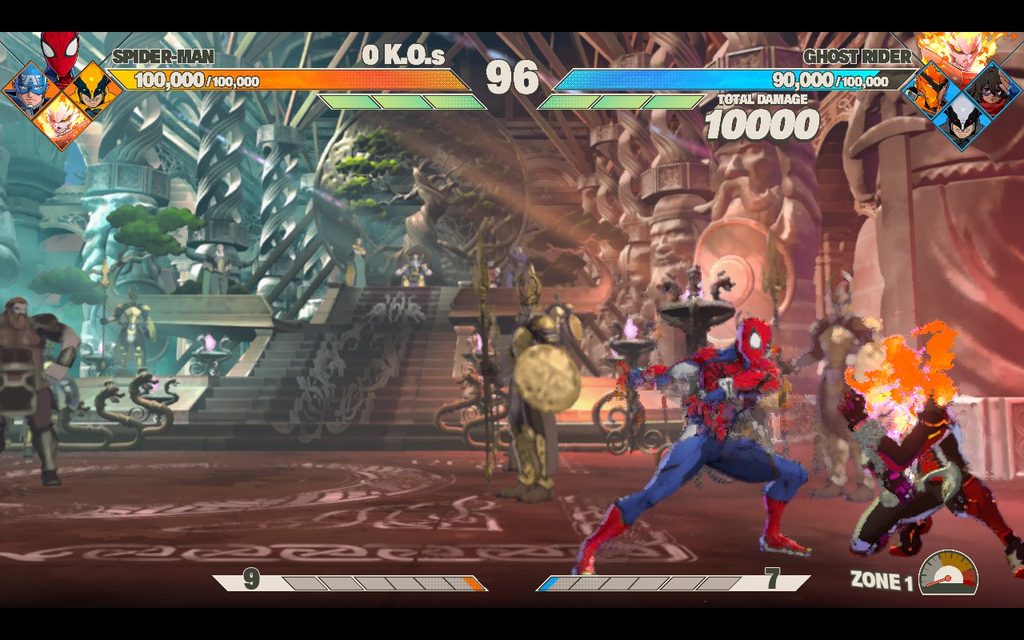
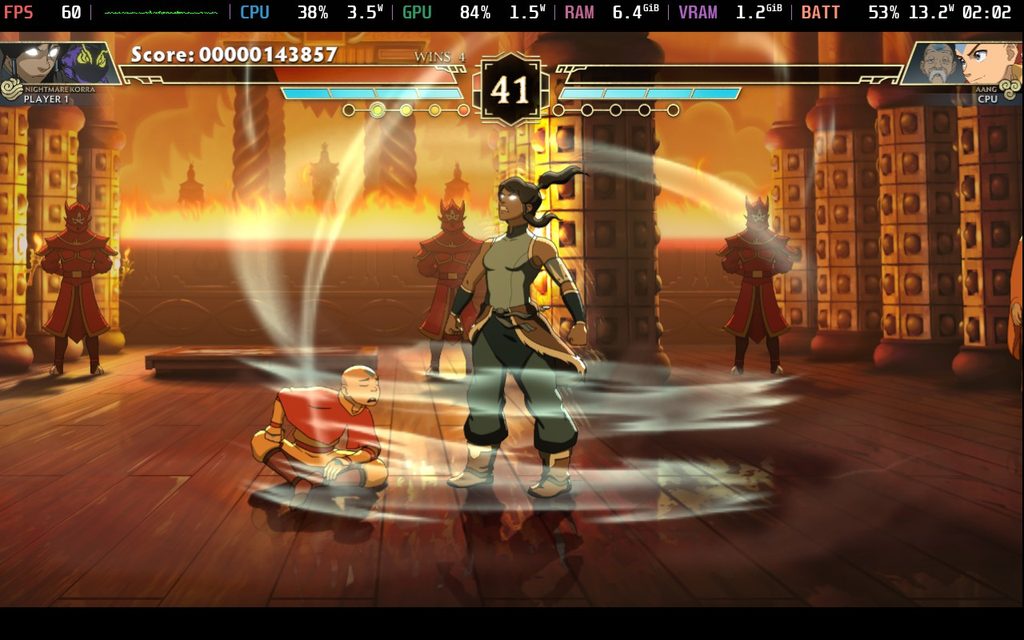
MARVEL Tōkon: Fighting Souls was provided by PlayStation for review. Thank you!
When it comes to 2D anime fighters, few names carry as much weight as Arc System Works (ArcSys). Over the decades, the Japanese studio has established itself as one of the industry's giants, delivering some of the genre's most recognizable and mechanically rich fighting games through franchises like Guilty Gear and BlazBlue, while also bringing its signature style to massive licensed properties with games like Dragon Ball FighterZ.
But MARVEL Tōkon: Fighting Souls represents something much bigger. Teaming up with Sony Interactive Entertainment and Marvel Games, Arc System Works has rolled up its sleeves for what is easily one of the most ambitious projects in the studio's history: a full-scale AAA Marvel fighting game. With an enormous license behind it, Sony's backing, and a developer that has spent decades mastering the genre, expectations were understandably sky-high.
And after spending a considerable amount of time throwing hands with Marvel's finest, there's one big question left to answer: does MARVEL Tōkon: Fighting Souls live up to those expectations? In some ways, yes, but in others, it falters.
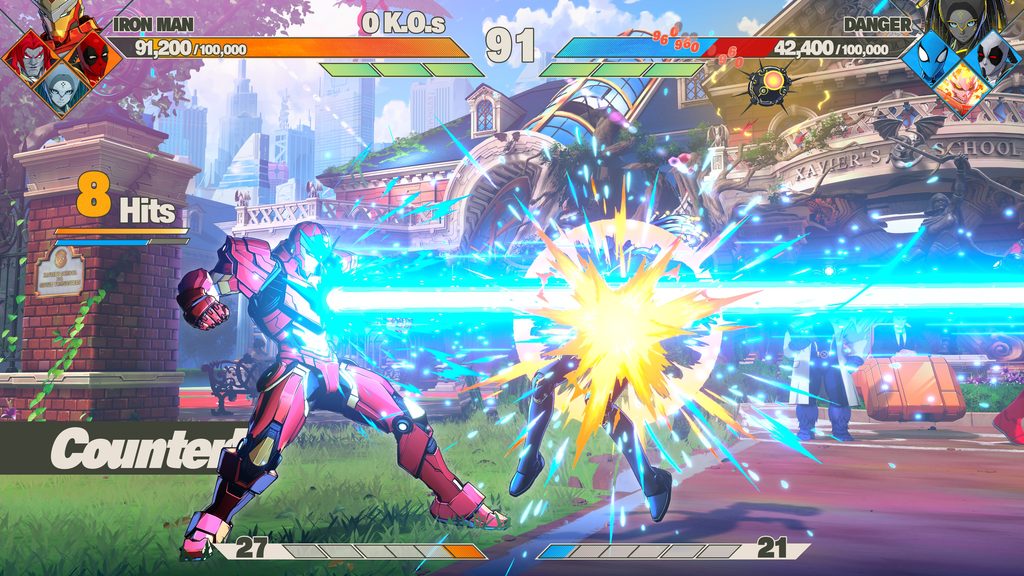
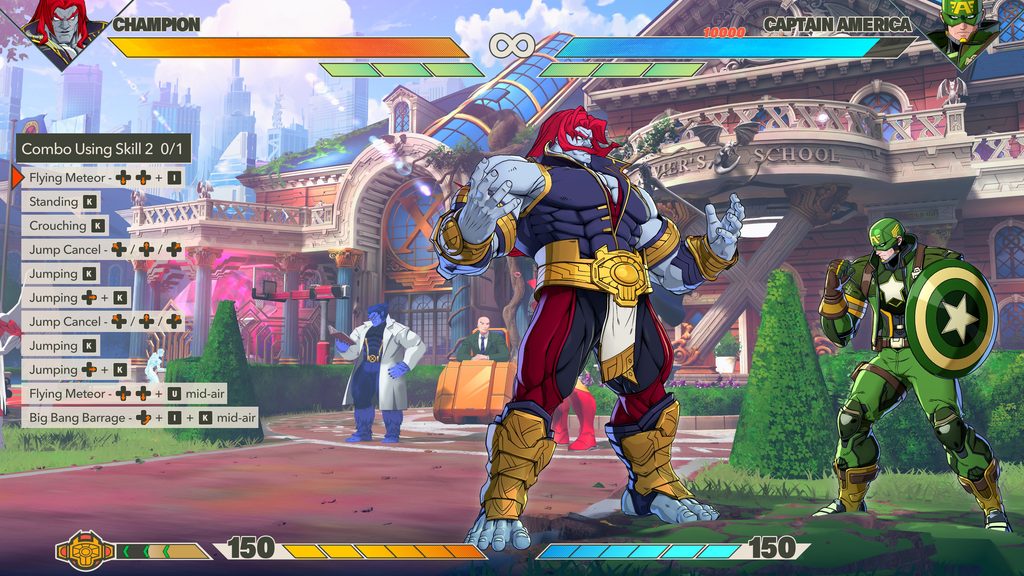
At its core, MARVEL Tōkon: Fighting Souls feels like a modern spiritual successor to the legendary Marvel vs. Capcom series, taking the chaotic team-based formula that defined those games and reimagining it through Arc System Works' own design philosophy. It's a fast-paced 4v4 tag fighter that puts a heavy emphasis on team synergy, assists, and explosive offensive pressure.
That Marvel vs. Capcom DNA is immediately apparent, but Tōkon isn't simply trying to recreate it. Assists can be crucial to your offense to extend combos, maintain pressure, or cover an unsafe approach, while tagging between fighters allows your entire team to become part of a single offensive sequence. There's also plenty of Dragon Ball FighterZ in its blood, particularly in how Arc System Works encourages aggressive movement, long combo conversions, and assists that can turn small openings into extended sequences involving multiple characters.
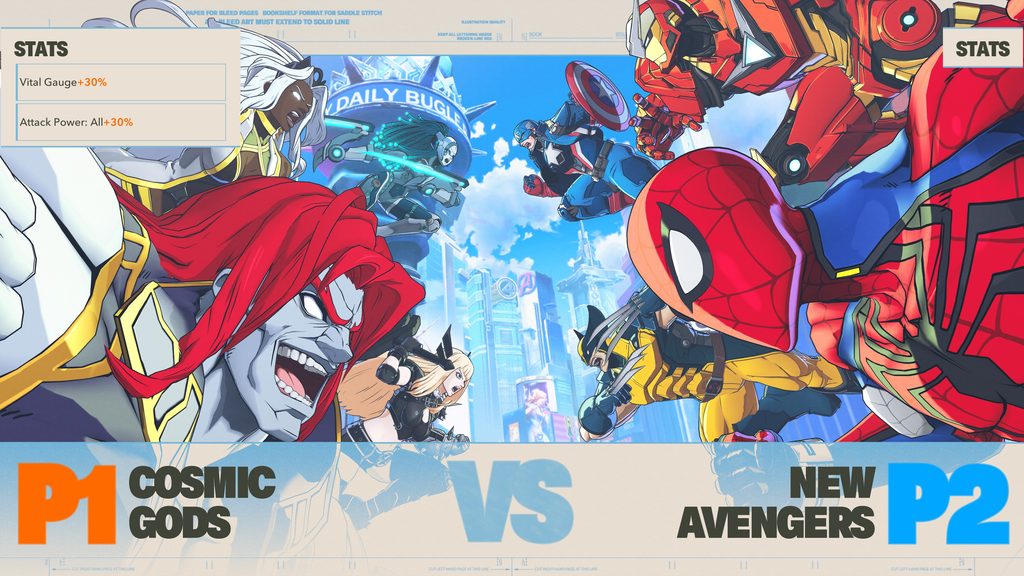
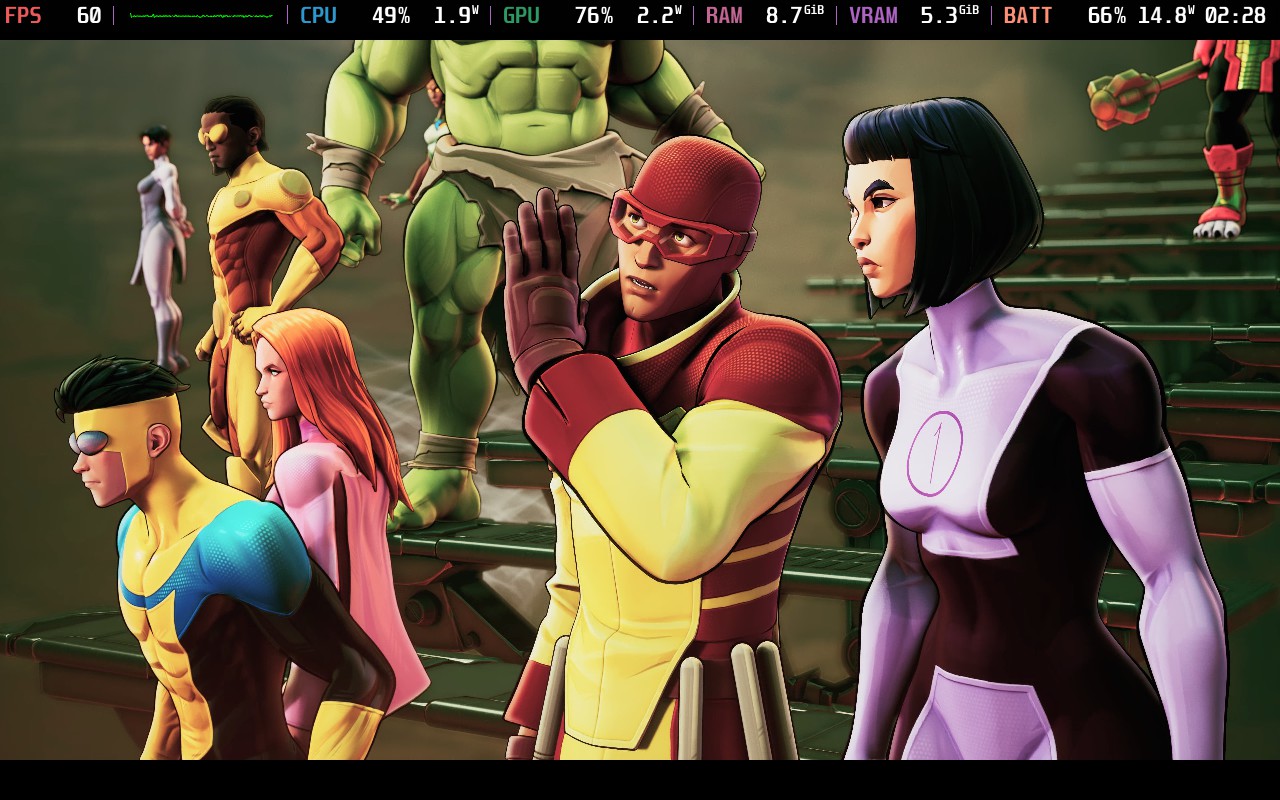
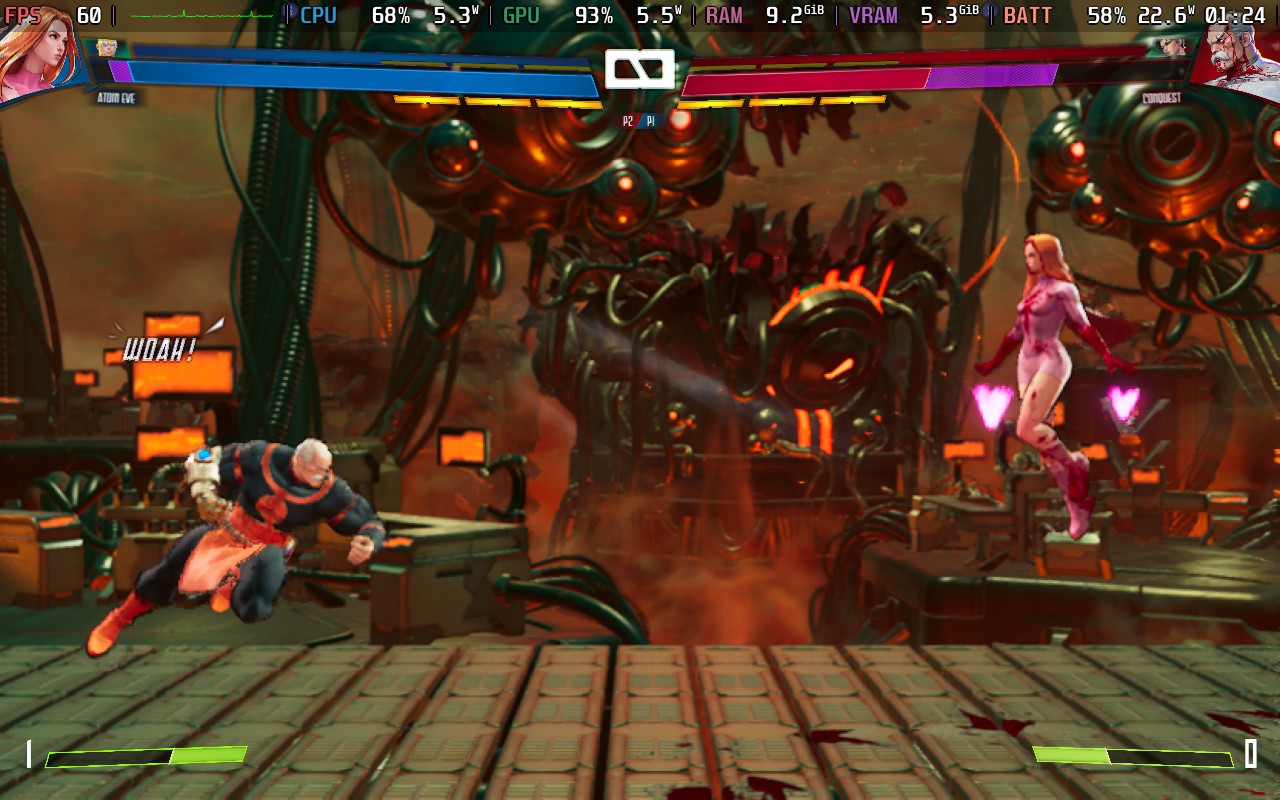
Tōkon begins to carve out an identity of its own through its unusual approach to the traditional tag formula. Four fighters may appear on each team, but they aren't simply four separate health bars waiting to be cycled through. Your squad shares a single health pool, and access to your teammates evolves throughout the match through the Assembly system. As more of your team enters the fight, your offensive possibilities expand with them, gradually turning what begins as a relatively focused confrontation into the kind of wonderfully chaotic Marvel spectacle you'd expect from having eight superheroes throwing hands on the same stage.
The shared health pool was actually one of the mechanics that initially excited me the most. On paper, it sounded like a genuinely different approach to the traditional tag fighter formula, and I was curious to see how Arc System Works would build an entire 4v4 system around it. Unfortunately, after spending more time with the game, it became one of my biggest issues with Tōkon.
In traditional tag fighters, swapping characters isn't just about bringing another moveset onto the screen. Managing recoverable health, pulling an injured fighter out of danger, and deciding when to sacrifice pressure to let them recover create an entire strategic layer around tagging. Tōkon's shared health pool effectively removes that decision-making altogether. There is no wounded teammate to protect or recovering character you're desperately trying to keep on the bench, because every hit ultimately comes out of the same resource.
As a result, I rarely felt encouraged to think about my team as four individual fighters that I needed to carefully rotate throughout a match. Instead, teammates often felt more like additional offensive resources to call upon, shifting the focus heavily toward spamming assists rather than meaningful character management. For me, that strips away much of the creativity, tension, and tactical decision-making that make tag fighters so satisfying in the first place. It's certainly different, but unfortunately, not in a way I enjoyed.
Movement was another major issue for me. After playing Arc System Works fighters like BlazBlue and Guilty Gear, where movement is fast, smooth, and one of the best parts of the combat, Tōkon simply didn't feel like an ArcSys game to me.
Dashing into attacks feels awkward, aerial approaches don't flow as well as I expected, and characters can feel surprisingly clunky both in the air and on the ground. I often knew exactly what I wanted to do, but executing it never felt as smooth or natural as I wanted it to.
This became even more noticeable because Tōkon is such an aggressive game. You're constantly moving in, calling assists, and looking for an opening, so having movement that feels this stiff hurts the overall flow of combat quite a bit. It's not at a level that completely ruins the fighting for me, but it consistently makes it less satisfying than I expected.
While I had my issues with movement and the way Tōkon handles tagging, the combo system itself is easily my favorite part of the gameplay. Combos are incredibly flashy and satisfying to pull off, but more importantly, there's plenty of room to get creative with them.
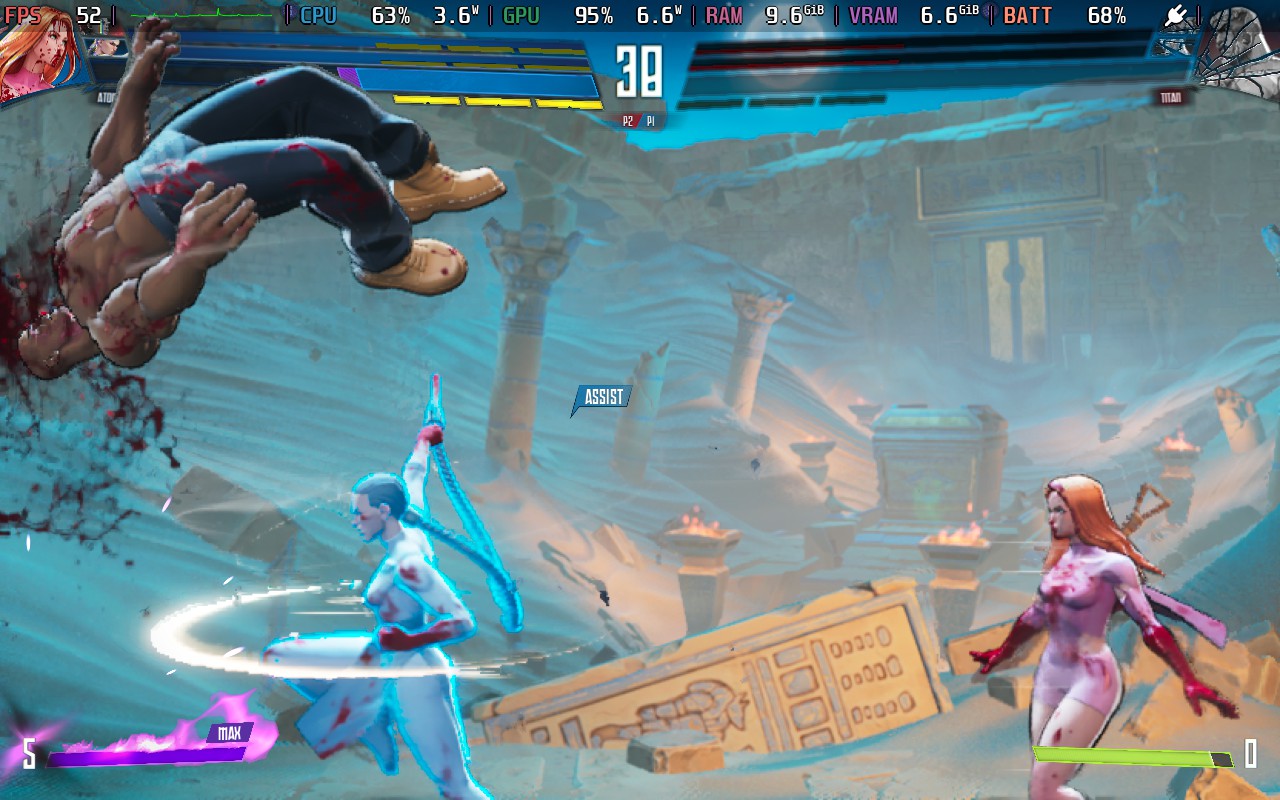
The basic combo system is easy to understand, but once you start mixing in Skills, assists, launches, wall interactions, and character switches, you can take a combo in a ridiculous number of directions. Different assists can completely change how you extend a combo, and switching characters midway through one opens up even more routes depending on your team composition.
It creates a really nice balance where putting together something cool doesn't require you to spend hours in training mode, but players who do want to lab still have plenty to experiment with. I constantly found myself trying different assists or slightly changing a route just to see how much further I could push it, and watching four Marvel characters jump in and out of a massive combo never really stopped looking awesome.
For all my complaints about Tōkon's tag system, this is the only occasion where having four characters on a team shines.
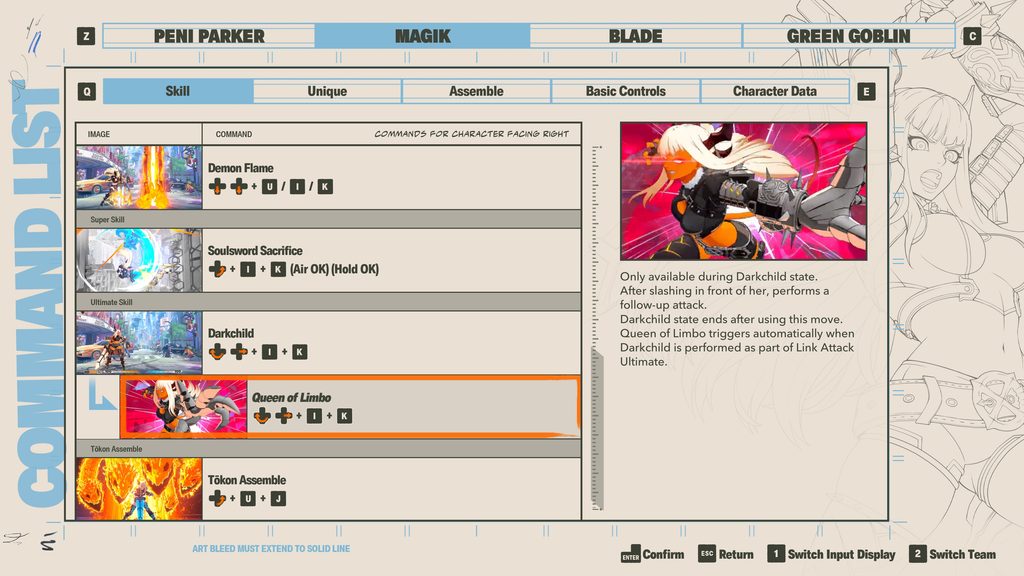
Unfortunately, this experience is held back by Tōkon's control scheme. Special moves can be performed in two ways: either through traditional motion inputs or via a simple shortcut. Using the shortcut slightly reduces the damage of the move, which sounds like a fair trade-off, and during combos, I rarely found it to be a major problem.
Neutrals are a different story. Having access to one-button anti-airs and reaction punishes makes situations that would normally require execution much easier to handle, and the damage penalty doesn't really solve that problem either. If I need to react to a jump-in, being able to instantly throw out an anti-air special with a single button is still a huge advantage regardless of whether the move deals slightly less damage.
Tōkon also goes much further with auto combos than I would have liked. Making fighting games easier to pick up is a good thing for newcomers, but there are so many automatic routes here, and some of them are effective enough that I started questioning how much the game actually rewards learning more difficult options. When the easier route gets you too close to what an experienced player can achieve manually, the gap between learning the game and mastering it starts to feel smaller.
Accessibility shouldn't come at the cost of giving players reasons to improve. Learning execution, spending time in training mode, and eventually being able to do something that you couldn't do when you first started are some of the most rewarding parts of fighting games. Tōkon still has plenty of depth beneath its accessible controls, but I think it goes a little too far in removing the barrier to execution.
The frustrating part is that the alternative isn't particularly well designed either. I prefer having traditional motion inputs in fighting games, but some of Tōkon's input choices feel unnecessarily awkward. Command grabs being tied to a DP-style Shoryuken motion already feels like a strange choice, but my biggest issue is how frequently the game uses down-down inputs for attacks and special moves.
Double-tapping down might sound simple on paper, but doing it consistently in the middle of a fast match feels incredibly clunky on an analog stick or fight stick. Almost every character has some variation of a down-down attack or input, and using them quickly can be a nightmare on these controllers. At a time when Hitbox and keyboard already have such a clear competitive advantage when it comes to certain inputs, as a fightstick player, I really question the decision to use down-down inputs this frequently.
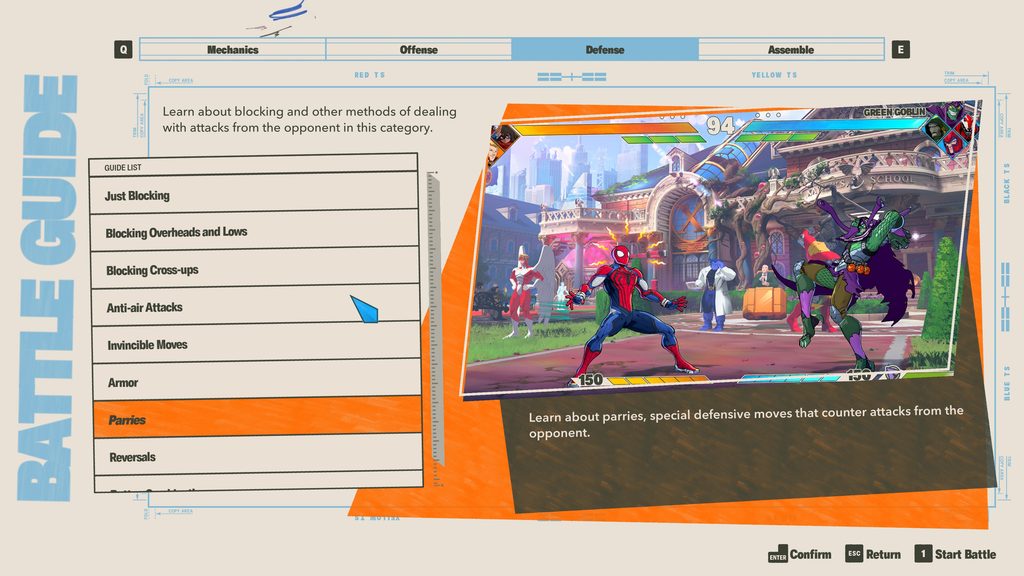
Thankfully, I have almost nothing negative to say about Tōkon's defensive mechanics. In fact, I think this might be the best defensive system I've ever seen in a tag fighter.
There are so many ways to deal with pressure without making defense feel easy. Just Defense rewards you for timing your blocks properly, while Assemble Counter gives you a defensive backstep that automatically counters the opponent if they attack into it. It's incredibly useful against aggressive players, but it's also very punishable if your opponent reads it, so you can't just throw it out whenever you're under pressure.
Then there's Crossover, which might be my favorite addition. While blocking, you can call one of your teammates to break the opponent's onslaught and give yourself a chance to fight back. In a 4v4 game where assists can keep you blocking for what feels like an eternity, having your own team become part of your defense feels like the perfect answer.
What I love most is that none of these mechanics replace normal blocking. They give you different answers depending on what your opponent is doing, and knowing when to keep blocking, attempt a Just Defense, risk an Assemble Counter, or spend your team resources on a Crossover becomes its own little mind game.
This is masterful work from Arc System Works. Tag fighters are usually known for ridiculous offense, assists, and never-ending pressure, but Tōkon gives the defending player just as many interesting decisions to make. I had problems with several parts of the combat, but the defensive side is easily one of the game's biggest strengths and, for me, the best one I've played in a tag fighter.
Moving on to the game modes, the first thing that stands out is Episode Mode, Tōkon's main story mode. And I genuinely think this might be one of the worst story modes I've ever played in a fighting game.
Marvel has over 80 years of lore. Thousands of characters, iconic villains, legendary storylines, alternate universes, massive crossover events, and decades' worth of material that writers could only dream of having access to. And somehow, with all of that sitting right in front of them, the best idea they could come up with was... a tournament. It's basically the same tired setup we've seen countless times in games like Dead or Alive or Tekken. Find an excuse to throw the entire cast together, make everyone fight each other, introduce some completely uninteresting made-up characters, and call it a story. Except those games don't have the entire Marvel universe sitting in their hands.
That's what makes Episode Mode so frustrating. It's not just bad; it's an unbelievable waste of potential. Every cinematic reminded me of what they could have done instead. Every boring conversation, every forced reason for another fight, and every time one of these characters appeared just made me wonder how this was the story they settled on.
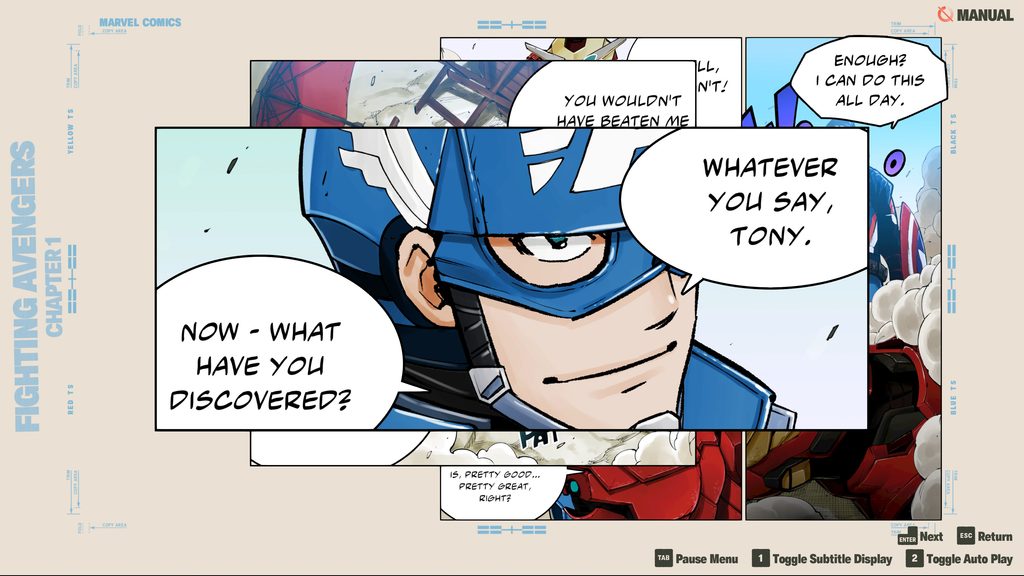
As if the story itself wasn't bad enough, the presentation somehow manages to be even worse. Around 30% of Episode Mode is told through beautifully animated cinematics that look exactly as good as you'd expect from Arc System Works. The rest is presented in generic, poorly drawn, comic-book-style chapters, and the difference between the two is honestly jarring.
The cinematics will sometimes just randomly end and throw you into one of those ugly comic book sections, almost as if they ran out of budget halfway through the scene and couldn't afford to animate the rest of it. Going from gorgeous ArcSys animation to staring at cheap-looking static panels completely killed the presentation for me. Combined with the cliché writing, it eventually reached a point where I did something I seriously don't remember ever doing while reviewing a game: I started wanting to skip story sections.
Outside of the story, Tōkon has two more pieces of content under what it calls “Arcade,” although calling some of this an Arcade Mode feels pretty generous.
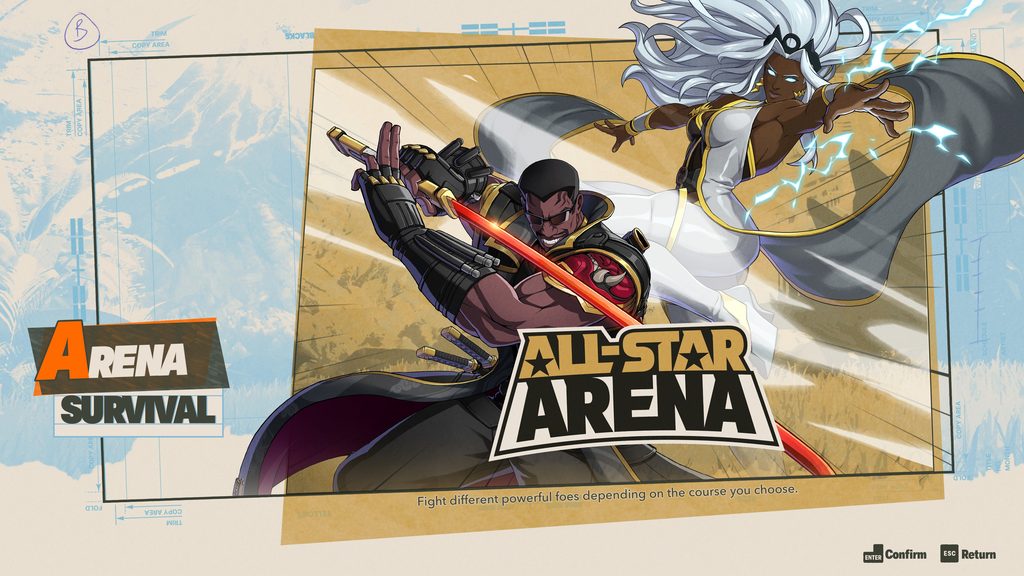
The first is All-Star Arena, which is split into Arena and Survival. Survival is exactly what you'd expect from old-school fighting games: you fight through a series of opponents while trying to survive for as long as possible. Nothing special, but it does what it needs to do.
Arena, on the other hand, seems to be Tōkon's replacement for a traditional Arcade Mode, and it's disappointing. You simply fight your way through a series of matches until you reach the end. That's it. There are no intro cinematics, no unique character interactions, and nothing that makes picking a different fighter feel like you're seeing their own little story. It feels like they wanted to check “Arcade Mode” off the list without actually putting any of the personality into it that makes these modes worth playing.
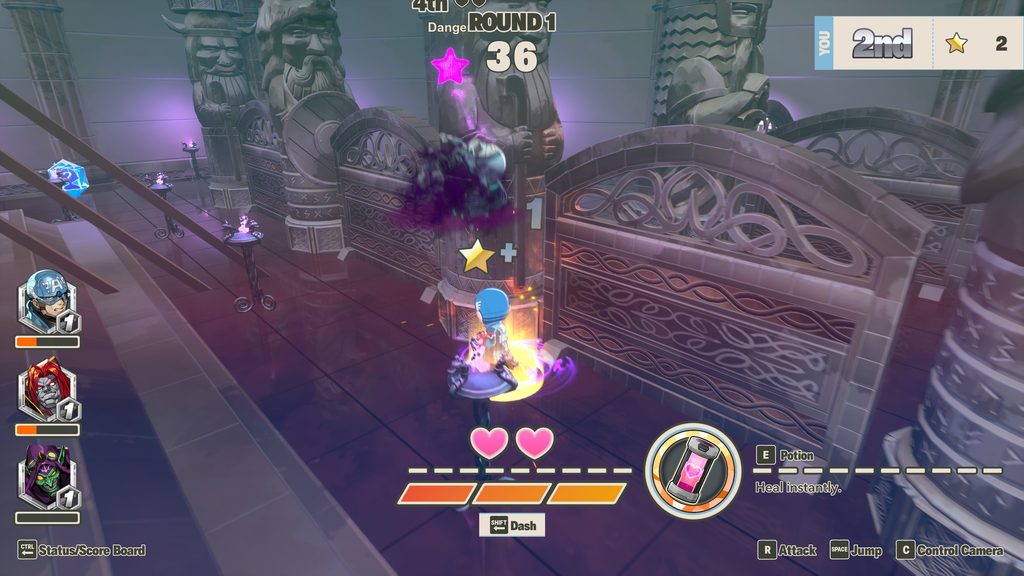
And then there's Arcadia Rumble, a third-person, Smash Bros.-style mode that feels completely out of place. You run around as chibi versions of the characters, collecting orbs, jumping around, attacking other players, and trying to deplete their hearts to finish in first place. There are some roguelite elements thrown in, and you can play either online or single-player.
I found the whole thing childish, silly, and disconnected from the reason I'm playing a fighting game in the first place. It feels like a random party game that somehow ended up inside Tōkon rather than a mode designed around what the game actually does well. Considering how bare-bones Arena and Episodes already feel, seeing development time go into Arcadia Rumble instead only made its inclusion even more frustrating.
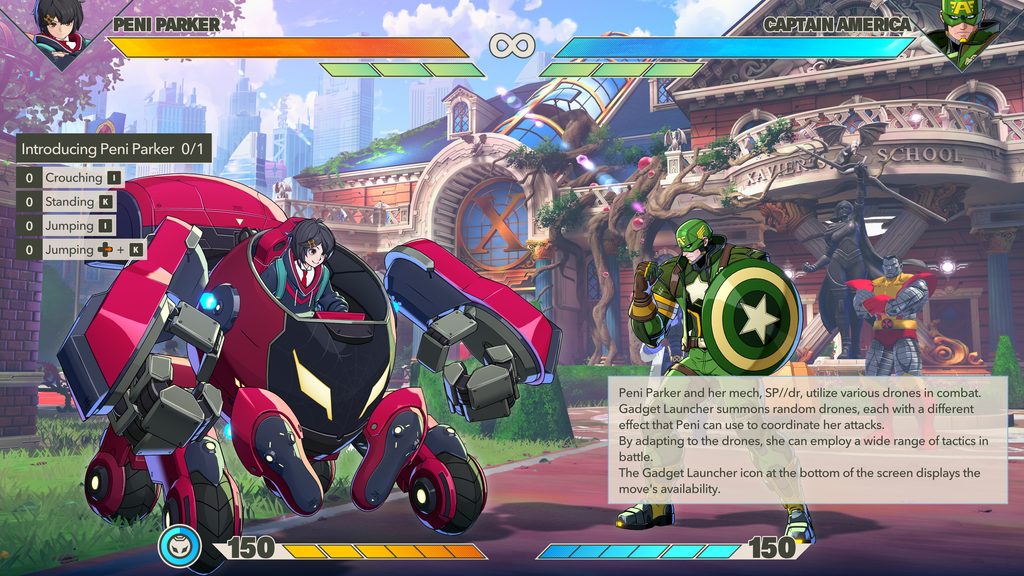
One area where Tōkon absolutely delivers is its tutorials. They do an excellent job of teaching the game's offensive, defensive, and control mechanics without simply throwing walls of text at you. The game explains each mechanic, makes you actually perform it, and presents everything in a way that's easy to remember and surprisingly fun to go through.
There are also dedicated guides for every character that explain their unique mechanics and how you're actually supposed to use them. This is especially useful in a game where characters can play so differently from one another, and I found these guides genuinely helpful when trying someone new.
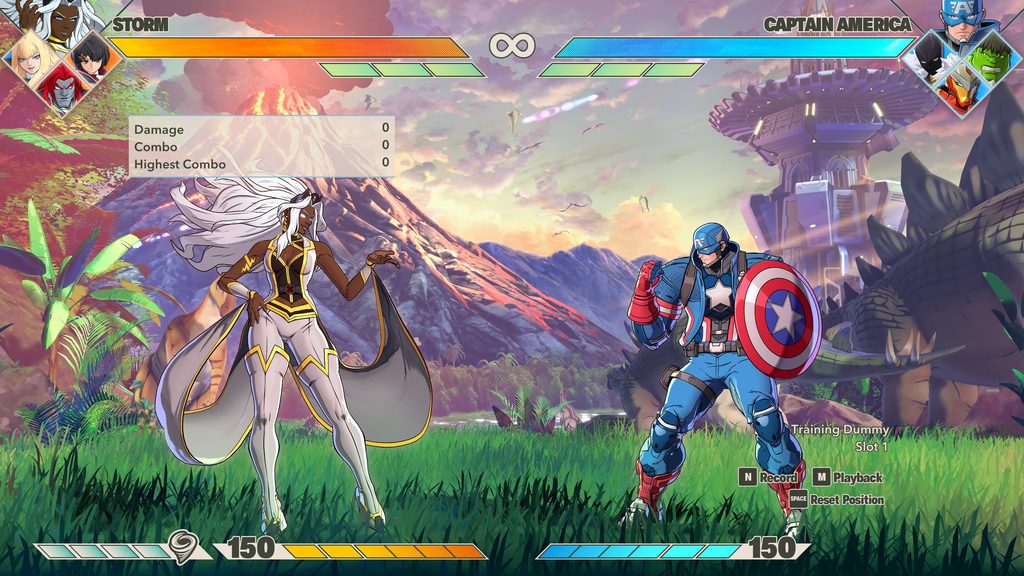
The combo trials are also really well designed. They're fun to complete while giving you a good idea of what each character can actually do, rather than feeling like a random checklist of combos you'll never use again.
It doesn't quite reach the level of Avatar Legends for me, which still has my favorite tutorial systems in a fighting game, but Tōkon comes surprisingly close. Between the tutorials, character guides, and combo trials, this is easily one of the strongest parts of its single-player content.
I've always been a huge fanboy of Arc System Works when it comes to visuals and 2D art, and for the most part, Tōkon didn't disappoint me here. The characters look fantastic, with that signature ArcSys style making almost every member of the Marvel roster look like they were made for an anime fighter.
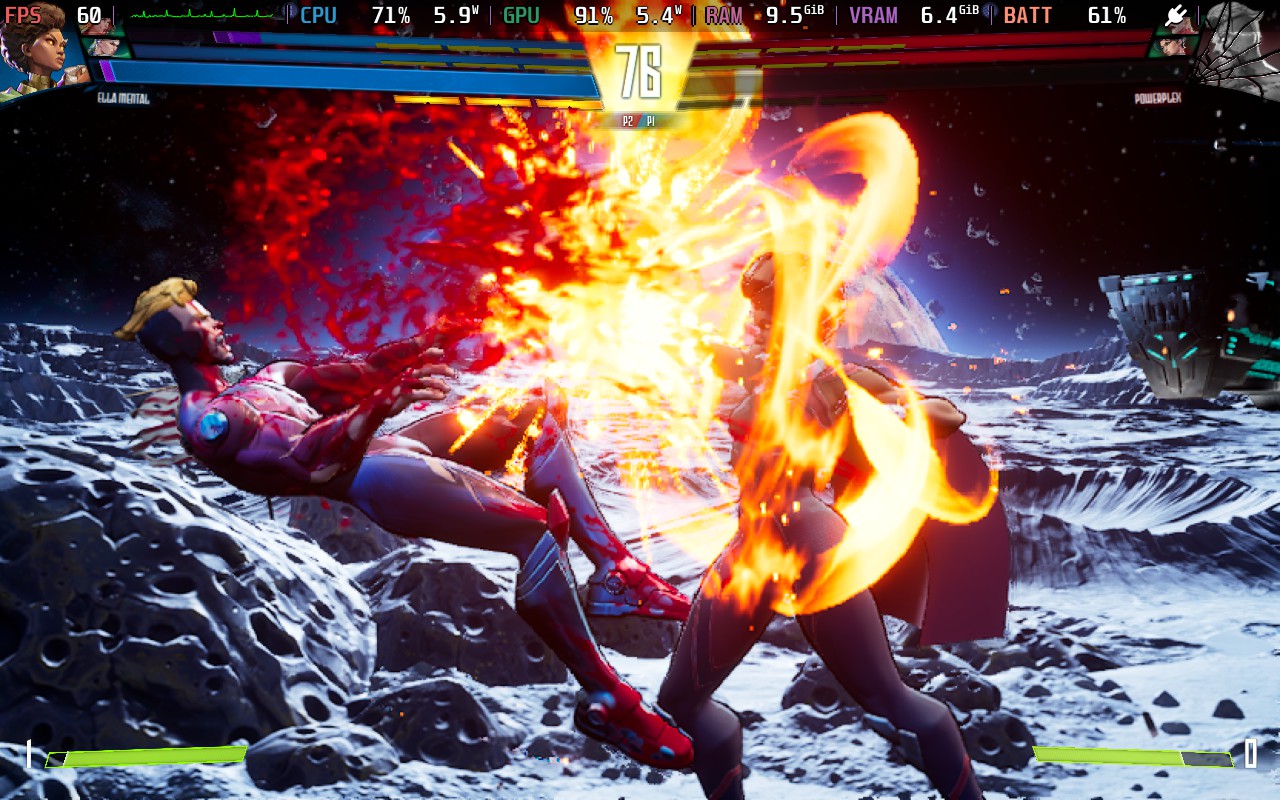
Skill effects and animations are equally impressive. Special moves are flashy, colorful, and genuinely hype-inducing, especially when multiple characters and assists start flying around the screen at once. From the menu designs to the beautifully animated cinematics, almost everything does a great job of selling this futuristic Marvel anime aesthetic the game is going for.
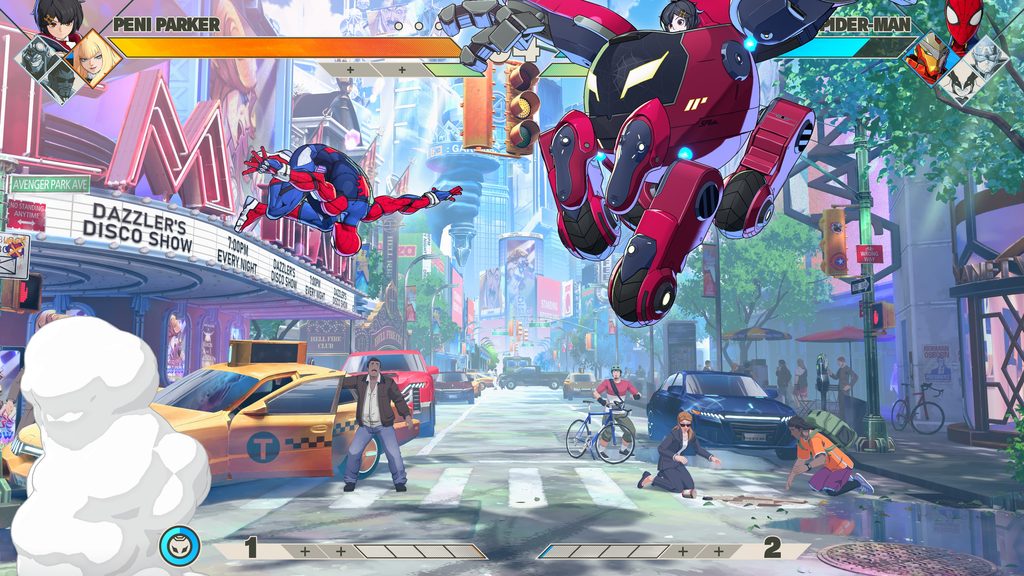
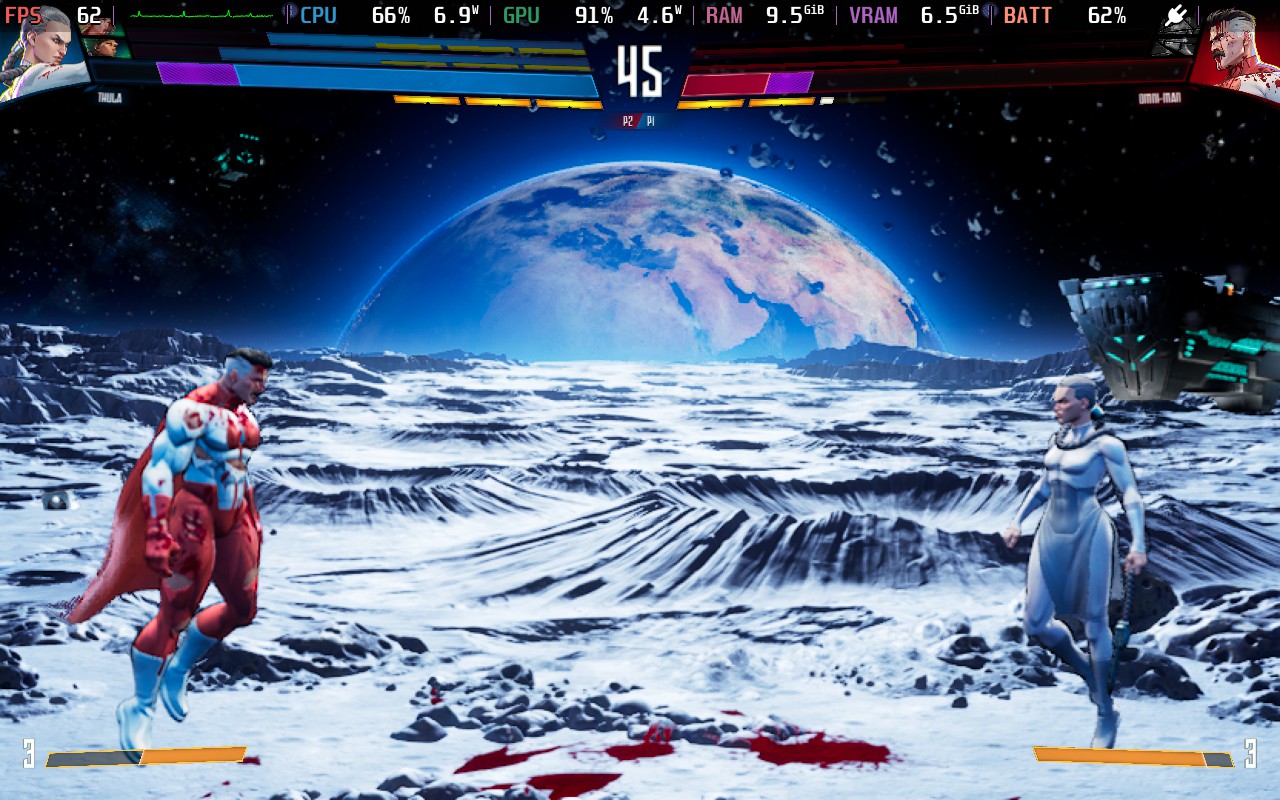
The stages, however, were a major disappointment. Compared to the amount of detail put into the characters, many of the environments look noticeably lower quality and surprisingly bland. The difference can be pretty distracting, with these gorgeous character models fighting against backgrounds that simply don't feel on the same visual level.
The music is absolutely fantastic. It brought back some of that old Marvel vs. Capcom feeling for me, especially with every character having their own unique theme like the old-school fighters used to do. The soundtrack fits the overall anime fighter tone perfectly and adds a lot to Tōkon's personality.
Unfortunately, I can't say the same about the voice acting. I found it surprisingly bad, especially for characters like Deadpool, Loki, and Iron Man whose voices and personalities have become so recognizable over the years. A lot of their delivery just sounds out of place, both during the story and the pre-fight intros, and I never really got used to it.
The sound effects are more of a mixed bag. Faster and more acrobatic characters sound great, especially when you're chaining attacks together and everything starts moving at full speed. But the bigger characters are missing that same impact. When someone like Hulk or Champion lands a massive hit, I want to hear that heavy 'THUNK'' that makes it feel like someone just got absolutely destroyed. Tōkon never quite delivers that weight, and some of their strongest attacks end up sounding much weaker than they look.
MARVEL Tōkon: Fighting Souls - PC Performance & Issues
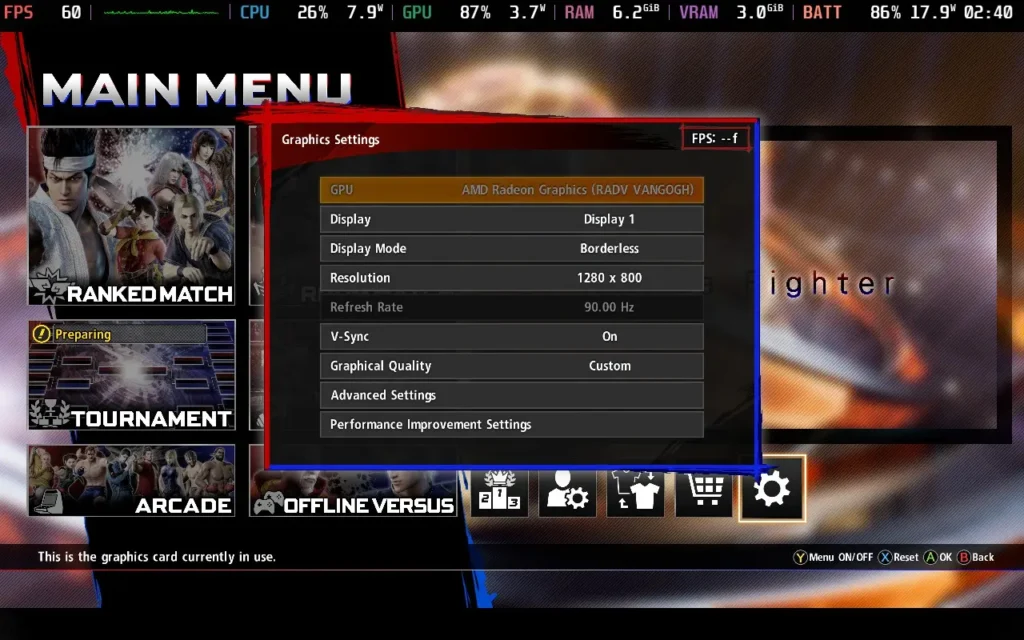
Unfortunately, we can't talk about Steam Deck performance this time around. MARVEL Tōkon: Fighting Souls uses a kernel-level anti-cheat system, which prevents the game from launching on SteamOS entirely.
But that's far from the only issue with the PC version. Since this is the version we're reviewing, I want to discuss the general performance when playing on PC.
I reviewed Tōkon on an RTX 5090, and even on one of the most powerful GPUs available, the game is filled with noticeable stutters. For a fighting game, where maintaining a stable experience is more important than in almost any other genre, that's simply not acceptable. The game looks great, but nothing happening on screen comes close to explaining why a system this powerful should struggle with stuttering.
No matter how powerful your PC is, Tōkon is currently in a terrible technical state, and for many players, I would consider it borderline unplayable. Even brute-forcing the game with high-end hardware doesn't guarantee the smooth and consistent experience a fighting game needs.
I also want to make it clear that none of the issues or personal complaints I mentioned in this section will affect the final score. Since we're reviewing the PC version, however, I felt they needed to be addressed. Consider this section more of a warning: in its current state, you simply shouldn't expect the fluid fighting game experience that Tōkon is supposed to provide on PC.
MARVEL Tōkon: Fighting Souls - Steam Deck Performance on Windows
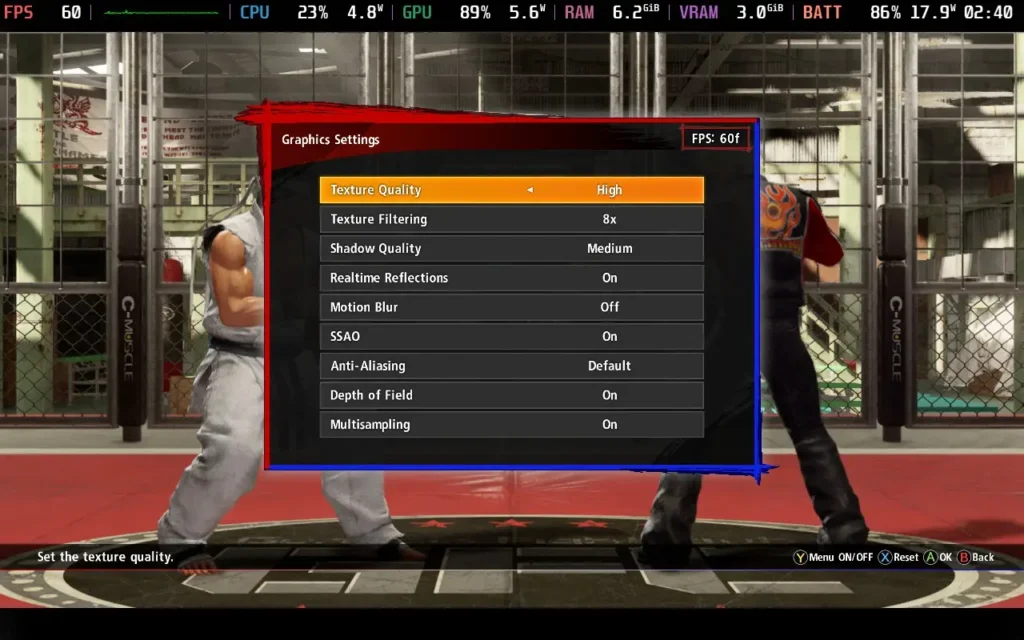
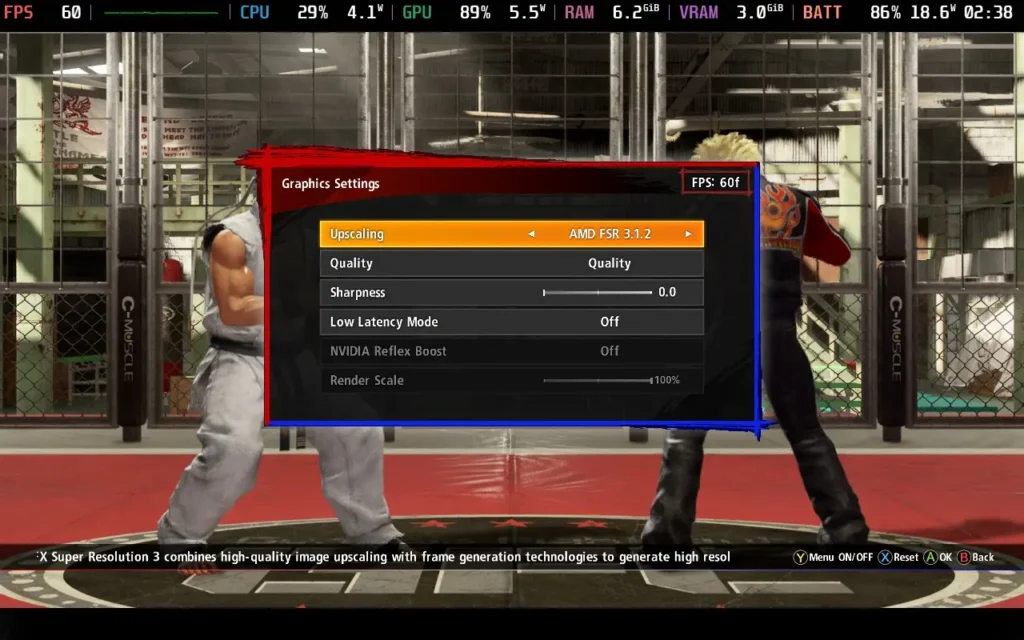
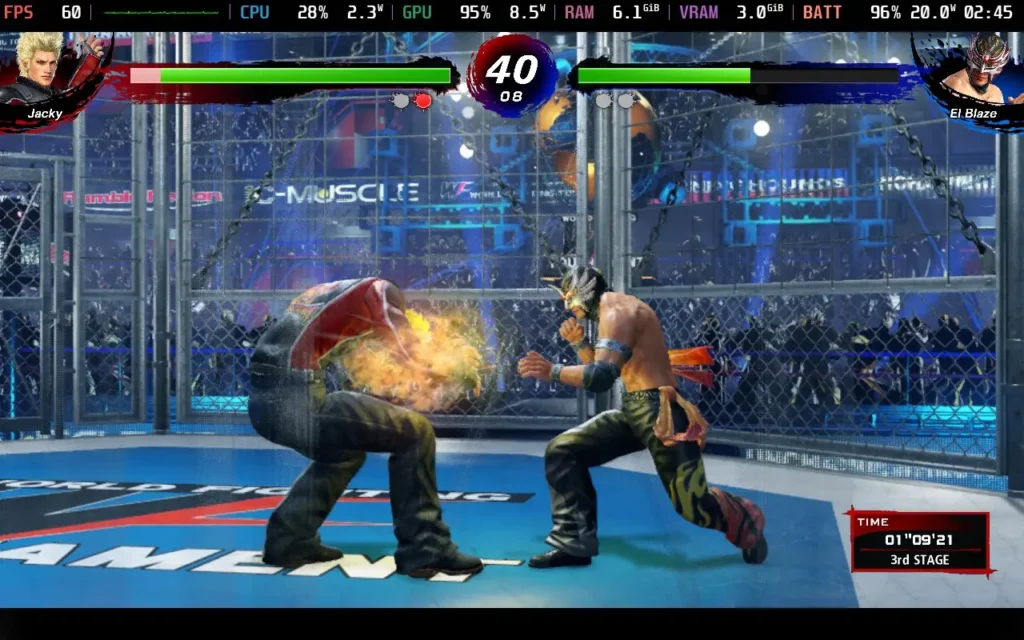
MARVEL Tōkon: Fighting Souls is unfortunately not playable on the Steam Deck through SteamOS due to the anti-cheat, which is a bummer. However, if you do have Windows installed on the Deck, the game does run and can be played, though it doesn’t perform well.
Even at the lowest possible settings, the game will not hit 60 FPS. Visually, it still looks okay at the lowest settings, but it will stick between 40 to 50 FPS. For a fighter like this, we really need a solid 60 FPS, so it’s not something I would recommend, especially if you want to play online.
Conclusion:
MARVEL Tōkon: Fighting Souls is a disappointment. Its fantastic combo system, excellent defensive mechanics, and beautiful ArcSys visuals show flashes of what could have been a worthy Marvel vs. Capcom spiritual successor. Unfortunately, stiff movement, questionable controls, a disappointing tag system, and terrible single-player content drag the whole experience down. With the Marvel license and Arc System Works behind it, Tōkon simply should have been much more.
The PC version makes things even worse. Kernel-level anti-cheat completely locks SteamOS users out, while severe stuttering and optimization issues make it difficult to get the smooth experience a fighting game requires even on high-end hardware. These issues don't affect my final score, but PC players should absolutely keep them in mind before buying.
Our review is based on the PC version of this game.
If you enjoyed this review, be sure to check out the rest of the content on SteamDeckHQ! We have a wide variety of game reviews and news that are sure to help your gaming experience. Whether you're looking for news, tips and tutorials, game settings and reviews, or just want to stay up-to-date on the latest trends, we've got your back.
Avatar Legends: The Fighting Game was provided by the publisher for review. Thank you!
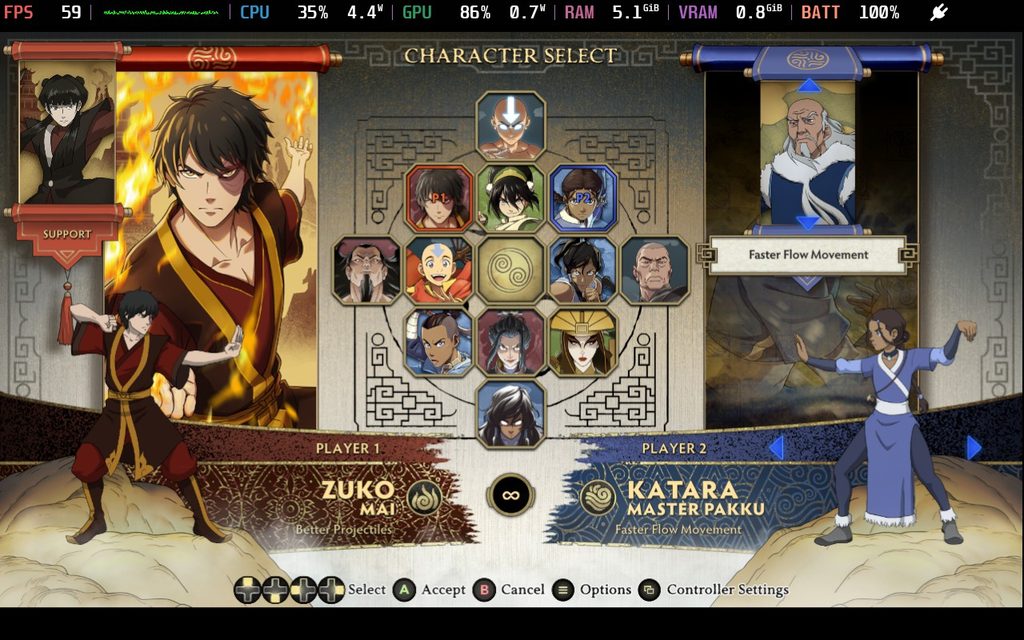
2026 has been one of the biggest years the fighting game community has seen in a long time. Invincible VS has already launched, while Marvel TOKON and Saturday AM Battle Manga are on the way and continuing to build excitement. Yet through all of it, there was one game that seemed to dominate every conversation: Avatar Legends. Ever since its reveal at NYCC 2025, players have praised its gorgeous 100% hand-drawn visuals and strong competitive foundation. Now that the full game is finally here, we played the hell out of it, and it's time to find out whether it truly lives up to the hype.
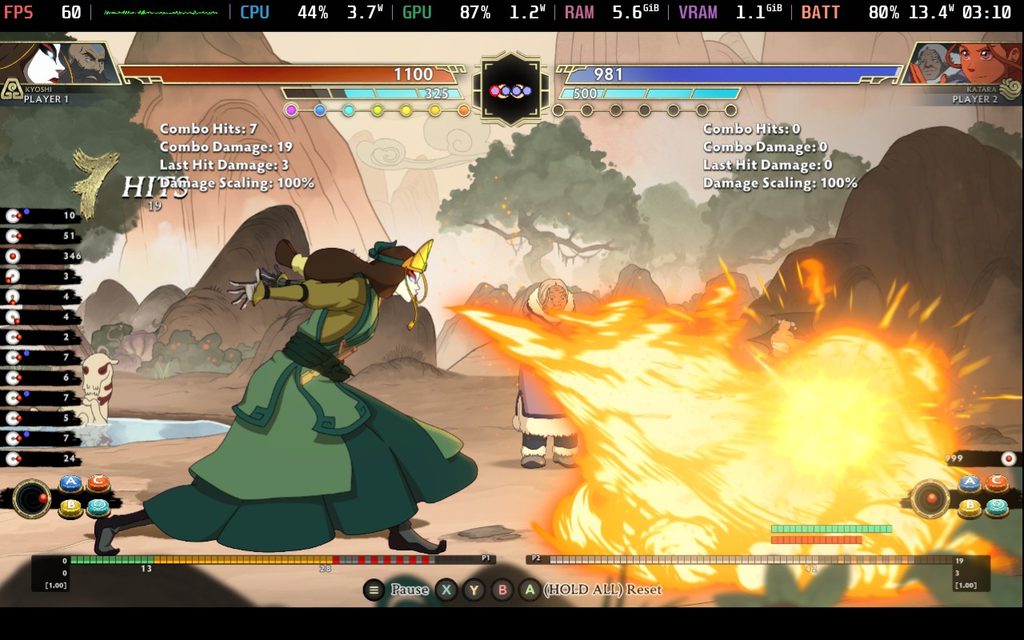
When I first booted up the game, I was mesmerized by its incredible hand-drawn visuals. Every frame of every move was drawn by hand, with over 900 frames per character. The artistic effort behind it is undoubtedly impressive, and the result is nothing short of a masterpiece. Every stage, animation, and special effect looks like it came straight out of the childhood animated series, blending together perfectly to create a visual spectacle that no other fighting game even comes close to. I'm a longtime fighting game player and have played hundreds of titles over the years, from anime fighters to realistic 3D titles. Avatar Legends is, by far, the most visually impressive fighting game I've ever seen.
At its core, the game is a fast-paced 1v1 fighter that puts a heavy emphasis on movement and defensive options. It features Light, Medium, and Heavy attacks that automatically chain into one another, much like traditional anime fighters, while also incorporating unique attacks and motion inputs inspired by games like Street Fighter and The King of Fighters. On the surface, its core gameplay is built around blending the fundamentals of these two distinct fighting game styles.
Once you dive deeper into the mechanics, however, one system immediately stands out: Flow. It's the game's defining mechanic, and easily your most valuable resource. Instead of simply blocking, Flow allows you to evade attacks by dashing, rolling, or launching yourself out of danger depending on the situation. Think of it as a defensive mechanic, like a parry, but with a huge emphasis on movement instead.
Flow doesn't stop there, though. It can also be used to cancel unique attacks, certain special moves, and even jump-cancel normals to extend combos. On top of that, it enables Flow Dashes, pressure escapes, combo breakers, wake-up recovery rolls, and countless character-specific techniques. Nearly every advanced interaction in Avatar Legends revolves around mastering Flow, making it the heart of the game's combat system and an incredibly satisfying mechanic to experiment with.
The game also uses some sort of "Assist" or "Support Character" system, but unlike Mortal Kombat 1's Kameos or a tag fighter's active assists, they only give you buffs that drastically change your playstyle and combo routes. It's more like a mix of Mortal Kombat X's Variations and Street Fighter Alpha's fighting styles (A-ISM, V-ISM), but presented in a cute and creative way. It's probably my favorite feature of the game altogether. Experimenting with different support characters and what they offer is great, and you can also counter bad matchups without having to learn an entirely different character that way. It creates solutions, and I'm all for it.
Some characters also have unique mechanics, almost like little "mini-games" built into their kits. For example, Korra (my main) has an Element bar, and if you hit your opponent with the corresponding elements in the order the game shows you, you enter an enhanced Avatar State that amplifies your next special move, giving it entirely different properties. Zuko also has a unique sword mechanic that builds up whenever he uses special moves. Once the sword gauge is full, he can cancel one special move into another, opening up entirely new combo routes and zoning opportunities.
Avatar Legends is surprisingly difficult, and I genuinely mean that as a compliment. Everything from jump-cancel instant special moves and frame-perfect combo timings to meaty setups and countless advanced mechanics I've seen throughout the years is present here.
Fighting game developers have continuously tried to make the genre more approachable in a lot of ways. Motion inputs have become more forgiving, modern control schemes introduced one-button special moves, combo timings have been widened, and execution barriers lowered all across the board. While I completely understand why newcomers may find the genre intimidating, this philosophy has also stripped away much of the player expression and rewarding execution that long-time fighting game fans grew to love.
That's exactly why Avatar Legends surprised me. An Avatar game is the last place I expected to find an old school fighting game philosophy, especially considering it also needs to appeal to fans of the series who may have never touched the genre before. Yet instead of simplifying its mechanics, the developers tackled what I believe has always been the real problem: teaching players how to play.
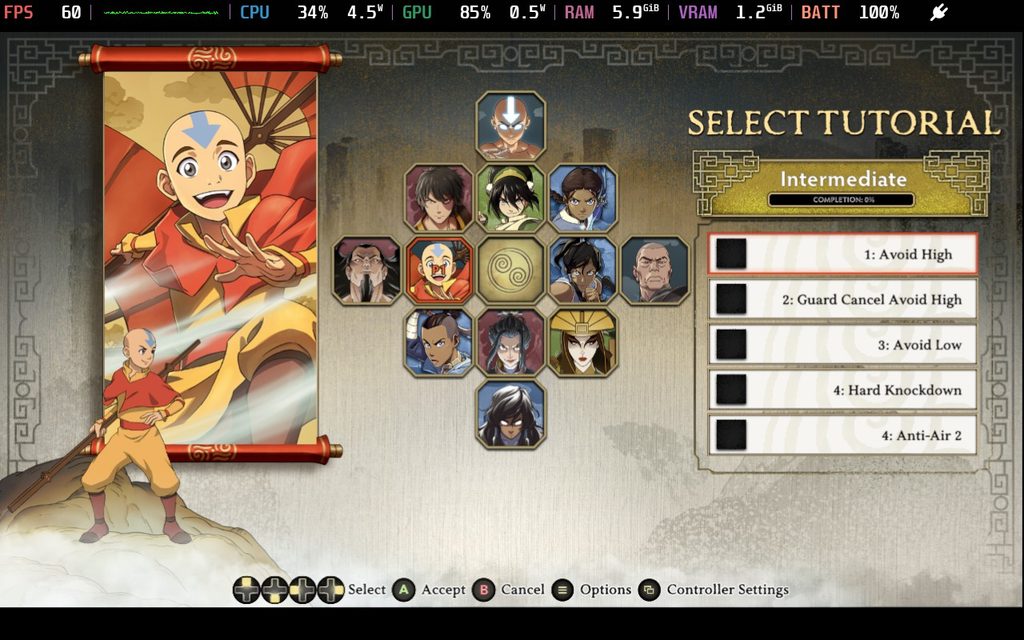
Avatar Legends features one of the most comprehensive tutorials I've ever seen in a fighting game. From beginner lessons covering the absolute basics to in-depth character guides and advanced mechanics, nearly every system is explained in detail. Even the Combo Trials include a Breakdown mode that lets you perform each input step by step while explaining exactly where you're making mistakes. The character tutorials don't just teach combos, they cover fundamental concepts that transcend across the entire roster.
At the same time, the game doesn't abandon casual players. Auto combos mapped to single buttons make it easy for newcomers to jump in and enjoy the game without immediately learning difficult execution. It's an excellent compromise. Avatar Legends preserves the mechanical depth veteran players crave while providing enough learning tools and accessibility options for complete beginners. In my opinion, it's one of the best examples of how fighting games should approach accessibility going forward.
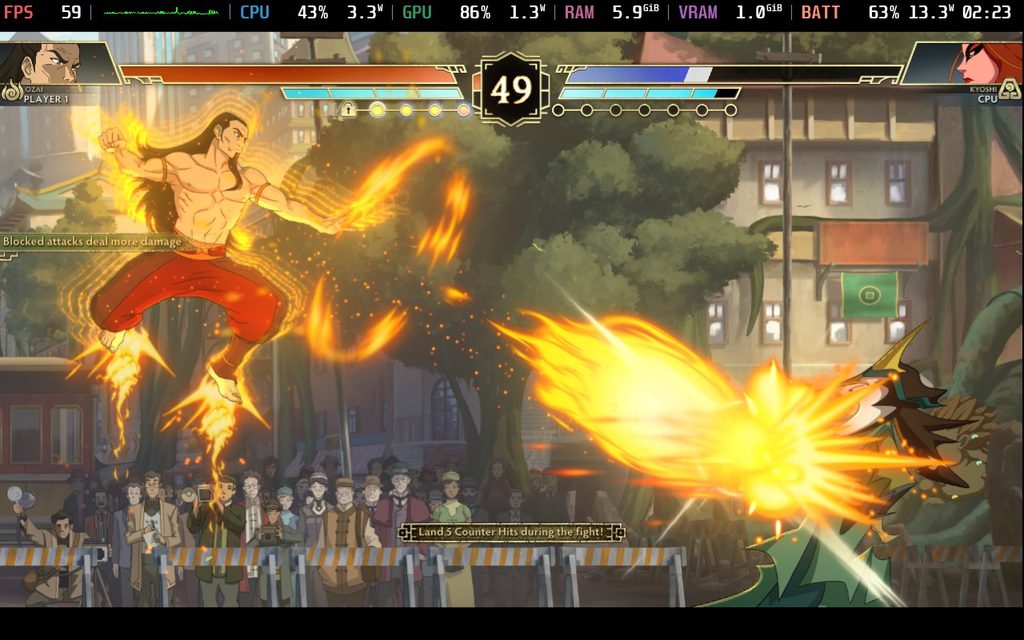
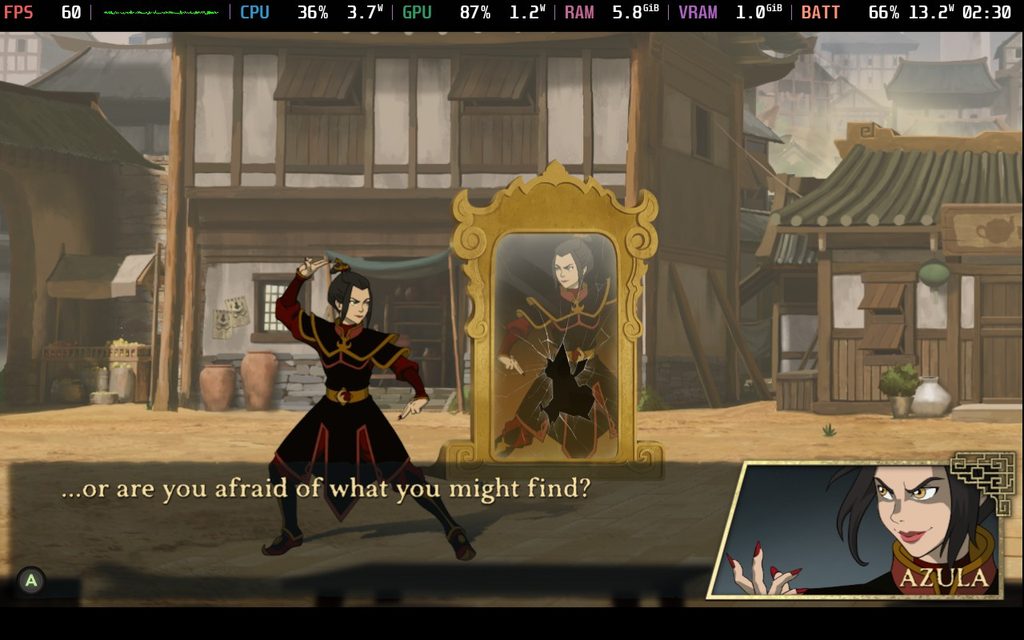
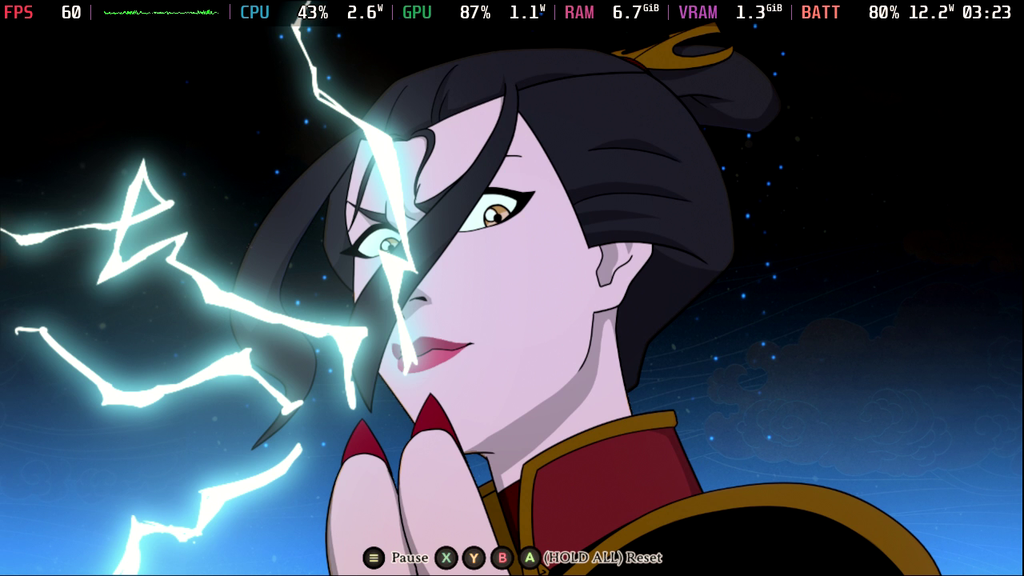
The roster consists of 12 characters, and I have to say this: every single one feels like they're playing a completely different game. I honestly can't remember the last time I saw such creative and diverse character design in a fighting game. Zaheer focuses on summoning his followers, Korra completes missions to unlock her Avatar State, Azula traps opponents with lingering flame traps, Toph bulldozes through attacks with armor while creating pillars and obstacles, and Ozai spends half the match flying through the air with lightning and fire before suddenly turning into a command-grab character with an active parry. Every character is masterfully crafted, and no two playstyles feel remotely alike.
The funny thing is that, when I first looked at the character select screen and saw both Avatar Aang and Nightmare Korra. I immediately assumed they would be lazy copy or "evil clone" characters, similar to Evil Ryu in Street Fighter or Kuma and Panda in Tekken. As a reviewer, I thought I'd found something to criticize. Instead, they turned out to be completely unique characters with their own mechanics, animations, and gameplay identities. It was a nice surprise that made me love the game even more.
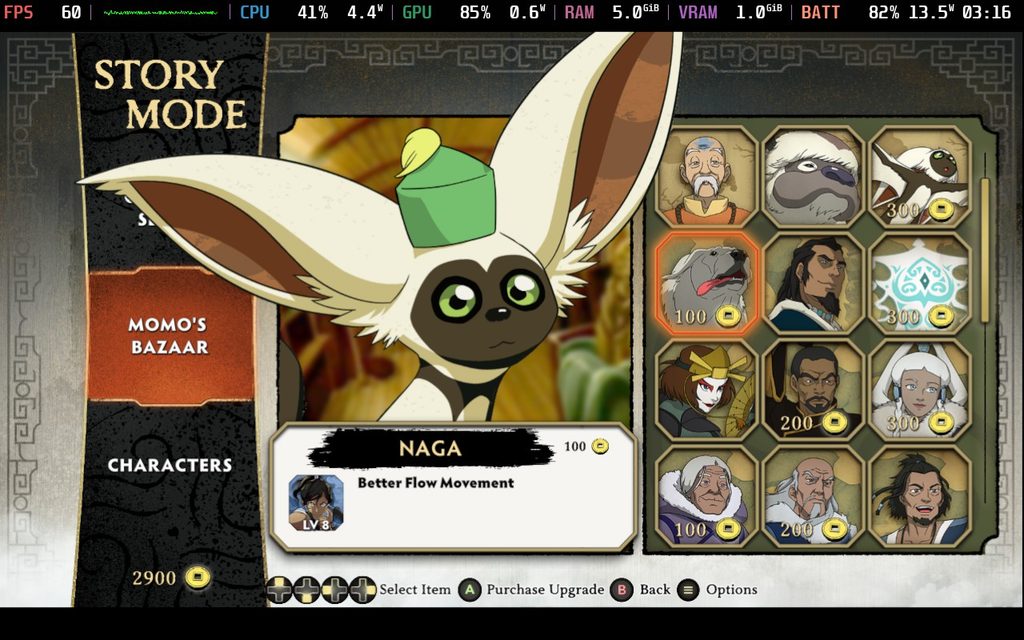
Avatar Legends has a separate Story Mode in addition to the familiar Arcade Mode, and it's also something I've never seen in this genre. The Story Mode is a whopping 27-chapter narrative with roguelike elements. As your characters fight in Story Mode, they level up, unlock stronger attacks, gain more Focus and EX bars, and become stronger. What is unique, though, is that you earn coins from each fight, and you can spend those coins to unlock support characters from Momo's Shop. The Story Mode also has small challenges for many of the fights that require you to perform three air throws, finish the match with a Super, etc., which reward you with more coins as well.
The craziest part is that, unlike the regular game, you can have multiple support characters active on a single character. I personally even went back to Story Mode with Korra to do some impossible combos with those combinations just for fun. It really is a tiny, great addition.
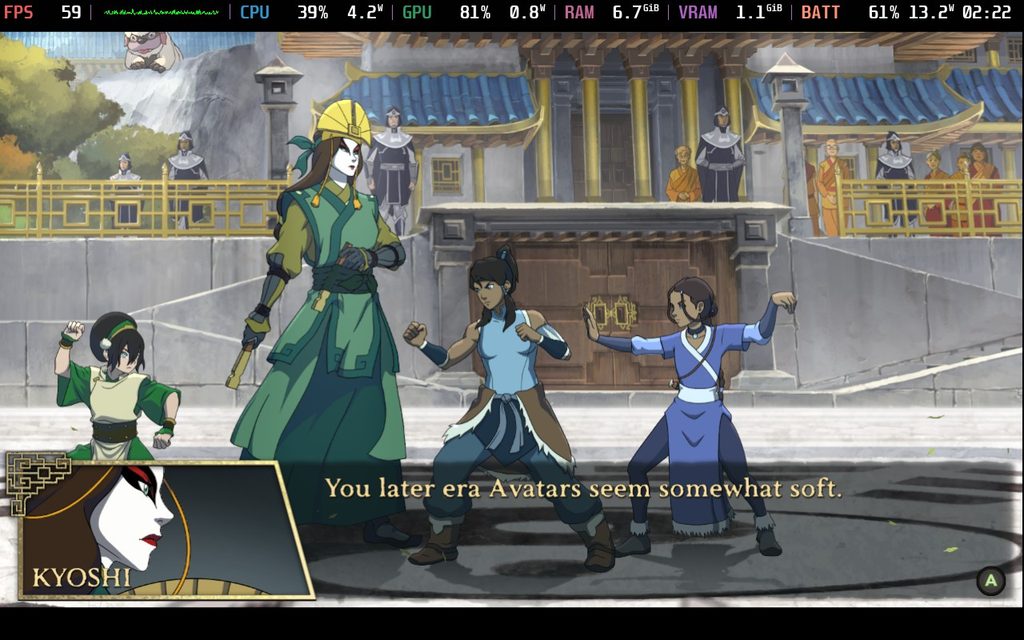
The story itself is written by Tim Hedrick, an absolute legend in the Avatar community who wrote ten episodes of the original series and numerous comic books set in the universe. However, when I first started the story, it didn't make any sense at all. The characters were acting weird, the script felt awfully confusing, and it came across as some kind of cliché multiverse nonsense. It felt a little disappointing at first. I want to avoid major spoilers, so I won't say what happens, but once you reach a certain point, you realize all of those moments were intentional, and everything suddenly makes sense. From that point on, it felt like a true Avatar episode, full of the cringey, cute, wholesome moments the series is known for.
The only thing that bugged me was the presentation. It plays out like a visual novel, with characters talking while in-game animations play in the background. Luckily, I got used to it over time, and honestly, it started to feel unique and has a certain charm, although I would still prefer fully animated cutscenes. Still, they nailed this creative way to tell a story.
Arcade Mode's character-specific stories share that same charm and wholesome character interactions we love. They fit the game's tone perfectly, and it was genuinely fun going through each character's story and exploring their unique dialogue and personal moments.
The voice acting is absolutely phenomenal. While I was playing the game, I genuinely thought they were using the original voice actors from the animated series. I realized that wasn't the case when I reached the Story Mode credits, and it made me appreciate the casting even more. All of the soundtracks are extremely well made, unique, and perfectly fit the Avatar universe. The sound design also deserves praise, as every character's moves have distinct, impactful sound effects that greatly enhance their identity and overall immersion. Masterful audio work!
For Online Play, the game uses solid rollback netcode with minimal lag. It feels much more responsive than many other 2D fighters I've played. As long as you're not playing against someone overseas or with a poor connection, the experience is more than acceptable.
The only issue is that the online modes are limited to Ranked, Quick Match, and Player Lobbies. As I say in all of my fighting game reviews, not having an Online Training Mode in 2026 is a huge dealbreaker, even for a masterpiece. Especially in a difficult game with so much combo freedom, being able to figure things out together, practice, or teach your friends would be incredibly fun.
Avatar Legends: The Fighting Game - Steam Deck Performance
I'm extremely happy to say that Avatar Legends is a flawless experience on Steam Deck. You get a stable 60 FPS. There are no graphics settings (since the game is hand-drawn), and there is zero input lag or stuttering. The game looks just as gorgeous as it does on a 4K screen, and the art style fits perfectly on an OLED display.
My only issue was the battery drain. By default, the game consumed around 17–19 watts, which is a lot for a hand-drawn game. Luckily, after setting the TDP to 7W, it dropped to around 12–13 watts, which is perfect for long gaming sessions on the go. You can go even lower, but 7W is the limit for a perfect 60 FPS experience with zero drops. 6W is acceptable for non-competitive players as well.
Online play also works without issues, and with a solid Wi-Fi connection, the game offers great netcode with minimal lag, which is good news since online play has traditionally been the weakest part of the genre on handhelds.
2D fighters were already a joy in the palms of our hands, and having a gorgeous one like this join the list is extremely satisfying.
Conclusion:
Avatar Legends is a masterpiece. It takes everything that makes fighting games special and executes it at an incredibly high level, while remaining welcoming to newcomers through its outstanding tutorials and accessibility options. Combined with its breathtaking 100% hand-drawn visuals that perfectly capture the spirit of the animated series, it stands as one of the most impressive and memorable fighting games I've ever played.
The Steam Deck experience is just as impressive. With a flawless locked 60 FPS and a 8W TDP limit, Avatar Legends feels right at home on the Deck. If you're looking for one of the best fighting games to play on Steam Deck, this is the easiest recommendation of my life.
Our review is based on the PC version of this game.
If you enjoyed this review, be sure to check out the rest of the content on SteamDeckHQ! We have a wide variety of game reviews and news that are sure to help your gaming experience. Whether you're looking for news, tips and tutorials, game settings and reviews, or just want to stay up-to-date on the latest trends, we've got your back.
Dead or Alive 6: Last Round was provided by Koei Tecmo for review. Thank you!
There was a pattern we used to see quite often in fighting games back in the day: re-releasing the same game with a ton of changes and additional content, then selling it as a new edition. Even industry giants like Street Fighter received plenty of criticism and memes for it, spawning jokes like "Super Hyper Ultra Street Fighter: Mega Insane Edition." While most major franchises have moved away from it, Koei Tecmo hasn't, and that's how Dead or Alive 6: Last Round has come in.
The Dead or Alive franchise used to be one of the biggest 3D fighting game series in the industry, even rivaling Tekken during its peak years. It was incredibly popular and built a large, dedicated fanbase over the years. However, as the fighting game genre evolved, Dead or Alive struggled to keep up with its competitors, and Tekken ultimately pulled ahead.
When Dead or Alive 6 launched, many longtime fans found it disappointing. The roster felt familiar, some movesets were simplified, and the game lacked the kind of major new mechanics players had come to expect from modern fighting games. On top of that, its monetization practices drew plenty of criticism from the community. Combined, these issues made Dead or Alive 6 one of the most divisive entries in the franchise's history.
Last Round comes with the complete Dead or Alive 6 roster, including all five DLC characters. It also adds new graphics options, improved visuals, a detailed photo mode, and a handful of balance and quality-of-life changes.
And that's pretty much it.
There are no new mechanics, no meaningful additions to the core experience, and not even minor updates to things like the menus or story mode. At its core, this is still the exact same game, simply repackaged as a new edition.
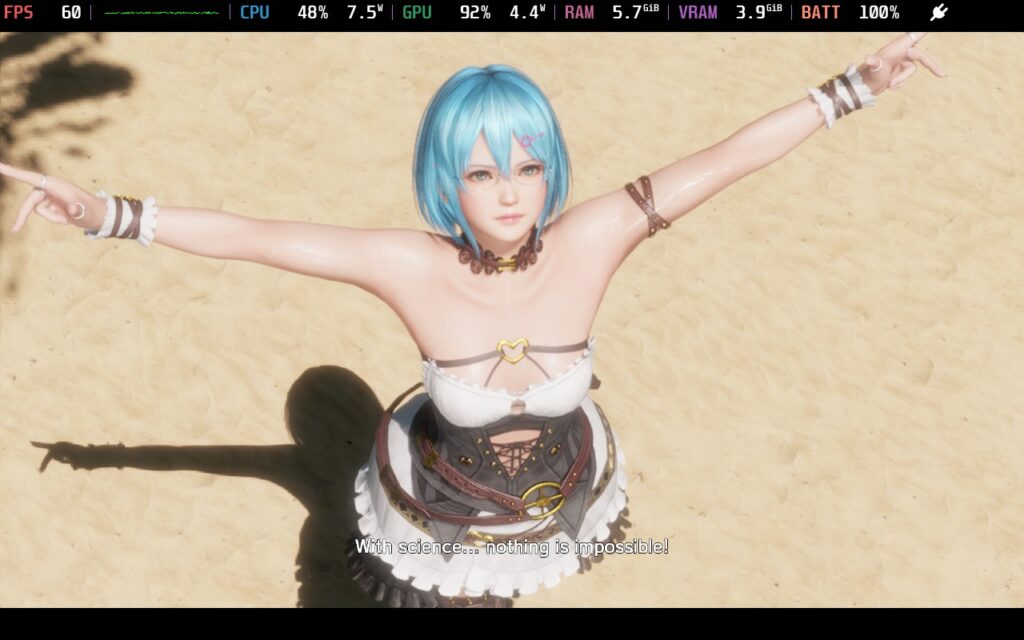
However, the graphics are definitely improved over the original DOA6. We now have OBORO mode, which sounds weird, but it improves lighting and skill effects. It's basically some kind of ray tracing, so giving it such an obnoxious name feels weird. Character details and animations were already great in the original version, so the game doesn't look that outdated and is still pleasant to look at.
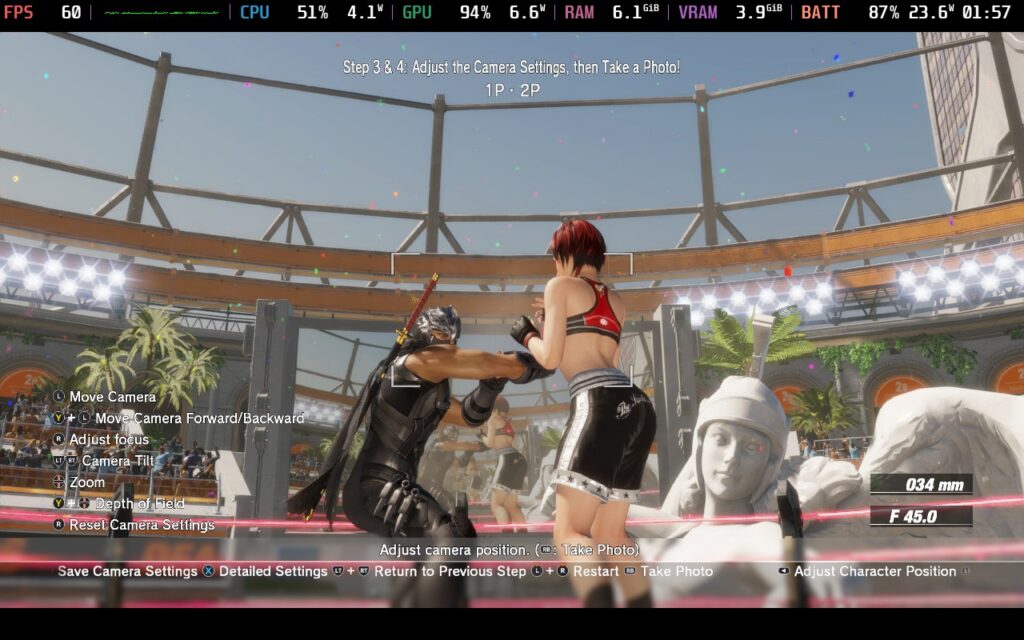
The newly added Photo Mode takes a different approach compared to most modern games as well. Instead of activating it during gameplay, it has its own dedicated mode where players can freely position characters, select attacks, adjust poses, and manipulate camera angles. It's not really my thing, but screenshot enthusiasts will probably be pleased.
I was one of the few people who genuinely enjoyed the original Dead or Alive 6, which makes Last Round even more disappointing. Fans who already criticized the original release will likely have a stronger reaction than I did to what is essentially the same game being sold as an "ultimate" version, which could be worrisome.
There's very little left to discuss about Last Round itself, so the rest of this review will largely focus on Dead or Alive 6, because that's essentially what this release is.
Dead or Alive 6 is a 3D fighter built around the series signature "triangle system." The easiest way to understand it is through a rock, paper, scissors analogy. Strikes beat throws, throws beat holds (parries), and holds beat strikes. This constant interaction forces players to make reads and adapt to their opponents rather than simply running the same offensive sequences on autopilot.
Once you understand the defensive options, the triangle system becomes incredibly engaging and is easily one of Dead or Alive's strongest mechanics. However, this is also where one of my biggest issues with the game begins to surface: the lack of archetype variety.
Take Tekken as an example. Characters like King are built around powerful command grabs, while characters like Jin excel at defensive play through strong parries and counterplay. In Dead or Alive, nearly every character has access to multiple holds and powerful throws. While Team Ninja attempted to differentiate the roster through frame data, move properties, and fighting styles, the result is that many characters end up feeling less distinct than their counterparts in other fighting games.
The roster is still diverse and enjoyable to play, but when it comes to archetype variety and character identity, Dead or Alive 6 struggles to shine.
Dead or Alive's biggest strength, however, is undoubtedly its stage interactions. While stage interactions have become common in modern fighting games, they are far more than a minor gimmick in Dead or Alive 6. They are a core part of the experience.
Almost every stage is packed with environmental mechanics that can extend combos, create new pressure opportunities, grant guaranteed follow-ups, or completely change the flow of a match.
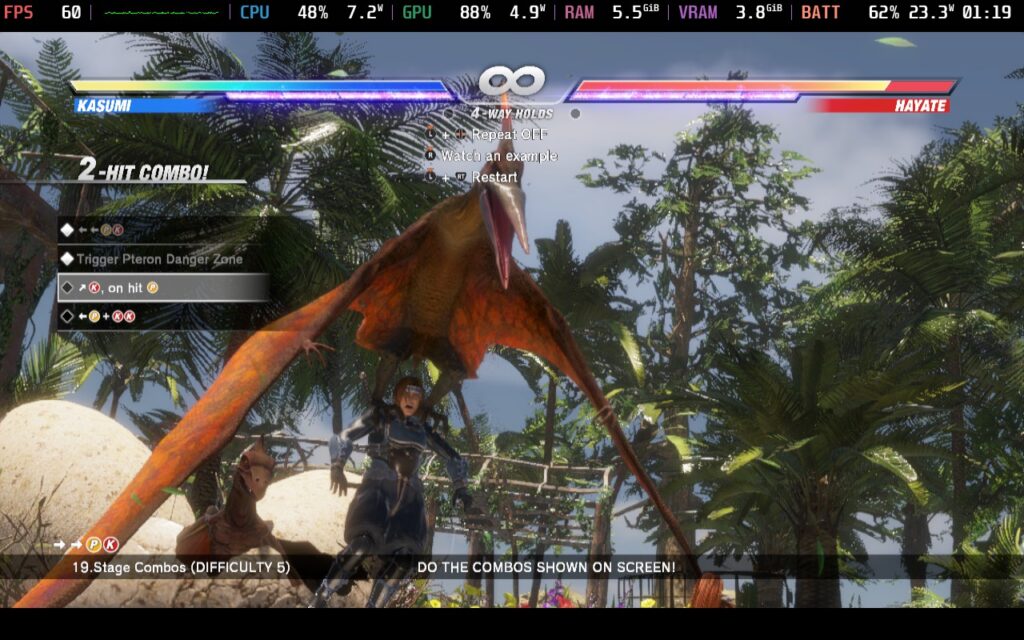
One stage features dinosaur eggs that hatch when struck, summoning a pterodactyl that carries the opponent across the arena. Another has spectators surrounding a wrestling ring who will throw your opponent back into the fight, creating a WWE-style combo extension. There are explosive barrels, collapsing floors, stage transitions, electric hazards, mines, and countless other interactive elements. Some stages even contain water sections that alter the properties of certain attacks and open up unique combo routes.
The best part is how naturally all of these mechanics fit into the game's design. Despite the sheer number of stage interactions, they never feel overwhelming. Everything flows smoothly within the combo ecosystem and adds depth rather than distraction. I remember playing Mortal Kombat X, where even some of the smaller stage interactions felt awkward and out of place. Dead or Alive, on the other hand, integrates them beautifully and remains one of the best examples of environmental combat in the genre.
Dead or Alive 6 takes a unique episodic approach to storytelling with its story mode. Instead of presenting a single, continuous campaign, the game tells its story through multiple character-focused episodes that eventually connect to the main plot. I think this structure works particularly well for players who care about their favorite characters and want to experience different perspectives throughout the story.
After years of Mortal Kombat-style storytelling -cinematic fight, cinematic fight, over and over again- this approach felt like a breath of fresh air.
Unfortunately, the writing itself isn't nearly as interesting as the structure. That isn't entirely surprising, as it's difficult to craft a deep narrative around an over-the-top cast of characters and a tournament-focused setting.
For the most part, I found the story cheesy, cliche, and fairly forgettable. Surprisingly, though, I enjoyed it a lot more once I stopped taking it seriously. There is a certain charm to its absurdity, and some characters are far more entertaining than the plot itself.
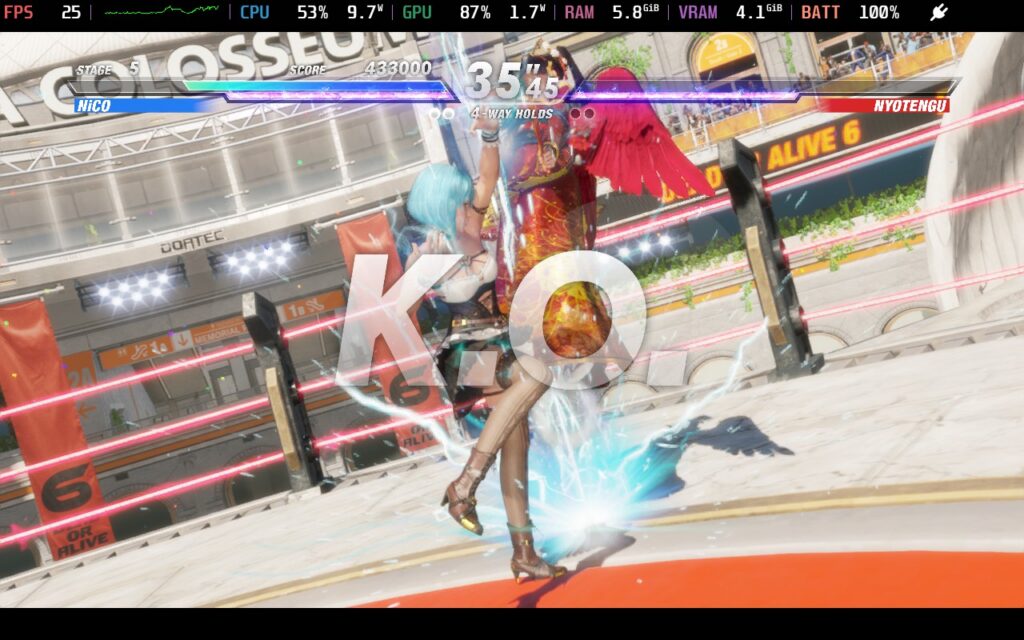
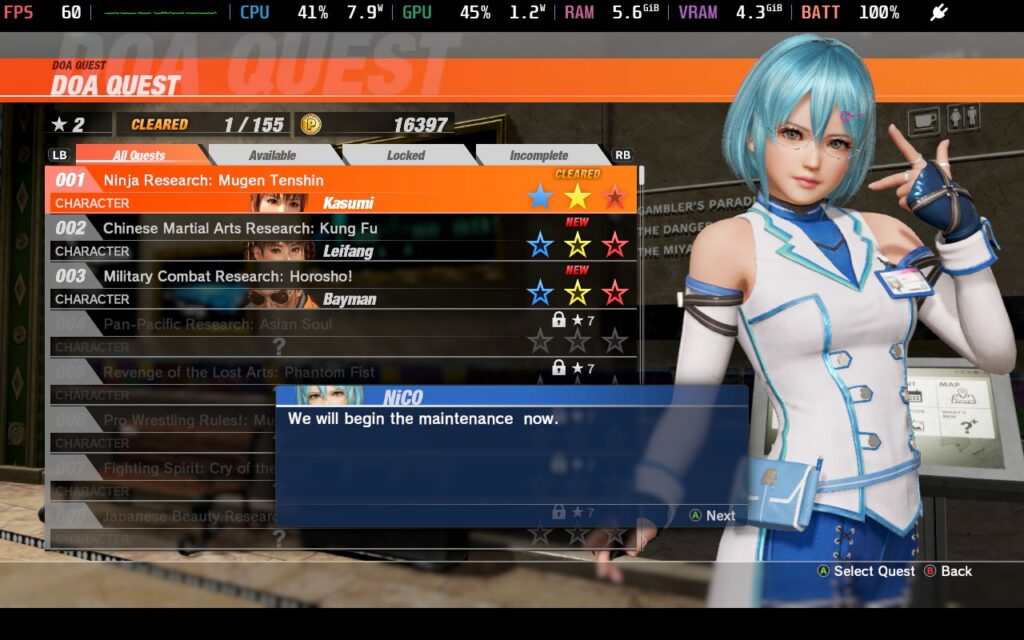
I was particularly interested in Nico, one of the game's new antagonists. Her motivations and ideology stood out more than most of the cast and gave me a reason to stay invested in the story overall.
In the end, Dead or Alive 6 delivers exactly what I wanted from its story mode: a short, action-packed popcorn adventure with a few genuinely memorable moments. Considering the source material, that's more than enough.
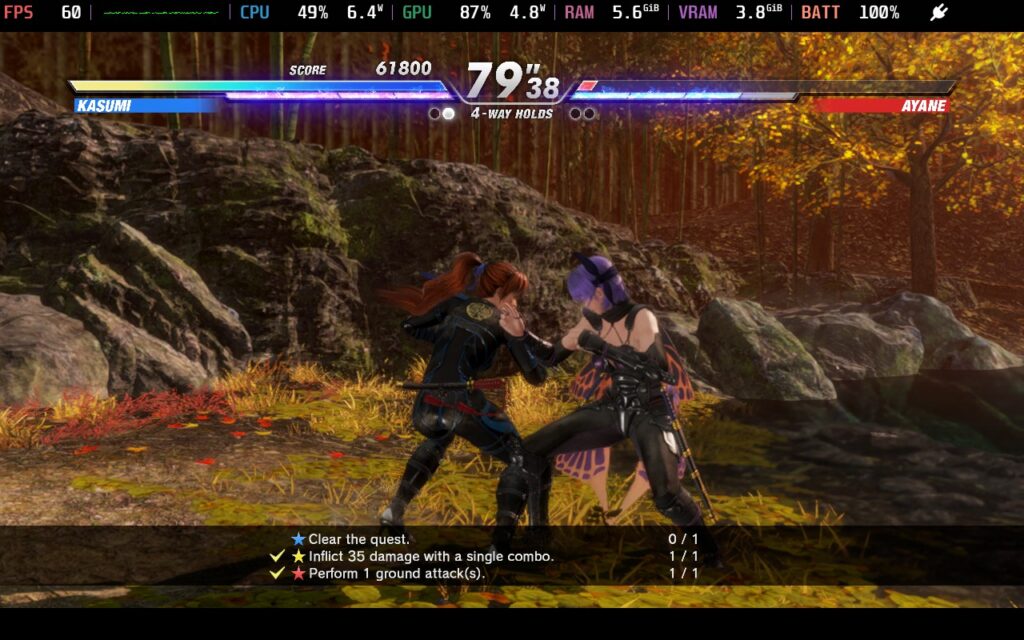
Aside from the story mode, the game features a unique mode called DOA Quest, which is surprisingly engaging. It consists of battles with various objectives that reward players for completing specific challenges. With 160 missions to conquer, it's an excellent source of additional content and a great way to learn the game's mechanics.
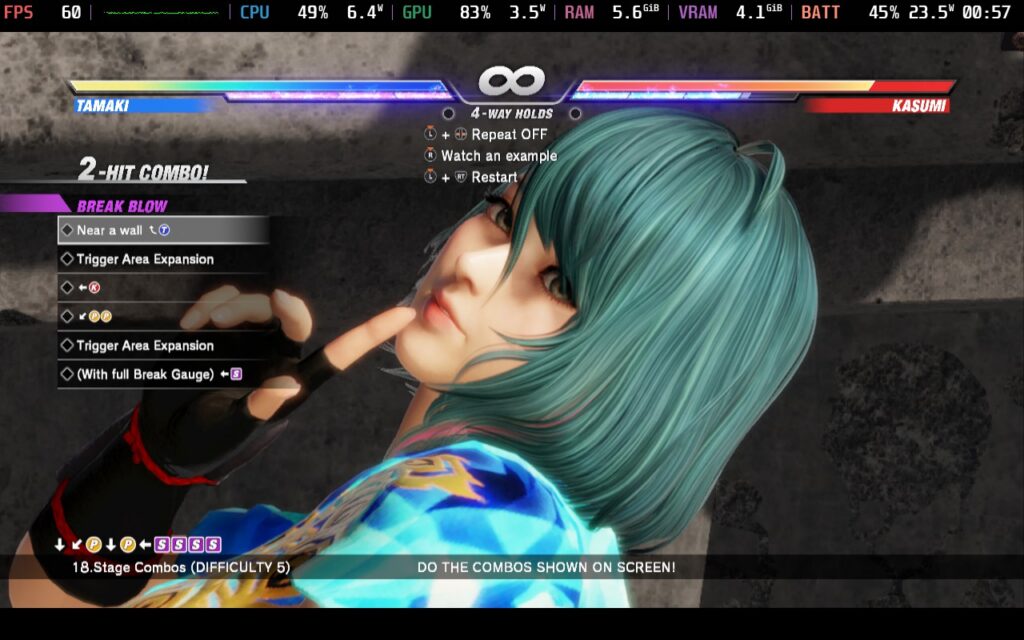
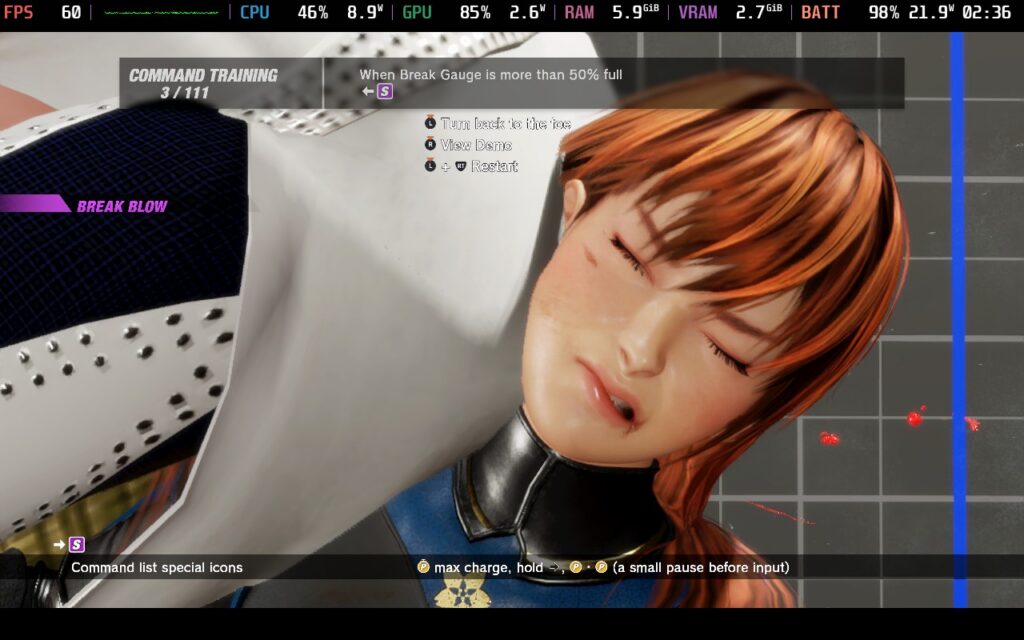
The game also offers an incredibly detailed tutorial mode that does a fantastic job of teaching both offensive and defensive fundamentals. On top of that, the command training mode helps players become comfortable with motion inputs and character-specific techniques, making it one of the better learning tools in the genre.
However, the Combo Challenges have easily been my favorite part of the offline content. They're difficult enough to feel rewarding without becoming frustrating, and completing a character's entire trial set is genuinely satisfying. Many of the challenges also incorporate stage interactions, which makes them even more enjoyable to experiment with.
There's also a good chunk of character customization in The Wardrobe, with a large selection of unlockable costumes available for every fighter. Most outfits are earned through character levels or by spending the gold you acquire from DOA Quest and online matches. Customization itself is fairly simple, consisting of costumes, glasses, and hats.
Unfortunately, many of the best cosmetics are still locked behind additional DLC purchases. For an "ultimate" re-release of a seven-year-old game, that's disappointing. If KOEI Tecmo expects players to buy the same game again, the least they could do is include all previously released cosmetic content.
Arcade Mode, Ghost Battles, and Survival are all present and well executed. Combined with DOA Quest, tutorials, character customization, and Combo Trials, Dead or Alive 6 offers an impressive amount of offline content. In fact, it's one of the strongest fighting games on the market when it comes to single-player and casual content.
Online play, however, remains one of Dead or Alive 6's weakest aspects. The available options are limited to Ranked Matches and Lobby Matches, and the game's notoriously poor netcode remains unchanged. Even in 2026, the absence of rollback netcode and online training features is difficult to justify. In a genre where online play has become increasingly important, it feels stuck in the past.
Music in the game is mostly forgettable, with some nice tunes here and there, but definitely not one that stands out. Sound effects are very outdated and lack punch and a feeling of impact. Voice acting is honestly terrible, and there are major lip-sync issues in story mode. Definitely not a great job in the sound department.
Dead or Alive 6: Last Round- Steam Deck Performance
As a re-release of a seven-year-old game, it would be very surprising to see any major performance issues. Before getting into the detailed performance review, however, I have to note an important disclaimer.
Out of the box, cinematics simply don't work on Steam Deck. Whether it's the intro or story cutscenes, all you get is a black screen. After some research, I discovered that this was the exact same issue present in the original DOA6. Instead of fixing it, KOEI Tecmo even removed the Verified status and marked the game as "Unsupported." Years later, with a so-called "major" re-release, seeing the exact same issue again was absolutely fun and hope-inducing (!).
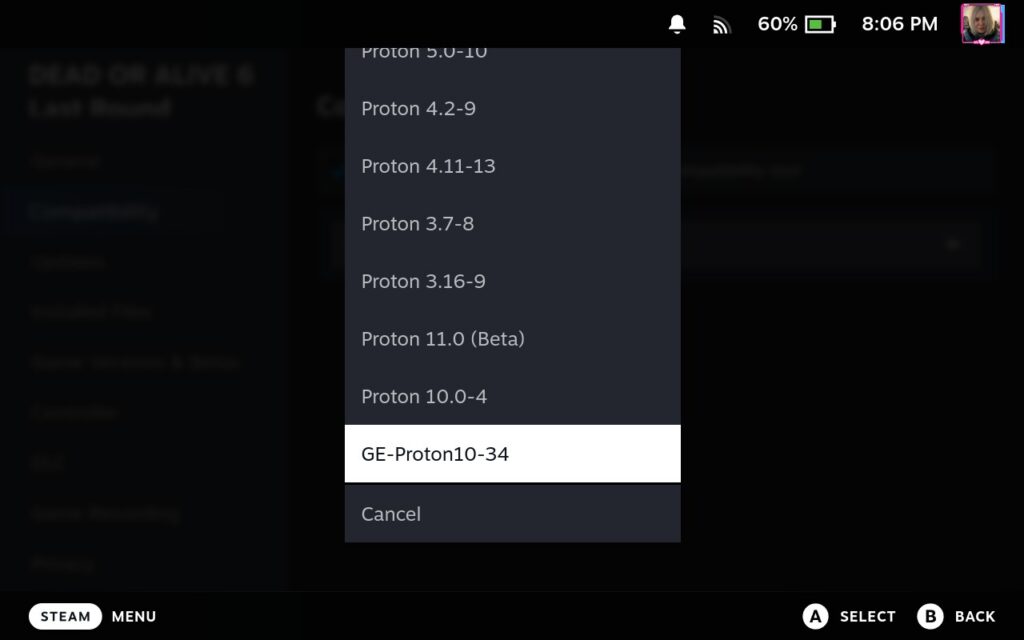
Luckily, our boss Noah came up with a fantastic fix. By installing Proton GE in Desktop Mode and changing the game's compatibility settings to the latest Proton GE version, the issue disappeared completely with no noticeable drawbacks.
Performance-wise, the only major addition is the new raytracing mode, OBORO. Sadly, it means absolutely nothing to us Steam Deck users, as it tanks performance from a rock-solid 60 FPS to the low 20s, even with FSR set to Performance. Honestly, the visual improvement is so minor that it hardly feels like a sacrifice worth making, even on a desktop PC.
Outside of that, the game runs at a stable 60 FPS even on the highest settings. There are occasional drops during large explosions or particularly flashy effects, but these mostly occur during cinematic moments and never affect my combos or controls.
You can also lower a few settings and enable FSR Performance to comfortably run the game at a 10W TDP limit. Doing so significantly improves battery life while still providing a smooth experience, making it a great option for long practice sessions on the go.
Overall, aside from the cutscene issue and a few minor frame drops, Dead or Alive 6: Last Round runs beautifully on Steam Deck. The game's slightly dated visuals work in its favor, allowing it to deliver excellent performance while still looking surprisingly good.
Conclusion:
Dead or Alive 6: Last Round is easily the best way to experience DOA6 if you're a newcomer. Between its fun combat system, fantastic stage interactions, large roster, and impressive amount of offline content, it remains one of the most enjoyable fighting games on the market. However, if you've already spent your time with the original release, there is very little here that justifies buying it again. The new additions are minimal, and most of them feel like features that should have been included years ago, making Last Round a rather disappointing re-release.
As for Steam Deck, once you fix the cutscene issue with Proton GE, the game runs beautifully. A stable 60 FPS, great battery life options, and visuals that still hold up well make this an easy recommendation for handheld fighting game fans.
Our review is based on the PC version of this game.
If you enjoyed this review, be sure to check out the rest of the content on SteamDeckHQ! We have a wide variety of game reviews and news that are sure to help your gaming experience. Whether you're looking for news, tips and tutorials, game settings and reviews, or just want to stay up-to-date on the latest trends, we've got your back.
Invincible VS was provided by Skybound Games for review. Thank you!
Invincible VS generated a lot of hype within the fighting game community when it was first announced. That comes as no surprise, given the popularity and reception of the animated show, along with the recent resurgence of interest in tag fighters. Even before playing it, it was clear that the game would feel like a lovechild of Marvel vs. Capcom and 2XKO, combined with Mortal Kombat-style brutal, bloody combat. I’m a huge fan of both the TV show and fighting games, so this felt like a dream come true. However, I was sorely disappointed with the end product.
When I first booted up the game, I was extremely disappointed by the amount of content it offered. There is a tutorial, but it’s extremely short and overly streamlined. There are no combo trials or additional fun game modes. It genuinely feels like a beta client. After both Street Fighter and Tekken have excelled at delivering rich content in recent years, even indie fighting games have started to follow in their footsteps. Seeing such an empty main menu felt like stepping into a time capsule to the early 2000s. Before talking about the content, though, I feel like we need to unpack the gameplay and fighting mechanics first.
At its core, Invincible VS is a 3v3 tag fighter that heavily leans into fast-paced, combo-driven gameplay. You build a team of three characters and can seamlessly switch between them mid combo, allowing for extended juggle routes and creative team synergy. The tag system isn’t just for offense either, defensive options like counter-tagging give players a way to break out of pressure and combos, adding an extra layer of strategy beyond pure execution.
The overall flow sits somewhere between the chaos of Marvel vs Capcom and the more structured approach of modern tag fighters like 2XKO. Even going as far as to completely copy the simplified control scheme of 2XKO, making every move, including specials, a 1-button execution.
As a long-time fighting game veteran, I can say that almost every game has something “unique” going for it, but unfortunately, that’s not really the case here. Instead of introducing new ideas, the game borrows mechanics from other fighters and tries to establish its identity through that mix.
The game's key strength is undoubtedly its movement. Similar to titles like Melty Blood or BlazBlue, it offers a wide range of mobility options: 8-way air dashes, amplified dashes, air blocking, short hops, long jumps, and more. It’s surprisingly deep, and figuring it all out is both challenging and fun. Rather than focusing on strict combo execution or complex inputs, the game shifts the skill ceiling toward movement, making it the primary deciding factor in high-level play.
One of the biggest issues with combo-based tag fighters is their defensive options. Most games in the genre feature what are known as Touch of Death combos (or TODs), which can deal 100% damage to a single character in one sequence. In some cases, developers choose to gate these TODs behind heavy resource costs, but that’s not the case here. They are surprisingly easy to execute and require minimal resources. Instead, the game introduces a defensive mechanic called Active Counter.
Active Counter isn’t a traditional combo breaker. Rather than immediately escaping a combo, it allows your tag partner to intervene mid-sequence and clash with the opponent. The twist is that the attacker can bait this response either by extending the combo in a way that punishes the counter attempt or by stopping entirely to counter it. This creates a constant rock-paper-scissors dynamic within every combo, turning both offense and defense into a mind game.
Even though I loved the movement in Invincible VS, this active counter already makes it an RNG-based fighting game. Yes, it's fun at first, but it just became tiring over time.
The most disappointing aspect of the game is definitely the design of its characters' movesets. There’s a clear lack of creativity, with most archetypes sharing very similar special moves and combo extenders. Learning a new character rarely feels like picking up something fresh; it often feels like more of the same.
For example, a large portion of the roster has some variation of a forward special that acts as a leaping shoulder attack to start or extend combos. This kind of repetition severely hurts character identity and comes across as a lazy design choice. Around 70% of the cast also shares a divekick on the same input, and archetypes like zoners and grapplers tend to follow nearly identical game plans. Overall, it feels uninspired and overly homogenized.
The story mode follows the familiar structure we’ve seen in the Mortal Kombat series (cutscene, fight, cutscene), but it’s a major disappointment here. It can be completed in under 30 minutes, and the entire plot revolves around a race in which the Technicians copy other characters from the universe. Considering the TV show's exceptional storytelling, I was at least expecting something on par with a single strong episode. Instead, it ends up being incredibly forgettable.
Arcade mode doesn’t offer anything special either. You simply pick your team, fight through a series of encounters, and unlock a basic character-specific ending cutscene. And by “cutscene,” I mean a static image with some dialogue over it. At this point, it feels like the game doesn’t shy away from cutting corners in any area.
There is also a character leveling and progression system that unlocks new titles, profile backgrounds, and various cosmetic rewards, all of which can be earned by grinding Arcade mode and online fights.
The graphics and overall visual style lean toward a low-poly, cel-shaded cartoon look that doesn’t quite land. From the environments to the character details, it lacks a distinct artistic touch and ends up feeling somewhat generic. At times, the presentation even comes across as below expectations for a full release, giving off more of a mobile-game impression than a modern fighting-game one.
The pre-rendered cutscenes in Story mode, however, look absolutely incredible. They feature one of the best cartoon styles I’ve seen, to the point where I caught myself thinking, “Imagine the TV show in this style.” I only wish the rest of the game had followed a similar artistic direction. Unfortunately, this contrast hurts the experience, as the transition from those visually stunning scenes to the lower-quality in-game models feels very off and out of place.
The music is also nothing special, relying mostly on generic, hype-inducing beats. I was really hoping for character-specific themes like in the Marvel vs. Capcom series, but that’s not the case here. There are only around five tracks in total, and all of them are fairly forgettable.
Invincible VS' voice acting is a mixed bag. While some actors from the TV show return, most notably Omni-Man’s J.K. Simmons, not all of the original cast are present. Key roles like Invincible are recast, which makes the overall experience feel somewhat inconsistent for fans of the series.
Sound effects, on the other hand, are surprisingly good. Landing hits with Battle Beast, especially with his hammer, feels incredibly satisfying, and the impact sounds across the board are distinct and enjoyable.
Online play offers ranked and casual matches, along with custom lobbies. Similar to Street Fighter 6, lobbies are divided into four separate fighting rooms that players can join. However, unlike SF6, this system feels somewhat pointless because it lacks an online training mode.
A fighting game without online training is simply unacceptable by modern standards, especially for a combo-heavy title like this. Much of the enjoyment of playing fighting games with friends comes from figuring things out together—experimenting, sharing discoveries, and even teaching each other in real time. Removing that aspect takes away a core part of what makes the genre so engaging, and it’s something I find hard to overlook.
The game uses standard rollback netcode for online play, and under the right conditions, it works well enough. When playing against opponents from your own region, matches generally feel responsive and acceptable, with only minor hiccups here and there. For a fast, movement-heavy tag fighter, that level of responsiveness is extremely important, and local-region matches are mostly playable.
However, the experience drops off sharply when playing against opponents from faraway regions. In those matches, the rollback becomes much more noticeable, with characters constantly snapping between positions, animations skipping, and the match sometimes feeling like a slideshow full of teleporting characters. It doesn’t completely ruin the online mode when matchmaking works properly, but it does make cross-region play feel extremely unreliable.
Invincible VS - Steam Deck Performance
Invincible VS defaults to the lowest graphical presets, and there’s a good reason for that. Fighting games are one of the few genres where maintaining a stable 60 FPS is absolutely essential, especially in online play. By keeping everything on the lowest settings, the game can consistently hit that target across all modes.
The downside is that it looks noticeably blurry and lacks visual clarity, but even at higher settings on my desktop PC, the game never really becomes visually impressive. Because of that, playing on lower settings feels like a reasonable trade-off for performance.
I did experiment with tweaking certain settings to improve the visuals, but nearly every adjustment came at the cost of performance. As a result, my recommendation would be to leave the settings as they are and prioritize a stable experience, even if it means accepting significant visual compromises.
That said, being able to play a fighting game this consistently on the Steam Deck still feels great and adds a lot to the overall experience.
Conclusion
Invincible VS is a game full of contradictions. It builds a genuinely engaging foundation with its deep, movement-focused gameplay and constant mind games, but almost every other aspect surrounding it feels underdeveloped or uninspired. From its lack of content and weak character design to its forgettable presentation and missing modern features, it often feels like a game that needed much more time in the oven.
There is something here for competitive players who value movement and mechanics above all else, but for most players (especially fans of the series), it falls far short of expectations. Invincible VS isn’t a terrible game, but it’s a frustrating one, constantly showing flashes of potential, but it never fully shines.
Our review is based on the PC version of this game.
If you enjoyed this review, be sure to check out the rest of the content on SteamDeckHQ! We have a wide variety of game reviews and news that are sure to help your gaming experience. Whether you're looking for news, tips and tutorials, game settings and reviews, or just want to stay up-to-date on the latest trends, we've got your back.
My Hero Academia: All's Justice was provided by Bandai Namco for review. Thank you!
My Hero Academia is a great anime series. Following the adventures of Midoriya and Class 1-A as they become heroes, and learning how to master their quirks, is so entertaining, and it makes sense why it's so popular. There have been a couple of games so far in the My Hero Academia universe, and soon, another one will be joining the fray. My Hero Academia: All's Justice evolves on what the previous games have done, adding some new elements, tons of original content, and a huge roster that makes this feel like a must-have for fans of the series.
The one thing I never felt was lacking in All's Justice was content. It felt like there was something waiting around the corner for me to try out. With Story Mode, we follow the final battle between the heroes and Shigaraki, Team Up Missions brought me into a virtual world to experience a unique storyline created for the game, Archive Battles allowed me to play through the biggest battles throughout the series, and Hero's Diary lets us play through some original mini stories from those in Class 1-A. We also have the usual free battle for offline 1v1/2v2/3v3 fights and online combat, but I loved how much original story content there is, especially with the great voiceovers.
Even when all of that content is finished and done, there is still a wealth of customization options for each character, ranging from costumes and victory poses to voice lines and banners, and even some UI elements during battle. The amount of customization to make our extensive list of playable characters look and act the way we want to is just wonderful. I spent a good chunk of time making almost everyone look different. It is a little unfortunate that some characters have significantly more options than others, but it makes sense for the most popular characters, like Midoriya and Bakugo, and not others like Present MC and Seiji Shishikura.
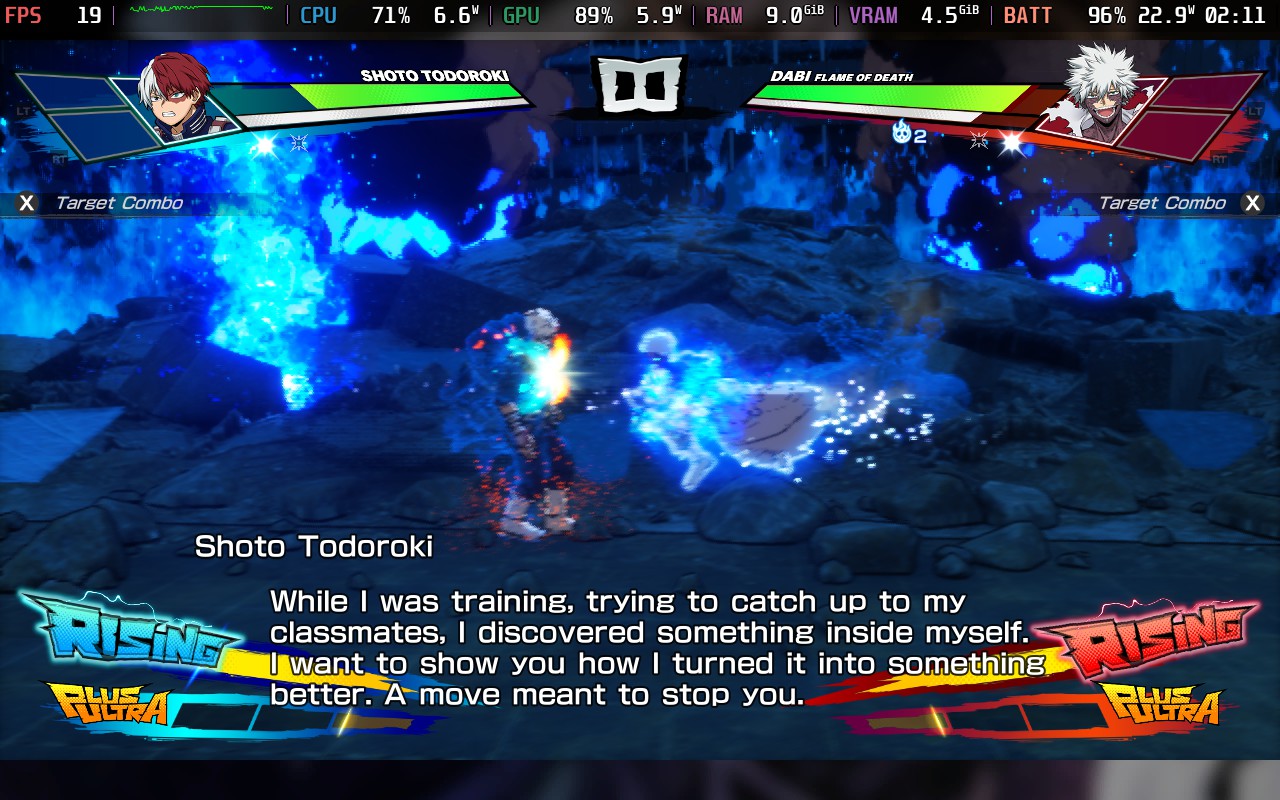
Throughout all of the game modes, we will primarily be taking part in combat. Fights are on a larger 3D field, with combat that feels more strategic than most other anime fighters I have played. Instead of button mashing and just straight attacking until the opponent's health goes away, we will have to utilize an assortment of different moves and special actions like counters and boosting up using Rising.
As I mentioned in my preview, I really enjoyed this change to the usual loop. It felt like I had to think a couple of steps ahead for every attack I was going to use, as well as watch the enemy and anticipate their next move. The only other fighting games that make me think this much are the more technical fighters we see in esports tournaments, like Tekken and Street Fighter. Seeing this in a 3D arena fighter was quite nice.
I also like the feel of each fight in All's Justice. It doesn’t feel like we’re sitting on the ground using different combos to knock each other back-and-forth. There are a lot of moves that will bring us into the air, and we will need to adjust our next move accordingly. The verticality and importance of managing it are a nice touch and a welcome one. And with every character feeling unique with their own quirks and general move sets, I felt like there was a lot to learn.
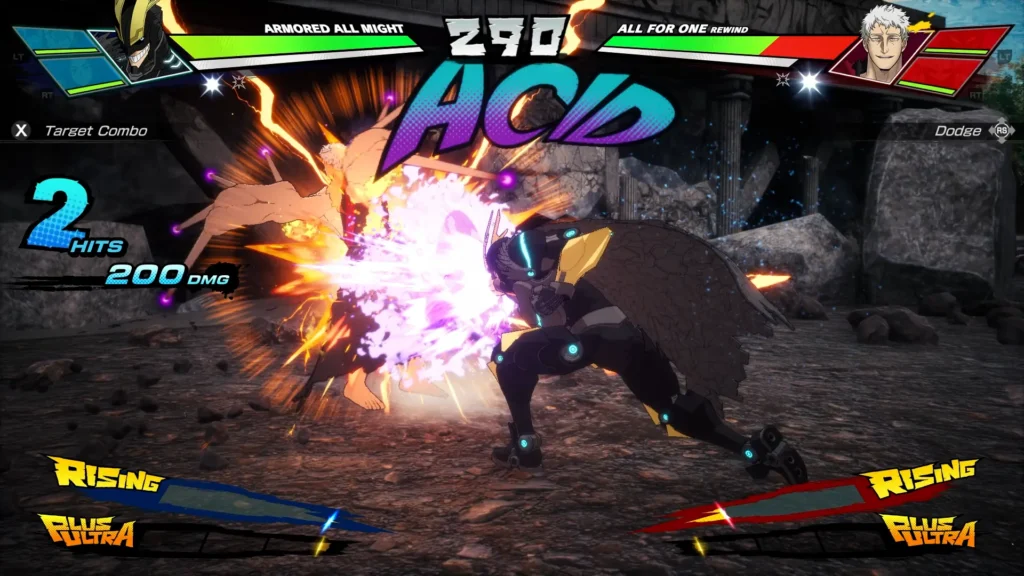
The game also expands upon how we interact with the other members of our team. Most fighting games where we put together a team have assist moves and the ability to swap out, but All's Justice goes a step further. Continuing combos by swapping to our team quickly is easy and intuitive, and if we have enough of our ultimate "Plus Ultra" bar, we can use our team's moves as well. It not only makes each teammate we select more important, but thinking about how we can maximize damage by using our team is a common thought that I welcomed with open arms.
However, I did feel like some of the fights and CPU mechanics bordered on unfair or ridiculous. And some of the bigger fights in story mode, and in Team Up mode, enemies can have armor that we have to destroy before we can do some real damage to them. When attacking the armor, foes will not flinch and can attack you while you are mid combo, as they will not react. I dislike these kinds of mechanics because I can feel like enemies are able to stop any momentum that I might have. There were multiple times in these fights where I just had to give up and try again later because I was frustrated from not really being able to deal damage to them, while they were just picking me off fully open and attacking me mid combo.
The fights where we are taking on multiple enemies at the same time were another stain I wanted to be rid of. There will be moments where we have to fight multiple enemies at the same time, and some of these can be very annoying. This happened multiple times in different fights, but there’s one egregious example of the issue that sticks in my mind. I was fighting three versions of TWICE at the same time, and they have this move that can string you up and stop you from moving for a couple of seconds. I was constantly hit by this move over and over, with some periods of not being able to move lasting over 10 seconds. It happens so much that the time limit runs out, and I lose the battle. In these kinds of battles, it’s very easy to get stuck and be attacked multiple times. There are ways to break out of it, but even still is very easy to get sucked back into it. If I had a choice, I would avoid these fights like the plague.
Still, I wouldn’t say that I was turned off from the combat entirely. It felt great in the one-on-one fights, and I really enjoy the general feel of combat. These are little nuisances here and there, but I wouldn’t say it. The tracks from the experience were too much, to the point where I would put down the game completely. But these are points where I did get frustrated and had to take a moment to collect myself.
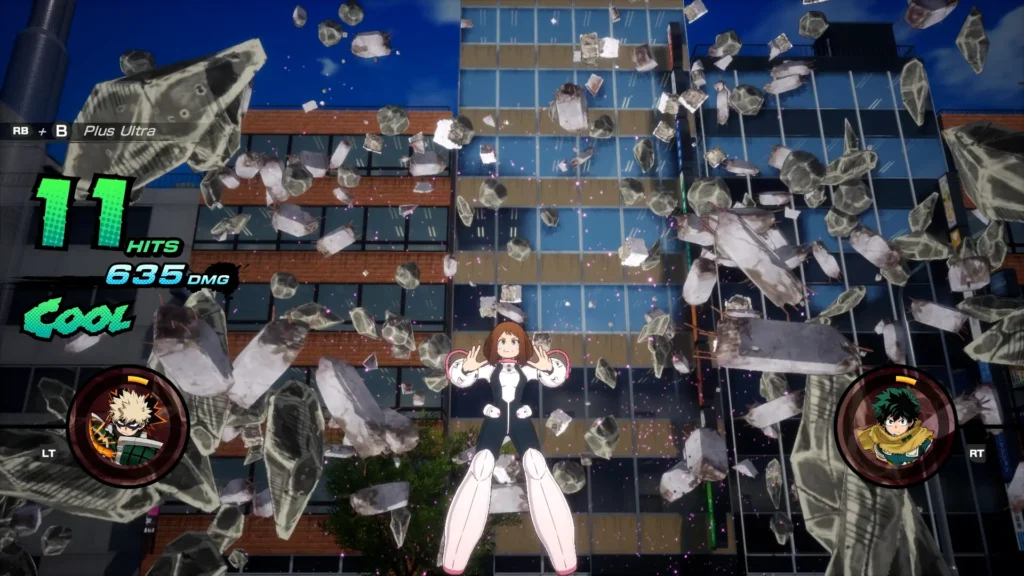
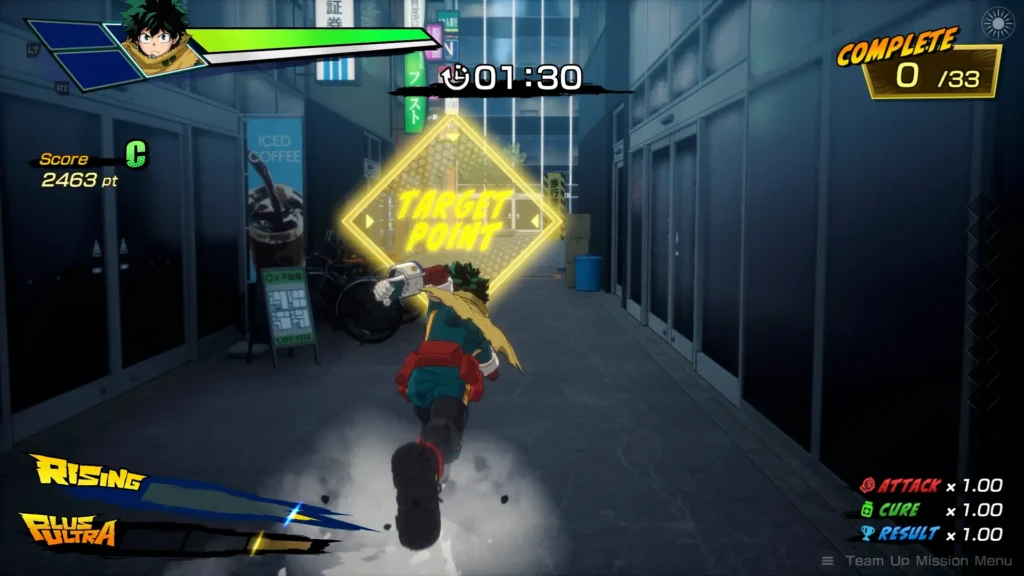
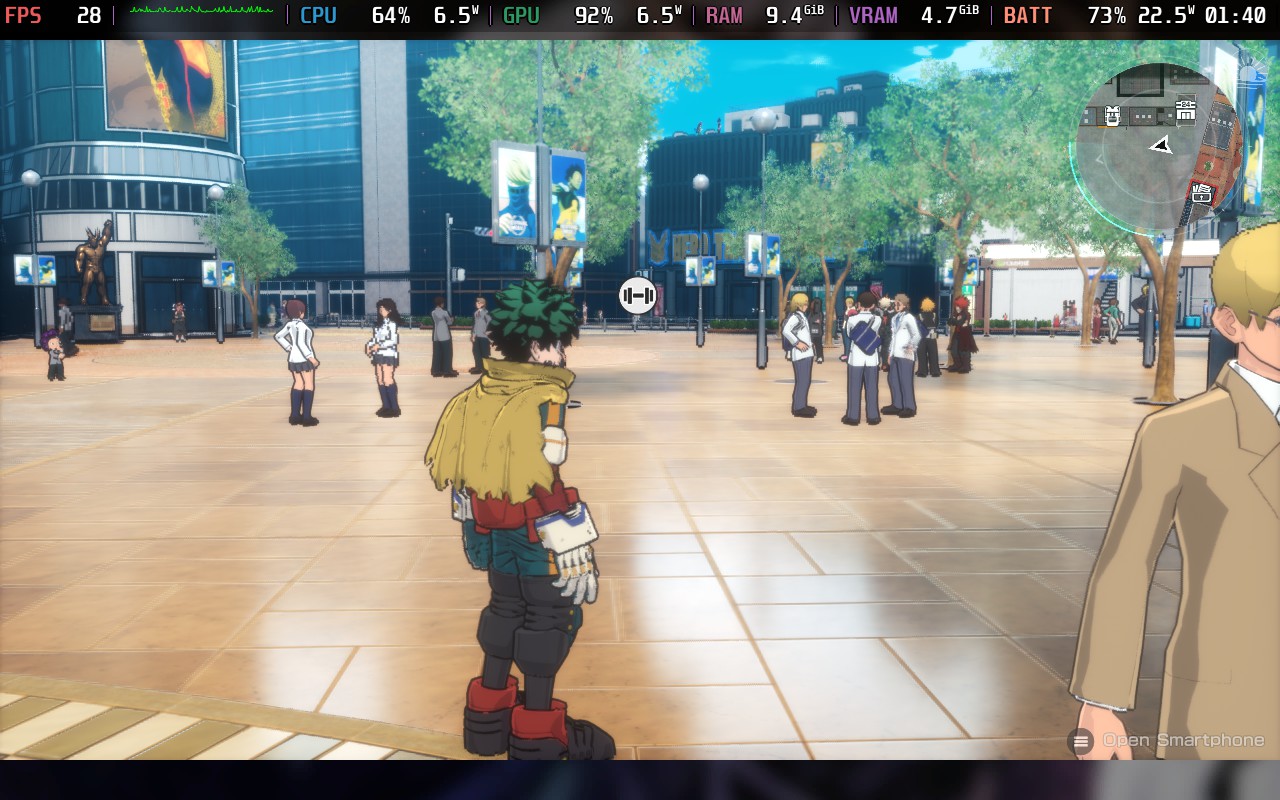
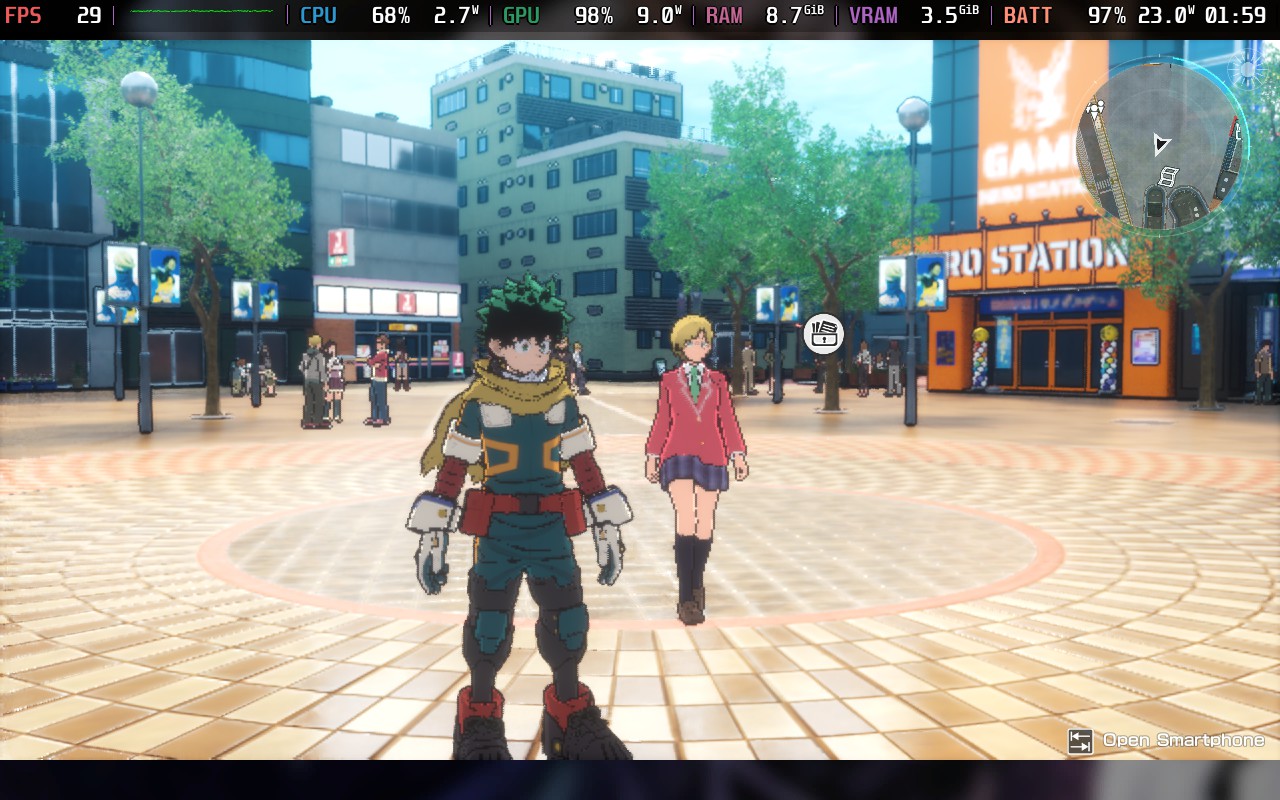
Now, combat is going to be the main gameplay mechanic we encounter in every mode, but there is a little bit of variety when it comes to how we get there. While story missions are more direct, Team Up missions have a little bit more to them. Here, we will run around the city, using our quirks to get around faster, completing an assortment of missions. Well, we can just go to the main missions and complete the chapter; we can’t find any side quests (or Urgent Missions) to complete. Some of these will give us assist characters, which can augment and increase our attack, defense, and healing. In a way, it feels a little bit like a rogue, like element, as these missions are optional, but can make us more powerful during the chapter. It’s nice to have the option. It can feel a little tedious from time to time, since if we want to heal up, we have to go to a store or pharmacy to heal ourselves, but it’s not as egregious as I’ve seen in other open-world games.
The only other gameplay element here that could be considered different would have to be heroes and diaries. While some of these personal chapters, if unique stories do involve combat, some of them include different challenges. These can range from something as simple as finding cats around a playground, to using Minoru Mineta’s balls to climb a building as fast as we can and get different checkpoints on our ascent. It’s not groundbreaking, but it is nice to have some variety, even if it is just a little.
My Hero Academia: All's Justice - Steam Deck Performance
As much as I was hoping My Hero Academia: All's Justice would be playable on the Steam Deck, like other anime fighting games, it just never stays stable enough to enjoy. Even on the lowest possible settings, there will be fights in stages that will dip below 30 FPS, sometimes even going into the high 10s. It's definitely not a game I recommend playing on the Steam Deck at the current time. Is it playable? To some degree yes. But enjoyable? Definitely not.
Conclusion
My Hero Academia: All's Justice is filled with original content and new ideas that work quite well. I enjoyed the amount of single-player content we have, along with the enjoyable stories with Team Up mode and little bits here and there with Hero's Diary. The vast amount of characters and a great amount of customizability keep me coming back to play more, even after I finished the stories. There are some mechanics in fights that can make it frustrating, but it wasn't enough to stop me from playing completely.
Unfortunately, the Unsupported rating from Valve is accurate here, and I can't recommend playing the game on the Steam Deck. The constant drops, even on the low settings, make it a worse experience overall when trying to play portably, so I would stick to more powerful handhelds and desktop PCs for this one.
Our review is based on the PC version of this game.
If you enjoyed this review, be sure to check out the rest of the content on SteamDeckHQ! We have a wide variety of game reviews and news that are sure to help your gaming experience. Whether you're looking for news, tips and tutorials, game settings and reviews, or just want to stay up-to-date on the latest trends, we've got your back.
Capcom Fighting Collection 2 was provided by Capcom for review. Thank you!
I love finding time to go back and play through classic games now and then, and Capcom has been providing some great collections to be able to do that. The last one I played was Marvel vs. Capcom Fighting Collection, which has some of my favorite fighting games ever made. However, with Capcom Fighting Collection 2, I found myself not only enjoying myself more but also basking in the fantastic variety that the experiences had in store for me, making this my favorite collection Capcom has created.
The Capcom Fighting Collection 2 contains eight games that all came out between 1998 and 2004, but unlike other fighting collections, they all have unique features. While the last collection from Capcom (Marvel vs. Capcom Fighting Collection) had some incredible games, they were all just different iterations of the 2D fighting game with a pixel aesthetic, apart from The Punisher. This collection has four different 2D pixel fighting games and four 3D fighting games, which gives us a nice balance of different types of gameplay to enjoy.
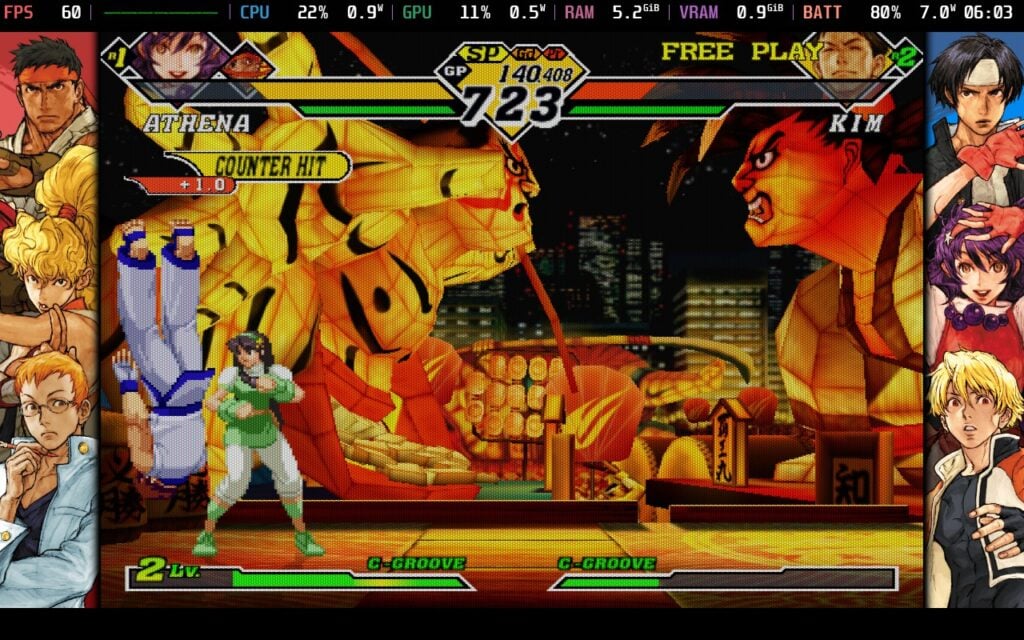
The four 2D fighting games, Capcom vs. SNK: Millennium Fight 2000 Pro, Capcom vs. SNK 2: Mark of the Millennium 2001, Capcom Fighting Evolution, and Street Fighter Alpha 3 UPPER, all play very similarly, but have different gimmicks that help them stand apart. Street Fighter Alpha 3 feels like a familiar fighter, while Millennium Fight 2000 Pro has you choose up to 4 characters based on numbers they are assigned. They all generally play the same once you get into the fights, but because of the structure, each game feels individually unique.
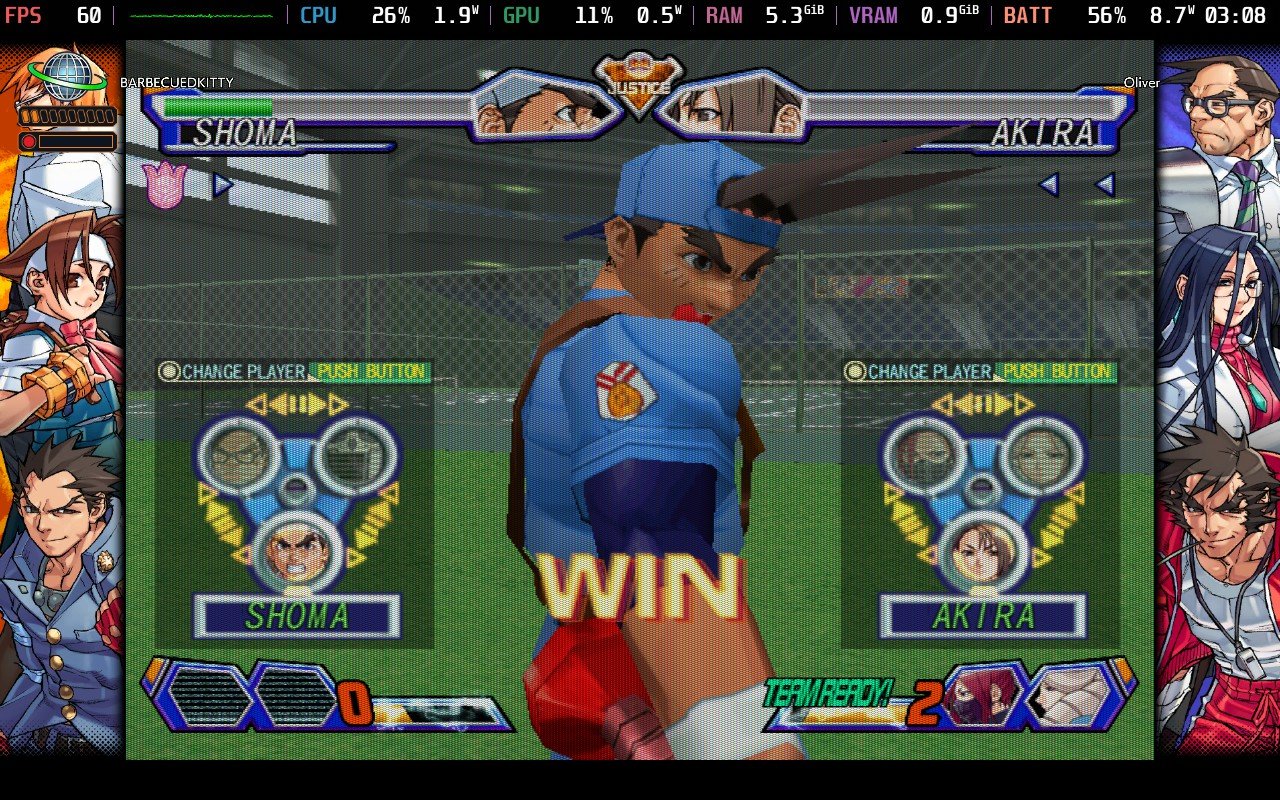
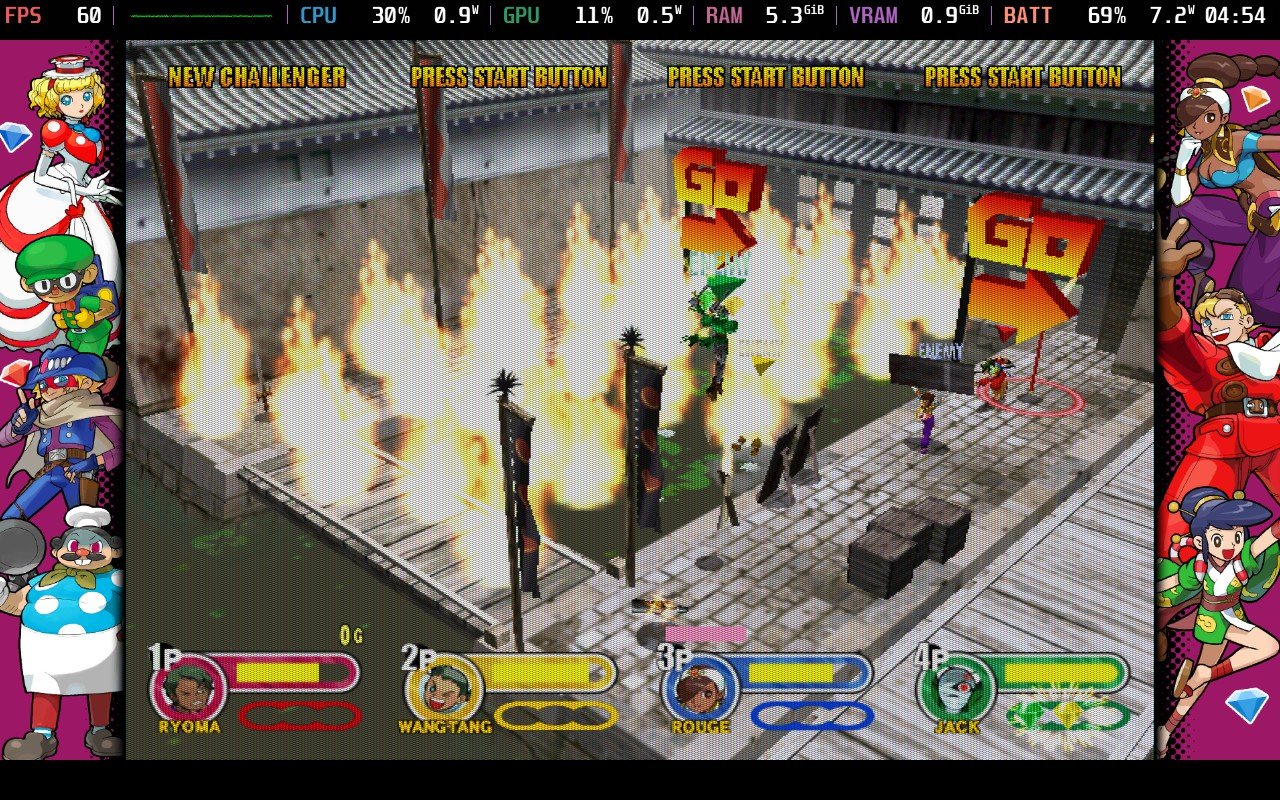
The four 3D fighting games are all individually unique as well, and differ greatly from the 2D ones. Power Stone and Power Stone 2 are both full 3D games where you run around a semi-open platform and fight each other, with the first game focusing on 1v1 fights and the second focusing on 2v2 fights. On the other hand, Plasma Sword and Project Justice are both weird and somewhat hilarious fighters that feel similar to Tekken or Soul Calibur.
The games, apart from Power Stone 1 and 2, all play similarly and feel fantastic. I love the Capcom vs. SNK titles, so being able to get back into the tight, exciting combat was such a blast. While Plasma Sword and Project Justice were both a little slower, it felt equally exciting while playing them, and there were some hilarious moments like the team-up attacks in Project Justice and playing as Prince in Plasma Sword. The Power Stone games are more like party games where you have basic attacks and tons of items to pick up and use, like rocket launchers and swords, as well as gems that can temporarily boost your power immensely.
In the Marvel Vs. Capcom collection, I didn't feel like I needed to go back and play Marvel Vs. Capcom 1, since I can play the second game instead, but here, I feel like there's something to enjoy with each of the titles. I love the variety in this collection, with there being something to enjoy when I want a break from the normal fighting experience I come to know from the classic Capcom arcade fighting games.
I also made sure to test each game online, and the experience was fantastic. The rollback netcode is working like a charm, and I was able to play with someone in the UK, with me being in Indonesia, with no lag. We tested every single game in the collection to make sure the experience is consistent, and I can happily say it is.
Each game in the collection has its own settings that allow you to change its difficulty and more details like stage music, along with a training mode that shows hitboxes and details for you to practice combos. You can also change the wallpaper, filter for the screen, and how much of the screen the game takes up. There are a nice number of options for each of these, and I appreciated the customization options to make the experience more like what I want. I can be a little obnoxious when navigating through all the different menus to find these options, but I am glad they are here.
There's also a gallery to check out different music and artwork for each of the games, as well as Fighter Awards, which are essentially just in-game achievements. They are wonderful to look through and nice to have as an option.
As expected, Capcom Fighting Collection 2 is extremely easy to play on the Steam Deck and essentially just runs as is. However, without any changes, the battery drain is significantly higher than it needs to be. These are all games from the late 1990s and early 2000s, and there's no need for it to be draining at almost 12W. Luckily, we can bring it down very easily.
With a TDP limit of 5 and GPU Clock Speed Frequency lock at 800MHz, we can bring down battery drain to around 8.5W, giving us at least an extra hour of battery life, and we still get a solid 60 FPS. I can also confirm that the performance sticks during offline and online play with every game included in this collection.
You can bring the TDP limit down to 4 if you want to save a little more battery life, but I found bringing it up to 5 is the safest bet for online multiplayer, just in case. Regardless, it saves battery with no compromise to performance or stability, and it's awesome:
Accessibility
On top of the individual game options, which allow you to change difficulty, attack power, timer speed, max rounds, and more, you can also change the game's overall settings like language, keybindings, music volume, and enabling voice chat when playing online.
There is no 16:10 resolution support, but there are cloud saves and great controller support. There are no HDR settings.
Conclusion
Capcom Fighting Collection 2 has become my favorite collection of classic arcade fighting games from Capcom. The variety and quality of the experiences we can get from the eight games included here are great, and they still feel just as tight and smooth as ever. The online multiplayer and customization options are great as well, though the interwoven menus to make these adjustments are a little tedious. Luckily, the core of the game and the extra content make up for it, and I definitely have more reasons to come back and play more than not.
It also runs flawlessly on the Steam Deck, and we can maximize our battery life with just a few changes and no compromise on quality or framerate. It's a wonderful experience on the go, and one I am happy to highly recommend.
Our review is based on the PC version of this game.
If you enjoyed this review, be sure to check out the rest of the content on SteamDeckHQ! We have a wide variety of game reviews and news that are sure to help your gaming experience. Whether you're looking for news, tips and tutorials, game settings and reviews, or just want to stay up-to-date on the latest trends, we've got your back.
FATAL FURY: City of the Wolves was provided by the SNK CORPORATION for review. Thank you!
FATAL FURY is back for the first time in the 21st century! City of the Wolves brings back old favorites to our screens in a brand new style, and hopes to be the beginning of reviving the franchise. We're practically inundated with fighting games, with the likes of TEKKEN 8, Street Fighter 6, and Virtua Fighter 5 R.E.V.O. all releasing relatively near each other.
While gameplay-wise, it can be pretty hard to distinguish your fighting game from others, there have been plenty of attempts over the years to introduce new game modes to these games to create unique experiences. FATAL FURY: City of the Wolves' attempt is to include a single-player "RPG" mode, known as "Episodes of South Town" or EOST.
EOST allows you to play through various stories, each focused on the character of your choosing, exploring their backgrounds. The story portion of EOST is presented in a visual novel fashion, text-heavy with no voice acting, which is a bit of a shame, but it's still pretty neat. Between the story scenes, you'll be navigating a world map and choosing fights/quests depending on your level to gain strength and progress the storyline.
Is it revolutionary? Not really. But if you are a FATAL FURY fan, then I could see this being a great mode to sink some time into, as it helps you learn more about your favorite characters and see more interactions between them. Each story isn't too long, but most of the characters have their storylines, and there are a good few hours that you can sink into just this mode.
While it is mostly battle-after-battle, it does add some variety to the gameplay and is a better sense of progression than the "classic" style of just playing through a few battles with each character to finish their story. Such a mode is also available in City of the Wolves, known as the "Arcade" mode.
Calling it an "RPG" as SNK does might be a little generous. You can level up, which boosts your stats, but there aren't really choices to be made, and it's very much more in the vein of a Visual Novel between fights.
The game also has online matches, which, unfortunately, I wasn't able to partake in prior to release. There is matchmaking, as well as the ability to make custom lobbies with your own settings, including more than two players in a lobby.
As for the fighting itself, that's where FATAL FURY: City of the Wolves doesn't stand out. It's pretty similar to other games in the genre, with some minor systems here and there that can feel different. However, the EOST story mode is definitely the draw here, and, fortunately, it's a good draw.
That being said, the fighting is solid. You can mix and match your face buttons with directional inputs to pull off a large variety of moves, and you can combine multiple presses at once to add even more moves. It's nothing new, but they don't skimp out by simplifying the combat; there's enough depth and variety here for the skill ceiling to be high, and for people who don't know what they're doing to be decimated by someone with skill.
You also have a feature known as the SPG, essentially a mechanic where you are stronger depending on your current health. This adds an element of strategy, as you get to choose where the SPG kicks in before the match. You could have it so you are stronger when you are between 80-100% of your max health, hoping to gain the upper hand early on and avoid damage. Or perhaps between 0-20%, to give yourself the best chance of a comeback.
Generally, I kept my SPG at 80-100% of health and bargained on my being able to deal critical damage to my opponent before I dropped below 80% of my health, meaning even though I was weaker for the end of the battle, my opponent was already on their last legs.
Another acronym to keep your eye on is your REV meter. Essentially, you'll be able to pull off some cool and powerful moves, both offensive and defensive, but doing so will raise your REV meter. Use those moves too much and you'll max out your REV meter; then you're going to be in a tough situation, with some of your moves being disabled.
It's all quite a bit to keep track of. I often found myself forgetting about the REV meter at the bottom left corner of the screen when fighting, but if you really want to excel and be competitive, it is something you need to manage during a fight.
The visual style of the game leans very much on the anime/cartoonish side of things, and I'm not sure I'm 100% sold on it. It looks decent for most of the game, but when you get close-ups of the characters, particularly the after-battle scenes, some of the texture work and materials can look a little blurry or fuzzy, like they're made of fabric or that there's a strange "comic-book" filter on the screen.
FATAL FURY: City of the Wolves - Steam Deck Performance
City of the Wolves doesn't support 16:10 resolutions, so we are stuck with some black bars along the top and bottom of the screen, but we do have great controller support.
There are also issues with the in-game videos, so it is recommended that you use Proton GE 9-27 (or the newest Proton GE) to enjoy story cutscenes. You can see how to install Proton GE here.
By default, the game is set to the lowest settings, and dynamic resolution is turned on. You can tweak these settings slightly, which I did by disabling the dynamic resolution, upping Texture Quality to Medium, and enabling "Lighting Effects," which helps the stages look better. It's important to ensure we don't get frame drops in a fighting game, especially in online play, so I didn't push it too hard.
I didn't notice a single frame drop in play when running these settings. It was a solid 60 FPS throughout, playing on every stage in the game with various characters, so you can be confident you'll get a good playing experience here.
The power draw was around the 13W-16W range, so we can expect around 3.5 hours of battery life from a Steam Deck OLED and around 2.5 hours from a Steam Deck LCD. Temperatures generally stayed around 60 °C, so it's not too bad either.
Accessibility:
There aren't many Accessibility options in City of the Wolves. There is a profanity filter for online matches, and you can adjust basically every aspect of the audio levels, disable screen shaking, add a background to subtitles, and adjust key binds, but that's about it.
Conclusion:
FATAL FURY: City of the Wolves is a competent fighting game; the mechanics won't win any awards, but they are still very solid and make for a more than competent experience. The standout here is the EOST Story Mode, which, after a long break from these characters, is good to get to know them again in a somewhat visual novel fashion, interspersed with plenty of fights and a decent progression system.
Steam Deck performance is pretty good, too. We can't have much in the way of visual niceties, but we can at least expect a solid 60 FPS experience, so we're not at a disadvantage.
Our review is based on the PC version of this game.
If you enjoyed this review, be sure to check out the rest of the content on SteamDeckHQ! We have a wide variety of game reviews and news that are sure to help your gaming experience. Whether you're looking for news, tips and tutorials, game settings and reviews, or just want to stay up-to-date on the latest trends, we've got your back.
Virtua Fighter 5 R.E.V.O. was provided by SEGA for review. Thank you!
I've never played a Virtua Fighter game before, but that might have something to do with the fact that the series has been on a hiatus over the past couple of decades. Virtua Fighter 5, the last entry in the series so far, came out in 2006 before being remade on the PS4 in 2021 and finally released on the PC in 2025 as Virtua Fighter 5 R.E.V.O. Unfortunately, I the fact that this game is 19 years old is beginning to show.
You have to set your expectations accordingly for Virtua Fighter 5 R.E.V.O. Although a couple of remakes have happened for this 2006 release, the fundamentals have stayed in place. Nowadays, it's pretty standard to expect a storyline or some sort of campaign in a fighting game, but there's no such luck here. It's hard to describe the game as anything but relatively barebones compared to its modern rivals. There is an arcade mode that can be played alone, but it doesn't add much of a story.
On the main menu, you're presented with an online ranked match option, the option to find an unranked online game, play offline against a CPU, play offline against another player, Arcade mode, or play an online tournament, which is run every weekend.
In a world where its competitors are boasting roamable online hubs, campaigns with overarching plots, and more characters than you can shake a stick at, Virtua Fighter 5 R.E.V.O. does feel a bit slim on features. On the plus side, it has a decent number of stages, 18 in all. There are also 19 characters, which are somewhat customizable in appearance, although many of the more unique options are largely locked behind the 30th Anniversary DLC.
When we get around to the real meat of a fighting game, the combat Virtua Fighter 5 is your pretty typical fighting game affair. It holds back slightly on the more "fanciful" aspects that its competitors sometimes employ. This is purely based on hand-to-hand combat, so you won't be deploying any weaponry or firing energy projectiles at your opponents.
The combat feels good; separate buttons are assigned to your punching and kicking, as well as grapple attacks, which keeps things relatively simple for new players, but you can employ countless combos. Every direction you hold while attacking will change the action, and you can make sweeping motions with the direction as you attack to add more variety. While Virtua Fighter 5 R.E.V.O. may be lacking in content, it is backed up by a detailed fighting and combo system that's more grounded than others in the genre, and it does a great job of making you feel like you're actually in a real martial arts fight.
Virtua Fighter 5 R.E.V.O. has added rollback netcode into the game, which in practice is meant to make fighting online appear seamless, with little delay. Unfortunately, I found the player base for the game to be on the smaller side, even at launch, meaning finding a suitable opponent can be difficult. I often played against opponents from Asia, and the networking kind of fell apart in my matches since I am in the UK. Fighters were moving unnaturally around the arena, and I had frequent disconnects. Even though you can filter the search to only connect with players with a "Good" connection in ranked matches, this seems entirely non-functional. I was regularly put in matches with over 200ms of ping, which is unplayable.
I managed to get into a couple of matches with low ping, around 50ms or so, but even then, after a couple of rounds, the game would almost always disconnect before the match. I had even positioned myself right next to my router to ensure it wasn't my Steam Deck's WiFi signal dropping, but I still experienced frequent disconnects. For reference, after 8 online matches, only 1 could end naturally with a winner.
I (Noah Kupetsky) also tried out the Virtua Fighter 5 R.E.V.O. online to see if it was possible the online matches were consistent even in different regions. I played multiple matches, and while one had some stuttering, the rest were solid. I had no disconnects and was able to play it easily on the Steam Deck. I even one some of my matches, which was a big surprise.
Noah Kupetsky - CEO of SteamDeckHQ
The small player base isn't helped because the R.E.V.O. edition of Virtua Fighter 5 is PC exclusive. Although the PS4 edition of the game is similar, it doesn't quite have the same features, so cross-platform multiplayer isn't possible. For a game that relies on its online gameplay for most of its modes, it's a bit of a worry that both the network code and the size of the player base are presenting issues so soon after release.
As for presentation, the game is passable, and the graphics have improved since its PS3 days, but it isn't up to par with other games in the genre. It shows its age in places, with visuals such as the water being pretty lackluster, even on high settings. However, that does come with the advantage that most devices can easily handle the game.
Having said all that, the developers are clearly aware of Virtua Fighter 5 R.E.V.O.'s limitations compared to its competitors and have priced it accordingly, with a $20 launch price tag.
Regardless, I would struggle to recommend Virtua Fighter 5 R.E.V.O., which is a real shame. The core gameplay and fighting are solid and work well, but the package around it is lacking. Aside from playing a series of battles against AI or 1v1 with a friend locally, the only other modes are online-only. The online gameplay is plagued with poor connections and disconnects that ruin the experience, alongside a relatively small player base that may pose problems in the future for finding an online match.
I can say in Virtua Fighter 5 R.E.V.O.'s favor that it runs great on the Steam Deck. With support for 1280x800 resolution, great gamepad controls, and a graphics preset already in place for the Steam Deck, you can't fault it.
The developers keep the game on mostly high settings, making a couple of compromises occasionally, and then running with FSR 3 on Quality mode. This all still resolves to a nice quality image, and in my testing, the game pretty much always holds 60 FPS, maybe dropping 1 or 2 frames during the characters' opening cutscenes.
There's no need to adjust any settings in SteamOS, the game is coded to run at 60 FPS, and you'll need all the power from the Steam Deck to run these settings.
Here are the settings I used for the game. You can click the images to enlarge them:
The power draw for this one was mostly around 18W-20W, with temperatures around 65C. Thus, you can expect around 2.5 hours of battery life from a Steam Deck OLED and around 1.5 hours of battery life from a Steam Deck LCD.
Virtua Fighter 5 R.E.V.O. could have been a great game. The core mechanics are solid, the fighting feels good, and there's plenty of depth to the combat system with all the combos you can learn, but all of this is marred by the fact that it's a primarily online game with a pretty terrible online system in place right now.
Performance on the Steam Deck is good, holding 60 FPS throughout, and it has a great control scheme as well. The battery life is a bit disappointing, but Virtua Fighter 5 R.E.V.O. likely isn't a game you'll play for a long time in one sitting.
Our review is based on the PC version of this game.
If you enjoyed this review, be sure to check out the rest of the content on SteamDeckHQ! We have a wide variety of game reviews and news that are sure to help your gaming experience. Whether you're looking for news, tips and tutorials, game settings and reviews, or just want to stay up-to-date on the latest trends, we've got your back.
Undisputed was provided by Deep Silver for review. Thank you!
Undisputed makes it clear right out of the gate that this is a game for those who are really into their boxing. The fighting is designed to be nuanced and will overwhelm anyone unfamiliar with boxing. As will the menus, with many stats looking more like a management game than your regular sports game. If you aren't into your boxing, I wouldn't even recommend continuing with reading this review, but if you are, you are in the right place.
Undisputed gets you started by placing you in a practice ring to run you through your paces with a combat tutorial. It all starts fairly easy, talking you through moving around the ring with the left thumbstick before going into how to throw basic punches by jabbing the right thumbstick in certain directions. Jabbing the left thumbstick to dodge, pressing down the left thumbstick and jabbing it to slip, pressing the right thumbstick near your opponent to clinch, holding RT to block, holding RT and LB to body block, holding LT and left thumbstick to weave, then you have power attacks, stance changes, feints, headbutts.
There is a lot to learn in a very short amount of time. Even after running through the tutorial and starting up a career mode, I lost my first 3 fights before taking a break, given how frustrated I was with the game.
I couldn't tell if it was my lack of skill or just the way the game is, but everything felt rather slow, I can't say I watch boxing matches in real life, but from what I have seen, the swing of punches is usually very fast, and dare I say, somewhat precise. In Undisputed, it feels like even the fastest punches take half a second to connect, and once you've run out of stamina after 3 punches, your character moves at half the speed, which is just painfully slow.
In the end, for most of the matches, I ended up getting close to my opponent, wildly wiggling the right thumbstick back and forth to do left and right punches, and then backing off once my stamina was low, making vague attempts to block incoming punches if I saw them. I know this isn't how the game is intended to be played, but doing any form of "tactical" movement and strategic punching just seemed to get me KO'd even faster and barely put a dent in my opponent's health/stamina.
So, the combat wasn't my cup of tea. It seemed like it was trying to be a simulation with how complicated all the controls are. It also gave you 5 different options to protect yourself from attacks, which I had no idea how to read to know which to use. Sadly, the simulation-like controls didn't really match up to the gameplay, in my opinion, and it left you with a sluggish and unresponsive feeling game.
The career mode will most likely be where you spend most of your time, where you can build your character to become a champion or select from an existing famous IRL boxer to play as. Either way, you'll need to build up your team around you, train yourself, and improve your stats as you climb the world rankings.
This part of the game seems fine; you can hire a coach, cutman, and manager to handle your training, injuries, and contracts, and you can choose your training regiment to focus on which stats you want to improve. It's quite in-depth and it seems like if boxing is your thing, you'd probably have some fun specializing your skills into how you want to play. If only all of this wasn't training for the combat in this game...
Regardless, you'll be able to organize fights with other famous boxers that you'll recognize and fight across a variety of arenas. It can get a little repetitive, as this is boxing, and each fight is pretty similar. Although your opponents do seem to have slightly different personalities and tactics, some fighters are definitely more aggressive.
This brings us to the one area where I think Undisputed doesn't disappoint: the variety of content. Undisputed features over 100 real-life boxers from multiple weight classes and men's and women's boxing. It also features 19 different arenas to fight in, ranging from more personal gym environments to outdoor arenas and big indoor stages with spotlights and crowds.
You can't fault Undisputed for that amount of variety. If you're playing in the "quick fight" mode instead of the career mode, you can modify things such as the amount of damage dealt and the amount of stamina you have, making fights more interesting.
Visually, the game doesn't disappoint either. While I couldn't run on high settings on the Steam Deck, the game still looked appealing. You can see some details on the characters, such as more specular details on characters when they sweat, the reddening of the skin as the battle goes on, ripples on the characters' bodies when they take a punch, and the bruises and blood that you might expect. The environments also look varied and up to scratch.
So, Undisputed isn't a game for me with its overly complex fighting mechanics and oddly sluggish feeling gameplay, but if you have been starved of a boxing game and you want to try out a modern one with good graphics and fairly deep mechanics, then Undisputed should be a game that you look into for yourself.
Undisputed - Steam Deck Performance
Sadly, Undisputed does not support 16:10 aspect ratio resolutions, so the best resolution on our Steam Deck here is 1280x720, which means we get some black bars above and below the screen. The game does have good controller support.
Performance isn't too great on the Steam Deck. You can run the game at 30 FPS with some settings turned up, but with the game already feeling sluggish, playing at 30 FPS just made it feel even worse. Also, I found that having VSync enabled caused some pretty odd frame rate issues, with the game getting stuck at 27 FPS quite often, so we have to forego that.
As a side note, Undisputed requires an internet connection for your first boot of the game, although subsequent boots can be done offline.
Recommended Settings - 40 FPS
In SteamOS, you'll want to apply a Frame Rate Limit of 40 and no TDP Limit.
In the in-game graphics settings, you'll want a resolution of 1280x720, disable V-Sync, and set your game framerate limit to anything; it doesn't really matter. The menu framerate limit should be 60 or above; do not select 30, as in my case, it limited the game to 30 as well, not just the menus.
Set anti-aliasing to Low, Shadow Quality to Very Low, Texture Resolution to Low, and Post-Processing to Low. Motion Blur is optional, although I left it on in these tests.
Visually, the game still looks fine on these settings, and it will hold 40 FPS well on some arenas. However, do expect some slowdowns to the low 30s on certain arenas.
If the slowdowns get to you, you can enter the "game" tab in options and lower the Crowd Density setting. If you have this on 0%, you can run most arenas at a fairly stable 40 FPS, but you do lose a fair bit of ambiance.
The game also uses an enormous amount of RAM. On Ultra settings, RAM+VRAM usage combined exceeded 20GB and caused severe issues. This is one of the reasons we keep all the settings at the lowest, including texture detail, which often has no direct impact on performance.
Power draw varies quite a lot in the game. It hovers around 15-20W for many matches, but some matches, depending on the arena, can reach 25W. This is primarily in arenas with many crowds, so reducing the Crowd Density setting can help here.
As expected, temperatures varied along with power draw, with 75-80C being the most common range. However, in the more intensive arenas, temperatures can go beyond 80C. At these points, the fan does become loud.
Accessibility:
The only accessibility options in Undisputed are the ability to disable various flashing elements in the game for those with photosensitivity and disable camera shake/tilt to avoid motion sickness.
Conclusion:
Undisputed is an unapologetically complex fighting game. With controls that will take some getting used to and AI that will proceed to beat you down until you get used to them, this isn't a game for everybody. But if you are looking for a boxing game and you've been starving for a good one for some time, Undisputed is at least worth giving a chance and seeing if it's the one for you.
The performance on Steam Deck is a little disappointing. We have to run at the lowest graphical settings to get the game up to 40 FPS, which is the minimal "playable" frame rate. Even then, we get dips close to 30 FPS on some arenas without removing all of the crowd. Undisputed can be played on the Steam Deck, but it's far from the best way to play it.
Our review is based on the PC version of this game.
If you enjoyed this review, be sure to check out the rest of the content on SteamDeckHQ! We have a wide variety of game reviews and news that are sure to help your gaming experience. Whether you're looking for news, tips and tutorials, game settings and reviews, or just want to stay up-to-date on the latest trends, we've got your back.
A copy of the game was provided by Modus Games for review. Thank you!
The iconic beat 'em up is back and fresher than ever in this iteration and man does it show. Double Dragon Gaiden: Rise of the Dragons is an addicting, side-scrolling fighting game that I had trouble reviewing. Not because it was hard or that I didn't enjoy it, it's because I got so into the game that I stopped paying attention to the mechanics and how well it worked on the Deck and just got sucked into the fun.
The gameplay loop is tight, choosing two characters and going into levels to take down enemies with a combination of normal moves, throws, and jumps. There are also special moves that, if you kill more than 3 at a time, will also drop health. The game also incorporates roguelike elements into it, which keep you on your toes and constantly building out your character and strategizing what kind of playstyle will maximize your strengths. You will buy these upgrades with money you get from killing enemies with special moves and breaking boxes in the environment. I love this addition to the game and feel it really brings a new level of strategy to a genre that is usually just beating up enemies.
You can also use money to exchange for tokens, which you can use to unlock one of nine new characters, tips, art, and music. Each character also has their own moveset, making each one feel distinct. On top of that, you will choose two different characters, so you can mix and match with a faster attacker versus a slower, heavier one. And of course, all of this can be done in split-screen multiplayer with another friend who chooses their own team of two.
Even while I am writing this review, I am playing the game more and just find it very hard to stop and this is partly due to how amazing the game runs on the Steam Deck.
Double Dragon Gaiden: Rise Of The Dragons - Steam Deck Performance
Double Dragon Gaiden: Rise Of The Dragons needs absolutely no changes to run flawlessly on the Steam Deck. Without any caps or limits, you can expect a solid 60 FPS with a 7W - 10W drain, usually hovering around 8.5W - 9W. This is around expected for the game, so I have absolutely no complaints.
The game doesn't have 16:10 resolution support unfortunately, so there are black bars above and below the screen, but they don't impact the game as much. Fortunately, there are cloud saves and full controller support though.
Conclusion
Double Dragon Gaiden: Rise Of The Dragons is a fantastic side-scrolling beat 'em up that combines the fighting gameplay with a roguelike progression system that makes each run feel more meaningful and customizable. Add in fantastic pixel-like visuals to this addicting gameplay loop and you come away with a game that feels like an essential part of your Steam Deck library. This is an easy Best on Deck game and I can't recommend it enough!
Our review is based on the PC version of this game.
If you enjoyed this review, be sure to check out the rest of the content on SteamDeckHQ! We have a wide variety game reviews and news that are sure to help your gaming experience. Whether you're looking for news, tips and tutorials, game settings and reviews, or just want to stay up-to-date on the latest trends, we've got your back.
We use cookies on our website to give you the most relevant experience by remembering your preferences and repeat visits. By clicking “Accept”, you consent to the use of ALL the cookies.
This website uses cookies to improve your experience while you navigate through the website. Out of these, the cookies that are categorized as necessary are stored on your browser as they are essential for the working of basic functionalities of the website. We also use third-party cookies that help us analyze and understand how you use this website. These cookies will be stored in your browser only with your consent. You also have the option to opt-out of these cookies. But opting out of some of these cookies may affect your browsing experience.
Necessary cookies are absolutely essential for the website to function properly. These cookies ensure basic functionalities and security features of the website, anonymously.
Cookie
Duration
Description
cookielawinfo-checkbox-advertisement
1 year
Set by the GDPR Cookie Consent plugin, this cookie is used to record the user consent for the cookies in the "Advertisement" category .
cookielawinfo-checkbox-analytics
11 months
This cookie is set by GDPR Cookie Consent plugin. The cookie is used to store the user consent for the cookies in the category "Analytics".
cookielawinfo-checkbox-functional
11 months
The cookie is set by GDPR cookie consent to record the user consent for the cookies in the category "Functional".
cookielawinfo-checkbox-necessary
11 months
This cookie is set by GDPR Cookie Consent plugin. The cookies is used to store the user consent for the cookies in the category "Necessary".
cookielawinfo-checkbox-others
11 months
This cookie is set by GDPR Cookie Consent plugin. The cookie is used to store the user consent for the cookies in the category "Other.
cookielawinfo-checkbox-performance
11 months
This cookie is set by GDPR Cookie Consent plugin. The cookie is used to store the user consent for the cookies in the category "Performance".
CookieLawInfoConsent
1 year
Records the default button state of the corresponding category & the status of CCPA. It works only in coordination with the primary cookie.
viewed_cookie_policy
11 months
The cookie is set by the GDPR Cookie Consent plugin and is used to store whether or not user has consented to the use of cookies. It does not store any personal data.
Functional cookies help to perform certain functionalities like sharing the content of the website on social media platforms, collect feedbacks, and other third-party features.
Cookie
Duration
Description
loid
2 years
This cookie is set by the Reddit. The cookie enables the sharing of content from the website onto the social media platform.
Performance cookies are used to understand and analyze the key performance indexes of the website which helps in delivering a better user experience for the visitors.
Analytical cookies are used to understand how visitors interact with the website. These cookies help provide information on metrics the number of visitors, bounce rate, traffic source, etc.
Cookie
Duration
Description
__gads
1 year 24 days
The __gads cookie, set by Google, is stored under DoubleClick domain and tracks the number of times users see an advert, measures the success of the campaign and calculates its revenue. This cookie can only be read from the domain they are set on and will not track any data while browsing through other sites.
_ga
2 years
The _ga cookie, installed by Google Analytics, calculates visitor, session and campaign data and also keeps track of site usage for the site's analytics report. The cookie stores information anonymously and assigns a randomly generated number to recognize unique visitors.
_ga_VF6TNG7YS7
2 years
This cookie is installed by Google Analytics.
_gat_gtag_UA_232930512_1
1 minute
Set by Google to distinguish users.
_gid
1 day
Installed by Google Analytics, _gid cookie stores information on how visitors use a website, while also creating an analytics report of the website's performance. Some of the data that are collected include the number of visitors, their source, and the pages they visit anonymously.
CONSENT
2 years
YouTube sets this cookie via embedded youtube-videos and registers anonymous statistical data.
Advertisement cookies are used to provide visitors with relevant ads and marketing campaigns. These cookies track visitors across websites and collect information to provide customized ads.
Cookie
Duration
Description
__gpi
1 year 24 days
Google Ads Service uses this cookie to collect information about from multiple websites for retargeting ads.
edgebucket
session
Reddit sets this cookie to save the information about a log-on Reddit user, for the purpose of advertisement recommendations and updating the content.
IDE
1 year 24 days
Google DoubleClick IDE cookies are used to store information about how the user uses the website to present them with relevant ads and according to the user profile.
session_tracker
2 hours
This cookie is set by the Reddit. This cookie is used to identify trusted web traffic. It also helps in adverstising on the website.
test_cookie
15 minutes
The test_cookie is set by doubleclick.net and is used to determine if the user's browser supports cookies.
VISITOR_INFO1_LIVE
5 months 27 days
A cookie set by YouTube to measure bandwidth that determines whether the user gets the new or old player interface.
YSC
session
YSC cookie is set by Youtube and is used to track the views of embedded videos on Youtube pages.
yt-remote-connected-devices
never
YouTube sets this cookie to store the video preferences of the user using embedded YouTube video.
yt-remote-device-id
never
YouTube sets this cookie to store the video preferences of the user using embedded YouTube video.