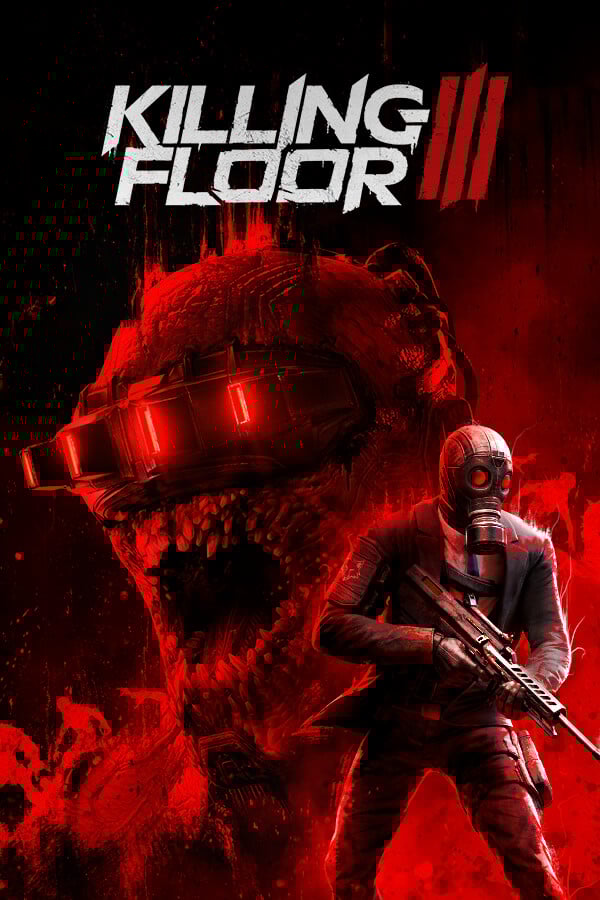



Killing Floor 3 was provided by Tripwire Interactive for review. Thank you!
I remember way back when I first got my Steam account, and I was looking for new games to get. I opened my account with the Counter-Strike: Source and Garry's Mod bundle, but that slowly grew as I discovered new games. One of those was Killing Floor, and I fell in love with it. The co-op shooter was addictive, and that continued into Killing Floor 2, making it feel like an entirely enhanced experience. Now, Killing Floor 3 is here, taking another leap forward in terms of quality and mechanics. It's definitely interesting to see how the game feels compared to its predecessors, but I love the direction it's taking and see a lot of potential, even with the extreme amount of grinding involved.
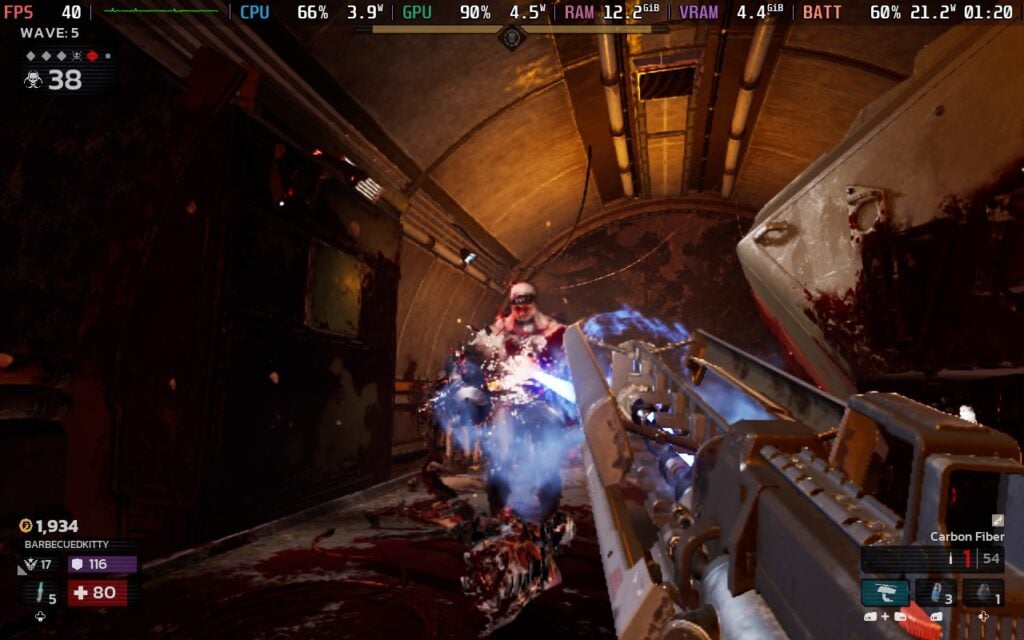
The biggest changes to Killing Floor 3 that separate it are primarily in the progression systems, which I felt were both an improvement and a drag. The core gameplay loop remains largely unchanged, and I am glad. You, along with up to 5 other friends, run around in medium-sized maps fending off hordes of enemies called Zed. After dispatching the wave, you get Dosh, which can be used to buy new weapons, replenish ammo, and upgrade armor. At the last wave, you will be faced with a giant boss, which, if beaten, will end the run and give you different types of experience.
I have always been a fan of this core loop and find it addictive, and it still feels fantastic here. The gunplay is tight, shots feel weighty and impactful, and it's extraordinarily enjoyable watching heads and limbs get blown off. Developer Tripwire Interactive is using its own dismemberment and persistent blood system, and it helps make each shot feel even more impactful. Watching limbs disappear, skin tear off, bullet holes appear, and heads blown to smithereens made it even more satisfying to play. It was sometimes hard to see the skin and bullet holes in enemies with all of the action going on, but shooting the legs and blowing heads off of Zeds was more than enough to quench my thirst.
Of course, Zed Time returns. There's a new bar at the top of the screen that goes up as you kill enemies and, once done, temporarily slows down time. This is where we can aim more without worrying about being chased and watch as heads are blown off and blood splatters out in slow motion. It's just as gruesome as ever, and I love it.

Other than being able to slide and vault over some objects, the biggest core gameplay change came from how weapons and tools are handled, as well as classes. While each of the six classes has its own four weapons and one sidearm, there are no limits to which can be bought from the store. Progression has been changed so it doesn't limit improvements to the four weapons in each class, so freely selecting whatever weapons or tools desired from other classes has no penalties. On top of that, each class has its own gadget or "Ultimate" ability that can deal devastating damage, like the Commando's flying drone and the Engineer's augmented power suit.
While we do lose out on having our trusty welder that we used to have to reinforce doors, I enjoy the changes to this system. Being able to choose weapons and tools more freely without penalty is wonderful. The tools are also quite varied, ranging from ammo bags and extra syringes to electric shock traps and explosive locks. We also have an option to choose a multitool that allows us to open doors, enable ziplines, jump-start turrets around the level, and unlock armor crates to replenish our armor.
Then we have mutators, which change up the incoming waves. These can range from more enemies coming out to certain damage types doing more, and it keeps things interesting and can change up strategies. Every week, there is a new mutator stage that can be played, which sticks throughout all the waves of enemies, but there will usually be 1-2 mutator waves that happen in regular matches as well.
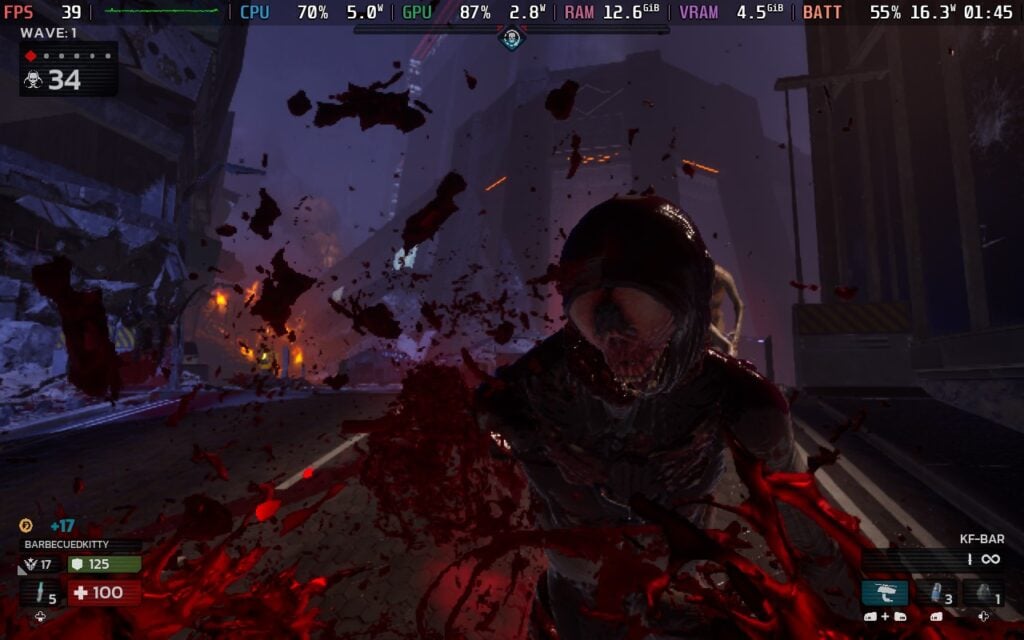
Co-op is also going to be the best way to play. Killing Floor 3 is playable solo and offline, and I still had a blast, but playing with friends is the biggest draw. The game scales with the number of players, increasing the number of Zeds that will appear in each wave. So, while there may be 60 or so enemies when playing alone, add in one more player, and the wave becomes 110.
The eight levels that come with the full release are decent as well, each having its own style. That being the case, I also felt the maps all had very common themes. They either take place inside or outside and are generally quite dark and gruesome. It sticks with Killing Floor's theme, but I miss having more daylight maps like Outpost and Black Forest from Killing Floor 2. The team does have a lot of post-release content planned, which includes new maps, but the two revealed so far look like more of the same. It's not bad necessarily, but I stopped caring which map I would play on as they felt largely the same.
The core gameplay is as gory and gruesome as ever, and it's quite satisfying. However, progression has changed heavily from the previous games. Instead of traditionally leveling up and increasing class perks, we have skill trees, proficiency ranks, and weapon mods. There are many skills to choose from, which can affect each class's throwables, gadgets, and passive bonuses. These skills can individually be upgraded three times using Proficiency points gained after completing matches, and the more you use them, the higher your proficiency rank with the class goes up for some extra bonuses during Zed time.

Then we have weapon mods, which I both love and dislike. The new system replaces weapon upgrading from Killing Floor 2, which feels more personal and powerful. In the Armory, you can choose any weapon and modify it. We have to craft mods using materials found in matches, and then we can equip them on a gun and create custom loadouts. Mods can have a range of effects, which can affect their stats like damage, accuracy, and recoil, change the type of weapon damage entirely (like Acidic or Heat bullets), and add scopes. The loadouts can be saved and then purchased during your wave.
I love the way the system gives us the ability to create the guns we want that can be used for different situations. Want an assault rifle that can tear flesh off of Zeds, paired with a shotgun capable of lighting large groups of enemies on fire? You can make both of those. Just like skills, each mod can be upgraded three times, increasing its potency and reducing its negative effects. I found myself having a blast creating different loadouts of weapons to use in-game and give me some nicely-earned variety.
However, getting the materials needed to upgrade and craft can be a slog. A majority of the mods use Biosteel to craft, which can be quite rare compared to the other materials, and not all weapons use similar mods. Combined with the fact that each crafted mod can only be equipped to one gun at a time, there's a lot of crafting that needs to be done. On top of that, crafted mods come with random bonus effects, so crafting multiples of each mod to find the bonuses you want to activate when they are fully upgraded means needing even more materials. I can understand some materials being harder to obtain that are exclusive to upgrading mods fully, but I wish materials used to initially craft the mods weren't so rare.
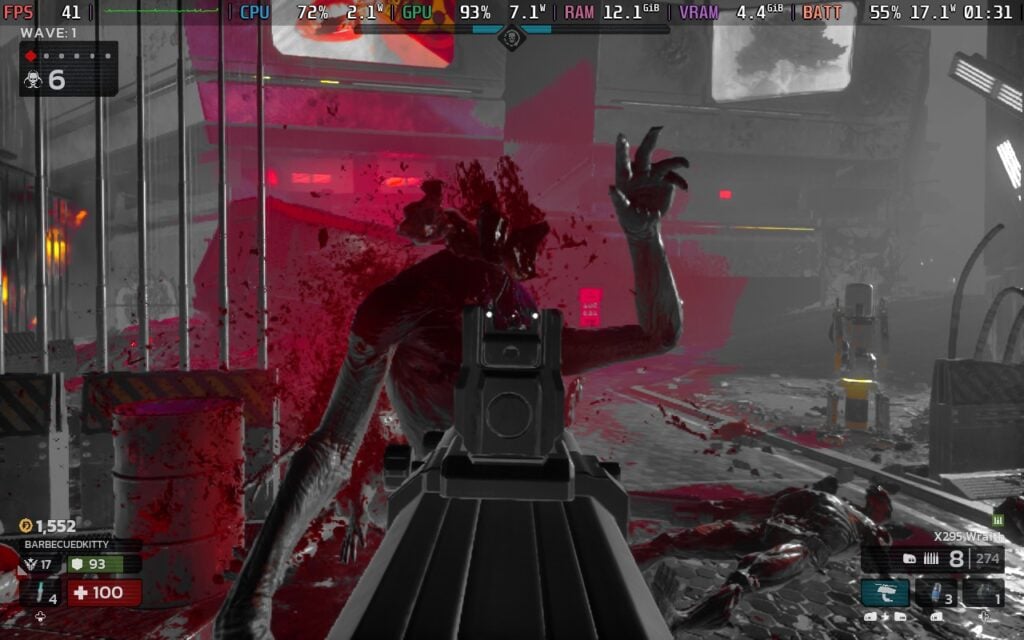
We can also change the look of both our weapons, which can be saved to our loadouts, and our character. Cosmetics for weapons come in the form of skins, stickers, and trinkets that we can hang on the side of them, while characters can have outfits, headgear, and our player card. The weapon cosmetics are largely malleable with every weapon available, which I love, but the character outfits are locked to each specific person. And with only a couple of outfit variants for each class, it didn't feel like I could customize exactly how I wanted.
The main way to get new cosmetics is going to be through Killing Floor 3's battle pass system, aptly named the Supply Pass. These only contain cosmetics and extra premium currency to buy more cosmetics on the in-game store, and there are some free options for those who don't want to upgrade. The free options do contain a variety of rewards, which include outfits and headgear.
Getting more points to unlock the Supply Pass comes from completing missions. We get new daily and weekly missions, as well as primary ones that can be completed multiple times. There are also some story missions that come from each season that are interesting, but aren't captivating. The daily and weekly mission objectives require using different weapons and damage types, which I found way more engaging than the story missions that just had me go to different spots on levels and interact with objects.

I'm also not much of a fan of Killing Floor 3's hub: The Stronghold. It looks nice and is an interesting way for players to interact with each other before going into a match, but I dislike having to actually go to a specific spot to start matches. Most of the other features of the Stronghold can be accessed from a menu, and I like that, but I didn't see any way to quickly go into a match, and I had to go to the VTOL area every time. I would sometimes start matches from the menu directly, so it was a chore each time to have to run to a different area.
Still, while there are these smaller issues here and there, I couldn't stop playing. I was constantly going into matches, both solo and multiplayer, to take on hordes of Zed, grind those materials, upgrade my mods, and complete my Supply Pass. And with Tripwire seemingly consistently going to be adding new weapons, mods, maps, enemies, bosses, and more is going to make it hard to stay away. Their first update is going to decouple perks from their specialists as well, which will allow us to choose whichever person we want with the corresponding perk. This will come with new weapons and mods, as well as improvements across the board, so I have some high hopes here.
However, just when looking at the full release's content, I can say that I found a lot to love and enjoy, even with the minor shortcomings.
Going into Killing Floor 3, I was under the impression it wouldn't play at all on the Steam Deck. When I talked to the team at Gamescom last year, they said it wasn't what they were aiming for, and I understood why. The game is gorgeous, and with so many enemies on the screen at once, it looked like it would be hard to run. Even when I got the game to review, I didn't immediately try the game on the Deck and thought there was no way it would run. However, I am glad I went ahead and tried anyway, because it performs much better than I expected.
The biggest performance drain is going to be UE5's Lumen lighting and reflections. These are on by default, and by turning them off, I went from around 25 - 28 FPS to around 50 - 55. I was even able to bring the XeSS upscaling up from Balanced to Quality and still get above 50 FPS performance when playing solo on Normal mode on the Convoy map. Playing solo isn't nearly as intensive as playing with friends on harder difficulties, and it did still have a drop or two to around 37 FPS when using a grenade or monsters being in my face, but it's definitely playable.
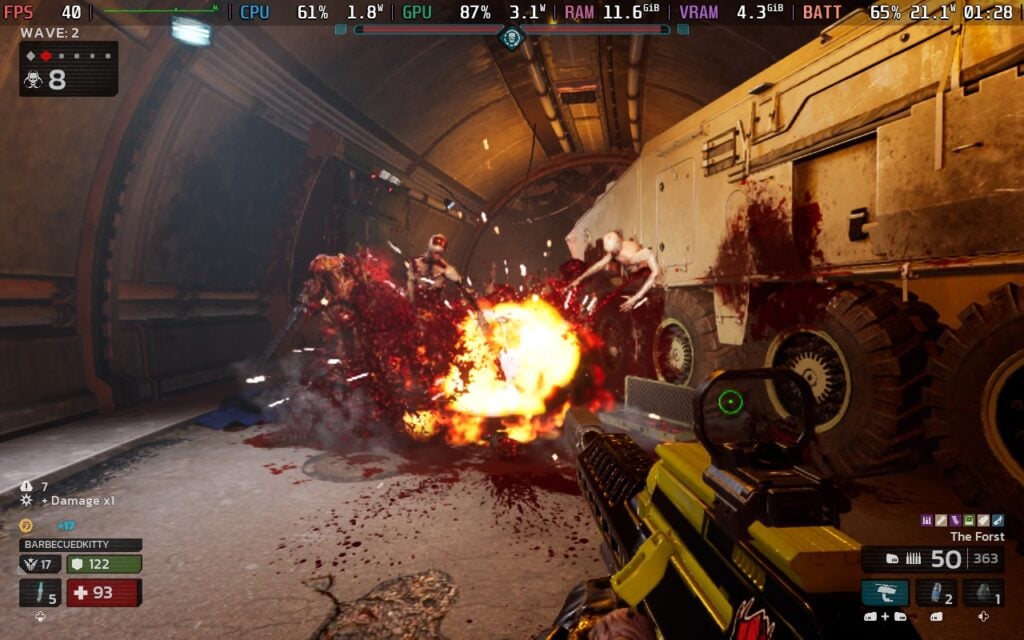
If playing solo, I would probably recommend keeping the game at XeSS Balanced with everything on low and a 40 FPS framerate lock. I would consider the game very playable like this, and while there may still be slight drops, I would consider it a solid experience. I noticed that some menus are also white instead of black, and it did hurt my eyes, but the rest of the game looks great.

To do a stress test, I had one of our other writers, Oliver, join me in a match on the highest difficulty in multiple maps, and there were definitely more drops. It did stay above 30 FPS, but it was never as bad as it could get. If you are playing with a full party of six people on the highest difficulty, I could see it dropping below 30 in some cases. The intense action mixed with hundreds of enemies can be a little too extreme for the Deck, but it still played a lot better than I expected.
I also recommend using Steam Input to bind the Down D-Pad button to one of the Deck's back buttons. This will make using the syringe to heal up significantly easier. It's still a bit weird playing this using a controller, nothing will beat playing first-person shooters on a keyboard + mouse, but it's definitely do-able.

Generally, I would consider the game playable on the Steam Deck. If playing solo, 40 FPS will be the sweet spot, while playing on higher difficulties with friends may need a 30 FPS cap for stability. All of this is done in the lowest settings since the game is still very power-hungry. This is also one of those games where I did enjoy playing without a framerate cap, and it felt pretty smooth most of the time, but for stability purposes, a 30 or 40 cap is the way to go.
The game does have a specific accessibility tab, which covers different color-blind modes and toggles for subtitles, screen shake, and camera bobbing. We can also toggle crossplay, different parts of the UI, crouching and aiming down sights, inverted controls, and audio sliders. We can also rebind controls in-game.
It doesn't support 16:10 resolutions, but it has solid controller and cloud save support. There are HDR settings, and it does recognize the OLED screen! The game can be played offline, but it may not carry over progress.
Killing Floor 3 is bloody, gorgeous, and so much fun to play. The gunplay feels impactful and tight, with fewer limitations for the weapons you want to use. The classic Killing Floor gameplay still holds up even today, and the updated visuals and dismemberment system make each shot count. While it can be a grind, I ultimately love the new weapon mod system and how I can create my own loadouts of each gun to be what I want. The character cosmetics and hub are a little disappointing, but they don't harm the overall experience.
It's also surprisingly playable on the Steam Deck, which I found interesting. I didn't expect it to be playable, but disable Lumen and we have a very solid-performing experience. It's not going to hit 60 FPS, but it will be able to stick above 40 when playing solo and 30 when playing with friends.
Killing Floor 3 is everything I wanted it to be, and I can't wait to see what content will be coming next.
Our review is based on the PC version of this game.
If you enjoyed this review, be sure to check out the rest of the content on SteamDeckHQ! We have a wide variety of game reviews and news that are sure to help your gaming experience. Whether you're looking for news, tips and tutorials, game settings and reviews, or just want to stay up-to-date on the latest trends, we've got your back.
Even with lots of grinding, Killing Floor 3 is exactly what I hoped for in a sequel to the series, and it's surprisingly playable on the Steam Deck with some compromises.