

Grime 2 was provided by Kwalee for review. Thank you!
I play a lot of games, which means I get to see a lot of variety within similar genres. One of my favorites to evaluate is Metroidvanias. While gameplay elements tend to feel similar, they all have something extremely unique that makes them stand out. Usually, it’s the world and lore behind it. Grime 2 is a clear example of this. It’s a solid, competent Metroidvania with a setting that entices, and that makes it enjoyable to play despite smaller issues that plague it.
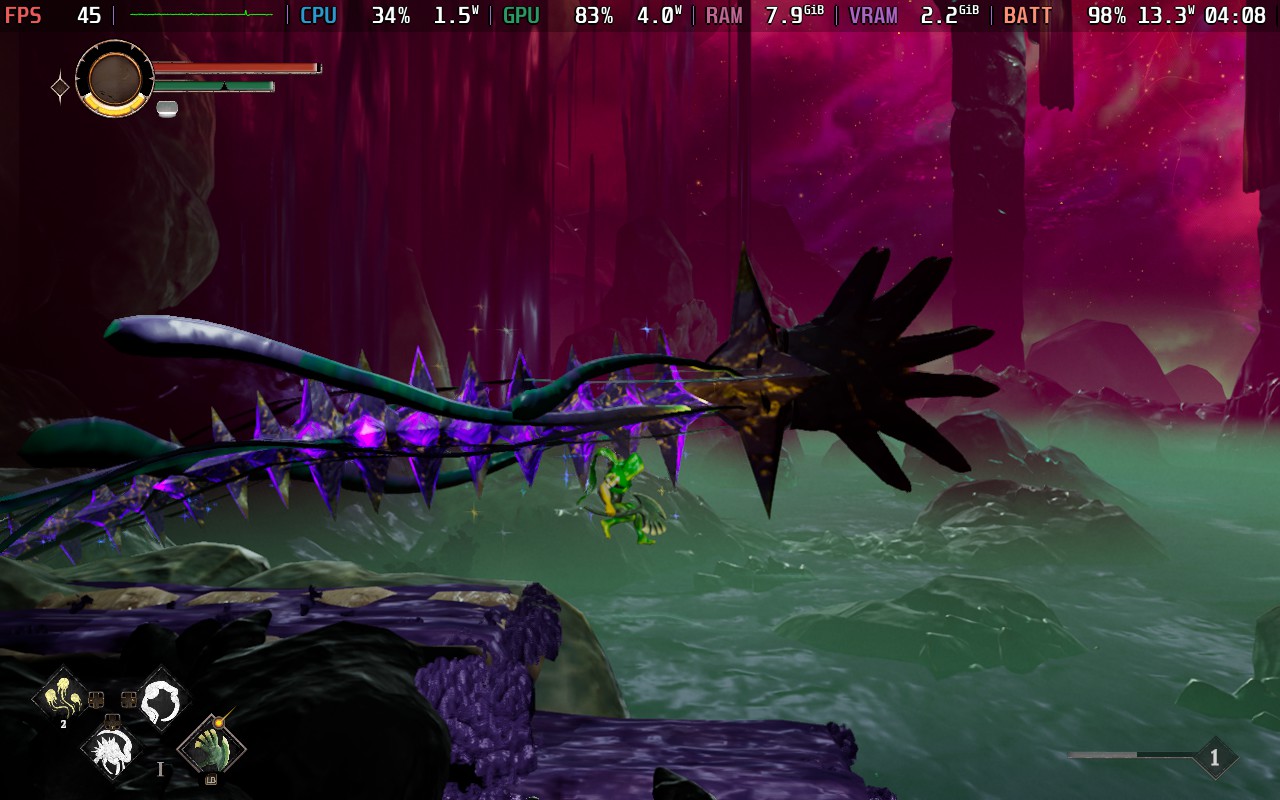
As with most Metroidvanias, the map and level design are extremely important. These kinds of games are known for having sprawling maths with multiple pathways that encourage exploration and re-exploration. And I would say Grime 2’s map is quite decent. It’s sprawling, huge, and has tons of different little pathways and hidden compartments that feel rewarding to take time out to explore. And just like other metrovanias, we will be getting new abilities consistently as we fight bosses and discover new areas.
Along with the vast levels, we have gorgeous biomes that are all inspired by the odd story behind them. I felt like there were more than enough reasons to take trips backwards, see the beautiful sights, and find secrets to get new armor, weapons, abilities, and extra experience.
However, I am not a fan of the map system for the save points. It can sometimes be a little hard to find points where we can save and respond if we die, and there were a few times where I completely missed them, so I had to take an extra couple of minutes to get back to where I was. On top of that, we have to find spires in each area to unlock the map, and we have to get a second one if we want to warp between them. And even when the map was unlocked, it was sometimes hard to see if maybe I had missed something. I do appreciate that the next objective is highlighted, but without the map, it just shows a general direction of where to go. However, I wouldn’t say that a negative since exploration is a key component of the game.
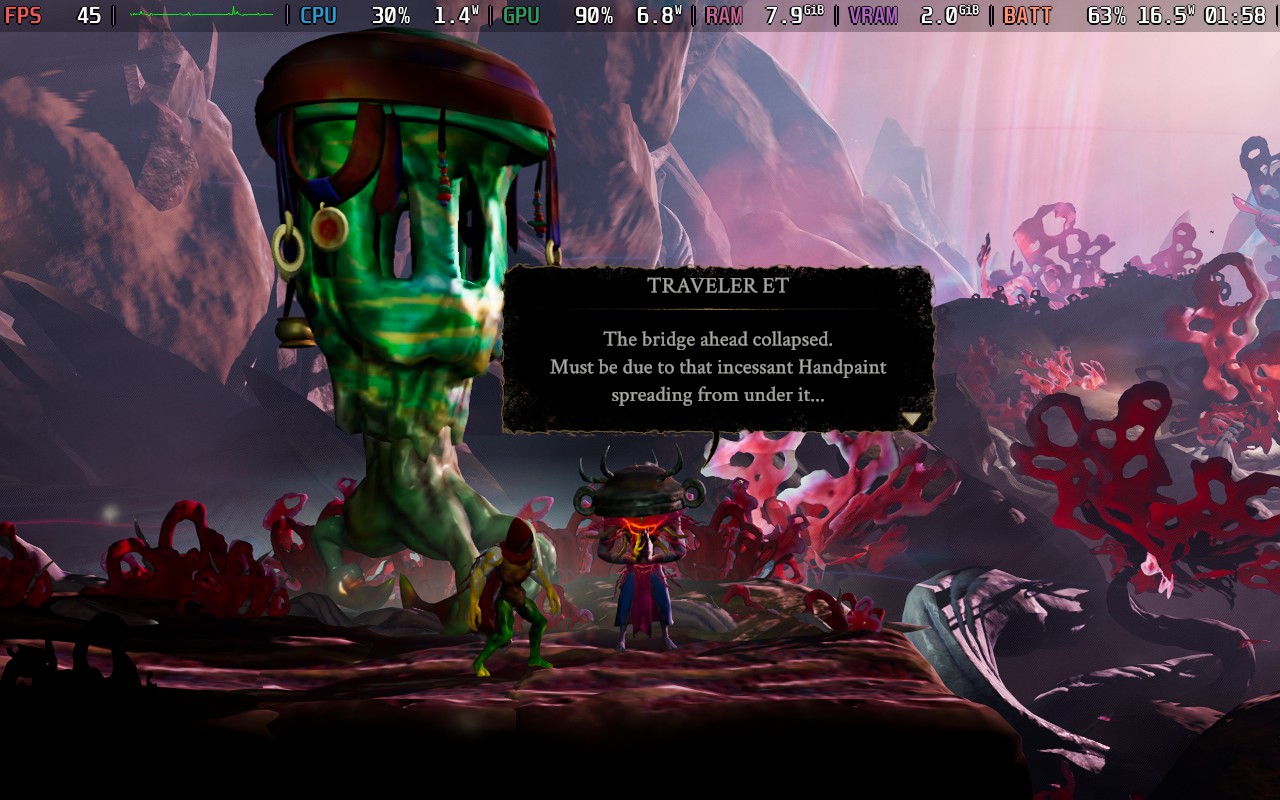
And then we have the story, which was pretty confusing for me. I got lost a lot of the time in its weird world, which I like, but it doesn't justify our protagonist and their abilities. It’s not necessarily a bad thing, and there is something to enjoy. If you dig deeper, it just never felt like a selling point while playing the game. My motivation stopped getting stronger, and the welcome challenge of fighting tougher bosses.
And like most others in the genre, combat takes center stage, and I like the system. We have our basic attack, a special attack that builds up as we strike, and a multitude of different abilities to find and use. We have built in mechanics like parrying and dodging, and we can assimilate special abilities as we defeat enemies. It’s mechanically on the basic side, but that makes it easy to learn, which will be helpful as there are some difficult fights ahead.
Fighting multiple enemies at once can be obnoxious, and some of the enemies have attacks that can’t be parried and are quite vicious. Some of them remind me of these soulslike mini bosses that have forward-facing attacks that will still strike you, even if you are behind them. There are also some attacks that won’t stop enemy animations, making it so that they can attack through your own attack.
We also have a special bar that can heal us as it goes up, but this happened a little bit too slowly for my enjoyment. There were multiple times where I would run out of health and have no way to heal because I needed to defeat enemies to bring this bar up. It is a challenge, but not one that I enjoyed. Still, those are really the only two criticisms I have about combat directly.
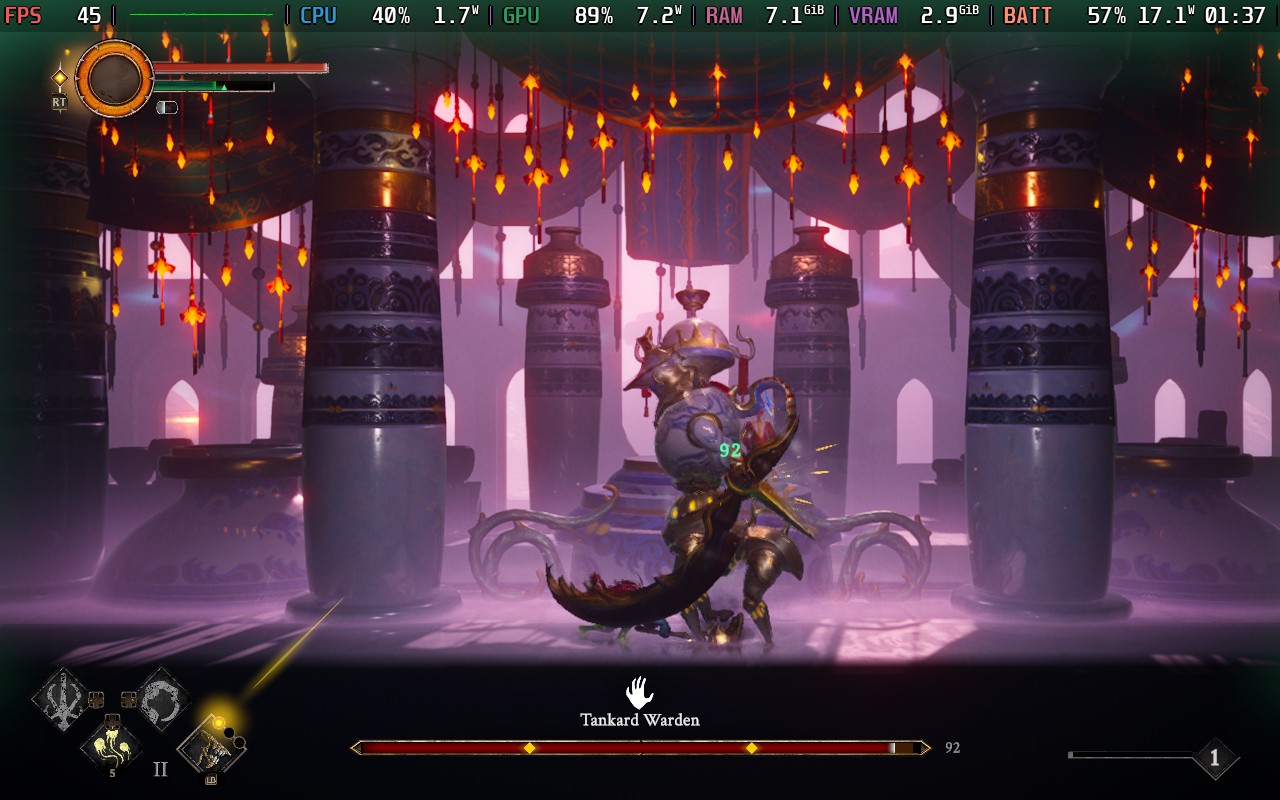
Otherwise, I loved fighting enemies. The parry and grabbing system was easy to utilize, being able to swap between two weapons gave me some great abilities to utilize, and the assimilated skills were varied. Some felt a little useless, or would run past the enemy, but others would push them, giving us a chance to make use of environmental hazards that would easily take them out. Making use of the environmental hazards is one of my favorite aspects of the game, whether it be making the ground crumble beneath them and fall into a pit of spikes, or smacking them into some thorny vines; it’s all extremely satisfying.
There’s also a nice variety of melee and ranged weapons that all feel relatively different from each other. This can range from faster, attacking axes, spears, and even bows and arrows. And being able to swap between these two means we can take advantage of multiple different types of attacks and abilities. Part of me wishes there were more variety for the attacks we can utilize in our general moveset, but I don’t mind it too much since the assimilated abilities make up for it.
The bosses also felt varied and challenging. I didn’t really get frustrated, fighting the bosses, even if they are more powerful. It was a welcome challenge that pushed me to try multiple different weapons, focus on pairing, and push myself to try new strategies. And just like the weird world, the design of the bosses is great.
There are also a good chunk of ways to make ourselves stronger, whether they be through our equipment or stats. As we find enemies, we will level up and get stat points, which can be used to level up our health, strength, parry attack, and others that can affect our abilities. I’m at the biggest fan of the small changes it could make, especially when it comes to health, but the strength upgrades add up over time and can affect more than just one part of your arsenal. Each weapon and ability can be influenced by multiple different stats, so it feels like there’s a benefit more than just what meets the eye.
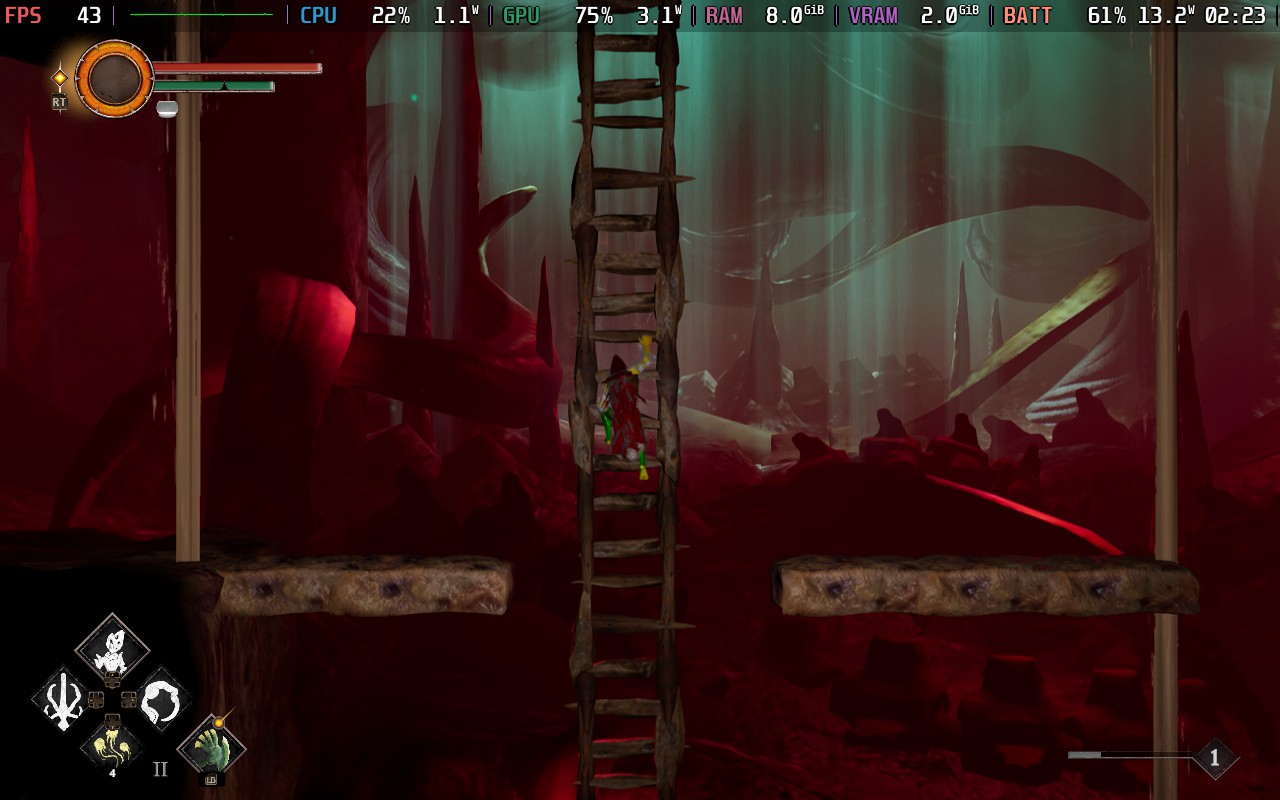
We can also find an assortment of currency to purchase new armor and weapons, items that can be turned into new abilities, and upgrade our equipment. We can also unlock a skill tree, which can be upgraded to give us more focus as we attack and other benefits. Focus can be used to strengthen our own attacks, so having different ways we can get more of it, like increasing how much we get from pairing or dodging, is going to be very helpful.
It took me a little bit of time to fully enjoy the progression system specially because upgrading stats like health didn’t do as much as I would’ve hoped initially, but I grew to like it.
Initially, I completely thought that Grime 2 was going to be an easy-to-enjoy experience on the Steam Deck. It didn’t look like it was defaulted to the highest settings. However, there’s one big issue that can stop it from being a fluid experience: stuttering. No matter what settings the game is on, there will always be some fun while we are playing in the game, but it will stutter.
Without changing any settings, I found that almost every time I dodged, there would be stutters. However, even on lower settings, there would still be these problems. It would get better the lower I went, but some would persist. One of the worst times was actually during a pivotal moment at one of the early bosses. Because of this, I decided a big change was needed to ensure stability.
To make it as playable as possible, I went down to the lowest settings and capped the framerate at 30. There are still going to be some drops here and there at the lowest settings, even when capped to 45 FPS (which I was hoping would be doable), but 30 is going to be the way to go for the most stable experience. Battery drain will fluctuate depending on where we are as well, and will usually stick to around 3 to 3.5 hours of battery life.
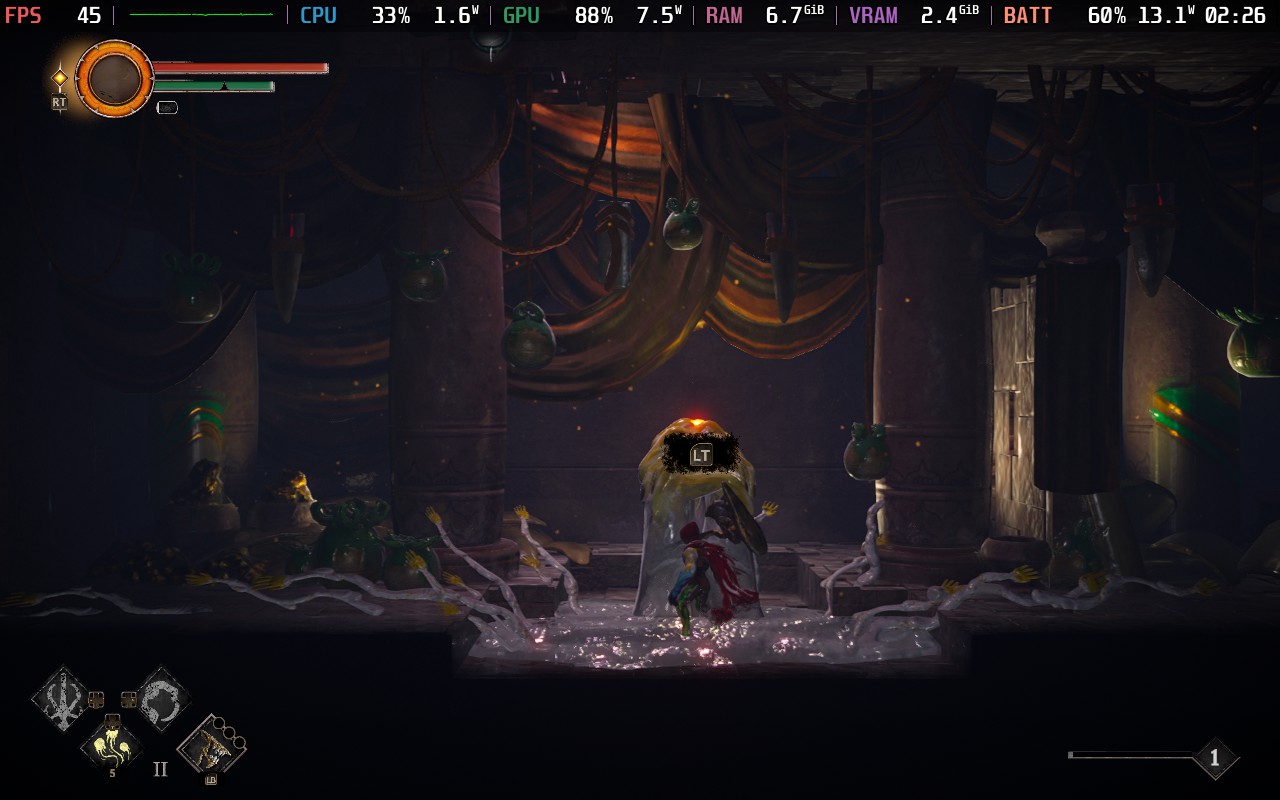
In the settings, we can change some UI elements like Player and Enemy Damage, text toggle text animation, and change how much damage is taken by players and enemies. We can also change keybindings and audio sliders.
The game does support 16:10 resolutions, cloud saves, and controller support. There are no HDR settings.
Grime 2 has all the makings of a great metroidvania that overshadows the issues that make it frustrating. The world is beautiful, and the basic combat loop is a ton of fun. It can get obnoxious when fighting multiple enemies, and I wasn't a fan of navigation, but exploration feels rewarding with a solid progression system.
It doesn't play as well on the Steam Deck as I expected, and it needs some compromises to run, but it can be played and enjoyed on the go.
Our review is based on the PC version of this game.
If you enjoyed this review, be sure to check out the rest of the content on SteamDeckHQ! We have a wide variety of game reviews and news that are sure to help your gaming experience. Whether you're looking for news, tips and tutorials, game settings and reviews, or just want to stay up-to-date on the latest trends, we've got your back.
Grime 2 is a competent metroidvania in a gorgeous world that has a few frustrations and issues with Steam Deck performance that keep it from greatness.