




Dead as Disco was provided by Brain Jar Games for review. Thank you!
There’s a very specific kind of satisfaction that comes from a well-executed third-person combat system, the kind that flows effortlessly from one enemy to the next, where timing, positioning, and rhythm all blur into something almost hypnotic. It’s a feeling I’ve always associated with the Batman: Arkham series; that free-flowing, reactive combat that makes you feel far more skilled than you probably are. Dead as Disco taps into that same DNA, and then cranks the tempo up with a bold, rhythm-driven twist.
From the moment you start throwing punches, it’s clear what the developers are going for. Combat isn’t just about reacting; it’s about performing. Hits, dodges, and counters all sync to the beat, turning every encounter into something that feels closer to a choreographed dance than a traditional fight. Nail the timing, and you flow seamlessly between enemies, chaining attacks in a way that feels incredibly reminiscent of Arkham’s best moments. Miss the rhythm, though, and the illusion breaks just enough to remind you that precision matters here.
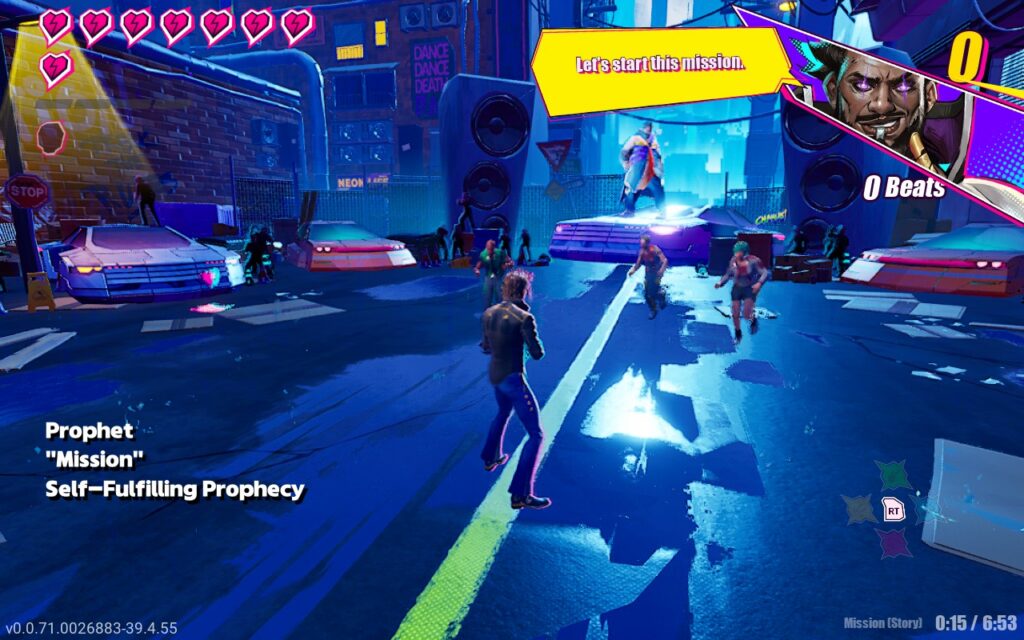
What makes this system shine is how natural it feels. Rhythm mechanics in games can sometimes feel forced or restrictive, but Dead as Disco avoids that trap by integrating the beat directly into the combat flow rather than layering it on top. You’re not watching for prompts; you’re feeling the music and responding instinctively. It’s a smart evolution of a formula that already worked brilliantly, and it gives the game a distinct identity even in its early access state.
And that identity is carried hard by one of the game’s strongest elements: the music.
Put simply, the soundtrack is incredible. It doesn’t just accompany the action; it defines it. Every fight is elevated by tracks that pulse with energy, guiding your timing and amplifying the sense of momentum. There’s a confidence to the music selection and implementation that makes each encounter feel like a set piece, even when you’re just clearing out a small group of enemies. It’s the kind of soundtrack that sticks with you after you’ve put the controller down, and more importantly, it actively makes you want to play better just to stay in sync with it. Roll on their addition to streaming services, I say.
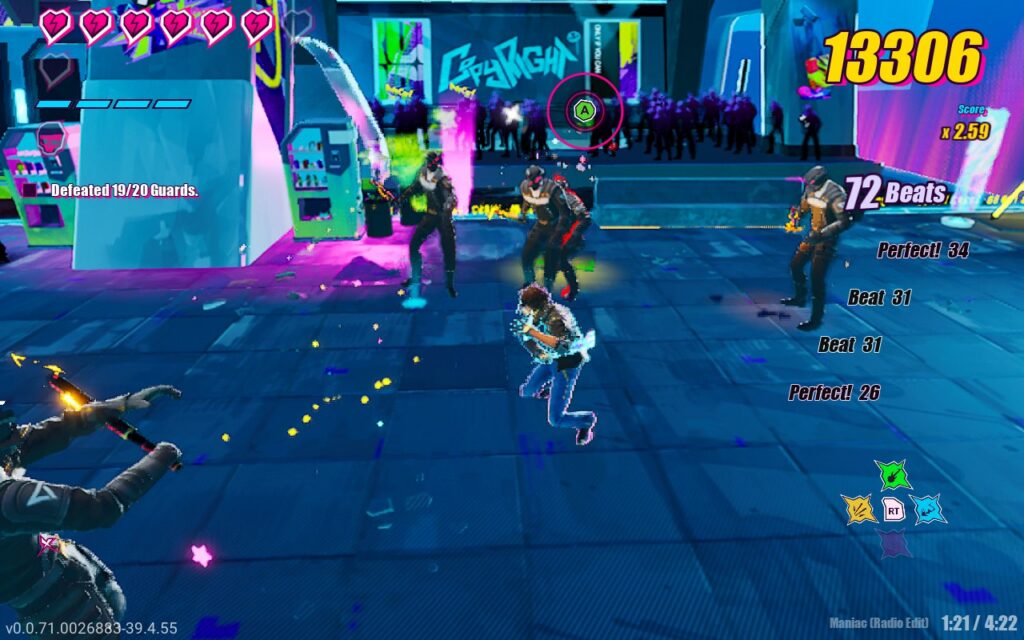
This is still early access, mind you, and it shows in places. There are moments - fleeting in nature - where the experience feels a little rough around the edges, whether that’s in animation transitions, enemy variety, or the occasional lack of feedback clarity when things get hectic. But the core is so strong that these issues feel more like temporary growing pains than fundamental problems.
Speaking of early access, there’s a clear sense that Dead as Disco is only getting started. The roadmap hints at additional bosses that should push the rhythm-combat system in more creative and demanding ways, alongside expanded difficulty modes that could really test how well players can stay in sync under pressure. There’s also the near-certainty of more cosmetics both leading up to - and following - the 1.0 launch, which feels like a natural fit for a game so rooted in style and presentation. If the current foundation is anything to go by, these additions won’t just pad things out; they’ll give players more reasons to master the flow.
Performance on the Steam Deck is impressively solid, especially for an early access title. In its default configuration, Dead as Disco maintains a near-faultless 60 FPS during gameplay, which is crucial for a rhythm-based combat system where timing is everything. Drops are rare enough to be negligible, and more importantly, they never seem to interfere with the flow of combat. Visually, it’s not pushing the hardware to its limits, but it still looks more than passable on the Deck’s screen - clean, readable, and stylish enough to let the art direction and animations do the heavy lifting.
What’s equally encouraging is how efficient it is. Power draw typically ranges from 19W to 21W, which translates to roughly 3 hours of battery life, depending on brightness and other system settings. For a game that relies so heavily on smooth performance, the balance between stability and efficiency feels spot-on, making it an easy recommendation for portable play sessions without constantly worrying about reaching for the charger.

What Dead as Disco already gets right is arguably the hardest part: it has a combat system that feels fantastic, and a musical backbone that elevates it beyond simple imitation. If you’ve ever loved the rhythm and flow of Arkham-style combat, this is a game that understands exactly why that worked - and then dares to remix it into something fresh.
It’s stylish, it’s confident, and most importantly, it’s an absolute joy to play in time with. Harmonious, even.
Our review is based on the PC version of this game.
If you enjoyed this review, be sure to check out the rest of the content on SteamDeckHQ! We have a wide variety of game reviews and news that are sure to help your gaming experience. Whether you're looking for news, tips and tutorials, game settings and reviews, or just want to stay up-to-date on the latest trends, we've got your back.
What Dead as Disco already gets right is arguably the hardest part: it has a combat system that feels fantastic, and a musical backbone that elevates it beyond simple imitation. If you’ve ever loved the rhythm and flow of Arkham-style combat, this is a game that understands exactly why that worked - and then dares to remix it into something fresh.
It’s stylish, it’s confident, and most importantly, it’s an absolute joy to play in time with. Harmonious, even.